South Korea Patient Monitoring Market Outlook
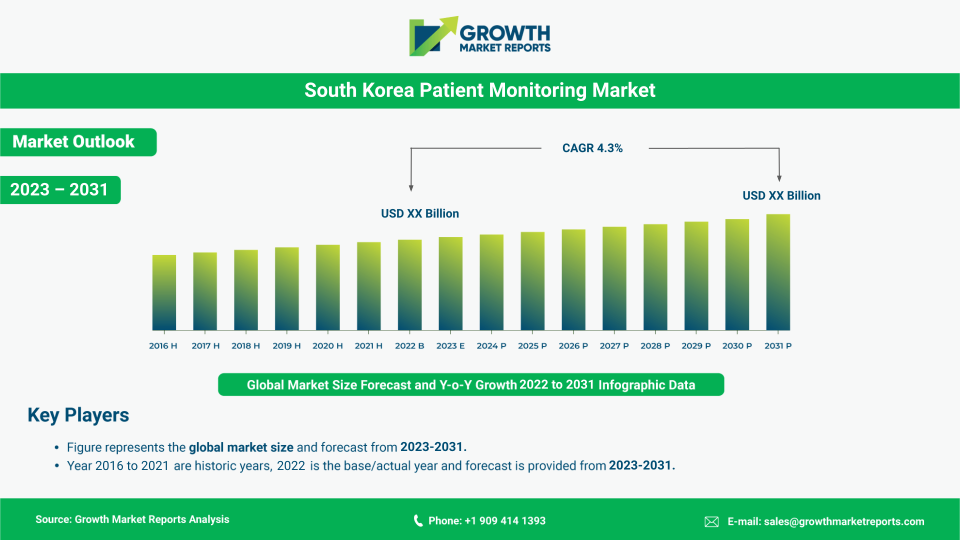
The South Korea Patient Monitoring Market size was valued at USD XX Billion in 2022 and is likely to reach USD XX Billion by 2031 expanding at a CAGR of 4.3% during 2023 – 2031. The growth of the market is attributed to increasing burden of chronic diseases in the country.
The patient monitoring system is a set of system or process that enables healthcare provider to monitor a patient’s health. The example of patients monitoring system is an electrocardiography that monitor the electrical activity of the heart.
The monitoring devices are collecting data of vital parameters such as blood pressure and heart rates. The various types of patient monitoring systems are available such as portable, real-time, and wireless. They have main two types bedside patient monitoring system and remote patient monitoring system.
The COVID-19 pandemic affected the demand and supply of South Korea patient monitoring market. Lockdown across the globe, supply chain disorders, and oscillating supply of raw materials forced manufacturers to shut down production leading to unfortunate decline in market growth. The demand for patient monitoring system and launch of vaccines to combat the Covid-19 pandemic is expected to contribute to the market growth over the forecast period.
Market Trends, Drivers, Restraints, and Opportunities
- Increasing prevalence of diseases in the country is expected to drive the South Korea patient monitoring market.
- Increasing respiratory related diseases is requiring the patient monitoring system which is expected to fuel the South Korea patient monitoring market during the forecast period.
- Research and development in the medical sector and people are curious about the health this is projected to boost the South Korea patient monitoring market during the forecast period.
- High cost of patient monitoring systems is expected to hamper the South Korea patient monitoring market during the forecast period.
- Some of faulty and inaccurate monitoring devices resulting wrong treatment to the patient is projected to hinder the market growth.
- People are curious about health hence, new methods developed to reduce cost is fueling the South Korea patient monitoring market during the forecast period.
Scope of South Korea Patient Monitoring Market Report
The report on the South Korea patient monitoring market includes an assessment of the market, trends, segments, and regional markets. Overview and dynamics have also been included in the report.
|
Attributes
|
Details
|
|
Report Title
|
Patient Monitoring Market - South Korea Industry Analysis, Growth, Share, Size, Trends, and Forecast
|
|
Base Year
|
2022
|
|
Historic Data
|
2016–2021
|
|
Forecast Period
|
2023–2031
|
|
Segmentation
|
Applications (Cardiology, Neurology, Respiratory, Fetal and Neonatal, Weight Management & Fitness Monitoring, and Others)
|
|
Regional Scope
|
South Korea
|
|
Report Coverage
|
Company Share, Market Analysis and Size, Competitive Landscape, Growth Factors, and Trends, and Revenue Forecast
|
|
Key Players Covered in the Report
|
Nihon Kohden Corporation; Abbott Laboratories; General Electric Company (GE Healthcare); Dragerwerk AG & Co. KGaA; Koninklijke Philips N.V.
|
South Korea Patient Monitoring Market Segment Insights
The weight management and fitness monitoring segment are expected to grow at a rapid pace
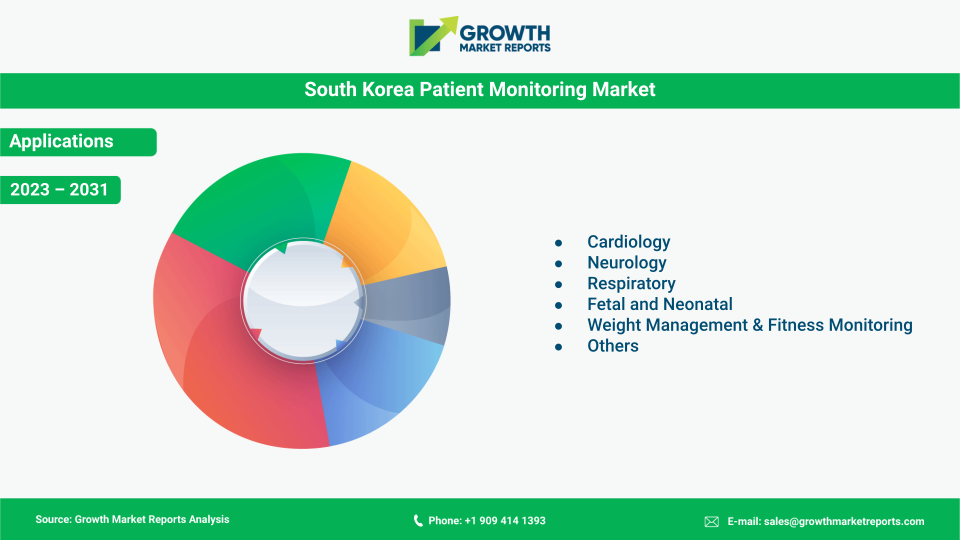
Based on applications, the South Korea patient monitoring market is divided into cardiology, neurology, respiratory, fetal & neonatal, weight management & fitness monitoring, and other applications. The weight management & fitness monitoring segment is expected to grow at a rapid pace during the forecast period due to adoption of sedentary lifestyle such as poor diet, high consumption of sugar, physical inactivity has led to many chronic diseases such as obesity, diabetes, cardiovascular diseases, and others.
As in the South Korea geriatric population is expected to increase in the coming years who are more prone to chronic diseases such as diabetes and other diseases is expected to drive the market during forecast period. However, the respiratory segment is anticipated to hold a key market share during the forecast period owing to increasing respiratory related diseases such as pneumococcal pneumonia (PP), invasive pneumococcal diseases (IPD) in the aged people required patient monitoring system is expected to fuel the South Korea patient market during the forecast period.
According to the research article by Jung Yeon Heo et al., published in PLOS ONE Journal 2018, incidences of community-acquired pneumonia (CAP) was 307.7 cases per 10000 persons per year.
Segments
The South Korea patient monitoring market has been segmented on the basis of
Applications
- Cardiology
- Neurology
- Respiratory
- Fetal and Neonatal
- Weight Management & Fitness Monitoring
- Others
Key Players
Competitive Landscape
Key players competing in the South Korea patient monitoring market include Nihon Kohden Corporation; Abbott Laboratories; General Electric Company (GE Healthcare); Dragerwerk AG & Co. KGaA; Koninklijke Philips N.V.
These key players are constantly implementing several marketing strategies such as merger & acquisitions, capital investments, partnerships, and new product development to sustain industry position in the market.











 Request For Customization
 Enquiry Before Buying
 Speak With Analyst