Passenger Information System Market Research Report 2033

Passenger Information System Market Research Report 2033

Segments - by Component (Hardware, Software, Services), by System Type (Audio, Visual, Audio-Visual), by Mode Of Transportation (Railways, Roadways, Airways, Waterways), by Application (Onboard, Station/Terminal), by End-User (Public Transit, Private Transit)

https://growthmarketreports.com/Raksha
Author : Raksha Sharma
https://growthmarketreports.com/Vaibhav
Fact-checked by : V. Chandola
https://growthmarketreports.com/Shruti
Editor : Shruti Bhat

Upcoming | Report ID :AD-3340 | 4.6 Rating | 51 Reviews | 279 Pages | Format : Docx PDF

Report Description


Passenger Information System Market Outlook

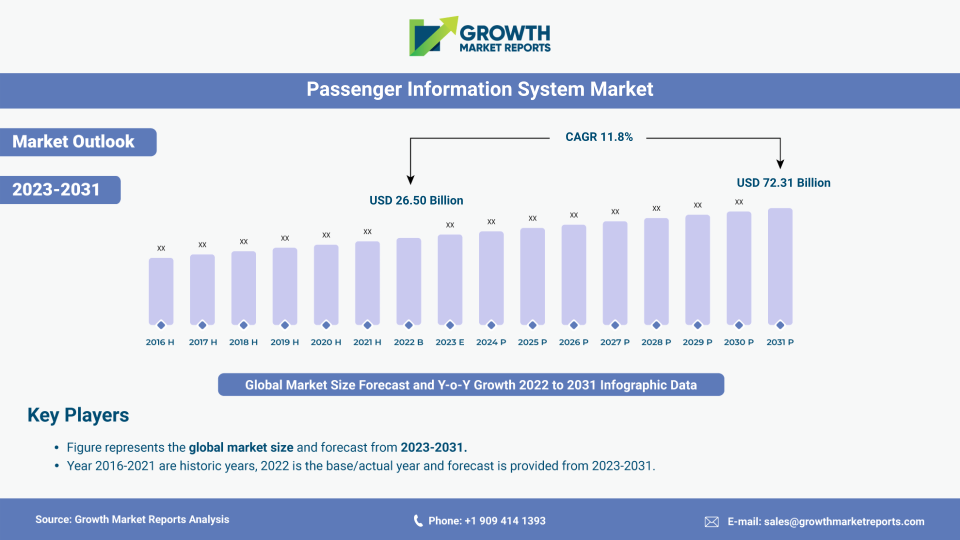
According to our latest research, the global passenger information system market size in 2024 stands at USD 35.2 billion, registering robust momentum on the back of digital transformation in the transportation sector. The market is projected to expand at a CAGR of 10.7% from 2025 to 2033, reaching a forecasted value of USD 87.1 billion by 2033. The primary growth factor fueling this expansion is the escalating demand for real-time information delivery systems across all modes of transportation, as public and private transit operators strive to enhance passenger experience and optimize operational efficiency.

The growth trajectory of the passenger information system market is being shaped by the increasing urbanization and the corresponding surge in public transportation usage. As cities expand and populations concentrate in urban centers, the need for efficient, reliable, and user-friendly transit systems becomes paramount. Passenger information systems (PIS) play a critical role in this context, providing commuters with up-to-the-minute updates on schedules, delays, route changes, and service disruptions. This not only streamlines passenger flow but also reduces congestion and improves overall satisfaction. Governments and transit authorities are investing heavily in digital infrastructure upgrades, further accelerating market adoption.

Another significant driver is the rapid technological advancements in communication networks and data analytics. The integration of IoT, cloud computing, and AI-powered analytics into passenger information systems has transformed the way data is collected, processed, and disseminated. These technologies enable transit operators to offer personalized information, predictive maintenance alerts, and seamless multi-modal journey planning. The proliferation of smartphones and mobile applications has also expanded the reach of PIS beyond traditional display boards, empowering passengers with real-time access to transit data anytime, anywhere. This digital shift is fostering market growth across both developed and emerging economies.

Regulatory mandates and a growing emphasis on passenger safety and accessibility are further catalyzing the market. Governments worldwide are introducing stringent standards for information dissemination, particularly for differently-abled and elderly passengers. Passenger information systems are being designed to comply with these regulations, incorporating features such as audio announcements, visual displays, and multilingual support. In addition, the push for sustainable urban mobility solutions is prompting transit agencies to adopt smart technologies that optimize energy consumption and reduce carbon footprints. These factors collectively contribute to the robust expansion of the passenger information system market.

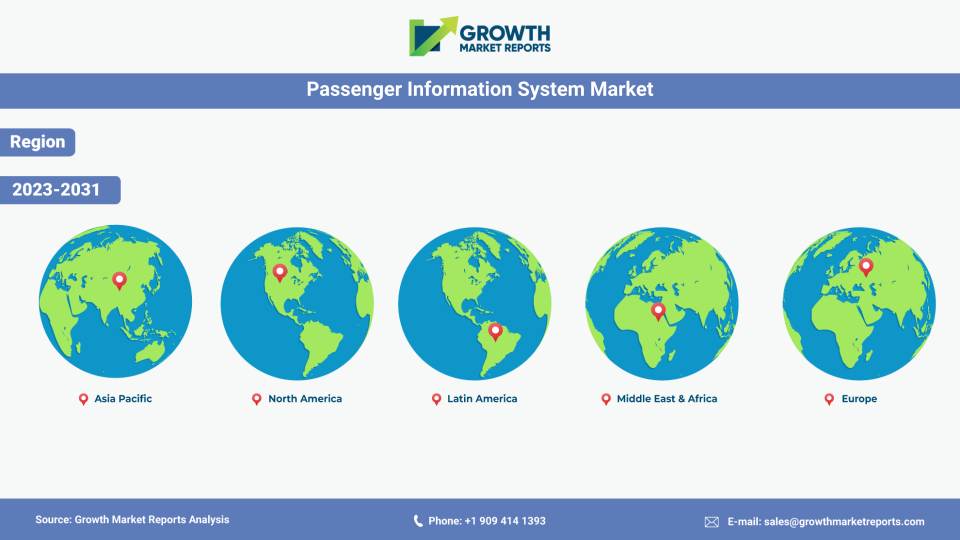
Regionally, the Asia Pacific stands out as the fastest-growing market, driven by massive urban infrastructure projects and the modernization of public transportation networks in countries such as China, India, and Japan. North America and Europe continue to lead in terms of technology adoption and market maturity, with extensive investments in smart city initiatives and intelligent transportation systems. Latin America and the Middle East & Africa are also witnessing steady growth, albeit at a slower pace, as governments prioritize transit modernization and passenger-centric services. The regional outlook remains highly favorable, with Asia Pacific projected to capture the largest market share during the forecast period.

Global Passenger Information System Industry Outlook

Component Analysis

The passenger information system market by component is segmented into hardware, software, and services, each playing a pivotal role in the overall ecosystem. Hardware encompasses display screens, speakers, networking equipment, sensors, and controllers that form the physical infrastructure for information dissemination. With the increasing deployment of high-definition LED and LCD displays at stations and onboard vehicles, hardware remains a significant revenue contributor. Innovations in ruggedized, energy-efficient, and weather-resistant hardware are enabling reliable operation across diverse transit environments, from underground metros to open-air bus stops.

Software solutions are the backbone of modern passenger information systems, orchestrating data collection, processing, and distribution. Advanced PIS software integrates seamlessly with scheduling, ticketing, and fleet management platforms, ensuring real-time synchronization of transit data. The growing demand for cloud-based and AI-driven software is transforming the market, enabling predictive analytics, automated incident management, and personalized passenger communication. Software vendors are increasingly focusing on open architecture and interoperability to facilitate integration with legacy systems and third-party applications, thereby enhancing scalability and flexibility.

Services constitute a critical component segment, encompassing system design, installation, integration, maintenance, and support. As transit agencies seek to minimize downtime and ensure optimal system performance, the demand for managed and professional services is on the rise. Service providers offer end-to-end solutions, from initial consulting and customization to ongoing technical support and upgrades. The trend towards outsourcing non-core functions and adopting service-based delivery models is gaining traction, particularly among smaller transit operators with limited in-house IT resources. This shift is expected to fuel the growth of the services segment throughout the forecast period.

The interplay between hardware, software, and services is central to the success of passenger information system deployments. Market players are increasingly offering bundled solutions that combine state-of-the-art hardware with intuitive software interfaces and comprehensive support services. This integrated approach simplifies procurement, accelerates implementation, and enhances the overall value proposition for transit agencies. As the market matures, the emphasis is shifting from standalone products to holistic, end-to-end solutions that address the evolving needs of both operators and passengers.

Report Scope

Attributes Details
Report Title Passenger Information System Market Research Report 2033
By Component Hardware, Software, Services
By System Type Audio, Visual, Audio-Visual
By Mode Of Transportation Railways, Roadways, Airways, Waterways
By Application Onboard, Station/Terminal
By End-User Public Transit, Private Transit
Regions Covered North America, Europe, APAC, Latin America, MEA
Countries Covered North America (United States, Canada), Europe (Germany, France, Italy, United Kingdom, Spain, Russia, Rest of Europe), Asia Pacific (China, Japan, South Korea, India, Australia, South East Asia (SEA), Rest of Asia Pacific), Latin America (Mexico, Brazil, Rest of Latin America), Middle East & Africa (Saudi Arabia, South Africa, United Arab Emirates, Rest of Middle East & Africa)
Base Year 2024
Historic Data 2018-2023
Forecast Period 2025-2033
Number of Pages 279
Number of Tables & Figures 279
Customization Available Yes, the report can be customized as per your need.

System Type Analysis

In the passenger information system market, system type segmentation comprises audio, visual, and audio-visual systems. Audio systems provide real-time announcements and alerts through speakers, ensuring that critical information reaches all passengers, including those with visual impairments. The demand for audio systems is particularly strong in regions with high commuter volumes and multilingual populations, as they enable effective communication across diverse demographic groups. Technological advancements in text-to-speech and voice synthesis are enhancing the clarity, intelligibility, and customization of audio announcements.

Visual systems utilize digital display boards, monitors, and signage to present schedules, route maps, service updates, and emergency notifications. These systems are widely deployed at stations, terminals, and onboard vehicles, offering clear, dynamic, and easily accessible information to passengers. The transition from static to digital displays is a notable trend, driven by the need for real-time updates and richer content delivery. Visual systems are increasingly incorporating touchscreens, interactive kiosks, and mobile integration, allowing passengers to access personalized journey information and self-service options.

Audio-visual systems combine the strengths of both audio and visual channels, delivering synchronized announcements and displays for maximum impact. This hybrid approach is gaining traction as transit agencies strive to enhance accessibility and inclusivity, catering to passengers with varying needs and preferences. Audio-visual systems are particularly effective in large, complex transit hubs and multi-modal terminals, where timely and accurate information dissemination is critical. The integration of advanced multimedia technologies, such as video streaming, real-time graphics, and augmented reality, is further elevating the passenger experience.

The choice of system type is influenced by factors such as transit mode, passenger demographics, regulatory requirements, and budget constraints. While audio systems are indispensable for accessibility compliance, visual and audio-visual systems offer superior versatility and engagement. Market vendors are responding with modular, scalable solutions that can be tailored to specific operational contexts. As the adoption of smart transportation technologies accelerates, the demand for sophisticated audio-visual systems is expected to outpace standalone audio and visual solutions, driving segment growth over the next decade.

Mode of Transportation Analysis

The passenger information system market is segmented by mode of transportation into railways, roadways, airways, and waterways. Railways represent the largest segment, owing to the high volume of daily commuters and the complexity of rail networks. Passenger information systems in railways are deployed both onboard and at stations, providing real-time updates on train schedules, platform changes, and service disruptions. The integration of PIS with signaling, ticketing, and security systems is a key trend, enabling seamless operations and enhanced passenger safety. Investments in high-speed rail and metro projects, particularly in Asia Pacific and Europe, are driving robust growth in this segment.

Roadways, encompassing buses, coaches, and trams, are witnessing rapid adoption of passenger information systems as cities expand their public transit fleets. Real-time passenger information on vehicle arrivals, route diversions, and traffic conditions is crucial for optimizing urban mobility and reducing wait times. The proliferation of smart bus stops and connected vehicles is fueling demand for advanced PIS solutions that support dynamic routing, multi-modal integration, and mobile ticketing. Roadways PIS deployments are also benefiting from government initiatives aimed at reducing urban congestion and promoting sustainable transportation.

Airways are increasingly leveraging passenger information systems to enhance the airport and in-flight experience. Digital displays, mobile apps, and automated announcements provide travelers with timely updates on flight status, gate changes, baggage claims, and boarding procedures. The integration of PIS with airport management systems and biometric identification platforms is streamlining passenger flow and improving security. With air travel rebounding post-pandemic, airlines and airport operators are prioritizing investments in digital infrastructure to differentiate their services and boost customer satisfaction.

Waterways, though a smaller segment, are embracing passenger information systems to improve service reliability and safety on ferries, cruise ships, and water taxis. Real-time updates on boarding times, weather conditions, and route changes are essential for passenger convenience and operational efficiency. The adoption of PIS in waterways is being driven by tourism growth, urban waterfront development, and regulatory mandates for maritime safety. As digital connectivity expands to remote and offshore locations, the market for PIS in waterways is expected to witness steady growth.

Application Analysis

The application segment of the passenger information system market is bifurcated into onboard and station/terminal solutions. Onboard applications deliver real-time information directly to passengers while they are en route, using displays, audio announcements, and mobile notifications. These systems enhance the travel experience by providing updates on upcoming stops, estimated arrival times, and service disruptions. The proliferation of connected vehicles and IoT-enabled sensors is enabling more granular data collection and personalized information delivery, transforming onboard PIS into a critical tool for passenger engagement and operational optimization.

Station/terminal applications focus on delivering information at transit hubs, including train stations, bus terminals, airports, and ferry docks. These solutions utilize large-format digital displays, interactive kiosks, and public address systems to communicate schedules, platform assignments, boarding instructions, and emergency alerts. The integration of PIS with wayfinding, ticketing, and security systems is enhancing the efficiency and safety of transit operations. As passenger volumes increase and transit networks become more complex, the demand for sophisticated station/terminal PIS solutions is rising.

The convergence of onboard and station/terminal applications is a notable trend, driven by the need for end-to-end information continuity across the passenger journey. Integrated PIS platforms enable seamless data sharing between vehicles and stations, ensuring that passengers receive consistent, real-time updates regardless of their location. This holistic approach supports multi-modal travel, reduces transfer anxiety, and improves overall satisfaction. Market vendors are developing unified solutions that cater to both onboard and station/terminal requirements, offering enhanced flexibility and scalability.

The choice between onboard and station/terminal applications is influenced by factors such as transit mode, passenger demographics, and operational priorities. While onboard PIS is essential for real-time journey updates, station/terminal solutions are critical for managing passenger flow and ensuring timely departures. The growing adoption of mobile and cloud-based PIS is blurring the lines between these segments, enabling passengers to access information across multiple touchpoints. As digital transformation accelerates, the demand for integrated, multi-channel PIS applications is expected to drive market growth.

End-User Analysis

The end-user landscape of the passenger information system market is segmented into public transit and private transit operators. Public transit agencies, including municipal transport authorities, rail operators, and government-owned bus services, constitute the largest end-user segment. These organizations are investing heavily in passenger information systems to improve service reliability, compliance, and passenger satisfaction. Public transit PIS deployments are often driven by regulatory mandates, funding availability, and the need to address urban mobility challenges. The scale and complexity of public transit networks necessitate robust, scalable, and interoperable PIS solutions.

Private transit operators, encompassing charter services, private railways, ride-sharing platforms, and airport shuttles, are increasingly adopting passenger information systems to differentiate their services and attract customers. The focus in this segment is on delivering premium, personalized experiences through advanced features such as predictive journey planning, real-time notifications, and loyalty integration. Private operators benefit from greater flexibility in technology adoption and are often early adopters of innovative PIS solutions. The rise of mobility-as-a-service (MaaS) platforms is further fueling demand for integrated, user-centric passenger information systems in the private transit segment.

Collaboration between public and private transit operators is emerging as a key trend, with joint investments in shared PIS infrastructure and data exchange platforms. This collaborative approach supports seamless multi-modal travel, enhances network efficiency, and improves passenger convenience. Government initiatives to promote public-private partnerships in transportation are creating new opportunities for market players, particularly in regions with fragmented transit networks.

The evolving end-user landscape is driving innovation in passenger information system design, with vendors offering customizable, modular solutions that cater to diverse operational requirements. As competition intensifies and passenger expectations rise, both public and private transit operators are prioritizing investments in digital information systems that deliver measurable improvements in service quality and operational efficiency. The end-user segment is expected to witness sustained growth as digital transformation becomes a strategic imperative across the transportation industry.

Opportunities & Threats

The passenger information system market presents significant opportunities for growth and innovation, particularly as urbanization accelerates and smart city initiatives gain momentum worldwide. One of the most promising opportunities lies in the integration of artificial intelligence and big data analytics into PIS platforms. By leveraging AI-driven insights, transit operators can offer predictive travel information, optimize route planning, and enhance incident management. The proliferation of 5G and IoT connectivity is enabling real-time, high-bandwidth data exchange between vehicles, stations, and central control centers, paving the way for next-generation PIS solutions. These advancements are expected to unlock new revenue streams for technology vendors and create value-added services for passengers, such as personalized journey recommendations and dynamic fare management.

Another major opportunity stems from the increasing emphasis on sustainability and green mobility. As cities strive to reduce carbon emissions and promote public transportation, passenger information systems are being positioned as critical enablers of eco-friendly travel choices. PIS platforms can support demand-responsive transit, encourage modal shifts from private vehicles to public transport, and facilitate the integration of electric and autonomous vehicles into urban mobility networks. The growing adoption of cloud-based and SaaS delivery models is lowering barriers to entry for smaller transit operators, expanding the market’s addressable base. Strategic partnerships between technology providers, transit agencies, and government bodies are fostering innovation and accelerating the deployment of smart PIS solutions across diverse geographies.

Despite these opportunities, the market faces several threats and restraining factors. The high initial investment and ongoing maintenance costs associated with advanced passenger information systems can be prohibitive, particularly for smaller transit operators and agencies in developing regions. Budget constraints, legacy infrastructure, and resistance to organizational change can impede the adoption of new technologies. Cybersecurity risks and data privacy concerns are also significant challenges, as PIS platforms handle sensitive passenger information and are increasingly interconnected with other critical transit systems. Addressing these threats requires robust risk management strategies, regulatory compliance, and sustained investment in workforce training and capacity building.

Regional Outlook

The regional analysis of the passenger information system market reveals marked differences in adoption rates, investment levels, and technology maturity. Asia Pacific is the fastest-growing region, with a market size of USD 12.8 billion in 2024 and an anticipated CAGR of 13.2% from 2025 to 2033. The region’s growth is driven by rapid urbanization, large-scale infrastructure projects, and government-led smart city initiatives. China, India, and Japan are leading the charge, with significant investments in metro rail, high-speed trains, and urban bus networks. The region’s diverse transit landscape and high passenger volumes present both challenges and opportunities for PIS vendors, who are tailoring solutions to local needs and regulatory requirements.

North America, with a market size of USD 8.9 billion in 2024, remains a leader in technology adoption and innovation. The United States and Canada are investing heavily in digital transformation, intelligent transportation systems, and accessibility upgrades. The region’s mature transit infrastructure, coupled with strong regulatory frameworks, is fostering the deployment of advanced passenger information systems across rail, bus, and air transit modes. Public-private partnerships and federal funding programs are supporting large-scale PIS modernization projects, while the proliferation of ride-sharing and mobility-as-a-service platforms is expanding the market’s scope.

Europe is another key market, valued at USD 7.6 billion in 2024, characterized by extensive rail networks, high public transit usage, and stringent accessibility standards. Countries such as Germany, the United Kingdom, and France are at the forefront of PIS innovation, integrating real-time information systems with ticketing, security, and environmental monitoring platforms. The European Union’s focus on sustainable urban mobility and cross-border interoperability is driving investments in next-generation PIS solutions. Latin America and the Middle East & Africa, with market sizes of USD 3.4 billion and USD 2.5 billion respectively, are experiencing steady growth as governments prioritize transit modernization and digital inclusion. These regions present significant untapped potential for PIS vendors, particularly as urban populations expand and infrastructure investments accelerate.

Passenger Information System Market Statistics

Competitor Outlook

The competitive landscape of the passenger information system market is characterized by intense rivalry, rapid technological innovation, and a diverse mix of global and regional players. Leading companies are focusing on expanding their product portfolios, enhancing system interoperability, and forging strategic partnerships to capture a larger share of the market. Mergers and acquisitions are commonplace, as established firms seek to strengthen their capabilities in emerging technologies such as AI, IoT, and cloud computing. The market is also witnessing the entry of new players, particularly in software and services, who are leveraging agile development models and customer-centric approaches to disrupt traditional business models.

Product differentiation and customization are key strategies employed by market leaders to address the unique requirements of transit operators across different regions and transportation modes. Companies are investing heavily in research and development to deliver solutions that offer superior reliability, scalability, and user experience. The shift towards integrated, end-to-end platforms is enabling vendors to provide holistic value propositions, encompassing hardware, software, and managed services. Customer support, training, and technical assistance are increasingly viewed as critical differentiators, particularly in large-scale, mission-critical deployments.

The competitive dynamics are further shaped by the growing importance of data security, regulatory compliance, and accessibility standards. Vendors are enhancing their offerings with robust encryption, authentication, and privacy features to address the evolving threat landscape. The ability to deliver solutions that meet diverse regulatory requirements and support multi-language, multi-modal communication is becoming a key success factor, particularly in international markets. As digital transformation accelerates, the emphasis on interoperability and open standards is driving collaboration between technology providers, transit agencies, and industry consortia.

Major players in the passenger information system market include Alstom SA, Siemens AG, Hitachi Ltd., Cubic Corporation, Thales Group, Mitsubishi Electric Corporation, Advantech Co. Ltd., Teleste Corporation, Indra Sistemas S.A., and Wabtec Corporation. Alstom SA is renowned for its comprehensive rail solutions, including advanced passenger information and communication systems that support high-speed and urban transit networks. Siemens AG offers a broad portfolio of intelligent transportation solutions, with a strong emphasis on digitalization, automation, and sustainability. Hitachi Ltd. is a leader in integrated PIS platforms, leveraging its expertise in IoT and cloud technologies to deliver real-time, multi-modal information systems.

Cubic Corporation specializes in fare collection and passenger information systems for public transit, with a focus on seamless, contactless travel experiences. Thales Group is a key player in the European market, providing innovative PIS solutions that integrate with security, signaling, and ticketing systems. Mitsubishi Electric Corporation and Advantech Co. Ltd. are prominent in the hardware segment, offering ruggedized displays, communication devices, and embedded computing platforms. Teleste Corporation and Indra Sistemas S.A. are recognized for their expertise in video surveillance, digital signage, and integrated information systems for rail and metro networks. Wabtec Corporation brings deep experience in rail technology, offering end-to-end solutions that enhance safety, efficiency, and passenger satisfaction.

These companies are continuously innovating to stay ahead in a rapidly evolving market, investing in next-generation technologies and expanding their global footprint through partnerships and acquisitions. The competitive outlook for the passenger information system market remains dynamic, with ample opportunities for growth, differentiation, and value creation as transportation networks worldwide embrace digital transformation.

Key Players

  • Cubic Corporation
  • Siemens AG
  • Thales Group
  • Alstom SA
  • Hitachi Ltd.
  • Huawei Technologies Co., Ltd.
  • Indra Sistemas S.A.
  • Teleste Corporation
  • Mitsubishi Electric Corporation
  • Advantech Co., Ltd.
  • Wabtec Corporation
  • ST Engineering
  • Atos SE
  • Televic Group
  • ICON Multimedia
  • Infax, Inc.
  • Passio Technologies
  • Amadeus IT Group SA
  • SITA
  • EKE-Electronics Ltd.
Passenger Information System Market Overview

Segments

The Passenger Information System market has been segmented on the basis of

Component

  • Hardware
  • Software
  • Services

System Type

  • Audio
  • Visual
  • Audio-Visual

Mode Of Transportation

  • Railways
  • Roadways
  • Airways
  • Waterways

Application

  • Onboard
  • Station/Terminal

End-User

  • Public Transit
  • Private Transit

Competitive Landscape

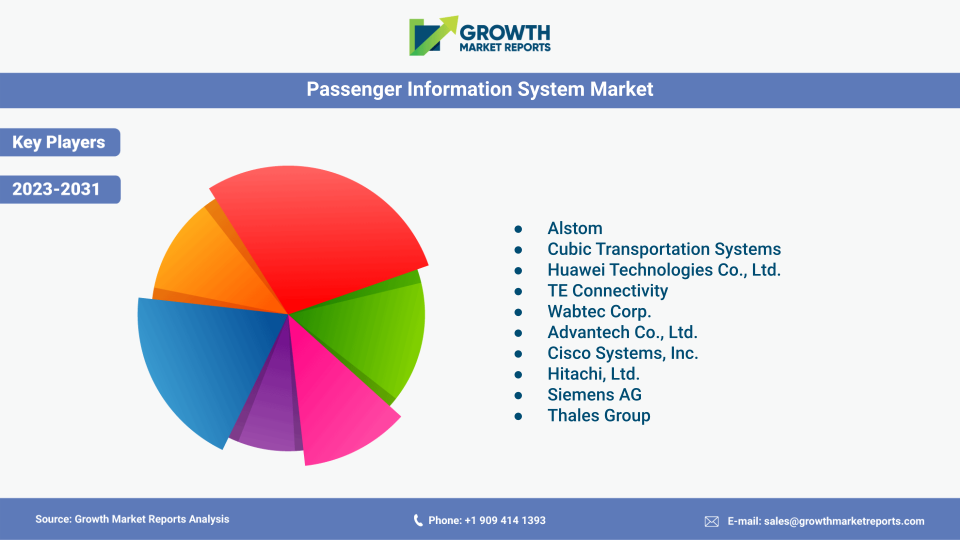
Key players competing in the global passenger information system market are Alstom SA; Cubic Transportation Systems; Huawei Technologies Co., Ltd.; TE Connectivity; Wabtec Corp.; Advantech Co., Ltd.; Cisco Systems, Inc.; Hitachi, Ltd.; Siemens AG; and Thales Group.

Companies are engaging in enhancing technological capabilities, and focusing on acquisitions, strategic mergers, and partnerships to expand their market share. In January 2021, Cubic Transportation Systems launched Umo. Umo is fully integrated platform for mobility service providers, riders, and transit agencies to complement its existing portfolio of transportation technology.

Passenger Information System Market Key Players

Frequently Asked Questions

Major players include Alstom SA, Siemens AG, Hitachi Ltd., Cubic Corporation, Thales Group, Mitsubishi Electric Corporation, Advantech Co. Ltd., Teleste Corporation, Indra Sistemas S.A., and Wabtec Corporation.

Opportunities include AI integration, 5G and IoT connectivity, cloud-based solutions, and sustainability initiatives. Challenges involve high initial costs, legacy infrastructure, cybersecurity risks, and data privacy concerns.

The main end-users are public transit agencies (municipal transport, rail operators) and private transit operators (charter services, ride-sharing platforms). Both segments are investing in PIS for improved service and customer experience.

PIS applications include onboard solutions (real-time updates during transit) and station/terminal solutions (information at hubs like stations and airports). Integrated platforms are increasingly popular for seamless passenger experiences.

Passenger information systems are used across railways, roadways (buses, trams), airways (airports, flights), and waterways (ferries, cruise ships), with railways being the largest segment.

PIS are segmented into audio systems (announcements), visual systems (digital displays), and audio-visual systems (combining both for maximum accessibility and engagement).

Passenger information systems consist of hardware (displays, speakers, sensors), software (data processing, analytics, cloud-based platforms), and services (installation, integration, maintenance, and support).

Asia Pacific is the fastest-growing region, with significant investments in China, India, and Japan. North America and Europe lead in technology adoption and market maturity, while Latin America and the Middle East & Africa are experiencing steady growth.

Key growth drivers include increasing urbanization, the need for real-time information delivery, technological advancements in IoT and AI, government investments in digital infrastructure, and regulatory mandates for accessibility and passenger safety.

As of 2024, the global passenger information system (PIS) market is valued at USD 35.2 billion. It is expected to grow at a CAGR of 10.7% from 2025 to 2033, reaching USD 87.1 billion by 2033, driven by digital transformation and rising demand for real-time transit information.

Table Of Content

Chapter 1 Executive Summary
Chapter 2 Assumptions and Acronyms Used
Chapter 3 Research Methodology
Chapter 4 Passenger Information System Market Overview
   4.1 Introduction
      4.1.1 Market Taxonomy
      4.1.2 Market Definition
      4.1.3 Macro-Economic Factors Impacting the Market Growth
   4.2 Passenger Information System Market Dynamics
      4.2.1 Market Drivers
      4.2.2 Market Restraints
      4.2.3 Market Opportunity
   4.3 Passenger Information System Market - Supply Chain Analysis
      4.3.1 List of Key Suppliers
      4.3.2 List of Key Distributors
      4.3.3 List of Key Consumers
   4.4 Key Forces Shaping the Passenger Information System Market
      4.4.1 Bargaining Power of Suppliers
      4.4.2 Bargaining Power of Buyers
      4.4.3 Threat of Substitution
      4.4.4 Threat of New Entrants
      4.4.5 Competitive Rivalry
   4.5 Global Passenger Information System Market Size & Forecast, 2023-2032
      4.5.1 Passenger Information System Market Size and Y-o-Y Growth
      4.5.2 Passenger Information System Market Absolute $ Opportunity

Chapter 5 Global Passenger Information System Market Analysis and Forecast By Component
   5.1 Introduction
      5.1.1 Key Market Trends & Growth Opportunities By Component
      5.1.2 Basis Point Share (BPS) Analysis By Component
      5.1.3 Absolute $ Opportunity Assessment By Component
   5.2 Passenger Information System Market Size Forecast By Component
      5.2.1 Hardware
      5.2.2 Software
      5.2.3 Services
   5.3 Market Attractiveness Analysis By Component

Chapter 6 Global Passenger Information System Market Analysis and Forecast By System Type
   6.1 Introduction
      6.1.1 Key Market Trends & Growth Opportunities By System Type
      6.1.2 Basis Point Share (BPS) Analysis By System Type
      6.1.3 Absolute $ Opportunity Assessment By System Type
   6.2 Passenger Information System Market Size Forecast By System Type
      6.2.1 Audio
      6.2.2 Visual
      6.2.3 Audio-Visual
   6.3 Market Attractiveness Analysis By System Type

Chapter 7 Global Passenger Information System Market Analysis and Forecast By Mode Of Transportation
   7.1 Introduction
      7.1.1 Key Market Trends & Growth Opportunities By Mode Of Transportation
      7.1.2 Basis Point Share (BPS) Analysis By Mode Of Transportation
      7.1.3 Absolute $ Opportunity Assessment By Mode Of Transportation
   7.2 Passenger Information System Market Size Forecast By Mode Of Transportation
      7.2.1 Railways
      7.2.2 Roadways
      7.2.3 Airways
      7.2.4 Waterways
   7.3 Market Attractiveness Analysis By Mode Of Transportation

Chapter 8 Global Passenger Information System Market Analysis and Forecast By Application
   8.1 Introduction
      8.1.1 Key Market Trends & Growth Opportunities By Application
      8.1.2 Basis Point Share (BPS) Analysis By Application
      8.1.3 Absolute $ Opportunity Assessment By Application
   8.2 Passenger Information System Market Size Forecast By Application
      8.2.1 Onboard
      8.2.2 Station/Terminal
   8.3 Market Attractiveness Analysis By Application

Chapter 9 Global Passenger Information System Market Analysis and Forecast By End-User
   9.1 Introduction
      9.1.1 Key Market Trends & Growth Opportunities By End-User
      9.1.2 Basis Point Share (BPS) Analysis By End-User
      9.1.3 Absolute $ Opportunity Assessment By End-User
   9.2 Passenger Information System Market Size Forecast By End-User
      9.2.1 Public Transit
      9.2.2 Private Transit
   9.3 Market Attractiveness Analysis By End-User

Chapter 10 Global Passenger Information System Market Analysis and Forecast by Region
   10.1 Introduction
      10.1.1 Key Market Trends & Growth Opportunities By Region
      10.1.2 Basis Point Share (BPS) Analysis By Region
      10.1.3 Absolute $ Opportunity Assessment By Region
   10.2 Passenger Information System Market Size Forecast By Region
      10.2.1 North America
      10.2.2 Europe
      10.2.3 Asia Pacific
      10.2.4 Latin America
      10.2.5 Middle East & Africa (MEA)
   10.3 Market Attractiveness Analysis By Region

Chapter 11 Coronavirus Disease (COVID-19) Impact 
   11.1 Introduction 
   11.2 Current & Future Impact Analysis 
   11.3 Economic Impact Analysis 
   11.4 Government Policies 
   11.5 Investment Scenario

Chapter 12 North America Passenger Information System Analysis and Forecast
   12.1 Introduction
   12.2 North America Passenger Information System Market Size Forecast by Country
      12.2.1 U.S.
      12.2.2 Canada
   12.3 Basis Point Share (BPS) Analysis by Country
   12.4 Absolute $ Opportunity Assessment by Country
   12.5 Market Attractiveness Analysis by Country
   12.6 North America Passenger Information System Market Size Forecast By Component
      12.6.1 Hardware
      12.6.2 Software
      12.6.3 Services
   12.7 Basis Point Share (BPS) Analysis By Component 
   12.8 Absolute $ Opportunity Assessment By Component 
   12.9 Market Attractiveness Analysis By Component
   12.10 North America Passenger Information System Market Size Forecast By System Type
      12.10.1 Audio
      12.10.2 Visual
      12.10.3 Audio-Visual
   12.11 Basis Point Share (BPS) Analysis By System Type 
   12.12 Absolute $ Opportunity Assessment By System Type 
   12.13 Market Attractiveness Analysis By System Type
   12.14 North America Passenger Information System Market Size Forecast By Mode Of Transportation
      12.14.1 Railways
      12.14.2 Roadways
      12.14.3 Airways
      12.14.4 Waterways
   12.15 Basis Point Share (BPS) Analysis By Mode Of Transportation 
   12.16 Absolute $ Opportunity Assessment By Mode Of Transportation 
   12.17 Market Attractiveness Analysis By Mode Of Transportation
   12.18 North America Passenger Information System Market Size Forecast By Application
      12.18.1 Onboard
      12.18.2 Station/Terminal
   12.19 Basis Point Share (BPS) Analysis By Application 
   12.20 Absolute $ Opportunity Assessment By Application 
   12.21 Market Attractiveness Analysis By Application
   12.22 North America Passenger Information System Market Size Forecast By End-User
      12.22.1 Public Transit
      12.22.2 Private Transit
   12.23 Basis Point Share (BPS) Analysis By End-User 
   12.24 Absolute $ Opportunity Assessment By End-User 
   12.25 Market Attractiveness Analysis By End-User

Chapter 13 Europe Passenger Information System Analysis and Forecast
   13.1 Introduction
   13.2 Europe Passenger Information System Market Size Forecast by Country
      13.2.1 Germany
      13.2.2 France
      13.2.3 Italy
      13.2.4 U.K.
      13.2.5 Spain
      13.2.6 Russia
      13.2.7 Rest of Europe
   13.3 Basis Point Share (BPS) Analysis by Country
   13.4 Absolute $ Opportunity Assessment by Country
   13.5 Market Attractiveness Analysis by Country
   13.6 Europe Passenger Information System Market Size Forecast By Component
      13.6.1 Hardware
      13.6.2 Software
      13.6.3 Services
   13.7 Basis Point Share (BPS) Analysis By Component 
   13.8 Absolute $ Opportunity Assessment By Component 
   13.9 Market Attractiveness Analysis By Component
   13.10 Europe Passenger Information System Market Size Forecast By System Type
      13.10.1 Audio
      13.10.2 Visual
      13.10.3 Audio-Visual
   13.11 Basis Point Share (BPS) Analysis By System Type 
   13.12 Absolute $ Opportunity Assessment By System Type 
   13.13 Market Attractiveness Analysis By System Type
   13.14 Europe Passenger Information System Market Size Forecast By Mode Of Transportation
      13.14.1 Railways
      13.14.2 Roadways
      13.14.3 Airways
      13.14.4 Waterways
   13.15 Basis Point Share (BPS) Analysis By Mode Of Transportation 
   13.16 Absolute $ Opportunity Assessment By Mode Of Transportation 
   13.17 Market Attractiveness Analysis By Mode Of Transportation
   13.18 Europe Passenger Information System Market Size Forecast By Application
      13.18.1 Onboard
      13.18.2 Station/Terminal
   13.19 Basis Point Share (BPS) Analysis By Application 
   13.20 Absolute $ Opportunity Assessment By Application 
   13.21 Market Attractiveness Analysis By Application
   13.22 Europe Passenger Information System Market Size Forecast By End-User
      13.22.1 Public Transit
      13.22.2 Private Transit
   13.23 Basis Point Share (BPS) Analysis By End-User 
   13.24 Absolute $ Opportunity Assessment By End-User 
   13.25 Market Attractiveness Analysis By End-User

Chapter 14 Asia Pacific Passenger Information System Analysis and Forecast
   14.1 Introduction
   14.2 Asia Pacific Passenger Information System Market Size Forecast by Country
      14.2.1 China
      14.2.2 Japan
      14.2.3 South Korea
      14.2.4 India
      14.2.5 Australia
      14.2.6 South East Asia (SEA)
      14.2.7 Rest of Asia Pacific (APAC)
   14.3 Basis Point Share (BPS) Analysis by Country
   14.4 Absolute $ Opportunity Assessment by Country
   14.5 Market Attractiveness Analysis by Country
   14.6 Asia Pacific Passenger Information System Market Size Forecast By Component
      14.6.1 Hardware
      14.6.2 Software
      14.6.3 Services
   14.7 Basis Point Share (BPS) Analysis By Component 
   14.8 Absolute $ Opportunity Assessment By Component 
   14.9 Market Attractiveness Analysis By Component
   14.10 Asia Pacific Passenger Information System Market Size Forecast By System Type
      14.10.1 Audio
      14.10.2 Visual
      14.10.3 Audio-Visual
   14.11 Basis Point Share (BPS) Analysis By System Type 
   14.12 Absolute $ Opportunity Assessment By System Type 
   14.13 Market Attractiveness Analysis By System Type
   14.14 Asia Pacific Passenger Information System Market Size Forecast By Mode Of Transportation
      14.14.1 Railways
      14.14.2 Roadways
      14.14.3 Airways
      14.14.4 Waterways
   14.15 Basis Point Share (BPS) Analysis By Mode Of Transportation 
   14.16 Absolute $ Opportunity Assessment By Mode Of Transportation 
   14.17 Market Attractiveness Analysis By Mode Of Transportation
   14.18 Asia Pacific Passenger Information System Market Size Forecast By Application
      14.18.1 Onboard
      14.18.2 Station/Terminal
   14.19 Basis Point Share (BPS) Analysis By Application 
   14.20 Absolute $ Opportunity Assessment By Application 
   14.21 Market Attractiveness Analysis By Application
   14.22 Asia Pacific Passenger Information System Market Size Forecast By End-User
      14.22.1 Public Transit
      14.22.2 Private Transit
   14.23 Basis Point Share (BPS) Analysis By End-User 
   14.24 Absolute $ Opportunity Assessment By End-User 
   14.25 Market Attractiveness Analysis By End-User

Chapter 15 Latin America Passenger Information System Analysis and Forecast
   15.1 Introduction
   15.2 Latin America Passenger Information System Market Size Forecast by Country
      15.2.1 Brazil
      15.2.2 Mexico
      15.2.3 Rest of Latin America (LATAM)
   15.3 Basis Point Share (BPS) Analysis by Country
   15.4 Absolute $ Opportunity Assessment by Country
   15.5 Market Attractiveness Analysis by Country
   15.6 Latin America Passenger Information System Market Size Forecast By Component
      15.6.1 Hardware
      15.6.2 Software
      15.6.3 Services
   15.7 Basis Point Share (BPS) Analysis By Component 
   15.8 Absolute $ Opportunity Assessment By Component 
   15.9 Market Attractiveness Analysis By Component
   15.10 Latin America Passenger Information System Market Size Forecast By System Type
      15.10.1 Audio
      15.10.2 Visual
      15.10.3 Audio-Visual
   15.11 Basis Point Share (BPS) Analysis By System Type 
   15.12 Absolute $ Opportunity Assessment By System Type 
   15.13 Market Attractiveness Analysis By System Type
   15.14 Latin America Passenger Information System Market Size Forecast By Mode Of Transportation
      15.14.1 Railways
      15.14.2 Roadways
      15.14.3 Airways
      15.14.4 Waterways
   15.15 Basis Point Share (BPS) Analysis By Mode Of Transportation 
   15.16 Absolute $ Opportunity Assessment By Mode Of Transportation 
   15.17 Market Attractiveness Analysis By Mode Of Transportation
   15.18 Latin America Passenger Information System Market Size Forecast By Application
      15.18.1 Onboard
      15.18.2 Station/Terminal
   15.19 Basis Point Share (BPS) Analysis By Application 
   15.20 Absolute $ Opportunity Assessment By Application 
   15.21 Market Attractiveness Analysis By Application
   15.22 Latin America Passenger Information System Market Size Forecast By End-User
      15.22.1 Public Transit
      15.22.2 Private Transit
   15.23 Basis Point Share (BPS) Analysis By End-User 
   15.24 Absolute $ Opportunity Assessment By End-User 
   15.25 Market Attractiveness Analysis By End-User

Chapter 16 Middle East & Africa (MEA) Passenger Information System Analysis and Forecast
   16.1 Introduction
   16.2 Middle East & Africa (MEA) Passenger Information System Market Size Forecast by Country
      16.2.1 Saudi Arabia
      16.2.2 South Africa
      16.2.3 UAE
      16.2.4 Rest of Middle East & Africa (MEA)
   16.3 Basis Point Share (BPS) Analysis by Country
   16.4 Absolute $ Opportunity Assessment by Country
   16.5 Market Attractiveness Analysis by Country
   16.6 Middle East & Africa (MEA) Passenger Information System Market Size Forecast By Component
      16.6.1 Hardware
      16.6.2 Software
      16.6.3 Services
   16.7 Basis Point Share (BPS) Analysis By Component 
   16.8 Absolute $ Opportunity Assessment By Component 
   16.9 Market Attractiveness Analysis By Component
   16.10 Middle East & Africa (MEA) Passenger Information System Market Size Forecast By System Type
      16.10.1 Audio
      16.10.2 Visual
      16.10.3 Audio-Visual
   16.11 Basis Point Share (BPS) Analysis By System Type 
   16.12 Absolute $ Opportunity Assessment By System Type 
   16.13 Market Attractiveness Analysis By System Type
   16.14 Middle East & Africa (MEA) Passenger Information System Market Size Forecast By Mode Of Transportation
      16.14.1 Railways
      16.14.2 Roadways
      16.14.3 Airways
      16.14.4 Waterways
   16.15 Basis Point Share (BPS) Analysis By Mode Of Transportation 
   16.16 Absolute $ Opportunity Assessment By Mode Of Transportation 
   16.17 Market Attractiveness Analysis By Mode Of Transportation
   16.18 Middle East & Africa (MEA) Passenger Information System Market Size Forecast By Application
      16.18.1 Onboard
      16.18.2 Station/Terminal
   16.19 Basis Point Share (BPS) Analysis By Application 
   16.20 Absolute $ Opportunity Assessment By Application 
   16.21 Market Attractiveness Analysis By Application
   16.22 Middle East & Africa (MEA) Passenger Information System Market Size Forecast By End-User
      16.22.1 Public Transit
      16.22.2 Private Transit
   16.23 Basis Point Share (BPS) Analysis By End-User 
   16.24 Absolute $ Opportunity Assessment By End-User 
   16.25 Market Attractiveness Analysis By End-User

Chapter 17 Competition Landscape 
   17.1 Passenger Information System Market: Competitive Dashboard
   17.2 Global Passenger Information System Market: Market Share Analysis, 2023
   17.3 Company Profiles (Details – Overview, Financials, Developments, Strategy) 
      17.3.1 Cubic Corporation
Siemens AG
Thales Group
Alstom SA
Hitachi Ltd.
Huawei Technologies Co., Ltd.
Indra Sistemas S.A.
Teleste Corporation
Mitsubishi Electric Corporation
Advantech Co., Ltd.
Wabtec Corporation
ST Engineering
Atos SE
Televic Group
ICON Multimedia
Infax, Inc.
Passio Technologies
Amadeus IT Group SA
SITA
EKE-Electronics Ltd.

Methodology

Our Clients

Honda Motor Co. Ltd.
General Electric
Pfizer
Siemens Healthcare
Deloitte
sinopec
General Mills
Dassault Aviation