Over The Top (OTT) Market Research Report 2033

Over The Top (OTT) Market Research Report 2033

Segments - by Component (Solution, Services), by Platform (Smartphones & Tablets, Smart TVs, Laptops & Desktops, Set-Top Boxes, Gaming Consoles), by Content Type (Video, Audio, Communication, Others), by Revenue Model (Subscription-Based, Advertisement-Based, Transaction-Based, Hybrid), by End-User (Personal, Commercial)

https://growthmarketreports.com/Debadatta
Author : Debadatta Patel
https://growthmarketreports.com/Vaibhav
Fact-checked by : V. Chandola
https://growthmarketreports.com/Shruti
Editor : Shruti Bhat

Upcoming | Report ID :CG-2633 | 4.2 Rating | 18 Reviews | 251 Pages | Format : Docx PDF

Report Description


Over The Top (OTT) Market Outlook

According to our latest research, the global Over The Top (OTT) market size reached a significant milestone in 2024, standing at USD 210.4 billion. The market is experiencing robust expansion, propelled by surging digital content consumption and technological advancements, and is forecasted to attain USD 732.6 billion by 2033, reflecting a strong CAGR of 14.7% over the forecast period. This remarkable growth is primarily driven by the proliferation of high-speed internet, the increasing penetration of smart devices, and evolving consumer preferences for on-demand content. As per our latest research, the OTT sector is poised to redefine the global media and entertainment landscape, introducing disruptive changes across content delivery, monetization, and user engagement models.

One of the principal growth factors for the Over The Top (OTT) market is the widespread adoption of high-speed internet and the global rollout of 5G networks. The improved bandwidth and reduced latency provided by these technological advancements have significantly enhanced the streaming experience, making high-definition and ultra-high-definition content more accessible to users worldwide. This has led to a surge in demand for OTT platforms, which offer a vast library of content that can be accessed anytime and from any location. Furthermore, the increasing affordability and availability of smart devices such as smartphones, smart TVs, and tablets have expanded the addressable market, enabling a larger demographic to consume OTT content seamlessly. The convergence of these technological trends is fostering a dynamic ecosystem where OTT services can thrive and innovate rapidly.

Another crucial driver is the evolving consumer behavior and the growing preference for personalized, on-demand content. Unlike traditional broadcast and cable television, OTT platforms empower users with the flexibility to choose what, when, and how they consume content. Personalization algorithms, powered by artificial intelligence and machine learning, are enabling OTT providers to curate content recommendations that cater to individual preferences, thereby enhancing user engagement and retention. Additionally, the global shift towards remote work and online learning, accelerated by the COVID-19 pandemic, has further entrenched OTT platforms as essential tools for entertainment, education, and communication. This shift has opened new avenues for content creators and distributors, fueling a continuous cycle of innovation and diversification in content offerings.

The Over The Top (OTT) market is also benefiting from the diversification of revenue models and the entry of new players across the value chain. Platforms are increasingly adopting hybrid monetization strategies, combining subscription-based, advertisement-based, and transaction-based models to maximize revenue streams and cater to diverse customer segments. Moreover, the integration of advanced analytics and targeted advertising is enabling OTT providers to deliver more relevant ads, thereby increasing ad revenues while minimizing user disruption. The competitive landscape is further intensified by the entry of global media giants, regional players, and niche content creators, all vying for market share through innovative content strategies and partnerships. This dynamic environment is fostering healthy competition, driving quality improvements, and expanding the overall market size.

Regionally, North America continues to dominate the OTT market, accounting for the largest share in terms of revenue and user base. However, Asia Pacific is emerging as the fastest-growing region, driven by rapid digitalization, increasing smartphone penetration, and a burgeoning middle class with rising disposable incomes. Europe and Latin America are also witnessing substantial growth, supported by favorable regulatory environments and increasing investments in local content production. The Middle East & Africa, while currently representing a smaller share, is poised for significant growth as internet infrastructure improves and content localization efforts intensify. This global expansion underscores the universal appeal of OTT services and highlights the importance of regional strategies in capturing diverse consumer preferences.

Global Over The Top (OTT) Industry Outlook

Component Analysis

The Over The Top (OTT) market is segmented by component into solutions and services, each playing a pivotal role in shaping the overall ecosystem. OTT solutions encompass the core platforms and technologies that enable content delivery, including content management systems, streaming engines, and user interface frameworks. These solutions are the backbone of OTT platforms, ensuring seamless content distribution, scalability, and high-quality user experiences. The continuous evolution of streaming technologies, such as adaptive bitrate streaming and cloud-based content delivery networks, is driving innovation within this segment. As OTT providers strive to differentiate themselves, investments in proprietary technologies and user-centric interfaces are becoming increasingly critical.

On the services front, the OTT market is witnessing a surge in demand for managed services, consulting, and support services. Managed services, in particular, are gaining traction as OTT providers seek to optimize their operations, enhance security, and ensure regulatory compliance. These services encompass a wide range of offerings, from content encoding and transcoding to analytics, customer support, and digital rights management. The growing complexity of OTT operations, coupled with the need to deliver content across multiple devices and geographies, is driving providers to partner with specialized service vendors. This trend is further amplified by the rise of cloud-based OTT solutions, which offer scalability, flexibility, and cost-efficiency.

The interplay between solutions and services is fostering a collaborative ecosystem where technology vendors, service providers, and content creators work together to deliver compelling user experiences. For instance, the integration of advanced analytics and machine learning services with OTT solutions is enabling personalized content recommendations, targeted advertising, and real-time user engagement metrics. Similarly, partnerships between OTT platforms and telecom operators are facilitating bundled offerings and seamless content delivery, especially in emerging markets. This symbiotic relationship is not only enhancing the value proposition for end-users but also creating new revenue opportunities for all stakeholders involved.

Looking ahead, the component segment is expected to witness sustained growth, driven by ongoing technological advancements and the increasing complexity of OTT operations. As competition intensifies, OTT providers will continue to invest in both innovative solutions and comprehensive services to differentiate themselves and capture market share. The emergence of new technologies such as edge computing, blockchain, and immersive media (AR/VR) is poised to further transform the component landscape, offering novel ways to enhance content security, interactivity, and monetization. This dynamic environment underscores the importance of a holistic approach to component selection and integration in the OTT market.

Report Scope

Attributes Details
Report Title Over The Top (OTT) Market Research Report 2033
By Component Solution, Services
By Platform Smartphones & Tablets, Smart TVs, Laptops & Desktops, Set-Top Boxes, Gaming Consoles
By Content Type Video, Audio, Communication, Others
By Revenue Model Subscription-Based, Advertisement-Based, Transaction-Based, Hybrid
By End-User Personal, Commercial
Regions Covered North America, Europe, APAC, Latin America, MEA
Base Year 2024
Historic Data 2018-2023
Forecast Period 2025-2033
Number of Pages 251
Number of Tables & Figures 367
Customization Available Yes, the report can be customized as per your need.

Platform Analysis

The platform segment of the Over The Top (OTT) market is highly diversified, encompassing smartphones & tablets, smart TVs, laptops & desktops, set-top boxes, and gaming consoles. Among these, smartphones and tablets represent the largest and fastest-growing sub-segment, driven by the ubiquitous adoption of mobile devices and the increasing availability of affordable data plans. The mobile-first approach is particularly prominent in emerging markets, where smartphones serve as the primary gateway to digital content. OTT providers are capitalizing on this trend by optimizing their platforms for mobile devices, offering intuitive user interfaces, offline viewing capabilities, and data-saving features to enhance the mobile streaming experience.

Smart TVs have emerged as a key platform for OTT consumption, bridging the gap between traditional television and digital streaming. The integration of OTT apps directly into smart TV operating systems has made it easier for users to access a wide array of content without the need for external devices. This has led to a surge in smart TV sales and a corresponding increase in OTT viewership through these devices. Furthermore, the advent of 4K and 8K smart TVs, coupled with high-speed internet, is enabling immersive viewing experiences that rival traditional cable and satellite TV. OTT providers are increasingly partnering with smart TV manufacturers to pre-install their apps and offer exclusive content, thereby expanding their reach and user base.

Laptops and desktops continue to play a significant role in OTT content consumption, particularly among working professionals and students. The larger screen size and multitasking capabilities of these devices make them ideal for streaming long-form content, attending virtual events, and participating in interactive sessions. OTT platforms are leveraging browser-based streaming technologies and desktop applications to cater to this segment, offering features such as multi-screen viewing, content downloads, and synchronized playback. The growing trend of remote work and online education is expected to sustain the demand for OTT services on laptops and desktops in the coming years.

Set-top boxes and gaming consoles represent niche yet important platforms for OTT delivery. Set-top boxes, including both traditional and internet-enabled variants, are popular in households that prefer a hybrid approach to content consumption, combining linear TV with on-demand streaming. Gaming consoles, on the other hand, have evolved into multi-functional entertainment hubs, offering access to a wide range of OTT apps alongside gaming content. The integration of voice assistants, smart home controls, and interactive features is further enhancing the appeal of these platforms. As the OTT market matures, platform diversification will remain a key strategy for providers seeking to capture different user segments and maximize engagement across devices.

Content Type Analysis

The Over The Top (OTT) market is segmented by content type into video, audio, communication, and others, with video content dominating the landscape. The insatiable demand for video streaming, encompassing movies, TV shows, live sports, and user-generated content, is the primary driver of OTT market growth. Leading platforms are investing heavily in original programming, exclusive partnerships, and localized content to attract and retain subscribers. The rise of short-form and snackable video content, popularized by social media and video-sharing platforms, is further expanding the addressable audience and driving user engagement. High-definition and ultra-high-definition video streaming, enabled by advancements in compression technologies and network infrastructure, is setting new benchmarks for content quality and immersive viewing experiences.

Audio content, including music streaming, podcasts, and audiobooks, represents a rapidly growing segment within the OTT market. The convenience of on-the-go listening, coupled with personalized playlists and curated recommendations, is fueling the adoption of audio OTT platforms. Major players are expanding their offerings to include exclusive podcasts, live radio, and artist collaborations, thereby diversifying their revenue streams and enhancing user loyalty. The integration of smart speakers and voice assistants is further driving audio OTT consumption, making it easier for users to access content hands-free and across multiple environments. As the audio OTT segment matures, differentiation through exclusive content, superior sound quality, and community engagement will be critical to sustaining growth.

Communication services, encompassing OTT messaging, voice, and video calling apps, have become indispensable tools for personal and professional interactions. The shift towards digital communication, accelerated by remote work and global connectivity, has led to exponential growth in the adoption of OTT communication platforms. These services offer cost-effective, feature-rich alternatives to traditional telecom services, enabling users to connect across borders without incurring additional charges. The integration of end-to-end encryption, multi-device synchronization, and collaboration tools is enhancing the value proposition of OTT communication apps, making them integral to the modern digital lifestyle.

The "others" category within the content type segment includes a diverse range of offerings, such as e-learning modules, digital magazines, live events, and interactive experiences. The growing demand for online education, virtual events, and immersive content is creating new opportunities for OTT providers to diversify their portfolios and tap into emerging verticals. The adoption of augmented reality (AR), virtual reality (VR), and interactive storytelling formats is further expanding the scope of OTT content, enabling providers to deliver unique and engaging experiences. As consumer preferences continue to evolve, the ability to offer a broad spectrum of content types will be a key differentiator in the competitive OTT market.

Revenue Model Analysis

The revenue model segment of the Over The Top (OTT) market is characterized by a dynamic mix of subscription-based, advertisement-based, transaction-based, and hybrid models. Subscription-based models, epitomized by platforms such as Netflix, Disney+, and Amazon Prime Video, remain the dominant monetization strategy, offering users unlimited access to a vast library of content for a recurring fee. The predictability of subscription revenues, coupled with high user retention rates, makes this model attractive to OTT providers seeking long-term growth and stability. The proliferation of affordable subscription plans, family bundles, and student discounts is further driving subscriber acquisition and market penetration.

Advertisement-based models are gaining traction, particularly among platforms targeting price-sensitive users and markets with lower purchasing power. Free or freemium access to content, supported by targeted advertising, enables OTT providers to scale rapidly and monetize large user bases. The advent of advanced ad-tech solutions, such as programmatic advertising, dynamic ad insertion, and audience segmentation, is enhancing the effectiveness of OTT advertising campaigns and maximizing ad revenues. The challenge for providers lies in balancing ad load and user experience, ensuring that advertisements are relevant and non-intrusive.

Transaction-based models, also known as pay-per-view or transactional video-on-demand (TVOD), offer users the flexibility to purchase or rent individual pieces of content without committing to a subscription. This model is particularly popular for premium content, such as blockbuster movies, live sports events, and exclusive concerts. Transaction-based offerings enable OTT providers to capture incremental revenues from occasional viewers and monetize high-value content. The integration of secure payment gateways, digital wallets, and loyalty programs is facilitating seamless transactions and enhancing user convenience.

Hybrid models, which combine elements of subscription, advertising, and transactional revenues, are emerging as a strategic approach to maximize monetization and cater to diverse user preferences. For instance, platforms may offer free ad-supported content alongside premium subscription tiers, or provide exclusive pay-per-view events to subscribers. This flexibility allows OTT providers to address different market segments, optimize pricing strategies, and respond to evolving consumer demands. As the competitive landscape intensifies, the ability to innovate and adapt revenue models will be critical to sustaining growth and profitability in the OTT market.

End-User Analysis

The end-user segment of the Over The Top (OTT) market is bifurcated into personal and commercial users, each exhibiting distinct usage patterns and requirements. Personal users represent the largest share of the market, driven by the widespread adoption of OTT platforms for entertainment, communication, and information. The increasing availability of affordable smart devices, coupled with personalized content recommendations and user-friendly interfaces, is fueling the growth of personal OTT consumption. Users are seeking seamless, on-demand access to a diverse range of content, from movies and music to live events and educational modules. The integration of social features, such as watch parties and content sharing, is further enhancing user engagement and fostering community-driven experiences.

Commercial users, encompassing businesses, educational institutions, hospitality providers, and public sector organizations, are emerging as a significant growth segment within the OTT market. The adoption of OTT platforms for corporate communications, virtual events, online training, and customer engagement is creating new opportunities for providers to expand their enterprise offerings. Commercial users require robust, scalable, and secure OTT solutions that can support large audiences, interactive features, and integration with existing IT infrastructure. The rise of hybrid work models, remote learning, and virtual collaboration is driving demand for enterprise-grade OTT platforms that offer high reliability, customization, and analytics capabilities.

The interplay between personal and commercial usage is giving rise to innovative use cases and business models. For instance, educational institutions are leveraging OTT platforms to deliver interactive e-learning modules and virtual classrooms, while businesses are using OTT solutions for employee training, webinars, and product launches. The ability to offer tailored solutions that address the unique needs of different end-user segments is becoming a key differentiator for OTT providers. As the market matures, the convergence of personal and commercial OTT applications is expected to drive further innovation and market expansion.

Looking ahead, the end-user segment is poised for sustained growth, driven by the continuous evolution of user preferences, technological advancements, and the diversification of content offerings. OTT providers will need to adopt a customer-centric approach, leveraging data analytics and user feedback to refine their offerings and enhance the overall user experience. The integration of emerging technologies, such as artificial intelligence, machine learning, and immersive media, will further enable providers to deliver personalized, engaging, and value-added services to both personal and commercial users.

Opportunities & Threats

The Over The Top (OTT) market is brimming with opportunities, driven by technological advancements, changing consumer behaviors, and the globalization of content. One of the most promising opportunities lies in the expansion into emerging markets, where increasing internet penetration and smartphone adoption are creating new user bases. OTT providers can capitalize on this trend by localizing content, offering affordable pricing plans, and partnering with telecom operators to bundle services. Additionally, the integration of advanced technologies such as artificial intelligence, machine learning, and blockchain is enabling providers to enhance content personalization, security, and monetization. The rise of immersive media, including augmented reality and virtual reality, presents further opportunities to differentiate offerings and create unique, engaging experiences for users.

Another significant opportunity is the diversification of content and revenue streams. OTT providers are increasingly investing in original programming, live events, interactive content, and niche genres to attract and retain subscribers. The expansion into adjacent verticals, such as e-learning, gaming, and health & wellness, is enabling providers to tap into new markets and address evolving consumer demands. The adoption of hybrid monetization models, combining subscription, advertising, and transactional revenues, is further enhancing the financial sustainability of OTT platforms. Strategic partnerships, mergers, and acquisitions are facilitating market entry, content acquisition, and technological innovation, positioning OTT providers for long-term growth and competitiveness.

Despite the myriad opportunities, the OTT market faces several threats and restrainers that could impede growth. One of the primary challenges is the intensifying competition, both from established media giants and new entrants. The proliferation of OTT platforms has led to content fragmentation, subscription fatigue, and heightened customer acquisition costs. Additionally, regulatory uncertainties, particularly around data privacy, content licensing, and digital taxation, pose significant risks to market participants. The threat of piracy, unauthorized content distribution, and cyberattacks further underscores the need for robust security measures and compliance frameworks. Navigating these challenges will require OTT providers to adopt agile, innovative, and customer-centric strategies.

Regional Outlook

North America remains the dominant region in the Over The Top (OTT) market, accounting for USD 85.2 billion in revenue in 2024. The region's leadership is underpinned by high internet penetration, widespread adoption of smart devices, and a mature digital content ecosystem. Major OTT platforms such as Netflix, Hulu, and Disney+ have established strong footholds in the United States and Canada, driving continuous innovation in content creation, delivery, and monetization. The presence of leading technology companies, robust infrastructure, and a favorable regulatory environment further contribute to North America's prominence in the global OTT landscape. The region is expected to maintain steady growth, supported by ongoing investments in original programming and advanced streaming technologies.

Asia Pacific is emerging as the fastest-growing region in the OTT market, with a projected CAGR of 18.6% over the forecast period. The region generated USD 54.3 billion in OTT revenues in 2024, driven by rapid digitalization, increasing smartphone penetration, and a burgeoning middle class with rising disposable incomes. Key markets such as China, India, Japan, and South Korea are witnessing exponential growth in OTT adoption, fueled by the localization of content, affordable subscription plans, and strategic partnerships with telecom operators. The diversity of languages, cultures, and consumer preferences in Asia Pacific presents both opportunities and challenges for OTT providers, necessitating tailored strategies to capture market share and drive engagement.

Europe and Latin America are also experiencing robust growth in the OTT market, with revenues of USD 37.8 billion and USD 19.6 billion respectively in 2024. In Europe, the expansion of high-speed broadband, regulatory support for digital content, and increasing investments in local productions are driving OTT adoption. Latin America is benefiting from improving internet infrastructure, growing urbanization, and the popularity of mobile-first content consumption. The Middle East & Africa, while currently representing a smaller share with USD 13.5 billion in 2024, is poised for significant growth as internet access improves and content localization efforts intensify. Overall, the regional outlook for the OTT market is highly positive, with each region offering unique growth drivers and market dynamics.

Over The Top (OTT) Market Statistics

Competitor Outlook

The competitive landscape of the Over The Top (OTT) market is characterized by intense rivalry, rapid innovation, and continuous evolution. The market is dominated by a mix of global media conglomerates, regional players, and niche content providers, all vying for user attention and market share. Established giants such as Netflix, Amazon Prime Video, and Disney+ have set high benchmarks for content quality, user experience, and technological sophistication. These players are investing heavily in original programming, exclusive partnerships, and advanced streaming technologies to maintain their competitive edge. The entry of traditional broadcasters and telecom operators into the OTT space is further intensifying competition, as they leverage their existing customer bases and distribution networks to launch proprietary OTT services.

In addition to global leaders, regional OTT platforms are gaining prominence by offering localized content, language options, and culturally relevant programming. Platforms such as Hotstar (India), iQIYI (China), and ViacomCBS's Pluto TV (Latin America) are capitalizing on regional preferences and regulatory support to capture significant market share. The rise of niche content providers, focusing on specific genres, demographics, or interests, is adding further diversity to the OTT ecosystem. These players are differentiating themselves through unique content offerings, community engagement, and targeted marketing strategies. The proliferation of OTT platforms has led to increased content fragmentation, prompting users to subscribe to multiple services to access their preferred content.

Technological innovation is a key battleground in the OTT market, with providers continuously enhancing their platforms to deliver superior user experiences. The integration of artificial intelligence, machine learning, and advanced analytics is enabling personalized content recommendations, targeted advertising, and real-time engagement metrics. Cloud-based streaming, edge computing, and adaptive bitrate technologies are improving content delivery, scalability, and reliability. Security and digital rights management are also critical focus areas, as providers seek to protect their content and user data from piracy and cyber threats. The ability to innovate rapidly and adapt to changing market dynamics is essential for sustained success in the OTT market.

Major companies shaping the OTT market include Netflix, Amazon Prime Video, Disney+, Hulu, Apple TV+, YouTube, HBO Max, Tencent Video, iQIYI, and Hotstar. Netflix continues to lead the market with its extensive library of original and licensed content, global reach, and data-driven personalization. Amazon Prime Video leverages its integration with the broader Amazon ecosystem to offer bundled services and exclusive content. Disney+ has quickly gained traction with its strong brand portfolio, including Marvel, Star Wars, and Pixar franchises. Hulu and HBO Max are prominent players in the United States, offering a mix of live TV, on-demand content, and exclusive originals. Apple TV+ differentiates itself through high-quality original programming and a seamless integration with Apple devices.

In Asia, Tencent Video and iQIYI are leading the Chinese OTT market, focusing on local content, interactive features, and innovative monetization models. Hotstar, now part of Disney, dominates the Indian market with its extensive sports coverage, regional programming, and multilingual offerings. YouTube remains a global powerhouse in user-generated and short-form content, continuously expanding its premium and subscription-based services. These companies are investing heavily in content acquisition, technology development, and international expansion to strengthen their market positions. Strategic partnerships, mergers, and acquisitions are common as players seek to enhance their content libraries, expand their user bases, and enter new markets.

Key Players

  • Netflix
  • Amazon Prime Video
  • Disney+
  • Hulu
  • HBO Max
  • Apple TV+
  • YouTube
  • Tencent Video
  • iQIYI
  • Baidu (iQIYI)
  • Sony Liv
  • Hotstar (Disney+ Hotstar)
  • Peacock
  • Paramount+
  • Rakuten Viki
  • Sling TV
  • DAZN
  • ViacomCBS
  • Discovery+
  • ZEE5
Over The Top (OTT) Market Overview

Segments

The Over The Top (OTT) market has been segmented on the basis of

Component

  • Solution
  • Services

Platform

  • Smartphones & Tablets
  • Smart TVs
  • Laptops & Desktops
  • Set-Top Boxes
  • Gaming Consoles

Content Type

  • Video
  • Audio
  • Communication
  • Others

Revenue Model

  • Subscription-Based
  • Advertisement-Based
  • Transaction-Based
  • Hybrid

End-User

  • Personal
  • Commercial

Competitive Landscape

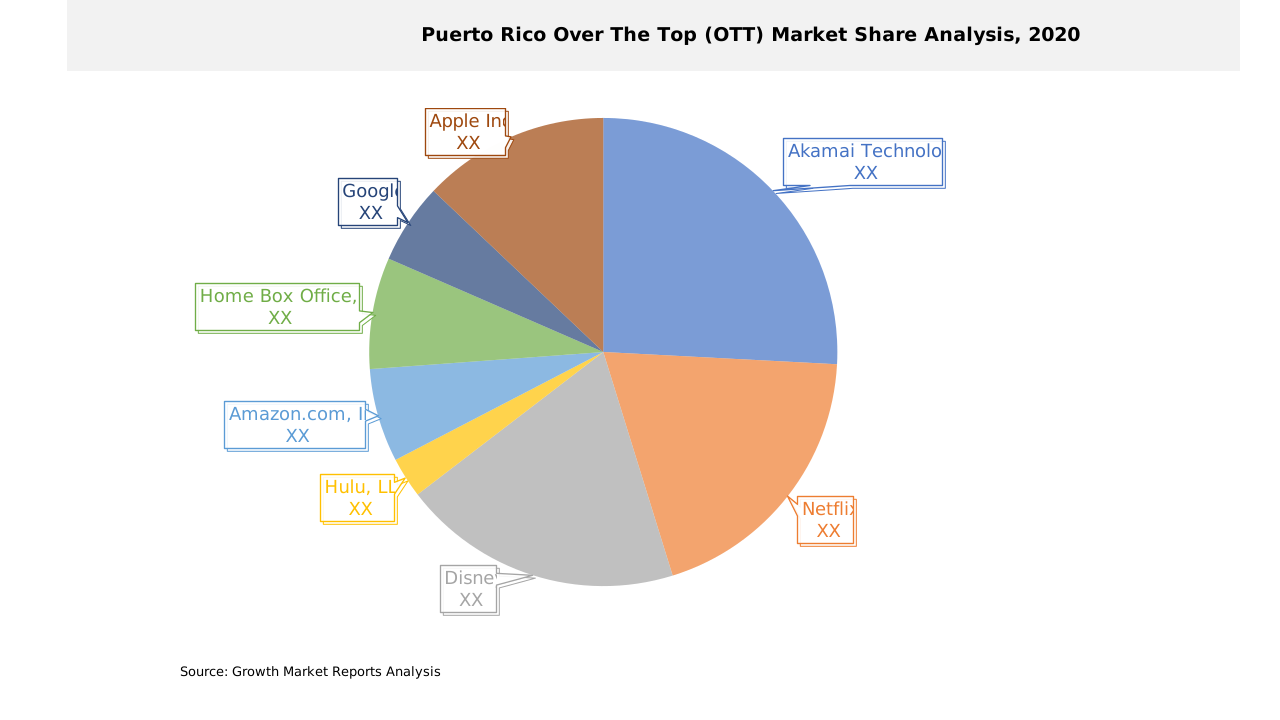
  • Top players in the market include Akamai Technologies, Netflix, Disney, Hulu, LLC, Amazon.com, Inc., Home Box Office, Inc., Google, Apple Inc., PANTAYA, LLC, Facebook, and Roku, Inc. These companies are considered as key manufacturers of Puerto Rico Over the Top (OTT) based on their revenue, product offerings and supply chain management system.
  • The players are adopting key strategies such as acquisition, collaborations, and geographical expansion where there is potential opportunity for the Puerto Rico Over the Top (OTT) market.
Over The Top (OTT) Market by key players

Video Summary for Over The Top (OTT) Market

Frequently Asked Questions

Major manufacturers include NETFLIX, Disney, Google, Apple Inc., Amazon.com, Inc.

Factors such as GDP, Legal factors, Political factors, Economic Factors, Environmental Regulations and Policies, Social, Technological.

The base year considered for the Puerto Rico Over the Top (OTT) market report is 2020. The complete analysis period is 2018 to 2028, wherein, 2018 and 2019 are the historic years, and the forecast is provided from 2021 to 2028.

The market is expected to slightly increase in growth between 2019 and 2020 owing to the COVID 19 pandemic on the Puerto Rico Over the Top (OTT) market.

Factors such as competitive strength and market positioning are key areas considered while selecting top companies to be profiled.

Rapidly increasing over the top platforms, OTT features of download and access, Multi-Platform Service, Plethora of options are the factors expected to drive the market growth during forecast period.

In addition to market size (in US$ Million), Company Market Share (in % for base year 2020), Future Opportunities, Recent Developments & Impact Analysis, Regulatory Landscape, Technology Landscape, and quality parameter overview is provided.

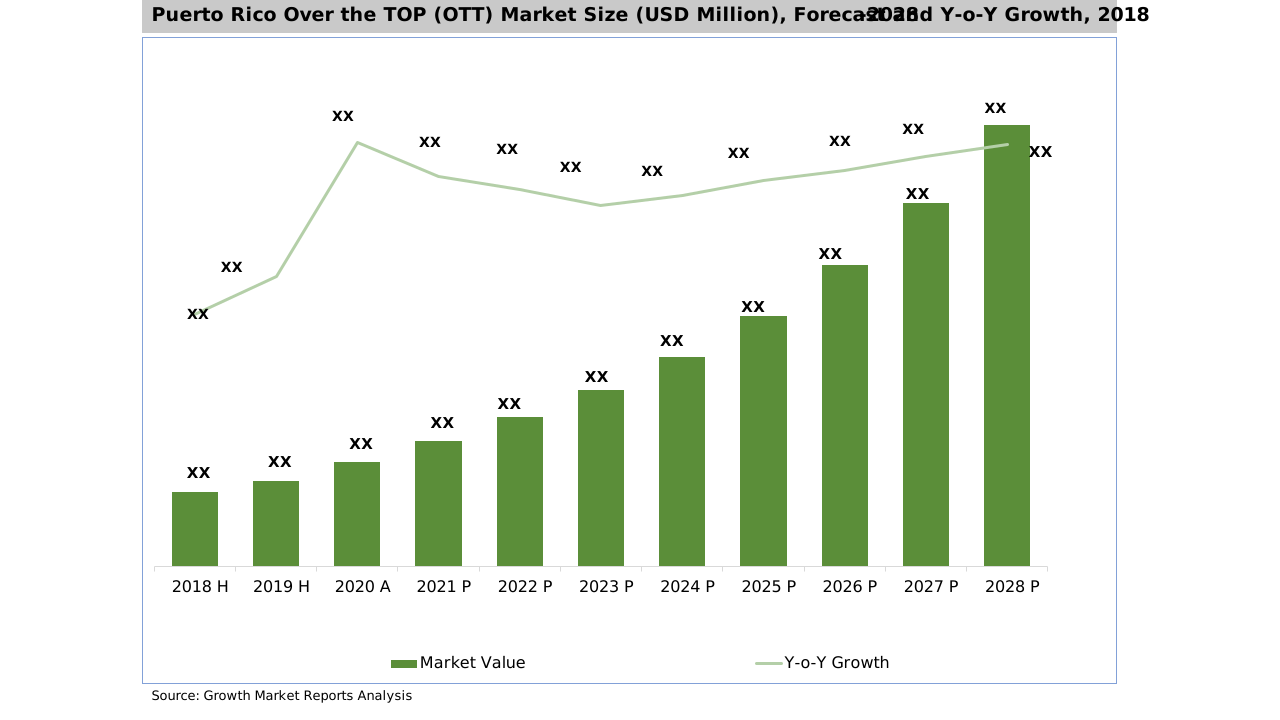
According to this Growth Market Reports report, the Puerto Rico Over the Top (OTT) market is likely to register a CAGR of 19.7% during forecast period 2020-2027, with an anticipated valuation of USD 716.9 million by the end of the 2028.

Additional company profiles can be provided on request

Table Of Content

Chapter 1 Executive Summary
Chapter 2 Assumptions and Acronyms Used
Chapter 3 Research Methodology
Chapter 4 Over The Top (OTT) Market Overview
   4.1 Introduction
      4.1.1 Market Taxonomy
      4.1.2 Market Definition
      4.1.3 Macro-Economic Factors Impacting the Market Growth
   4.2 Over The Top (OTT) Market Dynamics
      4.2.1 Market Drivers
      4.2.2 Market Restraints
      4.2.3 Market Opportunity
   4.3 Over The Top (OTT) Market - Supply Chain Analysis
      4.3.1 List of Key Suppliers
      4.3.2 List of Key Distributors
      4.3.3 List of Key Consumers
   4.4 Key Forces Shaping the Over The Top (OTT) Market
      4.4.1 Bargaining Power of Suppliers
      4.4.2 Bargaining Power of Buyers
      4.4.3 Threat of Substitution
      4.4.4 Threat of New Entrants
      4.4.5 Competitive Rivalry
   4.5 Global Over The Top (OTT) Market Size & Forecast, 2023-2032
      4.5.1 Over The Top (OTT) Market Size and Y-o-Y Growth
      4.5.2 Over The Top (OTT) Market Absolute $ Opportunity

Chapter 5 Global Over The Top (OTT) Market Analysis and Forecast By Component
   5.1 Introduction
      5.1.1 Key Market Trends & Growth Opportunities By Component
      5.1.2 Basis Point Share (BPS) Analysis By Component
      5.1.3 Absolute $ Opportunity Assessment By Component
   5.2 Over The Top (OTT) Market Size Forecast By Component
      5.2.1 Solution
      5.2.2 Services
   5.3 Market Attractiveness Analysis By Component

Chapter 6 Global Over The Top (OTT) Market Analysis and Forecast By Platform
   6.1 Introduction
      6.1.1 Key Market Trends & Growth Opportunities By Platform
      6.1.2 Basis Point Share (BPS) Analysis By Platform
      6.1.3 Absolute $ Opportunity Assessment By Platform
   6.2 Over The Top (OTT) Market Size Forecast By Platform
      6.2.1 Smartphones & Tablets
      6.2.2 Smart TVs
      6.2.3 Laptops & Desktops
      6.2.4 Set-Top Boxes
      6.2.5 Gaming Consoles
   6.3 Market Attractiveness Analysis By Platform

Chapter 7 Global Over The Top (OTT) Market Analysis and Forecast By Content Type
   7.1 Introduction
      7.1.1 Key Market Trends & Growth Opportunities By Content Type
      7.1.2 Basis Point Share (BPS) Analysis By Content Type
      7.1.3 Absolute $ Opportunity Assessment By Content Type
   7.2 Over The Top (OTT) Market Size Forecast By Content Type
      7.2.1 Video
      7.2.2 Audio
      7.2.3 Communication
      7.2.4 Others
   7.3 Market Attractiveness Analysis By Content Type

Chapter 8 Global Over The Top (OTT) Market Analysis and Forecast By Revenue Model
   8.1 Introduction
      8.1.1 Key Market Trends & Growth Opportunities By Revenue Model
      8.1.2 Basis Point Share (BPS) Analysis By Revenue Model
      8.1.3 Absolute $ Opportunity Assessment By Revenue Model
   8.2 Over The Top (OTT) Market Size Forecast By Revenue Model
      8.2.1 Subscription-Based
      8.2.2 Advertisement-Based
      8.2.3 Transaction-Based
      8.2.4 Hybrid
   8.3 Market Attractiveness Analysis By Revenue Model

Chapter 9 Global Over The Top (OTT) Market Analysis and Forecast By End-User
   9.1 Introduction
      9.1.1 Key Market Trends & Growth Opportunities By End-User
      9.1.2 Basis Point Share (BPS) Analysis By End-User
      9.1.3 Absolute $ Opportunity Assessment By End-User
   9.2 Over The Top (OTT) Market Size Forecast By End-User
      9.2.1 Personal
      9.2.2 Commercial
   9.3 Market Attractiveness Analysis By End-User

Chapter 10 Global Over The Top (OTT) Market Analysis and Forecast by Region
   10.1 Introduction
      10.1.1 Key Market Trends & Growth Opportunities By Region
      10.1.2 Basis Point Share (BPS) Analysis By Region
      10.1.3 Absolute $ Opportunity Assessment By Region
   10.2 Over The Top (OTT) Market Size Forecast By Region
      10.2.1 North America
      10.2.2 Europe
      10.2.3 Asia Pacific
      10.2.4 Latin America
      10.2.5 Middle East & Africa (MEA)
   10.3 Market Attractiveness Analysis By Region

Chapter 11 Coronavirus Disease (COVID-19) Impact 
   11.1 Introduction 
   11.2 Current & Future Impact Analysis 
   11.3 Economic Impact Analysis 
   11.4 Government Policies 
   11.5 Investment Scenario

Chapter 12 North America Over The Top (OTT) Analysis and Forecast
   12.1 Introduction
   12.2 North America Over The Top (OTT) Market Size Forecast by Country
      12.2.1 U.S.
      12.2.2 Canada
   12.3 Basis Point Share (BPS) Analysis by Country
   12.4 Absolute $ Opportunity Assessment by Country
   12.5 Market Attractiveness Analysis by Country
   12.6 North America Over The Top (OTT) Market Size Forecast By Component
      12.6.1 Solution
      12.6.2 Services
   12.7 Basis Point Share (BPS) Analysis By Component 
   12.8 Absolute $ Opportunity Assessment By Component 
   12.9 Market Attractiveness Analysis By Component
   12.10 North America Over The Top (OTT) Market Size Forecast By Platform
      12.10.1 Smartphones & Tablets
      12.10.2 Smart TVs
      12.10.3 Laptops & Desktops
      12.10.4 Set-Top Boxes
      12.10.5 Gaming Consoles
   12.11 Basis Point Share (BPS) Analysis By Platform 
   12.12 Absolute $ Opportunity Assessment By Platform 
   12.13 Market Attractiveness Analysis By Platform
   12.14 North America Over The Top (OTT) Market Size Forecast By Content Type
      12.14.1 Video
      12.14.2 Audio
      12.14.3 Communication
      12.14.4 Others
   12.15 Basis Point Share (BPS) Analysis By Content Type 
   12.16 Absolute $ Opportunity Assessment By Content Type 
   12.17 Market Attractiveness Analysis By Content Type
   12.18 North America Over The Top (OTT) Market Size Forecast By Revenue Model
      12.18.1 Subscription-Based
      12.18.2 Advertisement-Based
      12.18.3 Transaction-Based
      12.18.4 Hybrid
   12.19 Basis Point Share (BPS) Analysis By Revenue Model 
   12.20 Absolute $ Opportunity Assessment By Revenue Model 
   12.21 Market Attractiveness Analysis By Revenue Model
   12.22 North America Over The Top (OTT) Market Size Forecast By End-User
      12.22.1 Personal
      12.22.2 Commercial
   12.23 Basis Point Share (BPS) Analysis By End-User 
   12.24 Absolute $ Opportunity Assessment By End-User 
   12.25 Market Attractiveness Analysis By End-User

Chapter 13 Europe Over The Top (OTT) Analysis and Forecast
   13.1 Introduction
   13.2 Europe Over The Top (OTT) Market Size Forecast by Country
      13.2.1 Germany
      13.2.2 France
      13.2.3 Italy
      13.2.4 U.K.
      13.2.5 Spain
      13.2.6 Russia
      13.2.7 Rest of Europe
   13.3 Basis Point Share (BPS) Analysis by Country
   13.4 Absolute $ Opportunity Assessment by Country
   13.5 Market Attractiveness Analysis by Country
   13.6 Europe Over The Top (OTT) Market Size Forecast By Component
      13.6.1 Solution
      13.6.2 Services
   13.7 Basis Point Share (BPS) Analysis By Component 
   13.8 Absolute $ Opportunity Assessment By Component 
   13.9 Market Attractiveness Analysis By Component
   13.10 Europe Over The Top (OTT) Market Size Forecast By Platform
      13.10.1 Smartphones & Tablets
      13.10.2 Smart TVs
      13.10.3 Laptops & Desktops
      13.10.4 Set-Top Boxes
      13.10.5 Gaming Consoles
   13.11 Basis Point Share (BPS) Analysis By Platform 
   13.12 Absolute $ Opportunity Assessment By Platform 
   13.13 Market Attractiveness Analysis By Platform
   13.14 Europe Over The Top (OTT) Market Size Forecast By Content Type
      13.14.1 Video
      13.14.2 Audio
      13.14.3 Communication
      13.14.4 Others
   13.15 Basis Point Share (BPS) Analysis By Content Type 
   13.16 Absolute $ Opportunity Assessment By Content Type 
   13.17 Market Attractiveness Analysis By Content Type
   13.18 Europe Over The Top (OTT) Market Size Forecast By Revenue Model
      13.18.1 Subscription-Based
      13.18.2 Advertisement-Based
      13.18.3 Transaction-Based
      13.18.4 Hybrid
   13.19 Basis Point Share (BPS) Analysis By Revenue Model 
   13.20 Absolute $ Opportunity Assessment By Revenue Model 
   13.21 Market Attractiveness Analysis By Revenue Model
   13.22 Europe Over The Top (OTT) Market Size Forecast By End-User
      13.22.1 Personal
      13.22.2 Commercial
   13.23 Basis Point Share (BPS) Analysis By End-User 
   13.24 Absolute $ Opportunity Assessment By End-User 
   13.25 Market Attractiveness Analysis By End-User

Chapter 14 Asia Pacific Over The Top (OTT) Analysis and Forecast
   14.1 Introduction
   14.2 Asia Pacific Over The Top (OTT) Market Size Forecast by Country
      14.2.1 China
      14.2.2 Japan
      14.2.3 South Korea
      14.2.4 India
      14.2.5 Australia
      14.2.6 South East Asia (SEA)
      14.2.7 Rest of Asia Pacific (APAC)
   14.3 Basis Point Share (BPS) Analysis by Country
   14.4 Absolute $ Opportunity Assessment by Country
   14.5 Market Attractiveness Analysis by Country
   14.6 Asia Pacific Over The Top (OTT) Market Size Forecast By Component
      14.6.1 Solution
      14.6.2 Services
   14.7 Basis Point Share (BPS) Analysis By Component 
   14.8 Absolute $ Opportunity Assessment By Component 
   14.9 Market Attractiveness Analysis By Component
   14.10 Asia Pacific Over The Top (OTT) Market Size Forecast By Platform
      14.10.1 Smartphones & Tablets
      14.10.2 Smart TVs
      14.10.3 Laptops & Desktops
      14.10.4 Set-Top Boxes
      14.10.5 Gaming Consoles
   14.11 Basis Point Share (BPS) Analysis By Platform 
   14.12 Absolute $ Opportunity Assessment By Platform 
   14.13 Market Attractiveness Analysis By Platform
   14.14 Asia Pacific Over The Top (OTT) Market Size Forecast By Content Type
      14.14.1 Video
      14.14.2 Audio
      14.14.3 Communication
      14.14.4 Others
   14.15 Basis Point Share (BPS) Analysis By Content Type 
   14.16 Absolute $ Opportunity Assessment By Content Type 
   14.17 Market Attractiveness Analysis By Content Type
   14.18 Asia Pacific Over The Top (OTT) Market Size Forecast By Revenue Model
      14.18.1 Subscription-Based
      14.18.2 Advertisement-Based
      14.18.3 Transaction-Based
      14.18.4 Hybrid
   14.19 Basis Point Share (BPS) Analysis By Revenue Model 
   14.20 Absolute $ Opportunity Assessment By Revenue Model 
   14.21 Market Attractiveness Analysis By Revenue Model
   14.22 Asia Pacific Over The Top (OTT) Market Size Forecast By End-User
      14.22.1 Personal
      14.22.2 Commercial
   14.23 Basis Point Share (BPS) Analysis By End-User 
   14.24 Absolute $ Opportunity Assessment By End-User 
   14.25 Market Attractiveness Analysis By End-User

Chapter 15 Latin America Over The Top (OTT) Analysis and Forecast
   15.1 Introduction
   15.2 Latin America Over The Top (OTT) Market Size Forecast by Country
      15.2.1 Brazil
      15.2.2 Mexico
      15.2.3 Rest of Latin America (LATAM)
   15.3 Basis Point Share (BPS) Analysis by Country
   15.4 Absolute $ Opportunity Assessment by Country
   15.5 Market Attractiveness Analysis by Country
   15.6 Latin America Over The Top (OTT) Market Size Forecast By Component
      15.6.1 Solution
      15.6.2 Services
   15.7 Basis Point Share (BPS) Analysis By Component 
   15.8 Absolute $ Opportunity Assessment By Component 
   15.9 Market Attractiveness Analysis By Component
   15.10 Latin America Over The Top (OTT) Market Size Forecast By Platform
      15.10.1 Smartphones & Tablets
      15.10.2 Smart TVs
      15.10.3 Laptops & Desktops
      15.10.4 Set-Top Boxes
      15.10.5 Gaming Consoles
   15.11 Basis Point Share (BPS) Analysis By Platform 
   15.12 Absolute $ Opportunity Assessment By Platform 
   15.13 Market Attractiveness Analysis By Platform
   15.14 Latin America Over The Top (OTT) Market Size Forecast By Content Type
      15.14.1 Video
      15.14.2 Audio
      15.14.3 Communication
      15.14.4 Others
   15.15 Basis Point Share (BPS) Analysis By Content Type 
   15.16 Absolute $ Opportunity Assessment By Content Type 
   15.17 Market Attractiveness Analysis By Content Type
   15.18 Latin America Over The Top (OTT) Market Size Forecast By Revenue Model
      15.18.1 Subscription-Based
      15.18.2 Advertisement-Based
      15.18.3 Transaction-Based
      15.18.4 Hybrid
   15.19 Basis Point Share (BPS) Analysis By Revenue Model 
   15.20 Absolute $ Opportunity Assessment By Revenue Model 
   15.21 Market Attractiveness Analysis By Revenue Model
   15.22 Latin America Over The Top (OTT) Market Size Forecast By End-User
      15.22.1 Personal
      15.22.2 Commercial
   15.23 Basis Point Share (BPS) Analysis By End-User 
   15.24 Absolute $ Opportunity Assessment By End-User 
   15.25 Market Attractiveness Analysis By End-User

Chapter 16 Middle East & Africa (MEA) Over The Top (OTT) Analysis and Forecast
   16.1 Introduction
   16.2 Middle East & Africa (MEA) Over The Top (OTT) Market Size Forecast by Country
      16.2.1 Saudi Arabia
      16.2.2 South Africa
      16.2.3 UAE
      16.2.4 Rest of Middle East & Africa (MEA)
   16.3 Basis Point Share (BPS) Analysis by Country
   16.4 Absolute $ Opportunity Assessment by Country
   16.5 Market Attractiveness Analysis by Country
   16.6 Middle East & Africa (MEA) Over The Top (OTT) Market Size Forecast By Component
      16.6.1 Solution
      16.6.2 Services
   16.7 Basis Point Share (BPS) Analysis By Component 
   16.8 Absolute $ Opportunity Assessment By Component 
   16.9 Market Attractiveness Analysis By Component
   16.10 Middle East & Africa (MEA) Over The Top (OTT) Market Size Forecast By Platform
      16.10.1 Smartphones & Tablets
      16.10.2 Smart TVs
      16.10.3 Laptops & Desktops
      16.10.4 Set-Top Boxes
      16.10.5 Gaming Consoles
   16.11 Basis Point Share (BPS) Analysis By Platform 
   16.12 Absolute $ Opportunity Assessment By Platform 
   16.13 Market Attractiveness Analysis By Platform
   16.14 Middle East & Africa (MEA) Over The Top (OTT) Market Size Forecast By Content Type
      16.14.1 Video
      16.14.2 Audio
      16.14.3 Communication
      16.14.4 Others
   16.15 Basis Point Share (BPS) Analysis By Content Type 
   16.16 Absolute $ Opportunity Assessment By Content Type 
   16.17 Market Attractiveness Analysis By Content Type
   16.18 Middle East & Africa (MEA) Over The Top (OTT) Market Size Forecast By Revenue Model
      16.18.1 Subscription-Based
      16.18.2 Advertisement-Based
      16.18.3 Transaction-Based
      16.18.4 Hybrid
   16.19 Basis Point Share (BPS) Analysis By Revenue Model 
   16.20 Absolute $ Opportunity Assessment By Revenue Model 
   16.21 Market Attractiveness Analysis By Revenue Model
   16.22 Middle East & Africa (MEA) Over The Top (OTT) Market Size Forecast By End-User
      16.22.1 Personal
      16.22.2 Commercial
   16.23 Basis Point Share (BPS) Analysis By End-User 
   16.24 Absolute $ Opportunity Assessment By End-User 
   16.25 Market Attractiveness Analysis By End-User

Chapter 17 Competition Landscape 
   17.1 Over The Top (OTT) Market: Competitive Dashboard
   17.2 Global Over The Top (OTT) Market: Market Share Analysis, 2023
   17.3 Company Profiles (Details – Overview, Financials, Developments, Strategy) 
      17.3.1 Netflix
Amazon Prime Video
Disney+
Hulu
HBO Max
Apple TV+
YouTube
Tencent Video
iQIYI
Baidu (iQIYI)
Sony Liv
Hotstar (Disney+ Hotstar)
Peacock
Paramount+
Rakuten Viki
Sling TV
DAZN
ViacomCBS
Discovery+
ZEE5

Methodology

Our Clients

Deloitte
FedEx Logistics
The John Holland Group
Honda Motor Co. Ltd.
Microsoft
Nestle SA
Dassault Aviation
sinopec