Outdoor LED Display Market Research Report 2033

Outdoor LED Display Market Research Report 2033

Segments - by Product Type (Full Color Display, Monochrome Display, Tri-Color Display), by Application (Advertising, Sports & Entertainment, Transportation, Retail, Others), by Installation Type (Fixed, Rental), by Display Size (Below 32 Inches, 32-52 Inches, 52-75 Inches, Above 75 Inches), by End-User (Commercial, Government, Transportation, Sports & Entertainment, Others)

https://growthmarketreports.com/Raksha
Author : Raksha Sharma
https://growthmarketreports.com/Vaibhav
Fact-checked by : V. Chandola
https://growthmarketreports.com/Shruti
Editor : Shruti Bhat

Upcoming | Report ID :ICT-SE-373 | 4.4 Rating | 11 Reviews | 281 Pages | Format : Docx PDF

Report Description


Outdoor LED Display Market Outlook

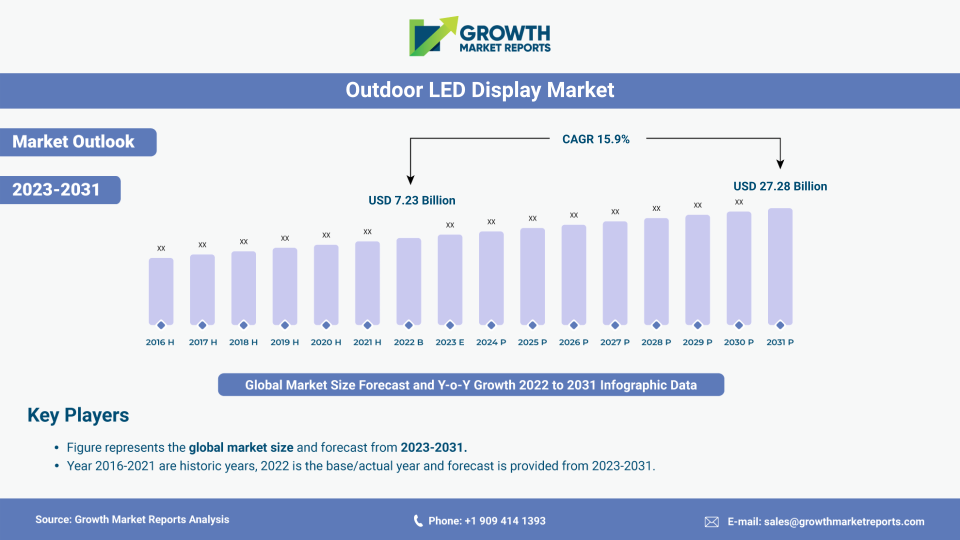
According to our latest research, the global Outdoor LED Display market size was valued at USD 8.4 billion in 2024. The market is expected to reach USD 17.1 billion by 2033, growing at a robust CAGR of 8.2% during the forecast period from 2025 to 2033. This growth is primarily fueled by the increasing adoption of digital advertising solutions, advancements in display technologies, and the rising demand for dynamic and energy-efficient signage across diverse sectors. The surge in urbanization and infrastructure development, coupled with the proliferation of smart city initiatives globally, is further propelling the expansion of the Outdoor LED Display market.

One of the most significant growth factors for the Outdoor LED Display market is the escalating demand for high-impact visual communication tools in advertising and public information dissemination. As businesses and government organizations strive to capture the attention of a broader audience, the preference for vivid, large-format digital displays has intensified. Outdoor LED displays offer superior brightness, longevity, and visibility compared to traditional signage, making them the preferred choice for both static and dynamic content delivery. The integration of advanced technologies, such as remote content management and real-time data updates, enhances the effectiveness of these displays, driving their widespread adoption across commercial and public sectors.

Another critical driver shaping the Outdoor LED Display market is the rapid technological advancements in LED display manufacturing. The evolution of energy-efficient LEDs, coupled with improvements in pixel pitch and resolution, has resulted in displays capable of delivering exceptional image clarity even in challenging outdoor environments. Manufacturers are increasingly focusing on the development of lightweight, modular, and weather-resistant displays that can be customized for various applications, from advertising billboards to stadium screens and transportation hubs. This continuous innovation is reducing total cost of ownership and improving return on investment for end-users, thereby accelerating market growth.

The growing trend toward digital transformation across industries is also contributing to the expansion of the Outdoor LED Display market. Retailers, sports arenas, transportation authorities, and government agencies are leveraging outdoor LED displays to enhance customer engagement, streamline information dissemination, and create immersive experiences. The ability to seamlessly integrate with IoT devices and smart city infrastructure further amplifies the utility of these displays. Additionally, the increasing emphasis on sustainability and energy conservation is prompting organizations to replace conventional signage with eco-friendly LED solutions, reinforcing the market's upward trajectory.

In recent years, the demand for High-Brightness Outdoor TV has surged, particularly in residential and commercial settings. These TVs are designed to withstand harsh weather conditions while delivering exceptional picture quality, making them ideal for outdoor entertainment spaces such as patios, pool areas, and open-air restaurants. The ability to offer vibrant, clear images even in direct sunlight sets High-Brightness Outdoor TVs apart from traditional indoor models. As consumers increasingly seek to enhance their outdoor living experiences, manufacturers are responding with innovative designs that combine durability with cutting-edge display technology. This trend is contributing to the overall growth of the outdoor display market, as more people embrace the idea of bringing their entertainment outside.

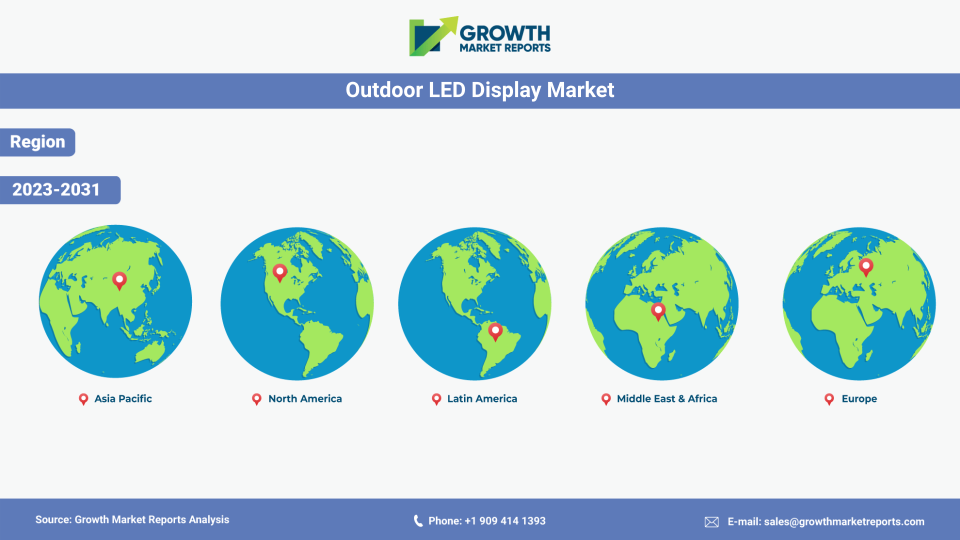
From a regional perspective, Asia Pacific is emerging as the largest and fastest-growing market for Outdoor LED Displays, driven by rapid urbanization, infrastructure modernization, and significant investments in commercial real estate and public amenities. North America and Europe are also witnessing substantial growth, fueled by the widespread adoption of digital signage in retail, transportation, and entertainment sectors. The Middle East & Africa and Latin America are experiencing steady growth, supported by government-led smart city projects and increasing demand for innovative advertising solutions. The global market is characterized by intense competition, technological innovation, and a strong focus on product differentiation and customization.

Global Outdoor LED Display Industry Outlook

Product Type Analysis

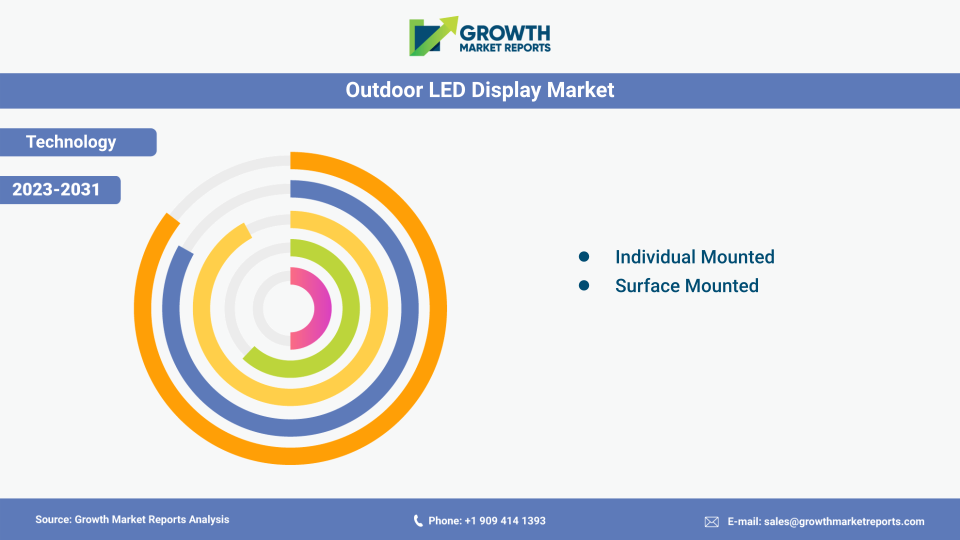
The Outdoor LED Display market is segmented by product type into Full Color Display, Monochrome Display, and Tri-Color Display. Among these, Full Color Displays dominate the market, accounting for the largest revenue share in 2024. The superior visual appeal, enhanced brightness, and capability to deliver dynamic, high-resolution content make Full Color Displays the preferred choice for advertising, entertainment, and sports applications. These displays are widely used in urban centers, stadiums, and transportation hubs, where high-impact visuals are essential for audience engagement. The increasing demand for immersive and interactive content is further fueling the adoption of Full Color Displays across various industries.

Monochrome Displays, while representing a smaller market share, continue to find application in cost-sensitive and information-centric installations such as transportation signage, public notice boards, and industrial displays. Their simplicity, lower power consumption, and cost-effectiveness make them suitable for environments where color is not a critical requirement. However, the market for Monochrome Displays is gradually contracting as end-users increasingly opt for more versatile and visually appealing alternatives. The ongoing technological advancements in full-color and tri-color displays are expected to further limit the growth potential of monochrome solutions in the coming years.

Tri-Color Displays serve as a middle ground between monochrome and full-color solutions, offering enhanced visual capabilities at a relatively lower cost. These displays are commonly used in applications where basic color differentiation is sufficient, such as traffic management systems, scoreboards, and simple advertising boards. The demand for tri-color displays remains steady, particularly in emerging markets where budget constraints limit the adoption of full-color technology. However, as the cost of full-color displays continues to decline, the market share of tri-color solutions is expected to diminish over the forecast period.

The competitive landscape within the product type segment is characterized by intense rivalry among manufacturers striving to deliver innovative, high-performance displays tailored to specific end-use requirements. Product differentiation, customization options, and after-sales support are key factors influencing purchasing decisions. As end-users become more discerning and technologically savvy, manufacturers are investing heavily in R&D to enhance display performance, durability, and energy efficiency. The ongoing shift toward high-resolution, ultra-bright full-color displays is expected to remain the dominant trend, shaping the future trajectory of the Outdoor LED Display market.

Report Scope

Attributes Details
Report Title Outdoor LED Display Market Research Report 2033
By Product Type Full Color Display, Monochrome Display, Tri-Color Display
By Application Advertising, Sports & Entertainment, Transportation, Retail, Others
By Installation Type Fixed, Rental
By Display Size Below 32 Inches, 32-52 Inches, 52-75 Inches, Above 75 Inches
By End-User Commercial, Government, Transportation, Sports & Entertainment, Others
Regions Covered North America, Europe, APAC, Latin America, MEA
Base Year 2024
Historic Data 2018-2023
Forecast Period 2025-2033
Number of Pages 281
Number of Tables & Figures 263
Customization Available Yes, the report can be customized as per your need.

Application Analysis

The Outdoor LED Display market is segmented by application into Advertising, Sports & Entertainment, Transportation, Retail, and Others. Advertising represents the largest application segment, driven by the growing need for impactful and flexible communication platforms. Businesses across sectors are leveraging outdoor LED displays to deliver targeted, real-time advertisements and promotional content, capitalizing on the high visibility and engagement offered by these displays. The ability to remotely manage and update content further enhances the appeal of LED displays for advertising, enabling brands to respond quickly to market trends and consumer preferences.

The Sports & Entertainment segment is another significant contributor to market growth, with stadiums, arenas, and event venues increasingly deploying large-format LED screens for live broadcasts, scoreboards, and immersive fan experiences. The superior brightness, high refresh rates, and weather resistance of outdoor LED displays make them ideal for both indoor and outdoor sporting events. The trend toward larger, more interactive screens is driving demand for advanced display solutions capable of delivering high-definition visuals and real-time data integration, enhancing the overall spectator experience.

In the Transportation sector, outdoor LED displays are widely used for passenger information systems, wayfinding, and safety messaging in airports, railway stations, bus terminals, and highways. The ability to provide clear, dynamic, and easily updatable information is critical for ensuring efficient operations and enhancing passenger convenience. As transportation networks become increasingly digitized and interconnected, the adoption of intelligent LED display solutions is expected to accelerate, supported by investments in smart city infrastructure and public safety initiatives.

The Retail segment is witnessing robust growth as retailers embrace digital signage to attract customers, promote products, and create immersive shopping environments. Outdoor LED displays are deployed at storefronts, shopping malls, and retail parks to deliver eye-catching promotions and real-time information, driving foot traffic and sales. The integration of interactive features, such as touch screens and facial recognition, is further enhancing the utility of LED displays in retail applications. The Others segment encompasses a diverse range of use cases, including public information boards, government communication, and educational institutions, underscoring the versatility and widespread adoption of outdoor LED display technology.

Installation Type Analysis

The Outdoor LED Display market is segmented by installation type into Fixed and Rental displays. Fixed installations account for the majority share, driven by their widespread use in permanent advertising billboards, transportation signage, and public information systems. These displays are designed for long-term deployment, offering robust construction, weather resistance, and minimal maintenance requirements. Fixed installations are particularly popular in high-traffic urban areas, where continuous visibility and reliability are paramount. The increasing adoption of smart city initiatives and infrastructure modernization projects is further boosting demand for fixed outdoor LED displays.

Rental outdoor LED displays, on the other hand, are gaining traction in the events and entertainment industry, where temporary and flexible display solutions are required. These displays are designed for quick assembly, disassembly, and transportation, making them ideal for concerts, festivals, trade shows, and sporting events. The growing popularity of live events and experiential marketing campaigns is driving demand for rental displays that can deliver high-impact visuals in dynamic environments. Rental displays are also being adopted by corporate clients for product launches, conferences, and promotional events, reflecting their versatility and cost-effectiveness.

The choice between fixed and rental installations is influenced by several factors, including application requirements, budget constraints, and deployment timelines. While fixed installations offer superior durability and lower long-term costs, rental displays provide unmatched flexibility and scalability for short-term or changing needs. Technological advancements are enabling manufacturers to develop modular, lightweight displays that can be easily reconfigured for both fixed and rental applications, bridging the gap between the two segments and expanding market opportunities.

The competitive dynamics within the installation type segment are shaped by the need for customization, rapid deployment, and after-sales support. Leading manufacturers are focusing on developing comprehensive solutions that cater to the unique needs of both fixed and rental customers, offering value-added services such as installation, maintenance, and content management. As market competition intensifies, the ability to deliver innovative, reliable, and cost-effective installation solutions will be a key differentiator for companies operating in the Outdoor LED Display market.

Display Size Analysis

Display size is a crucial segment in the Outdoor LED Display market, categorized into Below 32 Inches, 32-52 Inches, 52-75 Inches, and Above 75 Inches. The 52-75 Inches and Above 75 Inches segments collectively account for the largest market share, driven by the growing demand for large-format displays in advertising, sports, and entertainment applications. These displays offer superior visibility, high resolution, and the ability to deliver impactful content to large audiences, making them the preferred choice for billboards, stadium screens, and event backdrops. The trend toward larger, more immersive displays is expected to continue, supported by advancements in LED technology and declining costs.

Displays in the 32-52 Inches segment are widely used in retail, transportation, and public information applications, where space constraints and viewing distances necessitate medium-sized screens. These displays offer a balance between visibility, cost, and installation flexibility, making them suitable for storefronts, bus shelters, and wayfinding systems. The increasing adoption of digital signage in small and medium-sized businesses is driving demand for displays in this size range, as organizations seek to enhance customer engagement and streamline communication.

The Below 32 Inches segment, while representing a smaller share of the market, continues to find application in niche use cases such as kiosks, ticketing machines, and compact information boards. These displays are valued for their compact form factor, energy efficiency, and ease of integration into existing infrastructure. However, the market for small-sized outdoor LED displays is relatively limited, as most high-visibility applications require larger screen sizes to maximize impact and engagement.

The competitive landscape within the display size segment is characterized by a focus on innovation, customization, and scalability. Manufacturers are developing modular display solutions that allow end-users to configure screen sizes according to specific requirements, enabling seamless integration into diverse environments. The ongoing shift toward high-resolution, ultra-large displays is driving investment in R&D and manufacturing capabilities, as companies seek to capitalize on the growing demand for premium outdoor LED display solutions.

End-User Analysis

The Outdoor LED Display market is segmented by end-user into Commercial, Government, Transportation, Sports & Entertainment, and Others. The Commercial segment dominates the market, accounting for the largest revenue share in 2024. Businesses across retail, hospitality, real estate, and corporate sectors are increasingly adopting outdoor LED displays to enhance brand visibility, attract customers, and deliver dynamic content. The ability to remotely manage and update displays, coupled with the flexibility to deliver targeted messaging, is driving widespread adoption in the commercial sector.

The Government segment is also a significant contributor to market growth, with public agencies deploying outdoor LED displays for information dissemination, public safety messaging, and civic engagement. Government-led smart city initiatives and infrastructure modernization projects are fueling demand for intelligent display solutions that can deliver real-time information and support emergency response efforts. The integration of LED displays with IoT devices and data analytics platforms is further enhancing their utility in government applications.

In the Transportation sector, outdoor LED displays are widely used for passenger information systems, wayfinding, and safety messaging in airports, railway stations, bus terminals, and highways. The ability to provide clear, dynamic, and easily updatable information is critical for ensuring efficient operations and enhancing passenger convenience. As transportation networks become increasingly digitized and interconnected, the adoption of intelligent LED display solutions is expected to accelerate.

The Sports & Entertainment segment is witnessing robust growth as stadiums, arenas, and event venues increasingly deploy large-format LED screens for live broadcasts, scoreboards, and immersive fan experiences. The superior brightness, high refresh rates, and weather resistance of outdoor LED displays make them ideal for both indoor and outdoor sporting events. The trend toward larger, more interactive screens is driving demand for advanced display solutions capable of delivering high-definition visuals and real-time data integration.

Opportunities & Threats

The Outdoor LED Display market presents significant opportunities for growth, particularly with the rising adoption of digital signage in emerging economies. Rapid urbanization, infrastructure development, and government investments in smart city projects are creating a fertile environment for the deployment of advanced outdoor display solutions. The proliferation of digital advertising, coupled with the increasing need for real-time information dissemination, is driving demand for high-performance LED displays across commercial, government, and transportation sectors. Moreover, advancements in display technology, such as higher resolution, improved energy efficiency, and enhanced durability, are opening new avenues for product development and market expansion.

Another major opportunity lies in the integration of Outdoor LED Displays with IoT and data analytics platforms. The ability to collect and analyze real-time data from displays enables organizations to deliver targeted, context-aware content, enhancing customer engagement and maximizing advertising ROI. The emergence of interactive and programmable displays is further expanding the scope of applications, from personalized advertising to dynamic public safety messaging. Manufacturers and service providers who can offer integrated, end-to-end solutions that combine hardware, software, and analytics capabilities are well-positioned to capitalize on these emerging trends and drive long-term growth.

However, the Outdoor LED Display market also faces several restraining factors, including high initial investment costs and concerns related to maintenance and operational expenses. While LED technology offers significant long-term cost savings through energy efficiency and durability, the upfront costs associated with large-format displays and advanced control systems can be prohibitive for small and medium-sized enterprises. Additionally, the need for regular maintenance to ensure optimal performance and longevity can deter potential buyers, particularly in regions with limited technical expertise and support infrastructure. Addressing these challenges through innovative financing models, warranty programs, and value-added services will be critical for sustaining market growth.

Regional Outlook

Asia Pacific is the leading region in the Outdoor LED Display market, with a market size of USD 3.2 billion in 2024 and projected to reach USD 6.8 billion by 2033 at a remarkable CAGR of 8.7%. The region's dominance is driven by rapid urbanization, large-scale infrastructure projects, and significant investments in commercial real estate and public amenities. China, Japan, South Korea, and India are at the forefront of adoption, leveraging outdoor LED displays for advertising, transportation, and government communication. The proliferation of smart city initiatives and the increasing focus on digital transformation across industries are further accelerating market growth in Asia Pacific.

North America is another prominent market, with a 2024 market size of USD 2.1 billion, expected to reach USD 4.0 billion by 2033. The region benefits from a mature digital signage ecosystem, high consumer spending, and a strong emphasis on technology innovation. The widespread adoption of outdoor LED displays in retail, sports, and entertainment sectors, coupled with the growing demand for smart transportation solutions, is propelling market expansion. The United States and Canada are leading markets, with government and private sector investments in smart infrastructure and urban development projects driving further growth.

Europe, with a market size of USD 1.8 billion in 2024, is characterized by robust demand for outdoor LED displays in advertising, transportation, and public information applications. The region's focus on sustainability, energy efficiency, and digital transformation is fostering the adoption of advanced display technologies. Germany, the United Kingdom, France, and Italy are key markets, supported by government initiatives to modernize public infrastructure and enhance urban living standards. The Middle East & Africa and Latin America, with combined market sizes of USD 1.3 billion in 2024, are experiencing steady growth, driven by investments in smart city projects, tourism, and public safety initiatives. These regions offer significant untapped potential for market participants, particularly in the context of ongoing urbanization and economic development.

Outdoor LED Display Market Statistics

Competitor Outlook

The Outdoor LED Display market is highly competitive, characterized by a diverse mix of global, regional, and local players. The competitive landscape is shaped by rapid technological advancements, evolving customer preferences, and the need for product differentiation. Leading manufacturers are focusing on innovation, quality, and customization to gain a competitive edge, investing heavily in research and development to enhance display performance, energy efficiency, and durability. Strategic partnerships, mergers, and acquisitions are common strategies employed by market participants to expand their product portfolios, enter new markets, and strengthen their distribution networks.

The market is also witnessing increased competition from emerging players, particularly in Asia Pacific, where cost-effective manufacturing capabilities and access to raw materials are enabling new entrants to challenge established brands. The ability to offer end-to-end solutions, including hardware, software, and value-added services such as installation, maintenance, and content management, is a key differentiator for companies seeking to capture market share. Customer-centric approaches, such as tailored solutions, responsive support, and flexible financing options, are becoming increasingly important in driving customer loyalty and long-term business relationships.

Innovation remains at the heart of competitive strategy in the Outdoor LED Display market, with manufacturers striving to develop displays that offer higher resolution, improved brightness, and enhanced durability for outdoor environments. The integration of smart features, such as remote monitoring, real-time data analytics, and IoT connectivity, is enabling companies to deliver more intelligent and interactive display solutions. As the market continues to evolve, the ability to anticipate and respond to changing customer needs, regulatory requirements, and technological trends will be critical for sustained success.

Some of the major companies operating in the Outdoor LED Display market include Samsung Electronics Co., Ltd., LG Electronics Inc., Unilumin Group Co., Ltd., Barco NV, Daktronics, Inc., Leyard Optoelectronic Co., Ltd., Absen, Shenzhen Liantronics Co., Ltd., Panasonic Corporation, and NEC Corporation. Samsung and LG are renowned for their advanced display technologies and global reach, offering a wide range of outdoor LED solutions for commercial, sports, and transportation applications. Unilumin, Leyard, and Absen are leading Chinese manufacturers, recognized for their innovative products, competitive pricing, and strong presence in emerging markets. Barco and Daktronics are prominent players in the sports and entertainment segment, known for their large-format, high-performance displays and integrated solutions.

These companies are continuously investing in R&D to develop next-generation display technologies, expand their product portfolios, and enhance customer experiences. Strategic collaborations with technology providers, system integrators, and end-users are enabling them to offer comprehensive solutions that address the evolving needs of the market. As competition intensifies, the ability to deliver high-quality, reliable, and cost-effective outdoor LED display solutions will be a key determinant of market leadership and long-term success.

Key Players

  • Daktronics
  • Leyard Optoelectronic
  • Unilumin Group
  • Absen
  • Liantronics
  • Barco
  • Samsung Electronics
  • LG Electronics
  • Sony Corporation
  • Shenzhen AOTO Electronics
  • Yaham Optoelectronics
  • Shenzhen Mary Photoelectricity
  • QSTech
  • Mitsubishi Electric
  • Panasonic Corporation
  • NEC Display Solutions
  • Christie Digital Systems
  • Lighthouse Technologies
  • Sansitech
  • Optec Displays
Outdoor LED Display Market Overview

Segments

The Outdoor LED Display market has been segmented on the basis of

Product Type

  • Full Color Display
  • Monochrome Display
  • Tri-Color Display

Application

  • Advertising
  • Sports & Entertainment
  • Transportation
  • Retail
  • Others

Installation Type

  • Fixed
  • Rental

Display Size

  • Below 32 Inches
  • 32-52 Inches
  • 52-75 Inches
  • Above 75 Inches

End-User

  • Commercial
  • Government
  • Transportation
  • Sports & Entertainment
  • Others

Competitive Landscape

Key players in the global outdoor LED display market include LG Electronics, Panasonic, Electronic Displays, Sony, Toshiba, Shenzhen Dicolor Optoelectronics Co Ltd, Daktronics, Lighthouse Technologies Ltd, Barco NV, and Leyard Optoelectronic Co Ltd.

Increasing product life and improving product application & capacity are some of the major strategies adopted by manufacturers to provide distinct product. Dealers in the industry are providing end-to-end solutions from manufacturing to installation at the site coupled with after-sales services.

Manufacturers are investing largely in R&D to discover technologies for reducing emissions & losses and improving efficiency. Partnerships and acquisitions are the major strategies adopted by the vendors for expanding the business.
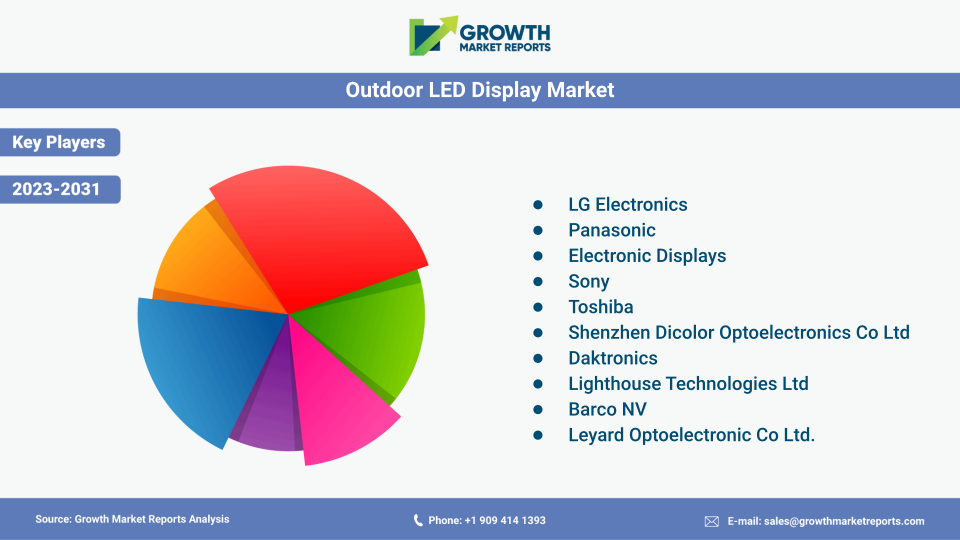

Outdoor LED Display Market Key Players

Frequently Asked Questions

Major players include Samsung Electronics, LG Electronics, Unilumin Group, Barco, Daktronics, Leyard Optoelectronic, Absen, Liantronics, Panasonic Corporation, and NEC Corporation, among others.

Opportunities include increasing adoption in emerging economies, integration with IoT and data analytics, and demand for interactive displays. Challenges include high initial investment costs and ongoing maintenance requirements.

Key end-users include commercial businesses, government agencies, transportation authorities, and sports & entertainment venues. The commercial sector holds the largest share due to widespread adoption for branding and customer engagement.

Large-format displays (52-75 inches and above 75 inches) account for the largest market share, driven by demand for impactful visuals in advertising and sports. Medium and small displays are used in retail, transportation, and niche applications.

Outdoor LED Displays are installed as either fixed or rental displays. Fixed installations are common for permanent signage, while rental displays are popular for events, concerts, and temporary setups.

Asia Pacific is the largest and fastest-growing region, followed by North America and Europe. The Middle East & Africa and Latin America are also experiencing steady growth due to smart city projects and increased demand for digital signage.

Outdoor LED Displays are primarily used for advertising, sports and entertainment, transportation (such as passenger information systems), retail promotions, and public information dissemination.

Full Color Displays dominate the market due to their superior visual appeal, brightness, and ability to deliver dynamic, high-resolution content, making them ideal for advertising, sports, and entertainment applications.

Major growth drivers include increasing adoption of digital advertising, advancements in LED display technology, rising demand for energy-efficient signage, urbanization, infrastructure development, and smart city initiatives.

The global Outdoor LED Display market was valued at USD 8.4 billion in 2024 and is expected to reach USD 17.1 billion by 2033, growing at a CAGR of 8.2% from 2025 to 2033.

Table Of Content

Chapter 1 Executive Summary
Chapter 2 Assumptions and Acronyms Used
Chapter 3 Research Methodology
Chapter 4 Outdoor LED Display Market Overview
   4.1 Introduction
      4.1.1 Market Taxonomy
      4.1.2 Market Definition
      4.1.3 Macro-Economic Factors Impacting the Market Growth
   4.2 Outdoor LED Display Market Dynamics
      4.2.1 Market Drivers
      4.2.2 Market Restraints
      4.2.3 Market Opportunity
   4.3 Outdoor LED Display Market - Supply Chain Analysis
      4.3.1 List of Key Suppliers
      4.3.2 List of Key Distributors
      4.3.3 List of Key Consumers
   4.4 Key Forces Shaping the Outdoor LED Display Market
      4.4.1 Bargaining Power of Suppliers
      4.4.2 Bargaining Power of Buyers
      4.4.3 Threat of Substitution
      4.4.4 Threat of New Entrants
      4.4.5 Competitive Rivalry
   4.5 Global Outdoor LED Display Market Size & Forecast, 2023-2032
      4.5.1 Outdoor LED Display Market Size and Y-o-Y Growth
      4.5.2 Outdoor LED Display Market Absolute $ Opportunity

Chapter 5 Global Outdoor LED Display Market Analysis and Forecast By Product Type
   5.1 Introduction
      5.1.1 Key Market Trends & Growth Opportunities By Product Type
      5.1.2 Basis Point Share (BPS) Analysis By Product Type
      5.1.3 Absolute $ Opportunity Assessment By Product Type
   5.2 Outdoor LED Display Market Size Forecast By Product Type
      5.2.1 Full Color Display
      5.2.2 Monochrome Display
      5.2.3 Tri-Color Display
   5.3 Market Attractiveness Analysis By Product Type

Chapter 6 Global Outdoor LED Display Market Analysis and Forecast By Application
   6.1 Introduction
      6.1.1 Key Market Trends & Growth Opportunities By Application
      6.1.2 Basis Point Share (BPS) Analysis By Application
      6.1.3 Absolute $ Opportunity Assessment By Application
   6.2 Outdoor LED Display Market Size Forecast By Application
      6.2.1 Advertising
      6.2.2 Sports & Entertainment
      6.2.3 Transportation
      6.2.4 Retail
      6.2.5 Others
   6.3 Market Attractiveness Analysis By Application

Chapter 7 Global Outdoor LED Display Market Analysis and Forecast By Installation Type
   7.1 Introduction
      7.1.1 Key Market Trends & Growth Opportunities By Installation Type
      7.1.2 Basis Point Share (BPS) Analysis By Installation Type
      7.1.3 Absolute $ Opportunity Assessment By Installation Type
   7.2 Outdoor LED Display Market Size Forecast By Installation Type
      7.2.1 Fixed
      7.2.2 Rental
   7.3 Market Attractiveness Analysis By Installation Type

Chapter 8 Global Outdoor LED Display Market Analysis and Forecast By Display Size
   8.1 Introduction
      8.1.1 Key Market Trends & Growth Opportunities By Display Size
      8.1.2 Basis Point Share (BPS) Analysis By Display Size
      8.1.3 Absolute $ Opportunity Assessment By Display Size
   8.2 Outdoor LED Display Market Size Forecast By Display Size
      8.2.1 Below 32 Inches
      8.2.2 32-52 Inches
      8.2.3 52-75 Inches
      8.2.4 Above 75 Inches
   8.3 Market Attractiveness Analysis By Display Size

Chapter 9 Global Outdoor LED Display Market Analysis and Forecast By End-User
   9.1 Introduction
      9.1.1 Key Market Trends & Growth Opportunities By End-User
      9.1.2 Basis Point Share (BPS) Analysis By End-User
      9.1.3 Absolute $ Opportunity Assessment By End-User
   9.2 Outdoor LED Display Market Size Forecast By End-User
      9.2.1 Commercial
      9.2.2 Government
      9.2.3 Transportation
      9.2.4 Sports & Entertainment
      9.2.5 Others
   9.3 Market Attractiveness Analysis By End-User

Chapter 10 Global Outdoor LED Display Market Analysis and Forecast by Region
   10.1 Introduction
      10.1.1 Key Market Trends & Growth Opportunities By Region
      10.1.2 Basis Point Share (BPS) Analysis By Region
      10.1.3 Absolute $ Opportunity Assessment By Region
   10.2 Outdoor LED Display Market Size Forecast By Region
      10.2.1 North America
      10.2.2 Europe
      10.2.3 Asia Pacific
      10.2.4 Latin America
      10.2.5 Middle East & Africa (MEA)
   10.3 Market Attractiveness Analysis By Region

Chapter 11 Coronavirus Disease (COVID-19) Impact 
   11.1 Introduction 
   11.2 Current & Future Impact Analysis 
   11.3 Economic Impact Analysis 
   11.4 Government Policies 
   11.5 Investment Scenario

Chapter 12 North America Outdoor LED Display Analysis and Forecast
   12.1 Introduction
   12.2 North America Outdoor LED Display Market Size Forecast by Country
      12.2.1 U.S.
      12.2.2 Canada
   12.3 Basis Point Share (BPS) Analysis by Country
   12.4 Absolute $ Opportunity Assessment by Country
   12.5 Market Attractiveness Analysis by Country
   12.6 North America Outdoor LED Display Market Size Forecast By Product Type
      12.6.1 Full Color Display
      12.6.2 Monochrome Display
      12.6.3 Tri-Color Display
   12.7 Basis Point Share (BPS) Analysis By Product Type 
   12.8 Absolute $ Opportunity Assessment By Product Type 
   12.9 Market Attractiveness Analysis By Product Type
   12.10 North America Outdoor LED Display Market Size Forecast By Application
      12.10.1 Advertising
      12.10.2 Sports & Entertainment
      12.10.3 Transportation
      12.10.4 Retail
      12.10.5 Others
   12.11 Basis Point Share (BPS) Analysis By Application 
   12.12 Absolute $ Opportunity Assessment By Application 
   12.13 Market Attractiveness Analysis By Application
   12.14 North America Outdoor LED Display Market Size Forecast By Installation Type
      12.14.1 Fixed
      12.14.2 Rental
   12.15 Basis Point Share (BPS) Analysis By Installation Type 
   12.16 Absolute $ Opportunity Assessment By Installation Type 
   12.17 Market Attractiveness Analysis By Installation Type
   12.18 North America Outdoor LED Display Market Size Forecast By Display Size
      12.18.1 Below 32 Inches
      12.18.2 32-52 Inches
      12.18.3 52-75 Inches
      12.18.4 Above 75 Inches
   12.19 Basis Point Share (BPS) Analysis By Display Size 
   12.20 Absolute $ Opportunity Assessment By Display Size 
   12.21 Market Attractiveness Analysis By Display Size
   12.22 North America Outdoor LED Display Market Size Forecast By End-User
      12.22.1 Commercial
      12.22.2 Government
      12.22.3 Transportation
      12.22.4 Sports & Entertainment
      12.22.5 Others
   12.23 Basis Point Share (BPS) Analysis By End-User 
   12.24 Absolute $ Opportunity Assessment By End-User 
   12.25 Market Attractiveness Analysis By End-User

Chapter 13 Europe Outdoor LED Display Analysis and Forecast
   13.1 Introduction
   13.2 Europe Outdoor LED Display Market Size Forecast by Country
      13.2.1 Germany
      13.2.2 France
      13.2.3 Italy
      13.2.4 U.K.
      13.2.5 Spain
      13.2.6 Russia
      13.2.7 Rest of Europe
   13.3 Basis Point Share (BPS) Analysis by Country
   13.4 Absolute $ Opportunity Assessment by Country
   13.5 Market Attractiveness Analysis by Country
   13.6 Europe Outdoor LED Display Market Size Forecast By Product Type
      13.6.1 Full Color Display
      13.6.2 Monochrome Display
      13.6.3 Tri-Color Display
   13.7 Basis Point Share (BPS) Analysis By Product Type 
   13.8 Absolute $ Opportunity Assessment By Product Type 
   13.9 Market Attractiveness Analysis By Product Type
   13.10 Europe Outdoor LED Display Market Size Forecast By Application
      13.10.1 Advertising
      13.10.2 Sports & Entertainment
      13.10.3 Transportation
      13.10.4 Retail
      13.10.5 Others
   13.11 Basis Point Share (BPS) Analysis By Application 
   13.12 Absolute $ Opportunity Assessment By Application 
   13.13 Market Attractiveness Analysis By Application
   13.14 Europe Outdoor LED Display Market Size Forecast By Installation Type
      13.14.1 Fixed
      13.14.2 Rental
   13.15 Basis Point Share (BPS) Analysis By Installation Type 
   13.16 Absolute $ Opportunity Assessment By Installation Type 
   13.17 Market Attractiveness Analysis By Installation Type
   13.18 Europe Outdoor LED Display Market Size Forecast By Display Size
      13.18.1 Below 32 Inches
      13.18.2 32-52 Inches
      13.18.3 52-75 Inches
      13.18.4 Above 75 Inches
   13.19 Basis Point Share (BPS) Analysis By Display Size 
   13.20 Absolute $ Opportunity Assessment By Display Size 
   13.21 Market Attractiveness Analysis By Display Size
   13.22 Europe Outdoor LED Display Market Size Forecast By End-User
      13.22.1 Commercial
      13.22.2 Government
      13.22.3 Transportation
      13.22.4 Sports & Entertainment
      13.22.5 Others
   13.23 Basis Point Share (BPS) Analysis By End-User 
   13.24 Absolute $ Opportunity Assessment By End-User 
   13.25 Market Attractiveness Analysis By End-User

Chapter 14 Asia Pacific Outdoor LED Display Analysis and Forecast
   14.1 Introduction
   14.2 Asia Pacific Outdoor LED Display Market Size Forecast by Country
      14.2.1 China
      14.2.2 Japan
      14.2.3 South Korea
      14.2.4 India
      14.2.5 Australia
      14.2.6 South East Asia (SEA)
      14.2.7 Rest of Asia Pacific (APAC)
   14.3 Basis Point Share (BPS) Analysis by Country
   14.4 Absolute $ Opportunity Assessment by Country
   14.5 Market Attractiveness Analysis by Country
   14.6 Asia Pacific Outdoor LED Display Market Size Forecast By Product Type
      14.6.1 Full Color Display
      14.6.2 Monochrome Display
      14.6.3 Tri-Color Display
   14.7 Basis Point Share (BPS) Analysis By Product Type 
   14.8 Absolute $ Opportunity Assessment By Product Type 
   14.9 Market Attractiveness Analysis By Product Type
   14.10 Asia Pacific Outdoor LED Display Market Size Forecast By Application
      14.10.1 Advertising
      14.10.2 Sports & Entertainment
      14.10.3 Transportation
      14.10.4 Retail
      14.10.5 Others
   14.11 Basis Point Share (BPS) Analysis By Application 
   14.12 Absolute $ Opportunity Assessment By Application 
   14.13 Market Attractiveness Analysis By Application
   14.14 Asia Pacific Outdoor LED Display Market Size Forecast By Installation Type
      14.14.1 Fixed
      14.14.2 Rental
   14.15 Basis Point Share (BPS) Analysis By Installation Type 
   14.16 Absolute $ Opportunity Assessment By Installation Type 
   14.17 Market Attractiveness Analysis By Installation Type
   14.18 Asia Pacific Outdoor LED Display Market Size Forecast By Display Size
      14.18.1 Below 32 Inches
      14.18.2 32-52 Inches
      14.18.3 52-75 Inches
      14.18.4 Above 75 Inches
   14.19 Basis Point Share (BPS) Analysis By Display Size 
   14.20 Absolute $ Opportunity Assessment By Display Size 
   14.21 Market Attractiveness Analysis By Display Size
   14.22 Asia Pacific Outdoor LED Display Market Size Forecast By End-User
      14.22.1 Commercial
      14.22.2 Government
      14.22.3 Transportation
      14.22.4 Sports & Entertainment
      14.22.5 Others
   14.23 Basis Point Share (BPS) Analysis By End-User 
   14.24 Absolute $ Opportunity Assessment By End-User 
   14.25 Market Attractiveness Analysis By End-User

Chapter 15 Latin America Outdoor LED Display Analysis and Forecast
   15.1 Introduction
   15.2 Latin America Outdoor LED Display Market Size Forecast by Country
      15.2.1 Brazil
      15.2.2 Mexico
      15.2.3 Rest of Latin America (LATAM)
   15.3 Basis Point Share (BPS) Analysis by Country
   15.4 Absolute $ Opportunity Assessment by Country
   15.5 Market Attractiveness Analysis by Country
   15.6 Latin America Outdoor LED Display Market Size Forecast By Product Type
      15.6.1 Full Color Display
      15.6.2 Monochrome Display
      15.6.3 Tri-Color Display
   15.7 Basis Point Share (BPS) Analysis By Product Type 
   15.8 Absolute $ Opportunity Assessment By Product Type 
   15.9 Market Attractiveness Analysis By Product Type
   15.10 Latin America Outdoor LED Display Market Size Forecast By Application
      15.10.1 Advertising
      15.10.2 Sports & Entertainment
      15.10.3 Transportation
      15.10.4 Retail
      15.10.5 Others
   15.11 Basis Point Share (BPS) Analysis By Application 
   15.12 Absolute $ Opportunity Assessment By Application 
   15.13 Market Attractiveness Analysis By Application
   15.14 Latin America Outdoor LED Display Market Size Forecast By Installation Type
      15.14.1 Fixed
      15.14.2 Rental
   15.15 Basis Point Share (BPS) Analysis By Installation Type 
   15.16 Absolute $ Opportunity Assessment By Installation Type 
   15.17 Market Attractiveness Analysis By Installation Type
   15.18 Latin America Outdoor LED Display Market Size Forecast By Display Size
      15.18.1 Below 32 Inches
      15.18.2 32-52 Inches
      15.18.3 52-75 Inches
      15.18.4 Above 75 Inches
   15.19 Basis Point Share (BPS) Analysis By Display Size 
   15.20 Absolute $ Opportunity Assessment By Display Size 
   15.21 Market Attractiveness Analysis By Display Size
   15.22 Latin America Outdoor LED Display Market Size Forecast By End-User
      15.22.1 Commercial
      15.22.2 Government
      15.22.3 Transportation
      15.22.4 Sports & Entertainment
      15.22.5 Others
   15.23 Basis Point Share (BPS) Analysis By End-User 
   15.24 Absolute $ Opportunity Assessment By End-User 
   15.25 Market Attractiveness Analysis By End-User

Chapter 16 Middle East & Africa (MEA) Outdoor LED Display Analysis and Forecast
   16.1 Introduction
   16.2 Middle East & Africa (MEA) Outdoor LED Display Market Size Forecast by Country
      16.2.1 Saudi Arabia
      16.2.2 South Africa
      16.2.3 UAE
      16.2.4 Rest of Middle East & Africa (MEA)
   16.3 Basis Point Share (BPS) Analysis by Country
   16.4 Absolute $ Opportunity Assessment by Country
   16.5 Market Attractiveness Analysis by Country
   16.6 Middle East & Africa (MEA) Outdoor LED Display Market Size Forecast By Product Type
      16.6.1 Full Color Display
      16.6.2 Monochrome Display
      16.6.3 Tri-Color Display
   16.7 Basis Point Share (BPS) Analysis By Product Type 
   16.8 Absolute $ Opportunity Assessment By Product Type 
   16.9 Market Attractiveness Analysis By Product Type
   16.10 Middle East & Africa (MEA) Outdoor LED Display Market Size Forecast By Application
      16.10.1 Advertising
      16.10.2 Sports & Entertainment
      16.10.3 Transportation
      16.10.4 Retail
      16.10.5 Others
   16.11 Basis Point Share (BPS) Analysis By Application 
   16.12 Absolute $ Opportunity Assessment By Application 
   16.13 Market Attractiveness Analysis By Application
   16.14 Middle East & Africa (MEA) Outdoor LED Display Market Size Forecast By Installation Type
      16.14.1 Fixed
      16.14.2 Rental
   16.15 Basis Point Share (BPS) Analysis By Installation Type 
   16.16 Absolute $ Opportunity Assessment By Installation Type 
   16.17 Market Attractiveness Analysis By Installation Type
   16.18 Middle East & Africa (MEA) Outdoor LED Display Market Size Forecast By Display Size
      16.18.1 Below 32 Inches
      16.18.2 32-52 Inches
      16.18.3 52-75 Inches
      16.18.4 Above 75 Inches
   16.19 Basis Point Share (BPS) Analysis By Display Size 
   16.20 Absolute $ Opportunity Assessment By Display Size 
   16.21 Market Attractiveness Analysis By Display Size
   16.22 Middle East & Africa (MEA) Outdoor LED Display Market Size Forecast By End-User
      16.22.1 Commercial
      16.22.2 Government
      16.22.3 Transportation
      16.22.4 Sports & Entertainment
      16.22.5 Others
   16.23 Basis Point Share (BPS) Analysis By End-User 
   16.24 Absolute $ Opportunity Assessment By End-User 
   16.25 Market Attractiveness Analysis By End-User

Chapter 17 Competition Landscape 
   17.1 Outdoor LED Display Market: Competitive Dashboard
   17.2 Global Outdoor LED Display Market: Market Share Analysis, 2023
   17.3 Company Profiles (Details – Overview, Financials, Developments, Strategy) 
      17.3.1 Daktronics
Leyard Optoelectronic
Unilumin Group
Absen
Liantronics
Barco
Samsung Electronics
LG Electronics
Sony Corporation
Shenzhen AOTO Electronics
Yaham Optoelectronics
Shenzhen Mary Photoelectricity
QSTech
Mitsubishi Electric
Panasonic Corporation
NEC Display Solutions
Christie Digital Systems
Lighthouse Technologies
Sansitech
Optec Displays

Methodology

Our Clients

Nestle SA
General Electric
Siemens Healthcare
Microsoft
Dassault Aviation
Honda Motor Co. Ltd.
The John Holland Group
General Mills