Osteoporosis Drugs Market Research Report 2033

Osteoporosis Drugs Market Research Report 2033

Segments - by Drug Type (Bisphosphonates, Selective Estrogen Receptor Modulators (SERMs), Parathyroid Hormone Therapy, Calcitonin, RANK Ligand Inhibitors, Others), by Route Of Administration (Oral, Injectable, Others), by Distribution Channel (Hospital Pharmacies, Retail Pharmacies, Online Pharmacies, Others)

https://growthmarketreports.com/raksha
Author : Raksha Sharma
https://growthmarketreports.com/Vaibhav
Fact-checked by : V. Chandola
https://growthmarketreports.com/Shruti
Editor : Shruti Bhat

Upcoming | Report ID :HC-2325 | 4.1 Rating | 80 Reviews | 265 Pages | Format : Docx PDF

Report Description


Osteoporosis Drugs Market Outlook

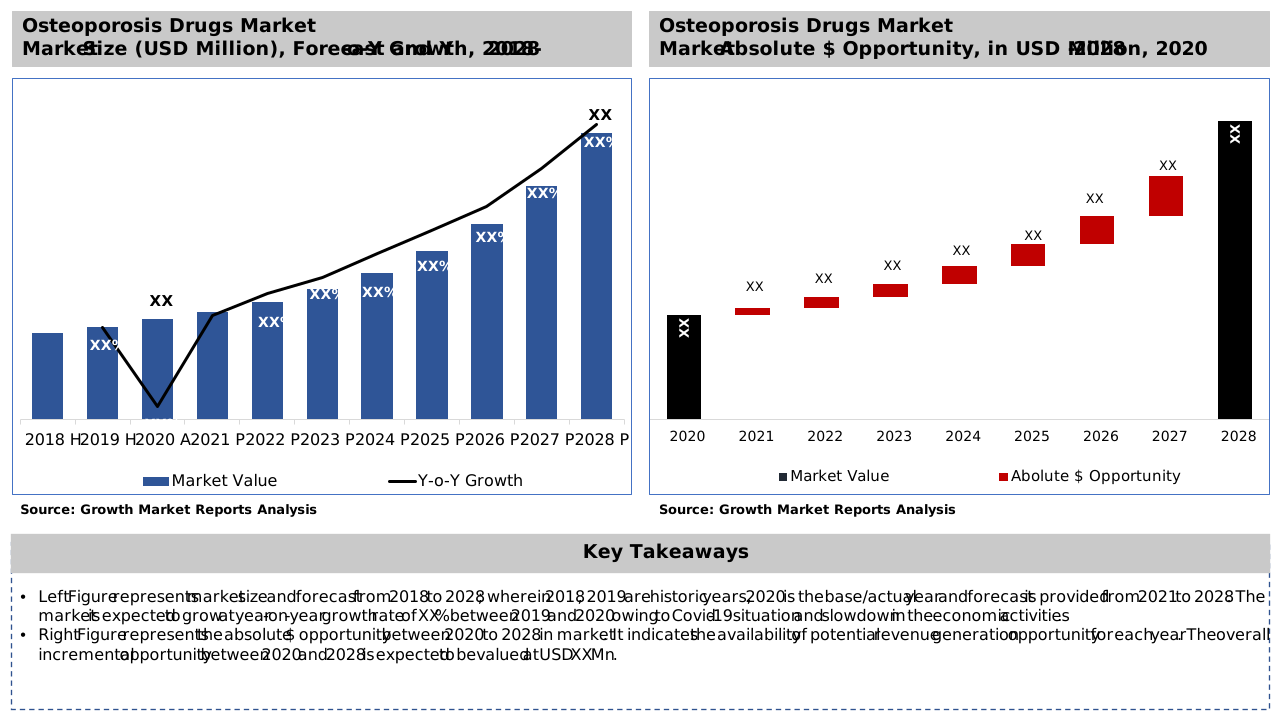
According to our latest research, the global osteoporosis drugs market size was valued at USD 13.7 billion in 2024, with a steady compound annual growth rate (CAGR) of 4.3% expected from 2025 to 2033. This robust growth trajectory indicates that the market is projected to reach USD 19.2 billion by 2033. The primary growth driver for this market is the rising prevalence of osteoporosis globally, particularly among the aging population, combined with increased awareness and improved diagnostic rates.

The osteoporosis drugs market is experiencing significant momentum due to the increasing global burden of osteoporosis, which is primarily attributed to the rapidly aging population. As life expectancy continues to rise, especially in developed economies, the proportion of individuals over the age of 50 is growing, and this demographic is at the highest risk for osteoporosis and related fractures. Additionally, lifestyle changes, including sedentary habits and poor dietary calcium intake, have contributed to a higher incidence of osteoporosis, particularly among postmenopausal women. The growing recognition of osteoporosis as a major public health issue has also led to enhanced screening programs and early diagnosis, resulting in a greater number of patients being prescribed osteoporosis drugs, further fueling market growth.

Another key growth factor for the osteoporosis drugs market is the ongoing innovation in drug development and the introduction of novel therapies. Pharmaceutical companies are investing heavily in research and development to create more effective medications with improved safety profiles and fewer side effects. For example, the advent of RANK ligand inhibitors and parathyroid hormone analogs has expanded the therapeutic arsenal available to clinicians, offering patients alternatives to traditional bisphosphonates. These advancements not only improve patient adherence and outcomes but also help mitigate the limitations of existing therapies, such as gastrointestinal side effects and long-term safety concerns. As newer drugs receive regulatory approvals and enter the market, they are expected to drive both value and volume growth in the coming years.

Furthermore, the osteoporosis drugs market is benefiting from increased healthcare expenditure and government initiatives aimed at reducing the burden of osteoporotic fractures. Many countries are implementing national guidelines and reimbursement policies to encourage early diagnosis and treatment of osteoporosis, particularly in high-risk populations. The expansion of health insurance coverage and improved access to healthcare services have also played a crucial role in boosting prescription rates for osteoporosis medications. In addition, public awareness campaigns and educational programs are helping to dispel myths about osteoporosis and promote the importance of preventive care, further supporting market expansion.

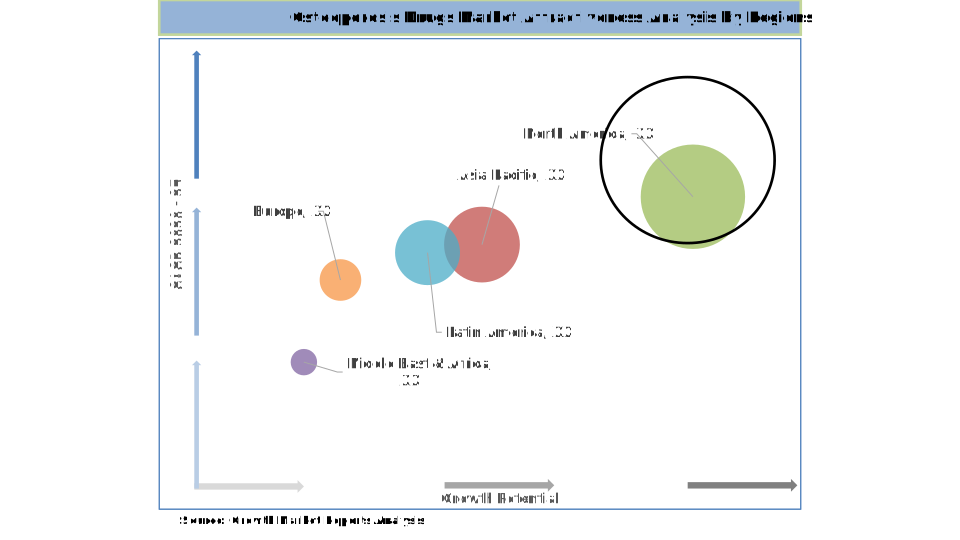
From a regional perspective, North America currently dominates the osteoporosis drugs market, accounting for the largest share in 2024, followed by Europe and Asia Pacific. The high prevalence of osteoporosis, well-established healthcare infrastructure, and strong presence of leading pharmaceutical companies have contributed to North America's leadership position. Europe also holds a significant share due to its aging population and robust reimbursement systems. Meanwhile, the Asia Pacific region is expected to witness the fastest growth during the forecast period, driven by rising awareness, improving healthcare access, and increasing investments in healthcare infrastructure. Latin America and the Middle East & Africa are also witnessing gradual market growth, albeit at a slower pace, as awareness and diagnostic rates improve in these regions.

Global Osteoporosis Drugs Industry Outlook

Drug Type Analysis

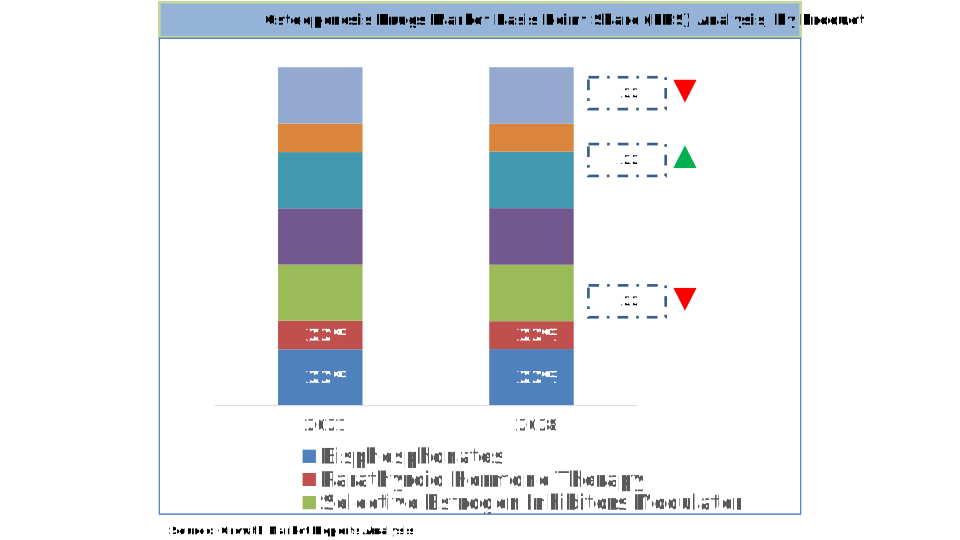
The osteoporosis drugs market is segmented by drug type into bisphosphonates, selective estrogen receptor modulators (SERMs), parathyroid hormone therapy, calcitonin, RANK ligand inhibitors, and others. Bisphosphonates have long been the mainstay of osteoporosis treatment, owing to their proven efficacy in reducing fracture risk and their relatively affordable cost. This drug class, which includes agents such as alendronate, risedronate, and zoledronic acid, continues to hold a dominant share of the market, particularly in regions with well-developed healthcare systems. Despite concerns about long-term safety and rare side effects such as osteonecrosis of the jaw, bisphosphonates remain widely prescribed due to their established clinical track record and inclusion in most treatment guidelines.

Selective estrogen receptor modulators (SERMs) represent another important drug class in the osteoporosis drugs market. Agents such as raloxifene are particularly beneficial for postmenopausal women, as they help maintain bone density while also providing protective effects against breast cancer. However, the use of SERMs is limited by their side effect profile, including an increased risk of venous thromboembolism, which has somewhat restricted their widespread adoption. Nonetheless, SERMs continue to be an important option for specific patient populations, especially those who cannot tolerate bisphosphonates or have additional risk factors.

Parathyroid hormone therapy, which includes drugs like teriparatide and abaloparatide, has emerged as a valuable option for patients with severe osteoporosis or those who have failed other therapies. These anabolic agents work by stimulating new bone formation, offering a distinct mechanism of action compared to antiresorptive agents like bisphosphonates and SERMs. Although their use is generally reserved for high-risk patients due to cost and the need for daily injections, parathyroid hormone analogs have demonstrated significant efficacy in reducing both vertebral and non-vertebral fractures. As more data become available and newer formulations are developed, this segment is expected to witness steady growth.

RANK ligand inhibitors, most notably denosumab, have gained considerable traction in recent years due to their potent antiresorptive effects and convenient dosing schedule. Denosumab is administered as a subcutaneous injection every six months, which enhances patient adherence compared to daily or weekly oral medications. This drug has shown significant efficacy in reducing fracture risk across various patient populations, including those with renal impairment. As safety data accumulates and real-world experience grows, RANK ligand inhibitors are expected to capture an increasing share of the osteoporosis drugs market, particularly among patients who are intolerant to or have contraindications for bisphosphonates.

Other drug types, such as calcitonin and strontium ranelate, occupy a relatively small share of the market due to concerns about efficacy and safety. Calcitonin, for instance, is now rarely used due to its modest fracture reduction benefits and potential cancer risk. However, ongoing research into novel therapeutic targets and next-generation osteoporosis drugs holds promise for expanding treatment options and addressing unmet needs in this market segment. As innovation continues, the drug type landscape in the osteoporosis drugs market is expected to evolve, with newer agents gradually gaining traction alongside established therapies.

Report Scope

Attributes Details
Report Title Osteoporosis Drugs Market Research Report 2033
By Drug Type Bisphosphonates, Selective Estrogen Receptor Modulators (SERMs), Parathyroid Hormone Therapy, Calcitonin, RANK Ligand Inhibitors, Others
By Route Of Administration Oral, Injectable, Others
By Distribution Channel Hospital Pharmacies, Retail Pharmacies, Online Pharmacies, Others
Regions Covered North America, Europe, APAC, Latin America, MEA
Base Year 2024
Historic Data 2018-2023
Forecast Period 2025-2033
Number of Pages 265
Number of Tables & Figures 394
Customization Available Yes, the report can be customized as per your need.

Route of Administration Analysis

The osteoporosis drugs market is also segmented by route of administration into oral, injectable, and others. Oral medications, particularly bisphosphonates, have traditionally dominated the market due to their ease of administration, patient familiarity, and cost-effectiveness. Oral formulations are often the first-line choice in primary care settings, where convenience and patient preference play a significant role in therapy selection. However, the requirement for strict dosing instructions, such as taking the medication on an empty stomach and remaining upright for at least 30 minutes, can sometimes impact adherence and limit the effectiveness of oral therapies.

Injectable osteoporosis drugs have witnessed growing adoption in recent years, driven by the introduction of agents such as denosumab and parathyroid hormone analogs. Injectable formulations offer several advantages, including less frequent dosing (e.g., every six months for denosumab) and bypassing gastrointestinal absorption, which can be problematic in elderly patients or those with comorbidities. The convenience and improved adherence associated with injectable drugs have contributed to their increasing popularity, particularly among patients who have difficulty tolerating oral medications or have experienced gastrointestinal side effects.

Within the injectable segment, both subcutaneous and intravenous routes are utilized depending on the specific drug and patient needs. For instance, zoledronic acid is administered as an annual intravenous infusion, which is particularly attractive for patients seeking a once-yearly treatment option. Subcutaneous injections, such as those used for denosumab and teriparatide, offer the advantage of self-administration or administration in a clinical setting, providing flexibility for both patients and healthcare providers. As more innovative injectable therapies are developed, this segment is poised for continued growth, especially in regions with advanced healthcare infrastructure.

Other routes of administration, such as intranasal calcitonin, have seen a decline in use due to concerns regarding efficacy and safety. Nonetheless, ongoing research into alternative delivery methods, such as transdermal patches or long-acting implants, may yield new opportunities for improving patient adherence and outcomes in the future. The growing emphasis on patient-centric care and personalized medicine is likely to drive further innovation in drug delivery, with the goal of optimizing the route of administration to meet individual patient needs and preferences.

Overall, the route of administration segment in the osteoporosis drugs market reflects the evolving landscape of treatment options and the ongoing efforts to enhance patient adherence and outcomes. While oral medications remain a mainstay, the rising popularity of injectable therapies underscores the importance of convenience, efficacy, and safety in shaping prescribing patterns and market dynamics.

Distribution Channel Analysis

Distribution channels play a crucial role in the osteoporosis drugs market, with hospital pharmacies, retail pharmacies, online pharmacies, and others constituting the primary segments. Hospital pharmacies account for a significant share of the market, particularly for injectable and specialty osteoporosis drugs that require administration under medical supervision. The presence of specialized healthcare professionals and access to diagnostic services in hospital settings facilitate prompt diagnosis and initiation of therapy, making hospital pharmacies a preferred distribution channel for high-risk patients and those with complex medical needs.

Retail pharmacies represent another major distribution channel, especially for oral osteoporosis medications that are commonly prescribed in outpatient settings. The widespread availability and accessibility of retail pharmacies make them a convenient option for patients seeking to fill prescriptions and obtain medication counseling. Retail pharmacies also play a vital role in ensuring medication adherence by providing patient education and reminders for prescription refills. As the prevalence of osteoporosis continues to rise, retail pharmacies are expected to maintain their significant market share, particularly in regions with well-established pharmaceutical distribution networks.

Online pharmacies are rapidly gaining traction in the osteoporosis drugs market, driven by the increasing adoption of digital health solutions and the growing preference for home delivery of medications. The convenience, privacy, and competitive pricing offered by online pharmacies appeal to a broad spectrum of patients, including those with mobility challenges or limited access to traditional brick-and-mortar pharmacies. The COVID-19 pandemic further accelerated the shift toward online pharmacy services, as patients sought to minimize in-person interactions and ensure uninterrupted access to essential medications. Regulatory efforts to ensure the safety and legitimacy of online pharmacy operations are expected to support the continued growth of this distribution channel.

Other distribution channels, such as specialty clinics and government-run dispensaries, cater to specific patient populations or geographic regions with unique healthcare delivery models. These channels often focus on providing comprehensive osteoporosis management services, including diagnostic testing, medication administration, and patient education. As healthcare systems evolve to prioritize integrated and patient-centered care, the role of these alternative distribution channels may expand, particularly in underserved or rural areas.

In summary, the distribution channel landscape in the osteoporosis drugs market is characterized by a diverse array of options that reflect the varying needs and preferences of patients and healthcare providers. The ongoing digital transformation of healthcare delivery is likely to further shape the market, with online and specialty channels playing an increasingly prominent role alongside traditional hospital and retail pharmacies.

Opportunities & Threats

The osteoporosis drugs market presents numerous opportunities for growth, particularly in the area of unmet medical needs and the development of innovative therapies. With a significant proportion of osteoporosis patients remaining undiagnosed or undertreated, there is substantial potential for expanding market penetration through enhanced screening programs, public awareness campaigns, and improved access to healthcare services. Pharmaceutical companies have the opportunity to capitalize on this by investing in educational initiatives, partnerships with healthcare organizations, and the development of patient-centric solutions that address barriers to diagnosis and treatment. Additionally, the emergence of personalized medicine and advances in genetic and biomarker research offer the potential to tailor osteoporosis therapies to individual patient profiles, optimizing efficacy and minimizing adverse effects.

Another key opportunity lies in the expansion of the osteoporosis drugs market in emerging economies, where rising healthcare expenditure, improving infrastructure, and increasing awareness are driving demand for effective osteoporosis treatments. As governments and private sector stakeholders invest in healthcare modernization and universal coverage initiatives, access to osteoporosis diagnostics and therapies is expected to improve, opening up new markets for pharmaceutical companies. Furthermore, the growing focus on preventive healthcare and the integration of digital health technologies, such as telemedicine and remote monitoring, present additional avenues for market growth by facilitating early intervention and ongoing disease management.

Despite these opportunities, the osteoporosis drugs market faces several restraining factors, chief among them being concerns about the long-term safety and tolerability of existing therapies. Adverse effects associated with certain drug classes, such as bisphosphonates and SERMs, have led to patient apprehension and, in some cases, reduced adherence to treatment regimens. Regulatory scrutiny and evolving safety guidelines have also impacted prescribing patterns, particularly for older therapies with established risk profiles. Furthermore, the high cost of newer drugs, such as parathyroid hormone analogs and RANK ligand inhibitors, may limit their accessibility in certain markets, particularly where reimbursement policies are less favorable. Addressing these challenges will be critical for sustaining long-term growth and ensuring that patients receive optimal care.

Regional Outlook

North America remains the largest regional market for osteoporosis drugs, accounting for approximately 38% of the global market share in 2024, which translates to a market value of around USD 5.2 billion. The region's dominance is underpinned by a high prevalence of osteoporosis, advanced healthcare infrastructure, and the presence of leading pharmaceutical companies. The United States, in particular, benefits from robust reimbursement systems, widespread access to diagnostic services, and a strong emphasis on preventive care. Ongoing investment in research and development, coupled with a favorable regulatory environment, is expected to sustain North America's leadership position throughout the forecast period.

Europe holds the second-largest share of the osteoporosis drugs market, with a market size of approximately USD 4.3 billion in 2024. The region's aging population, comprehensive healthcare systems, and established treatment guidelines contribute to high rates of osteoporosis diagnosis and treatment. Key markets such as Germany, France, and the United Kingdom are at the forefront of osteoporosis management, supported by active patient advocacy groups and government initiatives aimed at reducing fracture risk and healthcare costs. The European market is projected to grow at a moderate CAGR of 3.8% during the forecast period, driven by ongoing innovation and expanding access to newer therapies.

The Asia Pacific region is poised for the fastest growth in the osteoporosis drugs market, with a CAGR of 6.1% expected from 2025 to 2033. The market size in Asia Pacific was valued at USD 2.7 billion in 2024 and is expected to reach USD 4.6 billion by 2033. Rapid urbanization, changing lifestyles, and increasing life expectancy are contributing to a rising burden of osteoporosis in countries such as China, Japan, and India. Efforts to improve healthcare infrastructure, expand insurance coverage, and raise public awareness are driving increased diagnosis and treatment rates in the region. While Latin America and the Middle East & Africa currently represent smaller shares of the global market, ongoing investments in healthcare access and education are expected to support gradual growth in these regions over the coming years.

Osteoporosis Drugs Market Statistics

Competitor Outlook

The osteoporosis drugs market is characterized by intense competition among a diverse group of multinational and regional pharmaceutical companies. The competitive landscape is shaped by ongoing innovation, regulatory approvals, and strategic collaborations aimed at expanding product portfolios and geographic reach. Leading players are continuously investing in research and development to bring novel therapies to market, improve existing formulations, and address unmet clinical needs. Intellectual property protection, pricing strategies, and robust distribution networks are also key factors influencing competitive dynamics in this market.

Major pharmaceutical companies are leveraging their expertise in bone health and strong clinical trial capabilities to maintain a competitive edge. Strategic partnerships, mergers and acquisitions, and licensing agreements are common strategies employed to enhance market presence and accelerate the development of new drug candidates. In addition, companies are increasingly focusing on patient support programs, educational initiatives, and digital health solutions to improve adherence and patient outcomes. The ability to demonstrate superior efficacy, safety, and cost-effectiveness is critical for gaining market share, particularly as payers and healthcare providers seek to optimize value and manage healthcare expenditures.

Biosimilars and generic versions of established osteoporosis drugs are introducing additional competition, particularly as patents for key agents expire. This trend is expected to intensify price competition and expand access to treatment, especially in emerging markets where cost considerations are paramount. However, the entry of biosimilars also poses challenges for originator companies, necessitating a focus on product differentiation, brand loyalty, and value-added services to retain market share. The evolving regulatory landscape and increasing emphasis on real-world evidence are further shaping the strategies of market participants.

Some of the major companies operating in the osteoporosis drugs market include Amgen Inc., Eli Lilly and Company, Novartis AG, Pfizer Inc., Merck & Co., Inc., F. Hoffmann-La Roche Ltd, GlaxoSmithKline plc, and Teva Pharmaceutical Industries Ltd. Amgen, for example, is a leader in the market with its blockbuster drug denosumab (Prolia), known for its efficacy and convenient dosing schedule. Eli Lilly and Company offers teriparatide (Forteo), a widely used parathyroid hormone analog, while Novartis and Merck are prominent players in the bisphosphonate segment. Pfizer and Roche have also established strong positions through their diversified portfolios and global reach.

These companies are continuously investing in research and development to expand their osteoporosis drug pipelines and bring innovative therapies to market. For instance, Amgen is exploring next-generation biologics and combination therapies, while Eli Lilly is focused on developing oral formulations of anabolic agents. Novartis and Merck are leveraging their global manufacturing and distribution capabilities to expand access to osteoporosis treatments in emerging markets. GlaxoSmithKline and Teva are actively pursuing biosimilar and generic opportunities, aiming to capture market share as patents for leading agents expire. The competitive landscape is expected to remain dynamic, with ongoing innovation and strategic collaboration driving growth and shaping the future of the osteoporosis drugs market.

Key Players

  • Amgen Inc.
  • Eli Lilly and Company
  • F. Hoffmann-La Roche Ltd
  • Pfizer Inc.
  • Merck & Co., Inc.
  • Novartis AG
  • GlaxoSmithKline plc
  • Teva Pharmaceutical Industries Ltd.
  • Sanofi S.A.
  • AstraZeneca plc
  • AbbVie Inc.
  • Mylan N.V.
  • UCB S.A.
  • Radius Health, Inc.
  • Daiichi Sankyo Company, Limited
  • Takeda Pharmaceutical Company Limited
  • Ipsen S.A.
  • Actavis plc (now part of Allergan)
  • Zydus Cadila
  • Sun Pharmaceutical Industries Ltd.
Osteoporosis Drugs Market Overview

Segments

The Osteoporosis Drugs market has been segmented on the basis of

Drug Type

  • Bisphosphonates
  • Selective Estrogen Receptor Modulators (SERMs)
  • Parathyroid Hormone Therapy
  • Calcitonin
  • RANK Ligand Inhibitors
  • Others

Route Of Administration

  • Oral
  • Injectable
  • Others

Distribution Channel

  • Hospital Pharmacies
  • Retail Pharmacies
  • Online Pharmacies
  • Others

Competitive Landscape

Some of the key players dominating the osteoporosis drugs market are Actavis PLC.; Pfizer Inc.; Amgen Inc.; Eli Lily and Co.; Radius Health Inc.; F. Hoffmann La Roche; Merck & Co.; Teva Pharmaceutical Industries Ltd.; Novartis International AG; and GlaxoSmithKline PLC. Some of these main players have adopted several business strategies including partnerships, products launching, mergers, and capacity expansion to expand their market coverage globally.

For instance, Cadila Pharmaceuticals Ltd., an Ahmedabad-based company, launched an osteoporosis biosimilar of Forteo in August 2020, with an aim to treat patients with high risk of fracture and osteoporosis. Teriparatide Injection, also known as PF708 and bonsity, was launched by Alvogen in the United States in June 2020. It was a prescription drug licensed for a variety of applications such as prevention of bone fractures in postmenopausal women with the disease.
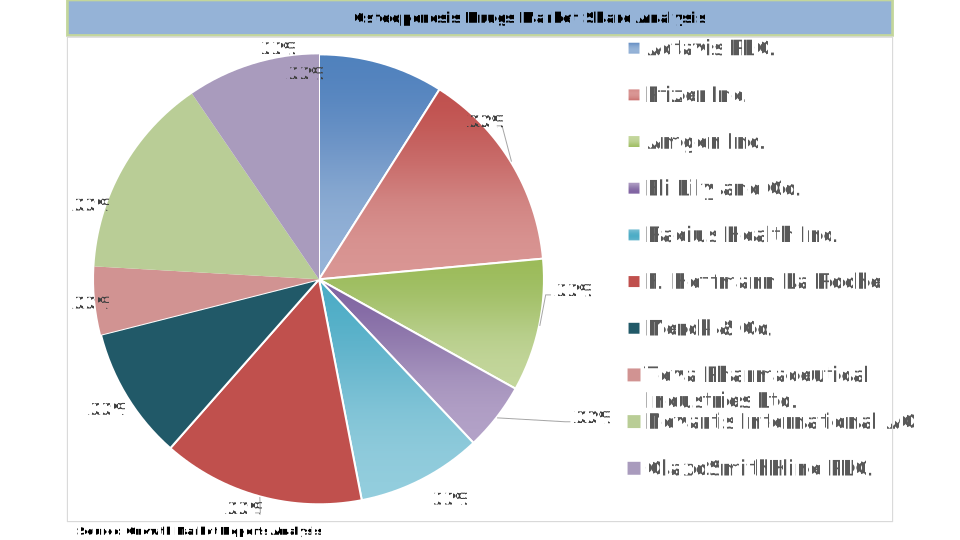

Osteoporosis Drugs Market Share

Frequently Asked Questions

Asia Pacific is expected to experience the fastest growth, driven by rising awareness, improved healthcare access, increasing investments, and a growing aging population.

Recent innovations include RANK ligand inhibitors like denosumab and parathyroid hormone analogs such as teriparatide and abaloparatide, which offer alternatives to traditional bisphosphonates.

Opportunities include expanding market penetration through awareness and screening, innovation in drug development, and growth in emerging markets. Challenges involve long-term safety concerns, high drug costs, and regulatory scrutiny.

Major companies include Amgen Inc., Eli Lilly and Company, F. Hoffmann-La Roche Ltd, Pfizer Inc., Merck & Co., Novartis AG, GlaxoSmithKline plc, Teva Pharmaceutical Industries Ltd., and others.

Osteoporosis drugs are distributed through hospital pharmacies, retail pharmacies, online pharmacies, and other channels such as specialty clinics and government dispensaries.

North America leads the market, followed by Europe and Asia Pacific. North America's dominance is due to a high prevalence of osteoporosis, advanced healthcare infrastructure, and strong pharmaceutical presence.

The market is segmented into oral, injectable, and other routes of administration. Oral medications, especially bisphosphonates, are common, while injectables like denosumab and teriparatide are gaining popularity due to convenience and adherence.

The main drug types include bisphosphonates, selective estrogen receptor modulators (SERMs), parathyroid hormone therapy, calcitonin, RANK ligand inhibitors, and others. Bisphosphonates remain the most widely prescribed.

Key growth drivers include the rising prevalence of osteoporosis, especially among the aging population, increased awareness, improved diagnostic rates, ongoing drug innovation, and supportive government initiatives.

As of 2024, the global osteoporosis drugs market is valued at USD 13.7 billion and is projected to reach USD 19.2 billion by 2033.

Table Of Content

Chapter 1 Executive Summary
Chapter 2 Assumptions and Acronyms Used
Chapter 3 Research Methodology
Chapter 4 Osteoporosis Drugs Market Overview
   4.1 Introduction
      4.1.1 Market Taxonomy
      4.1.2 Market Definition
      4.1.3 Macro-Economic Factors Impacting the Market Growth
   4.2 Osteoporosis Drugs Market Dynamics
      4.2.1 Market Drivers
      4.2.2 Market Restraints
      4.2.3 Market Opportunity
   4.3 Osteoporosis Drugs Market - Supply Chain Analysis
      4.3.1 List of Key Suppliers
      4.3.2 List of Key Distributors
      4.3.3 List of Key Consumers
   4.4 Key Forces Shaping the Osteoporosis Drugs Market
      4.4.1 Bargaining Power of Suppliers
      4.4.2 Bargaining Power of Buyers
      4.4.3 Threat of Substitution
      4.4.4 Threat of New Entrants
      4.4.5 Competitive Rivalry
   4.5 Global Osteoporosis Drugs Market Size & Forecast, 2023-2032
      4.5.1 Osteoporosis Drugs Market Size and Y-o-Y Growth
      4.5.2 Osteoporosis Drugs Market Absolute $ Opportunity

Chapter 5 Global Osteoporosis Drugs Market Analysis and Forecast By Drug Type
   5.1 Introduction
      5.1.1 Key Market Trends & Growth Opportunities By Drug Type
      5.1.2 Basis Point Share (BPS) Analysis By Drug Type
      5.1.3 Absolute $ Opportunity Assessment By Drug Type
   5.2 Osteoporosis Drugs Market Size Forecast By Drug Type
      5.2.1 Bisphosphonates
      5.2.2 Selective Estrogen Receptor Modulators (SERMs)
      5.2.3 Parathyroid Hormone Therapy
      5.2.4 Calcitonin
      5.2.5 RANK Ligand Inhibitors
      5.2.6 Others
   5.3 Market Attractiveness Analysis By Drug Type

Chapter 6 Global Osteoporosis Drugs Market Analysis and Forecast By Route Of Administration
   6.1 Introduction
      6.1.1 Key Market Trends & Growth Opportunities By Route Of Administration
      6.1.2 Basis Point Share (BPS) Analysis By Route Of Administration
      6.1.3 Absolute $ Opportunity Assessment By Route Of Administration
   6.2 Osteoporosis Drugs Market Size Forecast By Route Of Administration
      6.2.1 Oral
      6.2.2 Injectable
      6.2.3 Others
   6.3 Market Attractiveness Analysis By Route Of Administration

Chapter 7 Global Osteoporosis Drugs Market Analysis and Forecast By Distribution Channel
   7.1 Introduction
      7.1.1 Key Market Trends & Growth Opportunities By Distribution Channel
      7.1.2 Basis Point Share (BPS) Analysis By Distribution Channel
      7.1.3 Absolute $ Opportunity Assessment By Distribution Channel
   7.2 Osteoporosis Drugs Market Size Forecast By Distribution Channel
      7.2.1 Hospital Pharmacies
      7.2.2 Retail Pharmacies
      7.2.3 Online Pharmacies
      7.2.4 Others
   7.3 Market Attractiveness Analysis By Distribution Channel

Chapter 8 Global Osteoporosis Drugs Market Analysis and Forecast by Region
   8.1 Introduction
      8.1.1 Key Market Trends & Growth Opportunities By Region
      8.1.2 Basis Point Share (BPS) Analysis By Region
      8.1.3 Absolute $ Opportunity Assessment By Region
   8.2 Osteoporosis Drugs Market Size Forecast By Region
      8.2.1 North America
      8.2.2 Europe
      8.2.3 Asia Pacific
      8.2.4 Latin America
      8.2.5 Middle East & Africa (MEA)
   8.3 Market Attractiveness Analysis By Region

Chapter 9 Coronavirus Disease (COVID-19) Impact 
   9.1 Introduction 
   9.2 Current & Future Impact Analysis 
   9.3 Economic Impact Analysis 
   9.4 Government Policies 
   9.5 Investment Scenario

Chapter 10 North America Osteoporosis Drugs Analysis and Forecast
   10.1 Introduction
   10.2 North America Osteoporosis Drugs Market Size Forecast by Country
      10.2.1 U.S.
      10.2.2 Canada
   10.3 Basis Point Share (BPS) Analysis by Country
   10.4 Absolute $ Opportunity Assessment by Country
   10.5 Market Attractiveness Analysis by Country
   10.6 North America Osteoporosis Drugs Market Size Forecast By Drug Type
      10.6.1 Bisphosphonates
      10.6.2 Selective Estrogen Receptor Modulators (SERMs)
      10.6.3 Parathyroid Hormone Therapy
      10.6.4 Calcitonin
      10.6.5 RANK Ligand Inhibitors
      10.6.6 Others
   10.7 Basis Point Share (BPS) Analysis By Drug Type 
   10.8 Absolute $ Opportunity Assessment By Drug Type 
   10.9 Market Attractiveness Analysis By Drug Type
   10.10 North America Osteoporosis Drugs Market Size Forecast By Route Of Administration
      10.10.1 Oral
      10.10.2 Injectable
      10.10.3 Others
   10.11 Basis Point Share (BPS) Analysis By Route Of Administration 
   10.12 Absolute $ Opportunity Assessment By Route Of Administration 
   10.13 Market Attractiveness Analysis By Route Of Administration
   10.14 North America Osteoporosis Drugs Market Size Forecast By Distribution Channel
      10.14.1 Hospital Pharmacies
      10.14.2 Retail Pharmacies
      10.14.3 Online Pharmacies
      10.14.4 Others
   10.15 Basis Point Share (BPS) Analysis By Distribution Channel 
   10.16 Absolute $ Opportunity Assessment By Distribution Channel 
   10.17 Market Attractiveness Analysis By Distribution Channel

Chapter 11 Europe Osteoporosis Drugs Analysis and Forecast
   11.1 Introduction
   11.2 Europe Osteoporosis Drugs Market Size Forecast by Country
      11.2.1 Germany
      11.2.2 France
      11.2.3 Italy
      11.2.4 U.K.
      11.2.5 Spain
      11.2.6 Russia
      11.2.7 Rest of Europe
   11.3 Basis Point Share (BPS) Analysis by Country
   11.4 Absolute $ Opportunity Assessment by Country
   11.5 Market Attractiveness Analysis by Country
   11.6 Europe Osteoporosis Drugs Market Size Forecast By Drug Type
      11.6.1 Bisphosphonates
      11.6.2 Selective Estrogen Receptor Modulators (SERMs)
      11.6.3 Parathyroid Hormone Therapy
      11.6.4 Calcitonin
      11.6.5 RANK Ligand Inhibitors
      11.6.6 Others
   11.7 Basis Point Share (BPS) Analysis By Drug Type 
   11.8 Absolute $ Opportunity Assessment By Drug Type 
   11.9 Market Attractiveness Analysis By Drug Type
   11.10 Europe Osteoporosis Drugs Market Size Forecast By Route Of Administration
      11.10.1 Oral
      11.10.2 Injectable
      11.10.3 Others
   11.11 Basis Point Share (BPS) Analysis By Route Of Administration 
   11.12 Absolute $ Opportunity Assessment By Route Of Administration 
   11.13 Market Attractiveness Analysis By Route Of Administration
   11.14 Europe Osteoporosis Drugs Market Size Forecast By Distribution Channel
      11.14.1 Hospital Pharmacies
      11.14.2 Retail Pharmacies
      11.14.3 Online Pharmacies
      11.14.4 Others
   11.15 Basis Point Share (BPS) Analysis By Distribution Channel 
   11.16 Absolute $ Opportunity Assessment By Distribution Channel 
   11.17 Market Attractiveness Analysis By Distribution Channel

Chapter 12 Asia Pacific Osteoporosis Drugs Analysis and Forecast
   12.1 Introduction
   12.2 Asia Pacific Osteoporosis Drugs Market Size Forecast by Country
      12.2.1 China
      12.2.2 Japan
      12.2.3 South Korea
      12.2.4 India
      12.2.5 Australia
      12.2.6 South East Asia (SEA)
      12.2.7 Rest of Asia Pacific (APAC)
   12.3 Basis Point Share (BPS) Analysis by Country
   12.4 Absolute $ Opportunity Assessment by Country
   12.5 Market Attractiveness Analysis by Country
   12.6 Asia Pacific Osteoporosis Drugs Market Size Forecast By Drug Type
      12.6.1 Bisphosphonates
      12.6.2 Selective Estrogen Receptor Modulators (SERMs)
      12.6.3 Parathyroid Hormone Therapy
      12.6.4 Calcitonin
      12.6.5 RANK Ligand Inhibitors
      12.6.6 Others
   12.7 Basis Point Share (BPS) Analysis By Drug Type 
   12.8 Absolute $ Opportunity Assessment By Drug Type 
   12.9 Market Attractiveness Analysis By Drug Type
   12.10 Asia Pacific Osteoporosis Drugs Market Size Forecast By Route Of Administration
      12.10.1 Oral
      12.10.2 Injectable
      12.10.3 Others
   12.11 Basis Point Share (BPS) Analysis By Route Of Administration 
   12.12 Absolute $ Opportunity Assessment By Route Of Administration 
   12.13 Market Attractiveness Analysis By Route Of Administration
   12.14 Asia Pacific Osteoporosis Drugs Market Size Forecast By Distribution Channel
      12.14.1 Hospital Pharmacies
      12.14.2 Retail Pharmacies
      12.14.3 Online Pharmacies
      12.14.4 Others
   12.15 Basis Point Share (BPS) Analysis By Distribution Channel 
   12.16 Absolute $ Opportunity Assessment By Distribution Channel 
   12.17 Market Attractiveness Analysis By Distribution Channel

Chapter 13 Latin America Osteoporosis Drugs Analysis and Forecast
   13.1 Introduction
   13.2 Latin America Osteoporosis Drugs Market Size Forecast by Country
      13.2.1 Brazil
      13.2.2 Mexico
      13.2.3 Rest of Latin America (LATAM)
   13.3 Basis Point Share (BPS) Analysis by Country
   13.4 Absolute $ Opportunity Assessment by Country
   13.5 Market Attractiveness Analysis by Country
   13.6 Latin America Osteoporosis Drugs Market Size Forecast By Drug Type
      13.6.1 Bisphosphonates
      13.6.2 Selective Estrogen Receptor Modulators (SERMs)
      13.6.3 Parathyroid Hormone Therapy
      13.6.4 Calcitonin
      13.6.5 RANK Ligand Inhibitors
      13.6.6 Others
   13.7 Basis Point Share (BPS) Analysis By Drug Type 
   13.8 Absolute $ Opportunity Assessment By Drug Type 
   13.9 Market Attractiveness Analysis By Drug Type
   13.10 Latin America Osteoporosis Drugs Market Size Forecast By Route Of Administration
      13.10.1 Oral
      13.10.2 Injectable
      13.10.3 Others
   13.11 Basis Point Share (BPS) Analysis By Route Of Administration 
   13.12 Absolute $ Opportunity Assessment By Route Of Administration 
   13.13 Market Attractiveness Analysis By Route Of Administration
   13.14 Latin America Osteoporosis Drugs Market Size Forecast By Distribution Channel
      13.14.1 Hospital Pharmacies
      13.14.2 Retail Pharmacies
      13.14.3 Online Pharmacies
      13.14.4 Others
   13.15 Basis Point Share (BPS) Analysis By Distribution Channel 
   13.16 Absolute $ Opportunity Assessment By Distribution Channel 
   13.17 Market Attractiveness Analysis By Distribution Channel

Chapter 14 Middle East & Africa (MEA) Osteoporosis Drugs Analysis and Forecast
   14.1 Introduction
   14.2 Middle East & Africa (MEA) Osteoporosis Drugs Market Size Forecast by Country
      14.2.1 Saudi Arabia
      14.2.2 South Africa
      14.2.3 UAE
      14.2.4 Rest of Middle East & Africa (MEA)
   14.3 Basis Point Share (BPS) Analysis by Country
   14.4 Absolute $ Opportunity Assessment by Country
   14.5 Market Attractiveness Analysis by Country
   14.6 Middle East & Africa (MEA) Osteoporosis Drugs Market Size Forecast By Drug Type
      14.6.1 Bisphosphonates
      14.6.2 Selective Estrogen Receptor Modulators (SERMs)
      14.6.3 Parathyroid Hormone Therapy
      14.6.4 Calcitonin
      14.6.5 RANK Ligand Inhibitors
      14.6.6 Others
   14.7 Basis Point Share (BPS) Analysis By Drug Type 
   14.8 Absolute $ Opportunity Assessment By Drug Type 
   14.9 Market Attractiveness Analysis By Drug Type
   14.10 Middle East & Africa (MEA) Osteoporosis Drugs Market Size Forecast By Route Of Administration
      14.10.1 Oral
      14.10.2 Injectable
      14.10.3 Others
   14.11 Basis Point Share (BPS) Analysis By Route Of Administration 
   14.12 Absolute $ Opportunity Assessment By Route Of Administration 
   14.13 Market Attractiveness Analysis By Route Of Administration
   14.14 Middle East & Africa (MEA) Osteoporosis Drugs Market Size Forecast By Distribution Channel
      14.14.1 Hospital Pharmacies
      14.14.2 Retail Pharmacies
      14.14.3 Online Pharmacies
      14.14.4 Others
   14.15 Basis Point Share (BPS) Analysis By Distribution Channel 
   14.16 Absolute $ Opportunity Assessment By Distribution Channel 
   14.17 Market Attractiveness Analysis By Distribution Channel

Chapter 15 Competition Landscape 
   15.1 Osteoporosis Drugs Market: Competitive Dashboard
   15.2 Global Osteoporosis Drugs Market: Market Share Analysis, 2023
   15.3 Company Profiles (Details – Overview, Financials, Developments, Strategy) 
      15.3.1 Amgen Inc.
Eli Lilly and Company
F. Hoffmann-La Roche Ltd
Pfizer Inc.
Merck & Co., Inc.
Novartis AG
GlaxoSmithKline plc
Teva Pharmaceutical Industries Ltd.
Sanofi S.A.
AstraZeneca plc
AbbVie Inc.
Mylan N.V.
UCB S.A.
Radius Health, Inc.
Daiichi Sankyo Company, Limited
Takeda Pharmaceutical Company Limited
Ipsen S.A.
Actavis plc (now part of Allergan)
Zydus Cadila
Sun Pharmaceutical Industries Ltd.

Methodology

Our Clients

Microsoft
Nestle SA
FedEx Logistics
Dassault Aviation
sinopec
Honda Motor Co. Ltd.
Deloitte
General Mills