Germany Ophthalmic Devices Market Outlook 2031
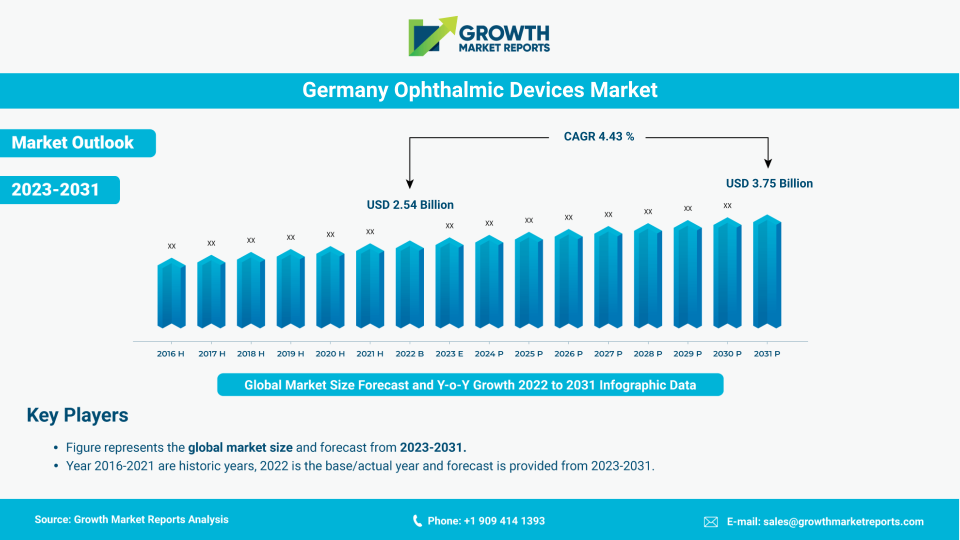
The Germany ophthalmic devices market size was estimated at USD 2.54 Billion in 2022 and is anticipated to reach USD 3.75 Billion by 2031, expanding at a CAGR of 4.43% during the forecast period, 2023 - 2031. The growth of market is attributed to increased prevalence of eye diseases and demographic shift.
Ophthalmology is a medical specialty that deals with the anatomy, function, and illnesses of the eyes. Surgical, diagnostic, and vision correction devices are the three basic categories of ophthalmic devices depending on their function. These devices gain rising importance & adoption due to more prevalence of different ophthalmic diseases such as cataract, glaucoma, and other vision-related issues.
The Covid-19 pandemic affected the demand and supply of the Germany ophthalmic devices market. Lockdown across the globe, supply chain disorders, and oscillating supply of raw materials forced manufacturers to shut down production leading to unfortunate decline in market growth. Due to lockdown, the ophthalmology diagnostics clinics are closed and the surgeries are postponed which is expected to limit the growth of the market.
Germany Ophthalmic Devices Market Trends, Drivers, Restraints, and Opportunities
- Increasing geriatric population with having more vision-related problems is projected to boost the market.
- Due to increasing ophthalmic diseases such as glaucoma, cataract, and others for that need of the technological advancements in ophthalmic devices, is estimated to fuel the market.
- Ophthalmic procedures and risks related to it are projected to hinder the market growth.
Scope of Germany Ophthalmic Devices Market Report
The report on the Germany ophthalmic devices market includes an assessment of the market, trends, segments, and regional markets. Overview and dynamics have also been included in the report.
|
Attributes
|
Details
|
|
Report Title
|
Ophthalmic Devices Market - Germany Industry Analysis, Growth, Share, Size, Trends, and Forecast
|
|
Base Year
|
2022
|
|
Historic Data
|
2016–2021
|
|
Forecast Period
|
2023–2031
|
|
Segmentation
|
Devices (Surgical Devices {Glaucoma Drainage Devices, Glaucoma Stents and Implants, Intraocular Lenses, Lasers, and Others}, Diagnostic and Monitoring Devices {Autorefractors & Keratometers, Corneal Topography Systems, Ophthalmic Ultrasound Imaging Systems, Ophthalmoscopes, Optical Coherence Tomography Scanners, and Others}, and Vision Correction Devices {Spectacles, Contact Lenses})
|
|
Country Scope
|
Germany
|
|
Report Coverage
|
Company Share, Market Analysis and Size, Competitive Landscape, Growth Factors, and Trends, and Revenue Forecast
|
|
Key Players Covered in the Report
|
Alcon Inc.; Bausch Health Companies Inc.; Johnson and Johnson.; Carl Zeiss Meditec AG.; Ziemer Ophthalmic Systems AG
|
Germany Ophthalmic Devices Market Segment Insights
Devices Segment Analysis
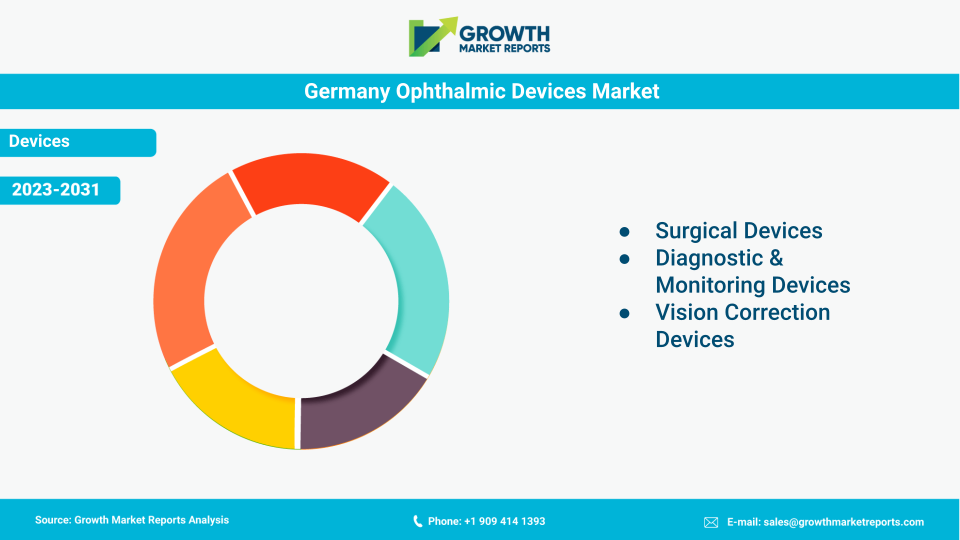
Based on devices, the ophthalmic devices market is divided into surgical devices, diagnostic & monitoring devices, and vision correction devices. The surgical devices segment is further segregated into glaucoma drainage devices, glaucoma stents and implants, intraocular lenses, lasers, and others.
The diagnostic & monitoring devices segment is sub-segregated into autorefractors & keratometers, corneal topography systems, ophthalmic ultrasound imaging systems, ophthalmoscopes, optical coherence tomography scanners, and others.
The vision correction devices segment is further bifurcated into spectacles and contact lenses. The vision correction devices segment is projected to expand at a considerable CAGR during the forecast period because this help people with typical refractive defects like as myopia, hypermetropia, astigmatism, and presbyopia. Low vision is the result of certain visual impairments.
According to the United Nations world aging population report, Germany had one of the highest percentages of people aged 60 and more in 2017. Furthermore, most wealthy countries, such as Germany, are experiencing healthcare issues, mostly as a result of the expanding senior population. Illnesses and impaired vision are more common among the elderly. The need for vision correction products is predicted to rise as this population expands.
Country Outlook
Increased prevalence of eye diseases and demographic shift. Germany fosters pharmaceutical device research and, development as a result, has a very high healthcare spending.
Segments
The Germany ophthalmic devices market has been segmented on the basis of
Devices
- Glaucoma Drainage Devices
- Glaucoma Stents & Implants
- Intraocular Lenses
- Lasers
- Others
- Diagnostic & Monitoring Devices
- Autorefractors & Keratometers
- Corneal Topography Systems
- Ophthalmic Ultrasound Imaging Systems
- Ophthalmoscopes
- Optical Coherence Tomography Scanners
- Others
- Vision Correction Devices
- Spectacles
- Contact Lenses
Country
Key Players
Competitive Landscape
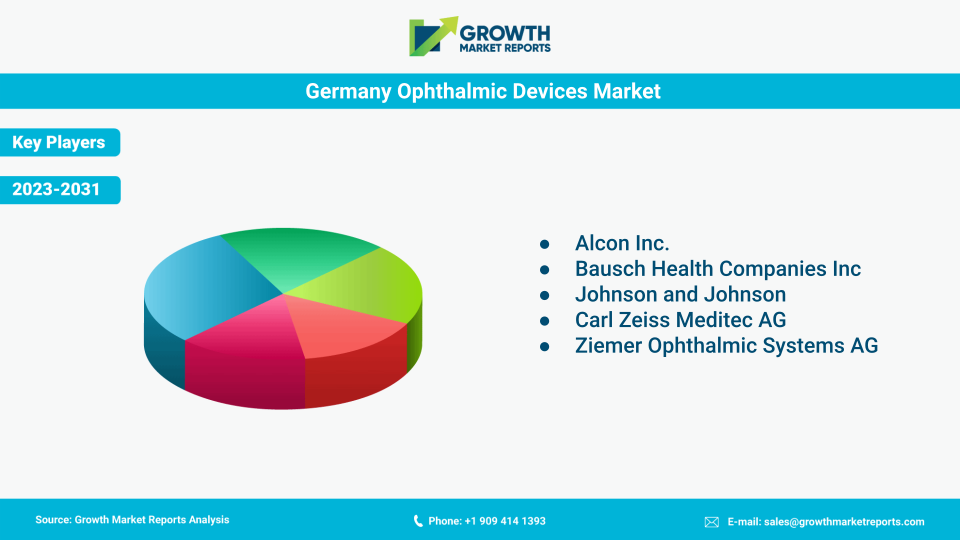
Key players competing in the Germany ophthalmic devices market include Alcon Inc.; Bausch Health Companies Inc.; Johnson and Johnson.; Carl Zeiss Meditec AG.; and Ziemer Ophthalmic Systems AG.
Some of these players are using several market strategies such as acquisitions, merger, collaborations, partnerships, capacity expansion, and product launches to enhance their market shares and to generate revenue and raise their production line of the business in the coming years.











 Request For Customization
 Enquiry Before Buying
 Speak With Analyst