Open Banking Systems Market Research Report 2033

Open Banking Systems Market Research Report 2033

Segments - by Component (Solutions, Services), by Deployment Mode (On-Premises, Cloud), by Application (Banking, Payments, Digital Currencies, Wealth Management, Others), by End-User (Banks, FinTechs, Third-Party Providers, Others)

https://growthmarketreports.com/Raksha
Author : Raksha Sharma
https://growthmarketreports.com/Vaibhav
Fact-checked by : V. Chandola
https://growthmarketreports.com/Shruti
Editor : Shruti Bhat

Upcoming | Report ID :BFSI-2800 | 4.7 Rating | 70 Reviews | 285 Pages | Format : Docx PDF

Report Description


Open Banking Systems Market Outlook

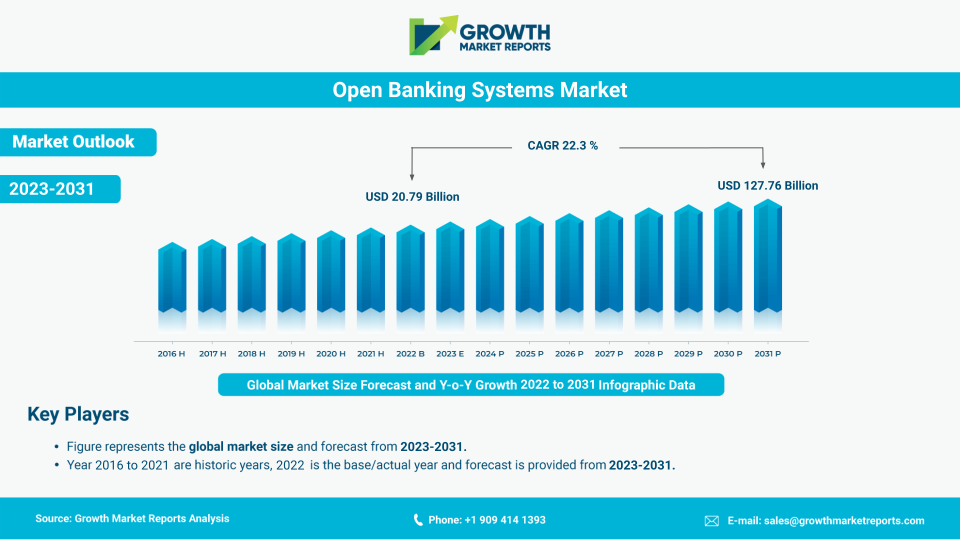
According to our latest research, the global Open Banking Systems market size reached USD 28.5 billion in 2024, reflecting the rapidly growing adoption of open banking frameworks worldwide. The market is expected to expand at a robust CAGR of 24.7% during the forecast period from 2025 to 2033, reaching a projected value of USD 217.1 billion by 2033. This substantial growth is primarily driven by regulatory mandates, increased demand for digital financial services, and the proliferation of APIs that enable secure data sharing between banks and third-party providers. As per our comprehensive analysis, the open banking ecosystem is poised to revolutionize the financial services industry by fostering innovation, improving customer experiences, and creating new revenue streams for traditional and non-traditional players alike.

A key growth factor fueling the Open Banking Systems market is the global regulatory push for greater transparency and competition in the financial sector. Regulatory frameworks such as PSD2 in Europe, the Consumer Data Right (CDR) in Australia, and similar initiatives in other regions have mandated banks to open their data to licensed third-party providers. This regulatory impetus is dismantling data silos and encouraging the development of innovative financial products and services. As a result, banks and fintech companies are increasingly investing in robust open banking platforms to comply with these mandates and stay competitive. The ongoing evolution of regulatory requirements is expected to further accelerate market growth, as financial institutions seek to leverage open APIs to enhance their service offerings and customer engagement.

Another significant driver of the open banking systems market is the rapid digitalization of banking services and shifting consumer expectations. Modern consumers demand seamless, personalized, and real-time financial experiences, which traditional banking systems often struggle to deliver. Open banking frameworks enable financial institutions to collaborate with fintechs and third-party providers, facilitating the creation of value-added services such as budgeting tools, payment initiation services, and account aggregation. This collaborative ecosystem not only improves customer satisfaction but also opens up new monetization opportunities for banks and non-bank entities. The integration of artificial intelligence and machine learning into open banking platforms is further enhancing the ability to deliver tailored financial solutions, thereby driving adoption across various market segments.

The proliferation of Application Programming Interfaces (APIs) and advancements in data security technologies are also pivotal in driving the Open Banking Systems market. APIs act as the backbone of open banking, enabling secure, standardized, and efficient data exchange between banks and third-party providers. Enhanced security protocols, such as OAuth and OpenID Connect, have addressed many concerns around data privacy and fraud, instilling greater confidence among consumers and institutions alike. Furthermore, the increasing adoption of cloud-based open banking solutions is providing scalability, flexibility, and cost-efficiency, making it easier for financial institutions of all sizes to participate in the open banking ecosystem. These technological advancements are expected to continue propelling market growth throughout the forecast period.

Open Banking Payments are revolutionizing the way consumers and businesses handle transactions by providing a more seamless and efficient payment experience. With the ability to initiate payments directly from bank accounts, open banking payments eliminate the need for intermediaries, reducing transaction costs and enhancing speed and transparency. This direct payment initiation is particularly beneficial for businesses seeking to streamline their payment processes and improve cash flow management. As more consumers become accustomed to the convenience of open banking payments, financial institutions are investing in robust payment solutions that leverage open banking frameworks to meet this growing demand. The integration of real-time payment capabilities is further enhancing the appeal of open banking payments, offering a competitive edge to banks and fintechs that can deliver these innovative services.

From a regional perspective, Europe currently leads the global open banking systems market, driven by early regulatory adoption and a mature fintech ecosystem. However, significant growth is also being observed in Asia Pacific and North America, where digital transformation initiatives and rising fintech investments are gaining momentum. The Asia Pacific region, in particular, is experiencing rapid adoption of open banking frameworks due to a large unbanked population, government-led financial inclusion programs, and the emergence of digital-native financial service providers. North America is witnessing increased collaboration between traditional banks and fintechs, spurred by consumer demand for innovative financial products and an evolving regulatory landscape. As open banking gains traction globally, regional dynamics will continue to shape the competitive landscape and growth trajectory of the market.

Global Open Banking Systems Industry Outlook

Component Analysis

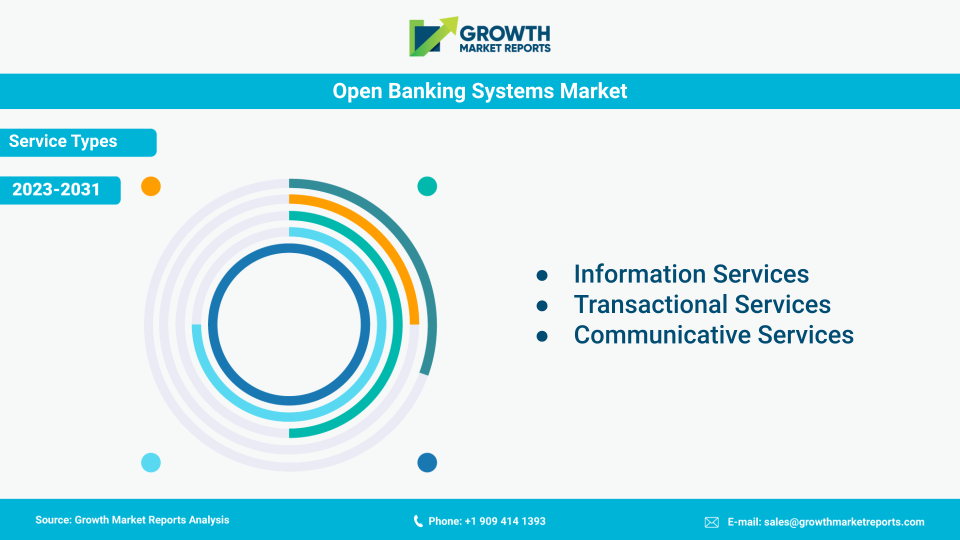
The Open Banking Systems market by component is segmented into solutions and services, each playing a critical role in the ecosystemÂ’s expansion. Solutions encompass the core software platforms, API management tools, and security frameworks that enable seamless data sharing and integration between banks and third-party providers. These solutions are designed to ensure compliance with regulatory mandates while providing scalability, flexibility, and robust security features. The increasing demand for advanced API management and analytics tools is driving significant investments in open banking solutions, as financial institutions seek to deliver innovative services and gain actionable insights from customer data. The solutions segment currently dominates the market, accounting for a substantial share of total revenue, and is expected to maintain its lead throughout the forecast period.

Services in the open banking systems market include consulting, integration, support, and maintenance, which are essential for the successful implementation and ongoing management of open banking initiatives. As financial institutions navigate complex regulatory requirements and rapidly evolving technology landscapes, the demand for specialized consulting and integration services has surged. Service providers assist banks and fintechs in designing, deploying, and optimizing open banking platforms, ensuring seamless interoperability and compliance with global standards. Additionally, support and maintenance services are critical for addressing technical issues, managing updates, and ensuring the security and reliability of open banking systems. The services segment is expected to witness robust growth, driven by the increasing complexity of open banking deployments and the need for ongoing technical expertise.

The interplay between solutions and services is fundamental to the success of open banking initiatives. While solutions provide the technological foundation for data sharing and integration, services ensure that these platforms are effectively implemented, maintained, and optimized. Many financial institutions are opting for end-to-end open banking offerings that bundle solutions and services, enabling them to accelerate time-to-market and reduce operational risks. This integrated approach is particularly appealing to small and medium-sized banks that may lack the in-house expertise to manage complex open banking projects. As the market matures, we expect to see greater convergence between solutions and services, with vendors offering comprehensive open banking suites tailored to the unique needs of different customer segments.

Innovation in the solutions segment is being driven by advancements in API management, security, and analytics. Leading vendors are incorporating artificial intelligence, machine learning, and blockchain technologies into their open banking platforms to enhance security, automate compliance, and deliver personalized customer experiences. These innovations are enabling financial institutions to differentiate their offerings, attract new customers, and generate additional revenue streams. On the services side, the focus is shifting towards value-added offerings such as regulatory compliance consulting, risk management, and customer experience optimization. Service providers are increasingly partnering with technology vendors to deliver holistic open banking solutions that address both technical and business challenges. This collaborative approach is expected to drive sustained growth in both the solutions and services segments.

Report Scope

Attributes Details
Report Title Open Banking Systems Market Research Report 2033
By Component Solutions, Services
By Deployment Mode On-Premises, Cloud
By Application Banking, Payments, Digital Currencies, Wealth Management, Others
By End-User Banks, FinTechs, Third-Party Providers, Others
Regions Covered North America, Europe, APAC, Latin America, MEA
Base Year 2024
Historic Data 2018-2023
Forecast Period 2025-2033
Number of Pages 285
Number of Tables & Figures 336
Customization Available Yes, the report can be customized as per your need.

Deployment Mode Analysis

The Open Banking Systems market is segmented by deployment mode into on-premises and cloud-based solutions, each offering distinct advantages and challenges. On-premises deployment remains a preferred choice for large financial institutions with strict data security and regulatory compliance requirements. By hosting open banking platforms within their own data centers, banks retain full control over their infrastructure, data, and security protocols. This deployment mode is particularly prevalent in regions with stringent data sovereignty laws or where regulatory authorities mandate local data storage. However, on-premises solutions often entail higher upfront costs, longer implementation timelines, and greater ongoing maintenance responsibilities, which can be prohibitive for smaller institutions or those with limited IT resources.

Cloud-based deployment is rapidly gaining traction in the open banking systems market, driven by its scalability, flexibility, and cost-efficiency. Cloud platforms enable financial institutions to quickly deploy, scale, and update open banking solutions without the need for significant capital investment in hardware or infrastructure. The pay-as-you-go pricing model offered by cloud service providers makes it easier for banks and fintechs of all sizes to participate in the open banking ecosystem. Additionally, cloud-based solutions facilitate seamless integration with third-party APIs, support agile development methodologies, and enable rapid innovation. The growing adoption of cloud-native technologies is expected to accelerate the shift towards cloud deployment, particularly among digital-native banks and fintech startups.

Security and compliance considerations are central to the choice of deployment mode in the open banking systems market. While cloud-based solutions offer significant operational advantages, concerns around data privacy, regulatory compliance, and third-party risk remain top of mind for many financial institutions. Leading cloud service providers have responded by investing heavily in advanced security features, compliance certifications, and data encryption technologies. Hybrid deployment models, which combine on-premises and cloud-based components, are also emerging as a popular option, enabling banks to balance the benefits of both approaches. These hybrid models allow institutions to maintain sensitive data on-premises while leveraging the scalability and innovation potential of the cloud for less critical workloads.

The ongoing evolution of regulatory frameworks and industry standards is expected to influence deployment mode preferences in the open banking systems market. As regulators provide clearer guidance on cloud adoption and data sovereignty, more financial institutions are likely to embrace cloud-based open banking solutions. The COVID-19 pandemic has further accelerated the shift towards cloud deployment, as banks seek to enhance operational resilience, support remote work, and deliver digital services to customers. Over the forecast period, cloud-based deployment is projected to outpace on-premises deployment, accounting for an increasingly larger share of new open banking system implementations. Vendors that offer flexible, secure, and compliant cloud solutions are well-positioned to capture significant market share in this dynamic landscape.

Application Analysis

The Open Banking Systems market encompasses a wide range of applications, including banking, payments, digital currencies, wealth management, and others. Banking applications form the core of the open banking ecosystem, enabling account aggregation, transaction history sharing, and access to a broad array of financial products and services. Through open APIs, banks can collaborate with fintechs to deliver innovative solutions such as personal financial management tools, instant loan approvals, and real-time credit scoring. These applications enhance customer engagement, streamline operations, and create new revenue streams for both banks and third-party providers. The banking segment currently holds the largest market share and is expected to remain a key driver of growth as open banking adoption expands worldwide.

Payments represent another significant application area within the open banking systems market. Open banking frameworks facilitate secure, real-time payment initiation services, enabling consumers to make payments directly from their bank accounts without the need for intermediaries. This capability is transforming the payments landscape by reducing transaction costs, improving speed and transparency, and enhancing customer convenience. The rise of instant payments, peer-to-peer transfers, and digital wallets is further fueling demand for open banking-enabled payment solutions. Regulatory initiatives such as PSD2 in Europe have played a pivotal role in driving adoption, and similar frameworks are being implemented in other regions to promote competition and innovation in the payments sector.

Digital currencies and cryptocurrencies are emerging as a promising application area for open banking systems. The integration of open banking APIs with digital currency platforms enables seamless fiat-to-crypto and crypto-to-fiat transactions, enhances security, and supports regulatory compliance. As central banks and financial institutions explore the development of central bank digital currencies (CBDCs), open banking frameworks are expected to play a critical role in facilitating interoperability, user authentication, and transaction monitoring. The growing interest in decentralized finance (DeFi) and blockchain-based financial services is also driving innovation in this segment, creating new opportunities for banks, fintechs, and technology vendors.

Wealth management applications are experiencing robust growth in the open banking systems market, driven by increasing demand for personalized investment advice, portfolio management, and financial planning services. Open banking enables wealth managers and robo-advisors to access comprehensive customer financial data, allowing them to deliver tailored recommendations and optimize investment strategies. The integration of artificial intelligence and machine learning is further enhancing the ability to analyze large volumes of data, identify trends, and deliver actionable insights. As consumers seek greater control over their financial futures, the adoption of open banking-enabled wealth management solutions is expected to accelerate, creating new growth opportunities for both traditional and digital-first providers.

Other applications of open banking systems include credit scoring, insurance, lending, and regulatory reporting. By enabling secure data sharing and real-time access to financial information, open banking frameworks are transforming traditional business models and unlocking new sources of value across the financial services ecosystem. The ability to seamlessly integrate with third-party platforms and leverage advanced analytics is enabling institutions to deliver more relevant, efficient, and customer-centric services. As the open banking landscape continues to evolve, the range of applications is expected to expand, driven by ongoing innovation, changing consumer preferences, and regulatory support.

End-User Analysis

The Open Banking Systems market serves a diverse set of end-users, including banks, fintechs, third-party providers, and others. Banks remain the primary adopters of open banking systems, as they seek to comply with regulatory mandates, enhance customer engagement, and compete with digital-native challengers. By implementing open banking platforms, banks can offer a broader range of services, improve operational efficiency, and generate new revenue streams through data monetization and value-added partnerships. The need to modernize legacy infrastructure and respond to evolving customer expectations is driving significant investments in open banking technology among both large and small banks.

Fintech companies are at the forefront of open banking innovation, leveraging APIs and data access to develop disruptive financial products and services. These agile, technology-driven firms are collaborating with banks and other financial institutions to deliver solutions such as personal finance management apps, digital lending platforms, and payment initiation services. Fintechs benefit from open banking systems by gaining access to customer data, streamlining onboarding processes, and accelerating time-to-market for new offerings. The competitive dynamics between banks and fintechs are evolving, with increasing emphasis on collaboration and co-creation of value in the open banking ecosystem.

Third-party providers, including technology vendors, payment processors, and aggregators, play a critical role in the open banking systems market. These entities develop and operate the platforms, APIs, and integration tools that enable seamless data exchange between banks and fintechs. Third-party providers also offer value-added services such as data analytics, fraud detection, and regulatory compliance, helping financial institutions navigate the complexities of open banking deployments. The growing importance of third-party providers is reflected in the increasing number of partnerships and strategic alliances across the ecosystem, as banks and fintechs seek to leverage external expertise and accelerate innovation.

Other end-users of open banking systems include insurers, wealth managers, credit bureaus, and regulatory authorities. These organizations are leveraging open banking frameworks to access real-time financial data, streamline operations, and deliver more personalized services to customers. For example, insurers can use open banking data to assess risk and tailor insurance products, while credit bureaus can enhance credit scoring models with comprehensive financial information. Regulatory authorities are also adopting open banking systems to monitor compliance, detect fraud, and promote financial inclusion. The expanding range of end-users underscores the transformative potential of open banking across the broader financial services landscape.

Opportunities & Threats

The Open Banking Systems market presents significant opportunities for innovation, growth, and value creation across the financial services ecosystem. One of the most compelling opportunities lies in the ability to deliver highly personalized, customer-centric financial products and services. By leveraging open APIs and real-time data access, banks and fintechs can gain deep insights into customer behavior, preferences, and needs, enabling them to tailor offerings and enhance customer loyalty. The emergence of new business models, such as Banking-as-a-Service (BaaS) and embedded finance, is creating additional revenue streams for both traditional and non-traditional players. These models allow non-bank entities to offer financial services directly to customers, expanding the reach and impact of open banking initiatives.

Another major opportunity in the open banking systems market is the potential for increased financial inclusion and democratization of financial services. By enabling secure data sharing and collaboration between banks, fintechs, and third-party providers, open banking frameworks can help extend financial services to underserved and unbanked populations. Government-led financial inclusion programs, particularly in emerging markets, are leveraging open banking systems to promote access to credit, savings, and payment services. The integration of advanced technologies such as artificial intelligence, machine learning, and blockchain is further enhancing the ability to deliver affordable, accessible, and relevant financial solutions to a broader segment of the population.

Despite the significant opportunities, the open banking systems market also faces important restrainers and threats, particularly around data privacy, security, and regulatory compliance. The increased sharing of sensitive financial data between multiple parties raises concerns about data breaches, identity theft, and fraud. Ensuring robust security protocols, transparent consent management, and compliance with global data protection regulations is critical to building and maintaining trust among consumers and stakeholders. The complexity of navigating diverse regulatory frameworks across different regions can also pose challenges for market participants, particularly those operating on a global scale. Addressing these challenges will be essential to sustaining the growth and success of the open banking ecosystem.

Regional Outlook

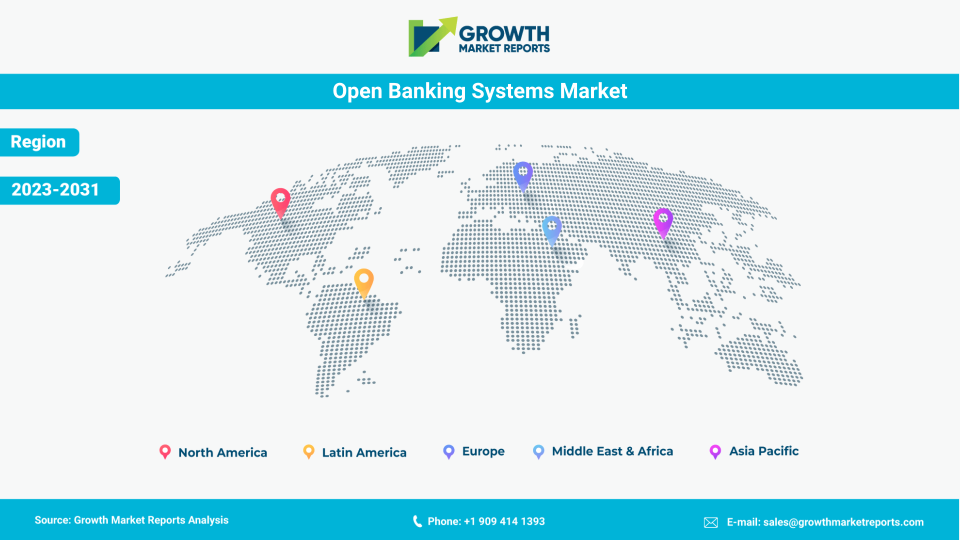
Europe continues to lead the Open Banking Systems market, accounting for approximately USD 10.2 billion of the global market in 2024. The regionÂ’s dominance is underpinned by early regulatory adoption, mature financial infrastructure, and a vibrant fintech ecosystem. The implementation of PSD2 and the Open Banking Initiative in the United Kingdom have set global benchmarks for open banking regulation and innovation. European banks have been at the forefront of developing and deploying open banking platforms, fostering a culture of collaboration and competition. The region is expected to maintain a strong growth trajectory, with a projected CAGR of 21.8% over the forecast period, driven by ongoing regulatory support and increasing consumer demand for digital financial services.

North America represents the second-largest market for open banking systems, with a market size of USD 8.7 billion in 2024. The region is characterized by a dynamic fintech landscape, high digital adoption rates, and growing collaboration between traditional banks and technology-driven firms. While the regulatory environment in North America is less prescriptive than in Europe, market-driven initiatives and evolving consumer preferences are driving the adoption of open banking frameworks. The United States and Canada are witnessing increased investment in open banking platforms, particularly in areas such as payments, lending, and personal finance management. North America is expected to achieve a CAGR of 25.6% through 2033, fueled by ongoing innovation and the entry of new market participants.

The Asia Pacific region is emerging as a high-growth market for open banking systems, with a market value of USD 6.4 billion in 2024. Rapid digital transformation, government-led financial inclusion initiatives, and the rise of digital-native financial service providers are driving adoption across the region. Countries such as Australia, Singapore, and India are implementing open banking regulations and promoting collaboration between banks and fintechs. The large unbanked and underbanked population in Asia Pacific presents significant opportunities for market expansion, particularly in areas such as payments, lending, and wealth management. With a projected CAGR of 28.3% over the forecast period, Asia Pacific is expected to be a key engine of growth for the global open banking systems market.

Open Banking Systems Market Statistics

Competitor Outlook

The Open Banking Systems market is characterized by a highly competitive and rapidly evolving landscape, with a diverse array of players ranging from established technology vendors and global banks to agile fintech startups and specialized third-party providers. Leading technology companies are investing heavily in the development of robust open banking platforms, API management tools, and security solutions to address the complex needs of financial institutions. These companies are leveraging their scale, expertise, and global reach to capture significant market share and drive innovation across the ecosystem. Strategic partnerships, mergers, and acquisitions are common as vendors seek to expand their capabilities, enter new markets, and deliver end-to-end open banking solutions.

Large banks and financial institutions are playing a pivotal role in shaping the competitive dynamics of the open banking systems market. Many are investing in proprietary open banking platforms, forming alliances with fintechs, and participating in industry consortia to drive standardization and interoperability. These institutions are leveraging their customer base, brand reputation, and regulatory expertise to maintain a competitive edge in the evolving financial services landscape. At the same time, fintech companies and third-party providers are driving innovation by developing niche solutions, leveraging advanced analytics, and offering personalized customer experiences. The interplay between incumbents and challengers is fostering a dynamic and collaborative ecosystem that is accelerating the pace of open banking adoption.

The competitive landscape is also being shaped by the entry of non-traditional players, such as technology giants and e-commerce platforms, into the financial services sector. These companies are leveraging their technological capabilities, customer data, and distribution networks to offer financial products and services directly to consumers. The convergence of financial services and technology is blurring traditional industry boundaries and creating new competitive dynamics. As open banking frameworks mature, we expect to see increased competition from a broader range of players, including telecommunications companies, payment processors, and digital identity providers. The ability to innovate, scale, and deliver secure, compliant, and customer-centric solutions will be critical to success in this rapidly evolving market.

Major companies operating in the open banking systems market include Accenture, IBM Corporation, Oracle Corporation, Tink (Visa), Finastra, Fiserv, Temenos, Yodlee (Envestnet), Plaid, and TrueLayer. These firms are at the forefront of developing open banking platforms, API management solutions, and security frameworks that enable seamless data sharing and integration. Accenture and IBM are known for their consulting and integration expertise, helping banks and fintechs design and implement open banking strategies. Oracle and Finastra offer comprehensive open banking suites that address both technical and business requirements. Tink, Plaid, and TrueLayer are leading API aggregators, providing connectivity and data access to thousands of banks and financial institutions worldwide. Fiserv and Temenos are recognized for their core banking and digital banking solutions, which are increasingly being integrated with open banking capabilities.

These companies are actively investing in research and development, strategic partnerships, and global expansion to strengthen their market position. For example, Tink was acquired by Visa to enhance its open banking capabilities and expand its reach across Europe and beyond. Plaid has established partnerships with major banks and fintechs in North America and Europe, enabling secure and reliable data access for a wide range of financial applications. TrueLayer is focused on expanding its API platform across new markets and verticals, while Yodlee (Envestnet) continues to innovate in the areas of data aggregation and analytics. The competitive landscape is expected to remain dynamic, with ongoing consolidation, new market entrants, and continuous innovation shaping the future of the open banking systems market.

Key Players

  • Plaid
  • Tink
  • Yodlee (Envestnet)
  • Finastra
  • FIS (Fidelity National Information Services)
  • Fiserv
  • TrueLayer
  • Token.io
  • Mastercard (Open Banking Solutions)
  • Visa (Tink, Open Banking Solutions)
  • BBVA
  • Salt Edge
  • N26
  • Nordigen
  • Axway
  • Oracle
  • IBM
  • Temenos
  • Banking Circle
  • Railsr (formerly Railsbank)
Open Banking Systems Market Overview

Segments

The Open Banking Systems market has been segmented on the basis of

Component

  • Solutions
  • Services

Deployment Mode

  • On-Premises
  • Cloud

Application

  • Banking
  • Payments
  • Digital Currencies
  • Wealth Management
  • Others

End-User

  • Banks
  • FinTechs
  • Third-Party Providers
  • Others

Competitive Landscape

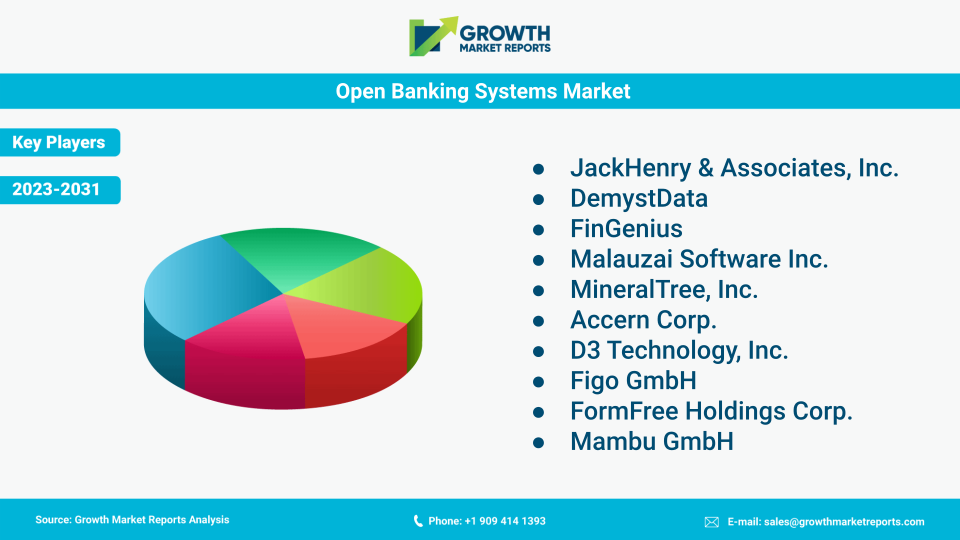
Key players competing in the global open banking systems market are JackHenry & Associates, Inc.; DemystData; FinGenius; Malauzai Software Inc.; MineralTree, Inc.; Accern Corp.; D3 Technology, Inc.; Figo GmbH; FormFree Holdings Corp.; and Mambu GmbH.

Companies are focusing on investment in R&D for the development of banking solutions based on APIs that can be operated outside the core business of the banks. Furthermore, companies are widely engaging in strategic partnership, merger & acquisition, new product launch, and collaborations to boost their market share and acquiring new buyers.For instance, 

  • In April 2020, HSBC Bank plc, a UK-based investment banking company. This company increased its investment in the use of AI for banking solutions. This investment was aimed to develop AI based techniques to manage financial crime risk, choose assets in which to invest, and analyze the data.

  • In June 2021, Tink AB a European open banking platform was acquired by Visa Inc., the U.S. based financial services company. The acquisition is aimed to provide dependable and secure platform for innovation and accelerate European open banking adoption.

Open Banking Systems Market Key Players

Frequently Asked Questions

Innovation is driven by advancements in API management, security, analytics, and the integration of AI, machine learning, and blockchain, enabling more secure, compliant, and customer-centric solutions.

Major companies include Plaid, Tink (Visa), Yodlee (Envestnet), Finastra, FIS, Fiserv, TrueLayer, Token.io, Mastercard, BBVA, Salt Edge, N26, Nordigen, Axway, Oracle, IBM, Temenos, Banking Circle, and Railsr.

Opportunities include delivering personalized financial services, financial inclusion, and new business models like Banking-as-a-Service. Threats involve data privacy, security risks, and complex regulatory compliance.

End-users include banks, fintechs, third-party providers (such as API aggregators and payment processors), insurers, wealth managers, credit bureaus, and regulatory authorities.

Key applications include banking (account aggregation, real-time credit scoring), payments (instant payments, digital wallets), digital currencies, wealth management, credit scoring, insurance, lending, and regulatory reporting.

Open Banking Systems can be deployed on-premises or via cloud-based solutions. Cloud deployment is gaining traction due to scalability, flexibility, and cost-efficiency, while on-premises is preferred for strict data security needs.

The market is segmented into solutions (core software, API management, security frameworks) and services (consulting, integration, support, and maintenance), with solutions currently dominating the market.

Europe leads the market due to early regulatory adoption and a mature fintech ecosystem, followed by North America and Asia Pacific, both experiencing rapid growth due to digital transformation and fintech investments.

Key growth drivers include regulatory mandates for data sharing, increased demand for digital financial services, proliferation of APIs, advancements in data security, and the integration of AI and machine learning.

The global Open Banking Systems market reached USD 28.5 billion in 2024 and is projected to grow at a CAGR of 24.7% from 2025 to 2033, reaching USD 217.1 billion by 2033.

Table Of Content

Chapter 1 Executive Summary
Chapter 2 Assumptions and Acronyms Used
Chapter 3 Research Methodology
Chapter 4 Open Banking Systems Market Overview
   4.1 Introduction
      4.1.1 Market Taxonomy
      4.1.2 Market Definition
      4.1.3 Macro-Economic Factors Impacting the Market Growth
   4.2 Open Banking Systems Market Dynamics
      4.2.1 Market Drivers
      4.2.2 Market Restraints
      4.2.3 Market Opportunity
   4.3 Open Banking Systems Market - Supply Chain Analysis
      4.3.1 List of Key Suppliers
      4.3.2 List of Key Distributors
      4.3.3 List of Key Consumers
   4.4 Key Forces Shaping the Open Banking Systems Market
      4.4.1 Bargaining Power of Suppliers
      4.4.2 Bargaining Power of Buyers
      4.4.3 Threat of Substitution
      4.4.4 Threat of New Entrants
      4.4.5 Competitive Rivalry
   4.5 Global Open Banking Systems Market Size & Forecast, 2023-2032
      4.5.1 Open Banking Systems Market Size and Y-o-Y Growth
      4.5.2 Open Banking Systems Market Absolute $ Opportunity

Chapter 5 Global Open Banking Systems Market Analysis and Forecast By Component
   5.1 Introduction
      5.1.1 Key Market Trends & Growth Opportunities By Component
      5.1.2 Basis Point Share (BPS) Analysis By Component
      5.1.3 Absolute $ Opportunity Assessment By Component
   5.2 Open Banking Systems Market Size Forecast By Component
      5.2.1 Solutions
      5.2.2 Services
   5.3 Market Attractiveness Analysis By Component

Chapter 6 Global Open Banking Systems Market Analysis and Forecast By Deployment Mode
   6.1 Introduction
      6.1.1 Key Market Trends & Growth Opportunities By Deployment Mode
      6.1.2 Basis Point Share (BPS) Analysis By Deployment Mode
      6.1.3 Absolute $ Opportunity Assessment By Deployment Mode
   6.2 Open Banking Systems Market Size Forecast By Deployment Mode
      6.2.1 On-Premises
      6.2.2 Cloud
   6.3 Market Attractiveness Analysis By Deployment Mode

Chapter 7 Global Open Banking Systems Market Analysis and Forecast By Application
   7.1 Introduction
      7.1.1 Key Market Trends & Growth Opportunities By Application
      7.1.2 Basis Point Share (BPS) Analysis By Application
      7.1.3 Absolute $ Opportunity Assessment By Application
   7.2 Open Banking Systems Market Size Forecast By Application
      7.2.1 Banking
      7.2.2 Payments
      7.2.3 Digital Currencies
      7.2.4 Wealth Management
      7.2.5 Others
   7.3 Market Attractiveness Analysis By Application

Chapter 8 Global Open Banking Systems Market Analysis and Forecast By End-User
   8.1 Introduction
      8.1.1 Key Market Trends & Growth Opportunities By End-User
      8.1.2 Basis Point Share (BPS) Analysis By End-User
      8.1.3 Absolute $ Opportunity Assessment By End-User
   8.2 Open Banking Systems Market Size Forecast By End-User
      8.2.1 Banks
      8.2.2 FinTechs
      8.2.3 Third-Party Providers
      8.2.4 Others
   8.3 Market Attractiveness Analysis By End-User

Chapter 9 Global Open Banking Systems Market Analysis and Forecast by Region
   9.1 Introduction
      9.1.1 Key Market Trends & Growth Opportunities By Region
      9.1.2 Basis Point Share (BPS) Analysis By Region
      9.1.3 Absolute $ Opportunity Assessment By Region
   9.2 Open Banking Systems Market Size Forecast By Region
      9.2.1 North America
      9.2.2 Europe
      9.2.3 Asia Pacific
      9.2.4 Latin America
      9.2.5 Middle East & Africa (MEA)
   9.3 Market Attractiveness Analysis By Region

Chapter 10 Coronavirus Disease (COVID-19) Impact 
   10.1 Introduction 
   10.2 Current & Future Impact Analysis 
   10.3 Economic Impact Analysis 
   10.4 Government Policies 
   10.5 Investment Scenario

Chapter 11 North America Open Banking Systems Analysis and Forecast
   11.1 Introduction
   11.2 North America Open Banking Systems Market Size Forecast by Country
      11.2.1 U.S.
      11.2.2 Canada
   11.3 Basis Point Share (BPS) Analysis by Country
   11.4 Absolute $ Opportunity Assessment by Country
   11.5 Market Attractiveness Analysis by Country
   11.6 North America Open Banking Systems Market Size Forecast By Component
      11.6.1 Solutions
      11.6.2 Services
   11.7 Basis Point Share (BPS) Analysis By Component 
   11.8 Absolute $ Opportunity Assessment By Component 
   11.9 Market Attractiveness Analysis By Component
   11.10 North America Open Banking Systems Market Size Forecast By Deployment Mode
      11.10.1 On-Premises
      11.10.2 Cloud
   11.11 Basis Point Share (BPS) Analysis By Deployment Mode 
   11.12 Absolute $ Opportunity Assessment By Deployment Mode 
   11.13 Market Attractiveness Analysis By Deployment Mode
   11.14 North America Open Banking Systems Market Size Forecast By Application
      11.14.1 Banking
      11.14.2 Payments
      11.14.3 Digital Currencies
      11.14.4 Wealth Management
      11.14.5 Others
   11.15 Basis Point Share (BPS) Analysis By Application 
   11.16 Absolute $ Opportunity Assessment By Application 
   11.17 Market Attractiveness Analysis By Application
   11.18 North America Open Banking Systems Market Size Forecast By End-User
      11.18.1 Banks
      11.18.2 FinTechs
      11.18.3 Third-Party Providers
      11.18.4 Others
   11.19 Basis Point Share (BPS) Analysis By End-User 
   11.20 Absolute $ Opportunity Assessment By End-User 
   11.21 Market Attractiveness Analysis By End-User

Chapter 12 Europe Open Banking Systems Analysis and Forecast
   12.1 Introduction
   12.2 Europe Open Banking Systems Market Size Forecast by Country
      12.2.1 Germany
      12.2.2 France
      12.2.3 Italy
      12.2.4 U.K.
      12.2.5 Spain
      12.2.6 Russia
      12.2.7 Rest of Europe
   12.3 Basis Point Share (BPS) Analysis by Country
   12.4 Absolute $ Opportunity Assessment by Country
   12.5 Market Attractiveness Analysis by Country
   12.6 Europe Open Banking Systems Market Size Forecast By Component
      12.6.1 Solutions
      12.6.2 Services
   12.7 Basis Point Share (BPS) Analysis By Component 
   12.8 Absolute $ Opportunity Assessment By Component 
   12.9 Market Attractiveness Analysis By Component
   12.10 Europe Open Banking Systems Market Size Forecast By Deployment Mode
      12.10.1 On-Premises
      12.10.2 Cloud
   12.11 Basis Point Share (BPS) Analysis By Deployment Mode 
   12.12 Absolute $ Opportunity Assessment By Deployment Mode 
   12.13 Market Attractiveness Analysis By Deployment Mode
   12.14 Europe Open Banking Systems Market Size Forecast By Application
      12.14.1 Banking
      12.14.2 Payments
      12.14.3 Digital Currencies
      12.14.4 Wealth Management
      12.14.5 Others
   12.15 Basis Point Share (BPS) Analysis By Application 
   12.16 Absolute $ Opportunity Assessment By Application 
   12.17 Market Attractiveness Analysis By Application
   12.18 Europe Open Banking Systems Market Size Forecast By End-User
      12.18.1 Banks
      12.18.2 FinTechs
      12.18.3 Third-Party Providers
      12.18.4 Others
   12.19 Basis Point Share (BPS) Analysis By End-User 
   12.20 Absolute $ Opportunity Assessment By End-User 
   12.21 Market Attractiveness Analysis By End-User

Chapter 13 Asia Pacific Open Banking Systems Analysis and Forecast
   13.1 Introduction
   13.2 Asia Pacific Open Banking Systems Market Size Forecast by Country
      13.2.1 China
      13.2.2 Japan
      13.2.3 South Korea
      13.2.4 India
      13.2.5 Australia
      13.2.6 South East Asia (SEA)
      13.2.7 Rest of Asia Pacific (APAC)
   13.3 Basis Point Share (BPS) Analysis by Country
   13.4 Absolute $ Opportunity Assessment by Country
   13.5 Market Attractiveness Analysis by Country
   13.6 Asia Pacific Open Banking Systems Market Size Forecast By Component
      13.6.1 Solutions
      13.6.2 Services
   13.7 Basis Point Share (BPS) Analysis By Component 
   13.8 Absolute $ Opportunity Assessment By Component 
   13.9 Market Attractiveness Analysis By Component
   13.10 Asia Pacific Open Banking Systems Market Size Forecast By Deployment Mode
      13.10.1 On-Premises
      13.10.2 Cloud
   13.11 Basis Point Share (BPS) Analysis By Deployment Mode 
   13.12 Absolute $ Opportunity Assessment By Deployment Mode 
   13.13 Market Attractiveness Analysis By Deployment Mode
   13.14 Asia Pacific Open Banking Systems Market Size Forecast By Application
      13.14.1 Banking
      13.14.2 Payments
      13.14.3 Digital Currencies
      13.14.4 Wealth Management
      13.14.5 Others
   13.15 Basis Point Share (BPS) Analysis By Application 
   13.16 Absolute $ Opportunity Assessment By Application 
   13.17 Market Attractiveness Analysis By Application
   13.18 Asia Pacific Open Banking Systems Market Size Forecast By End-User
      13.18.1 Banks
      13.18.2 FinTechs
      13.18.3 Third-Party Providers
      13.18.4 Others
   13.19 Basis Point Share (BPS) Analysis By End-User 
   13.20 Absolute $ Opportunity Assessment By End-User 
   13.21 Market Attractiveness Analysis By End-User

Chapter 14 Latin America Open Banking Systems Analysis and Forecast
   14.1 Introduction
   14.2 Latin America Open Banking Systems Market Size Forecast by Country
      14.2.1 Brazil
      14.2.2 Mexico
      14.2.3 Rest of Latin America (LATAM)
   14.3 Basis Point Share (BPS) Analysis by Country
   14.4 Absolute $ Opportunity Assessment by Country
   14.5 Market Attractiveness Analysis by Country
   14.6 Latin America Open Banking Systems Market Size Forecast By Component
      14.6.1 Solutions
      14.6.2 Services
   14.7 Basis Point Share (BPS) Analysis By Component 
   14.8 Absolute $ Opportunity Assessment By Component 
   14.9 Market Attractiveness Analysis By Component
   14.10 Latin America Open Banking Systems Market Size Forecast By Deployment Mode
      14.10.1 On-Premises
      14.10.2 Cloud
   14.11 Basis Point Share (BPS) Analysis By Deployment Mode 
   14.12 Absolute $ Opportunity Assessment By Deployment Mode 
   14.13 Market Attractiveness Analysis By Deployment Mode
   14.14 Latin America Open Banking Systems Market Size Forecast By Application
      14.14.1 Banking
      14.14.2 Payments
      14.14.3 Digital Currencies
      14.14.4 Wealth Management
      14.14.5 Others
   14.15 Basis Point Share (BPS) Analysis By Application 
   14.16 Absolute $ Opportunity Assessment By Application 
   14.17 Market Attractiveness Analysis By Application
   14.18 Latin America Open Banking Systems Market Size Forecast By End-User
      14.18.1 Banks
      14.18.2 FinTechs
      14.18.3 Third-Party Providers
      14.18.4 Others
   14.19 Basis Point Share (BPS) Analysis By End-User 
   14.20 Absolute $ Opportunity Assessment By End-User 
   14.21 Market Attractiveness Analysis By End-User

Chapter 15 Middle East & Africa (MEA) Open Banking Systems Analysis and Forecast
   15.1 Introduction
   15.2 Middle East & Africa (MEA) Open Banking Systems Market Size Forecast by Country
      15.2.1 Saudi Arabia
      15.2.2 South Africa
      15.2.3 UAE
      15.2.4 Rest of Middle East & Africa (MEA)
   15.3 Basis Point Share (BPS) Analysis by Country
   15.4 Absolute $ Opportunity Assessment by Country
   15.5 Market Attractiveness Analysis by Country
   15.6 Middle East & Africa (MEA) Open Banking Systems Market Size Forecast By Component
      15.6.1 Solutions
      15.6.2 Services
   15.7 Basis Point Share (BPS) Analysis By Component 
   15.8 Absolute $ Opportunity Assessment By Component 
   15.9 Market Attractiveness Analysis By Component
   15.10 Middle East & Africa (MEA) Open Banking Systems Market Size Forecast By Deployment Mode
      15.10.1 On-Premises
      15.10.2 Cloud
   15.11 Basis Point Share (BPS) Analysis By Deployment Mode 
   15.12 Absolute $ Opportunity Assessment By Deployment Mode 
   15.13 Market Attractiveness Analysis By Deployment Mode
   15.14 Middle East & Africa (MEA) Open Banking Systems Market Size Forecast By Application
      15.14.1 Banking
      15.14.2 Payments
      15.14.3 Digital Currencies
      15.14.4 Wealth Management
      15.14.5 Others
   15.15 Basis Point Share (BPS) Analysis By Application 
   15.16 Absolute $ Opportunity Assessment By Application 
   15.17 Market Attractiveness Analysis By Application
   15.18 Middle East & Africa (MEA) Open Banking Systems Market Size Forecast By End-User
      15.18.1 Banks
      15.18.2 FinTechs
      15.18.3 Third-Party Providers
      15.18.4 Others
   15.19 Basis Point Share (BPS) Analysis By End-User 
   15.20 Absolute $ Opportunity Assessment By End-User 
   15.21 Market Attractiveness Analysis By End-User

Chapter 16 Competition Landscape 
   16.1 Open Banking Systems Market: Competitive Dashboard
   16.2 Global Open Banking Systems Market: Market Share Analysis, 2023
   16.3 Company Profiles (Details – Overview, Financials, Developments, Strategy) 
      16.3.1 Plaid
Tink
Yodlee (Envestnet)
Finastra
FIS (Fidelity National Information Services)
Fiserv
TrueLayer
Token.io
Mastercard (Open Banking Solutions)
Visa (Tink, Open Banking Solutions)
BBVA
Salt Edge
N26
Nordigen
Axway
Oracle
IBM
Temenos
Banking Circle
Railsr (formerly Railsbank)

Methodology

Our Clients

Dassault Aviation
Pfizer
General Electric
FedEx Logistics
Siemens Healthcare
The John Holland Group
General Mills
sinopec