Segments - by Service Type (Test Preparation, Subject Tutoring, Language Tutoring, Others), by Tutoring Type (Structured Tutoring, On-Demand Tutoring, Small Group Tutoring, One-on-One Tutoring), by Platform (Mobile, Desktop, Others), by End-User (K-12, Higher Education, Corporate, Others)
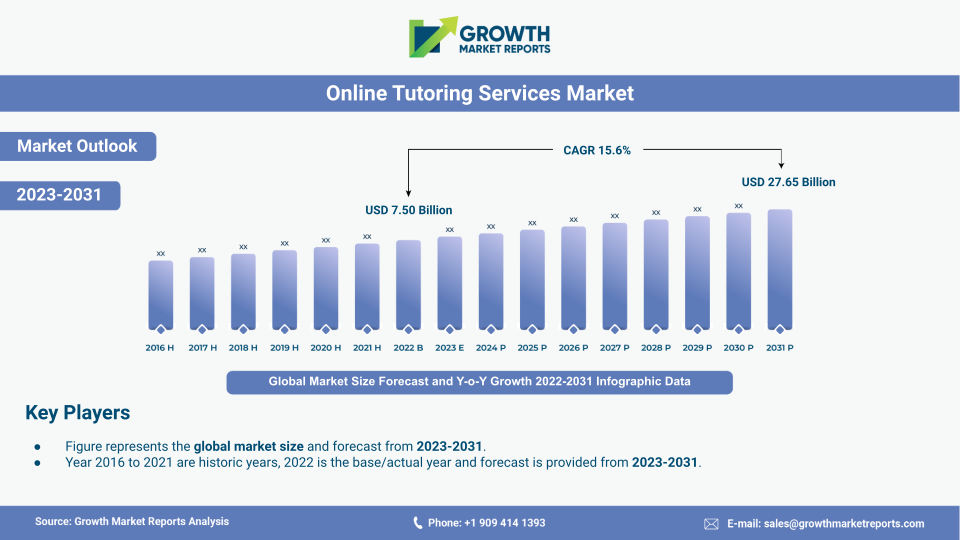
According to our latest research, the global Online Tutoring Services market size reached USD 24.7 billion in 2024, demonstrating a robust expansion trajectory. The market is projected to grow at a CAGR of 14.2% from 2025 to 2033, resulting in a forecasted market value of USD 77.9 billion by 2033. This remarkable growth is primarily driven by increasing internet penetration, the proliferation of smart devices, and a growing emphasis on personalized and flexible learning solutions worldwide. As per our latest analysis, the market’s acceleration is also underpinned by rising demand for digital education platforms and evolving pedagogical models that cater to diverse learner profiles.
One of the most significant growth factors propelling the Online Tutoring Services market is the global shift toward digital learning environments, especially post-pandemic. The COVID-19 pandemic acted as a catalyst, compelling educational institutions, parents, and students to adopt online tutoring platforms as a viable alternative to traditional classroom-based learning. This shift has not only normalized remote learning but also highlighted the benefits of flexible scheduling, personalized attention, and access to a broader pool of expert tutors. Furthermore, continuous advancements in technology, such as artificial intelligence and machine learning, have enhanced the capabilities of online tutoring platforms, enabling adaptive learning, real-time feedback, and data-driven progress tracking. These innovations are making online tutoring more effective and appealing, especially for students seeking customized learning experiences.
Another key driver of the Online Tutoring Services market is the growing demand for supplemental education, particularly for high-stakes test preparation and skill development. Parents and students are increasingly investing in online tutoring to gain a competitive edge in academic performance, standardized testing, and language proficiency. The market is also witnessing a surge in demand from working professionals and adult learners seeking to upskill or reskill for career advancement. The accessibility of on-demand tutoring, combined with the convenience of learning from home, has made these services attractive to a broad demographic. Additionally, the integration of multimedia content, gamification, and interactive tools within online tutoring platforms is enhancing learner engagement and retention, further fueling market growth.
The Online Tutoring Services market is also benefiting from favorable government initiatives and investments in digital infrastructure across both developed and emerging economies. Many governments are launching programs to bridge the digital divide and promote equitable access to quality education, which is encouraging the adoption of online tutoring services in under-served and rural regions. Furthermore, collaborations between educational institutions, technology providers, and content creators are resulting in the development of comprehensive and scalable online tutoring solutions. This collaborative ecosystem is fostering innovation, expanding the reach of online tutoring, and addressing diverse educational needs across various age groups and learning levels.
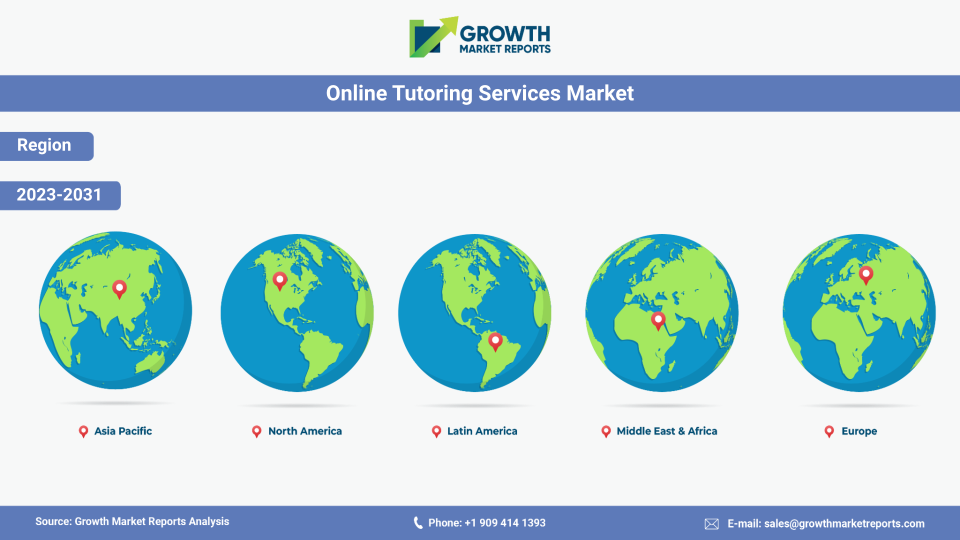
From a regional perspective, Asia Pacific continues to dominate the Online Tutoring Services market, accounting for a significant share of global revenue. This dominance can be attributed to the region’s large student population, rising disposable incomes, and increasing emphasis on academic excellence. China and India, in particular, are leading the adoption of online tutoring platforms, supported by robust digital infrastructure and a strong culture of private tutoring. North America and Europe are also experiencing substantial growth, driven by high internet penetration rates, technological advancements, and a growing preference for flexible learning solutions among students and working professionals. Meanwhile, Latin America and the Middle East & Africa are emerging as promising markets, with increasing investments in education technology and digital literacy initiatives.
The Service Type segment in the Online Tutoring Services market is categorized into Test Preparation, Subject Tutoring, Language Tutoring, and Others. Test Preparation remains the largest and fastest-growing sub-segment, driven by intense competition for admissions into prestigious academic institutions and the rising importance of standardized tests such as SAT, ACT, GRE, and various national entrance exams. Test preparation services are leveraging advanced analytics, AI-driven personalized study plans, and interactive mock tests to deliver targeted learning experiences that maximize student outcomes. The integration of adaptive learning technologies enables tutors to identify students’ strengths and weaknesses, customize content delivery, and provide real-time performance feedback, significantly improving success rates.
Subject Tutoring is another critical sub-segment, catering to students across K-12 and higher education who require additional support in core subjects like mathematics, science, and languages. The demand for subject tutoring is fueled by increasing academic pressure, diverse curriculum standards, and the need for individualized attention to address specific learning gaps. Online subject tutoring platforms offer flexible scheduling, access to qualified tutors, and multimedia resources that enhance conceptual understanding and retention. The scalability of these platforms allows them to serve a large and geographically dispersed student base, making quality education more accessible and affordable.
Language Tutoring is witnessing significant growth, propelled by globalization, cross-border education, and the rising demand for multilingual proficiency in the global workforce. Online language tutoring services are utilizing immersive learning methodologies, real-time conversational practice, and AI-powered language assessment tools to facilitate effective language acquisition. The convenience of accessing native speakers and certified language instructors from anywhere in the world is a major advantage, attracting learners of all ages and professional backgrounds. Additionally, language tutoring platforms are expanding their offerings to include specialized courses for business communication, exam preparation, and cultural immersion.
The Others segment includes specialized tutoring services such as coding, music, arts, and life skills. With the increasing emphasis on holistic education and the development of 21st-century skills, demand for these niche tutoring services is growing steadily. Online platforms are collaborating with industry experts and educational institutions to design tailored courses that cater to various interests and career aspirations. The flexibility and diversity of offerings in this segment are enabling students to explore new areas of learning and pursue personal development beyond traditional academic subjects.
| Attributes | Details |
| Report Title | Online Tutoring Services Market Research Report 2033 |
| By Service Type | Test Preparation, Subject Tutoring, Language Tutoring, Others |
| By Tutoring Type | Structured Tutoring, On-Demand Tutoring, Small Group Tutoring, One-on-One Tutoring |
| By Platform | Mobile, Desktop, Others |
| By End-User | K-12, Higher Education, Corporate, Others |
| Regions Covered | North America, Europe, APAC, Latin America, MEA |
| Base Year | 2024 |
| Historic Data | 2018-2023 |
| Forecast Period | 2025-2033 |
| Number of Pages | 284 |
| Number of Tables & Figures | 400 |
| Customization Available | Yes, the report can be customized as per your need. |
The Tutoring Type segment is divided into Structured Tutoring, On-Demand Tutoring, Small Group Tutoring, and One-on-One Tutoring. Structured Tutoring, characterized by a fixed curriculum and scheduled sessions, appeals to learners seeking a systematic and comprehensive approach to education. This model is particularly popular in test preparation and subject tutoring, where consistency and progression tracking are critical for academic success. Structured tutoring platforms often incorporate progress assessments, homework assignments, and periodic reviews to ensure continuous improvement and achievement of learning objectives.
On-Demand Tutoring has gained significant traction due to its flexibility and convenience. This model allows students to access expert assistance whenever they encounter difficulties, without the need for long-term commitments. On-demand platforms leverage advanced matching algorithms to connect students with the most suitable tutors in real-time, ensuring prompt and effective support. The popularity of on-demand tutoring is especially high among college students, working professionals, and those preparing for competitive exams, as it allows them to address specific learning challenges on their own schedule.
Small Group Tutoring offers a collaborative learning environment where students can interact with peers and benefit from group discussions and shared problem-solving. This model is cost-effective and fosters a sense of community, motivation, and healthy competition among learners. Online platforms offering small group tutoring are integrating interactive tools, breakout sessions, and collaborative projects to enhance engagement and knowledge retention. The group dynamic also allows tutors to address common misconceptions and facilitate peer-to-peer learning, which has been shown to improve academic performance and confidence.
One-on-One Tutoring remains a preferred choice for personalized and targeted instruction. This model provides individualized attention, customized lesson plans, and immediate feedback, making it highly effective for students with unique learning needs or specific academic goals. Online one-on-one tutoring platforms are leveraging video conferencing, screen sharing, and digital whiteboards to create immersive and interactive learning experiences. The ability to connect with expert tutors from around the world, regardless of geographic location, is a key advantage driving the growth of this segment. Additionally, parents and students value the flexibility to choose tutors based on qualifications, teaching style, and compatibility.
The Platform segment of the Online Tutoring Services market encompasses Mobile, Desktop, and Others. Mobile platforms have emerged as the dominant channel, driven by the widespread adoption of smartphones and tablets, especially among younger learners. Mobile apps offer unparalleled convenience, allowing students to access tutoring sessions, study materials, and progress reports on-the-go. The integration of push notifications, in-app messaging, and gamified features enhances user engagement and retention. Mobile platforms are also leveraging AI-powered chatbots and voice assistants to provide instant support and personalized recommendations, further improving the learning experience.
Desktop platforms continue to play a significant role, particularly for complex subjects and higher education courses that require larger screens, advanced functionalities, and seamless access to supplementary resources. Desktop-based online tutoring platforms offer robust video conferencing capabilities, interactive whiteboards, document sharing, and session recording features that facilitate in-depth instruction and collaboration. The stability and reliability of desktop platforms make them a preferred choice for formal tutoring sessions, group classes, and professional development programs. Additionally, desktop platforms are often integrated with learning management systems (LMS) and other educational tools, enabling comprehensive tracking and reporting of student progress.
The Others segment includes emerging platforms such as smart TVs, e-readers, and virtual reality (VR) devices. While these platforms currently represent a smaller share of the market, they are gaining traction as technology evolves and consumer preferences shift towards immersive and interactive learning experiences. VR-based tutoring platforms, for example, offer simulated environments for practical training, language immersion, and experiential learning, which are particularly valuable in fields such as science, engineering, and healthcare. As these technologies become more accessible and affordable, their adoption in the online tutoring market is expected to increase.
Cross-platform compatibility is becoming increasingly important as learners seek seamless transitions between devices. Leading online tutoring providers are investing in responsive web design, cloud-based storage, and synchronized progress tracking to ensure a consistent and integrated user experience across mobile, desktop, and other platforms. This approach not only enhances convenience and flexibility but also supports continuous learning and engagement, regardless of the learner’s location or device preference.
The End-User segment in the Online Tutoring Services market includes K-12, Higher Education, Corporate, and Others. The K-12 segment accounts for the largest market share, driven by increasing academic competition, parental involvement, and the need for supplementary education to bridge learning gaps. Online tutoring platforms catering to K-12 students offer age-appropriate content, interactive games, and progress monitoring tools that engage young learners and support their academic development. The ability to provide personalized attention and remedial instruction is particularly valuable for students struggling with specific subjects or learning disabilities.
Higher Education is another significant end-user segment, encompassing undergraduate and postgraduate students seeking academic support, test preparation, and skill development. The demand for online tutoring in higher education is fueled by the growing popularity of distance learning, online degree programs, and the need for flexible study options. Platforms targeting this segment offer specialized courses, expert tutors, and advanced analytics to help students achieve academic excellence and career readiness. The integration of collaborative tools, peer mentoring, and professional networking opportunities further enhances the value proposition for higher education learners.
The Corporate segment is experiencing rapid growth as organizations increasingly invest in employee training, upskilling, and continuous professional development. Online tutoring platforms for corporate clients offer customized training modules, industry-specific content, and real-time performance tracking to support workforce development and organizational goals. The flexibility of online tutoring allows employees to learn at their own pace and schedule, minimizing disruption to work routines and maximizing learning outcomes. Additionally, corporate clients benefit from scalable solutions that can be tailored to diverse roles, functions, and skill levels.
The Others segment includes adult learners, lifelong learners, and individuals seeking personal enrichment or hobby-based courses. The rise of the gig economy, career transitions, and the pursuit of self-improvement are driving demand for online tutoring services that cater to non-traditional learners. Platforms in this segment offer a wide range of courses, from coding and digital marketing to music and wellness, enabling individuals to acquire new skills, explore interests, and stay relevant in a rapidly changing world. The accessibility and affordability of online tutoring make it an attractive option for learners of all ages and backgrounds.
The Online Tutoring Services market presents numerous opportunities for growth and innovation. The increasing adoption of artificial intelligence, machine learning, and data analytics is enabling the development of intelligent tutoring systems that offer personalized learning paths, adaptive content delivery, and real-time performance feedback. These technologies are transforming the online tutoring landscape, making education more efficient, engaging, and effective. Furthermore, the expansion of high-speed internet and digital infrastructure in emerging markets is opening up new opportunities for service providers to reach underserved populations and bridge the global education gap. Strategic partnerships between technology companies, educational institutions, and content creators are also fostering the development of comprehensive and scalable online tutoring solutions that cater to diverse learner needs.
Another significant opportunity lies in the integration of immersive technologies such as virtual reality, augmented reality, and gamification into online tutoring platforms. These innovations have the potential to revolutionize the learning experience by providing interactive simulations, hands-on practice, and experiential learning opportunities. The growing demand for lifelong learning, professional development, and skill-based education is also creating new avenues for market expansion. Online tutoring providers that can offer flexible, affordable, and high-quality learning solutions are well-positioned to capitalize on these trends and capture a larger share of the global education market.
Despite the promising growth prospects, the Online Tutoring Services market faces several challenges and restraining factors. One of the primary threats is the digital divide, which limits access to online education for students in remote or underprivileged areas with inadequate internet connectivity and digital devices. Data privacy and security concerns are also significant, as online tutoring platforms handle sensitive personal and academic information. Additionally, the quality and credibility of online tutors can vary widely, making it difficult for parents and students to assess the effectiveness of tutoring services. Regulatory compliance, intellectual property protection, and competition from free or low-cost educational resources further add to the complexity of the market landscape.
Asia Pacific remains the dominant region in the Online Tutoring Services market, accounting for approximately USD 10.8 billion of the global market size in 2024. The region’s leadership is driven by a large and growing student population, increasing parental investment in education, and a strong culture of academic excellence. China and India are at the forefront, with numerous local and international players offering a wide range of online tutoring services. The rapid expansion of digital infrastructure, government initiatives to promote online education, and the prevalence of private tutoring further contribute to the region’s growth. The Asia Pacific market is expected to maintain a high CAGR of around 16.5% through 2033, outpacing other regions.
North America is the second-largest market, with an estimated value of USD 6.3 billion in 2024. The region’s growth is fueled by high internet penetration, advanced technological adoption, and a strong emphasis on personalized and flexible learning solutions. The United States dominates the North American market, with a large number of established online tutoring providers, innovative start-ups, and significant investments in education technology. The region is also characterized by a mature regulatory environment, high levels of digital literacy, and a growing demand for supplemental education among K-12, higher education, and corporate learners. North America is expected to maintain steady growth, with a CAGR of approximately 12.8% over the forecast period.
Europe follows closely, contributing around USD 4.7 billion to the global Online Tutoring Services market in 2024. The region is witnessing increasing adoption of online tutoring platforms in countries such as the United Kingdom, Germany, and France, driven by educational reforms, digital transformation initiatives, and a growing preference for lifelong learning. The European market is characterized by a diverse linguistic and cultural landscape, which presents both challenges and opportunities for service providers. Latin America and the Middle East & Africa, though currently smaller in market share, are emerging as promising regions with increasing investments in digital infrastructure, education technology, and government-led digital literacy programs. As these regions continue to address connectivity and affordability challenges, their contribution to the global market is expected to grow steadily.
The Online Tutoring Services market is highly competitive and fragmented, with a mix of global giants, regional players, and niche providers vying for market share. The competitive landscape is characterized by rapid technological innovation, frequent mergers and acquisitions, and continuous product development aimed at enhancing user experience and expanding service offerings. Leading companies are investing heavily in artificial intelligence, machine learning, and data analytics to differentiate their platforms and deliver personalized, adaptive learning solutions. The rise of start-ups and edtech innovators is intensifying competition, driving down prices, and increasing the availability of high-quality tutoring services across various segments.
Market leaders are focusing on strategic partnerships and collaborations with educational institutions, technology providers, and content creators to strengthen their market position and expand their reach. These alliances are enabling companies to offer comprehensive and integrated solutions that address the diverse needs of students, educators, and corporate clients. In addition, many providers are expanding their global footprint by entering new markets, localizing content, and adapting to regional regulatory requirements. The emphasis on quality assurance, tutor training, and customer support is also increasing, as companies seek to build trust and credibility among users.
The competitive dynamics are further shaped by the emergence of specialized platforms targeting niche segments such as language learning, coding, test preparation, and professional development. These platforms are leveraging advanced technologies, innovative pedagogical models, and targeted marketing strategies to attract specific learner groups and build loyal user bases. The increasing popularity of freemium models, subscription-based pricing, and bundled service offerings is also influencing market competition, as companies strive to balance affordability with value-added features and premium content.
Some of the major companies operating in the Online Tutoring Services market include Chegg Inc., Varsity Tutors, BYJU’S, Tutor.com, VIPKid, Preply, Wyzant, Brainly, and Cambly. Chegg Inc. is recognized for its comprehensive suite of academic support services, including textbook solutions, expert Q&A, and personalized tutoring. Varsity Tutors offers a wide range of live and on-demand tutoring sessions across various subjects and test preparation areas. BYJU’S, a leading player in the Asia Pacific region, is renowned for its interactive learning app and extensive digital content library. Tutor.com and VIPKid specialize in one-on-one tutoring and language instruction, respectively, leveraging large networks of qualified tutors and advanced technology platforms.
Preply and Cambly are notable for their focus on language learning, offering personalized lessons with native speakers and flexible scheduling options. Wyzant and Brainly have built strong communities of learners and educators, providing peer-to-peer support, collaborative learning, and access to a diverse range of tutors. These companies are distinguished by their commitment to quality, innovation, and user-centric design, which have helped them establish strong brand recognition and customer loyalty in the highly competitive online tutoring market. As the market continues to evolve, ongoing investment in technology, content development, and customer engagement will be critical for sustaining growth and maintaining a competitive edge.
The Online Tutoring Services market has been segmented on the basis of
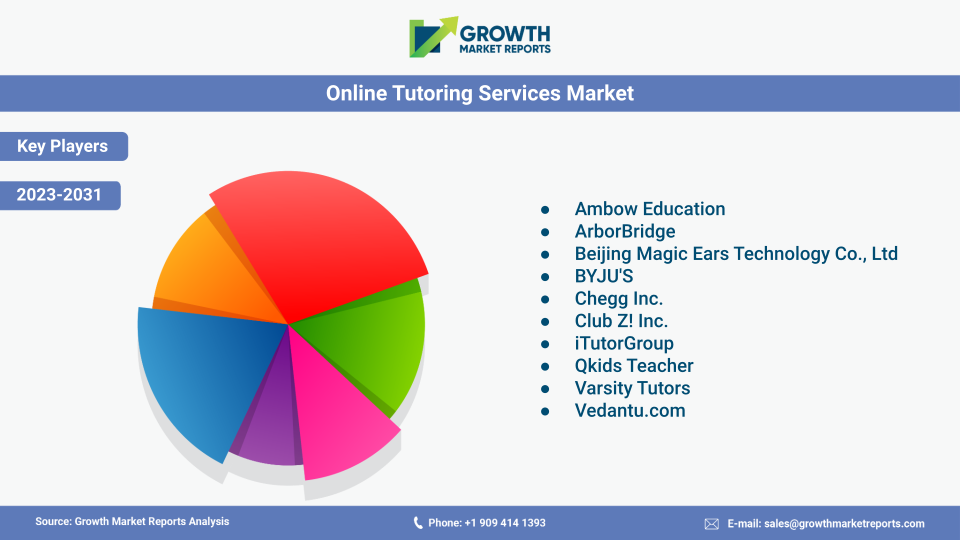
The key players in the global online tutoring services market are Ambow Education; Qkids Teacher; ArborBridge; iTutorGroup; Beijing Magic Ears Technology Co., Ltd; Varsity Tutors; BYJU'S; Club Z! Inc.; Chegg Inc.; and Vedantu.com.
These key players have adopted a series of market strategies including new product launching, entering into partnership, collaboration, and production expansion to enhance their market position and expand their consumer base.
Major players include Chegg Inc., BYJU’S, TAL Education Group, Pearson plc, Vedantu, VIPKid, Tutor.com, Club Z! Tutoring, Preply, Wyzant, Varsity Tutors, K12 Inc. (Stride, Inc.), Cambly, Unacademy, iTutorGroup, Brainly, Skooli, Revolution Prep, Khan Academy, and GoStudent.
Opportunities include AI-driven personalized learning, expansion in emerging markets, and integration of immersive technologies like VR. Challenges include the digital divide, data privacy concerns, quality assurance, and competition from free resources.
Primary end-users include K-12 students, higher education learners, corporate clients (for employee training and upskilling), and adult/lifelong learners seeking personal or professional development.
Mobile platforms are the most popular due to convenience and accessibility, especially among younger learners. Desktop platforms are preferred for complex subjects and higher education, while emerging platforms like VR are gaining traction.
The main tutoring types are Structured Tutoring (fixed curriculum), On-Demand Tutoring (flexible, as-needed help), Small Group Tutoring (collaborative learning), and One-on-One Tutoring (personalized instruction).
Platforms are using AI, machine learning, adaptive learning technologies, real-time feedback, gamification, multimedia content, and interactive tools to personalize instruction and improve student engagement and outcomes.
The main service types are Test Preparation, Subject Tutoring, Language Tutoring, and Others (including coding, music, arts, and life skills). Test Preparation is the largest and fastest-growing segment.
Asia Pacific dominates the market, especially China and India, due to a large student population and strong digital infrastructure. North America and Europe also hold significant market shares, while Latin America and the Middle East & Africa are emerging as promising regions.
Key growth drivers include increasing internet penetration, widespread use of smart devices, demand for personalized and flexible learning, advancements in AI and machine learning, and a global shift toward digital education post-pandemic.
The global online tutoring services market reached USD 24.7 billion in 2024 and is projected to grow at a CAGR of 14.2% from 2025 to 2033, reaching an estimated value of USD 77.9 billion by 2033.