Segments - by Product Type (Fresh Produce, Dairy Products, Snacks & Beverages, Staples & Cooking Essentials, Personal Care, Household Items, Others), by Delivery Model (On-Demand, Subscription-Based), by Platform (Mobile Application, Website), by Payment Mode (Online Payment, Cash on Delivery)
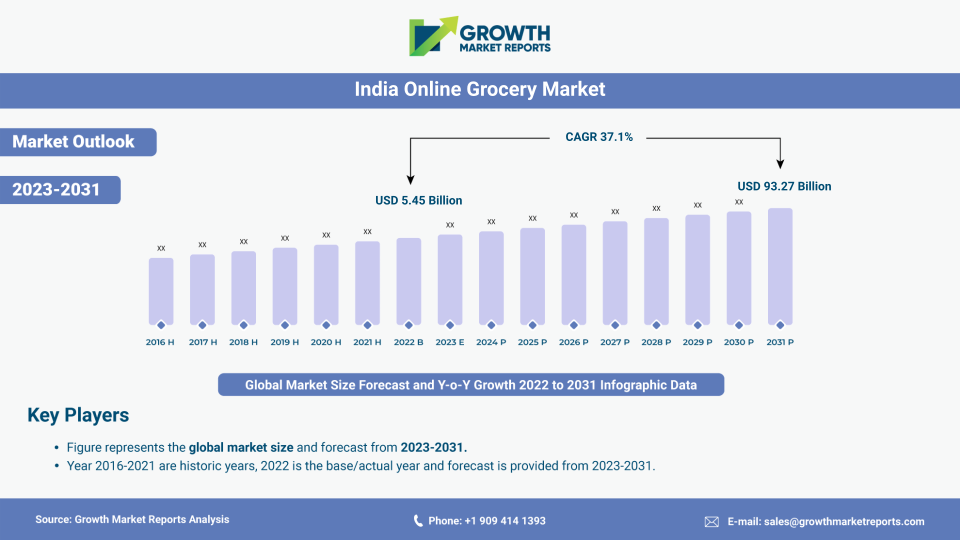
According to our latest research, the global online grocery market size stood at USD 375.4 billion in 2024, with India contributing a significant share of USD 14.8 billion for the same year. The Indian online grocery market is expected to witness robust expansion, registering a compound annual growth rate (CAGR) of 22.3% from 2025 to 2033. By the end of 2033, the Indian market is forecasted to reach USD 115.6 billion, propelled by rapid digitalization, increasing urbanization, and evolving consumer lifestyles. The surge in demand for convenience, coupled with the proliferation of smartphones and internet connectivity, continues to be the primary growth driver for the online grocery sector in India.
The substantial growth of the India online grocery market is primarily attributed to the country’s burgeoning urban population and the rising adoption of digital platforms for everyday shopping. Urban consumers, especially millennials and working professionals, are increasingly seeking convenience and time-saving solutions, making online grocery shopping an attractive alternative to traditional brick-and-mortar stores. The pandemic has further accelerated this shift, as safety and hygiene concerns prompted more consumers to explore online channels for their grocery needs. Moreover, the expansion of e-commerce infrastructure and the entry of major players such as Reliance JioMart, BigBasket, and Amazon Pantry have significantly enhanced product assortment, service quality, and last-mile delivery capabilities, thus boosting market penetration across metro and tier I cities.
Another pivotal growth factor for the India online grocery market is the continuous innovation in delivery models and payment options. Companies are increasingly investing in advanced logistics, cold chain management, and real-time tracking systems to ensure faster and more reliable deliveries. Additionally, the introduction of flexible payment modes, including e-wallets, Unified Payments Interface (UPI), and Buy Now Pay Later (BNPL) options, has made the online shopping experience seamless and secure for a diverse consumer base. Subscription-based models, offering scheduled deliveries and exclusive discounts, are also gaining traction, particularly among households with predictable consumption patterns. These innovations are not only enhancing customer satisfaction but also fostering brand loyalty and long-term engagement.
The market’s growth trajectory is further strengthened by the increasing focus on personalized marketing and data-driven strategies. Online grocery platforms are leveraging artificial intelligence and machine learning to analyze consumer preferences, predict buying behavior, and tailor product recommendations. This data-centric approach enables companies to optimize inventory management, reduce wastage, and offer customized promotions, thus driving higher conversion rates and average order values. Furthermore, the integration of regional languages, voice search, and easy-to-navigate interfaces is making online grocery platforms more accessible to consumers in tier II and tier III cities, thereby expanding the market’s reach beyond urban centers.
Regionally, South India and West India are emerging as the fastest-growing markets, driven by higher digital literacy rates, greater smartphone penetration, and proactive state government initiatives to promote e-commerce. North India, led by metropolitan hubs such as Delhi NCR, continues to hold the largest share, thanks to its dense population and affluent consumer base. Meanwhile, East India is witnessing steady growth as companies intensify their outreach efforts and address logistical challenges unique to the region. The competitive landscape is becoming increasingly dynamic, with both established players and new entrants vying for market share through aggressive marketing, strategic partnerships, and localized offerings.
The product type segment within the India online grocery market is highly diversified, encompassing categories such as fresh produce, dairy products, snacks and beverages, staples and cooking essentials, personal care, household items, and others. Fresh produce remains a cornerstone of consumer demand, as Indian households prioritize daily consumption of fruits and vegetables. Online platforms are investing heavily in sourcing networks and cold chain logistics to ensure the timely delivery of high-quality, farm-fresh produce. Partnerships with local farmers and cooperatives are becoming increasingly common, enabling platforms to offer a wider selection while supporting rural livelihoods. This focus on quality and freshness is helping to overcome traditional consumer hesitancy regarding the purchase of perishables online.
Dairy products and snacks & beverages are also witnessing robust demand, driven by increasing consumer preferences for branded, hygienically packaged goods. The convenience of ordering milk, yogurt, cheese, and ready-to-drink beverages online is particularly appealing to urban families and working professionals. Online grocery players are leveraging advanced inventory management and temperature-controlled delivery systems to maintain product integrity and safety. The growing health consciousness among Indian consumers is further spurring demand for organic, low-fat, and specialty dairy items, which are now being prominently featured on leading platforms.
Staples and cooking essentials such as rice, pulses, flour, oils, and spices constitute a significant portion of the online grocery basket. These products are purchased frequently and in bulk, making them ideal for subscription-based models and bulk discount offerings. The assurance of product authenticity, competitive pricing, and the convenience of doorstep delivery are key factors driving the online purchase of staples. Platforms are also introducing private label brands in this segment, offering consumers more affordable alternatives without compromising on quality. This strategy is not only improving margins for online retailers but also fostering customer loyalty.
Personal care and household items are fast-emerging sub-segments within the online grocery market, as consumers increasingly seek a one-stop solution for all their daily needs. Products such as soaps, shampoos, detergents, and cleaning supplies are being bundled with grocery orders, enhancing convenience and driving higher basket values. The integration of these categories is supported by targeted marketing campaigns and attractive combo deals, encouraging consumers to consolidate their purchases. As online platforms continue to expand their product assortment and improve service delivery, the share of personal care and household items within the overall market is expected to rise steadily in the coming years.
| Attributes | Details |
| Report Title | India Online Grocery Market Research Report 2033 |
| By Product Type | Fresh Produce, Dairy Products, Snacks & Beverages, Staples & Cooking Essentials, Personal Care, Household Items, Others |
| By Delivery Model | On-Demand, Subscription-Based |
| By Platform | Mobile Application, Website |
| By Payment Mode | Online Payment, Cash on Delivery |
| Regions Covered | North America, Europe, APAC, Latin America, MEA |
| Base Year | 2024 |
| Historic Data | 2018-2023 |
| Forecast Period | 2025-2033 |
| Number of Pages | 288 |
| Number of Tables & Figures | 330 |
| Customization Available | Yes, the report can be customized as per your need. |
The delivery model is a critical determinant of success in the India online grocery market, with on-demand and subscription-based models being the most prominent. The on-demand model, characterized by quick and flexible delivery options, caters to the immediate needs of urban consumers who value speed and convenience. Leading platforms are investing in micro-fulfillment centers and hyperlocal delivery networks to enable same-day or even 30-minute deliveries. This model is particularly popular in metro cities, where time constraints and busy lifestyles drive the demand for instant access to groceries. The competitive intensity in this segment is high, with players differentiating themselves through innovative delivery promises, real-time order tracking, and superior customer service.
The subscription-based delivery model is gaining traction among households with predictable consumption patterns, such as families and working professionals. This model offers scheduled deliveries of essential items like milk, bread, eggs, and staples, often at discounted rates. Subscription services are designed to foster long-term customer relationships and ensure a steady revenue stream for online grocery platforms. Companies are leveraging data analytics to personalize subscription plans and introduce flexible options, such as the ability to pause, modify, or cancel deliveries as needed. This approach not only enhances customer satisfaction but also improves operational efficiency by enabling better demand forecasting and inventory management.
Hybrid models, combining elements of both on-demand and subscription-based delivery, are also emerging as a strategic response to evolving consumer preferences. For instance, some platforms allow customers to schedule regular deliveries for certain products while retaining the flexibility to place ad hoc orders for other items. This hybrid approach caters to the diverse needs of Indian households, where consumption patterns can vary significantly based on festivals, seasons, and family size. The ability to customize delivery frequency and product selection is proving to be a key differentiator in a highly competitive market.
Logistics and last-mile delivery remain significant challenges for both delivery models, particularly in tier II and III cities where infrastructure gaps persist. Companies are addressing these challenges through strategic partnerships with local delivery agencies, investment in technology-driven route optimization, and the deployment of electric vehicles for sustainable delivery. The development of dark stores and fulfillment centers in proximity to high-demand areas is also helping to reduce delivery times and improve service reliability. As the market matures, the focus on logistics innovation and customer-centric delivery solutions will continue to drive growth and differentiation.
The platform segment of the India online grocery market is primarily divided into mobile application and website channels, with mobile applications emerging as the dominant mode of access. The proliferation of affordable smartphones and the widespread availability of high-speed internet have made mobile apps the preferred choice for a majority of consumers, particularly in urban and semi-urban areas. Leading players are investing in user-friendly interfaces, intuitive navigation, and personalized recommendations to enhance the mobile shopping experience. Features such as voice search, barcode scanning, and real-time notifications are further improving convenience and engagement, driving higher app downloads and repeat usage.
Websites continue to play a significant role, especially among older consumers and those who prefer larger screens for browsing and comparison shopping. Many online grocery platforms are adopting a multi-channel strategy, ensuring seamless integration between their mobile apps and websites. This approach allows consumers to start a transaction on one device and complete it on another, enhancing flexibility and reducing friction in the purchasing process. The use of progressive web apps (PWAs) is also on the rise, offering app-like experiences directly through mobile browsers without the need for downloads.
The integration of advanced technologies such as artificial intelligence (AI), machine learning, and big data analytics is transforming both mobile and web platforms. These technologies enable personalized product recommendations, dynamic pricing, and targeted promotions based on individual consumer behavior. Online grocery platforms are also leveraging chatbots and virtual assistants to provide real-time customer support, address queries, and facilitate order tracking. The adoption of regional languages and vernacular interfaces is making platforms more accessible to non-English-speaking consumers, thereby expanding the addressable market.
Security and privacy remain top priorities for platform development, as consumers increasingly share sensitive information such as payment details and delivery addresses online. Companies are investing in robust encryption, multi-factor authentication, and secure payment gateways to build trust and ensure data protection. As competition intensifies, the ability to deliver a seamless, secure, and personalized shopping experience across both mobile and web platforms will be a key determinant of market leadership in the India online grocery sector.
The payment mode landscape in the India online grocery market is characterized by a dynamic shift towards digital transactions, with online payment methods rapidly gaining prominence over traditional cash on delivery (COD). The widespread adoption of Unified Payments Interface (UPI), digital wallets, credit and debit cards, and net banking is transforming the way consumers pay for their groceries online. The government’s push towards a cashless economy, coupled with the increasing penetration of smartphones and internet connectivity, has significantly boosted the uptake of online payment methods. Consumers are drawn to the convenience, speed, and security offered by digital transactions, which also facilitate seamless refunds and order tracking.
Despite the growing popularity of online payments, cash on delivery continues to retain a significant share, particularly in tier II and III cities where trust in digital transactions is still evolving. COD remains an attractive option for first-time users, older consumers, and those without access to digital banking services. Recognizing this, online grocery platforms are offering flexible payment options at the checkout stage, allowing consumers to choose their preferred mode. Some companies are also experimenting with hybrid payment models, such as partial COD or pay-on-delivery with digital wallets, to bridge the gap between traditional and modern payment preferences.
The integration of innovative payment solutions, such as Buy Now Pay Later (BNPL) and EMI options, is further enhancing the appeal of online grocery shopping. These solutions provide consumers with greater financial flexibility, enabling them to manage their monthly budgets more effectively. Platforms are also leveraging loyalty programs, cashback offers, and exclusive discounts to incentivize the use of digital payment methods. The seamless integration of payment gateways, one-click checkout, and secure authentication processes is reducing cart abandonment rates and driving higher conversion rates.
Security remains a key concern for consumers, with instances of online fraud and data breaches posing potential risks to market growth. Online grocery platforms are addressing these challenges through the implementation of advanced encryption technologies, regular security audits, and transparent privacy policies. As digital payment adoption continues to rise, building consumer trust through robust security measures and transparent communication will be essential for sustaining growth in the India online grocery market.
The India online grocery market is ripe with opportunities, driven by the country’s large and youthful population, rising internet penetration, and increasing disposable incomes. There is immense potential for growth in tier II and III cities, where digital adoption is accelerating and consumers are becoming more comfortable with e-commerce. Companies that can effectively address logistical challenges, tailor their offerings to local preferences, and invest in regional language support stand to gain a significant competitive advantage. The integration of advanced technologies such as AI, machine learning, and blockchain presents opportunities for enhancing supply chain efficiency, personalizing customer experiences, and ensuring product authenticity. Strategic partnerships with local farmers, cooperatives, and delivery agencies can further strengthen sourcing networks and expand market reach.
Another major opportunity lies in the expansion of private label brands and value-added services. By offering exclusive products, customized subscription plans, and bundled deals, online grocery platforms can differentiate themselves and build long-term customer loyalty. The growing demand for organic, health-focused, and specialty products presents a lucrative niche for innovation and brand development. Additionally, the adoption of sustainable practices, such as eco-friendly packaging and electric vehicle delivery, can enhance brand reputation and appeal to environmentally conscious consumers. As the market matures, companies that prioritize customer-centricity, operational excellence, and technological innovation will be best positioned to capitalize on emerging opportunities.
However, the market is not without its restraining factors. Intense competition, thin profit margins, and high customer acquisition costs pose significant challenges for both new entrants and established players. The complexity of managing perishable inventory, ensuring timely deliveries, and maintaining consistent product quality requires substantial investment in logistics and technology. Regulatory uncertainties, data privacy concerns, and the risk of online fraud further add to the operational risks. Companies must also navigate the evolving preferences of Indian consumers, who are highly price-sensitive and value-driven. To sustain growth and profitability, online grocery platforms must continuously innovate, optimize costs, and build trust through transparency and reliability.
The regional distribution of the India online grocery market reflects the country’s diverse demographic and economic landscape. North India leads the market, accounting for approximately USD 5.6 billion in 2024, driven by the high concentration of urban centers such as Delhi NCR, Chandigarh, and Lucknow. The region benefits from a dense population, higher disposable incomes, and a strong presence of organized retail infrastructure. Online grocery platforms have established robust delivery networks and fulfillment centers in key cities, enabling them to cater to the diverse needs of consumers across urban and semi-urban areas. The adoption of digital payment methods and the growing preference for convenience shopping are further fueling market growth in North India.
South India is emerging as the fastest-growing region, with a market value of USD 4.3 billion in 2024 and an impressive CAGR of 24.6% projected through 2033. The region’s high digital literacy rates, widespread smartphone usage, and proactive state government initiatives to promote e-commerce have created a conducive environment for online grocery adoption. Cities such as Bengaluru, Hyderabad, and Chennai are at the forefront of this growth, with consumers embracing on-demand delivery models and innovative payment solutions. The presence of major technology hubs and a cosmopolitan population further contribute to the region’s dynamic market landscape. As companies expand their reach into smaller towns and rural areas, South India is expected to play a pivotal role in shaping the future of the online grocery market.
West India and East India are also witnessing steady growth, with market sizes of USD 3.1 billion and USD 1.8 billion respectively in 2024. West India, led by Mumbai and Pune, benefits from a strong retail ecosystem and high consumer spending power. Online grocery platforms are leveraging strategic partnerships with local retailers and delivery agencies to enhance service quality and expand their footprint. East India, while smaller in market size, presents significant untapped potential as companies invest in infrastructure development and localized marketing strategies. The focus on addressing logistical challenges and building consumer trust will be key to unlocking growth opportunities in these regions.
The competitive landscape of the India online grocery market is characterized by intense rivalry, rapid innovation, and a constant race to capture market share. Leading players such as BigBasket, Reliance JioMart, Amazon Pantry, Grofers (now Blinkit), and Flipkart Supermart dominate the market, leveraging their extensive product assortments, robust logistics networks, and advanced technology platforms. These companies are continuously investing in infrastructure, last-mile delivery, and customer engagement initiatives to differentiate themselves and build brand loyalty. The entry of new players and the expansion of traditional retailers into the online space are further intensifying competition, driving innovation in delivery models, pricing strategies, and value-added services.
Strategic partnerships and mergers are becoming increasingly common as companies seek to enhance their capabilities and expand their reach. For instance, Tata Group’s acquisition of BigBasket and Reliance’s aggressive expansion of JioMart have reshaped the competitive dynamics of the market. International players such as Amazon and Walmart-owned Flipkart are leveraging their global expertise and financial strength to capture a larger share of the Indian market. The focus on hyperlocal delivery, regional language integration, and personalized marketing is enabling companies to cater to the diverse needs of Indian consumers and penetrate deeper into tier II and III cities.
Technology is a key differentiator in the online grocery market, with companies investing in artificial intelligence, machine learning, and data analytics to optimize operations and enhance customer experiences. The use of predictive analytics for demand forecasting, dynamic pricing, and inventory management is enabling platforms to reduce wastage, improve margins, and deliver superior value to consumers. The adoption of advanced logistics solutions, such as dark stores, micro-fulfillment centers, and electric vehicle fleets, is further enhancing delivery speed and reliability. As consumer expectations continue to evolve, the ability to deliver a seamless, personalized, and secure shopping experience will be critical to sustaining competitive advantage.
Major companies in the India online grocery market include BigBasket, Reliance JioMart, Amazon Pantry, Blinkit (formerly Grofers), and Flipkart Supermart. BigBasket, now backed by Tata Group, is known for its extensive product range, strong sourcing network, and innovative delivery models. Reliance JioMart has rapidly expanded its footprint, leveraging Reliance’s vast retail network and digital ecosystem to offer competitive pricing and wide product availability. Amazon Pantry and Flipkart Supermart are leveraging their parent companies’ e-commerce expertise and logistics capabilities to capture a larger share of the market. Blinkit, with its focus on quick commerce and hyperlocal delivery, is targeting urban consumers who value speed and convenience. These companies are continuously innovating and expanding their offerings to stay ahead in a highly competitive and fast-evolving market.
The India Online Grocery market has been segmented on the basis of
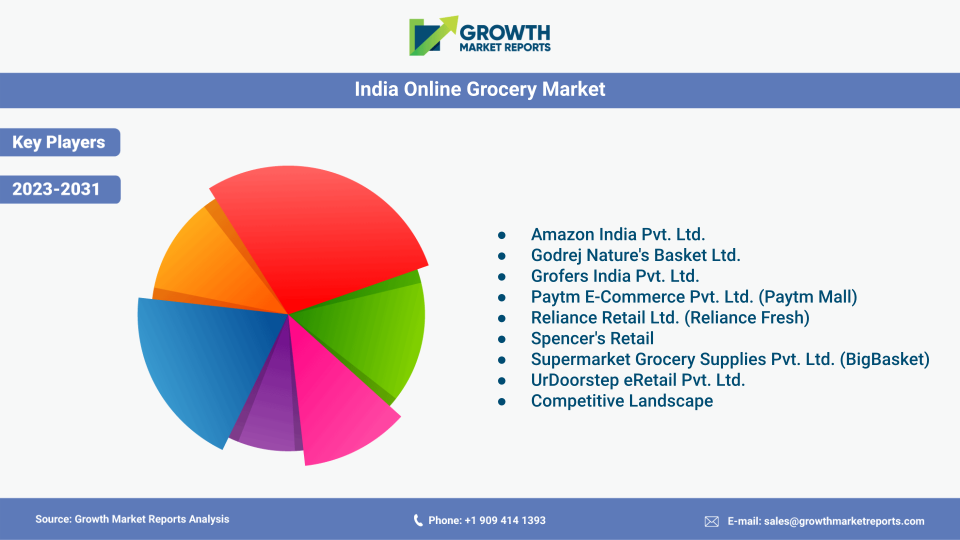
Some of the leading players in the India online grocery market are Amazon India Pvt. Ltd., Godrej Nature's Basket Ltd., Grofers India Pvt. Ltd., Paytm E-Commerce Pvt. Ltd. (Paytm Mall), Reliance Retail Ltd. (Reliance Fresh), Spencer's Retail, Supermarket Grocery Supplies Pvt. Ltd. (BigBasket), and UrDoorstep eRetail Pvt. Ltd.
Companies are focusing on improving their market presence by adopting various market strategies such as partnerships, mergers, and acquisitions. These strategies allow the manufacturers to improve their product offering and expand their market share.
Major challenges include intense competition, thin profit margins, logistics and last-mile delivery issues, managing perishable inventory, regulatory uncertainties, and building consumer trust in digital payments.
Technologies such as artificial intelligence, machine learning, real-time tracking, and data analytics are being used for personalized marketing, inventory management, and improved customer experiences.
Key companies include BigBasket (Tata Group), Reliance JioMart, Amazon Pantry, Blinkit (formerly Grofers), Flipkart Supermart, Spencer’s Retail, Nature’s Basket, and others.
Consumers can pay using online payment methods such as UPI, digital wallets, credit/debit cards, net banking, as well as traditional cash on delivery (COD) and innovative options like Buy Now Pay Later (BNPL).
North India holds the largest market share, while South India is the fastest-growing region. West and East India are also experiencing steady growth.
The two main delivery models are on-demand (quick, flexible delivery for immediate needs) and subscription-based (scheduled deliveries for predictable consumption). Hybrid models combining both are also emerging.
Popular product categories include fresh produce, dairy products, snacks and beverages, staples and cooking essentials, personal care, and household items.
Key growth drivers include rapid digitalization, increasing urbanization, evolving consumer lifestyles, demand for convenience, widespread smartphone and internet use, and innovations in delivery and payment models.
The India online grocery market is expected to grow at a CAGR of 22.3% from 2025 to 2033, reaching USD 115.6 billion by 2033.
As of 2024, the India online grocery market is valued at USD 14.8 billion, with strong growth expected in the coming years.