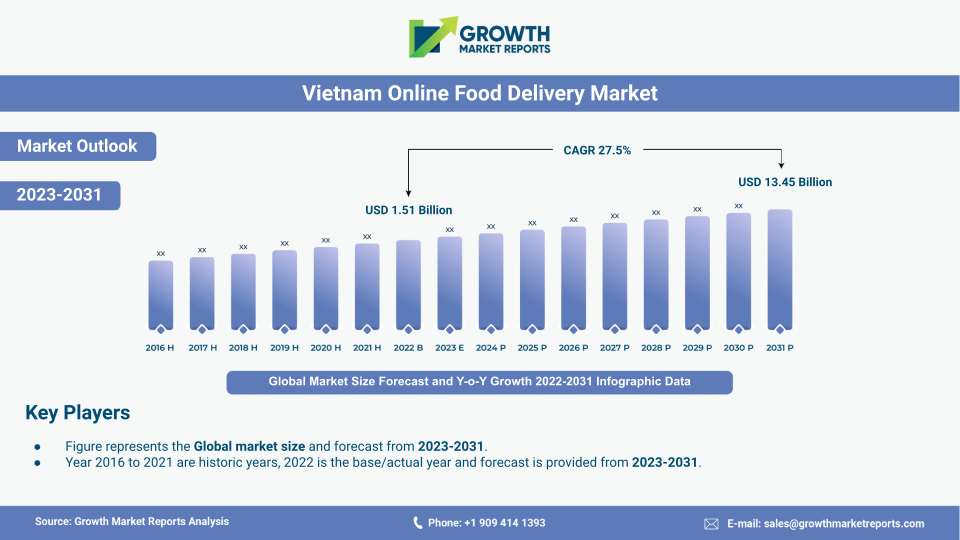
Segments - by Platform Type (Mobile Applications, Websites), by Business Model (Order Focused Food Delivery System, Logistics Based Food Delivery System, Full-Service Food Delivery System), by Payment Method (Online Payment, Cash on Delivery), by End User (Individual, Corporate)
According to our latest research, the global online food delivery market size reached USD 221.8 billion in 2024, demonstrating robust growth momentum driven by digital transformation and evolving consumer preferences. The market is projected to expand at a CAGR of 10.6% from 2025 to 2033, reaching a forecasted value of USD 552.3 billion by 2033. This impressive growth is propelled by increasing smartphone penetration, the convenience of digital payment systems, and a surge in demand for quick and contactless food delivery solutions across both developed and emerging economies. As per our latest research, the online food delivery market is witnessing a paradigm shift, with technology, urbanization, and changing lifestyles shaping its trajectory.
One of the primary growth drivers for the online food delivery market is the rapid adoption of smartphones and internet connectivity worldwide. With more than 5.6 billion smartphone users globally in 2024, consumers now have unprecedented access to food delivery platforms via dedicated mobile applications and websites. This digital accessibility, combined with user-friendly interfaces and real-time order tracking, has significantly enhanced the customer experience, encouraging repeat orders and higher engagement rates. Additionally, the proliferation of digital payment options has further streamlined the ordering process, reducing friction and making it easier for customers to transact securely and efficiently.
Another significant factor contributing to the marketÂ’s expansion is the changing consumer lifestyle, particularly among urban populations. Busy work schedules, increased disposable incomes, and a growing preference for convenience have led to a surge in demand for quick-service restaurant (QSR) offerings and home-delivered meals. Millennials and Gen Z consumers, who value time-saving solutions and diverse culinary options, are especially driving the adoption of online food delivery platforms. This demographic shift, coupled with aggressive promotional strategies and loyalty programs by leading market players, has fueled sustained growth in the sector.
The COVID-19 pandemic has also played a pivotal role in reshaping the online food delivery landscape. Lockdowns, social distancing measures, and heightened health concerns accelerated the transition from traditional dine-in services to online ordering and contactless delivery. Restaurants and foodservice providers rapidly adapted by partnering with third-party aggregators or enhancing their own digital platforms. This shift not only ensured business continuity but also introduced new customer segments to the convenience of online food delivery, a trend that continues to persist even in the post-pandemic era. As a result, the market has seen an influx of investments in technology, logistics, and last-mile delivery solutions to meet growing demand.
From a regional perspective, the Asia Pacific region leads the global online food delivery market, accounting for over 40% of the market share in 2024. This dominance is attributed to large urban populations, high smartphone penetration, and a thriving digital economy in countries such as China, India, and Southeast Asian nations. North America and Europe also represent significant markets, driven by advanced infrastructure, high consumer spending, and the presence of established food delivery brands. Meanwhile, Latin America and the Middle East & Africa are witnessing rapid growth, supported by expanding internet access and evolving consumer habits. Each region presents unique opportunities and challenges, shaping the competitive dynamics of the global online food delivery market.
The rise of Restaurant Meal Delivery services has significantly contributed to the growth of the online food delivery market. These services offer consumers the convenience of enjoying restaurant-quality meals in the comfort of their homes, without the need to dine out. This trend has been particularly popular among urban dwellers who seek diverse culinary experiences without the hassle of commuting. Restaurant meal delivery platforms have partnered with a wide range of eateries, from local favorites to high-end establishments, providing users with an extensive selection of cuisines and dishes. This expansion of options has not only enhanced consumer satisfaction but also allowed restaurants to reach a broader audience, thereby increasing their revenue streams. As more consumers embrace this convenient dining alternative, restaurant meal delivery is poised to become a staple in the food delivery landscape.
The online food delivery market is fundamentally segmented by platform type, primarily into mobile applications and websites. Mobile applications have emerged as the dominant platform, accounting for over 65% of the total market share in 2024. The popularity of mobile apps is largely driven by their intuitive user interfaces, personalized recommendations, and seamless integration with digital wallets and loyalty programs. These apps allow users to place orders, track deliveries in real time, and access exclusive deals, significantly enhancing the overall customer experience. Push notifications and location-based services further bolster engagement, making mobile applications the preferred choice for both consumers and service providers.
Websites continue to play a vital role in the online food delivery ecosystem, particularly among older demographics and corporate users who may prefer desktop ordering for group or bulk orders. While the growth rate of website-based orders is slower compared to mobile apps, they remain an essential channel for brand visibility and customer acquisition. Many leading platforms maintain robust, mobile-optimized websites that cater to users who may not wish to download additional applications or who value the larger screen experience for menu browsing and customization. The synergy between websites and mobile apps ensures comprehensive market coverage and maximizes reach across diverse user segments.
The integration of advanced technologies such as artificial intelligence (AI), machine learning, and data analytics is transforming both mobile applications and websites in the online food delivery market. These technologies enable platforms to offer personalized recommendations, optimize delivery routes, and predict customer preferences, thereby improving operational efficiency and customer satisfaction. Voice-activated ordering, chatbots for customer service, and augmented reality menus are also being deployed to enhance the digital ordering experience. Such innovations are setting new benchmarks for convenience and engagement, further driving the adoption of online food delivery platforms across both mobile and web channels.
Security and privacy remain critical considerations for both platform types. As online food delivery platforms handle sensitive customer data and payment information, robust cybersecurity measures and compliance with data protection regulations are paramount. Leading players invest heavily in secure payment gateways, end-to-end encryption, and multi-factor authentication to safeguard user data and build trust. Continuous updates and improvements to app and website security are essential to maintaining customer confidence and ensuring sustained growth in the highly competitive online food delivery market.
| Attributes | Details |
| Report Title | Online Food Delivery Market Research Report 2033 |
| By Platform Type | Mobile Applications, Websites |
| By Business Model | Order Focused Food Delivery System, Logistics Based Food Delivery System, Full-Service Food Delivery System |
| By Payment Method | Online Payment, Cash on Delivery |
| By End User | Individual, Corporate |
| Regions Covered | North America, Europe, APAC, Latin America, MEA |
| Base Year | 2024 |
| Historic Data | 2018-2023 |
| Forecast Period | 2025-2033 |
| Number of Pages | 300 |
| Number of Tables & Figures | 345 |
| Customization Available | Yes, the report can be customized as per your need. |
The online food delivery market is characterized by diverse business models, including order-focused food delivery systems, logistics-based food delivery systems, and full-service food delivery systems. Order-focused models, which connect customers with restaurants but leave delivery logistics to the restaurants themselves, have been particularly prevalent among small and medium-sized eateries. These platforms typically generate revenue through commission fees and offer restaurants a digital storefront without the complexities of managing delivery operations. This model is favored for its low entry barriers and flexibility, enabling a wide range of restaurants to participate in the online food delivery ecosystem.
Logistics-based food delivery systems have gained significant traction, especially among large-scale aggregators and tech-driven startups. In this model, the platform not only facilitates order placement but also manages the entire delivery process through dedicated fleets or third-party logistics providers. This approach allows for greater control over the customer experience, including delivery speed, quality, and reliability. Logistics-based models have become the backbone of many leading online food delivery companies, driving market expansion in urban centers where fast and efficient delivery is a key differentiator. The scalability and operational efficiencies offered by this model make it particularly attractive for platforms aiming to capture large market shares.
Full-service food delivery systems represent a holistic approach, offering end-to-end solutions that encompass order management, food preparation, and delivery. These platforms often operate their own kitchens, known as cloud kitchens or ghost kitchens, which are optimized for delivery-only operations. By controlling the entire value chain, full-service models can ensure consistent quality, faster delivery times, and innovative menu offerings tailored to customer preferences. This model is increasingly popular in densely populated urban areas, where real estate constraints and high operational costs make traditional dine-in restaurants less viable. The full-service approach also enables rapid experimentation with new cuisines and concepts, catering to evolving consumer tastes.
Each business model presents unique opportunities and challenges in terms of scalability, profitability, and customer engagement. Order-focused systems offer flexibility but may struggle with quality control, while logistics-based platforms require significant investments in infrastructure and workforce management. Full-service models, though capital-intensive, provide comprehensive control and the potential for higher margins. The choice of business model often depends on market maturity, regulatory environment, and competitive dynamics, with many platforms adopting hybrid approaches to maximize reach and adaptability in the fast-evolving online food delivery landscape.
Payment methods in the online food delivery market have evolved rapidly, with online payments now accounting for over 75% of transactions globally in 2024. The proliferation of digital wallets, credit and debit cards, and integrated payment gateways has made online transactions seamless, secure, and convenient for users. Leading platforms partner with major fintech providers to offer a range of payment options, including one-click payments, stored value accounts, and loyalty point redemptions. This digitalization of payments not only enhances user experience but also supports order tracking, refunds, and promotional campaigns, contributing to higher customer retention and lifetime value.
Cash on delivery (COD) remains a popular payment method in several emerging markets, particularly in regions where digital literacy and banking penetration are still developing. For many consumers, COD provides a sense of security and trust, especially when transacting with new or unfamiliar platforms. However, the share of COD transactions is gradually declining as consumers become more comfortable with digital payments and as platforms incentivize online payment methods through discounts and exclusive offers. The COVID-19 pandemic further accelerated this shift, with contactless payments becoming the preferred choice for both health and convenience reasons.
The integration of payment technologies such as QR codes, unified payment interfaces (UPI), and buy-now-pay-later (BNPL) solutions is further transforming the payment landscape in the online food delivery market. These innovations enable faster, more flexible transactions and cater to a broader range of customer preferences. Mobile payment solutions are particularly popular among younger consumers and in regions with high smartphone adoption, providing a frictionless checkout experience that encourages repeat business. Platforms that offer diverse and reliable payment options are better positioned to capture market share and foster customer loyalty.
Security and fraud prevention are critical considerations in the online payment ecosystem. Platforms invest heavily in advanced encryption, tokenization, and real-time fraud detection systems to protect customer data and ensure transaction integrity. Regulatory compliance, such as adherence to Payment Card Industry Data Security Standard (PCI DSS) and local financial regulations, is essential to maintaining customer trust and avoiding legal repercussions. As digital payments continue to gain traction, ongoing investments in security infrastructure will remain a top priority for online food delivery platforms seeking to sustain growth and protect their brand reputation.
The online food delivery market serves a diverse end-user base, with individuals constituting the largest segment, accounting for over 80% of total orders in 2024. Individual consumers are drawn to the convenience, variety, and speed offered by online food delivery platforms, which cater to a wide range of dietary preferences and lifestyles. The ability to browse menus, customize orders, and access exclusive deals has made online ordering a preferred choice for busy professionals, students, and families alike. Platforms leverage customer data to offer personalized recommendations and promotions, enhancing user engagement and driving repeat business.
Corporate users represent a growing and lucrative segment in the online food delivery market. Businesses increasingly partner with food delivery platforms to provide catering services for meetings, events, and employee meals. Corporate accounts often involve bulk orders, scheduled deliveries, and customized menus, requiring specialized solutions and dedicated account management. The rise of hybrid and remote work models has further fueled demand for corporate food delivery services, as companies seek to support employee well-being and productivity through convenient meal solutions. Platforms that offer tailored corporate packages and seamless invoicing processes are well-positioned to capture this expanding market.
The evolving needs and preferences of end users are driving continuous innovation in the online food delivery market. For individual consumers, platforms are introducing features such as contactless delivery, real-time order tracking, and subscription-based meal plans to enhance convenience and value. Health-conscious consumers are seeking options for organic, vegan, and allergen-free meals, prompting platforms to expand their offerings and partner with specialty restaurants. For corporate clients, platforms are developing integrated dashboards, expense management tools, and flexible billing options to streamline the ordering process and meet the unique requirements of business customers.
Understanding and addressing the distinct needs of individual and corporate end users is critical to sustaining growth and competitiveness in the online food delivery market. Platforms that can effectively segment their customer base, personalize offerings, and deliver exceptional service are more likely to build lasting relationships and achieve long-term success. As the market continues to evolve, end-user expectations will remain a key driver of innovation and differentiation among leading online food delivery providers.
The online food delivery market presents significant opportunities for growth, particularly through technological innovation and market expansion. The integration of artificial intelligence, machine learning, and data analytics enables platforms to optimize delivery routes, personalize recommendations, and enhance customer engagement. The emergence of new delivery models, such as drone and autonomous vehicle deliveries, promises to further improve efficiency and reduce operational costs. Additionally, the rise of cloud kitchens and virtual restaurants allows platforms to expand their offerings without the constraints of traditional brick-and-mortar establishments. These advancements create new revenue streams and enable platforms to cater to evolving consumer preferences, driving sustained market growth.
Another major opportunity lies in the untapped potential of emerging markets, where rising internet penetration, urbanization, and changing consumer lifestyles are fueling demand for online food delivery services. Regions such as Asia Pacific, Latin America, and the Middle East & Africa offer vast growth prospects, supported by large populations and increasing smartphone adoption. Strategic partnerships with local restaurants, investment in last-mile logistics, and the development of region-specific offerings can help platforms capture market share and establish a strong foothold in these high-growth markets. Furthermore, the expansion of B2B and corporate food delivery solutions presents an additional avenue for revenue diversification and long-term growth.
Despite these opportunities, the online food delivery market faces several restraining factors, most notably intense competition and thin profit margins. The proliferation of new entrants and aggressive pricing strategies have led to a highly competitive landscape, putting pressure on profitability and sustainability. High customer acquisition costs, coupled with rising expenses for logistics and delivery personnel, further challenge the financial viability of many platforms. Regulatory hurdles, such as labor classification laws and food safety standards, add complexity and increase compliance costs. To navigate these challenges, platforms must focus on operational efficiency, strategic partnerships, and continuous innovation to differentiate themselves and achieve long-term success.
The Asia Pacific region dominates the global online food delivery market, accounting for approximately USD 89 billion in market size in 2024. This leadership is driven by large urban populations, high smartphone penetration, and a vibrant digital economy in countries such as China, India, Japan, and Southeast Asian nations. China alone represents over 50% of the Asia Pacific market, with leading platforms like Meituan and Ele.me setting global benchmarks for scale and innovation. IndiaÂ’s market is also expanding rapidly, supported by rising disposable incomes, urbanization, and the proliferation of digital payment solutions. The regionÂ’s dynamic startup ecosystem and favorable regulatory environment further support market growth, with a projected CAGR of 12.4% from 2025 to 2033.
North America is the second-largest market, with a size of USD 56.5 billion in 2024. The United States accounts for the majority of this share, driven by advanced infrastructure, high consumer spending, and the presence of established players such as DoorDash, Uber Eats, and Grubhub. The regionÂ’s mature market is characterized by intense competition, frequent innovation, and a strong focus on customer experience. Subscription-based models, loyalty programs, and partnerships with quick-service restaurants are key trends shaping the North American market. Canada also contributes significantly, with growing demand for online food delivery in major cities and suburban areas.
Europe holds a substantial share of the global market, valued at USD 41.6 billion in 2024. The regionÂ’s growth is supported by high internet penetration, diverse culinary cultures, and increasing adoption of digital payment methods. The United Kingdom, Germany, France, and Italy are the leading markets, with platforms such as Just Eat Takeaway, Deliveroo, and Delivery Hero driving innovation and expansion. Latin America and the Middle East & Africa, though smaller in comparison, are witnessing rapid growth, with market sizes of USD 18.2 billion and USD 16.5 billion respectively in 2024. These regions offer significant opportunities for market entry and expansion, fueled by urbanization, rising incomes, and changing consumer habits.
The competitive landscape of the online food delivery market is characterized by the presence of both global giants and regional champions, each vying for market share through innovation, partnerships, and aggressive expansion strategies. The market is highly fragmented, with a mix of established players, emerging startups, and niche service providers catering to diverse customer segments and regional preferences. Companies are investing heavily in technology, logistics, and customer service to differentiate themselves and build brand loyalty. Strategic acquisitions, mergers, and partnerships are common, as players seek to expand their geographic footprint, enhance service offerings, and achieve economies of scale.
Leading platforms are leveraging data analytics, artificial intelligence, and machine learning to optimize operations, personalize customer experiences, and drive operational efficiencies. Investments in last-mile delivery solutions, including the deployment of electric vehicles, drones, and autonomous delivery robots, are transforming the logistics landscape and setting new standards for speed and reliability. Platforms are also focusing on sustainability initiatives, such as eco-friendly packaging and carbon-neutral delivery options, to appeal to environmentally conscious consumers and comply with evolving regulatory requirements. The integration of loyalty programs, subscription models, and exclusive partnerships with top restaurants further enhances customer retention and lifetime value.
The competitive intensity is particularly pronounced in mature markets such as North America, Europe, and parts of Asia Pacific, where established players face mounting pressure from new entrants and disruptive business models. Price wars, promotional campaigns, and innovative service offerings are common strategies employed to attract and retain customers. In emerging markets, local players often have an advantage due to their deep understanding of regional preferences, regulatory environments, and logistical challenges. However, global giants are increasingly entering these markets through acquisitions, joint ventures, and strategic alliances, intensifying competition and driving market consolidation.
Some of the major companies in the online food delivery market include DoorDash, Uber Eats, Grubhub, Just Eat Takeaway, Deliveroo, Delivery Hero, Meituan, Ele.me, Zomato, and Swiggy. DoorDash and Uber Eats dominate the North American market, leveraging extensive delivery networks, technology-driven solutions, and strong brand recognition. Grubhub, though facing stiff competition, maintains a significant presence through partnerships with local restaurants and innovative service offerings. In Europe, Just Eat Takeaway and Deliveroo lead the market, focusing on operational excellence, customer experience, and expansion into new segments such as grocery delivery.
In the Asia Pacific region, Meituan and Ele.me command a substantial share of the Chinese market, setting industry benchmarks for scale, efficiency, and innovation. Zomato and Swiggy are the leading players in India, driving growth through aggressive marketing, technology investments, and strategic partnerships with restaurants and cloud kitchens. Delivery Hero operates across multiple regions, leveraging a diversified portfolio of brands and a strong focus on logistics and technology. These companies continue to shape the competitive landscape through continuous innovation, market expansion, and a relentless focus on customer satisfaction, positioning themselves for sustained growth in the rapidly evolving online food delivery market.
The Online Food Delivery market has been segmented on the basis of
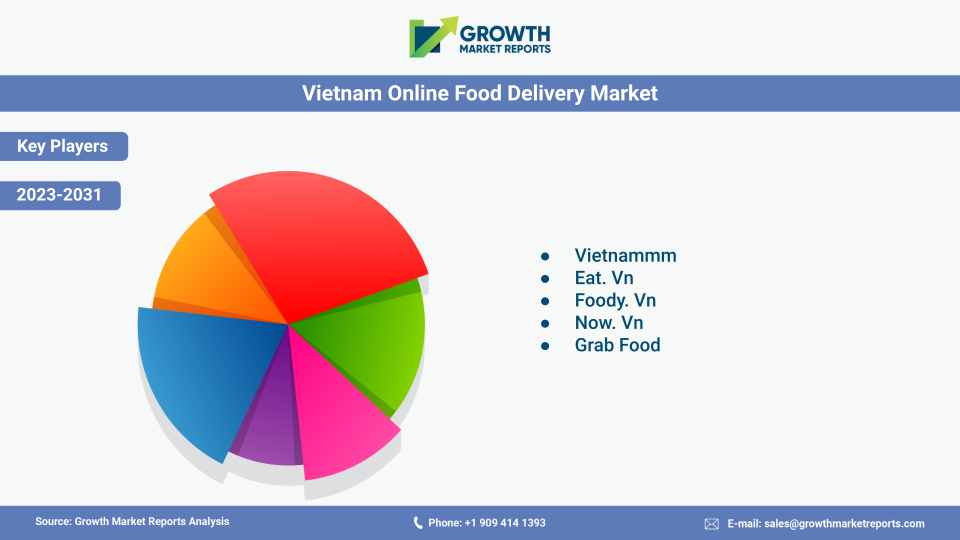
Key players in the Vietnam online food delivery market include Vietnammm; Eat. Vn; Foody. Vn; Now. Vn; and Grab Food. These players are widely engaged in various business development strategies including mergers & acquisitions, collaborations, agreements, and partnerships to strengthen their geographical presence and expand their consumer base globally. Some of these key players are now focusing on expanding their menu and including various cuisines on their apps to attract more customers.
Major players include DoorDash, Uber Eats, Grubhub, Just Eat Takeaway, Deliveroo, Meituan, Ele.me, Zomato, Swiggy, and Delivery Hero, among others.
Opportunities include technological innovation (AI, drones, cloud kitchens), expansion into emerging markets, and B2B solutions. Challenges include intense competition, thin profit margins, high customer acquisition costs, and regulatory hurdles.
Individual consumers make up over 80% of orders, attracted by convenience and variety. Corporate users are a growing segment, using platforms for catering, meetings, and employee meals.
Online payments, including digital wallets and credit/debit cards, account for over 75% of transactions globally. Cash on delivery remains popular in some emerging markets but is declining due to increased digital payment adoption.
The main business models are order-focused food delivery systems, logistics-based food delivery systems, and full-service food delivery systems, each offering different levels of control over the ordering and delivery process.
The market is primarily segmented into mobile applications and websites, with mobile apps accounting for over 65% of market share due to their user-friendly interfaces and integration with digital wallets and loyalty programs.
Asia Pacific leads the market, accounting for over 40% of global share in 2024, followed by North America and Europe. Latin America and the Middle East & Africa are also experiencing rapid growth.
The pandemic accelerated the shift from dine-in to online ordering and contactless delivery, prompting restaurants to partner with delivery platforms and invest in digital solutions, which expanded the customer base and drove sustained growth.
Key growth drivers include increasing smartphone penetration, digital payment adoption, changing consumer lifestyles, urbanization, and the demand for convenience and contactless delivery.
The global online food delivery market reached USD 221.8 billion in 2024 and is projected to grow at a CAGR of 10.6% from 2025 to 2033, reaching USD 552.3 billion by 2033.