Online Event Ticketing Market Report 2034

Online Event Ticketing Market Report 2034

Segments - by Platform (Mobile, Desktop), by Event Type (Sports, Music & Concerts, Movies, Performing Arts, Conferences, Others), by Ticket Type (One-time, Season Pass, Subscription), by End-User (Individual, Corporate)

https://growthmarketreports.com/Debadatta
Author : Debadatta Patel
https://growthmarketreports.com/Vaibhav
Fact-checked by : V. Chandola
https://growthmarketreports.com/Shruti
Editor : Shruti Bhat

Last Updated : Jun, 2026 | Report ID :CG-577 | 4.0 Rating | 10 Reviews | 291 Pages | Format : Docx PDF

Report Description

This report is updated with the latest market data and insights as of June 2026. Base year: 2025  |  Forecast period: 2026-2034


Online Event Ticketing Market Outlook

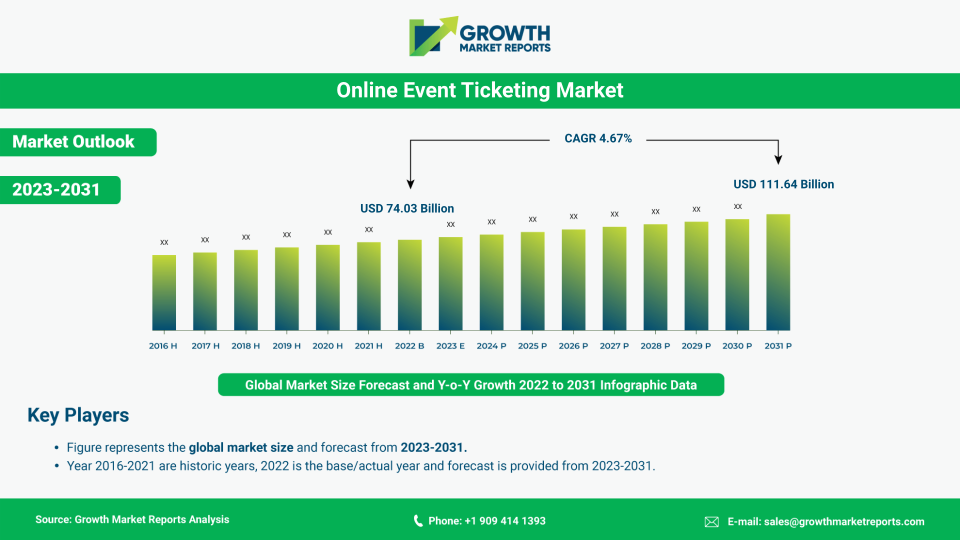
According to our latest research, the global online event ticketing market size reached USD 73.9 billion in 2025, reflecting robust digital adoption and increasing consumer preference for online platforms. The market is projected to grow at a CAGR of 8.3% from 2026 to 2034, reaching a forecasted value of USD 147.8 billion by 2034. Major growth factors include the proliferation of high-speed internet, widespread smartphone usage, and the accelerating digital transformation of the entertainment and events sectors. These trends are reshaping how consumers discover, purchase, and manage tickets, driving significant expansion across every segment of the global event ticketing platform landscape.

Global Online Event Ticketing Market Size Forecast 2025-2034, USD Billion

One of the primary growth drivers in the online event ticketing market is the increasing penetration of mobile devices and broadband internet globally. The convenience offered by mobile applications and websites has revolutionized the ticket purchasing experience, allowing users to browse, select, and pay for tickets within minutes. This ease of access is particularly appealing to younger demographics and urban populations who value speed and efficiency. Furthermore, advancements in payment technologies, such as digital wallets and contactless payments, have made transactions more secure and seamless, further encouraging consumers to shift to online platforms. The integration of personalized recommendations and loyalty programs within these platforms also enhances user engagement and retention, contributing to overall market growth well into the 2026-2034 forecast period.

Another significant factor propelling the online event ticketing market is the diversification of event types and the sustained rise of hybrid and virtual events. The post-pandemic era confirmed that many organizers continue to offer online or hybrid options to reach broader audiences even as in-person gatherings fully resumed. This trend has expanded the addressable market for online ticketing providers, as consumers now expect flexible attendance options for concerts, sports, conferences, and performing arts. The virtual events segment, in particular, has matured into a standalone revenue channel, with dedicated ticketing flows and monetization features. Partnerships between event organizers and ticketing platforms have additionally led to the development of innovative features such as interactive seating maps, instant ticket delivery, and integrated event management tools that enhance the overall experience and drive repeat usage.

The online event ticketing market is also benefiting from the increasing globalization of entertainment and sports. Major international events, such as music festivals, sports tournaments, and film premieres, attract attendees from across the globe. Online ticketing platforms enable organizers to reach a wider audience and simplify the process of purchasing tickets from different countries. This global reach is supported by multilingual interfaces, multi-currency payment options, and localized marketing strategies, allowing platforms to tap into emerging markets with rising disposable incomes and evolving consumer preferences.

The role of Event Ticketing Payments has become increasingly crucial in the online event ticketing market. As consumers demand more secure and convenient payment options, ticketing platforms are integrating advanced payment technologies to enhance user experience. Digital wallets, contactless payments, and real-time transaction processing are becoming standard features, ensuring that consumers can purchase tickets with confidence and ease. These innovations not only streamline the payment process but also reduce the risk of fraud, making online ticketing a more attractive option for both consumers and event organizers. As the market continues to grow through 2034, the importance of robust payment solutions will remain a key factor in maintaining consumer trust and driving further adoption of online ticketing platforms.

From a regional perspective, North America and Europe currently dominate the online event ticketing market, owing to their advanced digital infrastructure and high internet penetration rates. However, the Asia Pacific region is witnessing the fastest growth, driven by rapid urbanization, increasing smartphone adoption, and a burgeoning middle class. Countries such as China, India, and Japan are experiencing a surge in demand for online ticketing services, particularly for music concerts, sports events, and movies. Meanwhile, Latin America and the Middle East and Africa are emerging as promising markets, supported by investments in digital infrastructure and a growing appetite for live entertainment. As competition intensifies, market players are focusing on localization strategies and technological innovation to capture market share in these dynamic regions.

Platform Analysis

The platform segment of the online event ticketing market is primarily divided into mobile and desktop platforms, each playing a pivotal role in shaping consumer behavior and preferences. The mobile segment commands approximately 62.5% of the market in 2025, driven by the near-universal adoption of smartphones and the increasing comfort of consumers with mobile transactions. Mobile applications offer a user-friendly interface, push notifications for event updates, and instant digital ticket delivery, which significantly enhance the purchasing experience. The integration of biometric authentication and digital wallets has further made mobile transactions more secure, boosting consumer confidence. The convenience of purchasing tickets on-the-go has cemented mobile platforms as the preferred channel, especially among younger demographics and urban dwellers seeking frictionless experiences through an online ticketing platform.

Online Event Ticketing Market Share by Platform 2025

Desktop platforms, while accounting for approximately 37.5% of the market in 2025, continue to hold substantial importance, particularly among corporate users and older demographics. The larger screen size and detailed event information available on desktop websites make them ideal for complex bookings, such as group reservations or corporate events. Desktop platforms often provide advanced features including interactive seating charts, comprehensive event details, and integration with enterprise resource planning systems. These functionalities cater to the needs of corporate clients and event organizers who require robust tools for managing large-scale events. Despite mobile dominance, desktop platforms remain integral to the online event ticketing ecosystem, serving as a complementary channel for users seeking a more detailed and immersive pre-purchase experience.

The synergy between mobile and desktop platforms is further enhanced by the adoption of responsive web design and cross-platform integration. Leading ticketing providers ensure that their platforms deliver a consistent user experience across devices, allowing users to start a booking on one device and complete it on another. This seamless integration improves user satisfaction, increases conversion rates, and reduces cart abandonment. Cloud-based infrastructure enables real-time synchronization of ticket inventory, ensuring accurate availability and minimizing the risk of overselling. As consumers increasingly expect flexibility and convenience, the ability to switch seamlessly between platforms is becoming a key differentiator in the competitive landscape.

Ticket Aggregators play a pivotal role in the online event ticketing ecosystem by consolidating tickets from various sources and providing consumers with a comprehensive selection of events. These platforms offer a one-stop-shop for users, allowing them to compare prices, seating options, and availability across multiple ticketing providers. By aggregating tickets, these platforms enhance market transparency and competition, ultimately benefiting consumers with better deals and more choices. Additionally, ticket aggregators often incorporate advanced search and recommendation features, helping users discover events that match their interests and driving incremental sales volumes for primary ticketing providers.

Looking ahead, the future of the platform segment will be shaped by emerging technologies such as artificial intelligence, augmented reality, and blockchain. AI-powered chatbots and recommendation engines are already being integrated into mobile and desktop platforms to provide personalized assistance and event suggestions. Augmented reality features, such as virtual venue tours and seat previews, are enhancing the pre-purchase experience and helping users make informed decisions. Meanwhile, blockchain technology is being explored for secure and transparent ticket transactions, reducing fraud and counterfeit ticket risks. As these innovations become mainstream through the 2026-2034 forecast period, they are expected to further elevate the user experience and drive the next wave of growth in the online event ticketing market.

Report Scope

Attributes Details
Report Title Online Event Ticketing Market Research Report 2034
By Platform Mobile, Desktop
By Event Type Sports, Music & Concerts, Movies, Performing Arts, Conferences, Others
By Ticket Type One-time, Season Pass, Subscription
By End-User Individual, Corporate
Regions Covered North America, Europe, APAC, Latin America, MEA
Base Year 2025
Historic Data 2019-2024
Forecast Period 2026-2034
Number of Pages 291
Number of Tables & Figures 296
Customization Available Yes, the report can be customized as per your need.

Event Type Analysis

The event type segment of the online event ticketing market is highly diverse, encompassing sports, music and concerts, movies, performing arts, conferences, and other events. Sports events represent a significant portion of the market, driven by the enduring global popularity of football, basketball, cricket, and other major sports. Online ticketing platforms offer fans the convenience of purchasing tickets for local and international matches, often with features such as seat selection, real-time availability, and digital ticket delivery. The sports ticketing segment continues to be a key revenue generator, with loyalty programs, season pass incentives, and exclusive offers further deepening fan engagement and driving repeat purchases for ticketing providers operating in this space.

Music and concerts constitute another major segment, fueled by the growing global demand for live entertainment experiences. The rise of music festivals, international tours, and exclusive intimate concerts has created a vibrant ecosystem for online ticket sales. The live music ticketing category benefits from dynamic pricing models, VIP package bundling, and social media-driven promotional campaigns that amplify reach and drive rapid sell-outs. Platforms collaborate with artists, promoters, and venues to offer early-bird discounts, meet-and-greet opportunities, and bundled merchandise, enhancing the value proposition for fans. The integration of social sharing and referral programs further enables fans to promote events within their networks, driving incremental ticket sales volumes.

Movies and performing arts, including theater, dance, and opera, have fully embraced online ticketing as a means to reach wider audiences and streamline operations. The convenience of booking movie tickets online, selecting preferred showtimes, and choosing seats has become a standard consumer expectation since 2025. Performing arts venues leverage online platforms to manage ticket sales, track attendance, and offer personalized promotions to loyal patrons. The ability to access event information, critic reviews, and trailers within the ticketing platform enhances decision-making and encourages impulse purchases. As cultural and entertainment preferences evolve, online ticketing platforms are expanding their catalogs to include niche events and alternative formats, catering to increasingly diverse audience segments.

Conferences and business events represent a growing segment within the online event ticketing market, particularly as digital transformation accelerates corporate event management. Online registration, secure payment processing, and automated attendee management have become essential capabilities for conference organizers. The integration of virtual event capabilities, such as live streaming and interactive breakout sessions, has expanded the reach of conferences beyond geographical limits. Ticketing platforms offer customizable solutions for corporate clients, including group bookings, branded registration pages, and real-time analytics, enabling organizers to deliver seamless experiences while optimizing event logistics and revenue generation.

Ticket Type Analysis

The ticket type segment in the online event ticketing market is categorized into one-time tickets, season passes, and subscriptions, each catering to distinct consumer needs and event formats. One-time tickets remain the most prevalent option, particularly for movies, concerts, and standalone events. The simplicity and flexibility of purchasing a single ticket for a specific event appeal to a broad audience, from occasional attendees to first-time buyers. Online platforms facilitate the process by offering real-time availability, multiple payment options, and instant digital delivery. Promotional codes, flash sales, and last-minute discount mechanics further incentivize impulse purchases, driving volume and expanding the customer base for ticketing providers across all regions.

Season passes are a popular choice for sports fans, theater enthusiasts, and festival-goers who attend multiple events within a series or season. These passes offer significant value by providing access to a set of events at a discounted rate, often paired with additional perks such as priority seating, exclusive merchandise, or behind-the-scenes access. Online ticketing platforms streamline the purchase and management of season passes, allowing users to track upcoming events, transfer individual tickets, and receive personalized notifications. The recurring nature of season passes fosters customer loyalty and predictable revenue streams for event organizers, making them an attractive offering in highly competitive markets. VIP event ticketing tiers are increasingly integrated into season pass structures, further elevating perceived value and willingness to pay.

Subscription-based ticketing models are gaining meaningful traction in 2025, particularly in the context of digital and hybrid events. Subscriptions provide users with ongoing access to a curated selection of events, often bundled with premium content, behind-the-scenes access, or interactive experiences. This model is particularly appealing to frequent event-goers and corporate clients seeking cost-effective solutions for employee engagement and entertainment. Online platforms leverage data analytics to personalize subscription offerings, recommend relevant events, and optimize pricing strategies. The shift toward subscriptions reflects broader trends in the digital economy, where consumers increasingly prefer access over ownership and value ongoing engagement with brands and experiences.

The evolution of ticket types is also being shaped by technological innovations such as blockchain-based tickets, non-fungible tokens, and dynamic pricing algorithms. Blockchain technology enhances security and transparency, reducing counterfeit ticket risks and enabling secure transfer or resale through a ticket resale platform. NFT-based tickets offer unique digital assets that can be collected, traded, or used as memorabilia, adding a new dimension to the ticketing experience. Dynamic pricing algorithms optimize ticket prices in real-time based on demand, event popularity, and user behavior, maximizing revenue for organizers while maintaining fair access for consumers. As these innovations gain broader adoption through the 2026-2034 forecast period, they are expected to fundamentally redefine the landscape of ticket types available to consumers.

End-User Analysis

The end-user segment of the online event ticketing market is primarily divided into individual and corporate users, each with distinct preferences, purchasing behaviors, and platform requirements. Individual users represent the largest share of the market, driven by the widespread adoption of online platforms for personal entertainment, sports, and cultural events. The convenience of browsing events, comparing prices, and securing tickets from the comfort of home or on a mobile device appeals to a broad demographic, from students and young professionals to families and retirees. Online platforms cater to individual users by offering personalized recommendations, loyalty reward programs, and seamless payment options, enhancing the overall experience and fostering long-term brand loyalty.

Corporate users constitute a significant and growing segment, particularly in the context of conferences, business events, and team-building activities. Companies leverage online ticketing platforms to streamline the booking and management of group events, ensuring efficient coordination and cost control. Advanced features such as bulk purchasing, corporate invoicing, and integration with enterprise calendars enable organizations to manage large-scale bookings with ease. Online platforms offer customizable solutions for corporate clients, including branded registration pages, dedicated account management, and detailed analytics on attendance and engagement. These capabilities are particularly valuable for companies seeking to enhance employee engagement, reward performance, or foster client relationships through exclusive events and experiences.

The distinction between individual and corporate users is becoming increasingly nuanced as hybrid work models and remote collaboration drive demand for virtual and hybrid events in 2025. Online ticketing platforms are adapting by offering flexible solutions that serve both segments, such as group discounts, multi-user access controls, and virtual event integration. The ability to customize ticketing options based on user type, event format, and organizational needs is becoming a key differentiator in the market. Furthermore, the use of data analytics and artificial intelligence enables platforms to segment users more effectively, deliver targeted marketing campaigns, and optimize pricing strategies for maximum conversion and revenue impact.

The growing importance of user experience, security, and personalization is shaping the evolution of the end-user segment through the forecast horizon. Platforms are investing in advanced authentication methods, including biometric verification and two-factor authentication, to enhance security and protect user data. Personalization features, such as curated event recommendations and tailored promotional offers, are driving higher engagement and conversion rates. As consumer expectations continue to rise, online ticketing providers must balance the evolving needs of individual and corporate users, delivering seamless, secure, and personalized experiences that sustain loyalty and growth in an increasingly competitive market.

Opportunities & Threats

The online event ticketing market presents a wealth of opportunities for growth and innovation, driven by technological advancements and changing consumer preferences. The sustained rise of virtual and hybrid events has expanded the addressable market, enabling ticketing platforms to reach global audiences and offer new value-added services beyond the traditional venue-based model. Emerging technologies such as artificial intelligence, blockchain, and augmented reality are creating new possibilities for personalization, security, and fan engagement. AI-powered recommendation engines deliver highly relevant event suggestions based on user preferences and behavioral data, driving higher conversion rates and satisfaction. Blockchain technology enhances transparency and security, enabling secure ticket resale and transfer. Augmented reality features, such as virtual venue previews available through smart venue ticketing integrations, are improving pre-purchase confidence and helping consumers make better-informed decisions about seat selection and event attendance.

Another significant opportunity lies in the expansion into emerging markets, where rising internet penetration, smartphone adoption, and disposable incomes are driving demand for online ticketing services. Countries across Asia Pacific, Latin America, and the Middle East and Africa represent substantial untapped potential, with large and youthful populations and growing appetites for live entertainment and cultural experiences. Localization strategies, including multilingual interfaces, local payment method support, and region-specific marketing, are essential for capturing market share. Partnerships with local event organizers, venues, and payment providers help ticketing platforms navigate regulatory complexities and build consumer trust. As competition intensifies globally, the ability to offer differentiated and locally relevant solutions will be critical for sustained success.

Despite the numerous opportunities, the online event ticketing market faces several restraining factors that could impact growth through 2034. Security concerns related to data breaches, payment fraud, and counterfeit tickets remain a significant challenge for both consumers and organizers. High-profile ticketing scams and unauthorized resellers have periodically eroded trust, highlighting the persistent need for robust security measures and transparent refund policies. Regulatory compliance, including data protection legislation and consumer rights frameworks, adds operational complexity and cost, particularly for platforms operating across multiple jurisdictions. Additionally, the increasing prevalence of direct-to-consumer sales by event organizers and artists poses a structural threat to traditional ticketing intermediaries, as stakeholders seek to capture a larger share of revenue and build direct fan relationships. Addressing these risks requires ongoing investment in security technologies, regulatory engagement, and strong value-added service offerings that justify platform fees.

Regional Outlook

North America remains the largest regional market for online event ticketing, with a market size of approximately USD 24.9 billion in 2025. The region's dominance is attributed to its advanced digital infrastructure, high internet penetration, and mature entertainment industry. Major cities such as New York, Los Angeles, Chicago, and Toronto host a wide array of sports, music, and cultural events, driving substantial and recurring demand for online ticketing services. The presence of leading global ticketing providers, including Ticketmaster and Eventbrite, further consolidates North America's position as the world's primary hub for digital ticketing innovation. The regional market is projected to maintain a steady CAGR of approximately 6.8% through 2034, supported by ongoing technological investment and the deepening integration of mobile and contactless ticketing across all event categories.

Online Event Ticketing Market Regional Share 2025

Europe holds the second-largest share of the online event ticketing market, valued at approximately USD 18.7 billion in 2025. The region is characterized by a rich cultural heritage, diverse entertainment offerings, and a strong tradition of live events spanning music festivals, football, opera, and theater. Countries such as the United Kingdom, Germany, France, and the Netherlands are at the forefront of digital adoption, with consumers increasingly selecting online platforms for concert, festival, and sporting event ticket purchases. The European market is also witnessing rapid growth in the adoption of mobile ticketing and contactless payments. With a projected CAGR of 7.4% through 2034, Europe is expected to remain a key growth engine for the global online event ticketing industry, supported by robust consumer protection frameworks and sustained investment in digital event infrastructure.

The Asia Pacific region is experiencing the fastest growth in the online event ticketing market, with a market size of approximately USD 16.3 billion in 2025 and a projected CAGR of 12.1% through 2034. Rapid urbanization, increasing smartphone penetration, and rising disposable incomes are fueling demand for online ticketing services in China, India, Japan, South Korea, and Southeast Asia. The region's large and youthful population is highly receptive to digital platforms and mobile-first experiences, making it an exceptionally attractive market for both global and local ticketing providers. Investments in 5G digital infrastructure, government initiatives promoting cashless transactions, and the growing popularity of international sporting and entertainment events are further accelerating market expansion. As competition intensifies, players are focusing on localization, strategic local partnerships, and technology-led differentiation to capture share in this high-growth region.

Latin America accounted for approximately USD 7.7 billion in 2025 and is growing at a projected CAGR of 9.2% through 2034, driven by increasing smartphone adoption and a passionate culture of live entertainment in Brazil, Mexico, Colombia, and Argentina. The Middle East and Africa represented approximately USD 6.1 billion in 2025, with a projected CAGR of 10.4% through 2034, supported by large-scale investments in entertainment infrastructure, the normalization of live events in Gulf markets, and rapidly expanding internet access across Sub-Saharan Africa. Both regions present meaningful opportunities for ticketing platforms willing to invest in localized strategies and flexible payment solutions tailored to regional consumer preferences.

Competitor Outlook

The online event ticketing market in 2025 is characterized by intense competition, with a mix of global giants, regional specialists, and technology-first disruptors vying for market share. Leading companies such as Ticketmaster, Eventbrite, See Tickets, and BookMyShow have established strong brand recognition and extensive networks spanning event organizers, venues, and promoters. These players leverage advanced data analytics, AI-driven personalization, and strategic partnerships to offer comprehensive solutions catering to a wide range of event types and user segments. The competitive landscape is further shaped by continuous innovation, with companies investing heavily in mobile applications, blockchain-based ticketing, and dynamic pricing engines to enhance the user experience and differentiate their propositions.

In addition to established incumbents, the market is witnessing the growing influence of technology-first challengers such as Dice FM, Fever, SeatGeek, and Tixr, which are disrupting traditional business models through superior mobile user experiences, curated discovery features, and flexible fee structures. These companies are particularly effective at attracting younger audiences and serving independent venue operators and boutique event organizers underserved by legacy platforms. The rise of direct-to-consumer ticketing, where artists and organizers sell tickets directly to fans through owned channels, is also reshaping competitive dynamics by reducing reliance on intermediaries and compressing platform fee revenues. In response, traditional ticketing providers are investing in deeper value-added services, including promotional tools, analytics dashboards, and fan engagement features, to justify their platform economics.

The competitive landscape is further influenced by the growing strategic importance of partnerships and mergers. Ticketing platforms are forming alliances with payment providers, technology companies, venue operators, and sports leagues to deliver integrated end-to-end solutions across the full event lifecycle. Mergers and acquisitions remain common as companies seek to consolidate market share, acquire new technological capabilities, and enter high-growth geographic markets. The ability to innovate continuously, adapt to evolving consumer expectations, and build trusted relationships with event organizers and attendees will remain the critical determinants of competitive success in this dynamic and rapidly expanding industry through 2034.

Major companies operating in the online event ticketing market include Ticketmaster Entertainment, Eventbrite, StubHub, AXS, SeatGeek, Vivid Seats, BookMyShow, See Tickets, Ticketek, Dice FM, Eventim, Fever, Cvent, Tixr, Ticket Tailor, TickPick, Etix, and FIXR. Ticketmaster, a subsidiary of Live Nation Entertainment, retains its position as the global market leader, offering a comprehensive platform spanning sports, music, and entertainment across dozens of countries. Eventbrite remains the platform of choice for small to mid-sized events, including conferences, workshops, and community gatherings, valued for its self-service accessibility. Regional leaders such as BookMyShow in South Asia and Eventim in continental Europe continue to deepen their local competitive moats through exclusive venue partnerships and tailored product features. Challenger platforms including Dice FM and Fever are gaining significant ground in the music and experience segments, leveraging mobile-first design and social discovery to build highly engaged user communities. These companies collectively represent the forefront of digital transformation in the global event ticketing industry.

Key Players

  • Ticketmaster Entertainment, Inc.
  • Eventbrite, Inc.
  • Cvent Inc.
  • StubHub
  • See Tickets
  • Ticketek
  • BookMyShow
  • AXS (AXS.com)
  • Ticket Tailor
  • TickPick
  • Vivid Seats
  • SeatGeek
  • Dice FM
  • FIXR
  • Tixr
  • Eventim
  • Fever
  • Etix

Segments

The Online Event Ticketing market has been segmented on the basis of

Platform

  • Mobile
  • Desktop

Event Type

  • Sports
  • Music & Concerts
  • Movies
  • Performing Arts
  • Conferences
  • Others

Ticket Type

  • One-time
  • Season Pass
  • Subscription

End-User

  • Individual
  • Corporate

Frequently Asked Questions

Technology is fundamentally reshaping the sector. Artificial intelligence is enabling hyper-personalized recommendations and dynamic pricing. Blockchain is providing secure, fraud-resistant ticket issuance and transparent resale. Augmented reality offers virtual venue previews to improve pre-purchase confidence. 5G connectivity is accelerating mobile transaction speeds. NFT-based collectible tickets are opening new fan engagement and revenue streams for organizers.

Key opportunities include expansion into Asia Pacific, Latin America, and Middle East and Africa markets, the adoption of blockchain and NFT-based ticketing, AI-driven personalization, and the growth of virtual and hybrid events. Principal threats include persistent ticket fraud, data security vulnerabilities, regulatory compliance costs, and the rise of direct-to-consumer ticketing by artists and organizers bypassing traditional platforms.

Leading players in the global online event ticketing market include Ticketmaster Entertainment, Eventbrite, StubHub, AXS, SeatGeek, Vivid Seats, BookMyShow, See Tickets, Ticketek, Dice FM, Eventim, Fever, Cvent, Tixr, and Ticket Tailor. These companies compete on technology innovation, event inventory breadth, user experience, and geographic coverage.

Online event ticketing platforms offer three primary ticket types. One-time tickets are the most common, suited to standalone events such as concerts and movie screenings. Season passes provide multi-event access at a bundled rate, popular among sports fans and theater subscribers. Subscription models are gaining traction for hybrid and digital events, offering ongoing curated access with premium perks.

Mobile platforms dominate the market with approximately 62.5% share in 2025, driven by intuitive apps, biometric authentication, push notifications, and seamless digital wallet integration. Desktop platforms retain around 37.5% share, remaining essential for complex or corporate bookings requiring detailed seating charts, group management tools, and ERP integration.

Sports events and music concerts are the most commonly ticketed categories online, together accounting for the majority of platform transaction volumes. Movies, performing arts, and conferences are also significant segments. Niche and community-based events are growing rapidly thanks to self-service platforms that lower barriers for smaller organizers.

Key growth drivers include the widespread adoption of smartphones and high-speed internet, increasing consumer preference for contactless and digital transactions, the expansion of hybrid and virtual events, dynamic pricing innovations, AI-powered personalization, and the globalization of entertainment and sports events attracting cross-border ticket purchases.

North America leads the global online event ticketing market with the largest share, valued at approximately USD 24.9 billion in 2025, driven by its mature digital infrastructure and major entertainment hubs. Europe holds the second-largest position, while Asia Pacific is the fastest-growing region, recording a CAGR exceeding 12% through 2034, led by China, India, and Japan.

The online event ticketing market is projected to grow at a CAGR of 8.3% from 2026 to 2034, reaching an estimated value of approximately USD 147.8 billion by 2034. This growth is supported by expanding internet access, the proliferation of mobile ticketing apps, and the rising global demand for live and hybrid entertainment experiences.

The global online event ticketing market reached USD 73.9 billion in 2025, reflecting strong digital adoption, rising smartphone penetration, and continued consumer preference for the convenience of purchasing tickets through online platforms across sports, music, conferences, and other event categories.

Table Of Content

Chapter 1 Executive Summary
Chapter 2 Assumptions and Acronyms Used
Chapter 3 Research Methodology
Chapter 4 Online Event Ticketing Market Overview
   4.1 Introduction
      4.1.1 Market Taxonomy
      4.1.2 Market Definition
      4.1.3 Macro-Economic Factors Impacting the Market Growth
   4.2 Online Event Ticketing Market Dynamics
      4.2.1 Market Drivers
      4.2.2 Market Restraints
      4.2.3 Market Opportunity
   4.3 Online Event Ticketing Market - Supply Chain Analysis
      4.3.1 List of Key Suppliers
      4.3.2 List of Key Distributors
      4.3.3 List of Key Consumers
   4.4 Key Forces Shaping the Online Event Ticketing Market
      4.4.1 Bargaining Power of Suppliers
      4.4.2 Bargaining Power of Buyers
      4.4.3 Threat of Substitution
      4.4.4 Threat of New Entrants
      4.4.5 Competitive Rivalry
   4.5 Global Online Event Ticketing Market Size & Forecast, 2023-2032
      4.5.1 Online Event Ticketing Market Size and Y-o-Y Growth
      4.5.2 Online Event Ticketing Market Absolute $ Opportunity

Chapter 5 Global Online Event Ticketing Market Analysis and Forecast By Platform
   5.1 Introduction
      5.1.1 Key Market Trends & Growth Opportunities By Platform
      5.1.2 Basis Point Share (BPS) Analysis By Platform
      5.1.3 Absolute $ Opportunity Assessment By Platform
   5.2 Online Event Ticketing Market Size Forecast By Platform
      5.2.1 Mobile
      5.2.2 Desktop
   5.3 Market Attractiveness Analysis By Platform

Chapter 6 Global Online Event Ticketing Market Analysis and Forecast By Event Type
   6.1 Introduction
      6.1.1 Key Market Trends & Growth Opportunities By Event Type
      6.1.2 Basis Point Share (BPS) Analysis By Event Type
      6.1.3 Absolute $ Opportunity Assessment By Event Type
   6.2 Online Event Ticketing Market Size Forecast By Event Type
      6.2.1 Sports
      6.2.2 Music & Concerts
      6.2.3 Movies
      6.2.4 Performing Arts
      6.2.5 Conferences
      6.2.6 Others
   6.3 Market Attractiveness Analysis By Event Type

Chapter 7 Global Online Event Ticketing Market Analysis and Forecast By Ticket Type
   7.1 Introduction
      7.1.1 Key Market Trends & Growth Opportunities By Ticket Type
      7.1.2 Basis Point Share (BPS) Analysis By Ticket Type
      7.1.3 Absolute $ Opportunity Assessment By Ticket Type
   7.2 Online Event Ticketing Market Size Forecast By Ticket Type
      7.2.1 One-time
      7.2.2 Season Pass
      7.2.3 Subscription
   7.3 Market Attractiveness Analysis By Ticket Type

Chapter 8 Global Online Event Ticketing Market Analysis and Forecast By End-User
   8.1 Introduction
      8.1.1 Key Market Trends & Growth Opportunities By End-User
      8.1.2 Basis Point Share (BPS) Analysis By End-User
      8.1.3 Absolute $ Opportunity Assessment By End-User
   8.2 Online Event Ticketing Market Size Forecast By End-User
      8.2.1 Individual
      8.2.2 Corporate
   8.3 Market Attractiveness Analysis By End-User

Chapter 9 Global Online Event Ticketing Market Analysis and Forecast by Region
   9.1 Introduction
      9.1.1 Key Market Trends & Growth Opportunities By Region
      9.1.2 Basis Point Share (BPS) Analysis By Region
      9.1.3 Absolute $ Opportunity Assessment By Region
   9.2 Online Event Ticketing Market Size Forecast By Region
      9.2.1 North America
      9.2.2 Europe
      9.2.3 Asia Pacific
      9.2.4 Latin America
      9.2.5 Middle East & Africa (MEA)
   9.3 Market Attractiveness Analysis By Region

Chapter 10 Coronavirus Disease (COVID-19) Impact 
   10.1 Introduction 
   10.2 Current & Future Impact Analysis 
   10.3 Economic Impact Analysis 
   10.4 Government Policies 
   10.5 Investment Scenario

Chapter 11 North America Online Event Ticketing Analysis and Forecast
   11.1 Introduction
   11.2 North America Online Event Ticketing Market Size Forecast by Country
      11.2.1 U.S.
      11.2.2 Canada
   11.3 Basis Point Share (BPS) Analysis by Country
   11.4 Absolute $ Opportunity Assessment by Country
   11.5 Market Attractiveness Analysis by Country
   11.6 North America Online Event Ticketing Market Size Forecast By Platform
      11.6.1 Mobile
      11.6.2 Desktop
   11.7 Basis Point Share (BPS) Analysis By Platform 
   11.8 Absolute $ Opportunity Assessment By Platform 
   11.9 Market Attractiveness Analysis By Platform
   11.10 North America Online Event Ticketing Market Size Forecast By Event Type
      11.10.1 Sports
      11.10.2 Music & Concerts
      11.10.3 Movies
      11.10.4 Performing Arts
      11.10.5 Conferences
      11.10.6 Others
   11.11 Basis Point Share (BPS) Analysis By Event Type 
   11.12 Absolute $ Opportunity Assessment By Event Type 
   11.13 Market Attractiveness Analysis By Event Type
   11.14 North America Online Event Ticketing Market Size Forecast By Ticket Type
      11.14.1 One-time
      11.14.2 Season Pass
      11.14.3 Subscription
   11.15 Basis Point Share (BPS) Analysis By Ticket Type 
   11.16 Absolute $ Opportunity Assessment By Ticket Type 
   11.17 Market Attractiveness Analysis By Ticket Type
   11.18 North America Online Event Ticketing Market Size Forecast By End-User
      11.18.1 Individual
      11.18.2 Corporate
   11.19 Basis Point Share (BPS) Analysis By End-User 
   11.20 Absolute $ Opportunity Assessment By End-User 
   11.21 Market Attractiveness Analysis By End-User

Chapter 12 Europe Online Event Ticketing Analysis and Forecast
   12.1 Introduction
   12.2 Europe Online Event Ticketing Market Size Forecast by Country
      12.2.1 Germany
      12.2.2 France
      12.2.3 Italy
      12.2.4 U.K.
      12.2.5 Spain
      12.2.6 Russia
      12.2.7 Rest of Europe
   12.3 Basis Point Share (BPS) Analysis by Country
   12.4 Absolute $ Opportunity Assessment by Country
   12.5 Market Attractiveness Analysis by Country
   12.6 Europe Online Event Ticketing Market Size Forecast By Platform
      12.6.1 Mobile
      12.6.2 Desktop
   12.7 Basis Point Share (BPS) Analysis By Platform 
   12.8 Absolute $ Opportunity Assessment By Platform 
   12.9 Market Attractiveness Analysis By Platform
   12.10 Europe Online Event Ticketing Market Size Forecast By Event Type
      12.10.1 Sports
      12.10.2 Music & Concerts
      12.10.3 Movies
      12.10.4 Performing Arts
      12.10.5 Conferences
      12.10.6 Others
   12.11 Basis Point Share (BPS) Analysis By Event Type 
   12.12 Absolute $ Opportunity Assessment By Event Type 
   12.13 Market Attractiveness Analysis By Event Type
   12.14 Europe Online Event Ticketing Market Size Forecast By Ticket Type
      12.14.1 One-time
      12.14.2 Season Pass
      12.14.3 Subscription
   12.15 Basis Point Share (BPS) Analysis By Ticket Type 
   12.16 Absolute $ Opportunity Assessment By Ticket Type 
   12.17 Market Attractiveness Analysis By Ticket Type
   12.18 Europe Online Event Ticketing Market Size Forecast By End-User
      12.18.1 Individual
      12.18.2 Corporate
   12.19 Basis Point Share (BPS) Analysis By End-User 
   12.20 Absolute $ Opportunity Assessment By End-User 
   12.21 Market Attractiveness Analysis By End-User

Chapter 13 Asia Pacific Online Event Ticketing Analysis and Forecast
   13.1 Introduction
   13.2 Asia Pacific Online Event Ticketing Market Size Forecast by Country
      13.2.1 China
      13.2.2 Japan
      13.2.3 South Korea
      13.2.4 India
      13.2.5 Australia
      13.2.6 South East Asia (SEA)
      13.2.7 Rest of Asia Pacific (APAC)
   13.3 Basis Point Share (BPS) Analysis by Country
   13.4 Absolute $ Opportunity Assessment by Country
   13.5 Market Attractiveness Analysis by Country
   13.6 Asia Pacific Online Event Ticketing Market Size Forecast By Platform
      13.6.1 Mobile
      13.6.2 Desktop
   13.7 Basis Point Share (BPS) Analysis By Platform 
   13.8 Absolute $ Opportunity Assessment By Platform 
   13.9 Market Attractiveness Analysis By Platform
   13.10 Asia Pacific Online Event Ticketing Market Size Forecast By Event Type
      13.10.1 Sports
      13.10.2 Music & Concerts
      13.10.3 Movies
      13.10.4 Performing Arts
      13.10.5 Conferences
      13.10.6 Others
   13.11 Basis Point Share (BPS) Analysis By Event Type 
   13.12 Absolute $ Opportunity Assessment By Event Type 
   13.13 Market Attractiveness Analysis By Event Type
   13.14 Asia Pacific Online Event Ticketing Market Size Forecast By Ticket Type
      13.14.1 One-time
      13.14.2 Season Pass
      13.14.3 Subscription
   13.15 Basis Point Share (BPS) Analysis By Ticket Type 
   13.16 Absolute $ Opportunity Assessment By Ticket Type 
   13.17 Market Attractiveness Analysis By Ticket Type
   13.18 Asia Pacific Online Event Ticketing Market Size Forecast By End-User
      13.18.1 Individual
      13.18.2 Corporate
   13.19 Basis Point Share (BPS) Analysis By End-User 
   13.20 Absolute $ Opportunity Assessment By End-User 
   13.21 Market Attractiveness Analysis By End-User

Chapter 14 Latin America Online Event Ticketing Analysis and Forecast
   14.1 Introduction
   14.2 Latin America Online Event Ticketing Market Size Forecast by Country
      14.2.1 Brazil
      14.2.2 Mexico
      14.2.3 Rest of Latin America (LATAM)
   14.3 Basis Point Share (BPS) Analysis by Country
   14.4 Absolute $ Opportunity Assessment by Country
   14.5 Market Attractiveness Analysis by Country
   14.6 Latin America Online Event Ticketing Market Size Forecast By Platform
      14.6.1 Mobile
      14.6.2 Desktop
   14.7 Basis Point Share (BPS) Analysis By Platform 
   14.8 Absolute $ Opportunity Assessment By Platform 
   14.9 Market Attractiveness Analysis By Platform
   14.10 Latin America Online Event Ticketing Market Size Forecast By Event Type
      14.10.1 Sports
      14.10.2 Music & Concerts
      14.10.3 Movies
      14.10.4 Performing Arts
      14.10.5 Conferences
      14.10.6 Others
   14.11 Basis Point Share (BPS) Analysis By Event Type 
   14.12 Absolute $ Opportunity Assessment By Event Type 
   14.13 Market Attractiveness Analysis By Event Type
   14.14 Latin America Online Event Ticketing Market Size Forecast By Ticket Type
      14.14.1 One-time
      14.14.2 Season Pass
      14.14.3 Subscription
   14.15 Basis Point Share (BPS) Analysis By Ticket Type 
   14.16 Absolute $ Opportunity Assessment By Ticket Type 
   14.17 Market Attractiveness Analysis By Ticket Type
   14.18 Latin America Online Event Ticketing Market Size Forecast By End-User
      14.18.1 Individual
      14.18.2 Corporate
   14.19 Basis Point Share (BPS) Analysis By End-User 
   14.20 Absolute $ Opportunity Assessment By End-User 
   14.21 Market Attractiveness Analysis By End-User

Chapter 15 Middle East & Africa (MEA) Online Event Ticketing Analysis and Forecast
   15.1 Introduction
   15.2 Middle East & Africa (MEA) Online Event Ticketing Market Size Forecast by Country
      15.2.1 Saudi Arabia
      15.2.2 South Africa
      15.2.3 UAE
      15.2.4 Rest of Middle East & Africa (MEA)
   15.3 Basis Point Share (BPS) Analysis by Country
   15.4 Absolute $ Opportunity Assessment by Country
   15.5 Market Attractiveness Analysis by Country
   15.6 Middle East & Africa (MEA) Online Event Ticketing Market Size Forecast By Platform
      15.6.1 Mobile
      15.6.2 Desktop
   15.7 Basis Point Share (BPS) Analysis By Platform 
   15.8 Absolute $ Opportunity Assessment By Platform 
   15.9 Market Attractiveness Analysis By Platform
   15.10 Middle East & Africa (MEA) Online Event Ticketing Market Size Forecast By Event Type
      15.10.1 Sports
      15.10.2 Music & Concerts
      15.10.3 Movies
      15.10.4 Performing Arts
      15.10.5 Conferences
      15.10.6 Others
   15.11 Basis Point Share (BPS) Analysis By Event Type 
   15.12 Absolute $ Opportunity Assessment By Event Type 
   15.13 Market Attractiveness Analysis By Event Type
   15.14 Middle East & Africa (MEA) Online Event Ticketing Market Size Forecast By Ticket Type
      15.14.1 One-time
      15.14.2 Season Pass
      15.14.3 Subscription
   15.15 Basis Point Share (BPS) Analysis By Ticket Type 
   15.16 Absolute $ Opportunity Assessment By Ticket Type 
   15.17 Market Attractiveness Analysis By Ticket Type
   15.18 Middle East & Africa (MEA) Online Event Ticketing Market Size Forecast By End-User
      15.18.1 Individual
      15.18.2 Corporate
   15.19 Basis Point Share (BPS) Analysis By End-User 
   15.20 Absolute $ Opportunity Assessment By End-User 
   15.21 Market Attractiveness Analysis By End-User

Chapter 16 Competition Landscape 
   16.1 Online Event Ticketing Market: Competitive Dashboard
   16.2 Global Online Event Ticketing Market: Market Share Analysis, 2023
   16.3 Company Profiles (Details – Overview, Financials, Developments, Strategy) 
      16.3.1 Ticketmaster Entertainment, Inc.
      16.3.2 Eventbrite, Inc.
      16.3.3 Cvent Inc.
      16.3.4 StubHub
      16.3.5 See Tickets
      16.3.6 Ticketek
      16.3.7 BookMyShow
      16.3.8 AXS (AXS.com)
      16.3.9 Ticket Tailor
      16.3.10 TickPick
      16.3.11 Vivid Seats
      16.3.12 SeatGeek
      16.3.13 Dice FM
      16.3.14 FIXR
      16.3.15 Tixr
      16.3.16 Eventim
      16.3.17 Fever
      16.3.18 Etix

Methodology

Our Clients

Pfizer
General Electric
The John Holland Group
Honda Motor Co. Ltd.
sinopec
Dassault Aviation
General Mills
Nestle SA