Segments - by Service Type (Academic Coaching, Professional Coaching, Personal Development Coaching, Health & Wellness Coaching, Others), by Platform (Web-based, Mobile-based), by End-User (Individuals, Educational Institutions, Enterprises, Others), by Business Model (Subscription-Based, One-Time Purchase, Freemium, Others)
This report is updated with the latest market data and insights as of June 2026. Base year: 2025 | Forecast period: 2026-2034
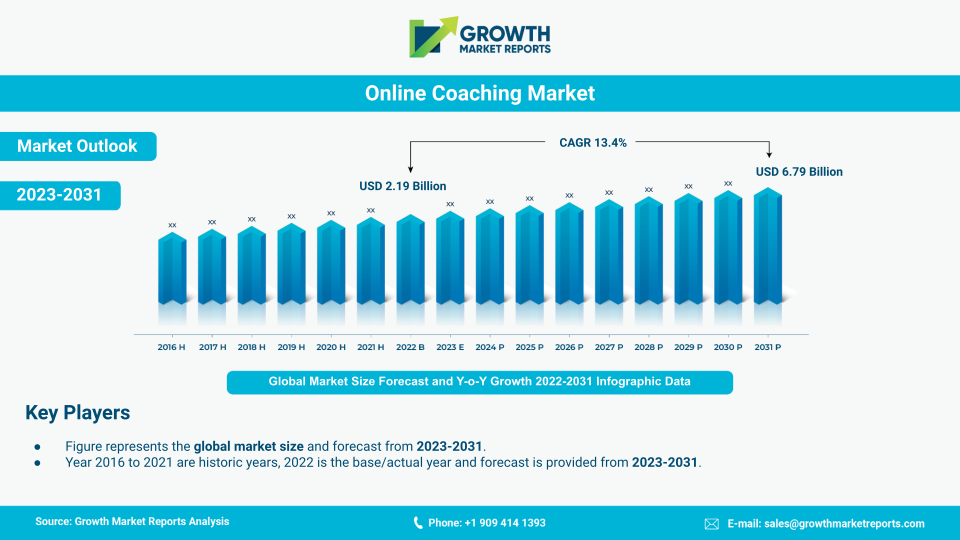
According to our latest research, the global online coaching market size reached USD 5.3 billion in 2025, exhibiting robust expansion fueled by the digital transformation of educational and professional development services. The market is currently growing at a CAGR of 13.2% and is projected to reach USD 16.2 billion by 2034. This impressive growth is primarily attributed to the increasing adoption of digital learning platforms, greater awareness of personal and professional development, and the proliferation of high-speed internet access worldwide. As per our latest analysis, the sector's growth is further propelled by the demand for flexible, accessible, and personalized coaching solutions across various end-user segments, from individual learners to large enterprises seeking scalable talent development tools.
One of the most significant growth factors driving the online coaching market is the structural shift in consumer behavior toward digital and remote learning solutions. The normalization of remote work and hybrid learning environments following the disruptions of the early 2020s has made virtual coaching a mainstream choice for individuals and organizations alike. Learners and professionals seek convenience, flexibility, and access to a broader range of expertise than what traditional, geographically bound coaching options can provide. Additionally, the integration of advanced technologies such as artificial intelligence, machine learning, and data analytics into coaching platforms has enhanced the personalization and effectiveness of coaching, attracting a diverse global user base. Platforms now routinely deploy AI-driven coach matching, adaptive learning paths, and real-time behavioral feedback, raising the bar for engagement and measurable outcomes.
Another critical driver is the increasing recognition of the value that coaching brings to personal and professional growth. Enterprises are leveraging corporate coaching programs to upskill employees, enhance leadership development, and improve overall organizational performance. Simultaneously, individuals are turning to online coaching for academic support, career guidance, health and wellness, and personal development. The scalability of online coaching platforms allows providers to serve a global audience, breaking down barriers related to location, time zones, and resource constraints. This democratization of access to high-quality coaching is fostering a culture of continuous learning and self-improvement across all age groups and geographies.
Furthermore, the rapid evolution of digital infrastructure and the growing penetration of smartphones and internet connectivity, especially in emerging economies, are expanding the reach of the online coaching market. Strategic partnerships between educational institutions, enterprises, and technology providers are resulting in the development of innovative coaching solutions tailored to specific needs. The market is also witnessing a surge in demand for niche coaching services, including executive coaching, online fitness coaching, and specialized academic coaching, driven by evolving consumer preferences and the desire for holistic development. As competition intensifies, providers are focusing on enhancing user experience, incorporating interactive tools, and offering multilingual and multicultural content to cater to a global clientele.
The rise of the Digital Coaching Platform has been a game-changer in the online coaching market, offering unprecedented levels of personalization and accessibility. These platforms leverage cutting-edge technology to provide users with tailored coaching experiences that adapt to their individual learning styles and goals. By integrating features such as AI-driven insights, real-time feedback, and interactive content, digital coaching platforms are transforming the way people engage with coaching services. This evolution not only enhances the effectiveness of coaching but also broadens its appeal to a wider audience, including those who may have previously been unable to access traditional coaching due to geographical or financial constraints. As the demand for flexible and personalized learning solutions continues to grow through 2034, digital coaching platforms are well-positioned to lead the charge in delivering innovative and impactful coaching experiences.
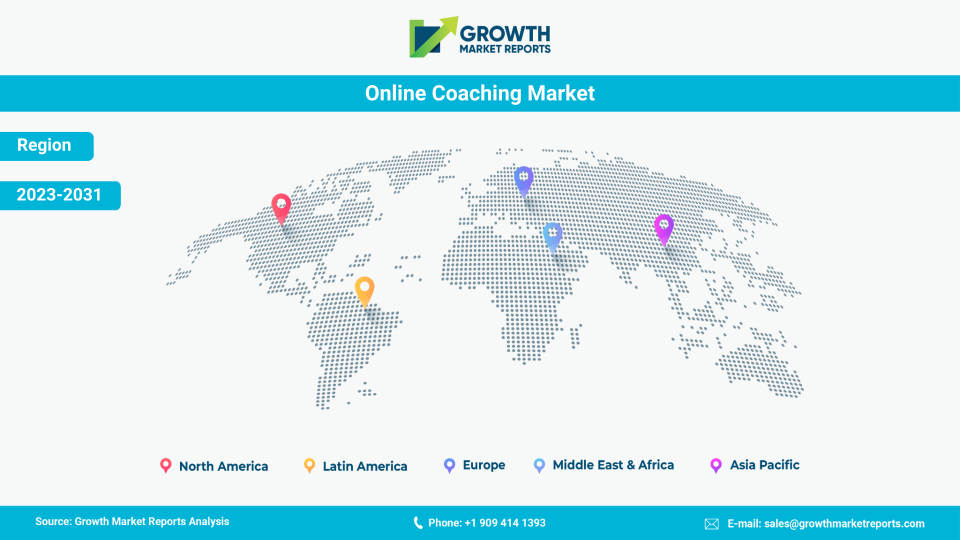
From a regional perspective, North America currently dominates the online coaching market, accounting for approximately 35.5% of global revenue in 2025 due to its advanced digital infrastructure and high adoption of e-learning solutions. However, the Asia Pacific region is emerging as the fastest-growing market, driven by a large population base, rapid urbanization, and increasing investments in digital education. Europe also holds a significant share, supported by robust government initiatives promoting lifelong learning and digital literacy. Meanwhile, Latin America and the Middle East & Africa are witnessing steady growth, propelled by improving internet accessibility and rising awareness of the benefits of coaching. This regional diversification highlights the global appeal and potential of online coaching as a transformative force in education and professional development heading into 2034.
The service type segment of the online coaching market is broadly categorized into academic coaching, professional coaching, personal development coaching, health and wellness coaching, and others. Academic coaching remains a cornerstone, catering to students across different educational levels who seek supplementary guidance in subjects, exam preparation, and learning strategies. The demand for academic coaching has surged with the proliferation of competitive exams and the increasing pressure on students to excel in 2025 and beyond. Online academic coaching platforms offer interactive content, real-time feedback, and personalized study plans, making learning more engaging and effective. The flexibility to access coaching from anywhere is particularly beneficial for students in remote or underserved areas, further fueling market growth. Platforms focused on online tutoring and supplementary academic coaching are commanding growing investment as educational systems worldwide embrace blended learning models.
Professional coaching has gained significant traction as organizations recognize the importance of continuous employee development and leadership training. Enterprises are investing in online coaching programs to enhance skills, drive productivity, and foster innovation. Executive coaching, career transition coaching, and leadership development are among the most sought-after professional coaching services in 2025. The scalability of online platforms allows businesses to roll out coaching programs to employees across multiple locations, ensuring consistency and quality. Additionally, the integration of analytics and progress tracking tools enables organizations to measure the effectiveness of coaching initiatives, thereby optimizing learning outcomes and return on investment.
Personal development coaching is another rapidly growing sub-segment, addressing the needs of individuals seeking to improve various aspects of their lives, such as communication skills, time management, emotional intelligence, and goal setting. The increasing focus on mental well-being, work-life balance, and self-actualization has led to a surge in demand for life coaching, motivational coaching, and coaching for specific personal goals. Online platforms connect users with certified coaches from around the world, offering one-on-one sessions, group workshops, and self-paced modules. This democratization of access empowers individuals to take charge of their personal growth journeys, irrespective of their geographical location.
The health and wellness coaching segment is experiencing robust growth, driven by rising health consciousness and the prevalence of lifestyle-related diseases. Fitness coaching platforms and broader online wellness coaching services now cover areas such as nutrition, fitness, stress management, and holistic wellness. The convenience of accessing expert guidance remotely, coupled with the ability to track progress through digital tools, has made online wellness coaching highly appealing. Employers are also incorporating wellness coaching into employee benefits packages to promote overall well-being and reduce healthcare costs. The "others" category includes niche coaching services such as language coaching, arts coaching, and running coaching services, catering to diverse interests and needs across a global audience.
Overall, the diverse range of service types within the online coaching market enables providers to cater to a wide spectrum of users, from students and professionals to individuals seeking personal growth and better health. The ability to offer tailored solutions, combined with the scalability and flexibility of digital platforms, positions online coaching as a key enabler of lifelong learning and holistic development in the digital age through 2034.
| Attributes | Details |
| Report Title | Online Coaching Market Research Report 2034 |
| By Service Type | Academic Coaching, Professional Coaching, Personal Development Coaching, Health & Wellness Coaching, Others |
| By Platform | Web-based, Mobile-based |
| By End-User | Individuals, Educational Institutions, Enterprises, Others |
| By Business Model | Subscription-Based, One-Time Purchase, Freemium, Others |
| Regions Covered | North America, Europe, APAC, Latin America, MEA |
| Base Year | 2025 |
| Historic Data | 2019-2024 |
| Forecast Period | 2026-2034 |
| Number of Pages | 255 |
| Number of Tables & Figures | 333 |
| Customization Available | Yes, the report can be customized as per your need. |
The platform segment of the online coaching market is primarily divided into web-based and mobile-based solutions, each offering unique advantages and catering to different user preferences. Web-based platforms have traditionally been the backbone of online coaching, providing robust features, comprehensive dashboards, and seamless integration with other digital tools. These platforms are favored by enterprises and educational institutions for their ability to manage large-scale coaching programs, facilitate group sessions, and enable detailed analytics. The desktop interface allows for a richer user experience, especially for interactive and content-heavy coaching modules, making web-based platforms ideal for academic and professional coaching applications in 2025.
Mobile-based platforms, on the other hand, are rapidly gaining popularity due to the ubiquity of smartphones and the growing demand for on-the-go learning solutions. Mobile apps offer unparalleled convenience, allowing users to access coaching sessions, resources, and progress tracking tools anytime and anywhere. The integration of push notifications, in-app messaging, and gamified elements enhances user engagement and retention. Mobile-based platforms are particularly appealing to younger demographics and individuals with busy lifestyles who prefer micro-learning and flexible scheduling. The rise of mobile-first strategies among coaching providers is a testament to the shifting consumer preferences toward mobile-enabled learning experiences as we move through the 2026-2034 forecast period.
The adoption of hybrid platforms that combine the strengths of both web-based and mobile-based solutions is also on the rise. These platforms offer seamless synchronization of user data across devices, ensuring continuity and flexibility in the coaching experience. Hybrid platforms cater to users who switch between desktop and mobile devices, providing a consistent and integrated learning journey. The ability to offer both synchronous (live) and asynchronous (self-paced) coaching sessions further enhances the appeal of hybrid solutions, making them suitable for a wide range of coaching scenarios.
Technological advancements are playing a pivotal role in enhancing the functionality and user experience of online coaching platforms in 2025. Features such as video conferencing, AI-powered chatbots, virtual whiteboards, and real-time collaboration tools are becoming standard offerings. The integration of data analytics and machine learning algorithms enables personalized coaching recommendations, adaptive learning paths, and actionable insights for both coaches and learners. Security and privacy considerations are also paramount, with platforms investing in robust encryption, secure payment gateways, and compliance with data protection regulations to build trust among users.
In summary, the platform segment of the online coaching market is characterized by rapid innovation, user-centric design, and a focus on delivering seamless, engaging, and effective coaching experiences. The choice between web-based and mobile-based platforms depends on the specific needs and preferences of users, with hybrid solutions offering the best of both worlds. As technology continues to evolve through 2034, platform providers are poised to deliver increasingly sophisticated and personalized coaching solutions that cater to the diverse needs of a global audience.
The end-user segment of the online coaching market encompasses individuals, educational institutions, enterprises, and others, each with distinct requirements and adoption patterns. Individuals represent the largest end-user group, driven by the growing awareness of the benefits of coaching for personal and professional development. The flexibility, affordability, and accessibility of online coaching make it an attractive option for individuals seeking to enhance their skills, achieve specific goals, or overcome personal challenges. The rise of self-directed learning and the proliferation of digital content have empowered individuals to take control of their learning journeys, leading to increased adoption of online coaching services throughout 2025 and into the forecast period.
Educational institutions are increasingly leveraging online coaching platforms to supplement traditional classroom teaching, provide academic support, and enhance student outcomes. Schools, colleges, and universities are integrating coaching into their curricula to address diverse learning needs, bridge skill gaps, and prepare students for competitive exams and future careers. The scalability of online platforms enables institutions to reach a larger student population, offer personalized learning experiences, and track student progress more effectively. Collaborative partnerships between educational institutions and coaching providers are resulting in the development of tailored solutions that align with specific academic objectives and standards.
Enterprises constitute a significant and rapidly growing end-user segment, as organizations recognize the strategic importance of employee development and talent management in 2025. Online coaching is being used to support onboarding, leadership development, performance improvement, and career progression initiatives. Enterprises benefit from the scalability, cost-effectiveness, and flexibility of online coaching, which allows them to deliver consistent training across geographically dispersed teams. The integration of coaching into corporate learning and development programs is driving higher employee engagement, retention, and productivity. Additionally, the use of analytics and reporting tools enables organizations to measure the impact of coaching on business outcomes and make data-driven decisions.
The others category includes non-profit organizations, government agencies, and community groups that are adopting online coaching to support various initiatives, such as workforce development, social inclusion, and community empowerment. These organizations leverage online coaching to provide targeted support to specific populations, such as disadvantaged youth, job seekers, and marginalized communities. The ability to deliver coaching remotely and at scale is particularly beneficial in resource-constrained settings, where access to traditional coaching services may be limited.
Overall, the diverse end-user landscape of the online coaching market underscores the versatility and impact of digital coaching solutions. By addressing the unique needs of individuals, educational institutions, enterprises, and other organizations, online coaching is playing a transformative role in fostering continuous learning, skill development, and personal growth across the globe through 2034.
The business model segment of the online coaching market includes subscription-based, one-time purchase, freemium, and other models, each offering distinct advantages and catering to different customer preferences. The subscription-based model is the most prevalent in 2025, providing users with ongoing access to coaching services for a recurring fee. This model offers predictable revenue streams for providers and encourages long-term engagement and loyalty among users. Subscription plans often include access to a range of coaching sessions, resources, and support services, making them attractive to individuals and organizations seeking continuous development opportunities.
The one-time purchase model allows users to pay a single fee for a specific coaching program, course, or session. This model appeals to users who have clearly defined goals or prefer not to commit to ongoing payments. One-time purchases are common in academic coaching, exam preparation, and specialized skill development programs. Providers benefit from the ability to market premium, high-value offerings that cater to specific needs or learning objectives. The flexibility of the one-time purchase model enables users to access coaching on demand, without the constraints of a subscription.
The freemium model is gaining traction, particularly among platforms targeting large user bases and aiming to drive rapid adoption. Under this model, users can access basic coaching services or content for free, with the option to upgrade to premium features or personalized coaching for a fee. The freemium approach lowers barriers to entry, allowing users to experience the value of online coaching before making a financial commitment. Providers leverage data from free users to refine their offerings, target marketing efforts, and convert a percentage of users to paid plans. The success of the freemium model depends on the ability to deliver compelling value in the free tier while offering meaningful incentives to upgrade.
Other business models in the online coaching market include pay-per-session, bundled packages, and enterprise licensing agreements. Pay-per-session models offer maximum flexibility, allowing users to pay only for the sessions they attend. Bundled packages combine multiple coaching services or programs at a discounted rate, appealing to users seeking comprehensive solutions. Enterprise licensing agreements are tailored to organizations that require large-scale deployment of coaching services, often with customized features, integration, and support.
The diversity of business models in the online coaching market reflects the varied needs and preferences of users. Providers are continually experimenting with pricing strategies, bundling options, and value-added services to differentiate themselves and capture market share. The ongoing evolution of business models is expected to drive further innovation, enhance user experience, and support the sustainable growth of the online coaching market through 2034.
The online coaching market is ripe with opportunities for growth and innovation in 2025, driven by ongoing digital transformation and the rising demand for personalized learning experiences. One of the most promising opportunities lies in the integration of advanced technologies such as artificial intelligence, machine learning, and natural language processing into coaching platforms. These technologies enable the delivery of highly personalized coaching experiences, adaptive learning paths, and real-time feedback, enhancing engagement and outcomes for users. The expansion of online coaching into new verticals, such as executive coaching, wellness coaching, and specialized skill development, also presents significant growth potential. Providers can capitalize on emerging trends by developing niche offerings tailored to the unique needs of specific user segments.
Another major opportunity is the expansion of online coaching into emerging markets, where rising internet penetration and increasing awareness of the benefits of coaching are driving demand. Strategic partnerships with educational institutions, enterprises, and government agencies can facilitate market entry and scale, enabling providers to reach a wider audience. The growing focus on lifelong learning, workforce development, and digital literacy creates a favorable environment for the adoption of online coaching solutions. Additionally, the continued shift toward remote work and hybrid learning models is likely to sustain demand for flexible and accessible coaching services through 2034. Providers that prioritize user experience, data security, and multilingual content are well-positioned to capture market share in this dynamic landscape.
Despite these opportunities, the online coaching market faces several threats and restraints that could impact its growth trajectory. One of the primary challenges is the issue of quality assurance and standardization, as the rapid proliferation of coaching platforms has led to varying levels of service quality and coach credentials. Users may encounter difficulties in identifying reputable providers and qualified coaches, which can undermine trust and satisfaction. Additionally, concerns related to data privacy, cybersecurity, and the protection of sensitive personal information are becoming increasingly important as online coaching platforms collect and store large volumes of user data. Regulatory compliance and the need to adhere to evolving data protection laws represent ongoing challenges for providers. Addressing these threats requires a concerted effort to implement robust quality assurance frameworks, enhance transparency, and invest in secure, user-centric platform design.
The regional outlook for the online coaching market reveals significant variations in market size, growth rates, and adoption patterns across different geographies. North America currently leads the global market, with a market size of approximately USD 1.9 billion in 2025. The region benefits from advanced digital infrastructure, high internet penetration, and a strong culture of lifelong learning. The presence of leading online coaching providers and a tech-savvy population further contribute to North America's dominance. Enterprises and educational institutions in the United States and Canada are early adopters of digital coaching solutions, driving sustained demand for innovative and high-quality services.
Asia Pacific is emerging as the fastest-growing region, with a market size of approximately USD 1.5 billion in 2025 and a projected CAGR of 16.5% through 2034. The region's rapid urbanization, expanding middle class, and increasing investments in digital education are key growth drivers. Countries such as China, India, Japan, and South Korea are witnessing a surge in online coaching adoption, fueled by government initiatives to promote digital literacy and skill development. The widespread use of smartphones and affordable internet access are enabling millions of users to access coaching services for academic, professional, and personal development. Asia Pacific's youthful population and strong emphasis on education position it as a critical growth engine for the global online coaching market throughout the forecast period.
Europe holds a significant share of the online coaching market, with a market size of approximately USD 1.1 billion in 2025. The region is characterized by robust government support for digital education, a well-established network of educational institutions, and a growing focus on workforce development. Countries such as the United Kingdom, Germany, and France are at the forefront of adopting online coaching solutions, particularly in the corporate and academic sectors. Meanwhile, Latin America and the Middle East & Africa collectively account for a market size of approximately USD 0.8 billion in 2025, with steady growth driven by improving digital infrastructure and rising awareness of the benefits of coaching. These regions present untapped potential for providers willing to invest in localized content, language support, and partnerships with local organizations.
The online coaching market is characterized by intense competition in 2025, with a diverse mix of global, regional, and niche players vying for market share. The competitive landscape is shaped by rapid technological innovation, evolving user preferences, and the constant introduction of new business models. Leading players differentiate themselves through the quality of their coaching services, the expertise and credentials of their coaches, and the sophistication of their digital platforms. User experience, data security, and the ability to deliver personalized and scalable solutions are critical success factors in this dynamic market. As competition intensifies, providers are investing heavily in research and development, strategic partnerships, and marketing initiatives to strengthen their market position.
Mergers, acquisitions, and strategic alliances are common strategies employed by market leaders to expand their service offerings, enter new markets, and enhance their technological capabilities. The trend toward platform consolidation is evident, as larger players acquire smaller, specialized providers to broaden their portfolios and address emerging user needs. At the same time, the market remains highly fragmented, with numerous startups and niche providers carving out distinct market segments based on unique value propositions, such as specialized coaching services, language support, or innovative business models. The ability to adapt to changing market dynamics and anticipate future trends is essential for sustained success through 2034.
Key competitive differentiators in the online coaching market include the integration of advanced technologies, such as artificial intelligence, machine learning, and analytics, to deliver personalized and data-driven coaching experiences. Providers that offer seamless user interfaces, interactive content, and robust progress tracking tools are better positioned to attract and retain users. The growing importance of community-building features, peer-to-peer learning, and social engagement is also shaping the competitive landscape, as users seek more collaborative and interactive coaching experiences. Regulatory compliance, data privacy, and security are increasingly important, with providers investing in robust systems and processes to build trust and credibility among users.
Major companies in the online coaching market include BetterUp, CoachHub, Udemy, Coursera, LinkedIn Learning, Skillshare, MasterClass, Noom, Varsity Tutors, Simplilearn, Unacademy, Preply, Teachable, GoStudent, Mindvalley, Coach.me, LifeLabs Learning, Chegg, edX, and FutureLearn. These organizations are recognized for their innovative approaches, extensive coach networks, and commitment to delivering high-quality coaching experiences. For instance, BetterUp is a pioneer in personal and professional coaching, offering a comprehensive platform that combines human coaching with digital tools to support holistic growth. CoachHub specializes in enterprise coaching solutions, leveraging AI to match employees with the right coaches and track development outcomes. Udemy and Coursera are leading online learning platforms that have expanded into coaching services, providing users with access to expert guidance and personalized learning paths.
Skillshare and Mindvalley focus on creative and personal development coaching, offering interactive classes and community-driven learning experiences. Coach.me and Noom are known for their mobile-first approaches, delivering coaching for habit formation, health, and wellness through user-friendly apps. LifeLabs Learning specializes in leadership and organizational development, partnering with enterprises to deliver scalable coaching programs. Preply and GoStudent serve the academic and language tutoring segments, connecting learners with qualified tutors across multiple languages and subjects. These companies continue to innovate and expand their offerings, setting new standards for quality, accessibility, and impact in the online coaching market as they compete for global leadership through the 2026-2034 forecast period.
The Online Coaching market has been segmented on the basis of
The global online coaching market was valued at approximately USD 5.3 billion in 2025, the base year for this report. With a robust CAGR of 13.2% over the 2026-2034 forecast period, the market is projected to reach USD 16.2 billion by 2034, reflecting sustained demand for digital coaching services across academic, professional, personal development, and health and wellness segments worldwide.
Key drivers of the online coaching market include accelerating digital transformation across education and corporate sectors, growing demand for flexible and personalized learning solutions, widespread smartphone and high-speed internet adoption, rising awareness of mental wellness and professional development, and the integration of artificial intelligence and data analytics into coaching platforms. Enterprises investing in employee upskilling and the global shift toward hybrid and remote work models are also significant demand catalysts.
The global online coaching market is projected to expand at a compound annual growth rate (CAGR) of 13.2% during the forecast period from 2026 to 2034. Asia Pacific is expected to register the fastest regional CAGR of approximately 16.5% over the same period, driven by rapid digital adoption, a large youth population, and rising government investment in digital education.
North America accounted for the largest share of the global online coaching market in 2025, representing approximately 35.5% of total revenue. The region benefits from advanced digital infrastructure, high enterprise adoption of coaching programs, and a deeply entrenched culture of professional development and lifelong learning across both the United States and Canada.
Key players in the global online coaching market as of 2025 include BetterUp, CoachHub, Udemy, Coursera, LinkedIn Learning, Skillshare, MasterClass, Noom, Varsity Tutors, Simplilearn, Unacademy, Preply, Teachable, GoStudent, Mindvalley, Coach.me, LifeLabs Learning, Chegg, edX, and FutureLearn. These companies compete on the basis of platform innovation, coach quality, personalization capabilities, and global reach.