Online Advertising Market Research Report 2033

Online Advertising Market Research Report 2033

Segments - by Format (Display Ads, Search Engine Ads, Social Media Ads, Video Ads, Email Marketing, Others), by Platform (Mobile, Desktop, Tablet, Others), by Industry Vertical (Retail & E-commerce, Automotive, Healthcare, BFSI, Media & Entertainment, Education, Travel & Hospitality, Others), by Enterprise Size (Small & Medium Enterprises, Large Enterprises)

https://growthmarketreports.com/Raksha
Author : Raksha Sharma
https://growthmarketreports.com/Vaibhav
Fact-checked by : V. Chandola
https://growthmarketreports.com/Shruti
Editor : Shruti Bhat

Upcoming | Report ID :ICT-SE-4079 | 4.7 Rating | 16 Reviews | 255 Pages | Format : Docx PDF

Report Description


Online Advertising Market Outlook

According to our latest research, the global online advertising market size reached USD 536.5 billion in 2024, with a robust year-over-year growth trajectory. The market is expected to register a CAGR of 10.2% from 2025 to 2033, ultimately reaching a projected value of USD 1,288.4 billion by 2033. This expansion is being propelled by the rapid digitization of businesses, rising internet penetration, and the increasing shift of advertising budgets from traditional to digital channels. The online advertising market's dynamic nature and adaptability to emerging technologies are key drivers of its sustained growth.

One of the primary growth factors for the online advertising market is the exponential increase in internet users globally, which has directly contributed to the surge in digital content consumption. As of 2024, more than 5.1 billion people are active internet users, representing a vast audience for targeted advertising. The proliferation of smartphones and affordable data plans has made it easier for advertisers to reach consumers at any time and place, further enhancing the efficacy of online campaigns. Moreover, the rise of social media platforms, streaming services, and e-commerce websites has created a plethora of opportunities for brands to engage with their target demographics. These trends underscore the market's evolution, as advertisers continue to leverage data-driven insights and advanced analytics to optimize campaign performance and maximize return on investment.

Another critical driver is the advancement of programmatic advertising technologies, which have revolutionized the way digital ads are bought, placed, and optimized. Programmatic platforms utilize artificial intelligence and machine learning algorithms to automate the ad buying process, enabling real-time bidding and precise audience targeting. This has resulted in higher efficiency, reduced costs, and improved campaign outcomes for advertisers. Additionally, the integration of big data analytics allows for granular segmentation and personalization, ensuring that ads are delivered to the most relevant audiences. As privacy regulations evolve and third-party cookies phase out, advertisers are increasingly investing in first-party data strategies and contextual targeting methods to maintain campaign effectiveness and compliance.

The online advertising market also benefits from the growing adoption of innovative ad formats and immersive technologies, such as augmented reality (AR) and virtual reality (VR) ads. Brands are experimenting with interactive experiences, shoppable videos, and influencer collaborations to capture consumer attention and drive engagement. The rise of connected TV (CTV) and over-the-top (OTT) platforms has opened new avenues for video advertising, enabling brands to reach cord-cutters and younger audiences who are shifting away from traditional television. Furthermore, the integration of e-commerce functionalities within social and video platforms is blurring the lines between content and commerce, creating seamless shopping experiences that drive conversions and boost advertiser revenues.

Metasearch Advertising is becoming an increasingly important component of the online advertising ecosystem, particularly in the travel and hospitality sectors. This form of advertising allows brands to appear in search results across multiple search engines and travel sites, providing a comprehensive view of available options for consumers. By aggregating results from various sources, metasearch platforms offer advertisers the opportunity to reach potential customers at the crucial decision-making stage of their purchase journey. This approach not only enhances visibility but also improves the chances of conversion by presenting consumers with a range of competitive offers. As the digital landscape evolves, businesses are recognizing the value of metasearch advertising in driving targeted traffic and increasing brand exposure. The integration of advanced analytics and AI-driven insights further empowers advertisers to refine their strategies and optimize their campaigns for better performance.

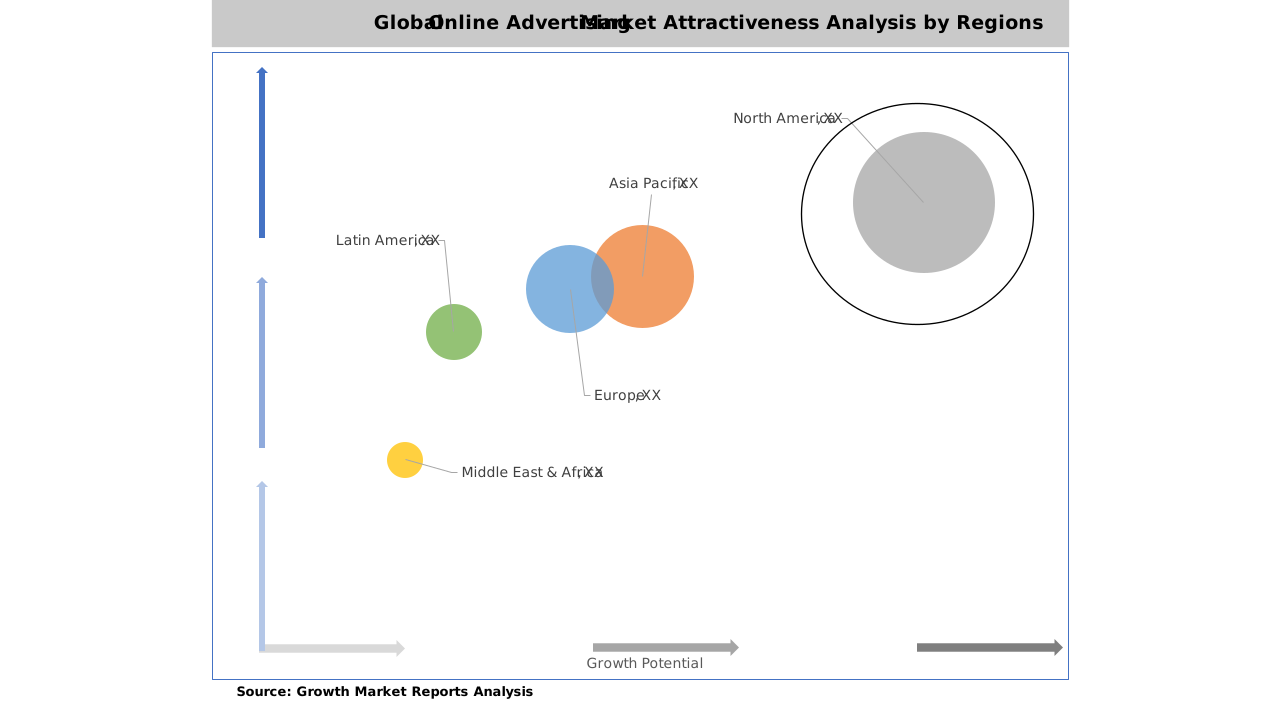
Regionally, North America continues to dominate the online advertising market, accounting for the largest share in 2024, followed closely by Asia Pacific and Europe. The United States, in particular, remains a global leader due to its mature digital ecosystem, high ad spend per capita, and early adoption of advanced advertising technologies. Asia Pacific is witnessing the fastest growth, driven by the rapid expansion of internet infrastructure, rising smartphone adoption, and increasing digital literacy in countries such as China, India, and Southeast Asian nations. Europe maintains strong momentum, supported by robust regulatory frameworks and a diverse mix of established and emerging markets. Meanwhile, Latin America and the Middle East & Africa are experiencing steady growth, albeit from a lower base, as more businesses embrace digital transformation and online advertising strategies.

Global Online Advertising  Industry Outlook

Format Analysis

The online advertising market is characterized by a diverse array of ad formats, each catering to different marketing objectives and audience preferences. Display ads remain a foundational component, encompassing banners, pop-ups, and rich media ads that appear across websites and mobile applications. Despite the rise of ad-blocking technologies, display ads continue to be widely used due to their broad reach and versatility. Advertisers are increasingly leveraging programmatic buying to optimize placements and improve targeting, while creative innovations such as interactive and dynamic banners enhance user engagement. The integration of display ads with retargeting strategies further boosts conversion rates, making them a vital part of multi-channel campaigns.

Search engine ads represent another significant segment, driven by the dominance of platforms like Google, Bing, and Baidu. These ads capitalize on user intent, appearing alongside relevant search results based on keywords and queries. The effectiveness of search advertising lies in its ability to capture high-intent users who are actively seeking products or services, resulting in higher click-through and conversion rates. Advertisers are increasingly adopting automated bidding strategies and leveraging machine learning to optimize keyword selection, ad copy, and landing pages. As voice search and AI-powered assistants gain traction, search ad formats are evolving to accommodate new user behaviors and devices.

Social media ads have emerged as a powerhouse in the online advertising market, fueled by the massive user bases of platforms such as Facebook, Instagram, TikTok, Twitter, and LinkedIn. These ads offer unparalleled targeting capabilities, allowing brands to segment audiences based on demographics, interests, behaviors, and even past interactions. Social media advertising is highly visual and interactive, with formats ranging from sponsored posts and stories to carousel ads and influencer partnerships. The integration of e-commerce features, such as shoppable posts and in-app checkout, has transformed social platforms into powerful sales channels. Additionally, the rise of short-form video and live streaming has given advertisers new creative avenues to engage audiences.

Video ads are experiencing rapid growth, driven by the popularity of platforms like YouTube, TikTok, and CTV/OTT services. Video advertising delivers compelling storytelling and immersive experiences, making it ideal for brand awareness and engagement campaigns. Advertisers are increasingly investing in skippable and non-skippable video formats, bumper ads, and interactive video units to capture viewer attention. The shift towards mobile-first consumption and the proliferation of high-speed internet have further accelerated video ad adoption. Advanced targeting and measurement tools enable advertisers to track viewer behavior, optimize creative assets, and measure campaign effectiveness across devices and platforms.

Email marketing remains a cost-effective and highly personalized format within the online advertising market. Despite the rise of new channels, email continues to deliver strong ROI by enabling direct communication with subscribers and customers. Marketers are leveraging automation, segmentation, and dynamic content to deliver relevant messages and nurture leads throughout the customer journey. The integration of AI and machine learning enhances personalization, improves deliverability, and optimizes send times. Email marketing is increasingly used in conjunction with other digital channels, such as social and display, to create cohesive and integrated campaigns that drive engagement and conversions.

Report Scope

Attributes Details
Report Title Online Advertising Market Research Report 2033
By Format Display Ads, Search Engine Ads, Social Media Ads, Video Ads, Email Marketing, Others
By Platform Mobile, Desktop, Tablet, Others
By Industry Vertical Retail & E-commerce, Automotive, Healthcare, BFSI, Media & Entertainment, Education, Travel & Hospitality, Others
By Enterprise Size Small & Medium Enterprises, Large Enterprises
Regions Covered North America, Europe, APAC, Latin America, MEA
Base Year 2024
Historic Data 2018-2023
Forecast Period 2025-2033
Number of Pages 255
Number of Tables & Figures 321
Customization Available Yes, the report can be customized as per your need.

Platform Analysis

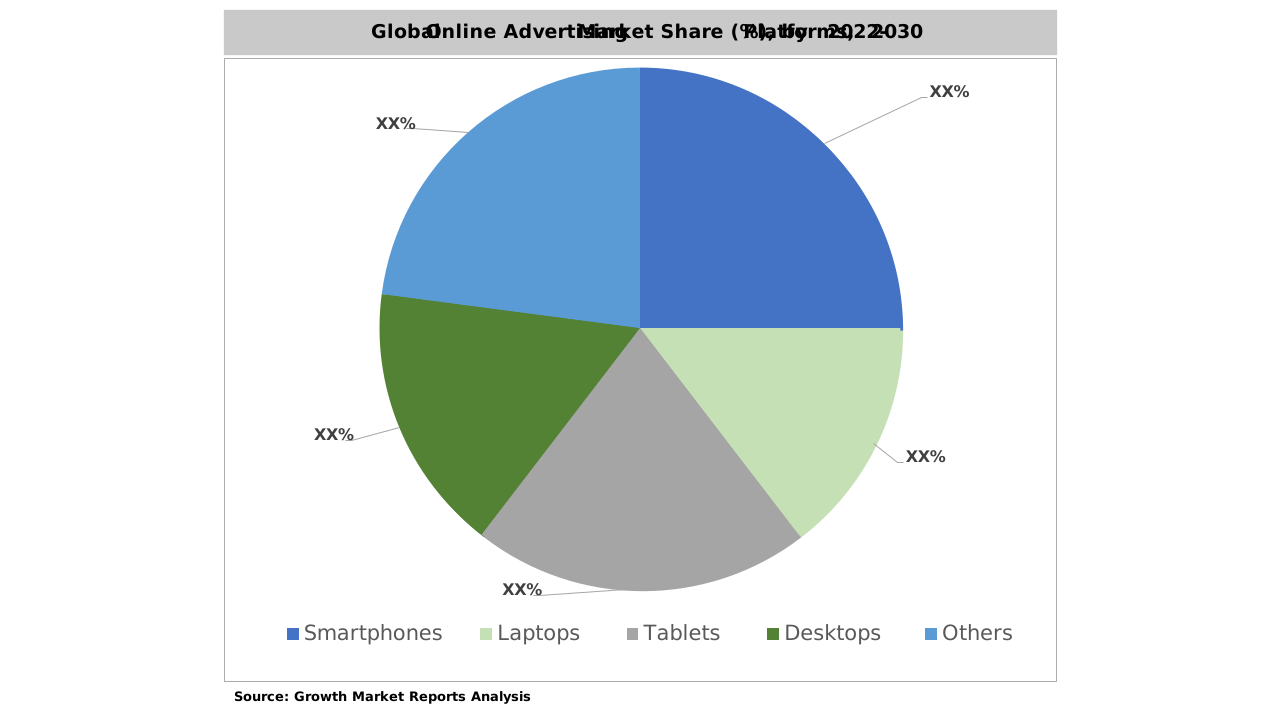
The online advertising market is deeply influenced by the proliferation of digital platforms, each offering unique opportunities and challenges for advertisers. Mobile platforms have emerged as the dominant medium, accounting for the majority of digital ad spend in 2024. The widespread adoption of smartphones and the increasing time spent on mobile apps have made mobile advertising a top priority for brands. Mobile ads encompass a range of formats, including in-app banners, interstitials, native ads, and video units. Advertisers are leveraging location-based targeting, push notifications, and mobile wallets to deliver personalized and contextually relevant messages. The rise of mobile commerce and app-based services further amplifies the importance of mobile advertising in driving sales and customer engagement.

Desktop platforms continue to play a significant role in the online advertising ecosystem, particularly for B2B marketing, productivity tools, and long-form content consumption. Desktop ads are typically more immersive and allow for larger creative assets, making them suitable for high-impact campaigns and detailed product demonstrations. Advertisers are utilizing advanced tracking and attribution tools to measure user journeys across devices and optimize cross-platform strategies. The integration of programmatic buying and real-time analytics enhances campaign performance, while the use of retargeting and sequential messaging drives higher conversion rates. Despite the shift towards mobile, desktops remain crucial for certain verticals and audience segments.

Tablet platforms occupy a niche position in the online advertising market, serving as a bridge between mobile and desktop experiences. Tablets offer larger screen real estate and touch-based interactivity, making them ideal for visually rich and interactive ads. Advertisers targeting families, students, and professionals often include tablets in their media mix to capture multi-device users. The growth of tablet-based e-learning, digital publishing, and streaming services presents new opportunities for advertisers to reach engaged audiences. Cross-device tracking and attribution are essential for understanding user behavior and optimizing ad placements across tablets, smartphones, and desktops.

The ‘Others’ category encompasses emerging platforms such as connected TVs, gaming consoles, and wearable devices, which are gaining traction in the online advertising landscape. Connected TV and OTT platforms, in particular, are transforming video advertising by enabling brands to reach cord-cutters and digitally native audiences with high-quality, non-intrusive ads. Gaming advertising is also on the rise, with brands integrating ads seamlessly within gaming environments and leveraging in-game rewards, branded content, and sponsorships. Wearable devices offer new possibilities for hyper-local and context-aware advertising, although privacy and user experience considerations remain paramount. As technology evolves, advertisers are exploring innovative ways to engage consumers across a growing array of digital touchpoints.

Industry Vertical Analysis

The online advertising market serves a diverse range of industry verticals, each with unique marketing objectives and challenges. Retail and e-commerce is the leading vertical, accounting for the largest share of digital ad spend in 2024. Retailers and online marketplaces rely heavily on online advertising to drive traffic, conversions, and customer loyalty. Performance-driven formats such as search ads, display retargeting, and shoppable social posts are widely used to capture high-intent shoppers and boost sales. The integration of data analytics and AI enables retailers to personalize offers, optimize inventory, and enhance the overall shopping experience. Seasonal campaigns, flash sales, and influencer collaborations are common strategies employed to maximize reach and impact.

The automotive sector is increasingly leveraging online advertising to showcase new models, promote test drives, and generate leads. Digital channels offer automotive brands the ability to deliver immersive experiences, such as virtual showrooms, interactive videos, and 360-degree car tours. Social media platforms and video ads are particularly effective for building brand awareness and engaging younger consumers. The use of data-driven targeting allows automotive advertisers to reach potential buyers based on demographics, interests, and online behavior. As electric vehicles and mobility services gain prominence, the automotive industry is adapting its digital strategies to align with evolving consumer preferences and sustainability trends.

Healthcare is another fast-growing vertical in the online advertising market, driven by the increasing demand for telemedicine, health apps, and wellness products. Healthcare advertisers must navigate strict regulatory requirements and privacy concerns while delivering relevant and trustworthy messages. Content marketing, search ads, and educational videos are commonly used to inform and engage patients, caregivers, and healthcare professionals. The COVID-19 pandemic accelerated the adoption of digital health solutions, prompting healthcare organizations to invest in targeted online campaigns that raise awareness, drive appointments, and promote preventive care. The integration of AI and data analytics enhances audience segmentation and campaign measurement, ensuring compliance and effectiveness.

The BFSI (Banking, Financial Services, and Insurance) sector is undergoing a digital transformation, with online advertising playing a pivotal role in customer acquisition, retention, and cross-selling. Financial institutions use a mix of display, search, and social ads to promote products such as credit cards, loans, insurance policies, and investment services. The emphasis on security, trust, and transparency is reflected in ad messaging and creative execution. Personalization and data-driven targeting are critical for reaching specific customer segments and delivering tailored offers. The rise of fintech startups and digital banking platforms has intensified competition, prompting traditional players to innovate and enhance their digital advertising capabilities.

Other notable verticals include media and entertainment, education, and travel and hospitality. Media companies leverage online ads to promote content, subscriptions, and events, often using video and native formats to drive engagement. Educational institutions and e-learning platforms use digital channels to attract students, promote courses, and facilitate remote learning. The travel and hospitality sector, recovering from pandemic-related disruptions, is ramping up online advertising to stimulate bookings, showcase destinations, and deliver personalized offers. Each vertical tailors its digital strategies to address specific customer needs, regulatory environments, and market dynamics, contributing to the overall growth and diversity of the online advertising market.

Enterprise Size Analysis

The online advertising market is segmented by enterprise size, with both small and medium enterprises (SMEs) and large enterprises leveraging digital channels to achieve their marketing goals. SMEs are increasingly embracing online advertising due to its cost-effectiveness, scalability, and measurable outcomes. Digital platforms provide SMEs with access to sophisticated targeting tools, creative templates, and performance analytics, enabling them to compete with larger brands on a level playing field. Social media ads, search engine marketing, and email campaigns are popular among SMEs for driving local awareness, generating leads, and building customer loyalty. The availability of self-serve ad platforms and budget-friendly options makes online advertising accessible to businesses of all sizes.

Large enterprises, on the other hand, allocate substantial budgets to online advertising, often running complex, multi-channel campaigns across global markets. These organizations leverage advanced technologies such as programmatic buying, data management platforms (DMPs), and customer relationship management (CRM) integrations to optimize campaign performance and achieve scale. Large enterprises are early adopters of innovative ad formats, immersive experiences, and cross-device strategies, enabling them to reach diverse audiences and drive brand growth. The use of in-house marketing teams, agency partnerships, and third-party vendors allows large enterprises to manage and execute sophisticated digital campaigns with precision and efficiency.

The growing emphasis on data privacy and regulatory compliance is influencing online advertising strategies for both SMEs and large enterprises. Businesses are investing in first-party data collection, consent management, and privacy-centric ad solutions to navigate evolving regulations and maintain consumer trust. The shift towards ethical advertising practices and transparent data usage is reshaping industry standards and fostering long-term relationships between brands and consumers. Enterprises of all sizes are also focusing on sustainability and social responsibility, incorporating purpose-driven messaging and eco-friendly initiatives into their digital campaigns.

Collaboration and partnerships are becoming increasingly important in the online advertising market, as businesses seek to enhance their capabilities and expand their reach. SMEs are partnering with digital agencies, technology providers, and influencer networks to access expertise and resources that drive campaign success. Large enterprises are forming strategic alliances with media companies, content creators, and ad tech firms to innovate and stay ahead of market trends. The convergence of marketing, technology, and data is enabling enterprises to deliver more personalized, relevant, and impactful advertising experiences across channels and touchpoints.

Opportunities & Threats

The online advertising market presents significant opportunities for growth and innovation, particularly as new technologies and platforms emerge. The adoption of artificial intelligence, machine learning, and big data analytics is transforming the way advertisers plan, execute, and measure campaigns. AI-powered tools enable real-time optimization, predictive targeting, and automated creative generation, resulting in higher efficiency and better outcomes. The rise of immersive technologies, such as AR and VR, offers brands the ability to create engaging and memorable experiences that drive deeper connections with consumers. The integration of e-commerce functionalities within digital ads is blurring the lines between content and commerce, enabling seamless shopping experiences and boosting conversion rates. As 5G networks roll out globally, faster internet speeds and lower latency will unlock new possibilities for interactive and high-quality ad formats, further expanding the market's potential.

Another major opportunity lies in the expansion of online advertising into emerging markets, where internet penetration and digital adoption are accelerating. Countries in Asia Pacific, Latin America, and Africa are experiencing rapid growth in smartphone usage, social media engagement, and online shopping, creating fertile ground for digital advertisers. Localized content, language customization, and culturally relevant messaging are essential for success in these regions. Brands that invest in market research, partnerships, and tailored strategies can capture new audiences and drive sustainable growth. The increasing focus on sustainability, diversity, and social responsibility also presents opportunities for brands to differentiate themselves and build stronger relationships with socially conscious consumers.

Despite these opportunities, the online advertising market faces several threats and restrainers that could impact its growth trajectory. One of the most significant challenges is the evolving regulatory landscape, particularly concerning data privacy and consumer protection. The implementation of laws such as the General Data Protection Regulation (GDPR) in Europe, the California Consumer Privacy Act (CCPA) in the United States, and similar regulations in other regions is increasing compliance costs and complexity for advertisers. The phasing out of third-party cookies and the shift towards privacy-centric ad solutions require businesses to rethink their data strategies and invest in new technologies. Ad fraud, brand safety concerns, and the proliferation of ad blockers also pose risks to campaign effectiveness and advertiser ROI. To navigate these challenges, industry stakeholders must prioritize transparency, accountability, and ethical practices in their online advertising efforts.

Regional Outlook

The regional landscape of the online advertising market is marked by significant disparities in digital adoption, ad spend, and growth rates. North America leads the global market, accounting for USD 210 billion in 2024, driven by the high penetration of digital devices, mature advertising infrastructure, and early adoption of advanced technologies. The United States remains the largest market within the region, with brands allocating substantial budgets to online campaigns across search, social, video, and programmatic channels. Canada and Mexico are also witnessing steady growth, supported by increasing internet usage and digital transformation initiatives. The region's robust regulatory environment and focus on data privacy are shaping industry practices and fostering innovation in privacy-centric ad solutions.

Asia Pacific is the fastest-growing region in the online advertising market, with a market size of USD 158 billion in 2024 and an impressive CAGR of 13.5% projected through 2033. China, India, Japan, and Southeast Asian countries are at the forefront of digital adoption, fueled by rapid urbanization, rising disposable incomes, and a young, tech-savvy population. The proliferation of mobile devices, social media platforms, and e-commerce ecosystems is driving digital ad spend across the region. Local and international brands are investing in localized content, influencer marketing, and mobile-first strategies to capture diverse and dynamic audiences. Government initiatives to expand internet infrastructure and promote digital literacy are further accelerating market growth and creating new opportunities for advertisers.

Europe holds a significant share of the online advertising market, with a market size of USD 110 billion in 2024. The region is characterized by a diverse mix of mature and emerging markets, each with unique regulatory frameworks and consumer behaviors. The United Kingdom, Germany, and France are the largest contributors, with strong investments in digital media and programmatic advertising. The implementation of GDPR has heightened the focus on data privacy and transparency, prompting advertisers to adopt ethical and compliant practices. Southern and Eastern European countries are witnessing increased digital ad spend as businesses embrace online channels to reach new customers and drive growth. Meanwhile, Latin America and the Middle East & Africa collectively account for USD 58.5 billion in 2024, with both regions showing steady growth as digital infrastructure improves and more businesses transition to online advertising.

Online Advertising  Market Statistics

Competitor Outlook

The competitive landscape of the online advertising market is highly dynamic, characterized by the presence of global tech giants, specialized ad tech firms, and a growing number of innovative startups. The market is dominated by a few key players who command significant market share and influence industry trends. These companies invest heavily in research and development, technological innovation, and strategic partnerships to maintain their competitive edge. The ongoing convergence of advertising, media, and technology is driving consolidation and collaboration across the ecosystem, as companies seek to offer integrated solutions that address the evolving needs of advertisers and publishers.

Google and Meta (formerly Facebook) are the undisputed leaders in the online advertising market, collectively accounting for a substantial portion of global digital ad revenues. Google's dominance is anchored in its search engine, YouTube, and extensive ad network, which enable advertisers to reach billions of users across devices and platforms. Meta's suite of social media platforms, including Facebook, Instagram, WhatsApp, and Messenger, offers unparalleled targeting capabilities and engagement opportunities. Both companies continue to innovate with new ad formats, measurement tools, and privacy-centric solutions to adapt to changing consumer behaviors and regulatory requirements.

Other major players include Amazon, Microsoft, and TikTok, each leveraging their unique ecosystems to capture a growing share of digital ad spend. Amazon's advertising platform is rapidly gaining traction, particularly among retail and e-commerce advertisers looking to reach shoppers at the point of purchase. Microsoft's advertising solutions, integrated with LinkedIn and Bing, cater to B2B marketers and professionals. TikTok's explosive growth and highly engaged user base have made it a favorite among brands targeting younger demographics with short-form video and influencer-driven campaigns. The rise of connected TV, OTT platforms, and gaming environments is also attracting new entrants and driving competition in emerging segments.

In addition to the tech giants, the online advertising market is home to a vibrant ecosystem of ad tech companies, agencies, and solution providers. Firms such as The Trade Desk, Adobe, Criteo, and MediaMath offer programmatic buying, data management, and creative optimization services that help advertisers maximize campaign performance. Digital agencies and consulting firms provide strategic guidance, creative development, and campaign management expertise to brands of all sizes. The emergence of privacy-focused ad solutions, contextual targeting, and AI-powered analytics is fostering innovation and differentiation among competitors. As the market evolves, companies that prioritize transparency, accountability, and customer-centricity are well-positioned to succeed.

Some of the major companies operating in the online advertising market include Google (Alphabet Inc.), Meta Platforms, Inc., Amazon.com, Inc., Microsoft Corporation, ByteDance Ltd. (TikTok), The Trade Desk, Inc., Adobe Inc., Criteo S.A., MediaMath, Inc., and Twitter, Inc. (now X Corp). These companies are continuously expanding their product offerings, investing in advanced technologies, and forming strategic alliances to strengthen their market positions. For example, Google and Meta are focusing on privacy-enhancing technologies and AI-driven ad solutions, while Amazon is expanding its advertising platform to new markets and verticals. The Trade Desk and Adobe are leading the charge in programmatic advertising and creative optimization, enabling brands to deliver personalized and impactful campaigns at scale.

Key Players

  • Google (Alphabet Inc.)
  • Meta Platforms (Facebook, Instagram, WhatsApp)
  • Amazon Advertising
  • Microsoft Advertising (Bing Ads)
  • Alibaba Group
  • Tencent Holdings
  • ByteDance (TikTok, Douyin)
  • Twitter (X Corp.)
  • Snap Inc.
  • Pinterest
  • Baidu
  • Verizon Media (Yahoo, AOL)
  • LinkedIn (Microsoft)
  • AdRoll
  • Criteo
  • Taboola
  • Outbrain
  • The Trade Desk
  • PubMatic
  • Magnite (formerly Rubicon Project)
Online Advertising  Market Overview

Segments

The Online Advertising market has been segmented on the basis of

Format

  • Display Ads
  • Search Engine Ads
  • Social Media Ads
  • Video Ads
  • Email Marketing
  • Others

Platform

  • Mobile
  • Desktop
  • Tablet
  • Others

Industry Vertical

  • Retail & E-commerce
  • Automotive
  • Healthcare
  • BFSI
  • Media & Entertainment
  • Education
  • Travel & Hospitality
  • Others

Enterprise Size

  • Small & Medium Enterprises
  • Large Enterprises

Competitive Landscape

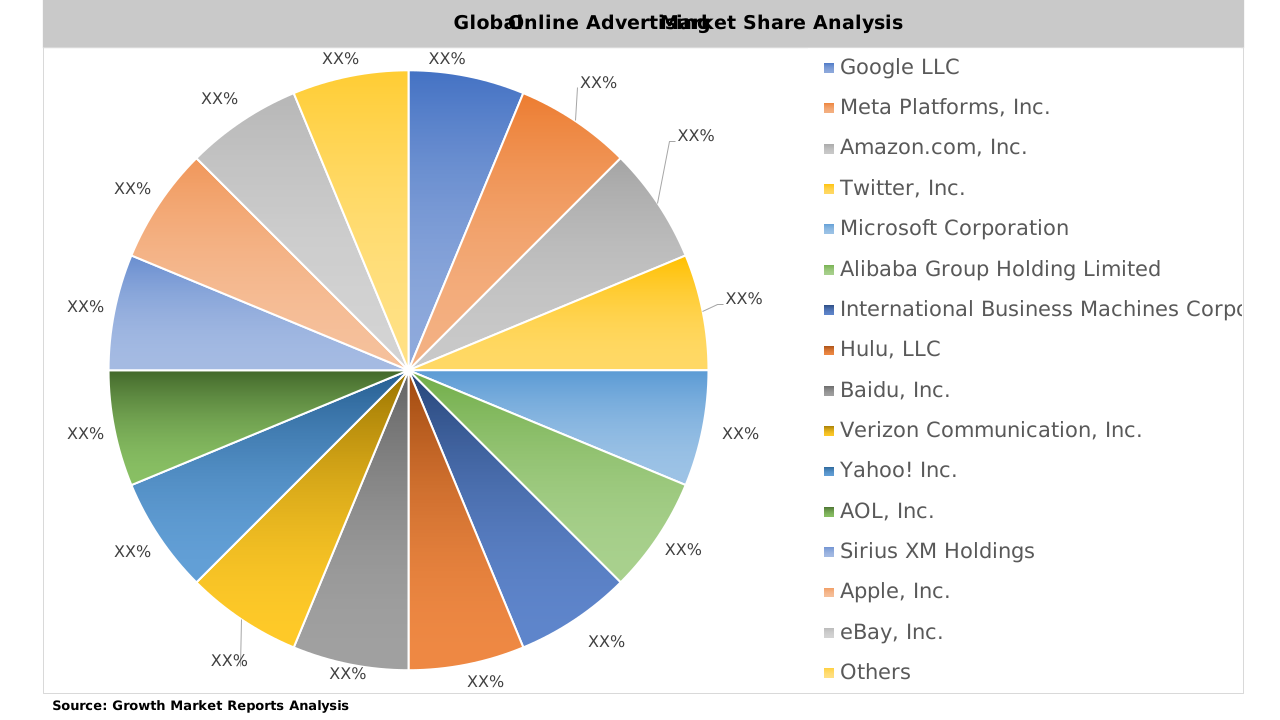
The global online advertising market is highly competitive with the presence of key players such as Google LLC; Meta Platforms, Inc.; Amazon.com, Inc.; Twitter, Inc.; Microsoft Corporation; Alibaba Group Holding Limited; International Business Machines Corporation; Hulu, LLC; Baidu, Inc.; Verizon Communication, Inc.; Yahoo! Inc.; AOL, Inc.; Sirius XM Holdings; Apple, Inc.; eBay, Inc.; and others, who use business strategies such as mergers, acquisitions, partnerships, collaborations, and product launches to dominate the market. For example, in October 2020, Microsoft Corporation launched multi-factor authentication in its Microsoft Advertising online. In April 2022, Google LLC introduced user controls, which helps users to control the number of advertisements on their devices.

Global Online Advertising Market by Key Players

Frequently Asked Questions

Google LLC; Meta Platforms, Inc.; Amazon.com, Inc.; Twitter, Inc.; Microsoft Corporation; Alibaba Group Holding Limited; and International Business Machines Corporation are some of the key players in the market.

North America dominates the global online advertising market.
Online advertising is a form of marketing, which uses internet and digital platforms to deliver promotional messages to identified and intended audience.

Various industries use online advertising to create brand awareness.

Search engine, social media, video, smartphones, display and others are formats of online advertising.

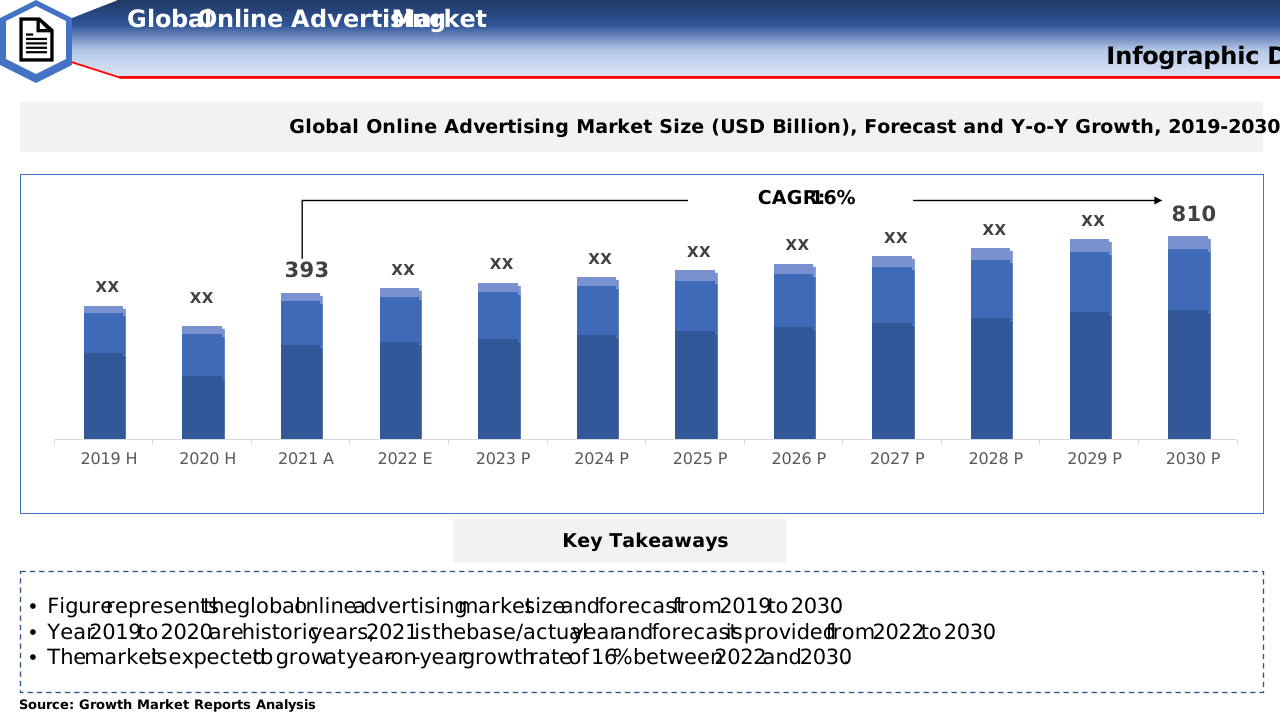
The global online advertising market size was valued at around USD 393 billion in 2021 and is expected to reach around USD 810 billion by 2030.

The global online advertising market is estimated to register CAGR of around 16% during the forecast period.

Table Of Content

Chapter 1 Executive Summary
Chapter 2 Assumptions and Acronyms Used
Chapter 3 Research Methodology
Chapter 4 Online Advertising  Market Overview
   4.1 Introduction
      4.1.1 Market Taxonomy
      4.1.2 Market Definition
      4.1.3 Macro-Economic Factors Impacting the Market Growth
   4.2 Online Advertising  Market Dynamics
      4.2.1 Market Drivers
      4.2.2 Market Restraints
      4.2.3 Market Opportunity
   4.3 Online Advertising  Market - Supply Chain Analysis
      4.3.1 List of Key Suppliers
      4.3.2 List of Key Distributors
      4.3.3 List of Key Consumers
   4.4 Key Forces Shaping the Online Advertising  Market
      4.4.1 Bargaining Power of Suppliers
      4.4.2 Bargaining Power of Buyers
      4.4.3 Threat of Substitution
      4.4.4 Threat of New Entrants
      4.4.5 Competitive Rivalry
   4.5 Global Online Advertising  Market Size & Forecast, 2023-2032
      4.5.1 Online Advertising  Market Size and Y-o-Y Growth
      4.5.2 Online Advertising  Market Absolute $ Opportunity

Chapter 5 Global Online Advertising  Market Analysis and Forecast By Format
   5.1 Introduction
      5.1.1 Key Market Trends & Growth Opportunities By Format
      5.1.2 Basis Point Share (BPS) Analysis By Format
      5.1.3 Absolute $ Opportunity Assessment By Format
   5.2 Online Advertising  Market Size Forecast By Format
      5.2.1 Display Ads
      5.2.2 Search Engine Ads
      5.2.3 Social Media Ads
      5.2.4 Video Ads
      5.2.5 Email Marketing
      5.2.6 Others
   5.3 Market Attractiveness Analysis By Format

Chapter 6 Global Online Advertising  Market Analysis and Forecast By Platform
   6.1 Introduction
      6.1.1 Key Market Trends & Growth Opportunities By Platform
      6.1.2 Basis Point Share (BPS) Analysis By Platform
      6.1.3 Absolute $ Opportunity Assessment By Platform
   6.2 Online Advertising  Market Size Forecast By Platform
      6.2.1 Mobile
      6.2.2 Desktop
      6.2.3 Tablet
      6.2.4 Others
   6.3 Market Attractiveness Analysis By Platform

Chapter 7 Global Online Advertising  Market Analysis and Forecast By Industry Vertical
   7.1 Introduction
      7.1.1 Key Market Trends & Growth Opportunities By Industry Vertical
      7.1.2 Basis Point Share (BPS) Analysis By Industry Vertical
      7.1.3 Absolute $ Opportunity Assessment By Industry Vertical
   7.2 Online Advertising  Market Size Forecast By Industry Vertical
      7.2.1 Retail & E-commerce
      7.2.2 Automotive
      7.2.3 Healthcare
      7.2.4 BFSI
      7.2.5 Media & Entertainment
      7.2.6 Education
      7.2.7 Travel & Hospitality
      7.2.8 Others
   7.3 Market Attractiveness Analysis By Industry Vertical

Chapter 8 Global Online Advertising  Market Analysis and Forecast By Enterprise Size
   8.1 Introduction
      8.1.1 Key Market Trends & Growth Opportunities By Enterprise Size
      8.1.2 Basis Point Share (BPS) Analysis By Enterprise Size
      8.1.3 Absolute $ Opportunity Assessment By Enterprise Size
   8.2 Online Advertising  Market Size Forecast By Enterprise Size
      8.2.1 Small & Medium Enterprises
      8.2.2 Large Enterprises
   8.3 Market Attractiveness Analysis By Enterprise Size

Chapter 9 Global Online Advertising  Market Analysis and Forecast by Region
   9.1 Introduction
      9.1.1 Key Market Trends & Growth Opportunities By Region
      9.1.2 Basis Point Share (BPS) Analysis By Region
      9.1.3 Absolute $ Opportunity Assessment By Region
   9.2 Online Advertising  Market Size Forecast By Region
      9.2.1 North America
      9.2.2 Europe
      9.2.3 Asia Pacific
      9.2.4 Latin America
      9.2.5 Middle East & Africa (MEA)
   9.3 Market Attractiveness Analysis By Region

Chapter 10 Coronavirus Disease (COVID-19) Impact 
   10.1 Introduction 
   10.2 Current & Future Impact Analysis 
   10.3 Economic Impact Analysis 
   10.4 Government Policies 
   10.5 Investment Scenario

Chapter 11 North America Online Advertising  Analysis and Forecast
   11.1 Introduction
   11.2 North America Online Advertising  Market Size Forecast by Country
      11.2.1 U.S.
      11.2.2 Canada
   11.3 Basis Point Share (BPS) Analysis by Country
   11.4 Absolute $ Opportunity Assessment by Country
   11.5 Market Attractiveness Analysis by Country
   11.6 North America Online Advertising  Market Size Forecast By Format
      11.6.1 Display Ads
      11.6.2 Search Engine Ads
      11.6.3 Social Media Ads
      11.6.4 Video Ads
      11.6.5 Email Marketing
      11.6.6 Others
   11.7 Basis Point Share (BPS) Analysis By Format 
   11.8 Absolute $ Opportunity Assessment By Format 
   11.9 Market Attractiveness Analysis By Format
   11.10 North America Online Advertising  Market Size Forecast By Platform
      11.10.1 Mobile
      11.10.2 Desktop
      11.10.3 Tablet
      11.10.4 Others
   11.11 Basis Point Share (BPS) Analysis By Platform 
   11.12 Absolute $ Opportunity Assessment By Platform 
   11.13 Market Attractiveness Analysis By Platform
   11.14 North America Online Advertising  Market Size Forecast By Industry Vertical
      11.14.1 Retail & E-commerce
      11.14.2 Automotive
      11.14.3 Healthcare
      11.14.4 BFSI
      11.14.5 Media & Entertainment
      11.14.6 Education
      11.14.7 Travel & Hospitality
      11.14.8 Others
   11.15 Basis Point Share (BPS) Analysis By Industry Vertical 
   11.16 Absolute $ Opportunity Assessment By Industry Vertical 
   11.17 Market Attractiveness Analysis By Industry Vertical
   11.18 North America Online Advertising  Market Size Forecast By Enterprise Size
      11.18.1 Small & Medium Enterprises
      11.18.2 Large Enterprises
   11.19 Basis Point Share (BPS) Analysis By Enterprise Size 
   11.20 Absolute $ Opportunity Assessment By Enterprise Size 
   11.21 Market Attractiveness Analysis By Enterprise Size

Chapter 12 Europe Online Advertising  Analysis and Forecast
   12.1 Introduction
   12.2 Europe Online Advertising  Market Size Forecast by Country
      12.2.1 Germany
      12.2.2 France
      12.2.3 Italy
      12.2.4 U.K.
      12.2.5 Spain
      12.2.6 Russia
      12.2.7 Rest of Europe
   12.3 Basis Point Share (BPS) Analysis by Country
   12.4 Absolute $ Opportunity Assessment by Country
   12.5 Market Attractiveness Analysis by Country
   12.6 Europe Online Advertising  Market Size Forecast By Format
      12.6.1 Display Ads
      12.6.2 Search Engine Ads
      12.6.3 Social Media Ads
      12.6.4 Video Ads
      12.6.5 Email Marketing
      12.6.6 Others
   12.7 Basis Point Share (BPS) Analysis By Format 
   12.8 Absolute $ Opportunity Assessment By Format 
   12.9 Market Attractiveness Analysis By Format
   12.10 Europe Online Advertising  Market Size Forecast By Platform
      12.10.1 Mobile
      12.10.2 Desktop
      12.10.3 Tablet
      12.10.4 Others
   12.11 Basis Point Share (BPS) Analysis By Platform 
   12.12 Absolute $ Opportunity Assessment By Platform 
   12.13 Market Attractiveness Analysis By Platform
   12.14 Europe Online Advertising  Market Size Forecast By Industry Vertical
      12.14.1 Retail & E-commerce
      12.14.2 Automotive
      12.14.3 Healthcare
      12.14.4 BFSI
      12.14.5 Media & Entertainment
      12.14.6 Education
      12.14.7 Travel & Hospitality
      12.14.8 Others
   12.15 Basis Point Share (BPS) Analysis By Industry Vertical 
   12.16 Absolute $ Opportunity Assessment By Industry Vertical 
   12.17 Market Attractiveness Analysis By Industry Vertical
   12.18 Europe Online Advertising  Market Size Forecast By Enterprise Size
      12.18.1 Small & Medium Enterprises
      12.18.2 Large Enterprises
   12.19 Basis Point Share (BPS) Analysis By Enterprise Size 
   12.20 Absolute $ Opportunity Assessment By Enterprise Size 
   12.21 Market Attractiveness Analysis By Enterprise Size

Chapter 13 Asia Pacific Online Advertising  Analysis and Forecast
   13.1 Introduction
   13.2 Asia Pacific Online Advertising  Market Size Forecast by Country
      13.2.1 China
      13.2.2 Japan
      13.2.3 South Korea
      13.2.4 India
      13.2.5 Australia
      13.2.6 South East Asia (SEA)
      13.2.7 Rest of Asia Pacific (APAC)
   13.3 Basis Point Share (BPS) Analysis by Country
   13.4 Absolute $ Opportunity Assessment by Country
   13.5 Market Attractiveness Analysis by Country
   13.6 Asia Pacific Online Advertising  Market Size Forecast By Format
      13.6.1 Display Ads
      13.6.2 Search Engine Ads
      13.6.3 Social Media Ads
      13.6.4 Video Ads
      13.6.5 Email Marketing
      13.6.6 Others
   13.7 Basis Point Share (BPS) Analysis By Format 
   13.8 Absolute $ Opportunity Assessment By Format 
   13.9 Market Attractiveness Analysis By Format
   13.10 Asia Pacific Online Advertising  Market Size Forecast By Platform
      13.10.1 Mobile
      13.10.2 Desktop
      13.10.3 Tablet
      13.10.4 Others
   13.11 Basis Point Share (BPS) Analysis By Platform 
   13.12 Absolute $ Opportunity Assessment By Platform 
   13.13 Market Attractiveness Analysis By Platform
   13.14 Asia Pacific Online Advertising  Market Size Forecast By Industry Vertical
      13.14.1 Retail & E-commerce
      13.14.2 Automotive
      13.14.3 Healthcare
      13.14.4 BFSI
      13.14.5 Media & Entertainment
      13.14.6 Education
      13.14.7 Travel & Hospitality
      13.14.8 Others
   13.15 Basis Point Share (BPS) Analysis By Industry Vertical 
   13.16 Absolute $ Opportunity Assessment By Industry Vertical 
   13.17 Market Attractiveness Analysis By Industry Vertical
   13.18 Asia Pacific Online Advertising  Market Size Forecast By Enterprise Size
      13.18.1 Small & Medium Enterprises
      13.18.2 Large Enterprises
   13.19 Basis Point Share (BPS) Analysis By Enterprise Size 
   13.20 Absolute $ Opportunity Assessment By Enterprise Size 
   13.21 Market Attractiveness Analysis By Enterprise Size

Chapter 14 Latin America Online Advertising  Analysis and Forecast
   14.1 Introduction
   14.2 Latin America Online Advertising  Market Size Forecast by Country
      14.2.1 Brazil
      14.2.2 Mexico
      14.2.3 Rest of Latin America (LATAM)
   14.3 Basis Point Share (BPS) Analysis by Country
   14.4 Absolute $ Opportunity Assessment by Country
   14.5 Market Attractiveness Analysis by Country
   14.6 Latin America Online Advertising  Market Size Forecast By Format
      14.6.1 Display Ads
      14.6.2 Search Engine Ads
      14.6.3 Social Media Ads
      14.6.4 Video Ads
      14.6.5 Email Marketing
      14.6.6 Others
   14.7 Basis Point Share (BPS) Analysis By Format 
   14.8 Absolute $ Opportunity Assessment By Format 
   14.9 Market Attractiveness Analysis By Format
   14.10 Latin America Online Advertising  Market Size Forecast By Platform
      14.10.1 Mobile
      14.10.2 Desktop
      14.10.3 Tablet
      14.10.4 Others
   14.11 Basis Point Share (BPS) Analysis By Platform 
   14.12 Absolute $ Opportunity Assessment By Platform 
   14.13 Market Attractiveness Analysis By Platform
   14.14 Latin America Online Advertising  Market Size Forecast By Industry Vertical
      14.14.1 Retail & E-commerce
      14.14.2 Automotive
      14.14.3 Healthcare
      14.14.4 BFSI
      14.14.5 Media & Entertainment
      14.14.6 Education
      14.14.7 Travel & Hospitality
      14.14.8 Others
   14.15 Basis Point Share (BPS) Analysis By Industry Vertical 
   14.16 Absolute $ Opportunity Assessment By Industry Vertical 
   14.17 Market Attractiveness Analysis By Industry Vertical
   14.18 Latin America Online Advertising  Market Size Forecast By Enterprise Size
      14.18.1 Small & Medium Enterprises
      14.18.2 Large Enterprises
   14.19 Basis Point Share (BPS) Analysis By Enterprise Size 
   14.20 Absolute $ Opportunity Assessment By Enterprise Size 
   14.21 Market Attractiveness Analysis By Enterprise Size

Chapter 15 Middle East & Africa (MEA) Online Advertising  Analysis and Forecast
   15.1 Introduction
   15.2 Middle East & Africa (MEA) Online Advertising  Market Size Forecast by Country
      15.2.1 Saudi Arabia
      15.2.2 South Africa
      15.2.3 UAE
      15.2.4 Rest of Middle East & Africa (MEA)
   15.3 Basis Point Share (BPS) Analysis by Country
   15.4 Absolute $ Opportunity Assessment by Country
   15.5 Market Attractiveness Analysis by Country
   15.6 Middle East & Africa (MEA) Online Advertising  Market Size Forecast By Format
      15.6.1 Display Ads
      15.6.2 Search Engine Ads
      15.6.3 Social Media Ads
      15.6.4 Video Ads
      15.6.5 Email Marketing
      15.6.6 Others
   15.7 Basis Point Share (BPS) Analysis By Format 
   15.8 Absolute $ Opportunity Assessment By Format 
   15.9 Market Attractiveness Analysis By Format
   15.10 Middle East & Africa (MEA) Online Advertising  Market Size Forecast By Platform
      15.10.1 Mobile
      15.10.2 Desktop
      15.10.3 Tablet
      15.10.4 Others
   15.11 Basis Point Share (BPS) Analysis By Platform 
   15.12 Absolute $ Opportunity Assessment By Platform 
   15.13 Market Attractiveness Analysis By Platform
   15.14 Middle East & Africa (MEA) Online Advertising  Market Size Forecast By Industry Vertical
      15.14.1 Retail & E-commerce
      15.14.2 Automotive
      15.14.3 Healthcare
      15.14.4 BFSI
      15.14.5 Media & Entertainment
      15.14.6 Education
      15.14.7 Travel & Hospitality
      15.14.8 Others
   15.15 Basis Point Share (BPS) Analysis By Industry Vertical 
   15.16 Absolute $ Opportunity Assessment By Industry Vertical 
   15.17 Market Attractiveness Analysis By Industry Vertical
   15.18 Middle East & Africa (MEA) Online Advertising  Market Size Forecast By Enterprise Size
      15.18.1 Small & Medium Enterprises
      15.18.2 Large Enterprises
   15.19 Basis Point Share (BPS) Analysis By Enterprise Size 
   15.20 Absolute $ Opportunity Assessment By Enterprise Size 
   15.21 Market Attractiveness Analysis By Enterprise Size

Chapter 16 Competition Landscape 
   16.1 Online Advertising  Market: Competitive Dashboard
   16.2 Global Online Advertising  Market: Market Share Analysis, 2023
   16.3 Company Profiles (Details – Overview, Financials, Developments, Strategy) 
      16.3.1 Google (Alphabet Inc.)
Meta Platforms (Facebook, Instagram, WhatsApp)
Amazon Advertising
Microsoft Advertising (Bing Ads)
Alibaba Group
Tencent Holdings
ByteDance (TikTok, Douyin)
Twitter (X Corp.)
Snap Inc.
Pinterest
Baidu
Verizon Media (Yahoo, AOL)
LinkedIn (Microsoft)
AdRoll
Criteo
Taboola
Outbrain
The Trade Desk
PubMatic
Magnite (formerly Rubicon Project)

Methodology

Our Clients

sinopec
FedEx Logistics
Deloitte
Pfizer
Dassault Aviation
General Mills
General Electric
Honda Motor Co. Ltd.