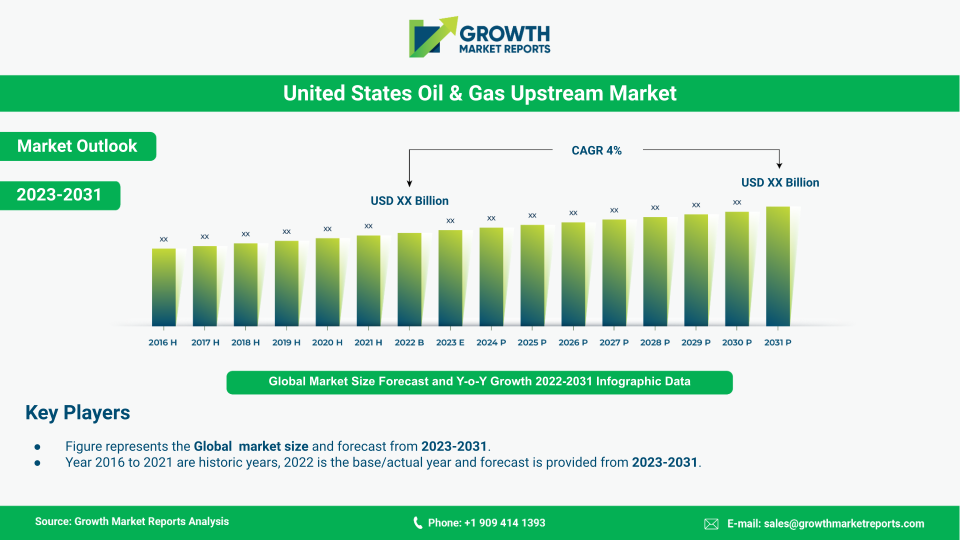
The United States Oil & Gas Upstream Market size was valued at USD XX Billion in 2022 and is expected to surpass USD XX Billion by 2031, expanding at a CAGR of 4% during the forecast period, 2023 – 2031. The growth of the market is attributed to the rising oil & gas consumption due to the strong economy recovery and increasing population in the country.
Upstream refers to foremost operations stage in the oil & gas industry that involves exploration and production. Upstream, midstream, and downstream are the three segments of the oil & gas industry. Upstream stage includes drilling activities. It is farthest stage of operation from the end-user consumer in the oil & gas supply chain. Upstream is followed by midstream and downstream, which includes transportation of crude oil stage and refining and distribution phases respectively.
The upstream segment of the oil & gas industry consists of exploration activities, such as creating geological surveys and obtaining land rights, and production activities, which include onshore and offshore drilling. Oil & gas exploration involves siting potential locations for oil & gas drilling and extraction. Geological surveys are conducted using various methods such as testing subsoil for onshore exploration and seismic imaging for offshore exploration. Majority of the oil & gas production in the US relies on onshore activities.
The wells are grouped together in a field, ranging from a half acre per well for heavy crude oil to 80 acres per well for natural gas, in onshore drilling. The group of wells are connected by carbon steel tubes, which consist of the oil & gas to a production and processing facility through a chemical and heating process. Onshore production companies can turn on and off rigs more easily than offshore rigs, in response to the market conditions. Offshore drilling uses a single platform that consists of fixed or mobile support. It is a mechanical process where a wellbore is drilled below the seabed. It is carried out to explore and subsequently extract petroleum that lies in rock formations under the seabed.
Market Trends, Drivers, Restraints, and Opportunities
-
Reduction in the cost of the drilling rigs is driving the United States oil & gas upstream market growth during the forecast period.
-
Increasing number of activities and oil production from the Permian Basin in the US is expected to create lucrative opportunities for the market.
-
Exploration and production is mainly from onshore oil & gas fields. However, rising advancements in offshore fields is projected to further boost the market expansion during the forecast period.
-
Increasing demand for natural gas is anticipated to propel the market expansion in the projected timeline.
-
Increasing deep-water activities in offshore is projected to drive the United States oil & gas upstream market during the forecast period.
-
Volatility in oil prices along with comparatively higher production costs for unconventional resources is expected to hinder the growth of the market.
-
Oil production has decreased slightly due to government regulations is anticipated to hamper the market growth during the forecast period.
-
Rising trend of renewables can create challenges for the market growth in the projected timeline.
-
Increasing R&D investment and ongoing technological advancements in the gas pipelines construction can create new markets for natural gas exports, creating significant opportunities for the market players.
Scope of United States Oil & Gas Upstream Market Report
The report on the United States oil & gas upstream market includes an assessment of the market, trends, segments, and regional markets. Overview and dynamics have also been included in the report.
|
Attributes
|
Details
|
|
Report Title
|
Oil & Upstream Market - United States Industry Analysis, Growth, Share, Size, Trends, and Forecast
|
|
Base Year
|
2022
|
|
Historic Data
|
2016–2021
|
|
Forecast Period
|
2022–2031
|
|
Segmentation
|
Location Deployments (Onshore and Offshore)
|
|
Geographical Zone
|
The US
|
|
Report Coverage
|
Company Share, Market Analysis and Size, Competitive Landscape, Growth Factors, and Trends, and Revenue Forecast
|
|
Key Players Covered in the Report
|
Exxon Mobil Corporation, B.P. plc, Chevron Corporation, and Royal Dutch Shell Plc.
|
United States Oil & Upstream Market Segment Insights
Onshore segment to account a large market share
On the basis of location deployments, the market is bifurcated into onshore and offshore. The onshore segment is expected to constitute a key share of the market during the forecast period owing to rising activities in onshore fields. Conversely, the advancements in the offshore segment is expected to create significant opportunities for emerging players in the market.
Segments
The United States oil & gas upstream market has been segmented on the basis of
Location of Deployments
Country
Key Players
- Exxon Mobil Corporation
- B.P. plc
- Chevron Corporation
- Royal Dutch Shell Plc
Competitive Landscape
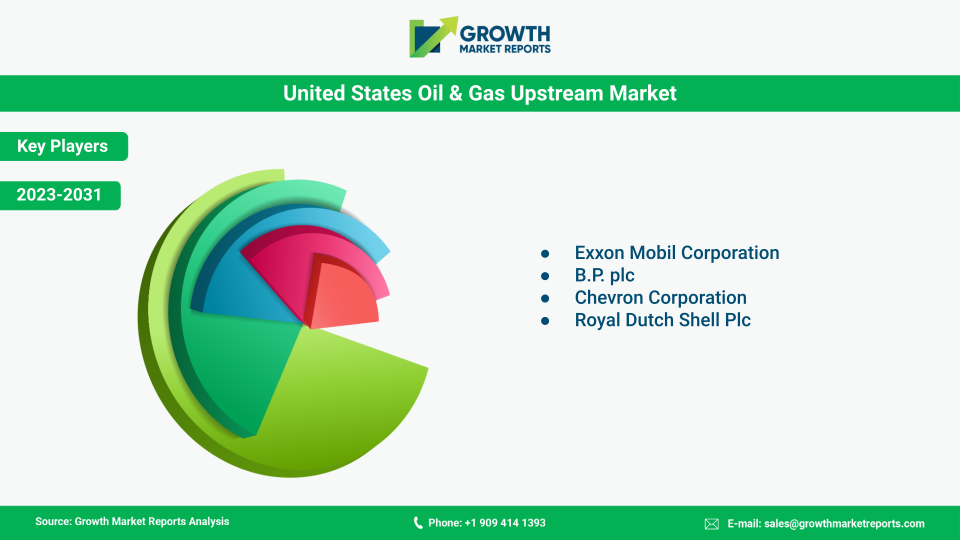
Key players competing in the United States oil & gas upstream market include Exxon Mobil Corporation, B.P. plc, Chevron Corporation, and Royal Dutch Shell Plc.











 Request For Customization
 Enquiry Before Buying
 Speak With Analyst





