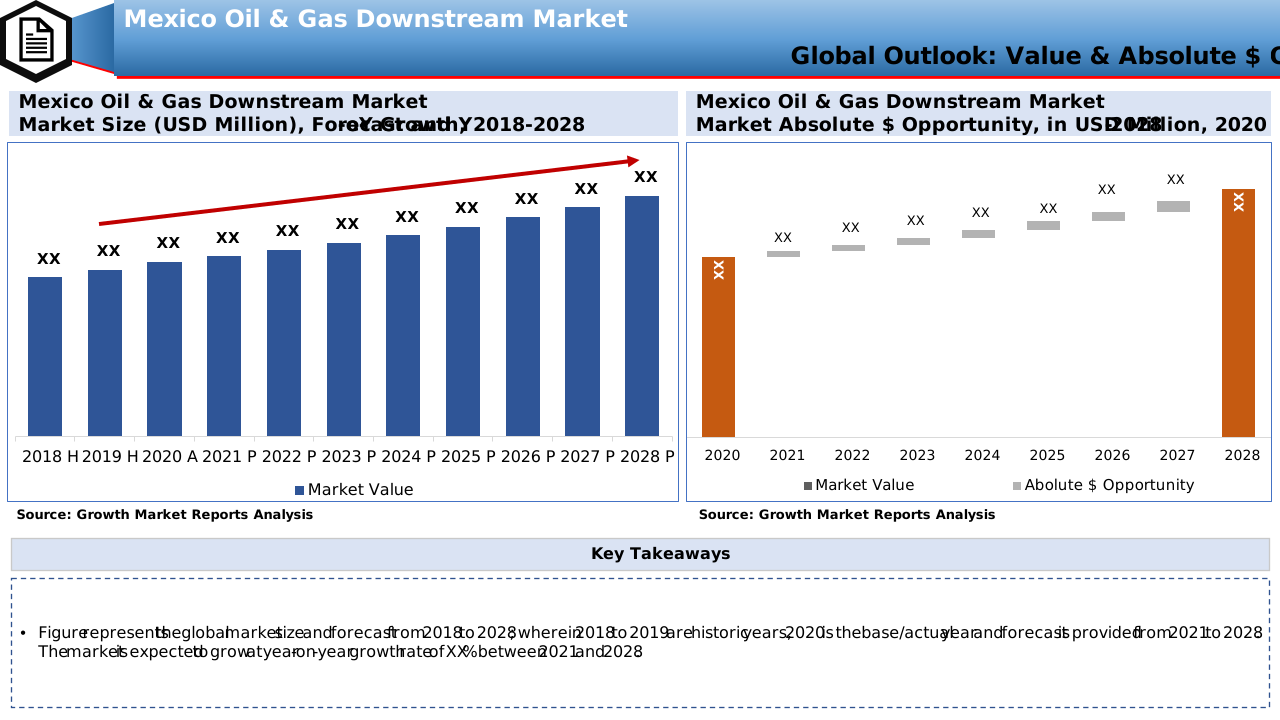
Segments - by Product Type (Refined Petroleum Products, Petrochemicals, Lubricants, Others), by Application (Transportation, Industrial, Power Generation, Others), by Process (Refining, Marketing, Distribution, Others), by End-User (Automotive, Aviation, Marine, Industrial, Others)
According to our latest research, the global Oil & Gas Downstream market size is estimated at USD 2.91 trillion in 2024, reflecting a robust industry presence worldwide. The market is expected to expand at a CAGR of 4.2% during the forecast period, reaching approximately USD 4.18 trillion by 2033. This growth is primarily driven by rising demand for refined petroleum products, ongoing technological advancements in refining processes, and the expanding petrochemical sector. As per the latest research, the industry’s evolution is underpinned by shifting energy consumption patterns, increasing investments in downstream infrastructure, and a growing focus on cleaner, value-added petroleum products.
A key growth factor for the Oil & Gas Downstream market is the surging global demand for refined petroleum products such as gasoline, diesel, jet fuel, and liquefied petroleum gas (LPG). Rapid urbanization, industrialization, and increasing vehicle ownership across emerging economies have significantly boosted the consumption of transportation fuels. Furthermore, the aviation and marine sectors are experiencing steady growth, supporting a higher demand for specialized fuels. The downstream sector is also benefitting from evolving regulatory frameworks that encourage the adoption of cleaner fuels, such as ultra-low sulfur diesel, in response to stringent environmental standards. The push towards energy efficiency and emission reduction is prompting refiners to invest in advanced technologies and upgrade existing infrastructure, further fueling market expansion.
Another major driver for the Oil & Gas Downstream market is the rising prominence of the petrochemical industry. Petrochemicals, derived from oil and gas downstream processes, are essential feedstocks for numerous industries, including plastics, textiles, pharmaceuticals, and fertilizers. The global shift towards lightweight and high-performance materials in automotive, packaging, and construction sectors is amplifying the demand for petrochemical products. Additionally, the proliferation of consumer goods and electronics in developing regions is stimulating the need for specialty chemicals and polymers. Market players are increasingly investing in integrated refining and petrochemical complexes to maximize operational efficiency and capitalize on synergies, thereby enhancing their competitive positioning in the global value chain.
Technological innovation represents a pivotal growth avenue for the Oil & Gas Downstream market. The adoption of digitalization, automation, and advanced process control systems is revolutionizing refining, marketing, and distribution operations. Digital twins, predictive analytics, and IoT-enabled monitoring are optimizing asset performance, reducing downtime, and improving safety across downstream facilities. Furthermore, sustainability initiatives are driving the development of bio-refineries and the integration of renewable feedstocks in traditional refining processes. These advancements are not only reducing operational costs but also enabling refiners to meet evolving regulatory requirements and consumer preferences for sustainable energy solutions. As the industry navigates the transition towards decarbonization, investments in carbon capture, utilization, and storage (CCUS) technologies are expected to gain momentum, shaping the future trajectory of the downstream sector.
Regionally, the Asia Pacific market is at the forefront of downstream growth, accounting for the largest share of global consumption and capacity expansion. Rapid industrialization, burgeoning middle-class populations, and significant infrastructure development are driving energy and petrochemical demand across China, India, and Southeast Asia. North America and Europe continue to focus on technological innovation, operational efficiency, and compliance with stringent environmental regulations, while the Middle East is leveraging its abundant hydrocarbon resources to expand refining and petrochemical capacities. Latin America and Africa are witnessing gradual growth, supported by investments in new refineries and distribution networks. The regional landscape is characterized by diverse market dynamics, regulatory environments, and strategic priorities, shaping the competitive outlook for global and regional players.
The Oil & Gas Downstream market by product type is segmented into refined petroleum products, petrochemicals, lubricants, and others. Refined petroleum products constitute the largest segment, driven by the ever-increasing global demand for transportation fuels such as gasoline, diesel, and jet fuel. The expansion of vehicle fleets, growth in commercial aviation, and rising maritime trade are pivotal factors contributing to the robust demand for refined products. Additionally, government mandates on cleaner fuels and stricter emission norms are compelling refiners to upgrade their product slate, fostering the adoption of high-quality, low-emission fuels. The downstream sector is also witnessing a trend towards producing value-added specialty fuels and blending components, catering to niche industrial and commercial requirements.
Petrochemicals represent a rapidly growing segment within the Oil & Gas Downstream market. The increasing utilization of petrochemical derivatives in manufacturing plastics, synthetic fibers, resins, and specialty chemicals is fueling the expansion of this segment. With the global push towards lightweight materials and sustainable packaging solutions, demand for ethylene, propylene, and aromatics is surging. Integrated refining and petrochemical complexes are becoming more prevalent, enabling companies to enhance feedstock flexibility and operational efficiency. The strategic integration of petrochemical production within traditional refineries is not only optimizing resource utilization but also insulating market participants from volatility in fuel markets.
The lubricants segment, while smaller in comparison, plays a crucial role in the downstream value chain. Lubricants are essential for minimizing friction, wear, and corrosion in automotive, industrial, and marine applications. The growing automotive sector, coupled with rising industrial activity, is bolstering lubricant consumption worldwide. Innovations in synthetic and bio-based lubricants are emerging in response to environmental regulations and performance standards. The trend towards high-performance, longer-lasting lubricants is prompting manufacturers to invest in R&D and develop products tailored to specific end-use requirements, such as heavy-duty engines and high-speed machinery.
The others category encompasses a diverse range of downstream products, including asphalt, solvents, waxes, and specialty chemicals. These products find applications in construction, pharmaceuticals, agrochemicals, and consumer goods industries. The demand for specialty chemicals and performance additives is rising in tandem with advancements in materials science and the proliferation of value-added industrial applications. Market players are increasingly focusing on diversifying their product portfolios to capture new growth opportunities in niche markets and enhance revenue streams. The evolving landscape of downstream products underscores the sector’s adaptability and resilience in meeting dynamic market demands.
| Attributes | Details |
| Report Title | Oil & Gas Downstream Market Research Report 2033 |
| By Product Type | Refined Petroleum Products, Petrochemicals, Lubricants, Others |
| By Application | Transportation, Industrial, Power Generation, Others |
| By Process | Refining, Marketing, Distribution, Others |
| By End-User | Automotive, Aviation, Marine, Industrial, Others |
| Regions Covered | North America, Europe, APAC, Latin America, MEA |
| Base Year | 2024 |
| Historic Data | 2018-2023 |
| Forecast Period | 2025-2033 |
| Number of Pages | 256 |
| Number of Tables & Figures | 323 |
| Customization Available | Yes, the report can be customized as per your need. |
The Oil & Gas Downstream market is segmented by application into transportation, industrial, power generation, and others. Transportation remains the dominant application, accounting for a significant share of global downstream consumption. The proliferation of passenger and commercial vehicles, coupled with expanding aviation and shipping industries, is driving sustained demand for gasoline, diesel, jet fuel, and marine fuels. Urbanization, economic growth, and improvements in logistics infrastructure are further amplifying fuel consumption in emerging markets. Additionally, regulatory initiatives promoting cleaner transportation fuels and alternative energy sources are shaping the product mix and encouraging refiners to invest in advanced processing technologies.
The industrial application segment is witnessing robust growth, fueled by rising demand for process fuels, feedstocks, and specialty chemicals across manufacturing, construction, and mining industries. Industrial users rely on a wide array of downstream products, including fuel oils, solvents, lubricants, and petrochemical intermediates, to power equipment, facilitate production processes, and enhance product performance. The trend towards industrial automation, energy efficiency, and sustainability is prompting refiners to develop customized solutions that meet stringent operational and environmental standards. Strategic partnerships with industrial end-users are becoming increasingly important for downstream players seeking to secure long-term supply contracts and capitalize on emerging industrial trends.
Power generation represents a specialized application within the downstream sector, particularly in regions where oil-based fuels remain integral to electricity production. While the global energy mix is gradually shifting towards renewables and natural gas, fuel oil and diesel continue to play a vital role in backup power generation, remote locations, and peak demand scenarios. The downstream industry is adapting to changing energy dynamics by optimizing fuel supply chains, enhancing product quality, and exploring synergies with alternative energy sources. Investments in cleaner-burning fuels and advanced combustion technologies are supporting the transition towards more sustainable power generation solutions.
The others application segment includes a diverse array of downstream uses, such as residential heating, agriculture, and specialty manufacturing. These applications are characterized by unique product specifications, regulatory requirements, and market dynamics. Downstream companies are leveraging their technical expertise and distribution networks to address the evolving needs of these niche segments. The ability to provide tailored solutions, ensure product quality, and comply with local regulations is critical for capturing market share and building customer loyalty. As the downstream sector continues to diversify, emerging applications are expected to present new growth opportunities and drive innovation across the value chain.
The Oil & Gas Downstream market is segmented by process into refining, marketing, distribution, and others. Refining is the cornerstone of the downstream sector, encompassing the conversion of crude oil into valuable products such as fuels, lubricants, and petrochemicals. Refining operations are characterized by complex process technologies, stringent quality standards, and continuous innovation. The adoption of advanced catalysts, process optimization tools, and digital monitoring systems is enhancing refinery efficiency, reducing emissions, and improving product yields. Investments in upgrading and expanding refining capacities, particularly in Asia Pacific and the Middle East, are supporting the sector’s ability to meet rising demand and adapt to evolving market trends.
Marketing is a critical process that involves the promotion, sale, and distribution of downstream products to end-users across various sectors. The marketing landscape is highly competitive, with companies vying for market share through pricing strategies, brand positioning, and customer engagement initiatives. Digital transformation is reshaping marketing processes, enabling real-time pricing, personalized promotions, and enhanced customer service. The proliferation of retail outlets, fuel stations, and convenience stores is expanding market reach and improving accessibility for consumers. Strategic partnerships with logistics providers, retailers, and technology firms are enhancing the efficiency and effectiveness of downstream marketing operations.
Distribution encompasses the logistics, storage, and transportation of downstream products from refineries to end-users. Efficient distribution networks are essential for ensuring timely delivery, minimizing losses, and maintaining product quality. The downstream sector is investing in advanced supply chain management systems, automated terminals, and real-time tracking technologies to optimize distribution processes. The integration of multimodal transport solutions, including pipelines, rail, road, and marine vessels, is enhancing flexibility and resilience across the value chain. As demand patterns evolve, downstream companies are reconfiguring their distribution networks to serve emerging markets, reduce transit times, and lower operational costs.
The others process segment includes ancillary activities such as blending, storage, and quality control. These processes are vital for meeting specific customer requirements, complying with regulatory standards, and ensuring the consistency and reliability of downstream products. Investments in state-of-the-art blending facilities, automated storage terminals, and advanced testing laboratories are supporting the sector’s commitment to quality assurance and operational excellence. The ability to adapt processes in response to changing market dynamics, technological advancements, and regulatory developments is a key differentiator for leading downstream companies.
The Oil & Gas Downstream market serves a diverse array of end-users, including automotive, aviation, marine, industrial, and others. The automotive sector is the largest end-user, driven by the global proliferation of passenger cars, commercial vehicles, and two-wheelers. The demand for high-performance fuels, lubricants, and specialty additives is rising in tandem with advancements in engine technology and emission standards. Downstream companies are collaborating with automotive manufacturers to develop products that enhance fuel efficiency, reduce emissions, and extend engine life. The shift towards electric vehicles and alternative mobility solutions is prompting refiners to diversify their product offerings and explore new business models.
The aviation sector is a significant consumer of downstream products, particularly jet fuel and specialized lubricants. The resurgence of air travel, expansion of airline fleets, and growth in cargo transportation are supporting steady demand for aviation fuels. Downstream players are investing in the development of sustainable aviation fuels (SAF) and advanced additives to meet the evolving needs of the aviation industry. Strategic partnerships with airlines, airports, and regulatory bodies are facilitating the adoption of cleaner, more efficient fuels and supporting the industry’s decarbonization objectives. The ability to ensure fuel quality, reliability, and regulatory compliance is critical for maintaining competitiveness in the aviation market.
Marine end-users rely on downstream products such as marine fuels, lubricants, and specialty chemicals to power vessels, support shipping operations, and comply with international maritime regulations. The implementation of IMO 2020 sulfur cap regulations has accelerated the shift towards low-sulfur fuels and alternative marine energy solutions. Downstream companies are investing in the development of compliant fuels, expanding bunkering infrastructure, and enhancing supply chain transparency to serve the evolving needs of the maritime industry. The growth of global trade, expansion of shipping routes, and increasing focus on environmental sustainability are shaping the future of marine fuel markets.
The industrial end-user segment encompasses a broad spectrum of manufacturing, construction, mining, and process industries. These users depend on a wide range of downstream products, including process fuels, feedstocks, lubricants, and specialty chemicals, to support their operations. The trend towards industrial automation, energy efficiency, and sustainable production is driving demand for high-quality, customized downstream solutions. Strategic collaborations with industrial clients, investments in R&D, and the development of value-added products are enabling downstream companies to capture new growth opportunities and enhance their competitive positioning in the industrial sector.
The others end-user category includes residential, agricultural, and commercial sectors that utilize downstream products for heating, power generation, and specialized applications. The ability to provide tailored solutions, ensure product availability, and comply with local regulations is essential for serving these diverse end-users. As the downstream sector continues to evolve, emerging end-user segments are expected to drive innovation, diversification, and growth across the value chain.
The Oil & Gas Downstream market is poised for significant opportunities in the coming years, driven by the global shift towards cleaner fuels and sustainable energy solutions. Investments in bio-refineries, hydrogen production, and carbon capture technologies are opening new avenues for growth and differentiation. The integration of digital technologies, such as artificial intelligence, blockchain, and IoT, is enhancing operational efficiency, supply chain transparency, and customer engagement. Market players that embrace innovation, invest in advanced process technologies, and develop value-added products are well-positioned to capture emerging opportunities and gain a competitive edge. Strategic partnerships, mergers, and acquisitions are also enabling companies to expand their market presence, access new technologies, and diversify their product portfolios.
Another key opportunity lies in the expansion of downstream infrastructure, particularly in emerging markets across Asia Pacific, the Middle East, and Africa. Rapid urbanization, industrialization, and rising disposable incomes are driving demand for refined products, petrochemicals, and specialty chemicals. Governments and private sector players are investing in new refineries, petrochemical complexes, and distribution networks to meet growing consumption needs and support economic development. The development of integrated value chains, localization of production, and adoption of sustainable practices are expected to drive long-term growth and resilience in the downstream sector. Companies that align their strategies with local market dynamics, regulatory requirements, and consumer preferences will be best positioned to capitalize on these opportunities.
Despite the positive outlook, the Oil & Gas Downstream market faces several threats and restraining factors. Volatility in crude oil prices, geopolitical uncertainties, and fluctuating demand patterns can impact profitability and investment decisions. Stringent environmental regulations, carbon pricing mechanisms, and the global push towards decarbonization are compelling downstream companies to invest in costly upgrades, emissions controls, and sustainability initiatives. The transition towards renewable energy sources and electric mobility poses long-term challenges to traditional fuel markets, requiring companies to diversify their offerings and reinvent their business models. Navigating these threats will require agility, innovation, and a proactive approach to risk management and regulatory compliance.
The Asia Pacific region dominates the global Oil & Gas Downstream market, accounting for approximately USD 1.14 trillion in 2024. Rapid economic growth, urbanization, and industrial expansion in countries such as China, India, and Southeast Asia are driving robust demand for refined products, petrochemicals, and specialty chemicals. The region is witnessing significant investments in new refineries, integrated petrochemical complexes, and distribution infrastructure to support rising consumption and export opportunities. Strategic government policies, favorable demographics, and the localization of production are further enhancing the region’s competitiveness and growth prospects. With a projected CAGR of 5.1% through 2033, Asia Pacific is expected to maintain its leadership position in the global downstream market.
North America is a mature but dynamic market, valued at around USD 740 billion in 2024. The region is characterized by advanced refining technologies, a well-established distribution network, and a strong focus on operational efficiency and sustainability. The United States, in particular, is a major producer and exporter of refined products and petrochemicals, supported by abundant shale oil and gas resources. Investments in digital transformation, emissions reduction, and the development of bio-based fuels are shaping the future of the downstream sector in North America. The region’s regulatory environment, consumer preferences, and technological capabilities are driving innovation and supporting the transition towards a more sustainable energy landscape.
Europe holds a significant share of the global Oil & Gas Downstream market, with a market size of approximately USD 530 billion in 2024. The region is at the forefront of environmental regulation, energy efficiency, and the adoption of alternative fuels. European downstream players are investing in refinery upgrades, renewable feedstocks, and circular economy initiatives to meet stringent emission targets and sustainability goals. The Middle East & Africa and Latin America collectively account for the remaining market share, with ongoing investments in refining capacity, petrochemical production, and distribution infrastructure. These regions are leveraging their hydrocarbon resources, strategic location, and export potential to enhance their role in the global downstream value chain.
The Oil & Gas Downstream market is highly competitive and fragmented, with the presence of multinational oil majors, national oil companies, and specialized downstream players. The competitive landscape is shaped by technological innovation, operational efficiency, product differentiation, and strategic partnerships. Companies are investing in advanced refining technologies, digital transformation, and sustainability initiatives to enhance their competitive positioning and capture emerging growth opportunities. The ability to adapt to changing market dynamics, regulatory requirements, and consumer preferences is critical for maintaining market share and profitability. Mergers, acquisitions, and joint ventures are common strategies for expanding market presence, accessing new technologies, and diversifying product portfolios.
Major oil companies such as ExxonMobil, Royal Dutch Shell, BP, Chevron, and TotalEnergies dominate the global downstream sector, leveraging their integrated value chains, global reach, and technological expertise. These companies are investing in refinery upgrades, petrochemical integration, and the development of sustainable fuels to address evolving market demands and regulatory requirements. National oil companies, including Saudi Aramco, Sinopec, and Indian Oil Corporation, play a pivotal role in shaping regional markets, supported by government backing, resource access, and large-scale infrastructure investments. The emergence of independent refiners, specialty chemical producers, and biofuel companies is adding to the competitive intensity and driving innovation across the sector.
Key players are focusing on expanding their downstream footprints in high-growth regions, developing value-added products, and enhancing supply chain resilience. Investments in digital technologies, automation, and predictive analytics are enabling companies to optimize operations, reduce costs, and improve customer engagement. The adoption of sustainability initiatives, such as carbon capture, renewable feedstocks, and circular economy practices, is becoming a key differentiator for leading downstream companies. Strategic collaborations with technology providers, industrial users, and regulatory bodies are supporting the development and commercialization of next-generation downstream solutions.
In summary, the Oil & Gas Downstream market is characterized by intense competition, rapid technological advancement, and evolving market dynamics. Leading companies are leveraging their scale, expertise, and innovation capabilities to capture new growth opportunities, address emerging challenges, and drive the industry’s transition towards a more sustainable and resilient future. As the downstream sector continues to evolve, market participants that embrace change, invest in advanced technologies, and prioritize sustainability will be best positioned to thrive in the global marketplace.
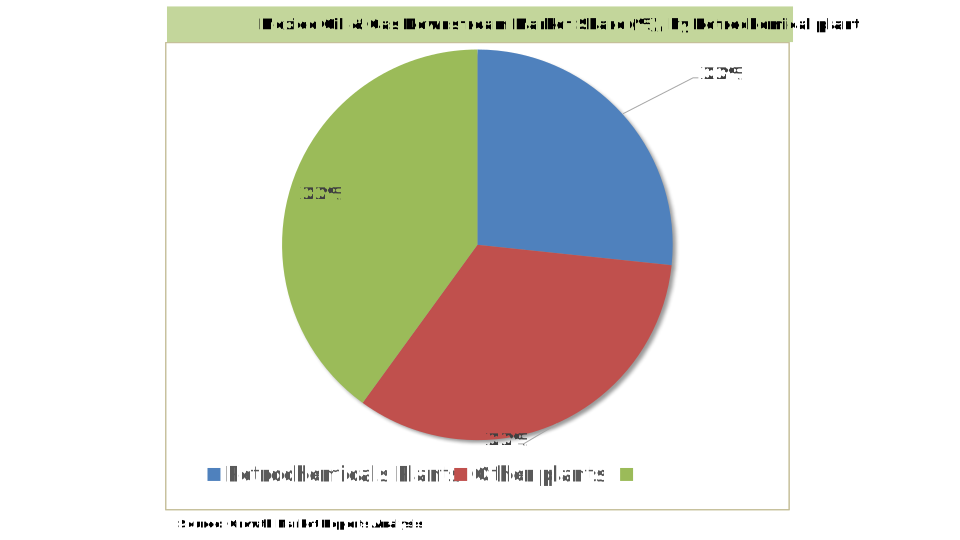
The Oil & Gas Downstream market has been segmented on the basis of
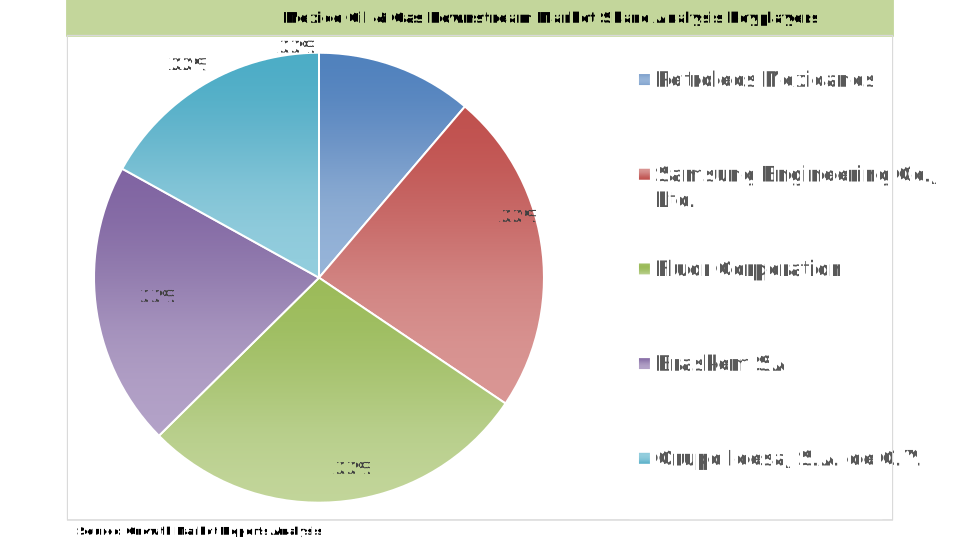
The major players of the market are Petróleos Mexicanos, Samsung Engineering Co. Ltd, Fluor Corporation, Grupo Idesa SA de CV, and Braskem SA.
Companies are investing in research and development activities to improve the yield from the oil wells. Moreover, they’re engaging in partnerships, joint ventures, mergers, and acquisitions to expand their market share.
The sector is investing in advanced refining technologies, carbon capture, renewable feedstocks, and sustainable fuels to reduce emissions, comply with regulations, and meet consumer demand for cleaner energy solutions.
Key players include ExxonMobil, Royal Dutch Shell, BP, Chevron, TotalEnergies, Saudi Aramco, Sinopec, Indian Oil Corporation, Phillips 66, Valero Energy, and others.
Opportunities include investments in cleaner fuels, bio-refineries, hydrogen, and digital transformation. Threats involve crude oil price volatility, stringent environmental regulations, and the global shift towards renewable energy and electric mobility.
Major end-users include the automotive, aviation, marine, and industrial sectors, with automotive being the largest due to global vehicle proliferation and demand for high-performance fuels and lubricants.
Key applications include transportation (dominant), industrial uses, power generation, and others such as residential heating and agriculture. Transportation fuels like gasoline, diesel, and jet fuel are in highest demand.
Technological innovation, including digitalization, automation, IoT, and advanced process controls, is optimizing operations, improving safety, reducing costs, and enabling compliance with evolving environmental regulations.
The market is segmented into refined petroleum products, petrochemicals, lubricants, and others. Refined petroleum products hold the largest share, followed by rapidly growing petrochemicals and essential lubricants.
Asia Pacific leads the market, driven by rapid industrialization and urbanization in countries like China and India. North America and Europe focus on technological innovation and sustainability, while the Middle East, Latin America, and Africa are expanding capacities and infrastructure.
Key growth drivers include rising demand for refined petroleum products, technological advancements in refining, expanding petrochemical sector, increasing investments in downstream infrastructure, and a focus on cleaner fuels.
The global Oil & Gas Downstream market is estimated at USD 2.91 trillion in 2024 and is expected to reach approximately USD 4.18 trillion by 2033, growing at a CAGR of 4.2%.