Offshore Drilling Rigs Market Research Report 2033

Offshore Drilling Rigs Market Research Report 2033

Segments - by Rig Type (Jackup Rigs, Semi-Submersible Rigs, Drillships, Others), by Water Depth (Shallow Water, Deepwater, Ultra-Deepwater), by Application (Oil & Gas Exploration, Production, Others), by End-User (National Oil Companies, Independent Oil Companies, Others)

https://growthmarketreports.com/Raksha
Author : Raksha Sharma
https://growthmarketreports.com/Vaibhav
Fact-checked by : V. Chandola
https://growthmarketreports.com/Shruti
Editor : Shruti Bhat

Upcoming | Report ID :EP-2919 | 4.7 Rating | 50 Reviews | 296 Pages | Format : Docx PDF

Report Description


Offshore Drilling Rigs Market Outlook

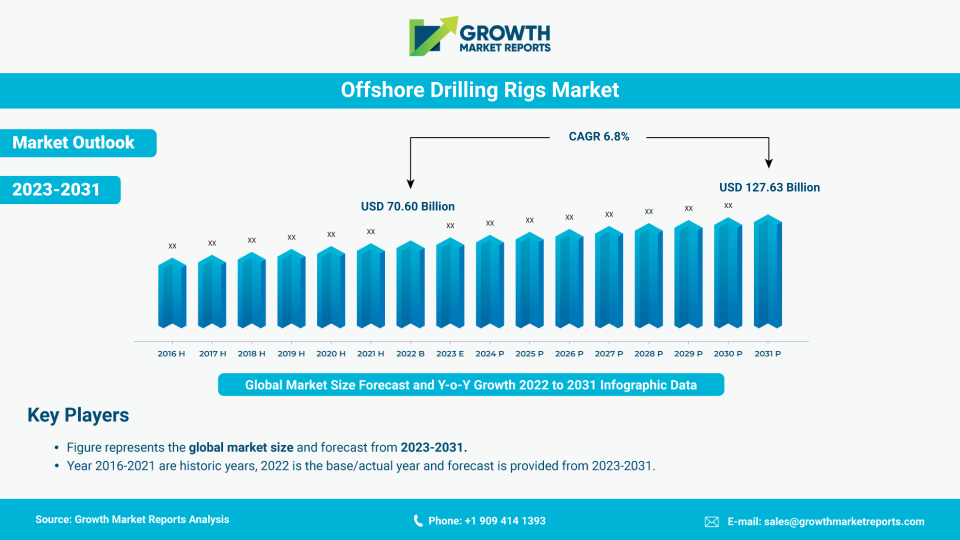
As per our latest research, the global offshore drilling rigs market size in 2024 stands at USD 33.8 billion, reflecting a robust resurgence driven by increased exploration activities and rising energy demand. The market is projected to expand at a CAGR of 6.2% from 2025 to 2033, reaching an estimated USD 57.7 billion by 2033. This growth trajectory is underpinned by the ongoing recovery in crude oil prices, technological advancements in drilling equipment, and escalating investments in deepwater and ultra-deepwater exploration projects. The offshore drilling rigs market is experiencing a notable transformation as stakeholders respond to evolving energy policies, environmental regulations, and the global pursuit of energy security.

One of the primary growth factors for the offshore drilling rigs market is the sustained increase in global energy consumption, particularly in emerging economies across Asia Pacific and Latin America. The rising demand for hydrocarbons, driven by industrialization and urbanization, has compelled oil and gas companies to intensify exploration and production activities offshore. The depletion of onshore reserves has shifted the focus towards untapped offshore reserves, especially in deepwater and ultra-deepwater regions, which hold significant potential for large-scale discoveries. This shift is further supported by government initiatives and favorable regulatory frameworks in key offshore drilling regions, which are designed to attract foreign investment and foster technological innovation.

Technological advancements have played a crucial role in shaping the offshore drilling rigs market. Innovations in rig design, automation, and digitalization have significantly improved operational efficiency, safety, and cost-effectiveness. The integration of advanced data analytics, real-time monitoring, and predictive maintenance has enabled operators to optimize drilling operations and minimize downtime. Additionally, the development of next-generation rigs, such as high-specification jackups and ultra-deepwater drillships, has expanded the operational envelope, allowing exploration and production in harsher environments and at greater depths. These technological breakthroughs have not only reduced the overall risk profile but also enhanced the commercial viability of complex offshore projects.

Another key driver for the offshore drilling rigs market is the strategic focus of oil and gas companies on portfolio diversification and long-term resource sustainability. The volatility in crude oil prices has prompted industry players to adopt flexible business models and invest in both conventional and unconventional resources. Offshore assets, with their potential for large-scale production and extended field life, have become an attractive proposition for major oil companies and independent operators alike. This trend is particularly evident in regions such as the Gulf of Mexico, the North Sea, and offshore Brazil, where ongoing exploration campaigns and new project sanctions are fueling demand for advanced offshore drilling rigs.

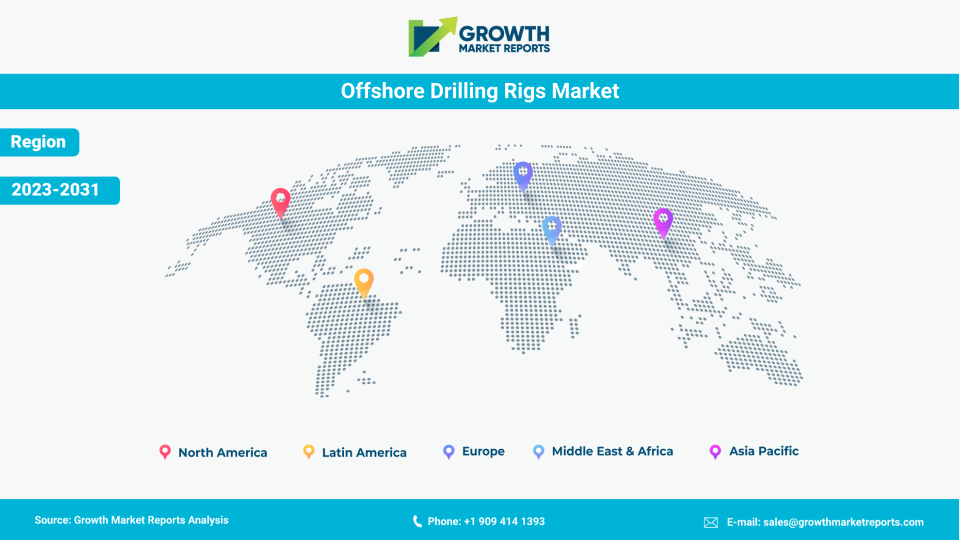
From a regional perspective, the Middle East & Africa, North America, and Asia Pacific are emerging as the key markets for offshore drilling rigs. The Middle East & Africa region is benefiting from substantial investments in offshore exploration, particularly in countries like Saudi Arabia, the UAE, and Nigeria. North America, led by the Gulf of Mexico, continues to witness steady drilling activity, supported by favorable regulatory policies and technological advancements. Meanwhile, Asia Pacific is experiencing a surge in offshore projects, driven by the energy needs of populous economies such as China and India. Each region presents unique opportunities and challenges, shaping the competitive landscape and influencing market dynamics.

Global Offshore Drilling Rigs Industry Outlook

Rig Type Analysis

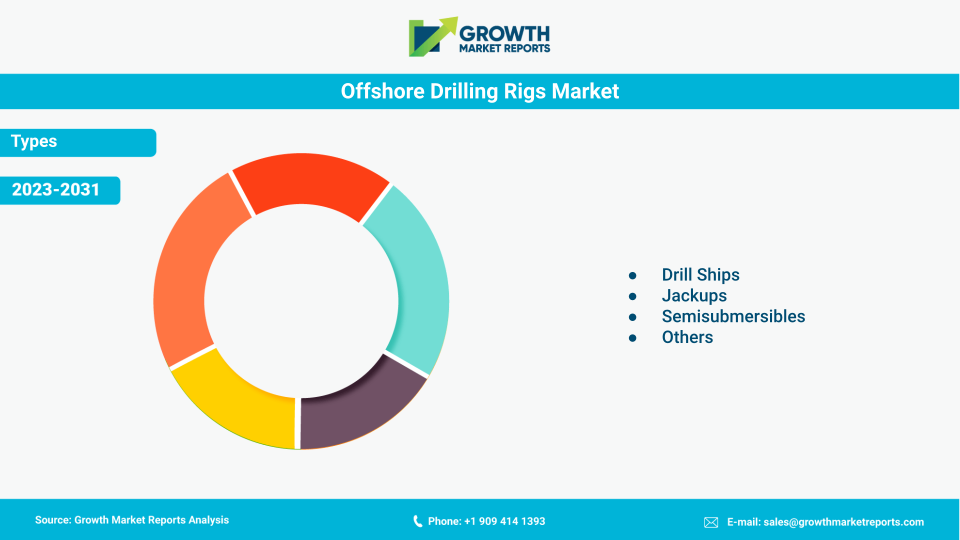
The offshore drilling rigs market is segmented by rig type into jackup rigs, semi-submersible rigs, drillships, and others. Jackup rigs, known for their versatility and cost-effectiveness, continue to dominate the shallow water segment. They are widely employed for drilling operations in water depths up to 400 feet and are favored for their mobility, ease of deployment, and relatively lower operating costs. The increasing demand for shallow water exploration, particularly in the Middle East, Southeast Asia, and the North Sea, is driving the adoption of high-specification jackup rigs equipped with advanced automation and safety features. Market participants are investing in fleet upgrades and newbuild programs to meet evolving customer requirements and regulatory standards.

Semi-submersible rigs, designed for operations in deeper waters and harsher environments, hold a significant share of the offshore drilling rigs market. These rigs offer superior stability, enhanced load-carrying capacity, and the ability to operate in rough sea conditions, making them ideal for deepwater exploration and development projects. The resurgence of deepwater drilling activity in regions such as Brazil, West Africa, and the U.S. Gulf of Mexico has fueled demand for advanced semi-submersible rigs with dynamic positioning systems and enhanced subsea capabilities. Operators are increasingly opting for rigs that offer greater operational flexibility, reduced non-productive time, and improved safety performance.

Drillships represent the cutting edge of offshore drilling technology, capable of operating in ultra-deepwater environments exceeding 10,000 feet. These highly specialized vessels are equipped with state-of-the-art drilling equipment, dynamic positioning systems, and large storage capacities, enabling them to undertake complex exploration and development campaigns in remote offshore locations. The growing focus on ultra-deepwater reserves in regions such as the pre-salt basins offshore Brazil and the Gulf of Mexico has spurred investments in next-generation drillships. Market leaders are prioritizing the deployment of high-specification drillships that offer enhanced efficiency, reliability, and environmental performance.

Other rig types, including barge rigs and platform rigs, cater to niche applications and specific regional requirements. While their market share is comparatively smaller, these rigs play a vital role in supporting offshore construction, maintenance, and intervention activities. The ongoing modernization of aging offshore infrastructure and the need for specialized services are driving demand for customized rig solutions. Market players are focusing on enhancing the operational capabilities of these rigs through retrofits, digital integration, and compliance with stringent safety and environmental regulations. The rig type segment is expected to witness continued innovation and diversification as operators seek to maximize asset utilization and operational efficiency.

Report Scope

Attributes Details
Report Title Offshore Drilling Rigs Market Research Report 2033
By Rig Type Jackup Rigs, Semi-Submersible Rigs, Drillships, Others
By Water Depth Shallow Water, Deepwater, Ultra-Deepwater
By Application Oil & Gas Exploration, Production, Others
By End-User National Oil Companies, Independent Oil Companies, Others
Regions Covered North America, Europe, APAC, Latin America, MEA
Base Year 2024
Historic Data 2018-2023
Forecast Period 2025-2033
Number of Pages 296
Number of Tables & Figures 361
Customization Available Yes, the report can be customized as per your need.

Water Depth Analysis

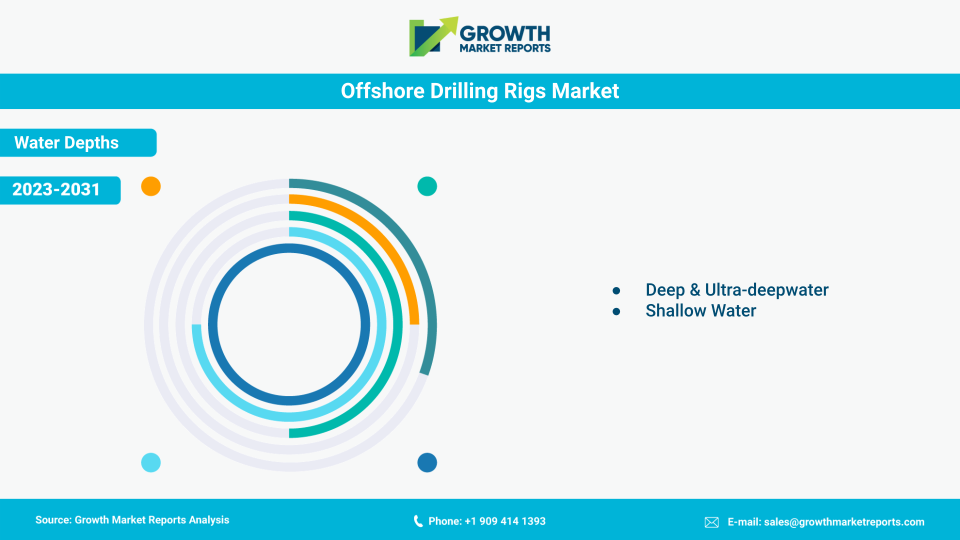
The offshore drilling rigs market is further segmented by water depth into shallow water, deepwater, and ultra-deepwater. Shallow water drilling remains a cornerstone of the market, accounting for a substantial share of global offshore activity. The relative ease of access, lower technical complexity, and favorable economics make shallow water projects attractive to both national oil companies and independent operators. Recent discoveries in regions such as the Persian Gulf, Southeast Asia, and the North Sea have reinforced the importance of shallow water reserves in meeting short- to medium-term energy demand. The segment is characterized by high rig utilization rates, competitive day rates, and a steady pipeline of new projects.

Semisubmersible Rigs have become a cornerstone of the offshore drilling sector, particularly in regions where challenging weather conditions and deepwater operations are prevalent. These rigs are engineered to provide a stable platform for drilling activities, thanks to their partially submerged structure that minimizes the impact of waves and wind. The adaptability of semisubmersible rigs makes them highly sought after for projects that require mobility and the ability to operate in diverse environments. As technological advancements continue to enhance their capabilities, semisubmersible rigs are expected to remain a vital asset for oil and gas companies seeking to tap into new offshore reserves.

Deepwater drilling, typically defined as operations in water depths between 1,000 and 5,000 feet, has gained significant momentum in recent years. Advances in drilling technology, subsea systems, and floating production platforms have enabled operators to access previously untapped reserves in challenging offshore environments. Deepwater projects offer the potential for large-scale discoveries and long-term production, attracting substantial investment from major oil companies and international consortia. Key regions driving deepwater activity include the U.S. Gulf of Mexico, offshore Brazil, and West Africa, where ongoing exploration campaigns and new field developments are expected to sustain demand for deepwater rigs.

Ultra-deepwater drilling, involving operations at depths greater than 5,000 feet, represents the frontier of offshore exploration and production. This segment is characterized by high capital intensity, technical complexity, and rigorous safety and environmental requirements. The pursuit of ultra-deepwater reserves is driven by the need to offset declining production from mature fields and secure long-term energy supplies. Technological innovations in drilling equipment, riser systems, and blowout preventers have made ultra-deepwater projects increasingly viable. The segment is witnessing heightened activity in regions such as the Santos and Campos basins offshore Brazil, the Gulf of Mexico, and offshore West Africa, where operators are targeting prolific pre-salt and sub-salt formations.

The water depth segment is a key determinant of rig selection, project economics, and operational strategy. Operators must balance the technical challenges and cost considerations associated with deepwater and ultra-deepwater drilling against the potential for higher returns and resource sustainability. The ongoing shift towards deeper offshore plays is expected to drive demand for high-specification rigs, advanced subsea systems, and integrated service offerings. Market participants are investing in research and development to enhance the reliability, safety, and efficiency of drilling operations across all water depth categories, positioning themselves to capitalize on emerging opportunities in the global offshore drilling rigs market.

Application Analysis

The offshore drilling rigs market is segmented by application into oil & gas exploration, production, and others. Oil and gas exploration remains the primary driver of demand for offshore drilling rigs, accounting for a significant portion of total market activity. The quest for new hydrocarbon reserves, coupled with the depletion of onshore and shallow water fields, has intensified exploration efforts in deepwater and ultra-deepwater regions. Operators are leveraging advanced seismic imaging, directional drilling, and real-time data analytics to identify prospective reservoirs and optimize well placement. The exploration segment is characterized by high risk, substantial capital investment, and the potential for transformative discoveries that can reshape regional and global energy markets.

Production activities constitute the second major application segment, encompassing the development, completion, and operation of offshore wells. The transition from exploration to production requires a seamless integration of drilling, completion, and production technologies to maximize recovery and ensure operational efficiency. Offshore production projects are typically long-term in nature, with field lifespans extending over several decades. The deployment of advanced drilling rigs, floating production platforms, and subsea infrastructure is critical to the success of these projects. The production segment is witnessing increased adoption of digital solutions, remote monitoring, and predictive maintenance to enhance asset performance and minimize operational downtime.

Other applications in the offshore drilling rigs market include well intervention, workover, and decommissioning activities. Well intervention and workover services are essential for maintaining and enhancing the productivity of existing wells, addressing issues such as declining reservoir pressure, equipment failures, and changing production profiles. Decommissioning, involving the safe and environmentally responsible removal of obsolete offshore infrastructure, is gaining prominence as a result of aging fields and stricter regulatory requirements. Market participants are developing specialized rig solutions and service offerings to address the unique challenges and opportunities presented by these applications.

The application segment is influenced by a range of factors, including oil price dynamics, regulatory policies, technological advancements, and environmental considerations. Operators are increasingly adopting an integrated approach to offshore project development, leveraging synergies across exploration, production, and support services to optimize resource utilization and project economics. The growing emphasis on sustainability and environmental stewardship is driving the adoption of best practices and innovative technologies to minimize the environmental footprint of offshore operations. The application landscape is expected to evolve in response to changing market dynamics, regulatory trends, and technological innovation.

End-User Analysis

The offshore drilling rigs market is segmented by end-user into national oil companies (NOCs), independent oil companies (IOCs), and others. National oil companies, which control a significant share of global hydrocarbon reserves, are major players in the offshore drilling sector. NOCs such as Saudi Aramco, Petrobras, and ADNOC are investing heavily in offshore exploration and production to meet domestic energy demand, support economic diversification, and enhance energy security. These companies often undertake large-scale, long-term projects with substantial capital investment and a focus on resource sustainability. The involvement of NOCs is particularly pronounced in regions such as the Middle East, Latin America, and Asia Pacific, where government-backed initiatives and favorable policies support offshore development.

Independent oil companies, including both major international oil companies (IOCs) and smaller independents, play a critical role in driving innovation and competitiveness in the offshore drilling rigs market. IOCs such as ExxonMobil, Shell, and BP have a global footprint and the technical expertise to undertake complex offshore projects in deepwater and ultra-deepwater environments. These companies are at the forefront of adopting advanced drilling technologies, digital solutions, and integrated project management approaches to maximize operational efficiency and project returns. Smaller independents, while operating on a more limited scale, often focus on niche opportunities and frontier regions, leveraging agility and specialized expertise to capitalize on emerging trends.

Other end-users in the offshore drilling rigs market include service companies, contractors, and joint ventures. Service companies provide a wide range of support services, including drilling, well intervention, maintenance, and decommissioning, enabling operators to focus on core exploration and production activities. Contractors and joint ventures play a vital role in executing large-scale offshore projects, pooling resources and expertise to manage technical complexity and project risk. The collaborative approach adopted by these stakeholders is essential to the successful delivery of offshore projects, particularly in challenging environments and frontier regions.

The end-user segment is characterized by diverse business models, investment strategies, and risk appetites. NOCs and IOCs are increasingly collaborating with service providers, technology partners, and local stakeholders to enhance project outcomes and navigate regulatory and environmental challenges. The evolving landscape of the offshore drilling rigs market is driving greater integration, innovation, and value creation across the end-user spectrum. Market participants are focusing on building long-term partnerships, investing in talent development, and adopting sustainable practices to maintain competitiveness and drive growth in a rapidly changing industry.

Opportunities & Threats

The offshore drilling rigs market presents numerous opportunities for growth and value creation. The ongoing transition towards deepwater and ultra-deepwater exploration is unlocking vast untapped reserves, offering significant potential for large-scale discoveries and long-term production. Technological advancements in rig design, automation, and digitalization are enabling operators to overcome technical challenges, enhance operational efficiency, and reduce costs. The adoption of integrated project management approaches, real-time data analytics, and predictive maintenance solutions is further optimizing drilling operations and minimizing non-productive time. Emerging markets in Asia Pacific, Latin America, and Africa offer attractive investment opportunities, supported by favorable government policies, regulatory reforms, and increasing energy demand. The growing emphasis on sustainability and environmental stewardship is driving the development of innovative technologies and best practices to minimize the environmental footprint of offshore operations.

Another major opportunity lies in the modernization and upgrading of aging offshore infrastructure. As a significant portion of the global offshore rig fleet approaches the end of its operational life, there is a growing need for retrofits, refurbishments, and the deployment of next-generation rigs. Market participants can capitalize on this trend by offering advanced rig solutions, digital integration, and value-added services that enhance asset performance, safety, and regulatory compliance. The decommissioning market, driven by stricter environmental regulations and the need for responsible asset retirement, presents additional opportunities for specialized service providers and technology innovators. The increasing focus on collaboration, partnerships, and knowledge sharing across the offshore drilling value chain is expected to drive innovation, efficiency, and sustainable growth in the years ahead.

Despite the positive outlook, the offshore drilling rigs market faces several threats and restrainers that could impact its growth trajectory. Volatility in crude oil prices remains a key challenge, affecting investment decisions, project economics, and rig utilization rates. Prolonged periods of low oil prices can lead to project delays, cancellations, and reduced capital expenditure, particularly for high-cost deepwater and ultra-deepwater projects. Stringent environmental regulations, geopolitical risks, and operational hazards associated with offshore drilling pose additional challenges for market participants. The increasing scrutiny of offshore operations by regulators, investors, and the public underscores the need for robust risk management, compliance, and sustainability practices. The market must also contend with supply chain disruptions, skilled labor shortages, and the ongoing transition towards renewable energy sources, which could affect long-term demand for offshore drilling rigs.

Regional Outlook

The regional distribution of the offshore drilling rigs market highlights the dominance of key offshore drilling hubs, each with distinct growth drivers and challenges. In 2024, North America holds a significant share of the market, valued at USD 10.1 billion, primarily driven by robust activity in the Gulf of Mexico. The region benefits from advanced technological capabilities, a mature regulatory environment, and a steady pipeline of new offshore projects. The United States, in particular, continues to lead in deepwater and ultra-deepwater exploration, supported by favorable policies and sustained investment from major oil companies. The regional market is expected to grow at a CAGR of 5.8% through 2033, with ongoing innovation and project development underpinning long-term growth prospects.

The Middle East & Africa region is another key market, with a current valuation of USD 8.5 billion in 2024. The region's growth is fueled by substantial investments in offshore exploration, particularly in the Persian Gulf, West Africa, and the Mediterranean. National oil companies in countries such as Saudi Arabia, the UAE, and Nigeria are actively pursuing offshore projects to diversify their energy portfolios and enhance resource security. The region is characterized by a mix of shallow and deepwater projects, with a growing emphasis on technological innovation and sustainability. The Middle East & Africa market is projected to expand at a CAGR of 6.5% over the forecast period, driven by new project sanctions, ongoing field developments, and increasing collaboration with international partners.

In the Asia Pacific region, the offshore drilling rigs market is valued at USD 7.6 billion in 2024, reflecting strong demand from emerging economies such as China, India, and Indonesia. The region's growth is supported by rising energy consumption, government-led exploration initiatives, and the development of new offshore fields in the South China Sea, the Bay of Bengal, and offshore Australia. Asia Pacific is witnessing increased investment in both shallow and deepwater projects, with a focus on enhancing energy security and reducing reliance on imported hydrocarbons. The region is expected to register a CAGR of 7.2% through 2033, outpacing the global average and offering significant opportunities for market participants. Europe and Latin America also contribute to the global market, with ongoing activity in the North Sea, offshore Brazil, and the Caribbean, further diversifying the regional landscape and supporting overall market growth.

Offshore Drilling Rigs Market Statistics

Competitor Outlook

The competitive landscape of the offshore drilling rigs market is characterized by the presence of several global and regional players, each vying for market share through technological innovation, fleet expansion, and strategic partnerships. Leading companies are investing heavily in research and development to enhance the operational efficiency, safety, and environmental performance of their rig fleets. The market is witnessing a trend towards consolidation, with mergers, acquisitions, and joint ventures enabling companies to achieve economies of scale, expand their geographic footprint, and strengthen their service offerings. Competitive differentiation is increasingly driven by the ability to deliver integrated solutions, leverage digital technologies, and adapt to evolving customer requirements and regulatory standards.

Market leaders are focusing on upgrading their existing fleets and deploying next-generation rigs capable of operating in harsh environments and at greater water depths. The adoption of advanced automation, real-time data analytics, and predictive maintenance solutions is enabling companies to optimize drilling operations, reduce downtime, and improve asset utilization. Strategic collaborations with technology providers, service companies, and local partners are playing a crucial role in enhancing project delivery and operational excellence. The ability to offer comprehensive, end-to-end solutions across the offshore drilling value chain is emerging as a key competitive advantage, enabling companies to capture new opportunities and drive sustainable growth.

The competitive landscape is also shaped by the increasing emphasis on sustainability, environmental stewardship, and corporate social responsibility. Market participants are adopting best practices in health, safety, and environmental management, investing in green technologies, and engaging with stakeholders to address community and regulatory concerns. The integration of digital solutions, such as remote monitoring, automated drilling, and advanced analytics, is enabling companies to enhance transparency, accountability, and operational resilience. The evolving regulatory landscape, coupled with growing investor and public scrutiny, is driving greater focus on compliance, risk management, and sustainable value creation.

Major companies operating in the offshore drilling rigs market include Transocean Ltd., Valaris plc, Noble Corporation, Seadrill Limited, Diamond Offshore Drilling, Inc., EnscoRowan plc, Saipem SpA, Stena Drilling Ltd., and Maersk Drilling. These companies are recognized for their extensive rig fleets, global presence, and technical expertise in deepwater and ultra-deepwater drilling. Transocean Ltd. is a market leader in ultra-deepwater and harsh environment drilling, with a focus on innovation and operational excellence. Valaris plc and Noble Corporation have established strong positions in both jackup and floating rig segments, leveraging their diverse fleets and integrated service offerings. Seadrill Limited and Diamond Offshore Drilling, Inc. are known for their advanced drilling technologies and commitment to safety and environmental performance.

Saipem SpA and Stena Drilling Ltd. are prominent players in the European market, with a track record of executing complex offshore projects in the North Sea, the Mediterranean, and West Africa. Maersk Drilling, with its focus on sustainable drilling solutions and digital innovation, has established itself as a leading provider of high-specification jackup and semi-submersible rigs. These companies are actively pursuing growth opportunities through fleet modernization, strategic partnerships, and geographic expansion. The competitive landscape is expected to remain dynamic, with ongoing investment in technology, talent, and sustainability driving long-term success in the global offshore drilling rigs market.

Key Players

  • Transocean Ltd.
  • Valaris plc
  • Noble Corporation plc
  • Seadrill Limited
  • Diamond Offshore Drilling, Inc.
  • Shelf Drilling, Ltd.
  • Borr Drilling Limited
  • COSL (China Oilfield Services Limited)
  • Stena Drilling Limited
  • Pacific Drilling S.A.
  • Maersk Drilling (now part of Noble Corporation)
  • Saipem S.p.A.
  • KCA Deutag
  • Vantage Drilling International
  • EnscoRowan (now Valaris plc)
  • Fred. Olsen Energy ASA (Dolphin Drilling)
  • Aban Offshore Limited
  • Sapura Energy Berhad
  • Jindal Drilling & Industries Ltd.
  • Odfjell Drilling Ltd.
Offshore Drilling Rigs Market Overview

Segments

The Offshore Drilling Rigs market has been segmented on the basis of

Rig Type

  • Jackup Rigs
  • Semi-Submersible Rigs
  • Drillships
  • Others

Water Depth

  • Shallow Water
  • Deepwater
  • Ultra-Deepwater

Application

  • Oil & Gas Exploration
  • Production
  • Others

End-User

  • National Oil Companies
  • Independent Oil Companies
  • Others

Competitive Landscape

Key players competing in the global offshore drilling rigs market are Seadrill Ltd; Samsung Heavy Industries Co. Ltd; Transocean Ltd.; Sembcorp Marine Ltd; and Keppel Corporation Limited. Companies are focusing on business strategies and collaborations with other industry players for undertaking new projects in emerging economies to improve their competitive position in the market.
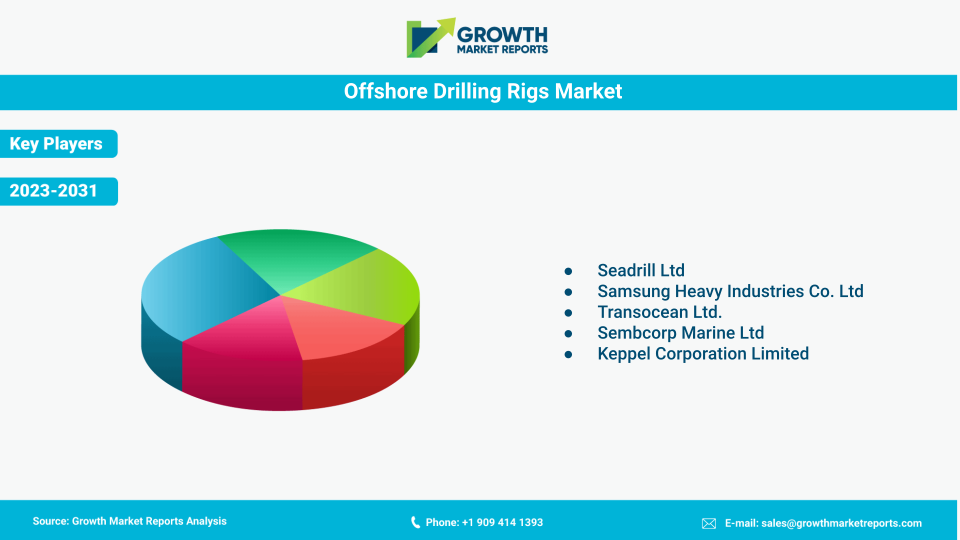

Global Offshore Drilling Rigs Market Key Players

Frequently Asked Questions

Major players include Transocean Ltd., Valaris plc, Noble Corporation, Seadrill Limited, Diamond Offshore Drilling, Stena Drilling Ltd., Maersk Drilling, Saipem SpA, and others.

Major challenges include crude oil price volatility, stringent environmental regulations, geopolitical risks, operational hazards, supply chain disruptions, and the transition towards renewable energy.

Innovations such as advanced rig design, automation, digitalization, real-time monitoring, predictive maintenance, and next-generation drillships are enhancing operational efficiency and safety.

Key end-users include national oil companies (NOCs), independent oil companies (IOCs), service companies, contractors, and joint ventures.

Offshore drilling rigs are primarily used for oil & gas exploration, production, well intervention, workover, and decommissioning activities.

The market is segmented into shallow water, deepwater (1,000–5,000 feet), and ultra-deepwater (greater than 5,000 feet) drilling operations.

The main types of offshore drilling rigs are jackup rigs, semi-submersible rigs, drillships, and other specialized rigs such as barge and platform rigs.

North America (especially the Gulf of Mexico), Middle East & Africa (notably Saudi Arabia, UAE, and Nigeria), and Asia Pacific (led by China, India, and Indonesia) are the dominant regions in the offshore drilling rigs market.

Key growth drivers include rising global energy demand, increased offshore exploration activities, technological advancements in drilling equipment, recovery in crude oil prices, and supportive government policies in major offshore regions.

As of 2024, the global offshore drilling rigs market is valued at USD 33.8 billion. It is projected to grow at a CAGR of 6.2% from 2025 to 2033, reaching approximately USD 57.7 billion by 2033.

Table Of Content

Chapter 1 Executive Summary
Chapter 2 Assumptions and Acronyms Used
Chapter 3 Research Methodology
Chapter 4 Offshore Drilling Rigs Market Overview
   4.1 Introduction
      4.1.1 Market Taxonomy
      4.1.2 Market Definition
      4.1.3 Macro-Economic Factors Impacting the Market Growth
   4.2 Offshore Drilling Rigs Market Dynamics
      4.2.1 Market Drivers
      4.2.2 Market Restraints
      4.2.3 Market Opportunity
   4.3 Offshore Drilling Rigs Market - Supply Chain Analysis
      4.3.1 List of Key Suppliers
      4.3.2 List of Key Distributors
      4.3.3 List of Key Consumers
   4.4 Key Forces Shaping the Offshore Drilling Rigs Market
      4.4.1 Bargaining Power of Suppliers
      4.4.2 Bargaining Power of Buyers
      4.4.3 Threat of Substitution
      4.4.4 Threat of New Entrants
      4.4.5 Competitive Rivalry
   4.5 Global Offshore Drilling Rigs Market Size & Forecast, 2023-2032
      4.5.1 Offshore Drilling Rigs Market Size and Y-o-Y Growth
      4.5.2 Offshore Drilling Rigs Market Absolute $ Opportunity

Chapter 5 Global Offshore Drilling Rigs Market Analysis and Forecast By Rig Type
   5.1 Introduction
      5.1.1 Key Market Trends & Growth Opportunities By Rig Type
      5.1.2 Basis Point Share (BPS) Analysis By Rig Type
      5.1.3 Absolute $ Opportunity Assessment By Rig Type
   5.2 Offshore Drilling Rigs Market Size Forecast By Rig Type
      5.2.1 Jackup Rigs
      5.2.2 Semi-Submersible Rigs
      5.2.3 Drillships
      5.2.4 Others
   5.3 Market Attractiveness Analysis By Rig Type

Chapter 6 Global Offshore Drilling Rigs Market Analysis and Forecast By Water Depth
   6.1 Introduction
      6.1.1 Key Market Trends & Growth Opportunities By Water Depth
      6.1.2 Basis Point Share (BPS) Analysis By Water Depth
      6.1.3 Absolute $ Opportunity Assessment By Water Depth
   6.2 Offshore Drilling Rigs Market Size Forecast By Water Depth
      6.2.1 Shallow Water
      6.2.2 Deepwater
      6.2.3 Ultra-Deepwater
   6.3 Market Attractiveness Analysis By Water Depth

Chapter 7 Global Offshore Drilling Rigs Market Analysis and Forecast By Application
   7.1 Introduction
      7.1.1 Key Market Trends & Growth Opportunities By Application
      7.1.2 Basis Point Share (BPS) Analysis By Application
      7.1.3 Absolute $ Opportunity Assessment By Application
   7.2 Offshore Drilling Rigs Market Size Forecast By Application
      7.2.1 Oil & Gas Exploration
      7.2.2 Production
      7.2.3 Others
   7.3 Market Attractiveness Analysis By Application

Chapter 8 Global Offshore Drilling Rigs Market Analysis and Forecast By End-User
   8.1 Introduction
      8.1.1 Key Market Trends & Growth Opportunities By End-User
      8.1.2 Basis Point Share (BPS) Analysis By End-User
      8.1.3 Absolute $ Opportunity Assessment By End-User
   8.2 Offshore Drilling Rigs Market Size Forecast By End-User
      8.2.1 National Oil Companies
      8.2.2 Independent Oil Companies
      8.2.3 Others
   8.3 Market Attractiveness Analysis By End-User

Chapter 9 Global Offshore Drilling Rigs Market Analysis and Forecast by Region
   9.1 Introduction
      9.1.1 Key Market Trends & Growth Opportunities By Region
      9.1.2 Basis Point Share (BPS) Analysis By Region
      9.1.3 Absolute $ Opportunity Assessment By Region
   9.2 Offshore Drilling Rigs Market Size Forecast By Region
      9.2.1 North America
      9.2.2 Europe
      9.2.3 Asia Pacific
      9.2.4 Latin America
      9.2.5 Middle East & Africa (MEA)
   9.3 Market Attractiveness Analysis By Region

Chapter 10 Coronavirus Disease (COVID-19) Impact 
   10.1 Introduction 
   10.2 Current & Future Impact Analysis 
   10.3 Economic Impact Analysis 
   10.4 Government Policies 
   10.5 Investment Scenario

Chapter 11 North America Offshore Drilling Rigs Analysis and Forecast
   11.1 Introduction
   11.2 North America Offshore Drilling Rigs Market Size Forecast by Country
      11.2.1 U.S.
      11.2.2 Canada
   11.3 Basis Point Share (BPS) Analysis by Country
   11.4 Absolute $ Opportunity Assessment by Country
   11.5 Market Attractiveness Analysis by Country
   11.6 North America Offshore Drilling Rigs Market Size Forecast By Rig Type
      11.6.1 Jackup Rigs
      11.6.2 Semi-Submersible Rigs
      11.6.3 Drillships
      11.6.4 Others
   11.7 Basis Point Share (BPS) Analysis By Rig Type 
   11.8 Absolute $ Opportunity Assessment By Rig Type 
   11.9 Market Attractiveness Analysis By Rig Type
   11.10 North America Offshore Drilling Rigs Market Size Forecast By Water Depth
      11.10.1 Shallow Water
      11.10.2 Deepwater
      11.10.3 Ultra-Deepwater
   11.11 Basis Point Share (BPS) Analysis By Water Depth 
   11.12 Absolute $ Opportunity Assessment By Water Depth 
   11.13 Market Attractiveness Analysis By Water Depth
   11.14 North America Offshore Drilling Rigs Market Size Forecast By Application
      11.14.1 Oil & Gas Exploration
      11.14.2 Production
      11.14.3 Others
   11.15 Basis Point Share (BPS) Analysis By Application 
   11.16 Absolute $ Opportunity Assessment By Application 
   11.17 Market Attractiveness Analysis By Application
   11.18 North America Offshore Drilling Rigs Market Size Forecast By End-User
      11.18.1 National Oil Companies
      11.18.2 Independent Oil Companies
      11.18.3 Others
   11.19 Basis Point Share (BPS) Analysis By End-User 
   11.20 Absolute $ Opportunity Assessment By End-User 
   11.21 Market Attractiveness Analysis By End-User

Chapter 12 Europe Offshore Drilling Rigs Analysis and Forecast
   12.1 Introduction
   12.2 Europe Offshore Drilling Rigs Market Size Forecast by Country
      12.2.1 Germany
      12.2.2 France
      12.2.3 Italy
      12.2.4 U.K.
      12.2.5 Spain
      12.2.6 Russia
      12.2.7 Rest of Europe
   12.3 Basis Point Share (BPS) Analysis by Country
   12.4 Absolute $ Opportunity Assessment by Country
   12.5 Market Attractiveness Analysis by Country
   12.6 Europe Offshore Drilling Rigs Market Size Forecast By Rig Type
      12.6.1 Jackup Rigs
      12.6.2 Semi-Submersible Rigs
      12.6.3 Drillships
      12.6.4 Others
   12.7 Basis Point Share (BPS) Analysis By Rig Type 
   12.8 Absolute $ Opportunity Assessment By Rig Type 
   12.9 Market Attractiveness Analysis By Rig Type
   12.10 Europe Offshore Drilling Rigs Market Size Forecast By Water Depth
      12.10.1 Shallow Water
      12.10.2 Deepwater
      12.10.3 Ultra-Deepwater
   12.11 Basis Point Share (BPS) Analysis By Water Depth 
   12.12 Absolute $ Opportunity Assessment By Water Depth 
   12.13 Market Attractiveness Analysis By Water Depth
   12.14 Europe Offshore Drilling Rigs Market Size Forecast By Application
      12.14.1 Oil & Gas Exploration
      12.14.2 Production
      12.14.3 Others
   12.15 Basis Point Share (BPS) Analysis By Application 
   12.16 Absolute $ Opportunity Assessment By Application 
   12.17 Market Attractiveness Analysis By Application
   12.18 Europe Offshore Drilling Rigs Market Size Forecast By End-User
      12.18.1 National Oil Companies
      12.18.2 Independent Oil Companies
      12.18.3 Others
   12.19 Basis Point Share (BPS) Analysis By End-User 
   12.20 Absolute $ Opportunity Assessment By End-User 
   12.21 Market Attractiveness Analysis By End-User

Chapter 13 Asia Pacific Offshore Drilling Rigs Analysis and Forecast
   13.1 Introduction
   13.2 Asia Pacific Offshore Drilling Rigs Market Size Forecast by Country
      13.2.1 China
      13.2.2 Japan
      13.2.3 South Korea
      13.2.4 India
      13.2.5 Australia
      13.2.6 South East Asia (SEA)
      13.2.7 Rest of Asia Pacific (APAC)
   13.3 Basis Point Share (BPS) Analysis by Country
   13.4 Absolute $ Opportunity Assessment by Country
   13.5 Market Attractiveness Analysis by Country
   13.6 Asia Pacific Offshore Drilling Rigs Market Size Forecast By Rig Type
      13.6.1 Jackup Rigs
      13.6.2 Semi-Submersible Rigs
      13.6.3 Drillships
      13.6.4 Others
   13.7 Basis Point Share (BPS) Analysis By Rig Type 
   13.8 Absolute $ Opportunity Assessment By Rig Type 
   13.9 Market Attractiveness Analysis By Rig Type
   13.10 Asia Pacific Offshore Drilling Rigs Market Size Forecast By Water Depth
      13.10.1 Shallow Water
      13.10.2 Deepwater
      13.10.3 Ultra-Deepwater
   13.11 Basis Point Share (BPS) Analysis By Water Depth 
   13.12 Absolute $ Opportunity Assessment By Water Depth 
   13.13 Market Attractiveness Analysis By Water Depth
   13.14 Asia Pacific Offshore Drilling Rigs Market Size Forecast By Application
      13.14.1 Oil & Gas Exploration
      13.14.2 Production
      13.14.3 Others
   13.15 Basis Point Share (BPS) Analysis By Application 
   13.16 Absolute $ Opportunity Assessment By Application 
   13.17 Market Attractiveness Analysis By Application
   13.18 Asia Pacific Offshore Drilling Rigs Market Size Forecast By End-User
      13.18.1 National Oil Companies
      13.18.2 Independent Oil Companies
      13.18.3 Others
   13.19 Basis Point Share (BPS) Analysis By End-User 
   13.20 Absolute $ Opportunity Assessment By End-User 
   13.21 Market Attractiveness Analysis By End-User

Chapter 14 Latin America Offshore Drilling Rigs Analysis and Forecast
   14.1 Introduction
   14.2 Latin America Offshore Drilling Rigs Market Size Forecast by Country
      14.2.1 Brazil
      14.2.2 Mexico
      14.2.3 Rest of Latin America (LATAM)
   14.3 Basis Point Share (BPS) Analysis by Country
   14.4 Absolute $ Opportunity Assessment by Country
   14.5 Market Attractiveness Analysis by Country
   14.6 Latin America Offshore Drilling Rigs Market Size Forecast By Rig Type
      14.6.1 Jackup Rigs
      14.6.2 Semi-Submersible Rigs
      14.6.3 Drillships
      14.6.4 Others
   14.7 Basis Point Share (BPS) Analysis By Rig Type 
   14.8 Absolute $ Opportunity Assessment By Rig Type 
   14.9 Market Attractiveness Analysis By Rig Type
   14.10 Latin America Offshore Drilling Rigs Market Size Forecast By Water Depth
      14.10.1 Shallow Water
      14.10.2 Deepwater
      14.10.3 Ultra-Deepwater
   14.11 Basis Point Share (BPS) Analysis By Water Depth 
   14.12 Absolute $ Opportunity Assessment By Water Depth 
   14.13 Market Attractiveness Analysis By Water Depth
   14.14 Latin America Offshore Drilling Rigs Market Size Forecast By Application
      14.14.1 Oil & Gas Exploration
      14.14.2 Production
      14.14.3 Others
   14.15 Basis Point Share (BPS) Analysis By Application 
   14.16 Absolute $ Opportunity Assessment By Application 
   14.17 Market Attractiveness Analysis By Application
   14.18 Latin America Offshore Drilling Rigs Market Size Forecast By End-User
      14.18.1 National Oil Companies
      14.18.2 Independent Oil Companies
      14.18.3 Others
   14.19 Basis Point Share (BPS) Analysis By End-User 
   14.20 Absolute $ Opportunity Assessment By End-User 
   14.21 Market Attractiveness Analysis By End-User

Chapter 15 Middle East & Africa (MEA) Offshore Drilling Rigs Analysis and Forecast
   15.1 Introduction
   15.2 Middle East & Africa (MEA) Offshore Drilling Rigs Market Size Forecast by Country
      15.2.1 Saudi Arabia
      15.2.2 South Africa
      15.2.3 UAE
      15.2.4 Rest of Middle East & Africa (MEA)
   15.3 Basis Point Share (BPS) Analysis by Country
   15.4 Absolute $ Opportunity Assessment by Country
   15.5 Market Attractiveness Analysis by Country
   15.6 Middle East & Africa (MEA) Offshore Drilling Rigs Market Size Forecast By Rig Type
      15.6.1 Jackup Rigs
      15.6.2 Semi-Submersible Rigs
      15.6.3 Drillships
      15.6.4 Others
   15.7 Basis Point Share (BPS) Analysis By Rig Type 
   15.8 Absolute $ Opportunity Assessment By Rig Type 
   15.9 Market Attractiveness Analysis By Rig Type
   15.10 Middle East & Africa (MEA) Offshore Drilling Rigs Market Size Forecast By Water Depth
      15.10.1 Shallow Water
      15.10.2 Deepwater
      15.10.3 Ultra-Deepwater
   15.11 Basis Point Share (BPS) Analysis By Water Depth 
   15.12 Absolute $ Opportunity Assessment By Water Depth 
   15.13 Market Attractiveness Analysis By Water Depth
   15.14 Middle East & Africa (MEA) Offshore Drilling Rigs Market Size Forecast By Application
      15.14.1 Oil & Gas Exploration
      15.14.2 Production
      15.14.3 Others
   15.15 Basis Point Share (BPS) Analysis By Application 
   15.16 Absolute $ Opportunity Assessment By Application 
   15.17 Market Attractiveness Analysis By Application
   15.18 Middle East & Africa (MEA) Offshore Drilling Rigs Market Size Forecast By End-User
      15.18.1 National Oil Companies
      15.18.2 Independent Oil Companies
      15.18.3 Others
   15.19 Basis Point Share (BPS) Analysis By End-User 
   15.20 Absolute $ Opportunity Assessment By End-User 
   15.21 Market Attractiveness Analysis By End-User

Chapter 16 Competition Landscape 
   16.1 Offshore Drilling Rigs Market: Competitive Dashboard
   16.2 Global Offshore Drilling Rigs Market: Market Share Analysis, 2023
   16.3 Company Profiles (Details – Overview, Financials, Developments, Strategy) 
      16.3.1 Transocean Ltd.
Valaris plc
Noble Corporation plc
Seadrill Limited
Diamond Offshore Drilling, Inc.
Shelf Drilling, Ltd.
Borr Drilling Limited
COSL (China Oilfield Services Limited)
Stena Drilling Limited
Pacific Drilling S.A.
Maersk Drilling (now part of Noble Corporation)
Saipem S.p.A.
KCA Deutag
Vantage Drilling International
EnscoRowan (now Valaris plc)
Fred. Olsen Energy ASA (Dolphin Drilling)
Aban Offshore Limited
Sapura Energy Berhad
Jindal Drilling & Industries Ltd.
Odfjell Drilling Ltd.

Methodology

Our Clients

Nestle SA
Dassault Aviation
Honda Motor Co. Ltd.
Siemens Healthcare
Deloitte
FedEx Logistics
General Mills
sinopec