Stroke Diagnostics Market Research Report 2033

Stroke Diagnostics Market Research Report 2033

Segments - by Product Type (Imaging Systems, Blood Biomarkers, Electroencephalogram, Others), by Application (Ischemic Stroke, Hemorrhagic Stroke, Transient Ischemic Attack), by End User (Hospitals, Diagnostic Centers, Ambulatory Surgical Centers, Others)

https://growthmarketreports.com/raksha
Author : Raksha Sharma
https://growthmarketreports.com/Vaibhav
Fact-checked by : V. Chandola
https://growthmarketreports.com/Shruti
Editor : Shruti Bhat

Upcoming | Report ID :HC-2052 | 4.0 Rating | 29 Reviews | 286 Pages | Format : Docx PDF

Report Description


Stroke Diagnostics Market Outlook

According to our latest research, the global stroke diagnostics market size reached USD 5.8 billion in 2024, reflecting robust demand for advanced diagnostic solutions across healthcare settings. With a compound annual growth rate (CAGR) of 7.2% projected from 2025 to 2033, the market is forecasted to attain a value of USD 10.9 billion by 2033. This growth is primarily driven by the increasing incidence of stroke worldwide, rising awareness about early diagnosis, and the integration of cutting-edge imaging technologies in clinical practice. As per our latest research, advancements in non-invasive diagnostic modalities and the growing emphasis on precision medicine are further accelerating the adoption of stroke diagnostics globally.

One of the most significant growth factors propelling the stroke diagnostics market is the rising global burden of stroke, which remains a leading cause of mortality and long-term disability. The aging population, coupled with lifestyle changes such as increased prevalence of hypertension, diabetes, and obesity, has contributed to a higher incidence of stroke events. In addition, the growing awareness among the general population and healthcare professionals about the importance of early diagnosis and intervention has led to increased utilization of diagnostic tools. Governments and non-governmental organizations are also implementing public health initiatives to promote stroke awareness, which is positively impacting the adoption of diagnostic solutions in both developed and emerging markets. Furthermore, the integration of telemedicine and mobile health platforms has enabled quicker access to diagnostic services, particularly in remote and underserved regions, thereby expanding the overall market reach.

Technological advancements in diagnostic modalities constitute another pivotal growth driver for the stroke diagnostics market. The introduction of high-resolution imaging systems, such as computed tomography (CT), magnetic resonance imaging (MRI), and advanced ultrasound techniques, has significantly enhanced the accuracy and speed of stroke diagnosis. These imaging systems facilitate the differentiation between ischemic and hemorrhagic strokes, enabling clinicians to make timely and appropriate treatment decisions. Moreover, the development of blood biomarkers and point-of-care testing devices has revolutionized the diagnostic landscape by providing rapid and minimally invasive options for stroke detection. The convergence of artificial intelligence (AI) and machine learning with imaging platforms is further streamlining the diagnostic workflow, reducing interpretation time, and improving diagnostic accuracy, thus fostering market growth.

The increasing investment in healthcare infrastructure, especially in emerging economies, is another critical factor boosting the stroke diagnostics market. Governments and private sector players are allocating substantial resources to upgrade healthcare facilities, procure advanced diagnostic equipment, and train medical personnel. This trend is particularly prominent in Asia Pacific and Latin America, where rising healthcare expenditures and policy reforms are facilitating the adoption of state-of-the-art diagnostic technologies. Additionally, favorable reimbursement policies and the expansion of health insurance coverage are making advanced stroke diagnostics more accessible to a broader patient population. These developments, coupled with ongoing research and development activities aimed at identifying novel diagnostic biomarkers, are expected to create lucrative opportunities for market players in the coming years.

From a regional perspective, North America continues to dominate the stroke diagnostics market, accounting for the largest share in 2024, driven by the presence of well-established healthcare infrastructure, high adoption of advanced technologies, and robust research and development activities. Europe follows closely, supported by increasing government initiatives and a strong focus on early disease detection. Meanwhile, the Asia Pacific region is witnessing the fastest growth, attributed to its large patient pool, improving healthcare facilities, and rising investments in diagnostic technologies. Latin America and the Middle East & Africa are also emerging as promising markets, benefiting from ongoing healthcare reforms and increasing awareness about stroke management. The global landscape is thus characterized by both mature and emerging markets, each contributing uniquely to the overall growth trajectory of the stroke diagnostics sector.

Global Stroke Diagnostics Industry Outlook

Product Type Analysis

The stroke diagnostics market is segmented by product type into imaging systems, blood biomarkers, electroencephalogram (EEG), and others. Among these, imaging systems continue to hold the largest market share, owing to their pivotal role in the immediate assessment and differentiation of stroke subtypes. Technologies such as CT and MRI have become the gold standard for initial stroke evaluation, offering detailed anatomical and functional information that guides clinical decision-making. The growing adoption of advanced imaging modalities, such as diffusion-weighted MRI and perfusion CT, is further enhancing diagnostic accuracy and reducing the time to treatment. Additionally, the integration of AI-driven software solutions is streamlining image interpretation, enabling faster and more precise diagnoses, which is crucial for improving patient outcomes.

Blood biomarkers represent a rapidly evolving segment within the stroke diagnostics market, driven by the need for non-invasive and rapid diagnostic alternatives. Recent advancements in proteomics and genomics have led to the identification of several promising biomarkers that can aid in the early detection of ischemic and hemorrhagic strokes. Point-of-care testing devices that utilize these biomarkers are gaining traction, particularly in emergency and pre-hospital settings where time is of the essence. The ability to quickly differentiate between stroke subtypes using blood samples can significantly expedite treatment decisions, especially in resource-limited environments. Ongoing research aimed at validating new biomarker panels is expected to further expand this segment and enhance its clinical utility.

Electroencephalogram (EEG) technology, though traditionally associated with neurological disorders such as epilepsy, is increasingly being explored for its potential in stroke diagnostics. EEG provides valuable insights into cerebral electrical activity and can help detect acute ischemic changes, seizures, and other complications associated with stroke. Its portability and real-time monitoring capabilities make EEG a valuable adjunct to imaging and laboratory tests, particularly in intensive care and rehabilitation settings. Recent innovations in wearable EEG devices and cloud-based data analytics are making this technology more accessible and user-friendly, thereby expanding its application in the stroke diagnostics arena.

The "others" category in the stroke diagnostics market includes emerging technologies such as transcranial Doppler ultrasound, near-infrared spectroscopy, and optical coherence tomography. These modalities offer unique advantages in specific clinical contexts, such as bedside monitoring of cerebral blood flow or assessment of microvascular changes. While their adoption is currently limited compared to mainstream imaging and biomarker-based diagnostics, ongoing technological advancements and clinical validation studies are expected to drive their integration into routine stroke care. The diversification of diagnostic tools within this segment reflects the dynamic nature of the market and the ongoing quest for more accurate, rapid, and cost-effective solutions.

Report Scope

Attributes Details
Report Title Stroke Diagnostics Market Research Report 2033
By Product Type Imaging Systems, Blood Biomarkers, Electroencephalogram, Others
By Application Ischemic Stroke, Hemorrhagic Stroke, Transient Ischemic Attack
By End User Hospitals, Diagnostic Centers, Ambulatory Surgical Centers, Others
Regions Covered North America, Europe, APAC, Latin America, MEA
Base Year 2024
Historic Data 2018-2023
Forecast Period 2025-2033
Number of Pages 286
Number of Tables & Figures 314
Customization Available Yes, the report can be customized as per your need.

Application Analysis

Within the stroke diagnostics market, applications are categorized into ischemic stroke, hemorrhagic stroke, and transient ischemic attack (TIA). Ischemic stroke, which accounts for the majority of stroke cases globally, represents the largest application segment. Early and accurate diagnosis of ischemic stroke is critical for initiating timely interventions such as thrombolysis or mechanical thrombectomy. Advanced imaging techniques, including CT angiography and perfusion imaging, are extensively used to assess the extent of cerebral ischemia and identify candidates for acute interventions. The rising incidence of ischemic stroke, coupled with increasing awareness about the benefits of rapid diagnosis, is fueling demand for innovative diagnostic solutions in this segment.

Hemorrhagic stroke, while less common than ischemic stroke, poses significant diagnostic challenges due to its sudden onset and high mortality rate. Accurate differentiation between hemorrhagic and ischemic strokes is essential, as treatment strategies vary considerably. Imaging modalities such as non-contrast CT and MRI are indispensable tools for detecting intracerebral hemorrhage and assessing the location, size, and cause of bleeding. Recent advancements in imaging technology, including susceptibility-weighted imaging and 3D reconstruction, are enhancing the sensitivity and specificity of hemorrhagic stroke diagnosis. The growing emphasis on precision medicine and individualized treatment approaches is further driving the adoption of comprehensive diagnostic protocols for hemorrhagic stroke.

Transient ischemic attack (TIA), often referred to as a "mini-stroke," is another critical application area within the stroke diagnostics market. Although symptoms of TIA typically resolve within minutes to hours, it serves as an important warning sign for impending stroke. Early diagnosis and risk stratification are vital for preventing subsequent cerebrovascular events. Diagnostic approaches for TIA include neuroimaging, vascular imaging, and biomarker analysis, aimed at identifying underlying vascular pathology and guiding secondary prevention strategies. The increasing recognition of TIA as a medical emergency, coupled with advancements in rapid diagnostic testing, is contributing to the growth of this segment.

The integration of multimodal diagnostic approaches is becoming increasingly prevalent across all application segments within the stroke diagnostics market. Combining imaging, laboratory, and electrophysiological data enables a more comprehensive assessment of stroke etiology, severity, and prognosis. This holistic approach not only improves diagnostic accuracy but also facilitates personalized treatment planning and long-term management. As healthcare systems continue to prioritize value-based care and patient-centered outcomes, the demand for integrated diagnostic solutions is expected to rise, further propelling market growth across ischemic stroke, hemorrhagic stroke, and TIA applications.

End User Analysis

The stroke diagnostics market is segmented by end user into hospitals, diagnostic centers, ambulatory surgical centers, and others. Hospitals represent the largest end-user segment, accounting for a significant share of the market in 2024. This dominance is attributed to the availability of comprehensive diagnostic infrastructure, skilled healthcare professionals, and the ability to manage acute stroke cases around the clock. Hospitals are often equipped with advanced imaging systems, laboratory facilities, and multidisciplinary stroke teams, enabling them to provide timely and accurate diagnosis, which is critical for improving patient outcomes. Additionally, the increasing establishment of dedicated stroke units within hospitals is further enhancing their capacity to deliver specialized diagnostic and therapeutic services.

Diagnostic centers are emerging as a vital component of the stroke diagnostics market, particularly in urban and suburban areas where access to hospital-based care may be limited. These centers offer a range of imaging and laboratory services, often with shorter wait times and lower costs compared to hospitals. The proliferation of standalone diagnostic centers is being driven by the growing demand for outpatient diagnostic services, advancements in portable imaging technologies, and the increasing emphasis on early detection and prevention. Many diagnostic centers are forming partnerships with hospitals and telemedicine providers to expand their service offerings and reach a broader patient population.

Ambulatory surgical centers (ASCs) are also gaining traction as end users in the stroke diagnostics market, especially in regions with well-developed healthcare infrastructure. ASCs provide a convenient and cost-effective setting for diagnostic procedures, particularly for patients who do not require hospitalization. The adoption of minimally invasive diagnostic techniques, such as point-of-care biomarker testing and portable imaging, is facilitating the integration of stroke diagnostics into ambulatory care pathways. This trend is expected to continue as healthcare systems increasingly shift toward outpatient care models to reduce costs and improve patient satisfaction.

The "others" category encompasses a diverse range of end users, including primary care clinics, rehabilitation centers, and research institutions. These settings play a crucial role in the continuum of stroke care, particularly in the areas of early detection, secondary prevention, and post-acute management. Primary care providers are often the first point of contact for patients experiencing stroke symptoms, highlighting the importance of accessible and user-friendly diagnostic tools. Rehabilitation centers utilize diagnostic modalities to monitor recovery and guide therapy, while research institutions are at the forefront of developing and validating new diagnostic technologies. The growing emphasis on integrated care and multidisciplinary collaboration is expected to drive further adoption of stroke diagnostics across these diverse end-user segments.

Opportunities & Threats

The stroke diagnostics market presents a multitude of opportunities for growth and innovation, particularly in the realm of technological advancement. The ongoing development of novel imaging modalities, artificial intelligence-powered diagnostic algorithms, and next-generation biomarker assays is poised to revolutionize stroke diagnosis. Companies that invest in research and development, strategic collaborations, and product differentiation are well-positioned to capitalize on these emerging trends. Additionally, the expansion of telemedicine and mobile health platforms is creating new avenues for remote diagnosis and real-time consultation, particularly in underserved regions. The increasing emphasis on personalized medicine and risk stratification is also driving demand for integrated diagnostic solutions that combine imaging, laboratory, and clinical data.

Another significant opportunity lies in the expansion of stroke diagnostics in emerging markets, where rising healthcare expenditures, improving infrastructure, and growing awareness are fueling demand for advanced diagnostic solutions. Governments and non-governmental organizations are implementing public health initiatives to promote stroke awareness and early detection, creating a favorable environment for market growth. Furthermore, the adoption of value-based care models and the integration of diagnostics into comprehensive stroke management pathways are expected to drive long-term growth. Market players that focus on affordability, accessibility, and scalability will be well-positioned to tap into the vast potential of these emerging markets.

Despite the numerous opportunities, the stroke diagnostics market faces several restraining factors, including high costs associated with advanced diagnostic equipment and procedures. The initial capital investment required for imaging systems, laboratory analyzers, and supporting infrastructure can be prohibitive, particularly for smaller healthcare facilities and those in resource-limited settings. Additionally, reimbursement challenges, regulatory hurdles, and a shortage of skilled personnel may impede the adoption of new technologies. Market players must navigate these challenges by developing cost-effective solutions, advocating for favorable reimbursement policies, and investing in training and education to ensure the widespread adoption of stroke diagnostics.

Regional Outlook

North America remains the dominant region in the stroke diagnostics market, accounting for approximately USD 2.1 billion in market value in 2024. This leadership position is supported by a well-established healthcare infrastructure, high prevalence of stroke risk factors, and the widespread adoption of cutting-edge diagnostic technologies. The presence of leading medical device manufacturers, robust research and development activities, and favorable reimbursement policies further contribute to the region's strong market performance. The United States, in particular, is at the forefront of innovation, with numerous clinical trials and pilot programs focused on enhancing stroke diagnosis and management.

Europe holds the second-largest share of the stroke diagnostics market, with a market value of approximately USD 1.6 billion in 2024. The region benefits from a strong emphasis on early disease detection, comprehensive stroke care networks, and supportive government initiatives. Countries such as Germany, the United Kingdom, and France are leading adopters of advanced diagnostic solutions, driven by high healthcare standards and significant investments in medical technology. The European market is characterized by a growing focus on value-based care, multidisciplinary collaboration, and the integration of digital health platforms to improve patient outcomes.

The Asia Pacific region is witnessing the fastest growth in the stroke diagnostics market, with a projected CAGR of 9.1% from 2025 to 2033. The market size in this region reached approximately USD 1.2 billion in 2024, and is expected to expand rapidly due to a large and aging population, increasing incidence of stroke, and rising healthcare expenditures. Countries such as China, India, and Japan are investing heavily in healthcare infrastructure, diagnostic equipment, and workforce training. The growing adoption of telemedicine and mobile health technologies is also facilitating access to stroke diagnostics in rural and remote areas. Latin America and the Middle East & Africa, while currently accounting for smaller market shares, are expected to experience steady growth as healthcare systems continue to evolve and awareness about stroke diagnosis increases.

Stroke Diagnostics Market Statistics

Competitor Outlook

The stroke diagnostics market is characterized by intense competition, with a diverse mix of global medical device giants, specialized diagnostic companies, and innovative start-ups vying for market share. The competitive landscape is shaped by continuous technological innovation, strategic partnerships, and a strong focus on research and development. Companies compete on the basis of product performance, reliability, ease of use, and integration with digital health platforms. The increasing demand for rapid, accurate, and cost-effective diagnostic solutions is driving companies to invest in artificial intelligence, machine learning, and cloud-based analytics to enhance their offerings. Mergers and acquisitions are also prevalent, as larger players seek to expand their product portfolios and geographic reach by acquiring innovative technologies and companies.

Key players in the stroke diagnostics market are actively engaged in the development of next-generation imaging systems, biomarker assays, and point-of-care testing devices. These companies are leveraging their extensive research capabilities, global distribution networks, and strong brand recognition to maintain a competitive edge. Strategic collaborations with academic institutions, healthcare providers, and technology firms are enabling the co-development of integrated diagnostic solutions that address unmet clinical needs. The focus on regulatory compliance, quality assurance, and customer support is further differentiating leading players in this dynamic market.

The competitive landscape is also influenced by the entry of new players, particularly in the areas of artificial intelligence and digital health. These companies are introducing disruptive technologies that challenge traditional diagnostic paradigms and offer novel approaches to stroke detection and management. The rapid pace of innovation is resulting in shorter product life cycles, increased competition, and greater pressure on established players to continuously upgrade their offerings. Intellectual property protection, data security, and interoperability are emerging as critical factors in sustaining long-term competitiveness.

Major companies operating in the stroke diagnostics market include Siemens Healthineers, GE Healthcare, Philips Healthcare, Canon Medical Systems, Hitachi Medical Systems, Medtronic, Abbott Laboratories, Roche Diagnostics, Nihon Kohden Corporation, and Mindray Medical International. Siemens Healthineers is renowned for its advanced imaging systems and AI-powered diagnostic solutions, while GE Healthcare offers a comprehensive portfolio of CT, MRI, and ultrasound equipment. Philips Healthcare is a leader in digital health integration and patient-centric diagnostic platforms. Canon Medical Systems and Hitachi Medical Systems are recognized for their innovations in imaging technology and global reach. Medtronic and Abbott Laboratories are prominent in the development of biomarker assays and point-of-care testing devices, while Roche Diagnostics is a key player in laboratory diagnostics. Nihon Kohden and Mindray Medical International are making significant strides in the EEG and patient monitoring segments. Collectively, these companies are shaping the future of stroke diagnostics through continuous innovation, strategic investments, and a commitment to improving patient outcomes worldwide.

Key Players

  • GE Healthcare
  • Siemens Healthineers
  • Philips Healthcare
  • Canon Medical Systems Corporation
  • Hitachi Medical Systems
  • Medtronic plc
  • Stryker Corporation
  • F. Hoffmann-La Roche Ltd
  • Genentech, Inc.
  • Samsung Medison Co., Ltd.
  • Toshiba Medical Systems Corporation
  • Nihon Kohden Corporation
  • BioTelemetry, Inc.
  • iSchemaView, Inc.
  • Penumbra, Inc.
  • Bayer AG
  • Boston Scientific Corporation
  • Abbott Laboratories
  • Mayo Clinic
  • Koninklijke Philips N.V.
Stroke Diagnostics Market Overview

Segments

The Stroke Diagnostics market has been segmented on the basis of

Product Type

  • Imaging Systems
  • Blood Biomarkers
  • Electroencephalogram
  • Others

Application

  • Ischemic Stroke
  • Hemorrhagic Stroke
  • Transient Ischemic Attack

End User

  • Hospitals
  • Diagnostic Centers
  • Ambulatory Surgical Centers
  • Others

Competitive Landscape

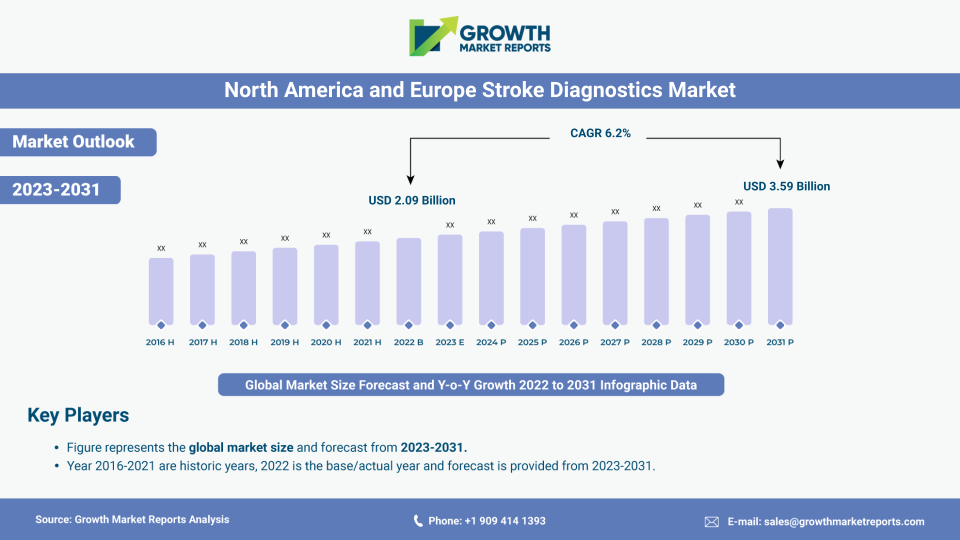
Key players competing in the North America and Europe stroke diagnostics market are Siemens Healthineers; Hitachi Medical Systems; Cordis Corporation; Boston Scientific Corporation; Neusoft Medical Systems Corporation Ltd.; GE Healthcare; Philips Healthcare; and Toshiba Medical Systems Corporation.

Some of companies are focusing in strategic development initiatives such as regional expansions, mergers, and acquisitions. For instance, Medcom GmbH announced in March 2016 that it entered into a collaboration with Hitachi Medical Systems in Europe with a view to focus on new product developments.
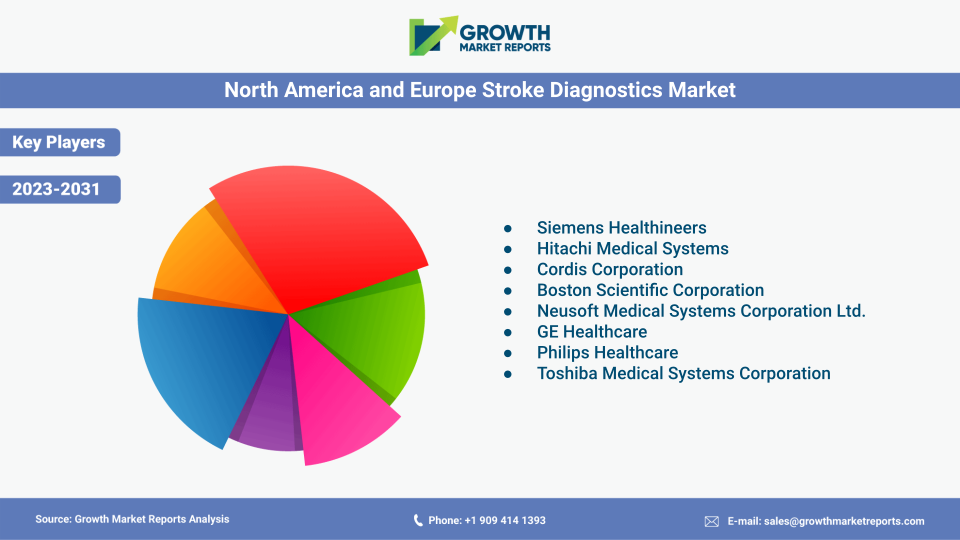

North America and Europe Stroke Diagnostics Market Key Players

Frequently Asked Questions

Key challenges include high costs of advanced diagnostic equipment, reimbursement and regulatory hurdles, and a shortage of skilled personnel, especially in resource-limited settings.

Hospitals are the largest end users, followed by diagnostic centers, ambulatory surgical centers, and others such as primary care clinics, rehabilitation centers, and research institutions.

Stroke diagnostics are primarily used for ischemic stroke, hemorrhagic stroke, and transient ischemic attack (TIA), with ischemic stroke representing the largest application segment.

Major companies include Siemens Healthineers, GE Healthcare, Philips Healthcare, Canon Medical Systems, Hitachi Medical Systems, Medtronic, Abbott Laboratories, Roche Diagnostics, Nihon Kohden Corporation, and Mindray Medical International.

North America holds the largest market share, followed by Europe. The Asia Pacific region is experiencing the fastest growth due to rising healthcare investments and a large patient pool.

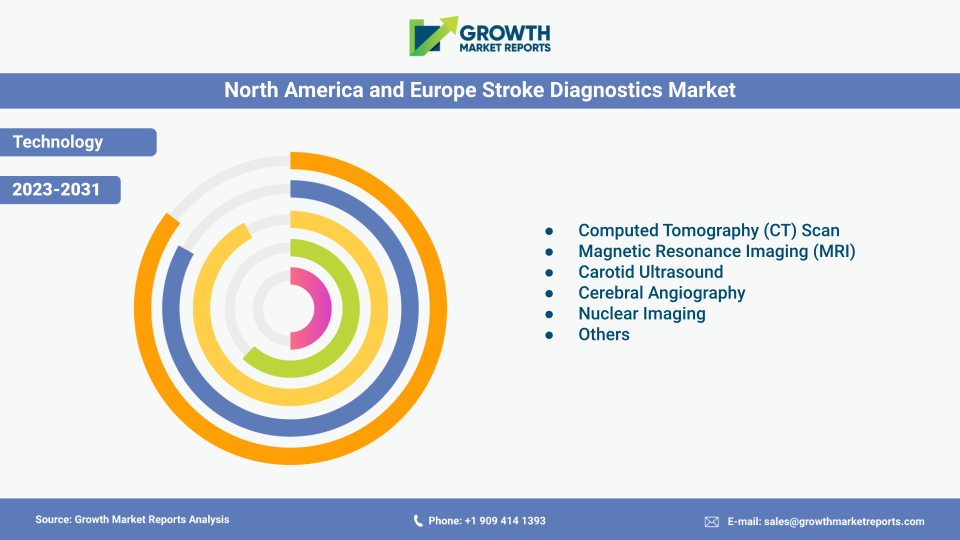
The market is segmented by product type into imaging systems, blood biomarkers, electroencephalogram (EEG), and other emerging technologies like transcranial Doppler ultrasound and near-infrared spectroscopy.

Imaging systems such as computed tomography (CT) and magnetic resonance imaging (MRI) are the most widely used technologies, along with advanced ultrasound, blood biomarkers, and electroencephalogram (EEG) devices.

Key growth drivers include the rising global incidence of stroke, increasing awareness about early diagnosis, technological advancements in imaging and biomarker testing, and the integration of telemedicine and AI in diagnostics.

The stroke diagnostics market is expected to grow at a compound annual growth rate (CAGR) of 7.2% from 2025 to 2033, reaching an estimated value of USD 10.9 billion by 2033.

As of 2024, the global stroke diagnostics market size reached USD 5.8 billion, reflecting strong demand for advanced diagnostic solutions worldwide.

Table Of Content

Chapter 1 Executive Summary
Chapter 2 Assumptions and Acronyms Used
Chapter 3 Research Methodology
Chapter 4 Stroke Diagnostics Market Overview
   4.1 Introduction
      4.1.1 Market Taxonomy
      4.1.2 Market Definition
      4.1.3 Macro-Economic Factors Impacting the Market Growth
   4.2 Stroke Diagnostics Market Dynamics
      4.2.1 Market Drivers
      4.2.2 Market Restraints
      4.2.3 Market Opportunity
   4.3 Stroke Diagnostics Market - Supply Chain Analysis
      4.3.1 List of Key Suppliers
      4.3.2 List of Key Distributors
      4.3.3 List of Key Consumers
   4.4 Key Forces Shaping the Stroke Diagnostics Market
      4.4.1 Bargaining Power of Suppliers
      4.4.2 Bargaining Power of Buyers
      4.4.3 Threat of Substitution
      4.4.4 Threat of New Entrants
      4.4.5 Competitive Rivalry
   4.5 Global Stroke Diagnostics Market Size & Forecast, 2023-2032
      4.5.1 Stroke Diagnostics Market Size and Y-o-Y Growth
      4.5.2 Stroke Diagnostics Market Absolute $ Opportunity

Chapter 5 Global Stroke Diagnostics Market Analysis and Forecast By Product Type
   5.1 Introduction
      5.1.1 Key Market Trends & Growth Opportunities By Product Type
      5.1.2 Basis Point Share (BPS) Analysis By Product Type
      5.1.3 Absolute $ Opportunity Assessment By Product Type
   5.2 Stroke Diagnostics Market Size Forecast By Product Type
      5.2.1 Imaging Systems
      5.2.2 Blood Biomarkers
      5.2.3 Electroencephalogram
      5.2.4 Others
   5.3 Market Attractiveness Analysis By Product Type

Chapter 6 Global Stroke Diagnostics Market Analysis and Forecast By Application
   6.1 Introduction
      6.1.1 Key Market Trends & Growth Opportunities By Application
      6.1.2 Basis Point Share (BPS) Analysis By Application
      6.1.3 Absolute $ Opportunity Assessment By Application
   6.2 Stroke Diagnostics Market Size Forecast By Application
      6.2.1 Ischemic Stroke
      6.2.2 Hemorrhagic Stroke
      6.2.3 Transient Ischemic Attack
   6.3 Market Attractiveness Analysis By Application

Chapter 7 Global Stroke Diagnostics Market Analysis and Forecast By End User
   7.1 Introduction
      7.1.1 Key Market Trends & Growth Opportunities By End User
      7.1.2 Basis Point Share (BPS) Analysis By End User
      7.1.3 Absolute $ Opportunity Assessment By End User
   7.2 Stroke Diagnostics Market Size Forecast By End User
      7.2.1 Hospitals
      7.2.2 Diagnostic Centers
      7.2.3 Ambulatory Surgical Centers
      7.2.4 Others
   7.3 Market Attractiveness Analysis By End User

Chapter 8 Global Stroke Diagnostics Market Analysis and Forecast by Region
   8.1 Introduction
      8.1.1 Key Market Trends & Growth Opportunities By Region
      8.1.2 Basis Point Share (BPS) Analysis By Region
      8.1.3 Absolute $ Opportunity Assessment By Region
   8.2 Stroke Diagnostics Market Size Forecast By Region
      8.2.1 North America
      8.2.2 Europe
      8.2.3 Asia Pacific
      8.2.4 Latin America
      8.2.5 Middle East & Africa (MEA)
   8.3 Market Attractiveness Analysis By Region

Chapter 9 Coronavirus Disease (COVID-19) Impact 
   9.1 Introduction 
   9.2 Current & Future Impact Analysis 
   9.3 Economic Impact Analysis 
   9.4 Government Policies 
   9.5 Investment Scenario

Chapter 10 North America Stroke Diagnostics Analysis and Forecast
   10.1 Introduction
   10.2 North America Stroke Diagnostics Market Size Forecast by Country
      10.2.1 U.S.
      10.2.2 Canada
   10.3 Basis Point Share (BPS) Analysis by Country
   10.4 Absolute $ Opportunity Assessment by Country
   10.5 Market Attractiveness Analysis by Country
   10.6 North America Stroke Diagnostics Market Size Forecast By Product Type
      10.6.1 Imaging Systems
      10.6.2 Blood Biomarkers
      10.6.3 Electroencephalogram
      10.6.4 Others
   10.7 Basis Point Share (BPS) Analysis By Product Type 
   10.8 Absolute $ Opportunity Assessment By Product Type 
   10.9 Market Attractiveness Analysis By Product Type
   10.10 North America Stroke Diagnostics Market Size Forecast By Application
      10.10.1 Ischemic Stroke
      10.10.2 Hemorrhagic Stroke
      10.10.3 Transient Ischemic Attack
   10.11 Basis Point Share (BPS) Analysis By Application 
   10.12 Absolute $ Opportunity Assessment By Application 
   10.13 Market Attractiveness Analysis By Application
   10.14 North America Stroke Diagnostics Market Size Forecast By End User
      10.14.1 Hospitals
      10.14.2 Diagnostic Centers
      10.14.3 Ambulatory Surgical Centers
      10.14.4 Others
   10.15 Basis Point Share (BPS) Analysis By End User 
   10.16 Absolute $ Opportunity Assessment By End User 
   10.17 Market Attractiveness Analysis By End User

Chapter 11 Europe Stroke Diagnostics Analysis and Forecast
   11.1 Introduction
   11.2 Europe Stroke Diagnostics Market Size Forecast by Country
      11.2.1 Germany
      11.2.2 France
      11.2.3 Italy
      11.2.4 U.K.
      11.2.5 Spain
      11.2.6 Russia
      11.2.7 Rest of Europe
   11.3 Basis Point Share (BPS) Analysis by Country
   11.4 Absolute $ Opportunity Assessment by Country
   11.5 Market Attractiveness Analysis by Country
   11.6 Europe Stroke Diagnostics Market Size Forecast By Product Type
      11.6.1 Imaging Systems
      11.6.2 Blood Biomarkers
      11.6.3 Electroencephalogram
      11.6.4 Others
   11.7 Basis Point Share (BPS) Analysis By Product Type 
   11.8 Absolute $ Opportunity Assessment By Product Type 
   11.9 Market Attractiveness Analysis By Product Type
   11.10 Europe Stroke Diagnostics Market Size Forecast By Application
      11.10.1 Ischemic Stroke
      11.10.2 Hemorrhagic Stroke
      11.10.3 Transient Ischemic Attack
   11.11 Basis Point Share (BPS) Analysis By Application 
   11.12 Absolute $ Opportunity Assessment By Application 
   11.13 Market Attractiveness Analysis By Application
   11.14 Europe Stroke Diagnostics Market Size Forecast By End User
      11.14.1 Hospitals
      11.14.2 Diagnostic Centers
      11.14.3 Ambulatory Surgical Centers
      11.14.4 Others
   11.15 Basis Point Share (BPS) Analysis By End User 
   11.16 Absolute $ Opportunity Assessment By End User 
   11.17 Market Attractiveness Analysis By End User

Chapter 12 Asia Pacific Stroke Diagnostics Analysis and Forecast
   12.1 Introduction
   12.2 Asia Pacific Stroke Diagnostics Market Size Forecast by Country
      12.2.1 China
      12.2.2 Japan
      12.2.3 South Korea
      12.2.4 India
      12.2.5 Australia
      12.2.6 South East Asia (SEA)
      12.2.7 Rest of Asia Pacific (APAC)
   12.3 Basis Point Share (BPS) Analysis by Country
   12.4 Absolute $ Opportunity Assessment by Country
   12.5 Market Attractiveness Analysis by Country
   12.6 Asia Pacific Stroke Diagnostics Market Size Forecast By Product Type
      12.6.1 Imaging Systems
      12.6.2 Blood Biomarkers
      12.6.3 Electroencephalogram
      12.6.4 Others
   12.7 Basis Point Share (BPS) Analysis By Product Type 
   12.8 Absolute $ Opportunity Assessment By Product Type 
   12.9 Market Attractiveness Analysis By Product Type
   12.10 Asia Pacific Stroke Diagnostics Market Size Forecast By Application
      12.10.1 Ischemic Stroke
      12.10.2 Hemorrhagic Stroke
      12.10.3 Transient Ischemic Attack
   12.11 Basis Point Share (BPS) Analysis By Application 
   12.12 Absolute $ Opportunity Assessment By Application 
   12.13 Market Attractiveness Analysis By Application
   12.14 Asia Pacific Stroke Diagnostics Market Size Forecast By End User
      12.14.1 Hospitals
      12.14.2 Diagnostic Centers
      12.14.3 Ambulatory Surgical Centers
      12.14.4 Others
   12.15 Basis Point Share (BPS) Analysis By End User 
   12.16 Absolute $ Opportunity Assessment By End User 
   12.17 Market Attractiveness Analysis By End User

Chapter 13 Latin America Stroke Diagnostics Analysis and Forecast
   13.1 Introduction
   13.2 Latin America Stroke Diagnostics Market Size Forecast by Country
      13.2.1 Brazil
      13.2.2 Mexico
      13.2.3 Rest of Latin America (LATAM)
   13.3 Basis Point Share (BPS) Analysis by Country
   13.4 Absolute $ Opportunity Assessment by Country
   13.5 Market Attractiveness Analysis by Country
   13.6 Latin America Stroke Diagnostics Market Size Forecast By Product Type
      13.6.1 Imaging Systems
      13.6.2 Blood Biomarkers
      13.6.3 Electroencephalogram
      13.6.4 Others
   13.7 Basis Point Share (BPS) Analysis By Product Type 
   13.8 Absolute $ Opportunity Assessment By Product Type 
   13.9 Market Attractiveness Analysis By Product Type
   13.10 Latin America Stroke Diagnostics Market Size Forecast By Application
      13.10.1 Ischemic Stroke
      13.10.2 Hemorrhagic Stroke
      13.10.3 Transient Ischemic Attack
   13.11 Basis Point Share (BPS) Analysis By Application 
   13.12 Absolute $ Opportunity Assessment By Application 
   13.13 Market Attractiveness Analysis By Application
   13.14 Latin America Stroke Diagnostics Market Size Forecast By End User
      13.14.1 Hospitals
      13.14.2 Diagnostic Centers
      13.14.3 Ambulatory Surgical Centers
      13.14.4 Others
   13.15 Basis Point Share (BPS) Analysis By End User 
   13.16 Absolute $ Opportunity Assessment By End User 
   13.17 Market Attractiveness Analysis By End User

Chapter 14 Middle East & Africa (MEA) Stroke Diagnostics Analysis and Forecast
   14.1 Introduction
   14.2 Middle East & Africa (MEA) Stroke Diagnostics Market Size Forecast by Country
      14.2.1 Saudi Arabia
      14.2.2 South Africa
      14.2.3 UAE
      14.2.4 Rest of Middle East & Africa (MEA)
   14.3 Basis Point Share (BPS) Analysis by Country
   14.4 Absolute $ Opportunity Assessment by Country
   14.5 Market Attractiveness Analysis by Country
   14.6 Middle East & Africa (MEA) Stroke Diagnostics Market Size Forecast By Product Type
      14.6.1 Imaging Systems
      14.6.2 Blood Biomarkers
      14.6.3 Electroencephalogram
      14.6.4 Others
   14.7 Basis Point Share (BPS) Analysis By Product Type 
   14.8 Absolute $ Opportunity Assessment By Product Type 
   14.9 Market Attractiveness Analysis By Product Type
   14.10 Middle East & Africa (MEA) Stroke Diagnostics Market Size Forecast By Application
      14.10.1 Ischemic Stroke
      14.10.2 Hemorrhagic Stroke
      14.10.3 Transient Ischemic Attack
   14.11 Basis Point Share (BPS) Analysis By Application 
   14.12 Absolute $ Opportunity Assessment By Application 
   14.13 Market Attractiveness Analysis By Application
   14.14 Middle East & Africa (MEA) Stroke Diagnostics Market Size Forecast By End User
      14.14.1 Hospitals
      14.14.2 Diagnostic Centers
      14.14.3 Ambulatory Surgical Centers
      14.14.4 Others
   14.15 Basis Point Share (BPS) Analysis By End User 
   14.16 Absolute $ Opportunity Assessment By End User 
   14.17 Market Attractiveness Analysis By End User

Chapter 15 Competition Landscape 
   15.1 Stroke Diagnostics Market: Competitive Dashboard
   15.2 Global Stroke Diagnostics Market: Market Share Analysis, 2023
   15.3 Company Profiles (Details – Overview, Financials, Developments, Strategy) 
      15.3.1 GE Healthcare
Siemens Healthineers
Philips Healthcare
Canon Medical Systems Corporation
Hitachi Medical Systems
Medtronic plc
Stryker Corporation
F. Hoffmann-La Roche Ltd
Genentech, Inc.
Samsung Medison Co., Ltd.
Toshiba Medical Systems Corporation
Nihon Kohden Corporation
BioTelemetry, Inc.
iSchemaView, Inc.
Penumbra, Inc.
Bayer AG
Boston Scientific Corporation
Abbott Laboratories
Mayo Clinic
Koninklijke Philips N.V.

Methodology

Our Clients

Deloitte
General Electric
The John Holland Group
Siemens Healthcare
Pfizer
Dassault Aviation
sinopec
FedEx Logistics