Segments - by Product Type (Instruments, Reagents & Assay Kits, Software), by Technology (Tandem Mass Spectrometry, Pulse Oximetry, Enzyme-based Assays, DNA Assays, Others), by Test Type (Dry Blood Spot Test, Hearing Screening Test, Critical Congenital Heart Disease (CCHD) Screening, Others), by End-User (Hospitals, Diagnostic Centers, Clinics, Others)
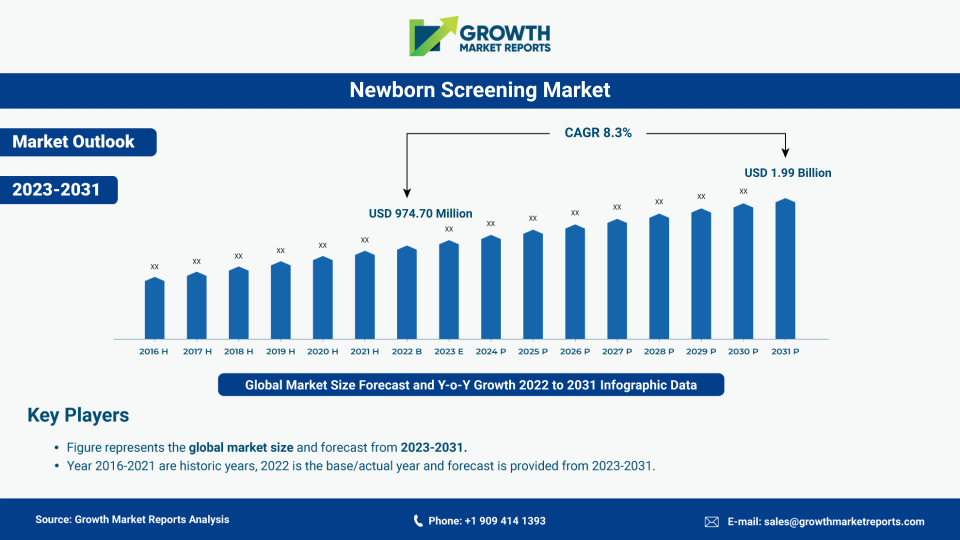
According to our latest research, the global newborn screening market size reached USD 1.47 billion in 2024, demonstrating robust growth driven by technological advancements and expanding government initiatives. The market is projected to grow at a CAGR of 7.2% during the forecast period, reaching an estimated value of USD 2.76 billion by 2033. This notable expansion is primarily attributed to increasing awareness about early detection of congenital disorders, rising birth rates in emerging economies, and the implementation of comprehensive newborn screening programs worldwide.
One of the primary growth factors propelling the newborn screening market is the escalating focus on early diagnosis and intervention for metabolic, genetic, and hearing disorders in neonates. Governments and healthcare organizations across the globe are mandating newborn screening as part of routine neonatal care, recognizing that timely detection can significantly reduce morbidity and mortality rates associated with treatable conditions. The integration of advanced technologies such as tandem mass spectrometry and next-generation DNA assays has further enhanced the accuracy and scope of screening, enabling the identification of a broader spectrum of disorders. Parental awareness campaigns and improved access to healthcare facilities have also contributed substantially to market growth, ensuring that a higher percentage of newborns are screened within the critical early days of life.
Another significant driver is the growing investment by both public and private sectors in healthcare infrastructure, particularly in developing regions. Governments in countries like India, China, and Brazil are launching nationwide newborn screening programs, supported by international agencies and non-profit organizations. These initiatives are often coupled with the establishment of centralized laboratories and training for healthcare professionals, ensuring the effective implementation and sustainability of screening programs. The increasing prevalence of inherited metabolic disorders and congenital anomalies, along with the declining cost of screening technologies, is further encouraging the adoption of newborn screening across diverse healthcare settings.
Additionally, the market is witnessing a surge in research and development activities aimed at expanding the panel of diseases covered by newborn screening. Pharmaceutical and biotechnology companies are collaborating with academic institutions to develop more sensitive and specific reagents, assay kits, and software solutions that streamline workflow and data management. The adoption of digital health technologies and cloud-based data storage is improving the efficiency of result interpretation and reporting, reducing turnaround times and enabling prompt clinical decision-making. The growing trend toward personalized medicine and precision healthcare is also influencing the newborn screening market, as early genetic insights can inform individualized treatment pathways and long-term care planning.
In the realm of newborn screening, the role of Newborn Hearing Screening Equipment cannot be overstated. These devices are pivotal in the early detection of hearing impairments in infants, which can significantly impact language and cognitive development if left unaddressed. Technologies such as otoacoustic emissions (OAE) and auditory brainstem response (ABR) testing are integral to these screening processes, providing accurate assessments of auditory function. The adoption of these advanced hearing screening devices in maternity wards and birthing centers is on the rise, driven by increasing awareness among healthcare providers and parents about the importance of early intervention. This trend is further supported by government mandates and public health initiatives aimed at ensuring that all newborns have access to comprehensive screening services.
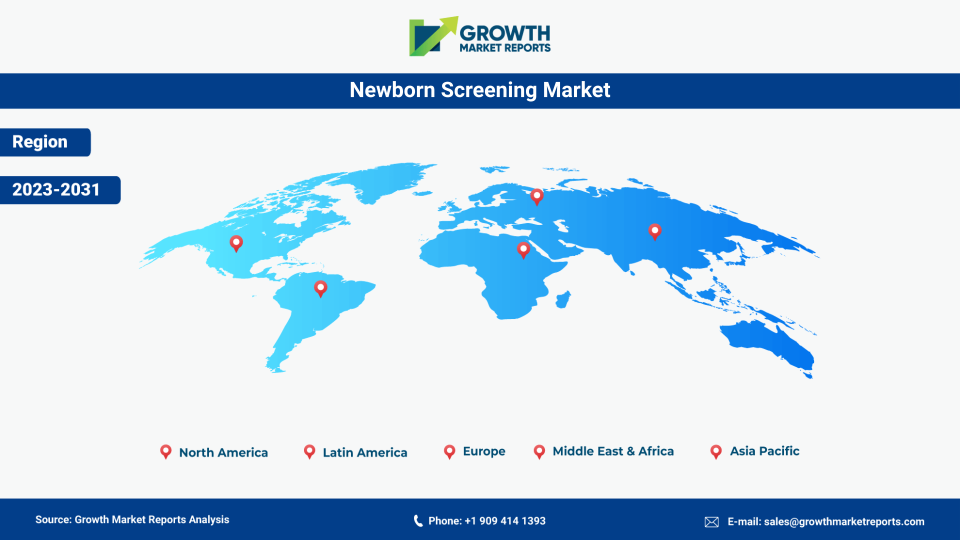
From a regional perspective, North America currently dominates the newborn screening market, accounting for the largest share in 2024 due to robust healthcare infrastructure, favorable reimbursement policies, and stringent regulatory mandates. Europe follows closely, supported by well-established public health systems and ongoing initiatives to harmonize screening protocols across member states. The Asia Pacific region is expected to register the highest CAGR during the forecast period, driven by rising birth rates, increasing healthcare expenditure, and growing government focus on reducing infant mortality. Latin America and the Middle East & Africa are also witnessing gradual adoption of newborn screening, with international collaborations and donor funding playing a crucial role in market development.
The product type segment of the newborn screening market is broadly categorized into instruments, reagents & assay kits, and software. Instruments, including mass spectrometers, hearing screening devices, and oximeters, form the backbone of screening laboratories and are critical for generating reliable test results. The demand for advanced instruments is being fueled by the need for higher throughput, automation, and multiplexing capabilities, allowing laboratories to screen for multiple disorders simultaneously. Leading manufacturers are focusing on developing compact, user-friendly devices with enhanced sensitivity and specificity to cater to the evolving needs of hospitals and diagnostic centers.
Reagents & assay kits represent the largest revenue-generating sub-segment within the product type category, owing to their recurrent use in routine screening workflows. The increasing adoption of enzyme-based assays and DNA assays for metabolic and genetic disorder detection has led to a surge in demand for high-quality, standardized reagents. Companies are investing in research to develop multiplexed assay kits that offer comprehensive disease panels, reducing the need for multiple tests and improving cost-efficiency. The availability of ready-to-use kits and bulk purchasing options for large-scale screening programs is further driving growth in this segment.
Software solutions are emerging as an integral component of the newborn screening market, facilitating data management, workflow automation, and result interpretation. Modern laboratory information management systems (LIMS) are being integrated with screening instruments to streamline sample tracking, quality control, and reporting processes. The shift toward digitalization and the adoption of cloud-based platforms are enabling real-time data sharing between laboratories, clinicians, and public health authorities, improving the overall efficiency of newborn screening programs. Software providers are also focusing on incorporating artificial intelligence and machine learning algorithms to enhance result accuracy and reduce false positives.
The interplay between these product types is shaping the competitive landscape of the newborn screening market. Manufacturers are increasingly offering bundled solutions that combine instruments, reagents, and software, providing end-users with comprehensive, turnkey screening platforms. This integrated approach not only simplifies procurement and installation for healthcare providers but also ensures compatibility and optimal performance across the screening workflow. As market competition intensifies, product innovation, regulatory compliance, and after-sales support are becoming key differentiators for companies seeking to strengthen their market position.
| Attributes | Details |
| Report Title | Newborn Screening Market Research Report 2033 |
| By Product Type | Instruments, Reagents & Assay Kits, Software |
| By Technology | Tandem Mass Spectrometry, Pulse Oximetry, Enzyme-based Assays, DNA Assays, Others |
| By Test Type | Dry Blood Spot Test, Hearing Screening Test, Critical Congenital Heart Disease (CCHD) Screening, Others |
| By End-User | Hospitals, Diagnostic Centers, Clinics, Others |
| Regions Covered | North America, Europe, APAC, Latin America, MEA |
| Base Year | 2024 |
| Historic Data | 2018-2023 |
| Forecast Period | 2025-2033 |
| Number of Pages | 277 |
| Number of Tables & Figures | 305 |
| Customization Available | Yes, the report can be customized as per your need. |
The technology segment in the newborn screening market encompasses tandem mass spectrometry, pulse oximetry, enzyme-based assays, DNA assays, and other emerging technologies. Tandem mass spectrometry (MS/MS) has revolutionized newborn screening by enabling the simultaneous detection of multiple metabolic disorders from a single dried blood spot sample. The high sensitivity, specificity, and throughput of MS/MS have made it the gold standard for screening conditions such as phenylketonuria, maple syrup urine disease, and medium-chain acyl-CoA dehydrogenase deficiency. Continuous advancements in instrument design and software integration are further enhancing the utility and accessibility of this technology across both developed and developing markets.
Pulse oximetry is widely used for the non-invasive screening of critical congenital heart disease (CCHD) in newborns. The technologyÂ’s simplicity, rapid results, and cost-effectiveness have led to its widespread adoption in hospitals and birthing centers. Recent innovations in sensor design and wireless connectivity are improving the accuracy and ease of use of pulse oximeters, ensuring reliable detection of hypoxemia and timely referral for further evaluation. The inclusion of CCHD screening in national newborn screening programs, particularly in North America and Europe, is driving steady growth in this technology segment.
Enzyme-based assays remain a cornerstone for the detection of various inborn errors of metabolism, such as galactosemia and biotinidase deficiency. These assays offer high specificity and are often used in conjunction with other screening technologies to confirm positive results. Ongoing research is focused on enhancing the sensitivity of enzyme assays and developing multiplexed platforms that can simultaneously evaluate multiple enzyme activities from a single sample. The integration of automated liquid handling systems and microfluidics is streamlining assay workflows and reducing turnaround times, making enzyme-based screening more accessible and scalable for large population cohorts.
DNA assays represent the frontier of newborn screening, enabling the detection of genetic mutations associated with disorders such as cystic fibrosis, spinal muscular atrophy, and severe combined immunodeficiency. The advent of next-generation sequencing (NGS) and polymerase chain reaction (PCR)-based techniques is expanding the range of detectable conditions and improving the precision of screening. As the cost of genetic testing continues to decline, the adoption of DNA assays is expected to accelerate, particularly in regions with established infrastructure for molecular diagnostics. The integration of genetic screening into routine newborn screening panels is paving the way for personalized medicine and targeted interventions from the earliest stages of life.
The test type segment in the newborn screening market includes dry blood spot tests, hearing screening tests, critical congenital heart disease (CCHD) screening, and other specialized tests. Dry blood spot (DBS) testing is the most widely adopted method for newborn screening, offering a minimally invasive, cost-effective, and reliable means of collecting and analyzing blood samples. The versatility of DBS samples allows for the simultaneous screening of dozens of metabolic, endocrine, and genetic disorders using advanced analytical techniques such as MS/MS and enzyme assays. The widespread adoption of DBS testing is supported by standardized protocols, robust quality control measures, and the ability to store and transport samples efficiently, making it the preferred choice for mass screening programs.
Hearing screening tests are an essential component of comprehensive newborn screening programs, aiming to identify congenital hearing loss at the earliest possible stage. Technologies such as otoacoustic emissions (OAE) and auditory brainstem response (ABR) testing are commonly used to assess auditory function in newborns. Early detection of hearing impairment enables timely intervention, including the fitting of hearing aids or cochlear implants, which are critical for optimal language and cognitive development. The integration of automated hearing screening devices into maternity wards and birthing centers is driving the expansion of this segment, supported by increasing awareness among healthcare providers and parents.
Critical congenital heart disease (CCHD) screening using pulse oximetry has gained significant traction in recent years, following recommendations from leading health authorities and professional societies. CCHD screening is now a mandatory component of newborn screening in many countries, contributing to the early identification and management of life-threatening cardiac anomalies. The adoption of standardized screening protocols, coupled with advancements in pulse oximetry technology, is ensuring high sensitivity and specificity in detecting hypoxemia and related conditions. The ongoing expansion of CCHD screening programs is expected to further boost market growth in this test type segment.
Other specialized tests, including screening for hemoglobinopathies, severe combined immunodeficiency (SCID), and lysosomal storage disorders, are being increasingly incorporated into newborn screening panels as technology evolves and the cost of testing declines. The growing emphasis on comprehensive screening is driving demand for multiplexed assays and integrated testing platforms that can efficiently process large volumes of samples. The continuous addition of new conditions to screening panels, in line with evolving public health guidelines and scientific discoveries, is expected to sustain growth in the test type segment over the forecast period.
The end-user segment of the newborn screening market is comprised of hospitals, diagnostic centers, clinics, and other healthcare facilities. Hospitals represent the largest end-user group, accounting for a significant share of the market due to their central role in childbirth and neonatal care. Most newborn screenings are conducted within hospital settings, leveraging dedicated laboratory infrastructure, trained personnel, and established protocols for sample collection and analysis. The integration of newborn screening into routine postnatal care, supported by electronic health records and automated reporting systems, is enhancing the efficiency and coverage of hospital-based programs.
Diagnostic centers play a pivotal role in the newborn screening ecosystem, particularly in regions where centralized laboratory services are preferred for cost and quality control reasons. These centers are equipped with advanced analytical instruments and staffed by specialized laboratory professionals, enabling high-throughput screening and rapid turnaround of results. Diagnostic centers often serve as referral hubs for hospitals, clinics, and public health agencies, facilitating confirmatory testing and follow-up care for infants with positive screening results. The trend toward outsourcing screening services to accredited diagnostic centers is gaining traction, driven by the need for scalability and compliance with stringent quality standards.
Clinics, including pediatric and primary care clinics, are increasingly participating in newborn screening initiatives, particularly in rural and underserved areas. The decentralization of screening services is being facilitated by the availability of portable instruments, point-of-care testing devices, and telemedicine platforms that enable remote consultation and result interpretation. Clinics play a crucial role in ensuring equitable access to screening services, especially for populations with limited access to hospital-based care. The expansion of clinic-based screening is supported by government funding, training programs, and community outreach efforts aimed at increasing coverage and reducing disparities in neonatal health outcomes.
Other end-users, such as public health laboratories, non-profit organizations, and research institutions, are also contributing to the growth of the newborn screening market. These entities are often involved in pilot projects, epidemiological studies, and the development of new screening protocols and technologies. Collaborative efforts between public and private stakeholders are driving innovation and accelerating the adoption of best practices in newborn screening worldwide. The diversification of end-users is fostering a more resilient and adaptable market ecosystem, capable of responding to evolving public health needs and technological advancements.
The newborn screening market presents a wealth of opportunities for stakeholders across the healthcare value chain. One of the most promising areas is the expansion of screening panels to include a broader range of genetic and metabolic disorders, enabled by advancements in molecular diagnostics and next-generation sequencing. The integration of artificial intelligence and machine learning into data analysis and interpretation is opening new avenues for improving result accuracy, reducing false positives, and streamlining workflow. Additionally, the growing emphasis on personalized medicine is creating opportunities for the development of targeted therapies and interventions based on early genetic insights obtained through newborn screening. Partnerships between technology providers, healthcare organizations, and government agencies are expected to drive innovation and accelerate the adoption of cutting-edge screening solutions.
Emerging markets, particularly in Asia Pacific and Latin America, offer significant growth potential for the newborn screening market. Rising birth rates, increasing healthcare expenditure, and supportive government policies are creating a favorable environment for the expansion of screening programs. International collaborations, donor funding, and capacity-building initiatives are helping to overcome barriers related to infrastructure, training, and awareness. The development of low-cost, portable screening devices and point-of-care testing solutions is enabling the decentralization of screening services and improving access in remote and underserved areas. As healthcare systems in these regions continue to evolve, the demand for comprehensive newborn screening is expected to rise, presenting lucrative opportunities for market players.
Despite these opportunities, the newborn screening market faces several restraining factors that could impede growth. One of the primary challenges is the variability in screening policies, protocols, and coverage across different countries and regions. Inconsistent implementation of screening programs, limited funding, and a lack of standardized guidelines can result in disparities in access and quality of care. Ethical and legal considerations related to genetic testing, data privacy, and informed consent also pose challenges to the widespread adoption of advanced screening technologies. Addressing these barriers will require coordinated efforts from policymakers, healthcare providers, and industry stakeholders to ensure equitable access to high-quality newborn screening services globally.
North America continues to lead the global newborn screening market, accounting for approximately 39% of the total market value in 2024, translating to about USD 573 million. The regionÂ’s dominance is underpinned by well-established healthcare infrastructure, comprehensive screening mandates, and robust funding mechanisms. The United States, in particular, has a highly organized newborn screening system, with all states mandating screening for a standardized panel of disorders. Canada also boasts a strong public health system, supporting nationwide implementation of newborn screening programs. The presence of leading market players, ongoing technological innovation, and favorable reimbursement policies further contribute to the regionÂ’s leadership position.
Europe holds the second-largest share of the newborn screening market, representing around 29% of the global market, or roughly USD 426 million in 2024. The regionÂ’s growth is driven by increasing harmonization of screening protocols across member states, supported by the European UnionÂ’s efforts to standardize public health policies. Countries such as the United Kingdom, Germany, France, and the Netherlands have well-established screening programs, while Eastern European nations are gradually expanding their coverage and capabilities. The European market is characterized by a strong emphasis on quality assurance, research collaboration, and the integration of new technologies into routine screening workflows. The region is expected to grow at a steady CAGR of 6.8% through 2033.
The Asia Pacific region is poised to register the highest CAGR in the newborn screening market, forecasted at 8.6% between 2025 and 2033. In 2024, Asia Pacific accounted for approximately 22% of the global market, or about USD 323 million. The regionÂ’s rapid growth is fueled by rising birth rates, increasing government investment in healthcare, and the expansion of screening programs in populous countries such as China and India. International partnerships and donor funding are playing a critical role in building capacity and improving access to screening services in low- and middle-income countries. As awareness and infrastructure continue to improve, Asia Pacific is expected to emerge as a key growth engine for the global newborn screening market in the coming years.
The competitive landscape of the newborn screening market is characterized by the presence of several global and regional players, each vying for market share through product innovation, strategic partnerships, and geographic expansion. Leading companies are focusing on the development of integrated screening platforms that combine advanced instruments, high-quality reagents, and sophisticated software solutions. The emphasis on automation, multiplexing, and digitalization is driving the evolution of screening technologies and enhancing the efficiency of laboratory workflows. Companies are also investing in research and development to expand their product portfolios, address unmet clinical needs, and comply with evolving regulatory requirements.
Mergers, acquisitions, and collaborations are common strategies employed by market participants to strengthen their competitive position and broaden their customer base. For instance, partnerships between instrument manufacturers and software providers are resulting in the launch of end-to-end screening solutions that offer seamless integration, data management, and remote monitoring capabilities. Companies are also collaborating with academic institutions and public health agencies to conduct clinical studies, validate new screening protocols, and participate in pilot projects aimed at expanding the scope of newborn screening programs. These strategic alliances are fostering innovation and accelerating the adoption of best practices across the industry.
The market is witnessing increased competition from emerging players, particularly in the reagents and assay kits segment, where the demand for cost-effective and multiplexed solutions is high. Start-ups and small-to-medium enterprises are leveraging advancements in molecular diagnostics, microfluidics, and bioinformatics to develop novel screening technologies that cater to the specific needs of developing regions. The entry of new players is intensifying price competition and driving the adoption of innovative business models, such as reagent rental agreements and pay-per-test solutions. Established companies are responding by enhancing their service offerings, expanding their distribution networks, and strengthening their after-sales support capabilities.
Some of the major companies operating in the global newborn screening market include PerkinElmer Inc., Bio-Rad Laboratories, Inc., Thermo Fisher Scientific Inc., Agilent Technologies, Inc., GE Healthcare, Trivitron Healthcare, Medtronic plc, and Natus Medical Incorporated. PerkinElmer is a leading provider of newborn screening instruments, reagents, and software solutions, with a strong presence in both developed and emerging markets. Bio-Rad Laboratories and Thermo Fisher Scientific are renowned for their high-performance assay kits and analytical instruments, while Agilent Technologies is known for its advanced mass spectrometry platforms. GE Healthcare and Medtronic offer a range of diagnostic devices and monitoring solutions for neonatal care, while Trivitron Healthcare is a key player in the Asia Pacific region, focusing on affordable screening technologies. Natus Medical specializes in hearing screening devices and neurodiagnostic solutions, catering to the growing demand for early detection of auditory disorders in newborns.
These companies are continuously investing in product development, regulatory compliance, and market expansion to maintain their competitive edge. They are also actively engaged in training and capacity-building initiatives to support the effective implementation of newborn screening programs worldwide. As the market continues to evolve, innovation, quality, and customer-centricity will remain the key differentiators for companies seeking to capture a larger share of the growing global newborn screening market.
The Newborn Screening market has been segmented on the basis of
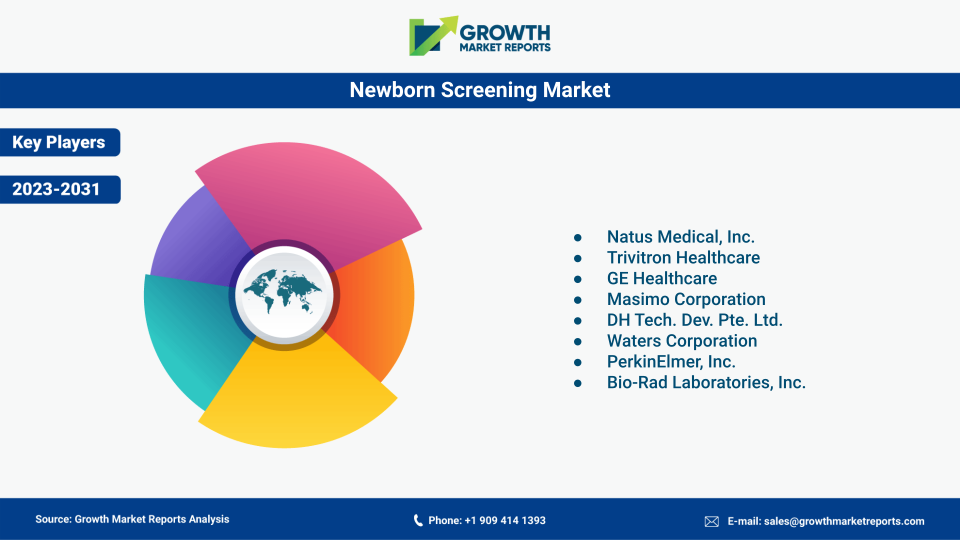
Some of the key contributors in the market are Agilent Technologies, Inc.; Natus Medical, Inc.; Trivitron Healthcare; GE Healthcare; Masimo Corporation; DH Tech. Dev. Pte. Ltd.; Waters Corporation; PerkinElmer, Inc., and Bio-Rad Laboratories, Inc. Many of these key players are actively investing in research & development to develop novel newborn screening technologies to attain business augmentation that can contribute to the market growth.
Several of these companies are actively engaged in various market strategies such as product launches, mergers, partnerships, acquisitions, and expansion of production units to enhance their market position and expand their consumer base globally. In September 2013, Agilent Technologies in collaboration with trivitron healthcare developed highly accurate diagnostic method on mass spectroscopy.
Digital health technologies and cloud-based data storage are improving efficiency in result interpretation and reporting, enabling real-time data sharing, and supporting the integration of AI for enhanced accuracy and reduced false positives.
Major players include PerkinElmer Inc., Bio-Rad Laboratories Inc., Thermo Fisher Scientific Inc., Agilent Technologies Inc., GE Healthcare, Trivitron Healthcare, Medtronic plc, and Natus Medical Incorporated.
Opportunities include expanding screening panels, integrating AI and machine learning, and growth in emerging markets. Challenges include variability in screening policies, funding limitations, and ethical/legal concerns related to genetic testing and data privacy.
Primary end-users include hospitals, diagnostic centers, clinics, public health laboratories, and research institutions.
Test types include dry blood spot tests, hearing screening tests, critical congenital heart disease (CCHD) screening, and other specialized tests for conditions like hemoglobinopathies and severe combined immunodeficiency (SCID).
The main product types are instruments (such as mass spectrometers and hearing screening devices), reagents & assay kits, and software solutions for data management and workflow automation.
North America currently dominates the market, followed by Europe. The Asia Pacific region is expected to register the highest CAGR through 2033 due to rising birth rates and increased healthcare investment.
Common technologies include tandem mass spectrometry (MS/MS), pulse oximetry, enzyme-based assays, DNA assays, and next-generation sequencing (NGS).
Key growth drivers include technological advancements, expanding government initiatives, rising awareness about early detection of congenital disorders, increasing birth rates in emerging economies, and the implementation of comprehensive newborn screening programs.
As of 2024, the global newborn screening market size reached USD 1.47 billion, with projections to grow to USD 2.76 billion by 2033.