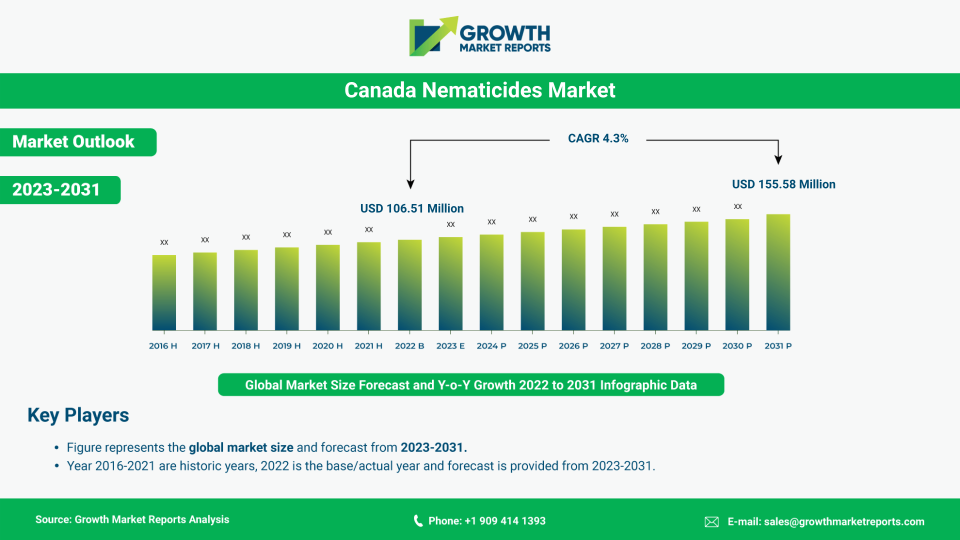
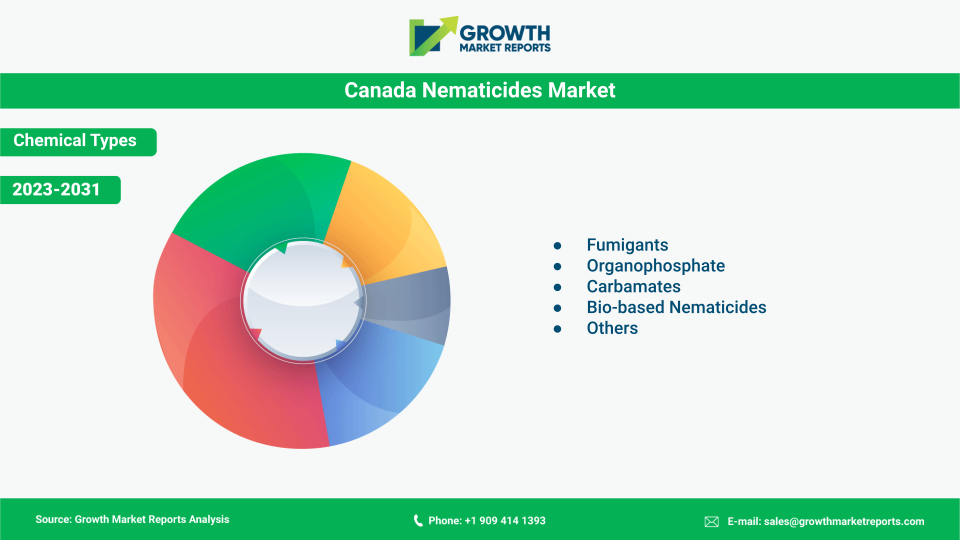
Segments - by Product Type (Fumigant Nematicides, Carbamate Nematicides, Organophosphate Nematicides, Bio-based Nematicides, Others), by Formulation (Liquid, Granular, Others), by Application (Agricultural Crops, Fruits & Vegetables, Turf & Ornamentals, Others), by Mode Of Application (Soil Treatment, Seed Treatment, Foliar Spray, Others), by Crop Type (Cereals & Grains, Oilseeds & Pulses, Fruits & Vegetables, Others)
According to our latest research, the global nematicides market size was valued at USD 1.89 billion in 2024 and is projected to reach USD 3.15 billion by 2033, expanding at a robust CAGR of 5.8% during the forecast period. The nematicides market continues to witness significant growth driven by the increasing prevalence of nematode infestations in key crops, the rising demand for high-yield agricultural practices, and the ongoing shift towards sustainable pest management solutions. The adoption of advanced crop protection chemicals and the integration of bio-based nematicides are among the primary growth factors fueling this dynamic market.
One of the foremost growth drivers of the global nematicides market is the escalating threat posed by nematode infestations to global food security. Nematodes, microscopic roundworms, are responsible for substantial yield losses in a variety of crops, including cereals, fruits, vegetables, and ornamentals. As global population growth intensifies the pressure on food production systems, farmers and agribusinesses are increasingly adopting nematicides to safeguard crop productivity and quality. The economic impact of nematode-induced crop losses, which can reach up to 12% of global crop output annually, underscores the critical importance of effective nematode management solutions. This has led to a surge in demand for both chemical and bio-based nematicides, with a particular focus on products that offer broad-spectrum efficacy and environmental safety.
Another significant factor propelling the nematicides market is the growing emphasis on sustainable and environmentally friendly agricultural inputs. Regulatory restrictions on certain synthetic chemicals, coupled with rising consumer awareness regarding food safety, have accelerated the development and commercialization of bio-based nematicides. These products, derived from natural sources such as plant extracts, beneficial microbes, and microbial metabolites, offer several advantages, including reduced toxicity, minimal residue levels, and compatibility with integrated pest management (IPM) programs. The increasing adoption of organic farming practices and the expansion of certified organic acreage worldwide are further bolstering the demand for bio-based nematicides, positioning them as a key growth segment within the broader market.
Technological advancements in formulation and application techniques are also playing a pivotal role in shaping the nematicides market landscape. Innovations such as controlled-release formulations, precision application systems, and seed treatment technologies are enhancing the effectiveness and efficiency of nematicide use. These advancements not only improve the targeted delivery of active ingredients but also minimize off-target effects and environmental contamination. Furthermore, the integration of digital agriculture tools, such as remote sensing and soil health diagnostics, enables farmers to make informed decisions regarding nematode management, thereby optimizing nematicide application and maximizing return on investment. The convergence of these technological trends is expected to create new opportunities for market participants and drive the adoption of nematicides across diverse cropping systems.
From a regional perspective, Asia Pacific remains the largest and fastest-growing market for nematicides, accounting for over 38% of the global market share in 2024. The region's dominance is attributed to its vast agricultural base, high prevalence of nematode infestations, and increasing investments in crop protection solutions. North America and Europe also represent significant markets, driven by advanced agricultural practices, stringent regulatory frameworks, and a strong focus on sustainable crop protection. Latin America and the Middle East & Africa are emerging as high-potential regions, supported by expanding agricultural activities and rising awareness of nematode management strategies. The interplay of regional dynamics, including climatic conditions, crop diversity, and regulatory policies, continues to influence the adoption patterns and growth trajectory of the global nematicides market.
The nematicides market is segmented by product type into fumigant nematicides, carbamate nematicides, organophosphate nematicides, bio-based nematicides, and others. Fumigant nematicides have traditionally held a significant share of the market due to their broad-spectrum activity and effectiveness against a wide range of nematode species. These products, such as 1,3-dichloropropene and metam sodium, are widely used in high-value crops and offer rapid action and deep soil penetration. However, concerns regarding environmental persistence, human health risks, and regulatory restrictions have led to a gradual decline in the use of certain fumigants, prompting manufacturers to invest in safer alternatives and improved application technologies.
Carbamate and organophosphate nematicides continue to play a crucial role in nematode management, particularly in regions where regulatory frameworks permit their use. These chemical classes are valued for their cost-effectiveness, ease of application, and proven efficacy against major nematode pests. However, the growing scrutiny of their environmental and toxicological profiles has resulted in a shift towards integrated pest management approaches and a gradual transition to less hazardous products. Industry stakeholders are increasingly focusing on the development of new molecules and combination products that offer enhanced safety and reduced environmental impact.
Bio-based nematicides have emerged as a rapidly growing segment within the nematicides market, driven by the rising demand for sustainable agricultural inputs and compliance with regulatory standards. These products, derived from natural sources such as neem, garlic, and beneficial microorganisms, provide targeted nematode control with minimal risk to non-target organisms and the environment. The adoption of bio-based nematicides is particularly pronounced in organic farming systems and regions with stringent pesticide regulations. Continuous research and innovation in microbial and botanical nematicides are expected to further expand this segment, offering new opportunities for market participants and end-users.
The "others" category includes a diverse range of nematicide products, including newer chemical classes and proprietary blends designed to address specific pest challenges. These products often incorporate novel modes of action or synergistic combinations to enhance efficacy and resistance management. As the nematicides market evolves, the demand for customized solutions tailored to specific crop and soil conditions is expected to drive product differentiation and innovation within this segment. Overall, the product type landscape of the nematicides market reflects a dynamic interplay between regulatory trends, technological advancements, and evolving user preferences.
| Attributes | Details |
| Report Title | Nematicides Market Research Report 2033 |
| By Product Type | Fumigant Nematicides, Carbamate Nematicides, Organophosphate Nematicides, Bio-based Nematicides, Others |
| By Formulation | Liquid, Granular, Others |
| By Application | Agricultural Crops, Fruits & Vegetables, Turf & Ornamentals, Others |
| By Mode Of Application | Soil Treatment, Seed Treatment, Foliar Spray, Others |
| By Crop Type | Cereals & Grains, Oilseeds & Pulses, Fruits & Vegetables, Others |
| Regions Covered | North America, Europe, APAC, Latin America, MEA |
| Base Year | 2024 |
| Historic Data | 2018-2023 |
| Forecast Period | 2025-2033 |
| Number of Pages | 273 |
| Number of Tables & Figures | 349 |
| Customization Available | Yes, the report can be customized as per your need. |
Formulation plays a pivotal role in the performance, safety, and user acceptance of nematicides. The market is segmented into liquid, granular, and other formulations, each offering distinct advantages and application considerations. Liquid formulations remain the most widely used form of nematicides, favored for their ease of mixing, uniform distribution, and compatibility with a range of application equipment. These formulations are particularly well-suited for soil drenching, drip irrigation, and foliar spray applications, enabling precise targeting of nematode populations. The versatility and convenience of liquid nematicides have contributed to their widespread adoption across diverse cropping systems and geographies.
Granular formulations are gaining traction in the nematicides market, especially in large-scale commercial agriculture and mechanized farming operations. Granular nematicides offer several benefits, including controlled release of active ingredients, reduced drift, and improved soil persistence. These attributes make granular products ideal for pre-plant soil incorporation and banded applications, where uniform coverage and sustained nematode control are critical. Advances in formulation technology, such as microencapsulation and polymer coatings, are further enhancing the efficacy and environmental profile of granular nematicides, driving their adoption in both conventional and organic production systems.
Other formulations, including wettable powders, emulsifiable concentrates, and water-dispersible granules, cater to specific crop protection needs and regional preferences. These specialized formulations are often designed to address unique application challenges, such as compatibility with irrigation systems, resistance management, or compliance with local regulatory requirements. The ongoing development of novel formulation technologies, including nanoemulsions and biological carriers, is expected to expand the range of available nematicide products and improve their performance under diverse field conditions.
Formulation innovation remains a key focus area for nematicide manufacturers, as it directly influences product efficacy, user safety, and environmental impact. The integration of adjuvants, synergists, and soil conditioners into nematicide formulations is enabling more effective nematode management while minimizing non-target effects and residue concerns. As the market continues to evolve, the demand for user-friendly, safe, and environmentally responsible formulations is expected to drive ongoing research and development efforts, shaping the future trajectory of the nematicides market.
The application segment of the nematicides market is categorized into agricultural crops, fruits and vegetables, turf and ornamentals, and others. Agricultural crops represent the largest application segment, accounting for a significant share of global nematicide consumption. Major crops such as rice, wheat, maize, and soybeans are highly susceptible to nematode infestations, resulting in substantial yield losses and economic damage. The widespread use of nematicides in staple crop production is driven by the need to maintain food security, enhance crop productivity, and meet the growing demand for cereals and grains in both developed and emerging markets.
Fruits and vegetables constitute a high-value segment within the nematicides market, owing to their vulnerability to nematode damage and the stringent quality standards imposed by both domestic and export markets. Nematode infestations can lead to stunted growth, poor fruit set, and reduced marketability, necessitating targeted nematode management strategies. The adoption of nematicides in fruit and vegetable production is further supported by the increasing emphasis on residue-free produce and compliance with maximum residue limits (MRLs) set by regulatory authorities. Bio-based nematicides are particularly favored in this segment, aligning with consumer preferences for safe and sustainable food products.
The turf and ornamentals segment is another important application area for nematicides, particularly in regions with a strong landscaping, golf course, and horticultural industry. Nematode infestations can cause significant damage to turfgrass, ornamentals, and nursery plants, affecting aesthetic value and commercial viability. The use of nematicides in this segment is driven by the need for rapid and effective control of nematode populations, as well as the desire to maintain high-quality landscapes and ornamental displays. The development of specialized nematicide products tailored to turf and ornamentals is contributing to the growth of this niche market.
Other application areas, including forestry, greenhouse production, and specialty crops, also contribute to the overall demand for nematicides. These segments often require customized solutions and integrated pest management approaches to address unique pest pressures and production challenges. The diversification of application segments reflects the broad utility of nematicides across different agricultural and horticultural systems, underscoring their critical role in modern crop protection strategies.
The mode of application is a critical determinant of nematicide efficacy, environmental impact, and user convenience. The market is segmented into soil treatment, seed treatment, foliar spray, and other modes of application. Soil treatment remains the predominant mode of nematicide application, accounting for the largest share of market revenue. This approach involves the direct incorporation of nematicides into the soil, targeting nematode populations in the rhizosphere and root zone. Soil treatment is widely used in both field and protected cultivation systems, offering effective control of soil-borne nematodes and minimizing crop losses.
Seed treatment is gaining prominence as an efficient and cost-effective method for nematode management, particularly in high-value crops and large-scale commercial agriculture. By coating seeds with nematicides prior to planting, farmers can protect seedlings from early-stage nematode attacks, enhance crop establishment, and reduce the need for multiple in-season applications. Seed treatment also offers advantages in terms of reduced chemical usage, lower labor costs, and improved environmental safety. The integration of biological nematicides and synergistic additives into seed treatment formulations is further expanding the scope of this mode of application.
Foliar spray applications are primarily used for the management of above-ground nematode species and in crops where soil-based applications may be impractical or less effective. This mode of application allows for targeted delivery of nematicides to plant foliage and stems, providing rapid knockdown of nematode populations and minimizing off-target effects. Foliar sprays are particularly useful in horticultural crops, ornamentals, and greenhouse production systems, where precision and flexibility are critical. Advances in spray technology and formulation science are enhancing the efficacy and safety of foliar-applied nematicides, driving their adoption in specialized cropping systems.
Other modes of application, such as drip irrigation, chemigation, and root dipping, cater to specific crop protection needs and regional preferences. These methods offer advantages in terms of uniform distribution, reduced labor requirements, and compatibility with modern irrigation systems. The adoption of innovative application techniques is expected to increase as farmers seek to optimize nematicide use, minimize environmental impact, and comply with evolving regulatory standards. The diversity of application modes underscores the adaptability of nematicides to a wide range of production systems and pest management challenges.
The nematicides market is segmented by crop type into cereals and grains, oilseeds and pulses, fruits and vegetables, and others. Cereals and grains represent the largest crop segment, reflecting the global importance of staple crops such as wheat, rice, maize, and barley. These crops are highly susceptible to nematode infestations, which can cause significant yield losses and threaten food security. The widespread adoption of nematicides in cereal and grain production is driven by the need to protect crop yields, maintain profitability, and meet the growing demand for staple foods in both developed and emerging markets.
Oilseeds and pulses constitute another key segment within the nematicides market, encompassing crops such as soybeans, peanuts, sunflower, and lentils. These crops are valued for their nutritional and economic significance, as well as their role in crop rotation and soil health improvement. Nematode management is critical in oilseed and pulse production, as infestations can lead to reduced seed quality, stunted growth, and lower market value. The use of nematicides in this segment is supported by advances in seed treatment technology, integrated pest management practices, and the development of crop-specific nematicide products.
Fruits and vegetables are among the most vulnerable crops to nematode damage, given their high value, perishability, and stringent quality requirements. Nematode infestations can result in misshapen fruits, poor root development, and increased susceptibility to secondary pathogens, leading to substantial economic losses. The adoption of nematicides in fruit and vegetable production is driven by the need to ensure product quality, meet export standards, and comply with food safety regulations. Bio-based and residue-free nematicides are particularly favored in this segment, aligning with consumer preferences and regulatory mandates.
The "others" category includes specialty crops, ornamentals, turfgrass, and non-food crops, each with unique nematode management challenges and requirements. These crops often require tailored nematicide solutions and integrated pest management strategies to achieve effective control and minimize environmental impact. The diversification of crop segments reflects the broad applicability of nematicides across different agricultural systems, highlighting their essential role in modern crop protection and sustainable agriculture.
The nematicides market is poised for significant growth, driven by a host of emerging opportunities across the global agricultural landscape. One of the most promising opportunities lies in the rapid expansion of sustainable and organic farming practices. As consumers and regulatory authorities increasingly prioritize food safety and environmental stewardship, there is a growing demand for bio-based and low-toxicity nematicides. This trend has spurred innovation in the development of microbial and botanical nematicides, which offer effective nematode control with minimal environmental impact. Companies that invest in research and development of novel, eco-friendly products are well-positioned to capture market share and meet the evolving needs of modern agriculture. Additionally, the integration of digital agriculture technologies, such as remote sensing, soil health diagnostics, and precision application systems, presents new avenues for optimizing nematicide use, improving efficacy, and reducing input costs.
Another significant opportunity in the nematicides market is the increasing adoption of integrated pest management (IPM) strategies. IPM emphasizes the use of multiple, complementary pest control methods to achieve sustainable and long-term nematode management. The incorporation of nematicides into IPM programs, in combination with crop rotation, resistant varieties, and biological control agents, enhances overall pest control efficacy while minimizing reliance on chemical inputs. This holistic approach is gaining traction among farmers, agronomists, and policymakers, particularly in regions with stringent regulatory frameworks and a strong focus on sustainable agriculture. The expansion of IPM adoption is expected to drive demand for both chemical and bio-based nematicides, as well as stimulate innovation in product formulation, application technology, and resistance management.
Despite the numerous growth opportunities, the nematicides market faces several restraining factors that could impact its long-term trajectory. One of the primary challenges is the tightening of regulatory standards governing the registration, use, and residue levels of chemical nematicides. Increasing concerns over environmental toxicity, human health risks, and the persistence of active ingredients in soil and water have led to the withdrawal or restriction of several key nematicide products in major markets. Compliance with evolving regulatory requirements necessitates significant investment in product development, safety testing, and stewardship programs, which can increase costs and extend time-to-market for new products. Additionally, the emergence of nematode resistance to certain chemical classes underscores the need for ongoing research, innovation, and the adoption of integrated management strategies to ensure sustainable nematode control.
The Asia Pacific region dominates the global nematicides market, accounting for approximately USD 718 million in 2024, which represents over 38% of the global market share. The region’s leadership is attributed to its vast and diverse agricultural sector, high incidence of nematode infestations, and increasing adoption of advanced crop protection technologies. Countries such as China, India, and Japan are at the forefront of nematicide consumption, driven by the need to maintain high crop productivity and address the challenges posed by intensive farming practices. The Asia Pacific market is expected to expand at a CAGR of 6.2% during the forecast period, supported by government initiatives, rising awareness of sustainable agriculture, and the growing demand for bio-based nematicides.
North America is the second-largest market for nematicides, with a market value of USD 536 million in 2024. The region benefits from advanced agricultural practices, a strong focus on research and development, and stringent regulatory oversight. The United States remains the largest contributor to regional market growth, driven by the widespread adoption of precision agriculture, integrated pest management programs, and the commercialization of innovative nematicide products. Canada and Mexico also contribute to regional demand, particularly in high-value crop segments such as fruits, vegetables, and turfgrass. The North American market is characterized by a strong emphasis on product safety, environmental stewardship, and compliance with regulatory standards.
Europe is another significant market for nematicides, valued at USD 410 million in 2024. The region is distinguished by its stringent regulatory framework, high adoption of sustainable farming practices, and a growing preference for bio-based and low-residue crop protection products. Countries such as Germany, France, and Spain are leading adopters of nematicides, particularly in horticultural and specialty crop segments. The European market is expected to witness steady growth over the forecast period, driven by ongoing innovation, increasing investment in organic agriculture, and the expansion of integrated pest management programs. Latin America and the Middle East & Africa are emerging as high-potential regions, supported by expanding agricultural activities, rising awareness of nematode management, and favorable government policies. Together, these regions accounted for a combined market value of USD 226 million in 2024, with strong growth prospects in the coming years.
The global nematicides market is characterized by intense competition, with a diverse mix of multinational corporations, regional players, and emerging biotech companies vying for market share. The competitive landscape is shaped by ongoing innovation, regulatory compliance, and strategic partnerships aimed at expanding product portfolios and geographic reach. Leading companies are investing heavily in research and development to introduce novel active ingredients, improve formulation technologies, and enhance the safety and efficacy of their products. The shift towards bio-based and sustainable nematicides has prompted several players to acquire or collaborate with biotechnology firms, enabling them to tap into new growth segments and meet evolving customer demands.
Product differentiation and brand positioning are key strategies employed by market leaders to maintain a competitive edge. Companies are focusing on the development of crop- and region-specific nematicide solutions, tailored to address unique pest pressures and regulatory requirements. The integration of digital agriculture tools, such as precision application systems and remote diagnostics, is also emerging as a critical differentiator, enabling companies to offer value-added services and support to their customers. Furthermore, robust distribution networks, technical support, and farmer education initiatives are essential components of successful market penetration and customer retention strategies.
The regulatory environment plays a significant role in shaping the competitive dynamics of the nematicides market. Companies must navigate complex and evolving regulatory frameworks governing product registration, safety testing, and residue management. Compliance with these standards requires significant investment in data generation, risk assessment, and stewardship programs, which can create barriers to entry for smaller players. However, the growing demand for sustainable and eco-friendly nematicides is creating new opportunities for innovation and market entry, particularly for companies with expertise in biological and microbial solutions.
Major players in the global nematicides market include Syngenta AG, Bayer CropScience AG, Corteva Agriscience, BASF SE, FMC Corporation, UPL Limited, ADAMA Agricultural Solutions, Marrone Bio Innovations, and Nufarm Limited. Syngenta AG is recognized for its broad portfolio of chemical and bio-based nematicides, supported by strong research capabilities and global distribution networks. Bayer CropScience AG is a leader in innovation, with a focus on integrated pest management solutions and sustainable crop protection products. Corteva Agriscience leverages advanced biotechnology and digital agriculture tools to deliver customized nematicide solutions for diverse cropping systems. BASF SE and FMC Corporation are known for their commitment to product safety, regulatory compliance, and environmental stewardship.
UPL Limited, ADAMA Agricultural Solutions, and Nufarm Limited are prominent players with a strong presence in emerging markets and a focus on expanding their bio-based nematicide portfolios. Marrone Bio Innovations stands out for its pioneering work in microbial and botanical nematicides, catering to the growing demand for organic and sustainable crop protection solutions. These companies are actively pursuing partnerships, acquisitions, and collaborations to strengthen their market position and drive innovation in the rapidly evolving nematicides market. The competitive landscape is expected to remain dynamic, with ongoing investment in research, product development, and market expansion shaping the future of the industry.
The Nematicides market has been segmented on the basis of
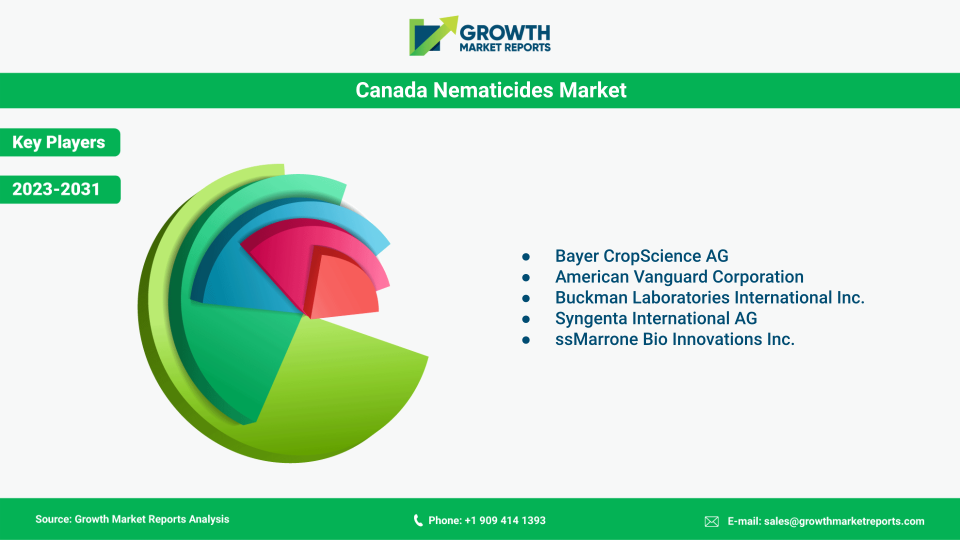
Some of the major players in the market are Bayer CropScience AG, American Vanguard Corporation, Buckman Laboratories International Inc., Syngenta International AG, and Marrone Bio Innovations Inc.
In the Canadian nematicides market, companies not only compete on product quality or product promotion, but also paying attention to acquire a larger market share. The players in the market are heavily investing to diversify their biological research on bio-based nematicides. The Canadian nematicide market is highly-fragmented. Many small players occupy major portion of the market, with top players having a diverse and growing product portfolio.
Key trends include the rise of sustainable and organic farming, increasing adoption of integrated pest management (IPM), technological advancements in formulation and application, and the development of eco-friendly and bio-based nematicides.
Major companies include Syngenta AG, Bayer CropScience AG, Corteva Agriscience, BASF SE, FMC Corporation, UPL Limited, ADAMA Agricultural Solutions, Marrone Bio Innovations, and Nufarm Limited.
The main application segments are agricultural crops, fruits and vegetables, turf and ornamentals, and specialty crops including forestry and greenhouse production.
Nematicides are commonly available in liquid and granular formulations. Application methods include soil treatment, seed treatment, foliar spray, and others such as drip irrigation and chemigation.
Asia Pacific is the largest and fastest-growing region, accounting for over 38% of the global market share in 2024. North America and Europe are also significant markets, while Latin America and the Middle East & Africa are emerging regions.
Demand for bio-based nematicides is rapidly increasing due to regulatory restrictions on synthetic chemicals, consumer preference for food safety, and the expansion of organic farming practices.
Key growth drivers include increasing nematode infestations in crops, rising demand for high-yield agriculture, the shift towards sustainable pest management, and advancements in crop protection technologies.
The main types of nematicides include fumigant nematicides, carbamate nematicides, organophosphate nematicides, bio-based nematicides, and other proprietary blends.
Nematicides are chemicals or biological agents used to control nematode infestations in crops. They are crucial for preventing yield losses caused by nematodes, which can account for up to 12% of global crop output annually.
The global nematicides market was valued at USD 1.89 billion in 2024 and is projected to reach USD 3.15 billion by 2033, growing at a CAGR of 5.8% during the forecast period.