Neglected Tropical Disease Treatment Market Research Report 2033

Neglected Tropical Disease Treatment Market Research Report 2033

Segments - by Drug Type (Antiparasitic Drugs, Antibiotics, Antifungals, Antivirals, Others), by Disease Type (Dengue, Chagas Disease, Leishmaniasis, Schistosomiasis, Lymphatic Filariasis, Onchocerciasis, Others), by Route Of Administration (Oral, Injectable, Topical, Others), by Distribution Channel (Hospitals, Retail Pharmacies, Online Pharmacies, Others), by End-User (Hospitals, Clinics, Research Institutes, Others)

https://growthmarketreports.com/raksha
Author : Raksha Sharma
https://growthmarketreports.com/Vaibhav
Fact-checked by : V. Chandola
https://growthmarketreports.com/Shruti
Editor : Shruti Bhat

Upcoming | Report ID :HC-185 | 5.0 Rating | 79 Reviews | 261 Pages | Format : Docx PDF

Report Description


Neglected Tropical Disease Treatment Market Outlook

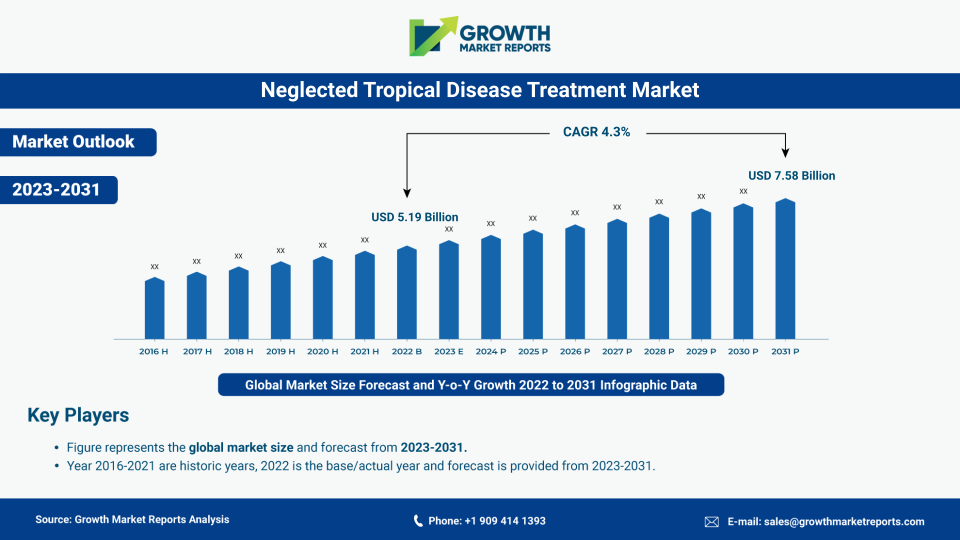
According to our latest research, the global neglected tropical disease (NTD) treatment market size in 2024 stands at USD 2.38 billion, reflecting a robust response to increasing healthcare interventions in endemic regions. The market is expected to expand at a CAGR of 5.6% during the forecast period, reaching an estimated USD 3.89 billion by 2033. This growth is driven by heightened governmental and non-governmental initiatives, expanding healthcare infrastructure in low- and middle-income countries, and ongoing advancements in drug development for tropical diseases. As per our latest research, the momentum in funding and awareness campaigns remains a pivotal factor propelling the market forward.

The primary growth factor for the neglected tropical disease treatment market is the increasing prioritization of NTDs by global health organizations and governments. In recent years, the World Health Organization (WHO), in collaboration with entities such as the Bill & Melinda Gates Foundation and Gavi, the Vaccine Alliance, has launched comprehensive programs targeting the eradication and control of NTDs. These efforts have led to expanded access to essential medicines, particularly in sub-Saharan Africa, South Asia, and Latin America, where the burden of NTDs is highest. Furthermore, the introduction of mass drug administration (MDA) programs and vector control measures has significantly reduced the prevalence of diseases such as lymphatic filariasis, onchocerciasis, and schistosomiasis. The market is further buoyed by the integration of NTD interventions into primary healthcare, which enhances both reach and sustainability.

Another crucial driver is the increasing investment in research and development of novel therapeutics and diagnostics for NTDs. Pharmaceutical companies, often in partnership with non-profit organizations, are accelerating the discovery and development of new drug candidates, vaccines, and rapid diagnostic tests. The development of fixed-dose combination therapies and single-dose regimens has improved patient compliance and treatment outcomes. Additionally, the emergence of digital health platforms and mobile health initiatives is facilitating disease surveillance, patient education, and treatment adherence, particularly in remote and underserved communities. This innovation ecosystem is expected to further fuel the market’s expansion by addressing long-standing challenges in diagnosis, treatment, and disease management.

A third significant growth factor is the increasing awareness and advocacy efforts directed at NTDs, which have historically received limited attention and funding compared to other infectious diseases. The inclusion of NTDs in the United Nations Sustainable Development Goals (SDGs) has galvanized multi-sectoral action, encouraging public-private partnerships and mobilizing resources for prevention, control, and treatment. Enhanced data collection and reporting mechanisms are enabling more targeted interventions, while educational campaigns are reducing stigma and improving health-seeking behavior among affected populations. The growing recognition of the socioeconomic impact of NTDs, which disproportionately affect impoverished communities, is prompting governments and donors to allocate greater resources to combat these diseases, thus supporting sustained market growth.

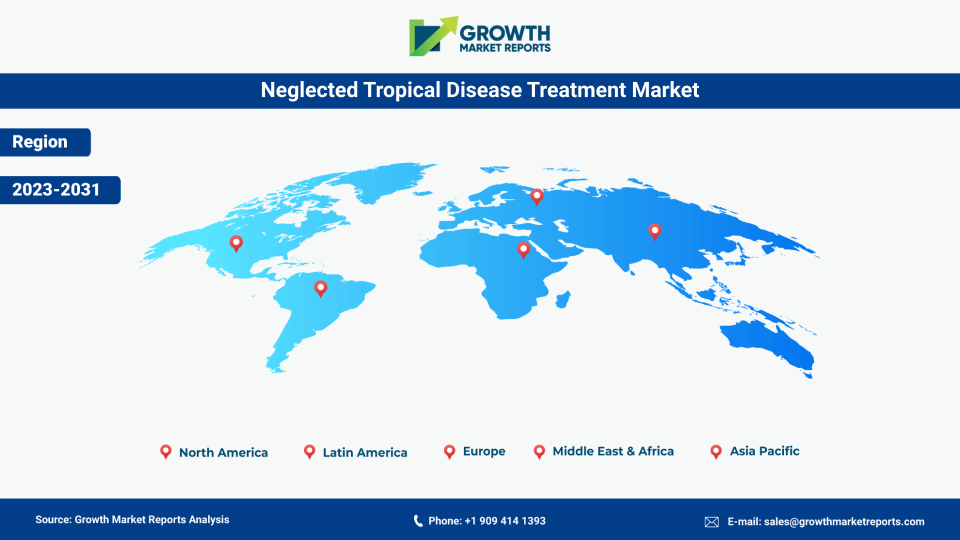
From a regional perspective, the Asia Pacific and Sub-Saharan Africa regions collectively account for the majority of the global NTD burden, and thus represent the largest markets for NTD treatments. In 2024, Asia Pacific alone contributed approximately USD 810 million to the global market, driven by high incidence rates of diseases such as dengue, leishmaniasis, and lymphatic filariasis. The Middle East & Africa region follows closely, with significant investments in disease elimination programs and international aid. North America and Europe, while representing a smaller share of the total market, play a crucial role in R&D, funding, and global supply chain management. The regional landscape is expected to evolve as emerging economies strengthen their healthcare systems and international collaborations intensify.

Global Neglected Tropical Disease Treatment Industry Outlook

Drug Type Analysis

The drug type segment of the neglected tropical disease treatment market is categorized into antiparasitic drugs, antibiotics, antifungals, antivirals, and others. Antiparasitic drugs remain the cornerstone of NTD management, accounting for the largest market share in 2024. These drugs are essential for the treatment of diseases such as schistosomiasis, leishmaniasis, and lymphatic filariasis. The widespread use of established agents like albendazole, ivermectin, and praziquantel has been bolstered by mass drug administration programs, supported by international agencies and pharmaceutical donation initiatives. Despite their efficacy, the need for new antiparasitic agents is growing due to emerging resistance and the limited spectrum of currently available treatments.

Antibiotics represent another significant segment, particularly for the management of bacterial NTDs such as yaws and trachoma. The use of azithromycin in mass treatment campaigns has led to substantial reductions in disease prevalence. However, the risk of antibiotic resistance remains a pressing concern, prompting ongoing research into alternative therapies and combination regimens. The antifungal segment, though smaller, is gaining traction due to the rising incidence of fungal NTDs like mycetoma and chromoblastomycosis, especially in tropical and subtropical regions. The limited availability of effective antifungal agents and the high cost of treatment remain key challenges in this segment.

The antiviral drugs segment is poised for moderate growth, driven by increasing cases of viral NTDs such as dengue and chikungunya. While supportive care remains the primary approach for many viral NTDs, ongoing research into antiviral compounds and vaccine development is expected to enhance treatment options over the forecast period. The “others” category includes supportive therapies, immunomodulators, and adjunctive treatments that play a vital role in comprehensive disease management. The integration of these therapies into standard treatment protocols is improving patient outcomes and quality of life, particularly for chronic and debilitating NTDs.

The competitive landscape in the drug type segment is characterized by a mix of generic manufacturers, multinational pharmaceutical companies, and non-profit organizations. The increasing availability of generic drugs has improved affordability and accessibility, especially in low- and middle-income countries. However, the development of new chemical entities and biologics is primarily driven by public-private partnerships and product development partnerships (PDPs), which aim to address unmet medical needs and accelerate the introduction of innovative therapies. The focus on combination therapies and single-dose regimens is expected to shape the future of the drug type segment, with implications for both market growth and patient care.

Report Scope

Attributes Details
Report Title Neglected Tropical Disease Treatment Market Research Report 2033
By Drug Type Antiparasitic Drugs, Antibiotics, Antifungals, Antivirals, Others
By Disease Type Dengue, Chagas Disease, Leishmaniasis, Schistosomiasis, Lymphatic Filariasis, Onchocerciasis, Others
By Route Of Administration Oral, Injectable, Topical, Others
By Distribution Channel Hospitals, Retail Pharmacies, Online Pharmacies, Others
By End-User Hospitals, Clinics, Research Institutes, Others
Regions Covered North America, Europe, APAC, Latin America, MEA
Base Year 2024
Historic Data 2018-2023
Forecast Period 2025-2033
Number of Pages 261
Number of Tables & Figures 351
Customization Available Yes, the report can be customized as per your need.

Disease Type Analysis

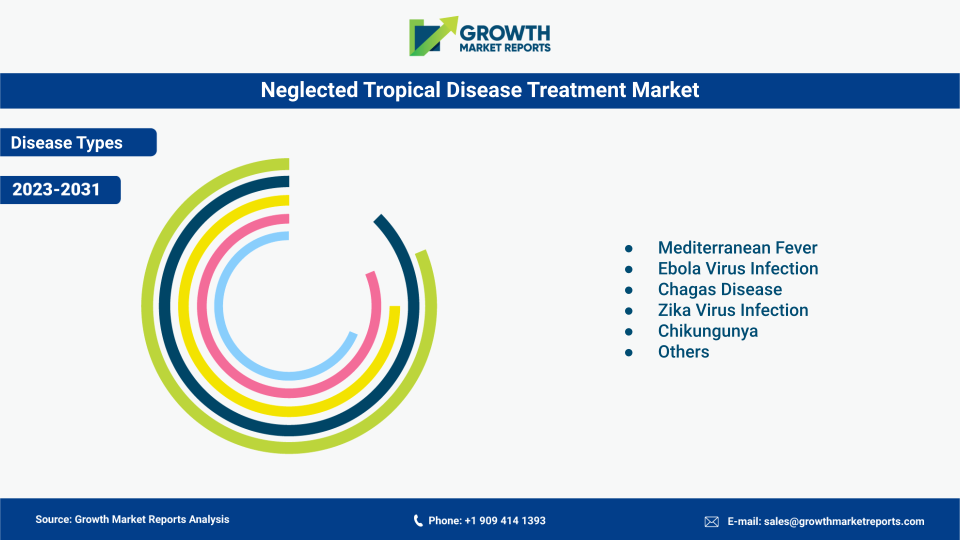
The disease type segment encompasses a wide range of neglected tropical diseases, including dengue, Chagas disease, leishmaniasis, schistosomiasis, lymphatic filariasis, onchocerciasis, and others. Dengue continues to be a major public health concern, particularly in Asia Pacific and Latin America, with recurrent outbreaks driving demand for both therapeutic and preventive interventions. The absence of specific antiviral treatments for dengue has led to significant investments in vaccine development, supportive care, and vector control strategies. Market growth in this segment is closely linked to the success of integrated disease management programs and the availability of affordable diagnostics.

Chagas disease and leishmaniasis are prevalent in Latin America, Africa, and parts of Asia, with millions at risk of infection. The treatment landscape for these diseases is evolving, with new drug candidates and combination therapies under development. The chronic nature of Chagas disease and the emergence of drug-resistant leishmaniasis strains underscore the need for innovative approaches to disease management. Schistosomiasis and lymphatic filariasis, both targeted for elimination by the WHO, have benefited from large-scale MDA campaigns and improved sanitation infrastructure. The market for these diseases is supported by ongoing research into new drug formulations, vaccines, and integrated vector management.

Onchocerciasis, commonly known as river blindness, remains endemic in parts of Africa and Latin America. The success of ivermectin-based MDA programs has significantly reduced disease prevalence, but challenges persist in achieving complete elimination. The “others” category includes a diverse group of NTDs such as yaws, trachoma, and mycetoma, each with unique epidemiological and treatment challenges. Market dynamics in this segment are influenced by disease-specific factors, including transmission patterns, diagnostic capacity, and the availability of effective therapies. The growing emphasis on integrated NTD programs is expected to drive holistic market growth across all disease types.

The disease type segment is also shaped by emerging threats, such as the spread of arboviral diseases due to climate change and urbanization. The increasing mobility of populations and the expansion of vector habitats are contributing to the emergence of NTDs in previously unaffected regions. This trend is prompting governments and healthcare providers to strengthen surveillance, outbreak response, and cross-border collaboration. The market for NTD treatments is thus characterized by both persistent challenges and new opportunities, as stakeholders strive to adapt to a dynamic and evolving disease landscape.

Route of Administration Analysis

The route of administration segment is divided into oral, injectable, topical, and others. Oral administration dominates the market, accounting for the largest share in 2024, owing to its convenience, cost-effectiveness, and suitability for mass drug administration campaigns. Oral drugs such as albendazole, ivermectin, and praziquantel are widely used in community-based interventions, enabling large-scale coverage and improved patient compliance. The ease of storage, transport, and administration further enhances the appeal of oral formulations, particularly in resource-limited settings where healthcare infrastructure may be limited.

Injectable therapies are primarily used for the treatment of severe or refractory cases, as well as for diseases where oral options are limited or ineffective. This route is essential for the management of visceral leishmaniasis and certain forms of Chagas disease, where parenteral administration ensures rapid and reliable drug delivery. However, the need for trained healthcare personnel, sterile equipment, and cold chain logistics can pose significant challenges, particularly in rural and remote areas. The development of long-acting injectables and depot formulations is an emerging trend aimed at reducing the frequency of administration and improving treatment adherence.

Topical therapies play a crucial role in the management of cutaneous NTDs such as mycetoma, leishmaniasis, and yaws. The localized application of creams, ointments, and gels allows for targeted treatment of skin lesions, minimizing systemic side effects and enhancing patient comfort. The market for topical therapies is expected to grow as new formulations and combination products are introduced, addressing unmet needs in dermatological NTDs. The “others” category includes innovative delivery methods such as transdermal patches, buccal tablets, and implantable devices, which are being explored to improve drug bioavailability and patient outcomes.

The route of administration segment is influenced by factors such as disease severity, patient demographics, and healthcare infrastructure. The increasing adoption of patient-centric approaches, including self-administration and community-based delivery models, is shaping the future of NTD treatment. Regulatory agencies are also promoting the development of user-friendly formulations, particularly for pediatric and geriatric populations. As the market evolves, the focus on optimizing drug delivery and minimizing barriers to access will remain central to the effective management of neglected tropical diseases.

Distribution Channel Analysis

The distribution channel segment comprises hospitals, retail pharmacies, online pharmacies, and others. Hospitals represent the largest distribution channel in 2024, serving as the primary point of care for severe and complicated NTD cases. Hospitals are equipped to provide comprehensive diagnostic, therapeutic, and supportive services, including parenteral drug administration and management of adverse events. The integration of NTD treatment into hospital-based programs is supported by government funding, international aid, and partnerships with non-governmental organizations, ensuring the availability of essential medicines and specialized care.

Retail pharmacies play a critical role in the distribution of oral and topical NTD medications, particularly in urban and peri-urban areas. The expansion of pharmacy networks and the increasing availability of generic drugs have improved access to treatment for a broader population. Retail pharmacies also serve as important channels for patient education, counseling, and referral to specialized care when needed. The rise of community pharmacy initiatives and public-private partnerships is further enhancing the reach and impact of retail distribution channels.

Online pharmacies are gaining traction as digital health platforms expand in both developed and developing regions. The convenience of home delivery, competitive pricing, and access to a wide range of products are driving the growth of this segment. Online pharmacies are particularly valuable in remote and underserved areas, where traditional healthcare infrastructure may be lacking. Regulatory frameworks are evolving to ensure the safety, quality, and authenticity of medicines sold through online channels, addressing concerns related to counterfeit and substandard products.

The “others” category includes non-traditional distribution channels such as community health workers, mobile clinics, and humanitarian aid organizations. These channels are essential for reaching marginalized and high-risk populations, particularly in conflict zones and disaster-affected areas. The integration of NTD treatment into broader public health programs, such as maternal and child health or HIV/AIDS initiatives, is further expanding the reach of distribution networks. As the market continues to grow, the optimization and diversification of distribution channels will be critical to ensuring timely and equitable access to life-saving treatments.

End-User Analysis

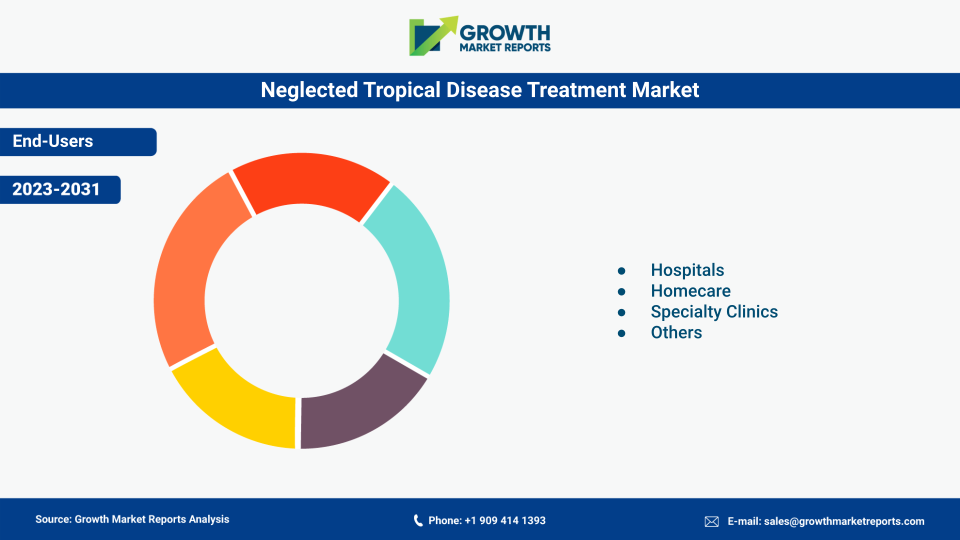
The end-user segment includes hospitals, clinics, research institutes, and others. Hospitals constitute the largest end-user group, accounting for a significant share of the market in 2024. Hospitals provide multidisciplinary care for NTD patients, including diagnosis, treatment, and management of complications. The availability of specialized personnel, diagnostic facilities, and intensive care units makes hospitals the preferred setting for severe and complex cases. Government and donor-funded hospital programs play a crucial role in scaling up NTD interventions and ensuring the delivery of high-quality care.

Clinics are vital for the early detection and management of NTDs, particularly in primary and community healthcare settings. Clinics often serve as the first point of contact for patients, offering screening, counseling, and treatment services. The decentralization of NTD care to clinics is improving access for rural and underserved populations, reducing the burden on tertiary hospitals and facilitating prompt intervention. The integration of NTD services into routine clinic operations is supported by training programs, supply chain improvements, and community engagement initiatives.

Research institutes play a pivotal role in advancing the science of NTDs, driving innovation in drug discovery, vaccine development, and epidemiological surveillance. Collaborative research efforts, often involving academic institutions, governmental agencies, and international organizations, are generating new knowledge and translating scientific breakthroughs into practical solutions. Research institutes also contribute to capacity-building through training, technology transfer, and knowledge dissemination, strengthening the overall NTD response ecosystem.

The “others” category encompasses non-governmental organizations, community-based organizations, and faith-based groups that deliver NTD services in resource-limited settings. These entities often operate at the grassroots level, providing outreach, education, and direct care to marginalized populations. Their contributions are essential to achieving universal health coverage and addressing the social determinants of NTDs. As the market evolves, the collaboration and coordination among diverse end-users will be key to maximizing the impact of NTD interventions and achieving sustainable health outcomes.

Opportunities & Threats

The neglected tropical disease treatment market presents significant opportunities for growth and innovation. One of the most promising areas is the development and deployment of new therapeutics, vaccines, and diagnostic tools. Advances in genomics, biotechnology, and artificial intelligence are accelerating the discovery of novel drug targets and enabling personalized approaches to NTD management. The expansion of public-private partnerships and product development partnerships (PDPs) is fostering a collaborative environment for innovation, reducing the time and cost associated with bringing new products to market. Additionally, the increasing integration of NTD programs with broader health initiatives, such as universal health coverage and non-communicable disease management, is creating synergies that enhance both efficiency and impact. The growing use of digital health platforms, telemedicine, and mobile health applications is further expanding access to care, particularly in remote and underserved areas.

Another major opportunity lies in the expansion of global funding and advocacy efforts. The inclusion of NTDs in the United Nations Sustainable Development Goals (SDGs) has galvanized international action, mobilizing resources from governments, donors, and philanthropic organizations. The growing recognition of the socioeconomic impact of NTDs is prompting increased investments in prevention, control, and treatment. Innovative financing mechanisms, such as results-based financing and social impact bonds, are being explored to sustain and scale up NTD interventions. The strengthening of health systems, including supply chain management, workforce development, and data systems, is enhancing the capacity to deliver effective and equitable NTD services. As global partnerships deepen and new stakeholders engage in the fight against NTDs, the market is poised for sustained growth and impact.

Despite these opportunities, the market faces significant threats and restrainers. One of the most pressing challenges is the emergence of drug resistance, particularly among antiparasitic and antibiotic treatments. Resistance threatens to undermine the gains achieved through mass drug administration and could lead to the resurgence of controlled diseases. The limited pipeline of new drugs and the high cost of R&D pose additional barriers to innovation. Furthermore, the persistent stigma and discrimination associated with NTDs, coupled with weak health infrastructure in endemic regions, hinder effective case detection, treatment, and follow-up. Political instability, conflict, and natural disasters can disrupt NTD programs and exacerbate disease transmission. Addressing these threats will require sustained commitment, adaptive strategies, and coordinated action across sectors and stakeholders.

Regional Outlook

Regionally, the Asia Pacific market leads with a value of approximately USD 810 million in 2024, accounting for the largest share of the global NTD treatment market. The high disease burden, particularly of dengue, leishmaniasis, and lymphatic filariasis, along with robust governmental and international support, underpins this dominance. Countries such as India, Bangladesh, and Indonesia are at the forefront of mass drug administration campaigns and integrated vector management programs. The region’s market is expected to grow at a CAGR of 6.1% through 2033, driven by ongoing investments in healthcare infrastructure, capacity-building, and the adoption of digital health technologies. The increasing collaboration between public and private sectors is further enhancing the region’s ability to respond effectively to NTD challenges.

The Middle East & Africa region follows closely, contributing approximately USD 670 million to the global market in 2024. Sub-Saharan Africa, in particular, remains a hotspot for NTDs such as onchocerciasis, schistosomiasis, and lymphatic filariasis. The region benefits from substantial international aid, technical assistance, and public health campaigns supported by organizations like WHO, UNICEF, and the African Union. Despite progress, challenges such as weak health systems, limited access to clean water and sanitation, and political instability persist. The market in this region is expected to maintain steady growth as efforts to strengthen health systems and expand community-based interventions continue.

Latin America and Europe collectively account for a moderate share of the market, with Latin America contributing around USD 400 million in 2024. Chagas disease and leishmaniasis are the primary focus areas, with regional governments investing in surveillance, vector control, and patient care. Europe, while having a lower disease burden, plays a significant role in R&D, funding, and the global supply chain for NTD treatments. North America contributes a smaller share but is instrumental in driving innovation, advocacy, and international partnerships. The regional outlook is characterized by diverse challenges and opportunities, reflecting the unique epidemiological, economic, and healthcare landscapes of each region.

Neglected Tropical Disease Treatment Market Statistics

Competitor Outlook

The neglected tropical disease treatment market is characterized by a dynamic and evolving competitive landscape, shaped by the interplay of multinational pharmaceutical companies, generic drug manufacturers, non-profit organizations, and academic research institutions. The market is highly fragmented, with a few key players dominating certain segments, particularly in the supply of antiparasitic and antibiotic drugs. Strategic collaborations, licensing agreements, and product development partnerships (PDPs) are common, as stakeholders seek to leverage complementary strengths and resources to address unmet medical needs. The increasing emphasis on innovation, affordability, and accessibility is driving the entry of new players and the expansion of existing portfolios.

Multinational pharmaceutical companies such as GlaxoSmithKline (GSK), Sanofi, and Novartis play a pivotal role in the development, production, and distribution of NTD treatments. These companies often collaborate with global health organizations, governments, and non-profit entities to donate or subsidize essential medicines, particularly for mass drug administration campaigns. The focus on corporate social responsibility and global health impact is prompting these companies to invest in research and development, expand manufacturing capacity, and improve supply chain resilience. The competitive advantage of multinational firms lies in their ability to scale operations, navigate complex regulatory environments, and mobilize resources for large-scale interventions.

Generic drug manufacturers, particularly in India and China, are instrumental in improving the affordability and accessibility of NTD treatments. Companies such as Cipla, Sun Pharma, and Cadila Healthcare produce high-quality generic versions of essential medicines, enabling governments and non-governmental organizations to reach larger populations at lower cost. The increasing adoption of generic drugs is driving price competition and expanding market access, particularly in low- and middle-income countries. The focus on quality assurance, regulatory compliance, and supply chain management is critical to maintaining the credibility and sustainability of generic manufacturers in the NTD market.

Non-profit organizations, product development partnerships (PDPs), and academic research institutions are at the forefront of innovation in the NTD treatment market. Entities such as the Drugs for Neglected Diseases initiative (DNDi), PATH, and the Wellcome Trust are advancing the discovery and development of new therapeutics, diagnostics, and vaccines. These organizations play a crucial role in de-risking early-stage research, facilitating clinical trials, and bridging the gap between scientific discovery and market introduction. The collaborative model of PDPs, which brings together public, private, and philanthropic partners, is driving progress in areas where commercial incentives are limited.

Some of the major companies operating in the neglected tropical disease treatment market include GlaxoSmithKline (GSK), Sanofi, Novartis, Merck & Co., Inc., Bayer AG, Cipla, Sun Pharma, Cadila Healthcare, and Dr. Reddy’s Laboratories. GlaxoSmithKline is a leader in the development and donation of albendazole for lymphatic filariasis and soil-transmitted helminthiases. Sanofi is a key player in the treatment of sleeping sickness (human African trypanosomiasis) and leishmaniasis, with a strong focus on R&D and public health partnerships. Novartis is actively involved in the development of new therapies for Chagas disease and leprosy, leveraging its global research network and expertise.

Merck & Co., Inc. is renowned for its commitment to onchocerciasis elimination through the donation of ivermectin (Mectizan), in partnership with WHO and other organizations. Bayer AG contributes to the treatment of Chagas disease and leishmaniasis, with a portfolio of innovative and generic products. Indian pharmaceutical companies such as Cipla, Sun Pharma, and Cadila Healthcare are expanding their presence in the NTD market, supplying affordable generic drugs and collaborating with international agencies to support disease control programs. Dr. Reddy’s Laboratories is also investing in R&D and market expansion, with a focus on high-burden regions.

The competitive landscape is expected to evolve as new entrants, technological advancements, and strategic alliances reshape the market. The increasing integration of digital health solutions, real-world evidence, and patient-centric approaches is creating new opportunities for differentiation and value creation. As the global community intensifies its efforts to eliminate neglected tropical diseases, the role of industry leaders, innovators, and collaborative networks will be central to achieving sustainable health impact and market growth.

Key Players

  • GlaxoSmithKline plc
  • Sanofi S.A.
  • Johnson & Johnson
  • Pfizer Inc.
  • Novartis AG
  • Bayer AG
  • Merck & Co., Inc.
  • Eisai Co., Ltd.
  • AbbVie Inc.
  • Bristol-Myers Squibb Company
  • AstraZeneca plc
  • Takeda Pharmaceutical Company Limited
  • Boehringer Ingelheim International GmbH
  • Gilead Sciences, Inc.
  • F. Hoffmann-La Roche Ltd
  • Cipla Limited
  • Sun Pharmaceutical Industries Ltd.
  • Dr. Reddy’s Laboratories Ltd.
  • Mylan N.V.
  • Cadila Healthcare Limited (Zydus Cadila)
Neglected Tropical Disease Treatment Market Overview

Segments

The Neglected Tropical Disease Treatment market has been segmented on the basis of

Drug Type

  • Antiparasitic Drugs
  • Antibiotics
  • Antifungals
  • Antivirals
  • Others

Disease Type

  • Dengue
  • Chagas Disease
  • Leishmaniasis
  • Schistosomiasis
  • Lymphatic Filariasis
  • Onchocerciasis
  • Others

Route Of Administration

  • Oral
  • Injectable
  • Topical
  • Others

Distribution Channel

  • Hospitals
  • Retail Pharmacies
  • Online Pharmacies
  • Others

End-User

  • Hospitals
  • Clinics
  • Research Institutes
  • Others

Competitive Landscape

Key players in the global neglected tropical disease treatment market includes Emergent BioSolutionsInc, Moderna, Valneva SE, Johnson & Johnson Services, Inc, DAIICHI SANKYO COMPANY, LIMITED, InsudPharma group, Humanigen, Inc, Savant HWP, Inc, Bayer AG, Eisai Co., Ltd, Oblita Therapeutics, GlaxoSmithKline plc, Themis Bioscience GmbH, Novartis AG, and Amneal Pharmaceuticals LLC. Collaborations, mergers, acquisitions, agreements, and partnerships are strategies adopted by these players to strengthen their geographical presence.
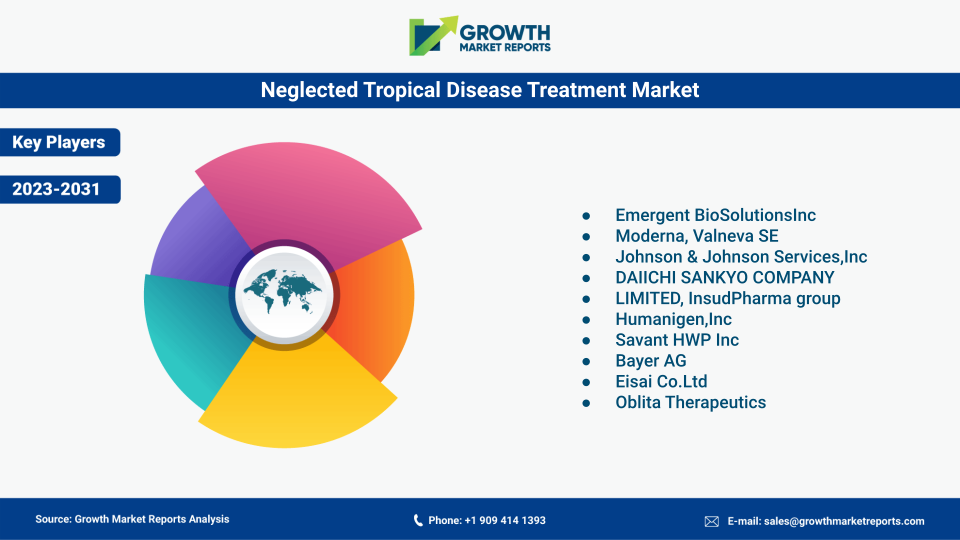

Neglected Tropical Disease Treatment Market Key Players

Frequently Asked Questions

The market is highly fragmented with multinational pharmaceutical companies, generic manufacturers, non-profits, and academic institutions. Strategic collaborations, public-private partnerships, and digital health innovations are shaping future competition.

Opportunities include new drug and vaccine development, digital health integration, and increased global funding. Threats include drug resistance, high R&D costs, stigma, weak health infrastructure, and political instability in endemic regions.

NTD treatments are distributed through hospitals, retail pharmacies, online pharmacies, and non-traditional channels such as community health workers and humanitarian organizations.

Major companies include GlaxoSmithKline (GSK), Sanofi, Novartis, Merck & Co., Bayer AG, Cipla, Sun Pharma, Cadila Healthcare, and Dr. Reddy’s Laboratories, among others.

NTD treatments are administered orally, injectably, topically, and through other innovative methods like transdermal patches and implantable devices. Oral administration is the most common due to its convenience and suitability for mass drug administration.

The market covers dengue, Chagas disease, leishmaniasis, schistosomiasis, lymphatic filariasis, onchocerciasis, and others such as yaws, trachoma, and mycetoma.

The main drug types are antiparasitic drugs, antibiotics, antifungals, antivirals, and supportive therapies. Antiparasitic drugs hold the largest market share, especially for diseases like schistosomiasis and leishmaniasis.

Asia Pacific and Sub-Saharan Africa account for the majority of the global NTD burden and represent the largest markets, with Asia Pacific contributing approximately USD 810 million in 2024.

Key drivers include increased prioritization by global health organizations, expanded healthcare infrastructure in low- and middle-income countries, ongoing drug development, and heightened awareness and funding for NTDs.

As of 2024, the global neglected tropical disease (NTD) treatment market is valued at USD 2.38 billion, with expectations to reach USD 3.89 billion by 2033.

Table Of Content

Chapter 1 Executive Summary
Chapter 2 Assumptions and Acronyms Used
Chapter 3 Research Methodology
Chapter 4 Neglected Tropical Disease Treatment Market Overview
   4.1 Introduction
      4.1.1 Market Taxonomy
      4.1.2 Market Definition
      4.1.3 Macro-Economic Factors Impacting the Market Growth
   4.2 Neglected Tropical Disease Treatment Market Dynamics
      4.2.1 Market Drivers
      4.2.2 Market Restraints
      4.2.3 Market Opportunity
   4.3 Neglected Tropical Disease Treatment Market - Supply Chain Analysis
      4.3.1 List of Key Suppliers
      4.3.2 List of Key Distributors
      4.3.3 List of Key Consumers
   4.4 Key Forces Shaping the Neglected Tropical Disease Treatment Market
      4.4.1 Bargaining Power of Suppliers
      4.4.2 Bargaining Power of Buyers
      4.4.3 Threat of Substitution
      4.4.4 Threat of New Entrants
      4.4.5 Competitive Rivalry
   4.5 Global Neglected Tropical Disease Treatment Market Size & Forecast, 2023-2032
      4.5.1 Neglected Tropical Disease Treatment Market Size and Y-o-Y Growth
      4.5.2 Neglected Tropical Disease Treatment Market Absolute $ Opportunity

Chapter 5 Global Neglected Tropical Disease Treatment Market Analysis and Forecast By Drug Type
   5.1 Introduction
      5.1.1 Key Market Trends & Growth Opportunities By Drug Type
      5.1.2 Basis Point Share (BPS) Analysis By Drug Type
      5.1.3 Absolute $ Opportunity Assessment By Drug Type
   5.2 Neglected Tropical Disease Treatment Market Size Forecast By Drug Type
      5.2.1 Antiparasitic Drugs
      5.2.2 Antibiotics
      5.2.3 Antifungals
      5.2.4 Antivirals
      5.2.5 Others
   5.3 Market Attractiveness Analysis By Drug Type

Chapter 6 Global Neglected Tropical Disease Treatment Market Analysis and Forecast By Disease Type
   6.1 Introduction
      6.1.1 Key Market Trends & Growth Opportunities By Disease Type
      6.1.2 Basis Point Share (BPS) Analysis By Disease Type
      6.1.3 Absolute $ Opportunity Assessment By Disease Type
   6.2 Neglected Tropical Disease Treatment Market Size Forecast By Disease Type
      6.2.1 Dengue
      6.2.2 Chagas Disease
      6.2.3 Leishmaniasis
      6.2.4 Schistosomiasis
      6.2.5 Lymphatic Filariasis
      6.2.6 Onchocerciasis
      6.2.7 Others
   6.3 Market Attractiveness Analysis By Disease Type

Chapter 7 Global Neglected Tropical Disease Treatment Market Analysis and Forecast By Route Of Administration
   7.1 Introduction
      7.1.1 Key Market Trends & Growth Opportunities By Route Of Administration
      7.1.2 Basis Point Share (BPS) Analysis By Route Of Administration
      7.1.3 Absolute $ Opportunity Assessment By Route Of Administration
   7.2 Neglected Tropical Disease Treatment Market Size Forecast By Route Of Administration
      7.2.1 Oral
      7.2.2 Injectable
      7.2.3 Topical
      7.2.4 Others
   7.3 Market Attractiveness Analysis By Route Of Administration

Chapter 8 Global Neglected Tropical Disease Treatment Market Analysis and Forecast By Distribution Channel
   8.1 Introduction
      8.1.1 Key Market Trends & Growth Opportunities By Distribution Channel
      8.1.2 Basis Point Share (BPS) Analysis By Distribution Channel
      8.1.3 Absolute $ Opportunity Assessment By Distribution Channel
   8.2 Neglected Tropical Disease Treatment Market Size Forecast By Distribution Channel
      8.2.1 Hospitals
      8.2.2 Retail Pharmacies
      8.2.3 Online Pharmacies
      8.2.4 Others
   8.3 Market Attractiveness Analysis By Distribution Channel

Chapter 9 Global Neglected Tropical Disease Treatment Market Analysis and Forecast By End-User
   9.1 Introduction
      9.1.1 Key Market Trends & Growth Opportunities By End-User
      9.1.2 Basis Point Share (BPS) Analysis By End-User
      9.1.3 Absolute $ Opportunity Assessment By End-User
   9.2 Neglected Tropical Disease Treatment Market Size Forecast By End-User
      9.2.1 Hospitals
      9.2.2 Clinics
      9.2.3 Research Institutes
      9.2.4 Others
   9.3 Market Attractiveness Analysis By End-User

Chapter 10 Global Neglected Tropical Disease Treatment Market Analysis and Forecast by Region
   10.1 Introduction
      10.1.1 Key Market Trends & Growth Opportunities By Region
      10.1.2 Basis Point Share (BPS) Analysis By Region
      10.1.3 Absolute $ Opportunity Assessment By Region
   10.2 Neglected Tropical Disease Treatment Market Size Forecast By Region
      10.2.1 North America
      10.2.2 Europe
      10.2.3 Asia Pacific
      10.2.4 Latin America
      10.2.5 Middle East & Africa (MEA)
   10.3 Market Attractiveness Analysis By Region

Chapter 11 Coronavirus Disease (COVID-19) Impact 
   11.1 Introduction 
   11.2 Current & Future Impact Analysis 
   11.3 Economic Impact Analysis 
   11.4 Government Policies 
   11.5 Investment Scenario

Chapter 12 North America Neglected Tropical Disease Treatment Analysis and Forecast
   12.1 Introduction
   12.2 North America Neglected Tropical Disease Treatment Market Size Forecast by Country
      12.2.1 U.S.
      12.2.2 Canada
   12.3 Basis Point Share (BPS) Analysis by Country
   12.4 Absolute $ Opportunity Assessment by Country
   12.5 Market Attractiveness Analysis by Country
   12.6 North America Neglected Tropical Disease Treatment Market Size Forecast By Drug Type
      12.6.1 Antiparasitic Drugs
      12.6.2 Antibiotics
      12.6.3 Antifungals
      12.6.4 Antivirals
      12.6.5 Others
   12.7 Basis Point Share (BPS) Analysis By Drug Type 
   12.8 Absolute $ Opportunity Assessment By Drug Type 
   12.9 Market Attractiveness Analysis By Drug Type
   12.10 North America Neglected Tropical Disease Treatment Market Size Forecast By Disease Type
      12.10.1 Dengue
      12.10.2 Chagas Disease
      12.10.3 Leishmaniasis
      12.10.4 Schistosomiasis
      12.10.5 Lymphatic Filariasis
      12.10.6 Onchocerciasis
      12.10.7 Others
   12.11 Basis Point Share (BPS) Analysis By Disease Type 
   12.12 Absolute $ Opportunity Assessment By Disease Type 
   12.13 Market Attractiveness Analysis By Disease Type
   12.14 North America Neglected Tropical Disease Treatment Market Size Forecast By Route Of Administration
      12.14.1 Oral
      12.14.2 Injectable
      12.14.3 Topical
      12.14.4 Others
   12.15 Basis Point Share (BPS) Analysis By Route Of Administration 
   12.16 Absolute $ Opportunity Assessment By Route Of Administration 
   12.17 Market Attractiveness Analysis By Route Of Administration
   12.18 North America Neglected Tropical Disease Treatment Market Size Forecast By Distribution Channel
      12.18.1 Hospitals
      12.18.2 Retail Pharmacies
      12.18.3 Online Pharmacies
      12.18.4 Others
   12.19 Basis Point Share (BPS) Analysis By Distribution Channel 
   12.20 Absolute $ Opportunity Assessment By Distribution Channel 
   12.21 Market Attractiveness Analysis By Distribution Channel
   12.22 North America Neglected Tropical Disease Treatment Market Size Forecast By End-User
      12.22.1 Hospitals
      12.22.2 Clinics
      12.22.3 Research Institutes
      12.22.4 Others
   12.23 Basis Point Share (BPS) Analysis By End-User 
   12.24 Absolute $ Opportunity Assessment By End-User 
   12.25 Market Attractiveness Analysis By End-User

Chapter 13 Europe Neglected Tropical Disease Treatment Analysis and Forecast
   13.1 Introduction
   13.2 Europe Neglected Tropical Disease Treatment Market Size Forecast by Country
      13.2.1 Germany
      13.2.2 France
      13.2.3 Italy
      13.2.4 U.K.
      13.2.5 Spain
      13.2.6 Russia
      13.2.7 Rest of Europe
   13.3 Basis Point Share (BPS) Analysis by Country
   13.4 Absolute $ Opportunity Assessment by Country
   13.5 Market Attractiveness Analysis by Country
   13.6 Europe Neglected Tropical Disease Treatment Market Size Forecast By Drug Type
      13.6.1 Antiparasitic Drugs
      13.6.2 Antibiotics
      13.6.3 Antifungals
      13.6.4 Antivirals
      13.6.5 Others
   13.7 Basis Point Share (BPS) Analysis By Drug Type 
   13.8 Absolute $ Opportunity Assessment By Drug Type 
   13.9 Market Attractiveness Analysis By Drug Type
   13.10 Europe Neglected Tropical Disease Treatment Market Size Forecast By Disease Type
      13.10.1 Dengue
      13.10.2 Chagas Disease
      13.10.3 Leishmaniasis
      13.10.4 Schistosomiasis
      13.10.5 Lymphatic Filariasis
      13.10.6 Onchocerciasis
      13.10.7 Others
   13.11 Basis Point Share (BPS) Analysis By Disease Type 
   13.12 Absolute $ Opportunity Assessment By Disease Type 
   13.13 Market Attractiveness Analysis By Disease Type
   13.14 Europe Neglected Tropical Disease Treatment Market Size Forecast By Route Of Administration
      13.14.1 Oral
      13.14.2 Injectable
      13.14.3 Topical
      13.14.4 Others
   13.15 Basis Point Share (BPS) Analysis By Route Of Administration 
   13.16 Absolute $ Opportunity Assessment By Route Of Administration 
   13.17 Market Attractiveness Analysis By Route Of Administration
   13.18 Europe Neglected Tropical Disease Treatment Market Size Forecast By Distribution Channel
      13.18.1 Hospitals
      13.18.2 Retail Pharmacies
      13.18.3 Online Pharmacies
      13.18.4 Others
   13.19 Basis Point Share (BPS) Analysis By Distribution Channel 
   13.20 Absolute $ Opportunity Assessment By Distribution Channel 
   13.21 Market Attractiveness Analysis By Distribution Channel
   13.22 Europe Neglected Tropical Disease Treatment Market Size Forecast By End-User
      13.22.1 Hospitals
      13.22.2 Clinics
      13.22.3 Research Institutes
      13.22.4 Others
   13.23 Basis Point Share (BPS) Analysis By End-User 
   13.24 Absolute $ Opportunity Assessment By End-User 
   13.25 Market Attractiveness Analysis By End-User

Chapter 14 Asia Pacific Neglected Tropical Disease Treatment Analysis and Forecast
   14.1 Introduction
   14.2 Asia Pacific Neglected Tropical Disease Treatment Market Size Forecast by Country
      14.2.1 China
      14.2.2 Japan
      14.2.3 South Korea
      14.2.4 India
      14.2.5 Australia
      14.2.6 South East Asia (SEA)
      14.2.7 Rest of Asia Pacific (APAC)
   14.3 Basis Point Share (BPS) Analysis by Country
   14.4 Absolute $ Opportunity Assessment by Country
   14.5 Market Attractiveness Analysis by Country
   14.6 Asia Pacific Neglected Tropical Disease Treatment Market Size Forecast By Drug Type
      14.6.1 Antiparasitic Drugs
      14.6.2 Antibiotics
      14.6.3 Antifungals
      14.6.4 Antivirals
      14.6.5 Others
   14.7 Basis Point Share (BPS) Analysis By Drug Type 
   14.8 Absolute $ Opportunity Assessment By Drug Type 
   14.9 Market Attractiveness Analysis By Drug Type
   14.10 Asia Pacific Neglected Tropical Disease Treatment Market Size Forecast By Disease Type
      14.10.1 Dengue
      14.10.2 Chagas Disease
      14.10.3 Leishmaniasis
      14.10.4 Schistosomiasis
      14.10.5 Lymphatic Filariasis
      14.10.6 Onchocerciasis
      14.10.7 Others
   14.11 Basis Point Share (BPS) Analysis By Disease Type 
   14.12 Absolute $ Opportunity Assessment By Disease Type 
   14.13 Market Attractiveness Analysis By Disease Type
   14.14 Asia Pacific Neglected Tropical Disease Treatment Market Size Forecast By Route Of Administration
      14.14.1 Oral
      14.14.2 Injectable
      14.14.3 Topical
      14.14.4 Others
   14.15 Basis Point Share (BPS) Analysis By Route Of Administration 
   14.16 Absolute $ Opportunity Assessment By Route Of Administration 
   14.17 Market Attractiveness Analysis By Route Of Administration
   14.18 Asia Pacific Neglected Tropical Disease Treatment Market Size Forecast By Distribution Channel
      14.18.1 Hospitals
      14.18.2 Retail Pharmacies
      14.18.3 Online Pharmacies
      14.18.4 Others
   14.19 Basis Point Share (BPS) Analysis By Distribution Channel 
   14.20 Absolute $ Opportunity Assessment By Distribution Channel 
   14.21 Market Attractiveness Analysis By Distribution Channel
   14.22 Asia Pacific Neglected Tropical Disease Treatment Market Size Forecast By End-User
      14.22.1 Hospitals
      14.22.2 Clinics
      14.22.3 Research Institutes
      14.22.4 Others
   14.23 Basis Point Share (BPS) Analysis By End-User 
   14.24 Absolute $ Opportunity Assessment By End-User 
   14.25 Market Attractiveness Analysis By End-User

Chapter 15 Latin America Neglected Tropical Disease Treatment Analysis and Forecast
   15.1 Introduction
   15.2 Latin America Neglected Tropical Disease Treatment Market Size Forecast by Country
      15.2.1 Brazil
      15.2.2 Mexico
      15.2.3 Rest of Latin America (LATAM)
   15.3 Basis Point Share (BPS) Analysis by Country
   15.4 Absolute $ Opportunity Assessment by Country
   15.5 Market Attractiveness Analysis by Country
   15.6 Latin America Neglected Tropical Disease Treatment Market Size Forecast By Drug Type
      15.6.1 Antiparasitic Drugs
      15.6.2 Antibiotics
      15.6.3 Antifungals
      15.6.4 Antivirals
      15.6.5 Others
   15.7 Basis Point Share (BPS) Analysis By Drug Type 
   15.8 Absolute $ Opportunity Assessment By Drug Type 
   15.9 Market Attractiveness Analysis By Drug Type
   15.10 Latin America Neglected Tropical Disease Treatment Market Size Forecast By Disease Type
      15.10.1 Dengue
      15.10.2 Chagas Disease
      15.10.3 Leishmaniasis
      15.10.4 Schistosomiasis
      15.10.5 Lymphatic Filariasis
      15.10.6 Onchocerciasis
      15.10.7 Others
   15.11 Basis Point Share (BPS) Analysis By Disease Type 
   15.12 Absolute $ Opportunity Assessment By Disease Type 
   15.13 Market Attractiveness Analysis By Disease Type
   15.14 Latin America Neglected Tropical Disease Treatment Market Size Forecast By Route Of Administration
      15.14.1 Oral
      15.14.2 Injectable
      15.14.3 Topical
      15.14.4 Others
   15.15 Basis Point Share (BPS) Analysis By Route Of Administration 
   15.16 Absolute $ Opportunity Assessment By Route Of Administration 
   15.17 Market Attractiveness Analysis By Route Of Administration
   15.18 Latin America Neglected Tropical Disease Treatment Market Size Forecast By Distribution Channel
      15.18.1 Hospitals
      15.18.2 Retail Pharmacies
      15.18.3 Online Pharmacies
      15.18.4 Others
   15.19 Basis Point Share (BPS) Analysis By Distribution Channel 
   15.20 Absolute $ Opportunity Assessment By Distribution Channel 
   15.21 Market Attractiveness Analysis By Distribution Channel
   15.22 Latin America Neglected Tropical Disease Treatment Market Size Forecast By End-User
      15.22.1 Hospitals
      15.22.2 Clinics
      15.22.3 Research Institutes
      15.22.4 Others
   15.23 Basis Point Share (BPS) Analysis By End-User 
   15.24 Absolute $ Opportunity Assessment By End-User 
   15.25 Market Attractiveness Analysis By End-User

Chapter 16 Middle East & Africa (MEA) Neglected Tropical Disease Treatment Analysis and Forecast
   16.1 Introduction
   16.2 Middle East & Africa (MEA) Neglected Tropical Disease Treatment Market Size Forecast by Country
      16.2.1 Saudi Arabia
      16.2.2 South Africa
      16.2.3 UAE
      16.2.4 Rest of Middle East & Africa (MEA)
   16.3 Basis Point Share (BPS) Analysis by Country
   16.4 Absolute $ Opportunity Assessment by Country
   16.5 Market Attractiveness Analysis by Country
   16.6 Middle East & Africa (MEA) Neglected Tropical Disease Treatment Market Size Forecast By Drug Type
      16.6.1 Antiparasitic Drugs
      16.6.2 Antibiotics
      16.6.3 Antifungals
      16.6.4 Antivirals
      16.6.5 Others
   16.7 Basis Point Share (BPS) Analysis By Drug Type 
   16.8 Absolute $ Opportunity Assessment By Drug Type 
   16.9 Market Attractiveness Analysis By Drug Type
   16.10 Middle East & Africa (MEA) Neglected Tropical Disease Treatment Market Size Forecast By Disease Type
      16.10.1 Dengue
      16.10.2 Chagas Disease
      16.10.3 Leishmaniasis
      16.10.4 Schistosomiasis
      16.10.5 Lymphatic Filariasis
      16.10.6 Onchocerciasis
      16.10.7 Others
   16.11 Basis Point Share (BPS) Analysis By Disease Type 
   16.12 Absolute $ Opportunity Assessment By Disease Type 
   16.13 Market Attractiveness Analysis By Disease Type
   16.14 Middle East & Africa (MEA) Neglected Tropical Disease Treatment Market Size Forecast By Route Of Administration
      16.14.1 Oral
      16.14.2 Injectable
      16.14.3 Topical
      16.14.4 Others
   16.15 Basis Point Share (BPS) Analysis By Route Of Administration 
   16.16 Absolute $ Opportunity Assessment By Route Of Administration 
   16.17 Market Attractiveness Analysis By Route Of Administration
   16.18 Middle East & Africa (MEA) Neglected Tropical Disease Treatment Market Size Forecast By Distribution Channel
      16.18.1 Hospitals
      16.18.2 Retail Pharmacies
      16.18.3 Online Pharmacies
      16.18.4 Others
   16.19 Basis Point Share (BPS) Analysis By Distribution Channel 
   16.20 Absolute $ Opportunity Assessment By Distribution Channel 
   16.21 Market Attractiveness Analysis By Distribution Channel
   16.22 Middle East & Africa (MEA) Neglected Tropical Disease Treatment Market Size Forecast By End-User
      16.22.1 Hospitals
      16.22.2 Clinics
      16.22.3 Research Institutes
      16.22.4 Others
   16.23 Basis Point Share (BPS) Analysis By End-User 
   16.24 Absolute $ Opportunity Assessment By End-User 
   16.25 Market Attractiveness Analysis By End-User

Chapter 17 Competition Landscape 
   17.1 Neglected Tropical Disease Treatment Market: Competitive Dashboard
   17.2 Global Neglected Tropical Disease Treatment Market: Market Share Analysis, 2023
   17.3 Company Profiles (Details – Overview, Financials, Developments, Strategy) 
      17.3.1 GlaxoSmithKline plc
Sanofi S.A.
Johnson & Johnson
Pfizer Inc.
Novartis AG
Bayer AG
Merck & Co., Inc.
Eisai Co., Ltd.
AbbVie Inc.
Bristol-Myers Squibb Company
AstraZeneca plc
Takeda Pharmaceutical Company Limited
Boehringer Ingelheim International GmbH
Gilead Sciences, Inc.
F. Hoffmann-La Roche Ltd
Cipla Limited
Sun Pharmaceutical Industries Ltd.
Dr. Reddy’s Laboratories Ltd.
Mylan N.V.
Cadila Healthcare Limited (Zydus Cadila)

Methodology

Our Clients

Dassault Aviation
Deloitte
Microsoft
General Mills
General Electric
Nestle SA
Honda Motor Co. Ltd.
sinopec