Native Advertising Market Research Report 2033

Native Advertising Market Research Report 2033

Segments - by Format (In-Feed Ads, Search Ads, Recommendation Widgets, Promoted Listings, Others), by Platform (Open Web, Social Media, Video Platforms, Mobile Applications, Others), by Industry Vertical (Retail & E-commerce, Media & Entertainment, Healthcare, BFSI, Automotive, IT & Telecom, Others), by Deployment Mode (On-Premises, Cloud)

https://growthmarketreports.com/Raksha
Author : Raksha Sharma
https://growthmarketreports.com/Vaibhav
Fact-checked by : V. Chandola
https://growthmarketreports.com/Shruti
Editor : Shruti Bhat

Upcoming | Report ID :ICT-SE-4296 | 4.0 Rating | 33 Reviews | 295 Pages | Format : Docx PDF

Report Description


Native Advertising Market Outlook

According to our latest research, the global native advertising market size reached USD 110.2 billion in 2024, reflecting robust momentum driven by the growing demand for non-disruptive digital advertising formats. The market is projected to expand at a CAGR of 8.9% from 2025 to 2033, reaching a forecasted value of USD 241.3 billion by 2033. This impressive growth is primarily attributed to the increasing adoption of content-driven marketing strategies, the proliferation of digital media consumption, and the rising sophistication of adtech platforms that enable seamless blending of ads within organic content environments.

The primary growth factor for the native advertising market is the paradigm shift in consumer behavior, where audiences increasingly prefer ad experiences that are less intrusive and more contextually relevant. As traditional display ads face declining engagement due to banner blindness and ad-blocker usage, brands are turning to native advertising formats that integrate harmoniously into the user experience. This approach not only enhances user engagement but also significantly improves conversion rates, making native ads a preferred choice for marketers aiming to maximize return on investment. The rise of programmatic advertising technologies has further accelerated this trend by allowing for precise targeting and real-time optimization of native ad placements across a multitude of digital platforms.

Another major driver for the native advertising market’s expansion is the explosive growth of mobile and social media usage worldwide. With consumers spending more time on mobile devices and social platforms, advertisers are leveraging native ad formats such as in-feed ads, sponsored content, and promoted listings to reach target audiences in a non-disruptive manner. These formats are especially effective on social media and video platforms, where users are more receptive to branded content that aligns with their interests and browsing habits. Furthermore, advancements in artificial intelligence and machine learning are enabling more personalized and contextually relevant native ad experiences, further boosting engagement and effectiveness.

The market is also witnessing significant traction from industry verticals such as retail & e-commerce, media & entertainment, and BFSI, which are increasingly investing in native advertising to drive brand awareness, lead generation, and customer retention. The ability of native ads to deliver value-driven content and foster authentic brand-consumer relationships is particularly appealing in these sectors. Additionally, the integration of native advertising with omnichannel marketing strategies is enabling brands to deliver consistent messaging across multiple touchpoints, thereby enhancing overall campaign effectiveness. This multi-pronged adoption is expected to sustain the market’s upward trajectory in the coming years.

Regionally, North America continues to dominate the native advertising market, accounting for the largest share in 2024, followed closely by Europe and the Asia Pacific. The high penetration of digital media, advanced adtech infrastructure, and the presence of major industry players have solidified North America’s leadership position. Meanwhile, the Asia Pacific region is emerging as the fastest-growing market, fueled by rapid digitalization, increasing internet penetration, and a burgeoning middle-class population with rising purchasing power. Latin America and the Middle East & Africa are also witnessing steady growth as advertisers in these regions increasingly embrace digital transformation and native ad formats to engage tech-savvy consumers.

Global Native Advertising Industry Outlook

Format Analysis

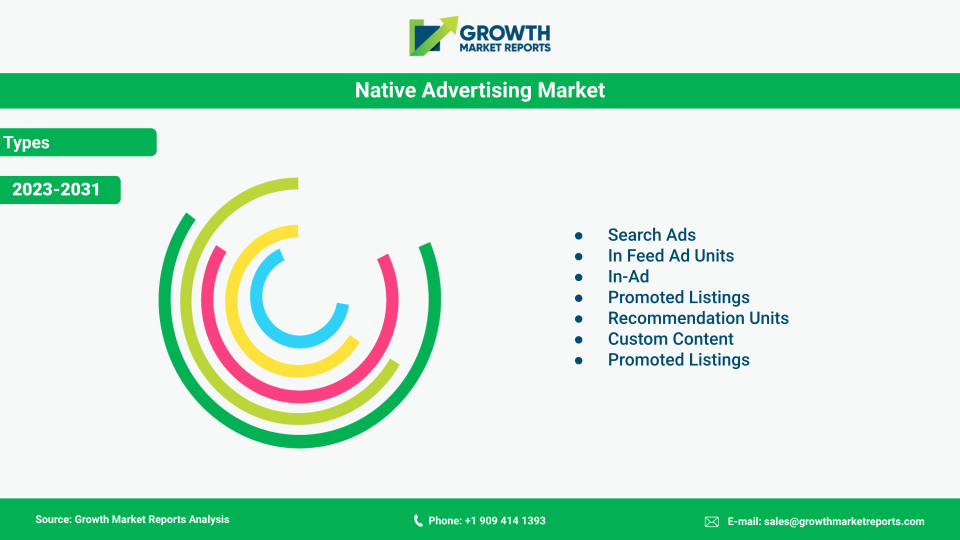
The native advertising market by format is segmented into in-feed ads, search ads, recommendation widgets, promoted listings, and others. Among these, in-feed ads hold the largest share, accounting for a significant portion of total revenues in 2024. In-feed ads are seamlessly integrated within the content feeds of social media platforms, news websites, and mobile applications, making them highly effective in capturing user attention without disrupting the browsing experience. Their contextual relevance and native appearance contribute to higher engagement rates compared to traditional banner ads. Brands across various industry verticals prefer in-feed ads for their ability to deliver personalized, value-driven content that resonates with target audiences, thereby driving stronger brand recall and conversion rates.

Search ads represent another critical segment, leveraging the intent-driven nature of search engine queries to deliver highly relevant ad content to users. These ads are designed to blend with organic search results, increasing the likelihood of user engagement. The effectiveness of search ads in driving qualified leads and conversions has made them a staple in digital marketing strategies, particularly for e-commerce, BFSI, and travel sectors. As search engines continue to enhance their algorithms and ad formats, the potential for search ads to deliver superior ROI remains strong, further fueling their adoption in the native advertising market.

Recommendation widgets are gaining traction as publishers and advertisers seek innovative ways to promote content and products within editorial environments. These widgets typically appear at the end or alongside articles, suggesting related content or sponsored posts that align with the user’s interests. The unobtrusive nature of recommendation widgets enhances user experience while providing advertisers with an effective channel to drive traffic and engagement. Advancements in recommendation algorithms and content personalization are expected to further boost the popularity of this format in the coming years, especially among media and entertainment, retail, and lifestyle brands.

Promoted listings are predominantly used in e-commerce and marketplace platforms to increase the visibility of products or services within search results or category pages. By positioning sponsored items alongside organic listings, promoted listings offer a native and non-intrusive way to influence purchase decisions. This format is particularly effective in driving sales and boosting product discoverability, making it a preferred choice for online retailers and marketplace operators. The continued growth of online shopping and the increasing competition among sellers are expected to drive further investment in promoted listing solutions.

Other native advertising formats, such as branded content and custom integrations, are also contributing to market growth by offering advertisers unique opportunities to engage audiences through immersive storytelling and experiential campaigns. These formats are often tailored to specific platforms or publisher environments, enabling brands to deliver highly relevant and impactful messages. As the native advertising market continues to evolve, the diversification of ad formats will play a crucial role in meeting the changing preferences of consumers and advertisers alike.

Report Scope

Attributes Details
Report Title Native Advertising Market Research Report 2033
By Format In-Feed Ads, Search Ads, Recommendation Widgets, Promoted Listings, Others
By Platform Open Web, Social Media, Video Platforms, Mobile Applications, Others
By Industry Vertical Retail & E-commerce, Media & Entertainment, Healthcare, BFSI, Automotive, IT & Telecom, Others
By Deployment Mode On-Premises, Cloud
Regions Covered North America, Europe, APAC, Latin America, MEA
Base Year 2024
Historic Data 2018-2023
Forecast Period 2025-2033
Number of Pages 295
Number of Tables & Figures 308
Customization Available Yes, the report can be customized as per your need.

Platform Analysis

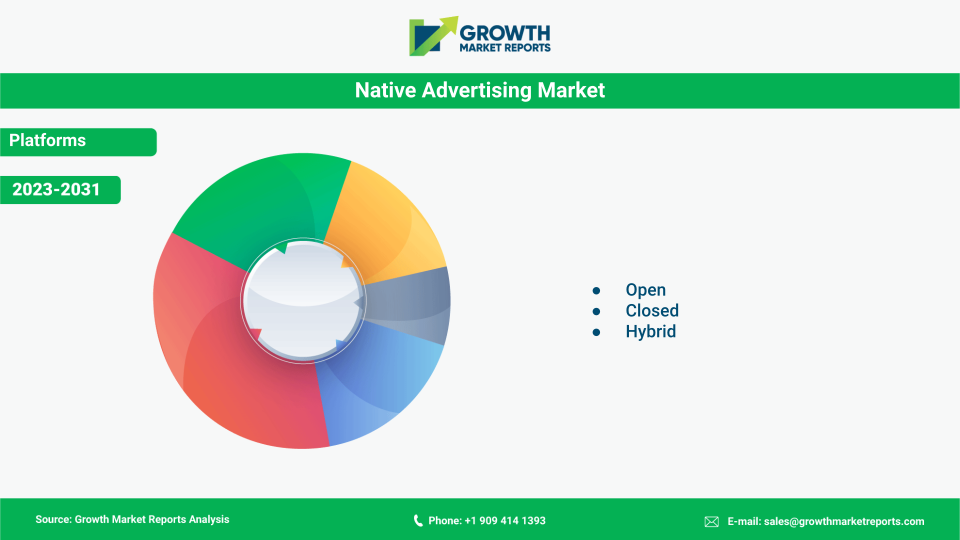
The native advertising market by platform is categorized into open web, social media, video platforms, mobile applications, and others. Open web platforms, which include news websites, blogs, and digital magazines, remain a key channel for native advertising due to their broad reach and diverse audience base. Advertisers leverage open web platforms to deliver in-feed ads, sponsored articles, and recommendation widgets that are contextually aligned with editorial content. The ability to target niche audiences and measure campaign performance in real time has made open web platforms a cornerstone of native advertising strategies, particularly for brands aiming to build thought leadership and drive long-term engagement.

Social media platforms have emerged as the dominant force in the native advertising market, accounting for the largest share of ad spend in 2024. Platforms such as Facebook, Instagram, Twitter, and LinkedIn offer sophisticated ad placement options that enable brands to reach highly targeted audiences with personalized, in-feed content. The interactive and visually engaging nature of social media native ads drives higher engagement rates and fosters authentic brand-consumer interactions. Additionally, the integration of e-commerce features and shoppable posts on social platforms is further enhancing the effectiveness of native advertising in driving conversions and sales.

Video platforms, including YouTube and emerging short-form video apps like TikTok and Instagram Reels, are witnessing exponential growth in native advertising adoption. Video native ads, such as sponsored content and branded integrations, are highly effective in capturing user attention and conveying brand messages in an engaging format. The rise of video consumption across demographics, coupled with advancements in video ad creation and targeting technologies, is fueling the expansion of native advertising on video platforms. Brands are increasingly leveraging influencer partnerships and user-generated content to amplify their reach and drive authentic engagement through native video ads.

Mobile applications represent a critical growth avenue for the native advertising market, given the widespread adoption of smartphones and the increasing time spent on mobile apps. Native ad formats within mobile applications, such as in-feed ads, interstitials, and sponsored content, offer advertisers the ability to deliver contextually relevant messages without disrupting the user experience. The integration of advanced targeting and analytics capabilities in mobile ad networks is enabling brands to optimize campaign performance and maximize ROI. As mobile app usage continues to rise, particularly in emerging markets, the demand for mobile-native advertising solutions is expected to surge.

Other platforms, such as audio streaming services, gaming environments, and connected TV, are also gaining prominence as advertisers seek to diversify their native advertising strategies. These platforms offer unique opportunities to engage audiences through immersive and interactive ad experiences that are seamlessly integrated within the content ecosystem. The ongoing innovation in platform capabilities and ad formats will be instrumental in shaping the future trajectory of the native advertising market.

Industry Vertical Analysis

The native advertising market by industry vertical encompasses retail & e-commerce, media & entertainment, healthcare, BFSI, automotive, IT & telecom, and others. Retail & e-commerce is the leading vertical, accounting for the largest share of native ad spend in 2024. Retailers and online marketplaces are leveraging native advertising to drive product discovery, boost sales, and enhance brand loyalty. In-feed ads, promoted listings, and shoppable content are particularly effective in influencing purchase decisions and guiding consumers through the buying journey. The integration of native advertising with omnichannel marketing strategies enables retailers to deliver consistent and personalized messaging across digital touchpoints, further amplifying campaign effectiveness.

The media & entertainment sector is another major adopter of native advertising, utilizing sponsored content, branded integrations, and recommendation widgets to engage audiences and monetize digital content. Publishers and streaming platforms are increasingly partnering with brands to deliver value-driven native ad experiences that align with editorial and entertainment content. The ability to deliver contextually relevant ads within immersive media environments enhances user engagement and drives higher ad recall. As the consumption of digital content continues to soar, the media & entertainment vertical is expected to witness sustained investment in native advertising solutions.

In the healthcare industry, native advertising is gaining traction as pharmaceutical companies, healthcare providers, and wellness brands seek to educate and engage consumers through informative and non-intrusive content. Native ad formats such as sponsored articles, expert interviews, and patient testimonials are effective in building trust and credibility while complying with regulatory guidelines. The growing emphasis on patient-centric marketing and the increasing demand for credible health information online are driving the adoption of native advertising in the healthcare sector.

The BFSI (Banking, Financial Services, and Insurance) vertical is leveraging native advertising to raise awareness about financial products, educate consumers, and drive lead generation. In-feed ads, sponsored blog posts, and interactive content are commonly used to communicate complex financial concepts in a user-friendly manner. The ability to deliver personalized and targeted native ads based on user behavior and preferences enhances the effectiveness of BFSI marketing campaigns. As digital banking and fintech solutions gain traction, the BFSI sector is expected to further increase its investment in native advertising.

Other industry verticals, including automotive, IT & telecom, and travel, are also recognizing the value of native advertising in building brand affinity and driving engagement. The flexibility of native ad formats allows brands to tailor their messaging to specific audience segments and content environments, resulting in higher relevance and impact. As industry verticals continue to embrace digital transformation, the adoption of native advertising is set to expand across diverse sectors.

Deployment Mode Analysis

The native advertising market by deployment mode is segmented into on-premises and cloud-based solutions. On-premises deployment offers organizations greater control over their advertising infrastructure, data security, and customization capabilities. This deployment mode is preferred by large enterprises and organizations operating in highly regulated industries, such as BFSI and healthcare, where data privacy and compliance are paramount. On-premises solutions enable seamless integration with existing IT systems and provide the flexibility to tailor native advertising platforms to specific business requirements. However, the high upfront costs and ongoing maintenance requirements can be a barrier for small and medium-sized enterprises.

Cloud-based deployment is gaining significant traction in the native advertising market, driven by its scalability, cost-effectiveness, and ease of implementation. Cloud-based native advertising platforms offer advertisers and publishers the ability to manage campaigns, optimize ad placements, and access real-time analytics from anywhere, enhancing operational efficiency and agility. The pay-as-you-go pricing model and minimal infrastructure requirements make cloud deployment an attractive option for businesses of all sizes. Additionally, cloud-based solutions facilitate seamless collaboration among distributed teams and enable rapid integration with third-party adtech tools and data sources.

The growing adoption of cloud computing and the increasing availability of advanced cloud-native adtech platforms are expected to further accelerate the shift towards cloud-based deployment in the native advertising market. Cloud solutions are particularly well-suited for managing large-scale, programmatic native advertising campaigns that require real-time optimization and data-driven decision-making. The ability to leverage artificial intelligence, machine learning, and big data analytics in the cloud is enabling advertisers to deliver highly personalized and contextually relevant native ad experiences at scale.

Despite the advantages of cloud-based deployment, concerns around data privacy, security, and regulatory compliance remain key considerations for organizations evaluating deployment options. As data protection regulations become more stringent globally, native advertising platform providers are investing in robust security measures and compliance frameworks to address these challenges. The ability to offer hybrid deployment models that combine the benefits of on-premises control with the scalability of the cloud is also emerging as a key differentiator in the market.

Overall, the choice of deployment mode in the native advertising market is influenced by factors such as organizational size, industry requirements, budget constraints, and technology infrastructure. As the market continues to evolve, the demand for flexible and scalable deployment options is expected to drive innovation and competition among native advertising platform providers.

Opportunities & Threats

The native advertising market presents significant opportunities for advertisers and publishers seeking to enhance user engagement and drive superior marketing outcomes. One of the most promising opportunities lies in the integration of advanced technologies such as artificial intelligence, machine learning, and natural language processing to deliver hyper-personalized and contextually relevant native ad experiences. These technologies enable advertisers to analyze vast amounts of user data, predict preferences, and optimize ad placements in real time, resulting in higher engagement and conversion rates. Additionally, the growing adoption of programmatic native advertising is streamlining the buying and selling process, allowing for more efficient and scalable campaign management.

Another major opportunity in the native advertising market is the expansion into emerging digital platforms and content formats. With the proliferation of audio streaming, podcasting, connected TV, and immersive media experiences such as augmented and virtual reality, advertisers have new avenues to engage audiences through native ad integrations. The rise of influencer marketing and branded content partnerships also offers innovative ways to deliver authentic and impactful native ad experiences. As consumers increasingly seek out personalized and value-driven content, brands that invest in creative and data-driven native advertising strategies are well-positioned to capture market share and drive long-term growth.

Despite the numerous opportunities, the native advertising market faces certain restrainers that could impede its growth. One of the primary challenges is the growing concern around transparency, disclosure, and consumer trust. As native ads become more sophisticated and seamlessly integrated within content, there is a risk of blurring the line between editorial and sponsored content, potentially leading to consumer confusion and regulatory scrutiny. Ensuring clear labeling and adherence to advertising guidelines is essential to maintaining trust and credibility. Additionally, the increasing use of ad-blockers and privacy regulations such as GDPR and CCPA pose challenges for data-driven targeting and measurement, requiring advertisers to adopt more transparent and privacy-compliant practices.

Regional Outlook

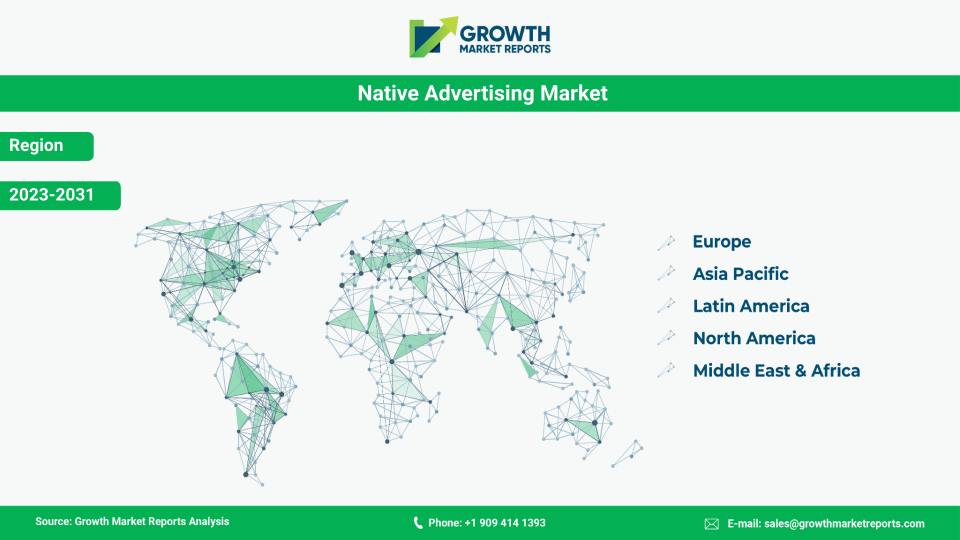
North America remains the largest regional market for native advertising, accounting for USD 46.2 billion of global revenues in 2024. The region’s dominance is underpinned by high digital media penetration, advanced adtech infrastructure, and the presence of leading industry players. Advertisers in the United States and Canada are at the forefront of adopting innovative native ad formats and leveraging data-driven targeting to maximize campaign effectiveness. The region is also characterized by a mature regulatory environment that supports transparency and consumer protection, further bolstering market growth. The continued expansion of digital content consumption and the shift towards mobile-first advertising are expected to sustain North America’s leadership position in the coming years.

Europe is the second-largest market, with revenues reaching USD 29.7 billion in 2024. The region’s growth is driven by increasing investments in digital transformation, rising internet penetration, and the growing popularity of content-driven marketing strategies among brands. Countries such as the United Kingdom, Germany, and France are leading the adoption of native advertising, particularly in the retail, media, and BFSI sectors. The implementation of stringent data privacy regulations, such as the General Data Protection Regulation (GDPR), has prompted advertisers to prioritize transparency and consumer consent, thereby fostering trust and long-term engagement. Europe is expected to witness steady growth, with a projected CAGR of 8.1% through 2033.

The Asia Pacific region is emerging as the fastest-growing native advertising market, with revenues estimated at USD 22.8 billion in 2024. Rapid digitalization, increasing smartphone adoption, and a burgeoning middle-class population are key drivers of market growth in countries such as China, India, Japan, and South Korea. Advertisers in the region are increasingly leveraging native ad formats to reach tech-savvy consumers and capitalize on the explosive growth of social media and mobile applications. The rising influence of local adtech startups and the expansion of global digital platforms are further accelerating the adoption of native advertising in Asia Pacific. The region is expected to outpace global growth rates, presenting lucrative opportunities for market participants.

Native Advertising Market Statistics

Competitor Outlook

The competitive landscape of the native advertising market is characterized by intense rivalry among global and regional players, each vying to capture a larger share of the rapidly expanding digital advertising ecosystem. Leading companies are focused on developing innovative native ad solutions that deliver superior user experiences and measurable business outcomes. The market is witnessing a wave of mergers, acquisitions, and strategic partnerships as players seek to enhance their technology capabilities, expand their geographic footprint, and strengthen their value proposition. The integration of artificial intelligence, machine learning, and data analytics into native advertising platforms is emerging as a key differentiator, enabling advertisers to deliver hyper-personalized and contextually relevant ad experiences at scale.

In addition to established adtech giants, the native advertising market is seeing the entry of new players and startups that are leveraging cutting-edge technologies and creative approaches to disrupt traditional advertising models. These companies are introducing innovative ad formats, content recommendation engines, and programmatic buying solutions that cater to the evolving needs of advertisers and publishers. The growing emphasis on transparency, brand safety, and consumer trust is prompting market participants to invest in robust measurement, verification, and compliance tools. As competition intensifies, the ability to deliver seamless, engaging, and privacy-compliant native ad experiences will be critical to sustaining market leadership.

Key players in the native advertising market include Taboola, Outbrain, TripleLift, Sharethrough, Nativo, Yahoo Native, Revcontent, and MGID, among others. These companies offer a wide range of native advertising solutions, including content discovery platforms, in-feed ad networks, and programmatic native ad exchanges. Taboola and Outbrain are recognized as pioneers in the content recommendation space, enabling publishers to monetize their digital properties through sponsored content and recommendation widgets. TripleLift and Sharethrough are known for their programmatic native ad platforms, which facilitate real-time buying and optimization of native ad placements across multiple channels.

Nativo and Yahoo Native are prominent players offering end-to-end native advertising solutions that enable seamless integration of branded content within premium publisher environments. Revcontent and MGID specialize in content recommendation and audience engagement, helping advertisers reach highly targeted audiences through personalized native ad experiences. These companies are continuously innovating their product offerings, investing in advanced analytics, and expanding their global presence to capture new growth opportunities. The competitive dynamics of the native advertising market are expected to intensify as new entrants and established players alike strive to differentiate themselves through technology, creativity, and customer-centric solutions.

Key Players

  • Taboola
  • Outbrain
  • TripleLift
  • Sharethrough
  • Nativo
  • Yahoo Native (formerly Verizon Media Native)
  • Revcontent
  • MGID
  • Teads
  • Bidtellect
  • AdYouLike
  • Plista
  • StackAdapt
  • Colombia
  • PowerInbox
  • PubNative
  • Beeswax
  • Adblade
  • Ligatus
  • NativeX
Native Advertising Market Overview

Segments

The Native Advertising market has been segmented on the basis of

Format

  • In-Feed Ads
  • Search Ads
  • Recommendation Widgets
  • Promoted Listings
  • Others

Platform

  • Open Web
  • Social Media
  • Video Platforms
  • Mobile Applications
  • Others

Industry Vertical

  • Retail & E-commerce
  • Media & Entertainment
  • Healthcare
  • BFSI
  • Automotive
  • IT & Telecom
  • Others

Deployment Mode

  • On-Premises
  • Cloud

Competitive Landscape

Key players competing in the global native advertising market are Taboola, Inc.; Sharethrough, Inc.; Nativo, Inc.; Triple Lift, Inc.; AdPushup Inc.; IAB Playbook; Instinctive Inc.; Revcontent, LLC; Outbrain Inc.; and StackAdapt Inc.

Some of these players have adopted a series of business development strategies including merger and acquisition, entering into partnerships and collaboration, product launches, and introducing innovative advertising technology to expand their consumer base and enhance their market share.

Native Advertising Market Key Players 

Frequently Asked Questions

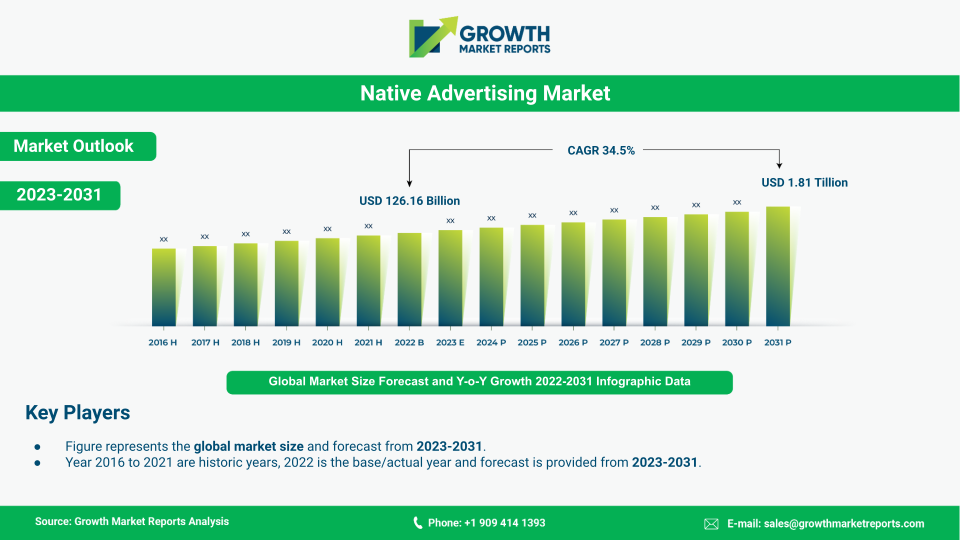
The global native advertising market size was valued at USD 126.16 Billion in 2022 and is projected to surpass USD 1.81 Billion by 2031.

The in feed ad units segment is expected to expand at a rapid growth rate during the forecast period.

The key driver of the market is the rising spending by majority of business organizations on the advertising and marketing industry to promote their several different products and services.

North America is expected to dominate the market during the projected period.

The key players of the market are Taboola, Inc.; Sharethrough, Inc.; Nativo, Inc.; Triple Lift, Inc.; AdPushup Inc.; IAB Playbook; Instinctive Inc.; Revcontent, LLC; Outbrain Inc.; and StackAdapt Inc.

Table Of Content

Chapter 1 Executive Summary
Chapter 2 Assumptions and Acronyms Used
Chapter 3 Research Methodology
Chapter 4 Native Advertising Market Overview
   4.1 Introduction
      4.1.1 Market Taxonomy
      4.1.2 Market Definition
      4.1.3 Macro-Economic Factors Impacting the Market Growth
   4.2 Native Advertising Market Dynamics
      4.2.1 Market Drivers
      4.2.2 Market Restraints
      4.2.3 Market Opportunity
   4.3 Native Advertising Market - Supply Chain Analysis
      4.3.1 List of Key Suppliers
      4.3.2 List of Key Distributors
      4.3.3 List of Key Consumers
   4.4 Key Forces Shaping the Native Advertising Market
      4.4.1 Bargaining Power of Suppliers
      4.4.2 Bargaining Power of Buyers
      4.4.3 Threat of Substitution
      4.4.4 Threat of New Entrants
      4.4.5 Competitive Rivalry
   4.5 Global Native Advertising Market Size & Forecast, 2023-2032
      4.5.1 Native Advertising Market Size and Y-o-Y Growth
      4.5.2 Native Advertising Market Absolute $ Opportunity

Chapter 5 Global Native Advertising Market Analysis and Forecast By Format
   5.1 Introduction
      5.1.1 Key Market Trends & Growth Opportunities By Format
      5.1.2 Basis Point Share (BPS) Analysis By Format
      5.1.3 Absolute $ Opportunity Assessment By Format
   5.2 Native Advertising Market Size Forecast By Format
      5.2.1 In-Feed Ads
      5.2.2 Search Ads
      5.2.3 Recommendation Widgets
      5.2.4 Promoted Listings
      5.2.5 Others
   5.3 Market Attractiveness Analysis By Format

Chapter 6 Global Native Advertising Market Analysis and Forecast By Platform
   6.1 Introduction
      6.1.1 Key Market Trends & Growth Opportunities By Platform
      6.1.2 Basis Point Share (BPS) Analysis By Platform
      6.1.3 Absolute $ Opportunity Assessment By Platform
   6.2 Native Advertising Market Size Forecast By Platform
      6.2.1 Open Web
      6.2.2 Social Media
      6.2.3 Video Platforms
      6.2.4 Mobile Applications
      6.2.5 Others
   6.3 Market Attractiveness Analysis By Platform

Chapter 7 Global Native Advertising Market Analysis and Forecast By Industry Vertical
   7.1 Introduction
      7.1.1 Key Market Trends & Growth Opportunities By Industry Vertical
      7.1.2 Basis Point Share (BPS) Analysis By Industry Vertical
      7.1.3 Absolute $ Opportunity Assessment By Industry Vertical
   7.2 Native Advertising Market Size Forecast By Industry Vertical
      7.2.1 Retail & E-commerce
      7.2.2 Media & Entertainment
      7.2.3 Healthcare
      7.2.4 BFSI
      7.2.5 Automotive
      7.2.6 IT & Telecom
      7.2.7 Others
   7.3 Market Attractiveness Analysis By Industry Vertical

Chapter 8 Global Native Advertising Market Analysis and Forecast By Deployment Mode
   8.1 Introduction
      8.1.1 Key Market Trends & Growth Opportunities By Deployment Mode
      8.1.2 Basis Point Share (BPS) Analysis By Deployment Mode
      8.1.3 Absolute $ Opportunity Assessment By Deployment Mode
   8.2 Native Advertising Market Size Forecast By Deployment Mode
      8.2.1 On-Premises
      8.2.2 Cloud
   8.3 Market Attractiveness Analysis By Deployment Mode

Chapter 9 Global Native Advertising Market Analysis and Forecast by Region
   9.1 Introduction
      9.1.1 Key Market Trends & Growth Opportunities By Region
      9.1.2 Basis Point Share (BPS) Analysis By Region
      9.1.3 Absolute $ Opportunity Assessment By Region
   9.2 Native Advertising Market Size Forecast By Region
      9.2.1 North America
      9.2.2 Europe
      9.2.3 Asia Pacific
      9.2.4 Latin America
      9.2.5 Middle East & Africa (MEA)
   9.3 Market Attractiveness Analysis By Region

Chapter 10 Coronavirus Disease (COVID-19) Impact 
   10.1 Introduction 
   10.2 Current & Future Impact Analysis 
   10.3 Economic Impact Analysis 
   10.4 Government Policies 
   10.5 Investment Scenario

Chapter 11 North America Native Advertising Analysis and Forecast
   11.1 Introduction
   11.2 North America Native Advertising Market Size Forecast by Country
      11.2.1 U.S.
      11.2.2 Canada
   11.3 Basis Point Share (BPS) Analysis by Country
   11.4 Absolute $ Opportunity Assessment by Country
   11.5 Market Attractiveness Analysis by Country
   11.6 North America Native Advertising Market Size Forecast By Format
      11.6.1 In-Feed Ads
      11.6.2 Search Ads
      11.6.3 Recommendation Widgets
      11.6.4 Promoted Listings
      11.6.5 Others
   11.7 Basis Point Share (BPS) Analysis By Format 
   11.8 Absolute $ Opportunity Assessment By Format 
   11.9 Market Attractiveness Analysis By Format
   11.10 North America Native Advertising Market Size Forecast By Platform
      11.10.1 Open Web
      11.10.2 Social Media
      11.10.3 Video Platforms
      11.10.4 Mobile Applications
      11.10.5 Others
   11.11 Basis Point Share (BPS) Analysis By Platform 
   11.12 Absolute $ Opportunity Assessment By Platform 
   11.13 Market Attractiveness Analysis By Platform
   11.14 North America Native Advertising Market Size Forecast By Industry Vertical
      11.14.1 Retail & E-commerce
      11.14.2 Media & Entertainment
      11.14.3 Healthcare
      11.14.4 BFSI
      11.14.5 Automotive
      11.14.6 IT & Telecom
      11.14.7 Others
   11.15 Basis Point Share (BPS) Analysis By Industry Vertical 
   11.16 Absolute $ Opportunity Assessment By Industry Vertical 
   11.17 Market Attractiveness Analysis By Industry Vertical
   11.18 North America Native Advertising Market Size Forecast By Deployment Mode
      11.18.1 On-Premises
      11.18.2 Cloud
   11.19 Basis Point Share (BPS) Analysis By Deployment Mode 
   11.20 Absolute $ Opportunity Assessment By Deployment Mode 
   11.21 Market Attractiveness Analysis By Deployment Mode

Chapter 12 Europe Native Advertising Analysis and Forecast
   12.1 Introduction
   12.2 Europe Native Advertising Market Size Forecast by Country
      12.2.1 Germany
      12.2.2 France
      12.2.3 Italy
      12.2.4 U.K.
      12.2.5 Spain
      12.2.6 Russia
      12.2.7 Rest of Europe
   12.3 Basis Point Share (BPS) Analysis by Country
   12.4 Absolute $ Opportunity Assessment by Country
   12.5 Market Attractiveness Analysis by Country
   12.6 Europe Native Advertising Market Size Forecast By Format
      12.6.1 In-Feed Ads
      12.6.2 Search Ads
      12.6.3 Recommendation Widgets
      12.6.4 Promoted Listings
      12.6.5 Others
   12.7 Basis Point Share (BPS) Analysis By Format 
   12.8 Absolute $ Opportunity Assessment By Format 
   12.9 Market Attractiveness Analysis By Format
   12.10 Europe Native Advertising Market Size Forecast By Platform
      12.10.1 Open Web
      12.10.2 Social Media
      12.10.3 Video Platforms
      12.10.4 Mobile Applications
      12.10.5 Others
   12.11 Basis Point Share (BPS) Analysis By Platform 
   12.12 Absolute $ Opportunity Assessment By Platform 
   12.13 Market Attractiveness Analysis By Platform
   12.14 Europe Native Advertising Market Size Forecast By Industry Vertical
      12.14.1 Retail & E-commerce
      12.14.2 Media & Entertainment
      12.14.3 Healthcare
      12.14.4 BFSI
      12.14.5 Automotive
      12.14.6 IT & Telecom
      12.14.7 Others
   12.15 Basis Point Share (BPS) Analysis By Industry Vertical 
   12.16 Absolute $ Opportunity Assessment By Industry Vertical 
   12.17 Market Attractiveness Analysis By Industry Vertical
   12.18 Europe Native Advertising Market Size Forecast By Deployment Mode
      12.18.1 On-Premises
      12.18.2 Cloud
   12.19 Basis Point Share (BPS) Analysis By Deployment Mode 
   12.20 Absolute $ Opportunity Assessment By Deployment Mode 
   12.21 Market Attractiveness Analysis By Deployment Mode

Chapter 13 Asia Pacific Native Advertising Analysis and Forecast
   13.1 Introduction
   13.2 Asia Pacific Native Advertising Market Size Forecast by Country
      13.2.1 China
      13.2.2 Japan
      13.2.3 South Korea
      13.2.4 India
      13.2.5 Australia
      13.2.6 South East Asia (SEA)
      13.2.7 Rest of Asia Pacific (APAC)
   13.3 Basis Point Share (BPS) Analysis by Country
   13.4 Absolute $ Opportunity Assessment by Country
   13.5 Market Attractiveness Analysis by Country
   13.6 Asia Pacific Native Advertising Market Size Forecast By Format
      13.6.1 In-Feed Ads
      13.6.2 Search Ads
      13.6.3 Recommendation Widgets
      13.6.4 Promoted Listings
      13.6.5 Others
   13.7 Basis Point Share (BPS) Analysis By Format 
   13.8 Absolute $ Opportunity Assessment By Format 
   13.9 Market Attractiveness Analysis By Format
   13.10 Asia Pacific Native Advertising Market Size Forecast By Platform
      13.10.1 Open Web
      13.10.2 Social Media
      13.10.3 Video Platforms
      13.10.4 Mobile Applications
      13.10.5 Others
   13.11 Basis Point Share (BPS) Analysis By Platform 
   13.12 Absolute $ Opportunity Assessment By Platform 
   13.13 Market Attractiveness Analysis By Platform
   13.14 Asia Pacific Native Advertising Market Size Forecast By Industry Vertical
      13.14.1 Retail & E-commerce
      13.14.2 Media & Entertainment
      13.14.3 Healthcare
      13.14.4 BFSI
      13.14.5 Automotive
      13.14.6 IT & Telecom
      13.14.7 Others
   13.15 Basis Point Share (BPS) Analysis By Industry Vertical 
   13.16 Absolute $ Opportunity Assessment By Industry Vertical 
   13.17 Market Attractiveness Analysis By Industry Vertical
   13.18 Asia Pacific Native Advertising Market Size Forecast By Deployment Mode
      13.18.1 On-Premises
      13.18.2 Cloud
   13.19 Basis Point Share (BPS) Analysis By Deployment Mode 
   13.20 Absolute $ Opportunity Assessment By Deployment Mode 
   13.21 Market Attractiveness Analysis By Deployment Mode

Chapter 14 Latin America Native Advertising Analysis and Forecast
   14.1 Introduction
   14.2 Latin America Native Advertising Market Size Forecast by Country
      14.2.1 Brazil
      14.2.2 Mexico
      14.2.3 Rest of Latin America (LATAM)
   14.3 Basis Point Share (BPS) Analysis by Country
   14.4 Absolute $ Opportunity Assessment by Country
   14.5 Market Attractiveness Analysis by Country
   14.6 Latin America Native Advertising Market Size Forecast By Format
      14.6.1 In-Feed Ads
      14.6.2 Search Ads
      14.6.3 Recommendation Widgets
      14.6.4 Promoted Listings
      14.6.5 Others
   14.7 Basis Point Share (BPS) Analysis By Format 
   14.8 Absolute $ Opportunity Assessment By Format 
   14.9 Market Attractiveness Analysis By Format
   14.10 Latin America Native Advertising Market Size Forecast By Platform
      14.10.1 Open Web
      14.10.2 Social Media
      14.10.3 Video Platforms
      14.10.4 Mobile Applications
      14.10.5 Others
   14.11 Basis Point Share (BPS) Analysis By Platform 
   14.12 Absolute $ Opportunity Assessment By Platform 
   14.13 Market Attractiveness Analysis By Platform
   14.14 Latin America Native Advertising Market Size Forecast By Industry Vertical
      14.14.1 Retail & E-commerce
      14.14.2 Media & Entertainment
      14.14.3 Healthcare
      14.14.4 BFSI
      14.14.5 Automotive
      14.14.6 IT & Telecom
      14.14.7 Others
   14.15 Basis Point Share (BPS) Analysis By Industry Vertical 
   14.16 Absolute $ Opportunity Assessment By Industry Vertical 
   14.17 Market Attractiveness Analysis By Industry Vertical
   14.18 Latin America Native Advertising Market Size Forecast By Deployment Mode
      14.18.1 On-Premises
      14.18.2 Cloud
   14.19 Basis Point Share (BPS) Analysis By Deployment Mode 
   14.20 Absolute $ Opportunity Assessment By Deployment Mode 
   14.21 Market Attractiveness Analysis By Deployment Mode

Chapter 15 Middle East & Africa (MEA) Native Advertising Analysis and Forecast
   15.1 Introduction
   15.2 Middle East & Africa (MEA) Native Advertising Market Size Forecast by Country
      15.2.1 Saudi Arabia
      15.2.2 South Africa
      15.2.3 UAE
      15.2.4 Rest of Middle East & Africa (MEA)
   15.3 Basis Point Share (BPS) Analysis by Country
   15.4 Absolute $ Opportunity Assessment by Country
   15.5 Market Attractiveness Analysis by Country
   15.6 Middle East & Africa (MEA) Native Advertising Market Size Forecast By Format
      15.6.1 In-Feed Ads
      15.6.2 Search Ads
      15.6.3 Recommendation Widgets
      15.6.4 Promoted Listings
      15.6.5 Others
   15.7 Basis Point Share (BPS) Analysis By Format 
   15.8 Absolute $ Opportunity Assessment By Format 
   15.9 Market Attractiveness Analysis By Format
   15.10 Middle East & Africa (MEA) Native Advertising Market Size Forecast By Platform
      15.10.1 Open Web
      15.10.2 Social Media
      15.10.3 Video Platforms
      15.10.4 Mobile Applications
      15.10.5 Others
   15.11 Basis Point Share (BPS) Analysis By Platform 
   15.12 Absolute $ Opportunity Assessment By Platform 
   15.13 Market Attractiveness Analysis By Platform
   15.14 Middle East & Africa (MEA) Native Advertising Market Size Forecast By Industry Vertical
      15.14.1 Retail & E-commerce
      15.14.2 Media & Entertainment
      15.14.3 Healthcare
      15.14.4 BFSI
      15.14.5 Automotive
      15.14.6 IT & Telecom
      15.14.7 Others
   15.15 Basis Point Share (BPS) Analysis By Industry Vertical 
   15.16 Absolute $ Opportunity Assessment By Industry Vertical 
   15.17 Market Attractiveness Analysis By Industry Vertical
   15.18 Middle East & Africa (MEA) Native Advertising Market Size Forecast By Deployment Mode
      15.18.1 On-Premises
      15.18.2 Cloud
   15.19 Basis Point Share (BPS) Analysis By Deployment Mode 
   15.20 Absolute $ Opportunity Assessment By Deployment Mode 
   15.21 Market Attractiveness Analysis By Deployment Mode

Chapter 16 Competition Landscape 
   16.1 Native Advertising Market: Competitive Dashboard
   16.2 Global Native Advertising Market: Market Share Analysis, 2023
   16.3 Company Profiles (Details – Overview, Financials, Developments, Strategy) 
      16.3.1 Taboola
Outbrain
TripleLift
Sharethrough
Nativo
Yahoo Native (formerly Verizon Media Native)
Revcontent
MGID
Teads
Bidtellect
AdYouLike
Plista
StackAdapt
Colombia
PowerInbox
PubNative
Beeswax
Adblade
Ligatus
NativeX

Methodology

Our Clients

Siemens Healthcare
Pfizer
General Mills
General Electric
FedEx Logistics
Nestle SA
Dassault Aviation
sinopec