Segments - by Form (Powder, Liquid, Crystals), by Application (Pharmaceuticals, Agrochemicals, Plastics, Rubber, Dyes, Surfactants, Others), by End-Use Industry (Chemical, Textile, Construction, Automotive, Others), by Source (Coal-Tar, Petroleum-Based, Others)
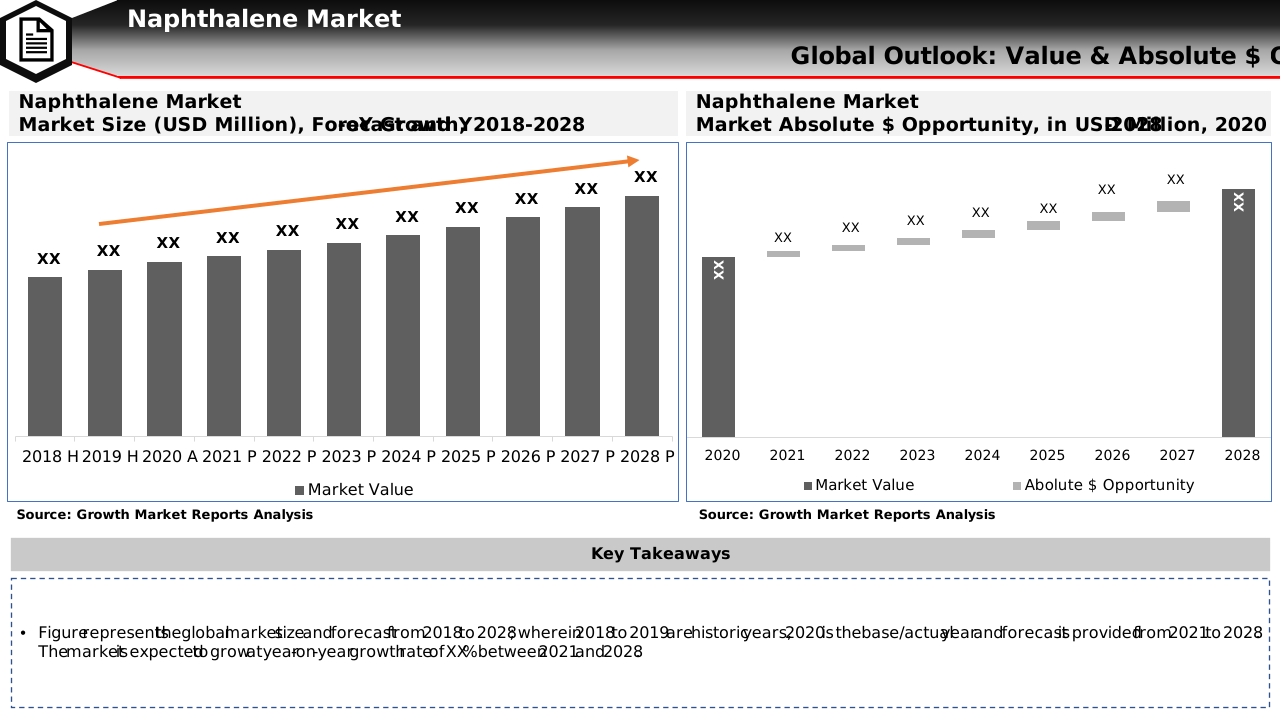
According to our latest research, the global naphthalene market size in 2024 stands at USD 1.68 billion, reflecting a robust demand across various end-use industries. The market is projected to grow at a CAGR of 3.8% during the forecast period, reaching an estimated USD 2.32 billion by 2033. This growth is primarily driven by expanding applications in construction, chemicals, and pharmaceuticals, alongside technological advancements in naphthalene processing and increasing demand for downstream products. As per our latest research, the naphthalene market is poised for steady expansion, underpinned by rising infrastructural investments and evolving industrial requirements worldwide.
One of the principal growth factors for the naphthalene market is the surge in construction activities across emerging economies. Naphthalene derivatives, particularly naphthalene sulfonates, are widely used as superplasticizers in concrete admixtures, enhancing the workability and strength of concrete. The ongoing urbanization in Asia Pacific and the Middle East, coupled with significant government spending on infrastructure, is fueling demand for high-performance construction materials. This, in turn, is amplifying the consumption of naphthalene-based products in the construction sector. Furthermore, the global push for sustainable and long-lasting infrastructure is prompting the adoption of advanced admixtures, where naphthalene remains a key raw material.
Another critical growth driver for the naphthalene market is its essential role in the chemical and pharmaceutical industries. Naphthalene serves as a precursor for a wide array of chemical intermediates, including phthalic anhydride and various dyes, surfactants, and agrochemicals. The pharmaceutical sectorÂ’s expansion, fueled by increased healthcare spending and innovation in drug formulation, is further boosting the demand for high-purity naphthalene. Additionally, the agrochemical industry leverages naphthalene derivatives in the synthesis of pesticides and plant growth regulators, supporting agricultural productivity and food security. The versatility and chemical stability of naphthalene make it indispensable across these rapidly evolving sectors.
Technological advancements and innovations in extraction and purification processes are also propelling the naphthalene market forward. Recent developments in coal-tar and petroleum-based naphthalene production have improved yield efficiency and product purity, reducing operational costs and environmental impact. These advancements are enabling manufacturers to cater to stringent regulatory standards, especially in pharmaceuticals and food-contact applications. Moreover, the integration of circular economy principles and recycling initiatives in the chemical industry is fostering sustainable sourcing and utilization of naphthalene, further enhancing its market prospects. The evolving regulatory landscape, focusing on environmental safety and product quality, is encouraging investments in cleaner production technologies and alternative feedstocks.
The role of 1 Naphthaleneacetic Acid in the agricultural sector is noteworthy, particularly as a plant growth regulator. This compound is extensively used to enhance fruit setting and prevent premature fruit drop in various crops, thereby improving yield and quality. Its application is crucial in the cultivation of fruits such as apples and citrus, where maintaining optimal fruit development is essential for market competitiveness. The increasing focus on sustainable agriculture and the need for efficient crop management solutions are driving the demand for 1 Naphthaleneacetic Acid. As farmers and agricultural enterprises seek to maximize productivity while minimizing environmental impact, the adoption of such growth regulators is expected to rise, contributing to the broader agrochemical market's expansion.
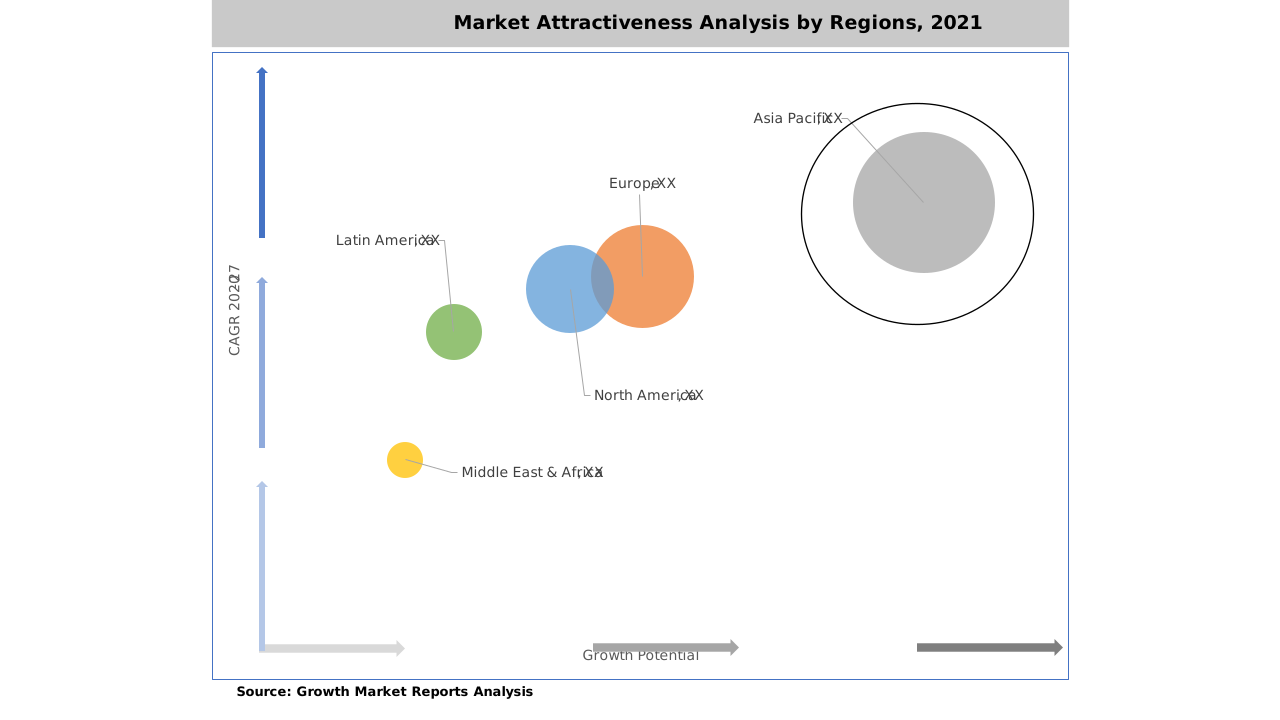
From a regional perspective, Asia Pacific dominates the global naphthalene market, accounting for the largest share in both production and consumption. The rapid industrialization in China, India, and Southeast Asia, combined with the presence of major end-use industries, is driving regional growth. North America and Europe also represent significant markets, characterized by advanced chemical manufacturing capabilities and stringent quality standards. Meanwhile, Latin America and the Middle East & Africa are witnessing gradual market expansion, supported by infrastructural development and increasing investment in downstream chemical industries. Regional dynamics are shaped by local feedstock availability, regulatory frameworks, and evolving end-user demands, influencing the competitive landscape and market growth trajectories.
The naphthalene market is segmented by form into powder, liquid, and crystals, each catering to distinct industrial applications and end-user requirements. Naphthalene powder is the most widely used form, favored for its ease of handling, storage, and transportation. It is extensively utilized in the production of concrete admixtures, dyes, and agrochemicals, where precise dosing and rapid dissolution are critical. The powder formÂ’s high surface area facilitates efficient chemical reactions, making it the preferred choice in several manufacturing processes. Market demand for naphthalene powder is further bolstered by its compatibility with automated dosing systems, enhancing process efficiency and reducing labor costs in large-scale industrial operations.
The liquid form of naphthalene is gaining traction, particularly in applications requiring homogeneous mixing and consistent dispersion. Liquid naphthalene is favored in the plastics and rubber industries, where it serves as a plasticizer and softening agent, improving product flexibility and durability. Its liquid state allows for seamless integration into polymer matrices, ensuring uniform product quality and performance. The growing demand for high-performance plastics and specialty rubber products in automotive and consumer goods sectors is driving the uptake of liquid naphthalene. Additionally, advancements in liquid handling technologies and packaging solutions are making this form increasingly accessible to manufacturers across diverse geographies.
Crystalline naphthalene, while representing a smaller market share, is essential in applications where high purity and controlled release are paramount. The pharmaceutical and agrochemical industries, in particular, rely on crystalline naphthalene for the synthesis of active pharmaceutical ingredients (APIs) and crop protection agents. The crystalline formÂ’s stability and purity make it suitable for applications with stringent quality requirements, such as medicinal formulations and food-contact materials. Manufacturers are investing in advanced crystallization and purification techniques to meet the growing demand for high-purity naphthalene, particularly in regulated markets like North America and Europe. The segmentÂ’s growth is closely tied to advancements in analytical and quality control technologies.
The choice of naphthalene form is often dictated by specific end-use requirements, regulatory standards, and processing technologies. While powder remains dominant due to its versatility and cost-effectiveness, the liquid and crystalline segments are poised for steady growth, driven by evolving application needs and technological innovations. Market players are focusing on product differentiation, offering customized solutions tailored to individual customer specifications. The ongoing shift towards automated and high-precision manufacturing processes is expected to further influence the demand dynamics across the different naphthalene forms, shaping the competitive landscape in the coming years.
| Attributes | Details |
| Report Title | Naphthalene Market Research Report 2033 |
| By Form | Powder, Liquid, Crystals |
| By Application | Pharmaceuticals, Agrochemicals, Plastics, Rubber, Dyes, Surfactants, Others |
| By End-Use Industry | Chemical, Textile, Construction, Automotive, Others |
| By Source | Coal-Tar, Petroleum-Based, Others |
| Regions Covered | North America, Europe, APAC, Latin America, MEA |
| Base Year | 2024 |
| Historic Data | 2018-2023 |
| Forecast Period | 2025-2033 |
| Number of Pages | 300 |
| Number of Tables & Figures | 356 |
| Customization Available | Yes, the report can be customized as per your need. |
NaphthaleneÂ’s diverse range of applications spans across pharmaceuticals, agrochemicals, plastics, rubber, dyes, surfactants, and several other sectors. In the pharmaceutical industry, naphthalene is a key intermediate in the synthesis of various drugs and medicinal compounds. Its chemical stability and reactivity make it suitable for the production of active pharmaceutical ingredients, particularly in anti-inflammatory and anti-infective medications. The rising global demand for pharmaceuticals, driven by increased healthcare spending and an aging population, is significantly boosting naphthalene consumption in this segment. Regulatory compliance and high purity standards are critical in this application, prompting manufacturers to invest in advanced purification technologies.
The agrochemical sector represents another major application area for naphthalene, where it is used in the synthesis of pesticides, insecticides, and plant growth regulators. The growing need for enhanced agricultural productivity and crop protection is fueling demand for naphthalene-based agrochemicals. Emerging economies, with expanding agricultural sectors, are particularly driving this growth, supported by government policies and investments aimed at ensuring food security. The adoption of integrated pest management practices and the development of environmentally friendly agrochemicals are further shaping the application landscape, encouraging innovation and sustainable product development.
In the plastics and rubber industries, naphthalene is utilized as a plasticizer and softening agent, enhancing the flexibility, durability, and performance of finished products. The automotive, construction, and consumer goods sectors are major consumers of naphthalene-based plastics and rubber materials, owing to their superior mechanical properties and cost-effectiveness. The increasing demand for lightweight, high-performance materials in automotive manufacturing and infrastructure projects is driving the uptake of naphthalene derivatives in these applications. Additionally, ongoing research and development efforts are focused on improving product formulations and expanding the range of end-use applications.
The dyes and surfactants segments also contribute significantly to the naphthalene market, leveraging its chemical versatility and stability. Naphthalene is a crucial raw material in the production of synthetic dyes, pigments, and surfactants, which are widely used in textiles, personal care products, and industrial cleaning agents. The global textile industryÂ’s growth, coupled with rising consumer demand for vibrant and durable fabrics, is supporting the expansion of the dyes segment. Similarly, the increasing focus on hygiene and cleanliness in residential and commercial settings is driving demand for naphthalene-based surfactants. The market is witnessing a shift towards eco-friendly and biodegradable formulations, aligning with global sustainability trends.
The naphthalene market is segmented by end-use industry into chemical, textile, construction, automotive, and others, each exhibiting unique demand drivers and growth patterns. The chemical industry is the largest consumer of naphthalene, utilizing it as a precursor for a wide range of intermediates, including phthalic anhydride, dyes, and resins. The sectorÂ’s growth is closely linked to industrialization trends, technological advancements, and evolving regulatory frameworks. Chemical manufacturers are increasingly adopting sustainable practices and investing in cleaner production technologies to meet rising environmental and safety standards.
The textile industry is another significant end-user of naphthalene, primarily in the production of synthetic dyes and finishing agents. The global demand for high-quality, colorfast textiles is driving the consumption of naphthalene-based dyes, particularly in emerging markets with expanding apparel and home furnishing sectors. Technological innovations in textile processing and dyeing techniques are enabling manufacturers to achieve superior product quality and performance, further boosting market growth. The industryÂ’s focus on sustainability and eco-friendly production processes is encouraging the development of non-toxic and biodegradable dye formulations, creating new opportunities for naphthalene derivatives.
In the construction sector, naphthalene-based superplasticizers are widely used in concrete admixtures to enhance workability, strength, and durability. The surge in infrastructure development projects, particularly in Asia Pacific and the Middle East, is driving demand for high-performance construction materials. NaphthaleneÂ’s role in improving concrete properties is critical to the success of modern construction techniques, including precast and high-rise building applications. The sectorÂ’s growth is further supported by government investments in transportation, urban development, and smart city initiatives, which require advanced building materials and technologies.
The automotive industry leverages naphthalene derivatives in the production of lightweight plastics, rubber components, and specialty coatings. The shift towards electric vehicles, fuel efficiency, and emission reduction is prompting manufacturers to adopt high-performance materials, where naphthalene-based products offer significant advantages. The industryÂ’s focus on innovation, safety, and sustainability is driving research and development efforts aimed at enhancing product performance and expanding application areas. The growing demand for electric vehicles and advanced automotive technologies is expected to further boost naphthalene consumption in this segment.
The naphthalene market is segmented by source into coal-tar, petroleum-based, and others, with each source offering distinct advantages and challenges. Coal-tar derived naphthalene remains the dominant segment, accounting for the majority of global production. Coal-tar, a byproduct of coke oven operations in the steel industry, is a rich source of naphthalene and other aromatic hydrocarbons. The widespread availability of coal-tar and established extraction technologies contribute to the segmentÂ’s prominence. However, the environmental impact of coal-tar processing and the shift towards cleaner production methods are prompting manufacturers to explore alternative sources.
Petroleum-based naphthalene is gaining traction as a viable alternative, particularly in regions with abundant petrochemical resources. Advances in catalytic reforming and hydrocracking technologies have enabled the efficient extraction of naphthalene from petroleum fractions, offering improved product purity and reduced environmental footprint. The segmentÂ’s growth is supported by the integration of naphthalene production into existing refinery operations, enabling cost-effective and scalable manufacturing. Petroleum-based naphthalene is particularly favored in high-purity applications, such as pharmaceuticals and food-contact materials, where stringent quality standards are paramount.
Other sources of naphthalene, including biomass and recycled materials, are emerging as part of the industryÂ’s broader sustainability initiatives. The development of bio-based naphthalene production processes, leveraging renewable feedstocks and green chemistry principles, is gaining momentum. These innovations are aimed at reducing reliance on fossil resources, minimizing greenhouse gas emissions, and supporting circular economy objectives. While the market share of alternative sources remains limited, ongoing research and development efforts are expected to drive future growth, particularly in environmentally conscious markets.
The choice of naphthalene source is influenced by factors such as feedstock availability, production costs, regulatory requirements, and end-use application needs. Market players are increasingly adopting a diversified sourcing strategy, balancing traditional and alternative feedstocks to ensure supply security and compliance with evolving sustainability standards. The ongoing transition towards cleaner and more sustainable production methods is expected to reshape the competitive landscape, creating new opportunities for innovation and market differentiation.
The naphthalene market presents significant opportunities driven by the rising demand for high-performance materials in construction, automotive, and chemical industries. The global shift towards infrastructure modernization and sustainable urban development is fueling the adoption of advanced concrete admixtures and building materials, where naphthalene-based superplasticizers play a pivotal role. Additionally, the increasing focus on lightweight and durable materials in automotive manufacturing is creating new application areas for naphthalene derivatives. The ongoing expansion of the pharmaceutical and agrochemical sectors, supported by population growth and evolving healthcare and agricultural needs, is further amplifying market opportunities. Market players are investing in research and development to introduce innovative, value-added products that cater to emerging industry trends and regulatory requirements.
Technological advancements in extraction, purification, and production processes are opening new avenues for market growth. The integration of digital technologies, automation, and process optimization is enhancing operational efficiency, product quality, and environmental performance. The development of bio-based and recycled naphthalene production methods is aligning with global sustainability goals, offering manufacturers a competitive edge in environmentally conscious markets. Strategic collaborations, mergers, and acquisitions are facilitating market expansion, enabling companies to strengthen their product portfolios and geographic reach. The increasing emphasis on circular economy principles and responsible sourcing is encouraging the adoption of sustainable practices across the value chain, creating long-term growth prospects for the naphthalene market.
Despite these opportunities, the naphthalene market faces several restraining factors, including environmental concerns and regulatory challenges associated with traditional production methods. Coal-tar processing, in particular, is associated with significant emissions of hazardous pollutants, prompting stricter environmental regulations and compliance requirements. The volatility of raw material prices, especially for coal and petroleum, can impact production costs and profit margins. Additionally, the availability of alternative materials and substitutes in certain applications poses a threat to naphthalene demand. Market players must navigate these challenges by investing in cleaner technologies, diversifying their sourcing strategies, and enhancing their product offerings to maintain competitiveness and ensure long-term sustainability.
Asia Pacific remains the dominant region in the global naphthalene market, accounting for approximately 56% of total consumption in 2024, translating to a market value of around USD 940 million. The regionÂ’s growth is driven by rapid industrialization, urbanization, and infrastructural development, particularly in China, India, and Southeast Asia. The presence of major end-use industries, such as construction, chemicals, and textiles, is fueling demand for naphthalene and its derivatives. Government initiatives aimed at modernizing infrastructure and promoting sustainable development are further supporting market expansion. Asia Pacific is expected to maintain its leadership position throughout the forecast period, with a projected CAGR of 4.2%.
North America and Europe are mature markets for naphthalene, characterized by advanced manufacturing capabilities, stringent regulatory standards, and a strong focus on sustainability. North America accounted for approximately 18% of the global market in 2024, valued at around USD 302 million, while Europe held a 16% share, equivalent to USD 269 million. These regions are witnessing steady demand from the chemical, pharmaceutical, and automotive industries, supported by ongoing innovation and investment in cleaner production technologies. The emphasis on environmental compliance and product quality is shaping market dynamics, encouraging the adoption of alternative feedstocks and sustainable practices.
Latin America and the Middle East & Africa represent emerging markets for naphthalene, with combined market values of approximately USD 169 million in 2024. These regions are experiencing gradual growth, driven by infrastructural development, industrialization, and increasing investment in downstream chemical industries. Local feedstock availability, regulatory frameworks, and economic conditions play a critical role in shaping market opportunities and challenges. The ongoing expansion of construction and agricultural sectors is expected to drive future demand for naphthalene and its derivatives in these regions, offering attractive growth prospects for market participants.
The global naphthalene market is highly competitive, with a diverse mix of multinational corporations, regional players, and niche manufacturers. The competitive landscape is shaped by factors such as product quality, pricing strategies, technological innovation, and geographic reach. Leading companies are focusing on expanding their production capacities, investing in research and development, and adopting sustainable practices to strengthen their market positions. Strategic collaborations, mergers, and acquisitions are common in the industry, enabling companies to enhance their product portfolios, access new markets, and achieve operational synergies. The ongoing shift towards cleaner and more efficient production technologies is further intensifying competition, prompting market players to differentiate themselves through innovation and value-added offerings.
Product differentiation and customer-centric solutions are key strategies adopted by major players in the naphthalene market. Companies are developing customized products tailored to specific end-use requirements, leveraging advanced formulation and processing technologies. The emphasis on high-purity and specialty grades of naphthalene is particularly pronounced in regulated industries such as pharmaceuticals and food-contact materials. Manufacturers are also investing in digitalization and automation to improve operational efficiency, quality control, and supply chain management. The ability to offer sustainable and environmentally friendly products is becoming increasingly important, as customers and regulators demand greater transparency and responsibility across the value chain.
The competitive environment is also influenced by regional dynamics, with local players leveraging their proximity to raw material sources and end-user industries to gain a competitive edge. In Asia Pacific, for example, several domestic manufacturers have established strong market positions by capitalizing on abundant coal-tar and petroleum resources, as well as robust demand from construction and chemical sectors. In North America and Europe, established players are focusing on innovation, regulatory compliance, and sustainability to maintain their leadership positions. The entry of new players, particularly in emerging markets, is intensifying competition and driving market growth.
Some of the major companies operating in the global naphthalene market include Koppers Inc., Rain Carbon Inc., JFE Chemical Corporation, Himadri Speciality Chemical Ltd., DEZA a.s., and Nippon Steel Chemical & Material Co., Ltd. Koppers Inc. is a leading producer of naphthalene and its derivatives, with a strong focus on sustainable production and product innovation. Rain Carbon Inc. is known for its integrated operations and diversified product portfolio, catering to a wide range of end-use industries. JFE Chemical Corporation and Himadri Speciality Chemical Ltd. are prominent players in the Asia Pacific region, leveraging advanced technologies and strategic partnerships to expand their market presence. DEZA a.s. and Nippon Steel Chemical & Material Co., Ltd. are recognized for their high-quality products and commitment to environmental stewardship. These companies are actively investing in capacity expansions, research and development, and sustainability initiatives to maintain their competitive advantage and drive long-term growth in the global naphthalene market.
The Naphthalene market has been segmented on the basis of
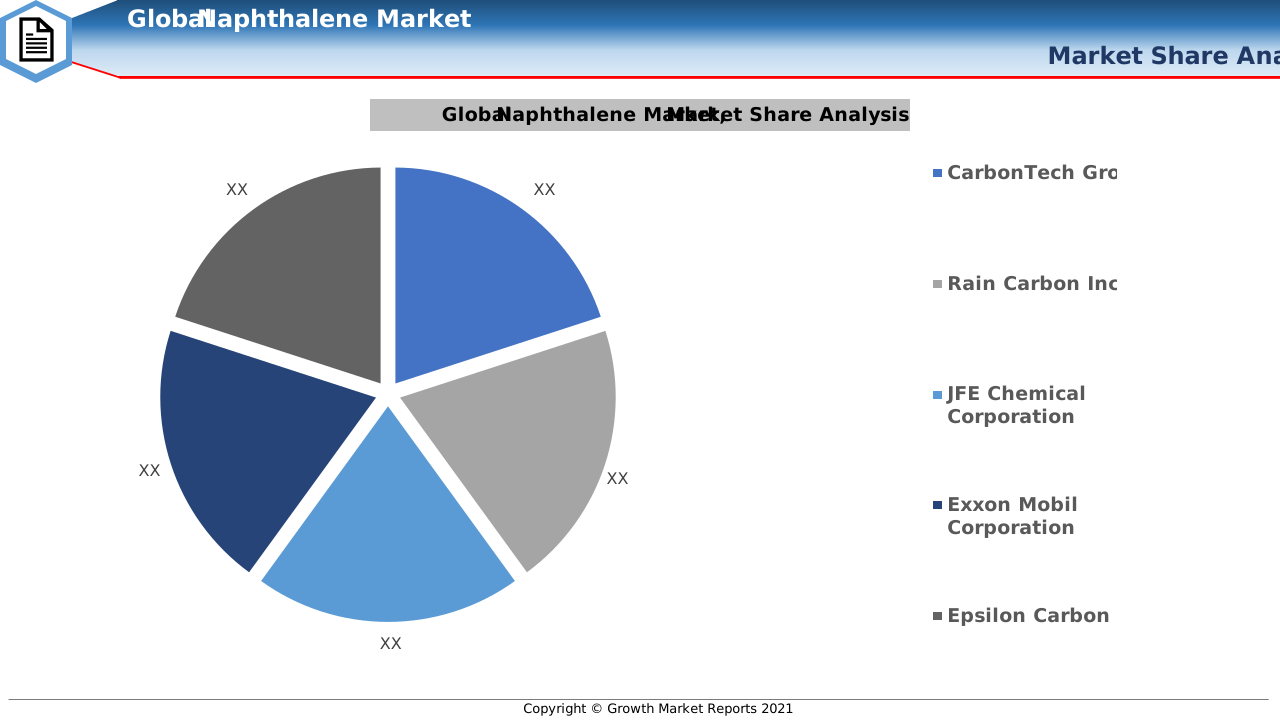
Key players operating in the global Naphthalene market includes CarbonTech Group, Rain Carbon Inc., JFE Chemical Corporation, Exxon Mobil Corporation, and Epsilon Carbon.
Yes, the Naphthalene Market Research Report 2033 offers customization options to meet specific client requirements.
Technological advancements in extraction, purification, and production processes are improving yield, product purity, and environmental performance, enabling compliance with stringent regulations and supporting sustainable practices.
Major companies include BASF SE, Koppers Inc., Rain Carbon Inc., JFE Chemical Corporation, Huntsman International LLC, Arkema Group, Deza a.s., Evonik Industries AG, Haldia Petrochemicals Limited, and Himadri Speciality Chemical Ltd., among others.
Challenges include environmental concerns related to coal-tar processing, regulatory restrictions, volatility in raw material prices, and competition from alternative materials and substitutes.
Key growth drivers include expanding construction activities, increased demand in chemical and pharmaceutical industries, technological advancements in processing, and the push for sustainable and high-performance materials.
Naphthalene is primarily sourced from coal-tar and petroleum-based processes. Coal-tar remains the dominant source, but petroleum-based and bio-based alternatives are gaining traction due to environmental and regulatory considerations.
Naphthalene is available in powder, liquid, and crystalline forms. Powder is most widely used for its ease of handling, liquid is favored in plastics and rubber, and crystalline is essential for high-purity applications in pharmaceuticals and agrochemicals.
Asia Pacific dominates the global naphthalene market, accounting for about 56% of total consumption in 2024, driven by rapid industrialization, urbanization, and infrastructural development, especially in China, India, and Southeast Asia.
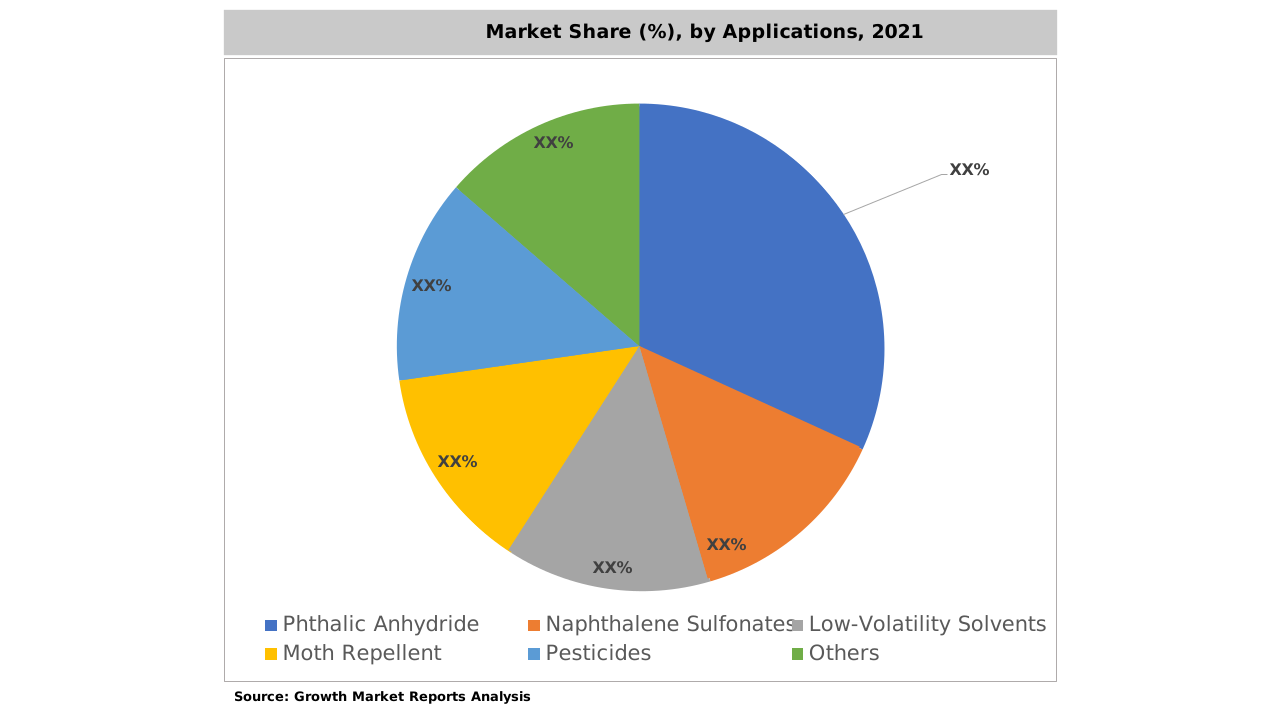
Naphthalene is widely used in pharmaceuticals, agrochemicals, plastics, rubber, dyes, surfactants, and other sectors. It serves as a key intermediate in drug synthesis, pesticide production, plasticizers, and dye manufacturing.
The global naphthalene market size in 2024 is valued at USD 1.68 billion and is projected to reach USD 2.32 billion by 2033, growing at a CAGR of 3.8% during the forecast period.