Segments - by Product Type (Nanomaterials, Nano Devices, Nano Tools, Others), by Application (Healthcare, Electronics, Energy, Chemical Manufacturing, Aerospace & Defense, Others), by End-User (Pharmaceutical & Biotechnology Companies, Research Laboratories, Electronics & Semiconductor Companies, Others)
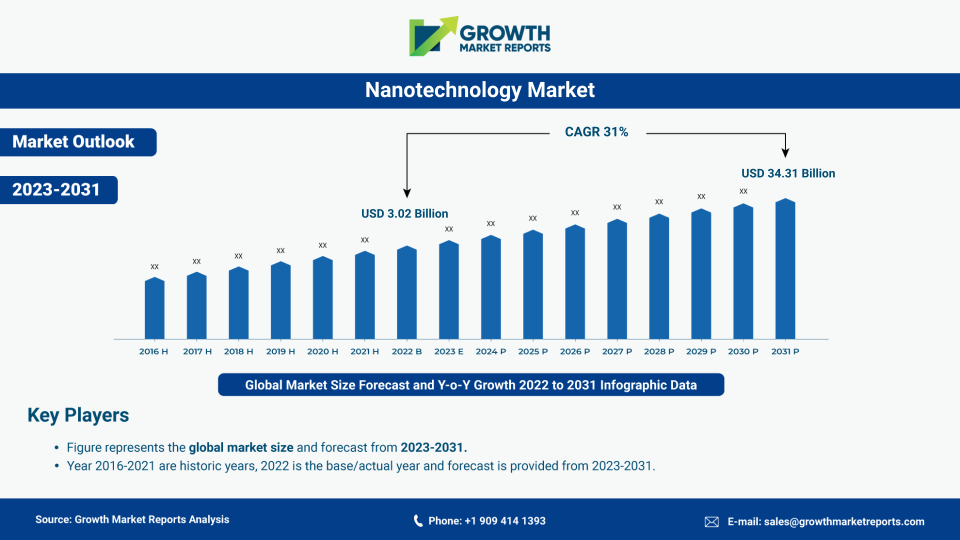
According to our latest research, the global nanotechnology market size reached USD 84.2 billion in 2024, reflecting a robust growth trajectory driven by the increasing integration of nanotechnology across various industries. The market is expected to expand at a CAGR of 15.6% from 2025 to 2033, reaching an estimated USD 282.9 billion by 2033. This significant growth is primarily fueled by advancements in nanomaterials, rising investments in nanotech research, and the expanding adoption of nanotechnology in healthcare, electronics, and energy sectors. As per our latest research, the convergence of nanotechnology with emerging fields such as artificial intelligence and biotechnology is further accelerating innovation and market expansion globally.
One of the primary growth factors for the nanotechnology market is the increasing demand for advanced materials with enhanced properties. Nanomaterials, such as carbon nanotubes, quantum dots, and nanocomposites, are revolutionizing industries by offering superior strength, electrical conductivity, and chemical reactivity compared to their bulk counterparts. Industries ranging from aerospace to healthcare are leveraging these materials to develop lighter, stronger, and more efficient products. For instance, the automotive sector utilizes nanomaterials to manufacture lightweight components that improve fuel efficiency, while the healthcare industry is exploring nanoparticle-based drug delivery systems for targeted therapies. The continuous innovation in nanomaterial synthesis and functionalization is expected to drive their adoption across diverse applications, fueling market growth over the forecast period.
Another key driver is the rapid advancement in nano devices and tools, which are enabling unprecedented precision in diagnostics, manufacturing, and research. Nano devices such as nanosensors, nanorobots, and nanoelectromechanical systems (NEMS) are being increasingly adopted in medical diagnostics, environmental monitoring, and electronics. These devices offer high sensitivity and selectivity, allowing for early disease detection and real-time monitoring of environmental pollutants. Furthermore, the development of sophisticated nano tools, including atomic force microscopes and electron microscopes, has significantly enhanced researchersÂ’ ability to manipulate and characterize materials at the nanoscale. The growing investment in the development of next-generation nano devices and tools is expected to catalyze further growth in the nanotechnology market.
Nanorobotics, a subset of nanotechnology, is gaining significant attention for its potential to revolutionize various fields, particularly in healthcare and manufacturing. These tiny machines, often no larger than a few nanometers, are designed to perform specific tasks at the molecular level. In the medical field, nanorobots are being developed to perform precise drug delivery, targeting diseased cells without affecting healthy tissues, thus minimizing side effects. Additionally, they hold promise for surgical procedures, where they can navigate through the human body to repair tissues or remove blockages. The integration of nanorobotics in manufacturing processes is also being explored, where they could assemble products at a molecular level, leading to unprecedented precision and efficiency. As research progresses, the potential applications of nanorobotics are expected to expand, driving further innovation and growth in the nanotechnology market.
The expanding application of nanotechnology in the energy sector is also a significant growth factor. Nanotechnology is playing a pivotal role in the development of advanced energy storage systems, such as lithium-ion batteries and supercapacitors, which offer higher energy density and faster charging times. Additionally, nanomaterials are being used to improve the efficiency of solar cells and fuel cells, contributing to the global shift towards renewable energy sources. Governments and private organizations are investing heavily in nanotechnology-based energy solutions to address the growing demand for clean and sustainable energy. The integration of nanotechnology in energy generation, storage, and conversion technologies is expected to drive substantial market growth in the coming years.
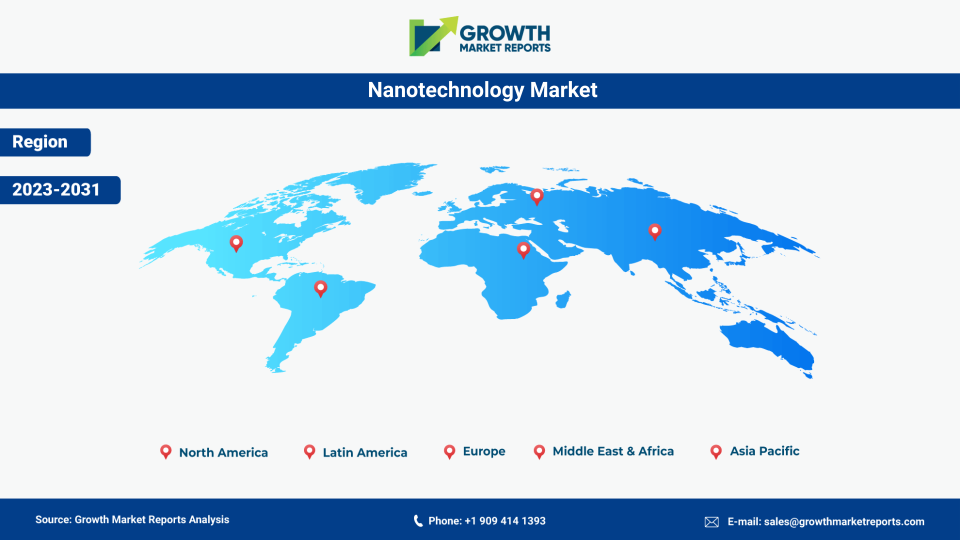
From a regional perspective, Asia Pacific continues to dominate the global nanotechnology market, supported by strong government initiatives, a robust manufacturing base, and significant investments in research and development. Countries such as China, Japan, and South Korea are at the forefront of nanotechnology innovation, with extensive collaborations between academia, industry, and government agencies. North America and Europe are also key markets, driven by a strong focus on healthcare and electronics applications. The presence of leading research institutions and technology companies in these regions ensures a steady stream of innovations and commercialization of nanotech products. Meanwhile, emerging markets in Latin America and the Middle East & Africa are gradually increasing their investments in nanotechnology, aiming to leverage its potential for economic development and industrial diversification.
The nanotechnology market by product type is segmented into nanomaterials, nano devices, nano tools, and others. Nanomaterials represent the largest segment, accounting for a substantial share of the market in 2024. The widespread adoption of nanomaterials is attributed to their unique mechanical, electrical, and chemical properties, which are being harnessed across industries such as healthcare, electronics, and energy. Carbon nanotubes, graphene, and quantum dots are some of the most prominent nanomaterials, with applications ranging from drug delivery to flexible electronics and energy storage. The continuous research and development in the synthesis and functionalization of nanomaterials are expected to further enhance their performance and broaden their application scope, driving segment growth.
The "others" category within the product type segment encompasses a range of emerging nanotechnology products, such as nanocoatings, nanolithography systems, and nano-enabled consumer products. These products are finding applications in areas like surface protection, water purification, and food packaging, where nanoscale enhancements offer tangible benefits. The ongoing exploration of new nanotechnology applications and the commercialization of innovative products are contributing to the expansion of this segment. As regulatory frameworks evolve and consumer awareness increases, the adoption of nano-enabled products is expected to rise, further boosting the overall growth of the nanotechnology market.
| Attributes | Details |
| Report Title | Nanotechnology Market Research Report 2033 |
| By Product Type | Nanomaterials, Nano Devices, Nano Tools, Others |
| By Application | Healthcare, Electronics, Energy, Chemical Manufacturing, Aerospace & Defense, Others |
| By End-User | Pharmaceutical & Biotechnology Companies, Research Laboratories, Electronics & Semiconductor Companies, Others |
| Regions Covered | North America, Europe, APAC, Latin America, MEA |
| Base Year | 2024 |
| Historic Data | 2018-2023 |
| Forecast Period | 2025-2033 |
| Number of Pages | 294 |
| Number of Tables & Figures | 379 |
| Customization Available | Yes, the report can be customized as per your need. |
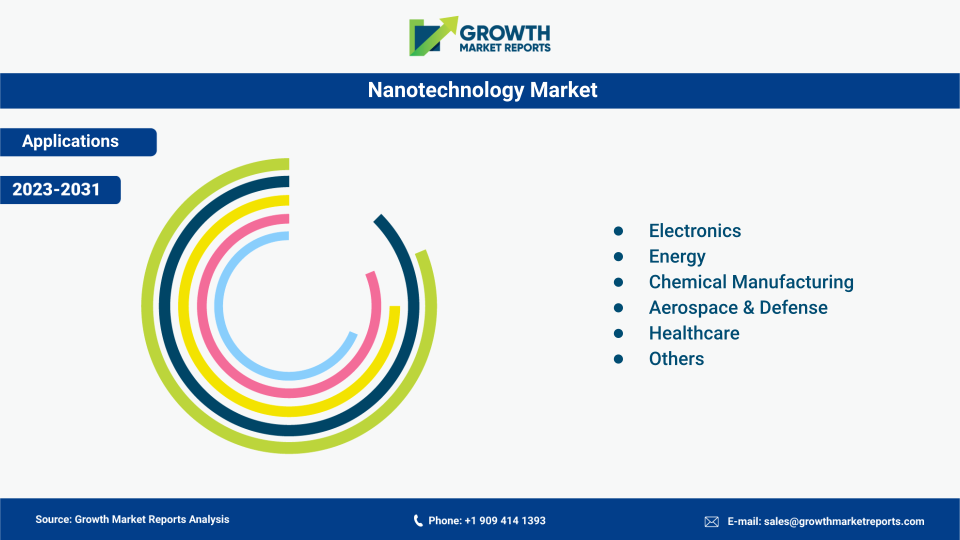
The application segment of the nanotechnology market is highly diverse, encompassing healthcare, electronics, energy, chemical manufacturing, aerospace & defense, and others. Healthcare remains one of the most prominent application areas, driven by the increasing use of nanotechnology in drug delivery, diagnostics, and regenerative medicine. Nanoparticles are being engineered to deliver drugs with high precision, minimizing side effects and improving therapeutic outcomes. In diagnostics, nanoscale biosensors and imaging agents are enabling earlier and more accurate detection of diseases such as cancer and cardiovascular disorders. The ongoing clinical trials and regulatory approvals for nanotechnology-based therapeutics and diagnostic tools are expected to drive substantial growth in the healthcare segment.
The
The nanotechnology market by end-user is segmented into pharmaceutical & biotechnology companies, research laboratories, electronics & semiconductor companies, and others. Pharmaceutical & biotechnology companies represent a major end-user segment, driven by the increasing adoption of nanotechnology in drug discovery, development, and manufacturing. These companies are leveraging nanomaterials and nano devices to develop targeted therapies, improve drug solubility, and enhance the bioavailability of active pharmaceutical ingredients. The growing pipeline of nanotechnology-based drugs and the rising number of partnerships between pharmaceutical companies and nanotechnology startups are expected to drive strong growth in this segment.
The "others" category within the end-user segment includes industries such as aerospace, automotive, energy, and consumer goods, which are increasingly adopting nanotechnology to enhance product performance and differentiate themselves in the market. For example, the automotive industry is utilizing nanomaterials to develop lightweight components and improve fuel efficiency, while the energy sector is leveraging nanotechnology for advanced energy storage and conversion solutions. The expanding range of end-user industries adopting nanotechnology is a testament to its versatility and transformative potential. As awareness of the benefits of nanotechnology increases and regulatory frameworks evolve, the adoption across diverse end-user segments is expected to accelerate, driving overall market growth.
The nanotechnology market presents numerous opportunities for growth and innovation, particularly in emerging application areas such as personalized medicine, smart materials, and environmental remediation. The convergence of nanotechnology with other cutting-edge fields like artificial intelligence, biotechnology, and quantum computing is opening up new possibilities for disruptive innovations. For instance, the development of smart nanomaterials that can respond to external stimuli or self-heal is creating opportunities in sectors ranging from construction to healthcare. Additionally, the increasing focus on sustainability and green technologies is driving the adoption of nanotechnology in areas such as water purification, air filtration, and renewable energy. The availability of public and private funding for nanotechnology research, coupled with supportive government policies, is expected to further catalyze innovation and market expansion.
Another significant opportunity lies in the commercialization of nanotechnology-enabled products and solutions. As research transitions from the laboratory to the marketplace, there is a growing demand for scalable manufacturing processes and robust supply chains. Companies that can successfully bridge the gap between innovation and commercialization stand to gain a competitive advantage in the rapidly evolving nanotechnology market. Furthermore, the increasing collaboration between academia, industry, and government agencies is facilitating the translation of research breakthroughs into practical applications. The global push towards digitalization and Industry 4.0 is also creating new opportunities for the integration of nanotechnology in smart manufacturing, automation, and IoT (Internet of Things) devices.
Despite the immense potential, the nanotechnology market faces several restraining factors, the most prominent being regulatory and safety concerns. The unique properties of nanomaterials, while offering significant benefits, also pose challenges related to toxicity, environmental impact, and long-term health effects. Regulatory agencies are still in the process of developing standardized testing methods and safety guidelines for nanotechnology products, which can delay product approvals and market entry. Additionally, the high cost of research and development, coupled with the complexity of scaling up nanotechnology manufacturing, may pose barriers to entry for small and medium-sized enterprises. Addressing these challenges through robust safety assessments, regulatory harmonization, and cost-effective manufacturing solutions will be critical for the sustained growth of the nanotechnology market.
The Asia Pacific region continues to lead the global nanotechnology market, accounting for approximately 38% of the total market revenue in 2024, which translates to around USD 32 billion. The regionÂ’s dominance is attributed to strong government support, significant investments in research and development, and a thriving manufacturing ecosystem. China, Japan, and South Korea are the primary contributors, with extensive initiatives to promote nanotechnology innovation and commercialization. The presence of leading academic institutions and technology companies, coupled with favorable regulatory environments, is driving the rapid adoption of nanotechnology across industries such as electronics, healthcare, and energy. The Asia Pacific market is projected to grow at a CAGR of 17.2% from 2025 to 2033, outpacing other regions and solidifying its position as the global hub for nanotechnology innovation.
In North America, the nanotechnology market is characterized by a strong focus on healthcare and electronics applications, supported by leading research institutions and technology companies. The region accounted for approximately 29% of the global market in 2024, with a market size of around USD 24.4 billion. The United States is at the forefront, with substantial investments in nanotechnology research from both the public and private sectors. The presence of a robust regulatory framework, coupled with a highly skilled workforce, is facilitating the commercialization of nanotechnology-enabled products. Canada is also making significant strides, particularly in the areas of advanced materials and energy applications. The North American market is expected to maintain steady growth, driven by continuous innovation and the expanding adoption of nanotechnology across diverse industries.
Europe holds a significant share of the global nanotechnology market, accounting for approximately 22% of the total market revenue in 2024, which equates to around USD 18.5 billion. The region is known for its strong emphasis on research and development, supported by initiatives such as the European UnionÂ’s Horizon 2020 program. Germany, the United Kingdom, and France are leading contributors, with a focus on healthcare, electronics, and energy applications. The European market is characterized by a collaborative approach, with extensive partnerships between academia, industry, and government agencies. The growing emphasis on sustainability and green technologies is driving the adoption of nanotechnology in environmental and energy applications. Meanwhile, Latin America and the Middle East & Africa are emerging markets, together accounting for around 11% of the global market, or approximately USD 9.3 billion in 2024. These regions are gradually increasing their investments in nanotechnology, focusing on sectors such as agriculture, energy, and healthcare to drive economic growth and diversification.
The competitive landscape of the nanotechnology market is highly dynamic, characterized by intense innovation, strategic collaborations, and a diverse mix of established players and emerging startups. Leading companies are investing heavily in research and development to maintain their technological edge and expand their product portfolios. The market is witnessing a trend towards vertical integration, with companies seeking to control the entire value chain from raw material sourcing to product manufacturing and commercialization. Intellectual property management is a critical aspect of competition, with firms actively filing patents to protect their innovations and gain a competitive advantage. The presence of well-established research institutions and government agencies is further intensifying the competitive environment, as they collaborate with industry players to accelerate the development and commercialization of nanotechnology solutions.
Strategic partnerships and mergers and acquisitions are becoming increasingly common as companies seek to enhance their capabilities and expand their market presence. Collaborations between technology companies, research institutions, and end-user industries are facilitating the translation of research breakthroughs into commercial products. Companies are also focusing on developing scalable and cost-effective manufacturing processes to meet the growing demand for nanotechnology-enabled products. The ability to rapidly innovate and adapt to changing market dynamics is a key differentiator in the highly competitive nanotechnology market. Furthermore, the entry of new players, particularly startups specializing in niche applications and advanced materials, is adding to the competitive intensity and driving market growth.
The market is also witnessing increased investment from venture capitalists and private equity firms, who are recognizing the transformative potential of nanotechnology across multiple industries. These investments are enabling startups to accelerate product development, scale up manufacturing, and expand into new markets. The growing focus on sustainability and green technologies is creating new opportunities for companies specializing in environmental and energy applications of nanotechnology. Regulatory compliance and safety considerations remain important competitive factors, with companies investing in robust testing and certification processes to ensure the safety and efficacy of their products.
Some of the major companies operating in the global nanotechnology market include Thermo Fisher Scientific Inc., Bruker Corporation, Nanosys Inc., Nanoco Group plc, Ablynx NV, Advanced Nano Products Co. Ltd., Altair Nanotechnologies Inc., and Nano Dimension Ltd. These companies are at the forefront of innovation, offering a wide range of nanomaterials, nano devices, and nano tools for various applications. Thermo Fisher Scientific, for example, is a leading provider of advanced instrumentation and analytical tools for nanotechnology research and development. Bruker Corporation specializes in high-performance scientific instruments and solutions for nanoscale analysis. Nanosys Inc. is a pioneer in the development of quantum dot technologies for display and lighting applications, while Nanoco Group plc focuses on the commercialization of cadmium-free quantum dots for electronics and healthcare.
Ablynx NV, a subsidiary of Sanofi, is a key player in the development of nanobody-based therapeutics for the treatment of various diseases. Advanced Nano Products Co. Ltd. is known for its expertise in the production of advanced nanomaterials for electronics and energy applications. Altair Nanotechnologies Inc. specializes in the development of advanced battery materials and energy storage solutions, while Nano Dimension Ltd. is a leader in the field of additive manufacturing and 3D printing of electronics using nanotechnology. These companies are continuously expanding their product offerings and investing in research and development to address the evolving needs of their customers and maintain their leadership positions in the global nanotechnology market.
In addition to these major players, the market is characterized by the presence of numerous small and medium-sized enterprises (SMEs) and startups that are driving innovation in niche areas. These companies are often focused on specific applications such as nanomedicine, nanoelectronics, or environmental nanotechnology, and are leveraging their agility and specialized expertise to develop cutting-edge solutions. The increasing collaboration between large corporations and startups is fostering a vibrant innovation ecosystem, accelerating the commercialization of new nanotechnology products and solutions. As the market continues to evolve, the ability to innovate, collaborate, and adapt to changing market dynamics will be critical for success in the highly competitive nanotechnology landscape.
The Nanotechnology market has been segmented on the basis of
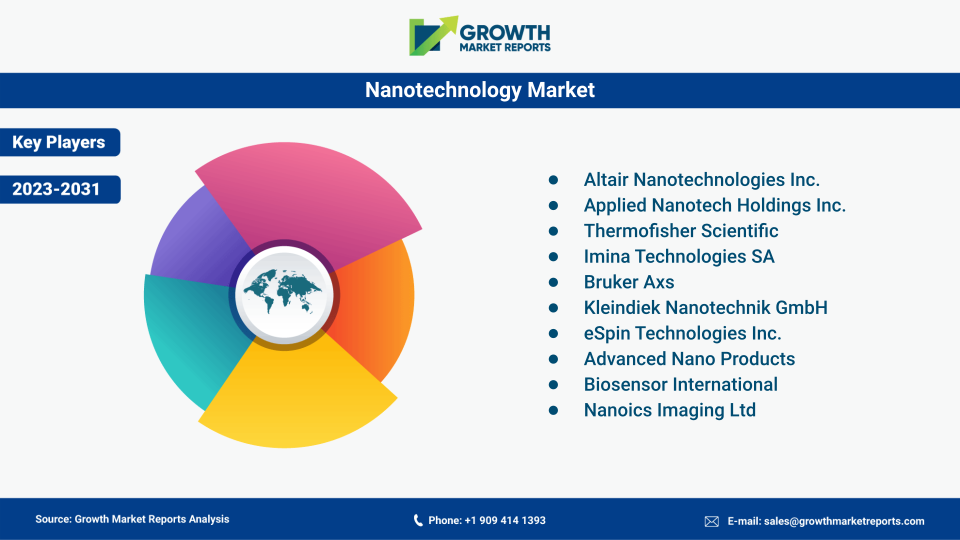
Key players competing in the global nanotechnology market are Altair Nanotechnologies Inc.; Applied Nanotech Holdings Inc.; Thermofisher Scientific; Imina Technologies SA; Bruker Axs; Kleindiek Nanotechnik GmbH; eSpin Technologies Inc.; Advanced Nano Products; Biosensor International; and Nanoics Imaging Ltd.
These players are widely engaged in various business development strategies including mergers & acquisitions, collaborations, agreements, and partnerships to strengthen their geographical presence and expand their consumer base globally.
Nanotechnology is enhancing the efficiency of solar cells, batteries, and fuel cells, enabling higher energy density, faster charging, and supporting the shift to renewable energy.
Major players include Thermo Fisher Scientific Inc., Bruker Corporation, Nanosys Inc., Nanoco Group plc, Ablynx NV, Advanced Nano Products Co. Ltd., and Altair Nanotechnologies Inc.
Key challenges include regulatory and safety concerns, high R&D costs, scaling up manufacturing, and the need for standardized testing and safety guidelines.
Growth opportunities include personalized medicine, smart materials, environmental remediation, renewable energy, and the convergence of nanotechnology with AI and biotechnology.
Asia Pacific leads the global nanotechnology market, followed by North America and Europe. China, Japan, South Korea, the US, and Germany are key contributors.
In healthcare, nanotechnology is used for targeted drug delivery, advanced diagnostics, regenerative medicine, and the development of nanoparticle-based therapies.
The main nanotechnology product types are nanomaterials, nano devices, nano tools, and other emerging products such as nanocoatings and nano-enabled consumer goods.
Key industries driving nanotechnology adoption include healthcare, electronics, energy, chemical manufacturing, aerospace, and defense.
The nanotechnology market is expected to grow at a CAGR of 15.6% from 2025 to 2033, reaching an estimated USD 282.9 billion by 2033.
As of 2024, the global nanotechnology market size reached USD 84.2 billion, with strong growth expected in the coming years.