Music Streaming Market Research Report 2033

Music Streaming Market Research Report 2033

Segments - by Service Type (On-Demand Streaming, Live Streaming), by Platform (Apps, Browsers), by Content Type (Audio, Video), by Revenue Model (Subscription-Based, Ad-Supported), by End-User (Individual, Commercial)

https://growthmarketreports.com/Debadatta
Author : Debadatta Patel
https://growthmarketreports.com/Vaibhav
Fact-checked by : V. Chandola
https://growthmarketreports.com/Shruti
Editor : Shruti Bhat

Upcoming | Report ID :CG-387 | 4.3 Rating | 74 Reviews | 297 Pages | Format : Docx PDF

Report Description


Music Streaming Market Outlook

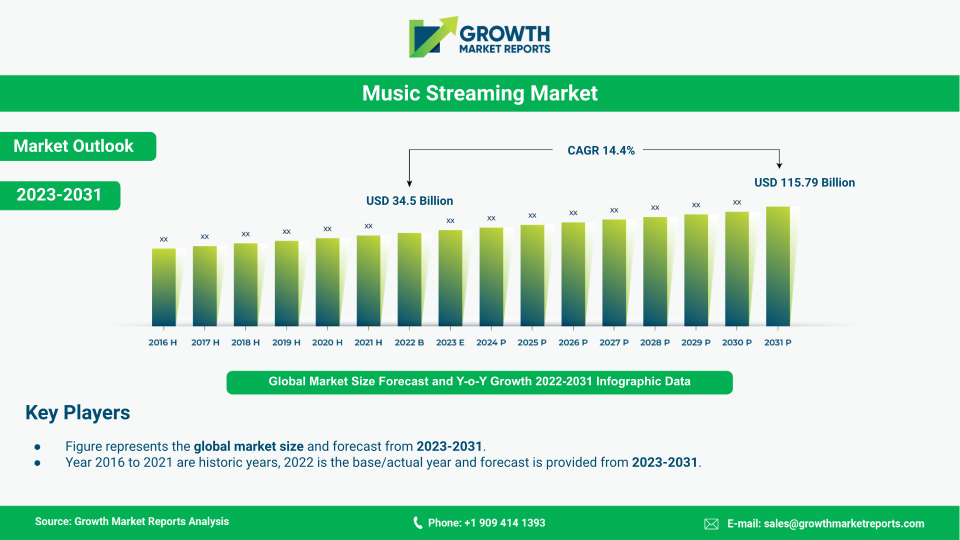
According to our latest research, the global music streaming market size reached USD 42.6 billion in 2024, with a robust year-on-year growth driven by increasing digital adoption and changing consumer preferences. The market is projected to expand at a CAGR of 14.2% from 2025 to 2033, reaching a forecasted value of USD 121.4 billion by 2033. This impressive growth trajectory is primarily attributed to the proliferation of smart devices, widespread internet penetration, and the evolution of on-demand content consumption habits worldwide.

One of the most significant growth factors fueling the music streaming market is the rapid increase in smartphone penetration and affordable data plans across both developed and emerging economies. Consumers are increasingly shifting from traditional music consumption methods, such as physical media and downloads, to digital streaming platforms that offer instant access to vast music libraries. The integration of advanced technologies like artificial intelligence for personalized recommendations and curated playlists is also enhancing user engagement and retention, further propelling the market’s expansion. Additionally, strategic partnerships between music labels and streaming platforms are ensuring a steady flow of exclusive content, which is attracting a broader audience base and driving revenue growth.

Another critical driver is the diversification of revenue models, particularly the rise of subscription-based and ad-supported services. Subscription-based platforms offer ad-free experiences and exclusive content, appealing to premium users, while ad-supported models cater to price-sensitive segments, expanding the market’s reach. The increasing adoption of high-fidelity audio and video content, coupled with the growing popularity of live streaming events and virtual concerts, is also contributing to the market’s momentum. Music streaming services are capitalizing on these trends by continuously innovating their offerings, integrating social features, and supporting independent artists, which collectively enhance user satisfaction and loyalty.

The music streaming ecosystem is also benefiting from the expansion of smart home devices and connected ecosystems. Smart speakers, wearables, and in-car entertainment systems are becoming integral to how consumers access and experience music. This multi-device integration is not only boosting user convenience but also increasing the average time spent on streaming platforms. Moreover, the globalization of music content, with the rise of non-English and regional music genres, is enabling platforms to tap into previously underserved markets. As a result, music streaming services are investing heavily in localization, personalized recommendations, and cross-platform accessibility to cater to diverse user preferences and expand their global footprint.

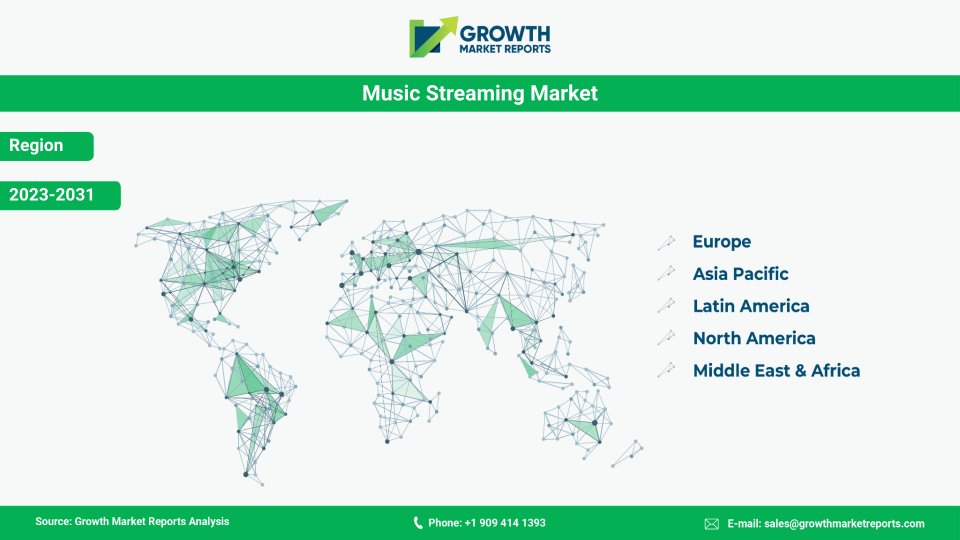
From a regional perspective, North America continues to dominate the music streaming market, accounting for the largest revenue share in 2024, followed closely by Europe and Asia Pacific. The United States remains the single largest market, driven by high disposable incomes, advanced digital infrastructure, and a mature music industry ecosystem. However, Asia Pacific is emerging as the fastest-growing region, fueled by a massive population of digitally savvy consumers, rising urbanization, and increasing investments by global and regional streaming players. Latin America and the Middle East & Africa are also witnessing steady growth, supported by improving internet connectivity and growing interest in digital entertainment. These regional dynamics are shaping the competitive landscape and influencing market strategies for both established and emerging players.

Global Music Streaming Industry Outlook

Service Type Analysis

The music streaming market by service type is primarily segmented into on-demand streaming and live streaming, each catering to distinct consumer preferences and use cases. On-demand streaming remains the dominant segment, capturing a significant share of the global market in 2024. This dominance is attributed to the flexibility and control it offers users, allowing them to access millions of songs, albums, and playlists at their convenience. The continuous expansion of curated playlists, personalized recommendations, and exclusive releases has further cemented on-demand streaming as the go-to choice for music enthusiasts. Major platforms like Spotify, Apple Music, and Amazon Music are heavily investing in proprietary algorithms and exclusive content partnerships to differentiate their offerings and attract a loyal subscriber base.

Live streaming, although a smaller segment compared to on-demand streaming, is experiencing rapid growth, especially in the wake of the COVID-19 pandemic and the subsequent surge in virtual events. Artists and music labels are increasingly leveraging live streaming to reach global audiences, host virtual concerts, and engage with fans in real-time. This trend has opened new monetization avenues, including ticketed live events, virtual meet-and-greets, and interactive fan experiences. The integration of social features, such as live chat and audience interaction, is enhancing the appeal of live streaming, making it a vital component of the music streaming ecosystem. As technology evolves, the line between on-demand and live streaming is blurring, with platforms offering hybrid experiences that combine the best of both worlds.

The competitive dynamics within the service type segment are also shaped by the entry of niche players focusing exclusively on live streaming or specific music genres. These platforms are targeting underserved markets and unique audience segments, such as classical music, indie artists, or regional genres, thereby diversifying the overall market landscape. Additionally, the rise of user-generated content and independent artist platforms is democratizing music distribution, enabling emerging talents to reach global audiences without the need for traditional record labels. This shift is fostering innovation and competition, prompting established players to enhance their service offerings and explore new content formats.

From a revenue perspective, on-demand streaming continues to generate the lion’s share of market revenue, primarily through subscriptions and premium features. However, live streaming is rapidly catching up, driven by the growing popularity of virtual concerts, exclusive events, and interactive fan experiences. The ability to monetize live content through ticket sales, merchandise, and sponsorships is attracting both artists and platforms, creating a vibrant and dynamic segment within the broader music streaming market. As consumer preferences evolve and technology advances, the interplay between on-demand and live streaming is expected to shape the future trajectory of the industry.

Report Scope

Attributes Details
Report Title Music Streaming Market Research Report 2033
By Service Type On-Demand Streaming, Live Streaming
By Platform Apps, Browsers
By Content Type Audio, Video
By Revenue Model Subscription-Based, Ad-Supported
By End-User Individual, Commercial
Regions Covered North America, Europe, APAC, Latin America, MEA
Base Year 2024
Historic Data 2018-2023
Forecast Period 2025-2033
Number of Pages 297
Number of Tables & Figures 265
Customization Available Yes, the report can be customized as per your need.

Platform Analysis

The music streaming market by platform is segmented into apps and browsers, reflecting the diverse ways in which users access digital music content. Mobile apps have emerged as the preferred platform for music streaming, accounting for the majority of user engagement and revenue in 2024. The convenience, portability, and user-friendly interfaces offered by apps make them the platform of choice for on-the-go listening. Leading music streaming services have invested heavily in app development, incorporating features such as offline playback, personalized playlists, and seamless integration with smart devices. The proliferation of smartphones and tablets, coupled with the availability of high-speed mobile internet, has further accelerated the adoption of app-based streaming.

Browser-based music streaming, while less dominant than apps, continues to play a crucial role, particularly among desktop users and in workplace environments. Browsers offer the advantage of cross-platform accessibility, allowing users to stream music without the need for additional downloads or installations. This segment is particularly popular among users who prefer to multitask or access music while working on computers. Many streaming platforms have optimized their web interfaces to offer a seamless experience, with features such as synchronized playlists, high-quality audio, and integration with productivity tools. The browser segment also serves as an entry point for new users, enabling them to explore the platform before committing to app downloads or subscriptions.

The interplay between apps and browsers is driving innovation in user experience and cross-platform functionality. Many music streaming services now offer synchronized accounts, allowing users to switch seamlessly between devices and platforms without losing their preferences or playlists. This omnichannel approach is enhancing user engagement and retention, as consumers increasingly expect continuity and convenience across all touchpoints. Additionally, the integration of music streaming with other digital services, such as social media, gaming, and fitness apps, is expanding the reach and utility of both app and browser platforms.

From a monetization perspective, apps tend to generate higher revenue per user due to the prevalence of in-app purchases, premium subscriptions, and targeted advertising. Browser-based platforms, on the other hand, often rely more on ad-supported models and partnerships with content creators. As the market evolves, both platforms are expected to coexist and complement each other, catering to different user segments and usage scenarios. The ongoing convergence of mobile and desktop experiences, coupled with advancements in web technologies, is likely to further blur the lines between apps and browsers, creating a unified and seamless music streaming ecosystem.

Content Type Analysis

The music streaming market by content type is segmented into audio and video, each offering unique value propositions and catering to diverse user preferences. Audio streaming remains the cornerstone of the market, accounting for the largest share of total streams and revenue in 2024. The convenience, portability, and low data consumption of audio content make it the preferred choice for users seeking uninterrupted music experiences. Leading platforms are continuously expanding their audio libraries, offering millions of tracks across various genres, languages, and moods. The integration of high-fidelity audio, lossless formats, and personalized playlists is further enhancing the appeal of audio streaming, attracting audiophiles and casual listeners alike.

Video streaming, while traditionally associated with platforms like YouTube, is gaining traction within dedicated music streaming services as well. The growing demand for music videos, live performances, behind-the-scenes content, and exclusive interviews is driving the expansion of video offerings. Video content not only enhances user engagement but also provides additional monetization opportunities through advertising, sponsorships, and premium subscriptions. The rise of short-form video platforms and social media integration is further fueling the consumption of music-related video content, particularly among younger demographics. As a result, music streaming platforms are investing in original video productions, live event broadcasts, and artist collaborations to differentiate their offerings and capture a larger share of user attention.

The convergence of audio and video content is reshaping the competitive landscape, with platforms increasingly offering hybrid experiences that combine music, visuals, and interactive features. This trend is particularly evident in the growing popularity of music documentaries, visual albums, and immersive concert experiences. By leveraging advanced technologies such as augmented reality and virtual reality, music streaming services are creating new avenues for fan engagement and content monetization. The ability to offer a diverse range of content types is becoming a key differentiator, enabling platforms to cater to varying user preferences and consumption habits.

From a revenue perspective, audio streaming continues to generate the bulk of market income, primarily through subscriptions and advertising. However, video content is emerging as a significant growth driver, particularly in terms of user engagement, brand partnerships, and cross-promotional opportunities. The integration of audio and video offerings is also enabling platforms to expand their reach into adjacent entertainment sectors, such as gaming, sports, and lifestyle content. As consumer demand for rich, multimedia experiences continues to rise, the interplay between audio and video content is expected to shape the future evolution of the music streaming market.

Revenue Model Analysis

The music streaming market by revenue model is segmented into subscription-based and ad-supported services, each offering distinct value propositions and catering to different user segments. Subscription-based models have emerged as the primary revenue driver, accounting for the majority of market income in 2024. These platforms offer ad-free experiences, high-quality audio, offline playback, and exclusive content, appealing to users willing to pay a premium for enhanced features and convenience. The steady growth of paid subscribers, driven by aggressive marketing, family plans, and bundled offerings, is fueling the expansion of the subscription-based segment. Leading platforms are also experimenting with tiered pricing, student discounts, and regional pricing strategies to attract and retain a diverse user base.

Ad-supported models, while generating lower revenue per user compared to subscriptions, play a crucial role in expanding the market’s reach and accessibility. These platforms offer free access to music content, supported by targeted advertising and brand partnerships. The ad-supported segment is particularly popular among price-sensitive users, first-time streamers, and users in emerging markets with lower disposable incomes. Advances in programmatic advertising, data analytics, and audience targeting are enabling platforms to optimize ad revenues and deliver personalized ad experiences. Many services are leveraging the freemium model, using ad-supported tiers as a funnel to convert free users into paying subscribers over time.

The interplay between subscription-based and ad-supported models is driving innovation in monetization strategies and user engagement. Platforms are increasingly offering hybrid models, allowing users to customize their experiences based on their preferences and willingness to pay. The integration of exclusive content, early releases, and premium features is incentivizing users to upgrade to paid tiers, while ad-supported offerings ensure widespread accessibility and brand exposure. The diversification of revenue streams, including merchandise sales, live event tickets, and artist collaborations, is further enhancing the financial sustainability of music streaming platforms.

From a market growth perspective, the subscription-based segment is expected to maintain its dominance, driven by rising consumer willingness to pay for premium experiences and the continuous expansion of exclusive content libraries. However, the ad-supported segment will remain a vital component of the market, particularly in regions with lower purchasing power and among younger demographics. The ongoing evolution of revenue models, coupled with advancements in advertising technologies and user analytics, is expected to drive sustained growth and profitability for music streaming platforms worldwide.

End-User Analysis

The music streaming market by end-user is segmented into individual and commercial users, each with unique requirements and consumption patterns. Individual users represent the largest segment, accounting for the majority of streams and revenue in 2024. This dominance is driven by the widespread adoption of personal devices, the convenience of on-demand access, and the availability of personalized recommendations. Music streaming platforms are continuously enhancing their user interfaces, discovery features, and social integration to cater to the diverse preferences of individual users. The rise of curated playlists, mood-based recommendations, and algorithm-driven personalization is further enhancing user engagement and satisfaction.

Commercial users, including businesses, retailers, restaurants, gyms, and entertainment venues, represent a growing segment of the music streaming market. These users leverage streaming services to create customized soundscapes, enhance customer experiences, and comply with licensing regulations. The demand for commercial music streaming solutions is driven by the need for legal, high-quality, and easily managed music content in public and commercial spaces. Platforms catering to commercial users often offer specialized features, such as centralized playlist management, multi-location control, and analytics dashboards. The ability to tailor music experiences to specific business needs is driving the adoption of commercial streaming solutions across various industries.

The segmentation by end-user is also influencing product development and marketing strategies within the music streaming industry. Platforms are increasingly offering differentiated plans, features, and pricing structures to cater to the unique needs of individual and commercial users. For example, family plans, student discounts, and personalized playlists are designed to attract individual users, while business packages, multi-location controls, and licensing support are tailored for commercial clients. This segmentation is enabling platforms to maximize their reach, optimize user experiences, and drive revenue growth across diverse market segments.

From a revenue perspective, individual users continue to generate the bulk of market income, primarily through subscriptions and ad-supported models. However, the commercial segment is emerging as a significant growth driver, particularly as businesses increasingly recognize the value of curated music experiences in enhancing customer satisfaction and brand loyalty. The ongoing expansion of commercial streaming solutions, coupled with advancements in analytics and personalization, is expected to create new opportunities for music streaming platforms and contribute to the overall growth of the market.

Opportunities & Threats

The music streaming market is brimming with opportunities, driven by the ongoing digital transformation of the global entertainment industry. One of the most promising opportunities lies in the expansion into emerging markets, where rising internet penetration, smartphone adoption, and a growing middle class are creating a vast pool of potential users. Platforms that invest in localization, regional content, and tailored pricing strategies are well-positioned to capture these untapped markets and drive substantial user growth. Additionally, the integration of advanced technologies such as artificial intelligence, machine learning, and blockchain is enabling platforms to offer personalized experiences, enhance content discovery, and streamline royalty payments, further strengthening their competitive advantage.

Another significant opportunity is the diversification of content offerings and revenue streams. Music streaming platforms are increasingly venturing into adjacent entertainment sectors, such as podcasts, audiobooks, live events, and video content, to broaden their appeal and capture a larger share of consumer attention. The rise of virtual concerts, artist collaborations, and exclusive releases is creating new monetization avenues and enhancing user engagement. Furthermore, the growing focus on independent artists and user-generated content is democratizing music distribution, enabling platforms to tap into diverse talent pools and cater to niche audience segments. By continuously innovating their offerings and exploring new business models, music streaming services can sustain long-term growth and profitability.

Despite the numerous opportunities, the music streaming market faces several restraining factors that could impact its growth trajectory. One of the primary challenges is the complex and often contentious issue of royalty payments and licensing agreements. The need to balance fair compensation for artists, labels, and rights holders with the economics of streaming platforms remains a persistent challenge. Disputes over revenue sharing, copyright infringement, and content exclusivity can lead to legal battles, regulatory scrutiny, and disruptions in content availability. Additionally, intense competition, market saturation, and the threat of new entrants are putting pressure on profit margins and necessitating continuous innovation and differentiation. Addressing these challenges will be critical for platforms seeking to maintain their leadership positions and ensure sustainable growth in the evolving digital music landscape.

Regional Outlook

The regional analysis of the music streaming market reveals distinct growth patterns and market dynamics across key geographies. North America remains the largest regional market, with a value of USD 16.8 billion in 2024, accounting for approximately 39% of the global market share. The region’s dominance is underpinned by high disposable incomes, advanced digital infrastructure, and a mature music industry ecosystem. The United States, in particular, is a major contributor, driven by a large base of premium subscribers, strong brand partnerships, and a vibrant music culture. Canada is also witnessing steady growth, supported by increasing adoption of streaming services and investments in local content.

Europe is the second-largest market, valued at USD 12.1 billion in 2024, with countries such as the United Kingdom, Germany, France, and Sweden leading the adoption of music streaming platforms. The region’s growth is driven by high internet penetration, a strong tradition of music consumption, and supportive regulatory frameworks. The proliferation of local and regional platforms, coupled with the popularity of global services, is contributing to a diverse and competitive market landscape. Europe is also witnessing a surge in demand for high-fidelity audio, live streaming events, and cross-border collaborations, further fueling market expansion.

Asia Pacific is the fastest-growing region, with a market value of USD 9.2 billion in 2024 and a projected CAGR of 18.3% from 2025 to 2033. The region’s rapid growth is fueled by a massive population of digitally savvy consumers, rising urbanization, and increasing investments by both global and regional streaming players. Countries such as China, India, Japan, and South Korea are at the forefront of this growth, driven by affordable data plans, smartphone proliferation, and a vibrant local music scene. The localization of content, partnerships with regional artists, and the integration of social features are enabling platforms to capture a diverse and rapidly expanding user base. Latin America and the Middle East & Africa, though smaller in size, are also witnessing steady growth, supported by improving internet connectivity, rising youth populations, and growing interest in digital entertainment.

Music Streaming Market Statistics

Competitor Outlook

The competitive landscape of the music streaming market is characterized by intense rivalry among global giants, regional players, and niche platforms, all vying for user attention and market share. The market is dominated by a handful of major platforms, including Spotify, Apple Music, Amazon Music, and YouTube Music, each leveraging their extensive content libraries, advanced algorithms, and strong brand equity to attract and retain subscribers. These industry leaders are continuously investing in technology, exclusive content, and strategic partnerships to differentiate their offerings and enhance user engagement. The ability to offer personalized recommendations, curated playlists, and seamless cross-platform experiences is becoming a key competitive advantage in the race for market leadership.

In addition to the global giants, the market is witnessing the emergence of regional and niche players that cater to specific audience segments, genres, or geographies. These platforms are leveraging local content, language support, and cultural relevance to carve out their own niches and compete effectively against larger rivals. The rise of independent artist platforms, user-generated content, and community-driven features is further diversifying the competitive landscape, enabling smaller players to attract dedicated user bases and foster innovation. The ongoing convergence of music streaming with other digital entertainment sectors, such as podcasts, audiobooks, and live events, is also intensifying competition and creating new opportunities for differentiation.

Strategic alliances, mergers, and acquisitions are playing a pivotal role in shaping the competitive dynamics of the music streaming market. Leading platforms are acquiring smaller rivals, technology startups, and content creators to expand their service offerings, enhance technological capabilities, and accelerate market entry. Partnerships with telecom operators, device manufacturers, and automotive companies are enabling platforms to extend their reach and integrate music streaming into everyday experiences. The ability to innovate rapidly, adapt to changing consumer preferences, and navigate complex licensing and regulatory environments is critical for success in this highly dynamic and competitive market.

Among the major companies shaping the music streaming industry, Spotify stands out as the global leader, with a vast user base, extensive music library, and a strong focus on personalization and discovery. Apple Music leverages its integration with the Apple ecosystem, exclusive releases, and high-fidelity audio to attract premium users. Amazon Music benefits from its integration with Amazon Prime, smart devices, and a growing library of exclusive content. YouTube Music capitalizes on its massive video platform, user-generated content, and cross-platform accessibility to engage a diverse audience. Other notable players include Deezer, Tidal, SoundCloud, and Pandora, each offering unique features, content partnerships, and regional focus areas.

These companies are continuously innovating their platforms, investing in exclusive content, and expanding their global footprints to maintain their competitive edge. The ongoing evolution of technology, user preferences, and content consumption habits is expected to drive further consolidation, innovation, and competition in the music streaming market. As platforms strive to balance user experience, artist compensation, and financial sustainability, the competitive landscape will remain dynamic and vibrant, shaping the future of digital music consumption worldwide.

Key Players

  • Spotify
  • Apple Music
  • Amazon Music
  • YouTube Music
  • Tencent Music Entertainment
  • Deezer
  • Pandora
  • SoundCloud
  • Tidal
  • JioSaavn
  • Gaana
  • Anghami
  • Napster
  • Qobuz
  • Wynk Music
  • KKBOX
  • Boomplay
  • Yandex Music
  • NetEase Cloud Music
  • Melon
Music Streaming Market Overview

Segments

The Music Streaming market has been segmented on the basis of

Service Type

  • On-Demand Streaming
  • Live Streaming

Platform

  • Apps
  • Browsers

Content Type

  • Audio
  • Video

Revenue Model

  • Subscription-Based
  • Ad-Supported

End-User

  • Individual
  • Commercial

Competitive Landscape

Major players of the music streaming market are Spotify AB, Apple, Inc., Amazon. Com, Inc., Google LLC, Deezer, Sirius XM Holdings, Pandora Media, Inc., Tencent Music Entertainment Group, Sound Cloud Limited, Tidal, JOOX, iHeartRadio, and Others.

Companies are engaging in partnership, collaboration, and merges. Moreover, the companies are focusing on expanding their product portfolio to expand their expand share.

In 2020, Deezer partnered with Orange Egypt. The partnership allowed customers in Egypt to sign up for Deezer Premium with unlimited access to music and podcasts.

In 2019, Sirius XM Holdings, a major audio entertainment company, acquired Pandora Media, Inc., a US-based music streaming service provider.
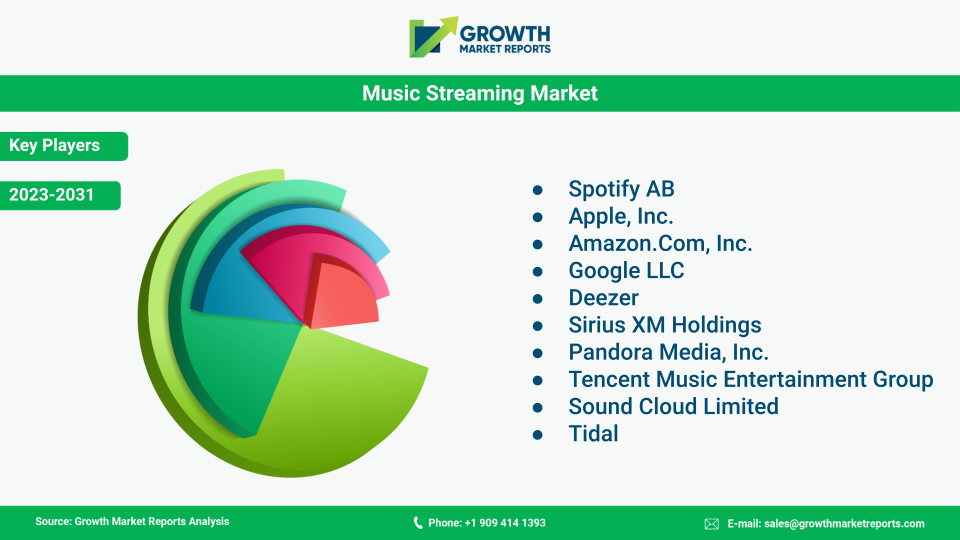

 Music Streaming Market Key Players

Frequently Asked Questions

Individual users drive most streams and revenue, benefiting from personalized recommendations and playlists. Commercial users (businesses, gyms, restaurants) use streaming for customized soundscapes and often require licensing and multi-location management features.

Opportunities include expansion into emerging markets, integration of advanced technologies, and diversification into podcasts and live events. Challenges include royalty payment disputes, licensing complexities, intense competition, and market saturation.

Major players include Spotify, Apple Music, Amazon Music, YouTube Music, Tencent Music Entertainment, Deezer, Pandora, SoundCloud, Tidal, JioSaavn, Gaana, Anghami, Napster, Qobuz, Wynk Music, KKBOX, Boomplay, Yandex Music, NetEase Cloud Music, and Melon.

Audio streaming remains dominant, but video content—such as music videos, live performances, and interviews—is gaining traction, especially among younger audiences and for user engagement.

Apps are preferred for on-the-go listening and generate higher revenue per user, while browsers offer cross-platform accessibility and are popular among desktop and workplace users.

Platforms use subscription-based models (offering ad-free, premium experiences) and ad-supported models (free access with ads). Many also offer hybrid models, merchandise sales, and live event tickets.

The market is segmented into on-demand streaming and live streaming. On-demand streaming dominates due to its flexibility, while live streaming is rapidly growing thanks to virtual concerts and interactive fan experiences.

North America is the largest market, followed by Europe and Asia Pacific. Asia Pacific is the fastest-growing region, driven by a large, digitally savvy population and rising investments.

Key growth drivers include increasing smartphone penetration, affordable data plans, widespread internet access, the rise of on-demand content consumption, and the integration of AI for personalized recommendations.

The global music streaming market reached USD 42.6 billion in 2024 and is projected to grow at a CAGR of 14.2% from 2025 to 2033, reaching USD 121.4 billion by 2033.

Table Of Content

Chapter 1 Executive Summary
Chapter 2 Assumptions and Acronyms Used
Chapter 3 Research Methodology
Chapter 4 Music Streaming Market Overview
   4.1 Introduction
      4.1.1 Market Taxonomy
      4.1.2 Market Definition
      4.1.3 Macro-Economic Factors Impacting the Market Growth
   4.2 Music Streaming Market Dynamics
      4.2.1 Market Drivers
      4.2.2 Market Restraints
      4.2.3 Market Opportunity
   4.3 Music Streaming Market - Supply Chain Analysis
      4.3.1 List of Key Suppliers
      4.3.2 List of Key Distributors
      4.3.3 List of Key Consumers
   4.4 Key Forces Shaping the Music Streaming Market
      4.4.1 Bargaining Power of Suppliers
      4.4.2 Bargaining Power of Buyers
      4.4.3 Threat of Substitution
      4.4.4 Threat of New Entrants
      4.4.5 Competitive Rivalry
   4.5 Global Music Streaming Market Size & Forecast, 2023-2032
      4.5.1 Music Streaming Market Size and Y-o-Y Growth
      4.5.2 Music Streaming Market Absolute $ Opportunity

Chapter 5 Global Music Streaming Market Analysis and Forecast By Service Type
   5.1 Introduction
      5.1.1 Key Market Trends & Growth Opportunities By Service Type
      5.1.2 Basis Point Share (BPS) Analysis By Service Type
      5.1.3 Absolute $ Opportunity Assessment By Service Type
   5.2 Music Streaming Market Size Forecast By Service Type
      5.2.1 On-Demand Streaming
      5.2.2 Live Streaming
   5.3 Market Attractiveness Analysis By Service Type

Chapter 6 Global Music Streaming Market Analysis and Forecast By Platform
   6.1 Introduction
      6.1.1 Key Market Trends & Growth Opportunities By Platform
      6.1.2 Basis Point Share (BPS) Analysis By Platform
      6.1.3 Absolute $ Opportunity Assessment By Platform
   6.2 Music Streaming Market Size Forecast By Platform
      6.2.1 Apps
      6.2.2 Browsers
   6.3 Market Attractiveness Analysis By Platform

Chapter 7 Global Music Streaming Market Analysis and Forecast By Content Type
   7.1 Introduction
      7.1.1 Key Market Trends & Growth Opportunities By Content Type
      7.1.2 Basis Point Share (BPS) Analysis By Content Type
      7.1.3 Absolute $ Opportunity Assessment By Content Type
   7.2 Music Streaming Market Size Forecast By Content Type
      7.2.1 Audio
      7.2.2 Video
   7.3 Market Attractiveness Analysis By Content Type

Chapter 8 Global Music Streaming Market Analysis and Forecast By Revenue Model
   8.1 Introduction
      8.1.1 Key Market Trends & Growth Opportunities By Revenue Model
      8.1.2 Basis Point Share (BPS) Analysis By Revenue Model
      8.1.3 Absolute $ Opportunity Assessment By Revenue Model
   8.2 Music Streaming Market Size Forecast By Revenue Model
      8.2.1 Subscription-Based
      8.2.2 Ad-Supported
   8.3 Market Attractiveness Analysis By Revenue Model

Chapter 9 Global Music Streaming Market Analysis and Forecast By End-User
   9.1 Introduction
      9.1.1 Key Market Trends & Growth Opportunities By End-User
      9.1.2 Basis Point Share (BPS) Analysis By End-User
      9.1.3 Absolute $ Opportunity Assessment By End-User
   9.2 Music Streaming Market Size Forecast By End-User
      9.2.1 Individual
      9.2.2 Commercial
   9.3 Market Attractiveness Analysis By End-User

Chapter 10 Global Music Streaming Market Analysis and Forecast by Region
   10.1 Introduction
      10.1.1 Key Market Trends & Growth Opportunities By Region
      10.1.2 Basis Point Share (BPS) Analysis By Region
      10.1.3 Absolute $ Opportunity Assessment By Region
   10.2 Music Streaming Market Size Forecast By Region
      10.2.1 North America
      10.2.2 Europe
      10.2.3 Asia Pacific
      10.2.4 Latin America
      10.2.5 Middle East & Africa (MEA)
   10.3 Market Attractiveness Analysis By Region

Chapter 11 Coronavirus Disease (COVID-19) Impact 
   11.1 Introduction 
   11.2 Current & Future Impact Analysis 
   11.3 Economic Impact Analysis 
   11.4 Government Policies 
   11.5 Investment Scenario

Chapter 12 North America Music Streaming Analysis and Forecast
   12.1 Introduction
   12.2 North America Music Streaming Market Size Forecast by Country
      12.2.1 U.S.
      12.2.2 Canada
   12.3 Basis Point Share (BPS) Analysis by Country
   12.4 Absolute $ Opportunity Assessment by Country
   12.5 Market Attractiveness Analysis by Country
   12.6 North America Music Streaming Market Size Forecast By Service Type
      12.6.1 On-Demand Streaming
      12.6.2 Live Streaming
   12.7 Basis Point Share (BPS) Analysis By Service Type 
   12.8 Absolute $ Opportunity Assessment By Service Type 
   12.9 Market Attractiveness Analysis By Service Type
   12.10 North America Music Streaming Market Size Forecast By Platform
      12.10.1 Apps
      12.10.2 Browsers
   12.11 Basis Point Share (BPS) Analysis By Platform 
   12.12 Absolute $ Opportunity Assessment By Platform 
   12.13 Market Attractiveness Analysis By Platform
   12.14 North America Music Streaming Market Size Forecast By Content Type
      12.14.1 Audio
      12.14.2 Video
   12.15 Basis Point Share (BPS) Analysis By Content Type 
   12.16 Absolute $ Opportunity Assessment By Content Type 
   12.17 Market Attractiveness Analysis By Content Type
   12.18 North America Music Streaming Market Size Forecast By Revenue Model
      12.18.1 Subscription-Based
      12.18.2 Ad-Supported
   12.19 Basis Point Share (BPS) Analysis By Revenue Model 
   12.20 Absolute $ Opportunity Assessment By Revenue Model 
   12.21 Market Attractiveness Analysis By Revenue Model
   12.22 North America Music Streaming Market Size Forecast By End-User
      12.22.1 Individual
      12.22.2 Commercial
   12.23 Basis Point Share (BPS) Analysis By End-User 
   12.24 Absolute $ Opportunity Assessment By End-User 
   12.25 Market Attractiveness Analysis By End-User

Chapter 13 Europe Music Streaming Analysis and Forecast
   13.1 Introduction
   13.2 Europe Music Streaming Market Size Forecast by Country
      13.2.1 Germany
      13.2.2 France
      13.2.3 Italy
      13.2.4 U.K.
      13.2.5 Spain
      13.2.6 Russia
      13.2.7 Rest of Europe
   13.3 Basis Point Share (BPS) Analysis by Country
   13.4 Absolute $ Opportunity Assessment by Country
   13.5 Market Attractiveness Analysis by Country
   13.6 Europe Music Streaming Market Size Forecast By Service Type
      13.6.1 On-Demand Streaming
      13.6.2 Live Streaming
   13.7 Basis Point Share (BPS) Analysis By Service Type 
   13.8 Absolute $ Opportunity Assessment By Service Type 
   13.9 Market Attractiveness Analysis By Service Type
   13.10 Europe Music Streaming Market Size Forecast By Platform
      13.10.1 Apps
      13.10.2 Browsers
   13.11 Basis Point Share (BPS) Analysis By Platform 
   13.12 Absolute $ Opportunity Assessment By Platform 
   13.13 Market Attractiveness Analysis By Platform
   13.14 Europe Music Streaming Market Size Forecast By Content Type
      13.14.1 Audio
      13.14.2 Video
   13.15 Basis Point Share (BPS) Analysis By Content Type 
   13.16 Absolute $ Opportunity Assessment By Content Type 
   13.17 Market Attractiveness Analysis By Content Type
   13.18 Europe Music Streaming Market Size Forecast By Revenue Model
      13.18.1 Subscription-Based
      13.18.2 Ad-Supported
   13.19 Basis Point Share (BPS) Analysis By Revenue Model 
   13.20 Absolute $ Opportunity Assessment By Revenue Model 
   13.21 Market Attractiveness Analysis By Revenue Model
   13.22 Europe Music Streaming Market Size Forecast By End-User
      13.22.1 Individual
      13.22.2 Commercial
   13.23 Basis Point Share (BPS) Analysis By End-User 
   13.24 Absolute $ Opportunity Assessment By End-User 
   13.25 Market Attractiveness Analysis By End-User

Chapter 14 Asia Pacific Music Streaming Analysis and Forecast
   14.1 Introduction
   14.2 Asia Pacific Music Streaming Market Size Forecast by Country
      14.2.1 China
      14.2.2 Japan
      14.2.3 South Korea
      14.2.4 India
      14.2.5 Australia
      14.2.6 South East Asia (SEA)
      14.2.7 Rest of Asia Pacific (APAC)
   14.3 Basis Point Share (BPS) Analysis by Country
   14.4 Absolute $ Opportunity Assessment by Country
   14.5 Market Attractiveness Analysis by Country
   14.6 Asia Pacific Music Streaming Market Size Forecast By Service Type
      14.6.1 On-Demand Streaming
      14.6.2 Live Streaming
   14.7 Basis Point Share (BPS) Analysis By Service Type 
   14.8 Absolute $ Opportunity Assessment By Service Type 
   14.9 Market Attractiveness Analysis By Service Type
   14.10 Asia Pacific Music Streaming Market Size Forecast By Platform
      14.10.1 Apps
      14.10.2 Browsers
   14.11 Basis Point Share (BPS) Analysis By Platform 
   14.12 Absolute $ Opportunity Assessment By Platform 
   14.13 Market Attractiveness Analysis By Platform
   14.14 Asia Pacific Music Streaming Market Size Forecast By Content Type
      14.14.1 Audio
      14.14.2 Video
   14.15 Basis Point Share (BPS) Analysis By Content Type 
   14.16 Absolute $ Opportunity Assessment By Content Type 
   14.17 Market Attractiveness Analysis By Content Type
   14.18 Asia Pacific Music Streaming Market Size Forecast By Revenue Model
      14.18.1 Subscription-Based
      14.18.2 Ad-Supported
   14.19 Basis Point Share (BPS) Analysis By Revenue Model 
   14.20 Absolute $ Opportunity Assessment By Revenue Model 
   14.21 Market Attractiveness Analysis By Revenue Model
   14.22 Asia Pacific Music Streaming Market Size Forecast By End-User
      14.22.1 Individual
      14.22.2 Commercial
   14.23 Basis Point Share (BPS) Analysis By End-User 
   14.24 Absolute $ Opportunity Assessment By End-User 
   14.25 Market Attractiveness Analysis By End-User

Chapter 15 Latin America Music Streaming Analysis and Forecast
   15.1 Introduction
   15.2 Latin America Music Streaming Market Size Forecast by Country
      15.2.1 Brazil
      15.2.2 Mexico
      15.2.3 Rest of Latin America (LATAM)
   15.3 Basis Point Share (BPS) Analysis by Country
   15.4 Absolute $ Opportunity Assessment by Country
   15.5 Market Attractiveness Analysis by Country
   15.6 Latin America Music Streaming Market Size Forecast By Service Type
      15.6.1 On-Demand Streaming
      15.6.2 Live Streaming
   15.7 Basis Point Share (BPS) Analysis By Service Type 
   15.8 Absolute $ Opportunity Assessment By Service Type 
   15.9 Market Attractiveness Analysis By Service Type
   15.10 Latin America Music Streaming Market Size Forecast By Platform
      15.10.1 Apps
      15.10.2 Browsers
   15.11 Basis Point Share (BPS) Analysis By Platform 
   15.12 Absolute $ Opportunity Assessment By Platform 
   15.13 Market Attractiveness Analysis By Platform
   15.14 Latin America Music Streaming Market Size Forecast By Content Type
      15.14.1 Audio
      15.14.2 Video
   15.15 Basis Point Share (BPS) Analysis By Content Type 
   15.16 Absolute $ Opportunity Assessment By Content Type 
   15.17 Market Attractiveness Analysis By Content Type
   15.18 Latin America Music Streaming Market Size Forecast By Revenue Model
      15.18.1 Subscription-Based
      15.18.2 Ad-Supported
   15.19 Basis Point Share (BPS) Analysis By Revenue Model 
   15.20 Absolute $ Opportunity Assessment By Revenue Model 
   15.21 Market Attractiveness Analysis By Revenue Model
   15.22 Latin America Music Streaming Market Size Forecast By End-User
      15.22.1 Individual
      15.22.2 Commercial
   15.23 Basis Point Share (BPS) Analysis By End-User 
   15.24 Absolute $ Opportunity Assessment By End-User 
   15.25 Market Attractiveness Analysis By End-User

Chapter 16 Middle East & Africa (MEA) Music Streaming Analysis and Forecast
   16.1 Introduction
   16.2 Middle East & Africa (MEA) Music Streaming Market Size Forecast by Country
      16.2.1 Saudi Arabia
      16.2.2 South Africa
      16.2.3 UAE
      16.2.4 Rest of Middle East & Africa (MEA)
   16.3 Basis Point Share (BPS) Analysis by Country
   16.4 Absolute $ Opportunity Assessment by Country
   16.5 Market Attractiveness Analysis by Country
   16.6 Middle East & Africa (MEA) Music Streaming Market Size Forecast By Service Type
      16.6.1 On-Demand Streaming
      16.6.2 Live Streaming
   16.7 Basis Point Share (BPS) Analysis By Service Type 
   16.8 Absolute $ Opportunity Assessment By Service Type 
   16.9 Market Attractiveness Analysis By Service Type
   16.10 Middle East & Africa (MEA) Music Streaming Market Size Forecast By Platform
      16.10.1 Apps
      16.10.2 Browsers
   16.11 Basis Point Share (BPS) Analysis By Platform 
   16.12 Absolute $ Opportunity Assessment By Platform 
   16.13 Market Attractiveness Analysis By Platform
   16.14 Middle East & Africa (MEA) Music Streaming Market Size Forecast By Content Type
      16.14.1 Audio
      16.14.2 Video
   16.15 Basis Point Share (BPS) Analysis By Content Type 
   16.16 Absolute $ Opportunity Assessment By Content Type 
   16.17 Market Attractiveness Analysis By Content Type
   16.18 Middle East & Africa (MEA) Music Streaming Market Size Forecast By Revenue Model
      16.18.1 Subscription-Based
      16.18.2 Ad-Supported
   16.19 Basis Point Share (BPS) Analysis By Revenue Model 
   16.20 Absolute $ Opportunity Assessment By Revenue Model 
   16.21 Market Attractiveness Analysis By Revenue Model
   16.22 Middle East & Africa (MEA) Music Streaming Market Size Forecast By End-User
      16.22.1 Individual
      16.22.2 Commercial
   16.23 Basis Point Share (BPS) Analysis By End-User 
   16.24 Absolute $ Opportunity Assessment By End-User 
   16.25 Market Attractiveness Analysis By End-User

Chapter 17 Competition Landscape 
   17.1 Music Streaming Market: Competitive Dashboard
   17.2 Global Music Streaming Market: Market Share Analysis, 2023
   17.3 Company Profiles (Details – Overview, Financials, Developments, Strategy) 
      17.3.1 Spotify
Apple Music
Amazon Music
YouTube Music
Tencent Music Entertainment
Deezer
Pandora
SoundCloud
Tidal
JioSaavn
Gaana
Anghami
Napster
Qobuz
Wynk Music
KKBOX
Boomplay
Yandex Music
NetEase Cloud Music
Melon

Methodology

Our Clients

General Mills
Nestle SA
Microsoft
Deloitte
FedEx Logistics
Honda Motor Co. Ltd.
General Electric
The John Holland Group