Segments - by Type (Portable, Fixed), by Technology (LED, LCD, OLED, TFT, Others), by Application (Aviation, Automotive, Marine, Military & Defense, Commercial, Industrial, Others), by End-User (OEMs, Aftermarket)
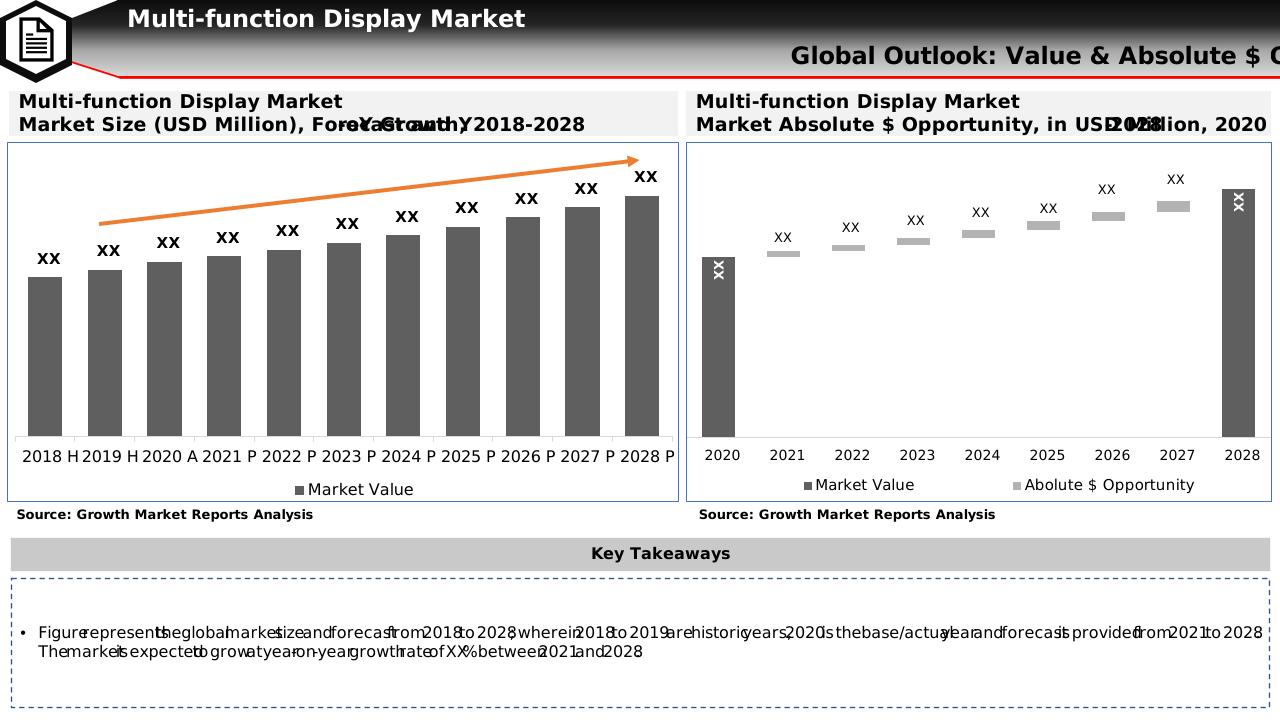
According to our latest research, the global Multi-Function Display (MFD) market size in 2024 stands at USD 13.5 billion, with a robust compound annual growth rate (CAGR) of 7.1% projected from 2025 to 2033. This growth trajectory is anticipated to drive the market to a value of approximately USD 25.1 billion by 2033. The expansion of the MFD market is underpinned by rising demand for advanced display solutions across industries such as aviation, automotive, military & defense, and marine, as well as the rapid technological evolution in display technologies. As per our latest research, the convergence of digitalization, enhanced user interface requirements, and increasing integration of advanced electronics in both commercial and defense sectors are the primary forces accelerating market growth.
One of the pivotal growth factors for the Multi-Function Display market is the escalating adoption of MFDs in the aviation sector. Modern aircraft, both commercial and military, increasingly rely on advanced multi-function displays for navigation, situational awareness, and real-time data visualization. The move towards digital cockpits and glass cockpit systems has made MFDs indispensable, replacing traditional analog gauges and consolidating multiple instrument readouts into a single, user-friendly interface. This shift not only enhances operational efficiency and safety but also reduces pilot workload, fueling the demand for sophisticated MFD systems worldwide. Furthermore, the ongoing modernization of aging aircraft fleets and the introduction of next-generation aircraft models are expected to further boost the adoption of cutting-edge MFD solutions in the coming years.
Another significant driver of the Multi-Function Display market is the rapid integration of advanced display technologies such as OLED, TFT, and high-resolution LCDs in automotive and industrial applications. The automotive sector, in particular, is witnessing a surge in the deployment of MFDs in both luxury and mid-range vehicles, where they serve as central control units for infotainment, navigation, and vehicle diagnostics. The trend towards connected vehicles and the proliferation of electric and autonomous vehicles have amplified the need for intuitive, high-performance display systems. Industrial applications are not far behind, with manufacturing, process control, and automation industries leveraging MFDs for real-time monitoring, data visualization, and control, thereby streamlining operations and improving productivity.
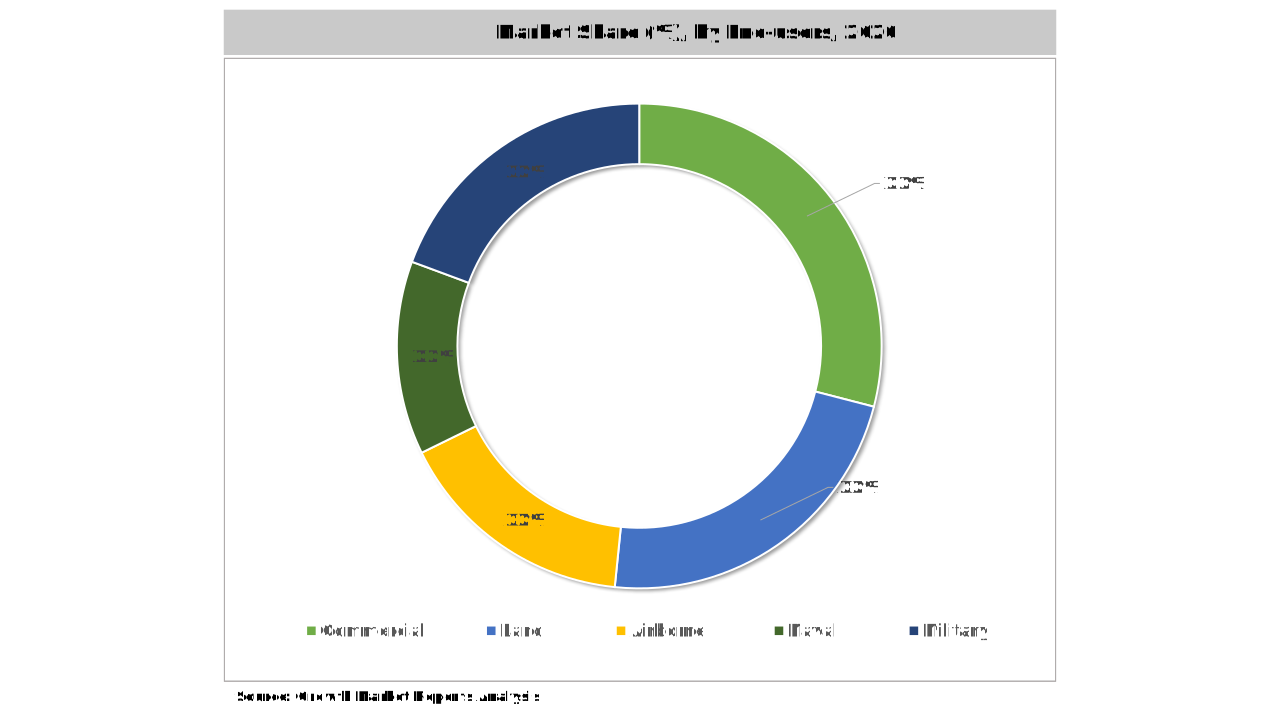
The military and defense sector remains a cornerstone for the Multi-Function Display market, with governments worldwide investing heavily in modernizing their defense equipment and command centers. MFDs are integral to modern land vehicles, naval vessels, and aircraft due to their ability to present mission-critical information, including targeting, navigation, and surveillance data, in a consolidated manner. The increasing focus on network-centric warfare, situational awareness, and interoperability among allied forces is driving the demand for rugged, reliable, and technologically advanced MFDs. Additionally, the rising need for enhanced training and simulation systems in defense further propels the market, as MFDs play a crucial role in providing realistic, interactive environments for personnel training.
Regionally, North America commands a significant share of the Multi-Function Display market due to its strong presence in the aerospace, defense, and automotive industries. However, Asia Pacific is emerging as a high-growth region, propelled by rapid industrialization, increasing defense budgets, and expanding automotive production in countries such as China, India, and Japan. Europe also maintains a robust market position, supported by its advanced automotive and aerospace sectors. The Middle East & Africa and Latin America, while smaller in terms of market share, are witnessing steady adoption of MFD technologies, particularly in aviation and defense. Overall, the global landscape is characterized by a dynamic interplay of technological advancements, regulatory frameworks, and evolving end-user requirements.
The Multi-Function Display market by type is segmented into portable and fixed displays, each catering to distinct application requirements and user preferences. Portable MFDs have gained considerable traction in recent years, especially in military, marine, and certain commercial applications where flexibility and mobility are paramount. These displays are typically compact, lightweight, and designed for easy integration into various platforms, offering users the ability to access critical information on the move. The increasing need for field-deployable solutions in defense and emergency response scenarios is a key factor driving the adoption of portable MFDs, as they enable personnel to maintain situational awareness and operational control in dynamic environments.
Fixed MFDs, on the other hand, dominate sectors such as aviation, automotive, and industrial automation, where permanent installation and seamless integration with other systems are essential. In commercial and military aircraft, fixed MFDs form the backbone of modern cockpit displays, providing pilots with consolidated access to navigation, engine performance, and flight control data. Similarly, in the automotive sector, fixed MFDs are central to dashboard designs, serving as the primary interface for infotainment, vehicle diagnostics, and driver assistance systems. The demand for fixed MFDs is further bolstered by the trend towards smart manufacturing and Industry 4.0, where control rooms and operator stations rely on high-performance, fixed display solutions for real-time monitoring and process control.
The competitive dynamics between portable and fixed MFDs are influenced by factors such as cost, installation complexity, and specific end-user needs. While fixed displays generally offer superior performance, larger screen sizes, and enhanced integration capabilities, portable MFDs provide unmatched versatility and ease of deployment. This has led to a growing preference for hybrid solutions in certain applications, where a combination of fixed and portable MFDs can deliver optimal functionality and adaptability. Manufacturers are responding to this trend by developing modular MFD systems that can be customized to suit diverse operational requirements, thereby expanding their addressable market.
Technological advancements are also reshaping the landscape of both portable and fixed MFDs. Innovations in display resolution, touch interface capabilities, and wireless connectivity are enhancing the usability and functionality of MFDs across the board. For portable MFDs, improvements in battery life, durability, and environmental resistance are critical, particularly for military and field-based applications. In the fixed MFD segment, the integration of advanced processing units, real-time data analytics, and AI-driven features is enabling more intelligent and interactive display solutions. As end-users increasingly prioritize user experience, reliability, and future-proofing, the demand for both portable and fixed MFDs is expected to rise steadily throughout the forecast period.
| Attributes | Details |
| Report Title | Multi-Function Display Market Research Report 2033 |
| By Type | Portable, Fixed |
| By Technology | LED, LCD, OLED, TFT, Others |
| By Application | Aviation, Automotive, Marine, Military & Defense, Commercial, Industrial, Others |
| By End-User | OEMs, Aftermarket |
| Regions Covered | North America, Europe, APAC, Latin America, MEA |
| Base Year | 2024 |
| Historic Data | 2018-2023 |
| Forecast Period | 2025-2033 |
| Number of Pages | 289 |
| Number of Tables & Figures | 302 |
| Customization Available | Yes, the report can be customized as per your need. |
The Multi-Function Display market is characterized by a diverse array of display technologies, including LED, LCD, OLED, TFT, and others, each offering unique advantages and catering to specific application needs. LED technology has gained widespread adoption due to its superior brightness, energy efficiency, and long operational life, making it ideal for applications requiring high visibility and durability, such as automotive dashboards and outdoor marine displays. The ability of LED displays to operate effectively in varying lighting conditions further enhances their appeal in sectors like aviation and defense, where readability and reliability are critical.
LCD technology remains a mainstay in the MFD market, particularly in aviation, automotive, and industrial applications. LCDs offer a balanced combination of cost-effectiveness, image clarity, and versatility, making them suitable for a wide range of display sizes and form factors. The ongoing evolution of LCD technology, including improvements in resolution, color reproduction, and response times, has enabled manufacturers to deliver increasingly sophisticated and user-friendly MFD solutions. Additionally, the widespread availability and mature supply chain of LCD components contribute to their continued dominance in cost-sensitive market segments.
OLED and TFT technologies represent the cutting edge of display innovation in the Multi-Function Display market. OLED displays, with their superior contrast ratios, vibrant colors, and flexibility, are gaining traction in high-end automotive, aerospace, and consumer electronics applications. The ability to produce thinner, lighter, and more energy-efficient displays gives OLED technology a distinct advantage in applications where space and weight constraints are paramount. TFT (Thin Film Transistor) displays, a subtype of LCD, offer enhanced performance in terms of refresh rates and color accuracy, making them ideal for applications demanding rapid data visualization and high-resolution imagery, such as military command centers and advanced industrial control systems.
Other emerging display technologies, such as micro-LED and quantum dot displays, are beginning to make inroads into the MFD market, promising further improvements in brightness, energy efficiency, and color fidelity. As end-users demand more immersive and interactive display experiences, manufacturers are investing heavily in research and development to integrate these next-generation technologies into their MFD offerings. The competitive landscape is thus defined by a continuous cycle of innovation, with each technology striving to deliver superior performance, reliability, and user experience. This technological dynamism is expected to be a key driver of market growth and differentiation over the forecast period.
The Multi-Function Display market serves a wide array of applications, with aviation, automotive, marine, military & defense, commercial, industrial, and others representing the primary segments. Aviation remains the largest application segment, accounting for a substantial portion of global MFD revenues. The adoption of MFDs in both commercial and military aircraft has become standard practice, driven by the need for enhanced situational awareness, reduced pilot workload, and improved safety. Modern cockpits are increasingly reliant on digital displays that consolidate flight data, navigation, and system status information, enabling pilots to make informed decisions quickly and efficiently.
In the automotive sector, MFDs are rapidly becoming a standard feature in both passenger and commercial vehicles. The rise of connected vehicles, advanced driver assistance systems (ADAS), and electrification has necessitated the integration of sophisticated display solutions that provide real-time information on vehicle performance, navigation, and entertainment. As automakers compete to deliver differentiated user experiences, the demand for high-resolution, customizable, and intuitive MFDs continues to grow. The trend towards autonomous and semi-autonomous driving further underscores the importance of advanced display technologies in ensuring driver safety and comfort.
Marine applications represent another significant growth area for the Multi-Function Display market. MFDs are widely used in vessels for navigation, radar, sonar, and engine monitoring, providing operators with comprehensive situational awareness and control. The increasing adoption of digital navigation systems, coupled with the need for enhanced safety and regulatory compliance, is driving the uptake of MFDs in both commercial and recreational marine sectors. The integration of wireless connectivity, touch interfaces, and real-time data feeds is further enhancing the functionality and user experience of marine MFDs.
The military and defense segment remains a critical market for MFDs, with applications spanning land, air, and naval platforms. MFDs are essential for mission planning, target acquisition, and command and control operations, where the ability to present complex data in a clear and actionable format is vital. The growing emphasis on network-centric warfare, interoperability, and real-time intelligence sharing is fueling demand for rugged, high-performance MFDs that can withstand harsh operating environments. Beyond these core applications, MFDs are also finding increasing use in commercial and industrial settings, where they serve as central interfaces for process control, monitoring, and automation.
The Multi-Function Display market is segmented by end-user into OEMs (Original Equipment Manufacturers) and the aftermarket, each playing a distinct role in the market's value chain. OEMs represent the primary channel for MFD adoption, as they integrate advanced display solutions directly into new aircraft, vehicles, vessels, and industrial equipment. OEMs are under constant pressure to innovate and differentiate their offerings, driving the demand for state-of-the-art MFDs that deliver superior performance, reliability, and user experience. The close collaboration between MFD manufacturers and OEMs ensures that display solutions are tailored to the specific needs of each application, from cockpit displays in aircraft to dashboard systems in automobiles.
The aftermarket segment, while smaller in comparison to OEMs, plays a crucial role in the Multi-Function Display market by providing upgrade and replacement solutions for existing platforms. As technology evolves and user expectations rise, there is a growing demand for retrofitting older vehicles, aircraft, and equipment with modern MFDs. This trend is particularly pronounced in the aviation and defense sectors, where the operational life of platforms often extends well beyond the lifespan of their original display systems. The aftermarket offers a cost-effective way for operators to enhance functionality, improve safety, and comply with evolving regulatory standards without the need for complete system replacements.
The competitive dynamics between OEMs and the aftermarket are shaped by factors such as product lifecycle, regulatory requirements, and customer preferences. OEMs benefit from economies of scale and the ability to integrate MFDs seamlessly into new designs, while the aftermarket excels in providing customized solutions and rapid deployment. The increasing modularity and interoperability of MFD systems are blurring the lines between these segments, enabling manufacturers to address a broader range of customer needs and capture additional value across the product lifecycle.
Looking ahead, the balance between OEM and aftermarket demand is expected to shift as technological advancements accelerate and regulatory frameworks evolve. The growing emphasis on sustainability, upgradability, and lifecycle management is likely to drive greater adoption of aftermarket solutions, particularly in sectors where equipment longevity and operational continuity are critical. Manufacturers that can offer flexible, future-proof MFD solutions tailored to both OEM and aftermarket requirements will be well-positioned to capitalize on emerging opportunities in the global market.
The Multi-Function Display market presents significant opportunities for growth, driven by the relentless pace of technological innovation and the expanding scope of applications across diverse industries. The advent of next-generation display technologies, such as micro-LED and quantum dot displays, is opening new frontiers for MFD performance, enabling brighter, more energy-efficient, and highly customizable solutions. The proliferation of connected devices and the rise of the Internet of Things (IoT) are creating unprecedented demand for intelligent, interactive displays that can seamlessly integrate with complex systems and deliver real-time data visualization. As industries embrace digital transformation, the need for advanced MFDs that enhance operational efficiency, safety, and user experience is set to soar.
Another major opportunity lies in the increasing adoption of MFDs in emerging markets, particularly in Asia Pacific and Latin America. Rapid industrialization, rising disposable incomes, and expanding infrastructure investments are fueling demand for advanced display solutions in automotive, aviation, and industrial sectors. Governments and private enterprises in these regions are investing heavily in modernization and technology upgrades, creating a fertile environment for MFD manufacturers to expand their footprint. Additionally, the growing focus on sustainability and energy efficiency is driving the development of eco-friendly MFD solutions, offering manufacturers a chance to differentiate themselves in an increasingly competitive market.
Despite these opportunities, the Multi-Function Display market faces several threats and restraining factors that could impact its growth trajectory. The high cost of advanced display technologies, coupled with the complexity of integration and certification processes, poses significant challenges for manufacturers and end-users alike. In sectors such as aviation and defense, stringent regulatory requirements and long product development cycles can delay time-to-market and increase operational risks. Moreover, the rapid pace of technological change necessitates continuous investment in research and development, placing pressure on margins and resource allocation. Supply chain disruptions, particularly in the wake of global events such as the COVID-19 pandemic, further underscore the need for resilience and adaptability in the MFD market.
North America remains the dominant region in the Multi-Function Display market, accounting for approximately USD 5.2 billion of the global market size in 2024. The region's leadership is underpinned by its strong presence in the aerospace, defense, and automotive industries, as well as its culture of innovation and early adoption of advanced technologies. The United States, in particular, boasts a robust ecosystem of MFD manufacturers, OEMs, and research institutions, driving continuous advancements in display solutions. The region's commitment to military modernization, coupled with substantial investments in commercial aviation and connected vehicles, ensures a steady demand for high-performance MFDs. North America is expected to maintain a healthy CAGR of 6.8% through 2033, reaching a market value of approximately USD 9.4 billion.
Asia Pacific is emerging as the fastest-growing market for MFDs, with a market size estimated at USD 3.7 billion in 2024 and a projected CAGR of 8.3% through 2033. The region's rapid industrialization, expanding middle class, and increasing defense budgets are driving demand for advanced display solutions across automotive, aviation, and industrial sectors. China, Japan, and India are at the forefront of this growth, leveraging their manufacturing prowess and technological capabilities to develop and deploy cutting-edge MFD systems. The region's focus on infrastructure development, smart manufacturing, and digital transformation further amplifies the need for intelligent, interactive displays, positioning Asia Pacific as a key engine of global market expansion.
Europe holds a significant share of the Multi-Function Display market, with a market size of approximately USD 2.8 billion in 2024. The region's advanced automotive and aerospace sectors, coupled with a strong emphasis on sustainability and regulatory compliance, drive the adoption of high-performance MFDs. Leading countries such as Germany, France, and the United Kingdom are investing in next-generation transportation and defense systems, creating opportunities for MFD manufacturers to deliver tailored solutions. The Middle East & Africa and Latin America, while representing smaller market segments with a combined value of around USD 1.8 billion in 2024, are witnessing steady growth driven by investments in aviation, defense, and industrial modernization. Collectively, these regional dynamics underscore the global nature of the MFD market and the diverse opportunities for growth and innovation.
The Multi-Function Display market is characterized by intense competition, with a mix of established players and innovative newcomers vying for market share. Leading companies compete on the basis of technology innovation, product reliability, customization capabilities, and global reach. The competitive landscape is shaped by ongoing investments in research and development, strategic partnerships with OEMs, and a relentless focus on meeting evolving customer demands. Companies that can deliver high-performance, cost-effective, and future-proof MFD solutions are well-positioned to succeed in this dynamic market. The integration of advanced features such as touch interfaces, wireless connectivity, and AI-driven analytics is becoming increasingly important as end-users seek more intelligent and interactive display solutions.
Mergers, acquisitions, and strategic collaborations are common strategies employed by market leaders to expand their product portfolios, enhance technological capabilities, and access new markets. The race to develop next-generation display technologies, such as OLED, micro-LED, and quantum dot displays, is intensifying, with companies investing heavily in innovation to maintain a competitive edge. The ability to offer modular, scalable, and customizable MFD solutions is a key differentiator, enabling manufacturers to address the diverse needs of OEMs and aftermarket customers across multiple industries.
The competitive environment is further complicated by the need for compliance with stringent regulatory standards, particularly in sectors such as aviation and defense. Companies must navigate complex certification processes, ensure interoperability with existing systems, and deliver products that meet the highest standards of safety and reliability. Supply chain resilience, quality assurance, and customer support are critical factors that influence market positioning and long-term success. As the market continues to evolve, companies that can balance innovation with operational excellence will be best placed to capitalize on emerging opportunities and withstand competitive pressures.
Major companies operating in the Multi-Function Display market include Honeywell International Inc., Garmin Ltd., Rockwell Collins (now part of Collins Aerospace), Barco NV, Raytheon Technologies Corporation, BAE Systems plc, Northrop Grumman Corporation, Thales Group, and Universal Avionics Systems Corporation. Honeywell International is renowned for its advanced avionics and integrated cockpit solutions, serving both commercial and military aviation markets. Garmin Ltd. is a leader in marine, automotive, and aviation display solutions, known for its innovation in GPS and navigation technologies. Collins Aerospace, a subsidiary of Raytheon Technologies, offers a comprehensive portfolio of MFDs for aerospace and defense applications, emphasizing reliability and performance.
Barco NV is recognized for its high-performance visualization and display solutions, catering to defense, aviation, and industrial markets globally. BAE Systems and Northrop Grumman are key players in the military and defense segments, delivering rugged, mission-critical MFDs for land, air, and naval platforms. Thales Group and Universal Avionics Systems Corporation are also prominent in the aviation sector, offering advanced cockpit display systems and avionics solutions. These companies are continually investing in R&D, forging strategic alliances, and expanding their product offerings to maintain their leadership positions in the global MFD market. The ongoing evolution of display technologies and the growing demand for intelligent, connected solutions ensure that competition will remain fierce, driving innovation and value creation across the industry.
The Multi-Function Display market has been segmented on the basis of
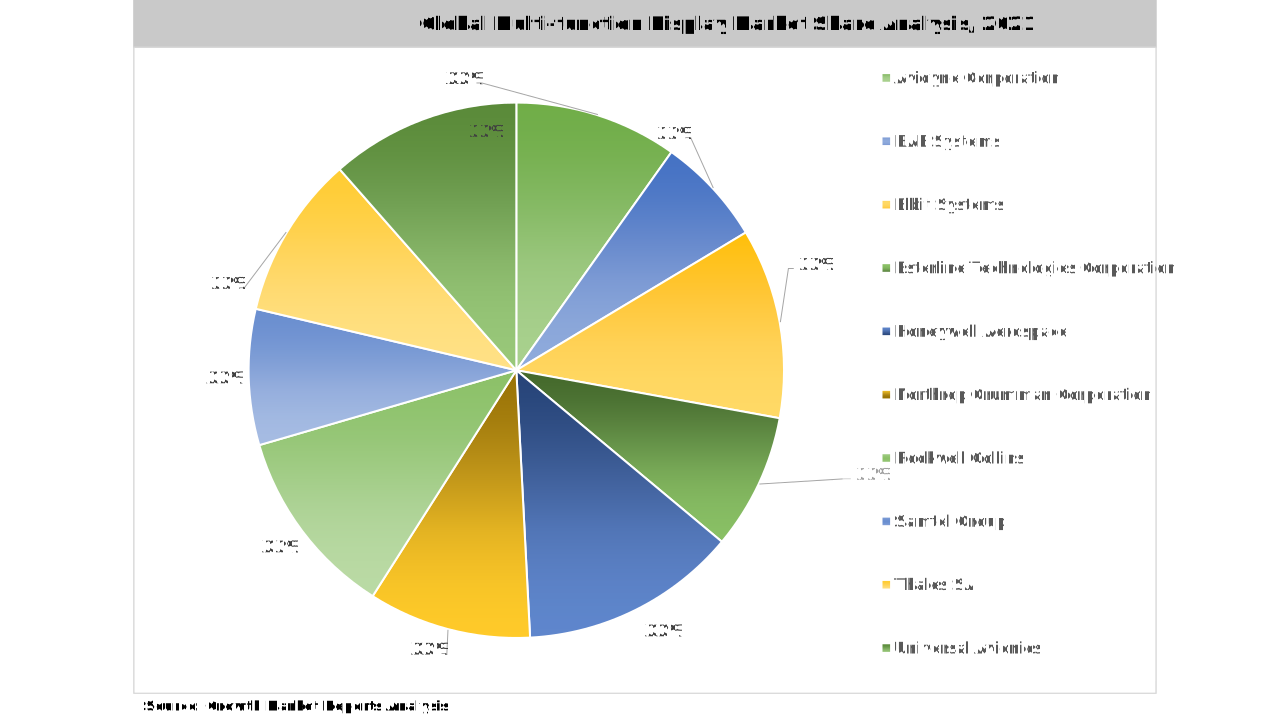
Some major players competing in the global multi-function display market are Avidyne Corporation, BAE Systems, Elbit Systems, Esterline Technologies Corporation, Honeywell Aerospace, Northrop Grumman Corporation, Rockwell Collins, Samtel Group, Thales SA, and Universal Avionics. These leading market players are using strategies including merges, acquisition, new launches, and product development to build their strong position in the market.
For instance, Osram Licht, a major lighting solutions company announced in April 2018 that it started collaborated with the US state of Tennessee to enhance LED-based lighting retrofit projects in government services over the state. Such advancements in LED-based contributions are projected to have positive impact on the multi-function display market.
In November 2020, Collins Aerospace Systems has introduced Panorama HiLite, a new solid mirror display system that offers high accuracy, lightweight body structure, and an increased 300-degree field of view (FOV) for side-by-side staff training. Panorama HiLite provides the users a flexibility to select the right configuration for their specific training requirements, which leads to minimized setup time as well as minimal maintenance since it is motion and modular capable.
Yes, the Multi-Function Display market research report can be customized according to specific client needs.
The market is segmented into OEMs (Original Equipment Manufacturers), who integrate MFDs into new platforms, and the aftermarket, which provides upgrades and replacements for existing equipment.
Opportunities include the adoption of next-generation display technologies, expansion in emerging markets, and the rise of connected and autonomous vehicles. Challenges involve high costs, complex integration, regulatory requirements, and supply chain disruptions.
Asia Pacific is projected to be the fastest-growing region, driven by rapid industrialization, increasing defense budgets, and expanding automotive and aviation sectors in countries like China, India, and Japan.
Major companies in the MFD market include Honeywell International Inc., Garmin Ltd., Rockwell Collins (Collins Aerospace), Barco NV, Raytheon Technologies Corporation, BAE Systems, Northrop Grumman Corporation, Thales Group, and Universal Avionics Systems Corporation.
MFDs are widely used in aviation (cockpit displays), automotive (infotainment and diagnostics), marine (navigation and monitoring), military & defense (command and control), and industrial (process control and automation) applications.
Common technologies in MFDs include LED, LCD, OLED, and TFT. Each offers unique benefits such as brightness, energy efficiency, image clarity, and flexibility. Emerging technologies like micro-LED and quantum dot displays are also gaining traction.
The MFD market is segmented into portable and fixed displays. Portable MFDs are popular in military, marine, and field applications, while fixed MFDs dominate aviation, automotive, and industrial automation sectors.
Key industries driving demand for MFDs include aviation, automotive, military & defense, marine, commercial, and industrial sectors, due to the need for advanced display solutions, digitalization, and enhanced user interfaces.
The global Multi-Function Display (MFD) market size is valued at USD 13.5 billion in 2024 and is projected to reach approximately USD 25.1 billion by 2033, growing at a CAGR of 7.1% from 2025 to 2033.