Segments - by Type (Class A, Class B, Class C), by Application (Personal, Commercial, Rental), by Propulsion (Diesel, Gasoline, Electric, Hybrid), by End-User (Individual, Fleet Owners, Travel Agencies), by Distribution Channel (Direct Sales, Dealerships, Online Sales)
According to our latest research, the global motorhome market size reached USD 45.2 billion in 2024, demonstrating robust expansion driven by evolving travel preferences and the growing appeal of recreational vehicles. The market is expected to advance at a CAGR of 7.1% from 2025 to 2033, with the total market forecasted to reach USD 84.3 billion by 2033. This impressive growth trajectory is primarily attributed to increasing consumer interest in outdoor leisure activities, the rising trend of road trips, and the integration of advanced technology into modern motorhomes.
One of the primary growth factors fueling the global motorhome market is the shifting consumer inclination toward experiential travel and the desire for flexible, self-contained vacation options. In the wake of the global pandemic, travelers have sought alternatives to traditional accommodations, prioritizing safety, privacy, and autonomy. Motorhomes offer a unique blend of mobility and comfort, enabling users to explore diverse destinations while maintaining control over their environment. Additionally, demographic changes, such as the rising number of retirees and young families seeking adventure-based holidays, have further accelerated demand for motorhomes across various regions. The adoption of remote work and digital nomadism has also contributed, as individuals seek mobile lifestyles that support both work and leisure.
Another significant driver is the ongoing innovation in motorhome design and propulsion systems. Manufacturers are increasingly focusing on integrating smart technologies, enhanced safety features, and sustainable materials to meet the evolving expectations of environmentally conscious consumers. The introduction of electric and hybrid propulsion systems is particularly noteworthy, as it aligns with global efforts to reduce carbon emissions and promote cleaner transportation. These advancements not only improve the performance and efficiency of motorhomes but also broaden their appeal to a wider audience, including eco-minded travelers and tech-savvy users. As a result, the market is witnessing a surge in new product launches and strategic collaborations aimed at delivering next-generation motorhome experiences.
Furthermore, the expansion of rental and sharing platforms has played a pivotal role in democratizing access to motorhomes. The proliferation of digital marketplaces and peer-to-peer rental services has lowered entry barriers for first-time users and casual travelers, thereby expanding the addressable market. Travel agencies, fleet operators, and rental companies are capitalizing on this trend by diversifying their offerings and investing in fleet modernization. Additionally, supportive government policies in certain regions, such as incentives for electric vehicle adoption and infrastructure development, are creating a conducive environment for sustained market growth. These factors collectively underscore the dynamic nature of the motorhome market and its strong potential for continued expansion.
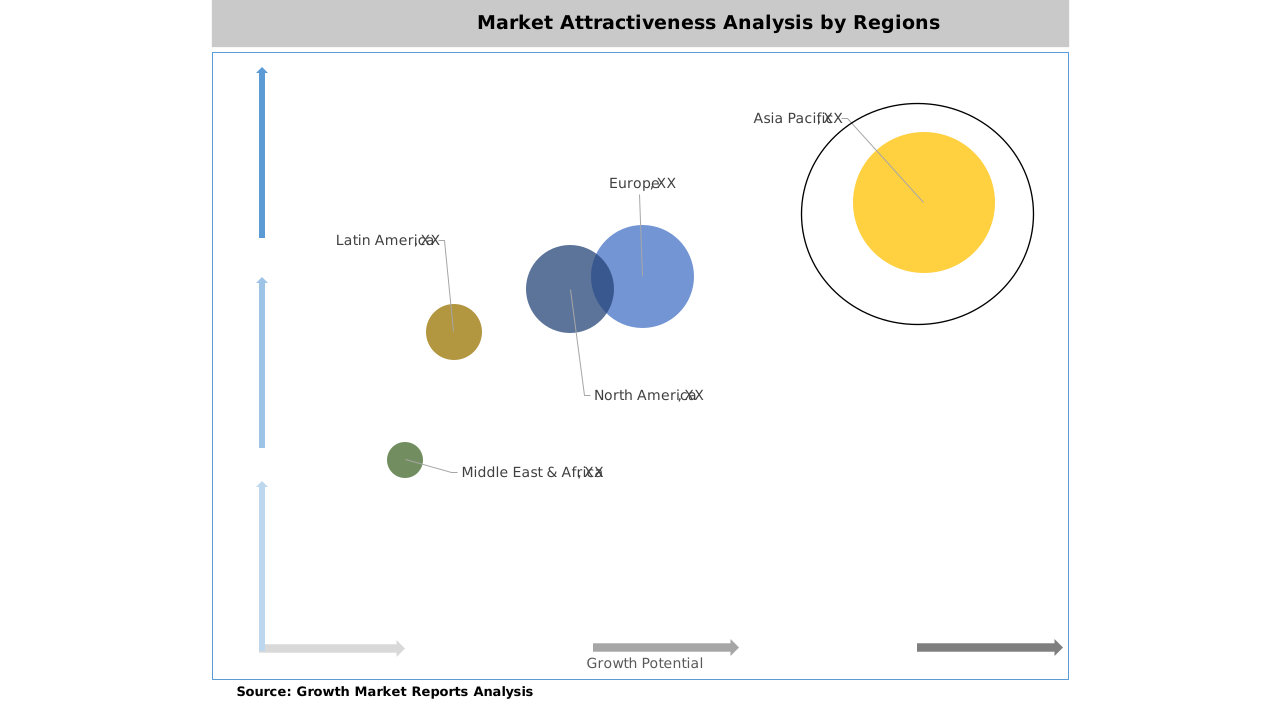
From a regional perspective, North America remains the dominant market, accounting for the largest share of global revenues in 2024, followed closely by Europe. The Asia Pacific region is emerging as a high-growth market, fueled by increasing disposable incomes, expanding tourism infrastructure, and rising awareness of motorhome travel. Latin America and the Middle East & Africa are also witnessing gradual adoption, albeit at a slower pace, as local players and global brands invest in market development and consumer education. The interplay of these regional dynamics is expected to shape the competitive landscape and growth prospects of the motorhome market through 2033.
The motorhome market is segmented by type into Class A, Class B, and Class C vehicles, each catering to distinct consumer preferences and use cases. Class A motorhomes represent the pinnacle of luxury and space, often resembling buses with extensive amenities and high-end interiors. These models are particularly favored by long-term travelers, retirees, and families seeking maximum comfort and convenience on the road. The demand for Class A motorhomes continues to rise, especially in North America and Europe, where consumers prioritize spacious layouts, advanced entertainment systems, and integrated home-like features. Manufacturers are responding by introducing models with enhanced fuel efficiency, improved drivability, and state-of-the-art connectivity, further solidifying the appeal of Class A vehicles in the premium segment.
In contrast, Class B motorhomes, commonly known as camper vans, are gaining traction among younger travelers, solo adventurers, and couples who value agility and versatility. These compact vehicles offer a balance between mobility and essential amenities, making them ideal for urban exploration and off-grid adventures. The surge in demand for Class B motorhomes is closely linked to the growing popularity of van life culture and the desire for minimalist, sustainable travel experiences. Manufacturers are innovating with space-saving designs, modular interiors, and eco-friendly materials to capture this burgeoning market segment. Additionally, the rise of electric and hybrid options within the Class B category is attracting environmentally conscious consumers seeking low-emission travel solutions.
Class C motorhomes occupy a middle ground, blending the maneuverability of Class B vehicles with the comfort and space of Class A models. These motorhomes are built on a truck or van chassis and are characterized by their distinctive cab-over design, which provides additional sleeping or storage space. Class C motorhomes are particularly popular among families and groups, as they offer flexible floor plans and a wide range of price points. The segment has witnessed steady growth due to its broad appeal and adaptability, with manufacturers introducing models that cater to diverse needs, from weekend getaways to extended road trips. Features such as slide-outs, smart storage solutions, and integrated safety systems are increasingly standard in new Class C offerings.
The competitive landscape within the motorhome type segment is marked by continuous product differentiation and brand positioning. Leading manufacturers are investing in research and development to enhance vehicle performance, interior ergonomics, and sustainability. Customization options are becoming a key differentiator, allowing consumers to tailor motorhomes to their specific preferences and travel requirements. The interplay between luxury, utility, and affordability across Class A, B, and C vehicles is shaping purchasing decisions and influencing market dynamics. As consumer expectations evolve, the ability of manufacturers to anticipate and respond to these trends will be critical in sustaining growth and capturing market share.
| Attributes | Details |
| Report Title | Motorhome Market Research Report 2033 |
| By Type | Class A, Class B, Class C |
| By Application | Personal, Commercial, Rental |
| By Propulsion | Diesel, Gasoline, Electric, Hybrid |
| By End-User | Individual, Fleet Owners, Travel Agencies |
| By Distribution Channel | Direct Sales, Dealerships, Online Sales |
| Regions Covered | North America, Europe, APAC, Latin America, MEA |
| Countries Covered | North America (United States, Canada), Europe (Germany, France, Italy, United Kingdom, Spain, Russia, Rest of Europe), Asia Pacific (China, Japan, South Korea, India, Australia, South East Asia (SEA), Rest of Asia Pacific), Latin America (Mexico, Brazil, Rest of Latin America), Middle East & Africa (Saudi Arabia, South Africa, United Arab Emirates, Rest of Middle East & Africa) |
| Base Year | 2024 |
| Historic Data | 2018-2023 |
| Forecast Period | 2025-2033 |
| Number of Pages | 275 |
| Number of Tables & Figures | 295 |
| Customization Available | Yes, the report can be customized as per your need. |
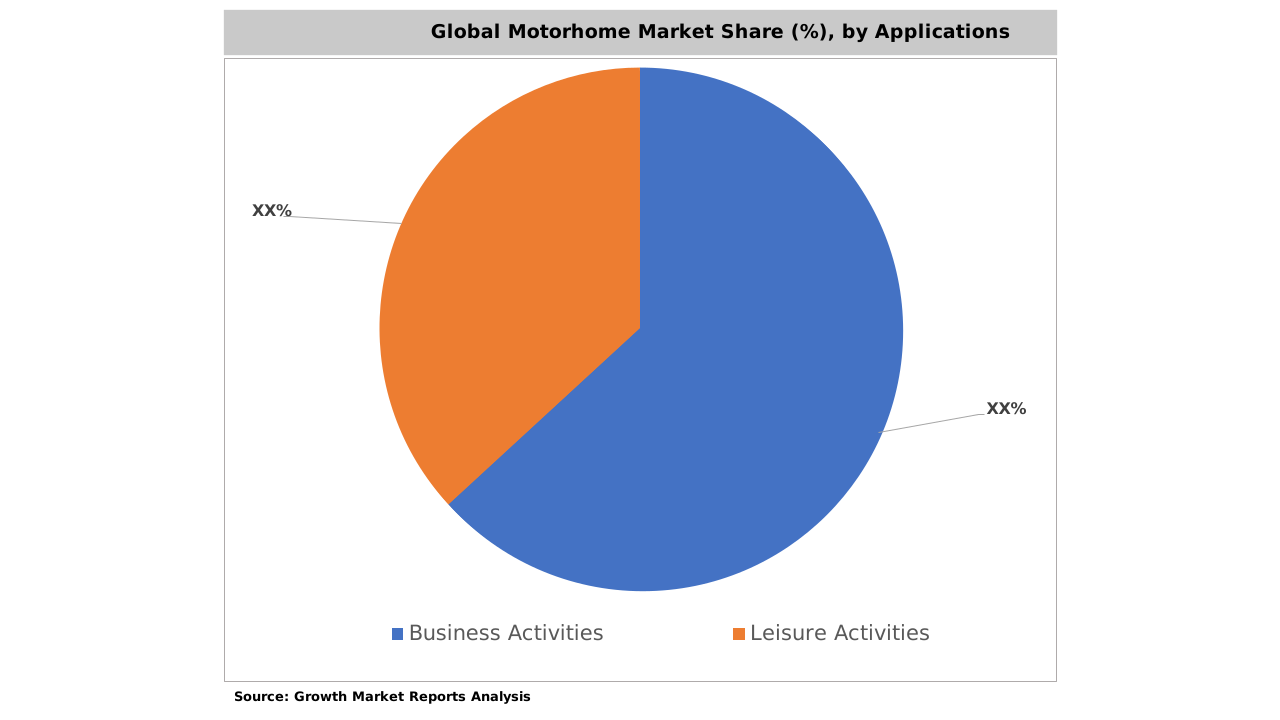
The application segment of the motorhome market is broadly categorized into Personal, Commercial, and Rental uses, each contributing uniquely to market expansion. The personal application segment continues to dominate, driven by the increasing popularity of recreational travel and the desire for personalized vacation experiences. Motorhomes offer unparalleled flexibility for families, couples, and solo travelers, enabling them to explore remote destinations and enjoy outdoor activities without compromising on comfort. The rise of digital nomadism and remote work has further fueled demand in this segment, as individuals seek mobile living solutions that support both work and leisure. Personal ownership of motorhomes is particularly prevalent in mature markets such as North America and Europe, where consumers have the purchasing power and cultural affinity for road-based travel.
The commercial application segment is witnessing significant growth, propelled by the adoption of motorhomes for business purposes, event management, and mobile offices. Companies are increasingly utilizing motorhomes as promotional vehicles, hospitality suites, and mobile command centers for various events and campaigns. The versatility of motorhomes makes them ideal for a range of commercial applications, from film production and sports events to medical outreach and disaster response. This trend is driving innovation in vehicle customization, with manufacturers offering tailored solutions to meet the specific requirements of commercial clients. The commercial segment is expected to maintain its growth momentum, supported by the expanding use of motorhomes in emerging sectors and the ongoing diversification of business models.
The rental application segment has experienced exponential growth in recent years, underpinned by the proliferation of peer-to-peer sharing platforms and the increasing affordability of short-term rentals. Rental motorhomes provide a cost-effective entry point for first-time users and travelers who prefer occasional use over ownership. The convenience and flexibility offered by rental services are attracting a diverse demographic, including millennials, international tourists, and adventure seekers. Rental companies are investing in fleet modernization, digital booking platforms, and value-added services to enhance the customer experience and capture a larger share of the market. The continued expansion of rental networks and the integration of technology into rental operations are expected to drive sustained growth in this segment through 2033.
The interplay between personal, commercial, and rental applications is reshaping the competitive landscape and influencing product development strategies. Manufacturers and service providers are increasingly collaborating to offer integrated solutions that cater to the evolving needs of different user segments. The growing acceptance of shared mobility and the emphasis on customer-centric experiences are driving innovation across the application spectrum. As the market matures, the ability to deliver differentiated value propositions and adapt to changing consumer preferences will be crucial in maintaining a competitive edge and achieving long-term success.
The propulsion segment of the motorhome market is undergoing a transformative shift, with Diesel, Gasoline, Electric, and Hybrid options vying for consumer attention. Diesel-powered motorhomes have traditionally dominated the market, prized for their superior torque, fuel efficiency, and suitability for long-distance travel. Diesel engines are particularly favored in larger Class A and Class C models, where power and performance are paramount. However, growing environmental concerns and stricter emissions regulations are prompting manufacturers to explore cleaner alternatives and invest in advanced diesel technologies that minimize environmental impact. The diesel segment remains robust, especially in regions with established infrastructure and a strong culture of RV travel.
Gasoline-powered motorhomes offer a compelling alternative, particularly in the Class B and C segments, where lower upfront costs and ease of maintenance are important considerations. Gasoline engines are generally lighter and more suitable for smaller vehicles, making them popular among urban travelers and those seeking agile, maneuverable options. The segment has benefited from recent advancements in engine efficiency and emissions control, enabling gasoline motorhomes to compete effectively with their diesel counterparts. Manufacturers are continually refining gasoline propulsion systems to balance performance, cost, and environmental impact, ensuring their continued relevance in a rapidly evolving market landscape.
The emergence of electric motorhomes represents a paradigm shift in the propulsion segment, driven by the global push toward sustainable mobility and the electrification of transportation. Electric motorhomes offer significant advantages in terms of zero emissions, reduced noise, and lower operating costs. While the segment is still in its nascent stages, rapid advancements in battery technology, charging infrastructure, and vehicle design are accelerating adoption. Leading manufacturers are partnering with technology companies and energy providers to develop next-generation electric motorhomes that deliver extended range, fast charging, and smart energy management. The electric segment is poised for exponential growth, particularly in regions with supportive policies and robust EV ecosystems.
Hybrid motorhomes are gaining traction as a transitional solution, combining the benefits of internal combustion engines with electric propulsion. Hybrid systems offer improved fuel efficiency, reduced emissions, and the flexibility to operate in both urban and remote environments. The segment is attracting interest from environmentally conscious consumers who seek to minimize their carbon footprint without sacrificing range or convenience. Manufacturers are leveraging hybrid technology to enhance vehicle performance, optimize energy usage, and meet evolving regulatory requirements. As the market for electric and hybrid motorhomes matures, continued innovation and investment will be critical in driving widespread adoption and achieving long-term sustainability goals.
The end-user landscape of the motorhome market is segmented into Individuals, Fleet Owners, and Travel Agencies, each playing a distinct role in shaping demand and market dynamics. Individual users constitute the largest segment, driven by the desire for personalized travel experiences, autonomy, and flexibility. The increasing popularity of road trips, outdoor recreation, and experiential tourism has fueled demand among families, retirees, and adventure enthusiasts. Individual ownership is particularly prevalent in mature markets, where consumers have the financial means and cultural affinity for motorhome travel. The segment is characterized by high brand loyalty, repeat purchases, and a strong emphasis on customization and after-sales support.
Fleet owners represent a growing segment, encompassing rental companies, tour operators, and corporate clients who manage large fleets for commercial purposes. Fleet ownership is driven by the need to offer diverse, well-maintained vehicles to a broad customer base, including tourists, event organizers, and business clients. The segment is characterized by a focus on operational efficiency, cost optimization, and fleet modernization. Fleet owners are increasingly investing in advanced fleet management systems, telematics, and predictive maintenance solutions to enhance vehicle uptime and customer satisfaction. The ability to offer a wide range of motorhome options, from compact camper vans to luxury Class A models, is a key competitive differentiator in this segment.
Travel agencies are leveraging motorhomes to diversify their service offerings and cater to the evolving preferences of modern travelers. By incorporating motorhome rentals and tours into their portfolios, travel agencies are able to offer unique, customizable experiences that appeal to a wide range of clients. The segment is benefiting from the growing trend of packaged motorhome vacations, which combine vehicle rental, itinerary planning, and value-added services such as guided tours and concierge support. Travel agencies are partnering with manufacturers, rental companies, and technology providers to deliver seamless, end-to-end solutions that enhance the customer journey. The segment is expected to witness sustained growth as travel agencies continue to innovate and adapt to changing market dynamics.
The interplay between individual users, fleet owners, and travel agencies is driving market expansion and fostering a dynamic, competitive environment. Manufacturers and service providers are increasingly focusing on tailored solutions that address the unique needs of each end-user segment. The ability to deliver differentiated value propositions, enhance customer engagement, and build long-term relationships will be critical in capturing market share and sustaining growth in the evolving motorhome market.
The distribution channel landscape of the motorhome market comprises Direct Sales, Dealerships, and Online Sales, each offering distinct advantages and challenges. Direct sales channels are increasingly favored by manufacturers seeking to establish closer relationships with customers, gather real-time feedback, and offer personalized solutions. Direct sales enable manufacturers to control the customer experience, streamline the sales process, and capture higher margins. The segment is characterized by a focus on customer engagement, product customization, and after-sales support. Manufacturers are investing in dedicated showrooms, experience centers, and digital platforms to enhance the direct sales experience and build lasting customer relationships.
Dealerships remain a cornerstone of the motorhome distribution landscape, providing customers with access to a wide range of vehicles, financing options, and after-sales services. Dealerships play a critical role in educating consumers, facilitating test drives, and supporting the decision-making process. The segment is characterized by strong brand partnerships, extensive service networks, and a focus on customer satisfaction. Dealerships are increasingly adopting digital tools, such as virtual showrooms and online configurators, to enhance the customer journey and streamline operations. The ability to offer comprehensive support, from vehicle selection to maintenance, is a key competitive advantage in the dealership segment.
The rise of online sales channels is transforming the way consumers research, compare, and purchase motorhomes. Digital platforms offer unparalleled convenience, transparency, and access to a global inventory of vehicles. Online sales are particularly popular among tech-savvy consumers and younger buyers who value speed, efficiency, and self-service options. The segment is witnessing rapid growth, fueled by the proliferation of e-commerce platforms, peer-to-peer marketplaces, and digital marketing initiatives. Manufacturers and dealers are investing in robust online sales infrastructure, virtual reality experiences, and digital customer support to capture a larger share of the market. The integration of online and offline channels is emerging as a best practice, enabling seamless, omnichannel experiences that cater to diverse consumer preferences.
The evolving distribution channel landscape is fostering increased competition, innovation, and customer-centricity in the motorhome market. The ability to deliver personalized experiences, leverage digital technologies, and build strong brand relationships will be critical in capturing market share and sustaining growth. As the market matures, the integration of direct, dealership, and online sales channels will play a pivotal role in shaping the future of motorhome distribution and customer engagement.
The global motorhome market is brimming with opportunities, driven by the convergence of technological innovation, changing travel preferences, and supportive regulatory environments. The growing adoption of electric and hybrid propulsion systems presents a significant opportunity for manufacturers to differentiate their offerings and capture environmentally conscious consumers. Advancements in battery technology, charging infrastructure, and vehicle connectivity are enabling the development of next-generation motorhomes that deliver superior performance, efficiency, and sustainability. Additionally, the rise of digital platforms and sharing economy models is democratizing access to motorhomes, expanding the addressable market, and creating new revenue streams for manufacturers, rental companies, and service providers. The integration of smart technologies, such as IoT-enabled systems, advanced safety features, and personalized entertainment options, is further enhancing the value proposition of modern motorhomes and driving demand across diverse consumer segments.
Another major opportunity lies in the expansion of the rental and sharing market, which is lowering entry barriers and attracting new users to motorhome travel. The proliferation of peer-to-peer rental platforms, digital booking systems, and value-added services is transforming the way consumers access and experience motorhomes. Rental companies and fleet operators are investing in fleet modernization, digital marketing, and customer experience initiatives to capitalize on this trend and capture a larger share of the market. The growing popularity of experiential travel, outdoor recreation, and adventure tourism is creating new growth avenues for manufacturers, rental companies, and travel agencies. Strategic partnerships, product innovation, and market diversification will be key to unlocking the full potential of the rental and sharing economy in the motorhome market.
Despite the promising outlook, the motorhome market faces several restraining factors that could hinder growth and profitability. High upfront costs, maintenance expenses, and limited access to financing remain significant barriers to ownership, particularly in emerging markets and among price-sensitive consumers. Additionally, infrastructure challenges, such as inadequate charging networks for electric motorhomes and limited availability of camping sites, can constrain market expansion. Regulatory complexities, including emissions standards, safety requirements, and zoning restrictions, add further layers of complexity for manufacturers, dealers, and fleet operators. Addressing these challenges will require coordinated efforts from industry stakeholders, policymakers, and technology providers to create a supportive ecosystem that fosters innovation, accessibility, and sustainability.
The regional distribution of the motorhome market highlights significant variations in market size, growth rates, and consumer preferences. North America remains the largest regional market, accounting for approximately USD 22.1 billion in revenues in 2024, driven by a well-established RV culture, extensive travel infrastructure, and high consumer purchasing power. The United States and Canada are the primary contributors, with a strong tradition of road trips, camping, and outdoor recreation. The region is characterized by a mature market environment, robust dealer networks, and a high degree of product innovation. Manufacturers are focusing on introducing advanced features, sustainable propulsion systems, and luxury models to cater to evolving consumer expectations and maintain market leadership.
Europe is the second-largest market, with revenues reaching USD 12.8 billion in 2024. The region is witnessing steady growth, supported by increasing disposable incomes, expanding tourism infrastructure, and a growing interest in experiential travel. Key markets include Germany, France, the United Kingdom, and the Nordic countries, where motorhome travel is deeply ingrained in the culture. The European market is characterized by a strong emphasis on sustainability, innovation, and regulatory compliance. The adoption of electric and hybrid motorhomes is gaining momentum, driven by supportive government policies and consumer demand for eco-friendly travel options. The region is expected to register a CAGR of 7.5% through 2033, outpacing other mature markets and presenting significant growth opportunities for manufacturers and service providers.
The Asia Pacific region is emerging as a high-growth market, with revenues estimated at USD 6.2 billion in 2024. The region is benefiting from rising disposable incomes, urbanization, and expanding tourism infrastructure. Countries such as China, Japan, Australia, and South Korea are witnessing increasing adoption of motorhomes, driven by growing awareness, changing travel preferences, and government support for tourism development. The market is characterized by a diverse consumer base, evolving regulatory frameworks, and a strong focus on product adaptation and localization. Latin America and the Middle East & Africa are also witnessing gradual adoption, with combined revenues of approximately USD 4.1 billion in 2024. These regions present long-term growth potential as local players and global brands invest in market development, consumer education, and infrastructure enhancement.
The competitive landscape of the global motorhome market is characterized by intense rivalry among established manufacturers, emerging players, and specialized service providers. Leading companies are leveraging their brand reputation, extensive product portfolios, and global distribution networks to maintain market leadership and capture new growth opportunities. The market is marked by continuous innovation, with manufacturers investing heavily in research and development to introduce advanced features, sustainable propulsion systems, and differentiated designs. Customization, personalization, and after-sales support have emerged as key competitive differentiators, enabling companies to build strong customer relationships and foster brand loyalty.
Strategic partnerships, mergers and acquisitions, and joint ventures are common strategies employed by market leaders to expand their product offerings, enhance technological capabilities, and enter new markets. Collaboration with technology companies, energy providers, and digital platforms is enabling manufacturers to accelerate the development of electric and connected motorhomes, improve customer experience, and optimize operational efficiency. The rise of rental and sharing platforms is fostering increased competition and innovation, as traditional manufacturers and new entrants vie for market share in the rapidly evolving landscape. The ability to anticipate and respond to changing consumer preferences, regulatory requirements, and technological advancements will be critical in sustaining competitive advantage and achieving long-term success.
The market is also witnessing the emergence of niche players and startups focused on specific segments, such as electric motorhomes, luxury models, and customized solutions. These companies are leveraging agility, innovation, and customer-centricity to disrupt traditional business models and capture underserved market segments. The increasing importance of digital marketing, online sales, and omnichannel distribution is reshaping the competitive dynamics and creating new opportunities for differentiation and growth. As competition intensifies, the ability to deliver superior value, enhance customer engagement, and build resilient supply chains will be paramount in navigating the challenges and opportunities of the global motorhome market.
Some of the major companies operating in the global motorhome market include Winnebago Industries, Thor Industries, Forest River Inc., REV Group, Dethleffs GmbH & Co. KG, Hymer GmbH & Co. KG, Trigano S.p.A., and Swift Group. These companies are renowned for their extensive product portfolios, strong brand presence, and commitment to innovation. Winnebago Industries and Thor Industries are market leaders in North America, offering a wide range of Class A, B, and C motorhomes with advanced features and customizable options. Forest River Inc., a subsidiary of Berkshire Hathaway, is known for its diverse portfolio and focus on quality and customer satisfaction. In Europe, Dethleffs, Hymer, and Trigano are leading players, recognized for their emphasis on sustainability, design innovation, and regulatory compliance. The Swift Group is a prominent player in the UK market, offering a comprehensive range of motorhomes tailored to local preferences and requirements.
These companies are actively investing in new product development, sustainability initiatives, and digital transformation to stay ahead of the competition and address evolving market demands. Strategic collaborations with technology partners, energy providers, and digital platforms are enabling them to accelerate the adoption of electric and connected motorhomes, enhance customer experience, and optimize operational efficiency. The competitive landscape is expected to remain dynamic and fiercely contested, with ongoing innovation, market expansion, and consolidation shaping the future of the global motorhome market.
The Motorhome market has been segmented on the basis of
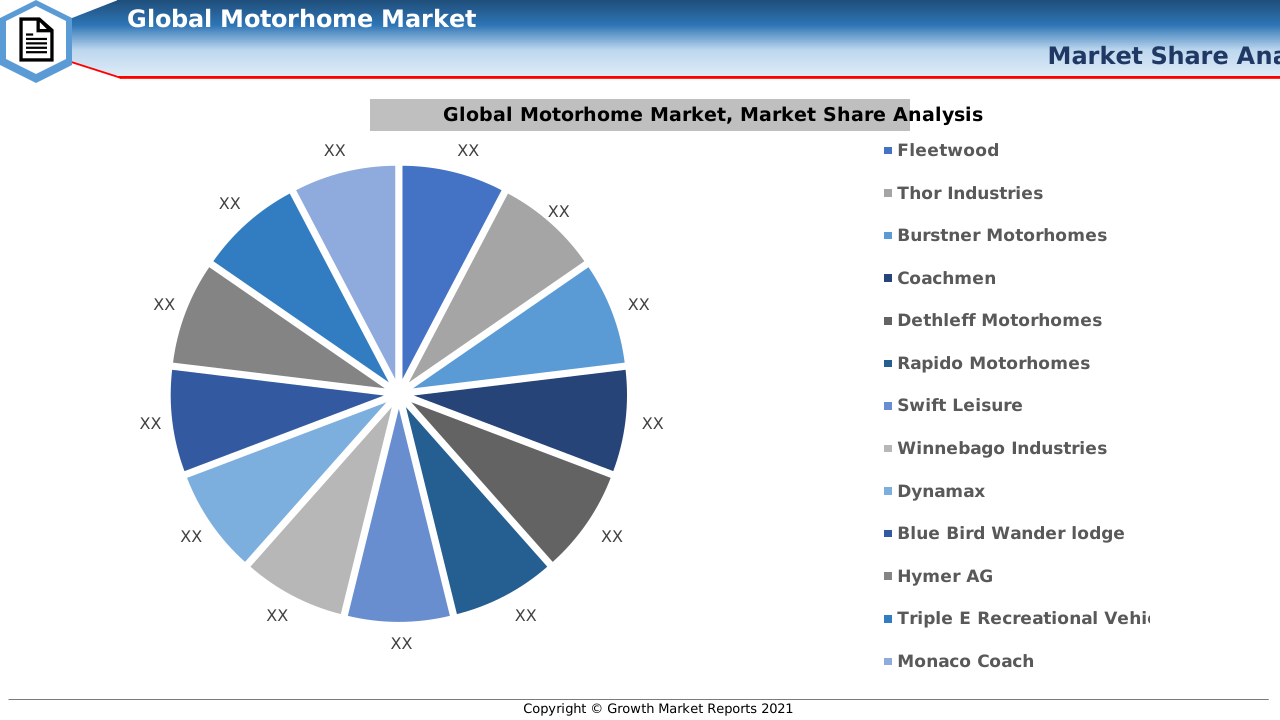
Key players in the global motorhome market include Fleetwood; Thor Industries; Burstner Motorhomes; Coachmen; Dethleff Motorhomes; Rapido Motorhomes; Swift Leisure; Winnebago Industries; Dynamax; Blue Bird Wander lodge; Hymer AG; Triple E Recreational Vehicles; Monaco Coach. These players are engaged in mergers, acquisitions, collaborations, agreements, and partnerships to strengthen their geographic presence.
Motorhomes are sold through direct sales, dealerships, and increasingly via online platforms. The rise of digital sales channels and omnichannel strategies is transforming the buying experience and expanding market reach.
Challenges include high upfront and maintenance costs, limited financing options, infrastructure gaps (especially for electric motorhomes), and regulatory complexities related to emissions and safety.
Leading companies include Winnebago Industries, Thor Industries, Forest River Inc., REV Group, Dethleffs, Hymer, Trigano, and Swift Group, all known for innovation, extensive product lines, and strong brand presence.
Motorhomes are used for personal travel, commercial purposes (such as mobile offices and event vehicles), and rentals. The rental segment is growing rapidly due to peer-to-peer sharing platforms and increased affordability.
Technology is playing a significant role through the integration of smart features, advanced safety systems, electric and hybrid propulsion, and digital platforms for rentals and sales, enhancing both performance and user experience.
Motorhomes are typically categorized into Class A (luxury, bus-style), Class B (camper vans, compact and agile), and Class C (mid-sized, cab-over design), each catering to different consumer needs and preferences.
North America is the largest regional market, followed by Europe. The Asia Pacific region is experiencing rapid growth, while Latin America and the Middle East & Africa are seeing gradual adoption.
Key growth drivers include rising interest in outdoor leisure activities, the trend toward experiential and flexible travel, the adoption of remote work, and technological advancements such as electric and hybrid propulsion systems.
The global motorhome market is expected to grow at a CAGR of 7.1% from 2025 to 2033, reaching an estimated USD 84.3 billion by 2033.
As of 2024, the global motorhome market size reached USD 45.2 billion, reflecting strong growth driven by changing travel preferences and the increasing popularity of recreational vehicles.