Segments - by Material Type (Polyethylene, Polypropylene, Polyamide, Ethylene Vinyl Alcohol, Others), by Packaging Type (Bags & Pouches, Trays, Films, Containers, Others), by Technology (Active MAP, Passive MAP), by Application (Food & Beverages, Pharmaceuticals, Electronics, Others), by End-User (Food Processing, Retail, Pharmaceuticals, Others)
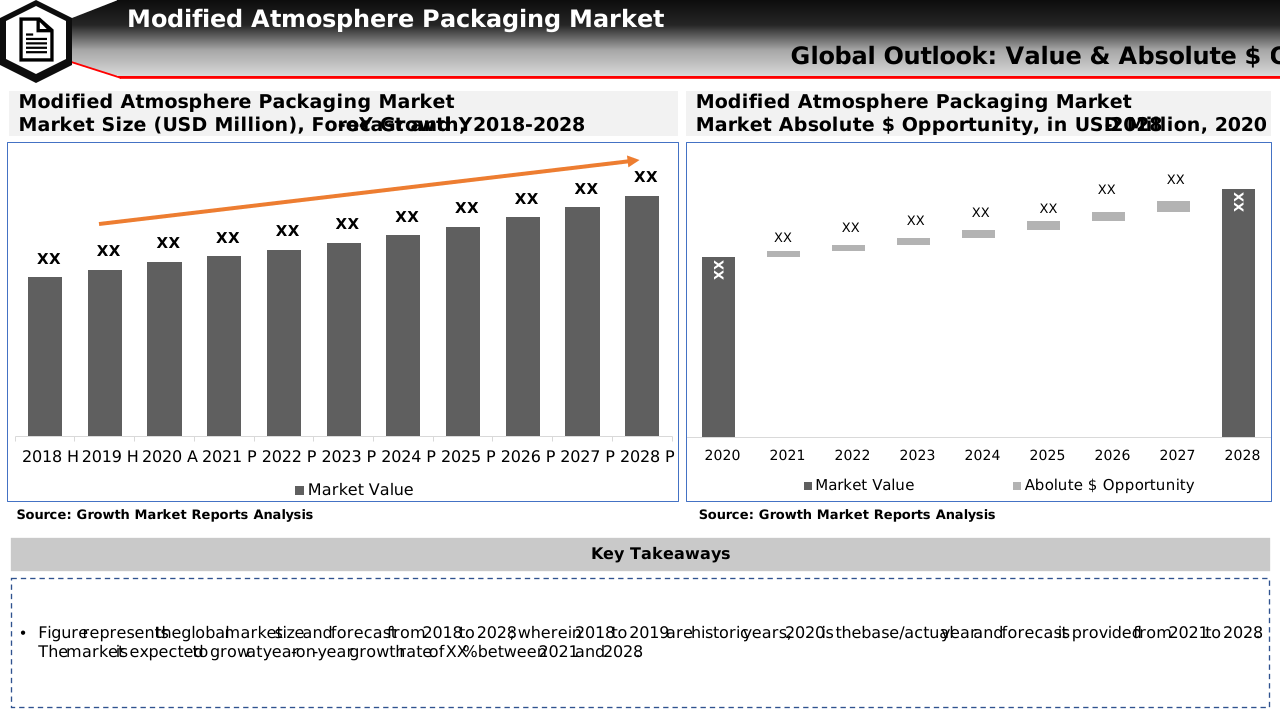
According to our latest research, the global Modified Atmosphere Packaging (MAP) market size reached USD 16.8 billion in 2024, with robust growth driven by the increasing demand for extended shelf-life solutions in food and pharmaceutical industries. The market is anticipated to grow at a CAGR of 5.2% during the forecast period, reaching approximately USD 26.4 billion by 2033. This substantial expansion is primarily attributed to the rising consumer awareness regarding food safety and quality, coupled with technological advancements in packaging materials and processes.
The growth trajectory of the Modified Atmosphere Packaging market is significantly influenced by the escalating demand for packaged and convenience foods worldwide. As urbanization continues to surge, consumers are increasingly seeking ready-to-eat and minimally processed food products that maintain freshness and nutritional value. MAP technology, by controlling the atmospheric composition inside packaging, reduces oxidation and spoilage, effectively extending product shelf-life. This has led to widespread adoption across food processing and retail sectors, where maintaining product integrity and reducing food waste are paramount. Furthermore, the ongoing shift towards sustainable packaging solutions is encouraging manufacturers to innovate with eco-friendly materials and processes, further fueling market expansion.
Another critical factor propelling the Modified Atmosphere Packaging market is the rapid technological advancements in packaging materials and machinery. Innovations such as high-barrier films, smart sensors, and improved sealants are enhancing the efficacy of MAP, making it suitable for a broader range of perishable products, including fresh produce, meat, dairy, and bakery items. This technological evolution not only improves the shelf-life and safety of products but also aligns with stringent regulatory standards for food and pharmaceutical packaging. The integration of automation and IoT-enabled monitoring systems in MAP processes is also streamlining operations, reducing costs, and minimizing human error, thereby attracting investments from both established players and new entrants in the market.
The Modified Atmosphere Packaging market is also benefiting from the expanding application scope beyond the food and beverage sector. In the pharmaceutical industry, MAP is being increasingly utilized to protect sensitive drugs and medical devices from moisture, oxygen, and microbial contamination, ensuring product efficacy and safety. Similarly, the electronics sector is adopting MAP to safeguard components from oxidation and electrostatic discharge during transportation and storage. The versatility of MAP technology across diverse end-user industries is creating new growth avenues and reinforcing its position as a critical component of modern packaging solutions.
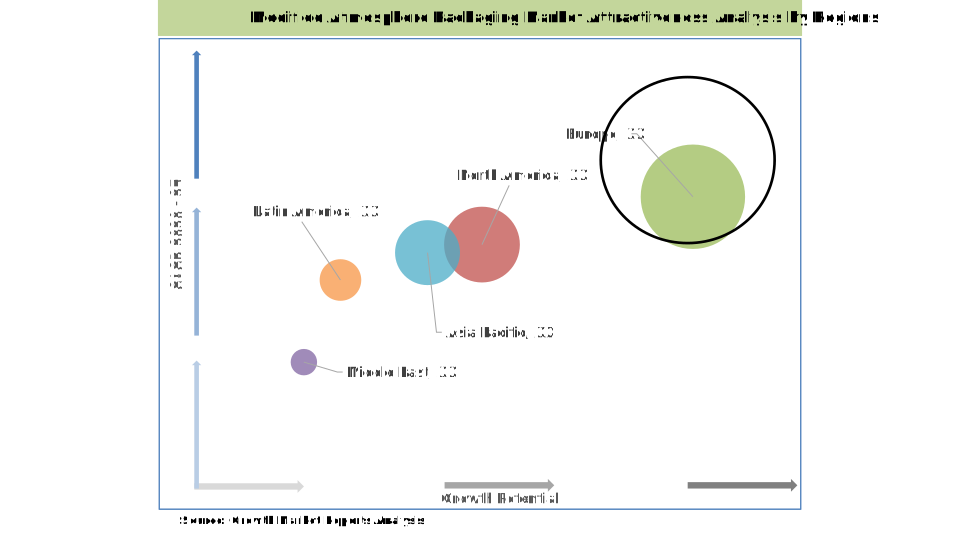
From a regional perspective, Asia Pacific continues to dominate the Modified Atmosphere Packaging market, driven by the booming food processing industry, rising disposable incomes, and changing consumer lifestyles in countries such as China, India, and Japan. North America and Europe also represent significant market shares, owing to well-established retail chains, high consumer awareness, and stringent regulations regarding food safety and quality. Meanwhile, emerging markets in Latin America and the Middle East & Africa are witnessing accelerated adoption of MAP technologies, supported by growing urbanization and investments in food infrastructure. This dynamic regional landscape underscores the global relevance and growth potential of the MAP market.
The material type segment of the Modified Atmosphere Packaging market is pivotal in determining the performance and sustainability of MAP solutions. Polyethylene (PE) remains the most widely used material, owing to its excellent barrier properties, flexibility, and cost-effectiveness. PE films are particularly favored for packaging fresh produce, bakery items, and meat products, as they effectively limit oxygen and moisture ingress, thereby extending shelf life. Additionally, advancements in recyclable and biodegradable PE variants are enhancing their appeal among environmentally conscious manufacturers and consumers. Polypropylene (PP) is another prominent material, known for its high clarity, resistance to high temperatures, and robust sealing properties, making it ideal for microwaveable and ready-to-eat meals.
Polyamide (PA) and Ethylene Vinyl Alcohol (EVOH) are gaining traction in the Modified Atmosphere Packaging market due to their superior gas barrier capabilities. PA is extensively used in multilayer films, offering strength and puncture resistance, which is crucial for vacuum-packed products and bulk packaging applications. EVOH, on the other hand, is celebrated for its exceptional resistance to oxygen transmission, making it a preferred choice for packaging highly perishable and sensitive products such as dairy, meat, and pharmaceuticals. The integration of EVOH in multilayer structures ensures optimal product protection while minimizing the use of non-renewable resources.
The market is also witnessing a shift towards the adoption of innovative and sustainable materials, including biodegradable polymers and bio-based plastics. These alternatives are being developed to address the growing environmental concerns associated with conventional plastics. Companies are investing in research and development to create materials that offer comparable barrier properties while being compostable or recyclable. This trend is particularly pronounced in regions with stringent regulations on single-use plastics, such as Europe and North America, where sustainability is a key market driver.
Other materials, including blends and specialty polymers, are also contributing to the diversification of the MAP material landscape. These materials are engineered to meet specific packaging requirements, such as enhanced mechanical strength, UV resistance, or antimicrobial properties. The continuous evolution of material science is enabling the development of customized MAP solutions tailored to the unique needs of different products and industries. As a result, the material type segment remains a critical area of innovation and competition within the Modified Atmosphere Packaging market.
| Attributes | Details |
| Report Title | Modified Atmosphere Packaging Market Research Report 2033 |
| By Material Type | Polyethylene, Polypropylene, Polyamide, Ethylene Vinyl Alcohol, Others |
| By Packaging Type | Bags & Pouches, Trays, Films, Containers, Others |
| By Technology | Active MAP, Passive MAP |
| By Application | Food & Beverages, Pharmaceuticals, Electronics, Others |
| By End-User | Food Processing, Retail, Pharmaceuticals, Others |
| Regions Covered | North America, Europe, APAC, Latin America, MEA |
| Base Year | 2024 |
| Historic Data | 2018-2023 |
| Forecast Period | 2025-2033 |
| Number of Pages | 297 |
| Number of Tables & Figures | 272 |
| Customization Available | Yes, the report can be customized as per your need. |
The packaging type segment encompasses a wide array of formats, including bags & pouches, trays, films, containers, and others, each catering to distinct product categories and consumer preferences. Bags and pouches dominate the MAP market, particularly in the food sector, due to their lightweight nature, ease of handling, and cost efficiency. These packaging types are widely used for fresh produce, snacks, bakery items, and ready-to-eat meals, offering flexibility in design and portion control. The ability to customize bag and pouch sizes, shapes, and barrier properties makes them an attractive option for both manufacturers and retailers aiming to meet diverse consumer demands.
Trays are another significant packaging type, especially prevalent in the meat, poultry, seafood, and ready-meal segments. MAP trays, often made from rigid plastics or laminated materials, provide structural integrity and protection against physical damage during transportation and storage. The use of high-barrier films as lidding materials further enhances the preservation of product freshness and safety. Trays are also favored for their convenience in retail displays and their compatibility with automated packaging lines, which is essential for large-scale food processors and retailers.
Films, including both flexible and semi-rigid variants, play a crucial role in the Modified Atmosphere Packaging market. These films are used as wraps, liners, or lidding materials, providing an effective barrier against gases, moisture, and contaminants. The development of multi-layer films with tailored gas permeability has enabled precise control over the internal atmosphere, optimizing the shelf life of various products. Films are particularly important in the packaging of fresh-cut fruits and vegetables, bakery items, and dairy products, where maintaining optimal humidity and gas levels is critical to quality retention.
Containers and other specialized packaging types, such as vacuum packs and clamshells, are gaining prominence in niche applications, including pharmaceuticals, electronics, and premium food products. These formats offer enhanced protection against external factors and are often used for high-value or sensitive items that require stringent preservation conditions. The ability to integrate MAP technologies into a variety of packaging types underscores the versatility and adaptability of the market, catering to the evolving needs of different industries and consumer segments.
The technology segment of the Modified Atmosphere Packaging market is primarily divided into Active MAP and Passive MAP, each offering distinct advantages and applications. Active MAP involves the deliberate modification of the internal atmosphere by introducing or removing specific gases, such as oxygen, carbon dioxide, and nitrogen. This technology is widely used in the packaging of highly perishable products, such as fresh meat, seafood, and bakery items, where precise control over gas composition is essential for extending shelf life and maintaining product quality. Active MAP systems often incorporate gas flushing, scavengers, and absorbers to achieve the desired atmospheric conditions, ensuring optimal preservation.
Passive MAP, in contrast, relies on the natural respiration of the packaged product and the selective permeability of packaging materials to achieve the desired atmospheric composition over time. This technology is particularly suitable for fresh fruits and vegetables, where the interaction between the product and the packaging material creates a self-regulating environment that slows down spoilage and maintains freshness. Passive MAP is favored for its simplicity, cost-effectiveness, and minimal reliance on external equipment, making it an attractive option for small and medium-sized enterprises and products with moderate shelf-life requirements.
The choice between Active and Passive MAP technologies is influenced by factors such as product type, shelf-life requirements, cost considerations, and regulatory compliance. Active MAP is generally preferred for products with high spoilage risk or stringent quality standards, while Passive MAP is suitable for less perishable items and cost-sensitive applications. The ongoing development of hybrid technologies, which combine elements of both Active and Passive MAP, is further expanding the application scope and performance capabilities of the market.
Technological advancements in MAP machinery and equipment are also driving market growth. The integration of automation, real-time monitoring, and IoT-enabled systems is enhancing process efficiency, reducing operational costs, and ensuring consistent product quality. These innovations are enabling manufacturers to scale up production, meet increasing demand, and comply with evolving regulatory standards, thereby strengthening the competitive position of the Modified Atmosphere Packaging market.
The application segment of the Modified Atmosphere Packaging market is dominated by the food & beverages sector, which accounts for the largest share due to the critical need for shelf-life extension and quality preservation in perishable products. MAP is extensively used in the packaging of fresh produce, meat, poultry, seafood, dairy, bakery items, and ready-to-eat meals. The ability of MAP to control microbial growth, reduce oxidation, and maintain sensory attributes such as taste, texture, and color is driving its adoption among food manufacturers and retailers. The rising demand for convenience foods, coupled with increasing consumer awareness of food safety, is further boosting the application of MAP in the food & beverages industry.
The pharmaceutical industry represents a rapidly growing application area for Modified Atmosphere Packaging. MAP is employed to protect sensitive drugs, medical devices, and diagnostic kits from moisture, oxygen, and microbial contamination, thereby ensuring product efficacy and safety throughout the supply chain. The stringent regulatory requirements for pharmaceutical packaging, particularly in terms of product stability and integrity, are driving the adoption of advanced MAP solutions. The ongoing development of high-barrier materials and smart packaging technologies is further enhancing the suitability of MAP for pharmaceutical applications.
The electronics sector is another emerging application area for Modified Atmosphere Packaging. MAP is used to safeguard electronic components and devices from oxidation, corrosion, and electrostatic discharge during transportation and storage. The increasing miniaturization and sensitivity of electronic products are necessitating the use of specialized packaging solutions that can maintain a controlled environment and prevent damage from external factors. The adoption of MAP in the electronics industry is expected to grow steadily, supported by advancements in packaging materials and processes.
Other application areas, including industrial goods, chemicals, and specialty products, are also contributing to the diversification of the Modified Atmosphere Packaging market. The versatility of MAP technology in addressing the unique preservation and protection needs of different products is creating new growth opportunities and reinforcing its position as a critical enabler of modern supply chains.
The end-user segment of the Modified Atmosphere Packaging market is led by the food processing industry, which relies heavily on MAP to enhance product shelf life, reduce waste, and ensure food safety. Food processors are increasingly adopting MAP to meet the growing consumer demand for fresh, minimally processed, and convenience foods. The ability of MAP to preserve the sensory and nutritional attributes of food products is driving its widespread adoption in the processing of meat, poultry, seafood, dairy, bakery, and ready-to-eat meals. The integration of MAP into automated production lines is also improving operational efficiency and reducing labor costs for food processors.
The retail sector is another major end-user of Modified Atmosphere Packaging, particularly in supermarkets, hypermarkets, and convenience stores. Retailers are leveraging MAP to extend the shelf life of perishable products, reduce shrinkage, and enhance product presentation. The use of MAP enables retailers to offer a wider variety of fresh and high-quality products, thereby attracting and retaining customers. The increasing trend of private label and store-brand products is also driving the adoption of MAP in the retail sector, as retailers seek to differentiate their offerings and build brand loyalty.
The pharmaceutical industry is emerging as a significant end-user of Modified Atmosphere Packaging, driven by the need to protect sensitive drugs and medical devices from environmental factors. Pharmaceutical companies are adopting MAP to comply with stringent regulatory requirements and ensure the stability and efficacy of their products throughout the supply chain. The ongoing development of high-barrier materials and smart packaging solutions is further enhancing the suitability of MAP for pharmaceutical applications.
Other end-users, including electronics manufacturers, industrial goods producers, and specialty product suppliers, are also contributing to the growth of the Modified Atmosphere Packaging market. The ability of MAP to provide customized preservation and protection solutions for a wide range of products is driving its adoption across diverse industries, reinforcing its position as a versatile and indispensable packaging technology.
The Modified Atmosphere Packaging market presents significant opportunities for growth and innovation, particularly in the development of sustainable and eco-friendly packaging solutions. As environmental concerns and regulatory pressures regarding single-use plastics intensify, there is a growing demand for biodegradable, compostable, and recyclable MAP materials. Companies that invest in research and development to create high-performance, sustainable packaging solutions are likely to gain a competitive edge and capture a larger share of the market. Additionally, the integration of smart packaging technologies, such as sensors and indicators that monitor product freshness and quality, represents a major opportunity for value-added offerings and differentiation in the market.
Another key opportunity lies in the expansion of MAP applications beyond the traditional food and beverage sector. The increasing adoption of MAP in pharmaceuticals, electronics, and specialty products is creating new growth avenues and revenue streams for market players. The ongoing advancements in packaging materials, machinery, and automation are enabling the development of customized MAP solutions tailored to the unique needs of different industries and products. Furthermore, the rising demand for convenience foods, coupled with the growth of online grocery and e-commerce channels, is driving the need for innovative and efficient MAP solutions that can ensure product safety and quality during extended storage and transportation.
Despite the numerous growth opportunities, the Modified Atmosphere Packaging market faces certain restraining factors. The high initial investment required for MAP machinery and equipment, particularly for small and medium-sized enterprises, can be a significant barrier to entry. Additionally, the complexity of MAP processes, including the need for precise control over gas composition and packaging material properties, requires specialized knowledge and expertise. Regulatory compliance, particularly in terms of food safety and environmental standards, can also pose challenges for market players, necessitating continuous investment in quality assurance and innovation.
The Asia Pacific region holds the largest share of the global Modified Atmosphere Packaging market, accounting for approximately 38% of the total market value, or about USD 6.4 billion in 2024. This dominance is driven by the rapid growth of the food processing industry, rising disposable incomes, and changing consumer lifestyles in countries such as China, India, and Japan. The increasing urbanization and demand for convenience foods are fueling the adoption of MAP technologies in the region. Additionally, government initiatives to promote food safety and reduce food waste are supporting market growth. The Asia Pacific market is expected to maintain its leading position, with a projected CAGR of 6.1% during the forecast period.
North America is the second-largest regional market, with a value of approximately USD 4.9 billion in 2024, driven by well-established retail chains, high consumer awareness, and stringent regulations regarding food safety and quality. The presence of leading MAP technology providers and the widespread adoption of advanced packaging materials and processes are contributing to market growth in the region. The increasing demand for sustainable and eco-friendly packaging solutions is also shaping the regional market landscape, with companies investing in research and development to meet evolving consumer and regulatory requirements.
Europe accounts for around USD 3.8 billion of the global Modified Atmosphere Packaging market in 2024, supported by a strong food and beverage industry, high levels of consumer awareness, and strict regulatory standards for packaging materials and processes. The region is at the forefront of sustainability initiatives, with a growing emphasis on recyclable and biodegradable MAP materials. Latin America and the Middle East & Africa are emerging markets, together accounting for approximately USD 1.7 billion in 2024. These regions are witnessing accelerated adoption of MAP technologies, driven by urbanization, rising incomes, and investments in food infrastructure. The dynamic regional landscape highlights the global relevance and growth potential of the Modified Atmosphere Packaging market.
The Modified Atmosphere Packaging market is characterized by intense competition, with a diverse mix of global and regional players vying for market share. Leading companies are focusing on product innovation, strategic partnerships, and expansion into emerging markets to strengthen their competitive position. The market is marked by continuous investments in research and development, aimed at enhancing the performance, sustainability, and cost-effectiveness of MAP solutions. Companies are also leveraging advanced manufacturing technologies and automation to improve operational efficiency and meet the growing demand for high-quality packaging solutions.
Mergers, acquisitions, and collaborations are common strategies employed by key players to expand their product portfolios, access new markets, and gain technological expertise. The integration of smart packaging technologies, such as sensors and indicators for real-time monitoring of product freshness and quality, is emerging as a major trend in the market. Companies that can offer innovative, value-added solutions are likely to gain a competitive edge and capture a larger share of the market. The emphasis on sustainability and compliance with environmental regulations is also shaping the competitive landscape, with companies investing in the development of recyclable, biodegradable, and compostable MAP materials.
The competitive landscape of the Modified Atmosphere Packaging market is further characterized by the presence of several regional and niche players, particularly in emerging markets. These companies often focus on catering to specific industry segments or geographic regions, leveraging their local expertise and customer relationships. The ability to offer customized solutions, responsive customer service, and flexible production capabilities is a key differentiator for regional players. However, the increasing globalization of supply chains and the entry of multinational corporations are intensifying competition and driving consolidation in the market.
Some of the major companies operating in the Modified Atmosphere Packaging market include Amcor plc, Sealed Air Corporation, Berry Global Inc., Mondi Group, Winpak Ltd., LINPAC Packaging, Coveris Holdings S.A., Bemis Company, Inc., Multivac Group, and Oxygen Generating Systems Intl. (OGSI). Amcor plc is renowned for its extensive portfolio of high-barrier films and sustainable packaging solutions, catering to food, pharmaceutical, and industrial applications. Sealed Air Corporation is a leader in innovative MAP technologies, with a strong focus on automation and smart packaging solutions. Berry Global Inc. and Mondi Group are prominent players in the development of recyclable and biodegradable MAP materials, aligning with the growing demand for sustainable packaging.
Winpak Ltd. and LINPAC Packaging are recognized for their advanced MAP trays and containers, serving major food processors and retailers worldwide. Coveris Holdings S.A. and Bemis Company, Inc. specialize in flexible packaging solutions, including bags, pouches, and films with tailored barrier properties. Multivac Group is known for its state-of-the-art MAP machinery and equipment, offering automated solutions for large-scale food processing and packaging operations. Oxygen Generating Systems Intl. (OGSI) focuses on gas generation and supply systems for MAP applications, supporting a wide range of industries.
These companies are continuously investing in research and development to enhance the performance, sustainability, and cost-effectiveness of their MAP solutions. Strategic partnerships with food processors, retailers, and pharmaceutical companies are enabling them to expand their market presence and access new growth opportunities. The competitive landscape of the Modified Atmosphere Packaging market is expected to remain dynamic, with ongoing innovation, consolidation, and expansion shaping the future of the industry.
The Modified Atmosphere Packaging market has been segmented on the basis of
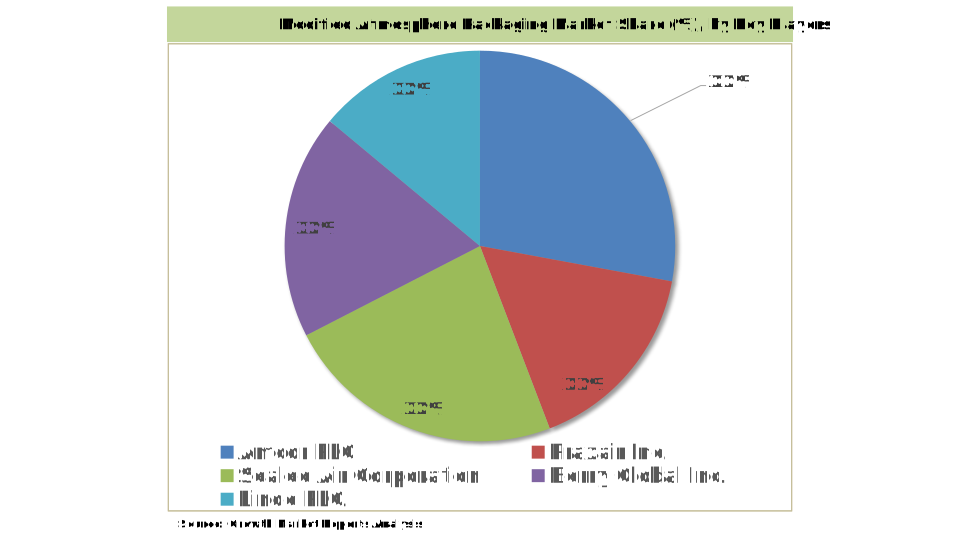
The key players competing in the modified atmosphere packaging market are Amcor PLC; Praxair Inc.; Sealed Air Corporation; Berry Global Inc.; and Linde PLC.
Challenges include high initial investment costs for MAP machinery, the complexity of MAP processes, the need for specialized expertise, and regulatory compliance related to food safety and environmental standards.
Major companies include Amcor plc, Sealed Air Corporation, Berry Global Inc., Mondi Group, Winpak Ltd., LINPAC Packaging, Coveris Holdings S.A., Bemis Company, Inc., Multivac Group, and Oxygen Generating Systems Intl. (OGSI).
Key trends include the development of sustainable and recyclable packaging materials, integration of smart packaging technologies (such as sensors for freshness monitoring), and expanding MAP applications in pharmaceuticals, electronics, and specialty products.
The primary packaging types in MAP include bags & pouches, trays, films, and containers. Bags and pouches dominate due to their cost-effectiveness and versatility, while trays and films are popular for meat, seafood, bakery, and dairy products.
Asia Pacific leads the MAP market, followed by North America and Europe. Growth in Asia Pacific is driven by the booming food processing sector and rising disposable incomes, while North America and Europe benefit from established retail chains and strict food safety regulations.
Active MAP involves actively modifying the internal atmosphere by adding or removing gases, suitable for highly perishable products. Passive MAP relies on the natural respiration of the product and the selective permeability of packaging materials, making it ideal for fresh fruits and vegetables.
The main materials used in MAP include Polyethylene (PE), Polypropylene (PP), Polyamide (PA), Ethylene Vinyl Alcohol (EVOH), and specialty polymers. There is also a growing trend toward biodegradable and recyclable materials to address environmental concerns.
MAP is widely used in the food and beverage industry (for fresh produce, meat, dairy, bakery, and ready-to-eat meals), pharmaceuticals (for protecting drugs and medical devices), and electronics (for safeguarding components from oxidation and electrostatic discharge).
The MAP market is driven by rising demand for extended shelf-life solutions in the food and pharmaceutical industries, increasing consumer awareness of food safety, technological advancements in packaging materials, and the shift toward sustainable and eco-friendly packaging.
Modified Atmosphere Packaging (MAP) is a technology that alters the atmospheric composition inside packaging to extend the shelf life of perishable products. By controlling levels of oxygen, carbon dioxide, and nitrogen, MAP reduces oxidation and spoilage, maintaining product freshness and quality.