Mobile Wallet Market Research Report 2033

Mobile Wallet Market Research Report 2033

Segments - by Type (Remote Wallet, Proximity Wallet), by Technology (NFC, QR Code, Digital Only, SMS, Others), by Application (Retail, Transportation, Healthcare, Utilities, Hospitality, Others), by End-User (Individual, Business), by Deployment Mode (Cloud-Based, On-Premises)

https://growthmarketreports.com/Raksha
Author : Raksha Sharma
https://growthmarketreports.com/Vaibhav
Fact-checked by : V. Chandola
https://growthmarketreports.com/Shruti
Editor : Shruti Bhat

Upcoming | Report ID :BFSI-688 | 4.5 Rating | 70 Reviews | 297 Pages | Format : Docx PDF

Report Description


Mobile Wallet Market Outlook

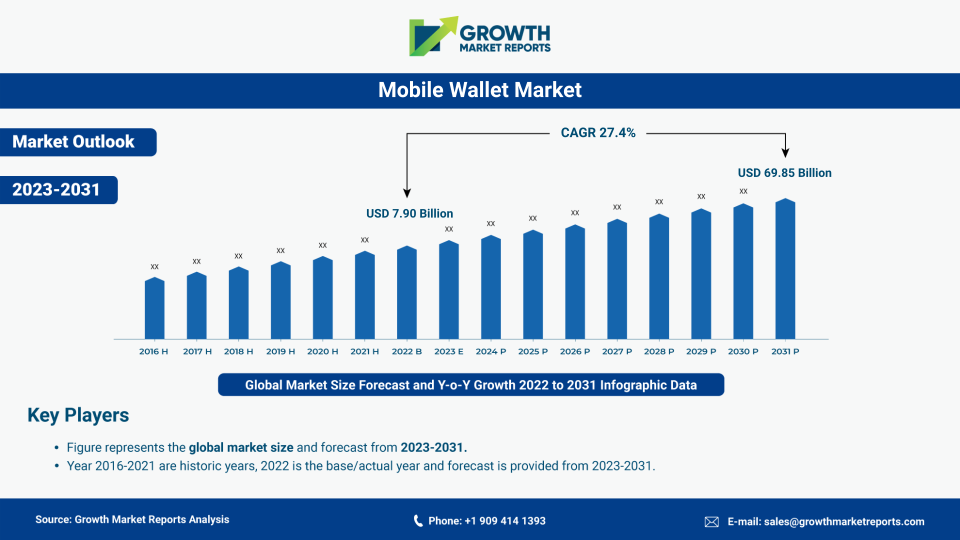
As per our latest research, the global mobile wallet market size reached USD 1,350 billion in 2024, with a robust year-on-year growth driven by the rapid adoption of digital payment solutions worldwide. The market is projected to expand at a CAGR of 23.7% from 2025 to 2033, reaching an estimated USD 6,130 billion by 2033. The primary growth factor fueling this surge is the increasing penetration of smartphones and internet connectivity, coupled with the growing preference for contactless and secure payment methods across both developed and emerging economies.

The proliferation of affordable smartphones and enhanced internet accessibility has significantly contributed to the expansion of the mobile wallet market. Consumers are increasingly seeking convenient, fast, and secure payment solutions, particularly in urban areas where mobile wallet adoption is highest. The rise of e-commerce platforms and the shift toward cashless transactions, further accelerated by the COVID-19 pandemic, have created a conducive environment for mobile wallet providers to flourish. Additionally, the integration of advanced technologies such as biometric authentication and AI-driven fraud prevention is boosting user confidence, thus driving market growth.

Another critical growth factor is the continuous innovation in mobile wallet functionalities, making them more versatile and attractive to a broad user base. Modern mobile wallets now offer features beyond simple payments, such as loyalty programs, bill payments, peer-to-peer transfers, and integration with public transportation systems. Financial institutions and technology companies are collaborating to enhance interoperability and user experience, which is leading to increased adoption among both individuals and businesses. The competitive landscape is also fostering innovation, with players introducing value-added services to differentiate themselves in the crowded market.

The regulatory environment and supportive government initiatives are further propelling the mobile wallet market. In several regions, governments are actively promoting digital payment ecosystems through incentives, awareness campaigns, and the development of secure digital infrastructure. For instance, regulatory frameworks in Asia Pacific and parts of Europe have encouraged fintech innovation and ensured consumer protection, which has played a crucial role in building trust and accelerating adoption. As digital financial inclusion becomes a priority, mobile wallets are emerging as a key enabler of access to financial services for the unbanked and underbanked populations.

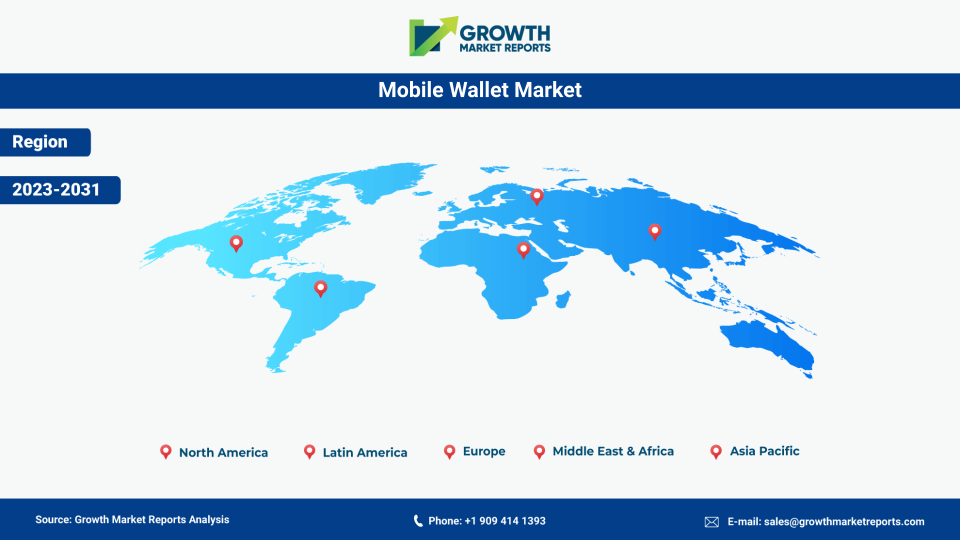
Regionally, Asia Pacific continues to dominate the mobile wallet market, accounting for the largest share in 2024, followed by North America and Europe. The growth in Asia Pacific is attributed to the high smartphone penetration, a large unbanked population, and the presence of leading digital payment platforms. North America and Europe are witnessing steady growth due to established digital infrastructure and high consumer awareness. Meanwhile, Latin America and the Middle East & Africa are experiencing rapid adoption, driven by rising financial inclusion initiatives and increasing urbanization. Each region presents unique opportunities and challenges, shaping the competitive dynamics and growth trajectory of the global mobile wallet market.

Global Mobile Wallet Industry Outlook

Type Analysis

The mobile wallet market is segmented by type into Remote Wallet and Proximity Wallet, each catering to distinct user preferences and transaction scenarios. Remote wallets enable users to perform transactions without physical contact, often through cloud-based platforms or mobile applications. These wallets are particularly popular for online shopping, bill payments, and peer-to-peer money transfers, offering unparalleled convenience and security. The growing demand for seamless digital experiences and the rising trend of e-commerce have significantly boosted the adoption of remote wallets, making them a cornerstone of the mobile payments ecosystem.

Proximity wallets, on the other hand, facilitate in-store payments using technologies such as Near Field Communication (NFC) and QR codes. These wallets are designed for quick, contactless transactions at physical retail locations, public transportation, and hospitality venues. The adoption of proximity wallets has surged in recent years as consumers and merchants alike seek faster and more hygienic payment options. The increasing deployment of NFC-enabled point-of-sale terminals and QR code payment systems across retail and service sectors has further accelerated the growth of proximity wallets, especially in urban markets.

The competitive dynamics between remote and proximity wallets are shaping the future of the mobile wallet market. While remote wallets have traditionally dominated online transactions, proximity wallets are gaining ground due to their ease of use and the growing acceptance of contactless payments. Leading players are investing in hybrid wallet solutions that combine the strengths of both types, offering users a unified platform for all their payment needs. This convergence is expected to drive higher adoption rates and enhance user engagement, particularly as consumers seek flexibility and convenience in their financial transactions.

The evolution of mobile wallet types is also influenced by regional preferences and regulatory environments. In Asia Pacific, for instance, QR code-based proximity wallets are widely used for small-value transactions, while remote wallets are preferred for larger online purchases. In contrast, NFC-based proximity wallets are more prevalent in North America and Europe, where consumers are accustomed to using credit and debit cards. Understanding these regional nuances is crucial for market participants aiming to tailor their offerings and capture a larger share of the growing mobile wallet market.

Report Scope

Attributes Details
Report Title Mobile Wallet Market Research Report 2033
By Type Remote Wallet, Proximity Wallet
By Technology NFC, QR Code, Digital Only, SMS, Others
By Application Retail, Transportation, Healthcare, Utilities, Hospitality, Others
By End-User Individual, Business
By Deployment Mode Cloud-Based, On-Premises
Regions Covered North America, Europe, APAC, Latin America, MEA
Base Year 2024
Historic Data 2018-2023
Forecast Period 2025-2033
Number of Pages 297
Number of Tables & Figures 315
Customization Available Yes, the report can be customized as per your need.

Technology Analysis

The mobile wallet market leverages a variety of technologies, including NFC, QR Code, Digital Only, SMS, and others, each playing a vital role in facilitating secure and efficient transactions. NFC technology is widely adopted for proximity payments, enabling users to make quick and secure transactions by simply tapping their smartphones at compatible terminals. The widespread deployment of NFC-enabled devices and POS systems has made this technology a preferred choice for contactless payments in developed markets, driving significant growth in the segment.

QR code technology has emerged as a game-changer, particularly in emerging economies where NFC infrastructure is less prevalent. QR code-based mobile wallets offer a cost-effective and scalable solution for both merchants and consumers, enabling instant payments without the need for expensive hardware. The simplicity and versatility of QR codes have led to their widespread adoption in retail, transportation, and even informal sectors, contributing to the rapid expansion of the mobile wallet market in regions such as Asia Pacific and Latin America.

Digital-only wallets, which operate exclusively through mobile applications without physical card counterparts, are gaining traction among tech-savvy consumers seeking convenience and advanced features. These wallets often integrate with other digital services, such as loyalty programs, ticketing, and financial management tools, providing a comprehensive digital ecosystem. The rise of fintech startups and the increasing preference for app-based financial solutions are fueling the growth of digital-only wallets, particularly among younger demographics and urban populations.

SMS-based mobile wallets, though less prevalent in developed markets, play a crucial role in expanding financial inclusion in regions with limited internet connectivity. By enabling basic financial transactions through text messages, SMS wallets cater to the needs of the unbanked and underbanked populations, supporting the broader goal of digital financial inclusion. Other emerging technologies, such as blockchain and biometric authentication, are also being integrated into mobile wallets to enhance security, transparency, and user trust, further driving the evolution of the market.

Application Analysis

The mobile wallet market finds application across a diverse range of sectors, including Retail, Transportation, Healthcare, Utilities, Hospitality, and others. Retail remains the largest application segment, accounting for a significant share of total mobile wallet transactions in 2024. The growing popularity of online shopping, coupled with the increasing adoption of contactless payment methods in brick-and-mortar stores, has fueled the demand for mobile wallets in the retail sector. Retailers are leveraging mobile wallet solutions to enhance customer experience, streamline checkout processes, and drive customer loyalty through integrated rewards programs.

Transportation is another key application area, with mobile wallets being widely used for ticketing, fare payments, and ride-hailing services. The integration of mobile wallets with public transportation systems and mobility platforms has simplified the payment experience for commuters, reducing the reliance on cash and physical tickets. The trend toward smart cities and the digitalization of urban mobility services are expected to further boost the adoption of mobile wallets in the transportation sector over the coming years.

In the healthcare sector, mobile wallets are gaining traction as a secure and efficient payment solution for medical bills, insurance premiums, and telemedicine services. The increasing adoption of digital health platforms and the need for contactless payment options in healthcare facilities have created new opportunities for mobile wallet providers. By offering seamless integration with healthcare management systems, mobile wallets are helping to improve patient experience and streamline administrative processes.

Utilities and hospitality sectors are also witnessing growing adoption of mobile wallets, driven by the demand for convenient and secure payment options. Utility companies are integrating mobile wallet solutions to facilitate bill payments and enhance customer engagement, while hotels and restaurants are leveraging mobile wallets to offer contactless check-in, room service, and payment experiences. The versatility of mobile wallets across various applications is a testament to their growing importance in the digital economy.

End-User Analysis

The mobile wallet market serves two primary end-user segments: Individuals and Businesses. Individual consumers are the largest end-user group, accounting for the majority of mobile wallet transactions globally. The increasing preference for digital payments, driven by convenience, security, and the proliferation of smartphones, has made mobile wallets an indispensable tool for everyday financial transactions. Individuals are using mobile wallets for a wide range of purposes, from shopping and bill payments to peer-to-peer transfers and entertainment services.

Businesses, including small and medium enterprises (SMEs) and large corporations, are increasingly adopting mobile wallet solutions to streamline payment processes, enhance customer experience, and drive operational efficiency. Mobile wallets enable businesses to accept a wide range of payment methods, reduce transaction costs, and improve cash flow management. The integration of mobile wallets with point-of-sale systems, e-commerce platforms, and customer relationship management tools is helping businesses of all sizes to stay competitive in the digital economy.

The adoption of mobile wallets by businesses is also driven by the growing trend of digital transformation and the need to cater to evolving consumer preferences. Businesses are leveraging mobile wallet data to gain insights into customer behavior, personalize marketing campaigns, and build long-term customer loyalty. The ability to offer value-added services, such as loyalty programs and promotional offers, through mobile wallets is further enhancing their appeal to businesses across various industries.

The interplay between individual and business end-users is creating a virtuous cycle of adoption and innovation in the mobile wallet market. As more businesses accept mobile wallet payments, individual consumers are encouraged to use these solutions more frequently, driving transaction volumes and market growth. This symbiotic relationship is expected to continue shaping the evolution of the mobile wallet market over the forecast period.

Deployment Mode Analysis

The deployment mode of mobile wallet solutions can be broadly categorized into Cloud-Based and On-Premises models, each offering distinct advantages and catering to different user requirements. Cloud-based mobile wallet solutions have gained significant traction in recent years due to their scalability, flexibility, and cost-effectiveness. By leveraging cloud infrastructure, mobile wallet providers can offer seamless updates, enhanced security, and rapid deployment of new features, making them an attractive option for both individuals and businesses.

Cloud-based deployment also enables greater interoperability and integration with other digital services, such as e-commerce platforms, loyalty programs, and financial management tools. This has been particularly beneficial for SMEs and startups, which may lack the resources to invest in and maintain on-premises infrastructure. The ability to access mobile wallet services from anywhere, at any time, has further contributed to the popularity of cloud-based solutions, especially in the wake of the COVID-19 pandemic and the shift toward remote and digital-first business models.

On-premises mobile wallet solutions, while less common, are preferred by organizations with stringent security and compliance requirements. These solutions offer greater control over data storage and management, making them suitable for industries such as banking, healthcare, and government, where data privacy and regulatory compliance are paramount. On-premises deployment also allows for customization and integration with legacy systems, providing organizations with the flexibility to tailor mobile wallet solutions to their specific needs.

The choice between cloud-based and on-premises deployment is influenced by factors such as organizational size, industry, regulatory environment, and budget constraints. As the mobile wallet market continues to evolve, hybrid deployment models that combine the benefits of both approaches are emerging, offering users the flexibility to balance security, scalability, and cost considerations. This trend is expected to gain momentum as organizations seek to future-proof their digital payment infrastructure.

Opportunities & Threats

The mobile wallet market presents a host of opportunities for growth and innovation, particularly as digital transformation accelerates across industries. One of the most promising opportunities lies in the integration of advanced technologies such as artificial intelligence, machine learning, and blockchain into mobile wallet solutions. These technologies can enhance security, personalize user experiences, and enable the development of innovative financial products and services. The growing demand for cross-border payment solutions and the expansion of mobile wallets into new use cases, such as digital identity verification and micro-lending, are also opening up new avenues for market growth.

Another significant opportunity is the expansion of mobile wallet services in emerging markets, where large segments of the population remain unbanked or underbanked. By providing accessible and affordable digital payment solutions, mobile wallet providers can play a pivotal role in promoting financial inclusion and driving economic development. Partnerships between mobile wallet providers, financial institutions, and government agencies are crucial for scaling adoption and addressing the unique challenges of these markets. The rise of super apps, which integrate multiple services into a single platform, is further enhancing the value proposition of mobile wallets and attracting a broader user base.

Despite the numerous opportunities, the mobile wallet market faces several threats and restrainers that could impact its growth trajectory. Security and privacy concerns remain top of mind for consumers and regulators, particularly in the wake of high-profile data breaches and cyberattacks. Ensuring robust security measures, such as multi-factor authentication, encryption, and real-time fraud detection, is essential for maintaining user trust and compliance with regulatory requirements. Additionally, intense competition and market fragmentation pose challenges for mobile wallet providers, making it difficult to achieve scale and profitability. Addressing these threats requires continuous investment in technology, talent, and customer education.

Regional Outlook

The Asia Pacific region continues to lead the global mobile wallet market, accounting for approximately USD 650 billion in market size in 2024. The region’s dominance is driven by high smartphone penetration, a large unbanked population, and the widespread adoption of QR code-based payment systems. China and India are the largest contributors, with popular platforms such as Alipay, WeChat Pay, and Paytm driving transaction volumes. The Asia Pacific market is expected to grow at a CAGR of 25.1% through 2033, reaching an estimated USD 3,360 billion by the end of the forecast period.

North America holds the second-largest share of the mobile wallet market, with a market size of USD 340 billion in 2024. The region benefits from a mature digital infrastructure, high consumer awareness, and the widespread adoption of NFC-based payment solutions. Key players such as Apple Pay, Google Pay, and Samsung Pay dominate the market, supported by strong partnerships with financial institutions and retailers. The North American market is expected to maintain steady growth, driven by ongoing innovation and the increasing integration of mobile wallets with loyalty and rewards programs.

Europe, with a market size of USD 220 billion in 2024, is characterized by a diverse regulatory landscape and varying levels of mobile wallet adoption across countries. The region is witnessing increased adoption of contactless payment methods, particularly in urban centers and among younger consumers. Regulatory initiatives such as the Revised Payment Services Directive (PSD2) are fostering competition and innovation, while also ensuring consumer protection. Latin America and the Middle East & Africa, with market sizes of USD 90 billion and USD 50 billion respectively, are experiencing rapid growth as mobile wallets become a key enabler of financial inclusion and digital transformation.

Mobile Wallet Market Statistics

Competitor Outlook

The mobile wallet market is highly competitive, with a mix of global tech giants, regional champions, and innovative fintech startups vying for market share. The competitive landscape is characterized by rapid innovation, strategic partnerships, and a relentless focus on user experience. Leading players are continually enhancing their platforms by integrating new features, expanding their merchant networks, and investing in advanced security technologies. The ability to offer a seamless, secure, and versatile payment experience is a key differentiator in this dynamic market.

Global technology companies such as Apple, Google, and Samsung have established a strong foothold in the mobile wallet market, leveraging their extensive user bases and ecosystem integration. These companies benefit from deep pockets, brand recognition, and the ability to invest in cutting-edge technologies. At the same time, regional players such as Alipay and WeChat Pay in China, Paytm in India, and M-Pesa in Africa have built significant market share by tailoring their offerings to local preferences and regulatory environments. Their success is often driven by a deep understanding of local consumer behavior and strategic partnerships with banks, telecom operators, and merchants.

Fintech startups are also playing a pivotal role in shaping the competitive landscape by introducing innovative solutions and targeting niche segments. These companies often focus on underserved markets, offering specialized services such as micro-lending, remittances, and digital identity verification. The rise of open banking and API-driven ecosystems is enabling greater interoperability and collaboration between traditional financial institutions and fintech innovators, further intensifying competition and driving market growth.

Some of the major companies operating in the global mobile wallet market include Apple Inc., Google LLC, Samsung Electronics Co., Ltd., Alibaba Group Holding Limited (Alipay), Tencent Holdings Limited (WeChat Pay), Paytm, PayPal Holdings, Inc., Square, Inc., Amazon Pay, and M-Pesa. These companies are continuously investing in product development, expanding their service offerings, and forming strategic alliances to strengthen their market positions. For instance, Apple Pay and Google Pay have expanded their reach by partnering with major banks and retailers, while Alipay and WeChat Pay have diversified into new services such as wealth management and insurance.

In summary, the competitive outlook for the mobile wallet market is shaped by a combination of global scale, local expertise, and continuous innovation. Companies that can effectively balance security, convenience, and value-added services are well positioned to capture a larger share of the growing mobile wallet market in the years ahead.

Key Players

  • Apple Inc.
  • Google LLC
  • Samsung Electronics Co. Ltd.
  • PayPal Holdings Inc.
  • Alibaba Group (Alipay)
  • Tencent Holdings Ltd. (WeChat Pay)
  • Amazon.com Inc.
  • Visa Inc.
  • Mastercard Incorporated
  • American Express Company
  • Square Inc. (Block, Inc.)
  • Ant Financial Services Group
  • Paytm (One97 Communications Ltd.)
  • PhonePe (Walmart Inc.)
  • Rakuten Group, Inc.
  • LINE Corporation
  • Grab Holdings Inc.
  • M-Pesa (Vodafone Group Plc & Safaricom)
  • Revolut Ltd.
  • Skrill Limited (Paysafe Group)
Mobile Wallet Market Overview

Segments

The Mobile Wallet market has been segmented on the basis of

Type

  • Remote Wallet
  • Proximity Wallet

Technology

  • NFC
  • QR Code
  • Digital Only
  • SMS
  • Others

Application

  • Retail
  • Transportation
  • Healthcare
  • Utilities
  • Hospitality
  • Others

End-User

  • Individual
  • Business

Deployment Mode

  • Cloud-Based
  • On-Premises

Competitive Landscape

Some of the major players competing are Amazon Web Services Inc.; American Express Banking Corp.; Apple Inc.; Alipay.com; AT&T Inc.; Google Inc.; Mastercard Incorporated; PayPal Holdings, Inc.; Samsung Electronics Co., Ltd.; and Visa Inc. Players in the market are actively investing in R&D to create innovative payment platforms by developing new improved technology.
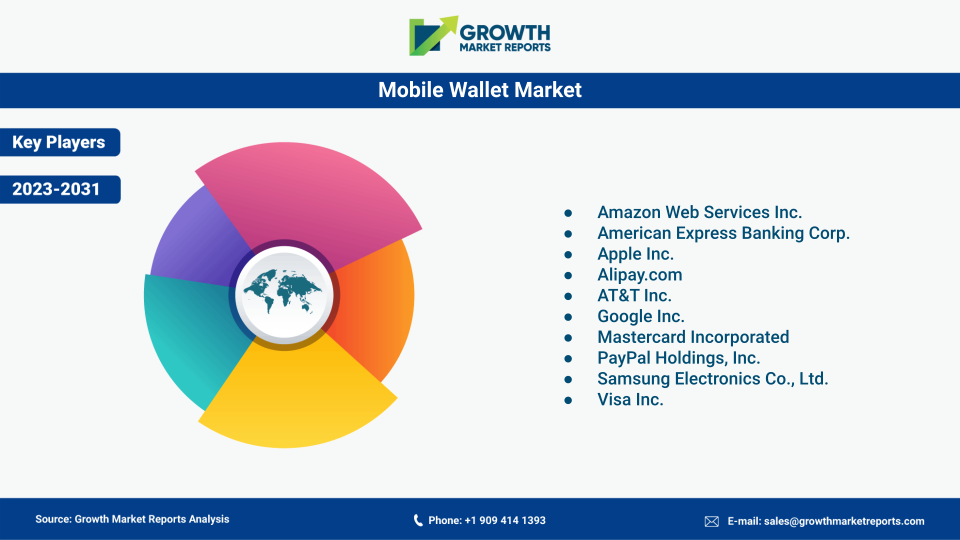

Mobile Wallet Market key Players

Frequently Asked Questions

Key players include Apple Inc., Google LLC, Samsung Electronics, PayPal Holdings, Alipay (Alibaba Group), WeChat Pay (Tencent), Amazon Pay, Visa, Mastercard, Square (Block, Inc.), Paytm, PhonePe, M-Pesa, and others.

Mobile wallet solutions can be deployed via cloud-based models (offering scalability and flexibility) or on-premises models (preferred for greater data control and compliance). Hybrid models are also emerging.

Mobile wallets serve both individual consumers (for daily transactions and peer-to-peer payments) and businesses (for streamlining payment processes, customer engagement, and operational efficiency).

Mobile wallets are widely used in retail, transportation, healthcare, utilities, and hospitality sectors for payments, ticketing, bill payments, and loyalty programs.

Mobile wallets utilize technologies such as NFC, QR codes, digital-only platforms, SMS, and emerging solutions like blockchain and biometric authentication to facilitate secure transactions.

The mobile wallet market is segmented into Remote Wallets (used for online and peer-to-peer transactions) and Proximity Wallets (used for in-store, contactless payments via NFC or QR codes).

Asia Pacific leads the global mobile wallet market, followed by North America and Europe. Latin America and the Middle East & Africa are also experiencing rapid adoption due to financial inclusion initiatives and urbanization.

Key growth drivers include increasing smartphone and internet penetration, a shift toward contactless and secure payments, e-commerce expansion, and integration of advanced technologies like biometric authentication and AI-driven fraud prevention.

The mobile wallet market is expected to grow at a CAGR of 23.7% from 2025 to 2033, reaching an estimated USD 6,130 billion by 2033.

As of 2024, the global mobile wallet market size reached USD 1,350 billion, with strong year-on-year growth driven by digital payment adoption worldwide.

Table Of Content

Chapter 1 Executive Summary
Chapter 2 Assumptions and Acronyms Used
Chapter 3 Research Methodology
Chapter 4 Mobile Wallet Market Overview
   4.1 Introduction
      4.1.1 Market Taxonomy
      4.1.2 Market Definition
      4.1.3 Macro-Economic Factors Impacting the Market Growth
   4.2 Mobile Wallet Market Dynamics
      4.2.1 Market Drivers
      4.2.2 Market Restraints
      4.2.3 Market Opportunity
   4.3 Mobile Wallet Market - Supply Chain Analysis
      4.3.1 List of Key Suppliers
      4.3.2 List of Key Distributors
      4.3.3 List of Key Consumers
   4.4 Key Forces Shaping the Mobile Wallet Market
      4.4.1 Bargaining Power of Suppliers
      4.4.2 Bargaining Power of Buyers
      4.4.3 Threat of Substitution
      4.4.4 Threat of New Entrants
      4.4.5 Competitive Rivalry
   4.5 Global Mobile Wallet Market Size & Forecast, 2023-2032
      4.5.1 Mobile Wallet Market Size and Y-o-Y Growth
      4.5.2 Mobile Wallet Market Absolute $ Opportunity

Chapter 5 Global Mobile Wallet Market Analysis and Forecast By Type
   5.1 Introduction
      5.1.1 Key Market Trends & Growth Opportunities By Type
      5.1.2 Basis Point Share (BPS) Analysis By Type
      5.1.3 Absolute $ Opportunity Assessment By Type
   5.2 Mobile Wallet Market Size Forecast By Type
      5.2.1 Remote Wallet
      5.2.2 Proximity Wallet
   5.3 Market Attractiveness Analysis By Type

Chapter 6 Global Mobile Wallet Market Analysis and Forecast By Technology
   6.1 Introduction
      6.1.1 Key Market Trends & Growth Opportunities By Technology
      6.1.2 Basis Point Share (BPS) Analysis By Technology
      6.1.3 Absolute $ Opportunity Assessment By Technology
   6.2 Mobile Wallet Market Size Forecast By Technology
      6.2.1 NFC
      6.2.2 QR Code
      6.2.3 Digital Only
      6.2.4 SMS
      6.2.5 Others
   6.3 Market Attractiveness Analysis By Technology

Chapter 7 Global Mobile Wallet Market Analysis and Forecast By Application
   7.1 Introduction
      7.1.1 Key Market Trends & Growth Opportunities By Application
      7.1.2 Basis Point Share (BPS) Analysis By Application
      7.1.3 Absolute $ Opportunity Assessment By Application
   7.2 Mobile Wallet Market Size Forecast By Application
      7.2.1 Retail
      7.2.2 Transportation
      7.2.3 Healthcare
      7.2.4 Utilities
      7.2.5 Hospitality
      7.2.6 Others
   7.3 Market Attractiveness Analysis By Application

Chapter 8 Global Mobile Wallet Market Analysis and Forecast By End-User
   8.1 Introduction
      8.1.1 Key Market Trends & Growth Opportunities By End-User
      8.1.2 Basis Point Share (BPS) Analysis By End-User
      8.1.3 Absolute $ Opportunity Assessment By End-User
   8.2 Mobile Wallet Market Size Forecast By End-User
      8.2.1 Individual
      8.2.2 Business
   8.3 Market Attractiveness Analysis By End-User

Chapter 9 Global Mobile Wallet Market Analysis and Forecast By Deployment Mode
   9.1 Introduction
      9.1.1 Key Market Trends & Growth Opportunities By Deployment Mode
      9.1.2 Basis Point Share (BPS) Analysis By Deployment Mode
      9.1.3 Absolute $ Opportunity Assessment By Deployment Mode
   9.2 Mobile Wallet Market Size Forecast By Deployment Mode
      9.2.1 Cloud-Based
      9.2.2 On-Premises
   9.3 Market Attractiveness Analysis By Deployment Mode

Chapter 10 Global Mobile Wallet Market Analysis and Forecast by Region
   10.1 Introduction
      10.1.1 Key Market Trends & Growth Opportunities By Region
      10.1.2 Basis Point Share (BPS) Analysis By Region
      10.1.3 Absolute $ Opportunity Assessment By Region
   10.2 Mobile Wallet Market Size Forecast By Region
      10.2.1 North America
      10.2.2 Europe
      10.2.3 Asia Pacific
      10.2.4 Latin America
      10.2.5 Middle East & Africa (MEA)
   10.3 Market Attractiveness Analysis By Region

Chapter 11 Coronavirus Disease (COVID-19) Impact 
   11.1 Introduction 
   11.2 Current & Future Impact Analysis 
   11.3 Economic Impact Analysis 
   11.4 Government Policies 
   11.5 Investment Scenario

Chapter 12 North America Mobile Wallet Analysis and Forecast
   12.1 Introduction
   12.2 North America Mobile Wallet Market Size Forecast by Country
      12.2.1 U.S.
      12.2.2 Canada
   12.3 Basis Point Share (BPS) Analysis by Country
   12.4 Absolute $ Opportunity Assessment by Country
   12.5 Market Attractiveness Analysis by Country
   12.6 North America Mobile Wallet Market Size Forecast By Type
      12.6.1 Remote Wallet
      12.6.2 Proximity Wallet
   12.7 Basis Point Share (BPS) Analysis By Type 
   12.8 Absolute $ Opportunity Assessment By Type 
   12.9 Market Attractiveness Analysis By Type
   12.10 North America Mobile Wallet Market Size Forecast By Technology
      12.10.1 NFC
      12.10.2 QR Code
      12.10.3 Digital Only
      12.10.4 SMS
      12.10.5 Others
   12.11 Basis Point Share (BPS) Analysis By Technology 
   12.12 Absolute $ Opportunity Assessment By Technology 
   12.13 Market Attractiveness Analysis By Technology
   12.14 North America Mobile Wallet Market Size Forecast By Application
      12.14.1 Retail
      12.14.2 Transportation
      12.14.3 Healthcare
      12.14.4 Utilities
      12.14.5 Hospitality
      12.14.6 Others
   12.15 Basis Point Share (BPS) Analysis By Application 
   12.16 Absolute $ Opportunity Assessment By Application 
   12.17 Market Attractiveness Analysis By Application
   12.18 North America Mobile Wallet Market Size Forecast By End-User
      12.18.1 Individual
      12.18.2 Business
   12.19 Basis Point Share (BPS) Analysis By End-User 
   12.20 Absolute $ Opportunity Assessment By End-User 
   12.21 Market Attractiveness Analysis By End-User
   12.22 North America Mobile Wallet Market Size Forecast By Deployment Mode
      12.22.1 Cloud-Based
      12.22.2 On-Premises
   12.23 Basis Point Share (BPS) Analysis By Deployment Mode 
   12.24 Absolute $ Opportunity Assessment By Deployment Mode 
   12.25 Market Attractiveness Analysis By Deployment Mode

Chapter 13 Europe Mobile Wallet Analysis and Forecast
   13.1 Introduction
   13.2 Europe Mobile Wallet Market Size Forecast by Country
      13.2.1 Germany
      13.2.2 France
      13.2.3 Italy
      13.2.4 U.K.
      13.2.5 Spain
      13.2.6 Russia
      13.2.7 Rest of Europe
   13.3 Basis Point Share (BPS) Analysis by Country
   13.4 Absolute $ Opportunity Assessment by Country
   13.5 Market Attractiveness Analysis by Country
   13.6 Europe Mobile Wallet Market Size Forecast By Type
      13.6.1 Remote Wallet
      13.6.2 Proximity Wallet
   13.7 Basis Point Share (BPS) Analysis By Type 
   13.8 Absolute $ Opportunity Assessment By Type 
   13.9 Market Attractiveness Analysis By Type
   13.10 Europe Mobile Wallet Market Size Forecast By Technology
      13.10.1 NFC
      13.10.2 QR Code
      13.10.3 Digital Only
      13.10.4 SMS
      13.10.5 Others
   13.11 Basis Point Share (BPS) Analysis By Technology 
   13.12 Absolute $ Opportunity Assessment By Technology 
   13.13 Market Attractiveness Analysis By Technology
   13.14 Europe Mobile Wallet Market Size Forecast By Application
      13.14.1 Retail
      13.14.2 Transportation
      13.14.3 Healthcare
      13.14.4 Utilities
      13.14.5 Hospitality
      13.14.6 Others
   13.15 Basis Point Share (BPS) Analysis By Application 
   13.16 Absolute $ Opportunity Assessment By Application 
   13.17 Market Attractiveness Analysis By Application
   13.18 Europe Mobile Wallet Market Size Forecast By End-User
      13.18.1 Individual
      13.18.2 Business
   13.19 Basis Point Share (BPS) Analysis By End-User 
   13.20 Absolute $ Opportunity Assessment By End-User 
   13.21 Market Attractiveness Analysis By End-User
   13.22 Europe Mobile Wallet Market Size Forecast By Deployment Mode
      13.22.1 Cloud-Based
      13.22.2 On-Premises
   13.23 Basis Point Share (BPS) Analysis By Deployment Mode 
   13.24 Absolute $ Opportunity Assessment By Deployment Mode 
   13.25 Market Attractiveness Analysis By Deployment Mode

Chapter 14 Asia Pacific Mobile Wallet Analysis and Forecast
   14.1 Introduction
   14.2 Asia Pacific Mobile Wallet Market Size Forecast by Country
      14.2.1 China
      14.2.2 Japan
      14.2.3 South Korea
      14.2.4 India
      14.2.5 Australia
      14.2.6 South East Asia (SEA)
      14.2.7 Rest of Asia Pacific (APAC)
   14.3 Basis Point Share (BPS) Analysis by Country
   14.4 Absolute $ Opportunity Assessment by Country
   14.5 Market Attractiveness Analysis by Country
   14.6 Asia Pacific Mobile Wallet Market Size Forecast By Type
      14.6.1 Remote Wallet
      14.6.2 Proximity Wallet
   14.7 Basis Point Share (BPS) Analysis By Type 
   14.8 Absolute $ Opportunity Assessment By Type 
   14.9 Market Attractiveness Analysis By Type
   14.10 Asia Pacific Mobile Wallet Market Size Forecast By Technology
      14.10.1 NFC
      14.10.2 QR Code
      14.10.3 Digital Only
      14.10.4 SMS
      14.10.5 Others
   14.11 Basis Point Share (BPS) Analysis By Technology 
   14.12 Absolute $ Opportunity Assessment By Technology 
   14.13 Market Attractiveness Analysis By Technology
   14.14 Asia Pacific Mobile Wallet Market Size Forecast By Application
      14.14.1 Retail
      14.14.2 Transportation
      14.14.3 Healthcare
      14.14.4 Utilities
      14.14.5 Hospitality
      14.14.6 Others
   14.15 Basis Point Share (BPS) Analysis By Application 
   14.16 Absolute $ Opportunity Assessment By Application 
   14.17 Market Attractiveness Analysis By Application
   14.18 Asia Pacific Mobile Wallet Market Size Forecast By End-User
      14.18.1 Individual
      14.18.2 Business
   14.19 Basis Point Share (BPS) Analysis By End-User 
   14.20 Absolute $ Opportunity Assessment By End-User 
   14.21 Market Attractiveness Analysis By End-User
   14.22 Asia Pacific Mobile Wallet Market Size Forecast By Deployment Mode
      14.22.1 Cloud-Based
      14.22.2 On-Premises
   14.23 Basis Point Share (BPS) Analysis By Deployment Mode 
   14.24 Absolute $ Opportunity Assessment By Deployment Mode 
   14.25 Market Attractiveness Analysis By Deployment Mode

Chapter 15 Latin America Mobile Wallet Analysis and Forecast
   15.1 Introduction
   15.2 Latin America Mobile Wallet Market Size Forecast by Country
      15.2.1 Brazil
      15.2.2 Mexico
      15.2.3 Rest of Latin America (LATAM)
   15.3 Basis Point Share (BPS) Analysis by Country
   15.4 Absolute $ Opportunity Assessment by Country
   15.5 Market Attractiveness Analysis by Country
   15.6 Latin America Mobile Wallet Market Size Forecast By Type
      15.6.1 Remote Wallet
      15.6.2 Proximity Wallet
   15.7 Basis Point Share (BPS) Analysis By Type 
   15.8 Absolute $ Opportunity Assessment By Type 
   15.9 Market Attractiveness Analysis By Type
   15.10 Latin America Mobile Wallet Market Size Forecast By Technology
      15.10.1 NFC
      15.10.2 QR Code
      15.10.3 Digital Only
      15.10.4 SMS
      15.10.5 Others
   15.11 Basis Point Share (BPS) Analysis By Technology 
   15.12 Absolute $ Opportunity Assessment By Technology 
   15.13 Market Attractiveness Analysis By Technology
   15.14 Latin America Mobile Wallet Market Size Forecast By Application
      15.14.1 Retail
      15.14.2 Transportation
      15.14.3 Healthcare
      15.14.4 Utilities
      15.14.5 Hospitality
      15.14.6 Others
   15.15 Basis Point Share (BPS) Analysis By Application 
   15.16 Absolute $ Opportunity Assessment By Application 
   15.17 Market Attractiveness Analysis By Application
   15.18 Latin America Mobile Wallet Market Size Forecast By End-User
      15.18.1 Individual
      15.18.2 Business
   15.19 Basis Point Share (BPS) Analysis By End-User 
   15.20 Absolute $ Opportunity Assessment By End-User 
   15.21 Market Attractiveness Analysis By End-User
   15.22 Latin America Mobile Wallet Market Size Forecast By Deployment Mode
      15.22.1 Cloud-Based
      15.22.2 On-Premises
   15.23 Basis Point Share (BPS) Analysis By Deployment Mode 
   15.24 Absolute $ Opportunity Assessment By Deployment Mode 
   15.25 Market Attractiveness Analysis By Deployment Mode

Chapter 16 Middle East & Africa (MEA) Mobile Wallet Analysis and Forecast
   16.1 Introduction
   16.2 Middle East & Africa (MEA) Mobile Wallet Market Size Forecast by Country
      16.2.1 Saudi Arabia
      16.2.2 South Africa
      16.2.3 UAE
      16.2.4 Rest of Middle East & Africa (MEA)
   16.3 Basis Point Share (BPS) Analysis by Country
   16.4 Absolute $ Opportunity Assessment by Country
   16.5 Market Attractiveness Analysis by Country
   16.6 Middle East & Africa (MEA) Mobile Wallet Market Size Forecast By Type
      16.6.1 Remote Wallet
      16.6.2 Proximity Wallet
   16.7 Basis Point Share (BPS) Analysis By Type 
   16.8 Absolute $ Opportunity Assessment By Type 
   16.9 Market Attractiveness Analysis By Type
   16.10 Middle East & Africa (MEA) Mobile Wallet Market Size Forecast By Technology
      16.10.1 NFC
      16.10.2 QR Code
      16.10.3 Digital Only
      16.10.4 SMS
      16.10.5 Others
   16.11 Basis Point Share (BPS) Analysis By Technology 
   16.12 Absolute $ Opportunity Assessment By Technology 
   16.13 Market Attractiveness Analysis By Technology
   16.14 Middle East & Africa (MEA) Mobile Wallet Market Size Forecast By Application
      16.14.1 Retail
      16.14.2 Transportation
      16.14.3 Healthcare
      16.14.4 Utilities
      16.14.5 Hospitality
      16.14.6 Others
   16.15 Basis Point Share (BPS) Analysis By Application 
   16.16 Absolute $ Opportunity Assessment By Application 
   16.17 Market Attractiveness Analysis By Application
   16.18 Middle East & Africa (MEA) Mobile Wallet Market Size Forecast By End-User
      16.18.1 Individual
      16.18.2 Business
   16.19 Basis Point Share (BPS) Analysis By End-User 
   16.20 Absolute $ Opportunity Assessment By End-User 
   16.21 Market Attractiveness Analysis By End-User
   16.22 Middle East & Africa (MEA) Mobile Wallet Market Size Forecast By Deployment Mode
      16.22.1 Cloud-Based
      16.22.2 On-Premises
   16.23 Basis Point Share (BPS) Analysis By Deployment Mode 
   16.24 Absolute $ Opportunity Assessment By Deployment Mode 
   16.25 Market Attractiveness Analysis By Deployment Mode

Chapter 17 Competition Landscape 
   17.1 Mobile Wallet Market: Competitive Dashboard
   17.2 Global Mobile Wallet Market: Market Share Analysis, 2023
   17.3 Company Profiles (Details – Overview, Financials, Developments, Strategy) 
      17.3.1 Apple Inc.
Google LLC
Samsung Electronics Co. Ltd.
PayPal Holdings Inc.
Alibaba Group (Alipay)
Tencent Holdings Ltd. (WeChat Pay)
Amazon.com Inc.
Visa Inc.
Mastercard Incorporated
American Express Company
Square Inc. (Block, Inc.)
Ant Financial Services Group
Paytm (One97 Communications Ltd.)
PhonePe (Walmart Inc.)
Rakuten Group, Inc.
LINE Corporation
Grab Holdings Inc.
M-Pesa (Vodafone Group Plc & Safaricom)
Revolut Ltd.
Skrill Limited (Paysafe Group)

Methodology

Our Clients

The John Holland Group
General Electric
Pfizer
Nestle SA
Honda Motor Co. Ltd.
Siemens Healthcare
FedEx Logistics
sinopec