Mobile VoIP Market Research Report 2033

Mobile VoIP Market Research Report 2033

Segments - by Platform (Android, iOS, Windows, Others), by Service Type (Voice, Video, Messaging, Data), by End-User (Individual Consumers, Enterprises, Government), by Deployment Mode (Cloud-Based, On-Premises), by Application (Personal Use, Business Use, Others)

https://growthmarketreports.com/Raksha
Author : Raksha Sharma
https://growthmarketreports.com/Vaibhav
Fact-checked by : V. Chandola
https://growthmarketreports.com/Shruti
Editor : Shruti Bhat

Upcoming | Report ID :ICT-SE-496 | 4.7 Rating | 20 Reviews | 289 Pages | Format : Docx PDF

Report Description


Mobile VoIP Market Outlook

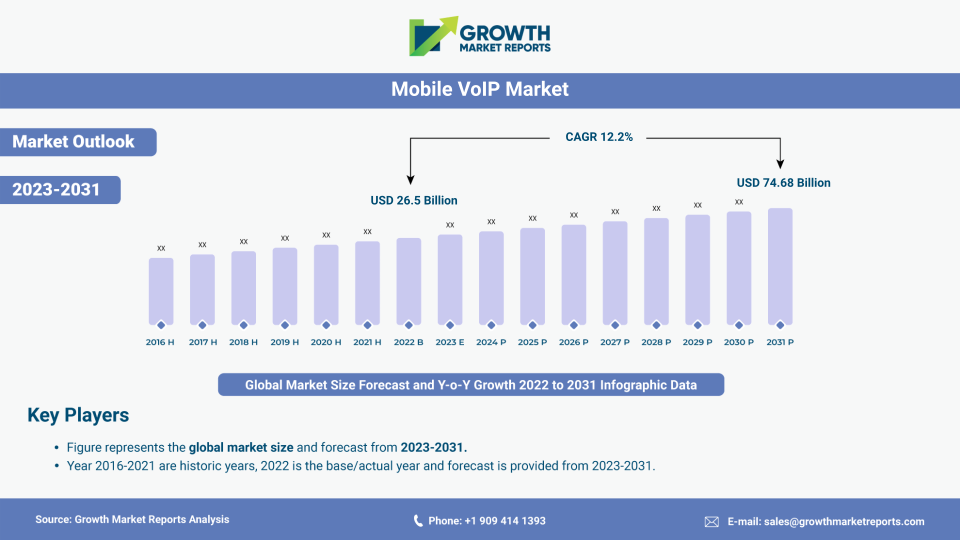
According to our latest research, the global Mobile VoIP market size reached USD 45.2 billion in 2024, driven by the rapid adoption of smartphones and increasing internet penetration worldwide. The market is projected to grow at a robust CAGR of 18.7% during the forecast period, reaching an estimated USD 227.9 billion by 2033. This remarkable growth is largely attributed to the escalating demand for cost-effective communication solutions, advancements in wireless network infrastructure, and the proliferation of high-speed internet services. As per our latest research, the marketÂ’s expansion is further fueled by the integration of advanced features such as video calling, instant messaging, and seamless interoperability across multiple platforms, making Mobile VoIP an indispensable tool for both personal and professional communication.

The primary growth driver for the Mobile VoIP market is the exponential increase in smartphone adoption globally. With billions of smartphones in use and the consistent rollout of affordable devices, users are increasingly turning to Mobile VoIP solutions for their communication needs. The availability of high-speed 4G and the deployment of 5G networks have significantly enhanced call quality and reliability, making VoIP a preferred choice over traditional telephony. Moreover, the cost-effectiveness of Mobile VoIP, which allows users to make international and long-distance calls at a fraction of the cost of conventional services, has broadened its appeal across both developed and emerging economies. This trend is further bolstered by the integration of Mobile VoIP features into popular messaging apps, driving mass adoption among younger, tech-savvy demographics.

Another significant factor propelling the Mobile VoIP market growth is the increasing shift towards remote work and digital collaboration. Enterprises and government organizations are leveraging Mobile VoIP platforms to facilitate seamless communication among distributed teams, ensuring business continuity and operational efficiency. The COVID-19 pandemic accelerated this shift, as organizations sought reliable, scalable, and secure communication tools to support remote employees. Mobile VoIP platforms offer a wide range of functionalities, including video conferencing, group messaging, and file sharing, which are essential for modern business operations. This has led to a surge in demand for enterprise-grade Mobile VoIP solutions, with vendors continuously innovating to enhance security, integration capabilities, and user experience.

The evolving regulatory landscape and growing focus on data privacy also play a crucial role in shaping the Mobile VoIP market. Governments and regulatory bodies are increasingly implementing policies to safeguard user data and ensure compliance with privacy standards. This has prompted Mobile VoIP service providers to invest in robust encryption technologies and secure authentication mechanisms, thereby enhancing user trust and expanding the marketÂ’s potential. Furthermore, the emergence of cloud-based deployment models has enabled service providers to offer scalable, flexible, and cost-efficient solutions, catering to the diverse needs of individual consumers, enterprises, and government entities. The ongoing advancements in artificial intelligence and machine learning are expected to further revolutionize the Mobile VoIP landscape, enabling intelligent call routing, real-time language translation, and personalized user experiences.

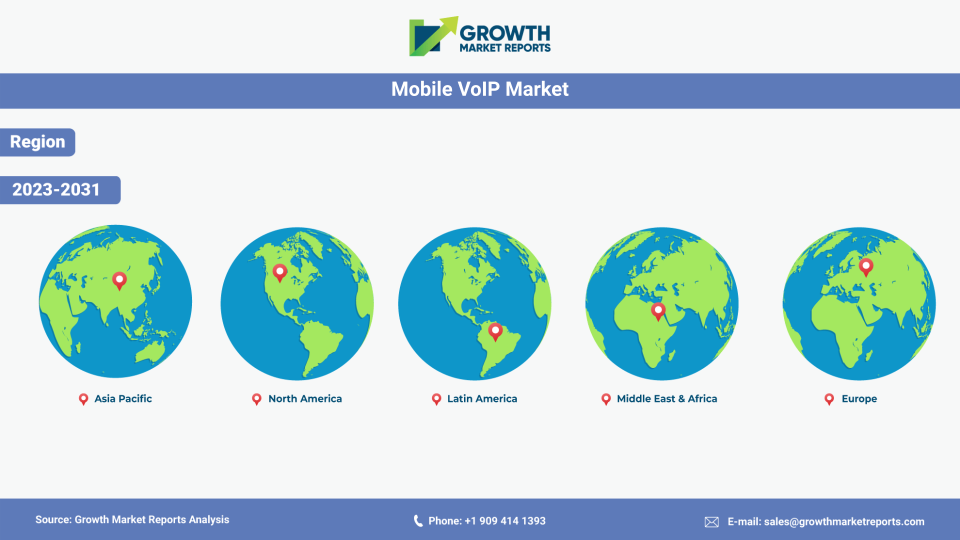
From a regional perspective, Asia Pacific dominates the Mobile VoIP market with the largest share, followed closely by North America and Europe. The regionÂ’s leadership is attributed to its large population base, rapid urbanization, and widespread adoption of smartphones and mobile broadband services. Countries such as China, India, and Japan are at the forefront, with consumers and businesses alike embracing Mobile VoIP for its affordability and versatility. North America continues to witness strong growth, driven by technological innovation and the presence of major industry players. Meanwhile, Europe is experiencing steady adoption, particularly in Western European countries where digital transformation initiatives are gaining momentum. The Middle East & Africa and Latin America are emerging as promising markets, supported by improving infrastructure and increasing awareness of VoIP benefits.

Global Mobile VoIP Industry Outlook

Platform Analysis

The Mobile VoIP market is segmented by platform into Android, iOS, Windows, and others, each playing a pivotal role in shaping the marketÂ’s dynamics. Android holds the largest market share due to its widespread adoption and the availability of affordable smartphones, particularly in emerging markets. The open-source nature of Android allows for greater customization and integration of Mobile VoIP applications, enabling service providers to reach a broader audience. Additionally, the Google Play StoreÂ’s vast ecosystem facilitates easy distribution and frequent updates of VoIP apps, ensuring users have access to the latest features and security enhancements. The dominance of Android in regions such as Asia Pacific and Africa further cements its position as the leading platform for Mobile VoIP services.

Softphone Software is becoming an essential component of modern communication strategies, particularly in the context of Mobile VoIP. These software applications enable users to make and receive calls over the internet using a computer or mobile device, eliminating the need for traditional phone hardware. The flexibility and convenience offered by Softphone Software make it an attractive option for both individual users and enterprises seeking to streamline their communication infrastructure. With features such as call forwarding, voicemail, and integration with other communication tools, Softphone Software enhances user experience and productivity. As the demand for remote work solutions continues to grow, the adoption of Softphone Software is expected to rise, providing a cost-effective alternative to traditional telephony systems.

iOS, while accounting for a smaller share compared to Android, remains a significant segment within the Mobile VoIP market, particularly in developed economies such as the United States, Canada, and Western Europe. AppleÂ’s strong brand loyalty, coupled with the seamless integration of VoIP functionalities within the iOS ecosystem, has contributed to the growing popularity of Mobile VoIP among iPhone users. The App StoreÂ’s stringent security and privacy standards also enhance user confidence, making iOS a preferred choice for enterprise and government applications. Furthermore, the high purchasing power of iOS users often translates to higher adoption rates of premium VoIP services, driving revenue growth within this segment.

Windows-based Mobile VoIP solutions, although representing a niche segment, continue to serve specific enterprise and government use cases where legacy systems and compatibility requirements are prevalent. The integration of VoIP functionalities within the Windows ecosystem, particularly through unified communication platforms such as Microsoft Teams and Skype, has enabled organizations to streamline their communication workflows. While the market share of Windows devices in the consumer segment has declined, the platform remains relevant in industries where interoperability with existing IT infrastructure is critical. Service providers are increasingly focusing on enhancing the compatibility and security of their Windows-based VoIP offerings to cater to these specialized needs.

The “Others” category encompasses emerging platforms such as HarmonyOS, Linux-based mobile systems, and proprietary operating systems used in specific regions or industries. While their overall market share remains limited, these platforms present unique opportunities for differentiation and innovation. For instance, HarmonyOS, developed by Huawei, is gaining traction in China and select international markets, offering an alternative to Android and iOS. Service providers targeting these platforms are investing in localization, language support, and integration with regional digital ecosystems to capture niche market segments. As device diversity continues to expand, the Mobile VoIP market is expected to witness increased fragmentation, with platform-specific strategies becoming increasingly important for sustained growth.

Report Scope

Attributes Details
Report Title Mobile VoIP Market Research Report 2033
By Platform Android, iOS, Windows, Others
By Service Type Voice, Video, Messaging, Data
By End-User Individual Consumers, Enterprises, Government
By Deployment Mode Cloud-Based, On-Premises
By Application Personal Use, Business Use, Others
Regions Covered North America, Europe, APAC, Latin America, MEA
Base Year 2024
Historic Data 2018-2023
Forecast Period 2025-2033
Number of Pages 289
Number of Tables & Figures 321
Customization Available Yes, the report can be customized as per your need.

Service Type Analysis

The Service Type segment of the Mobile VoIP market is categorized into Voice, Video, Messaging, and Data services, each contributing uniquely to the marketÂ’s expansion. Voice services remain the cornerstone of Mobile VoIP, offering users the ability to make high-quality, low-cost calls over the internet. The widespread adoption of voice calling, particularly for international and long-distance communication, has been a major driver of market growth. Service providers are continuously innovating to enhance call clarity, reduce latency, and introduce advanced features such as call recording, voicemail, and call forwarding. The integration of voice services with other communication tools, such as instant messaging and video calling, has further increased their appeal among both individual and enterprise users.

Video services have emerged as a key growth area within the Mobile VoIP market, driven by the increasing demand for face-to-face communication in both personal and professional settings. The proliferation of high-speed mobile internet and the widespread availability of smartphones with advanced cameras have made video calling more accessible and reliable than ever before. Enterprises are leveraging video services for virtual meetings, remote collaboration, and customer engagement, while individual users are using them to stay connected with friends and family. The integration of video calling into popular messaging apps has further accelerated adoption, with service providers focusing on enhancing video quality, reducing bandwidth consumption, and ensuring seamless connectivity across different networks.

Messaging services represent another critical component of the Mobile VoIP market, offering users a convenient and cost-effective alternative to traditional SMS and MMS. The rise of instant messaging platforms such as WhatsApp, WeChat, and Telegram has transformed the way people communicate, enabling real-time text, multimedia sharing, and group conversations. Mobile VoIP providers are capitalizing on this trend by integrating messaging features into their platforms, offering a unified communication experience that combines voice, video, and messaging. The growing popularity of encrypted messaging and the increasing focus on privacy and security are also driving innovation in this segment, with service providers investing in end-to-end encryption and advanced authentication mechanisms.

Data services, encompassing functionalities such as file sharing, collaboration tools, and integration with cloud applications, are becoming increasingly important within the Mobile VoIP ecosystem. Enterprises, in particular, are seeking comprehensive solutions that go beyond voice and messaging to support seamless collaboration and productivity. Mobile VoIP platforms are responding by offering a wide range of data services, including document sharing, screen sharing, and integration with productivity suites such as Microsoft Office and Google Workspace. The ability to access and share information in real-time, regardless of location or device, is a key value proposition for business users. As digital transformation initiatives continue to accelerate, data services are expected to play a central role in the future evolution of the Mobile VoIP market.

End-User Analysis

The Mobile VoIP market caters to a diverse range of end-users, including Individual Consumers, Enterprises, and Government organizations, each with distinct requirements and adoption patterns. Individual consumers represent the largest end-user segment, driven by the widespread availability of smartphones and the growing demand for affordable, feature-rich communication solutions. The ability to make free or low-cost calls, send instant messages, and share multimedia content has made Mobile VoIP an integral part of daily life for millions of users worldwide. Service providers are continuously enhancing their offerings with new features, such as group video calls, virtual backgrounds, and integration with social media platforms, to attract and retain users in this highly competitive segment.

Enterprises are increasingly adopting Mobile VoIP solutions to support remote work, enhance collaboration, and reduce communication costs. The shift towards cloud-based communication platforms has enabled organizations to scale their operations, improve flexibility, and ensure business continuity in the face of disruptions such as the COVID-19 pandemic. Mobile VoIP platforms offer a wide range of enterprise-grade features, including secure conferencing, team messaging, and integration with business applications, making them an essential tool for modern workplaces. Security, compliance, and integration capabilities are key considerations for enterprise users, prompting service providers to invest in robust encryption, access controls, and interoperability with existing IT infrastructure.

Government organizations are also embracing Mobile VoIP to enhance communication, improve service delivery, and support digital transformation initiatives. The ability to securely connect remote offices, field personnel, and citizens has made Mobile VoIP an attractive option for government agencies at the local, regional, and national levels. Service providers are working closely with government clients to develop customized solutions that meet stringent security and regulatory requirements, including support for emergency services, lawful interception, and data retention. The adoption of Mobile VoIP in the public sector is expected to accelerate as governments continue to modernize their communication infrastructure and embrace digital government initiatives.

Deployment Mode Analysis

Deployment mode is a critical consideration in the Mobile VoIP market, with solutions being offered in both Cloud-Based and On-Premises models. Cloud-Based deployment has gained significant traction in recent years, driven by the need for scalability, flexibility, and cost efficiency. Cloud-based Mobile VoIP platforms enable service providers to deliver communication services over the internet, eliminating the need for expensive on-site hardware and maintenance. This model is particularly attractive to small and medium-sized enterprises (SMEs) and individual users, who benefit from rapid deployment, automatic updates, and the ability to scale services up or down based on demand. The widespread adoption of cloud computing and the increasing availability of high-speed internet have further accelerated the shift towards cloud-based Mobile VoIP solutions.

On-Premises deployment, while representing a smaller share of the market, remains relevant for organizations with specific security, compliance, or integration requirements. Enterprises and government agencies that handle sensitive data or operate in regulated industries often prefer on-premises solutions to maintain greater control over their communication infrastructure. On-premises Mobile VoIP platforms offer enhanced customization, integration with legacy systems, and the ability to implement organization-specific security policies. Service providers are responding to these needs by offering hybrid deployment models, enabling organizations to leverage the benefits of both cloud and on-premises solutions while ensuring compliance with regulatory and security standards.

The choice between cloud-based and on-premises deployment is influenced by factors such as organization size, industry vertical, regulatory environment, and IT maturity. While cloud-based solutions are gaining popularity across all segments, certain industries such as healthcare, finance, and government continue to favor on-premises or hybrid models due to stringent data protection requirements. The ongoing evolution of cloud security technologies, including end-to-end encryption and zero-trust architectures, is expected to address many of the concerns associated with cloud deployment, further driving market growth in this segment. As organizations continue to embrace digital transformation, the demand for flexible and scalable deployment options will remain a key driver of innovation in the Mobile VoIP market.

Application Analysis

The Application segment of the Mobile VoIP market is divided into Personal Use, Business Use, and Others, each reflecting unique user needs and adoption trends. Personal Use remains the dominant application, fueled by the growing popularity of social communication and the desire for affordable, feature-rich connectivity. Consumers are leveraging Mobile VoIP platforms to stay connected with friends and family, share multimedia content, and participate in group conversations. The integration of Mobile VoIP features into popular social media and messaging apps has further increased accessibility and convenience, making it easier for users to communicate across devices and networks. Service providers are focusing on enhancing user experience, introducing new features such as virtual assistants, AI-powered call management, and personalized recommendations to differentiate their offerings in this highly competitive segment.

Business Use is rapidly gaining prominence as organizations seek to enhance collaboration, improve productivity, and reduce communication costs. Mobile VoIP platforms offer a wide range of business-oriented features, including secure conferencing, team messaging, integration with productivity tools, and support for remote work. The shift towards digital workplaces and the increasing adoption of hybrid work models have accelerated the demand for Mobile VoIP solutions that enable seamless communication across distributed teams. Enterprises are prioritizing security, compliance, and integration capabilities when selecting Mobile VoIP platforms, prompting service providers to invest in advanced security features, API integrations, and support for industry-specific requirements. The ability to scale services and adapt to changing business needs is a key value proposition for business users, driving sustained growth in this segment.

The “Others” category encompasses a range of specialized applications, including emergency services, telemedicine, education, and customer support. Mobile VoIP is increasingly being used to support critical communication needs in sectors such as healthcare, where secure and reliable connectivity is essential for patient care and collaboration among medical professionals. Educational institutions are leveraging Mobile VoIP platforms to facilitate remote learning, virtual classrooms, and collaboration among students and faculty. Customer support organizations are adopting Mobile VoIP to enhance service delivery, improve response times, and reduce operational costs. Service providers are developing tailored solutions to address the unique requirements of these specialized applications, further expanding the market’s potential.

Opportunities & Threats

The Mobile VoIP market presents a wealth of opportunities for service providers, technology vendors, and investors. The ongoing expansion of high-speed mobile internet and the proliferation of affordable smartphones are unlocking new growth avenues, particularly in emerging markets. Service providers have the opportunity to differentiate their offerings through the integration of advanced features such as AI-powered call management, real-time language translation, and personalized user experiences. The growing adoption of cloud-based deployment models and the increasing focus on digital transformation are creating new opportunities for innovation and market expansion. Furthermore, the convergence of Mobile VoIP with emerging technologies such as 5G, IoT, and edge computing is expected to drive the development of next-generation communication solutions, enabling new use cases and business models.

Another significant opportunity lies in the enterprise and government segments, where the demand for secure, scalable, and integrated communication solutions is on the rise. Service providers can capitalize on this trend by developing tailored solutions that address the unique needs of different industries and regulatory environments. The increasing focus on data privacy and security presents an opportunity for vendors to differentiate their offerings through robust encryption, advanced authentication, and compliance with industry standards. Partnerships and collaborations with telecom operators, device manufacturers, and cloud service providers can further expand market reach and accelerate innovation. As the Mobile VoIP market continues to evolve, companies that invest in research and development, user experience, and ecosystem partnerships will be well-positioned to capture a larger share of the growing market.

Despite the numerous opportunities, the Mobile VoIP market also faces several threats and restraining factors. Intense competition, both from traditional telecom operators and new entrants, is driving price wars and eroding profit margins. Regulatory challenges, including data privacy laws, lawful interception requirements, and restrictions on VoIP services in certain countries, pose significant barriers to market entry and expansion. Security concerns, such as the risk of cyberattacks, data breaches, and unauthorized access, remain a top priority for both service providers and users. The rapid pace of technological change and the need for continuous innovation also present challenges, as companies must invest heavily in research and development to stay ahead of the competition. Addressing these threats will require a proactive approach, including investment in security, compliance, and customer education.

Regional Outlook

Asia Pacific leads the global Mobile VoIP market, accounting for approximately 38% of the total market size in 2024, with a value of around USD 17.2 billion. The regionÂ’s dominance is driven by its large and rapidly growing population, high smartphone penetration, and the widespread availability of affordable mobile broadband services. Countries such as China, India, Japan, and South Korea are at the forefront of Mobile VoIP adoption, with consumers and businesses alike embracing the technology for its cost-effectiveness and versatility. The ongoing rollout of 5G networks and the increasing focus on digital transformation are expected to further accelerate market growth in Asia Pacific, with the region projected to maintain a strong CAGR throughout the forecast period.

North America is the second-largest market for Mobile VoIP, with a market size of approximately USD 12.6 billion in 2024, representing about 28% of the global market. The regionÂ’s growth is driven by high levels of technological innovation, widespread adoption of smartphones, and the presence of major industry players. The United States and Canada are leading the way, with enterprises and government organizations increasingly adopting Mobile VoIP to support remote work, enhance collaboration, and reduce communication costs. The market in North America is characterized by a strong focus on security, compliance, and integration with existing IT infrastructure, making it an attractive destination for vendors offering enterprise-grade solutions. The region is expected to witness a steady CAGR of 16.5% over the forecast period.

Europe accounts for approximately 20% of the global Mobile VoIP market, with a market size of around USD 9.0 billion in 2024. Western European countries such as the United Kingdom, Germany, and France are leading the adoption of Mobile VoIP, driven by digital transformation initiatives and the increasing focus on cost-efficient communication solutions. The regionÂ’s market growth is supported by a robust regulatory framework, high levels of digital literacy, and the presence of a mature telecommunications infrastructure. The Middle East & Africa and Latin America, while accounting for smaller shares of the global market (approximately 8% and 6% respectively), are emerging as promising growth regions. Improving mobile infrastructure, rising smartphone adoption, and increasing awareness of the benefits of Mobile VoIP are driving market expansion in these regions, with significant untapped potential for future growth.

Mobile VoIP Market Statistics

Competitor Outlook

The Mobile VoIP market is characterized by intense competition, with a diverse mix of global technology giants, telecom operators, and innovative startups vying for market share. The competitive landscape is shaped by rapid technological advancements, evolving user preferences, and the need for continuous innovation. Leading players are investing heavily in research and development to enhance their product offerings, improve user experience, and address emerging security and compliance requirements. Strategic partnerships, mergers and acquisitions, and collaborations with telecom operators and device manufacturers are common strategies employed by market participants to expand their reach and strengthen their competitive position. The ability to offer integrated, feature-rich, and scalable solutions is a key differentiator in this dynamic market.

Major companies in the Mobile VoIP market include Microsoft Corporation (Skype and Teams), Google LLC (Google Voice and Google Meet), Zoom Video Communications, Cisco Systems (Webex), WhatsApp Inc., Viber Media S.à r.l., Tencent Holdings Limited (WeChat), Rakuten Viber, and Vonage Holdings Corp. These companies have established strong brand recognition and large user bases, enabling them to leverage network effects and drive adoption of their Mobile VoIP solutions. Microsoft, for example, has successfully integrated VoIP functionalities into its Teams platform, making it a preferred choice for enterprises seeking unified communication solutions. Google continues to innovate with its suite of communication tools, offering seamless integration across devices and platforms.

Emerging players and regional service providers are also making significant inroads in the Mobile VoIP market, particularly in Asia Pacific and Latin America. Companies such as Jio in India, LINE Corporation in Japan, and KakaoTalk in South Korea have developed localized solutions that cater to the unique needs and preferences of their respective markets. These players are leveraging their deep understanding of local consumer behavior, language preferences, and regulatory requirements to gain a competitive edge. The ability to offer localized content, language support, and integration with regional digital ecosystems is becoming increasingly important for success in these markets.

The competitive landscape is further complicated by the entry of telecom operators and internet service providers, who are offering bundled Mobile VoIP services as part of their broader connectivity packages. These players are leveraging their existing infrastructure, customer relationships, and regulatory expertise to capture a share of the growing Mobile VoIP market. As competition intensifies, service providers are focusing on differentiation through advanced features, superior call quality, enhanced security, and seamless integration with other digital services. The ongoing evolution of the Mobile VoIP market is expected to create new opportunities for innovation, collaboration, and value creation, benefiting both providers and end-users.

Key Players

  • Microsoft Corporation
  • Google LLC
  • Apple Inc.
  • Facebook Inc. (Meta Platforms, Inc.)
  • Cisco Systems, Inc.
  • Vonage Holdings Corp.
  • 8x8, Inc.
  • AT&T Inc.
  • Verizon Communications Inc.
  • Tata Communications Ltd.
  • Orange S.A.
  • Telefonica S.A.
  • Deutsche Telekom AG
  • Bharti Airtel Limited
  • Ribbon Communications Inc.
  • Mitel Networks Corporation
  • Alcatel-Lucent Enterprise
  • ZTE Corporation
  • Huawei Technologies Co., Ltd.
  • Rakuten Group, Inc.
Mobile VoIP Market Overview

Segments

The Mobile VoIP market has been segmented on the basis of

Platform

  • Android
  • iOS
  • Windows
  • Others

Service Type

  • Voice
  • Video
  • Messaging
  • Data

End-User

  • Individual Consumers
  • Enterprises
  • Government

Deployment Mode

  • Cloud-Based
  • On-Premises

Application

  • Personal Use
  • Business Use
  • Others

Competitive Landscape

Major players in the mobile VoIP market are Microsoft Inc.; Facebook Inc.; Vonage Holdings Corporation; Apple Inc.; Google Inc.; Kakao Corporation; and One Horizon Group Inc.Companies are engaging in strategies such as acquisitions, partnerships, collaborations, and mergers to leverage their market position.

Moreover, the companies are focusing on expanding their product portfolio to expand their market share.
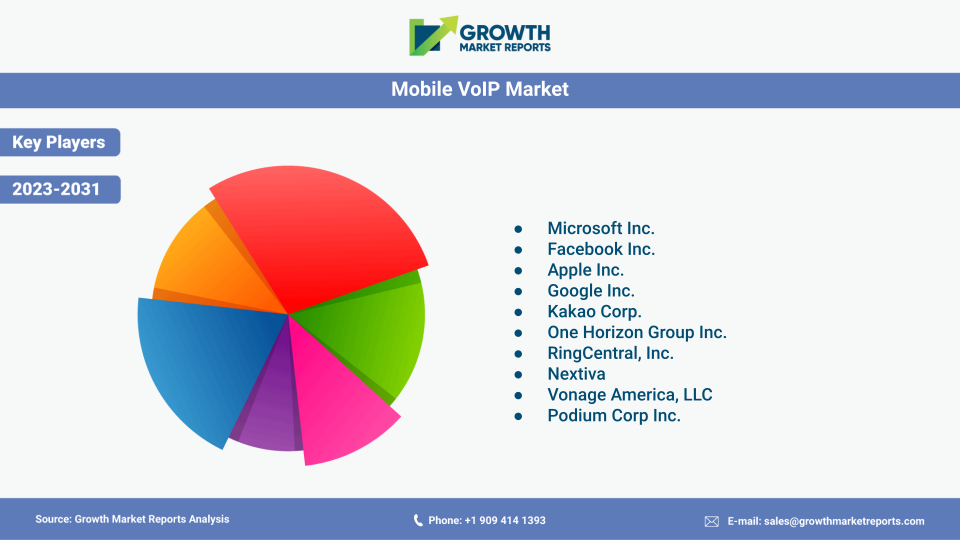

 Mobile VoIP Market Key Players

Frequently Asked Questions

Key players include Microsoft Corporation, Google LLC, Apple Inc., Facebook Inc. (Meta), Cisco Systems, Vonage Holdings, 8x8 Inc., AT&T, Verizon, Tata Communications, Orange S.A., Telefonica, Deutsche Telekom, Bharti Airtel, and others.

Opportunities include the expansion of high-speed internet, integration of AI and 5G, and growing demand in enterprise and government sectors. Challenges involve intense competition, regulatory barriers, and security concerns.

Mobile VoIP solutions are available in both cloud-based and on-premises deployment models, with cloud-based solutions gaining significant traction due to scalability and cost efficiency.

The main end-users are individual consumers, enterprises, and government organizations, each with unique requirements and adoption patterns.

Mobile VoIP services include voice calls, video calls, messaging, and data services such as file sharing and collaboration tools.

Android holds the largest market share due to widespread adoption, especially in emerging markets. iOS is significant in developed economies, while Windows and other platforms serve niche or specialized markets.

Asia Pacific leads the Mobile VoIP market, followed by North America and Europe. Countries like China, India, and Japan are at the forefront of adoption.

Key growth drivers include the proliferation of smartphones, advancements in wireless network infrastructure, increasing demand for cost-effective communication, and the integration of advanced features like video calling and instant messaging.

The Mobile VoIP market is expected to grow at a CAGR of 18.7% from 2025 to 2033, reaching an estimated USD 227.9 billion by 2033.

As of 2024, the global Mobile VoIP market size reached USD 45.2 billion, driven by rapid smartphone adoption and increasing internet penetration.

Table Of Content

Chapter 1 Executive Summary
Chapter 2 Assumptions and Acronyms Used
Chapter 3 Research Methodology
Chapter 4 Mobile VoIP Market Overview
   4.1 Introduction
      4.1.1 Market Taxonomy
      4.1.2 Market Definition
      4.1.3 Macro-Economic Factors Impacting the Market Growth
   4.2 Mobile VoIP Market Dynamics
      4.2.1 Market Drivers
      4.2.2 Market Restraints
      4.2.3 Market Opportunity
   4.3 Mobile VoIP Market - Supply Chain Analysis
      4.3.1 List of Key Suppliers
      4.3.2 List of Key Distributors
      4.3.3 List of Key Consumers
   4.4 Key Forces Shaping the Mobile VoIP Market
      4.4.1 Bargaining Power of Suppliers
      4.4.2 Bargaining Power of Buyers
      4.4.3 Threat of Substitution
      4.4.4 Threat of New Entrants
      4.4.5 Competitive Rivalry
   4.5 Global Mobile VoIP Market Size & Forecast, 2023-2032
      4.5.1 Mobile VoIP Market Size and Y-o-Y Growth
      4.5.2 Mobile VoIP Market Absolute $ Opportunity

Chapter 5 Global Mobile VoIP Market Analysis and Forecast By Platform
   5.1 Introduction
      5.1.1 Key Market Trends & Growth Opportunities By Platform
      5.1.2 Basis Point Share (BPS) Analysis By Platform
      5.1.3 Absolute $ Opportunity Assessment By Platform
   5.2 Mobile VoIP Market Size Forecast By Platform
      5.2.1 Android
      5.2.2 iOS
      5.2.3 Windows
      5.2.4 Others
   5.3 Market Attractiveness Analysis By Platform

Chapter 6 Global Mobile VoIP Market Analysis and Forecast By Service Type
   6.1 Introduction
      6.1.1 Key Market Trends & Growth Opportunities By Service Type
      6.1.2 Basis Point Share (BPS) Analysis By Service Type
      6.1.3 Absolute $ Opportunity Assessment By Service Type
   6.2 Mobile VoIP Market Size Forecast By Service Type
      6.2.1 Voice
      6.2.2 Video
      6.2.3 Messaging
      6.2.4 Data
   6.3 Market Attractiveness Analysis By Service Type

Chapter 7 Global Mobile VoIP Market Analysis and Forecast By End-User
   7.1 Introduction
      7.1.1 Key Market Trends & Growth Opportunities By End-User
      7.1.2 Basis Point Share (BPS) Analysis By End-User
      7.1.3 Absolute $ Opportunity Assessment By End-User
   7.2 Mobile VoIP Market Size Forecast By End-User
      7.2.1 Individual Consumers
      7.2.2 Enterprises
      7.2.3 Government
   7.3 Market Attractiveness Analysis By End-User

Chapter 8 Global Mobile VoIP Market Analysis and Forecast By Deployment Mode
   8.1 Introduction
      8.1.1 Key Market Trends & Growth Opportunities By Deployment Mode
      8.1.2 Basis Point Share (BPS) Analysis By Deployment Mode
      8.1.3 Absolute $ Opportunity Assessment By Deployment Mode
   8.2 Mobile VoIP Market Size Forecast By Deployment Mode
      8.2.1 Cloud-Based
      8.2.2 On-Premises
   8.3 Market Attractiveness Analysis By Deployment Mode

Chapter 9 Global Mobile VoIP Market Analysis and Forecast By Application
   9.1 Introduction
      9.1.1 Key Market Trends & Growth Opportunities By Application
      9.1.2 Basis Point Share (BPS) Analysis By Application
      9.1.3 Absolute $ Opportunity Assessment By Application
   9.2 Mobile VoIP Market Size Forecast By Application
      9.2.1 Personal Use
      9.2.2 Business Use
      9.2.3 Others
   9.3 Market Attractiveness Analysis By Application

Chapter 10 Global Mobile VoIP Market Analysis and Forecast by Region
   10.1 Introduction
      10.1.1 Key Market Trends & Growth Opportunities By Region
      10.1.2 Basis Point Share (BPS) Analysis By Region
      10.1.3 Absolute $ Opportunity Assessment By Region
   10.2 Mobile VoIP Market Size Forecast By Region
      10.2.1 North America
      10.2.2 Europe
      10.2.3 Asia Pacific
      10.2.4 Latin America
      10.2.5 Middle East & Africa (MEA)
   10.3 Market Attractiveness Analysis By Region

Chapter 11 Coronavirus Disease (COVID-19) Impact 
   11.1 Introduction 
   11.2 Current & Future Impact Analysis 
   11.3 Economic Impact Analysis 
   11.4 Government Policies 
   11.5 Investment Scenario

Chapter 12 North America Mobile VoIP Analysis and Forecast
   12.1 Introduction
   12.2 North America Mobile VoIP Market Size Forecast by Country
      12.2.1 U.S.
      12.2.2 Canada
   12.3 Basis Point Share (BPS) Analysis by Country
   12.4 Absolute $ Opportunity Assessment by Country
   12.5 Market Attractiveness Analysis by Country
   12.6 North America Mobile VoIP Market Size Forecast By Platform
      12.6.1 Android
      12.6.2 iOS
      12.6.3 Windows
      12.6.4 Others
   12.7 Basis Point Share (BPS) Analysis By Platform 
   12.8 Absolute $ Opportunity Assessment By Platform 
   12.9 Market Attractiveness Analysis By Platform
   12.10 North America Mobile VoIP Market Size Forecast By Service Type
      12.10.1 Voice
      12.10.2 Video
      12.10.3 Messaging
      12.10.4 Data
   12.11 Basis Point Share (BPS) Analysis By Service Type 
   12.12 Absolute $ Opportunity Assessment By Service Type 
   12.13 Market Attractiveness Analysis By Service Type
   12.14 North America Mobile VoIP Market Size Forecast By End-User
      12.14.1 Individual Consumers
      12.14.2 Enterprises
      12.14.3 Government
   12.15 Basis Point Share (BPS) Analysis By End-User 
   12.16 Absolute $ Opportunity Assessment By End-User 
   12.17 Market Attractiveness Analysis By End-User
   12.18 North America Mobile VoIP Market Size Forecast By Deployment Mode
      12.18.1 Cloud-Based
      12.18.2 On-Premises
   12.19 Basis Point Share (BPS) Analysis By Deployment Mode 
   12.20 Absolute $ Opportunity Assessment By Deployment Mode 
   12.21 Market Attractiveness Analysis By Deployment Mode
   12.22 North America Mobile VoIP Market Size Forecast By Application
      12.22.1 Personal Use
      12.22.2 Business Use
      12.22.3 Others
   12.23 Basis Point Share (BPS) Analysis By Application 
   12.24 Absolute $ Opportunity Assessment By Application 
   12.25 Market Attractiveness Analysis By Application

Chapter 13 Europe Mobile VoIP Analysis and Forecast
   13.1 Introduction
   13.2 Europe Mobile VoIP Market Size Forecast by Country
      13.2.1 Germany
      13.2.2 France
      13.2.3 Italy
      13.2.4 U.K.
      13.2.5 Spain
      13.2.6 Russia
      13.2.7 Rest of Europe
   13.3 Basis Point Share (BPS) Analysis by Country
   13.4 Absolute $ Opportunity Assessment by Country
   13.5 Market Attractiveness Analysis by Country
   13.6 Europe Mobile VoIP Market Size Forecast By Platform
      13.6.1 Android
      13.6.2 iOS
      13.6.3 Windows
      13.6.4 Others
   13.7 Basis Point Share (BPS) Analysis By Platform 
   13.8 Absolute $ Opportunity Assessment By Platform 
   13.9 Market Attractiveness Analysis By Platform
   13.10 Europe Mobile VoIP Market Size Forecast By Service Type
      13.10.1 Voice
      13.10.2 Video
      13.10.3 Messaging
      13.10.4 Data
   13.11 Basis Point Share (BPS) Analysis By Service Type 
   13.12 Absolute $ Opportunity Assessment By Service Type 
   13.13 Market Attractiveness Analysis By Service Type
   13.14 Europe Mobile VoIP Market Size Forecast By End-User
      13.14.1 Individual Consumers
      13.14.2 Enterprises
      13.14.3 Government
   13.15 Basis Point Share (BPS) Analysis By End-User 
   13.16 Absolute $ Opportunity Assessment By End-User 
   13.17 Market Attractiveness Analysis By End-User
   13.18 Europe Mobile VoIP Market Size Forecast By Deployment Mode
      13.18.1 Cloud-Based
      13.18.2 On-Premises
   13.19 Basis Point Share (BPS) Analysis By Deployment Mode 
   13.20 Absolute $ Opportunity Assessment By Deployment Mode 
   13.21 Market Attractiveness Analysis By Deployment Mode
   13.22 Europe Mobile VoIP Market Size Forecast By Application
      13.22.1 Personal Use
      13.22.2 Business Use
      13.22.3 Others
   13.23 Basis Point Share (BPS) Analysis By Application 
   13.24 Absolute $ Opportunity Assessment By Application 
   13.25 Market Attractiveness Analysis By Application

Chapter 14 Asia Pacific Mobile VoIP Analysis and Forecast
   14.1 Introduction
   14.2 Asia Pacific Mobile VoIP Market Size Forecast by Country
      14.2.1 China
      14.2.2 Japan
      14.2.3 South Korea
      14.2.4 India
      14.2.5 Australia
      14.2.6 South East Asia (SEA)
      14.2.7 Rest of Asia Pacific (APAC)
   14.3 Basis Point Share (BPS) Analysis by Country
   14.4 Absolute $ Opportunity Assessment by Country
   14.5 Market Attractiveness Analysis by Country
   14.6 Asia Pacific Mobile VoIP Market Size Forecast By Platform
      14.6.1 Android
      14.6.2 iOS
      14.6.3 Windows
      14.6.4 Others
   14.7 Basis Point Share (BPS) Analysis By Platform 
   14.8 Absolute $ Opportunity Assessment By Platform 
   14.9 Market Attractiveness Analysis By Platform
   14.10 Asia Pacific Mobile VoIP Market Size Forecast By Service Type
      14.10.1 Voice
      14.10.2 Video
      14.10.3 Messaging
      14.10.4 Data
   14.11 Basis Point Share (BPS) Analysis By Service Type 
   14.12 Absolute $ Opportunity Assessment By Service Type 
   14.13 Market Attractiveness Analysis By Service Type
   14.14 Asia Pacific Mobile VoIP Market Size Forecast By End-User
      14.14.1 Individual Consumers
      14.14.2 Enterprises
      14.14.3 Government
   14.15 Basis Point Share (BPS) Analysis By End-User 
   14.16 Absolute $ Opportunity Assessment By End-User 
   14.17 Market Attractiveness Analysis By End-User
   14.18 Asia Pacific Mobile VoIP Market Size Forecast By Deployment Mode
      14.18.1 Cloud-Based
      14.18.2 On-Premises
   14.19 Basis Point Share (BPS) Analysis By Deployment Mode 
   14.20 Absolute $ Opportunity Assessment By Deployment Mode 
   14.21 Market Attractiveness Analysis By Deployment Mode
   14.22 Asia Pacific Mobile VoIP Market Size Forecast By Application
      14.22.1 Personal Use
      14.22.2 Business Use
      14.22.3 Others
   14.23 Basis Point Share (BPS) Analysis By Application 
   14.24 Absolute $ Opportunity Assessment By Application 
   14.25 Market Attractiveness Analysis By Application

Chapter 15 Latin America Mobile VoIP Analysis and Forecast
   15.1 Introduction
   15.2 Latin America Mobile VoIP Market Size Forecast by Country
      15.2.1 Brazil
      15.2.2 Mexico
      15.2.3 Rest of Latin America (LATAM)
   15.3 Basis Point Share (BPS) Analysis by Country
   15.4 Absolute $ Opportunity Assessment by Country
   15.5 Market Attractiveness Analysis by Country
   15.6 Latin America Mobile VoIP Market Size Forecast By Platform
      15.6.1 Android
      15.6.2 iOS
      15.6.3 Windows
      15.6.4 Others
   15.7 Basis Point Share (BPS) Analysis By Platform 
   15.8 Absolute $ Opportunity Assessment By Platform 
   15.9 Market Attractiveness Analysis By Platform
   15.10 Latin America Mobile VoIP Market Size Forecast By Service Type
      15.10.1 Voice
      15.10.2 Video
      15.10.3 Messaging
      15.10.4 Data
   15.11 Basis Point Share (BPS) Analysis By Service Type 
   15.12 Absolute $ Opportunity Assessment By Service Type 
   15.13 Market Attractiveness Analysis By Service Type
   15.14 Latin America Mobile VoIP Market Size Forecast By End-User
      15.14.1 Individual Consumers
      15.14.2 Enterprises
      15.14.3 Government
   15.15 Basis Point Share (BPS) Analysis By End-User 
   15.16 Absolute $ Opportunity Assessment By End-User 
   15.17 Market Attractiveness Analysis By End-User
   15.18 Latin America Mobile VoIP Market Size Forecast By Deployment Mode
      15.18.1 Cloud-Based
      15.18.2 On-Premises
   15.19 Basis Point Share (BPS) Analysis By Deployment Mode 
   15.20 Absolute $ Opportunity Assessment By Deployment Mode 
   15.21 Market Attractiveness Analysis By Deployment Mode
   15.22 Latin America Mobile VoIP Market Size Forecast By Application
      15.22.1 Personal Use
      15.22.2 Business Use
      15.22.3 Others
   15.23 Basis Point Share (BPS) Analysis By Application 
   15.24 Absolute $ Opportunity Assessment By Application 
   15.25 Market Attractiveness Analysis By Application

Chapter 16 Middle East & Africa (MEA) Mobile VoIP Analysis and Forecast
   16.1 Introduction
   16.2 Middle East & Africa (MEA) Mobile VoIP Market Size Forecast by Country
      16.2.1 Saudi Arabia
      16.2.2 South Africa
      16.2.3 UAE
      16.2.4 Rest of Middle East & Africa (MEA)
   16.3 Basis Point Share (BPS) Analysis by Country
   16.4 Absolute $ Opportunity Assessment by Country
   16.5 Market Attractiveness Analysis by Country
   16.6 Middle East & Africa (MEA) Mobile VoIP Market Size Forecast By Platform
      16.6.1 Android
      16.6.2 iOS
      16.6.3 Windows
      16.6.4 Others
   16.7 Basis Point Share (BPS) Analysis By Platform 
   16.8 Absolute $ Opportunity Assessment By Platform 
   16.9 Market Attractiveness Analysis By Platform
   16.10 Middle East & Africa (MEA) Mobile VoIP Market Size Forecast By Service Type
      16.10.1 Voice
      16.10.2 Video
      16.10.3 Messaging
      16.10.4 Data
   16.11 Basis Point Share (BPS) Analysis By Service Type 
   16.12 Absolute $ Opportunity Assessment By Service Type 
   16.13 Market Attractiveness Analysis By Service Type
   16.14 Middle East & Africa (MEA) Mobile VoIP Market Size Forecast By End-User
      16.14.1 Individual Consumers
      16.14.2 Enterprises
      16.14.3 Government
   16.15 Basis Point Share (BPS) Analysis By End-User 
   16.16 Absolute $ Opportunity Assessment By End-User 
   16.17 Market Attractiveness Analysis By End-User
   16.18 Middle East & Africa (MEA) Mobile VoIP Market Size Forecast By Deployment Mode
      16.18.1 Cloud-Based
      16.18.2 On-Premises
   16.19 Basis Point Share (BPS) Analysis By Deployment Mode 
   16.20 Absolute $ Opportunity Assessment By Deployment Mode 
   16.21 Market Attractiveness Analysis By Deployment Mode
   16.22 Middle East & Africa (MEA) Mobile VoIP Market Size Forecast By Application
      16.22.1 Personal Use
      16.22.2 Business Use
      16.22.3 Others
   16.23 Basis Point Share (BPS) Analysis By Application 
   16.24 Absolute $ Opportunity Assessment By Application 
   16.25 Market Attractiveness Analysis By Application

Chapter 17 Competition Landscape 
   17.1 Mobile VoIP Market: Competitive Dashboard
   17.2 Global Mobile VoIP Market: Market Share Analysis, 2023
   17.3 Company Profiles (Details – Overview, Financials, Developments, Strategy) 
      17.3.1 Microsoft Corporation
Google LLC
Apple Inc.
Facebook Inc. (Meta Platforms, Inc.)
Cisco Systems, Inc.
Vonage Holdings Corp.
8x8, Inc.
AT&T Inc.
Verizon Communications Inc.
Tata Communications Ltd.
Orange S.A.
Telefonica S.A.
Deutsche Telekom AG
Bharti Airtel Limited
Ribbon Communications Inc.
Mitel Networks Corporation
Alcatel-Lucent Enterprise
ZTE Corporation
Huawei Technologies Co., Ltd.
Rakuten Group, Inc.

Methodology

Our Clients

Deloitte
FedEx Logistics
sinopec
General Mills
Pfizer
Nestle SA
Microsoft
General Electric