Mobile Robotics Market Research Report 2033

Mobile Robotics Market Research Report 2033

Segments - by Product Type (Autonomous Mobile Robots, Automated Guided Vehicles, Unmanned Ground Vehicles, Unmanned Aerial Vehicles, Others), by Component (Hardware, Software, Services), by Application (Logistics and Warehousing, Healthcare, Military and Defense, Agriculture, Manufacturing, Others), by End-User (Industrial, Commercial, Residential, Others)

https://growthmarketreports.com/Raksha
Author : Raksha Sharma
https://growthmarketreports.com/Vaibhav
Fact-checked by : V. Chandola
https://growthmarketreports.com/Shruti
Editor : Shruti Bhat

Upcoming | Report ID :ICT-SE-2960 | 4.0 Rating | 92 Reviews | 297 Pages | Format : Docx PDF

Report Description


Mobile Robotics Market Outlook

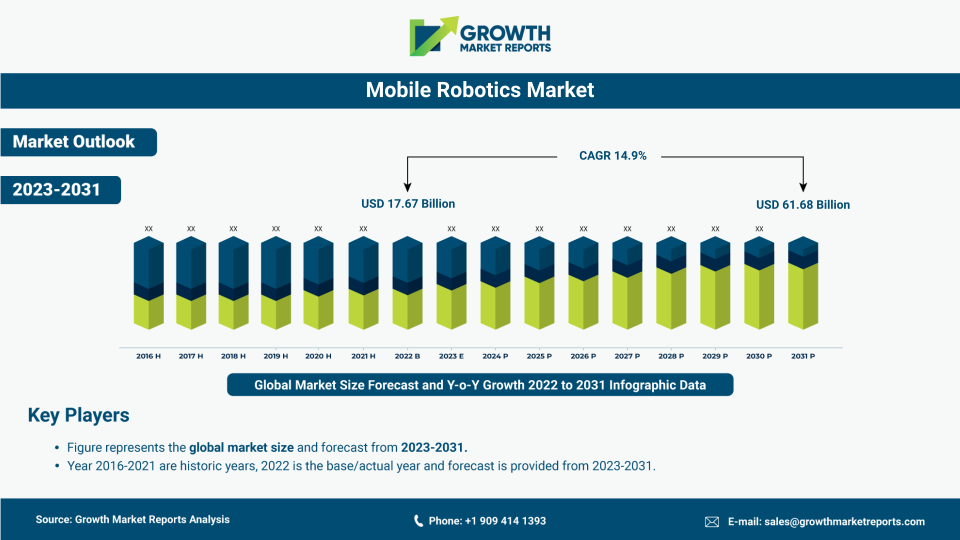
According to our latest research, the global mobile robotics market size reached USD 22.6 billion in 2024, reflecting robust expansion driven by rapid technological advancements and increasing automation across industries. The market is poised to grow at a compelling CAGR of 20.1% from 2025 to 2033, resulting in a projected market value of USD 130.4 billion by 2033. This dynamic growth is underpinned by the rising adoption of autonomous solutions in logistics, manufacturing, healthcare, and defense, alongside significant investments in artificial intelligence and sensor technologies that are fueling innovation and deployment of mobile robots globally.

The primary growth factor for the mobile robotics market is the accelerating demand for automation in logistics and warehousing. As e-commerce and online retail continue to surge, companies are increasingly leveraging autonomous mobile robots (AMRs) and automated guided vehicles (AGVs) to streamline supply chain operations, reduce manual labor, and enhance operational efficiency. These robots are capable of navigating complex warehouse environments, picking and transporting goods, and integrating seamlessly with warehouse management systems. The need to fulfill orders faster and with greater accuracy is pushing organizations to invest heavily in mobile robotics, resulting in significant cost savings and improved customer satisfaction. Furthermore, the integration of machine learning and computer vision technologies into mobile robots is enabling higher levels of autonomy, flexibility, and adaptability, thus widening their scope of applications across various industries.

Another critical driver is the growing use of mobile robotics in the healthcare sector. The COVID-19 pandemic highlighted the importance of contactless solutions, leading to the adoption of mobile robots for tasks such as disinfection, medicine delivery, and patient monitoring in hospitals. These robots reduce the risk of infection transmission and allow healthcare professionals to focus on more complex tasks. Additionally, mobile robotics are being utilized in elder care facilities to assist with daily activities, medication reminders, and companionship, thereby addressing the challenges posed by aging populations in many countries. The convergence of robotics with telemedicine, remote diagnostics, and AI-powered health data analytics is further amplifying the role of mobile robotics in transforming healthcare delivery and patient outcomes.

The military and defense sector is also a significant contributor to the growth of the mobile robotics market. Governments worldwide are investing in unmanned ground vehicles (UGVs) and unmanned aerial vehicles (UAVs) for surveillance, reconnaissance, logistics support, and explosive ordnance disposal. These robots enhance the safety and effectiveness of military operations by performing dangerous tasks in hazardous environments, thereby reducing risks to human soldiers. The increasing sophistication of robotic platforms, including advanced navigation, real-time data processing, and autonomous decision-making, is expanding their deployment in defense applications. Moreover, the integration of mobile robotics with advanced communication networks and sensor suites is enabling coordinated missions and multi-robot collaboration, unlocking new possibilities for military operations.

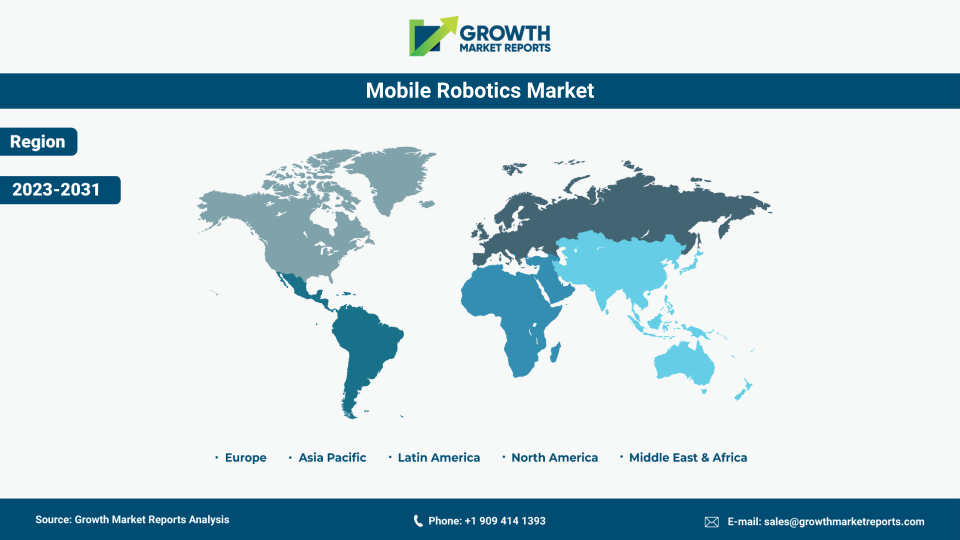
Regionally, the Asia Pacific market is emerging as a dominant force in the mobile robotics landscape, driven by rapid industrialization, government support for automation, and a burgeoning manufacturing sector. Countries such as China, Japan, and South Korea are leading the adoption of mobile robotics, fueled by investments in smart factories and Industry 4.0 initiatives. North America, particularly the United States, remains at the forefront of technological innovation and R&D, with a strong focus on logistics, healthcare, and defense applications. Europe is witnessing steady growth due to the presence of advanced automotive and manufacturing industries, as well as supportive regulatory frameworks for robotics deployment. Meanwhile, the Middle East & Africa and Latin America are gradually embracing mobile robotics, primarily in logistics, agriculture, and security, as awareness and investments in automation technologies increase.

Global Mobile Robotics Industry Outlook

Product Type Analysis

The product type segment of the mobile robotics market is characterized by a diverse range of solutions, including Autonomous Mobile Robots (AMRs), Automated Guided Vehicles (AGVs), Unmanned Ground Vehicles (UGVs), Unmanned Aerial Vehicles (UAVs), and other specialized mobile robots. AMRs are witnessing the fastest growth due to their flexibility, advanced navigation capabilities, and ability to operate in dynamic environments without requiring fixed infrastructure. These robots use sophisticated sensors, cameras, and AI algorithms to map their surroundings, avoid obstacles, and optimize routes in real time. Industries such as logistics, manufacturing, and healthcare are increasingly deploying AMRs to automate material handling, inventory management, and delivery tasks, thereby improving productivity and reducing operational costs. The scalability and adaptability of AMRs make them highly attractive for organizations seeking to future-proof their operations against evolving market demands.

Automated Guided Vehicles (AGVs) remain a staple in environments where repetitive material transport is required, such as warehouses, factories, and distribution centers. AGVs typically follow predefined paths or tracks and are ideal for moving heavy loads over long distances with minimal human intervention. While AGVs lack the advanced autonomy of AMRs, their reliability, cost-effectiveness, and ease of integration with existing infrastructure continue to drive their adoption, particularly in large-scale manufacturing and logistics facilities. The ongoing evolution of AGV technology, including the incorporation of wireless communication and fleet management systems, is enhancing their operational efficiency and enabling seamless coordination with other automated systems.

Unmanned Ground Vehicles (UGVs) are predominantly used in military, defense, and hazardous industrial environments where human presence is risky. These robust robots are designed to navigate rough terrains, detect and neutralize explosives, conduct surveillance, and perform search-and-rescue missions. The increasing sophistication of UGVs, including autonomous navigation, remote operation, and real-time data transmission, is broadening their applications beyond defense to include mining, oil and gas, and disaster response. The integration of AI and machine learning is further enhancing the decision-making capabilities of UGVs, enabling them to operate with minimal human intervention in complex and unpredictable environments.

Unmanned Aerial Vehicles (UAVs), commonly known as drones, are transforming industries such as agriculture, logistics, surveillance, and environmental monitoring. UAVs offer unparalleled mobility, enabling rapid data collection, aerial mapping, crop monitoring, and package delivery over large areas. The proliferation of lightweight, battery-efficient drones equipped with high-resolution cameras and advanced sensors is fueling their adoption across commercial and industrial sectors. Regulatory advancements and the development of robust air traffic management systems are further supporting the integration of UAVs into mainstream operations, unlocking new opportunities for businesses to leverage aerial robotics for enhanced efficiency and innovation.

Other product types in the mobile robotics market include specialized robots designed for niche applications such as underwater exploration, cleaning, and security. These robots are equipped with unique features tailored to specific operational requirements, such as waterproofing, advanced mobility mechanisms, and specialized sensors. As industries continue to identify new use cases for mobile robotics, the demand for customized and application-specific robots is expected to rise, driving innovation and diversification within the product type segment. The continuous evolution of hardware and software technologies is enabling manufacturers to develop more versatile, reliable, and cost-effective mobile robots to address emerging market needs.

Mobile Robots are revolutionizing the way industries operate by providing flexible and scalable automation solutions. Unlike traditional fixed automation systems, Mobile Robots can be easily deployed and reconfigured to adapt to changing production needs. This adaptability makes them ideal for industries facing fluctuating demand and varying production requirements. The ability of Mobile Robots to work collaboratively with human workers, while ensuring safety and efficiency, is driving their adoption across sectors such as logistics, healthcare, and manufacturing. As technology continues to evolve, Mobile Robots are expected to become even more intelligent and capable, opening up new possibilities for automation and innovation in various fields.

Report Scope

Attributes Details
Report Title Mobile Robotics Market Research Report 2033
By Product Type Autonomous Mobile Robots, Automated Guided Vehicles, Unmanned Ground Vehicles, Unmanned Aerial Vehicles, Others
By Component Hardware, Software, Services
By Application Logistics and Warehousing, Healthcare, Military and Defense, Agriculture, Manufacturing, Others
By End-User Industrial, Commercial, Residential, Others
Regions Covered North America, Europe, APAC, Latin America, MEA
Base Year 2024
Historic Data 2018-2023
Forecast Period 2025-2033
Number of Pages 297
Number of Tables & Figures 372
Customization Available Yes, the report can be customized as per your need.

Component Analysis

The component segment of the mobile robotics market comprises hardware, software, and services, each playing a pivotal role in the functionality and deployment of mobile robotic systems. Hardware forms the backbone of mobile robots, encompassing critical components such as sensors, actuators, control systems, power supplies, cameras, and communication modules. The relentless advancement in sensor technology, miniaturization of components, and improvements in battery life are enabling the development of more compact, powerful, and energy-efficient robots. Enhanced hardware capabilities are allowing robots to operate for extended periods, navigate complex environments, and perform intricate tasks with greater precision, thereby expanding their applicability across diverse industries.

Software is the driving force behind the intelligence and autonomy of mobile robots. Advanced algorithms for navigation, perception, mapping, and decision-making empower robots to interpret sensor data, plan optimal routes, and adapt to dynamic environments. The integration of artificial intelligence, machine learning, and computer vision technologies is enabling mobile robots to perform complex tasks such as object recognition, obstacle avoidance, and real-time data analysis. Software platforms also facilitate seamless communication between robots and other systems, enabling coordinated operations and fleet management. The growing emphasis on interoperability, scalability, and cybersecurity is prompting software developers to create robust, user-friendly, and secure solutions that cater to the evolving needs of end-users.

Services constitute a critical component of the mobile robotics ecosystem, encompassing consulting, integration, maintenance, training, and support services. As organizations increasingly adopt mobile robotics, the demand for expert guidance in system design, deployment, and optimization is rising. Service providers play a vital role in ensuring the successful implementation and ongoing performance of mobile robotic solutions by offering tailored support throughout the lifecycle of the robots. This includes regular maintenance, software updates, troubleshooting, and training for operators and technicians. The growing complexity of mobile robotic systems and the need for continuous improvement are driving the expansion of service offerings, enabling organizations to maximize the value and longevity of their investments in mobile robotics.

The synergy between hardware, software, and services is essential for the successful deployment and operation of mobile robotic systems. Manufacturers and solution providers are increasingly adopting a holistic approach, offering integrated solutions that combine cutting-edge hardware, intelligent software, and comprehensive support services. This approach not only simplifies the adoption process for end-users but also enhances the reliability, performance, and scalability of mobile robotics deployments. As the market continues to evolve, the ability to deliver end-to-end solutions that address the unique requirements of different industries and applications will be a key differentiator for leading players in the component segment.

The ongoing convergence of hardware and software innovations is paving the way for the next generation of mobile robots, characterized by higher levels of autonomy, adaptability, and intelligence. The emergence of edge computing, 5G connectivity, and cloud-based platforms is enabling real-time data processing, remote monitoring, and collaborative operations, further enhancing the capabilities and value proposition of mobile robotics. As organizations seek to unlock new efficiencies and competitive advantages, the demand for advanced components and integrated solutions is expected to drive significant growth and innovation in the mobile robotics market.

Application Analysis

The application segment of the mobile robotics market encompasses a wide array of industries, each leveraging the unique capabilities of mobile robots to address specific operational challenges and opportunities. Logistics and warehousing represent the largest and fastest-growing application area, driven by the exponential growth of e-commerce, changing consumer expectations, and the need for efficient supply chain management. Mobile robots are revolutionizing warehouse operations by automating tasks such as picking, sorting, packing, and transportation of goods, thereby reducing labor costs, minimizing errors, and accelerating order fulfillment. The integration of mobile robotics with warehouse management systems and IoT devices is enabling real-time inventory tracking, predictive maintenance, and data-driven decision-making, further enhancing operational efficiency and agility.

Healthcare is another key application area where mobile robotics are making a significant impact. Hospitals and medical facilities are deploying robots for a variety of tasks, including medication delivery, patient transport, disinfection, and remote monitoring. These robots help reduce the risk of infection, improve patient safety, and free up healthcare professionals to focus on more critical tasks. The adoption of mobile robotics in healthcare is also being driven by the need to address staffing shortages, enhance operational efficiency, and improve patient outcomes. The integration of robotics with telemedicine, electronic health records, and AI-powered analytics is enabling more personalized, efficient, and responsive healthcare delivery, transforming the patient experience and outcomes.

The military and defense sector is leveraging mobile robotics for a wide range of applications, including surveillance, reconnaissance, logistics support, explosive ordnance disposal, and search-and-rescue missions. Mobile robots enhance the safety and effectiveness of military operations by performing dangerous tasks in hazardous environments, reducing risks to human soldiers. The increasing sophistication of robotic platforms, including autonomous navigation, real-time data processing, and multi-robot collaboration, is expanding their deployment in defense applications. Governments worldwide are investing in advanced mobile robotics to gain strategic advantages, improve operational efficiency, and enhance national security.

Agriculture is emerging as a promising application area for mobile robotics, driven by the need to increase productivity, reduce labor costs, and address the challenges of an aging workforce. Mobile robots are being used for tasks such as planting, harvesting, crop monitoring, and weed control, enabling farmers to optimize resource utilization and improve yields. The integration of robotics with precision agriculture technologies, such as GPS, drones, and IoT sensors, is enabling data-driven decision-making and more sustainable farming practices. As the global demand for food continues to rise, the adoption of mobile robotics in agriculture is expected to accelerate, driving innovation and growth in this segment.

Manufacturing is another major application area where mobile robotics are transforming production processes and supply chain operations. Robots are being used for material handling, assembly, inspection, and quality control, enabling manufacturers to increase efficiency, reduce defects, and respond more flexibly to changing market demands. The adoption of mobile robotics in manufacturing is being driven by the need to improve productivity, reduce costs, and enhance workplace safety. The convergence of robotics with Industry 4.0 technologies, such as IoT, big data, and cloud computing, is enabling more intelligent, connected, and agile manufacturing operations, positioning mobile robotics as a key enabler of the smart factory of the future.

End-User Analysis

The end-user segment of the mobile robotics market is broadly categorized into industrial, commercial, residential, and other sectors, each exhibiting distinct adoption patterns, requirements, and growth trajectories. The industrial sector is the largest end-user, accounting for a significant share of the market due to the widespread adoption of mobile robotics in manufacturing, logistics, and warehousing. Industrial organizations are leveraging mobile robots to automate material handling, assembly, inspection, and transportation tasks, thereby improving operational efficiency, reducing labor costs, and enhancing workplace safety. The integration of mobile robotics with industrial automation systems and IoT platforms is enabling real-time monitoring, predictive maintenance, and data-driven decision-making, further driving the adoption of robotics in industrial settings.

The commercial sector is witnessing rapid growth in the adoption of mobile robotics, particularly in retail, healthcare, hospitality, and security applications. Retailers are using robots for inventory management, shelf scanning, and customer service, while healthcare facilities are deploying robots for medication delivery, patient transport, and disinfection. The hospitality industry is embracing mobile robotics for room service, cleaning, and guest assistance, enhancing customer experiences and operational efficiency. The increasing focus on automation, customer satisfaction, and operational excellence is driving the adoption of mobile robotics in the commercial sector, with organizations seeking to differentiate themselves and gain competitive advantages.

The residential sector, while still in the early stages of adoption, is gradually embracing mobile robotics for applications such as cleaning, security, and personal assistance. Robotic vacuum cleaners, lawn mowers, and home security robots are becoming increasingly popular among consumers seeking convenience, efficiency, and enhanced quality of life. The integration of mobile robotics with smart home technologies, voice assistants, and IoT devices is enabling more personalized, connected, and intelligent home environments. As technology continues to advance and prices become more affordable, the adoption of mobile robotics in the residential sector is expected to accelerate, creating new opportunities for manufacturers and solution providers.

Other end-user segments include agriculture, mining, oil and gas, and public safety, where mobile robotics are being deployed to address specific operational challenges and opportunities. In agriculture, robots are being used for planting, harvesting, and crop monitoring, enabling farmers to optimize resource utilization and improve yields. In mining and oil and gas, robots are being used for inspection, maintenance, and hazardous material handling, reducing risks to human workers and improving operational efficiency. In public safety, robots are being used for surveillance, search-and-rescue, and disaster response, enhancing the effectiveness and safety of emergency operations.

The diverse and expanding range of end-user applications underscores the versatility and transformative potential of mobile robotics across industries. As organizations continue to recognize the benefits of automation, efficiency, and safety, the demand for mobile robotics is expected to grow across all end-user segments, driving innovation, investment, and market expansion.

Opportunities & Threats

The mobile robotics market presents significant opportunities for growth and innovation, driven by the ongoing digital transformation of industries and the increasing adoption of automation solutions. The proliferation of e-commerce and the need for efficient supply chain management are creating vast opportunities for mobile robotics in logistics and warehousing. The integration of robotics with advanced technologies such as AI, machine learning, IoT, and 5G is enabling the development of more intelligent, autonomous, and connected robots, unlocking new use cases and applications. The growing focus on sustainability and environmental responsibility is also driving the adoption of mobile robotics in agriculture, waste management, and renewable energy, creating new avenues for market expansion. As organizations seek to enhance productivity, reduce costs, and improve safety, the demand for innovative mobile robotic solutions is expected to rise, creating lucrative opportunities for manufacturers, solution providers, and investors.

Another major opportunity lies in the healthcare sector, where mobile robotics are transforming patient care, hospital operations, and elder care. The increasing prevalence of chronic diseases, aging populations, and the need for contactless solutions are driving the adoption of mobile robots for medication delivery, patient monitoring, and remote diagnostics. The integration of robotics with telemedicine, electronic health records, and AI-powered analytics is enabling more personalized, efficient, and responsive healthcare delivery, improving patient outcomes and reducing healthcare costs. The ongoing development of specialized robots for surgery, rehabilitation, and assistive care is further expanding the scope of mobile robotics in healthcare, creating new opportunities for innovation and growth.

Despite the promising opportunities, the mobile robotics market faces several threats and restrainers that could impact its growth trajectory. High initial costs of deployment, integration challenges with existing systems, and concerns over data security and privacy are significant barriers to adoption, particularly for small and medium-sized enterprises. Additionally, regulatory uncertainties, safety standards, and the need for skilled operators and technicians pose challenges for widespread deployment. The rapid pace of technological change and the risk of obsolescence also require organizations to continuously invest in upgrades and training, adding to the total cost of ownership. Addressing these challenges will be critical for market players to realize the full potential of mobile robotics and sustain long-term growth.

Regional Outlook

The Asia Pacific region leads the global mobile robotics market, accounting for approximately USD 7.9 billion of the total market size in 2024. This dominance is largely attributed to rapid industrialization, government initiatives supporting automation, and the strong presence of manufacturing powerhouses such as China, Japan, and South Korea. These countries are investing heavily in smart factory initiatives, robotics R&D, and workforce upskilling, driving the adoption of mobile robotics across industries. The region is also witnessing significant investments in logistics, healthcare, and agriculture, further fueling market growth. The Asia Pacific market is expected to maintain a high CAGR of 22.4% through 2033, supported by favorable government policies, technological advancements, and increasing demand for automation solutions.

North America remains a key market for mobile robotics, with a market size of USD 6.8 billion in 2024. The United States is at the forefront of innovation and adoption, driven by the presence of leading technology companies, robust R&D infrastructure, and strong demand from logistics, healthcare, and defense sectors. The region is characterized by early adoption of advanced technologies, a highly skilled workforce, and a supportive regulatory environment. North America is also witnessing growing investments in autonomous vehicles, drones, and smart manufacturing, positioning it as a hub for mobile robotics innovation and commercialization. The market is expected to grow steadily, with a CAGR of around 18.7% through 2033, driven by ongoing digital transformation and increasing focus on operational efficiency and safety.

Europe holds a significant share of the global mobile robotics market, with a market size of USD 5.1 billion in 2024. The region is home to advanced automotive, manufacturing, and logistics industries, as well as a strong focus on research, innovation, and sustainability. Countries such as Germany, France, and the United Kingdom are leading the adoption of mobile robotics, supported by government initiatives, industry partnerships, and a skilled workforce. Europe is also witnessing growing investments in healthcare, agriculture, and public safety applications, driving the expansion of mobile robotics across sectors. The market is expected to grow at a CAGR of 19.2% through 2033, supported by favorable regulatory frameworks, technological advancements, and increasing demand for automation solutions.

Mobile Robotics Market Statistics

Competitor Outlook

The mobile robotics market is highly competitive and fragmented, with a large number of global and regional players vying for market share. The competitive landscape is characterized by intense R&D activity, strategic partnerships, mergers and acquisitions, and a strong focus on innovation and product differentiation. Leading companies are investing heavily in the development of advanced hardware, intelligent software, and integrated solutions to address the evolving needs of end-users across industries. The ability to offer end-to-end solutions, seamless integration with existing systems, and comprehensive support services is emerging as a key differentiator in the market. Companies are also focusing on expanding their geographic presence, building strong distribution networks, and forging strategic alliances with technology partners, research institutions, and industry associations to strengthen their market position.

Innovation is at the core of the competitive strategy for leading players in the mobile robotics market. Companies are leveraging cutting-edge technologies such as AI, machine learning, computer vision, IoT, and 5G to develop more intelligent, autonomous, and connected robots. The focus is on enhancing the capabilities, reliability, and scalability of mobile robots to address a wide range of applications and use cases. Manufacturers are also prioritizing user-friendly interfaces, interoperability, and cybersecurity to ensure seamless adoption and operation of mobile robotics solutions. The ability to deliver customized, application-specific robots that meet the unique requirements of different industries is becoming increasingly important for gaining a competitive edge.

Strategic partnerships, collaborations, and acquisitions are playing a crucial role in shaping the competitive landscape of the mobile robotics market. Companies are joining forces with technology providers, system integrators, and industry leaders to accelerate innovation, expand product portfolios, and access new markets. Mergers and acquisitions are enabling companies to strengthen their capabilities, enhance their technological expertise, and achieve economies of scale. The competitive dynamics are also being influenced by the entry of new players, startups, and disruptors, who are bringing fresh ideas, agile business models, and innovative solutions to the market. The ability to adapt to changing market trends, customer preferences, and technological advancements will be critical for sustaining long-term competitiveness and growth.

Major companies operating in the mobile robotics market include ABB Ltd., Boston Dynamics, KUKA AG, Omron Corporation, Clearpath Robotics, iRobot Corporation, Fetch Robotics (now part of Zebra Technologies), DJI, Teradyne Inc., and Yaskawa Electric Corporation. ABB Ltd. is a global leader in industrial automation and robotics, offering a comprehensive range of mobile robotic solutions for manufacturing, logistics, and healthcare. Boston Dynamics is renowned for its advanced mobile robots with exceptional mobility, agility, and intelligence, catering to industrial, commercial, and defense applications. KUKA AG is a leading provider of automation solutions, specializing in mobile robots for manufacturing, logistics, and healthcare sectors.

Omron Corporation is a key player in the mobile robotics market, offering a wide range of autonomous mobile robots for material transport, logistics, and healthcare applications. Clearpath Robotics is known for its robust and versatile mobile robotic platforms, serving research, industrial, and defense customers. iRobot Corporation is a pioneer in consumer robotics, with a strong presence in the residential sector through its popular robotic vacuum cleaners and home automation solutions. Fetch Robotics, now part of Zebra Technologies, specializes in cloud-based autonomous mobile robots for warehousing and logistics, enabling flexible and scalable automation solutions.

DJI is a global leader in unmanned aerial vehicles (UAVs), providing advanced drones for commercial, industrial, and consumer applications. Teradyne Inc. is a major player in industrial automation and robotics, with a strong focus on collaborative and mobile robots for manufacturing and logistics. Yaskawa Electric Corporation is a leading provider of industrial robots and automation solutions, offering a comprehensive portfolio of mobile robots for various industries. These companies are at the forefront of innovation, driving the evolution of the mobile robotics market through continuous R&D, strategic partnerships, and a relentless focus on customer needs and market trends.

Key Players

  • ABB Ltd.
  • Amazon Robotics
  • Boston Dynamics
  • Clearpath Robotics
  • DJI
  • Fetch Robotics
  • iRobot Corporation
  • KUKA AG
  • Locus Robotics
  • Mobile Industrial Robots (MiR)
  • Omron Corporation
  • Robotics Systems Integration (RSI)
  • SMP Robotics
  • SoftBank Robotics
  • Teradyne Inc.
  • Yaskawa Electric Corporation
  • Aethon Inc.
  • Geekplus Technology
  • Savioke
  • Vecna Robotics
Mobile Robotics Market Overview

Segments

The Mobile Robotics market has been segmented on the basis of

Product Type

  • Autonomous Mobile Robots
  • Automated Guided Vehicles
  • Unmanned Ground Vehicles
  • Unmanned Aerial Vehicles
  • Others

Component

  • Hardware
  • Software
  • Services

Application

  • Logistics and Warehousing
  • Healthcare
  • Military and Defense
  • Agriculture
  • Manufacturing
  • Others

End-User

  • Industrial
  • Commercial
  • Residential
  • Others

Competitive Landscape

Key players in the global mobile robotics market include Amazon Robotics; Boston Dynamics, Honda Motor Co. Ltd.; iRobot Corporation; Lockheed Martin Corporation; Softbank Robotics; and UBTECH Robotics. These players are engage in mergers & acquisitions, collaborations, agreements, and partnerships to increase their market share.
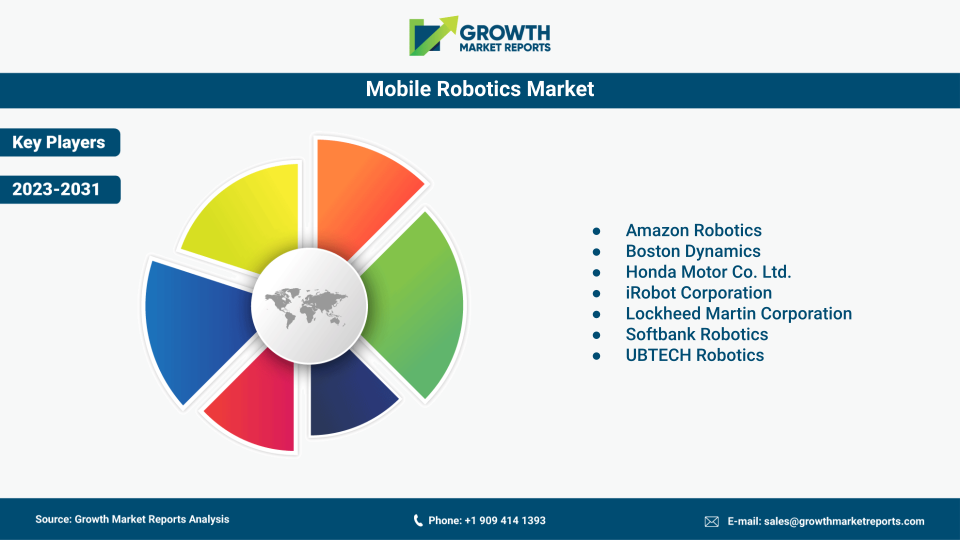

Mobile Robotics Market Key Players

Frequently Asked Questions

Yes, the Mobile Robotics Market Research Report 2033 offers customization options to meet specific client needs.

Opportunities include the integration of AI, IoT, and 5G, growing e-commerce, and healthcare automation. Challenges include high initial costs, integration issues, data security concerns, and regulatory uncertainties.

Key players include ABB Ltd., Boston Dynamics, KUKA AG, Omron Corporation, Clearpath Robotics, iRobot Corporation, Fetch Robotics (Zebra Technologies), DJI, Teradyne Inc., Yaskawa Electric Corporation, and others.

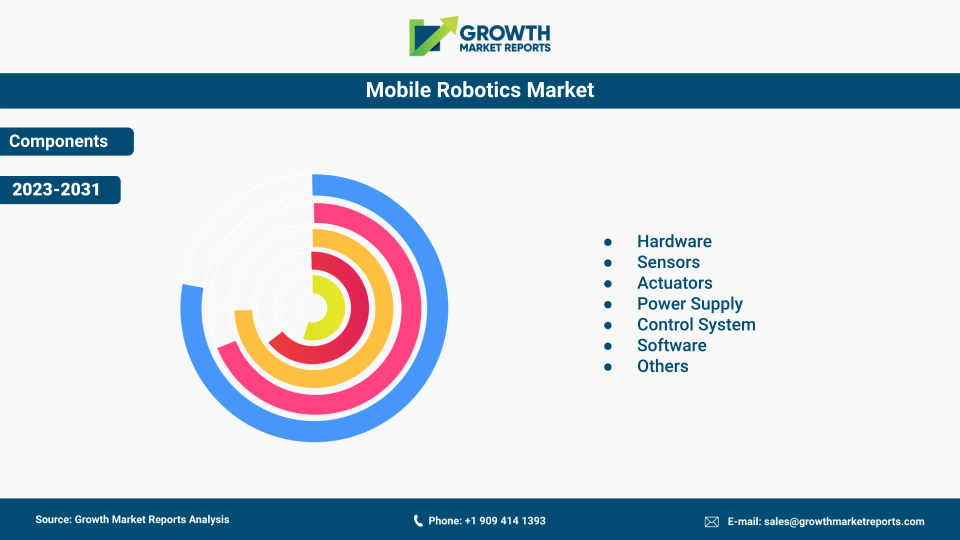
Mobile robotic systems consist of hardware (sensors, actuators, control systems), software (navigation, AI, machine learning), and services (consulting, integration, maintenance, and support).

Asia Pacific leads the market, driven by rapid industrialization and government support, followed by North America and Europe, which have strong R&D, innovation, and adoption in sectors like logistics, healthcare, and manufacturing.

In healthcare, mobile robots are used for tasks like medication delivery, patient transport, disinfection, and remote monitoring, helping reduce infection risks and improve operational efficiency.

Mobile robots are automating tasks such as picking, sorting, packing, and transporting goods, which reduces labor costs, increases efficiency, and improves order fulfillment accuracy in logistics and warehousing.

The main product types are Autonomous Mobile Robots (AMRs), Automated Guided Vehicles (AGVs), Unmanned Ground Vehicles (UGVs), Unmanned Aerial Vehicles (UAVs), and other specialized mobile robots.

Key industries driving mobile robotics adoption include logistics and warehousing, healthcare, military and defense, agriculture, and manufacturing, with logistics and healthcare seeing particularly rapid growth.

The global mobile robotics market reached USD 22.6 billion in 2024 and is expected to grow at a CAGR of 20.1% from 2025 to 2033, reaching a projected value of USD 130.4 billion by 2033.

Table Of Content

Chapter 1 Executive Summary
Chapter 2 Assumptions and Acronyms Used
Chapter 3 Research Methodology
Chapter 4 Mobile Robotics Market Overview
   4.1 Introduction
      4.1.1 Market Taxonomy
      4.1.2 Market Definition
      4.1.3 Macro-Economic Factors Impacting the Market Growth
   4.2 Mobile Robotics Market Dynamics
      4.2.1 Market Drivers
      4.2.2 Market Restraints
      4.2.3 Market Opportunity
   4.3 Mobile Robotics Market - Supply Chain Analysis
      4.3.1 List of Key Suppliers
      4.3.2 List of Key Distributors
      4.3.3 List of Key Consumers
   4.4 Key Forces Shaping the Mobile Robotics Market
      4.4.1 Bargaining Power of Suppliers
      4.4.2 Bargaining Power of Buyers
      4.4.3 Threat of Substitution
      4.4.4 Threat of New Entrants
      4.4.5 Competitive Rivalry
   4.5 Global Mobile Robotics Market Size & Forecast, 2023-2032
      4.5.1 Mobile Robotics Market Size and Y-o-Y Growth
      4.5.2 Mobile Robotics Market Absolute $ Opportunity

Chapter 5 Global Mobile Robotics Market Analysis and Forecast By Product Type
   5.1 Introduction
      5.1.1 Key Market Trends & Growth Opportunities By Product Type
      5.1.2 Basis Point Share (BPS) Analysis By Product Type
      5.1.3 Absolute $ Opportunity Assessment By Product Type
   5.2 Mobile Robotics Market Size Forecast By Product Type
      5.2.1 Autonomous Mobile Robots
      5.2.2 Automated Guided Vehicles
      5.2.3 Unmanned Ground Vehicles
      5.2.4 Unmanned Aerial Vehicles
      5.2.5 Others
   5.3 Market Attractiveness Analysis By Product Type

Chapter 6 Global Mobile Robotics Market Analysis and Forecast By Component
   6.1 Introduction
      6.1.1 Key Market Trends & Growth Opportunities By Component
      6.1.2 Basis Point Share (BPS) Analysis By Component
      6.1.3 Absolute $ Opportunity Assessment By Component
   6.2 Mobile Robotics Market Size Forecast By Component
      6.2.1 Hardware
      6.2.2 Software
      6.2.3 Services
   6.3 Market Attractiveness Analysis By Component

Chapter 7 Global Mobile Robotics Market Analysis and Forecast By Application
   7.1 Introduction
      7.1.1 Key Market Trends & Growth Opportunities By Application
      7.1.2 Basis Point Share (BPS) Analysis By Application
      7.1.3 Absolute $ Opportunity Assessment By Application
   7.2 Mobile Robotics Market Size Forecast By Application
      7.2.1 Logistics and Warehousing
      7.2.2 Healthcare
      7.2.3 Military and Defense
      7.2.4 Agriculture
      7.2.5 Manufacturing
      7.2.6 Others
   7.3 Market Attractiveness Analysis By Application

Chapter 8 Global Mobile Robotics Market Analysis and Forecast By End-User
   8.1 Introduction
      8.1.1 Key Market Trends & Growth Opportunities By End-User
      8.1.2 Basis Point Share (BPS) Analysis By End-User
      8.1.3 Absolute $ Opportunity Assessment By End-User
   8.2 Mobile Robotics Market Size Forecast By End-User
      8.2.1 Industrial
      8.2.2 Commercial
      8.2.3 Residential
      8.2.4 Others
   8.3 Market Attractiveness Analysis By End-User

Chapter 9 Global Mobile Robotics Market Analysis and Forecast by Region
   9.1 Introduction
      9.1.1 Key Market Trends & Growth Opportunities By Region
      9.1.2 Basis Point Share (BPS) Analysis By Region
      9.1.3 Absolute $ Opportunity Assessment By Region
   9.2 Mobile Robotics Market Size Forecast By Region
      9.2.1 North America
      9.2.2 Europe
      9.2.3 Asia Pacific
      9.2.4 Latin America
      9.2.5 Middle East & Africa (MEA)
   9.3 Market Attractiveness Analysis By Region

Chapter 10 Coronavirus Disease (COVID-19) Impact 
   10.1 Introduction 
   10.2 Current & Future Impact Analysis 
   10.3 Economic Impact Analysis 
   10.4 Government Policies 
   10.5 Investment Scenario

Chapter 11 North America Mobile Robotics Analysis and Forecast
   11.1 Introduction
   11.2 North America Mobile Robotics Market Size Forecast by Country
      11.2.1 U.S.
      11.2.2 Canada
   11.3 Basis Point Share (BPS) Analysis by Country
   11.4 Absolute $ Opportunity Assessment by Country
   11.5 Market Attractiveness Analysis by Country
   11.6 North America Mobile Robotics Market Size Forecast By Product Type
      11.6.1 Autonomous Mobile Robots
      11.6.2 Automated Guided Vehicles
      11.6.3 Unmanned Ground Vehicles
      11.6.4 Unmanned Aerial Vehicles
      11.6.5 Others
   11.7 Basis Point Share (BPS) Analysis By Product Type 
   11.8 Absolute $ Opportunity Assessment By Product Type 
   11.9 Market Attractiveness Analysis By Product Type
   11.10 North America Mobile Robotics Market Size Forecast By Component
      11.10.1 Hardware
      11.10.2 Software
      11.10.3 Services
   11.11 Basis Point Share (BPS) Analysis By Component 
   11.12 Absolute $ Opportunity Assessment By Component 
   11.13 Market Attractiveness Analysis By Component
   11.14 North America Mobile Robotics Market Size Forecast By Application
      11.14.1 Logistics and Warehousing
      11.14.2 Healthcare
      11.14.3 Military and Defense
      11.14.4 Agriculture
      11.14.5 Manufacturing
      11.14.6 Others
   11.15 Basis Point Share (BPS) Analysis By Application 
   11.16 Absolute $ Opportunity Assessment By Application 
   11.17 Market Attractiveness Analysis By Application
   11.18 North America Mobile Robotics Market Size Forecast By End-User
      11.18.1 Industrial
      11.18.2 Commercial
      11.18.3 Residential
      11.18.4 Others
   11.19 Basis Point Share (BPS) Analysis By End-User 
   11.20 Absolute $ Opportunity Assessment By End-User 
   11.21 Market Attractiveness Analysis By End-User

Chapter 12 Europe Mobile Robotics Analysis and Forecast
   12.1 Introduction
   12.2 Europe Mobile Robotics Market Size Forecast by Country
      12.2.1 Germany
      12.2.2 France
      12.2.3 Italy
      12.2.4 U.K.
      12.2.5 Spain
      12.2.6 Russia
      12.2.7 Rest of Europe
   12.3 Basis Point Share (BPS) Analysis by Country
   12.4 Absolute $ Opportunity Assessment by Country
   12.5 Market Attractiveness Analysis by Country
   12.6 Europe Mobile Robotics Market Size Forecast By Product Type
      12.6.1 Autonomous Mobile Robots
      12.6.2 Automated Guided Vehicles
      12.6.3 Unmanned Ground Vehicles
      12.6.4 Unmanned Aerial Vehicles
      12.6.5 Others
   12.7 Basis Point Share (BPS) Analysis By Product Type 
   12.8 Absolute $ Opportunity Assessment By Product Type 
   12.9 Market Attractiveness Analysis By Product Type
   12.10 Europe Mobile Robotics Market Size Forecast By Component
      12.10.1 Hardware
      12.10.2 Software
      12.10.3 Services
   12.11 Basis Point Share (BPS) Analysis By Component 
   12.12 Absolute $ Opportunity Assessment By Component 
   12.13 Market Attractiveness Analysis By Component
   12.14 Europe Mobile Robotics Market Size Forecast By Application
      12.14.1 Logistics and Warehousing
      12.14.2 Healthcare
      12.14.3 Military and Defense
      12.14.4 Agriculture
      12.14.5 Manufacturing
      12.14.6 Others
   12.15 Basis Point Share (BPS) Analysis By Application 
   12.16 Absolute $ Opportunity Assessment By Application 
   12.17 Market Attractiveness Analysis By Application
   12.18 Europe Mobile Robotics Market Size Forecast By End-User
      12.18.1 Industrial
      12.18.2 Commercial
      12.18.3 Residential
      12.18.4 Others
   12.19 Basis Point Share (BPS) Analysis By End-User 
   12.20 Absolute $ Opportunity Assessment By End-User 
   12.21 Market Attractiveness Analysis By End-User

Chapter 13 Asia Pacific Mobile Robotics Analysis and Forecast
   13.1 Introduction
   13.2 Asia Pacific Mobile Robotics Market Size Forecast by Country
      13.2.1 China
      13.2.2 Japan
      13.2.3 South Korea
      13.2.4 India
      13.2.5 Australia
      13.2.6 South East Asia (SEA)
      13.2.7 Rest of Asia Pacific (APAC)
   13.3 Basis Point Share (BPS) Analysis by Country
   13.4 Absolute $ Opportunity Assessment by Country
   13.5 Market Attractiveness Analysis by Country
   13.6 Asia Pacific Mobile Robotics Market Size Forecast By Product Type
      13.6.1 Autonomous Mobile Robots
      13.6.2 Automated Guided Vehicles
      13.6.3 Unmanned Ground Vehicles
      13.6.4 Unmanned Aerial Vehicles
      13.6.5 Others
   13.7 Basis Point Share (BPS) Analysis By Product Type 
   13.8 Absolute $ Opportunity Assessment By Product Type 
   13.9 Market Attractiveness Analysis By Product Type
   13.10 Asia Pacific Mobile Robotics Market Size Forecast By Component
      13.10.1 Hardware
      13.10.2 Software
      13.10.3 Services
   13.11 Basis Point Share (BPS) Analysis By Component 
   13.12 Absolute $ Opportunity Assessment By Component 
   13.13 Market Attractiveness Analysis By Component
   13.14 Asia Pacific Mobile Robotics Market Size Forecast By Application
      13.14.1 Logistics and Warehousing
      13.14.2 Healthcare
      13.14.3 Military and Defense
      13.14.4 Agriculture
      13.14.5 Manufacturing
      13.14.6 Others
   13.15 Basis Point Share (BPS) Analysis By Application 
   13.16 Absolute $ Opportunity Assessment By Application 
   13.17 Market Attractiveness Analysis By Application
   13.18 Asia Pacific Mobile Robotics Market Size Forecast By End-User
      13.18.1 Industrial
      13.18.2 Commercial
      13.18.3 Residential
      13.18.4 Others
   13.19 Basis Point Share (BPS) Analysis By End-User 
   13.20 Absolute $ Opportunity Assessment By End-User 
   13.21 Market Attractiveness Analysis By End-User

Chapter 14 Latin America Mobile Robotics Analysis and Forecast
   14.1 Introduction
   14.2 Latin America Mobile Robotics Market Size Forecast by Country
      14.2.1 Brazil
      14.2.2 Mexico
      14.2.3 Rest of Latin America (LATAM)
   14.3 Basis Point Share (BPS) Analysis by Country
   14.4 Absolute $ Opportunity Assessment by Country
   14.5 Market Attractiveness Analysis by Country
   14.6 Latin America Mobile Robotics Market Size Forecast By Product Type
      14.6.1 Autonomous Mobile Robots
      14.6.2 Automated Guided Vehicles
      14.6.3 Unmanned Ground Vehicles
      14.6.4 Unmanned Aerial Vehicles
      14.6.5 Others
   14.7 Basis Point Share (BPS) Analysis By Product Type 
   14.8 Absolute $ Opportunity Assessment By Product Type 
   14.9 Market Attractiveness Analysis By Product Type
   14.10 Latin America Mobile Robotics Market Size Forecast By Component
      14.10.1 Hardware
      14.10.2 Software
      14.10.3 Services
   14.11 Basis Point Share (BPS) Analysis By Component 
   14.12 Absolute $ Opportunity Assessment By Component 
   14.13 Market Attractiveness Analysis By Component
   14.14 Latin America Mobile Robotics Market Size Forecast By Application
      14.14.1 Logistics and Warehousing
      14.14.2 Healthcare
      14.14.3 Military and Defense
      14.14.4 Agriculture
      14.14.5 Manufacturing
      14.14.6 Others
   14.15 Basis Point Share (BPS) Analysis By Application 
   14.16 Absolute $ Opportunity Assessment By Application 
   14.17 Market Attractiveness Analysis By Application
   14.18 Latin America Mobile Robotics Market Size Forecast By End-User
      14.18.1 Industrial
      14.18.2 Commercial
      14.18.3 Residential
      14.18.4 Others
   14.19 Basis Point Share (BPS) Analysis By End-User 
   14.20 Absolute $ Opportunity Assessment By End-User 
   14.21 Market Attractiveness Analysis By End-User

Chapter 15 Middle East & Africa (MEA) Mobile Robotics Analysis and Forecast
   15.1 Introduction
   15.2 Middle East & Africa (MEA) Mobile Robotics Market Size Forecast by Country
      15.2.1 Saudi Arabia
      15.2.2 South Africa
      15.2.3 UAE
      15.2.4 Rest of Middle East & Africa (MEA)
   15.3 Basis Point Share (BPS) Analysis by Country
   15.4 Absolute $ Opportunity Assessment by Country
   15.5 Market Attractiveness Analysis by Country
   15.6 Middle East & Africa (MEA) Mobile Robotics Market Size Forecast By Product Type
      15.6.1 Autonomous Mobile Robots
      15.6.2 Automated Guided Vehicles
      15.6.3 Unmanned Ground Vehicles
      15.6.4 Unmanned Aerial Vehicles
      15.6.5 Others
   15.7 Basis Point Share (BPS) Analysis By Product Type 
   15.8 Absolute $ Opportunity Assessment By Product Type 
   15.9 Market Attractiveness Analysis By Product Type
   15.10 Middle East & Africa (MEA) Mobile Robotics Market Size Forecast By Component
      15.10.1 Hardware
      15.10.2 Software
      15.10.3 Services
   15.11 Basis Point Share (BPS) Analysis By Component 
   15.12 Absolute $ Opportunity Assessment By Component 
   15.13 Market Attractiveness Analysis By Component
   15.14 Middle East & Africa (MEA) Mobile Robotics Market Size Forecast By Application
      15.14.1 Logistics and Warehousing
      15.14.2 Healthcare
      15.14.3 Military and Defense
      15.14.4 Agriculture
      15.14.5 Manufacturing
      15.14.6 Others
   15.15 Basis Point Share (BPS) Analysis By Application 
   15.16 Absolute $ Opportunity Assessment By Application 
   15.17 Market Attractiveness Analysis By Application
   15.18 Middle East & Africa (MEA) Mobile Robotics Market Size Forecast By End-User
      15.18.1 Industrial
      15.18.2 Commercial
      15.18.3 Residential
      15.18.4 Others
   15.19 Basis Point Share (BPS) Analysis By End-User 
   15.20 Absolute $ Opportunity Assessment By End-User 
   15.21 Market Attractiveness Analysis By End-User

Chapter 16 Competition Landscape 
   16.1 Mobile Robotics Market: Competitive Dashboard
   16.2 Global Mobile Robotics Market: Market Share Analysis, 2023
   16.3 Company Profiles (Details – Overview, Financials, Developments, Strategy) 
      16.3.1 ABB Ltd.
Amazon Robotics
Boston Dynamics
Clearpath Robotics
DJI
Fetch Robotics
iRobot Corporation
KUKA AG
Locus Robotics
Mobile Industrial Robots (MiR)
Omron Corporation
Robotics Systems Integration (RSI)
SMP Robotics
SoftBank Robotics
Teradyne Inc.
Yaskawa Electric Corporation
Aethon Inc.
Geekplus Technology
Savioke
Vecna Robotics

Methodology

Our Clients

The John Holland Group
General Mills
Dassault Aviation
Deloitte
Microsoft
Siemens Healthcare
FedEx Logistics
Pfizer