Segments - by Component (Devices, Services, Software), by Application (Remote Monitoring, Diagnosis & Consultation, Treatment, Fitness & Wellness, Disease Management, Others), by End User (Hospitals & Clinics, Home Care, Individuals, Others), by Deployment Mode (On-Premises, Cloud-Based)
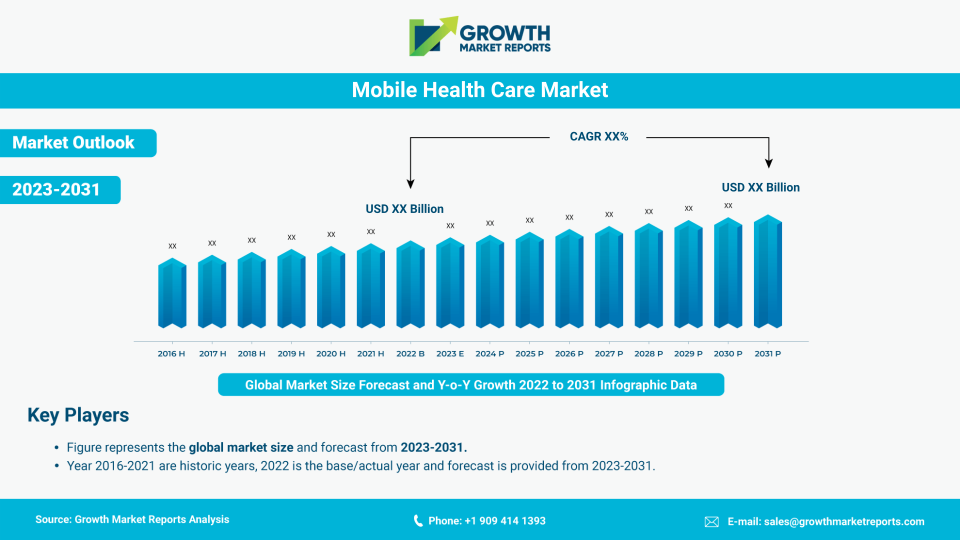
According to our latest research and analysis, the global mobile health care market size reached USD 85.6 billion in 2024. The market is expected to grow at a robust CAGR of 18.2% from 2025 to 2033. By the end of 2033, the mobile health care market is forecasted to reach USD 355.7 billion. This remarkable growth is driven by the proliferation of smartphones, increasing adoption of wearable health devices, and a rising demand for remote healthcare services worldwide.
One of the primary growth factors propelling the mobile health care market is the rapid advancement and integration of mobile technologies in healthcare delivery. The widespread accessibility of smartphones and mobile internet has enabled healthcare providers to reach patients more efficiently, regardless of their location. This technological shift has allowed for real-time monitoring, instant communication, and data sharing between patients and practitioners, significantly improving the quality of care. The growing trend of digital health solutions, including telemedicine and mobile health applications, has also played a pivotal role in expanding the market. Furthermore, the increasing emphasis on personalized medicine and preventative healthcare is encouraging the adoption of mobile health solutions, as they empower patients to actively manage their health and wellness.
Another significant growth driver is the rising prevalence of chronic diseases and the aging global population. Chronic conditions such as diabetes, cardiovascular diseases, and respiratory disorders require continuous monitoring and timely intervention, which mobile health care solutions are uniquely equipped to provide. The ability of mobile health applications and devices to track vital signs, medication adherence, and lifestyle habits is transforming disease management, reducing hospital readmissions, and improving patient outcomes. Additionally, the COVID-19 pandemic has accelerated the demand for remote healthcare services, as patients and providers sought safe and effective alternatives to in-person consultations. This shift in patient behavior has led to increased investments in mobile health technologies by both public and private sectors.
Government initiatives and supportive regulatory frameworks are also contributing to the growth of the mobile health care market. Many governments across the globe are implementing policies to promote digital health adoption, improve healthcare infrastructure, and ensure data security and privacy. Financial incentives, funding for telehealth programs, and partnerships with technology companies are further fueling market expansion. Moreover, the integration of artificial intelligence, big data analytics, and cloud computing into mobile health platforms is enhancing the capabilities of these solutions, making them more efficient and user-friendly. These advancements are expected to continue driving market growth over the forecast period.
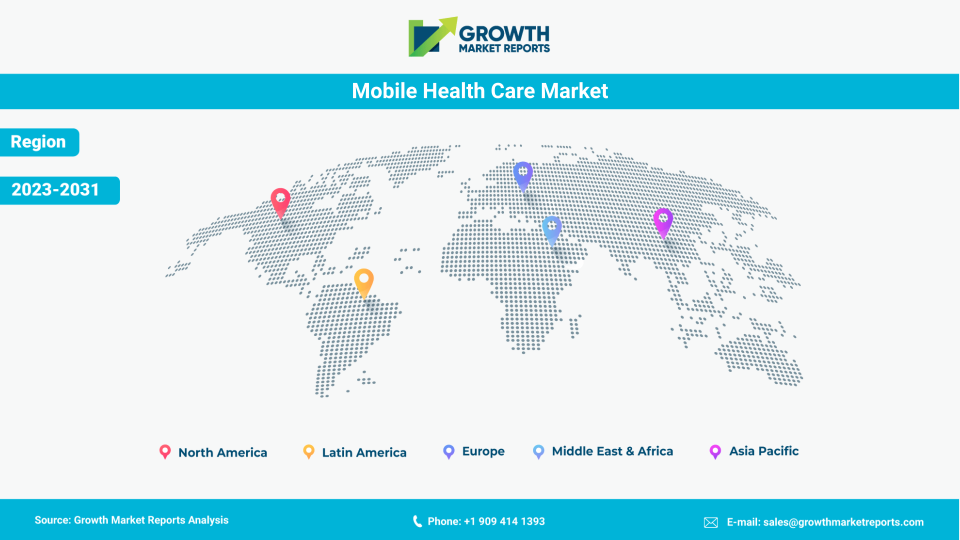
From a regional perspective, North America currently dominates the mobile health care market, accounting for the largest market share in 2024. This leadership position is attributed to the region’s advanced healthcare infrastructure, high smartphone penetration, and strong presence of key market players. Europe follows closely, supported by increasing investments in digital health and favorable government regulations. The Asia Pacific region is anticipated to witness the fastest growth during the forecast period, driven by a large population base, rising healthcare expenditure, and rapid technological adoption. Latin America and the Middle East & Africa are also expected to experience steady growth, although challenges such as limited infrastructure and regulatory barriers may impact market expansion in these regions.
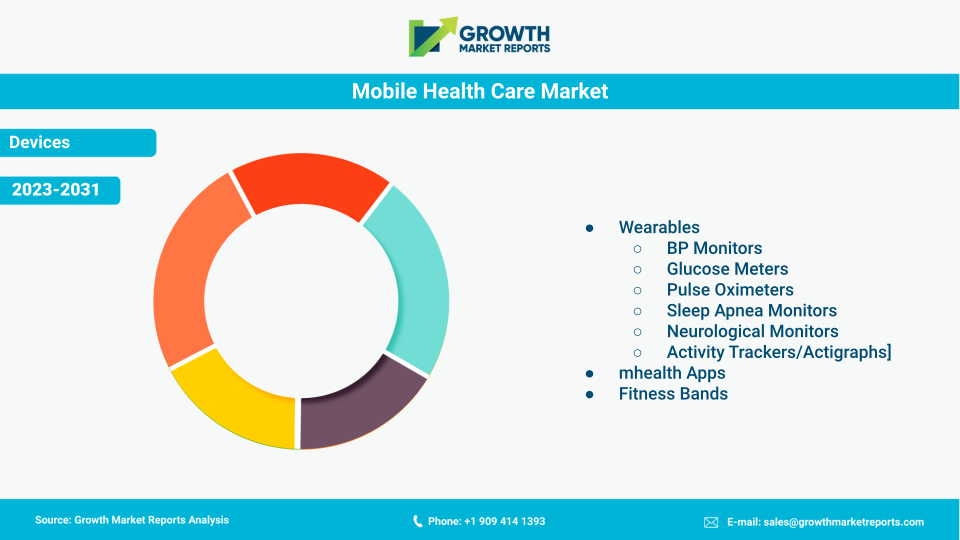
The mobile health care market is segmented by component into devices, services, and software, each playing a crucial role in the ecosystem. Devices, including smartphones, wearables, and remote monitoring tools, form the foundation of mobile health care by enabling the collection and transmission of health data. The proliferation of wearable devices such as fitness trackers and smartwatches has revolutionized personal health monitoring, allowing users to track physical activity, heart rate, sleep patterns, and more. The increasing affordability and accessibility of these devices have significantly expanded their user base, contributing to the overall growth of the market. Furthermore, advancements in sensor technologies and miniaturization have enhanced the accuracy and functionality of mobile health devices, making them indispensable tools for both consumers and healthcare professionals.
Services represent another vital component of the mobile health care market, encompassing telemedicine consultations, remote patient monitoring, and health management services. The demand for these services has surged in recent years, particularly in the wake of the COVID-19 pandemic, which highlighted the need for remote healthcare solutions. Telemedicine platforms enable patients to consult with healthcare providers from the comfort of their homes, reducing the need for in-person visits and minimizing the risk of infection. Remote monitoring services allow for continuous tracking of patients with chronic conditions, enabling timely interventions and improving health outcomes. The integration of artificial intelligence and machine learning into these services is further enhancing their effectiveness by enabling predictive analytics and personalized care recommendations.
Software solutions are the backbone of mobile health care, providing the necessary platforms for data management, analytics, and communication. Mobile health applications, electronic health records (EHRs), and cloud-based platforms facilitate seamless data exchange between patients, providers, and other stakeholders. The development of user-friendly and secure mobile health apps has made it easier for individuals to access health information, schedule appointments, and receive medication reminders. Software innovations are also driving interoperability between different devices and systems, ensuring that health data can be shared and utilized effectively. As cybersecurity concerns continue to rise, software providers are investing in advanced encryption and data protection measures to safeguard patient information and comply with regulatory requirements.
The synergy between devices, services, and software is essential for the successful implementation of mobile health care solutions. Devices collect and transmit health data, services provide the necessary support and expertise, and software ensures efficient data management and communication. This interconnected ecosystem enables a holistic approach to healthcare delivery, improving patient engagement, reducing costs, and enhancing overall health outcomes. As the market continues to evolve, the integration of emerging technologies such as blockchain, virtual reality, and the Internet of Things (IoT) is expected to further expand the capabilities of mobile health care solutions, creating new opportunities for growth and innovation.
| Attributes | Details |
| Report Title | Mobile Health Care Market Research Report 2033 |
| By Component | Devices, Services, Software |
| By Application | Remote Monitoring, Diagnosis & Consultation, Treatment, Fitness & Wellness, Disease Management, Others |
| By End User | Hospitals & Clinics, Home Care, Individuals, Others |
| By Deployment Mode | On-Premises, Cloud-Based |
| Regions Covered | North America, Europe, APAC, Latin America, MEA |
| Base Year | 2024 |
| Historic Data | 2018-2023 |
| Forecast Period | 2025-2033 |
| Number of Pages | 251 |
| Number of Tables & Figures | 324 |
| Customization Available | Yes, the report can be customized as per your need. |
The mobile health care market is segmented by application into remote monitoring, diagnosis and consultation, treatment, fitness and wellness, disease management, and others. Remote monitoring is one of the most prominent applications, driven by the increasing need for continuous health surveillance, especially for patients with chronic illnesses. Mobile health devices and applications enable real-time tracking of vital signs, medication adherence, and lifestyle habits, allowing healthcare providers to intervene promptly when necessary. This capability is particularly valuable in managing conditions such as diabetes, hypertension, and heart disease, where timely intervention can prevent complications and reduce hospital admissions. The growing adoption of remote monitoring solutions is also supported by advancements in wearable technology and the integration of artificial intelligence, which enhance the accuracy and predictive capabilities of these tools.
Diagnosis and consultation through mobile health platforms have gained significant traction, particularly in regions with limited access to healthcare facilities. Telemedicine applications enable patients to consult with healthcare professionals remotely, receive diagnoses, and obtain prescriptions without the need for physical visits. This not only improves access to care but also reduces the burden on healthcare systems and minimizes the risk of exposure to infectious diseases. The convenience and cost-effectiveness of mobile consultations have made them increasingly popular among both patients and providers. Furthermore, the integration of advanced diagnostic tools, such as AI-powered symptom checkers and image analysis, is enhancing the accuracy and efficiency of remote consultations.
Treatment applications in the mobile health care market encompass a wide range of solutions, including medication management, therapy adherence, and remote rehabilitation. Mobile health platforms provide patients with reminders to take medications, track their progress, and communicate with their healthcare providers. These features are particularly beneficial for individuals with complex treatment regimens or those managing multiple chronic conditions. Remote rehabilitation programs, delivered through mobile applications, enable patients to perform prescribed exercises at home, receive feedback, and monitor their recovery. The ability to deliver personalized treatment plans and monitor adherence in real time is transforming the way healthcare is delivered, improving patient outcomes and reducing the need for in-person visits.
Fitness and wellness applications represent a rapidly growing segment of the mobile health care market, driven by increasing consumer awareness of the importance of preventive health and lifestyle management. Mobile health apps and wearable devices enable users to track their physical activity, nutrition, sleep, and stress levels, providing personalized recommendations to improve overall well-being. The gamification of health and fitness, through features such as challenges and rewards, is enhancing user engagement and motivation. As more individuals seek to take control of their health, the demand for fitness and wellness applications is expected to continue rising, contributing to the overall growth of the mobile health care market.
The end user segment of the mobile health care market is categorized into hospitals and clinics, home care, individuals, and others. Hospitals and clinics are major adopters of mobile health care solutions, leveraging these technologies to streamline operations, enhance patient care, and improve clinical outcomes. Mobile health applications enable healthcare professionals to access patient records, communicate with colleagues, and monitor patients remotely, facilitating more efficient and coordinated care. The integration of mobile health solutions into hospital workflows is also improving resource allocation, reducing administrative burdens, and enabling more effective management of patient populations. As hospitals and clinics continue to invest in digital health infrastructure, the adoption of mobile health care solutions is expected to increase further.
Home care is another significant end user segment, driven by the growing demand for remote health monitoring and personalized care. Mobile health care solutions enable patients to receive medical attention and support in the comfort of their homes, reducing the need for hospital visits and minimizing healthcare costs. This is particularly beneficial for elderly individuals, patients with chronic conditions, and those recovering from surgery or illness. Home care providers are increasingly utilizing mobile health devices and applications to monitor patients’ health status, manage medications, and provide virtual consultations. The convenience and cost-effectiveness of home care solutions are driving their adoption, contributing to the overall growth of the mobile health care market.
Individuals represent a rapidly expanding end user segment, as more consumers seek to take control of their health and wellness through mobile health applications and wearable devices. The increasing availability of user-friendly and affordable mobile health solutions is empowering individuals to track their health metrics, set goals, and receive personalized recommendations. This shift towards consumer-driven health management is being fueled by rising health awareness, the desire for preventive care, and the growing popularity of fitness and wellness apps. As individuals become more proactive in managing their health, the demand for mobile health care solutions is expected to continue growing, further expanding the market.
Other end users, including insurance companies, employers, and government agencies, are also leveraging mobile health care solutions to improve health outcomes and reduce costs. Insurance companies are offering incentives for the use of mobile health applications, while employers are implementing wellness programs to promote employee health and productivity. Government agencies are investing in digital health initiatives to improve public health and expand access to care. The involvement of these stakeholders is further driving the adoption of mobile health care solutions, creating new opportunities for market growth and innovation.
The deployment mode segment of the mobile health care market is divided into on-premises and cloud-based solutions. On-premises deployment involves the installation of mobile health care software and infrastructure within the organization’s own facilities. This deployment mode offers greater control over data security and privacy, making it a preferred choice for organizations with strict regulatory requirements or sensitive patient information. On-premises solutions also allow for customization to meet the specific needs of healthcare providers. However, the high upfront costs and ongoing maintenance requirements can be a barrier to adoption, particularly for smaller organizations with limited resources.
Cloud-based deployment is gaining traction in the mobile health care market due to its scalability, flexibility, and cost-effectiveness. Cloud-based solutions enable healthcare providers to access mobile health applications and data from any location, facilitating remote care and collaboration. The ability to scale resources up or down based on demand makes cloud-based deployment an attractive option for organizations of all sizes. Additionally, cloud-based solutions reduce the need for significant upfront investments in hardware and infrastructure, making them more accessible to smaller providers and startups. The growing adoption of cloud computing in healthcare is also enabling the integration of advanced technologies such as artificial intelligence, big data analytics, and machine learning, further enhancing the capabilities of mobile health care solutions.
Data security and privacy remain key concerns in the deployment of mobile health care solutions, particularly in cloud-based environments. Healthcare organizations must ensure compliance with regulatory requirements such as HIPAA, GDPR, and other data protection laws. Cloud service providers are investing in advanced security measures, including encryption, multi-factor authentication, and regular security audits, to address these concerns and build trust among users. As cybersecurity threats continue to evolve, ongoing investment in security technologies and best practices will be essential to ensure the safe and effective deployment of mobile health care solutions.
The choice between on-premises and cloud-based deployment depends on a variety of factors, including organizational size, budget, regulatory requirements, and the need for scalability and flexibility. Many healthcare providers are adopting hybrid deployment models, combining the benefits of both approaches to meet their unique needs. As the mobile health care market continues to evolve, the adoption of cloud-based solutions is expected to accelerate, driven by the need for remote care, data interoperability, and advanced analytics capabilities.
The mobile health care market presents a wealth of opportunities for stakeholders across the healthcare ecosystem. One of the most significant opportunities lies in the expansion of remote monitoring and telehealth services, particularly in underserved and rural areas. The ability to provide real-time health monitoring and virtual consultations is transforming healthcare delivery, improving access to care, and reducing costs. The integration of artificial intelligence, machine learning, and big data analytics into mobile health platforms is enabling predictive analytics, personalized care recommendations, and early intervention for at-risk patients. As healthcare systems worldwide continue to shift towards value-based care, mobile health solutions are well-positioned to play a central role in improving patient outcomes and optimizing resource utilization.
Another key opportunity in the mobile health care market is the growing demand for consumer-driven health and wellness solutions. As individuals become more proactive in managing their health, the adoption of mobile health applications and wearable devices is expected to surge. This presents significant growth potential for technology companies, app developers, and device manufacturers. The increasing focus on preventive care and chronic disease management is also creating new opportunities for innovation, as stakeholders seek to develop solutions that empower patients to take control of their health. Partnerships between healthcare providers, technology companies, and payers are expected to drive the development and adoption of integrated mobile health solutions, further expanding the market.
Despite the numerous opportunities, the mobile health care market faces several challenges and restrainers. Data security and privacy concerns remain a significant barrier to adoption, particularly in cloud-based environments. Healthcare organizations must ensure compliance with stringent regulatory requirements and implement robust security measures to protect sensitive patient information. Additionally, the lack of interoperability between different mobile health platforms and devices can hinder data sharing and integration, limiting the effectiveness of these solutions. Addressing these challenges will require ongoing investment in technology, regulatory compliance, and industry collaboration to ensure the safe and effective deployment of mobile health care solutions.
North America remains the dominant region in the global mobile health care market, accounting for approximately 38% of the total market size in 2024, with a market value of around USD 32.5 billion. The region’s leadership is attributed to its advanced healthcare infrastructure, high smartphone penetration, and strong presence of leading market players. The United States, in particular, is at the forefront of mobile health care adoption, supported by favorable government initiatives, significant investments in digital health, and a robust regulatory framework. The growing demand for remote monitoring and telehealth services, coupled with the integration of advanced technologies, is expected to drive continued growth in the North American market.
Europe is the second-largest market for mobile health care, with a market size of approximately USD 21.4 billion in 2024. The region’s growth is supported by increasing investments in digital health infrastructure, rising healthcare expenditure, and favorable regulatory policies. Countries such as Germany, the United Kingdom, and France are leading the adoption of mobile health solutions, driven by government initiatives to promote eHealth and improve access to care. The European market is expected to grow at a CAGR of 16.8% during the forecast period, fueled by the increasing prevalence of chronic diseases, aging populations, and the growing demand for personalized health and wellness solutions.
The Asia Pacific region is poised for the fastest growth in the mobile health care market, with a projected CAGR of 22.7% from 2025 to 2033. The market size in Asia Pacific reached USD 18.8 billion in 2024, driven by a large and rapidly growing population, increasing smartphone penetration, and rising healthcare expenditure. Countries such as China, India, and Japan are leading the adoption of mobile health technologies, supported by government initiatives to improve healthcare access and infrastructure. The growing burden of chronic diseases, coupled with the need for cost-effective healthcare solutions, is expected to drive significant growth in the Asia Pacific market. Latin America and the Middle East & Africa are also experiencing steady growth, although challenges such as limited infrastructure and regulatory barriers may impact market expansion in these regions.
The competitive landscape of the mobile health care market is characterized by the presence of a diverse array of players, ranging from established healthcare technology companies to innovative startups. Leading companies are focusing on strategic partnerships, mergers and acquisitions, and product innovations to strengthen their market position and expand their offerings. The market is highly dynamic, with continuous advancements in technology and evolving consumer preferences driving competition. Key players are investing in research and development to enhance the functionality, usability, and security of their mobile health solutions, aiming to meet the growing demand for remote monitoring, telehealth, and personalized care.
One of the defining features of the mobile health care market is the emphasis on collaboration between healthcare providers, technology companies, and payers. Strategic partnerships are enabling companies to leverage complementary strengths, accelerate product development, and expand their reach. For example, collaborations between wearable device manufacturers and healthcare providers are facilitating the integration of health data into clinical workflows, improving patient care and outcomes. Similarly, partnerships between mobile health app developers and insurance companies are creating new opportunities for preventive care and wellness programs. This collaborative approach is driving innovation and fostering the development of integrated mobile health ecosystems.
The market is also witnessing increased investment in artificial intelligence, machine learning, and big data analytics, as companies seek to enhance the capabilities of their mobile health solutions. AI-powered platforms are enabling predictive analytics, personalized care recommendations, and early intervention for at-risk patients. The integration of advanced analytics is improving the accuracy and efficiency of remote monitoring, diagnosis, and treatment, creating new opportunities for market growth. As competition intensifies, companies are differentiating themselves through the development of user-friendly interfaces, robust security features, and seamless interoperability with other health systems and devices.
Major players in the mobile health care market include Apple Inc., Samsung Electronics, Philips Healthcare, Medtronic, Fitbit (now part of Google), Cerner Corporation, Allscripts Healthcare Solutions, and Teladoc Health. Apple’s HealthKit platform and Apple Watch have set industry standards for personal health monitoring and integration with healthcare providers. Samsung’s range of wearable devices and health applications continues to expand, offering comprehensive fitness and wellness solutions. Philips Healthcare is a leader in remote monitoring and telehealth services, leveraging its expertise in medical devices and digital health. Medtronic is at the forefront of mobile health innovation, particularly in the management of chronic diseases such as diabetes. Fitbit, now under Google, has a strong presence in the consumer wellness segment, while Cerner and Allscripts are leading providers of mobile health software solutions for healthcare organizations. Teladoc Health is a pioneer in telemedicine, offering virtual consultations and remote care services worldwide.
These companies are continuously expanding their product portfolios, investing in research and development, and exploring new markets to maintain their competitive edge. The entry of new players and startups is further intensifying competition, driving innovation and accelerating the adoption of mobile health care solutions. As the market continues to evolve, the focus will remain on developing integrated, user-centric solutions that improve health outcomes, enhance patient engagement, and reduce healthcare costs.
The Mobile Health Care market has been segmented on the basis of
Key players in the global mHealth market include, Cardionet Inc., iHealth Labs Inc., QUALCOMM life, Vodafone, Dexcom Inc., Phillips, and Samsung Electronics. The market is highly competitive owing to the rise in demand for mobile health platforms and services combined with technological advancements.
Mergers & Acquisitions, strategic alliances and extensive R&D in the area of mHealth technologies are some of the initiatives taken by companies to increase their market share.
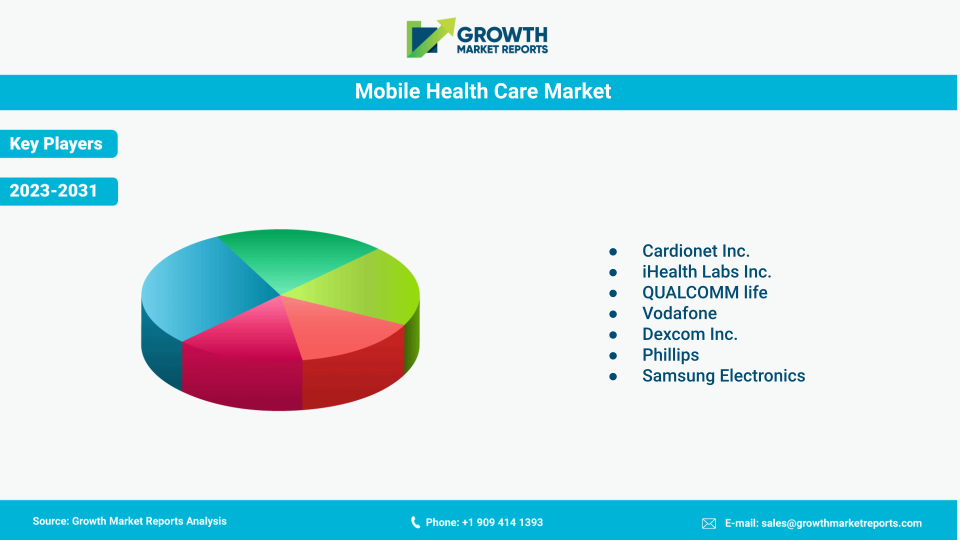
Leading players include Apple Inc., Samsung Electronics, Philips Healthcare, Medtronic, Fitbit (Google), Cerner Corporation, Allscripts Healthcare Solutions, and Teladoc Health.
Major challenges include data security and privacy concerns, lack of interoperability between platforms, and regulatory compliance requirements.
Mobile health care solutions can be deployed on-premises or via cloud-based platforms, with cloud-based deployment gaining popularity due to its scalability and flexibility.
Key end users include hospitals and clinics, home care providers, individuals, insurance companies, employers, and government agencies.
Major applications include remote monitoring, diagnosis and consultation, treatment, fitness and wellness, and disease management.
North America currently dominates the market, followed by Europe. The Asia Pacific region is expected to witness the fastest growth through 2033.
The market is segmented into devices (such as smartphones and wearables), services (including telemedicine and remote monitoring), and software (like mobile health apps and EHR platforms).
Key growth drivers include the proliferation of smartphones, increased adoption of wearable health devices, rising demand for remote healthcare services, advancements in mobile technologies, and supportive government initiatives.
The mobile health care market is expected to grow at a CAGR of 18.2% from 2025 to 2033.
As of 2024, the global mobile health care market size reached USD 85.6 billion.