Segments - by Product Type (Patch-Based Systems, Lead-Based Systems), by Technology (Wireless, Wired), by Application (Arrhythmia, Atrial Fibrillation, Ischemic Heart Disease, Others), by End-User (Hospitals, Ambulatory Surgical Centers, Homecare Settings, Others)
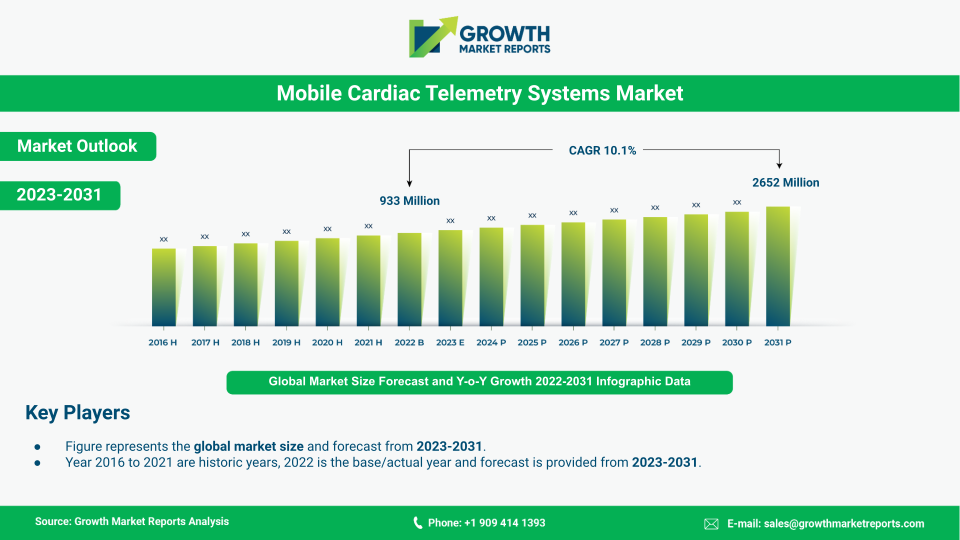
According to our latest research, the global Mobile Cardiac Telemetry Systems market size reached USD 1.6 billion in 2024, demonstrating robust momentum as the demand for advanced cardiac monitoring solutions continues to surge worldwide. The market is expected to expand at a CAGR of 11.8% from 2025 to 2033, reaching an estimated value of USD 4.5 billion by 2033. This impressive growth is primarily driven by the rising incidence of cardiovascular diseases, increasing adoption of remote patient monitoring technologies, and the integration of innovative wireless communication solutions in healthcare. As per the latest research, the sector is poised for significant transformation, with technological advancements and evolving patient preferences reshaping the landscape of cardiac care.
The Mobile Cardiac Telemetry Systems market is witnessing accelerated growth due to the escalating prevalence of cardiovascular disorders, particularly arrhythmias and atrial fibrillation, which are among the leading causes of morbidity and mortality globally. The aging population, combined with lifestyle changes such as sedentary habits, unhealthy diets, and increased stress levels, has led to a higher incidence of heart-related ailments. These factors have heightened the demand for real-time cardiac monitoring, enabling early detection and timely intervention. Mobile cardiac telemetry (MCT) systems offer unparalleled advantages by providing continuous, real-time monitoring of patients' cardiac rhythms, thus reducing the risk of adverse cardiac events and improving clinical outcomes. The ability of these systems to transmit data wirelessly to healthcare providers facilitates prompt diagnosis and management, making them indispensable in modern cardiac care.
Another significant growth driver for the Mobile Cardiac Telemetry Systems market is the rapid advancement of wireless communication technologies and miniaturization of medical devices. The integration of cutting-edge wireless technologies such as Bluetooth, cellular networks, and cloud-based data storage has revolutionized remote patient monitoring. These innovations have enhanced the portability and convenience of MCT systems, allowing patients to maintain their daily activities while being continuously monitored. Additionally, the development of patch-based telemetry systems, which are more comfortable and less intrusive compared to traditional lead-based devices, has improved patient compliance and satisfaction. The increasing adoption of these user-friendly solutions in both clinical and homecare settings is expected to further propel market growth over the forecast period.
Furthermore, favorable reimbursement policies and regulatory support in key markets such as North America and Europe have played a pivotal role in driving the adoption of mobile cardiac telemetry systems. Governments and healthcare payers recognize the cost-effectiveness and clinical benefits of early cardiac event detection, leading to broader coverage for these advanced diagnostic tools. Collaborations between device manufacturers, healthcare providers, and telemedicine platforms have also contributed to the expansion of the market, enabling seamless integration of MCT systems into existing healthcare infrastructures. As healthcare systems worldwide continue to emphasize value-based care and preventive medicine, the demand for mobile cardiac telemetry solutions is expected to rise steadily.
Cardiac Telemetry plays a crucial role in the modern healthcare landscape, especially in the context of mobile cardiac telemetry systems. These systems are designed to offer continuous monitoring of cardiac activity, providing healthcare professionals with real-time data that is essential for timely diagnosis and intervention. The integration of cardiac telemetry in mobile systems allows for the seamless transmission of data to healthcare providers, enabling them to make informed decisions and manage patient care more effectively. This technology is particularly beneficial for patients with chronic cardiac conditions, as it facilitates ongoing monitoring without the need for frequent hospital visits, thereby improving patient outcomes and quality of life.
From a regional perspective, North America currently dominates the global Mobile Cardiac Telemetry Systems market, accounting for the largest share in 2024, followed by Europe and Asia Pacific. The region's leadership can be attributed to the high prevalence of cardiovascular diseases, advanced healthcare infrastructure, and strong presence of key market players. However, Asia Pacific is anticipated to exhibit the fastest growth during the forecast period, driven by increasing healthcare investments, rising awareness about cardiac health, and the growing adoption of digital health technologies. Latin America and the Middle East & Africa are also emerging as promising markets, supported by improving healthcare access and expanding telemedicine initiatives. Regional dynamics are expected to evolve further as technology adoption accelerates and healthcare systems adapt to changing patient needs.
The Product Type segment of the Mobile Cardiac Telemetry Systems market is primarily divided into Patch-Based Systems and Lead-Based Systems. Patch-based systems have gained significant traction in recent years due to their enhanced patient comfort, ease of use, and superior compliance rates. These systems are designed as lightweight, adhesive patches that can be discreetly worn on the chest, offering continuous cardiac monitoring without the inconvenience of wires or bulky equipment. The convenience offered by patch-based systems has led to their widespread adoption in both clinical and homecare settings, particularly for long-term monitoring of arrhythmias and other cardiac events. Moreover, the integration of advanced sensors and wireless communication technologies in these devices has further improved their diagnostic accuracy and reliability, making them the preferred choice for healthcare providers and patients alike.
Lead-based systems, while traditionally dominant in the market, are gradually being supplanted by their patch-based counterparts due to several inherent limitations. These systems typically involve multiple leads attached to the patientÂ’s chest, which can be cumbersome and restrict mobility. However, lead-based systems continue to be valued for their high signal fidelity and ability to capture comprehensive cardiac data, making them suitable for patients with complex cardiac conditions or those requiring detailed diagnostic evaluation. In hospital settings, particularly in intensive care units and during acute cardiac events, lead-based telemetry systems remain indispensable. Nevertheless, ongoing innovations aimed at reducing the size and improving the ergonomics of lead-based systems are expected to sustain their relevance in specific clinical scenarios.
The competitive landscape within the product type segment is characterized by continuous innovation, with manufacturers focusing on enhancing device miniaturization, battery life, and data transmission capabilities. The introduction of hybrid systems that combine the benefits of both patch-based and lead-based technologies is also gaining momentum, offering flexible solutions tailored to individual patient needs. Furthermore, the increasing emphasis on personalized medicine and patient-centric care is driving the development of customizable telemetry systems that can be adapted to various monitoring durations and clinical requirements. As a result, the product type segment is expected to witness sustained growth, with patch-based systems leading the charge in terms of market share and adoption rates.
Another notable trend in the product type segment is the growing integration of artificial intelligence (AI) and machine learning algorithms into mobile cardiac telemetry devices. These technologies enable real-time analysis of cardiac data, automatic detection of abnormal rhythms, and prompt alert generation for healthcare providers. AI-powered telemetry systems have the potential to significantly enhance diagnostic accuracy, reduce false positives, and streamline clinical workflows. As regulatory bodies increasingly approve AI-driven medical devices, the adoption of such advanced telemetry systems is anticipated to accelerate, further expanding the market for both patch-based and lead-based solutions.
| Attributes | Details |
| Report Title | Mobile Cardiac Telemetry Systems Market Research Report 2033 |
| By Product Type | Patch-Based Systems, Lead-Based Systems |
| By Technology | Wireless, Wired |
| By Application | Arrhythmia, Atrial Fibrillation, Ischemic Heart Disease, Others |
| By End-User | Hospitals, Ambulatory Surgical Centers, Homecare Settings, Others |
| Regions Covered | North America, Europe, APAC, Latin America, MEA |
| Base Year | 2024 |
| Historic Data | 2018-2023 |
| Forecast Period | 2025-2033 |
| Number of Pages | 299 |
| Number of Tables & Figures | 386 |
| Customization Available | Yes, the report can be customized as per your need. |
The Technology segment of the Mobile Cardiac Telemetry Systems market is bifurcated into Wireless and Wired systems, with wireless technologies emerging as the clear frontrunner. Wireless mobile cardiac telemetry systems leverage cellular networks, Bluetooth, and Wi-Fi to transmit real-time cardiac data to healthcare providers, enabling continuous and remote monitoring without geographical constraints. The widespread availability of high-speed internet and the proliferation of smartphones have further facilitated the adoption of wireless telemetry solutions. These systems offer unparalleled convenience, allowing patients to go about their daily lives while being monitored, and healthcare professionals to access patient data remotely, thereby improving the efficiency and quality of care.
Wired telemetry systems, while still in use, are increasingly being relegated to specific clinical settings where continuous, high-fidelity data transmission is critical, such as in-hospital monitoring of high-risk patients. These systems are valued for their reliability and minimal susceptibility to signal interference, making them suitable for environments where data integrity is paramount. However, the limitations of wired systems, including restricted patient mobility and potential discomfort, have led to a gradual decline in their market share. As healthcare delivery models shift towards outpatient care and home-based monitoring, the demand for wireless telemetry solutions is expected to outpace that of wired systems.
The rapid evolution of wireless technology has spurred significant advancements in the design and functionality of mobile cardiac telemetry systems. Manufacturers are increasingly incorporating features such as cloud-based data storage, real-time analytics, and seamless integration with electronic health records (EHRs), enhancing the utility and interoperability of these devices. The ability to transmit large volumes of data securely and efficiently has enabled healthcare providers to make timely, data-driven decisions, ultimately improving patient outcomes. Furthermore, the advent of 5G technology is poised to further enhance the capabilities of wireless telemetry systems, offering faster data transfer speeds, lower latency, and improved connectivity.
Despite the dominance of wireless technology, challenges related to data security, privacy, and network reliability persist. Ensuring the secure transmission and storage of sensitive patient information is a top priority for both manufacturers and healthcare providers. Regulatory frameworks such as HIPAA and GDPR mandate stringent data protection measures, necessitating ongoing investment in cybersecurity solutions. As the adoption of wireless telemetry systems continues to grow, addressing these challenges will be critical to maintaining patient trust and safeguarding the integrity of cardiac monitoring data.
The Application segment of the Mobile Cardiac Telemetry Systems market encompasses Arrhythmia, Atrial Fibrillation, Ischemic Heart Disease, and Others. Among these, arrhythmia monitoring represents the largest application segment, driven by the high prevalence of cardiac arrhythmias globally. Mobile cardiac telemetry systems are particularly well-suited for the detection and management of arrhythmias, as they provide continuous, real-time monitoring that enables the identification of transient or asymptomatic episodes that might otherwise go undetected. Early detection of arrhythmias is crucial for preventing complications such as stroke, heart failure, and sudden cardiac death, underscoring the clinical value of MCT systems in this application area.
Atrial fibrillation (AFib), a specific type of arrhythmia, is a major focus within the application segment due to its association with an increased risk of stroke and other adverse cardiovascular events. The rising incidence of AFib, particularly among the elderly population, has fueled demand for advanced monitoring solutions that can facilitate early diagnosis and effective management. Mobile cardiac telemetry systems equipped with sophisticated algorithms for AFib detection have demonstrated high sensitivity and specificity, enabling timely intervention and reducing the burden of hospitalizations. The integration of patient engagement tools, such as mobile apps and remote consultations, further enhances the utility of MCT systems in managing chronic conditions like AFib.
Ischemic heart disease, another key application area, benefits from the continuous monitoring capabilities of mobile cardiac telemetry systems. Patients with a history of myocardial infarction or those at risk of ischemic events require vigilant monitoring to detect early signs of cardiac distress. MCT systems enable healthcare providers to track changes in cardiac rhythms, identify ischemic episodes, and adjust treatment plans accordingly. The ability to monitor patients outside of traditional healthcare settings not only improves patient outcomes but also reduces healthcare costs by minimizing the need for frequent hospital visits and admissions.
Beyond arrhythmia, atrial fibrillation, and ischemic heart disease, mobile cardiac telemetry systems are increasingly being utilized for other applications, including monitoring of congenital heart conditions, assessment of syncope, and evaluation of palpitations. The versatility of these systems, coupled with ongoing advancements in sensor technology and data analytics, is expanding their utility across a broad spectrum of cardiac and non-cardiac conditions. As the scope of applications continues to grow, the market for mobile cardiac telemetry systems is expected to witness sustained expansion, driven by the increasing emphasis on preventive care and personalized medicine.
The End-User segment of the Mobile Cardiac Telemetry Systems market comprises Hospitals, Ambulatory Surgical Centers, Homecare Settings, and Others. Hospitals have traditionally been the primary end-users of mobile cardiac telemetry systems, leveraging these devices for continuous monitoring of patients with acute or chronic cardiac conditions. The integration of MCT systems into hospital workflows has improved the efficiency of cardiac care by enabling early detection of arrhythmias, facilitating timely intervention, and reducing the incidence of adverse events. Hospitals also benefit from the ability to remotely monitor patients post-discharge, thereby minimizing readmission rates and optimizing resource utilization.
Ambulatory surgical centers (ASCs) represent a growing end-user segment, driven by the increasing volume of outpatient procedures and the need for reliable post-operative cardiac monitoring. MCT systems are well-suited for use in ASCs, as they enable real-time monitoring of patients during the perioperative period, allowing for prompt identification and management of cardiac complications. The portability and ease of use of modern telemetry devices make them ideal for ambulatory settings, where rapid patient turnover and efficient care delivery are paramount.
Homecare settings are emerging as a significant growth area for mobile cardiac telemetry systems, reflecting the broader trend towards decentralized and patient-centric healthcare. The convenience and comfort of home-based monitoring, coupled with advances in wireless technology and telemedicine, have made it possible for patients to receive high-quality cardiac care without the need for frequent hospital visits. Homecare telemetry systems enable continuous monitoring of at-risk individuals, facilitate early intervention, and empower patients to take an active role in managing their health. This shift towards home-based care is expected to drive substantial growth in the end-user segment, particularly as healthcare systems seek to reduce costs and improve patient outcomes.
The "Others" category includes specialty clinics, diagnostic centers, and research institutions, all of which are increasingly adopting mobile cardiac telemetry systems to enhance diagnostic accuracy and support clinical research. The versatility and scalability of MCT systems make them valuable tools in a wide range of healthcare settings, from large academic medical centers to small community clinics. As the adoption of mobile cardiac telemetry continues to expand across diverse end-user segments, manufacturers are focusing on developing tailored solutions that address the unique needs and workflows of each setting, further driving market growth.
The Mobile Cardiac Telemetry Systems market presents numerous opportunities for growth and innovation, particularly in the realm of digital health and remote patient monitoring. The ongoing shift towards value-based care and preventive medicine has created a fertile environment for the adoption of advanced telemetry solutions that enable early detection and management of cardiac conditions. The integration of artificial intelligence, machine learning, and big data analytics into MCT systems offers significant potential to enhance diagnostic accuracy, streamline clinical workflows, and improve patient outcomes. Furthermore, the growing acceptance of telemedicine and remote healthcare delivery, accelerated by the COVID-19 pandemic, has highlighted the importance of continuous, real-time monitoring for at-risk populations. These trends are expected to drive sustained demand for mobile cardiac telemetry systems, opening up new avenues for market expansion and product innovation.
Another key opportunity lies in the expansion of the Mobile Cardiac Telemetry Systems market into emerging economies, where rising healthcare investments, increasing awareness of cardiovascular health, and improving access to digital technologies are creating new growth prospects. Partnerships between device manufacturers, healthcare providers, and government agencies can facilitate the deployment of mobile cardiac telemetry solutions in underserved regions, helping to bridge gaps in care and reduce the global burden of cardiovascular diseases. Additionally, advancements in wearable technology and the development of user-friendly, cost-effective telemetry devices are expected to further democratize access to advanced cardiac monitoring, enabling broader adoption across diverse patient populations.
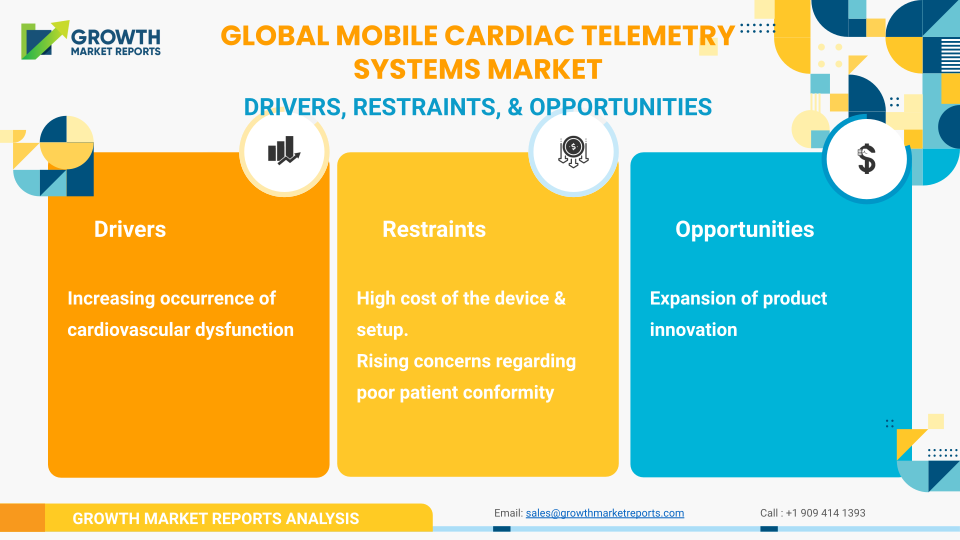
Despite these opportunities, the market faces several restraining factors that could impede growth. Regulatory challenges, particularly related to data security and patient privacy, remain a significant concern as the volume of sensitive health information transmitted and stored by mobile cardiac telemetry systems continues to increase. Compliance with stringent regulations such as HIPAA in the United States and GDPR in Europe requires ongoing investment in cybersecurity measures and robust data protection protocols. Furthermore, the high cost of advanced telemetry systems and limited reimbursement in certain regions may pose barriers to adoption, particularly in resource-constrained healthcare settings. Addressing these challenges will be critical to unlocking the full potential of the mobile cardiac telemetry systems market and ensuring its continued growth.
North America continues to dominate the Mobile Cardiac Telemetry Systems market, accounting for approximately USD 700 million of the global market size in 2024. This leadership is driven by the high prevalence of cardiovascular diseases, advanced healthcare infrastructure, and strong presence of leading market players. The region also benefits from favorable reimbursement policies and widespread adoption of telemedicine, which have facilitated the integration of mobile cardiac telemetry systems into routine clinical practice. The United States, in particular, represents the largest market within North America, owing to its robust healthcare ecosystem and early adoption of cutting-edge medical technologies.
Europe holds the second-largest share of the global market, with a market size of around USD 400 million in 2024. The region's growth is supported by increasing awareness of cardiovascular health, expanding geriatric population, and government initiatives aimed at promoting digital health solutions. Countries such as Germany, the United Kingdom, and France are at the forefront of adopting mobile cardiac telemetry systems, driven by strong healthcare systems and growing emphasis on preventive care. The European market is expected to grow at a steady CAGR of 10.5% during the forecast period, as healthcare providers continue to invest in advanced monitoring technologies.
The Asia Pacific region is poised for the fastest growth, with a projected CAGR of 14.2% from 2025 to 2033. The market size in Asia Pacific reached approximately USD 300 million in 2024, and is expected to witness significant expansion driven by rising healthcare expenditures, increasing prevalence of cardiovascular diseases, and rapid adoption of digital health technologies. Countries such as China, India, and Japan are leading the way, supported by government initiatives to improve healthcare access and infrastructure. Latin America and the Middle East & Africa, though currently smaller markets with sizes of USD 120 million and USD 80 million respectively, are also expected to experience steady growth as awareness and adoption of mobile cardiac telemetry systems increase.
The Mobile Cardiac Telemetry Systems market is characterized by intense competition and a dynamic landscape, with both established players and emerging entrants vying for market share. Leading companies are focused on continuous innovation, leveraging advancements in wireless technology, artificial intelligence, and data analytics to enhance the performance and functionality of their telemetry solutions. Strategic collaborations, mergers and acquisitions, and partnerships with healthcare providers and telemedicine platforms are common strategies employed by market players to expand their product portfolios and strengthen their market presence. The competitive environment is further intensified by the entry of technology firms and startups, which are bringing fresh perspectives and disruptive innovations to the market.
Product differentiation is a key focus area for competitors in the market, with companies striving to develop telemetry systems that offer superior accuracy, ease of use, and patient comfort. The integration of cloud-based data storage, real-time analytics, and mobile health applications has become a standard feature in many leading products, enabling seamless data transmission and remote access for healthcare providers. Additionally, companies are investing in research and development to introduce next-generation telemetry devices with enhanced battery life, miniaturized form factors, and advanced diagnostic capabilities. These efforts are aimed at meeting the evolving needs of healthcare providers and patients, as well as complying with stringent regulatory requirements.
The competitive landscape is also shaped by the increasing importance of regulatory compliance and data security. Companies are prioritizing the development of secure telemetry solutions that adhere to international standards for data protection, such as HIPAA and GDPR. This focus on security and compliance not only enhances patient trust but also positions companies favorably in markets with strict regulatory environments. Furthermore, the growing trend towards personalized medicine and patient-centric care is driving the development of customizable telemetry systems that can be tailored to individual patient needs and clinical workflows.
Major companies operating in the Mobile Cardiac Telemetry Systems market include BioTelemetry Inc. (now a part of Philips), iRhythm Technologies, Inc., Medtronic plc, Preventice Solutions (acquired by Boston Scientific), and Biotricity Inc. BioTelemetry, a pioneer in remote cardiac monitoring, offers a comprehensive suite of mobile cardiac telemetry solutions and has established a strong presence in North America and Europe. iRhythm Technologies is known for its innovative Zio patch-based system, which has gained widespread adoption for arrhythmia detection and management. Medtronic, a global leader in medical technology, offers a range of advanced telemetry systems that cater to diverse clinical needs. Preventice Solutions, now under the Boston Scientific umbrella, is recognized for its cutting-edge wireless monitoring devices and robust telehealth platform. Biotricity specializes in cloud-connected cardiac monitoring solutions, with a focus on enhancing diagnostic accuracy and patient engagement.
These companies are at the forefront of driving innovation and shaping the future of the Mobile Cardiac Telemetry Systems market. Their commitment to research and development, strategic partnerships, and regulatory compliance positions them well to capitalize on emerging opportunities and address the evolving needs of healthcare providers and patients. As the market continues to evolve, ongoing investment in technology, product differentiation, and customer-centric solutions will be critical to maintaining a competitive edge and achieving sustained growth.
The Mobile Cardiac Telemetry Systems market has been segmented on the basis of
Key players operating in the global mobile cardiac telemetry systems market include iRhythm Technologies, Inc.; ACS Diagnostics; Medicalgorithmics.com; BioTelemetry; Medicomp Systems; Preventice Solutions Inc.; ScottCare; Telerhythmics, LLC.; ZOLL Medical Corporation; and CorVitals. These companies adopt strategies such as mergers, acquisitions, partnerships, collaboration, and product launches to boot their market share. For instance,
AI and machine learning are being integrated into telemetry devices to enhance real-time analysis, improve diagnostic accuracy, reduce false positives, and streamline clinical workflows.
Key players include BioTelemetry Inc. (Philips), iRhythm Technologies, Medtronic plc, Preventice Solutions (Boston Scientific), Biotricity Inc., and others.
Opportunities include the integration of AI and machine learning, expansion into emerging markets, and increased telemedicine adoption. Challenges involve regulatory compliance, data security, and high device costs.
Hospitals, ambulatory surgical centers, homecare settings, and specialty clinics are the main end-users, with growing adoption in homecare due to the shift towards decentralized healthcare.
These systems are used for monitoring arrhythmia, atrial fibrillation, ischemic heart disease, and other cardiac conditions, with arrhythmia monitoring being the largest application segment.
North America holds the largest market share, followed by Europe and Asia Pacific. Asia Pacific is expected to witness the fastest growth due to rising healthcare investments and digital health adoption.
Wireless systems use technologies like Bluetooth, cellular networks, and Wi-Fi for real-time data transmission, offering greater mobility and convenience. Wired systems are mainly used in clinical settings for high-fidelity data but limit patient mobility.
The market primarily offers Patch-Based Systems and Lead-Based Systems. Patch-based systems are gaining popularity due to comfort and ease of use, while lead-based systems are valued for high signal fidelity.
Key drivers include the rising incidence of cardiovascular diseases, increased adoption of remote patient monitoring, technological advancements in wireless communication, and supportive reimbursement policies.
As of 2024, the global Mobile Cardiac Telemetry Systems market size reached USD 1.6 billion, with expectations to grow to USD 4.5 billion by 2033.