Segments - by Packaging Type (Bottles, Cartons, Pouches, Cans, Others), by Material (Plastic, Paperboard, Glass, Metal, Others), by Capacity (Less than 500ml, 500ml–1L, 1L–2L, Above 2L), by Distribution Channel (Supermarkets/Hypermarkets, Convenience Stores, Online Retail, Others), by End-User (Dairy Processing Companies, Retailers, Others)
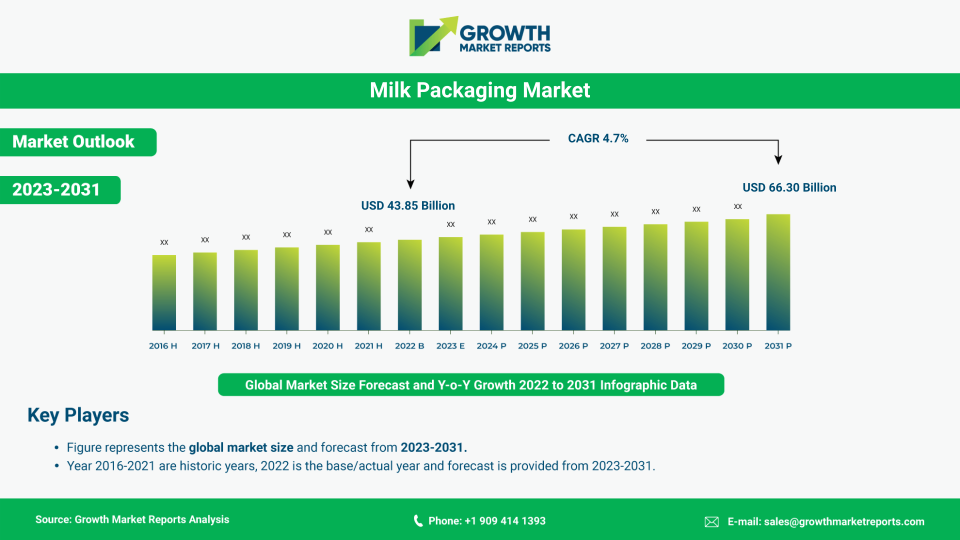
As per our latest research, the global milk packaging market size reached USD 47.2 billion in 2024, propelled by evolving consumer preferences and the increasing demand for safe, sustainable, and convenient packaging solutions. The market is advancing at a robust CAGR of 4.6% and is projected to attain a value of USD 70.3 billion by 2033. Consistent innovation in packaging materials and formats, alongside the growing emphasis on product shelf-life and environmental sustainability, are the primary growth drivers shaping the milk packaging industry worldwide.
The growth trajectory of the milk packaging market is significantly influenced by the rising global consumption of dairy products, particularly in emerging economies. Urbanization and the expansion of the middle class have led to increased per capita milk consumption, necessitating efficient and scalable packaging solutions. Additionally, consumers are becoming more conscious of food safety and hygiene, driving demand for packaging that offers superior protection against contamination and spoilage. The adoption of advanced packaging technologies, such as aseptic and intelligent packaging, is further enhancing the shelf-life and quality of milk products, reinforcing the market’s upward momentum. The integration of tamper-evident features and user-friendly designs also caters to evolving consumer needs, making milk packaging a focal point for both manufacturers and end-users.
Sustainability has emerged as a pivotal factor in the milk packaging market’s growth. With increasing awareness of environmental issues, both consumers and regulatory bodies are exerting pressure on packaging manufacturers to adopt eco-friendly materials and processes. The industry is witnessing a notable shift from traditional plastic packaging to biodegradable, recyclable, and renewable alternatives such as paperboard and bioplastics. Companies are investing in research and development to create innovative packaging solutions that reduce carbon footprints and align with circular economy principles. Moreover, the implementation of stringent regulations concerning packaging waste management and extended producer responsibility (EPR) is compelling manufacturers to rethink their strategies, thus accelerating the adoption of sustainable packaging solutions across the sector.
The proliferation of organized retail and e-commerce channels is another significant growth catalyst for the milk packaging market. The expansion of supermarkets, hypermarkets, and online retail platforms has not only increased the accessibility of packaged milk but also elevated consumer expectations regarding packaging aesthetics, convenience, and functionality. Retailers are increasingly demanding differentiated packaging formats that enhance brand visibility, improve shelf appeal, and facilitate efficient logistics. The rise of direct-to-consumer (DTC) models in the dairy sector is further driving innovation in packaging designs, with a focus on minimizing product damage during transit and ensuring optimal freshness upon delivery. These factors collectively contribute to the robust growth outlook for the global milk packaging market.
From a regional perspective, Asia Pacific dominates the milk packaging market, accounting for the largest share in 2024, followed by North America and Europe. The rapid urbanization, rising disposable incomes, and expanding dairy industry in countries such as China and India are fueling market growth in the Asia Pacific region. North America and Europe are characterized by high penetration of sustainable packaging solutions and stringent regulatory frameworks, while Latin America and the Middle East & Africa are experiencing steady growth due to increasing dairy consumption and investments in modern retail infrastructure. Each region presents unique opportunities and challenges, shaping the competitive landscape and innovation trajectory of the global milk packaging industry.
The milk packaging market is segmented by packaging type into bottles, cartons, pouches, cans, and others, each catering to distinct consumer and industry requirements. Bottles, traditionally made from glass or plastic, continue to be a popular choice due to their durability, reusability, and convenience. The dominance of plastic bottles is particularly evident in regions with high demand for single-serve and on-the-go milk products. However, the environmental impact of plastic waste is prompting manufacturers to explore alternatives such as biodegradable plastics and glass. Glass bottles, while offering premium appeal and recyclability, face challenges related to higher costs and fragility during transportation. The shift towards sustainable bottle materials and designs is expected to reshape this segment in the coming years.
Cartons represent a significant share of the milk packaging market, driven by their lightweight, stackable, and eco-friendly attributes. Cartons made from paperboard and lined with thin layers of plastic or aluminum offer excellent barrier properties, extending the shelf-life of milk and reducing the risk of spoilage. The aseptic carton technology, which allows milk to be stored at ambient temperatures without refrigeration, is gaining traction in both developed and emerging markets. This technology not only enhances supply chain efficiency but also meets the growing demand for long-life milk products in regions with limited cold chain infrastructure. The increasing adoption of renewable and recyclable carton materials further strengthens the sustainability profile of this packaging type.
Pouches are gaining popularity in the milk packaging market due to their cost-effectiveness, lightweight nature, and reduced material usage. Flexible pouches, often made from multi-layered plastics, are widely used for packaging fresh and pasteurized milk, particularly in developing countries where affordability is a key consideration. Pouches offer advantages such as easy storage, minimal packaging waste, and lower transportation costs, making them an attractive option for both manufacturers and consumers. However, concerns regarding the recyclability of multi-layered plastic pouches are prompting industry players to invest in the development of mono-material and biodegradable pouch solutions that align with evolving regulatory and consumer expectations.
Cans, though less prevalent compared to other packaging types, are utilized for specialized milk products such as condensed and evaporated milk. Metal cans provide superior protection against light, oxygen, and contaminants, ensuring product stability over extended periods. The high recyclability of metal cans aligns with sustainability goals, but their higher production costs and weight often limit their use to niche applications. The "others" segment encompasses innovative packaging formats such as bag-in-box systems and tetra packs, which are increasingly being adopted for bulk and institutional milk supply. The ongoing diversification of packaging types reflects the dynamic nature of the milk packaging market and the continuous pursuit of solutions that balance functionality, cost, and sustainability.
| Attributes | Details |
| Report Title | Milk Packaging Market Research Report 2033 |
| By Packaging Type | Bottles, Cartons, Pouches, Cans, Others |
| By Material | Plastic, Paperboard, Glass, Metal, Others |
| By Capacity | Less than 500ml, 500ml–1L, 1L–2L, Above 2L |
| By Distribution Channel | Supermarkets/Hypermarkets, Convenience Stores, Online Retail, Others |
| By End-User | Dairy Processing Companies, Retailers, Others |
| Regions Covered | North America, Europe, APAC, Latin America, MEA |
| Base Year | 2024 |
| Historic Data | 2018-2023 |
| Forecast Period | 2025-2033 |
| Number of Pages | 267 |
| Number of Tables & Figures | 307 |
| Customization Available | Yes, the report can be customized as per your need. |
Material selection plays a pivotal role in the milk packaging market, influencing not only the product’s safety and shelf-life but also its environmental footprint. Plastic remains the most widely used material, favored for its versatility, lightweight, and cost-effectiveness. High-density polyethylene (HDPE) and polyethylene terephthalate (PET) are the predominant plastic resins used in milk bottles and pouches, offering excellent barrier properties and ease of molding into various shapes and sizes. However, the growing scrutiny of plastic waste and its environmental impact is accelerating the shift towards recyclable and biodegradable plastics. Manufacturers are increasingly incorporating recycled content and exploring bio-based plastics derived from renewable sources to address sustainability concerns and comply with evolving regulations.
Paperboard is gaining traction as a preferred material for milk cartons, particularly in regions with strong consumer demand for eco-friendly packaging. Paperboard offers inherent recyclability, biodegradability, and a lower carbon footprint compared to conventional plastics. The use of renewable raw materials and the development of barrier coatings that enhance moisture and oxygen resistance without compromising recyclability are key trends shaping this segment. Innovations such as water-based coatings and plant-based laminates are further expanding the application scope of paperboard in milk packaging, enabling manufacturers to meet stringent sustainability targets while maintaining product integrity and shelf-life.
Glass, one of the oldest materials used for milk packaging, is valued for its non-reactivity, inertness, and ability to preserve the natural taste and quality of milk. Glass bottles are particularly popular in premium and organic milk segments, where product purity and brand differentiation are paramount. Despite its advantages, glass faces challenges related to higher costs, weight, and breakage risk, which can impact logistics and consumer convenience. The recyclability of glass and its compatibility with closed-loop recycling systems make it an attractive option from a sustainability perspective, but its market share remains limited by practical considerations and the growing preference for lighter, more versatile materials.
Metal, primarily in the form of aluminum and tinplate, is used for specialized milk packaging applications such as cans and closures. Metal packaging offers robust protection against external factors, ensuring product stability and extending shelf-life. The high recyclability of metals and the growing emphasis on circular economy principles are driving renewed interest in metal-based packaging solutions. However, the higher production costs and energy consumption associated with metal packaging, coupled with the shift towards lightweight alternatives, constrain its widespread adoption. The "others" material segment includes innovative options such as bioplastics, composite materials, and edible packaging, which are being explored to address specific functional and sustainability requirements in the milk packaging market.
The milk packaging market is segmented by capacity into less than 500ml, 500ml–1L, 1L–2L, and above 2L, each catering to different consumption patterns and distribution channels. Packaging formats with capacities of less than 500ml are primarily targeted at single-serve and on-the-go consumption, which is witnessing strong growth in urban areas and among younger demographics. The convenience and portability of small-sized packages make them ideal for busy lifestyles, school lunches, and travel, driving demand for innovative packaging designs that enhance user experience and minimize product wastage. Manufacturers are focusing on developing leak-proof, resealable, and easy-to-open packaging solutions to cater to this segment’s unique requirements.
The 500ml–1L capacity segment is widely preferred for household consumption, striking a balance between convenience and value for money. This segment accounts for a significant share of the milk packaging market, particularly in regions where daily or weekly milk purchases are the norm. Packaging solutions in this capacity range are designed to offer optimal freshness, ease of storage, and efficient pouring, with features such as tamper-evident seals and ergonomic handles gaining popularity. The growing trend of health-conscious consumers opting for fortified and specialty milk products is further driving innovation in this segment, with manufacturers offering differentiated packaging to enhance brand appeal and product functionality.
Packaging formats with capacities of 1L–2L are commonly used for family-sized or bulk purchases, catering to larger households and institutional customers such as schools, hospitals, and hotels. The demand for larger pack sizes is particularly strong in regions with high per capita milk consumption and well-developed cold chain infrastructure. Manufacturers are focusing on enhancing the durability, stackability, and transport efficiency of packaging in this segment, while also exploring sustainable materials and lightweight designs to reduce costs and environmental impact. The integration of smart packaging features, such as QR codes for traceability and freshness indicators, is gaining traction in this segment, offering added value to consumers and supply chain partners.
The above 2L segment is primarily targeted at bulk buyers, food service providers, and dairy processing companies that require large volumes of milk for commercial applications. Packaging solutions in this segment are designed to ensure product integrity during extended storage and transportation, with a focus on minimizing leakage, contamination, and spoilage. The adoption of bag-in-box, tetra packs, and other innovative bulk packaging formats is increasing, driven by the need for cost-effective, space-saving, and environmentally friendly solutions. Manufacturers are also investing in automation and advanced filling technologies to enhance the efficiency and scalability of bulk milk packaging operations, supporting the growth of this segment in both developed and emerging markets.
Distribution channels play a crucial role in shaping the dynamics of the milk packaging market, influencing product accessibility, pricing, and consumer preferences. Supermarkets and hypermarkets represent the dominant distribution channel, accounting for a significant share of packaged milk sales globally. These retail formats offer consumers a wide variety of milk products in different packaging types and sizes, coupled with the convenience of one-stop shopping. The emphasis on attractive packaging designs, clear labeling, and product differentiation is particularly pronounced in this channel, as brands compete for shelf space and consumer attention. The expansion of modern retail infrastructure in emerging economies is further boosting the demand for innovative and sustainable milk packaging solutions.
Convenience stores are another important distribution channel, catering to the growing demand for ready-to-consume and single-serve milk products. The proximity of convenience stores to residential and commercial areas makes them a preferred choice for impulse purchases and last-minute shopping. Packaging formats that offer portability, resealability, and extended shelf-life are highly sought after in this channel, driving manufacturers to develop solutions that align with the fast-paced lifestyles of urban consumers. The increasing penetration of convenience stores in both developed and developing regions is expected to sustain the growth of this distribution channel in the coming years.
Online retail is rapidly emerging as a transformative distribution channel in the milk packaging market, fueled by the proliferation of e-commerce platforms and changing consumer shopping behaviors. The convenience of home delivery, access to a wide range of products, and the ability to compare prices and read reviews are key factors driving the growth of online milk sales. Packaging solutions that ensure product safety, freshness, and minimal damage during transit are gaining prominence in this channel, prompting manufacturers to invest in robust, tamper-proof, and temperature-controlled packaging designs. The rise of direct-to-consumer (DTC) models and subscription-based milk delivery services is further accelerating innovation in online milk packaging, with a focus on enhancing consumer experience and brand loyalty.
The "others" distribution channel segment includes traditional grocery stores, specialty retailers, and institutional buyers such as schools, hospitals, and food service providers. While these channels account for a smaller share of the market, they play a vital role in reaching niche consumer segments and meeting specific functional requirements. Packaging solutions tailored for institutional and bulk buyers emphasize durability, cost-effectiveness, and ease of handling, while specialty retailers often demand premium and differentiated packaging to cater to discerning customers. The diversification of distribution channels is driving manufacturers to adopt a multi-channel approach, optimizing packaging designs and supply chain strategies to maximize market reach and customer satisfaction.
The end-user landscape of the milk packaging market is diverse, encompassing dairy processing companies, retailers, and other stakeholders such as food service providers and institutional buyers. Dairy processing companies represent the primary end-users, as they are responsible for converting raw milk into packaged products for consumer and commercial use. These companies demand packaging solutions that ensure product safety, extend shelf-life, and comply with regulatory standards. The adoption of automated packaging lines, aseptic technologies, and smart packaging features is enabling dairy processors to enhance operational efficiency, reduce costs, and differentiate their products in a competitive market. The focus on sustainability and traceability is prompting dairy companies to collaborate with packaging suppliers to develop innovative and eco-friendly solutions.
Retailers, including supermarkets, hypermarkets, convenience stores, and specialty outlets, are key end-users of milk packaging, as they serve as the primary interface between manufacturers and consumers. Retailers prioritize packaging formats that enhance product visibility, facilitate efficient shelf management, and minimize shrinkage and wastage. The growing importance of private label milk products is driving retailers to invest in customized packaging designs that reinforce brand identity and meet specific consumer preferences. The adoption of digital technologies, such as electronic shelf labels and inventory management systems, is further influencing packaging requirements, with an emphasis on barcoding, QR codes, and tamper-evident features.
The "others" end-user segment includes food service providers, institutional buyers, and industrial users who require bulk quantities of milk for various applications. These end-users prioritize packaging solutions that offer durability, cost-effectiveness, and ease of handling during storage and transportation. The increasing demand for value-added and specialty milk products in the food service sector is driving the adoption of customized packaging formats that cater to specific functional and branding needs. The integration of smart and connected packaging technologies is enabling institutional buyers to monitor product quality, track inventory, and optimize supply chain operations, supporting the growth of this segment.
The evolving needs of different end-users are driving continuous innovation in the milk packaging market, with manufacturers focusing on developing tailored solutions that address specific functional, regulatory, and sustainability requirements. Collaboration between packaging suppliers, dairy processors, retailers, and other stakeholders is critical to driving value creation and ensuring the long-term competitiveness of the industry. The increasing emphasis on consumer-centric packaging, digitalization, and circular economy principles is expected to shape the future trajectory of the milk packaging market, creating new opportunities for growth and differentiation.
The milk packaging market presents a wealth of opportunities driven by technological advancements, changing consumer preferences, and the growing emphasis on sustainability. The adoption of smart packaging technologies, such as QR codes, RFID tags, and freshness indicators, is enabling manufacturers to enhance product traceability, improve supply chain efficiency, and deliver value-added services to consumers. The integration of digital platforms and data analytics is facilitating real-time monitoring of packaging performance, enabling proactive quality control and predictive maintenance. The shift towards personalized and interactive packaging experiences is creating new avenues for brand engagement and differentiation, particularly in the context of direct-to-consumer (DTC) models and online retail channels.
Sustainability remains a central opportunity for the milk packaging market, as manufacturers and brands strive to reduce their environmental footprint and align with evolving regulatory and consumer expectations. The development of recyclable, biodegradable, and renewable packaging materials is gaining momentum, supported by investments in research and development and collaboration across the value chain. The implementation of circular economy principles, such as closed-loop recycling and extended producer responsibility (EPR), is driving innovation in packaging design, material selection, and waste management. The growing demand for plant-based and organic milk products is further fueling the adoption of eco-friendly packaging solutions, creating new growth opportunities for market participants.
Despite the promising growth outlook, the milk packaging market faces several restraining factors that could impact its trajectory. The volatility in raw material prices, particularly for plastics and metals, poses challenges for manufacturers in terms of cost management and pricing strategies. The increasing stringency of regulations related to food safety, packaging waste, and environmental impact is adding complexity and compliance costs to packaging operations. Supply chain disruptions, labor shortages, and logistical challenges, particularly in the wake of global events such as the COVID-19 pandemic, have highlighted the need for greater resilience and agility in packaging supply chains. Addressing these challenges will require continued investment in innovation, collaboration, and risk management across the industry.
Asia Pacific leads the global milk packaging market, accounting for the largest share with a market value of USD 18.7 billion in 2024. The region’s dominance is underpinned by rapid urbanization, rising disposable incomes, and the expanding dairy industry in countries such as China, India, and Japan. The increasing adoption of modern retail formats and the growing preference for packaged and branded milk products are driving demand for innovative and sustainable packaging solutions. The Asia Pacific market is projected to grow at a CAGR of 5.3% through 2033, outpacing other regions and creating significant opportunities for both local and international packaging manufacturers.
North America is the second-largest market for milk packaging, with a market size of USD 11.3 billion in 2024. The region is characterized by high consumer awareness of food safety and sustainability, as well as a strong regulatory framework governing packaging materials and waste management. The widespread adoption of recyclable and biodegradable packaging solutions, coupled with the increasing penetration of online retail and direct-to-consumer (DTC) models, is driving innovation and growth in the North American market. The focus on premiumization, product differentiation, and digitalization is further shaping the competitive landscape, with manufacturers investing in advanced packaging technologies and smart labeling solutions.
Europe holds a significant share of the global milk packaging market, valued at USD 10.6 billion in 2024. The region is at the forefront of sustainability initiatives, with stringent regulations and ambitious targets for packaging waste reduction and recycling. The adoption of eco-friendly materials, circular economy practices, and digital packaging solutions is driving market growth and differentiation in Europe. Latin America and the Middle East & Africa are experiencing steady growth, with market sizes of USD 4.1 billion and USD 2.5 billion respectively in 2024. These regions are benefiting from rising dairy consumption, investments in modern retail infrastructure, and increasing awareness of food safety and hygiene. However, challenges related to supply chain logistics, regulatory compliance, and affordability continue to shape the market dynamics in these regions.
The milk packaging market is highly competitive, with a diverse mix of global, regional, and local players vying for market share through product innovation, sustainability initiatives, and strategic partnerships. The competitive landscape is characterized by continuous investment in research and development, with companies focusing on the development of advanced materials, smart packaging technologies, and automation solutions to enhance operational efficiency and product differentiation. The increasing emphasis on sustainability is prompting market leaders to collaborate with stakeholders across the value chain, including dairy processors, retailers, and regulatory bodies, to develop eco-friendly packaging solutions and drive industry-wide transformation.
Strategic mergers, acquisitions, and joint ventures are common in the milk packaging market, as companies seek to expand their product portfolios, enter new markets, and strengthen their technological capabilities. The integration of digital technologies, such as IoT-enabled packaging and data analytics, is enabling market participants to deliver enhanced value to customers and gain a competitive edge. The rise of private label brands and direct-to-consumer (DTC) models is further intensifying competition, with retailers and dairy companies demanding customized and differentiated packaging solutions that reinforce brand identity and meet specific consumer preferences.
The competitive dynamics of the milk packaging market are also shaped by regulatory developments, consumer trends, and technological advancements. Companies that can effectively navigate the evolving regulatory landscape, anticipate consumer needs, and leverage emerging technologies are well-positioned to capture growth opportunities and sustain long-term competitiveness. The focus on circular economy principles, closed-loop recycling, and extended producer responsibility (EPR) is expected to drive continued innovation and collaboration across the industry, creating new avenues for value creation and differentiation.
Key players in the global milk packaging market include Tetra Pak International S.A., SIG Combibloc Group AG, Amcor plc, Elopak ASA, Ball Corporation, Crown Holdings Inc., Evergreen Packaging LLC, International Paper Company, Berry Global Group Inc., and Sealed Air Corporation. Tetra Pak is renowned for its leadership in aseptic carton packaging and commitment to sustainability, while SIG Combibloc is recognized for its innovative, eco-friendly carton solutions. Amcor and Berry Global are leading providers of flexible and rigid plastic packaging, with a strong focus on recycling and circular economy initiatives. Elopak and Evergreen Packaging specialize in renewable and recyclable paperboard packaging, catering to the growing demand for sustainable solutions in developed markets. Ball Corporation and Crown Holdings are prominent players in metal packaging, offering high-recyclability solutions for niche applications.
These companies are investing heavily in research and development, strategic partnerships, and capacity expansion to maintain their competitive edge and respond to evolving market dynamics. The increasing focus on digitalization, smart packaging, and consumer engagement is expected to drive further innovation and differentiation in the milk packaging market. As the industry continues to evolve, collaboration across the value chain and a commitment to sustainability will be critical success factors for market participants seeking to capitalize on emerging opportunities and address the challenges of a rapidly changing global landscape.
The Milk Packaging market has been segmented on the basis of
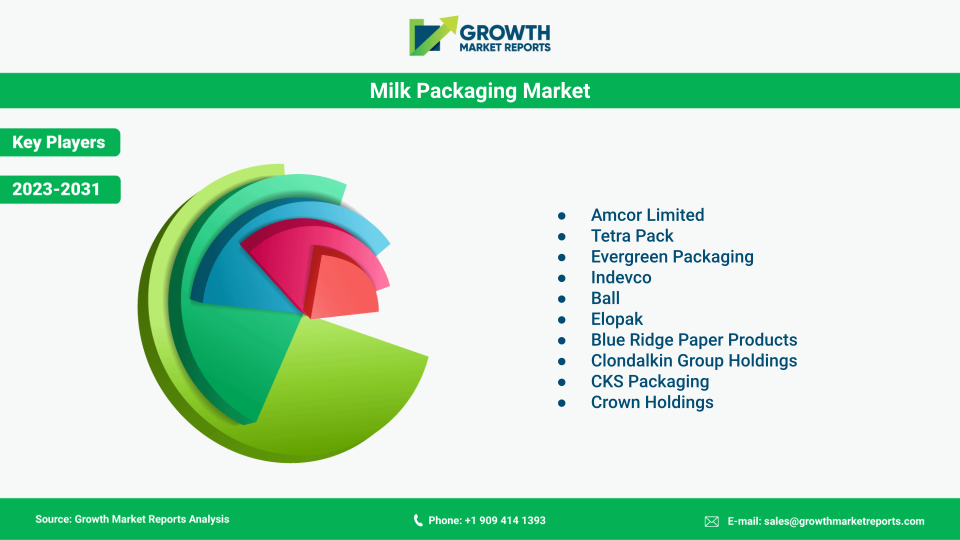
Key players in the milk packaging market are Amcor Limited, Tetra Pack, Evergreen Packaging, Indevco, Ball, Elopak, Blue Ridge Paper Products, Clondalkin Group Holdings, CKS Packaging, Crown Holdings, Essel Propack, Consolidated Container, Fabri-Kal, Exopack Holdings, Global Closure Systems and Graham Packaging. These players engage in mergers & acquisitions, collaborations, agreements, and partnerships to strengthen their geographical presence.
Trends include smart packaging technologies (QR codes, freshness indicators), aseptic and intelligent packaging, tamper-evident features, and the adoption of circular economy principles such as closed-loop recycling and extended producer responsibility (EPR).
Challenges include raw material price volatility, stringent regulations on food safety and packaging waste, supply chain disruptions, and the need for continuous innovation to meet sustainability goals.
Major players include Tetra Pak International S.A., SIG Combibloc Group AG, Amcor plc, Elopak ASA, Ball Corporation, Crown Holdings Inc., Evergreen Packaging LLC, International Paper Company, Berry Global Group Inc., and Sealed Air Corporation.
Supermarkets/hypermarkets remain the leading channels, but online retail and direct-to-consumer (DTC) models are rapidly growing, driving demand for packaging that ensures safety and freshness during delivery.
Common materials include plastic (HDPE, PET), paperboard, glass, metal (aluminum, tinplate), and emerging options like bioplastics and composite materials.
Sustainability is a major trend, with manufacturers shifting from traditional plastics to biodegradable, recyclable, and renewable materials like paperboard and bioplastics. Regulatory pressures and consumer demand are accelerating this shift.
The main packaging types are bottles (plastic and glass), cartons, pouches, cans, and innovative formats like bag-in-box and tetra packs. Cartons and pouches are gaining popularity due to their eco-friendly and cost-effective attributes.
Asia Pacific dominates the market, followed by North America and Europe. Rapid urbanization and expanding dairy industries in countries like China and India are fueling growth in Asia Pacific.
Key growth drivers include rising global dairy consumption, evolving consumer preferences for safe and sustainable packaging, innovation in packaging materials and formats, and increased focus on product shelf-life and environmental sustainability.
The global milk packaging market reached USD 47.2 billion in 2024 and is projected to grow at a CAGR of 4.6%, reaching USD 70.3 billion by 2033.