Segments - by Product Type (Hydraulic Actuation Systems, Electric Actuation Systems, Pneumatic Actuation Systems, Others), by Application (Flight Control Systems, Landing Gear, Weapon Systems, Others), by Aircraft Type (Fixed-Wing, Rotary-Wing, Unmanned Aerial Vehicles), by Component (Actuators, Valves, Power Electronics, Sensors, Others)
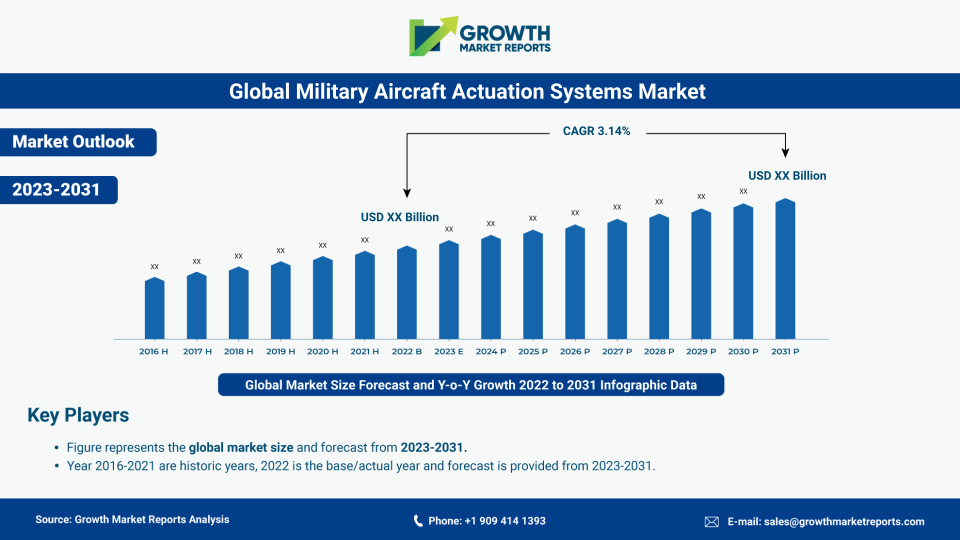
According to our latest research, the global military aircraft actuation systems market size reached USD 4.87 billion in 2024, reflecting robust demand and technological advancements across defense aviation sectors. The market is set to expand at a CAGR of 5.4% from 2025 to 2033, with projections indicating a value of USD 7.75 billion by 2033. This growth is primarily fueled by increasing defense budgets, modernization initiatives, and the integration of advanced actuation technologies in next-generation military aircraft.
The primary growth driver in the military aircraft actuation systems market is the continuous modernization of military fleets worldwide. Nations are investing heavily in upgrading their aerial defense capabilities, focusing on both manned and unmanned platforms. The integration of advanced actuation systems enhances aircraft maneuverability, reliability, and mission effectiveness, which is crucial in modern warfare scenarios. Additionally, the emergence of stealth and multirole combat aircraft has necessitated the adoption of more sophisticated, lightweight, and efficient actuation solutions. The need for improved flight control and weapon deployment accuracy further accelerates the adoption of cutting-edge actuation technologies, especially electric and hybrid systems.
Another significant factor propelling the market is the growing emphasis on unmanned aerial vehicles (UAVs) for military applications. UAVs are increasingly utilized for intelligence, surveillance, reconnaissance, and combat missions, requiring compact, lightweight, and highly reliable actuation systems. The surge in UAV procurement and development programs across major defense markets has led to a corresponding rise in demand for advanced actuation components. Furthermore, the shift towards electric actuation systems, owing to their enhanced efficiency, lower maintenance requirements, and integration flexibility, is shaping the future trajectory of the market. This transition is also aligned with the broader trend of electrification in aviation, aimed at reducing operational costs and environmental impact.
Technological advancements are playing a pivotal role in shaping the military aircraft actuation systems market. Innovations such as smart actuators, real-time health monitoring, and the integration of artificial intelligence for predictive maintenance are being increasingly adopted. These advancements not only improve the performance and reliability of actuation systems but also contribute to reducing the overall lifecycle cost of military aircraft. The incorporation of advanced materials and miniaturization techniques has enabled the development of lighter and more robust actuation solutions, further enhancing aircraft agility and payload capacity. As military operations become more complex and demanding, the need for highly responsive and durable actuation systems is expected to intensify, driving sustained market growth.
Aviation Actuator Systems play a critical role in the performance and safety of military aircraft. These systems are responsible for controlling various aircraft functions, including flight control surfaces, landing gear, and weapon systems. As the demand for more efficient and reliable actuation solutions grows, the focus on developing advanced Aviation Actuator Systems has intensified. These systems are increasingly being integrated with smart technologies, enabling real-time monitoring and predictive maintenance, which enhances operational efficiency and reduces downtime. The trend towards electrification in aviation is also influencing the design and implementation of these systems, as electric actuation offers numerous benefits such as reduced weight and maintenance costs.
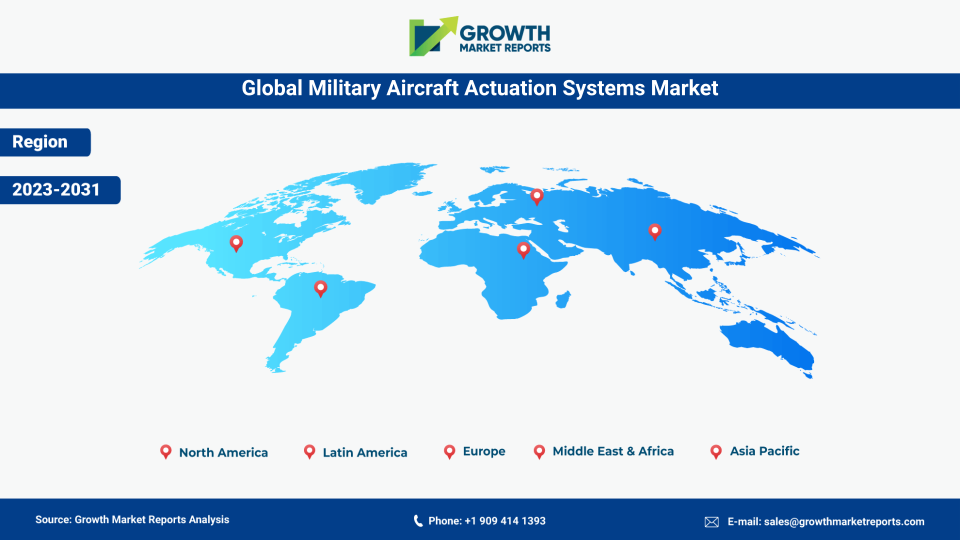
Regionally, North America continues to dominate the military aircraft actuation systems market, supported by substantial defense spending and the presence of leading aerospace and defense manufacturers. However, the Asia Pacific region is witnessing the fastest growth, driven by increased military modernization programs in countries such as China, India, and Japan. Europe also remains a significant market, with ongoing investments in next-generation fighter aircraft and collaborative defense projects. The Middle East and Latin America are emerging as promising markets, fueled by rising security concerns and efforts to bolster air defense capabilities. These regional dynamics underscore the global nature of the market and the diverse opportunities for stakeholders across different geographies.
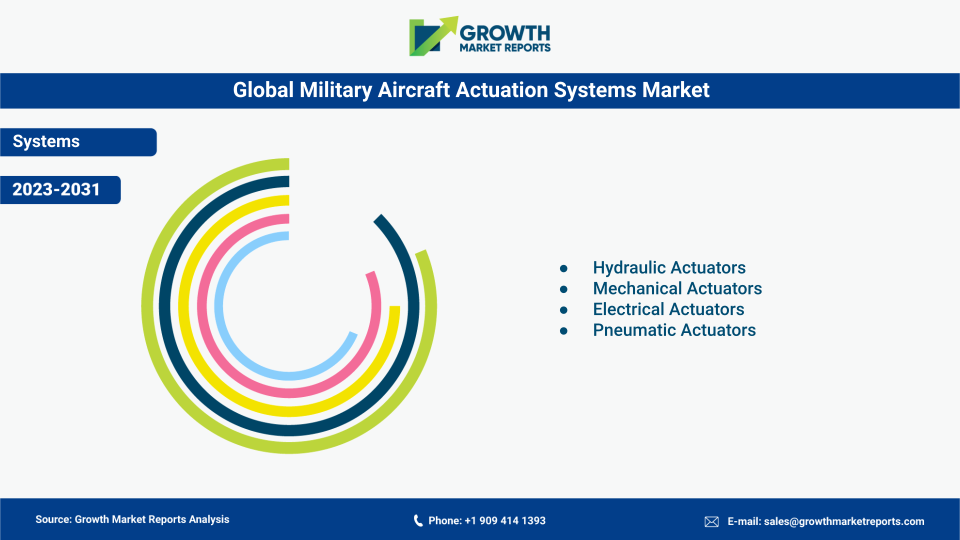
The military aircraft actuation systems market is segmented by product type into hydraulic actuation systems, electric actuation systems, pneumatic actuation systems, and others. Hydraulic actuation systems currently account for the largest market share, owing to their proven reliability and ability to deliver high force outputs required for critical flight control and landing gear operations. Their widespread use in both legacy and modern military aircraft is attributed to their robustness and established supply chains. However, hydraulic systems are often associated with higher maintenance needs and increased weight, prompting ongoing research into more efficient alternatives.
Electric actuation systems are gaining significant traction, supported by advancements in power electronics and motor technologies. These systems offer numerous advantages, including reduced weight, improved energy efficiency, and lower maintenance requirements compared to traditional hydraulic solutions. The growing adoption of electric actuation systems is particularly evident in new-generation military aircraft and UAVs, where weight reduction and system integration are paramount. The shift towards more-electric aircraft (MEA) architectures is expected to further accelerate the penetration of electric actuation systems in the coming years.
Pneumatic actuation systems, while less prevalent than hydraulic and electric counterparts, continue to find application in specific military aircraft subsystems where rapid response and simplicity are critical. These systems are valued for their lightweight design and ease of installation, making them suitable for secondary control surfaces and non-critical functions. However, their limited force output and susceptibility to pressure variations restrict their use in high-performance combat aircraft. Despite these limitations, ongoing innovations in pneumatic technology aim to enhance their reliability and operational envelope.
The "others" category in product type analysis encompasses hybrid actuation systems and emerging technologies that combine the strengths of different actuation principles. Hybrid systems are being explored to achieve optimal performance across a range of operational scenarios, balancing the trade-offs between force, weight, and energy consumption. As military aircraft designs become more complex, the demand for versatile and adaptive actuation solutions is expected to rise. This segment is also likely to benefit from advancements in materials science and digital control technologies, enabling smarter and more responsive actuation architectures.
| Attributes | Details |
| Report Title | Military Aircraft Actuation Systems Market Research Report 2033 |
| By Product Type | Hydraulic Actuation Systems, Electric Actuation Systems, Pneumatic Actuation Systems, Others |
| By Application | Flight Control Systems, Landing Gear, Weapon Systems, Others |
| By Aircraft Type | Fixed-Wing, Rotary-Wing, Unmanned Aerial Vehicles |
| By Component | Actuators, Valves, Power Electronics, Sensors, Others |
| Regions Covered | North America, Europe, APAC, Latin America, MEA |
| Base Year | 2024 |
| Historic Data | 2018-2023 |
| Forecast Period | 2025-2033 |
| Number of Pages | 261 |
| Number of Tables & Figures | 306 |
| Customization Available | Yes, the report can be customized as per your need. |
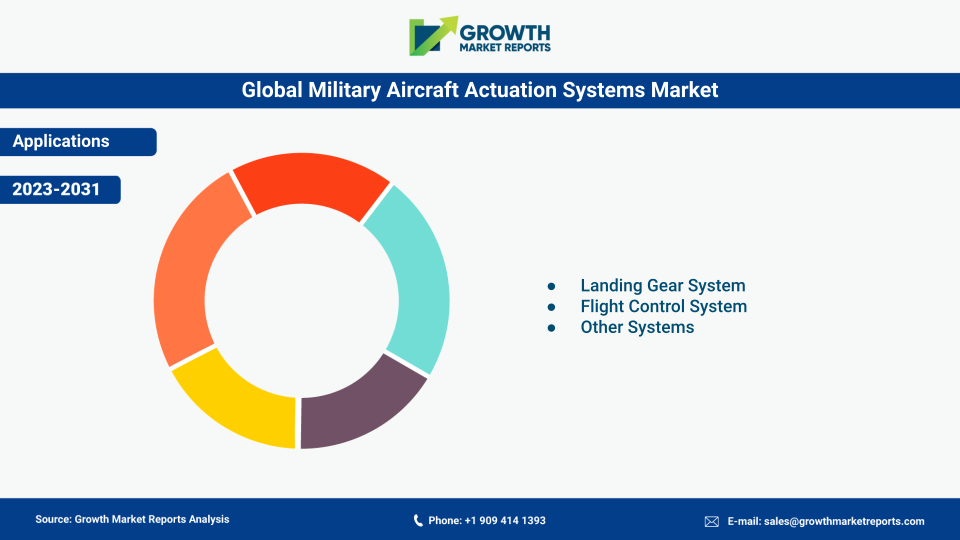
By application, the military aircraft actuation systems market is divided into flight control systems, landing gear, weapon systems, and others. Flight control systems represent the largest application segment, as actuation systems are critical for managing the aerodynamic surfaces that govern aircraft stability and maneuverability. The evolution of fly-by-wire and fly-by-light systems has heightened the importance of precise and reliable actuation, particularly in advanced fighter jets and UAVs. The need for rapid response and fail-safe operation in combat environments underscores the significance of high-performance actuators in this segment.
Landing gear actuation is another vital application, requiring robust and durable systems capable of withstanding extreme loads during takeoff, landing, and taxiing. The trend towards lighter and more compact actuation solutions is particularly pronounced in this segment, as military aircraft manufacturers seek to optimize weight distribution and enhance operational flexibility. Electric and hybrid actuation systems are increasingly being adopted in landing gear applications, offering improved energy management and simplified maintenance compared to traditional hydraulic setups.
Weapon systems represent a growing application area for military aircraft actuation systems, driven by the need for precise control and rapid deployment of munitions. Actuators are employed in a variety of weapon subsystems, including missile launchers, bomb bays, and gun turrets. The integration of advanced actuation technologies enhances the effectiveness and reliability of weapon systems, enabling faster response times and greater targeting accuracy. As military missions become more complex and demand multi-role capabilities, the role of actuation systems in weapon deployment is expected to expand further.
The "others" application segment includes actuation systems used in auxiliary systems such as cargo doors, refueling booms, and avionics cooling systems. These applications, while not as prominent as flight control or weapon systems, are essential for the safe and efficient operation of military aircraft. The ongoing trend towards modular and integrated actuation solutions is driving innovation in this segment, with a focus on improving system interoperability and reducing maintenance overhead. The adoption of smart sensors and health monitoring technologies is also enhancing the reliability and longevity of actuation systems across all application areas.
The military aircraft actuation systems market is categorized by aircraft type into fixed-wing, rotary-wing, and unmanned aerial vehicles (UAVs). Fixed-wing aircraft, including fighter jets, bombers, and transport planes, constitute the largest segment due to their extensive use in air superiority, strategic bombing, and logistical support missions. These platforms require a diverse range of actuation systems for flight control, landing gear, and weapon deployment, driving substantial demand for advanced and reliable actuation solutions. The ongoing modernization of fixed-wing fleets, particularly in developed markets, continues to support steady growth in this segment.
Rotary-wing aircraft, such as helicopters and tiltrotors, represent a significant portion of the market, with unique actuation requirements for rotor control, tail fins, and mission-specific equipment. The complexity of rotary-wing flight dynamics necessitates highly responsive and durable actuation systems capable of withstanding variable loads and harsh operational environments. Recent advancements in lightweight and compact actuators are enhancing the performance and versatility of military helicopters, supporting their deployment in a wide range of combat and support roles. The increasing use of rotary-wing platforms for special operations and search-and-rescue missions further boosts demand in this segment.
Unmanned aerial vehicles (UAVs) are experiencing the fastest growth among all aircraft types, driven by their expanding role in modern military operations. UAVs require compact, lightweight, and highly reliable actuation systems to support their diverse mission profiles, which range from surveillance and reconnaissance to precision strike capabilities. The proliferation of UAV programs across both established and emerging defense markets is fueling significant investment in actuation technology tailored for unmanned platforms. The trend towards miniaturization and integration of smart sensors is particularly pronounced in this segment, enabling enhanced autonomy and operational efficiency.
The growing emphasis on multi-role and modular aircraft designs is influencing actuation system requirements across all aircraft types. Manufacturers are increasingly focused on developing standardized and scalable actuation solutions that can be adapted to various platforms, simplifying logistics and maintenance. The adoption of digital control and health monitoring technologies is further enhancing the performance and reliability of actuation systems, supporting the evolving needs of military aviation. As next-generation aircraft enter service, the demand for innovative and adaptable actuation solutions is expected to remain strong across the fixed-wing, rotary-wing, and UAV segments.
The component landscape of the military aircraft actuation systems market encompasses actuators, valves, power electronics, sensors, and others. Actuators form the core of any actuation system, converting electrical, hydraulic, or pneumatic energy into mechanical motion. The demand for high-performance actuators is driven by the need for precise control, rapid response, and durability in critical flight and weapon systems. Innovations in actuator design, such as the use of advanced materials and miniaturization techniques, are enabling the development of lighter and more efficient solutions that enhance overall aircraft performance.
Valves play a crucial role in hydraulic and pneumatic actuation systems, regulating the flow and pressure of fluids or gases to ensure optimal system performance. The ongoing shift towards electric actuation is influencing valve design, with a growing emphasis on integrating smart control features and real-time monitoring capabilities. The reliability and responsiveness of valves are critical for mission success, particularly in high-stress combat environments. Manufacturers are investing in advanced manufacturing techniques and materials to improve valve durability and reduce maintenance requirements.
Power electronics are becoming increasingly important in the context of electric actuation systems, enabling precise control of actuators and other subsystems. Advances in semiconductor technology and digital control architectures are driving the development of more efficient and compact power electronics modules. These components are essential for managing energy distribution, optimizing system performance, and supporting the integration of advanced features such as health monitoring and predictive maintenance. The trend towards more-electric aircraft is expected to further elevate the significance of power electronics in military actuation systems.
Sensors are integral to modern actuation systems, providing real-time feedback on position, force, temperature, and other critical parameters. The integration of smart sensors enables enhanced system diagnostics, predictive maintenance, and improved operational safety. As military aircraft become more sophisticated, the demand for advanced sensor solutions that can operate reliably in harsh environments is on the rise. The adoption of sensor fusion and data analytics technologies is further enhancing the value proposition of sensors within actuation systems, supporting the broader trend towards digitally enabled and intelligent aircraft platforms.
The "others" component segment includes ancillary devices such as controllers, wiring harnesses, and mounting hardware. These components, while often overlooked, are essential for the seamless integration and operation of actuation systems within the complex architecture of military aircraft. The push towards modular and standardized designs is driving innovation in this segment, with a focus on improving system interoperability and reducing installation and maintenance times. As aircraft designs evolve, the demand for adaptable and scalable ancillary components is expected to increase, supporting the overall growth of the military aircraft actuation systems market.
The military aircraft actuation systems market presents numerous opportunities for growth and innovation. One of the most significant opportunities lies in the ongoing transition towards electric and hybrid actuation systems. As defense organizations prioritize energy efficiency, reliability, and ease of maintenance, suppliers that invest in the development of advanced electric actuation technologies stand to gain a competitive edge. The integration of smart sensors, health monitoring, and predictive maintenance capabilities opens up new avenues for value-added services, enabling manufacturers to offer comprehensive lifecycle support and performance optimization solutions. Additionally, the rising demand for UAVs and next-generation combat aircraft provides a fertile ground for the introduction of miniaturized, lightweight, and high-performance actuation solutions tailored to the unique requirements of these platforms.
Another promising opportunity is the growing emphasis on modular and scalable actuation architectures. As military aircraft programs increasingly adopt open systems and modular designs, there is a strong demand for actuation solutions that can be easily integrated, upgraded, and maintained across different platforms. This trend is particularly relevant in the context of multinational defense collaborations and joint development initiatives, where interoperability and standardization are key considerations. Suppliers that can offer flexible and adaptable actuation systems capable of meeting diverse operational needs are well-positioned to capitalize on this evolving market landscape. Furthermore, the adoption of advanced materials and additive manufacturing techniques presents opportunities for cost reduction, performance enhancement, and customization, further driving innovation in the sector.
Despite the positive outlook, the military aircraft actuation systems market faces several restraining factors. One of the primary challenges is the high cost and complexity associated with the development and certification of advanced actuation technologies. Stringent regulatory requirements, coupled with the need for extensive testing and validation, can significantly extend development timelines and increase costs, particularly for small and medium-sized suppliers. Additionally, the long lifecycle of military aircraft and the slow pace of fleet modernization in certain regions can limit the adoption of new actuation solutions. Budget constraints, shifting defense priorities, and geopolitical uncertainties also pose risks to market growth, necessitating a careful balance between innovation, affordability, and reliability.
North America remains the largest regional market for military aircraft actuation systems, accounting for USD 2.01 billion in 2024. This dominance is attributed to the substantial defense budgets of the United States and Canada, as well as the presence of leading aerospace and defense manufacturers such as Lockheed Martin, Boeing, and Raytheon Technologies. The regionÂ’s focus on next-generation fighter programs, UAV development, and fleet modernization initiatives continues to drive robust demand for advanced actuation solutions. The North American market is expected to maintain a steady growth trajectory, supported by ongoing investments in research and development and the rapid adoption of electric and hybrid actuation technologies.
Europe represents the second-largest market, with a value of USD 1.22 billion in 2024. The regionÂ’s growth is fueled by collaborative defense projects such as the Future Combat Air System (FCAS) and the Tempest program, which emphasize the integration of cutting-edge actuation technologies in new-generation military aircraft. European countries are also investing in the modernization of existing fleets and the expansion of UAV capabilities, further supporting market growth. The market in Europe is projected to grow at a CAGR of 5.1% through 2033, reflecting sustained demand for innovative and reliable actuation solutions.
The Asia Pacific region is experiencing the fastest growth in the military aircraft actuation systems market, with a market size of USD 0.95 billion in 2024. This rapid expansion is driven by rising defense spending in countries such as China, India, Japan, and South Korea, all of which are pursuing ambitious military modernization and indigenization programs. The increasing focus on indigenous aircraft development, coupled with the proliferation of UAVs and advanced combat platforms, is creating significant opportunities for both local and international suppliers. The Asia Pacific market is expected to outpace other regions in terms of growth rate, reflecting the dynamic and evolving nature of the regional defense landscape.
The competitive landscape of the military aircraft actuation systems market is characterized by the presence of several global and regional players vying for market share through innovation, strategic partnerships, and mergers and acquisitions. Leading companies are heavily investing in research and development to enhance their product portfolios, focusing on the integration of advanced materials, smart sensors, and digital control technologies. The shift towards electric and hybrid actuation systems has intensified competition, with established players and new entrants alike seeking to capitalize on emerging opportunities. The market is also witnessing increased collaboration between OEMs, system integrators, and component suppliers to address the evolving needs of military aviation and meet stringent performance and reliability standards.
Key players in the market are leveraging their extensive experience and technological expertise to secure long-term contracts with defense organizations and aircraft manufacturers. The ability to offer comprehensive lifecycle support, including maintenance, repair, and overhaul (MRO) services, is becoming a critical differentiator in the competitive landscape. Companies are also focusing on expanding their global footprint through strategic alliances and joint ventures, particularly in high-growth regions such as Asia Pacific and the Middle East. The emphasis on modular and scalable actuation solutions is driving the development of standardized product platforms that can be customized to meet the specific requirements of different aircraft types and mission profiles.
In addition to established aerospace and defense giants, the market is witnessing the emergence of innovative startups and specialized suppliers that are bringing new technologies and business models to the fore. These companies are often at the forefront of advancements in electric actuation, additive manufacturing, and digitalization, challenging traditional players and driving industry-wide transformation. The increasing complexity of military aircraft systems is also fostering greater collaboration across the value chain, with suppliers working closely with OEMs and end-users to co-develop tailored solutions that address unique operational challenges.
Major companies operating in the military aircraft actuation systems market include Moog Inc., Parker Hannifin Corporation, Collins Aerospace (Raytheon Technologies), Safran S.A., Liebherr Group, Eaton Corporation, Woodward Inc., and Curtiss-Wright Corporation. Moog Inc. is renowned for its high-performance actuators and flight control systems, serving a diverse range of military aircraft programs worldwide. Parker Hannifin and Collins Aerospace are leaders in hydraulic and electric actuation technologies, offering comprehensive solutions for both fixed-wing and rotary-wing platforms. Safran S.A. and Liebherr Group are prominent players in the European market, with a strong focus on innovation and system integration. Eaton Corporation and Woodward Inc. are recognized for their expertise in power electronics and advanced actuator components, while Curtiss-Wright Corporation is known for its robust and reliable actuation solutions tailored for demanding military applications. These companies are continuously enhancing their capabilities through strategic investments, partnerships, and acquisitions, ensuring their leadership in the rapidly evolving military aircraft actuation systems market.
The Military Aircraft Actuation Systems market has been segmented on the basis of
Key players in the military aircraft actuation systems market include Moog Inc.; Parker Hannifin Corporation; Honeywell International Inc.; Raytheon Technologies Corporation; Eaton Corporation; Curtiss-Wright Corporation; Liebherr Group; General Electric Company; Saab AB; and Woodward Inc.
These players have actively engaged in several market development activities including collaborations, agreements, mergers & acquisitions, production capacity expansion, new product launches, and partnerships to increase their market share.
Trends include the adoption of smart actuators, real-time health monitoring, artificial intelligence for predictive maintenance, miniaturization, and the use of advanced materials.
Major challenges include high development and certification costs, stringent regulatory requirements, long aircraft lifecycles, and budget constraints in some regions.
Key companies include Moog Inc., Parker Hannifin Corporation, Collins Aerospace (Raytheon Technologies), Safran S.A., Liebherr Group, Eaton Corporation, Woodward Inc., and Curtiss-Wright Corporation.
North America leads the market, while the Asia Pacific region is experiencing the fastest growth due to increased military spending and modernization efforts.
Electric actuation systems are gaining traction due to their reduced weight, improved energy efficiency, lower maintenance, and suitability for next-generation aircraft and UAVs.
Flight control systems represent the largest application segment due to their critical role in aircraft stability and maneuverability.
The primary actuation system types are hydraulic, electric, pneumatic, and hybrid actuation systems.
Key growth drivers include increasing defense budgets, fleet modernization, integration of advanced actuation technologies, and rising demand for unmanned aerial vehicles (UAVs).
The market is expected to grow at a CAGR of 5.4% from 2025 to 2033, reaching USD 7.75 billion by 2033.
As of 2024, the global military aircraft actuation systems market is valued at USD 4.87 billion.