Microgrid Control Systems Market Research Report 2033

Microgrid Control Systems Market Research Report 2033

Segments - by Component (Hardware, Software, Services), by Grid Type (On-Grid, Off-Grid, Hybrid), by Application (Commercial, Industrial, Utilities, Military, Residential, Others), by Ownership (Private, Public)

https://growthmarketreports.com/Raksha
Author : Raksha Sharma
https://growthmarketreports.com/Vaibhav
Fact-checked by : V. Chandola
https://growthmarketreports.com/Shruti
Editor : Shruti Bhat

Upcoming | Report ID :ICT-SE-4189 | 4.6 Rating | 67 Reviews | 270 Pages | Format : Docx PDF

Report Description


Microgrid Control Systems Market Outlook

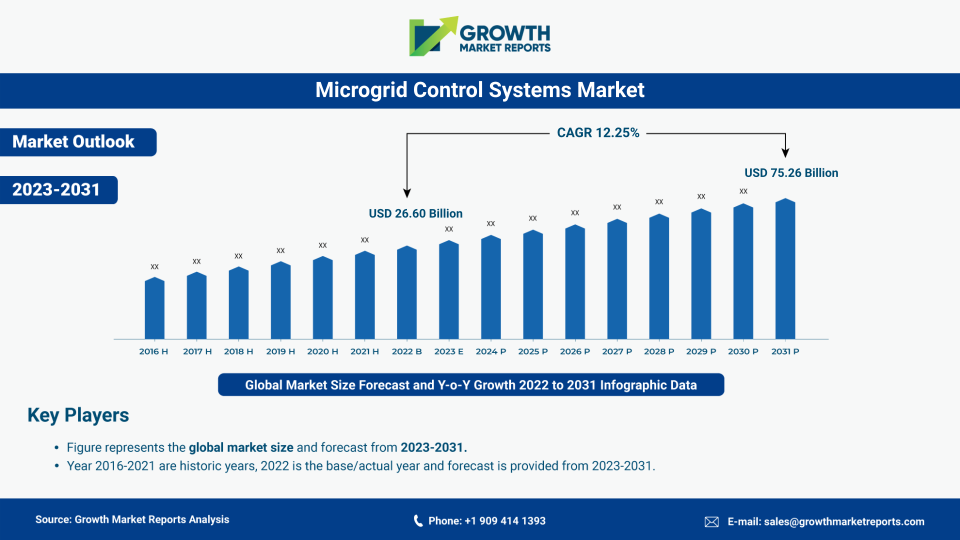
According to our latest research, the global microgrid control systems market size stands at USD 4.2 billion in 2024, with a robust growth trajectory expected over the coming years. The market is forecasted to reach USD 13.9 billion by 2033, reflecting a compelling CAGR of 14.1% during the 2025-2033 period. This surge is driven by the increasing demand for reliable, resilient, and decentralized energy solutions, as well as the growing integration of renewable energy sources and advancements in smart grid technologies.

One of the primary growth factors propelling the microgrid control systems market is the escalating need for energy reliability and grid resilience. As global energy demand continues to rise and extreme weather events become more frequent, traditional centralized grids are increasingly vulnerable to disruptions. Microgrid control systems offer a robust solution by enabling localized energy management, rapid response to outages, and seamless integration of distributed energy resources (DERs). These systems provide granular control over generation, storage, and consumption, ensuring continuous power supply for critical infrastructure such as hospitals, data centers, and military bases. Additionally, the ability to operate in both grid-connected and islanded modes makes microgrid control systems indispensable for regions prone to grid instability or frequent outages, further fueling their adoption across various sectors.

Another significant driver is the global shift towards sustainable and renewable energy sources. Governments and private entities are investing heavily in solar, wind, and other renewable technologies to reduce carbon emissions and meet ambitious climate goals. Microgrid control systems play a pivotal role in optimizing the integration and management of these variable energy sources, balancing supply and demand, and ensuring grid stability. The proliferation of distributed generation assets, such as rooftop solar panels and battery storage systems, necessitates advanced control solutions capable of real-time monitoring, predictive analytics, and automated decision-making. This technological evolution is not only enhancing the operational efficiency of microgrids but also making them more economically viable and attractive for commercial, industrial, and residential applications.

Furthermore, supportive regulatory frameworks and government incentives are accelerating the deployment of microgrid control systems worldwide. Many countries have introduced policies and funding programs to encourage the adoption of microgrids, particularly in remote and underserved areas where traditional grid extension is cost-prohibitive. These initiatives are fostering innovation and competition among technology providers, leading to the development of more sophisticated, interoperable, and cost-effective control solutions. Strategic collaborations between utilities, technology firms, and research institutions are also driving the commercialization of advanced microgrid platforms, further expanding the market's growth potential.

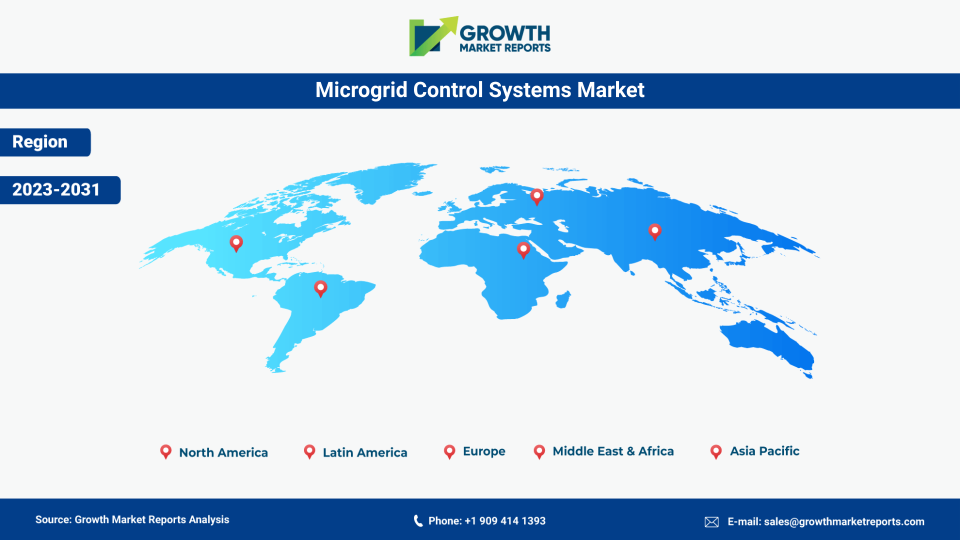
From a regional perspective, North America dominates the microgrid control systems market, accounting for the largest share in 2024. This leadership is attributed to substantial investments in smart grid infrastructure, a high concentration of microgrid projects, and proactive government support. The Asia Pacific region is emerging as the fastest-growing market, driven by rapid urbanization, increasing energy demand, and significant investments in renewable energy integration. Europe also holds a considerable share, supported by strong policy emphasis on decarbonization and grid modernization. Meanwhile, Latin America and the Middle East & Africa are witnessing steady growth, primarily fueled by rural electrification initiatives and the need for resilient energy solutions in remote locations.

The concept of Microgrid-as-a-Service is gaining traction as a transformative approach in the energy sector. This model allows organizations to deploy and operate microgrids without the need for significant upfront capital investment. By leveraging third-party expertise and financing, businesses can access advanced microgrid technologies and services on a subscription basis. This not only reduces financial barriers but also accelerates the adoption of microgrids in commercial and industrial sectors. The flexibility of Microgrid-as-a-Service enables organizations to tailor energy solutions to their specific needs, optimizing energy efficiency, reliability, and sustainability. As the demand for resilient and decentralized energy systems grows, this service-oriented model is expected to play a pivotal role in the widespread deployment of microgrids globally.

Global Microgrid Control Systems Industry Outlook

Component Analysis

The microgrid control systems market by component is segmented into hardware, software, and services. Hardware forms the backbone of microgrid control systems, encompassing controllers, sensors, communication devices, and other physical infrastructure. The demand for advanced hardware solutions is driven by the need for real-time data acquisition, robust connectivity, and seamless integration with distributed energy resources. As microgrids become more complex and interconnected, hardware components are evolving to support higher levels of automation, cybersecurity, and interoperability. Leading manufacturers are investing in the development of next-generation controllers equipped with artificial intelligence and machine learning capabilities, enabling predictive maintenance and self-healing functionalities.

Software is another critical component, providing the intelligence and analytics required for efficient microgrid operation. Modern microgrid control software platforms offer a wide range of functionalities, including energy management, load forecasting, fault detection, optimization, and remote monitoring. The shift towards cloud-based and edge computing solutions is enhancing the scalability and flexibility of microgrid control software, allowing operators to manage multiple sites from centralized dashboards. Integration with Internet of Things (IoT) devices and advanced data analytics is further improving decision-making and resource allocation. Software vendors are increasingly focusing on user-friendly interfaces, interoperability with third-party systems, and compliance with industry standards to cater to a diverse customer base.

Services play a pivotal role in the successful deployment and operation of microgrid control systems. These include consulting, system design, installation, commissioning, maintenance, and technical support. As the complexity of microgrid projects increases, there is a growing demand for specialized expertise in system integration, cybersecurity, regulatory compliance, and performance optimization. Service providers are expanding their offerings to include lifecycle management, remote diagnostics, and training programs to ensure the long-term reliability and efficiency of microgrid control systems. Partnerships between technology providers and service firms are becoming increasingly common, enabling end-to-end solutions that address the unique needs of each customer segment.

The integration of Ai Microgrid Controllers is revolutionizing the way microgrids are managed and operated. These advanced controllers utilize artificial intelligence to enhance decision-making processes, enabling real-time optimization of energy resources. By analyzing vast amounts of data from various sources, Ai Microgrid Controllers can predict energy demand, optimize generation and storage, and respond dynamically to changes in grid conditions. This level of intelligence ensures that microgrids operate at peak efficiency, reducing energy costs and minimizing environmental impact. As AI technology continues to evolve, its application in microgrid control systems is expected to unlock new levels of performance and reliability, further driving the adoption of smart energy solutions.

The interplay between hardware, software, and services is critical to the overall performance and value proposition of microgrid control systems. Integrated solutions that combine robust hardware, intelligent software, and comprehensive services are gaining traction among end-users seeking turnkey solutions. Vendors are differentiating themselves by offering modular and scalable platforms that can be customized to meet specific application requirements, regulatory environments, and budget constraints. As the market matures, the emphasis is shifting towards holistic solutions that deliver not only operational efficiency but also enhanced security, resilience, and sustainability.

Report Scope

Attributes Details
Report Title Microgrid Control Systems Market Research Report 2033
By Component Hardware, Software, Services
By Grid Type On-Grid, Off-Grid, Hybrid
By Application Commercial, Industrial, Utilities, Military, Residential, Others
By Ownership Private, Public
Regions Covered North America, Europe, APAC, Latin America, MEA
Base Year 2024
Historic Data 2018-2023
Forecast Period 2025-2033
Number of Pages 270
Number of Tables & Figures 326
Customization Available Yes, the report can be customized as per your need.

Grid Type Analysis

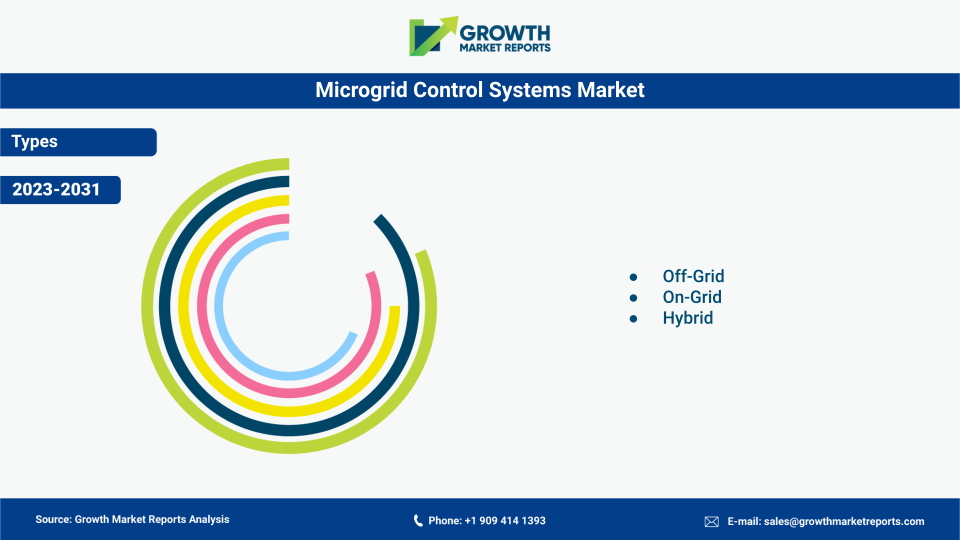
The microgrid control systems market is segmented by grid type into on-grid, off-grid, and hybrid systems. On-grid microgrids, also known as grid-connected microgrids, are integrated with the main utility grid and can exchange power as needed. These systems are widely deployed in urban and suburban areas where grid infrastructure is readily available. On-grid microgrids offer several advantages, including the ability to sell excess power back to the grid, participate in demand response programs, and enhance overall grid stability. The increasing adoption of renewable energy sources and the need for peak load management are driving the demand for on-grid microgrid control systems, particularly in commercial, industrial, and utility applications.

Off-grid microgrids operate independently of the main utility grid and are typically deployed in remote or isolated locations where grid extension is not feasible or cost-effective. These systems rely on local generation sources, such as solar, wind, diesel generators, and battery storage, to meet the energy needs of communities, military bases, mining operations, and other critical infrastructure. Off-grid microgrid control systems are designed to optimize resource utilization, ensure energy security, and minimize operational costs. The growing emphasis on rural electrification, disaster recovery, and energy access in developing regions is fueling the demand for off-grid microgrid solutions. Technological advancements in energy storage and control algorithms are further enhancing the performance and reliability of off-grid microgrids.

Hybrid microgrids combine the features of both on-grid and off-grid systems, offering maximum flexibility and resilience. These systems can operate in grid-connected mode under normal conditions and seamlessly transition to islanded mode during grid outages or emergencies. Hybrid microgrid control systems are gaining popularity in regions prone to natural disasters, grid instability, or frequent power interruptions. The ability to integrate multiple energy sources, manage complex load profiles, and support critical loads makes hybrid microgrids an attractive option for a wide range of applications. Market players are focusing on developing advanced control strategies and interoperability standards to enable smooth transitions between operating modes and maximize system efficiency.

Utility Microgrid solutions are becoming increasingly important as utilities seek to enhance grid resilience and integrate renewable energy sources. These microgrids are designed to operate in conjunction with the main utility grid, providing ancillary services such as frequency regulation and voltage support. By leveraging distributed energy resources, Utility Microgrids can help balance supply and demand, improve grid stability, and reduce reliance on centralized power plants. The ability to operate independently during grid outages also enhances energy security for critical infrastructure. As utilities continue to modernize their grids, the deployment of Utility Microgrids is expected to play a crucial role in achieving sustainability and reliability goals.

The choice of grid type has significant implications for the design, operation, and economics of microgrid control systems. On-grid systems require sophisticated coordination with utility operators and compliance with grid codes, while off-grid and hybrid systems demand advanced energy management and storage optimization capabilities. The evolving regulatory landscape, technological innovations, and changing customer preferences are shaping the future of microgrid grid types. As energy systems become more decentralized and dynamic, the demand for versatile and adaptive microgrid control solutions is expected to rise across all grid types.

Application Analysis

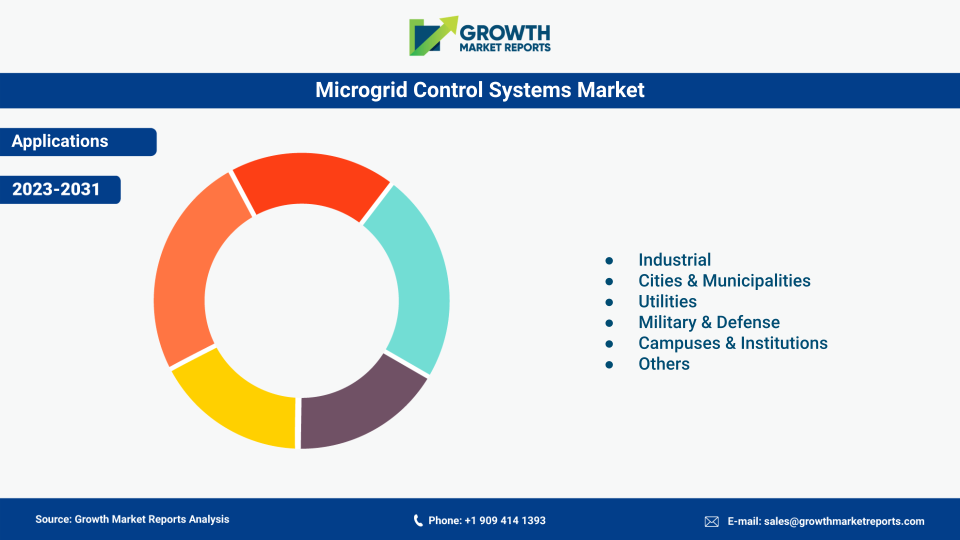
The application landscape of the microgrid control systems market is diverse, encompassing commercial, industrial, utilities, military, residential, and other sectors. In the commercial segment, microgrid control systems are widely adopted by office complexes, shopping malls, hospitals, educational institutions, and data centers. These facilities require high levels of energy reliability, operational efficiency, and cost savings. Microgrid control systems enable commercial entities to optimize energy consumption, reduce peak demand charges, and participate in demand response programs. The growing focus on sustainability and corporate social responsibility is also driving the adoption of microgrid solutions in the commercial sector, with organizations seeking to reduce their carbon footprint and enhance energy resilience.

The industrial sector represents a significant market for microgrid control systems, driven by the need for uninterrupted power supply, process optimization, and regulatory compliance. Industries such as manufacturing, mining, oil and gas, and pharmaceuticals rely on microgrid control systems to manage complex energy flows, integrate renewable sources, and ensure operational continuity during grid disturbances. Advanced control algorithms, predictive maintenance, and real-time monitoring are critical features for industrial microgrids, enabling operators to minimize downtime, optimize resource allocation, and enhance safety. The increasing adoption of automation, digitalization, and Industry 4.0 technologies is further boosting the demand for intelligent microgrid control solutions in the industrial segment.

Utilities are leveraging microgrid control systems to enhance grid reliability, support renewable integration, and manage distributed energy resources. Utility-operated microgrids can provide ancillary services, such as frequency regulation, voltage support, and black start capabilities, to the main grid. The transition towards smart grids and the proliferation of distributed generation assets are creating new opportunities for utilities to deploy microgrid control systems at the community, campus, and regional levels. Regulatory mandates for grid modernization, decarbonization, and resilience are also driving utility investments in advanced control technologies. Collaboration between utilities, technology vendors, and regulatory bodies is essential to ensure the successful deployment and operation of utility-scale microgrids.

The military and defense sector is another key application area, with microgrid control systems playing a vital role in mission-critical operations. Military bases and installations require highly secure, resilient, and autonomous energy systems to support operations in remote or hostile environments. Microgrid control systems enable the integration of renewable energy sources, enhance energy security, and reduce reliance on vulnerable supply chains. The adoption of microgrid solutions in the military sector is driven by the need for operational readiness, cost savings, and compliance with sustainability mandates. Innovations in cybersecurity, remote monitoring, and autonomous operation are particularly important for military microgrids, given the unique challenges and requirements of this sector.

Residential microgrids are gaining traction as homeowners seek greater energy independence, cost savings, and environmental benefits. Microgrid control systems enable residential communities to optimize rooftop solar generation, battery storage, and electric vehicle charging. The rise of prosumer models, where consumers both produce and consume energy, is driving the adoption of residential microgrid solutions. In addition to the primary application segments, microgrid control systems are also used in transportation, healthcare, education, and disaster recovery, reflecting the versatility and adaptability of these solutions across diverse end-user categories.

Ownership Analysis

Ownership models play a crucial role in shaping the deployment and operation of microgrid control systems. The market is broadly segmented into private and public ownership. Private ownership includes microgrids developed and operated by commercial enterprises, industrial facilities, real estate developers, and community organizations. These entities typically invest in microgrid control systems to achieve specific business objectives, such as cost savings, energy resilience, sustainability, and regulatory compliance. Private-owned microgrids often have greater flexibility in technology selection, system design, and operational strategies, enabling them to tailor solutions to their unique needs and priorities. The increasing availability of financing options, such as energy-as-a-service and power purchase agreements, is making private ownership more accessible and attractive to a wide range of stakeholders.

Public ownership encompasses microgrids developed and managed by government agencies, municipalities, utilities, and public institutions. Public-owned microgrids are often deployed to support critical infrastructure, enhance community resilience, and achieve policy objectives related to energy access, decarbonization, and grid modernization. These projects are typically funded through public budgets, grants, or public-private partnerships, and may involve complex regulatory and stakeholder engagement processes. Public-owned microgrids play a vital role in disaster recovery, emergency preparedness, and rural electrification, particularly in regions with limited access to reliable grid infrastructure. The emphasis on transparency, accountability, and social equity is shaping the design and operation of public microgrid projects.

The choice between private and public ownership has significant implications for the business models, financing structures, and risk profiles of microgrid control system deployments. Private-owned microgrids tend to prioritize return on investment, operational efficiency, and competitive differentiation, while public-owned microgrids focus on public welfare, policy compliance, and long-term sustainability. Hybrid ownership models, involving collaboration between private and public entities, are also emerging as a viable approach to leverage the strengths of both sectors and address complex energy challenges. These partnerships can facilitate knowledge sharing, risk mitigation, and resource pooling, leading to more resilient and scalable microgrid solutions.

Regulatory frameworks, market incentives, and stakeholder engagement are critical factors influencing ownership models in the microgrid control systems market. Policymakers are increasingly recognizing the value of microgrids in achieving energy security, climate goals, and economic development, and are introducing supportive measures to encourage both private and public investments. The evolving landscape of ownership models is creating new opportunities for technology providers, financiers, and service companies to develop innovative solutions and business models that cater to the diverse needs of end-users across different sectors and regions.

Opportunities & Threats

The microgrid control systems market is brimming with opportunities, primarily driven by the accelerating adoption of renewable energy sources and the global push for decarbonization. As more countries commit to net-zero emission targets, microgrid control systems are becoming indispensable for integrating solar, wind, and other renewables into local energy networks. The proliferation of distributed energy resources, coupled with advancements in battery storage and digitalization, is paving the way for smarter, more resilient microgrids. Market players have significant opportunities to develop scalable, interoperable, and AI-driven control platforms that can manage increasingly complex energy ecosystems. The rise of energy-as-a-service business models and innovative financing mechanisms is also enabling broader deployment across commercial, industrial, and residential sectors, particularly in developing economies where energy access remains a challenge.

Another major opportunity lies in the growing demand for grid resilience and disaster preparedness. Extreme weather events, cyber threats, and aging grid infrastructure are prompting utilities, governments, and private enterprises to invest in microgrid control systems as a means of enhancing energy security and operational continuity. The increasing digitalization of the energy sector, including the integration of IoT, big data analytics, and machine learning, is enabling real-time monitoring, predictive maintenance, and automated decision-making. These technological advancements are not only improving the efficiency and reliability of microgrids but also opening up new revenue streams for technology providers through value-added services, such as remote diagnostics, performance optimization, and lifecycle management. Partnerships between utilities, technology vendors, and research institutions are further accelerating innovation and market growth.

Despite the promising outlook, the microgrid control systems market faces several restraining factors, the most prominent being the high initial investment and complexity of deployment. The capital-intensive nature of microgrid projects, coupled with the need for specialized expertise in system integration, regulatory compliance, and cybersecurity, can pose significant barriers to entry, particularly for small and medium-sized enterprises and communities with limited resources. Additionally, the lack of standardized protocols and interoperability challenges between different hardware and software platforms can complicate system integration and increase project risks. Regulatory uncertainty, especially in regions with evolving energy policies and market structures, can also hinder market growth and delay project implementation.

Regional Outlook

North America remains the largest regional market for microgrid control systems, with a market size of approximately USD 1.7 billion in 2024. This dominance is attributed to the region's advanced grid infrastructure, high concentration of microgrid projects, and strong regulatory support for renewable integration and grid modernization. The United States, in particular, is a global leader in microgrid deployment, driven by initiatives to enhance grid resilience, support renewable energy adoption, and reduce greenhouse gas emissions. Canada is also witnessing significant growth, supported by investments in remote and indigenous community electrification. The North American market is expected to maintain a steady growth rate, with a projected CAGR of 12.5% through 2033.

The Asia Pacific region is emerging as the fastest-growing market, with a current market size of USD 1.1 billion in 2024 and a projected CAGR of 16.8% over the forecast period. Rapid urbanization, increasing energy demand, and government initiatives to promote renewable energy integration are driving the adoption of microgrid control systems across countries such as China, India, Japan, South Korea, and Australia. Rural electrification, disaster recovery, and the need for resilient energy solutions in remote and island communities are key growth drivers in the region. The Asia Pacific market is characterized by a diverse mix of public and private projects, innovative business models, and a strong emphasis on technological innovation and cost optimization.

Europe holds a significant share of the global microgrid control systems market, with a market size of USD 0.8 billion in 2024. The region's focus on decarbonization, energy efficiency, and grid modernization is driving investments in advanced control technologies and distributed energy solutions. Countries such as Germany, the United Kingdom, France, and the Netherlands are leading the way in microgrid deployment, supported by favorable policies, funding programs, and research initiatives. The Middle East & Africa and Latin America regions, with market sizes of USD 0.4 billion and USD 0.2 billion respectively, are experiencing steady growth, primarily driven by rural electrification, renewable integration, and the need for resilient energy infrastructure in remote and underserved areas.

Microgrid Control Systems Market Statistics

Competitor Outlook

The global microgrid control systems market is highly competitive, characterized by the presence of numerous international and regional players offering a wide range of hardware, software, and service solutions. The competitive landscape is shaped by technological innovation, strategic partnerships, mergers and acquisitions, and a strong focus on research and development. Leading companies are investing heavily in the development of next-generation control platforms, leveraging artificial intelligence, machine learning, and advanced analytics to enhance system performance, scalability, and user experience. The integration of cybersecurity features, interoperability standards, and cloud-based management tools is becoming increasingly important as microgrid deployments scale and diversify across different sectors and regions.

Market leaders are differentiating themselves through comprehensive portfolios that combine robust hardware, intelligent software, and value-added services. Turnkey solutions that offer end-to-end capabilities, from system design and installation to operation and maintenance, are gaining traction among end-users seeking reliable, cost-effective, and scalable microgrid control systems. Strategic collaborations with utilities, technology vendors, research institutions, and government agencies are enabling companies to expand their market reach, accelerate innovation, and address complex energy challenges. The emergence of new entrants, particularly in the software and service segments, is intensifying competition and driving down costs, benefiting customers through greater choice and improved value propositions.

The market is also witnessing a trend towards modular and customizable solutions that can be tailored to the specific needs of different applications, ownership models, and regulatory environments. Companies are focusing on developing flexible platforms that support seamless integration with a wide range of distributed energy resources, storage technologies, and third-party systems. The ability to provide real-time monitoring, predictive maintenance, remote diagnostics, and automated decision-making is becoming a key differentiator in the market. As customer expectations evolve, vendors are prioritizing user-friendly interfaces, interoperability, and compliance with industry standards to enhance customer satisfaction and loyalty.

Some of the major companies operating in the global microgrid control systems market include Siemens AG, Schneider Electric SE, ABB Ltd., General Electric Company, Eaton Corporation plc, Honeywell International Inc., Emerson Electric Co., Schweitzer Engineering Laboratories, Inc., S&C Electric Company, and Spirae, LLC. Siemens AG is renowned for its comprehensive microgrid management solutions, offering advanced control platforms that integrate seamlessly with distributed energy resources and grid infrastructure. Schneider Electric SE is a global leader in energy management and automation, providing scalable and interoperable microgrid control systems for a wide range of applications. ABB Ltd. offers innovative microgrid automation solutions that leverage digital technologies and advanced analytics to optimize system performance and reliability.

General Electric Company is a key player in the market, with a strong focus on grid modernization, renewable integration, and digitalization. Eaton Corporation plc provides robust microgrid control hardware and software solutions, with an emphasis on cybersecurity, scalability, and user experience. Honeywell International Inc. delivers advanced energy management and control platforms that enable real-time monitoring, predictive analytics, and remote operation. Emerson Electric Co. specializes in automation and control technologies, offering integrated solutions for industrial and utility microgrids. Schweitzer Engineering Laboratories, Inc. is known for its expertise in protection, automation, and control systems, providing reliable solutions for mission-critical applications. S&C Electric Company and Spirae, LLC are also prominent players, focusing on grid resilience, renewable integration, and advanced control strategies.

Key Players

  • ABB
  • Siemens
  • Schneider Electric
  • General Electric (GE)
  • Eaton Corporation
  • Honeywell International
  • Emerson Electric
  • Hitachi Energy
  • S&C Electric Company
  • Schweitzer Engineering Laboratories (SEL)
  • Spirae
  • ETAP (Operation Technology, Inc.)
  • Advanced Microgrid Solutions
  • Exelon Corporation
  • Pareto Energy
  • PowerSecure (a Southern Company subsidiary)
  • Opus One Solutions
  • GridPoint
  • Siemens Gamesa Renewable Energy
  • Woodward, Inc.
Microgrid Control Systems Market Overview

Segments

The Microgrid Control Systems market has been segmented on the basis of

Component

  • Hardware
  • Software
  • Services

Grid Type

  • On-Grid
  • Off-Grid
  • Hybrid

Application

  • Commercial
  • Industrial
  • Utilities
  • Military
  • Residential
  • Others

Ownership

  • Private
  • Public

Competitive Landscape

The global microgrid control systems market is moderately fragmented with the presence of key players such as Hitachi, Ltd.; Borqs Technologies, Inc.; Siemens AG; ABB Group; General Electric Corporation; Eaton Corporation PLC; Princeton Power Systems; Honeywell International, Inc.; Northern Power Systems, Inc.; Exelon Corporation; Schneider Electric SE; ONTECH Electric Corporation; and others, who use business strategies such as acquisitions, collaborations, mergers, product launches, and partnerships to strengthen their hold on the market.

  • For example, in September 2021, Borqs Technologies, Inc., a provider of Internet of Things (IoT) software and integrated products, signed a term to acquire 51% of stakes in Holu Hou Energy, LLC, a provider for innovative microgrid functions. In November 2021, Siemens AG partnered with Fluence Energy to aid the island of Madeira, Portugal to gain energy independence and grid resilience.
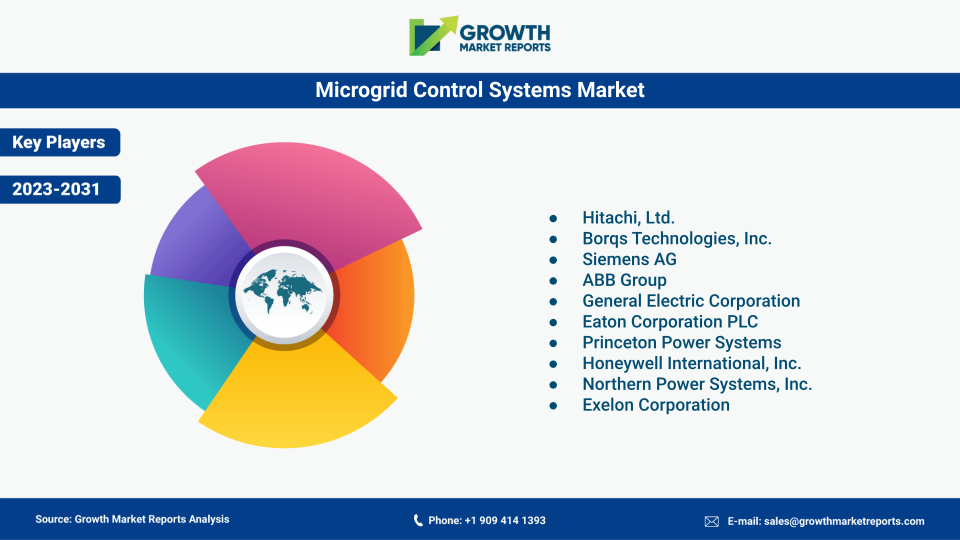

Global Microgrid Control Systems Market Key Players

Frequently Asked Questions

The global microgrid control systems market is estimated to register CAGR of around 12.25% during the forecast period.

The global microgrid control systems market size was valued at around USD 23.70 billion in 2021.

Microgrid refers to a group of electricity users with a local source of supply, which is usually attached to a centralized national grid and function independently.

Off-grid, on-grid, and hybrid are the types of microgrid control systems.

Asia Pacific dominates the global microgrid control systems market.

Hitachi, Ltd.; Borqs Technologies, Inc.; Siemens AG; ABB Group; General Electric Corporation; Eaton Corporation PLC; Princeton Power Systems; Honeywell International, Inc.; Northern Power Systems, Inc.; Exelon Corporation; and Schneider Electric SE are some of the key market players.

Table Of Content

Chapter 1 Executive Summary
Chapter 2 Assumptions and Acronyms Used
Chapter 3 Research Methodology
Chapter 4 Microgrid Control Systems Market Overview
   4.1 Introduction
      4.1.1 Market Taxonomy
      4.1.2 Market Definition
      4.1.3 Macro-Economic Factors Impacting the Market Growth
   4.2 Microgrid Control Systems Market Dynamics
      4.2.1 Market Drivers
      4.2.2 Market Restraints
      4.2.3 Market Opportunity
   4.3 Microgrid Control Systems Market - Supply Chain Analysis
      4.3.1 List of Key Suppliers
      4.3.2 List of Key Distributors
      4.3.3 List of Key Consumers
   4.4 Key Forces Shaping the Microgrid Control Systems Market
      4.4.1 Bargaining Power of Suppliers
      4.4.2 Bargaining Power of Buyers
      4.4.3 Threat of Substitution
      4.4.4 Threat of New Entrants
      4.4.5 Competitive Rivalry
   4.5 Global Microgrid Control Systems Market Size & Forecast, 2023-2032
      4.5.1 Microgrid Control Systems Market Size and Y-o-Y Growth
      4.5.2 Microgrid Control Systems Market Absolute $ Opportunity

Chapter 5 Global Microgrid Control Systems Market Analysis and Forecast By Component
   5.1 Introduction
      5.1.1 Key Market Trends & Growth Opportunities By Component
      5.1.2 Basis Point Share (BPS) Analysis By Component
      5.1.3 Absolute $ Opportunity Assessment By Component
   5.2 Microgrid Control Systems Market Size Forecast By Component
      5.2.1 Hardware
      5.2.2 Software
      5.2.3 Services
   5.3 Market Attractiveness Analysis By Component

Chapter 6 Global Microgrid Control Systems Market Analysis and Forecast By Grid Type
   6.1 Introduction
      6.1.1 Key Market Trends & Growth Opportunities By Grid Type
      6.1.2 Basis Point Share (BPS) Analysis By Grid Type
      6.1.3 Absolute $ Opportunity Assessment By Grid Type
   6.2 Microgrid Control Systems Market Size Forecast By Grid Type
      6.2.1 On-Grid
      6.2.2 Off-Grid
      6.2.3 Hybrid
   6.3 Market Attractiveness Analysis By Grid Type

Chapter 7 Global Microgrid Control Systems Market Analysis and Forecast By Application
   7.1 Introduction
      7.1.1 Key Market Trends & Growth Opportunities By Application
      7.1.2 Basis Point Share (BPS) Analysis By Application
      7.1.3 Absolute $ Opportunity Assessment By Application
   7.2 Microgrid Control Systems Market Size Forecast By Application
      7.2.1 Commercial
      7.2.2 Industrial
      7.2.3 Utilities
      7.2.4 Military
      7.2.5 Residential
      7.2.6 Others
   7.3 Market Attractiveness Analysis By Application

Chapter 8 Global Microgrid Control Systems Market Analysis and Forecast By Ownership
   8.1 Introduction
      8.1.1 Key Market Trends & Growth Opportunities By Ownership
      8.1.2 Basis Point Share (BPS) Analysis By Ownership
      8.1.3 Absolute $ Opportunity Assessment By Ownership
   8.2 Microgrid Control Systems Market Size Forecast By Ownership
      8.2.1 Private
      8.2.2 Public
   8.3 Market Attractiveness Analysis By Ownership

Chapter 9 Global Microgrid Control Systems Market Analysis and Forecast by Region
   9.1 Introduction
      9.1.1 Key Market Trends & Growth Opportunities By Region
      9.1.2 Basis Point Share (BPS) Analysis By Region
      9.1.3 Absolute $ Opportunity Assessment By Region
   9.2 Microgrid Control Systems Market Size Forecast By Region
      9.2.1 North America
      9.2.2 Europe
      9.2.3 Asia Pacific
      9.2.4 Latin America
      9.2.5 Middle East & Africa (MEA)
   9.3 Market Attractiveness Analysis By Region

Chapter 10 Coronavirus Disease (COVID-19) Impact 
   10.1 Introduction 
   10.2 Current & Future Impact Analysis 
   10.3 Economic Impact Analysis 
   10.4 Government Policies 
   10.5 Investment Scenario

Chapter 11 North America Microgrid Control Systems Analysis and Forecast
   11.1 Introduction
   11.2 North America Microgrid Control Systems Market Size Forecast by Country
      11.2.1 U.S.
      11.2.2 Canada
   11.3 Basis Point Share (BPS) Analysis by Country
   11.4 Absolute $ Opportunity Assessment by Country
   11.5 Market Attractiveness Analysis by Country
   11.6 North America Microgrid Control Systems Market Size Forecast By Component
      11.6.1 Hardware
      11.6.2 Software
      11.6.3 Services
   11.7 Basis Point Share (BPS) Analysis By Component 
   11.8 Absolute $ Opportunity Assessment By Component 
   11.9 Market Attractiveness Analysis By Component
   11.10 North America Microgrid Control Systems Market Size Forecast By Grid Type
      11.10.1 On-Grid
      11.10.2 Off-Grid
      11.10.3 Hybrid
   11.11 Basis Point Share (BPS) Analysis By Grid Type 
   11.12 Absolute $ Opportunity Assessment By Grid Type 
   11.13 Market Attractiveness Analysis By Grid Type
   11.14 North America Microgrid Control Systems Market Size Forecast By Application
      11.14.1 Commercial
      11.14.2 Industrial
      11.14.3 Utilities
      11.14.4 Military
      11.14.5 Residential
      11.14.6 Others
   11.15 Basis Point Share (BPS) Analysis By Application 
   11.16 Absolute $ Opportunity Assessment By Application 
   11.17 Market Attractiveness Analysis By Application
   11.18 North America Microgrid Control Systems Market Size Forecast By Ownership
      11.18.1 Private
      11.18.2 Public
   11.19 Basis Point Share (BPS) Analysis By Ownership 
   11.20 Absolute $ Opportunity Assessment By Ownership 
   11.21 Market Attractiveness Analysis By Ownership

Chapter 12 Europe Microgrid Control Systems Analysis and Forecast
   12.1 Introduction
   12.2 Europe Microgrid Control Systems Market Size Forecast by Country
      12.2.1 Germany
      12.2.2 France
      12.2.3 Italy
      12.2.4 U.K.
      12.2.5 Spain
      12.2.6 Russia
      12.2.7 Rest of Europe
   12.3 Basis Point Share (BPS) Analysis by Country
   12.4 Absolute $ Opportunity Assessment by Country
   12.5 Market Attractiveness Analysis by Country
   12.6 Europe Microgrid Control Systems Market Size Forecast By Component
      12.6.1 Hardware
      12.6.2 Software
      12.6.3 Services
   12.7 Basis Point Share (BPS) Analysis By Component 
   12.8 Absolute $ Opportunity Assessment By Component 
   12.9 Market Attractiveness Analysis By Component
   12.10 Europe Microgrid Control Systems Market Size Forecast By Grid Type
      12.10.1 On-Grid
      12.10.2 Off-Grid
      12.10.3 Hybrid
   12.11 Basis Point Share (BPS) Analysis By Grid Type 
   12.12 Absolute $ Opportunity Assessment By Grid Type 
   12.13 Market Attractiveness Analysis By Grid Type
   12.14 Europe Microgrid Control Systems Market Size Forecast By Application
      12.14.1 Commercial
      12.14.2 Industrial
      12.14.3 Utilities
      12.14.4 Military
      12.14.5 Residential
      12.14.6 Others
   12.15 Basis Point Share (BPS) Analysis By Application 
   12.16 Absolute $ Opportunity Assessment By Application 
   12.17 Market Attractiveness Analysis By Application
   12.18 Europe Microgrid Control Systems Market Size Forecast By Ownership
      12.18.1 Private
      12.18.2 Public
   12.19 Basis Point Share (BPS) Analysis By Ownership 
   12.20 Absolute $ Opportunity Assessment By Ownership 
   12.21 Market Attractiveness Analysis By Ownership

Chapter 13 Asia Pacific Microgrid Control Systems Analysis and Forecast
   13.1 Introduction
   13.2 Asia Pacific Microgrid Control Systems Market Size Forecast by Country
      13.2.1 China
      13.2.2 Japan
      13.2.3 South Korea
      13.2.4 India
      13.2.5 Australia
      13.2.6 South East Asia (SEA)
      13.2.7 Rest of Asia Pacific (APAC)
   13.3 Basis Point Share (BPS) Analysis by Country
   13.4 Absolute $ Opportunity Assessment by Country
   13.5 Market Attractiveness Analysis by Country
   13.6 Asia Pacific Microgrid Control Systems Market Size Forecast By Component
      13.6.1 Hardware
      13.6.2 Software
      13.6.3 Services
   13.7 Basis Point Share (BPS) Analysis By Component 
   13.8 Absolute $ Opportunity Assessment By Component 
   13.9 Market Attractiveness Analysis By Component
   13.10 Asia Pacific Microgrid Control Systems Market Size Forecast By Grid Type
      13.10.1 On-Grid
      13.10.2 Off-Grid
      13.10.3 Hybrid
   13.11 Basis Point Share (BPS) Analysis By Grid Type 
   13.12 Absolute $ Opportunity Assessment By Grid Type 
   13.13 Market Attractiveness Analysis By Grid Type
   13.14 Asia Pacific Microgrid Control Systems Market Size Forecast By Application
      13.14.1 Commercial
      13.14.2 Industrial
      13.14.3 Utilities
      13.14.4 Military
      13.14.5 Residential
      13.14.6 Others
   13.15 Basis Point Share (BPS) Analysis By Application 
   13.16 Absolute $ Opportunity Assessment By Application 
   13.17 Market Attractiveness Analysis By Application
   13.18 Asia Pacific Microgrid Control Systems Market Size Forecast By Ownership
      13.18.1 Private
      13.18.2 Public
   13.19 Basis Point Share (BPS) Analysis By Ownership 
   13.20 Absolute $ Opportunity Assessment By Ownership 
   13.21 Market Attractiveness Analysis By Ownership

Chapter 14 Latin America Microgrid Control Systems Analysis and Forecast
   14.1 Introduction
   14.2 Latin America Microgrid Control Systems Market Size Forecast by Country
      14.2.1 Brazil
      14.2.2 Mexico
      14.2.3 Rest of Latin America (LATAM)
   14.3 Basis Point Share (BPS) Analysis by Country
   14.4 Absolute $ Opportunity Assessment by Country
   14.5 Market Attractiveness Analysis by Country
   14.6 Latin America Microgrid Control Systems Market Size Forecast By Component
      14.6.1 Hardware
      14.6.2 Software
      14.6.3 Services
   14.7 Basis Point Share (BPS) Analysis By Component 
   14.8 Absolute $ Opportunity Assessment By Component 
   14.9 Market Attractiveness Analysis By Component
   14.10 Latin America Microgrid Control Systems Market Size Forecast By Grid Type
      14.10.1 On-Grid
      14.10.2 Off-Grid
      14.10.3 Hybrid
   14.11 Basis Point Share (BPS) Analysis By Grid Type 
   14.12 Absolute $ Opportunity Assessment By Grid Type 
   14.13 Market Attractiveness Analysis By Grid Type
   14.14 Latin America Microgrid Control Systems Market Size Forecast By Application
      14.14.1 Commercial
      14.14.2 Industrial
      14.14.3 Utilities
      14.14.4 Military
      14.14.5 Residential
      14.14.6 Others
   14.15 Basis Point Share (BPS) Analysis By Application 
   14.16 Absolute $ Opportunity Assessment By Application 
   14.17 Market Attractiveness Analysis By Application
   14.18 Latin America Microgrid Control Systems Market Size Forecast By Ownership
      14.18.1 Private
      14.18.2 Public
   14.19 Basis Point Share (BPS) Analysis By Ownership 
   14.20 Absolute $ Opportunity Assessment By Ownership 
   14.21 Market Attractiveness Analysis By Ownership

Chapter 15 Middle East & Africa (MEA) Microgrid Control Systems Analysis and Forecast
   15.1 Introduction
   15.2 Middle East & Africa (MEA) Microgrid Control Systems Market Size Forecast by Country
      15.2.1 Saudi Arabia
      15.2.2 South Africa
      15.2.3 UAE
      15.2.4 Rest of Middle East & Africa (MEA)
   15.3 Basis Point Share (BPS) Analysis by Country
   15.4 Absolute $ Opportunity Assessment by Country
   15.5 Market Attractiveness Analysis by Country
   15.6 Middle East & Africa (MEA) Microgrid Control Systems Market Size Forecast By Component
      15.6.1 Hardware
      15.6.2 Software
      15.6.3 Services
   15.7 Basis Point Share (BPS) Analysis By Component 
   15.8 Absolute $ Opportunity Assessment By Component 
   15.9 Market Attractiveness Analysis By Component
   15.10 Middle East & Africa (MEA) Microgrid Control Systems Market Size Forecast By Grid Type
      15.10.1 On-Grid
      15.10.2 Off-Grid
      15.10.3 Hybrid
   15.11 Basis Point Share (BPS) Analysis By Grid Type 
   15.12 Absolute $ Opportunity Assessment By Grid Type 
   15.13 Market Attractiveness Analysis By Grid Type
   15.14 Middle East & Africa (MEA) Microgrid Control Systems Market Size Forecast By Application
      15.14.1 Commercial
      15.14.2 Industrial
      15.14.3 Utilities
      15.14.4 Military
      15.14.5 Residential
      15.14.6 Others
   15.15 Basis Point Share (BPS) Analysis By Application 
   15.16 Absolute $ Opportunity Assessment By Application 
   15.17 Market Attractiveness Analysis By Application
   15.18 Middle East & Africa (MEA) Microgrid Control Systems Market Size Forecast By Ownership
      15.18.1 Private
      15.18.2 Public
   15.19 Basis Point Share (BPS) Analysis By Ownership 
   15.20 Absolute $ Opportunity Assessment By Ownership 
   15.21 Market Attractiveness Analysis By Ownership

Chapter 16 Competition Landscape 
   16.1 Microgrid Control Systems Market: Competitive Dashboard
   16.2 Global Microgrid Control Systems Market: Market Share Analysis, 2023
   16.3 Company Profiles (Details – Overview, Financials, Developments, Strategy) 
      16.3.1 ABB
Siemens
Schneider Electric
General Electric (GE)
Eaton Corporation
Honeywell International
Emerson Electric
Hitachi Energy
S&C Electric Company
Schweitzer Engineering Laboratories (SEL)
Spirae
ETAP (Operation Technology, Inc.)
Advanced Microgrid Solutions
Exelon Corporation
Pareto Energy
PowerSecure (a Southern Company subsidiary)
Opus One Solutions
GridPoint
Siemens Gamesa Renewable Energy
Woodward, Inc.

Methodology

Our Clients

Siemens Healthcare
Dassault Aviation
Microsoft
General Electric
The John Holland Group
Deloitte
sinopec
FedEx Logistics