Micro Mobile Data Center Market Research Report 2033

Micro Mobile Data Center Market Research Report 2033

Segments - by Component (Hardware, Software, Services), by Application (Edge Computing, Remote Office Support, Disaster Recovery, Temporary Data Storage, Others), by Organization Size (Small and Medium Enterprises, Large Enterprises), by Industry Vertical (IT and Telecommunications, BFSI, Healthcare, Retail, Manufacturing, Energy & Utilities, Government & Defense, Others)

https://growthmarketreports.com/Raksha
Author : Raksha Sharma
https://growthmarketreports.com/Vaibhav
Fact-checked by : V. Chandola
https://growthmarketreports.com/Shruti
Editor : Shruti Bhat

Upcoming | Report ID :ICT-SE-3240 | 4.5 Rating | 81 Reviews | 292 Pages | Format : Docx PDF

Report Description


Micro Mobile Data Center Market Outlook

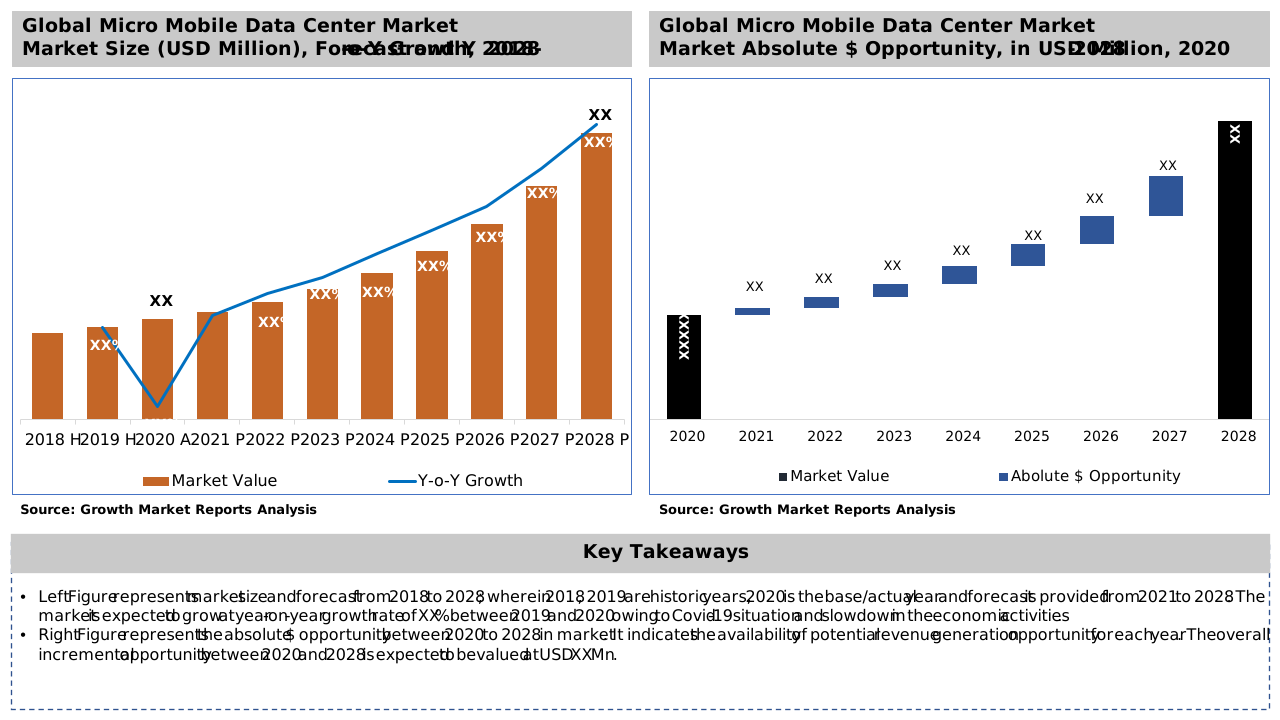
As per our latest research for 2024, the global micro mobile data center market size stands at USD 4.1 billion. The market is experiencing robust momentum, registering a strong CAGR of 18.7% during the forecast period. By 2033, the market is projected to reach an impressive USD 16.5 billion. This rapid growth is primarily driven by the increasing demand for edge computing, the proliferation of IoT devices, and the need for agile, scalable IT infrastructure across diverse industries. The adoption of micro mobile data centers enables organizations to deploy flexible, energy-efficient, and secure solutions, making them a cornerstone of digital transformation strategies worldwide.

A primary growth factor fueling the micro mobile data center market is the exponential rise in data generation at the network edge. With the surge in connected devices, smart applications, and real-time analytics, organizations are seeking solutions that can process and store data closer to the source. Micro mobile data centers, with their compact footprint and modular design, offer a compelling solution by reducing latency, optimizing bandwidth usage, and ensuring faster data processing. This is particularly critical for industries such as manufacturing, healthcare, and retail, where real-time decision-making and automation are increasingly dependent on localized data processing capabilities. The ability to deploy these centers rapidly in remote or underserved locations further amplifies their appeal, supporting the expansion of digital services in both urban and rural environments.

Another significant driver is the growing emphasis on business continuity and disaster recovery. Organizations are recognizing the importance of resilient IT infrastructure that can withstand disruptions, whether caused by natural disasters, cyber-attacks, or operational failures. Micro mobile data centers play a pivotal role in disaster recovery strategies by providing portable, self-contained units that can be quickly deployed to restore critical applications and data. Their mobility and scalability make them ideal for temporary data storage and backup operations, ensuring minimal downtime and safeguarding business operations. Additionally, advancements in power management, cooling technologies, and remote monitoring capabilities are enhancing the reliability and efficiency of these systems, further propelling market growth.

The increasing adoption of cloud computing and hybrid IT environments is also contributing to the expansion of the micro mobile data center market. As enterprises seek to balance on-premises and cloud-based resources, micro mobile data centers offer a bridge by enabling secure, localized data processing while maintaining seamless integration with centralized data centers and public cloud platforms. This hybrid approach is particularly attractive to sectors with stringent data sovereignty and compliance requirements, such as BFSI and government. Furthermore, the growing trend towards IT decentralization and the need for agile infrastructure to support digital transformation initiatives are prompting organizations of all sizes to invest in micro mobile data centers, fueling sustained market growth.

The Micro-Modular Data Center is emerging as a transformative solution in the data center landscape. With its compact and modular design, it offers unparalleled flexibility and scalability, catering to the dynamic needs of modern enterprises. These centers are particularly advantageous for organizations looking to deploy IT infrastructure rapidly, without the constraints of traditional data centers. The ability to customize configurations and scale operations as needed makes micro-modular data centers a preferred choice for businesses aiming to stay agile and competitive in a fast-evolving digital environment. Furthermore, their energy-efficient operations align with sustainability goals, appealing to environmentally conscious organizations.

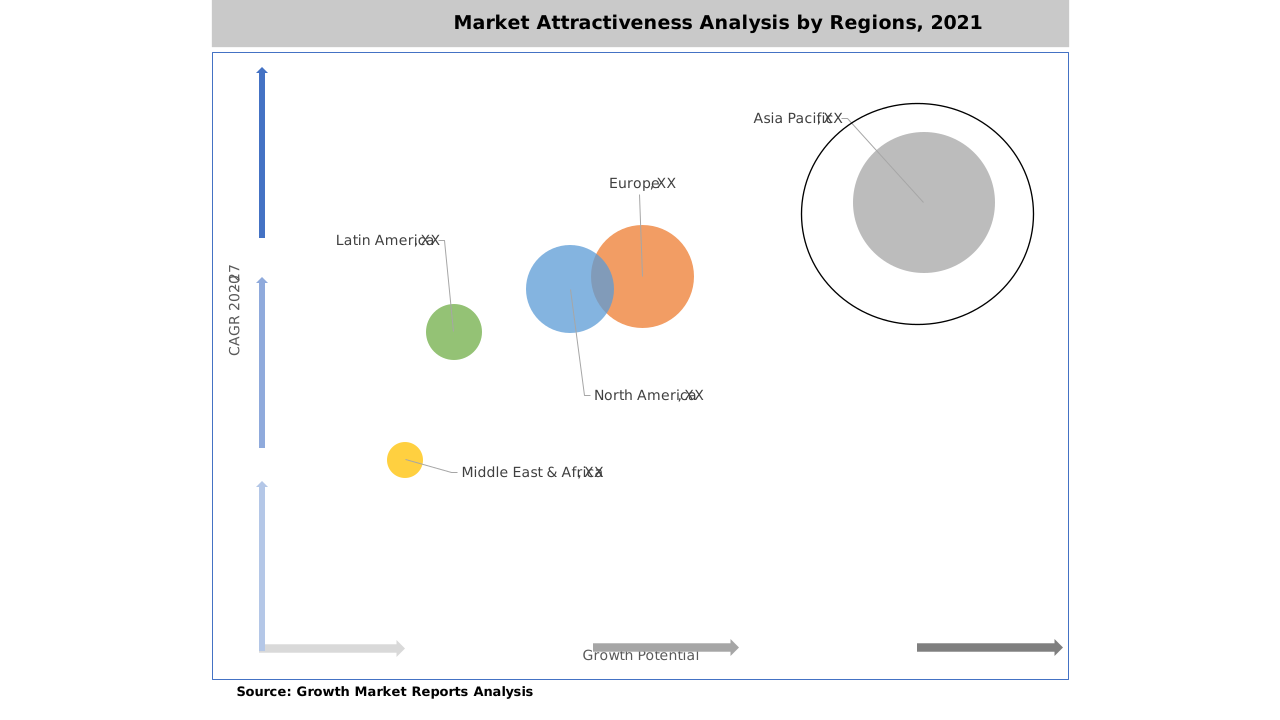
From a regional perspective, North America currently dominates the micro mobile data center market, accounting for the largest share in 2024, followed closely by Europe and Asia Pacific. The rapid adoption of advanced technologies, robust IT infrastructure, and a strong focus on edge computing are key factors driving growth in these regions. Meanwhile, emerging economies in Asia Pacific and Latin America are witnessing accelerated adoption, supported by increasing investments in digital infrastructure, smart city initiatives, and expanding telecommunications networks. The Middle East & Africa region is also showing promising growth potential, driven by government-led digitalization programs and rising demand for agile IT solutions in sectors such as energy, utilities, and defense.

Global Micro Mobile Data Center Industry Outlook

Component Analysis

The micro mobile data center market is segmented by component into hardware, software, and services, each playing a distinct and critical role in the overall ecosystem. Hardware forms the backbone of micro mobile data centers, encompassing servers, storage devices, networking equipment, power and cooling systems, and enclosures. The demand for high-performance, energy-efficient, and compact hardware solutions is driving continuous innovation in this segment. Vendors are focusing on integrating advanced processors, solid-state drives, and modular power units to enhance performance and reliability. The emphasis on ruggedized and weatherproof enclosures is also growing, enabling deployment in harsh and remote environments. As organizations prioritize scalability and rapid deployment, the hardware segment is expected to maintain its dominance, contributing significantly to overall market growth.

The software component is equally vital, providing the intelligence and control required to manage, monitor, and optimize micro mobile data center operations. This includes data center infrastructure management (DCIM) software, virtualization platforms, security solutions, and remote monitoring tools. The integration of AI-driven analytics and automation capabilities is transforming the software landscape, enabling predictive maintenance, resource optimization, and enhanced security. As organizations increasingly adopt hybrid and multi-cloud strategies, software solutions that facilitate seamless integration with existing IT environments are in high demand. The software segment is expected to witness robust growth, driven by the need for real-time visibility, operational efficiency, and compliance management.

Services represent a crucial enabler for the successful deployment and operation of micro mobile data centers. This segment includes consulting, design, installation, maintenance, and support services. As the complexity of IT environments increases, organizations are seeking expert guidance to ensure optimal configuration, integration, and lifecycle management of their micro mobile data centers. Managed services, in particular, are gaining traction, allowing enterprises to outsource the monitoring and management of their infrastructure to specialized providers. This not only reduces operational overheads but also ensures continuous availability and performance. The services segment is poised for significant expansion, driven by the growing need for end-to-end solutions and the rise of as-a-service business models.

The interplay between hardware, software, and services is shaping the evolution of the micro mobile data center market. Vendors are increasingly offering integrated solutions that combine best-in-class components with comprehensive support services, delivering greater value to customers. The trend towards modular and pre-configured systems is simplifying deployment and reducing time-to-market, while advancements in software-defined infrastructure are enabling greater flexibility and agility. As organizations continue to embrace digital transformation, the demand for holistic, future-proof micro mobile data center solutions is expected to rise, driving sustained growth across all component segments.

Report Scope

Attributes Details
Report Title Micro Mobile Data Center Market Research Report 2033
By Component Hardware, Software, Services
By Application Edge Computing, Remote Office Support, Disaster Recovery, Temporary Data Storage, Others
By Organization Size Small and Medium Enterprises, Large Enterprises
By Industry Vertical IT and Telecommunications, BFSI, Healthcare, Retail, Manufacturing, Energy & Utilities, Government & Defense, Others
Regions Covered North America, Europe, APAC, Latin America, MEA
Base Year 2024
Historic Data 2018-2023
Forecast Period 2025-2033
Number of Pages 292
Number of Tables & Figures 286
Customization Available Yes, the report can be customized as per your need.

Application Analysis

The application landscape of the micro mobile data center market is diverse, with key use cases including edge computing, remote office support, disaster recovery, temporary data storage, and others. Edge computing is the most prominent application, driven by the need to process and analyze data closer to the source. Industries such as manufacturing, healthcare, and retail are leveraging edge computing to enable real-time decision-making, automation, and enhanced customer experiences. Micro mobile data centers provide the necessary infrastructure to support these applications, offering low latency, high availability, and robust security. The proliferation of IoT devices and the growing adoption of AI-powered analytics are further fueling demand for edge computing solutions, positioning this segment as a major growth driver.

Remote office support is another critical application area, particularly in the wake of changing work patterns and the rise of distributed workforces. Organizations are increasingly deploying micro mobile data centers to provide reliable IT infrastructure for branch offices, remote sites, and temporary work locations. These solutions enable seamless connectivity, data storage, and application hosting, ensuring business continuity and productivity regardless of location. The flexibility and portability of micro mobile data centers make them ideal for supporting remote and mobile operations, reducing the reliance on centralized data centers and minimizing network bottlenecks.

Disaster recovery is a key consideration for organizations seeking to enhance resilience and minimize downtime in the event of disruptions. Micro mobile data centers offer a portable, self-contained solution for backup and recovery operations, enabling rapid restoration of critical applications and data. Their mobility allows them to be deployed quickly in affected areas, providing a lifeline for business operations during emergencies. The integration of advanced security and monitoring features ensures data integrity and compliance, making micro mobile data centers an essential component of comprehensive disaster recovery strategies.

Temporary data storage is an emerging application, particularly in industries with fluctuating data processing needs, such as events, construction, and field research. Micro mobile data centers provide scalable, on-demand storage solutions that can be deployed and decommissioned as required. This flexibility is driving adoption among organizations seeking to optimize resource utilization and reduce capital expenditures. Other applications, such as military operations, oil and gas exploration, and scientific research, are also leveraging micro mobile data centers for their mobility, robustness, and ease of deployment. As new use cases continue to emerge, the application landscape of the micro mobile data center market is expected to expand, driving sustained growth and innovation.

Organization Size Analysis

The micro mobile data center market caters to organizations of all sizes, with distinct adoption patterns observed among small and medium enterprises (SMEs) and large enterprises. Small and medium enterprises are increasingly recognizing the value of micro mobile data centers in enabling digital transformation and supporting business growth. The modular, cost-effective nature of these solutions makes them particularly attractive to SMEs with limited IT budgets and resources. By deploying micro mobile data centers, SMEs can access enterprise-grade computing power, storage, and networking capabilities without the need for extensive capital investment or complex infrastructure. This democratization of technology is leveling the playing field, allowing SMEs to compete more effectively in the digital economy.

Large enterprises, on the other hand, are leveraging micro mobile data centers to complement and extend their existing IT infrastructure. The need for agility, scalability, and resilience is driving adoption among organizations with complex, distributed operations. Large enterprises are deploying micro mobile data centers to support edge computing initiatives, enhance disaster recovery capabilities, and enable rapid expansion into new markets. The ability to integrate seamlessly with centralized data centers and cloud platforms is a key advantage, allowing large organizations to maintain consistency, security, and compliance across their IT environments. As digital transformation accelerates, the demand for flexible, scalable infrastructure solutions among large enterprises is expected to drive significant market growth.

The adoption of micro mobile data centers by organizations of all sizes is also influenced by industry-specific requirements and regulatory considerations. Sectors such as healthcare, BFSI, and government are subject to stringent data protection and compliance mandates, necessitating localized, secure data processing and storage solutions. Micro mobile data centers offer a compelling value proposition by enabling organizations to meet these requirements while maintaining operational efficiency and agility. The ability to customize configurations and deploy solutions tailored to specific needs is further enhancing adoption across diverse organizational profiles.

Overall, the micro mobile data center market is witnessing broad-based adoption across the organizational spectrum. Vendors are responding by offering scalable, modular solutions that can be tailored to the unique needs of SMEs and large enterprises alike. As digitalization continues to reshape business models and operational paradigms, the role of micro mobile data centers as a foundational enabler of agile, resilient IT infrastructure is set to grow, driving sustained demand across all organization sizes.

Industry Vertical Analysis

The micro mobile data center market serves a wide range of industry verticals, each with unique requirements and adoption drivers. IT and telecommunications is the largest vertical, accounting for a significant share of the market in 2024. The rapid expansion of 5G networks, the proliferation of IoT devices, and the growing demand for edge computing are driving adoption in this sector. Micro mobile data centers enable telecom operators and service providers to deploy scalable, low-latency infrastructure at the network edge, supporting next-generation applications and services. The need for agile, efficient, and secure data processing capabilities is further fueling demand, positioning IT and telecommunications as a key growth engine for the market.

The BFSI sector is another major adopter, driven by the need for secure, compliant, and resilient IT infrastructure. Micro mobile data centers offer a compelling solution for supporting branch operations, enabling disaster recovery, and ensuring data sovereignty. The ability to deploy localized infrastructure that meets stringent regulatory requirements is a key advantage, allowing BFSI organizations to enhance operational efficiency and customer service while mitigating risk. The growing adoption of digital banking, mobile payments, and fintech solutions is further driving demand for agile, scalable data center solutions in this sector.

In the healthcare vertical, the need for real-time data processing, secure storage, and compliance with data protection regulations is driving adoption of micro mobile data centers. Hospitals, clinics, and research institutions are leveraging these solutions to support electronic health records, telemedicine, and medical imaging applications. The ability to deploy infrastructure at the point of care, ensure data privacy, and enable rapid disaster recovery is particularly valuable in the healthcare sector, where uptime and data integrity are critical.

Other key industry verticals include retail, manufacturing, energy & utilities, and government & defense. In retail, micro mobile data centers are enabling real-time analytics, personalized customer experiences, and omnichannel operations. Manufacturing organizations are leveraging these solutions to support smart factory initiatives, IoT integration, and predictive maintenance. In the energy and utilities sector, micro mobile data centers are being deployed to support remote operations, grid management, and monitoring of critical infrastructure. Government and defense agencies are adopting micro mobile data centers to enhance security, support field operations, and ensure mission-critical continuity. As digital transformation accelerates across industries, the demand for agile, resilient, and scalable data center solutions is expected to drive sustained growth in the micro mobile data center market.

Opportunities & Threats

The micro mobile data center market presents significant opportunities for innovation and expansion, driven by the rapid evolution of digital technologies and the growing need for agile, scalable IT infrastructure. One major opportunity lies in the integration of advanced technologies such as artificial intelligence, machine learning, and automation into micro mobile data center solutions. These capabilities enable predictive maintenance, intelligent resource allocation, and enhanced security, delivering greater value to customers and differentiating offerings in a competitive market. Additionally, the rise of smart cities, autonomous vehicles, and Industry 4.0 initiatives is creating new demand for edge computing and localized data processing, positioning micro mobile data centers as a critical enabler of next-generation applications and services.

Another significant opportunity is the expansion into emerging markets and underserved regions. As digitalization accelerates in Asia Pacific, Latin America, and Africa, there is a growing need for flexible, cost-effective IT infrastructure that can be rapidly deployed in remote or challenging environments. Micro mobile data centers, with their compact footprint and modular design, are well-suited to meet these needs, supporting the expansion of digital services, e-government initiatives, and smart infrastructure projects. Partnerships with local service providers, governments, and technology vendors can further accelerate market penetration and drive sustainable growth. The increasing focus on sustainability and energy efficiency is also opening new avenues for innovation, with vendors investing in green technologies and eco-friendly designs to meet evolving customer expectations and regulatory requirements.

Despite the promising growth prospects, the micro mobile data center market faces several restraining factors. One of the primary challenges is the high initial investment required for deployment, particularly for SMEs and organizations in cost-sensitive sectors. While the total cost of ownership is often lower compared to traditional data centers, the upfront capital expenditure and complexity of integration can be barriers to adoption. Additionally, concerns around interoperability, security, and compliance are persistent, particularly as organizations navigate increasingly complex regulatory landscapes. The need for skilled personnel to manage and maintain micro mobile data center solutions is another constraint, highlighting the importance of comprehensive training and support services. Addressing these challenges will be critical to unlocking the full potential of the micro mobile data center market and ensuring sustained growth in the years ahead.

Regional Outlook

North America leads the global micro mobile data center market, accounting for the largest regional share in 2024, with a market size of approximately USD 1.6 billion. The regionÂ’s dominance is attributed to the early adoption of advanced technologies, a strong focus on edge computing, and significant investments in IT infrastructure across industries such as telecommunications, BFSI, and healthcare. The presence of leading technology vendors and a robust ecosystem of service providers further supports market growth. The United States, in particular, is at the forefront of innovation, driving the development and deployment of next-generation micro mobile data center solutions. As organizations in North America continue to embrace digital transformation, the region is expected to maintain its leadership position, with a projected CAGR of 17.8% through 2033.

Europe is the second-largest market, with a 2024 market size of around USD 1.1 billion. The region is characterized by a strong emphasis on data protection, compliance, and sustainability, driving the adoption of localized, energy-efficient data center solutions. Countries such as Germany, the United Kingdom, and France are leading the way, supported by government-led digitalization initiatives, smart city projects, and investments in next-generation networks. The growing demand for edge computing, driven by the proliferation of IoT devices and real-time analytics, is further fueling market growth in Europe. The region is also witnessing increased collaboration between technology vendors, service providers, and end-users, fostering innovation and accelerating the deployment of micro mobile data center solutions.

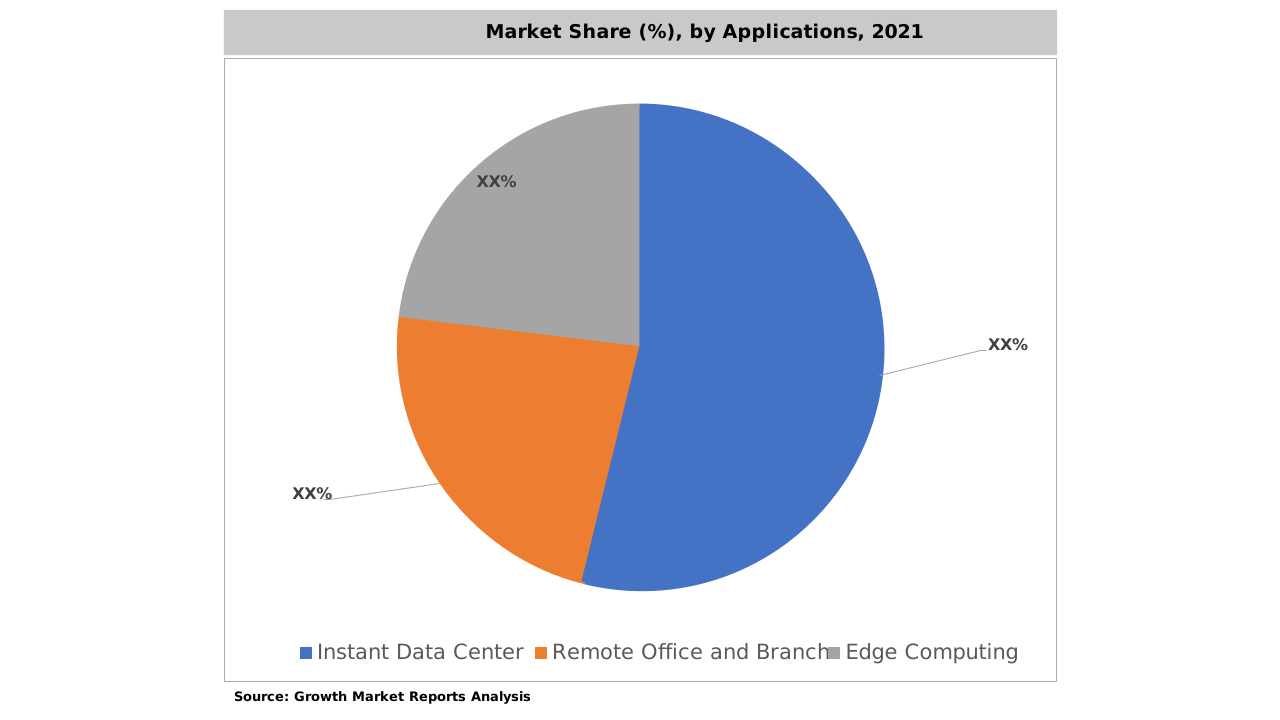
The Asia Pacific region is experiencing the fastest growth, with a 2024 market size of USD 0.9 billion and a projected CAGR of 21.2% through 2033. Rapid urbanization, expanding telecommunications networks, and the rise of digital economies are driving demand for agile, scalable IT infrastructure across the region. Countries such as China, India, Japan, and South Korea are investing heavily in smart infrastructure, 5G rollout, and digital transformation, creating significant opportunities for micro mobile data center vendors. The regionÂ’s diverse market dynamics, large population base, and growing focus on digital inclusion are expected to drive sustained growth, positioning Asia Pacific as a key engine of market expansion. Latin America and the Middle East & Africa, with 2024 market sizes of USD 0.3 billion and USD 0.2 billion respectively, are also showing strong growth potential, supported by investments in digital infrastructure, government-led initiatives, and rising demand for flexible IT solutions.

Micro Mobile Data Center Market Statistics

Competitor Outlook

The competitive landscape of the micro mobile data center market is characterized by intense innovation, strategic partnerships, and a focus on delivering end-to-end solutions that address evolving customer needs. Leading vendors are investing heavily in research and development to enhance the performance, efficiency, and scalability of their offerings. The market is witnessing a shift towards integrated, modular solutions that combine hardware, software, and services, enabling rapid deployment and seamless integration with existing IT environments. As competition intensifies, differentiation is increasingly being driven by advanced features such as AI-powered analytics, automation, remote monitoring, and energy-efficient designs. Vendors are also focusing on expanding their global footprint, targeting emerging markets and forging alliances with local service providers to accelerate market penetration.

The rise of edge computing and the proliferation of IoT devices are reshaping the competitive dynamics of the market, with new entrants and established players alike vying for leadership in this high-growth segment. Strategic acquisitions, mergers, and collaborations are common, as companies seek to broaden their product portfolios, enhance technological capabilities, and capture new customer segments. The increasing importance of sustainability and regulatory compliance is also influencing competitive strategies, with vendors investing in green technologies, eco-friendly designs, and robust security features to meet evolving market demands.

Customer-centricity is emerging as a key differentiator in the micro mobile data center market, with vendors placing greater emphasis on understanding and addressing the unique needs of different industry verticals and organization sizes. The ability to offer customized, scalable solutions that deliver tangible business value is critical to building long-term customer relationships and driving repeat business. Comprehensive support services, including consulting, installation, maintenance, and managed services, are becoming increasingly important, enabling vendors to deliver a seamless customer experience and maximize the value of their solutions.

Some of the major companies operating in the global micro mobile data center market include Schneider Electric, HPE (Hewlett Packard Enterprise), Vertiv, Dell Technologies, IBM Corporation, Eaton Corporation, Huawei Technologies, Rittal GmbH & Co. KG, Cannon Technologies, and Panduit Corporation. Schneider Electric is renowned for its innovative EcoStruxure solutions, offering integrated hardware, software, and services for micro mobile data centers. HPE has established itself as a leader with its modular, scalable solutions designed for edge computing and hybrid IT environments. Vertiv and Dell Technologies are recognized for their robust, energy-efficient designs and comprehensive support services, catering to a wide range of industry verticals. IBM Corporation is leveraging its expertise in AI, analytics, and cloud integration to deliver intelligent, future-proof micro mobile data center solutions.

Eaton Corporation and Huawei Technologies are making significant strides in the market, focusing on energy efficiency, sustainability, and advanced power management solutions. Rittal GmbH & Co. KG and Cannon Technologies are known for their ruggedized, weatherproof enclosures and modular designs, enabling deployment in challenging environments. Panduit Corporation is distinguished by its focus on connectivity, security, and remote monitoring capabilities, supporting organizations in achieving operational excellence and resilience. These companies, along with a host of emerging players and niche providers, are shaping the future of the micro mobile data center market through continuous innovation, customer-centricity, and a relentless focus on delivering value.

Key Players

  • Schneider Electric
  • Hewlett Packard Enterprise (HPE)
  • Vertiv Group Corp.
  • Dell Technologies
  • Huawei Technologies Co., Ltd.
  • IBM Corporation
  • Eaton Corporation
  • Rittal GmbH & Co. KG
  • Panduit Corp.
  • Canovate Group
  • Zella DC
  • Sicon Chat Union Electric Co., Ltd.
  • Dataracks
  • KSTAR
  • Orbis Oy
  • Hanley Energy
  • Instant Data Centers
  • EdgeMicro
  • Cannon Technologies Ltd.
  • STULZ GmbH
Micro Mobile Data Center Market Overview

Segments

The Micro Mobile Data Center market has been segmented on the basis of

Component

  • Hardware
  • Software
  • Services

Application

  • Edge Computing
  • Remote Office Support
  • Disaster Recovery
  • Temporary Data Storage
  • Others

Organization Size

  • Small and Medium Enterprises
  • Large Enterprises

Industry Vertical

  • IT and Telecommunications
  • BFSI
  • Healthcare
  • Retail
  • Manufacturing
  • Energy & Utilities
  • Government & Defense
  • Others

Competitive Landscape

The key players in the micro data center market are Schneider Electric SE, Canovate Group, Huawei Technologies Co. Rittal, Wave-2-wave solution corporation, Zellabox, Dell Inc., and Silicon Graphics Inc.
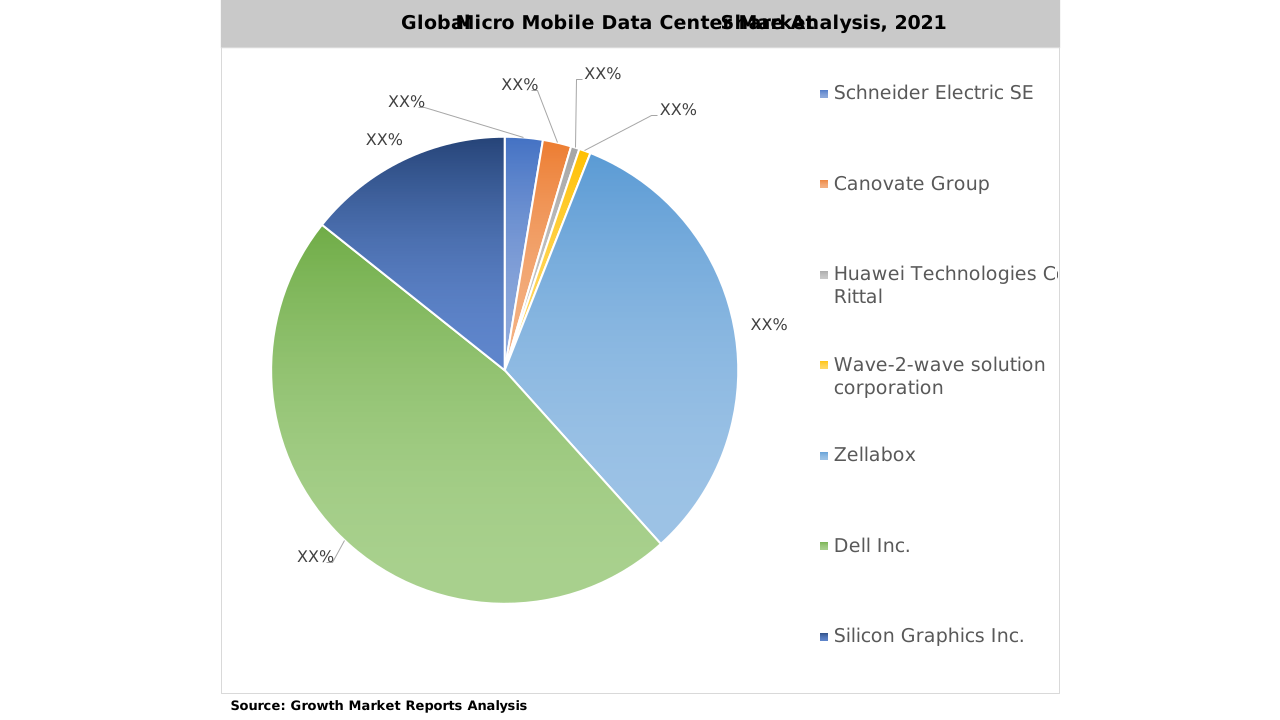

Micro Mobile Data Center Market Key Players

Frequently Asked Questions

Challenges include high initial investment costs, integration complexity, concerns around interoperability and security, regulatory compliance, and the need for skilled personnel to manage and maintain these solutions.

Key companies include Schneider Electric, Hewlett Packard Enterprise (HPE), Vertiv, Dell Technologies, Huawei Technologies, IBM Corporation, Eaton Corporation, Rittal GmbH & Co. KG, Panduit Corp., and Cannon Technologies, among others.

Micro mobile data centers enable organizations to process and analyze data closer to the source, reducing latency, optimizing bandwidth, and supporting real-time applications in industries like manufacturing, healthcare, and retail.

North America currently leads the market, followed by Europe and Asia Pacific. Asia Pacific is experiencing the fastest growth, while Latin America and the Middle East & Africa are also showing strong potential.

The market is segmented into hardware (servers, storage, networking, power, cooling, enclosures), software (DCIM, virtualization, security, remote monitoring), and services (consulting, installation, maintenance, managed services).

Micro mobile data centers provide portable, self-contained units that can be quickly deployed to restore critical applications and data after disruptions. Their mobility and scalability make them ideal for backup operations, ensuring minimal downtime and business continuity.

Major adopters include IT and telecommunications, BFSI (banking, financial services, and insurance), healthcare, retail, manufacturing, energy & utilities, and government & defense sectors.

Key growth drivers include the rising demand for edge computing, proliferation of IoT devices, need for agile and scalable IT infrastructure, emphasis on business continuity and disaster recovery, and the adoption of hybrid cloud environments across various industries.

According to the latest research, the global micro mobile data center market is expected to reach USD 16.5 billion by 2033, growing from USD 4.1 billion in 2024 at a CAGR of 18.7%.

A micro mobile data center is a compact, modular, and portable data center solution designed to provide scalable, energy-efficient, and secure IT infrastructure. It can be rapidly deployed in various environments to process and store data closer to the source, supporting edge computing, disaster recovery, and temporary data storage needs.

Table Of Content

Chapter 1 Executive Summary
Chapter 2 Assumptions and Acronyms Used
Chapter 3 Research Methodology
Chapter 4 Micro Mobile Data Center Market Overview
   4.1 Introduction
      4.1.1 Market Taxonomy
      4.1.2 Market Definition
      4.1.3 Macro-Economic Factors Impacting the Market Growth
   4.2 Micro Mobile Data Center Market Dynamics
      4.2.1 Market Drivers
      4.2.2 Market Restraints
      4.2.3 Market Opportunity
   4.3 Micro Mobile Data Center Market - Supply Chain Analysis
      4.3.1 List of Key Suppliers
      4.3.2 List of Key Distributors
      4.3.3 List of Key Consumers
   4.4 Key Forces Shaping the Micro Mobile Data Center Market
      4.4.1 Bargaining Power of Suppliers
      4.4.2 Bargaining Power of Buyers
      4.4.3 Threat of Substitution
      4.4.4 Threat of New Entrants
      4.4.5 Competitive Rivalry
   4.5 Global Micro Mobile Data Center Market Size & Forecast, 2023-2032
      4.5.1 Micro Mobile Data Center Market Size and Y-o-Y Growth
      4.5.2 Micro Mobile Data Center Market Absolute $ Opportunity

Chapter 5 Global Micro Mobile Data Center Market Analysis and Forecast By Component
   5.1 Introduction
      5.1.1 Key Market Trends & Growth Opportunities By Component
      5.1.2 Basis Point Share (BPS) Analysis By Component
      5.1.3 Absolute $ Opportunity Assessment By Component
   5.2 Micro Mobile Data Center Market Size Forecast By Component
      5.2.1 Hardware
      5.2.2 Software
      5.2.3 Services
   5.3 Market Attractiveness Analysis By Component

Chapter 6 Global Micro Mobile Data Center Market Analysis and Forecast By Application
   6.1 Introduction
      6.1.1 Key Market Trends & Growth Opportunities By Application
      6.1.2 Basis Point Share (BPS) Analysis By Application
      6.1.3 Absolute $ Opportunity Assessment By Application
   6.2 Micro Mobile Data Center Market Size Forecast By Application
      6.2.1 Edge Computing
      6.2.2 Remote Office Support
      6.2.3 Disaster Recovery
      6.2.4 Temporary Data Storage
      6.2.5 Others
   6.3 Market Attractiveness Analysis By Application

Chapter 7 Global Micro Mobile Data Center Market Analysis and Forecast By Organization Size
   7.1 Introduction
      7.1.1 Key Market Trends & Growth Opportunities By Organization Size
      7.1.2 Basis Point Share (BPS) Analysis By Organization Size
      7.1.3 Absolute $ Opportunity Assessment By Organization Size
   7.2 Micro Mobile Data Center Market Size Forecast By Organization Size
      7.2.1 Small and Medium Enterprises
      7.2.2 Large Enterprises
   7.3 Market Attractiveness Analysis By Organization Size

Chapter 8 Global Micro Mobile Data Center Market Analysis and Forecast By Industry Vertical
   8.1 Introduction
      8.1.1 Key Market Trends & Growth Opportunities By Industry Vertical
      8.1.2 Basis Point Share (BPS) Analysis By Industry Vertical
      8.1.3 Absolute $ Opportunity Assessment By Industry Vertical
   8.2 Micro Mobile Data Center Market Size Forecast By Industry Vertical
      8.2.1 IT and Telecommunications
      8.2.2 BFSI
      8.2.3 Healthcare
      8.2.4 Retail
      8.2.5 Manufacturing
      8.2.6 Energy & Utilities
      8.2.7 Government & Defense
      8.2.8 Others
   8.3 Market Attractiveness Analysis By Industry Vertical

Chapter 9 Global Micro Mobile Data Center Market Analysis and Forecast by Region
   9.1 Introduction
      9.1.1 Key Market Trends & Growth Opportunities By Region
      9.1.2 Basis Point Share (BPS) Analysis By Region
      9.1.3 Absolute $ Opportunity Assessment By Region
   9.2 Micro Mobile Data Center Market Size Forecast By Region
      9.2.1 North America
      9.2.2 Europe
      9.2.3 Asia Pacific
      9.2.4 Latin America
      9.2.5 Middle East & Africa (MEA)
   9.3 Market Attractiveness Analysis By Region

Chapter 10 Coronavirus Disease (COVID-19) Impact 
   10.1 Introduction 
   10.2 Current & Future Impact Analysis 
   10.3 Economic Impact Analysis 
   10.4 Government Policies 
   10.5 Investment Scenario

Chapter 11 North America Micro Mobile Data Center Analysis and Forecast
   11.1 Introduction
   11.2 North America Micro Mobile Data Center Market Size Forecast by Country
      11.2.1 U.S.
      11.2.2 Canada
   11.3 Basis Point Share (BPS) Analysis by Country
   11.4 Absolute $ Opportunity Assessment by Country
   11.5 Market Attractiveness Analysis by Country
   11.6 North America Micro Mobile Data Center Market Size Forecast By Component
      11.6.1 Hardware
      11.6.2 Software
      11.6.3 Services
   11.7 Basis Point Share (BPS) Analysis By Component 
   11.8 Absolute $ Opportunity Assessment By Component 
   11.9 Market Attractiveness Analysis By Component
   11.10 North America Micro Mobile Data Center Market Size Forecast By Application
      11.10.1 Edge Computing
      11.10.2 Remote Office Support
      11.10.3 Disaster Recovery
      11.10.4 Temporary Data Storage
      11.10.5 Others
   11.11 Basis Point Share (BPS) Analysis By Application 
   11.12 Absolute $ Opportunity Assessment By Application 
   11.13 Market Attractiveness Analysis By Application
   11.14 North America Micro Mobile Data Center Market Size Forecast By Organization Size
      11.14.1 Small and Medium Enterprises
      11.14.2 Large Enterprises
   11.15 Basis Point Share (BPS) Analysis By Organization Size 
   11.16 Absolute $ Opportunity Assessment By Organization Size 
   11.17 Market Attractiveness Analysis By Organization Size
   11.18 North America Micro Mobile Data Center Market Size Forecast By Industry Vertical
      11.18.1 IT and Telecommunications
      11.18.2 BFSI
      11.18.3 Healthcare
      11.18.4 Retail
      11.18.5 Manufacturing
      11.18.6 Energy & Utilities
      11.18.7 Government & Defense
      11.18.8 Others
   11.19 Basis Point Share (BPS) Analysis By Industry Vertical 
   11.20 Absolute $ Opportunity Assessment By Industry Vertical 
   11.21 Market Attractiveness Analysis By Industry Vertical

Chapter 12 Europe Micro Mobile Data Center Analysis and Forecast
   12.1 Introduction
   12.2 Europe Micro Mobile Data Center Market Size Forecast by Country
      12.2.1 Germany
      12.2.2 France
      12.2.3 Italy
      12.2.4 U.K.
      12.2.5 Spain
      12.2.6 Russia
      12.2.7 Rest of Europe
   12.3 Basis Point Share (BPS) Analysis by Country
   12.4 Absolute $ Opportunity Assessment by Country
   12.5 Market Attractiveness Analysis by Country
   12.6 Europe Micro Mobile Data Center Market Size Forecast By Component
      12.6.1 Hardware
      12.6.2 Software
      12.6.3 Services
   12.7 Basis Point Share (BPS) Analysis By Component 
   12.8 Absolute $ Opportunity Assessment By Component 
   12.9 Market Attractiveness Analysis By Component
   12.10 Europe Micro Mobile Data Center Market Size Forecast By Application
      12.10.1 Edge Computing
      12.10.2 Remote Office Support
      12.10.3 Disaster Recovery
      12.10.4 Temporary Data Storage
      12.10.5 Others
   12.11 Basis Point Share (BPS) Analysis By Application 
   12.12 Absolute $ Opportunity Assessment By Application 
   12.13 Market Attractiveness Analysis By Application
   12.14 Europe Micro Mobile Data Center Market Size Forecast By Organization Size
      12.14.1 Small and Medium Enterprises
      12.14.2 Large Enterprises
   12.15 Basis Point Share (BPS) Analysis By Organization Size 
   12.16 Absolute $ Opportunity Assessment By Organization Size 
   12.17 Market Attractiveness Analysis By Organization Size
   12.18 Europe Micro Mobile Data Center Market Size Forecast By Industry Vertical
      12.18.1 IT and Telecommunications
      12.18.2 BFSI
      12.18.3 Healthcare
      12.18.4 Retail
      12.18.5 Manufacturing
      12.18.6 Energy & Utilities
      12.18.7 Government & Defense
      12.18.8 Others
   12.19 Basis Point Share (BPS) Analysis By Industry Vertical 
   12.20 Absolute $ Opportunity Assessment By Industry Vertical 
   12.21 Market Attractiveness Analysis By Industry Vertical

Chapter 13 Asia Pacific Micro Mobile Data Center Analysis and Forecast
   13.1 Introduction
   13.2 Asia Pacific Micro Mobile Data Center Market Size Forecast by Country
      13.2.1 China
      13.2.2 Japan
      13.2.3 South Korea
      13.2.4 India
      13.2.5 Australia
      13.2.6 South East Asia (SEA)
      13.2.7 Rest of Asia Pacific (APAC)
   13.3 Basis Point Share (BPS) Analysis by Country
   13.4 Absolute $ Opportunity Assessment by Country
   13.5 Market Attractiveness Analysis by Country
   13.6 Asia Pacific Micro Mobile Data Center Market Size Forecast By Component
      13.6.1 Hardware
      13.6.2 Software
      13.6.3 Services
   13.7 Basis Point Share (BPS) Analysis By Component 
   13.8 Absolute $ Opportunity Assessment By Component 
   13.9 Market Attractiveness Analysis By Component
   13.10 Asia Pacific Micro Mobile Data Center Market Size Forecast By Application
      13.10.1 Edge Computing
      13.10.2 Remote Office Support
      13.10.3 Disaster Recovery
      13.10.4 Temporary Data Storage
      13.10.5 Others
   13.11 Basis Point Share (BPS) Analysis By Application 
   13.12 Absolute $ Opportunity Assessment By Application 
   13.13 Market Attractiveness Analysis By Application
   13.14 Asia Pacific Micro Mobile Data Center Market Size Forecast By Organization Size
      13.14.1 Small and Medium Enterprises
      13.14.2 Large Enterprises
   13.15 Basis Point Share (BPS) Analysis By Organization Size 
   13.16 Absolute $ Opportunity Assessment By Organization Size 
   13.17 Market Attractiveness Analysis By Organization Size
   13.18 Asia Pacific Micro Mobile Data Center Market Size Forecast By Industry Vertical
      13.18.1 IT and Telecommunications
      13.18.2 BFSI
      13.18.3 Healthcare
      13.18.4 Retail
      13.18.5 Manufacturing
      13.18.6 Energy & Utilities
      13.18.7 Government & Defense
      13.18.8 Others
   13.19 Basis Point Share (BPS) Analysis By Industry Vertical 
   13.20 Absolute $ Opportunity Assessment By Industry Vertical 
   13.21 Market Attractiveness Analysis By Industry Vertical

Chapter 14 Latin America Micro Mobile Data Center Analysis and Forecast
   14.1 Introduction
   14.2 Latin America Micro Mobile Data Center Market Size Forecast by Country
      14.2.1 Brazil
      14.2.2 Mexico
      14.2.3 Rest of Latin America (LATAM)
   14.3 Basis Point Share (BPS) Analysis by Country
   14.4 Absolute $ Opportunity Assessment by Country
   14.5 Market Attractiveness Analysis by Country
   14.6 Latin America Micro Mobile Data Center Market Size Forecast By Component
      14.6.1 Hardware
      14.6.2 Software
      14.6.3 Services
   14.7 Basis Point Share (BPS) Analysis By Component 
   14.8 Absolute $ Opportunity Assessment By Component 
   14.9 Market Attractiveness Analysis By Component
   14.10 Latin America Micro Mobile Data Center Market Size Forecast By Application
      14.10.1 Edge Computing
      14.10.2 Remote Office Support
      14.10.3 Disaster Recovery
      14.10.4 Temporary Data Storage
      14.10.5 Others
   14.11 Basis Point Share (BPS) Analysis By Application 
   14.12 Absolute $ Opportunity Assessment By Application 
   14.13 Market Attractiveness Analysis By Application
   14.14 Latin America Micro Mobile Data Center Market Size Forecast By Organization Size
      14.14.1 Small and Medium Enterprises
      14.14.2 Large Enterprises
   14.15 Basis Point Share (BPS) Analysis By Organization Size 
   14.16 Absolute $ Opportunity Assessment By Organization Size 
   14.17 Market Attractiveness Analysis By Organization Size
   14.18 Latin America Micro Mobile Data Center Market Size Forecast By Industry Vertical
      14.18.1 IT and Telecommunications
      14.18.2 BFSI
      14.18.3 Healthcare
      14.18.4 Retail
      14.18.5 Manufacturing
      14.18.6 Energy & Utilities
      14.18.7 Government & Defense
      14.18.8 Others
   14.19 Basis Point Share (BPS) Analysis By Industry Vertical 
   14.20 Absolute $ Opportunity Assessment By Industry Vertical 
   14.21 Market Attractiveness Analysis By Industry Vertical

Chapter 15 Middle East & Africa (MEA) Micro Mobile Data Center Analysis and Forecast
   15.1 Introduction
   15.2 Middle East & Africa (MEA) Micro Mobile Data Center Market Size Forecast by Country
      15.2.1 Saudi Arabia
      15.2.2 South Africa
      15.2.3 UAE
      15.2.4 Rest of Middle East & Africa (MEA)
   15.3 Basis Point Share (BPS) Analysis by Country
   15.4 Absolute $ Opportunity Assessment by Country
   15.5 Market Attractiveness Analysis by Country
   15.6 Middle East & Africa (MEA) Micro Mobile Data Center Market Size Forecast By Component
      15.6.1 Hardware
      15.6.2 Software
      15.6.3 Services
   15.7 Basis Point Share (BPS) Analysis By Component 
   15.8 Absolute $ Opportunity Assessment By Component 
   15.9 Market Attractiveness Analysis By Component
   15.10 Middle East & Africa (MEA) Micro Mobile Data Center Market Size Forecast By Application
      15.10.1 Edge Computing
      15.10.2 Remote Office Support
      15.10.3 Disaster Recovery
      15.10.4 Temporary Data Storage
      15.10.5 Others
   15.11 Basis Point Share (BPS) Analysis By Application 
   15.12 Absolute $ Opportunity Assessment By Application 
   15.13 Market Attractiveness Analysis By Application
   15.14 Middle East & Africa (MEA) Micro Mobile Data Center Market Size Forecast By Organization Size
      15.14.1 Small and Medium Enterprises
      15.14.2 Large Enterprises
   15.15 Basis Point Share (BPS) Analysis By Organization Size 
   15.16 Absolute $ Opportunity Assessment By Organization Size 
   15.17 Market Attractiveness Analysis By Organization Size
   15.18 Middle East & Africa (MEA) Micro Mobile Data Center Market Size Forecast By Industry Vertical
      15.18.1 IT and Telecommunications
      15.18.2 BFSI
      15.18.3 Healthcare
      15.18.4 Retail
      15.18.5 Manufacturing
      15.18.6 Energy & Utilities
      15.18.7 Government & Defense
      15.18.8 Others
   15.19 Basis Point Share (BPS) Analysis By Industry Vertical 
   15.20 Absolute $ Opportunity Assessment By Industry Vertical 
   15.21 Market Attractiveness Analysis By Industry Vertical

Chapter 16 Competition Landscape 
   16.1 Micro Mobile Data Center Market: Competitive Dashboard
   16.2 Global Micro Mobile Data Center Market: Market Share Analysis, 2023
   16.3 Company Profiles (Details – Overview, Financials, Developments, Strategy) 
      16.3.1 Schneider Electric
Hewlett Packard Enterprise (HPE)
Vertiv Group Corp.
Dell Technologies
Huawei Technologies Co., Ltd.
IBM Corporation
Eaton Corporation
Rittal GmbH & Co. KG
Panduit Corp.
Canovate Group
Zella DC
Sicon Chat Union Electric Co., Ltd.
Dataracks
KSTAR
Orbis Oy
Hanley Energy
Instant Data Centers
EdgeMicro
Cannon Technologies Ltd.
STULZ GmbH

Methodology

Our Clients

Siemens Healthcare
Dassault Aviation
Pfizer
Deloitte
Microsoft
General Mills
sinopec
Nestle SA