Segments - by Product Type (Anhydrous Methylamine, Aqueous Methylamine), by Application (Pharmaceuticals, Agrochemicals, Chemicals, Solvents, Rubber, Others), by End-Use Industry (Pharmaceutical, Agriculture, Chemical, Rubber, Others), by Distribution Channel (Direct Sales, Distributors, Online Sales, Others)
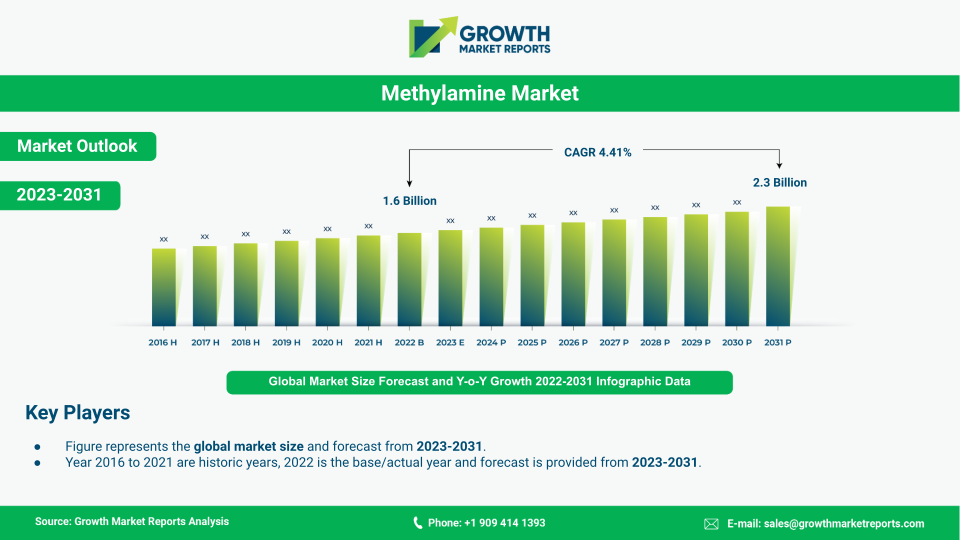
According to our latest research, the global methylamine market size in 2024 stands at USD 1.65 billion, reflecting a robust demand trajectory driven by its versatile industrial applications. The market is experiencing a healthy compound annual growth rate (CAGR) of 4.8% from 2025 to 2033, with the market projected to reach USD 2.53 billion by 2033. This growth is primarily attributed to the rising consumption of methylamine in pharmaceuticals, agrochemicals, and chemical manufacturing sectors, alongside expanding industrialization in emerging economies. As per the latest research, the methylamine market continues to demonstrate significant momentum, buoyed by innovations in downstream applications and an evolving regulatory landscape.
One of the primary growth factors for the methylamine market is its indispensable role in the pharmaceutical industry. Methylamine serves as a crucial building block in the synthesis of various active pharmaceutical ingredients (APIs), intermediates, and excipients. The increasing global demand for medications, especially in the wake of heightened healthcare awareness and population growth, has consequently spurred the need for methylamine. Additionally, the ongoing research and development activities in drug discovery are further propelling the utilization of methylamine, as it is often required for the development of novel compounds. The pharmaceutical sector’s expansion in both developed and emerging markets is expected to sustain the upward trajectory of methylamine demand throughout the forecast period.
Another significant driver is the growing use of methylamine in the agrochemical sector. Methylamine is a key raw material in the production of pesticides, herbicides, and fungicides, all of which are essential for modern agriculture. The global push for higher agricultural productivity to meet the food demands of a burgeoning population has led to increased utilization of agrochemicals, thereby boosting methylamine consumption. Furthermore, the adoption of advanced farming techniques and the expansion of arable land in developing regions are contributing to this growth. The agrochemical industry’s focus on innovation and the introduction of new crop protection products are also expected to reinforce the demand for methylamine in the coming years.
The chemical industry’s broadening scope is another vital element supporting the methylamine market’s expansion. Methylamine finds extensive application as an intermediate in the synthesis of various chemicals, solvents, and rubber products. Its versatility and effectiveness in facilitating chemical reactions make it a preferred choice among manufacturers. Moreover, the growing demand for specialty chemicals and the rise of end-use industries such as paints, coatings, and adhesives are fueling the market’s growth. The ability of methylamine to enhance the performance characteristics of these products further cements its position as a critical component in the chemical value chain. This sustained industrial demand, coupled with ongoing investments in production capacity, is expected to maintain the market’s positive outlook.
Regionally, Asia Pacific stands out as the dominant market for methylamine, accounting for the largest share in 2024. The region’s leadership is underpinned by the rapid expansion of the pharmaceutical, agrochemical, and chemical industries, particularly in China and India. North America and Europe also represent significant markets, driven by advanced manufacturing capabilities and a strong focus on innovation. Meanwhile, Latin America and the Middle East & Africa are witnessing steady growth, supported by increasing industrialization and investment in infrastructure. The regional dynamics of the methylamine market are characterized by a combination of mature markets with stable demand and emerging economies with high growth potential, creating a balanced and diversified landscape for market participants.
The methylamine market by product type is broadly segmented into anhydrous methylamine and aqueous methylamine. Anhydrous methylamine holds a significant share due to its widespread use as a key intermediate in the synthesis of pharmaceuticals, agrochemicals, and various industrial chemicals. Its high purity and reactivity make it suitable for applications where water content must be minimized, such as in the production of certain specialty chemicals and advanced materials. The demand for anhydrous methylamine is particularly strong in regions with established pharmaceutical and chemical manufacturing hubs, where stringent quality standards are paramount. Additionally, the growing focus on high-performance materials in industries such as electronics and automotive further drives the consumption of anhydrous methylamine.
Aqueous methylamine, on the other hand, is gaining traction owing to its ease of handling, storage, and transportation. The aqueous form is often preferred in applications where dilution is required or where the presence of water does not adversely affect the end product. This segment is witnessing increased adoption in the agrochemical sector, where aqueous solutions are commonly used for the formulation of pesticides and fertilizers. The lower cost and reduced handling risks associated with aqueous methylamine make it an attractive option for small and medium-scale manufacturers. Moreover, regulatory guidelines favoring safer chemical handling practices are further propelling the demand for aqueous methylamine across various end-use industries.
The competitive dynamics within the product type segment are influenced by factors such as production capacity, technological advancements, and regulatory compliance. Leading manufacturers are investing in state-of-the-art production facilities to ensure consistent quality and supply of both anhydrous and aqueous methylamine. The ability to offer customized solutions tailored to specific industry requirements is emerging as a key differentiator among market players. Furthermore, the development of innovative packaging and transportation solutions is helping companies enhance their value proposition and strengthen their market position.
Looking ahead, the product type segment is expected to witness continued innovation and diversification. Advancements in process technology are enabling the production of high-purity methylamine with improved efficiency and reduced environmental impact. The integration of digital technologies and automation in manufacturing processes is also contributing to enhanced product quality and operational efficiency. As industries increasingly prioritize sustainability and regulatory compliance, the demand for eco-friendly and safe methylamine products is anticipated to rise, shaping the future trajectory of the product type segment.
| Attributes | Details |
| Report Title | Methylamine Market Research Report 2033 |
| By Product Type | Anhydrous Methylamine, Aqueous Methylamine |
| By Application | Pharmaceuticals, Agrochemicals, Chemicals, Solvents, Rubber, Others |
| By End-Use Industry | Pharmaceutical, Agriculture, Chemical, Rubber, Others |
| By Distribution Channel | Direct Sales, Distributors, Online Sales, Others |
| Regions Covered | North America, Europe, APAC, Latin America, MEA |
| Base Year | 2024 |
| Historic Data | 2018-2023 |
| Forecast Period | 2025-2033 |
| Number of Pages | 290 |
| Number of Tables & Figures | 391 |
| Customization Available | Yes, the report can be customized as per your need. |
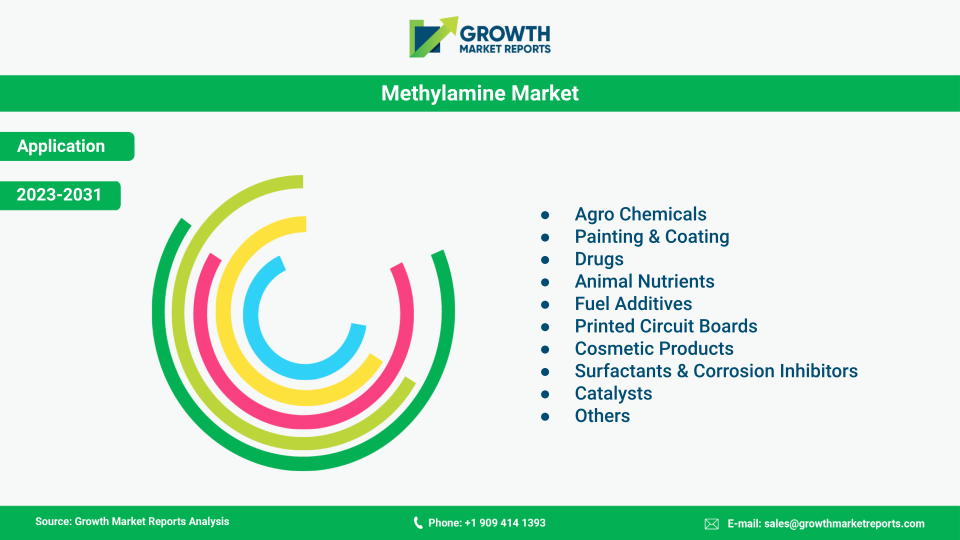
The application segment of the methylamine market encompasses a diverse range of industries, including pharmaceuticals, agrochemicals, chemicals, solvents, rubber, and others. Pharmaceuticals represent a major application area, with methylamine serving as a critical precursor in the synthesis of drugs, antibiotics, and other medicinal compounds. The rising prevalence of chronic diseases, coupled with increased healthcare spending, is driving the demand for pharmaceutical products globally. This, in turn, is fueling the consumption of methylamine as manufacturers strive to meet the growing need for high-quality medications. The continuous introduction of new drugs and the expansion of generic drug manufacturing are expected to sustain the robust demand for methylamine in the pharmaceutical sector.
In the agrochemical industry, methylamine is widely used in the production of pesticides, herbicides, and fungicides. The need to enhance crop yields and protect against pests and diseases is prompting farmers and agricultural companies to adopt advanced agrochemical solutions. Methylamine-based products are favored for their efficacy and compatibility with a wide range of crops and farming practices. The increasing adoption of sustainable agriculture practices and integrated pest management systems is also contributing to the growth of this application segment. Furthermore, government initiatives aimed at ensuring food security and promoting agricultural productivity are expected to drive further investments in agrochemical production, thereby boosting methylamine demand.
The chemical and solvent industries constitute another significant application area for methylamine. It is utilized as an intermediate in the synthesis of various chemicals, including surfactants, dyes, and resins. The versatility of methylamine in facilitating chemical reactions and improving product performance makes it a preferred choice among manufacturers. In the solvent industry, methylamine is used in the formulation of industrial cleaning agents, coatings, and adhesives. The ongoing shift towards high-performance and environmentally friendly chemicals is expected to create new opportunities for methylamine-based products in these sectors. Additionally, the growth of end-use industries such as automotive, construction, and electronics is driving the demand for specialty chemicals and solvents, further supporting the market’s expansion.
The rubber industry also relies on methylamine for the production of accelerators and other additives used in rubber processing. The increasing demand for high-quality rubber products in automotive, aerospace, and industrial applications is contributing to the growth of this segment. Methylamine-based additives enhance the durability, flexibility, and performance of rubber products, making them suitable for a wide range of demanding applications. The ongoing innovation in rubber compounding and the development of advanced materials are expected to drive further demand for methylamine in this industry. Other applications, such as water treatment and personal care products, also contribute to the overall market growth, reflecting the broad utility of methylamine across diverse sectors.
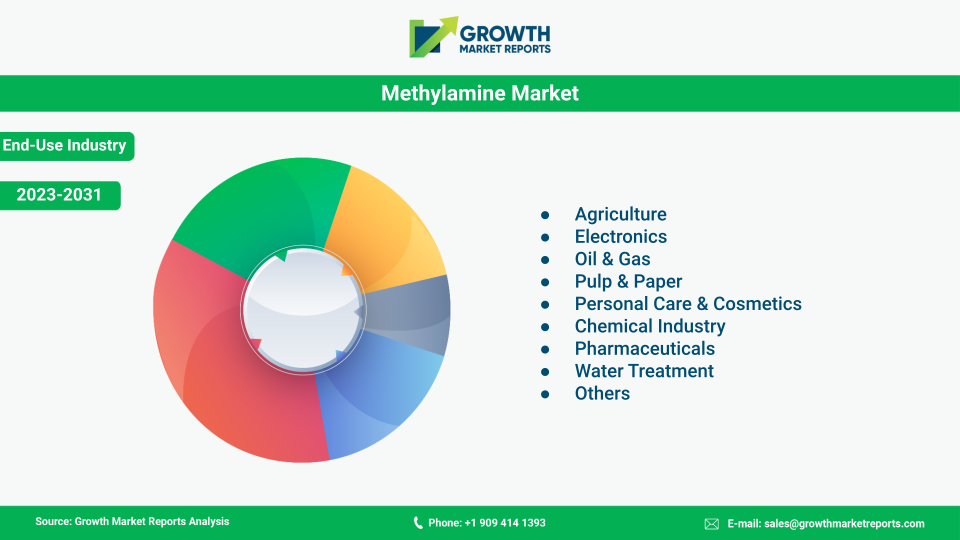
The end-use industry segment of the methylamine market is segmented into pharmaceutical, agriculture, chemical, rubber, and others. The pharmaceutical industry is a dominant consumer of methylamine, leveraging its chemical properties for the synthesis of various drugs and intermediates. The industry's stringent quality standards and regulatory requirements necessitate the use of high-purity methylamine, driving investments in advanced production technologies. The ongoing expansion of pharmaceutical manufacturing facilities, particularly in Asia Pacific and North America, is expected to sustain the strong demand for methylamine in this sector. Furthermore, collaborations between pharmaceutical companies and chemical manufacturers are facilitating the development of new applications and formulations, further expanding the market’s scope.
The agriculture industry is another major end-use sector, with methylamine playing a vital role in the production of agrochemicals. The need to enhance crop productivity and ensure food security is prompting increased investments in modern farming practices and crop protection solutions. Methylamine-based agrochemicals are valued for their effectiveness in controlling pests and diseases, as well as their compatibility with a wide range of crops. The adoption of precision agriculture and integrated pest management systems is driving further innovation in agrochemical formulations, creating new opportunities for methylamine suppliers. Additionally, government policies supporting sustainable agriculture and the use of environmentally friendly inputs are expected to boost the demand for methylamine in this sector.
The chemical industry’s demand for methylamine is driven by its role as a versatile intermediate in the synthesis of various specialty and commodity chemicals. The industry’s focus on innovation and the development of high-value products is creating new avenues for methylamine utilization. The increasing demand for performance chemicals in sectors such as automotive, electronics, and construction is further supporting the growth of this end-use segment. Companies are investing in research and development to explore new applications and improve the efficiency of methylamine-based processes. The integration of digital technologies and automation in chemical manufacturing is also contributing to enhanced productivity and product quality, reinforcing the market’s positive outlook.
The rubber industry’s reliance on methylamine is centered on its use in the production of accelerators and other additives that enhance the performance of rubber products. The growing demand for high-performance rubber materials in automotive, aerospace, and industrial applications is driving innovation in rubber compounding and processing. Methylamine-based additives are favored for their ability to improve the durability, flexibility, and resilience of rubber products, making them suitable for a wide range of demanding applications. The ongoing development of advanced materials and the expansion of manufacturing capacity in key regions are expected to drive further growth in this end-use segment. Other industries, such as water treatment and personal care, also contribute to the overall demand for methylamine, reflecting its broad utility and adaptability.
The distribution channel segment in the methylamine market comprises direct sales, distributors, online sales, and others. Direct sales remain the preferred channel for large-scale industrial buyers, particularly in the pharmaceutical and chemical sectors. Companies that require consistent supply and high-purity methylamine often establish long-term contracts with manufacturers to ensure reliability and quality. Direct sales channels enable manufacturers to build strong customer relationships, offer customized solutions, and provide technical support. This approach is particularly effective in markets where regulatory compliance and product traceability are critical considerations. The trend towards vertical integration among major players is further strengthening the direct sales channel, allowing companies to enhance their market control and operational efficiency.
Distributors play a crucial role in expanding the reach of methylamine products, especially in regions with fragmented demand or where manufacturers lack a direct presence. Distributors leverage their local market knowledge, logistics capabilities, and established customer networks to facilitate the efficient distribution of methylamine to small and medium-sized enterprises. This channel is particularly important in emerging markets, where access to reliable supply chains and technical support can be limited. Distributors also provide value-added services such as inventory management, regulatory compliance assistance, and after-sales support, helping to bridge the gap between manufacturers and end-users.
Online sales are emerging as a significant distribution channel, driven by the increasing digitization of procurement processes and the growing preference for e-commerce platforms among industrial buyers. Online channels offer convenience, transparency, and access to a wide range of products, enabling customers to compare prices, specifications, and delivery options. The adoption of digital platforms is particularly pronounced in developed markets, where companies are investing in digital transformation to streamline their supply chains and improve operational efficiency. Online sales channels also facilitate market entry for new players and enable manufacturers to reach a broader customer base with minimal investment in physical infrastructure.
Other distribution channels, such as third-party logistics providers and specialized chemical traders, also contribute to the efficient movement of methylamine products across regions and industries. These channels offer tailored solutions for complex supply chain requirements, such as handling hazardous materials, managing cross-border shipments, and ensuring compliance with international regulations. The growing complexity of global supply chains and the increasing demand for just-in-time delivery are driving innovation in distribution strategies, with companies exploring new models to enhance flexibility, responsiveness, and customer satisfaction. The integration of advanced technologies such as real-time tracking, predictive analytics, and blockchain is further transforming the distribution landscape, enabling greater transparency, efficiency, and security in the methylamine market.
The methylamine market presents several compelling opportunities for growth and innovation. One of the most significant opportunities lies in the development of advanced pharmaceutical and agrochemical products that leverage the unique properties of methylamine. The ongoing expansion of the pharmaceutical industry, particularly in emerging markets, is creating new avenues for methylamine utilization in the synthesis of high-value drugs and intermediates. Similarly, the increasing adoption of precision agriculture and integrated pest management practices is driving demand for innovative agrochemical formulations, providing opportunities for methylamine suppliers to develop tailored solutions that meet evolving market needs. The growing focus on sustainability and environmental responsibility is also opening up opportunities for the development of eco-friendly methylamine products and processes, as industries seek to reduce their environmental footprint and comply with stringent regulatory requirements.
Another key opportunity for market players is the adoption of digital technologies and advanced manufacturing processes to enhance operational efficiency, product quality, and supply chain management. The integration of automation, artificial intelligence, and data analytics in methylamine production and distribution is enabling companies to optimize resource utilization, minimize waste, and improve decision-making. These advancements are also facilitating the development of customized products and solutions that address specific customer requirements, thereby enhancing competitiveness and market differentiation. Strategic collaborations and partnerships between manufacturers, research institutions, and end-users are further accelerating innovation and enabling the rapid commercialization of new applications and technologies in the methylamine market.
Despite these opportunities, the methylamine market faces certain restraining factors that could hinder its growth. One of the primary challenges is the stringent regulatory environment governing the production, handling, and transportation of methylamine, which is classified as a hazardous chemical. Compliance with safety, health, and environmental regulations requires significant investments in infrastructure, training, and monitoring, increasing operational costs for manufacturers. Additionally, concerns related to the potential health and environmental impacts of methylamine exposure are prompting regulatory agencies to impose stricter controls and oversight, which could limit market expansion in certain regions. The volatility of raw material prices and supply chain disruptions also pose risks to the stability and profitability of the methylamine market, necessitating proactive risk management and contingency planning by industry participants.
The Asia Pacific region dominates the global methylamine market, accounting for approximately 48% of the total market size in 2024, which translates to a value of around USD 792 million. The region’s leadership is driven by the rapid growth of the pharmaceutical, agrochemical, and chemical industries, particularly in China and India. The presence of a large and expanding manufacturing base, coupled with favorable government policies and investments in infrastructure, is supporting the strong demand for methylamine. The region is also witnessing significant investments in research and development, leading to the introduction of innovative products and applications. The Asia Pacific market is projected to maintain a robust CAGR of 5.6% through 2033, outpacing other regions and reinforcing its position as the primary growth engine for the global methylamine market.
North America represents the second-largest market for methylamine, with a market size of approximately USD 412 million in 2024. The region’s advanced pharmaceutical and chemical manufacturing capabilities, coupled with a strong focus on innovation and regulatory compliance, are driving the demand for high-quality methylamine products. The United States is the dominant market within the region, supported by a well-established industrial base and significant investments in research and development. The growing emphasis on sustainable manufacturing practices and the adoption of digital technologies are further shaping the regional market dynamics. North America is expected to witness steady growth over the forecast period, with a focus on high-value applications and customized solutions.
Europe holds a market share of about 22%, translating to a value of USD 363 million in 2024. The region’s demand for methylamine is driven by its robust pharmaceutical, agrochemical, and specialty chemical industries. Germany, France, and the United Kingdom are the leading markets within Europe, supported by advanced manufacturing capabilities and a strong emphasis on quality and regulatory compliance. The region is also witnessing increased investments in sustainable and eco-friendly products, reflecting the growing importance of environmental responsibility in industrial operations. Latin America and the Middle East & Africa collectively account for the remaining market share, with a combined value of USD 83 million in 2024. These regions are experiencing steady growth, supported by increasing industrialization, infrastructure development, and investments in key end-use sectors such as agriculture and chemicals.
The global methylamine market is characterized by a moderately consolidated competitive landscape, with a mix of multinational corporations and regional players vying for market share. Leading companies are focused on expanding their production capacities, investing in research and development, and enhancing their distribution networks to strengthen their market position. The ability to offer high-purity methylamine products, customized solutions, and reliable supply chains is emerging as a key differentiator among market participants. Strategic collaborations, mergers, and acquisitions are also prevalent, as companies seek to expand their product portfolios, access new markets, and leverage synergies to drive growth and innovation.
Innovation remains at the forefront of competitive strategy in the methylamine market, with companies investing in advanced manufacturing technologies, process optimization, and sustainable practices. The integration of automation, digitalization, and data analytics is enabling manufacturers to enhance operational efficiency, reduce costs, and improve product quality. Environmental sustainability is also a major focus, with leading players developing eco-friendly production processes and products to meet the evolving expectations of customers and regulators. The ability to anticipate and respond to changing market trends, regulatory requirements, and customer preferences is critical for maintaining a competitive edge in the dynamic methylamine market.
The competitive landscape is further shaped by the growing importance of supply chain resilience and risk management. Companies are investing in robust logistics networks, diversified sourcing strategies, and contingency planning to mitigate the impact of supply chain disruptions and ensure business continuity. The adoption of digital technologies such as real-time tracking, predictive analytics, and blockchain is enhancing transparency, traceability, and efficiency across the value chain. Customer-centricity is also a key focus, with companies striving to deliver value-added services, technical support, and tailored solutions to meet the diverse needs of their clients across different industries and regions.
Major companies operating in the global methylamine market include Eastman Chemical Company, BASF SE, Balaji Amines Ltd., MCF Ltd., Mitsubishi Gas Chemical Company, Ltd., Celanese Corporation, and Alkyl Amines Chemicals Ltd. Eastman Chemical Company and BASF SE are recognized for their extensive product portfolios, global presence, and strong focus on innovation and sustainability. Balaji Amines Ltd. and Alkyl Amines Chemicals Ltd. have established themselves as key players in the Asia Pacific region, leveraging their manufacturing capabilities and market expertise to cater to the growing demand in emerging markets. Mitsubishi Gas Chemical Company, Ltd. and Celanese Corporation are known for their advanced technologies and commitment to quality and safety. These companies are actively investing in capacity expansion, research and development, and strategic partnerships to capitalize on new opportunities and address emerging challenges in the methylamine market.
In summary, the competitive outlook for the methylamine market is shaped by a combination of innovation, operational excellence, sustainability, and customer focus. Leading players are leveraging their strengths to drive growth, enhance market share, and deliver value to stakeholders across the global value chain. As the market continues to evolve, companies that can effectively anticipate and respond to changing industry dynamics will be best positioned to succeed in the increasingly competitive and complex methylamine market landscape.
The Methylamine market has been segmented on the basis of
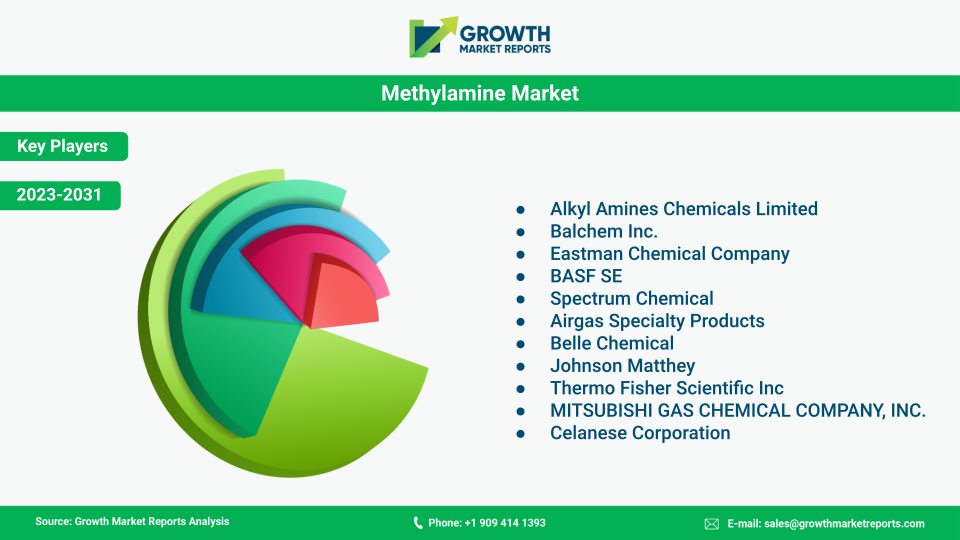
Key players operating in the market are Alkyl Amines Chemicals Limited, Balchem Inc., Eastman Chemical Company, BASF SE, Spectrum Chemical, Airgas Specialty Products, Belle Chemical, Johnson Matthey, Thermo Fisher Scientific Inc., MITSUBISHI GAS CHEMICAL COMPANY, INC., and Celanese Corporation. These companies are considered key manufacturers of methylamine based on their revenue, research development (R&D) activities, product offerings, regional presence, and supply chain management system.
Players are adopting key strategies such as acquisitions, collaborations, and geographical expansion for potential opportunities in the methylamine market.
The base year considered for the global methylamine market report is 2021. The complete analysis period is 2015 to 2030, wherein, 2015 to 2020 are the historic years, and the forecast is provided from 2022 to 2030.
Major players include Alkyl Amines Chemicals Limited, Balchem Inc., Eastman Chemical Company, BASF SE, Spectrum Chemical, Airgas Specialty Products, Belle Chemical, Johnson Matthey, Thermo Fisher Scientific Inc., MITSUBISHI GAS CHEMICAL COMPANY, INC., and Celanese Corporation.
Factors such as R&D, environmental impact, GDP, disposable income, and others are analyzed in the final report.
According to this GMR report, the global methylamine market is expected to register a CAGR of 4.41% during the forecast period, 2022-2030, with an anticipated valuation of USD 2,329.8 million by the end of 2030.
The global methylamine market is projected to expand at a rapid pace globally, owing to the rising demand for methylamine for food production.
Factors such as competitive strength and market positioning are key areas considered while selecting top companies to be profiled.
Additional company profiles are provided on request For a discussion related to the above findings, click Speak to Analyst