Metal Fiber Market Research Report 2033

Metal Fiber Market Research Report 2033

Segments - by Product Type (Stainless Steel Fiber, Copper Fiber, Aluminum Fiber, Nickel Fiber, Others), by Application (Textiles, Filtration, Automotive, Aerospace, Electronics, Construction, Others), by End-Use Industry (Automotive, Aerospace & Defense, Textile, Electronics, Construction, Others)

https://growthmarketreports.com/Raksha
Author : Raksha Sharma
https://growthmarketreports.com/Vaibhav
Fact-checked by : V. Chandola
https://growthmarketreports.com/Shruti
Editor : Shruti Bhat

Upcoming | Report ID :MC-171 | 4.9 Rating | 57 Reviews | 299 Pages | Format : Docx PDF

Report Description


Metal Fiber Market Outlook

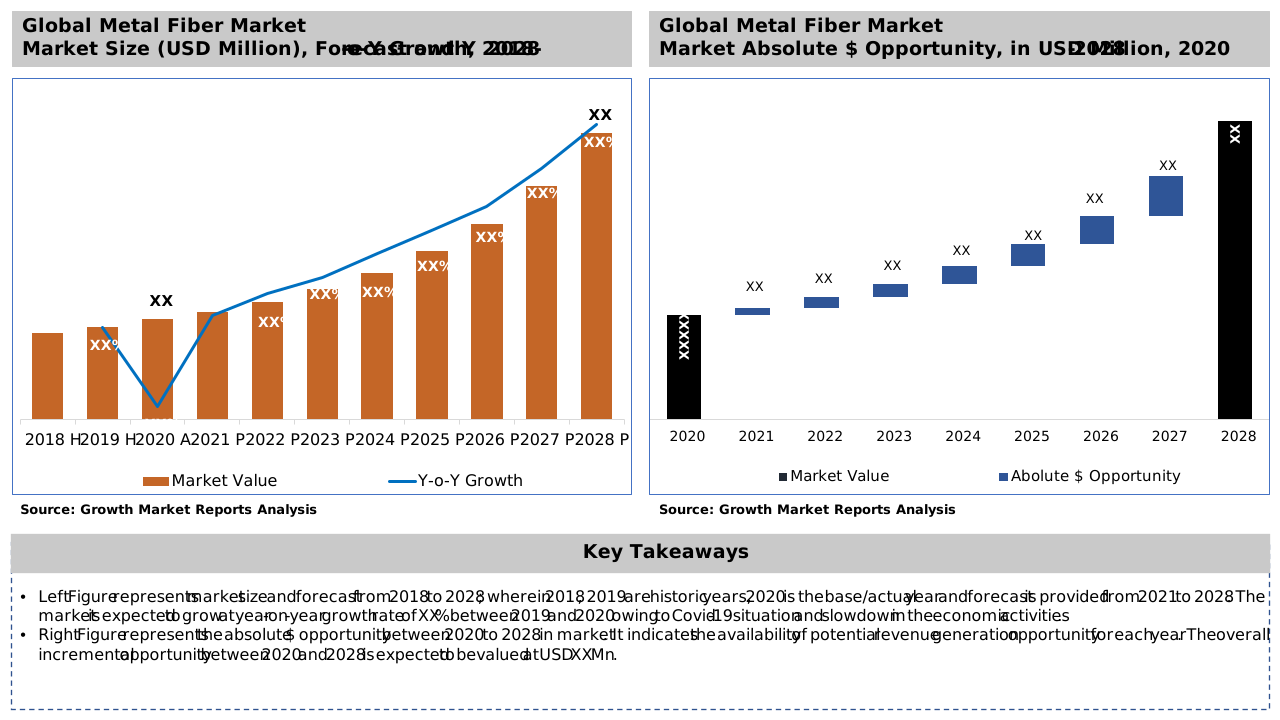
According to our latest research, the global metal fiber market size reached USD 5.2 billion in 2024, demonstrating robust demand across diverse industrial sectors. The market is projected to expand at a CAGR of 7.1% from 2025 to 2033, propelling the total market value to approximately USD 9.7 billion by 2033. This impressive growth trajectory is primarily driven by the increasing adoption of metal fibers in advanced applications such as filtration, automotive components, and high-performance textiles, supported by ongoing technological innovations and the rising need for durable, conductive, and heat-resistant materials.

One of the primary growth factors for the metal fiber market is the rising demand for high-performance materials in industries such as automotive, aerospace, and electronics. Metal fibers, particularly stainless steel and copper fibers, offer unique properties including exceptional strength, corrosion resistance, and electrical conductivity, making them indispensable in the manufacture of critical components such as airbags, EMI shielding, and filtration media. As manufacturers continue to seek lightweight yet robust alternatives to traditional materials, metal fibers have emerged as a preferred choice, especially in applications where mechanical resilience and thermal stability are paramount. Furthermore, the ongoing shift towards electric vehicles and the proliferation of electronic devices have stimulated the need for advanced conductive materials, further boosting market growth.

Another significant growth driver is the increasing focus on sustainability and environmental regulations, which has led to a surge in the adoption of metal fibers for filtration applications. Metal fiber filters are highly valued for their durability, reusability, and ability to withstand extreme temperatures, making them ideal for industrial gas and liquid filtration systems. This is particularly relevant in industries such as oil and gas, chemical processing, and power generation, where stringent emission norms and the need for efficient particulate removal are critical. The push for cleaner production processes and the reduction of industrial emissions have accelerated the deployment of metal fiber-based filtration solutions, thereby creating new avenues for market expansion.

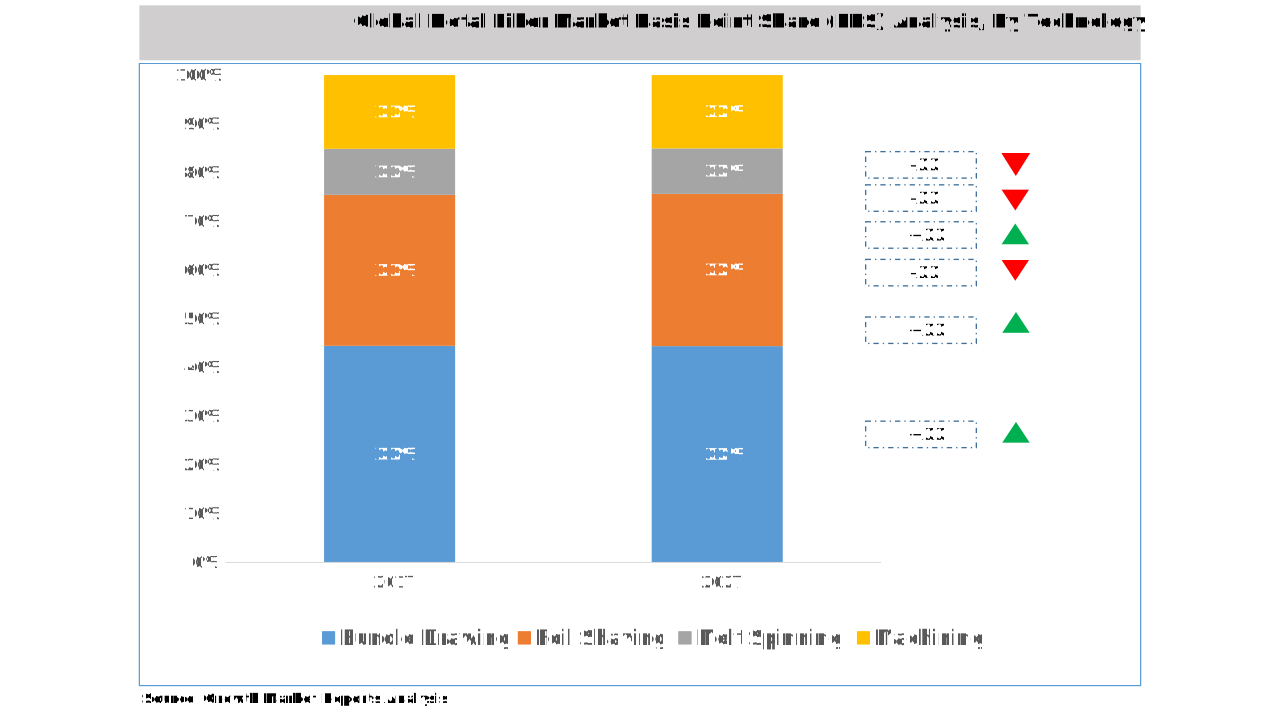
In addition, advancements in manufacturing technologies such as spinning, drawing, and sintering have significantly improved the quality and consistency of metal fibers, enabling their use in high-value applications. The integration of metal fibers into technical textiles, for instance, has revolutionized the production of fabrics with enhanced functionalities such as antimicrobial properties, electromagnetic interference shielding, and fire resistance. These innovative applications are gaining traction in sectors ranging from healthcare and defense to consumer electronics and smart textiles. The continuous investment in research and development, coupled with strategic collaborations between material scientists and end-use industries, is expected to fuel further market growth over the forecast period.

From a regional perspective, Asia Pacific continues to dominate the global metal fiber market, accounting for the largest share in 2024, driven by rapid industrialization, robust manufacturing infrastructure, and the presence of leading automotive and electronics industries. North America and Europe also represent significant markets, characterized by advanced technological capabilities, stringent quality standards, and a strong focus on innovation. The Middle East & Africa and Latin America are witnessing gradual growth, supported by increasing investments in infrastructure and industrial development. The regional distribution of demand reflects the diverse application landscape and the varying pace of industrialization and technological adoption across key geographies.

Global Metal Fiber Industry Outlook

Product Type Analysis

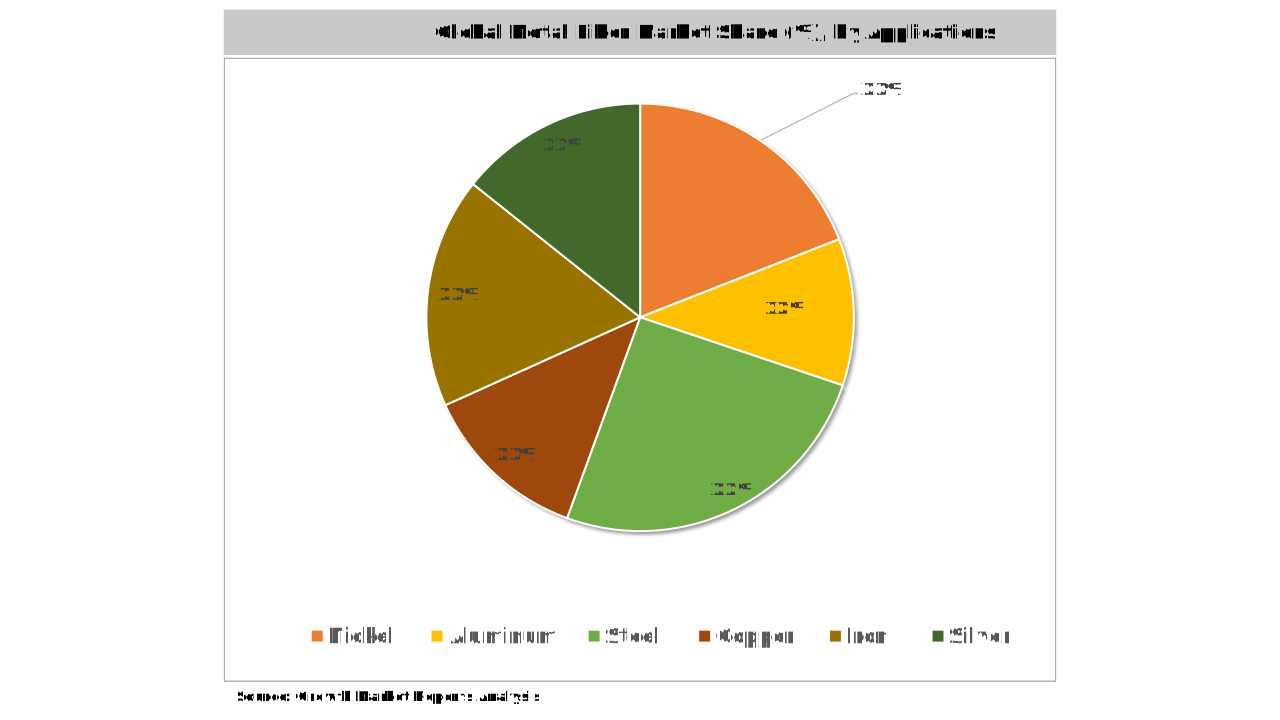
The metal fiber market is segmented by product type into stainless steel fiber, copper fiber, aluminum fiber, nickel fiber, and others. Stainless steel fiber remains the most widely used product, owing to its excellent corrosion resistance, mechanical strength, and versatility across a broad range of applications. In 2024, stainless steel fiber accounted for the largest share of the market, driven by its extensive use in filtration, construction, and automotive applications. The unique properties of stainless steel fibers, such as high tensile strength and resistance to oxidation, make them ideal for demanding environments where durability and longevity are required. As industries continue to prioritize performance and reliability, the demand for stainless steel fiber is expected to remain strong.

Copper fiber is another significant segment, primarily valued for its superior electrical and thermal conductivity. The electronics and telecommunications industries are the primary consumers of copper fiber, utilizing it in applications such as EMI shielding, signal transmission, and heat dissipation. The growing adoption of smart devices, 5G infrastructure, and electric vehicles has further increased the demand for copper fiber, as manufacturers seek materials that can enhance the performance and efficiency of electronic components. Additionally, copper fiber is increasingly being used in technical textiles for applications requiring antistatic and antimicrobial properties, further diversifying its application scope.

Aluminum fiber, while less prevalent than stainless steel and copper, is gaining traction due to its lightweight nature and resistance to corrosion. Aluminum fibers are particularly favored in the automotive and aerospace industries, where weight reduction is a critical factor for improving fuel efficiency and performance. The ability of aluminum fibers to provide structural reinforcement without adding significant weight has made them a material of choice for composite materials and lightweight components. As the transportation sector continues to emphasize sustainability and energy efficiency, the demand for aluminum fiber is expected to witness steady growth.

Nickel fiber and other specialty metal fibers, such as titanium and silver, cater to niche applications requiring specific functionalities, such as high-temperature resistance, chemical stability, and enhanced conductivity. Nickel fiber, for example, is extensively used in applications involving extreme temperatures and corrosive environments, such as battery electrodes, fuel cells, and specialty filtration systems. The increasing focus on renewable energy and advanced energy storage solutions is likely to drive demand for nickel and other specialty metal fibers in the coming years. Overall, the product type segment is characterized by a diverse range of materials, each offering unique properties tailored to specific industrial needs.

Report Scope

Attributes Details
Report Title Metal Fiber Market Research Report 2033
By Product Type Stainless Steel Fiber, Copper Fiber, Aluminum Fiber, Nickel Fiber, Others
By Application Textiles, Filtration, Automotive, Aerospace, Electronics, Construction, Others
By End-Use Industry Automotive, Aerospace & Defense, Textile, Electronics, Construction, Others
Regions Covered North America, Europe, APAC, Latin America, MEA
Base Year 2024
Historic Data 2018-2023
Forecast Period 2025-2033
Number of Pages 299
Number of Tables & Figures 290
Customization Available Yes, the report can be customized as per your need.

Application Analysis

The application segment of the metal fiber market encompasses textiles, filtration, automotive, aerospace, electronics, construction, and others. Among these, filtration represents one of the fastest-growing applications, driven by the need for efficient particulate removal in industrial processes and environmental protection. Metal fiber filters offer exceptional durability, high filtration efficiency, and the ability to withstand harsh operating conditions, making them suitable for use in industries such as oil and gas, chemical processing, and power generation. The increasing implementation of stringent environmental regulations and the growing emphasis on sustainable manufacturing practices are expected to further propel the demand for metal fiber-based filtration solutions.

Textiles represent another significant application area, with metal fibers being integrated into fabrics to impart advanced functionalities such as antibacterial properties, fire resistance, and electromagnetic shielding. The adoption of metal fibers in technical textiles is particularly prominent in sectors such as healthcare, defense, and sportswear, where performance and safety are paramount. For instance, the use of stainless steel fibers in protective clothing and uniforms has enhanced their durability and resistance to extreme conditions. As the market for smart textiles and wearable electronics continues to expand, the integration of metal fibers into fabrics is expected to unlock new opportunities for innovation and growth.

In the automotive and aerospace sectors, metal fibers are increasingly being used to enhance the performance, safety, and efficiency of vehicles and aircraft. Applications include the reinforcement of composite materials, the manufacture of lightweight components, and the development of advanced filtration systems for air and fluid management. The transition towards electric vehicles and the growing focus on fuel efficiency have further accelerated the adoption of metal fibers in these industries. Additionally, the use of metal fibers in brake pads, clutches, and exhaust systems has contributed to improved performance and reduced emissions, aligning with the broader industry trends towards sustainability and environmental responsibility.

The electronics industry relies heavily on metal fibers for applications such as electromagnetic interference (EMI) shielding, signal transmission, and thermal management. The proliferation of electronic devices, coupled with the rapid advancement of wireless communication technologies, has created a strong demand for materials that can enhance the performance and reliability of electronic components. Metal fibers, particularly copper and nickel, are well-suited for these applications due to their superior conductivity and shielding effectiveness. As the Internet of Things (IoT) and 5G networks continue to expand, the role of metal fibers in the electronics sector is expected to become even more prominent.

End-Use Industry Analysis

The end-use industry segment of the metal fiber market includes automotive, aerospace & defense, textile, electronics, construction, and others. The automotive industry represents a major consumer of metal fibers, leveraging their unique properties to improve vehicle safety, performance, and efficiency. Metal fibers are used in the production of airbags, brake pads, exhaust systems, and various composite materials, contributing to enhanced durability and reduced weight. The shift towards electric and hybrid vehicles has further increased the demand for metal fibers, as manufacturers seek materials that can support the development of lightweight, high-performance components.

Aerospace & defense is another key end-use industry, where the stringent requirements for safety, reliability, and performance necessitate the use of advanced materials such as metal fibers. Applications in this sector include the reinforcement of structural components, the development of fire-resistant and anti-static materials, and the manufacture of high-performance filtration systems. The ongoing modernization of military equipment and the increasing adoption of unmanned aerial vehicles (UAVs) are expected to drive further demand for metal fibers in aerospace and defense applications. The ability of metal fibers to withstand extreme temperatures, mechanical stress, and corrosive environments makes them indispensable in this highly demanding industry.

The textile industry is witnessing a growing trend towards the incorporation of metal fibers into fabrics to enhance their functionality and performance. Metal fibers are used to produce textiles with antibacterial, antistatic, and fire-resistant properties, catering to the needs of healthcare, industrial, and protective clothing sectors. The rise of smart textiles and wearable technology has further fueled the demand for conductive metal fibers, enabling the integration of sensors and electronic components into fabrics. As consumer preferences shift towards high-performance and multifunctional textiles, the role of metal fibers in the textile industry is expected to expand significantly.

In the electronics and construction industries, metal fibers are valued for their ability to provide structural reinforcement, electrical conductivity, and thermal management. In electronics, metal fibers are used in EMI shielding, signal transmission, and the production of advanced circuit boards. In construction, metal fibers are incorporated into concrete and composite materials to enhance their strength, durability, and resistance to cracking. The ongoing infrastructure development and the increasing adoption of smart building technologies are expected to drive further growth in these end-use industries. The versatility of metal fibers and their ability to meet the evolving needs of diverse industries underscore their importance in the global market.

Opportunities & Threats

One of the most promising opportunities in the metal fiber market lies in the development of advanced filtration and environmental protection solutions. As industries worldwide face increasing pressure to comply with stringent emission norms and improve energy efficiency, the demand for high-performance filtration systems is expected to surge. Metal fibers, with their exceptional durability, high temperature resistance, and reusability, are ideally suited for use in industrial gas and liquid filtration applications. The growing focus on sustainability and the circular economy is likely to drive further innovation in metal fiber-based filtration technologies, creating new growth avenues for market players. Additionally, the expansion of the renewable energy sector, particularly in wind and solar power generation, presents significant opportunities for the use of metal fibers in energy storage, power transmission, and structural reinforcement applications.

Another key opportunity for the metal fiber market is the integration of metal fibers into smart textiles and wearable electronics. The convergence of materials science and digital technology has paved the way for the development of fabrics with embedded sensors, conductive pathways, and advanced functionalities such as temperature regulation and health monitoring. Metal fibers, especially those made from stainless steel, copper, and silver, are essential for enabling these capabilities due to their superior conductivity, flexibility, and biocompatibility. The rapid growth of the wearable technology market, coupled with increasing consumer demand for multifunctional and high-performance textiles, is expected to drive significant investment and innovation in this area. Strategic collaborations between material manufacturers, technology companies, and textile producers will be crucial in unlocking the full potential of metal fibers in next-generation smart textiles.

Despite the numerous growth opportunities, the metal fiber market faces several challenges that could restrain its expansion. One of the primary threats is the high cost of raw materials and production processes associated with metal fiber manufacturing. The extraction and processing of metals such as stainless steel, copper, and nickel are energy-intensive and subject to price volatility, which can impact the overall cost structure and profitability of metal fiber products. Additionally, the complexity of manufacturing processes such as spinning, drawing, and sintering requires significant investment in advanced equipment and skilled labor. These factors can pose barriers to entry for new market players and limit the adoption of metal fibers in cost-sensitive applications. Addressing these challenges will require ongoing innovation in manufacturing technologies, supply chain optimization, and the development of cost-effective alternatives to traditional metal fibers.

Regional Outlook

The Asia Pacific region dominates the global metal fiber market, accounting for approximately 42% of the total market value in 2024, or around USD 2.2 billion. This region’s leadership is driven by rapid industrialization, robust manufacturing infrastructure, and the strong presence of automotive, electronics, and textile industries in countries such as China, Japan, South Korea, and India. The growing emphasis on advanced manufacturing, coupled with significant investments in research and development, has enabled Asia Pacific to maintain its competitive edge in the global market. The region also benefits from a large and skilled workforce, favorable government policies, and increasing demand for high-performance materials in emerging applications. With a projected CAGR of 7.8% from 2025 to 2033, Asia Pacific is expected to remain the primary growth engine for the global metal fiber market.

North America represents the second-largest regional market, with a market size of approximately USD 1.3 billion in 2024. The region’s growth is underpinned by advanced technological capabilities, a strong focus on innovation, and the presence of leading companies in the automotive, aerospace, and electronics sectors. The United States, in particular, is a key contributor to regional demand, driven by the adoption of metal fibers in high-value applications such as filtration, EMI shielding, and technical textiles. The implementation of stringent environmental regulations and the increasing emphasis on sustainability have further accelerated the adoption of metal fiber-based solutions in North America. As the region continues to invest in infrastructure development and advanced manufacturing, the demand for metal fibers is expected to grow steadily over the forecast period.

Europe holds a significant share of the global metal fiber market, valued at approximately USD 1.1 billion in 2024. The region is characterized by a mature industrial base, a strong focus on quality and safety standards, and a well-established ecosystem of material manufacturers and end-use industries. Germany, France, and the United Kingdom are the leading markets within Europe, driven by the automotive, aerospace, and construction sectors. The increasing adoption of advanced materials for lightweighting, energy efficiency, and environmental protection is expected to drive further growth in the European market. Meanwhile, the Middle East & Africa and Latin America are witnessing gradual growth, with a combined market size of about USD 0.6 billion in 2024. These regions are benefiting from increasing investments in infrastructure, industrial development, and the adoption of advanced manufacturing technologies, although their overall market share remains smaller compared to Asia Pacific, North America, and Europe.

Metal Fiber Market Statistics

Competitor Outlook

The competitive landscape of the metal fiber market is characterized by the presence of several global and regional players, each striving to enhance their market position through product innovation, strategic partnerships, and capacity expansion. Leading companies are focusing on the development of high-performance metal fibers tailored to specific applications, such as filtration, technical textiles, and electronic components. The market is highly dynamic, with continuous investments in research and development aimed at improving the quality, consistency, and cost-effectiveness of metal fiber products. Companies are also leveraging advanced manufacturing technologies, such as precision spinning and sintering, to produce fibers with superior mechanical and functional properties. The ability to offer customized solutions and value-added services has become a key differentiator in this competitive market.

Strategic collaborations and mergers and acquisitions are common strategies employed by major players to expand their product portfolios, enter new markets, and strengthen their technological capabilities. For instance, partnerships between metal fiber manufacturers and end-use industries have facilitated the development of application-specific solutions, such as conductive textiles for wearable electronics and high-efficiency filtration systems for industrial processes. Companies are also investing in capacity expansion and the establishment of new production facilities, particularly in high-growth regions such as Asia Pacific, to meet the increasing demand for metal fibers. The focus on sustainability and environmental responsibility has prompted manufacturers to develop eco-friendly production processes and recyclable metal fiber products, aligning with the broader industry trends towards green manufacturing.

The market is also witnessing the entry of new players, particularly in emerging economies, where the demand for advanced materials is growing rapidly. These entrants are leveraging cost advantages, local market knowledge, and access to raw materials to compete with established players. However, the high capital requirements and technological complexities associated with metal fiber manufacturing pose significant barriers to entry, limiting the number of new entrants in the market. The intense competition and the need for continuous innovation have prompted companies to invest heavily in research and development, talent acquisition, and the adoption of digital technologies to enhance operational efficiency and product quality.

Some of the major companies operating in the global metal fiber market include Bekaert, Hunan Huitong Advanced Materials, Boegger Industrial Limited, Green Steel Group, IntraMicron, Fibrometals, and Nippon Seisen. Bekaert is recognized as a global leader in the production of stainless steel and other metal fibers, with a strong focus on innovation and sustainability. Hunan Huitong Advanced Materials is known for its expertise in the development of high-performance metal fibers for filtration and environmental protection applications. Boegger Industrial Limited specializes in the manufacture of metal fiber products for industrial filtration, construction, and technical textiles. Green Steel Group is a key player in the European market, offering a wide range of metal fiber solutions for automotive, aerospace, and construction sectors. IntraMicron and Fibrometals are notable for their advanced manufacturing capabilities and focus on niche applications such as energy storage and specialty filtration. Nippon Seisen, based in Japan, is renowned for its high-quality stainless steel fibers used in a variety of industrial and consumer applications.

These companies are continuously investing in research and development to enhance their product offerings and maintain their competitive edge in the market. They are also actively engaged in expanding their global footprint through strategic partnerships, acquisitions, and the establishment of new production facilities. The ability to provide customized solutions, maintain high quality standards, and respond quickly to changing market demands will be critical for success in the highly competitive metal fiber market. As the market continues to evolve, companies that can effectively leverage technological advancements, sustainability initiatives, and strategic collaborations will be well-positioned to capitalize on emerging opportunities and drive long-term growth.

Key Players

  • Bekaert
  • Nippon Seisen
  • Hunan Huitong Advanced Materials
  • Boegger Industrial Limited
  • IntraMicron
  • Addas Group
  • Green Steel Group
  • MBC Metal Fiber
  • Tongling Huacheng
  • Hunan Shuangwei
  • Hunan Sunshine Steel Fiber
  • Hunan Hengwei
  • Hunan Hongda
  • Hunan Fuhang New Material
  • Hunan Ouyamei
  • Hunan Techuang
  • Hunan Zhongxin
  • Yunfu Honghai
  • Hunan Jiweixin
  • Hunan Yinfeng
Metal Fiber Market Overview

Segments

The Metal Fiber market has been segmented on the basis of

Product Type

  • Stainless Steel Fiber
  • Copper Fiber
  • Aluminum Fiber
  • Nickel Fiber
  • Others

Application

  • Textiles
  • Filtration
  • Automotive
  • Aerospace
  • Electronics
  • Construction
  • Others

End-Use Industry

  • Automotive
  • Aerospace & Defense
  • Textile
  • Electronics
  • Construction
  • Others

Competitive Landscape

Companies engage in R&D facilities, innovation, investments, and acquisitions to increase their market share and global presence. Some of the prominent players in the global metal fiber market include Fibrometals SRL, Green Steel Group, MBC Metal Limited, Nippon Seisen Co., Ltd, Addas Group, Guven Metal, BinNova Metal Fiber Technology GmbH, Stanford Advanced Materials, Arcelor Mittal, IntraMicron, Inc., N.V. Bekaert S.A., PPG Industries Ohio Inc., Fiberguide Industries Limited, Fibrezone India, and Sarda Industrial Enterprises.
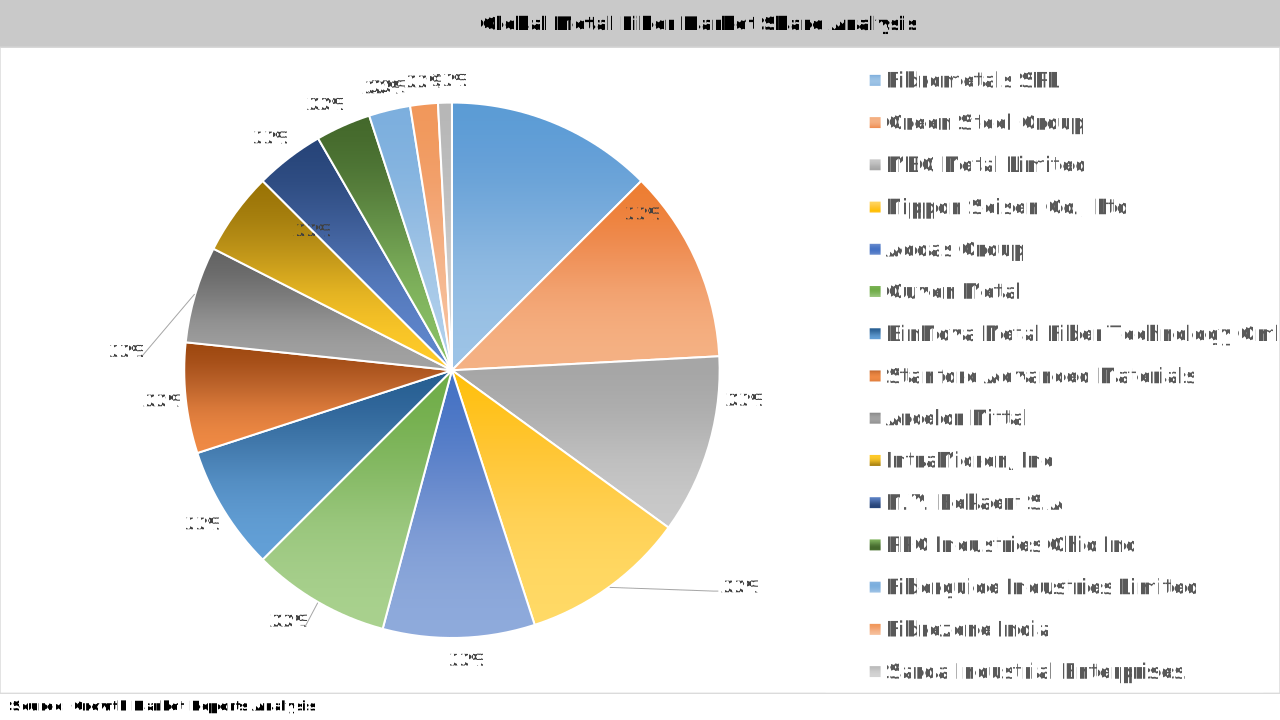

Global Metal Fiber Market Key Players

Frequently Asked Questions

Advancements in manufacturing processes like spinning, drawing, and sintering have improved the quality and consistency of metal fibers, enabling their use in high-value applications such as smart textiles, EMI shielding, and advanced filtration.

By application, the market is segmented into textiles, filtration, automotive, aerospace, electronics, construction, and others. By end-use industry, it includes automotive, aerospace & defense, textile, electronics, construction, and others.

Key players include Bekaert, Nippon Seisen, Hunan Huitong Advanced Materials, Boegger Industrial Limited, Green Steel Group, IntraMicron, Fibrometals, and several others, each focusing on innovation, capacity expansion, and strategic partnerships.

Opportunities include the development of advanced filtration solutions, integration into smart textiles and wearable electronics, and growth in renewable energy applications. Challenges include high raw material and production costs, as well as technological complexities.

Asia Pacific leads the global metal fiber market with about 42% share, followed by North America and Europe. The Middle East & Africa and Latin America are experiencing gradual growth due to rising industrial investments.

Key applications include filtration, technical textiles (antibacterial, fire-resistant, and EMI shielding fabrics), automotive components, aerospace materials, electronics (EMI shielding and signal transmission), and construction reinforcement.

Stainless steel fiber is highly favored due to its excellent corrosion resistance, mechanical strength, and versatility, making it ideal for demanding applications in filtration, construction, and automotive sectors.

The main types of metal fibers are stainless steel fiber, copper fiber, aluminum fiber, nickel fiber, and specialty fibers such as titanium and silver, each offering unique properties for specific applications.

Major industries driving demand for metal fibers include automotive, aerospace, electronics, textiles, filtration, and construction, with increasing use in electric vehicles, smart textiles, and high-performance filtration systems.

The global metal fiber market reached USD 5.2 billion in 2024 and is projected to grow at a CAGR of 7.1% from 2025 to 2033, reaching approximately USD 9.7 billion by 2033.

Table Of Content

Chapter 1 Executive Summary
Chapter 2 Assumptions and Acronyms Used
Chapter 3 Research Methodology
Chapter 4 Metal Fiber Market Overview
   4.1 Introduction
      4.1.1 Market Taxonomy
      4.1.2 Market Definition
      4.1.3 Macro-Economic Factors Impacting the Market Growth
   4.2 Metal Fiber Market Dynamics
      4.2.1 Market Drivers
      4.2.2 Market Restraints
      4.2.3 Market Opportunity
   4.3 Metal Fiber Market - Supply Chain Analysis
      4.3.1 List of Key Suppliers
      4.3.2 List of Key Distributors
      4.3.3 List of Key Consumers
   4.4 Key Forces Shaping the Metal Fiber Market
      4.4.1 Bargaining Power of Suppliers
      4.4.2 Bargaining Power of Buyers
      4.4.3 Threat of Substitution
      4.4.4 Threat of New Entrants
      4.4.5 Competitive Rivalry
   4.5 Global Metal Fiber Market Size & Forecast, 2023-2032
      4.5.1 Metal Fiber Market Size and Y-o-Y Growth
      4.5.2 Metal Fiber Market Absolute $ Opportunity

Chapter 5 Global Metal Fiber Market Analysis and Forecast By Product Type
   5.1 Introduction
      5.1.1 Key Market Trends & Growth Opportunities By Product Type
      5.1.2 Basis Point Share (BPS) Analysis By Product Type
      5.1.3 Absolute $ Opportunity Assessment By Product Type
   5.2 Metal Fiber Market Size Forecast By Product Type
      5.2.1 Stainless Steel Fiber
      5.2.2 Copper Fiber
      5.2.3 Aluminum Fiber
      5.2.4 Nickel Fiber
      5.2.5 Others
   5.3 Market Attractiveness Analysis By Product Type

Chapter 6 Global Metal Fiber Market Analysis and Forecast By Application
   6.1 Introduction
      6.1.1 Key Market Trends & Growth Opportunities By Application
      6.1.2 Basis Point Share (BPS) Analysis By Application
      6.1.3 Absolute $ Opportunity Assessment By Application
   6.2 Metal Fiber Market Size Forecast By Application
      6.2.1 Textiles
      6.2.2 Filtration
      6.2.3 Automotive
      6.2.4 Aerospace
      6.2.5 Electronics
      6.2.6 Construction
      6.2.7 Others
   6.3 Market Attractiveness Analysis By Application

Chapter 7 Global Metal Fiber Market Analysis and Forecast By End-Use Industry
   7.1 Introduction
      7.1.1 Key Market Trends & Growth Opportunities By End-Use Industry
      7.1.2 Basis Point Share (BPS) Analysis By End-Use Industry
      7.1.3 Absolute $ Opportunity Assessment By End-Use Industry
   7.2 Metal Fiber Market Size Forecast By End-Use Industry
      7.2.1 Automotive
      7.2.2 Aerospace & Defense
      7.2.3 Textile
      7.2.4 Electronics
      7.2.5 Construction
      7.2.6 Others
   7.3 Market Attractiveness Analysis By End-Use Industry

Chapter 8 Global Metal Fiber Market Analysis and Forecast by Region
   8.1 Introduction
      8.1.1 Key Market Trends & Growth Opportunities By Region
      8.1.2 Basis Point Share (BPS) Analysis By Region
      8.1.3 Absolute $ Opportunity Assessment By Region
   8.2 Metal Fiber Market Size Forecast By Region
      8.2.1 North America
      8.2.2 Europe
      8.2.3 Asia Pacific
      8.2.4 Latin America
      8.2.5 Middle East & Africa (MEA)
   8.3 Market Attractiveness Analysis By Region

Chapter 9 Coronavirus Disease (COVID-19) Impact 
   9.1 Introduction 
   9.2 Current & Future Impact Analysis 
   9.3 Economic Impact Analysis 
   9.4 Government Policies 
   9.5 Investment Scenario

Chapter 10 North America Metal Fiber Analysis and Forecast
   10.1 Introduction
   10.2 North America Metal Fiber Market Size Forecast by Country
      10.2.1 U.S.
      10.2.2 Canada
   10.3 Basis Point Share (BPS) Analysis by Country
   10.4 Absolute $ Opportunity Assessment by Country
   10.5 Market Attractiveness Analysis by Country
   10.6 North America Metal Fiber Market Size Forecast By Product Type
      10.6.1 Stainless Steel Fiber
      10.6.2 Copper Fiber
      10.6.3 Aluminum Fiber
      10.6.4 Nickel Fiber
      10.6.5 Others
   10.7 Basis Point Share (BPS) Analysis By Product Type 
   10.8 Absolute $ Opportunity Assessment By Product Type 
   10.9 Market Attractiveness Analysis By Product Type
   10.10 North America Metal Fiber Market Size Forecast By Application
      10.10.1 Textiles
      10.10.2 Filtration
      10.10.3 Automotive
      10.10.4 Aerospace
      10.10.5 Electronics
      10.10.6 Construction
      10.10.7 Others
   10.11 Basis Point Share (BPS) Analysis By Application 
   10.12 Absolute $ Opportunity Assessment By Application 
   10.13 Market Attractiveness Analysis By Application
   10.14 North America Metal Fiber Market Size Forecast By End-Use Industry
      10.14.1 Automotive
      10.14.2 Aerospace & Defense
      10.14.3 Textile
      10.14.4 Electronics
      10.14.5 Construction
      10.14.6 Others
   10.15 Basis Point Share (BPS) Analysis By End-Use Industry 
   10.16 Absolute $ Opportunity Assessment By End-Use Industry 
   10.17 Market Attractiveness Analysis By End-Use Industry

Chapter 11 Europe Metal Fiber Analysis and Forecast
   11.1 Introduction
   11.2 Europe Metal Fiber Market Size Forecast by Country
      11.2.1 Germany
      11.2.2 France
      11.2.3 Italy
      11.2.4 U.K.
      11.2.5 Spain
      11.2.6 Russia
      11.2.7 Rest of Europe
   11.3 Basis Point Share (BPS) Analysis by Country
   11.4 Absolute $ Opportunity Assessment by Country
   11.5 Market Attractiveness Analysis by Country
   11.6 Europe Metal Fiber Market Size Forecast By Product Type
      11.6.1 Stainless Steel Fiber
      11.6.2 Copper Fiber
      11.6.3 Aluminum Fiber
      11.6.4 Nickel Fiber
      11.6.5 Others
   11.7 Basis Point Share (BPS) Analysis By Product Type 
   11.8 Absolute $ Opportunity Assessment By Product Type 
   11.9 Market Attractiveness Analysis By Product Type
   11.10 Europe Metal Fiber Market Size Forecast By Application
      11.10.1 Textiles
      11.10.2 Filtration
      11.10.3 Automotive
      11.10.4 Aerospace
      11.10.5 Electronics
      11.10.6 Construction
      11.10.7 Others
   11.11 Basis Point Share (BPS) Analysis By Application 
   11.12 Absolute $ Opportunity Assessment By Application 
   11.13 Market Attractiveness Analysis By Application
   11.14 Europe Metal Fiber Market Size Forecast By End-Use Industry
      11.14.1 Automotive
      11.14.2 Aerospace & Defense
      11.14.3 Textile
      11.14.4 Electronics
      11.14.5 Construction
      11.14.6 Others
   11.15 Basis Point Share (BPS) Analysis By End-Use Industry 
   11.16 Absolute $ Opportunity Assessment By End-Use Industry 
   11.17 Market Attractiveness Analysis By End-Use Industry

Chapter 12 Asia Pacific Metal Fiber Analysis and Forecast
   12.1 Introduction
   12.2 Asia Pacific Metal Fiber Market Size Forecast by Country
      12.2.1 China
      12.2.2 Japan
      12.2.3 South Korea
      12.2.4 India
      12.2.5 Australia
      12.2.6 South East Asia (SEA)
      12.2.7 Rest of Asia Pacific (APAC)
   12.3 Basis Point Share (BPS) Analysis by Country
   12.4 Absolute $ Opportunity Assessment by Country
   12.5 Market Attractiveness Analysis by Country
   12.6 Asia Pacific Metal Fiber Market Size Forecast By Product Type
      12.6.1 Stainless Steel Fiber
      12.6.2 Copper Fiber
      12.6.3 Aluminum Fiber
      12.6.4 Nickel Fiber
      12.6.5 Others
   12.7 Basis Point Share (BPS) Analysis By Product Type 
   12.8 Absolute $ Opportunity Assessment By Product Type 
   12.9 Market Attractiveness Analysis By Product Type
   12.10 Asia Pacific Metal Fiber Market Size Forecast By Application
      12.10.1 Textiles
      12.10.2 Filtration
      12.10.3 Automotive
      12.10.4 Aerospace
      12.10.5 Electronics
      12.10.6 Construction
      12.10.7 Others
   12.11 Basis Point Share (BPS) Analysis By Application 
   12.12 Absolute $ Opportunity Assessment By Application 
   12.13 Market Attractiveness Analysis By Application
   12.14 Asia Pacific Metal Fiber Market Size Forecast By End-Use Industry
      12.14.1 Automotive
      12.14.2 Aerospace & Defense
      12.14.3 Textile
      12.14.4 Electronics
      12.14.5 Construction
      12.14.6 Others
   12.15 Basis Point Share (BPS) Analysis By End-Use Industry 
   12.16 Absolute $ Opportunity Assessment By End-Use Industry 
   12.17 Market Attractiveness Analysis By End-Use Industry

Chapter 13 Latin America Metal Fiber Analysis and Forecast
   13.1 Introduction
   13.2 Latin America Metal Fiber Market Size Forecast by Country
      13.2.1 Brazil
      13.2.2 Mexico
      13.2.3 Rest of Latin America (LATAM)
   13.3 Basis Point Share (BPS) Analysis by Country
   13.4 Absolute $ Opportunity Assessment by Country
   13.5 Market Attractiveness Analysis by Country
   13.6 Latin America Metal Fiber Market Size Forecast By Product Type
      13.6.1 Stainless Steel Fiber
      13.6.2 Copper Fiber
      13.6.3 Aluminum Fiber
      13.6.4 Nickel Fiber
      13.6.5 Others
   13.7 Basis Point Share (BPS) Analysis By Product Type 
   13.8 Absolute $ Opportunity Assessment By Product Type 
   13.9 Market Attractiveness Analysis By Product Type
   13.10 Latin America Metal Fiber Market Size Forecast By Application
      13.10.1 Textiles
      13.10.2 Filtration
      13.10.3 Automotive
      13.10.4 Aerospace
      13.10.5 Electronics
      13.10.6 Construction
      13.10.7 Others
   13.11 Basis Point Share (BPS) Analysis By Application 
   13.12 Absolute $ Opportunity Assessment By Application 
   13.13 Market Attractiveness Analysis By Application
   13.14 Latin America Metal Fiber Market Size Forecast By End-Use Industry
      13.14.1 Automotive
      13.14.2 Aerospace & Defense
      13.14.3 Textile
      13.14.4 Electronics
      13.14.5 Construction
      13.14.6 Others
   13.15 Basis Point Share (BPS) Analysis By End-Use Industry 
   13.16 Absolute $ Opportunity Assessment By End-Use Industry 
   13.17 Market Attractiveness Analysis By End-Use Industry

Chapter 14 Middle East & Africa (MEA) Metal Fiber Analysis and Forecast
   14.1 Introduction
   14.2 Middle East & Africa (MEA) Metal Fiber Market Size Forecast by Country
      14.2.1 Saudi Arabia
      14.2.2 South Africa
      14.2.3 UAE
      14.2.4 Rest of Middle East & Africa (MEA)
   14.3 Basis Point Share (BPS) Analysis by Country
   14.4 Absolute $ Opportunity Assessment by Country
   14.5 Market Attractiveness Analysis by Country
   14.6 Middle East & Africa (MEA) Metal Fiber Market Size Forecast By Product Type
      14.6.1 Stainless Steel Fiber
      14.6.2 Copper Fiber
      14.6.3 Aluminum Fiber
      14.6.4 Nickel Fiber
      14.6.5 Others
   14.7 Basis Point Share (BPS) Analysis By Product Type 
   14.8 Absolute $ Opportunity Assessment By Product Type 
   14.9 Market Attractiveness Analysis By Product Type
   14.10 Middle East & Africa (MEA) Metal Fiber Market Size Forecast By Application
      14.10.1 Textiles
      14.10.2 Filtration
      14.10.3 Automotive
      14.10.4 Aerospace
      14.10.5 Electronics
      14.10.6 Construction
      14.10.7 Others
   14.11 Basis Point Share (BPS) Analysis By Application 
   14.12 Absolute $ Opportunity Assessment By Application 
   14.13 Market Attractiveness Analysis By Application
   14.14 Middle East & Africa (MEA) Metal Fiber Market Size Forecast By End-Use Industry
      14.14.1 Automotive
      14.14.2 Aerospace & Defense
      14.14.3 Textile
      14.14.4 Electronics
      14.14.5 Construction
      14.14.6 Others
   14.15 Basis Point Share (BPS) Analysis By End-Use Industry 
   14.16 Absolute $ Opportunity Assessment By End-Use Industry 
   14.17 Market Attractiveness Analysis By End-Use Industry

Chapter 15 Competition Landscape 
   15.1 Metal Fiber Market: Competitive Dashboard
   15.2 Global Metal Fiber Market: Market Share Analysis, 2023
   15.3 Company Profiles (Details – Overview, Financials, Developments, Strategy) 
      15.3.1 Bekaert
Nippon Seisen
Hunan Huitong Advanced Materials
Boegger Industrial Limited
IntraMicron
Addas Group
Green Steel Group
MBC Metal Fiber
Tongling Huacheng
Hunan Shuangwei
Hunan Sunshine Steel Fiber
Hunan Hengwei
Hunan Hongda
Hunan Fuhang New Material
Hunan Ouyamei
Hunan Techuang
Hunan Zhongxin
Yunfu Honghai
Hunan Jiweixin
Hunan Yinfeng

Methodology

Our Clients

FedEx Logistics
Nestle SA
The John Holland Group
General Mills
Microsoft
Pfizer
Dassault Aviation
General Electric