Brazil Metal Fabrication Equipment Market Research Report 2033

Brazil Metal Fabrication Equipment Market Research Report 2033

Segments - by Equipment Type (Cutting, Bending, Welding, Machining, Others), by Application (Automotive, Aerospace, Construction, Energy, Manufacturing, Others), by End-User (OEMs, Aftermarket)

https://growthmarketreports.com/Raksha
Author : Raksha Sharma
https://growthmarketreports.com/Vaibhav
Fact-checked by : V. Chandola
https://growthmarketreports.com/Rucha
Editor : Rucha Phatak

Upcoming | Report ID :CM-1473 | 4.1 Rating | 31 Reviews | 287 Pages | Format : Docx PDF

Report Description


Brazil Metal Fabrication Equipment Market Outlook

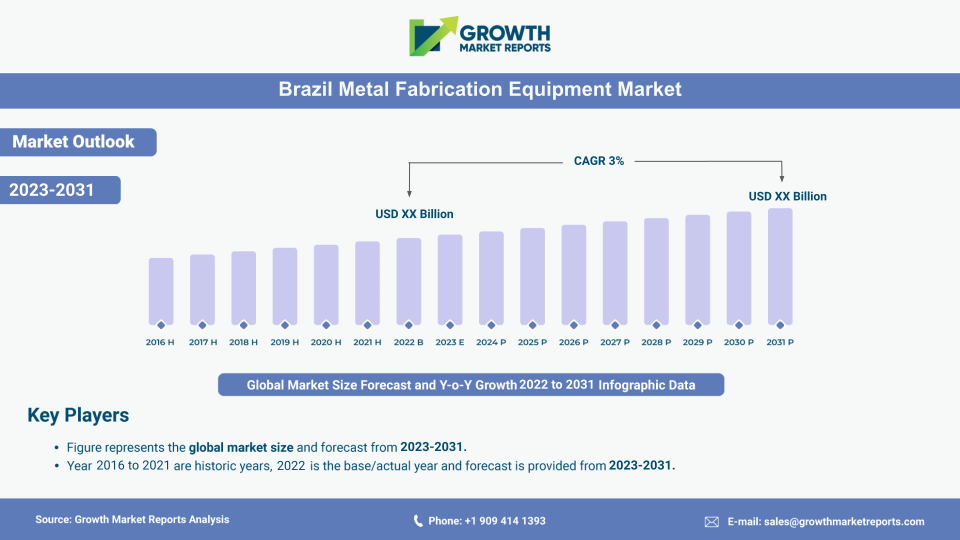
According to our latest research, the global metal fabrication equipment market size reached USD 82.6 billion in 2024, with Brazil accounting for a significant share due to its robust industrial sector. The overall market is experiencing a compound annual growth rate (CAGR) of 4.8%, with projections indicating the global market will reach approximately USD 126.3 billion by 2033. This growth is primarily driven by the increasing demand for advanced manufacturing solutions, infrastructure investments, and the rising adoption of automation in fabrication processes globally. Brazil’s market is mirroring these trends, fueled by domestic industrial expansion and a focus on technological modernization.

The growth trajectory of the Brazil metal fabrication equipment market is underpinned by several critical factors. Firstly, the country’s expanding manufacturing sector, particularly in automotive, aerospace, and construction, is driving substantial demand for metal fabrication equipment. As industries strive for higher efficiency and precision, there is a marked shift toward integrating advanced machinery such as CNC cutting, automated welding, and high-precision bending equipment. This transition is further accelerated by government initiatives aimed at boosting domestic production capacity and reducing reliance on imports. Additionally, the push for modernization in Brazil’s industrial base is encouraging investments in state-of-the-art fabrication technologies, which is expected to sustain market growth over the forecast period.

Another significant growth driver is the increasing focus on infrastructure development across Brazil. Large-scale projects in transportation, energy, and urban development require extensive metal fabrication, thereby stimulating demand for cutting, bending, welding, and machining equipment. The construction sector, in particular, is witnessing a surge in activity, with both public and private investments flowing into residential and commercial projects. This has created a ripple effect, benefiting equipment manufacturers and suppliers in the metal fabrication domain. Furthermore, the energy sector, especially renewable energy projects such as wind and solar farms, also necessitate specialized fabrication equipment, broadening the market’s application landscape.

Technological advancements and the adoption of Industry 4.0 principles are also reshaping the competitive dynamics of the Brazil metal fabrication equipment market. The integration of automation, robotics, and digital monitoring systems is enabling manufacturers to achieve higher productivity, reduced operational costs, and enhanced product quality. Companies are increasingly investing in research and development to introduce innovative solutions tailored to local industry needs. This trend is not only improving operational efficiency but also attracting foreign direct investment and fostering collaborations with global technology providers. As a result, the market is evolving rapidly, with a strong emphasis on innovation, sustainability, and digital transformation.

Regionally, the Southeast region of Brazil stands out as the primary hub for metal fabrication activities, given its concentration of industrial and manufacturing operations. The presence of major automotive and aerospace clusters, along with a well-developed infrastructure, supports the demand for advanced fabrication equipment. Other regions, such as the South and Northeast, are also witnessing increased investments, particularly in construction and energy projects. However, the Southeast’s dominance is expected to persist due to its strategic location, skilled workforce, and established supply chain networks. The Central-West and North regions, while smaller in market share, are emerging as promising markets, driven by new industrial projects and government incentives.

Global Brazil Metal Fabrication Equipment Industry Outlook

Equipment Type Analysis

The metal fabrication equipment market in Brazil is segmented by equipment type, including cutting, bending, welding, machining, and others. Each segment plays a pivotal role in shaping the overall market dynamics. Cutting equipment, encompassing technologies such as laser, plasma, and waterjet cutters, has emerged as a cornerstone of modern fabrication processes. The adoption of automated and computer numerical control (CNC) cutting machines is gaining traction, driven by the need for precision, speed, and reduced material wastage. Manufacturers are increasingly opting for advanced cutting solutions to cater to the stringent requirements of the automotive and aerospace sectors, where accuracy and repeatability are paramount.

Bending equipment is another critical segment, with demand rising from construction and manufacturing industries. Hydraulic and electric press brakes, along with automated bending systems, are being widely adopted for their ability to handle complex geometries and high-volume production. The trend toward customization and small-batch manufacturing is further fueling the need for flexible and programmable bending solutions. As Brazilian companies strive to enhance productivity and minimize lead times, investments in state-of-the-art bending equipment are expected to accelerate, especially among original equipment manufacturers (OEMs) and large-scale fabricators.

Welding equipment constitutes a significant share of the market, driven by its indispensable role in joining metal components across various industries. The shift towards automated and robotic welding systems is particularly notable in sectors such as automotive and energy, where consistency and throughput are critical. Innovations in welding technology, including laser and ultrasonic welding, are enabling manufacturers to achieve superior joint strength and reduce defects. Moreover, the emphasis on workplace safety and environmental sustainability is prompting the adoption of advanced welding equipment with integrated fume extraction and energy-efficient features.

Machining equipment, including milling, drilling, and turning machines, continues to be a backbone of the metal fabrication process in Brazil. The integration of CNC technology and multi-axis machining centers is transforming traditional manufacturing workflows, allowing for greater precision and complexity in component production. This segment is witnessing robust demand from the aerospace and heavy machinery sectors, where intricate parts and tight tolerances are required. Additionally, the ongoing digitalization of machining operations, supported by real-time monitoring and predictive maintenance, is enhancing equipment uptime and operational efficiency.

Other equipment types, such as shearing, punching, and forming machines, also contribute to the market’s diversity. These machines are essential for specific fabrication tasks and are increasingly being equipped with smart features for process optimization. The collective advancements across all equipment types are fostering a competitive environment, where manufacturers are compelled to innovate and differentiate their offerings to capture market share. The interplay between technological innovation, industry requirements, and regulatory standards will continue to shape the trajectory of the equipment type segment in the coming years.

Report Scope

Attributes Details
Report Title Brazil Metal Fabrication Equipment Market Research Report 2033
By Equipment Type Cutting, Bending, Welding, Machining, Others
By Application Automotive, Aerospace, Construction, Energy, Manufacturing, Others
By End-User OEMs, Aftermarket
Regions Covered North America, Europe, APAC, Latin America, MEA
Base Year 2024
Historic Data 2018-2023
Forecast Period 2025-2033
Number of Pages 287
Number of Tables & Figures 298
Customization Available Yes, the report can be customized as per your need.

Application Analysis

The application landscape of the Brazil metal fabrication equipment market is broad, encompassing automotive, aerospace, construction, energy, manufacturing, and other sectors. The automotive industry stands as a dominant application area, leveraging metal fabrication equipment for the production of vehicle frames, body panels, and structural components. The resurgence of automotive manufacturing in Brazil, coupled with the shift towards electric and hybrid vehicles, is creating new opportunities for equipment suppliers. The need for lightweight, high-strength materials and the adoption of modular manufacturing techniques are driving investments in advanced fabrication technologies, including laser cutting and robotic welding systems.

Aerospace is another high-growth application segment, characterized by stringent quality standards and complex component geometries. Brazilian aerospace manufacturers are increasingly relying on precision machining, high-performance welding, and advanced cutting equipment to meet global industry benchmarks. The demand for lightweight alloys and composite materials is further necessitating the use of specialized fabrication machinery. As Brazil continues to strengthen its position in the global aerospace supply chain, the application of cutting-edge metal fabrication equipment is expected to expand, supported by collaborations with international aerospace giants and government-backed research initiatives.

The construction sector is witnessing a significant uptick in demand for metal fabrication equipment, driven by ongoing infrastructure projects and urban development initiatives. Structural steel fabrication, metal roofing, and customized architectural elements require a diverse range of equipment, from bending and cutting machines to welding and forming tools. The trend towards prefabrication and modular construction is also influencing equipment choices, with a focus on portability, automation, and scalability. As sustainability becomes a key consideration in construction, energy-efficient and low-emission fabrication equipment is gaining prominence among contractors and developers.

Energy sector applications, particularly in oil and gas, wind, and solar power, are contributing to the diversification of the metal fabrication equipment market in Brazil. The fabrication of pipelines, pressure vessels, wind turbine components, and solar panel frames necessitates robust and reliable equipment capable of handling large-scale and high-precision tasks. The ongoing transition towards renewable energy sources is expected to drive further investments in specialized fabrication machinery, as project developers seek to optimize production processes and reduce overall project timelines.

Other manufacturing applications, including shipbuilding, heavy machinery, and consumer goods, also utilize metal fabrication equipment extensively. The increasing complexity of end products and the demand for shorter lead times are prompting manufacturers to upgrade their fabrication capabilities. The integration of digital technologies, such as IoT-enabled equipment and data analytics, is enabling real-time process optimization and predictive maintenance, further enhancing the value proposition of advanced fabrication machinery across diverse application domains.

End-User Analysis

The Brazil metal fabrication equipment market is segmented by end-user into original equipment manufacturers (OEMs) and the aftermarket. OEMs represent a substantial portion of the market, given their direct involvement in the production of finished goods across automotive, aerospace, construction, and other industries. These organizations prioritize the acquisition of cutting-edge fabrication equipment to maintain competitive advantage, ensure product quality, and comply with industry standards. The trend towards vertical integration among OEMs is also driving investments in in-house fabrication capabilities, reducing dependency on external suppliers and enhancing control over production processes.

OEMs are increasingly adopting automation, robotics, and digital monitoring solutions to streamline fabrication operations and improve efficiency. The focus on lean manufacturing and just-in-time production is necessitating the use of flexible and programmable equipment that can adapt to changing product specifications and market demands. Furthermore, OEMs are at the forefront of implementing sustainability initiatives, seeking energy-efficient and environmentally friendly fabrication solutions to align with global sustainability goals and regulatory requirements.

The aftermarket segment, comprising equipment repair, maintenance, and replacement, is also experiencing steady growth in Brazil. As the installed base of fabrication machinery expands, the demand for aftermarket services is rising, driven by the need to ensure equipment reliability, minimize downtime, and extend operational lifespans. Aftermarket players are offering value-added services such as predictive maintenance, remote diagnostics, and equipment upgrades, leveraging digital technologies to enhance service delivery and customer satisfaction.

The aftermarket is particularly significant for small and medium-sized enterprises (SMEs), which may lack the resources to invest in new equipment frequently. These businesses rely on aftermarket providers for cost-effective solutions to maintain and upgrade existing machinery. The increasing complexity of modern fabrication equipment is also creating opportunities for specialized service providers with expertise in advanced technologies and digital systems.

Both OEM and aftermarket segments are being shaped by the broader trends of digitalization, automation, and sustainability. The interplay between these end-user segments is fostering a dynamic market environment, where equipment manufacturers and service providers must continuously innovate to meet evolving customer needs. The ability to offer integrated solutions, combining equipment sales with comprehensive aftermarket support, is emerging as a key differentiator in the competitive landscape.

Opportunities & Threats

The Brazil metal fabrication equipment market presents a range of opportunities for both domestic and international players. One of the most significant opportunities lies in the ongoing industrial modernization and the adoption of Industry 4.0 technologies. Brazilian manufacturers are increasingly seeking to upgrade their fabrication capabilities with automation, robotics, and digital monitoring solutions. This creates a fertile ground for equipment suppliers offering innovative and integrated solutions tailored to local industry requirements. Additionally, the expansion of the country’s automotive, aerospace, and construction sectors is expected to generate sustained demand for advanced fabrication equipment, providing long-term growth prospects for market participants.

Another opportunity arises from the growing emphasis on sustainability and energy efficiency in industrial operations. As environmental regulations become more stringent and companies strive to reduce their carbon footprint, there is a rising demand for energy-efficient and low-emission fabrication equipment. Manufacturers that can offer solutions aligning with global sustainability goals will be well-positioned to capture market share. Furthermore, the increasing adoption of digital technologies, such as IoT-enabled equipment and predictive maintenance, is opening up new avenues for value-added services and aftermarket solutions. Companies that can leverage data analytics and remote monitoring to enhance equipment performance and customer support are likely to gain a competitive edge in the evolving market landscape.

Despite the positive outlook, the Brazil metal fabrication equipment market faces certain restraining factors. One of the primary challenges is the high cost of advanced fabrication equipment, which can be a barrier for small and medium-sized enterprises (SMEs) with limited capital resources. The economic volatility and fluctuating currency exchange rates in Brazil also pose risks, impacting the affordability of imported machinery and components. Additionally, the shortage of skilled labor and technical expertise in operating and maintaining sophisticated equipment can hinder the adoption of advanced technologies. Addressing these challenges will require concerted efforts from industry stakeholders, including investments in workforce training and the development of financing solutions to support equipment acquisition.

Regional Outlook

The Southeast region of Brazil is the undisputed leader in the country’s metal fabrication equipment market, accounting for over 45% of the total market share in 2024. This region’s dominance is attributed to its concentration of industrial activity, including major automotive, aerospace, and manufacturing hubs. Cities such as São Paulo and Belo Horizonte serve as key centers for equipment demand, supported by a well-developed infrastructure, skilled workforce, and proximity to major suppliers. The Southeast’s established supply chain networks and access to capital further reinforce its position as the primary driver of market growth in Brazil.

The South region follows, contributing approximately 22% to the national market share. This region is characterized by a strong presence of machinery, metalworking, and construction industries, particularly in states like Paraná and Rio Grande do Sul. The South has seen increased investments in infrastructure and renewable energy projects, which are fueling demand for specialized fabrication equipment. The region’s CAGR is expected to outpace the national average, reaching 5.2% over the forecast period, driven by ongoing industrial diversification and the adoption of advanced manufacturing technologies.

Other regions, including the Northeast, North, and Central-West, collectively account for the remaining market share. The Northeast region is emerging as a promising market, supported by government incentives and growing investments in construction and energy sectors. The Central-West and North regions, while smaller in terms of market size, are witnessing gradual growth as new industrial projects and infrastructure developments take shape. These regions present untapped opportunities for equipment suppliers, particularly as local industries seek to modernize their operations and enhance productivity. Overall, the regional distribution of the metal fabrication equipment market in Brazil reflects the country’s diverse industrial landscape and the varying pace of economic development across different states.

Brazil Metal Fabrication Equipment Market Statistics

Competitor Outlook

The competitive landscape of the Brazil metal fabrication equipment market is characterized by the presence of both domestic and international players vying for market share through innovation, strategic partnerships, and customer-centric solutions. Leading global manufacturers have established a strong foothold in the Brazilian market, leveraging their technological expertise and extensive product portfolios to cater to the diverse needs of local industries. At the same time, domestic companies are capitalizing on their understanding of local market dynamics, regulatory requirements, and customer preferences to offer tailored solutions and responsive after-sales support.

Competition is intensifying as manufacturers seek to differentiate themselves through product innovation, quality, and value-added services. The integration of automation, robotics, and digital monitoring systems is emerging as a key battleground, with companies investing heavily in research and development to introduce next-generation fabrication equipment. The ability to offer comprehensive solutions, combining equipment sales with training, maintenance, and technical support, is increasingly becoming a critical success factor. Furthermore, partnerships with local distributors, system integrators, and industry associations are enabling companies to expand their reach and strengthen their market presence.

The market is also witnessing the entry of new players, particularly in niche segments such as laser cutting and additive manufacturing, where technological advancements are creating new growth opportunities. These entrants are challenging established players by offering innovative solutions at competitive price points, fostering a dynamic and rapidly evolving competitive environment. Mergers, acquisitions, and strategic alliances are common strategies employed by both domestic and international players to enhance their product offerings, expand their geographic footprint, and gain access to new customer segments.

Major companies operating in the Brazil metal fabrication equipment market include global giants such as TRUMPF Group, Amada Holdings, Bystronic, and Lincoln Electric, as well as prominent domestic players like Romi, Gerdau, and Usiminas. TRUMPF Group is renowned for its advanced laser cutting and automation solutions, catering to high-precision manufacturing needs. Amada Holdings offers a comprehensive range of cutting, bending, and welding equipment, with a strong focus on innovation and customer support. Bystronic is a leader in sheet metal processing, known for its state-of-the-art laser cutting and automation systems. Lincoln Electric specializes in welding equipment and solutions, with a robust presence in the Brazilian market.

Among domestic players, Romi is a leading manufacturer of machining equipment, serving a wide range of industries with its technologically advanced products. Gerdau and Usiminas, while primarily known for their steel production, have diversified into fabrication equipment and solutions, leveraging their extensive industry networks and technical expertise. These companies are actively investing in research and development, workforce training, and digital transformation initiatives to maintain their competitive edge. The collective efforts of global and local players are driving innovation, enhancing product quality, and shaping the future of the Brazil metal fabrication equipment market.

Key Players

  • Amada Co., Ltd.
  • Trumpf Group
  • Bystronic AG
  • Mazak Corporation
  • DMG Mori Co., Ltd.
  • Mitsubishi Electric Corporation
  • Salvagnini Group
  • Prima Industrie S.p.A.
  • Colfax Corporation (ESAB)
  • Lincoln Electric Holdings, Inc.
  • JIER Machine-Tool Group Co., Ltd.
  • Schuler AG
  • BLM Group
  • Haco Group
  • LVD Company NV
  • Dener Makina
  • Koike Aronson, Inc.
  • Hindustan Machine Tools Limited (HMT)
  • Tennsmith Inc.
  • Durma Machinery
Brazil Metal Fabrication Equipment Market Overview

Segments

The Brazil Metal Fabrication Equipment market has been segmented on the basis of

Equipment Type

  • Cutting
  • Bending
  • Welding
  • Machining
  • Others

Application

  • Automotive
  • Aerospace
  • Construction
  • Energy
  • Manufacturing
  • Others

End-User

  • OEMs
  • Aftermarket

Competitive Landscape

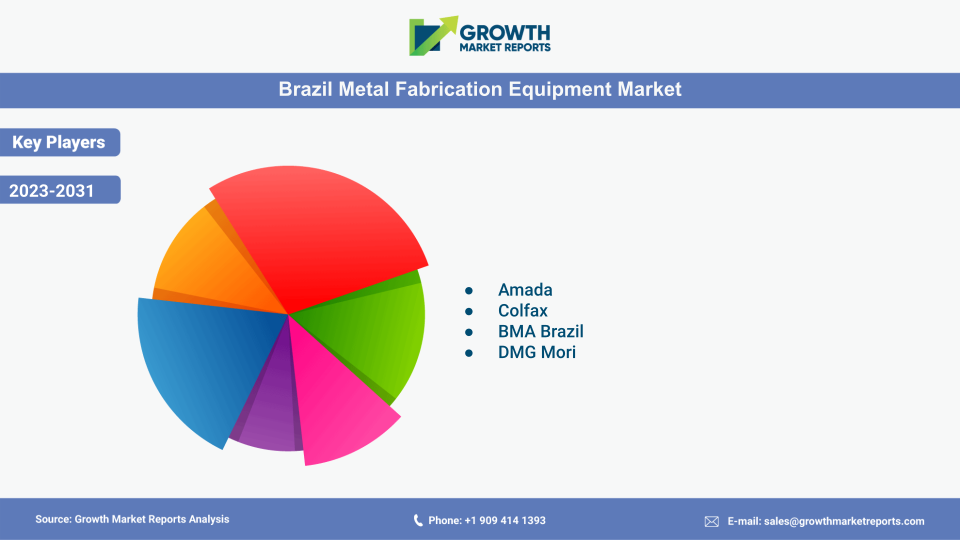
Key players competing in the Brazil metal fabrication equipment market include Amada, BMA Brazil, Colfax, and DMG Mori.

Some of these players are using several market strategies such as mergers, acquisitions, partnerships, collaborations, capacity expansion, and product launches to enhance their market shares.

Brazil Metal Fabrication Equipment Market Key Players

Frequently Asked Questions

Yes, the report can be customized according to specific needs, providing tailored insights and data.

Opportunities include supplying advanced, energy-efficient, and digitalized equipment, serving the growing automotive, aerospace, and construction sectors, and offering aftermarket services such as predictive maintenance and equipment upgrades.

Challenges include high costs of advanced equipment, economic volatility, fluctuating currency exchange rates, and a shortage of skilled labor for operating and maintaining sophisticated machinery.

Major global players include TRUMPF Group, Amada Holdings, Bystronic, and Lincoln Electric. Key domestic companies are Romi, Gerdau, and Usiminas.

Industry 4.0 is driving the integration of automation, robotics, and digital monitoring, leading to higher productivity, reduced costs, and improved product quality, while fostering innovation and attracting foreign investment.

Automotive, aerospace, construction, energy, and general manufacturing are the primary industries using metal fabrication equipment in Brazil.

Cutting (laser, plasma, waterjet), bending (hydraulic, electric press brakes), welding (automated, robotic), and machining (CNC, multi-axis) equipment are highly sought after, along with shearing, punching, and forming machines.

The Southeast region is the primary hub, accounting for over 45% of the market share, followed by the South, Northeast, Central-West, and North regions.

Key drivers include expanding manufacturing sectors (automotive, aerospace, construction), infrastructure investments, adoption of advanced technologies like automation and CNC, and government initiatives to boost domestic production.

As of 2024, the global metal fabrication equipment market reached USD 82.6 billion, with Brazil accounting for a significant share due to its robust industrial sector.

Table Of Content

Chapter 1 Executive Summary
Chapter 2 Assumptions and Acronyms Used
Chapter 3 Research Methodology
Chapter 4 Brazil Metal Fabrication Equipment Market Overview
   4.1 Introduction
      4.1.1 Market Taxonomy
      4.1.2 Market Definition
      4.1.3 Macro-Economic Factors Impacting the Market Growth
   4.2 Brazil Metal Fabrication Equipment Market Dynamics
      4.2.1 Market Drivers
      4.2.2 Market Restraints
      4.2.3 Market Opportunity
   4.3 Brazil Metal Fabrication Equipment Market - Supply Chain Analysis
      4.3.1 List of Key Suppliers
      4.3.2 List of Key Distributors
      4.3.3 List of Key Consumers
   4.4 Key Forces Shaping the Brazil Metal Fabrication Equipment Market
      4.4.1 Bargaining Power of Suppliers
      4.4.2 Bargaining Power of Buyers
      4.4.3 Threat of Substitution
      4.4.4 Threat of New Entrants
      4.4.5 Competitive Rivalry
   4.5 Global Brazil Metal Fabrication Equipment Market Size & Forecast, 2023-2032
      4.5.1 Brazil Metal Fabrication Equipment Market Size and Y-o-Y Growth
      4.5.2 Brazil Metal Fabrication Equipment Market Absolute $ Opportunity

Chapter 5 Global Brazil Metal Fabrication Equipment Market Analysis and Forecast By Equipment Type
   5.1 Introduction
      5.1.1 Key Market Trends & Growth Opportunities By Equipment Type
      5.1.2 Basis Point Share (BPS) Analysis By Equipment Type
      5.1.3 Absolute $ Opportunity Assessment By Equipment Type
   5.2 Brazil Metal Fabrication Equipment Market Size Forecast By Equipment Type
      5.2.1 Cutting
      5.2.2 Bending
      5.2.3 Welding
      5.2.4 Machining
      5.2.5 Others
   5.3 Market Attractiveness Analysis By Equipment Type

Chapter 6 Global Brazil Metal Fabrication Equipment Market Analysis and Forecast By Application
   6.1 Introduction
      6.1.1 Key Market Trends & Growth Opportunities By Application
      6.1.2 Basis Point Share (BPS) Analysis By Application
      6.1.3 Absolute $ Opportunity Assessment By Application
   6.2 Brazil Metal Fabrication Equipment Market Size Forecast By Application
      6.2.1 Automotive
      6.2.2 Aerospace
      6.2.3 Construction
      6.2.4 Energy
      6.2.5 Manufacturing
      6.2.6 Others
   6.3 Market Attractiveness Analysis By Application

Chapter 7 Global Brazil Metal Fabrication Equipment Market Analysis and Forecast By End-User
   7.1 Introduction
      7.1.1 Key Market Trends & Growth Opportunities By End-User
      7.1.2 Basis Point Share (BPS) Analysis By End-User
      7.1.3 Absolute $ Opportunity Assessment By End-User
   7.2 Brazil Metal Fabrication Equipment Market Size Forecast By End-User
      7.2.1 OEMs
      7.2.2 Aftermarket
   7.3 Market Attractiveness Analysis By End-User

Chapter 8 Global Brazil Metal Fabrication Equipment Market Analysis and Forecast by Region
   8.1 Introduction
      8.1.1 Key Market Trends & Growth Opportunities By Region
      8.1.2 Basis Point Share (BPS) Analysis By Region
      8.1.3 Absolute $ Opportunity Assessment By Region
   8.2 Brazil Metal Fabrication Equipment Market Size Forecast By Region
      8.2.1 North America
      8.2.2 Europe
      8.2.3 Asia Pacific
      8.2.4 Latin America
      8.2.5 Middle East & Africa (MEA)
   8.3 Market Attractiveness Analysis By Region

Chapter 9 Coronavirus Disease (COVID-19) Impact 
   9.1 Introduction 
   9.2 Current & Future Impact Analysis 
   9.3 Economic Impact Analysis 
   9.4 Government Policies 
   9.5 Investment Scenario

Chapter 10 North America Brazil Metal Fabrication Equipment Analysis and Forecast
   10.1 Introduction
   10.2 North America Brazil Metal Fabrication Equipment Market Size Forecast by Country
      10.2.1 U.S.
      10.2.2 Canada
   10.3 Basis Point Share (BPS) Analysis by Country
   10.4 Absolute $ Opportunity Assessment by Country
   10.5 Market Attractiveness Analysis by Country
   10.6 North America Brazil Metal Fabrication Equipment Market Size Forecast By Equipment Type
      10.6.1 Cutting
      10.6.2 Bending
      10.6.3 Welding
      10.6.4 Machining
      10.6.5 Others
   10.7 Basis Point Share (BPS) Analysis By Equipment Type 
   10.8 Absolute $ Opportunity Assessment By Equipment Type 
   10.9 Market Attractiveness Analysis By Equipment Type
   10.10 North America Brazil Metal Fabrication Equipment Market Size Forecast By Application
      10.10.1 Automotive
      10.10.2 Aerospace
      10.10.3 Construction
      10.10.4 Energy
      10.10.5 Manufacturing
      10.10.6 Others
   10.11 Basis Point Share (BPS) Analysis By Application 
   10.12 Absolute $ Opportunity Assessment By Application 
   10.13 Market Attractiveness Analysis By Application
   10.14 North America Brazil Metal Fabrication Equipment Market Size Forecast By End-User
      10.14.1 OEMs
      10.14.2 Aftermarket
   10.15 Basis Point Share (BPS) Analysis By End-User 
   10.16 Absolute $ Opportunity Assessment By End-User 
   10.17 Market Attractiveness Analysis By End-User

Chapter 11 Europe Brazil Metal Fabrication Equipment Analysis and Forecast
   11.1 Introduction
   11.2 Europe Brazil Metal Fabrication Equipment Market Size Forecast by Country
      11.2.1 Germany
      11.2.2 France
      11.2.3 Italy
      11.2.4 U.K.
      11.2.5 Spain
      11.2.6 Russia
      11.2.7 Rest of Europe
   11.3 Basis Point Share (BPS) Analysis by Country
   11.4 Absolute $ Opportunity Assessment by Country
   11.5 Market Attractiveness Analysis by Country
   11.6 Europe Brazil Metal Fabrication Equipment Market Size Forecast By Equipment Type
      11.6.1 Cutting
      11.6.2 Bending
      11.6.3 Welding
      11.6.4 Machining
      11.6.5 Others
   11.7 Basis Point Share (BPS) Analysis By Equipment Type 
   11.8 Absolute $ Opportunity Assessment By Equipment Type 
   11.9 Market Attractiveness Analysis By Equipment Type
   11.10 Europe Brazil Metal Fabrication Equipment Market Size Forecast By Application
      11.10.1 Automotive
      11.10.2 Aerospace
      11.10.3 Construction
      11.10.4 Energy
      11.10.5 Manufacturing
      11.10.6 Others
   11.11 Basis Point Share (BPS) Analysis By Application 
   11.12 Absolute $ Opportunity Assessment By Application 
   11.13 Market Attractiveness Analysis By Application
   11.14 Europe Brazil Metal Fabrication Equipment Market Size Forecast By End-User
      11.14.1 OEMs
      11.14.2 Aftermarket
   11.15 Basis Point Share (BPS) Analysis By End-User 
   11.16 Absolute $ Opportunity Assessment By End-User 
   11.17 Market Attractiveness Analysis By End-User

Chapter 12 Asia Pacific Brazil Metal Fabrication Equipment Analysis and Forecast
   12.1 Introduction
   12.2 Asia Pacific Brazil Metal Fabrication Equipment Market Size Forecast by Country
      12.2.1 China
      12.2.2 Japan
      12.2.3 South Korea
      12.2.4 India
      12.2.5 Australia
      12.2.6 South East Asia (SEA)
      12.2.7 Rest of Asia Pacific (APAC)
   12.3 Basis Point Share (BPS) Analysis by Country
   12.4 Absolute $ Opportunity Assessment by Country
   12.5 Market Attractiveness Analysis by Country
   12.6 Asia Pacific Brazil Metal Fabrication Equipment Market Size Forecast By Equipment Type
      12.6.1 Cutting
      12.6.2 Bending
      12.6.3 Welding
      12.6.4 Machining
      12.6.5 Others
   12.7 Basis Point Share (BPS) Analysis By Equipment Type 
   12.8 Absolute $ Opportunity Assessment By Equipment Type 
   12.9 Market Attractiveness Analysis By Equipment Type
   12.10 Asia Pacific Brazil Metal Fabrication Equipment Market Size Forecast By Application
      12.10.1 Automotive
      12.10.2 Aerospace
      12.10.3 Construction
      12.10.4 Energy
      12.10.5 Manufacturing
      12.10.6 Others
   12.11 Basis Point Share (BPS) Analysis By Application 
   12.12 Absolute $ Opportunity Assessment By Application 
   12.13 Market Attractiveness Analysis By Application
   12.14 Asia Pacific Brazil Metal Fabrication Equipment Market Size Forecast By End-User
      12.14.1 OEMs
      12.14.2 Aftermarket
   12.15 Basis Point Share (BPS) Analysis By End-User 
   12.16 Absolute $ Opportunity Assessment By End-User 
   12.17 Market Attractiveness Analysis By End-User

Chapter 13 Latin America Brazil Metal Fabrication Equipment Analysis and Forecast
   13.1 Introduction
   13.2 Latin America Brazil Metal Fabrication Equipment Market Size Forecast by Country
      13.2.1 Brazil
      13.2.2 Mexico
      13.2.3 Rest of Latin America (LATAM)
   13.3 Basis Point Share (BPS) Analysis by Country
   13.4 Absolute $ Opportunity Assessment by Country
   13.5 Market Attractiveness Analysis by Country
   13.6 Latin America Brazil Metal Fabrication Equipment Market Size Forecast By Equipment Type
      13.6.1 Cutting
      13.6.2 Bending
      13.6.3 Welding
      13.6.4 Machining
      13.6.5 Others
   13.7 Basis Point Share (BPS) Analysis By Equipment Type 
   13.8 Absolute $ Opportunity Assessment By Equipment Type 
   13.9 Market Attractiveness Analysis By Equipment Type
   13.10 Latin America Brazil Metal Fabrication Equipment Market Size Forecast By Application
      13.10.1 Automotive
      13.10.2 Aerospace
      13.10.3 Construction
      13.10.4 Energy
      13.10.5 Manufacturing
      13.10.6 Others
   13.11 Basis Point Share (BPS) Analysis By Application 
   13.12 Absolute $ Opportunity Assessment By Application 
   13.13 Market Attractiveness Analysis By Application
   13.14 Latin America Brazil Metal Fabrication Equipment Market Size Forecast By End-User
      13.14.1 OEMs
      13.14.2 Aftermarket
   13.15 Basis Point Share (BPS) Analysis By End-User 
   13.16 Absolute $ Opportunity Assessment By End-User 
   13.17 Market Attractiveness Analysis By End-User

Chapter 14 Middle East & Africa (MEA) Brazil Metal Fabrication Equipment Analysis and Forecast
   14.1 Introduction
   14.2 Middle East & Africa (MEA) Brazil Metal Fabrication Equipment Market Size Forecast by Country
      14.2.1 Saudi Arabia
      14.2.2 South Africa
      14.2.3 UAE
      14.2.4 Rest of Middle East & Africa (MEA)
   14.3 Basis Point Share (BPS) Analysis by Country
   14.4 Absolute $ Opportunity Assessment by Country
   14.5 Market Attractiveness Analysis by Country
   14.6 Middle East & Africa (MEA) Brazil Metal Fabrication Equipment Market Size Forecast By Equipment Type
      14.6.1 Cutting
      14.6.2 Bending
      14.6.3 Welding
      14.6.4 Machining
      14.6.5 Others
   14.7 Basis Point Share (BPS) Analysis By Equipment Type 
   14.8 Absolute $ Opportunity Assessment By Equipment Type 
   14.9 Market Attractiveness Analysis By Equipment Type
   14.10 Middle East & Africa (MEA) Brazil Metal Fabrication Equipment Market Size Forecast By Application
      14.10.1 Automotive
      14.10.2 Aerospace
      14.10.3 Construction
      14.10.4 Energy
      14.10.5 Manufacturing
      14.10.6 Others
   14.11 Basis Point Share (BPS) Analysis By Application 
   14.12 Absolute $ Opportunity Assessment By Application 
   14.13 Market Attractiveness Analysis By Application
   14.14 Middle East & Africa (MEA) Brazil Metal Fabrication Equipment Market Size Forecast By End-User
      14.14.1 OEMs
      14.14.2 Aftermarket
   14.15 Basis Point Share (BPS) Analysis By End-User 
   14.16 Absolute $ Opportunity Assessment By End-User 
   14.17 Market Attractiveness Analysis By End-User

Chapter 15 Competition Landscape 
   15.1 Brazil Metal Fabrication Equipment Market: Competitive Dashboard
   15.2 Global Brazil Metal Fabrication Equipment Market: Market Share Analysis, 2023
   15.3 Company Profiles (Details – Overview, Financials, Developments, Strategy) 
      15.3.1 Amada Co., Ltd.
Trumpf Group
Bystronic AG
Mazak Corporation
DMG Mori Co., Ltd.
Mitsubishi Electric Corporation
Salvagnini Group
Prima Industrie S.p.A.
Colfax Corporation (ESAB)
Lincoln Electric Holdings, Inc.
JIER Machine-Tool Group Co., Ltd.
Schuler AG
BLM Group
Haco Group
LVD Company NV
Dener Makina
Koike Aronson, Inc.
Hindustan Machine Tools Limited (HMT)
Tennsmith Inc.
Durma Machinery

Methodology

Our Clients

FedEx Logistics
Deloitte
Pfizer
General Mills
Microsoft
sinopec
Siemens Healthcare
The John Holland Group