Men’s Grooming Products Market Research Report 2033

Men’s Grooming Products Market Research Report 2033

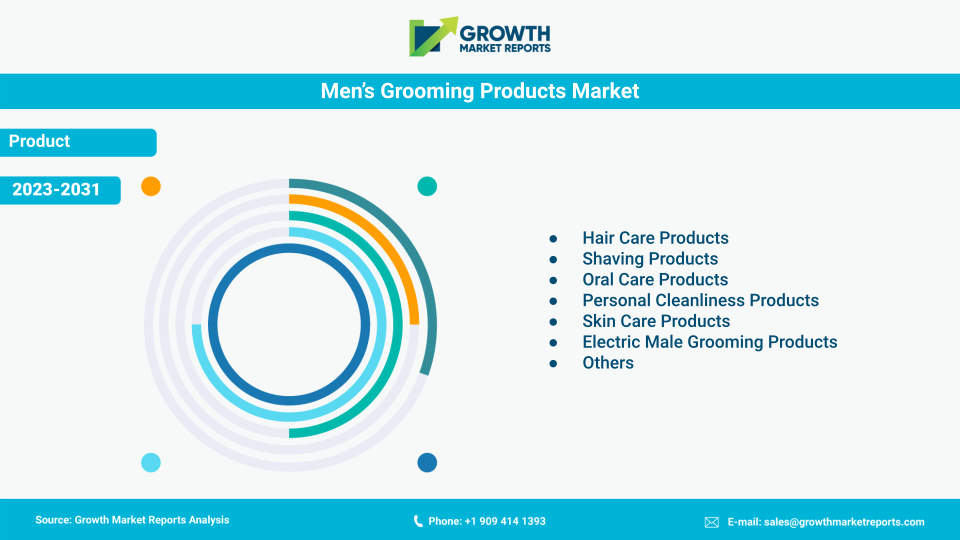
Segments - by Product Type (Shaving Products, Skincare, Haircare, Fragrances, Others), by Distribution Channel (Supermarkets/Hypermarkets, Specialty Stores, Online Retail, Convenience Stores, Others), by Price Range (Premium, Mid, Economy), by End User (Teenagers, Adults, Elderly)

https://growthmarketreports.com/Debadatta
Author : Debadatta Patel
https://growthmarketreports.com/Vaibhav
Fact-checked by : V. Chandola
https://growthmarketreports.com/Shruti
Editor : Shruti Bhat

Upcoming | Report ID :CG-942 | 4.9 Rating | 49 Reviews | 260 Pages | Format : Docx PDF

Report Description


Men’s Grooming Products Market Outlook

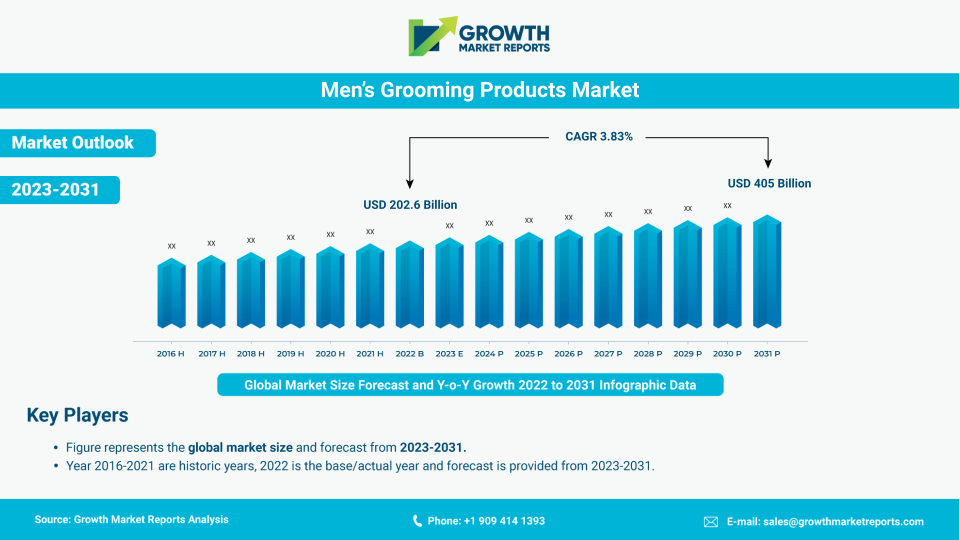
According to our latest research, the global men’s grooming products market size reached USD 62.4 billion in 2024, reflecting a robust consumer demand for personal care among men worldwide. The market is anticipated to grow at a CAGR of 6.2% from 2025 to 2033, reaching a forecasted value of USD 107.8 billion by 2033. This sustained growth is primarily driven by evolving lifestyle trends, increasing awareness of personal hygiene, and the growing influence of social media on male beauty standards. As per the latest research, the market is witnessing a significant transformation fueled by product innovation, premiumization, and expansion into emerging markets.

One of the central growth factors propelling the men’s grooming products market is the rising consciousness among men regarding self-care and appearance. The traditional stigma around male grooming is rapidly dissipating, thanks to the influence of celebrities, social media influencers, and targeted marketing campaigns by leading brands. As a result, men are increasingly investing in skincare, haircare, and fragrance products, moving beyond basic shaving essentials. The proliferation of grooming tutorials and product reviews on digital platforms has further empowered men to explore and adopt sophisticated grooming regimes, thereby expanding the consumer base and driving up product sales across multiple segments.

Another significant driver is the surge in product innovation and diversification within the market. Companies are launching advanced formulations tailored to address specific male skin and hair concerns, such as anti-aging, acne control, and beard maintenance. The introduction of organic, vegan, and cruelty-free grooming products is also attracting environmentally conscious consumers and those with sensitive skin. Furthermore, advancements in packaging technology—such as travel-friendly sizes and sustainable materials—are enhancing user convenience and brand appeal. The continuous rollout of new product lines and limited-edition collections keeps consumers engaged and encourages repeat purchases, fueling overall market growth.

The rapid expansion of e-commerce and digital retail channels has fundamentally transformed the distribution landscape of the men’s grooming products market. Online platforms offer unparalleled convenience, access to a broader product portfolio, and personalized recommendations, making them increasingly popular among younger consumers. The ability to compare prices, read reviews, and access exclusive online deals is driving a substantial shift from traditional brick-and-mortar outlets to digital shopping. In addition, subscription-based models and direct-to-consumer brands are gaining traction, providing recurring revenue streams for companies and offering tailored grooming solutions to consumers, thus accelerating market expansion.

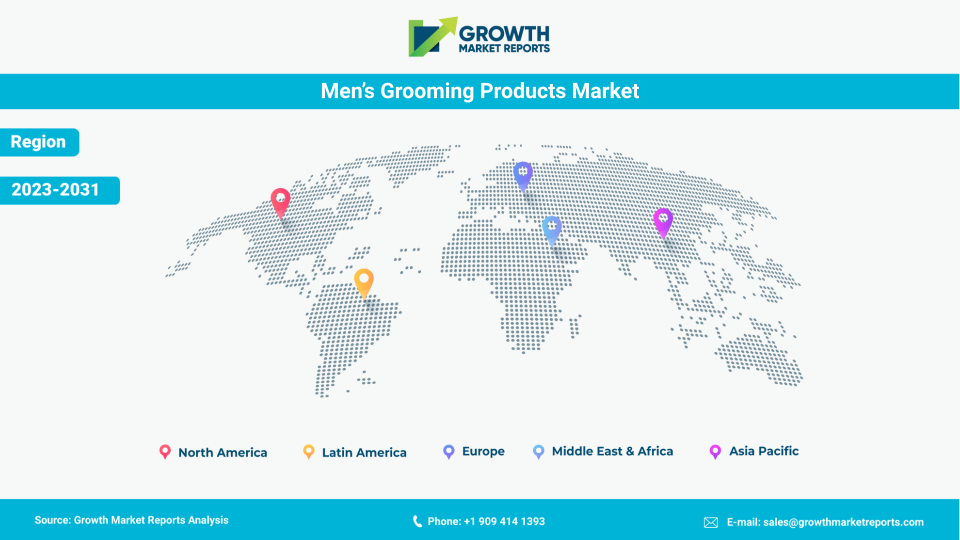
Regionally, Asia Pacific stands out as the fastest-growing market, driven by rising disposable incomes, urbanization, and changing cultural attitudes toward male grooming. North America and Europe remain dominant markets due to the presence of established brands, high product awareness, and a mature retail infrastructure. Meanwhile, Latin America and the Middle East & Africa are emerging as lucrative markets, supported by demographic shifts and increasing penetration of international brands. The regional outlook remains highly dynamic, with each geography presenting unique opportunities and challenges for market players.

Global Men’s Grooming Products Industry Outlook

Product Type Analysis

The product type segment of the men’s grooming products market is highly diverse, encompassing shaving products, skincare, haircare, fragrances, and various other specialized offerings. Shaving products, historically the cornerstone of male grooming, continue to command a substantial market share due to their indispensable role in daily routines. Innovations such as multi-blade razors, sensitive skin formulations, and electric trimmers are enhancing the shaving experience, catering to both traditionalists and modern consumers. However, the segment is facing stiff competition from the rising trend of beards and facial hair, prompting brands to diversify into beard oils, balms, and grooming kits. This shift is indicative of the market’s adaptability to evolving grooming preferences and is driving incremental growth across adjacent product categories.

The skincare segment is witnessing exponential growth, fueled by increasing awareness of skin health and the desire for a youthful appearance. Men are now seeking targeted solutions for issues such as acne, pigmentation, and premature aging, resulting in a surge in demand for cleansers, moisturizers, serums, and sunscreens formulated specifically for male skin. Brands are investing heavily in research and development to create products that address unique male dermatological needs, such as thicker skin texture and higher sebum production. The integration of natural ingredients and advanced technologies, such as anti-pollution and blue light protection, is further elevating the appeal of men’s skincare products, making this segment one of the fastest-growing within the overall market.

Haircare products are also experiencing robust growth as men become more conscious of their hair health and styling options. The segment includes shampoos, conditioners, hair oils, styling gels, and hair colorants, each tailored to address specific concerns such as dandruff, hair loss, and scalp sensitivity. The growing trend of experimentation with hairstyles and colors, influenced by pop culture and celebrity endorsements, is driving up product adoption. Furthermore, the demand for natural and chemical-free haircare solutions is rising, prompting brands to introduce sulfate-free, paraben-free, and herbal formulations. This focus on health and sustainability is resonating strongly with urban and millennial consumers, further propelling segment growth.

Fragrances remain a vital and aspirational component of the men’s grooming products market, with colognes, deodorants, and body sprays enjoying widespread popularity. The segment is characterized by continuous innovation in scent profiles, packaging, and marketing strategies. Luxury and niche fragrances are gaining traction among affluent consumers seeking exclusivity and personalization. Meanwhile, mass-market brands are expanding their portfolios with long-lasting and skin-friendly formulations to cater to the broader population. The increasing frequency of product launches, celebrity collaborations, and limited-edition releases is keeping the segment vibrant and competitive, ensuring sustained consumer interest and loyalty.

Other product types, including oral care, body grooming devices, and intimate hygiene products, are emerging as promising sub-segments. These products cater to the growing demand for comprehensive personal care solutions and reflect the increasing sophistication of male grooming routines. Brands are leveraging technological advancements and consumer insights to develop innovative offerings, such as electric body groomers and multifunctional skincare devices. The diversification of product portfolios is enabling companies to capture new market segments and drive incremental revenue, underscoring the dynamic nature of the product type landscape in the men’s grooming products market.

Report Scope

Attributes Details
Report Title Men’s Grooming Products Market Research Report 2033
By Product Type Shaving Products, Skincare, Haircare, Fragrances, Others
By Distribution Channel Supermarkets/Hypermarkets, Specialty Stores, Online Retail, Convenience Stores, Others
By Price Range Premium, Mid, Economy
By End User Teenagers, Adults, Elderly
Regions Covered North America, Europe, APAC, Latin America, MEA
Base Year 2024
Historic Data 2018-2023
Forecast Period 2025-2033
Number of Pages 260
Number of Tables & Figures 271
Customization Available Yes, the report can be customized as per your need.

Distribution Channel Analysis

The distribution channel landscape for the men’s grooming products market is undergoing a significant transformation, with traditional and modern retail formats coexisting and complementing each other. Supermarkets and hypermarkets continue to be the dominant distribution channels, offering consumers the convenience of one-stop shopping and access to a wide range of grooming products. These retail giants leverage their extensive networks and strong supplier relationships to provide attractive pricing, promotional offers, and exclusive product launches. The in-store experience, including product sampling and expert consultations, remains a key driver of consumer engagement and brand loyalty in this segment.

Specialty stores, including dedicated grooming boutiques and beauty retailers, are gaining prominence as consumers seek personalized service and expert advice. These outlets offer a curated selection of premium and niche brands, catering to discerning customers who prioritize quality and exclusivity. The immersive shopping environment, coupled with knowledgeable staff and tailored recommendations, enhances the overall customer experience and encourages higher spending. Specialty stores are also at the forefront of introducing innovative products and hosting grooming workshops, further strengthening their position in the market.

Online retail is rapidly emerging as a game-changer in the men’s grooming products market, driven by the proliferation of e-commerce platforms and changing consumer shopping habits. Digital channels offer unparalleled convenience, access to an extensive product assortment, and the ability to compare prices and read reviews. The rise of mobile commerce, subscription services, and direct-to-consumer brands is further accelerating the shift toward online shopping. Companies are investing in robust digital marketing strategies, influencer collaborations, and seamless logistics to enhance the online customer journey. The COVID-19 pandemic has also played a pivotal role in boosting online sales, as consumers increasingly prefer contactless shopping experiences.

Convenience stores represent an important channel for impulse purchases and last-minute needs. These stores are strategically located in high-traffic areas and offer a limited but essential range of grooming products. The quick and easy shopping experience appeals to busy urban consumers, travelers, and those seeking immediate solutions. Brands often use convenience stores to launch travel-sized products and trial packs, encouraging product sampling and brand discovery. While the channel’s market share may be smaller compared to supermarkets and online retail, its role in driving volume sales and expanding product reach cannot be underestimated.

Other distribution channels, such as department stores, pharmacies, and salons, play a complementary role in the overall market ecosystem. These outlets offer specialized products and services, catering to specific consumer needs such as prescription skincare or professional haircare treatments. The integration of omnichannel strategies, including click-and-collect and in-store pickup, is blurring the lines between online and offline retail, providing consumers with greater flexibility and choice. The evolving distribution landscape is fostering healthy competition among channels and driving continuous innovation in sales and marketing strategies.

Price Range Analysis

The price range segment of the men’s grooming products market is segmented into premium, mid, and economy categories, each catering to distinct consumer demographics and preferences. The premium segment is characterized by high-quality ingredients, sophisticated formulations, and luxurious packaging. Consumers in this segment are willing to pay a premium for products that offer superior performance, exclusivity, and brand prestige. The rise of aspirational lifestyles and the influence of global luxury brands are fueling demand for premium grooming products, particularly in urban centers and among affluent millennials. Limited-edition releases, celebrity endorsements, and personalized services are further enhancing the appeal of premium offerings.

The mid-range segment represents the largest share of the market, striking a balance between quality and affordability. Products in this category are designed to deliver effective results at accessible price points, making them popular among a broad spectrum of consumers. Brands in the mid-range segment focus on value-driven innovation, offering multi-functional products, attractive packaging, and frequent promotional campaigns. The segment is highly competitive, with both established players and new entrants vying for market share through aggressive marketing and product differentiation. The growing middle-class population in emerging markets is a key driver of mid-range product adoption, contributing to the segment’s sustained growth.

Economy products cater to price-sensitive consumers who prioritize basic functionality and affordability. These products are widely available across mass-market retail channels and are often positioned as essential grooming solutions for everyday use. The economy segment is particularly strong in developing regions, where disposable incomes are lower, and consumers seek cost-effective options. Brands operating in this segment focus on high-volume sales, efficient distribution, and standardized packaging to maintain competitive pricing. While the profit margins may be lower, the sheer scale of the economy segment ensures its continued relevance and contribution to overall market growth.

The interplay between these price segments is shaping the competitive dynamics of the men’s grooming products market. Premiumization trends are encouraging mid-range and economy brands to elevate their offerings by incorporating higher-quality ingredients, innovative features, and aspirational branding. Conversely, premium brands are expanding their reach by introducing entry-level products and travel-sized variants to attract new customers. This cross-segment innovation is blurring traditional price boundaries and creating new growth opportunities for market players. The increasing availability of product information and consumer reviews is also empowering shoppers to make informed decisions based on value rather than price alone.

Price sensitivity remains a critical consideration for brands, especially in times of economic uncertainty. Companies are adopting flexible pricing strategies, bundling products, and offering loyalty programs to retain customers and drive repeat purchases. The emergence of private label brands and direct-to-consumer models is intensifying price competition, compelling established players to continuously innovate and differentiate their offerings. The dynamic nature of the price range segment underscores the importance of understanding consumer preferences and adapting to changing market conditions.

End User Analysis

The end user segment of the men’s grooming products market is divided into teenagers, adults, and the elderly, each with distinct grooming needs and consumption patterns. Teenagers represent a rapidly growing demographic, driven by increasing exposure to global beauty trends and the influence of social media. This segment is highly receptive to new products, vibrant packaging, and celebrity endorsements, making it a prime target for brands seeking to build early loyalty. Teenagers are particularly interested in skincare, hair styling, and fragrances, often experimenting with different products to express their individuality. The demand for acne control solutions, oil-free formulations, and gentle cleansers is especially high among this age group.

Adults constitute the largest and most diverse end user segment, encompassing a wide range of grooming needs and preferences. This group includes working professionals, parents, and urban dwellers who prioritize personal appearance and hygiene. Adults are the primary consumers of shaving products, anti-aging skincare, haircare, and premium fragrances. The segment is characterized by high brand loyalty, repeat purchases, and a willingness to invest in advanced grooming solutions. The increasing prevalence of workplace grooming standards and the desire for a polished appearance are key drivers of product adoption among adults. Brands are responding by offering tailored solutions, such as beard grooming kits, anti-pollution skincare, and multifunctional products that cater to busy lifestyles.

The elderly segment, though smaller in size, presents unique opportunities for market expansion. Older men are increasingly seeking grooming products that address age-related concerns, such as thinning hair, dry skin, and sensitivity. The demand for gentle, hypoallergenic, and nourishing formulations is particularly high in this segment. Brands are developing specialized products, such as anti-wrinkle creams, scalp treatments, and moisturizing lotions, to cater to the needs of elderly consumers. The growing emphasis on healthy aging and the desire to maintain a youthful appearance are driving product innovation and adoption among older men.

The evolving needs of different end user segments are prompting brands to adopt a more nuanced approach to product development and marketing. Companies are leveraging consumer insights and data analytics to create targeted campaigns, develop age-specific formulations, and design packaging that resonates with each demographic. The integration of educational content, such as grooming tips and tutorials, is helping to build brand trust and encourage product adoption across age groups. The increasing diversity of the end user base is fostering innovation and driving the expansion of the men’s grooming products market.

The interplay between age, lifestyle, and grooming preferences is shaping the future trajectory of the market. As societal attitudes toward male grooming continue to evolve, brands that successfully address the unique needs of each end user segment will be well-positioned to capture market share and drive long-term growth. The focus on inclusivity, personalization, and holistic wellness is expected to remain central to market dynamics in the coming years.

Opportunities & Threats

The men’s grooming products market is brimming with opportunities, particularly in the realm of product innovation and diversification. The growing demand for natural, organic, and sustainable grooming solutions presents a significant avenue for market expansion. Brands that invest in research and development to create eco-friendly formulations, biodegradable packaging, and cruelty-free products are likely to attract environmentally conscious consumers and differentiate themselves in a crowded marketplace. The rise of personalized grooming solutions, enabled by advancements in artificial intelligence and data analytics, is another promising opportunity. Companies can leverage technology to offer customized product recommendations, subscription boxes, and virtual consultations, enhancing the overall customer experience and fostering brand loyalty.

Emerging markets represent a vast untapped potential for growth, driven by rising disposable incomes, urbanization, and changing cultural attitudes toward male grooming. Companies that strategically expand their presence in Asia Pacific, Latin America, and the Middle East & Africa can capitalize on the growing consumer base and favorable demographic trends. The adoption of omnichannel retail strategies, including the integration of online and offline sales channels, is enabling brands to reach a wider audience and provide seamless shopping experiences. Collaborations with local influencers, celebrity endorsements, and culturally relevant marketing campaigns are proving effective in building brand awareness and driving product adoption in new markets. The increasing penetration of smartphones and internet connectivity is further accelerating the shift toward digital retail, creating new opportunities for direct-to-consumer brands and e-commerce platforms.

Despite the numerous opportunities, the market faces certain restraining factors that could hinder growth. Intense competition and price wars among established and emerging players are putting pressure on profit margins and making it challenging for new entrants to gain traction. Regulatory challenges, such as stringent safety standards, labeling requirements, and restrictions on certain ingredients, can increase compliance costs and delay product launches. Economic uncertainties, fluctuating raw material prices, and supply chain disruptions also pose risks to market stability. Furthermore, the persistence of cultural taboos and stereotypes around male grooming in certain regions may limit product adoption and market penetration. Brands must navigate these challenges by investing in innovation, building strong brand equity, and maintaining agility in response to changing market dynamics.

Regional Outlook

The regional analysis of the men’s grooming products market reveals a highly fragmented yet dynamic landscape, with each geography exhibiting unique growth drivers and consumer preferences. In Asia Pacific, the market reached USD 18.7 billion in 2024 and is expected to grow at a CAGR of 8.1% through 2033. The region’s rapid urbanization, rising middle-class population, and increasing exposure to global beauty standards are fueling demand for a wide range of grooming products. Countries such as China, India, Japan, and South Korea are at the forefront of this growth, with local and international brands competing aggressively for market share. The popularity of K-beauty trends, innovative product formats, and digital-first retail strategies are shaping the market dynamics in Asia Pacific.

North America remains a mature and highly competitive market, with a market size of USD 15.2 billion in 2024. The region is characterized by high product awareness, a strong presence of established brands, and a well-developed retail infrastructure. The growing trend of premiumization, coupled with the increasing adoption of organic and natural grooming products, is driving value growth in the market. The United States and Canada are the key contributors to regional sales, with consumers displaying a strong preference for advanced formulations and personalized solutions. The rise of e-commerce and subscription-based models is further transforming the retail landscape, providing consumers with greater convenience and access to a broader product assortment.

In Europe, the market size stood at USD 13.9 billion in 2024, supported by a rich tradition of male grooming and a growing emphasis on personal appearance. The region is witnessing a surge in demand for high-end fragrances, skincare, and haircare products, particularly in countries such as the United Kingdom, Germany, France, and Italy. The focus on sustainability, ethical sourcing, and clean beauty is shaping product development and marketing strategies in Europe. Meanwhile, Latin America and Middle East & Africa collectively accounted for USD 14.6 billion in 2024, with Brazil, Mexico, Saudi Arabia, and the UAE emerging as key growth markets. The increasing influence of international brands, rising disposable incomes, and changing cultural norms are driving product adoption in these regions. The regional outlook remains highly promising, with each geography presenting distinct opportunities and challenges for market players.

Men’s Grooming Products Market Statistics

Competitor Outlook

The competitive landscape of the men’s grooming products market is characterized by intense rivalry among global giants, regional players, and niche brands. Leading companies are continuously innovating to stay ahead of the curve, investing heavily in research and development, product diversification, and strategic marketing initiatives. The market is witnessing a proliferation of new entrants, particularly in the organic, vegan, and direct-to-consumer segments, intensifying competition and driving down prices. Established brands are leveraging their extensive distribution networks, strong brand equity, and economies of scale to maintain market leadership, while also expanding their portfolios to include premium and specialized offerings.

Mergers, acquisitions, and strategic partnerships are common strategies employed by key players to strengthen their market position and gain access to new technologies, product lines, and geographic markets. Companies are also focusing on digital transformation, enhancing their e-commerce capabilities, and engaging consumers through personalized marketing campaigns and influencer collaborations. The ability to adapt to changing consumer preferences, regulatory requirements, and technological advancements is critical to sustaining competitive advantage in this dynamic market. The increasing emphasis on sustainability, transparency, and ethical practices is prompting companies to adopt responsible sourcing, eco-friendly packaging, and cruelty-free formulations, further differentiating their brands in the eyes of consumers.

The rise of niche and indie brands is reshaping the competitive dynamics of the market, as these players are often more agile and responsive to emerging trends. By focusing on specific consumer segments, such as men with sensitive skin or those seeking natural grooming solutions, niche brands are carving out loyal customer bases and challenging the dominance of traditional market leaders. The growing popularity of subscription boxes, personalized grooming kits, and experiential retail formats is also driving innovation and competition within the market. Companies that successfully combine product quality, brand storytelling, and customer engagement are well-positioned to capture market share and drive long-term growth.

Some of the major companies operating in the men’s grooming products market include Procter & Gamble, Unilever, L’Oréal, Beiersdorf AG, Edgewell Personal Care, Coty Inc., Philips, Johnson & Johnson, Estée Lauder Companies, and Shiseido. Procter & Gamble, through its Gillette and Old Spice brands, commands a significant share of the shaving and deodorant segments, leveraging decades of brand trust and continuous product innovation. Unilever’s Axe and Dove Men+Care lines have established a strong presence in the body care and fragrance categories, appealing to a broad demographic with their distinctive branding and product diversity. L’Oréal, with its Men Expert range, is at the forefront of skincare innovation, offering advanced formulations tailored to male skin.

Beiersdorf AG, known for its Nivea Men brand, has a strong foothold in the global skincare market, focusing on effective, affordable, and accessible grooming solutions. Edgewell Personal Care, the parent company of Schick and Wilkinson Sword, is a key player in the shaving products segment, continually introducing new technologies and product formats. Coty Inc. and Estée Lauder Companies are prominent in the premium fragrance and skincare segments, leveraging their expertise in luxury beauty to cater to discerning consumers. Philips dominates the electric grooming devices market, offering a wide range of trimmers, shavers, and body groomers designed for convenience and performance. Johnson & Johnson and Shiseido are also investing in men’s grooming through targeted product lines and strategic acquisitions, reflecting the growing importance of the segment within their broader portfolios.

The competitive landscape is expected to remain dynamic, with ongoing innovation, strategic collaborations, and market expansion shaping the future of the men’s grooming products market. Companies that prioritize consumer-centricity, sustainability, and technological advancement will be best positioned to capture emerging opportunities and navigate the challenges of an increasingly competitive market environment.

Key Players

  • Procter & Gamble (P&G)
  • Unilever
  • Beiersdorf AG
  • L'Oréal S.A.
  • Edgewell Personal Care
  • Johnson & Johnson
  • Estee Lauder Companies
  • Reckitt Benckiser Group plc
  • Colgate-Palmolive Company
  • Shiseido Company, Limited
  • Kao Corporation
  • Coty Inc.
  • Henkel AG & Co. KGaA
  • Philips N.V.
  • Panasonic Corporation
  • Gillette
  • American Crew
  • Harry’s Inc.
  • Dollar Shave Club
  • Jack Black LLC
Men’s Grooming Products Market Overview

Segments

The Men’s Grooming Products market has been segmented on the basis of

Product Type

  • Shaving Products
  • Skincare
  • Haircare
  • Fragrances
  • Others

Distribution Channel

  • Supermarkets/Hypermarkets
  • Specialty Stores
  • Online Retail
  • Convenience Stores
  • Others

Price Range

  • Premium
  • Mid
  • Economy

End User

  • Teenagers
  • Adults
  • Elderly

Competitive Landscape

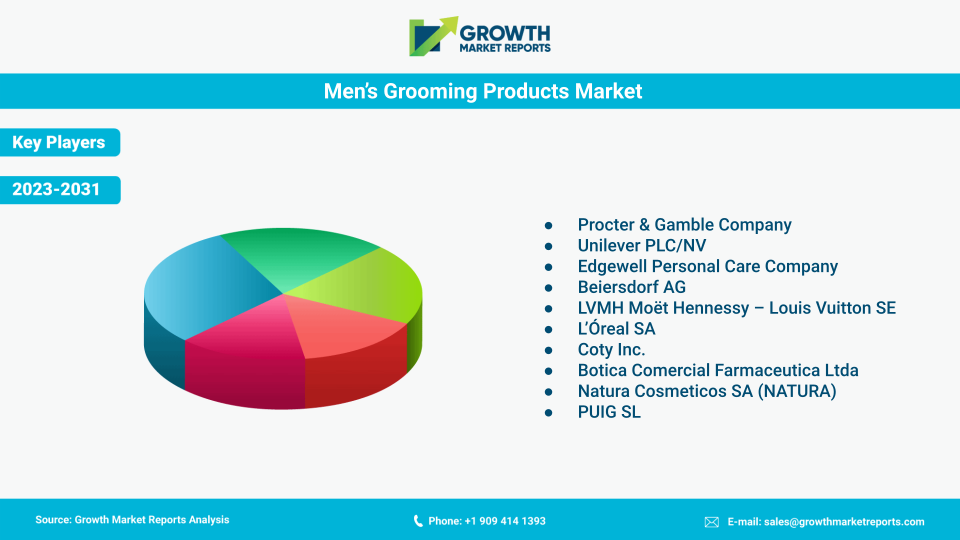
Key players in the men’s grooming products market include Procter & Gamble Company, Unilever PLC/NV, Edgewell Personal Care Company, Beiersdorf AG, LVMH Moët Hennessy – Louis Vuitton SE, L’Óreal SA, Coty, Inc., Botica Comercial Farmaceutica Ltda, Natura Cosmeticos SA (NATURA), PUIG, SL, Koninklijke Philips NV, and Panasonic Corporation.

Mergers & acquisitions, collaborations, agreements, and partnerships are some growth strategies adopted by these players to strengthen their geographical presence.

 Men’s Grooming Products Market Key Players

Frequently Asked Questions

Men are increasingly investing in skincare, haircare, and fragrances, moving beyond basic shaving essentials. There is a growing demand for natural, sustainable, and personalized products, influenced by social media, celebrity endorsements, and evolving beauty standards.

Challenges include intense competition, price wars, regulatory hurdles, economic uncertainties, supply chain disruptions, and cultural taboos around male grooming in certain regions.

The market is segmented into premium, mid-range, and economy categories, catering to different consumer demographics and preferences. Premiumization and value-driven innovation are key trends across all segments.

Major companies include Procter & Gamble, Unilever, L’Oréal, Beiersdorf AG, Edgewell Personal Care, Coty Inc., Philips, Johnson & Johnson, Estée Lauder Companies, and Shiseido, among others.

Key trends include the introduction of organic, vegan, and cruelty-free products, advanced formulations for specific skin and hair concerns, sustainable packaging, and the rise of personalized grooming solutions enabled by technology.

Distribution channels are shifting with growth in online retail, e-commerce, and subscription models. Supermarkets, hypermarkets, specialty stores, and convenience stores remain important, but digital platforms are becoming increasingly popular, especially among younger consumers.

The main product types include shaving products, skincare, haircare, fragrances, and other specialized offerings such as oral care, body grooming devices, and intimate hygiene products.

Asia Pacific is the fastest-growing region, driven by rising disposable incomes, urbanization, and changing cultural attitudes. North America and Europe remain dominant markets, while Latin America and the Middle East & Africa are emerging as lucrative regions.

The men’s grooming products market is expected to grow at a CAGR of 6.2% from 2025 to 2033, reaching a forecasted value of USD 107.8 billion by 2033.

As of 2024, the global men’s grooming products market size reached USD 62.4 billion, reflecting strong consumer demand for personal care among men worldwide.

Table Of Content

Chapter 1 Executive Summary
Chapter 2 Assumptions and Acronyms Used
Chapter 3 Research Methodology
Chapter 4 Men’s Grooming Products Market Overview
   4.1 Introduction
      4.1.1 Market Taxonomy
      4.1.2 Market Definition
      4.1.3 Macro-Economic Factors Impacting the Market Growth
   4.2 Men’s Grooming Products Market Dynamics
      4.2.1 Market Drivers
      4.2.2 Market Restraints
      4.2.3 Market Opportunity
   4.3 Men’s Grooming Products Market - Supply Chain Analysis
      4.3.1 List of Key Suppliers
      4.3.2 List of Key Distributors
      4.3.3 List of Key Consumers
   4.4 Key Forces Shaping the Men’s Grooming Products Market
      4.4.1 Bargaining Power of Suppliers
      4.4.2 Bargaining Power of Buyers
      4.4.3 Threat of Substitution
      4.4.4 Threat of New Entrants
      4.4.5 Competitive Rivalry
   4.5 Global Men’s Grooming Products Market Size & Forecast, 2023-2032
      4.5.1 Men’s Grooming Products Market Size and Y-o-Y Growth
      4.5.2 Men’s Grooming Products Market Absolute $ Opportunity

Chapter 5 Global Men’s Grooming Products Market Analysis and Forecast By Product Type
   5.1 Introduction
      5.1.1 Key Market Trends & Growth Opportunities By Product Type
      5.1.2 Basis Point Share (BPS) Analysis By Product Type
      5.1.3 Absolute $ Opportunity Assessment By Product Type
   5.2 Men’s Grooming Products Market Size Forecast By Product Type
      5.2.1 Shaving Products
      5.2.2 Skincare
      5.2.3 Haircare
      5.2.4 Fragrances
      5.2.5 Others
   5.3 Market Attractiveness Analysis By Product Type

Chapter 6 Global Men’s Grooming Products Market Analysis and Forecast By Distribution Channel
   6.1 Introduction
      6.1.1 Key Market Trends & Growth Opportunities By Distribution Channel
      6.1.2 Basis Point Share (BPS) Analysis By Distribution Channel
      6.1.3 Absolute $ Opportunity Assessment By Distribution Channel
   6.2 Men’s Grooming Products Market Size Forecast By Distribution Channel
      6.2.1 Supermarkets/Hypermarkets
      6.2.2 Specialty Stores
      6.2.3 Online Retail
      6.2.4 Convenience Stores
      6.2.5 Others
   6.3 Market Attractiveness Analysis By Distribution Channel

Chapter 7 Global Men’s Grooming Products Market Analysis and Forecast By Price Range
   7.1 Introduction
      7.1.1 Key Market Trends & Growth Opportunities By Price Range
      7.1.2 Basis Point Share (BPS) Analysis By Price Range
      7.1.3 Absolute $ Opportunity Assessment By Price Range
   7.2 Men’s Grooming Products Market Size Forecast By Price Range
      7.2.1 Premium
      7.2.2 Mid
      7.2.3 Economy
   7.3 Market Attractiveness Analysis By Price Range

Chapter 8 Global Men’s Grooming Products Market Analysis and Forecast By End User
   8.1 Introduction
      8.1.1 Key Market Trends & Growth Opportunities By End User
      8.1.2 Basis Point Share (BPS) Analysis By End User
      8.1.3 Absolute $ Opportunity Assessment By End User
   8.2 Men’s Grooming Products Market Size Forecast By End User
      8.2.1 Teenagers
      8.2.2 Adults
      8.2.3 Elderly
   8.3 Market Attractiveness Analysis By End User

Chapter 9 Global Men’s Grooming Products Market Analysis and Forecast by Region
   9.1 Introduction
      9.1.1 Key Market Trends & Growth Opportunities By Region
      9.1.2 Basis Point Share (BPS) Analysis By Region
      9.1.3 Absolute $ Opportunity Assessment By Region
   9.2 Men’s Grooming Products Market Size Forecast By Region
      9.2.1 North America
      9.2.2 Europe
      9.2.3 Asia Pacific
      9.2.4 Latin America
      9.2.5 Middle East & Africa (MEA)
   9.3 Market Attractiveness Analysis By Region

Chapter 10 Coronavirus Disease (COVID-19) Impact 
   10.1 Introduction 
   10.2 Current & Future Impact Analysis 
   10.3 Economic Impact Analysis 
   10.4 Government Policies 
   10.5 Investment Scenario

Chapter 11 North America Men’s Grooming Products Analysis and Forecast
   11.1 Introduction
   11.2 North America Men’s Grooming Products Market Size Forecast by Country
      11.2.1 U.S.
      11.2.2 Canada
   11.3 Basis Point Share (BPS) Analysis by Country
   11.4 Absolute $ Opportunity Assessment by Country
   11.5 Market Attractiveness Analysis by Country
   11.6 North America Men’s Grooming Products Market Size Forecast By Product Type
      11.6.1 Shaving Products
      11.6.2 Skincare
      11.6.3 Haircare
      11.6.4 Fragrances
      11.6.5 Others
   11.7 Basis Point Share (BPS) Analysis By Product Type 
   11.8 Absolute $ Opportunity Assessment By Product Type 
   11.9 Market Attractiveness Analysis By Product Type
   11.10 North America Men’s Grooming Products Market Size Forecast By Distribution Channel
      11.10.1 Supermarkets/Hypermarkets
      11.10.2 Specialty Stores
      11.10.3 Online Retail
      11.10.4 Convenience Stores
      11.10.5 Others
   11.11 Basis Point Share (BPS) Analysis By Distribution Channel 
   11.12 Absolute $ Opportunity Assessment By Distribution Channel 
   11.13 Market Attractiveness Analysis By Distribution Channel
   11.14 North America Men’s Grooming Products Market Size Forecast By Price Range
      11.14.1 Premium
      11.14.2 Mid
      11.14.3 Economy
   11.15 Basis Point Share (BPS) Analysis By Price Range 
   11.16 Absolute $ Opportunity Assessment By Price Range 
   11.17 Market Attractiveness Analysis By Price Range
   11.18 North America Men’s Grooming Products Market Size Forecast By End User
      11.18.1 Teenagers
      11.18.2 Adults
      11.18.3 Elderly
   11.19 Basis Point Share (BPS) Analysis By End User 
   11.20 Absolute $ Opportunity Assessment By End User 
   11.21 Market Attractiveness Analysis By End User

Chapter 12 Europe Men’s Grooming Products Analysis and Forecast
   12.1 Introduction
   12.2 Europe Men’s Grooming Products Market Size Forecast by Country
      12.2.1 Germany
      12.2.2 France
      12.2.3 Italy
      12.2.4 U.K.
      12.2.5 Spain
      12.2.6 Russia
      12.2.7 Rest of Europe
   12.3 Basis Point Share (BPS) Analysis by Country
   12.4 Absolute $ Opportunity Assessment by Country
   12.5 Market Attractiveness Analysis by Country
   12.6 Europe Men’s Grooming Products Market Size Forecast By Product Type
      12.6.1 Shaving Products
      12.6.2 Skincare
      12.6.3 Haircare
      12.6.4 Fragrances
      12.6.5 Others
   12.7 Basis Point Share (BPS) Analysis By Product Type 
   12.8 Absolute $ Opportunity Assessment By Product Type 
   12.9 Market Attractiveness Analysis By Product Type
   12.10 Europe Men’s Grooming Products Market Size Forecast By Distribution Channel
      12.10.1 Supermarkets/Hypermarkets
      12.10.2 Specialty Stores
      12.10.3 Online Retail
      12.10.4 Convenience Stores
      12.10.5 Others
   12.11 Basis Point Share (BPS) Analysis By Distribution Channel 
   12.12 Absolute $ Opportunity Assessment By Distribution Channel 
   12.13 Market Attractiveness Analysis By Distribution Channel
   12.14 Europe Men’s Grooming Products Market Size Forecast By Price Range
      12.14.1 Premium
      12.14.2 Mid
      12.14.3 Economy
   12.15 Basis Point Share (BPS) Analysis By Price Range 
   12.16 Absolute $ Opportunity Assessment By Price Range 
   12.17 Market Attractiveness Analysis By Price Range
   12.18 Europe Men’s Grooming Products Market Size Forecast By End User
      12.18.1 Teenagers
      12.18.2 Adults
      12.18.3 Elderly
   12.19 Basis Point Share (BPS) Analysis By End User 
   12.20 Absolute $ Opportunity Assessment By End User 
   12.21 Market Attractiveness Analysis By End User

Chapter 13 Asia Pacific Men’s Grooming Products Analysis and Forecast
   13.1 Introduction
   13.2 Asia Pacific Men’s Grooming Products Market Size Forecast by Country
      13.2.1 China
      13.2.2 Japan
      13.2.3 South Korea
      13.2.4 India
      13.2.5 Australia
      13.2.6 South East Asia (SEA)
      13.2.7 Rest of Asia Pacific (APAC)
   13.3 Basis Point Share (BPS) Analysis by Country
   13.4 Absolute $ Opportunity Assessment by Country
   13.5 Market Attractiveness Analysis by Country
   13.6 Asia Pacific Men’s Grooming Products Market Size Forecast By Product Type
      13.6.1 Shaving Products
      13.6.2 Skincare
      13.6.3 Haircare
      13.6.4 Fragrances
      13.6.5 Others
   13.7 Basis Point Share (BPS) Analysis By Product Type 
   13.8 Absolute $ Opportunity Assessment By Product Type 
   13.9 Market Attractiveness Analysis By Product Type
   13.10 Asia Pacific Men’s Grooming Products Market Size Forecast By Distribution Channel
      13.10.1 Supermarkets/Hypermarkets
      13.10.2 Specialty Stores
      13.10.3 Online Retail
      13.10.4 Convenience Stores
      13.10.5 Others
   13.11 Basis Point Share (BPS) Analysis By Distribution Channel 
   13.12 Absolute $ Opportunity Assessment By Distribution Channel 
   13.13 Market Attractiveness Analysis By Distribution Channel
   13.14 Asia Pacific Men’s Grooming Products Market Size Forecast By Price Range
      13.14.1 Premium
      13.14.2 Mid
      13.14.3 Economy
   13.15 Basis Point Share (BPS) Analysis By Price Range 
   13.16 Absolute $ Opportunity Assessment By Price Range 
   13.17 Market Attractiveness Analysis By Price Range
   13.18 Asia Pacific Men’s Grooming Products Market Size Forecast By End User
      13.18.1 Teenagers
      13.18.2 Adults
      13.18.3 Elderly
   13.19 Basis Point Share (BPS) Analysis By End User 
   13.20 Absolute $ Opportunity Assessment By End User 
   13.21 Market Attractiveness Analysis By End User

Chapter 14 Latin America Men’s Grooming Products Analysis and Forecast
   14.1 Introduction
   14.2 Latin America Men’s Grooming Products Market Size Forecast by Country
      14.2.1 Brazil
      14.2.2 Mexico
      14.2.3 Rest of Latin America (LATAM)
   14.3 Basis Point Share (BPS) Analysis by Country
   14.4 Absolute $ Opportunity Assessment by Country
   14.5 Market Attractiveness Analysis by Country
   14.6 Latin America Men’s Grooming Products Market Size Forecast By Product Type
      14.6.1 Shaving Products
      14.6.2 Skincare
      14.6.3 Haircare
      14.6.4 Fragrances
      14.6.5 Others
   14.7 Basis Point Share (BPS) Analysis By Product Type 
   14.8 Absolute $ Opportunity Assessment By Product Type 
   14.9 Market Attractiveness Analysis By Product Type
   14.10 Latin America Men’s Grooming Products Market Size Forecast By Distribution Channel
      14.10.1 Supermarkets/Hypermarkets
      14.10.2 Specialty Stores
      14.10.3 Online Retail
      14.10.4 Convenience Stores
      14.10.5 Others
   14.11 Basis Point Share (BPS) Analysis By Distribution Channel 
   14.12 Absolute $ Opportunity Assessment By Distribution Channel 
   14.13 Market Attractiveness Analysis By Distribution Channel
   14.14 Latin America Men’s Grooming Products Market Size Forecast By Price Range
      14.14.1 Premium
      14.14.2 Mid
      14.14.3 Economy
   14.15 Basis Point Share (BPS) Analysis By Price Range 
   14.16 Absolute $ Opportunity Assessment By Price Range 
   14.17 Market Attractiveness Analysis By Price Range
   14.18 Latin America Men’s Grooming Products Market Size Forecast By End User
      14.18.1 Teenagers
      14.18.2 Adults
      14.18.3 Elderly
   14.19 Basis Point Share (BPS) Analysis By End User 
   14.20 Absolute $ Opportunity Assessment By End User 
   14.21 Market Attractiveness Analysis By End User

Chapter 15 Middle East & Africa (MEA) Men’s Grooming Products Analysis and Forecast
   15.1 Introduction
   15.2 Middle East & Africa (MEA) Men’s Grooming Products Market Size Forecast by Country
      15.2.1 Saudi Arabia
      15.2.2 South Africa
      15.2.3 UAE
      15.2.4 Rest of Middle East & Africa (MEA)
   15.3 Basis Point Share (BPS) Analysis by Country
   15.4 Absolute $ Opportunity Assessment by Country
   15.5 Market Attractiveness Analysis by Country
   15.6 Middle East & Africa (MEA) Men’s Grooming Products Market Size Forecast By Product Type
      15.6.1 Shaving Products
      15.6.2 Skincare
      15.6.3 Haircare
      15.6.4 Fragrances
      15.6.5 Others
   15.7 Basis Point Share (BPS) Analysis By Product Type 
   15.8 Absolute $ Opportunity Assessment By Product Type 
   15.9 Market Attractiveness Analysis By Product Type
   15.10 Middle East & Africa (MEA) Men’s Grooming Products Market Size Forecast By Distribution Channel
      15.10.1 Supermarkets/Hypermarkets
      15.10.2 Specialty Stores
      15.10.3 Online Retail
      15.10.4 Convenience Stores
      15.10.5 Others
   15.11 Basis Point Share (BPS) Analysis By Distribution Channel 
   15.12 Absolute $ Opportunity Assessment By Distribution Channel 
   15.13 Market Attractiveness Analysis By Distribution Channel
   15.14 Middle East & Africa (MEA) Men’s Grooming Products Market Size Forecast By Price Range
      15.14.1 Premium
      15.14.2 Mid
      15.14.3 Economy
   15.15 Basis Point Share (BPS) Analysis By Price Range 
   15.16 Absolute $ Opportunity Assessment By Price Range 
   15.17 Market Attractiveness Analysis By Price Range
   15.18 Middle East & Africa (MEA) Men’s Grooming Products Market Size Forecast By End User
      15.18.1 Teenagers
      15.18.2 Adults
      15.18.3 Elderly
   15.19 Basis Point Share (BPS) Analysis By End User 
   15.20 Absolute $ Opportunity Assessment By End User 
   15.21 Market Attractiveness Analysis By End User

Chapter 16 Competition Landscape 
   16.1 Men’s Grooming Products Market: Competitive Dashboard
   16.2 Global Men’s Grooming Products Market: Market Share Analysis, 2023
   16.3 Company Profiles (Details – Overview, Financials, Developments, Strategy) 
      16.3.1 Procter & Gamble (P&G)
Unilever
Beiersdorf AG
L'Oréal S.A.
Edgewell Personal Care
Johnson & Johnson
Estee Lauder Companies
Reckitt Benckiser Group plc
Colgate-Palmolive Company
Shiseido Company, Limited
Kao Corporation
Coty Inc.
Henkel AG & Co. KGaA
Philips N.V.
Panasonic Corporation
Gillette
American Crew
Harry’s Inc.
Dollar Shave Club
Jack Black LLC

Methodology

Our Clients

Pfizer
Nestle SA
General Mills
The John Holland Group
General Electric
Deloitte
Siemens Healthcare
sinopec