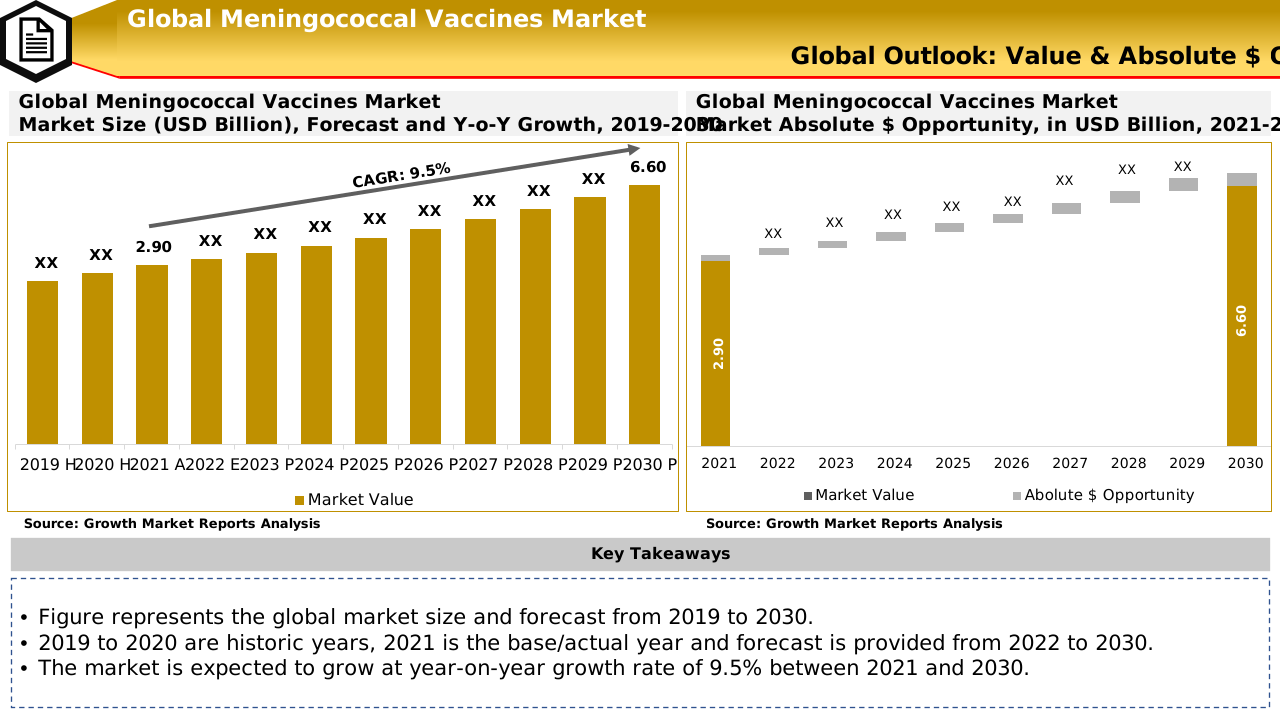
The global meningococcal vaccines market size was USD 2.90 Bn in 2022 and is likely to reach USD 6.60 Bn by 2031, expanding at a CAGR of 9.5% during 2023–2031. The market growth is attributed to the rising cases of meningitis, the demand for an efficient cure, and increasing awareness about the disease.
Meningococcal vaccines prevent infection from Neisseria meningitidis. The illness that arises from Neisseria meningitis bacterial infection is identified as Meningococcal disease. This disease can be harmful and at times life-threatening. The infection includes the spinal cord, brain lining, and bloodstream.
The infection of meningitis bacteria results in the inflation of membranes that cover the brain and spinal cord. Every year almost 1000 or more meningococcal infections are reported in the United States. Studies suggest that one out of five individuals who have this disease suffer serious complications.
Centers for Disease Controls and Prevention (CDC) in one of its reports mentioned that 10 to 15 percent of individuals that have the meningococcal disease are likely to die. And those who survive, 1 to 5 of them are likely to face long-term disabilities such as brain damage, deafness, neurological issues, and even loss of limbs.
Meningococcal disease is one of the most common types of infection found in individuals who are 10 or above. CDC has recommended the meningococcal vaccination for all teens and preteens age group individuals. For some specific situations, the organization also recommends that adults and children get themselves vaccinated with meningitis vaccines suitable for their age group.
Training healthcare professionals, offering information & support to patients, and involvement of various non-profit organizations in providing funds for research projects are the key factors influencing the market. Around USD 27.0 million investment in scientific research and 161 research grants were awarded by Meningitis Research Foundation as part of its efforts to make people aware and expertise together to face the challenges in the prevention of meningitis.
Additionally, a vaccine called MenACYW manufactured by Sanofi is in phase III clinical trial and the rapid development of phase III vaccines is one of the main factors positively impacting the market. Moreover, Serum Institute of India Pvt. Ltd. is currently working on a conjugate vaccine to deliver it at an affordable price.
COVID-19 Impact on Meningococcal Vaccines Market
The market report finds that the COVID-19 pandemic hindered the growth of the meningococcal vaccines market. The lockdown regulations and fear of infection declined the vaccination demand around the world, as preferences were given to curbing COVID-19 spread.
The number of meningococcal vaccine dosages administered between 2020 and 2021 is significantly lesser than in pre-COVID-19 times. It is anticipated that the declined vaccine coverage during COVID-19 can be one of the major factors in the increasing number of meningococcal diseases in several countries worldwide in recent years.
Meningococcal Vaccines Market Dynamics
The research report presents a complete market overview by providing detailed information about the current market trends, existing drivers, growth opportunities and potentials, and emerging challenges. The global meningococcal vaccines market report has up-to-date insights about market scenarios that can shape the overall market performance and output during the forecast period, 2023 to 2031.
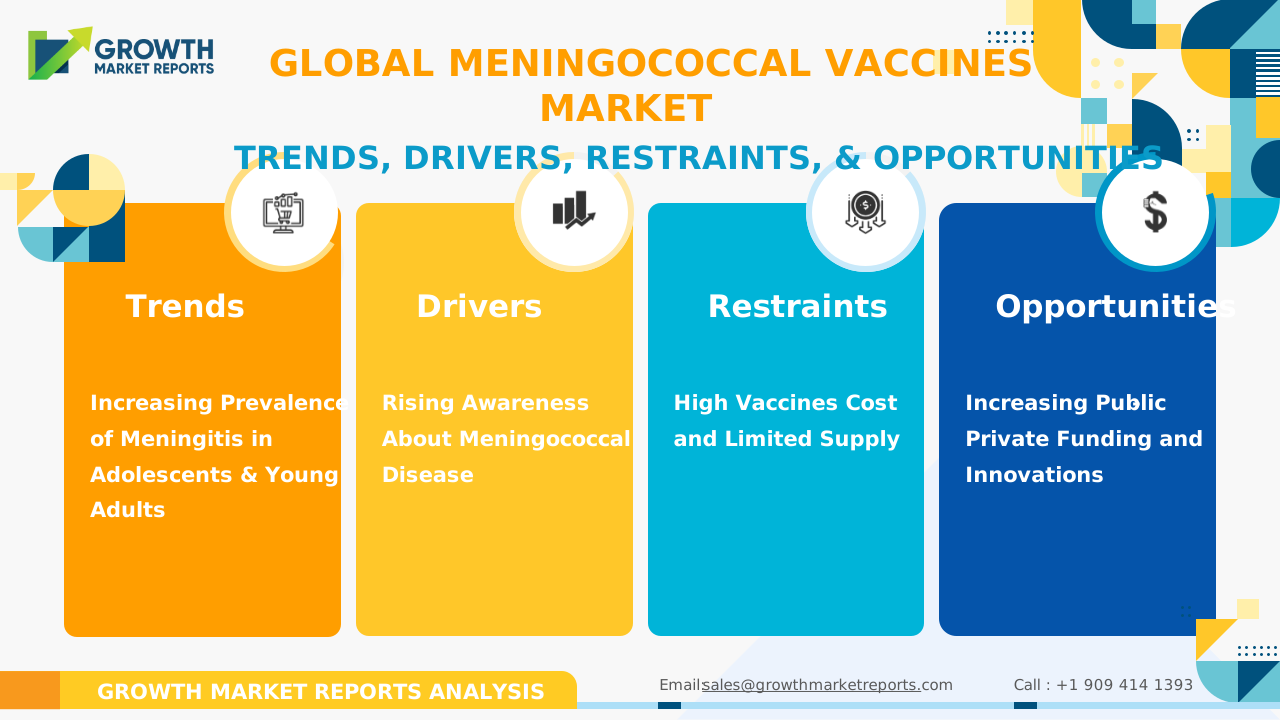
What are the Trends in the Meningococcal Vaccines Market?
The growing prevalence of meningitis in adolescents & young adults is one of the key trends driving the meningococcal vaccines market. The spread of the bacteria and viruses that cause meningococcal is found to be high among teens and preteens owing to living in places that are crowded, gatherings, and coming in close proximity with individuals that are carrying the viral or bacterial meningitis infection.
The CDC survey has estimated 1.2 million cases of bacterial meningitis across the world each year. This is mainly attributed to the spread of bacteria due to rising close contact and high-rate transmission through respiratory secretions. The factors such as reduced vaccination, changes in lifestyle, and high transmission among youths are causing the increasing spread of meningitis in the younger population. The growing number of meningococcal cases in young populations around the world is expected to boost the demand for meningitis vaccines to prevent meningococcal illness.
Which are the Drivers of the Meningococcal Vaccines Market?
Governments around the globe and public and private organizations are focusing on increasing awareness about meningococcal disease. For instance, in September 2021, the World Health Organization (WHO) and its partners announced a combined strategy to defeat meningitis by 2030.
In these efforts, awareness about various aspects of the disease is provided in media outlets, local healthcare establishments, and educational institutes, among others. This information includes spotting symptoms of meningitis infection, how to prevent meningitis, the type of available vaccinations, and who should take the vaccination.
Such expanding awareness and rising immunization programs in developed and developing countries are likely to be primary drivers of the meningococcal vaccination market in the coming years. The increased focus on spreading awareness and expansion of meningococcal vaccination is due to the threat of a public outbreak of meningitis.
What are the Restraints of the Meningococcal Vaccines Market?
The limited supply of meningococcal vaccines and high cost is likely to hamper the market growth. As meningitis infection is increasing in the world’s lesser-developed regions such as Africa, the effective production, and cost-effective supply of the meningococcal vaccine is required.
The lesser number of vaccine makers in the market results in a limited supply of vaccines around the world with a higher cost per dose. Nonetheless, the growing awareness about the disease and the entry of new players in the manufacturing industry is anticipated to lower vaccine costs and improve supply around the world.
What are the Opportunities in the Meningococcal Vaccines Market?
The factors such as increasing public-private partnerships and innovations in vaccines and ease of administering the dose are anticipated to create favorable growth opportunities for the market players. The public and private organizations are joining hands to launch combined efforts against meningitis disease.
The efforts include expansion of research and development, innovation of cost-effective preventive vaccines, improving vaccine supply, and other such measures. This is anticipated to increase public-private funding for vaccination against meningococcal disease, resulting in significant growth opportunities for the market’s key players.
Scope of Meningococcal Vaccines Market Report
The global meningococcal vaccines market research report includes an assessment of the market trends, market segments, and regional markets. Overview and dynamics have also been included in the report.
|
Attributes
|
Details
|
|
Report Title
|
Meningococcal Vaccines Market - Global Industry Analysis, Growth, Share, Size, Trends, and Forecast
|
|
Base Year
|
2022
|
|
Historic Data
|
2020–2021
|
|
Forecast Period
|
2023–2031
|
|
Segmentation
|
Vaccine Type (Polysaccharide Vaccine [Menomune, Mencevax, NmVac4, and Others], Conjugate Vaccine [Menveo, Menactra, NeisVac-C, and Others], and Subcapsular), Vaccine Serotype (MenACWY, MenA, MenB & Manic, MenC, MenAC, and Others), Composition (Mono Vaccines and Combination Vaccines), Age Group (Infants, Children, Adolescents & Young Adults, and Adults), End-user (Hospitals, Specialty Clinics, Homecare, Research & Academic Institutes, and Others), and Distribution Channel (Hospital Pharmacy, Retail Pharmacy, and Online Pharmacy)
|
|
Regional Scope
|
Asia Pacific, North America, Latin America, Europe, and Middle East & Africa
|
|
Report Coverage
|
Company Share, Market Analysis and Size, Competitive Landscape, Growth Factors, Market Trends, and Revenue Forecast
|
|
Key Players Covered in the Report
|
Pfizer Inc.; GSK plc.; Sanofi; Serum Institute of India Pvt. Ltd.; Walvax Biotechnology Co., Ltd; Incepta Pharmaceuticals Ltd.; HUALAN BIOLOGICAL VACCINE CO., LTD.; Johnson & Johnson Private Limited; Viatris Inc.; Sun Pharmaceutical Industries Ltd.; Merck & Co., Inc.; Novartis AG; AbbVie Inc.; Fresenius Kabi AG; Amneal Pharmaceuticals LLC.; Baxter; and BIO-MED
|
Meningococcal Vaccines Market Segment Insights
What Drives Conjugate Vaccine Segment in the Meningococcal Vaccines Market?
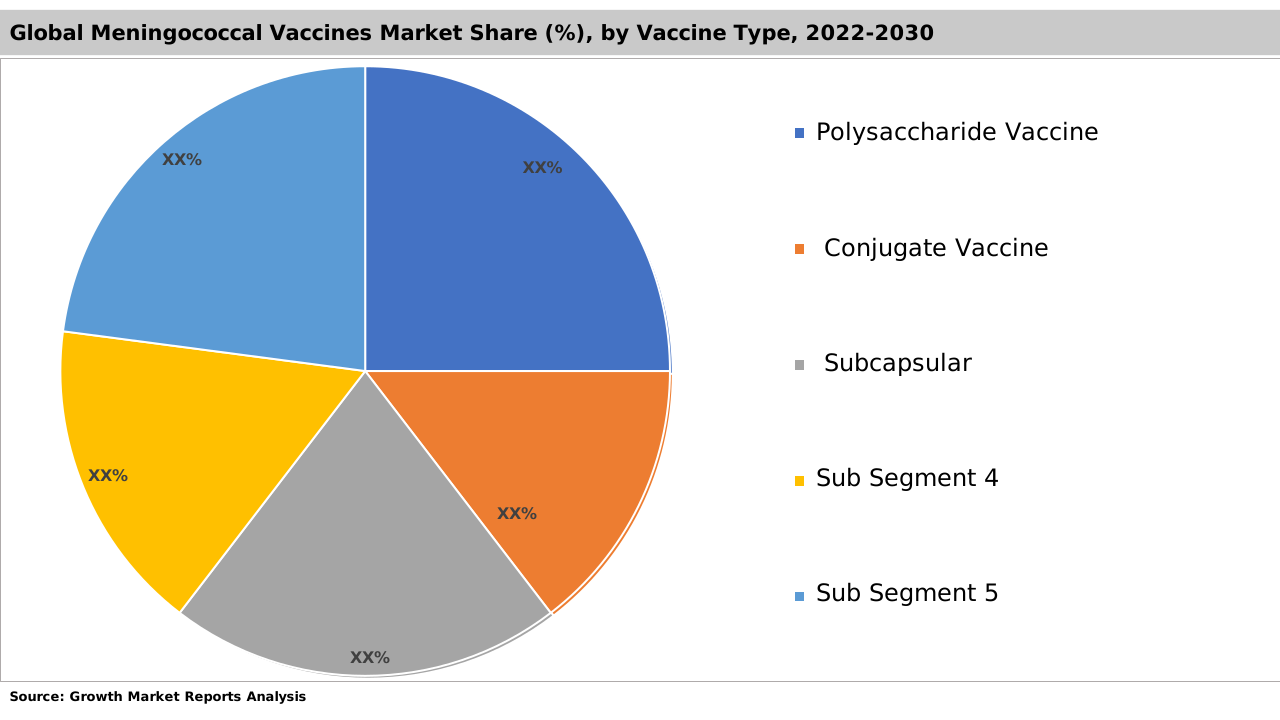
Based on the vaccine type, the global meningococcal vaccines market is segmented into polysaccharide vaccine, conjugate vaccine, and subcapsular. The polysaccharide vaccine is further sub-categorized into Menomune, Mencevax, NmVac4, and others. The conjugate vaccine segment is again subdivided into Menveo, Menactra, NeisVac-C, and others.
The conjugate vaccine segment held the major share of the market revenue in 2022 and is projected to expand at the fastest rate during the projected period owing to long-lasting immunity benefits, herd immunity, and high adoption among users. The conjugate vaccine is anticipated to hold more than 60% share of the global market by 2031.
The current available conjugate meningococcal vaccine is monovalent (A or C), quadrivalent, and combined Haemophilus influenzae type B (HIB) plus monovalent C meningococcal vaccine. Meningococcal conjugate (MenACWY) vaccines are effective in preventing infection from four types of Neisseria meningitidis bacteria (serogroups A, C, W, and Y).
The polysaccharide vaccine segment is anticipated to hold a considerable share of the market in the coming years. The meningococcal polysaccharide vaccines are either monovalent or monovalent. These vaccines stimulate responses from B-cells. This results in the production of antibodies that are meningococcal type-specific. The polysaccharide vaccine improves the ingestion and pathogens killing by the phagocytosis process.
What are the Main Aspects for Boosting the MenACWY Segment?
On the basis of vaccine serotype, the global market is segregated into MenACWY, MenA, MenB & Manic, MenC, MenAC, and others. The MenACWY segment is expected to register a significant boost during the forecast period. The segment growth is attributed to the high demand for MenACWY for teens and preteens. These age groups come under a high risk of infection, owing to this the administration of MenACWY is likely to be higher, as it is one of the main serotype vaccines available in different regions. MenACWY protects individuals from four types of bacteria that cause meningococcal disease (serogroups A, C, W, and Y).
The MenAC segment is anticipated to account for rapid growth in the global market during the forecast period. The strong immunity and high preference from customers are likely to aid the demand growth for MenAC serotype vaccines in the market.
Why is the Combination Vaccines Segment More Prevalent than the Mono Vaccines Segment?
Based on composition, the global meningococcal vaccines market is divided into mono vaccines and combination vaccines. The combination vaccines segment is expected to expand at a significant growth rate during the projected period. The combination vaccines have multiple advantages including fewer shot requirements, less hassle, less cost, and on-time protection, among others. These multiple benefits are likely to drive the combination vaccine composition segment in the near future.
The mono vaccines segment is anticipated to hold a key share of the market in the coming years. The preference for traditional methods and safety reasons are anticipated to make some of the end-user prefer mono vaccines over combination vaccines in the meningococcal vaccines market.
Which Major Factors influence the Substantial Growth of the Adolescents & Young Adults Segment?
Based on age group, the global meningococcal vaccines market is divided into infants, children, adolescents & young adults, and adults. The adolescents & young adults segment is expected to lead the market during the projection period owing to the increasing prevalence of meningococcal disease in the adolescents & young adults population. The increasing health awareness in the population is likely to propel the demand for timely vaccination against meningococcal disease.
The infants age group segment is anticipated to expand in the market in the coming years. CDC has recommended a MenACWY vaccine for infants as young as 2 months old if they have medical conditions, traveling to different countries, or are at risk due to infection outbreaks in the community.
What Key Factors Contribute to the Rapid Expansion of the Hospitals Segment?
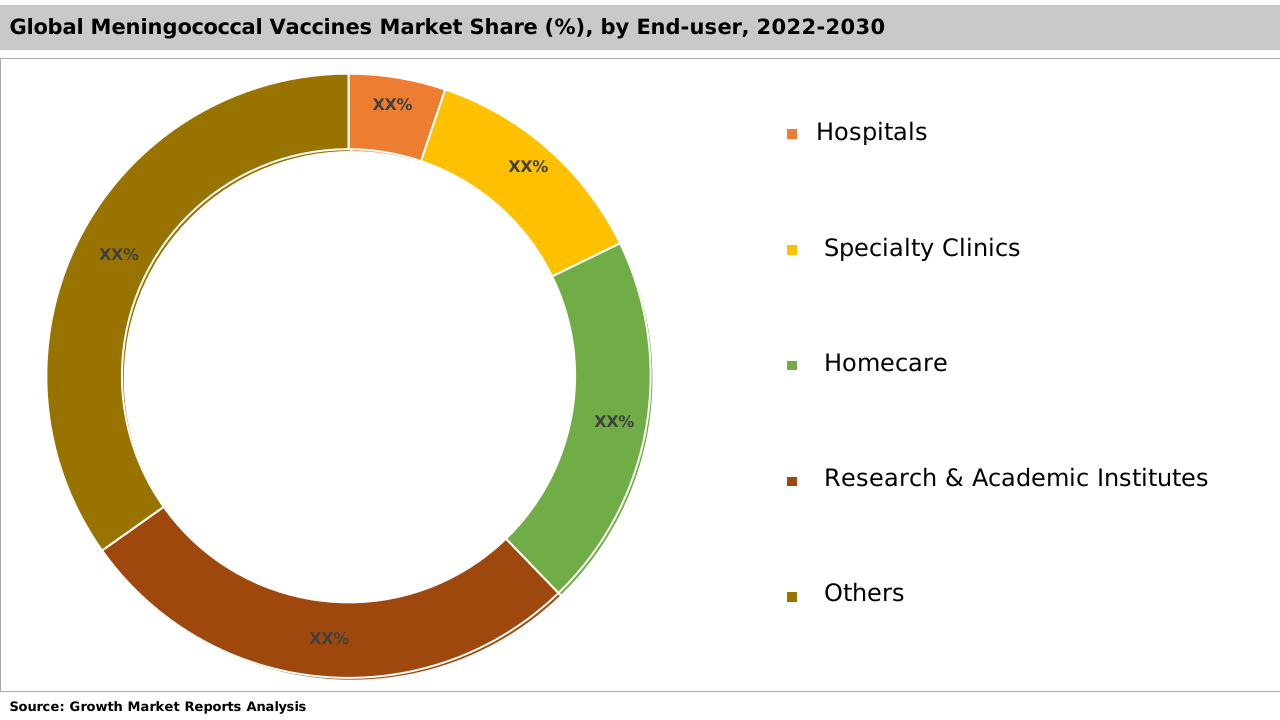
On the basis of end-user, the global market is segregated into hospitals, specialty clinics, homecare, research & academic institutes, and others. The hospital segment is expected to register a rapid expansion in CAGR during the forecast period. The growing awareness in the population about meningococcal disease due to increased efforts by governments and major players in the market is projected to drive the growth of the hospitals segment in the coming years.
The specialty clinics segment is anticipated to account for considerable growth in market share in the coming years. Factors such as preference from patients for advanced meningococcal vaccines and the effective elimination of disease are likely to drive the demand for specialty clinics in major economies around the world.
Which Major Factors influence the Significant Growth of the Hospital Pharmacy Segment?
Based on the distribution channel, the global meningococcal vaccines market is divided into hospital pharmacy, retail pharmacy, and online pharmacy. The hospital pharmacy segment is expected to expand at a significant growth rate during the projected period owing to a high preference for meningococcal vaccination in hospitals due to rising awareness about the disease.
The retail pharmacy segment is anticipated to hold a key share of the market in the coming years owing to the increasing availability of cost-effective vaccines from the major players of the market. The development of innovative and low-cost vaccines is boosting the sales of meningococcal vaccines in retail pharmacies.
Why is North America Dominating the Global Meningococcal Vaccines Market?
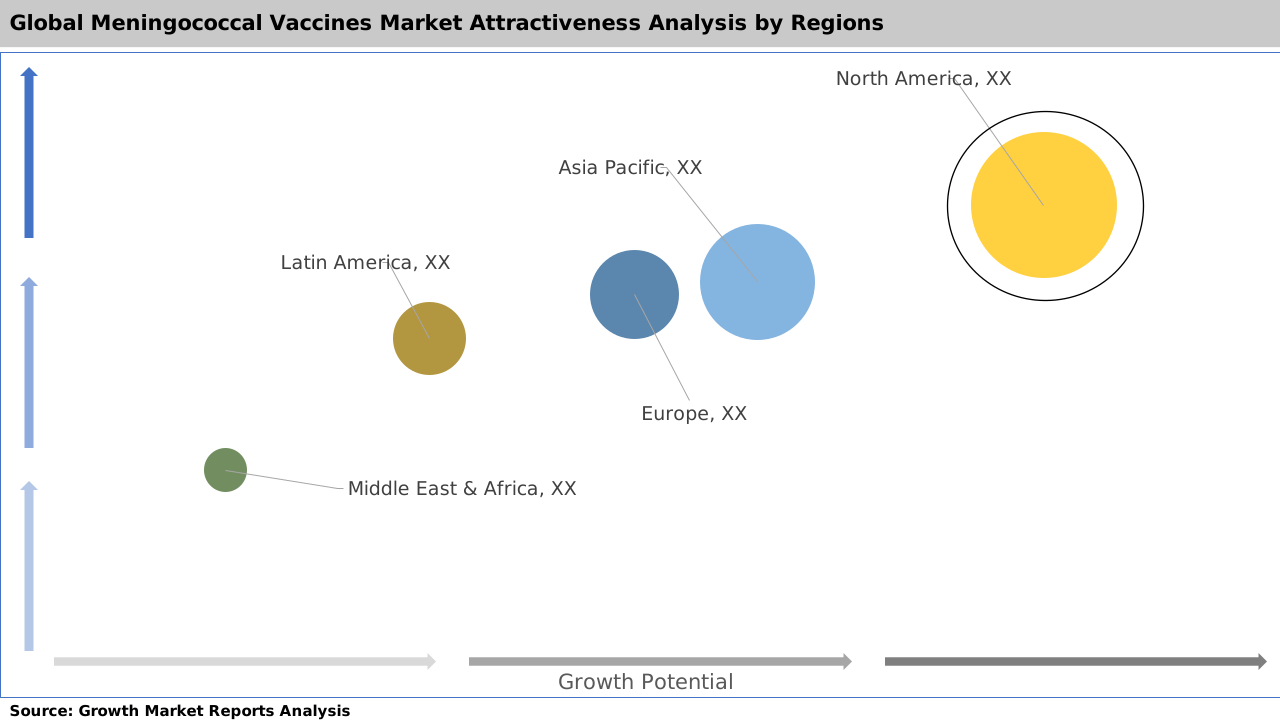
In terms of region, the global meningococcal vaccines market is classified as Asia Pacific, North America, Latin America, Europe, and Middle East & Africa. North America is expected to dominate the market during the forecast period. The market of the region is likely to be driven by high investments in research and development coupled with increasing favorable support and recommendations by governments in the region.
Some of the players in the vaccine contract manufacturing industry are also putting their efforts towards lowering the prices through various strategies in public-private funding. The availability of affordable meningococcal vaccines is also anticipated to further the market growth in North America in the coming years.
The meningococcal vaccine market of Asia Pacific is anticipated to expand at a rapid pace during the projection period. The factors such as large population presence in major economies of the region, India, and China, and rising access to quality healthcare are projected to support the rapid growth of the meningococcal vaccine market in the region.
Segments
The global meningococcal vaccines market has been segmented on the basis of
Vaccine Type
-
Polysaccharide Vaccine
-
Menomune
-
Mencevax
-
NmVac4
-
Others
-
Conjugate Vaccine
-
Menveo
-
Menactra
-
NeisVac-C
-
Others
Vaccine Serotype
-
MenACWY
-
MenA
-
MenB & Manic
-
MenC
-
MenAC
-
Others
Composition
-
Mono Vaccines
-
Combination Vaccines
Age Group
End-user
Distribution Channel
-
Hospital Pharmacy
-
Retail Pharmacy
-
Online Pharmacy
Region
-
Asia Pacific
-
North America
-
Latin America
-
Europe
-
Middle East & Africa
Key Players
-
-
GSK plc.
-
-
Serum Institute of India Pvt. Ltd.
-
Walvax Biotechnology Co., Ltd
-
Incepta Pharmaceuticals Ltd.
-
HUALAN BIOLOGICAL VACCINE CO., LTD.
-
Johnson & Johnson Private Limited
-
Viatris Inc.
-
Sun Pharmaceutical Industries Ltd.
-
Merck & Co., Inc.
-
Novartis AG
-
AbbVie Inc.
-
Fresenius Kabi AG
-
Amneal Pharmaceuticals LLC.
-
Baxter
-
BIO-MED
Competitive Landscape
The competitive landscape of the global meningococcal vaccines market report provides in-depth insights into the growth strategies and development initiatives implemented by the key players in the market.
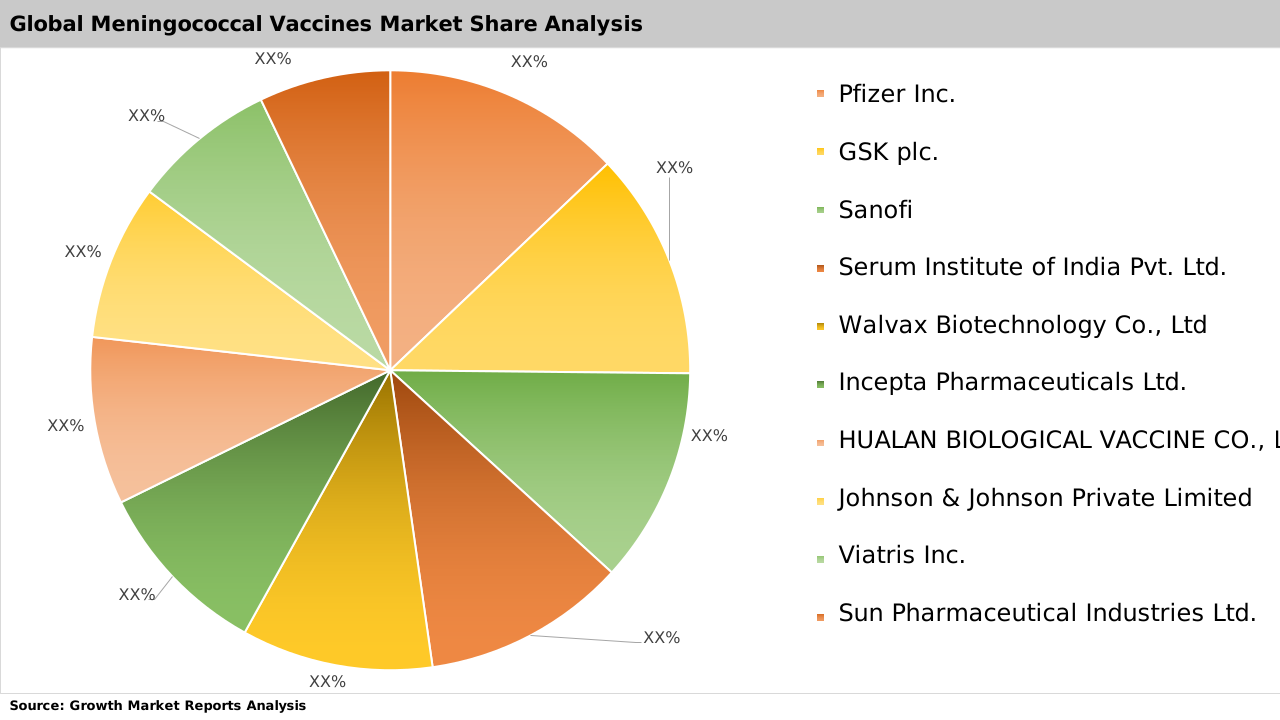
Key players competing in the global meningococcal vaccines market are Pfizer Inc.; GSK plc.; Sanofi; Serum Institute of India Pvt. Ltd.; Walvax Biotechnology Co., Ltd; Incepta Pharmaceuticals Ltd.; HUALAN BIOLOGICAL VACCINE CO., LTD.; Johnson & Johnson Private Limited; Viatris Inc.; Sun Pharmaceutical Industries Ltd.; Merck & Co., Inc.; Novartis AG; AbbVie Inc.; Fresenius Kabi AG; Amneal Pharmaceuticals LLC.; Baxter; and BIO-MED. Some of these key companies adopted various business development strategies including mergers, acquisitions, partnerships, collaboration, product launches, and production capacity expansion to expand their consumer base and enhance their market share.
-
On September 15, 2022, Pfizer Inc. (NYSE:PFE) announced positive top-line outcomes from the pivotal phase three trial (NCT04440163) of the pentavalent meningococcal vaccine candidate (MenABCWY) in the adolescent age group. The trial assessed the company’s investigational pentavalent meningococcal vaccine safety, tolerability, and immunogenicity in healthy individuals 10 through 25 years of age.
-
On April 24, 2020, The U.S. Food and Drug Administration (FDA) approved a Biologics License Application for MenQuadfiTM Meningococcal (Groups A, C, Y, W) Conjugate Vaccine for the prevention of invasive meningococcal illness in individuals who are 2 years of age or above.











 Request For Customization
 Enquiry Before Buying
 Speak With Analyst