Medical Holography Market Market Research Report 2033

Medical Holography Market Market Research Report 2033

Segments - by Product Type (Holographic Displays, Holography Microscopes, Holographic Prints, Holography Software, Others), by Application (Medical Imaging, Medical Education, Biomedical Research, Others), by End-User (Hospitals and Clinics, Academic and Research Institutes, Pharmaceutical and Biotechnology Companies, Others)

https://growthmarketreports.com/raksha
Author : Raksha Sharma
https://growthmarketreports.com/Vaibhav
Fact-checked by : V. Chandola
https://growthmarketreports.com/Shruti
Editor : Shruti Bhat

Upcoming | Report ID :HC-1375 | 4.4 Rating | 48 Reviews | 271 Pages | Format : Docx PDF

Report Description


Medical Holography Market Outlook

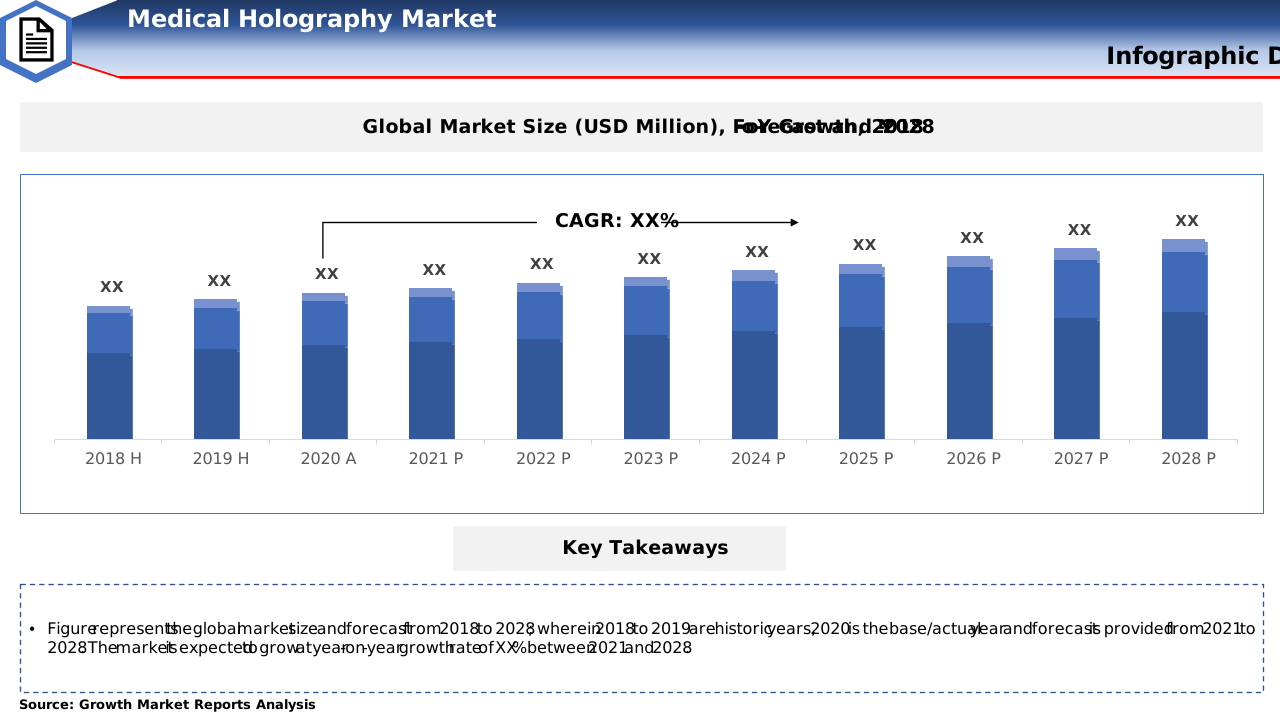
According to our latest research, the global medical holography market size reached USD 1.23 billion in 2024, reflecting robust adoption across healthcare and research sectors. The market is anticipated to expand at a CAGR of 33.1% from 2025 to 2033, projecting a remarkable value of USD 15.18 billion by 2033. This extraordinary growth is primarily driven by technological advancements in 3D imaging, increasing demand for advanced medical visualization, and the rising prevalence of chronic diseases requiring precise diagnostic and educational tools. As per our latest research, the integration of holography in medical education and diagnostics is reshaping the healthcare landscape, providing deeper insights and enhanced collaboration among medical professionals.

One of the most significant growth factors for the medical holography market is the rapid expansion of 3D imaging technology and its integration with artificial intelligence. These advancements have enabled the creation of highly detailed, interactive holograms that facilitate improved visualization of complex anatomical structures. Surgeons and radiologists are increasingly utilizing these tools for preoperative planning, intraoperative guidance, and postoperative assessment. The ability to visualize organs, tissues, and pathological conditions in three dimensions not only improves diagnostic accuracy but also enhances patient outcomes. Furthermore, the adoption of minimally invasive procedures, which rely heavily on advanced imaging, is further propelling the demand for medical holography solutions globally.

Another key driver fueling the growth of the medical holography market is the increasing emphasis on medical education and training. Traditional learning methods are being rapidly supplemented, and in some cases replaced, by immersive holographic experiences that allow students and professionals to interact with virtual anatomical models. This technology bridges the gap between theoretical knowledge and practical application, offering an engaging and risk-free environment for learning. Medical holography also supports remote education, enabling institutions to reach a broader audience and standardize training across geographies. The COVID-19 pandemic has further accelerated the adoption of digital and virtual learning tools, positioning holography as a cornerstone of the next generation of medical education.

The expanding scope of biomedical research is also contributing to the robust growth of the medical holography market. Researchers are leveraging holographic imaging to study cellular and molecular dynamics in real time, leading to breakthroughs in disease understanding and drug development. The ability to visualize biological processes at the micro and nano scale with unparalleled clarity is opening new avenues for innovation in personalized medicine, regenerative therapies, and pharmacological research. The collaboration between healthcare providers, academic institutions, and technology companies is fostering a vibrant ecosystem that supports continuous innovation and commercialization of advanced holographic solutions.

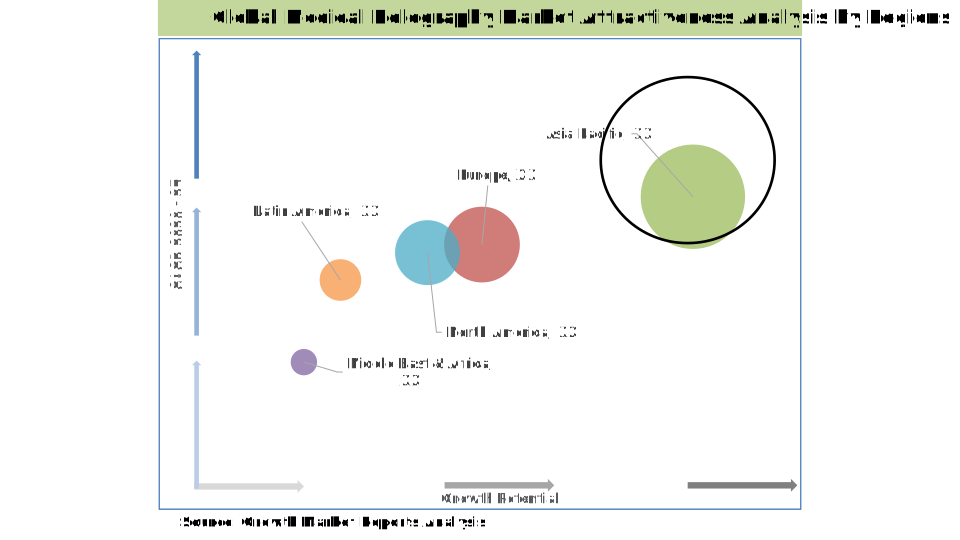
From a regional perspective, North America continues to dominate the global medical holography market, accounting for the largest share in 2024. This leadership position is attributed to the presence of advanced healthcare infrastructure, significant investments in research and development, and the early adoption of cutting-edge technologies. Europe follows closely, supported by robust government initiatives and a strong focus on medical innovation. Meanwhile, the Asia Pacific region is emerging as a high-growth market, driven by increasing healthcare expenditure, growing awareness of advanced diagnostic tools, and the proliferation of medical training programs. Latin America and the Middle East & Africa are also witnessing gradual adoption, albeit at a slower pace, due to infrastructural and economic constraints.

The advent of the Holographic Virtual Microscope is revolutionizing the way researchers and clinicians approach biomedical investigations. This cutting-edge technology enables the visualization of biological specimens in three dimensions without the need for physical slides or staining, thereby preserving the integrity of the samples. By providing a virtual environment for detailed examination, the Holographic Virtual Microscope facilitates a deeper understanding of cellular structures and dynamics. It is particularly beneficial in pathology and microbiology, where precise visualization is crucial for accurate diagnosis and research. This tool not only enhances the efficiency of laboratory workflows but also supports remote collaboration, allowing experts from different locations to analyze and discuss findings in real-time.

Global Medical Holography  Industry Outlook

Product Type Analysis

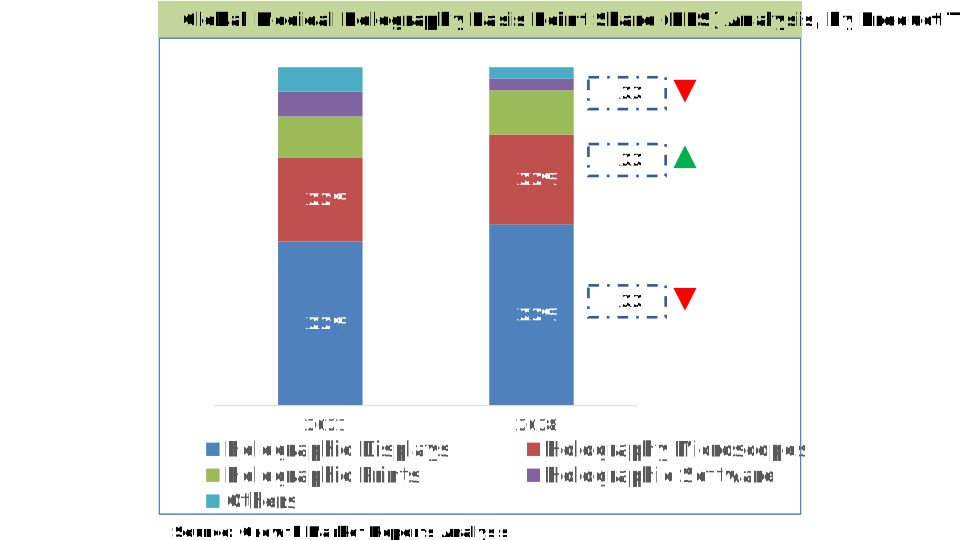
The product type segment of the medical holography market is characterized by a diverse range of offerings, including holographic displays, holography microscopes, holographic prints, holography software, and other specialized products. Among these, holographic displays represent the largest and most dynamic sub-segment, owing to their widespread application in surgical planning, patient education, and intraoperative visualization. These displays provide high-resolution, interactive 3D representations of anatomical structures, enabling clinicians to make more informed decisions and enhance procedural precision. The continuous evolution of display technologies, such as light-field and volumetric displays, is expected to further drive adoption and innovation in this segment.

Holography microscopes are gaining significant traction in biomedical research and diagnostics due to their ability to capture real-time, label-free images of living cells and tissues. These advanced microscopes facilitate in-depth analysis of cellular processes, enabling early detection of diseases and monitoring of therapeutic responses. Researchers are increasingly leveraging holography microscopes for applications in cancer research, neurobiology, and regenerative medicine. The integration of artificial intelligence and machine learning algorithms with holography microscopes is further enhancing their analytical capabilities, making them indispensable tools in cutting-edge biomedical research.

Holographic prints serve as valuable tools for medical education, patient communication, and clinical documentation. These prints offer a tangible, three-dimensional representation of anatomical structures, allowing for detailed examination and improved understanding. Medical professionals are utilizing holographic prints for preoperative planning, prosthetic design, and forensic analysis. The growing demand for customized and patient-specific holographic prints is driving innovation in printing technologies, materials, and design software, expanding the utility of this segment across various medical specialties.

The holography software segment plays a critical role in the medical holography market, enabling the creation, manipulation, and visualization of complex holographic images. Advanced software solutions are designed to integrate seamlessly with existing medical imaging systems, facilitating the conversion of CT, MRI, and ultrasound data into interactive 3D holograms. These software platforms support collaborative workflows, remote consultations, and multidisciplinary team discussions, enhancing clinical decision-making and patient care. Continuous advancements in software algorithms, user interfaces, and compatibility with emerging hardware are expected to drive sustained growth in this segment.

Other product types in the medical holography market include specialized accessories, augmented reality (AR) tools, and custom solutions tailored to specific clinical or research needs. These products are often developed in collaboration with healthcare providers and academic institutions, addressing unique challenges and requirements. The ongoing convergence of holography with other advanced technologies, such as virtual reality (VR) and mixed reality (MR), is expanding the scope of applications and creating new opportunities for innovation in the market.

The introduction of the Holographic Virtual Dermatology Kiosk marks a significant advancement in dermatological care and patient engagement. This innovative kiosk utilizes holographic technology to provide patients with an interactive and immersive experience, enabling them to visualize their skin conditions in a three-dimensional format. By offering a detailed view of dermatological issues, the kiosk aids in enhancing patient understanding and compliance with treatment plans. It also serves as an invaluable tool for dermatologists, allowing them to demonstrate potential outcomes of various treatments and procedures. The Holographic Virtual Dermatology Kiosk is set to transform patient consultations, making them more informative and engaging, while also supporting teledermatology services by facilitating remote assessments and consultations.

Report Scope

Attributes Details
Report Title Medical Holography Market Market Research Report 2033
By Product Type Holographic Displays, Holography Microscopes, Holographic Prints, Holography Software, Others
By Application Medical Imaging, Medical Education, Biomedical Research, Others
By End-User Hospitals and Clinics, Academic and Research Institutes, Pharmaceutical and Biotechnology Companies, Others
Regions Covered North America, Europe, APAC, Latin America, MEA
Base Year 2024
Historic Data 2018-2023
Forecast Period 2025-2033
Number of Pages 271
Number of Tables & Figures 333
Customization Available Yes, the report can be customized as per your need.

Application Analysis

The application segment of the medical holography market is broadly categorized into medical imaging, medical education, biomedical research, and other specialized uses. Medical imaging remains the largest application area, driven by the need for precise visualization of complex anatomical structures and pathological conditions. Holographic imaging enables clinicians to view organs and tissues in three dimensions, improving diagnostic accuracy and surgical outcomes. The adoption of holography in radiology, cardiology, and orthopedics is particularly notable, as these specialties benefit significantly from enhanced spatial awareness and detailed anatomical insights.

Medical education is rapidly emerging as a high-growth application for medical holography, revolutionizing traditional teaching methods and curricula. Educational institutions and training centers are increasingly incorporating holographic simulations and virtual dissections into their programs, providing students with immersive and interactive learning experiences. These tools facilitate a deeper understanding of anatomy, physiology, and pathology, bridging the gap between theoretical knowledge and clinical practice. The scalability and accessibility of holographic education platforms are enabling institutions to reach a global audience, standardize training, and improve learning outcomes.

In the realm of biomedical research, medical holography is transforming the way scientists study cellular and molecular processes. Holographic imaging allows researchers to observe live cells and tissues in real time, without the need for invasive procedures or staining. This capability is particularly valuable in cancer research, drug discovery, and regenerative medicine, where understanding dynamic biological interactions is critical. The integration of holography with advanced data analytics and computational modeling is further enhancing the ability to generate actionable insights and accelerate scientific discovery.

Other applications of medical holography include patient education, telemedicine, and forensic medicine. Holographic models are being used to explain complex medical conditions and treatment options to patients, improving communication and informed consent. In telemedicine, holography facilitates remote consultations and collaborative care, enabling specialists to interact with 3D representations of patient data. Forensic experts are leveraging holography for crime scene reconstruction and evidence analysis, demonstrating the versatility and growing importance of this technology across diverse medical and scientific domains.

End-User Analysis

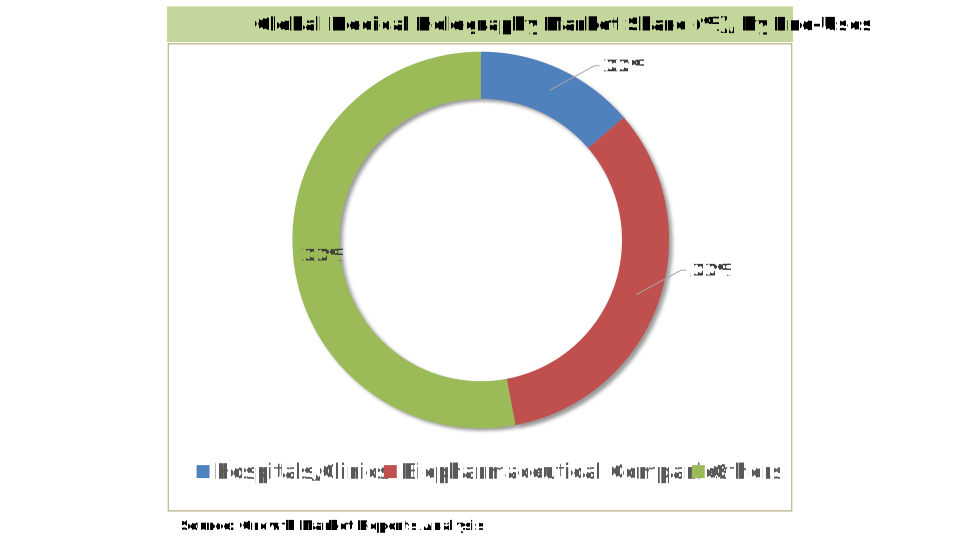
The end-user segment of the medical holography market encompasses hospitals and clinics, academic and research institutes, pharmaceutical and biotechnology companies, and other specialized users. Hospitals and clinics represent the largest end-user group, accounting for a significant share of the market in 2024. These institutions are at the forefront of adopting holographic technologies for diagnostic imaging, surgical planning, and patient education. The integration of holography into routine clinical workflows is enhancing the quality of care, reducing procedural risks, and improving patient outcomes. Hospitals are also leveraging holography for multidisciplinary team meetings, facilitating collaboration among specialists and optimizing treatment strategies.

Academic and research institutes are key contributors to the development and adoption of medical holography solutions. These institutions are utilizing holographic tools for teaching, training, and research purposes, driving innovation and knowledge dissemination. The ability to visualize complex anatomical structures and biological processes in three dimensions is transforming medical education and research methodologies. Academic collaborations with technology providers and healthcare organizations are fostering the development of customized holographic solutions tailored to specific educational and research needs.

Pharmaceutical and biotechnology companies are increasingly adopting medical holography for drug discovery, clinical trials, and product development. Holographic imaging enables researchers to study cellular and molecular interactions in detail, accelerating the identification of therapeutic targets and the evaluation of drug efficacy. These companies are also using holography for internal training, marketing, and stakeholder engagement, demonstrating the broad applicability of the technology across the pharmaceutical value chain. The growing emphasis on personalized medicine and precision therapeutics is expected to further drive demand for holographic solutions in this sector.

Other end-users of medical holography include government agencies, regulatory bodies, and non-profit organizations involved in public health, policy development, and community outreach. These stakeholders are leveraging holography for health education campaigns, disease surveillance, and emergency response planning. The versatility and scalability of holographic technologies make them valuable tools for addressing a wide range of healthcare challenges and advancing public health objectives.

Opportunities & Threats

The medical holography market presents a wealth of opportunities for stakeholders across the healthcare ecosystem. One of the most promising opportunities lies in the integration of holography with artificial intelligence, machine learning, and big data analytics. These synergies have the potential to revolutionize diagnostic imaging, surgical planning, and personalized medicine by enabling real-time, data-driven decision-making. The growing adoption of telemedicine and remote care is also creating new avenues for holographic technologies, as healthcare providers seek innovative solutions for virtual consultations, remote diagnostics, and collaborative care. The expansion of medical education and training programs, particularly in emerging markets, is further driving demand for scalable and accessible holographic tools.

Another significant opportunity for market players is the development of cost-effective and user-friendly holographic solutions that cater to the needs of small and medium-sized healthcare providers. The democratization of holography, driven by advances in hardware miniaturization, cloud computing, and open-source software, is expected to accelerate market penetration and adoption. Strategic partnerships between technology companies, healthcare institutions, and academic organizations are fostering the co-creation of customized solutions that address specific clinical, educational, and research challenges. The emergence of new applications, such as holographic telepresence, virtual reality-based rehabilitation, and precision surgery, is expanding the scope and impact of medical holography across the healthcare continuum.

Despite the immense potential of the medical holography market, several restraining factors could impede growth. High initial costs associated with holographic hardware and software, coupled with the need for specialized training and infrastructure, may limit adoption among smaller healthcare providers and institutions with constrained budgets. Additionally, concerns related to data privacy, interoperability, and regulatory compliance pose challenges for widespread deployment. The complexity of integrating holography with existing healthcare IT systems and workflows may also hinder seamless adoption. Addressing these challenges will require concerted efforts from industry stakeholders, policymakers, and regulatory bodies to create an enabling environment for innovation and adoption.

Regional Outlook

North America remains the dominant region in the global medical holography market, accounting for approximately 41% of the total market value in 2024, or about USD 504 million. This leadership is underpinned by a robust healthcare infrastructure, substantial investments in research and development, and the early adoption of cutting-edge technologies. The United States, in particular, is home to major medical holography companies, leading research institutions, and a highly skilled workforce, all of which contribute to the region's strong market position. Government initiatives to promote digital health and innovation further support the growth of medical holography in North America.

Europe follows as the second-largest market, with a share of 32% and a market value of approximately USD 393 million in 2024. The region benefits from a well-established healthcare system, strong regulatory frameworks, and a culture of medical innovation. Countries such as Germany, the United Kingdom, and France are leading adopters of medical holography, driven by collaborative research initiatives and public-private partnerships. The European market is expected to grow at a steady CAGR of 32.5% through 2033, supported by ongoing investments in healthcare modernization and digital transformation.

The Asia Pacific region is emerging as a high-growth market for medical holography, accounting for 18% of the global market, or about USD 221 million in 2024. Rapid economic development, increasing healthcare expenditure, and growing awareness of advanced diagnostic tools are driving adoption in countries such as China, Japan, India, and South Korea. The region is characterized by a large and diverse patient population, rising demand for quality healthcare, and a strong focus on medical education and training. Strategic collaborations between local and international players are fostering the development and commercialization of innovative holographic solutions tailored to regional needs.

Medical Holography  Market Statistics

Competitor Outlook

The medical holography market is characterized by intense competition and a rapidly evolving technological landscape. Leading companies are focused on continuous innovation, strategic partnerships, and product differentiation to maintain their competitive edge. The market is witnessing the entry of new players, particularly startups and technology companies, who are leveraging disruptive technologies such as artificial intelligence, cloud computing, and augmented reality to develop next-generation holographic solutions. Established players are investing heavily in research and development, expanding their product portfolios, and pursuing mergers and acquisitions to strengthen their market position and broaden their geographic reach.

Collaboration between technology providers, healthcare institutions, and academic organizations is a key feature of the competitive landscape. These partnerships are driving the co-creation of customized solutions that address specific clinical, educational, and research challenges. Companies are also focusing on user experience, offering intuitive interfaces, seamless integration with existing healthcare IT systems, and comprehensive training and support services. The ability to deliver cost-effective, scalable, and interoperable solutions is becoming increasingly important as healthcare providers seek to maximize the value of their investments in medical holography.

Intellectual property and regulatory compliance are critical factors influencing the competitive dynamics of the market. Companies are actively pursuing patents and trademarks to protect their innovations and establish barriers to entry. Compliance with international standards and regulatory requirements, such as FDA approval and CE marking, is essential for market access and acceptance. The ability to demonstrate clinical efficacy, safety, and cost-effectiveness is a key determinant of success in this highly regulated and quality-driven market.

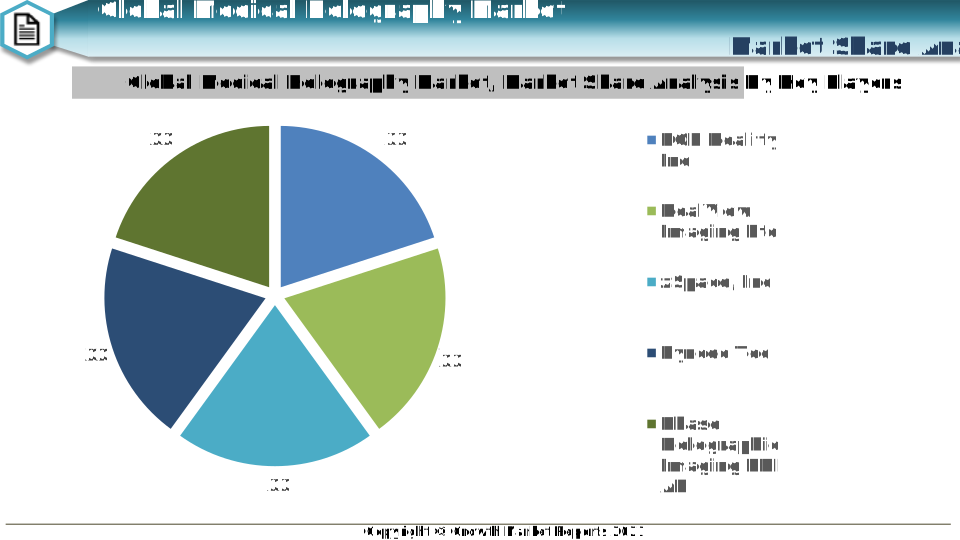
Some of the major companies operating in the global medical holography market include Holoxica Limited, RealView Imaging Ltd., EchoPixel Inc., Zebra Imaging Inc., Holografika Kft., and Mach7 Technologies Ltd. These companies are at the forefront of developing innovative holographic solutions for medical imaging, education, and research. Holoxica Limited, for example, is known for its advanced holographic displays and visualization tools, while RealView Imaging Ltd. specializes in real-time 3D holographic imaging for interventional procedures. EchoPixel Inc. offers a suite of holographic software solutions for diagnostic imaging and surgical planning, and Zebra Imaging Inc. is a leader in holographic printing and display technologies.

Holografika Kft. is recognized for its proprietary light-field display technology, which enables the creation of high-fidelity, glasses-free 3D holograms for medical and scientific applications. Mach7 Technologies Ltd. focuses on enterprise imaging solutions that integrate holography with existing medical imaging systems, facilitating seamless data management and visualization. These companies are continuously investing in research and development, expanding their product offerings, and forging strategic alliances to capitalize on emerging opportunities in the medical holography market. The competitive landscape is expected to remain dynamic and innovation-driven, with new entrants and disruptive technologies shaping the future of medical holography.

Key Players

  • Holoxica Limited
  • RealView Imaging Ltd.
  • EchoPixel Inc.
  • Mach7 Technologies Ltd.
  • Lyncee Tec SA
  • Ovizio Imaging Systems NV/SA
  • NanoLive SA
  • zSpace, Inc.
  • Holografika Kft.
  • EON Reality, Inc.
  • Phase Holographic Imaging AB
  • Leia Inc.
  • Vision Optics GmbH
  • Trivisio Prototyping GmbH
  • LightSpace Technologies
  • VividQ
  • Looking Glass Factory Inc.
  • Realfiction Holding AB
  • HoloTech Switzerland AG
  • Wayray AG
Medical Holography  Market Overview

Segments

The Medical Holography Market market has been segmented on the basis of

Product Type

  • Holographic Displays
  • Holography Microscopes
  • Holographic Prints
  • Holography Software
  • Others

Application

  • Medical Imaging
  • Medical Education
  • Biomedical Research
  • Others

End-User

  • Hospitals and Clinics
  • Academic and Research Institutes
  • Pharmaceutical and Biotechnology Companies
  • Others

Competitive Landscape

Key players competing in the global medical holography market are HoloMonitor; Lyncee Tec; Nanolive SA; RealView Imaging Ltd; Zebra Imaging; and zSpace, Inc.

These companies use development strategies such as mergers, acquisitions, partnerships, collaboration, and product launches to expand their consumer base worldwide. For instances,

  • On July 19, 2022, Holo Industries LLC, a key manufacturer of holographic technology, announced the launch of its innovative HoloMed line of holographic inserts at Booth Q78 during the Florida International Medical Expo (FIME) in Miami from July 27 to 29. These inserts are designed for medical carts, patient monitors, and various other products to mitigate the risk of healthcare-associated infections (HAIs) by significantly minimizing surface contact and touchpoints. Furthermore, this breakthrough technology aims to enhance patient and hospital staff safety by reducing the transmission of pathogens.

Medical Holography Market Key Players

Frequently Asked Questions

AI is enhancing the creation and analysis of holographic images, improving diagnostic accuracy, enabling real-time data-driven decision-making, and supporting advanced applications in personalized medicine and surgical planning.

Key players include Holoxica Limited, RealView Imaging Ltd., EchoPixel Inc., Mach7 Technologies Ltd., Holografika Kft., Zebra Imaging Inc., and several others specializing in holographic displays, imaging, and software solutions.

Opportunities include integration with AI and big data, telemedicine expansion, and development of cost-effective solutions. Challenges include high initial costs, need for specialized training, data privacy concerns, and regulatory compliance issues.

Major end-users include hospitals and clinics, academic and research institutes, pharmaceutical and biotechnology companies, as well as government agencies and non-profit organizations.

Medical holography is primarily used in medical imaging, medical education, biomedical research, patient education, telemedicine, and forensic medicine.

The main product types include holographic displays, holography microscopes, holographic prints, holography software, and specialized accessories such as augmented reality tools.

North America leads the market, followed by Europe and the Asia Pacific region. North America's dominance is due to advanced healthcare infrastructure and significant R&D investments, while Asia Pacific is experiencing rapid growth due to increasing healthcare expenditure and awareness.

Medical holography is used for detailed visualization of anatomical structures, preoperative planning, intraoperative guidance, and postoperative assessment. In education, it provides immersive, interactive learning experiences, virtual dissections, and remote training opportunities.

Key growth drivers include advancements in 3D imaging technology, integration with artificial intelligence, increasing demand for advanced medical visualization, and the rising prevalence of chronic diseases requiring precise diagnostic and educational tools.

The global medical holography market reached USD 1.23 billion in 2024 and is projected to grow at a CAGR of 33.1% from 2025 to 2033, reaching USD 15.18 billion by 2033.

Table Of Content

Chapter 1 Executive Summary
Chapter 2 Assumptions and Acronyms Used
Chapter 3 Research Methodology
Chapter 4 Medical Holography  Market Overview
   4.1 Introduction
      4.1.1 Market Taxonomy
      4.1.2 Market Definition
      4.1.3 Macro-Economic Factors Impacting the Market Growth
   4.2 Medical Holography  Market Dynamics
      4.2.1 Market Drivers
      4.2.2 Market Restraints
      4.2.3 Market Opportunity
   4.3 Medical Holography  Market - Supply Chain Analysis
      4.3.1 List of Key Suppliers
      4.3.2 List of Key Distributors
      4.3.3 List of Key Consumers
   4.4 Key Forces Shaping the Medical Holography  Market
      4.4.1 Bargaining Power of Suppliers
      4.4.2 Bargaining Power of Buyers
      4.4.3 Threat of Substitution
      4.4.4 Threat of New Entrants
      4.4.5 Competitive Rivalry
   4.5 Global Medical Holography  Market Size & Forecast, 2023-2032
      4.5.1 Medical Holography  Market Size and Y-o-Y Growth
      4.5.2 Medical Holography  Market Absolute $ Opportunity

Chapter 5 Global Medical Holography  Market Analysis and Forecast By Product Type
   5.1 Introduction
      5.1.1 Key Market Trends & Growth Opportunities By Product Type
      5.1.2 Basis Point Share (BPS) Analysis By Product Type
      5.1.3 Absolute $ Opportunity Assessment By Product Type
   5.2 Medical Holography  Market Size Forecast By Product Type
      5.2.1 Holographic Displays
      5.2.2 Holography Microscopes
      5.2.3 Holographic Prints
      5.2.4 Holography Software
      5.2.5 Others
   5.3 Market Attractiveness Analysis By Product Type

Chapter 6 Global Medical Holography  Market Analysis and Forecast By Application
   6.1 Introduction
      6.1.1 Key Market Trends & Growth Opportunities By Application
      6.1.2 Basis Point Share (BPS) Analysis By Application
      6.1.3 Absolute $ Opportunity Assessment By Application
   6.2 Medical Holography  Market Size Forecast By Application
      6.2.1 Medical Imaging
      6.2.2 Medical Education
      6.2.3 Biomedical Research
      6.2.4 Others
   6.3 Market Attractiveness Analysis By Application

Chapter 7 Global Medical Holography  Market Analysis and Forecast By End-User
   7.1 Introduction
      7.1.1 Key Market Trends & Growth Opportunities By End-User
      7.1.2 Basis Point Share (BPS) Analysis By End-User
      7.1.3 Absolute $ Opportunity Assessment By End-User
   7.2 Medical Holography  Market Size Forecast By End-User
      7.2.1 Hospitals and Clinics
      7.2.2 Academic and Research Institutes
      7.2.3 Pharmaceutical and Biotechnology Companies
      7.2.4 Others
   7.3 Market Attractiveness Analysis By End-User

Chapter 8 Global Medical Holography  Market Analysis and Forecast by Region
   8.1 Introduction
      8.1.1 Key Market Trends & Growth Opportunities By Region
      8.1.2 Basis Point Share (BPS) Analysis By Region
      8.1.3 Absolute $ Opportunity Assessment By Region
   8.2 Medical Holography  Market Size Forecast By Region
      8.2.1 North America
      8.2.2 Europe
      8.2.3 Asia Pacific
      8.2.4 Latin America
      8.2.5 Middle East & Africa (MEA)
   8.3 Market Attractiveness Analysis By Region

Chapter 9 Coronavirus Disease (COVID-19) Impact 
   9.1 Introduction 
   9.2 Current & Future Impact Analysis 
   9.3 Economic Impact Analysis 
   9.4 Government Policies 
   9.5 Investment Scenario

Chapter 10 North America Medical Holography  Analysis and Forecast
   10.1 Introduction
   10.2 North America Medical Holography  Market Size Forecast by Country
      10.2.1 U.S.
      10.2.2 Canada
   10.3 Basis Point Share (BPS) Analysis by Country
   10.4 Absolute $ Opportunity Assessment by Country
   10.5 Market Attractiveness Analysis by Country
   10.6 North America Medical Holography  Market Size Forecast By Product Type
      10.6.1 Holographic Displays
      10.6.2 Holography Microscopes
      10.6.3 Holographic Prints
      10.6.4 Holography Software
      10.6.5 Others
   10.7 Basis Point Share (BPS) Analysis By Product Type 
   10.8 Absolute $ Opportunity Assessment By Product Type 
   10.9 Market Attractiveness Analysis By Product Type
   10.10 North America Medical Holography  Market Size Forecast By Application
      10.10.1 Medical Imaging
      10.10.2 Medical Education
      10.10.3 Biomedical Research
      10.10.4 Others
   10.11 Basis Point Share (BPS) Analysis By Application 
   10.12 Absolute $ Opportunity Assessment By Application 
   10.13 Market Attractiveness Analysis By Application
   10.14 North America Medical Holography  Market Size Forecast By End-User
      10.14.1 Hospitals and Clinics
      10.14.2 Academic and Research Institutes
      10.14.3 Pharmaceutical and Biotechnology Companies
      10.14.4 Others
   10.15 Basis Point Share (BPS) Analysis By End-User 
   10.16 Absolute $ Opportunity Assessment By End-User 
   10.17 Market Attractiveness Analysis By End-User

Chapter 11 Europe Medical Holography  Analysis and Forecast
   11.1 Introduction
   11.2 Europe Medical Holography  Market Size Forecast by Country
      11.2.1 Germany
      11.2.2 France
      11.2.3 Italy
      11.2.4 U.K.
      11.2.5 Spain
      11.2.6 Russia
      11.2.7 Rest of Europe
   11.3 Basis Point Share (BPS) Analysis by Country
   11.4 Absolute $ Opportunity Assessment by Country
   11.5 Market Attractiveness Analysis by Country
   11.6 Europe Medical Holography  Market Size Forecast By Product Type
      11.6.1 Holographic Displays
      11.6.2 Holography Microscopes
      11.6.3 Holographic Prints
      11.6.4 Holography Software
      11.6.5 Others
   11.7 Basis Point Share (BPS) Analysis By Product Type 
   11.8 Absolute $ Opportunity Assessment By Product Type 
   11.9 Market Attractiveness Analysis By Product Type
   11.10 Europe Medical Holography  Market Size Forecast By Application
      11.10.1 Medical Imaging
      11.10.2 Medical Education
      11.10.3 Biomedical Research
      11.10.4 Others
   11.11 Basis Point Share (BPS) Analysis By Application 
   11.12 Absolute $ Opportunity Assessment By Application 
   11.13 Market Attractiveness Analysis By Application
   11.14 Europe Medical Holography  Market Size Forecast By End-User
      11.14.1 Hospitals and Clinics
      11.14.2 Academic and Research Institutes
      11.14.3 Pharmaceutical and Biotechnology Companies
      11.14.4 Others
   11.15 Basis Point Share (BPS) Analysis By End-User 
   11.16 Absolute $ Opportunity Assessment By End-User 
   11.17 Market Attractiveness Analysis By End-User

Chapter 12 Asia Pacific Medical Holography  Analysis and Forecast
   12.1 Introduction
   12.2 Asia Pacific Medical Holography  Market Size Forecast by Country
      12.2.1 China
      12.2.2 Japan
      12.2.3 South Korea
      12.2.4 India
      12.2.5 Australia
      12.2.6 South East Asia (SEA)
      12.2.7 Rest of Asia Pacific (APAC)
   12.3 Basis Point Share (BPS) Analysis by Country
   12.4 Absolute $ Opportunity Assessment by Country
   12.5 Market Attractiveness Analysis by Country
   12.6 Asia Pacific Medical Holography  Market Size Forecast By Product Type
      12.6.1 Holographic Displays
      12.6.2 Holography Microscopes
      12.6.3 Holographic Prints
      12.6.4 Holography Software
      12.6.5 Others
   12.7 Basis Point Share (BPS) Analysis By Product Type 
   12.8 Absolute $ Opportunity Assessment By Product Type 
   12.9 Market Attractiveness Analysis By Product Type
   12.10 Asia Pacific Medical Holography  Market Size Forecast By Application
      12.10.1 Medical Imaging
      12.10.2 Medical Education
      12.10.3 Biomedical Research
      12.10.4 Others
   12.11 Basis Point Share (BPS) Analysis By Application 
   12.12 Absolute $ Opportunity Assessment By Application 
   12.13 Market Attractiveness Analysis By Application
   12.14 Asia Pacific Medical Holography  Market Size Forecast By End-User
      12.14.1 Hospitals and Clinics
      12.14.2 Academic and Research Institutes
      12.14.3 Pharmaceutical and Biotechnology Companies
      12.14.4 Others
   12.15 Basis Point Share (BPS) Analysis By End-User 
   12.16 Absolute $ Opportunity Assessment By End-User 
   12.17 Market Attractiveness Analysis By End-User

Chapter 13 Latin America Medical Holography  Analysis and Forecast
   13.1 Introduction
   13.2 Latin America Medical Holography  Market Size Forecast by Country
      13.2.1 Brazil
      13.2.2 Mexico
      13.2.3 Rest of Latin America (LATAM)
   13.3 Basis Point Share (BPS) Analysis by Country
   13.4 Absolute $ Opportunity Assessment by Country
   13.5 Market Attractiveness Analysis by Country
   13.6 Latin America Medical Holography  Market Size Forecast By Product Type
      13.6.1 Holographic Displays
      13.6.2 Holography Microscopes
      13.6.3 Holographic Prints
      13.6.4 Holography Software
      13.6.5 Others
   13.7 Basis Point Share (BPS) Analysis By Product Type 
   13.8 Absolute $ Opportunity Assessment By Product Type 
   13.9 Market Attractiveness Analysis By Product Type
   13.10 Latin America Medical Holography  Market Size Forecast By Application
      13.10.1 Medical Imaging
      13.10.2 Medical Education
      13.10.3 Biomedical Research
      13.10.4 Others
   13.11 Basis Point Share (BPS) Analysis By Application 
   13.12 Absolute $ Opportunity Assessment By Application 
   13.13 Market Attractiveness Analysis By Application
   13.14 Latin America Medical Holography  Market Size Forecast By End-User
      13.14.1 Hospitals and Clinics
      13.14.2 Academic and Research Institutes
      13.14.3 Pharmaceutical and Biotechnology Companies
      13.14.4 Others
   13.15 Basis Point Share (BPS) Analysis By End-User 
   13.16 Absolute $ Opportunity Assessment By End-User 
   13.17 Market Attractiveness Analysis By End-User

Chapter 14 Middle East & Africa (MEA) Medical Holography  Analysis and Forecast
   14.1 Introduction
   14.2 Middle East & Africa (MEA) Medical Holography  Market Size Forecast by Country
      14.2.1 Saudi Arabia
      14.2.2 South Africa
      14.2.3 UAE
      14.2.4 Rest of Middle East & Africa (MEA)
   14.3 Basis Point Share (BPS) Analysis by Country
   14.4 Absolute $ Opportunity Assessment by Country
   14.5 Market Attractiveness Analysis by Country
   14.6 Middle East & Africa (MEA) Medical Holography  Market Size Forecast By Product Type
      14.6.1 Holographic Displays
      14.6.2 Holography Microscopes
      14.6.3 Holographic Prints
      14.6.4 Holography Software
      14.6.5 Others
   14.7 Basis Point Share (BPS) Analysis By Product Type 
   14.8 Absolute $ Opportunity Assessment By Product Type 
   14.9 Market Attractiveness Analysis By Product Type
   14.10 Middle East & Africa (MEA) Medical Holography  Market Size Forecast By Application
      14.10.1 Medical Imaging
      14.10.2 Medical Education
      14.10.3 Biomedical Research
      14.10.4 Others
   14.11 Basis Point Share (BPS) Analysis By Application 
   14.12 Absolute $ Opportunity Assessment By Application 
   14.13 Market Attractiveness Analysis By Application
   14.14 Middle East & Africa (MEA) Medical Holography  Market Size Forecast By End-User
      14.14.1 Hospitals and Clinics
      14.14.2 Academic and Research Institutes
      14.14.3 Pharmaceutical and Biotechnology Companies
      14.14.4 Others
   14.15 Basis Point Share (BPS) Analysis By End-User 
   14.16 Absolute $ Opportunity Assessment By End-User 
   14.17 Market Attractiveness Analysis By End-User

Chapter 15 Competition Landscape 
   15.1 Medical Holography  Market: Competitive Dashboard
   15.2 Global Medical Holography  Market: Market Share Analysis, 2023
   15.3 Company Profiles (Details – Overview, Financials, Developments, Strategy) 
      15.3.1 Holoxica Limited
RealView Imaging Ltd.
EchoPixel Inc.
Mach7 Technologies Ltd.
Lyncee Tec SA
Ovizio Imaging Systems NV/SA
NanoLive SA
zSpace, Inc.
Holografika Kft.
EON Reality, Inc.
Phase Holographic Imaging AB
Leia Inc.
Vision Optics GmbH
Trivisio Prototyping GmbH
LightSpace Technologies
VividQ
Looking Glass Factory Inc.
Realfiction Holding AB
HoloTech Switzerland AG
Wayray AG

Methodology

Our Clients

FedEx Logistics
Honda Motor Co. Ltd.
sinopec
General Mills
Deloitte
Nestle SA
The John Holland Group
Dassault Aviation