Segments - by Service Type (Front-End Services, Back-End Services, Middle-End Services), by Component (Software, Services), by End-User (Hospitals, Physician Offices, Clinics, Others), by Deployment Mode (Cloud-Based, On-Premises)
This report is updated with the latest market data and insights as of June 2026. Base year: 2025 | Forecast period: 2026-2034
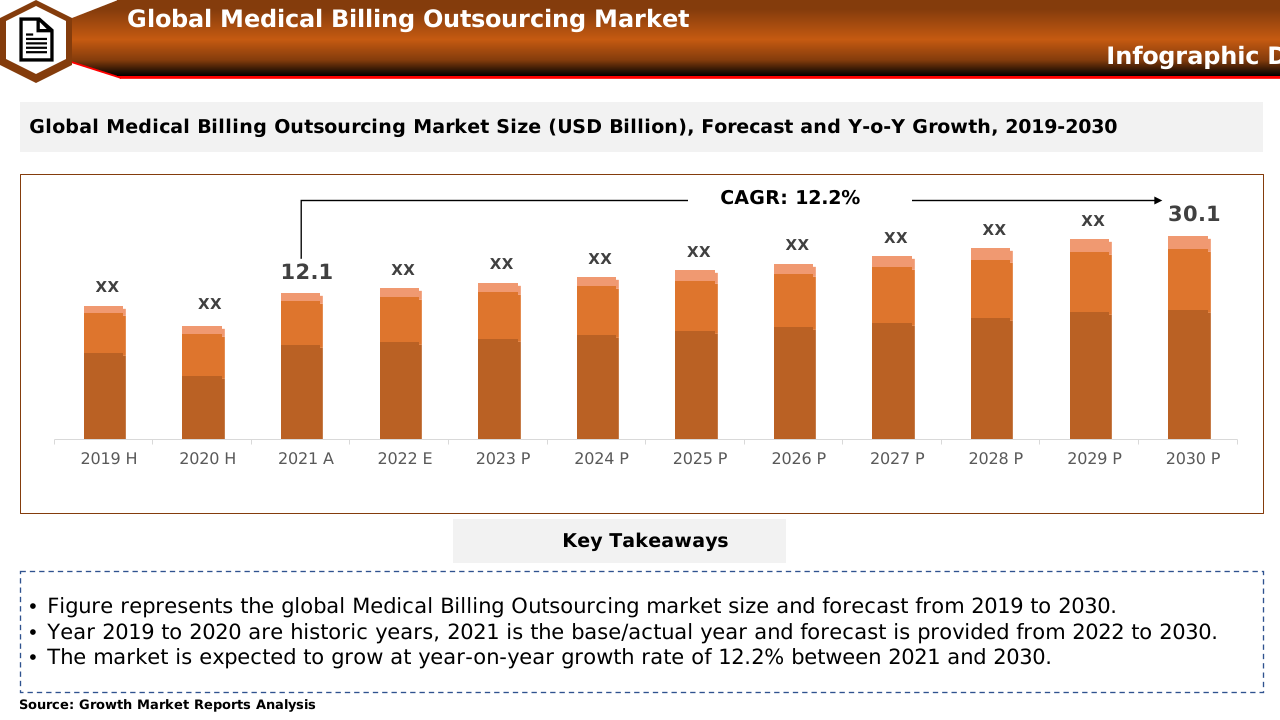
According to our latest research, the global medical billing outsourcing market size in 2025 is valued at USD 16.9 billion, with a robust compound annual growth rate (CAGR) of 11.3% projected through the forecast period. By 2034, the medical billing outsourcing market is expected to reach approximately USD 44.2 billion, driven by the increasing complexity of healthcare reimbursement processes, stringent regulatory requirements, and the growing need for cost optimization among healthcare providers worldwide. The market's expansion is further fueled by the rapid adoption of digital health technologies and a heightened focus on revenue cycle management efficiency across hospital networks, physician groups, and specialty care centers.
A significant growth factor for the medical billing outsourcing market is the escalating administrative burden faced by healthcare providers. Hospitals, clinics, and physician offices are under increasing pressure to manage intricate billing codes, comply with evolving regulations, and process claims efficiently to avoid revenue loss. Outsourcing medical billing services allows these organizations to streamline operations, minimize errors, and ensure timely reimbursements. This trend is particularly pronounced in developed economies, where healthcare systems are highly regulated and reimbursement models are shifting rapidly. Additionally, the persistent shortage of skilled medical billing professionals has compelled providers to seek external expertise, further propelling market growth. Broader trends in healthcare outsourcing services confirm that administrative functions are among the fastest-growing areas of delegation, reflecting a structural shift in how providers manage non-clinical workloads.
Technological advancements have played a pivotal role in shaping the trajectory of the medical billing outsourcing market. The integration of artificial intelligence (AI), machine learning, and automation into billing processes has significantly enhanced accuracy and reduced turnaround times. Cloud-based solutions have enabled seamless data sharing, improved security, and real-time access to billing information across multiple locations. These innovations have not only improved operational efficiencies but also enabled healthcare organizations to focus on core clinical activities, thus driving the adoption of outsourced billing services. Moreover, the increasing prevalence of value-based care models and bundled payment systems has made accurate billing and coding more critical than ever, further fueling demand for specialized outsourcing partners. The expanding role of advanced medical billing software platforms is also reshaping vendor competition, as cloud-native tools with embedded analytics become a standard expectation rather than a differentiating feature.
Another key growth driver is the rising emphasis on cost containment and operational flexibility within the healthcare sector. Medical billing outsourcing offers a scalable and cost-effective alternative to maintaining in-house billing departments, which often require substantial investments in technology, training, and personnel. By partnering with third-party service providers, healthcare organizations can convert fixed costs into variable costs, optimize resource allocation, and gain access to specialized expertise without the burden of ongoing management. This strategic shift is particularly attractive to small and medium-sized practices, which may lack the resources to keep pace with regulatory changes and technological advancements on their own.
Billing compliance has become an increasingly urgent priority across the medical billing outsourcing market. As healthcare providers navigate complex financial and regulatory landscapes, ensuring adherence to payer-specific rules, ICD-11 transition timelines, and federal billing standards is crucial to maintaining financial integrity and avoiding costly penalties. This involves implementing stringent auditing processes, leveraging advanced analytics to detect anomalies, and fostering a culture of compliance across all levels of the organization. By integrating these practices, healthcare providers can enhance billing accuracy, reduce the risk of non-compliance, and ultimately improve their financial outcomes. Related dynamics in medical information outsourcing further illustrate how documentation accuracy and data governance are becoming inseparable from revenue cycle performance.
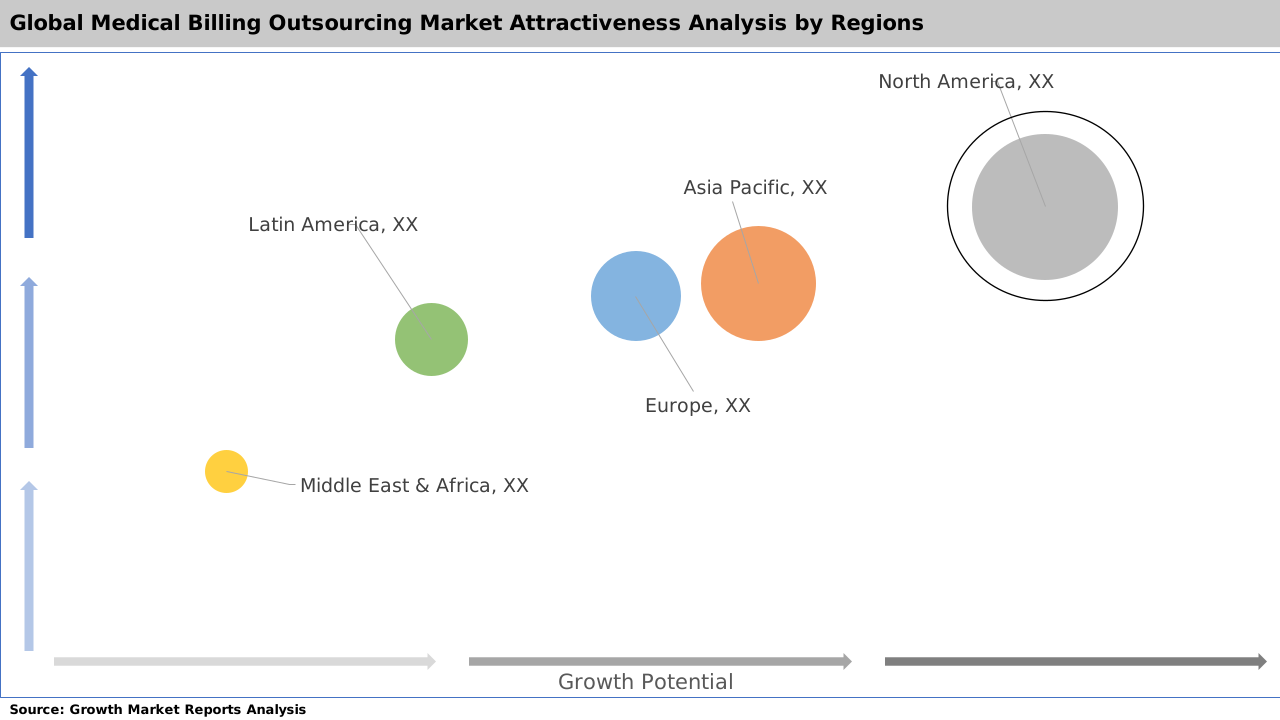
From a regional perspective, North America continues to dominate the medical billing outsourcing market, accounting for approximately 44.5% of the global market share in 2025, valued at roughly USD 7.5 billion. The region's leadership is attributed to advanced healthcare infrastructure, widespread adoption of electronic health records (EHRs), and a highly fragmented payer landscape that necessitates efficient billing solutions. Europe follows closely, driven by increasing healthcare expenditure and the growing trend of outsourcing non-core functions. Meanwhile, Asia Pacific is witnessing rapid growth, supported by healthcare digitization initiatives, expanding private healthcare sectors, and rising awareness about the benefits of outsourcing. Latin America and the Middle East and Africa are also emerging as promising markets, as healthcare providers in these regions seek to enhance revenue cycle management and improve financial performance.
The medical billing outsourcing market is segmented by service type into front-end services, back-end services, and middle-end services. Front-end services primarily encompass patient registration, insurance verification, and scheduling, which are critical for ensuring accurate billing downstream. As healthcare providers strive to improve the patient experience and reduce claim denials, the demand for efficient front-end outsourcing solutions has grown substantially. Outsourcing these services helps organizations streamline the initial stages of the revenue cycle, reduce administrative bottlenecks, and ensure that all necessary information is captured accurately from the outset. This, in turn, minimizes errors and accelerates the reimbursement process. Trends documented in the broader medical billing and coding services market indicate that accurate front-end data capture is directly correlated with lower downstream denial rates and improved net collection ratios.
Billing mediation is emerging as a critical component in the medical billing outsourcing landscape. As healthcare providers deal with multiple payers and complex billing codes, mediation services help bridge the gap between different billing systems and standards. This process involves reconciling billing discrepancies, facilitating communication between providers and payers, and ensuring that claims are processed accurately and efficiently. By employing billing mediation, healthcare organizations can reduce claim denials, improve cash flow, and enhance overall revenue cycle management. The demand for mediation services is expected to grow as healthcare systems become more interconnected and the need for seamless billing processes intensifies.
Back-end services represent the largest share of the medical billing outsourcing market at approximately 45.5% in 2025, as they involve core functions such as claims processing, payment posting, denial management, and accounts receivable follow-up. These activities are highly specialized and require deep expertise in medical coding, payer regulations, and compliance standards. Outsourcing back-end services enables healthcare providers to leverage the knowledge and technology of experienced vendors, resulting in faster claims resolution and improved cash flow. Additionally, back-end outsourcing helps organizations manage large volumes of transactions efficiently, particularly in high-volume settings such as hospitals and large physician groups.
Middle-end services, which include charge entry, coding, and billing audits, are gaining traction as healthcare organizations recognize the importance of accurate coding and charge capture in optimizing revenue. With the increasing complexity of coding systems such as ICD-10-CM, ICD-11 preparations, and CPT updates, many providers are turning to outsourcing partners with specialized coding expertise to ensure compliance and maximize reimbursements. Middle-end services also play a crucial role in identifying and rectifying discrepancies early in the billing process, thereby reducing the risk of claim rejections and denials. As regulatory scrutiny intensifies and value-based care models become more prevalent, the demand for comprehensive middle-end outsourcing solutions is expected to rise through 2034.
The integration of front-end, middle-end, and back-end services into a unified outsourcing solution is becoming increasingly popular among healthcare providers seeking end-to-end revenue cycle management support. This holistic approach allows organizations to achieve greater operational synergy, enhance data accuracy, and improve overall financial performance. Leading outsourcing vendors are responding to this trend by expanding their service portfolios and investing in advanced technologies to deliver seamless, integrated solutions. As the medical billing outsourcing market continues to evolve through the forecast period, the ability to offer comprehensive and customizable service packages will be a key differentiator for service providers.
| Attributes | Details |
| Report Title | Medical Billing Outsourcing Market Research Report 2034 |
| By Service Type | Front-End Services, Back-End Services, Middle-End Services |
| By Component | Software, Services |
| By End-User | Hospitals, Physician Offices, Clinics, Others |
| By Deployment Mode | Cloud-Based, On-Premises |
| Regions Covered | North America, Europe, APAC, Latin America, MEA |
| Base Year | 2025 |
| Historic Data | 2019-2024 |
| Forecast Period | 2026-2034 |
| Number of Pages | 271 |
| Number of Tables & Figures | 385 |
| Customization Available | Yes, the report can be customized as per your need. |
The medical billing outsourcing market can be analyzed by component, which includes software and services. The software segment encompasses a wide range of billing and revenue cycle management platforms that automate and streamline billing processes. These solutions are designed to handle tasks such as claim submission, coding, payment posting, and reporting, enabling healthcare providers to improve accuracy and efficiency. The adoption of advanced billing software has surged since 2019, driven by the need for real-time data access, compliance with regulatory standards, and integration with electronic health records (EHRs). Cloud-based software solutions, in particular, are gaining popularity due to their scalability, security, and ease of deployment. Insights from the healthcare BPO market reinforce that technology-enabled service delivery is now the baseline expectation for outsourcing partnerships, with AI-driven workflow automation emerging as a primary selection criterion.
The services segment, which includes both onshore and offshore outsourcing, remains the dominant component of the medical billing outsourcing market. Service providers offer a comprehensive suite of solutions tailored to the unique needs of healthcare organizations, ranging from front-end administrative support to back-end claims management and denial resolution. The growing complexity of reimbursement models, coupled with the ongoing shortage of skilled billing professionals, has fueled demand for outsourced services. By leveraging the expertise and resources of third-party vendors, healthcare providers can reduce operational costs, enhance compliance, and focus on delivering high-quality patient care.
Integration of software and services is a key trend shaping the medical billing outsourcing market. Leading vendors are increasingly offering bundled solutions that combine advanced billing software with end-to-end service support, providing healthcare organizations with a seamless and efficient revenue cycle management experience. This integrated approach enables providers to benefit from automated workflows, real-time analytics, and expert guidance, resulting in improved financial outcomes and reduced administrative burden. As competition intensifies through the 2026-2034 forecast period, the ability to deliver comprehensive, technology-enabled solutions will be critical for sustained market success.
The ongoing shift toward value-based care and outcome-driven reimbursement models is also driving innovation in both software and services. Vendors are investing in artificial intelligence, machine learning, and predictive analytics to enhance the accuracy and efficiency of billing processes. These technologies enable proactive identification of billing errors, optimization of coding practices, and more effective denial management. As healthcare organizations seek to navigate an increasingly complex regulatory landscape through 2034, the demand for advanced, integrated billing solutions is expected to continue rising.
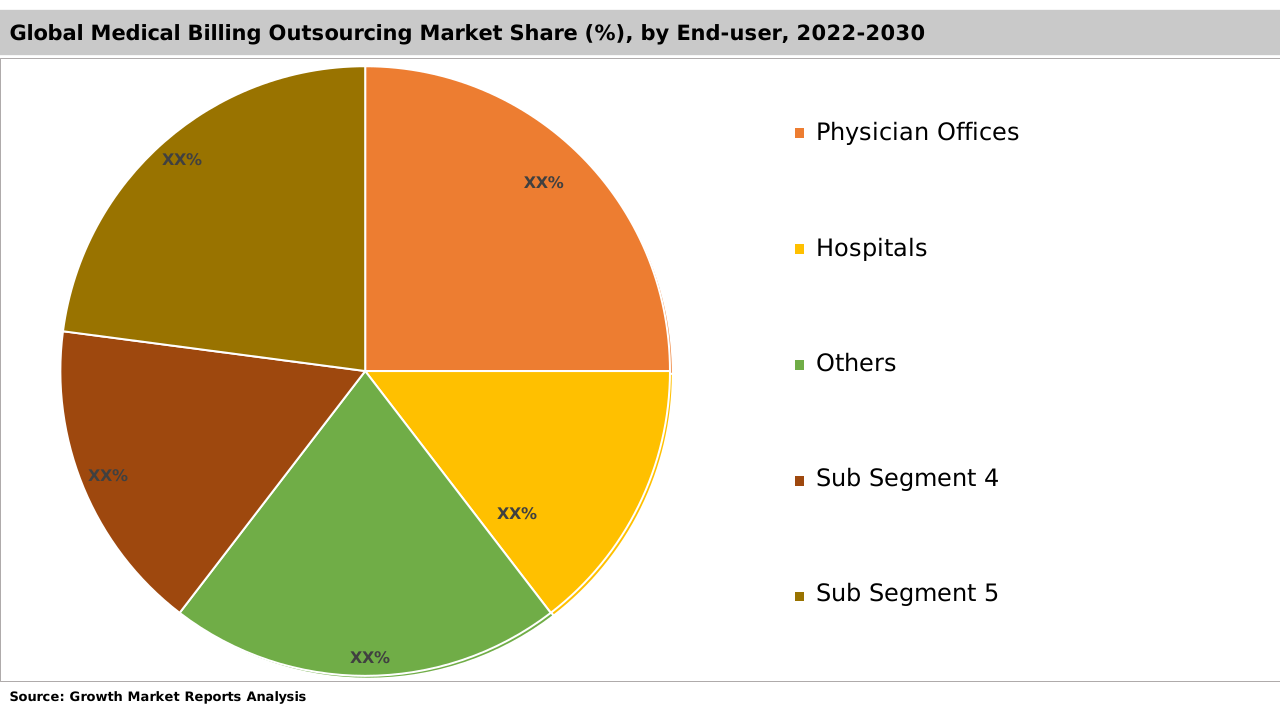
The medical billing outsourcing market is segmented by end-user into hospitals, physician offices, clinics, and others. Hospitals represent the largest end-user segment, accounting for a significant share of the market in 2025. The sheer volume and complexity of billing transactions in hospital settings, coupled with the need to manage multiple payer contracts and comply with stringent regulatory requirements, make outsourcing an attractive option. Hospitals benefit from the ability to streamline revenue cycle management, reduce administrative costs, and improve cash flow by partnering with specialized billing service providers. The adoption of outsourced billing solutions is particularly pronounced among large hospital systems and academic medical centers.
Physician offices are another key end-user segment driving growth in the medical billing outsourcing market. Independent practices and group practices face unique challenges in managing billing and coding processes, often lacking the resources and expertise to keep pace with changing regulations and payer requirements. Outsourcing enables physician offices to access specialized billing support, minimize claim denials, and enhance revenue collection. As reimbursement models shift toward value-based care and bundled payments, physician offices are increasingly recognizing the importance of efficient billing processes in maintaining financial viability. Growth in this segment is further supported by trends in laboratory-focused revenue optimization, where laboratory billing optimization services are drawing attention to how granular specialty billing improvements can materially boost physician group revenues.
Clinics, including specialty clinics and ambulatory care centers, are also significant contributors to the medical billing outsourcing market. These organizations often operate with lean administrative teams and must juggle multiple revenue streams from diverse payers. By outsourcing billing functions, clinics can improve operational efficiency, reduce administrative overhead, and focus on delivering high-quality patient care. The growing prevalence of outpatient care and the expansion of specialty services are expected to further drive demand for outsourced billing solutions among clinics throughout the 2026-2034 forecast period.
The "others" category includes a diverse range of healthcare providers, such as diagnostic laboratories, imaging centers, and long-term care facilities. These organizations face unique billing challenges related to specialized services, complex coding requirements, and evolving payer policies. Outsourcing billing functions allows these providers to navigate the intricacies of reimbursement, ensure compliance, and optimize revenue generation. As the healthcare landscape continues to diversify, the demand for tailored billing outsourcing solutions across a broad spectrum of end-users is expected to grow steadily through 2034.
Deployment mode is a critical consideration in the medical billing outsourcing market, with cloud-based and on-premises solutions representing the primary options. Cloud-based deployment has gained significant traction since 2019, driven by its scalability, flexibility, and cost-effectiveness. Cloud-based billing solutions enable healthcare organizations to access real-time data, streamline workflows, and facilitate collaboration across multiple locations. The ability to quickly scale resources up or down based on demand is particularly valuable for organizations experiencing fluctuating patient volumes or expanding their service offerings. Enhanced data security, automatic updates, and reduced IT infrastructure costs further contribute to the growing adoption of cloud-based solutions in 2025.
On-premises deployment, while less prevalent than cloud-based solutions, continues to play a role in the medical billing outsourcing market, particularly among large healthcare organizations with established IT infrastructure and stringent data security requirements. On-premises solutions offer greater control over data storage and management, which can be important for organizations handling sensitive patient information or operating in highly regulated environments. However, the higher upfront costs, ongoing maintenance, and limited scalability associated with on-premises deployment have led many providers to transition to cloud-based models, a trend that accelerated notably between 2020 and 2024.
Hybrid deployment models are also emerging as a viable option for healthcare organizations seeking to balance the benefits of cloud-based and on-premises solutions. Hybrid models allow providers to leverage the scalability and flexibility of the cloud while retaining control over critical data and applications on-premises. This approach is particularly attractive to organizations with complex operational needs or those undergoing digital transformation initiatives. As the medical billing outsourcing market evolves through 2034, the ability to offer flexible deployment options will be a key differentiator for service providers.
The ongoing shift toward digital health and distributed care delivery has further accelerated the adoption of cloud-based billing solutions. The post-pandemic normalization of remote work and telehealth has reinforced the importance of secure remote access and real-time data sharing, prompting many healthcare organizations to accelerate cloud infrastructure investments between 2021 and 2025. As regulatory requirements continue to evolve and data privacy concerns remain at the forefront, the demand for secure, compliant, and scalable deployment options is expected to drive continued innovation in the medical billing outsourcing market through the forecast period.
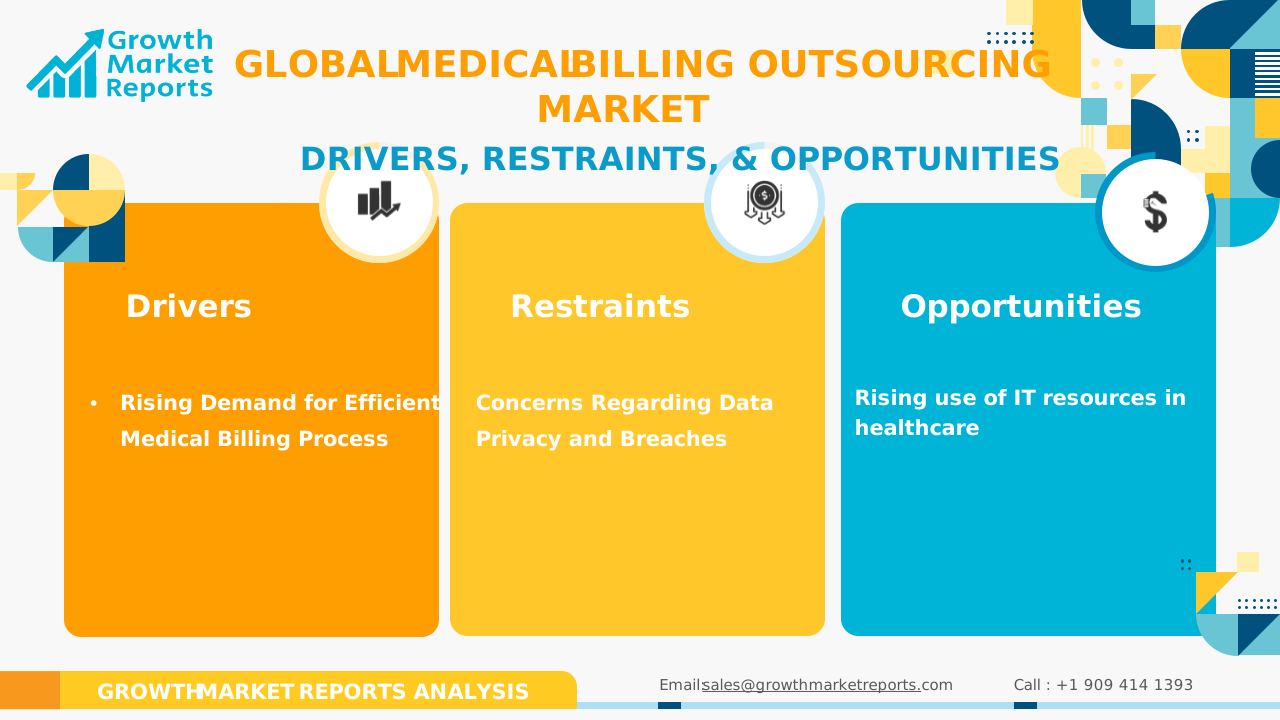
One of the most significant opportunities in the medical billing outsourcing market lies in the increasing adoption of advanced technologies such as artificial intelligence, robotic process automation, and predictive analytics. These innovations have the potential to revolutionize billing processes by improving accuracy, reducing manual intervention, and accelerating claim resolution. Service providers that invest in cutting-edge technologies and offer integrated, end-to-end solutions are well-positioned to capture a larger share of the market through 2034. Additionally, the growing trend of value-based care and bundled payment models presents new opportunities for outsourcing vendors to develop specialized solutions that address the unique challenges of these reimbursement structures.
Another key opportunity is the expanding healthcare landscape in emerging markets, particularly in the Asia Pacific and Latin America regions. As healthcare systems in these regions undergo digitization and modernization, the demand for efficient revenue cycle management solutions is expected to surge. Outsourcing provides a cost-effective way for healthcare organizations in emerging markets to access specialized expertise, advanced technology, and best practices from established vendors. Furthermore, the increasing prevalence of chronic diseases, rising healthcare expenditure, and growing awareness of the benefits of outsourcing are expected to drive market growth in these regions over the 2026-2034 forecast period. Parallel growth in healthcare regulatory affairs outsourcing signals that provider organizations in emerging markets are building comprehensive external partnerships that extend well beyond billing alone, creating bundled service opportunities for vendors.
Despite the numerous opportunities, the medical billing outsourcing market faces several restraining factors, chief among them being data security and privacy concerns. Healthcare organizations are entrusted with sensitive patient information, and any breach or mishandling of data can result in severe legal, financial, and reputational consequences. The increasing frequency of cyberattacks and the evolving regulatory landscape have heightened the need for robust data protection measures in 2025 and beyond. Service providers must invest in advanced security protocols, compliance frameworks, and employee training to mitigate these risks. Failure to address data security concerns could hinder the adoption of outsourcing solutions and limit market growth over the forecast period.
North America remains the largest regional market for medical billing outsourcing, accounting for approximately 44.5% of the global market share in 2025, or roughly USD 7.5 billion. The region's dominance is driven by a highly developed healthcare infrastructure, widespread adoption of electronic health records, and a complex reimbursement landscape that necessitates efficient billing solutions. The United States is a major contributor to market growth, with healthcare providers increasingly turning to outsourcing to manage administrative burdens and comply with evolving regulatory requirements. The region is expected to maintain a strong CAGR of 10.7% through 2034, supported by ongoing investments in healthcare technology and a growing focus on revenue cycle optimization.
Europe holds the second-largest share of the medical billing outsourcing market, with a market size of approximately USD 3.6 billion in 2025. The region is characterized by increasing healthcare expenditure, the proliferation of private healthcare providers, and a growing trend toward outsourcing non-core functions. Countries such as the United Kingdom, Germany, and France are leading the adoption of outsourced billing solutions, driven by the need to improve operational efficiency and manage rising administrative costs. The European market is expected to witness steady growth over the 2026-2034 forecast period, supported by regulatory harmonization efforts and the expansion of digital health initiatives across member states.
The Asia Pacific region is emerging as a high-growth market for medical billing outsourcing, with a market size of USD 3.2 billion in 2025 and a projected CAGR of 13.5% through 2034. Rapid healthcare digitization, expanding private healthcare sectors, and increasing awareness of the benefits of outsourcing are driving market growth in countries such as India, China, and Australia. The region also serves as a primary hub for offshore outsourcing providers, offering cost-effective solutions to healthcare organizations worldwide. Latin America and the Middle East and Africa collectively account for the remaining share of the market, with a combined market size of approximately USD 2.5 billion in 2025. These regions are expected to experience gradual but consistent growth as healthcare providers seek to enhance revenue cycle management and improve financial performance through 2034.
The competitive landscape of the medical billing outsourcing market is characterized by the presence of a diverse array of global and regional players, ranging from large multinational corporations to specialized boutique firms. Market leaders are distinguished by their comprehensive service portfolios, technological capabilities, and strong client relationships. To maintain their competitive edge, leading vendors are investing heavily in research and development, strategic partnerships, and mergers and acquisitions. The ability to offer integrated, end-to-end solutions that encompass front-end, middle-end, and back-end services is becoming increasingly important as healthcare organizations seek to streamline revenue cycle management and improve financial outcomes in 2025 and beyond.
Technological innovation is a key differentiator in the medical billing outsourcing market, with vendors leveraging artificial intelligence, automation, and advanced analytics to enhance service delivery. Companies that can provide real-time insights, predictive analytics, and automated workflows are well-positioned to capture market share, particularly among large healthcare organizations with complex billing needs. Additionally, the shift toward cloud-based solutions has intensified competition, as vendors race to develop secure, scalable, and user-friendly platforms that meet the evolving needs of healthcare providers. The ability to ensure data security and regulatory compliance is also a critical factor in vendor selection, given the sensitive nature of healthcare data and the growing frequency of cyberattacks targeting healthcare systems.
Customer service and domain expertise are equally important in the highly competitive medical billing outsourcing market. Vendors that offer personalized support, industry-specific knowledge, and flexible service models are favored by healthcare organizations seeking to navigate the complexities of reimbursement and compliance. The trend toward value-based care and outcome-driven reimbursement models has further heightened the demand for specialized expertise, prompting vendors to expand their service offerings and develop tailored solutions for different segments of the healthcare market. As competition intensifies through 2034, the ability to deliver measurable financial improvements and demonstrate a clear return on investment will be essential for long-term success.
Key players in the medical billing outsourcing market include R1 RCM Inc., GeBBS Healthcare Solutions, Genpact Limited, Omega Healthcare, Accenture plc, Cognizant Technology Solutions, HCL Technologies Ltd., eClinicalWorks, Conduent Inc., AGS Health, Nthrive (Waystar), Ensemble Health Partners, and Conifer Health Solutions. R1 RCM Inc. is renowned for its end-to-end revenue cycle management solutions and strong presence in the United States hospital market. GeBBS Healthcare Solutions and Omega Healthcare are leading providers of offshore medical billing services, offering cost-effective solutions to healthcare organizations worldwide. Genpact and Accenture leverage their global delivery networks and advanced technology platforms to deliver comprehensive outsourcing services across multiple regions and healthcare verticals.
Ensemble Health Partners and Conifer Health Solutions have emerged as significant competitors by focusing exclusively on healthcare revenue cycle management, combining deep clinical knowledge with proprietary technology platforms. Conduent Inc. and HCL Technologies bring large-scale BPO capabilities and digital transformation expertise to the market. AGS Health and Vee Technologies are recognized for their strong offshore delivery models and specialized coding expertise. Nthrive, now operating under the Waystar brand following consolidation, has built a powerful cloud-native revenue cycle platform that is gaining rapid adoption among mid-market and enterprise health systems. These companies continue to shape the competitive landscape through innovation, strategic investments, and a relentless focus on delivering quantifiable improvements in client revenue cycle performance.
The Medical Billing Outsourcing market has been segmented on the basis of
The global medical billing outsourcing market features a competitive mix of large multinational technology and BPO firms alongside specialized healthcare revenue cycle management companies. Leading players include R1 RCM Inc., GeBBS Healthcare Solutions, Genpact Limited, Cognizant Technology Solutions, Accenture plc, HCL Technologies Ltd., Omega Healthcare, Mphasis Ltd., eClinicalWorks, McKesson Corporation, The SSI Group LLC, Conduent Inc., AGS Health, Vee Technologies, Nthrive (Waystar), Ensemble Health Partners, Conifer Health Solutions, Infinit Healthcare, Experian Health, and Availity LLC. These companies compete on the basis of technology investment, service breadth, domain expertise, compliance capabilities, and the ability to deliver measurable improvements in client revenue cycle performance.
North America is expected to maintain its dominant position throughout the 2026-2034 forecast period, holding approximately 44.5% of global market share in 2025 and valued at roughly USD 7.5 billion. The region benefits from advanced healthcare infrastructure, near-universal adoption of electronic health records, complex multi-payer reimbursement environments, and strong regulatory frameworks that necessitate accurate billing expertise. The United States remains the single largest contributor. Meanwhile, Asia Pacific is projected to record the fastest CAGR at approximately 13.5% through 2034, driven by healthcare digitization, expanding private care sectors, and a thriving offshore outsourcing industry in India and the Philippines.
The global medical billing outsourcing market is propelled by several converging drivers. First, escalating administrative burdens and the increasing complexity of payer regulations compel healthcare providers to seek specialized external support. Second, the widespread integration of artificial intelligence, robotic process automation, and predictive analytics into billing workflows is enhancing accuracy and reducing claim denial rates. Third, a persistent shortage of skilled medical coding and billing professionals is pushing providers toward outsourcing partners. Fourth, the ongoing transition to value-based care and bundled payment models demands precise billing and coding expertise. Finally, cost containment pressures across healthcare systems globally are making outsourcing a strategically attractive and financially viable alternative to maintaining in-house billing departments.
Back-end services consistently held the dominant share of the global medical billing outsourcing market in 2021 and continue to do so through the 2025 base year, accounting for roughly 45.5% of total market revenue. This segment covers core functions including claims processing, payment posting, denial management, and accounts receivable follow-up. The specialized nature of these activities and the growing need for efficient cash flow management have made back-end outsourcing the preferred choice for hospitals and large physician groups seeking to optimize revenue cycle performance.
The global medical billing outsourcing market is valued at approximately USD 16.9 billion in 2025, the report base year. Driven by a robust CAGR of 11.3% over the 2026-2034 forecast period, the market is projected to reach around USD 44.2 billion by 2034. This growth is underpinned by rising administrative complexity, increasing adoption of AI-powered revenue cycle management tools, and sustained demand from hospitals, physician offices, and specialty clinics worldwide.