Segments - by Component (Software, Hardware, Services), by Deployment Mode (On-Premises, Cloud), by Application (Emergency Communication, Disaster Recovery, Public Alerts, Business Continuity, Others), by End-User (Healthcare, Education, Government, BFSI, Energy & Utilities, Transportation & Logistics, Others)
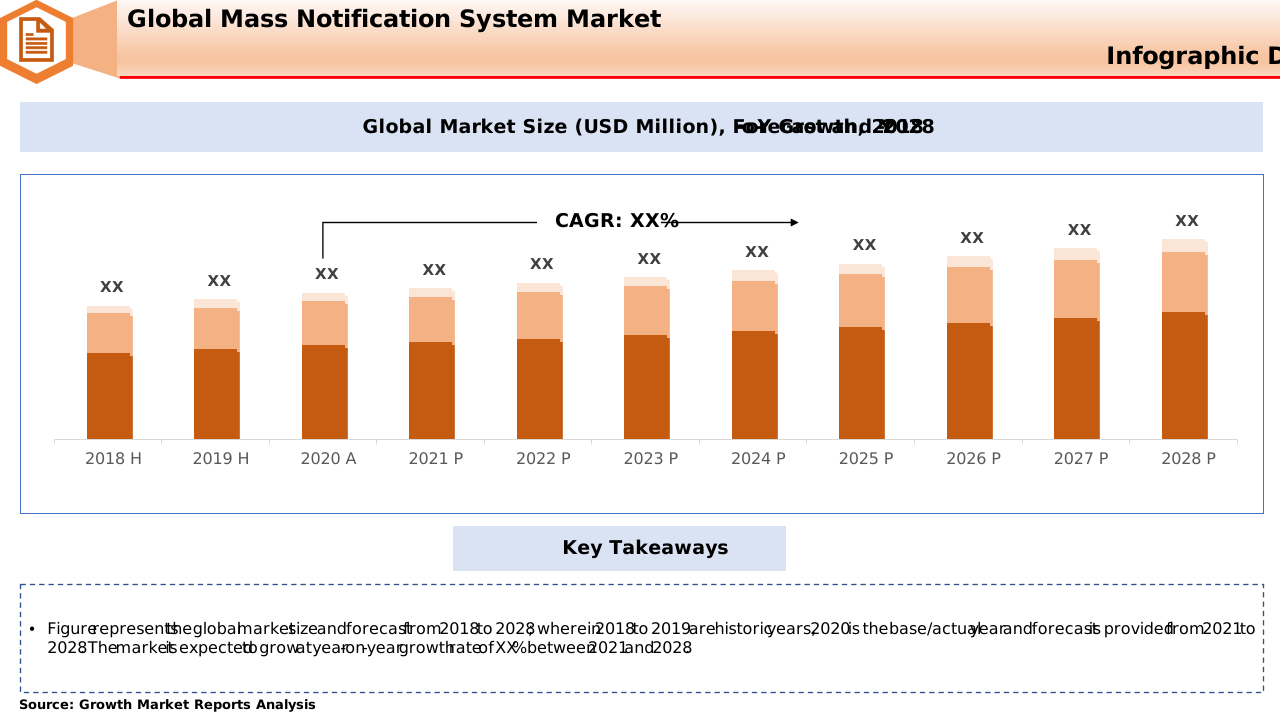
As per our latest research, the global Mass Notification System (MNS) market size is valued at USD 14.7 billion in 2024 and is expected to grow at a robust CAGR of 17.2% from 2025 to 2033. By the end of 2033, the market is forecasted to reach an impressive USD 44.8 billion, driven by increasing demand for real-time information dissemination and critical event management across diverse sectors. The surge in natural disasters, rising security threats, and the need for business continuity planning are key growth factors propelling the adoption of mass notification systems globally.
The most significant growth factor for the mass notification system market is the rising frequency and severity of natural and man-made disasters. Organizations and governments worldwide are increasingly investing in robust communication infrastructure to ensure the safety of employees, citizens, and assets. The ability of mass notification systems to deliver timely alerts through multiple channels—including SMS, voice, email, and social media—has made them indispensable in emergency scenarios. The COVID-19 pandemic further underscored the importance of these systems, as institutions leveraged them for health advisories, operational updates, and crisis management. This heightened focus on preparedness and resilience is expected to sustain market momentum over the coming years.
Another critical driver is the rapid digital transformation across industries, particularly in sectors such as healthcare, education, and BFSI. The integration of advanced technologies such as AI, IoT, and cloud computing has enhanced the capabilities of mass notification systems, enabling personalized and context-aware communication. Enterprises are leveraging these solutions for business continuity, compliance, and risk mitigation, beyond traditional emergency use cases. The increasing adoption of cloud-based deployment models is also reducing upfront costs and enabling scalability, making these systems accessible to small and medium enterprises as well as large organizations. This democratization of access is expected to broaden the market base significantly.
Regulatory mandates and compliance requirements are further catalyzing the growth of the mass notification system market. Governments in regions such as North America and Europe have introduced stringent guidelines for public safety and critical infrastructure protection, compelling organizations to implement reliable notification mechanisms. The growing emphasis on workplace safety, data privacy, and incident response is driving investments in sophisticated, interoperable mass notification platforms. Moreover, the proliferation of mobile devices and the expansion of high-speed internet connectivity are enhancing the reach and effectiveness of these systems, making them a cornerstone of modern risk management strategies.
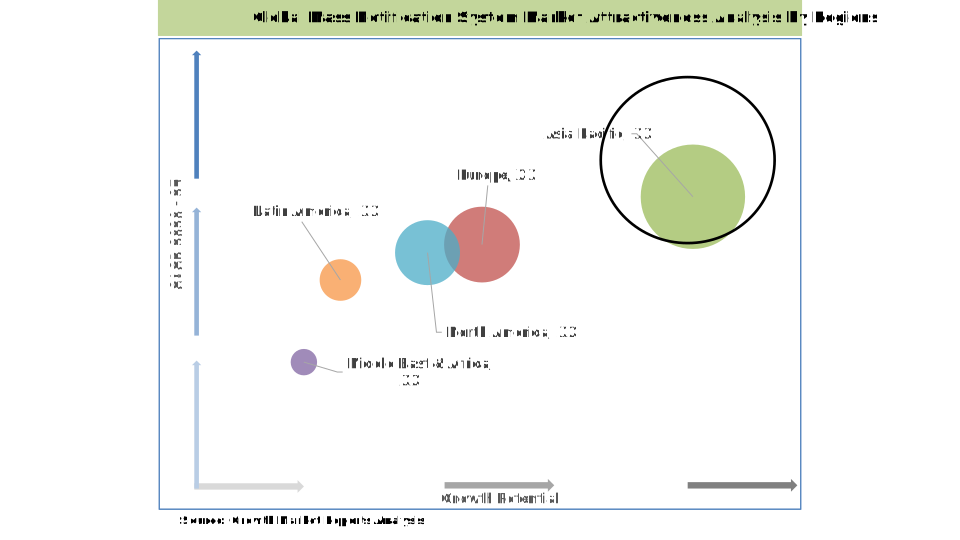
From a regional perspective, North America continues to dominate the mass notification system market, accounting for the largest revenue share in 2024, followed by Europe and Asia Pacific. The United States, in particular, has witnessed widespread adoption across government, education, and healthcare sectors, fueled by proactive regulatory frameworks and high awareness levels. However, Asia Pacific is emerging as the fastest-growing region, with a CAGR of 19.1% during the forecast period, driven by rapid urbanization, increasing investments in smart city projects, and heightened security concerns. Latin America and the Middle East & Africa are also expected to witness steady growth, supported by improving ICT infrastructure and rising public safety initiatives.
The implementation of an Emergency Notification System is crucial in today's world where timely communication can save lives and mitigate risks. These systems are designed to alert individuals and groups about imminent threats or emergencies, ensuring that the right information reaches the right people at the right time. By leveraging multiple communication channels such as SMS, email, and voice calls, emergency notification systems provide a comprehensive approach to crisis management. They are particularly valuable in scenarios where rapid response is essential, such as natural disasters, security breaches, or public health emergencies. Organizations are increasingly integrating these systems into their overall risk management strategies to enhance resilience and ensure continuity of operations.
The mass notification system market is segmented by component into software, hardware, and services, each playing a pivotal role in the overall ecosystem. The software segment holds the largest share in 2024, owing to its critical function in managing, orchestrating, and delivering notifications across multiple channels. These software solutions are increasingly leveraging artificial intelligence and machine learning to automate message dissemination, enhance situational awareness, and enable real-time analytics. The demand for customizable and scalable platforms is particularly high among large enterprises and government agencies, who require robust solutions to manage complex communication workflows and ensure regulatory compliance. The evolution of cloud-native software and SaaS models is further accelerating market growth by lowering entry barriers and enabling rapid deployment.
The hardware segment encompasses devices such as speakers, sirens, digital signage, network gateways, and control panels that facilitate the physical transmission of alerts. Although the hardware share is relatively lower than software, it remains a critical component, especially in environments where auditory and visual alerts are essential for safety, such as industrial facilities, campuses, and public spaces. The integration of IoT-enabled devices and wireless communication technologies is driving innovation in this segment, allowing for remote monitoring, automated triggering, and seamless interoperability with other building management systems. The ongoing modernization of legacy infrastructure in developed and emerging markets alike is expected to sustain demand for advanced hardware components over the forecast period.
Services, including consulting, implementation, support, and maintenance, represent a significant and growing segment within the mass notification system market. Organizations are increasingly seeking expert guidance to design, deploy, and optimize notification solutions tailored to their unique risk profiles and operational requirements. Managed services are gaining traction, particularly among small and medium enterprises that lack in-house IT expertise, as they offer end-to-end management of notification platforms, including system updates, security monitoring, and compliance reporting. The rising complexity of threat landscapes and the need for continuous system availability are driving demand for proactive support and managed services, which are expected to witness the highest CAGR within the component segmentation.
Mass Notification Systems for Warehouses are becoming increasingly important as these facilities play a critical role in supply chain management and logistics. Warehouses often house valuable inventory and are bustling with activity, making them susceptible to various risks such as fires, equipment malfunctions, and security breaches. Implementing a mass notification system in a warehouse setting ensures that all personnel are promptly informed of any emergencies, enabling quick evacuation or other necessary actions. These systems can also be integrated with other safety and security measures, such as surveillance cameras and access control systems, to provide a holistic approach to warehouse safety. As the demand for efficient logistics and supply chain operations grows, the adoption of mass notification systems in warehouses is expected to rise.
The interplay between software, hardware, and services is becoming more pronounced as organizations seek integrated, end-to-end solutions that combine advanced analytics, multi-channel delivery, and seamless device connectivity. Vendors are increasingly offering bundled offerings and value-added services to differentiate themselves in a competitive market. The convergence of mass notification systems with other enterprise applications—such as incident management, physical security, and business continuity planning—is creating new opportunities for cross-segment innovation and revenue generation. As digital transformation accelerates, the demand for holistic, interoperable solutions that span the software, hardware, and services continuum will continue to shape the future of the mass notification system market.
| Attributes | Details |
| Report Title | Mass Notification System Market Research Report 2033 |
| By Component | Software, Hardware, Services |
| By Deployment Mode | On-Premises, Cloud |
| By Application | Emergency Communication, Disaster Recovery, Public Alerts, Business Continuity, Others |
| By End-User | Healthcare, Education, Government, BFSI, Energy & Utilities, Transportation & Logistics, Others |
| Regions Covered | North America, Europe, APAC, Latin America, MEA |
| Base Year | 2024 |
| Historic Data | 2018-2023 |
| Forecast Period | 2025-2033 |
| Number of Pages | 251 |
| Number of Tables & Figures | 397 |
| Customization Available | Yes, the report can be customized as per your need. |
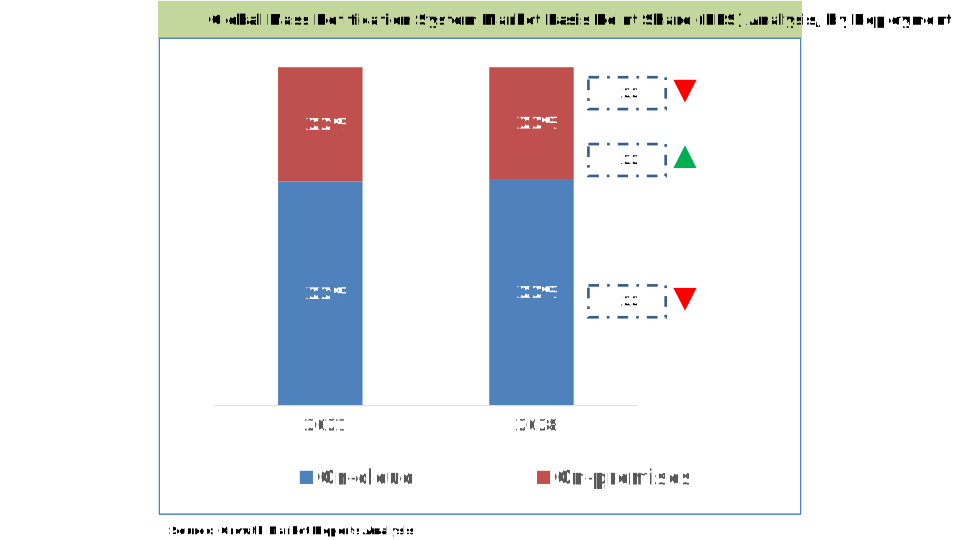
Deployment mode is a critical consideration for organizations implementing mass notification systems, with the market segmented into on-premises and cloud-based solutions. In 2024, cloud deployment is gaining significant traction, accounting for nearly 60% of new installations, driven by its inherent scalability, flexibility, and cost-effectiveness. Cloud-based mass notification systems enable organizations to rapidly deploy and scale their communication infrastructure without the need for substantial upfront investments in hardware or IT resources. This model is particularly attractive to small and medium enterprises, educational institutions, and healthcare providers, who benefit from subscription-based pricing, automatic updates, and remote accessibility.
On-premises deployment, while experiencing slower growth, remains the preferred choice for organizations with stringent data security, privacy, and regulatory requirements. Government agencies, financial institutions, and critical infrastructure operators often opt for on-premises solutions to maintain full control over their data and ensure compliance with sector-specific mandates. These deployments offer robust customization options and can be tightly integrated with existing IT and security systems. However, they typically involve higher capital expenditure and longer implementation timelines, which can be a barrier for resource-constrained organizations. The emergence of hybrid deployment models is providing a middle ground, allowing organizations to leverage the benefits of both on-premises control and cloud-based agility.
The rapid evolution of cloud technologies, including advancements in data encryption, multi-factor authentication, and regional data residency, is addressing many of the security concerns traditionally associated with cloud deployment. Cloud providers are investing heavily in compliance certifications and advanced threat protection, making cloud-based mass notification systems increasingly viable for highly regulated industries. The ability to integrate with other cloud-native applications—such as collaboration tools, incident management platforms, and mobile workforce solutions—is enhancing the value proposition of cloud deployment, driving its adoption across a broader range of use cases and verticals.
The role of a Customer Notification Manager is increasingly vital in ensuring effective communication between businesses and their clients. This position involves managing the tools and processes that facilitate timely and accurate notifications to customers, whether for routine updates, service disruptions, or emergency alerts. By leveraging advanced notification platforms, a Customer Notification Manager can enhance customer experience by providing personalized and context-aware communications. This role is critical in sectors such as banking, retail, and telecommunications, where maintaining customer trust and satisfaction is paramount. As businesses continue to prioritize customer engagement and loyalty, the demand for skilled Customer Notification Managers is likely to grow, driving innovation in notification technologies and strategies.
Looking ahead, the deployment mode landscape is expected to continue shifting in favor of cloud-based solutions, with a projected CAGR of 19.5% for the cloud segment through 2033. However, on-premises deployments will retain relevance in specific sectors and geographies where regulatory, operational, or connectivity constraints necessitate localized control. Vendors are responding by offering flexible deployment options, including multi-cloud and hybrid architectures, to meet the diverse needs of global customers. The ongoing convergence of cloud, edge computing, and 5G connectivity is expected to further enhance the performance, reliability, and reach of mass notification systems, shaping future deployment trends.
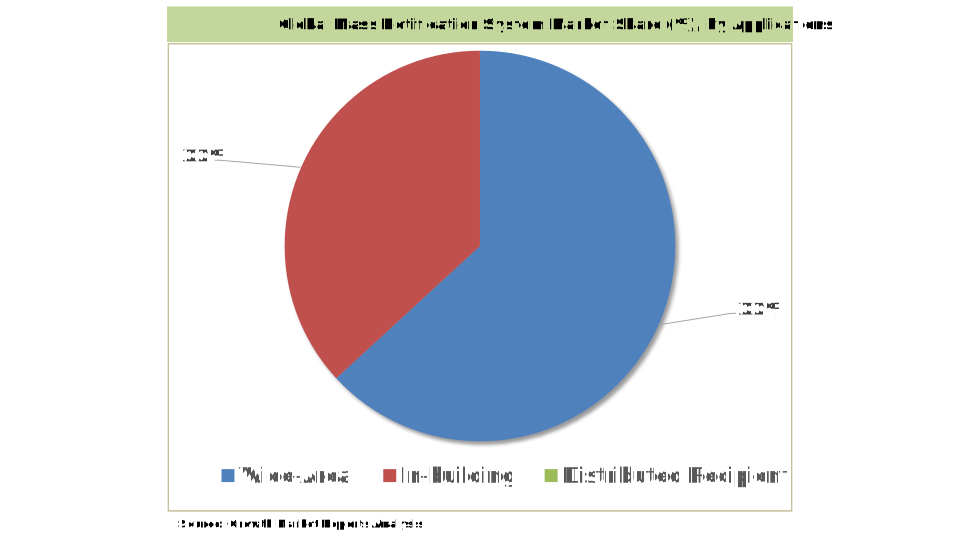
The application landscape for mass notification systems is broad and evolving, encompassing emergency communication, disaster recovery, public alerts, business continuity, and other specialized use cases. Emergency communication remains the dominant application, accounting for over 40% of total market revenue in 2024. Organizations across sectors rely on mass notification systems to deliver critical information during incidents such as natural disasters, active shooter events, and hazardous material spills. The ability to provide real-time alerts, instructions, and updates to large, distributed audiences is essential for ensuring safety, minimizing confusion, and expediting response efforts. The integration of geolocation and contextual intelligence is enhancing the precision and effectiveness of emergency communication applications.
Disaster recovery is another key application area, where mass notification systems play a vital role in orchestrating coordinated response efforts, mobilizing resources, and maintaining situational awareness. Enterprises and government agencies are leveraging these systems to automate incident response workflows, facilitate two-way communication with stakeholders, and ensure business continuity during and after disruptive events. The growing frequency of cyberattacks, supply chain disruptions, and climate-related incidents is driving demand for advanced disaster recovery solutions that can seamlessly integrate with business continuity and crisis management platforms. The ability to capture, analyze, and report on communication activities is also becoming increasingly important for post-incident review and regulatory compliance.
Public alerts represent a significant and growing application segment, particularly in regions with proactive public safety initiatives. Governments and municipal authorities are deploying mass notification systems to disseminate weather warnings, traffic advisories, health alerts, and other time-sensitive information to citizens. The expansion of digital signage, mobile applications, and social media integration is broadening the reach and impact of public alert systems, enabling authorities to engage diverse audiences across multiple channels. The adoption of multilingual and accessibility features is further enhancing inclusivity and effectiveness, ensuring that critical information reaches all segments of the population.
Business continuity is an increasingly prominent application for mass notification systems, as organizations recognize the importance of maintaining operational resilience in the face of evolving risks. Enterprises are leveraging these systems to communicate with employees, customers, and partners during IT outages, supply chain disruptions, and other business-impacting events. The integration of mass notification systems with enterprise resource planning (ERP), human resources (HR), and mobile workforce management platforms is enabling automated, targeted communication and streamlined incident response. The ability to provide real-time status updates, resource allocation, and recovery instructions is critical for minimizing downtime and safeguarding organizational reputation.
The mass notification system market serves a diverse array of end-users, including healthcare, education, government, BFSI, energy & utilities, transportation & logistics, and others. The healthcare sector is a major adopter, driven by the need to ensure patient safety, coordinate emergency response, and comply with regulatory mandates such as HIPAA and Joint Commission standards. Hospitals and healthcare networks are deploying mass notification systems to manage internal incidents, communicate with staff and patients, and coordinate with external agencies during public health emergencies. The integration of notification platforms with electronic health records (EHR) and hospital information systems is enhancing workflow efficiency and situational awareness.
The education sector represents another significant end-user group, with schools, colleges, and universities increasingly investing in mass notification systems to enhance campus safety and crisis management. The rise in campus violence, natural disasters, and public health threats has heightened the need for rapid, reliable communication with students, faculty, and parents. Educational institutions are adopting multi-channel notification platforms that support voice, text, email, and mobile app alerts, as well as integration with digital signage and classroom management systems. The ability to segment audiences and deliver targeted messages is particularly valuable in large, complex campus environments.
Government agencies at the federal, state, and local levels are among the largest users of mass notification systems, leveraging them for public safety, emergency management, and critical infrastructure protection. The implementation of national and regional alerting systems, such as the Integrated Public Alert and Warning System (IPAWS) in the United States and the European Public Warning Service, is driving significant investments in advanced notification platforms. Governments are also adopting mass notification systems for routine communication, event management, and citizen engagement, expanding their utility beyond traditional emergency scenarios.
The BFSI (Banking, Financial Services, and Insurance) sector is increasingly adopting mass notification systems to manage operational risks, ensure regulatory compliance, and safeguard customer trust. Financial institutions are using these systems to communicate with employees and customers during cyberattacks, service outages, and fraud incidents. The integration of mass notification platforms with cybersecurity, fraud detection, and business continuity systems is enabling rapid, automated response to emerging threats. Energy & utilities and transportation & logistics sectors are also key end-users, leveraging mass notification systems to manage grid outages, coordinate field operations, and ensure the safety of personnel and assets in high-risk environments.
The mass notification system market presents substantial opportunities for innovation and growth, particularly in the context of digital transformation and smart city initiatives. The proliferation of IoT devices, 5G connectivity, and advanced analytics is enabling the development of intelligent, context-aware notification systems that can deliver highly personalized and actionable information. Vendors are exploring new use cases such as predictive alerting, automated workflow orchestration, and integration with physical security and building management systems. The growing emphasis on resilience, sustainability, and public safety is driving demand for mass notification solutions that support proactive risk management and incident prevention, creating new revenue streams for technology providers.
Another significant opportunity lies in the expansion of mass notification systems into emerging markets, where rapid urbanization, infrastructure development, and rising awareness of public safety are creating fertile ground for adoption. Governments and enterprises in Asia Pacific, Latin America, and the Middle East & Africa are investing in digital infrastructure and smart city projects, driving demand for scalable, cloud-based notification platforms. The increasing availability of affordable mobile devices and high-speed internet connectivity is enabling broader reach and inclusivity, allowing mass notification systems to serve diverse populations and geographies. Strategic partnerships, local customization, and compliance with regional regulations will be critical for vendors seeking to capitalize on these growth opportunities.
Despite robust growth prospects, the mass notification system market faces several restraining factors, chief among them being data privacy and security concerns. The sensitive nature of the information transmitted through these systems—often in high-stakes emergency scenarios—makes them a target for cyberattacks, data breaches, and unauthorized access. Organizations must navigate a complex landscape of regulatory requirements, including GDPR, HIPAA, and sector-specific standards, which can increase implementation complexity and cost. Ensuring interoperability with legacy systems, managing diverse communication channels, and maintaining system reliability under high load conditions are additional challenges that can impede adoption and performance. Addressing these threats will require ongoing investment in cybersecurity, compliance, and system resilience.
North America remains the largest regional market for mass notification systems, with a market size of USD 6.1 billion in 2024, accounting for over 41% of global revenue. The region's dominance is underpinned by a mature ICT infrastructure, proactive regulatory frameworks, and high adoption rates across key sectors such as government, education, and healthcare. The United States, in particular, has witnessed widespread deployment of mass notification systems, driven by federal mandates, public safety initiatives, and a strong focus on critical infrastructure protection. Canada is also experiencing steady growth, supported by investments in smart city projects and public safety modernization.
Europe holds the second-largest share of the global mass notification system market, with a market value of USD 3.7 billion in 2024. The region is characterized by robust regulatory oversight, particularly in areas such as data privacy, public safety, and critical infrastructure protection. Countries such as the United Kingdom, Germany, and France are leading adopters, leveraging mass notification systems for emergency management, disaster recovery, and public alerting. The European Union's emphasis on cross-border interoperability and standardized alerting protocols is fostering the development of integrated, pan-European notification platforms. The region is expected to register a CAGR of 15.8% through 2033, driven by ongoing investments in digital transformation and public safety infrastructure.
Asia Pacific is the fastest-growing region in the mass notification system market, with a market size of USD 2.9 billion in 2024 and a projected CAGR of 19.1% through 2033. Rapid urbanization, infrastructure development, and increasing awareness of public safety are driving demand for advanced notification systems in countries such as China, India, Japan, and Australia. Governments are investing in smart city initiatives, emergency management modernization, and disaster resilience, creating significant opportunities for technology providers. Latin America and the Middle East & Africa are also witnessing growing adoption, albeit from a smaller base, supported by improvements in ICT infrastructure and rising public safety priorities. The combined market size for these regions is estimated at USD 2.0 billion in 2024, with strong growth potential over the forecast period.
The mass notification system market is characterized by intense competition, rapid technological innovation, and a dynamic vendor landscape. Leading players are focusing on product differentiation, strategic partnerships, and global expansion to strengthen their market position. The competitive landscape is marked by a mix of established technology giants, specialized solution providers, and emerging startups, each bringing unique capabilities and value propositions to the table. Vendors are investing heavily in research and development to enhance platform functionality, user experience, and integration capabilities, as well as to address evolving security and compliance requirements.
Product innovation is a key differentiator in the mass notification system market, with vendors leveraging artificial intelligence, machine learning, IoT, and cloud computing to deliver advanced features such as predictive analytics, automated workflow orchestration, and real-time situational awareness. The ability to support multi-channel delivery, geolocation-based targeting, and two-way communication is becoming increasingly important for meeting the diverse needs of enterprise and public sector customers. Vendors are also focusing on interoperability with third-party applications, mobile devices, and legacy systems, as organizations seek integrated solutions that can seamlessly fit into their existing IT and security ecosystems.
Strategic partnerships and alliances are playing a critical role in shaping the competitive dynamics of the mass notification system market. Leading vendors are collaborating with telecom operators, public safety agencies, and technology partners to expand their reach, enhance solution offerings, and address the unique needs of different regions and verticals. Acquisitions and mergers are also common, as companies seek to broaden their product portfolios, acquire new technologies, and accelerate market entry. The emergence of open standards and APIs is enabling greater collaboration and interoperability, fostering a more vibrant and innovative ecosystem.
Some of the major companies operating in the mass notification system market include Everbridge, Inc., Honeywell International Inc., Siemens AG, Motorola Solutions, Inc., Blackboard Inc., Eaton Corporation, Singlewire Software, OnSolve, Alertus Technologies, and Johnson Controls International plc. Everbridge is recognized for its comprehensive critical event management platform, serving global enterprises and government agencies with advanced notification, incident management, and crisis communication capabilities. Honeywell and Siemens are leveraging their expertise in building automation and industrial safety to offer integrated mass notification solutions for critical infrastructure and smart buildings. Motorola Solutions is a leader in public safety communications, providing interoperable notification platforms for emergency services and government agencies.
Blackboard Inc. is a prominent player in the education sector, offering mass notification solutions tailored to the needs of schools, colleges, and universities. Eaton Corporation and Johnson Controls are leveraging their strengths in power management and building solutions to deliver integrated notification and safety systems for commercial and industrial environments. Singlewire Software and Alertus Technologies are known for their innovative, user-friendly platforms that support multi-channel delivery and advanced customization. OnSolve specializes in cloud-based mass notification and critical communications, serving a diverse range of enterprise and public sector clients. These companies, along with numerous regional and niche players, are driving the evolution of the mass notification system market through continuous innovation, customer-centric solutions, and strategic growth initiatives.
The Mass Notification System market has been segmented on the basis of
Key players competing in global mass notification system market include Motorola Solution Inc.; Blackboard Inc.; BlackBerry AtHoc Inc.; Eaton Corporation; Honeywell International Inc.
Some of these players are targeting on business strategies such as mergers, acquisitions, partnerships, collaborations, capacity expansion, and product launches to increase their market shares. For instance
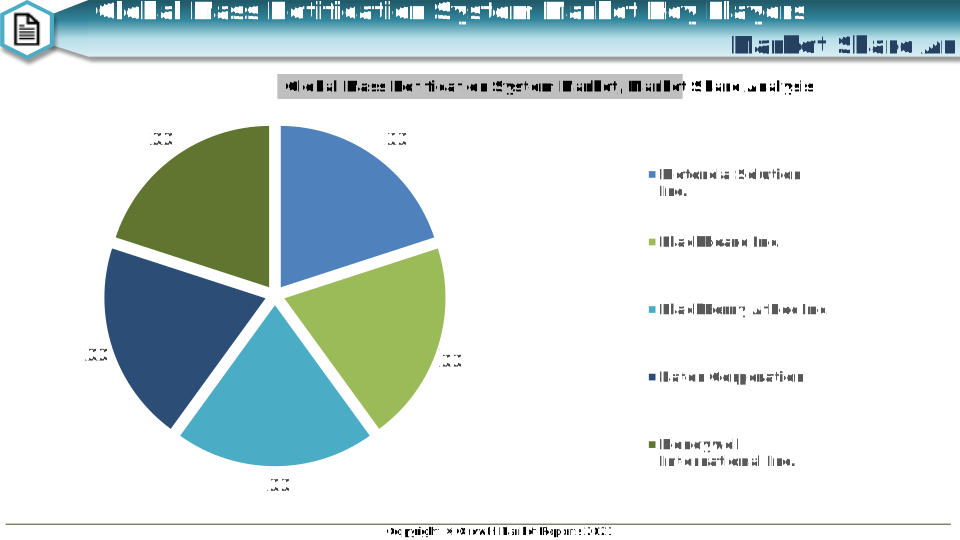
Key companies in the mass notification system market include Everbridge, Honeywell International, Siemens AG, Motorola Solutions, Blackboard Inc., Eaton Corporation, Singlewire Software, OnSolve, Alertus Technologies, Johnson Controls, and others. These vendors focus on innovation, integration, and strategic partnerships to strengthen their market presence.
North America is the largest market for mass notification systems, followed by Europe and Asia Pacific. The United States leads in adoption due to mature ICT infrastructure and proactive regulations. Asia Pacific is the fastest-growing region, driven by urbanization, smart city projects, and increasing public safety investments.
Key challenges include data privacy and security concerns, compliance with complex regulations (such as GDPR and HIPAA), integration with legacy systems, and ensuring system reliability during high-load scenarios. Cybersecurity threats and the need for interoperability across diverse communication channels also pose significant risks.
The primary growth drivers include the increasing frequency of natural and man-made disasters, rising security threats, regulatory mandates for public safety, rapid digital transformation, and the adoption of advanced technologies like AI, IoT, and cloud computing. The COVID-19 pandemic also highlighted the importance of robust notification systems for crisis management.
Major end-users of mass notification systems include healthcare, education, government, BFSI (banking, financial services, and insurance), energy & utilities, and transportation & logistics. These sectors rely on MNS for emergency management, regulatory compliance, operational safety, and communication with employees, customers, and the public.
Key applications of mass notification systems include emergency communication, disaster recovery, public alerts, and business continuity. These systems are used to deliver critical information during incidents like natural disasters, cyberattacks, public health emergencies, and operational disruptions, enabling rapid response and minimizing risk.
Cloud-based deployment is becoming the dominant mode for mass notification systems, accounting for nearly 60% of new installations in 2024. Cloud solutions offer scalability, flexibility, and cost-effectiveness, making them attractive to organizations of all sizes. However, on-premises deployments remain preferred in sectors with strict data security and regulatory requirements.
Mass notification systems are composed of three main components: software (for message management and delivery), hardware (such as speakers, sirens, digital signage, and control panels), and services (including consulting, implementation, support, and managed services). Each component plays a vital role in ensuring effective, multi-channel communication during emergencies.
The global mass notification system market is valued at USD 14.7 billion in 2024 and is projected to reach USD 44.8 billion by 2033, growing at a robust CAGR of 17.2%. This growth is driven by increasing demand for real-time information dissemination, rising natural disasters, security threats, and the need for business continuity planning.
A mass notification system (MNS) is a platform designed to deliver real-time alerts and critical information to large groups of people through multiple channels such as SMS, email, voice, and social media. It is crucial for emergency communication, disaster recovery, public alerts, and business continuity, helping organizations and governments ensure safety, compliance, and operational resilience during crises.