Segments - by Component (Software, Services), by Application (Social Media Marketing, Email Marketing, Search Engine Marketing, Content Marketing, Display Marketing, Others), by Deployment Mode (On-Premises, Cloud), by Organization Size (Small and Medium Enterprises, Large Enterprises), by End-User (Retail, BFSI, Healthcare, Media and Entertainment, IT and Telecommunications, Automotive, Others)
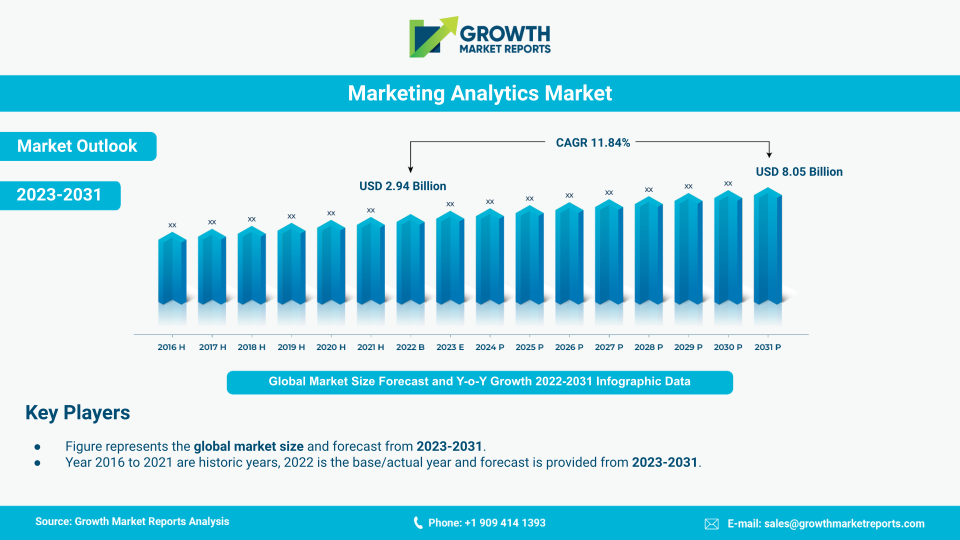
According to our latest research, the global marketing analytics market size in 2024 stands at USD 5.8 billion, demonstrating robust momentum driven by the increasing adoption of data-driven decision-making across industries. The market is projected to register a CAGR of 13.2% from 2025 to 2033, reaching an estimated market size of USD 17.1 billion by 2033. This accelerated growth is primarily attributed to the proliferation of digital channels, the surge in big data, and the imperative for organizations to achieve higher ROI from their marketing investments. The marketing analytics market is evolving rapidly, with advanced analytics tools enabling businesses to gain actionable insights, optimize campaigns, and enhance customer engagement across diverse sectors.
One of the most significant growth factors for the marketing analytics market is the exponential increase in data generation from multiple digital touchpoints. The rise of omnichannel marketing strategies has resulted in vast and complex datasets, encompassing customer interactions from social media, websites, mobile applications, and email campaigns. Businesses are increasingly leveraging marketing analytics solutions to aggregate, process, and analyze this data in real time, gaining deeper insights into customer behavior, preferences, and purchase patterns. The ability to transform raw data into actionable intelligence is empowering marketers to personalize campaigns, improve targeting accuracy, and maximize conversion rates, thereby fueling the demand for sophisticated analytics platforms.
Another critical driver is the growing emphasis on measuring marketing effectiveness and optimizing marketing spend. As organizations face mounting pressure to justify marketing budgets and demonstrate tangible ROI, marketing analytics tools have become indispensable. These solutions enable marketers to track key performance indicators (KPIs), attribute revenue to specific channels, and identify underperforming campaigns. The integration of artificial intelligence and machine learning into marketing analytics platforms is further enhancing predictive capabilities, allowing businesses to forecast trends, automate campaign adjustments, and refine customer segmentation. This technological evolution is driving widespread adoption across both large enterprises and small and medium businesses.
The surge in regulatory requirements and data privacy concerns is also shaping the marketing analytics market. With the implementation of stringent data protection regulations such as GDPR and CCPA, organizations are compelled to adopt analytics solutions that ensure compliance while maintaining data integrity and security. Modern marketing analytics platforms are incorporating advanced data governance features, encryption, and anonymization techniques, enabling businesses to harness the power of analytics without compromising customer trust. This focus on compliance, coupled with the increasing need for transparency in marketing practices, is accelerating the adoption of analytics tools across regulated industries such as BFSI and healthcare.
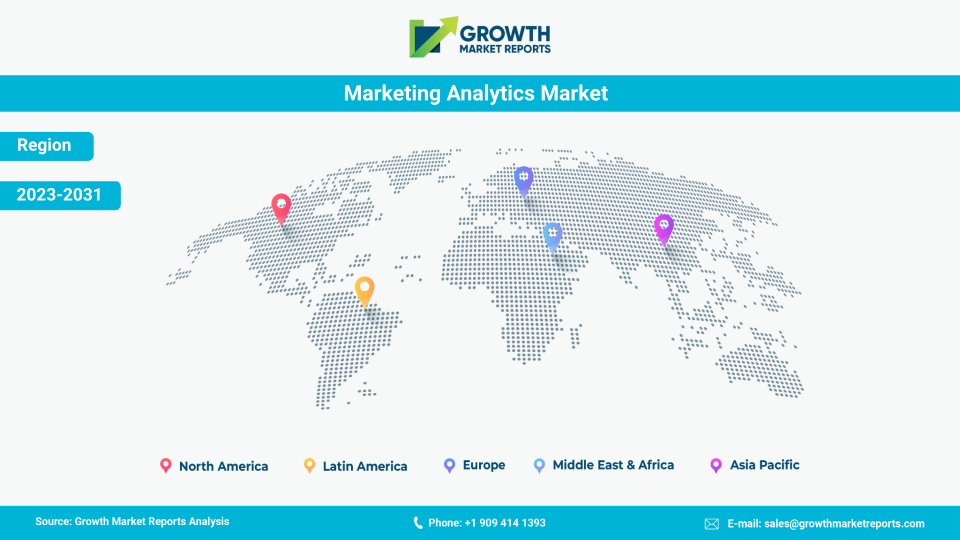
Regionally, North America dominates the marketing analytics market, accounting for the largest share in 2024, followed closely by Europe and Asia Pacific. The United States, in particular, is at the forefront due to the presence of major analytics vendors, high digital adoption, and substantial marketing expenditure by enterprises. However, the Asia Pacific region is poised for the fastest growth over the forecast period, driven by rapid digital transformation, expanding e-commerce ecosystems, and increasing investments in marketing technology. Latin America and the Middle East & Africa are also witnessing steady growth as organizations in these regions recognize the strategic value of data-driven marketing.
The marketing analytics market is segmented by component into software and services, each playing a vital role in the overall ecosystem. The software segment dominates the market, accounting for the majority of the revenue share in 2024. This dominance is attributed to the widespread deployment of advanced analytics platforms, dashboards, and visualization tools that empower marketers to extract actionable insights from diverse data sources. Software solutions are continuously evolving with the integration of AI, machine learning, and natural language processing, enabling businesses to automate data analysis, detect patterns, and generate predictive models for marketing optimization.
Within the software segment, cloud-based analytics platforms are gaining significant traction due to their scalability, flexibility, and ease of integration with existing marketing technology stacks. These platforms offer real-time analytics, customizable reporting, and seamless collaboration across marketing teams, making them particularly attractive to organizations with distributed operations. Additionally, the proliferation of SaaS-based marketing analytics solutions has lowered the entry barrier for small and medium enterprises, democratizing access to sophisticated analytics capabilities that were previously limited to large enterprises.
The services segment, comprising consulting, implementation, support, and training, is also experiencing strong growth. As organizations embark on digital transformation journeys, the complexity of integrating marketing analytics solutions with legacy systems and disparate data sources necessitates expert guidance. Service providers are playing a critical role in assisting businesses with solution customization, data migration, and change management to ensure successful adoption and maximize ROI. Furthermore, the growing demand for managed analytics services is enabling companies to outsource analytics operations, thereby reducing costs and focusing on core competencies.
As the market matures, vendors are increasingly offering bundled solutions that combine software and services to deliver end-to-end marketing analytics capabilities. These integrated offerings are particularly valuable for organizations seeking to accelerate time-to-value, streamline vendor management, and ensure continuous support throughout the analytics lifecycle. The convergence of software and services is expected to drive sustained growth, innovation, and competitive differentiation in the marketing analytics market over the forecast period.
| Attributes | Details |
| Report Title | Marketing Analytics Market Research Report 2033 |
| By Component | Software, Services |
| By Application | Social Media Marketing, Email Marketing, Search Engine Marketing, Content Marketing, Display Marketing, Others |
| By Deployment Mode | On-Premises, Cloud |
| By Organization Size | Small and Medium Enterprises, Large Enterprises |
| By End-User | Retail, BFSI, Healthcare, Media and Entertainment, IT and Telecommunications, Automotive, Others |
| Regions Covered | North America, Europe, APAC, Latin America, MEA |
| Base Year | 2024 |
| Historic Data | 2018-2023 |
| Forecast Period | 2025-2033 |
| Number of Pages | 264 |
| Number of Tables & Figures | 355 |
| Customization Available | Yes, the report can be customized as per your need. |
The application landscape of the marketing analytics market is diverse, encompassing social media marketing, email marketing, search engine marketing, content marketing, display marketing, and other channels. Social media marketing analytics holds a substantial share, reflecting the explosive growth of social platforms as primary engagement channels for brands. Marketers are leveraging analytics to monitor real-time conversations, measure sentiment, track influencer impact, and optimize content strategies. Advanced analytics tools enable organizations to correlate social media activities with business outcomes, enhancing brand visibility and customer loyalty.
Email marketing analytics continues to be a cornerstone for businesses seeking to nurture leads, retain customers, and drive conversions. Analytics solutions in this domain provide granular insights into open rates, click-through rates, segmentation effectiveness, and campaign ROI. The integration of AI-driven personalization and automation is further enhancing the effectiveness of email marketing, allowing organizations to deliver timely, relevant content to individual recipients. As email remains a cost-effective and high-ROI channel, the demand for sophisticated analytics tools tailored to email marketing is expected to remain strong.
Search engine marketing (SEM) and content marketing analytics are also witnessing significant adoption as organizations strive to improve organic and paid search performance. Analytics platforms enable marketers to track keyword rankings, analyze website traffic, and attribute conversions to specific search campaigns. Content marketing analytics, on the other hand, provides insights into content engagement, audience demographics, and content-driven revenue generation. The ability to measure and optimize the impact of search and content initiatives is critical for maintaining competitive advantage in the digital marketplace.
Display marketing analytics and other emerging applications, such as influencer marketing and video marketing, are gaining prominence as brands diversify their digital advertising strategies. Analytics tools in these segments help organizations assess ad performance, optimize bidding strategies, and allocate budgets more effectively. The integration of cross-channel analytics is enabling marketers to gain a holistic view of customer journeys, optimize multi-touch attribution, and drive higher campaign efficiency. As new marketing channels continue to emerge, the application scope of marketing analytics is expected to expand further, driving sustained market growth.
The deployment mode segment of the marketing analytics market is bifurcated into on-premises and cloud-based solutions, each offering distinct advantages and addressing unique business requirements. On-premises deployment remains a preferred choice for organizations with stringent data security, compliance, and customization needs. These solutions provide complete control over data storage, processing, and access, making them particularly suitable for enterprises in regulated industries such as BFSI and healthcare. However, the high upfront costs, maintenance complexity, and limited scalability of on-premises solutions have prompted many organizations to explore alternative deployment models.
Cloud-based marketing analytics solutions are experiencing rapid adoption, driven by their inherent scalability, flexibility, and cost-effectiveness. The cloud model enables organizations to deploy analytics platforms without significant infrastructure investments, facilitating quick implementation and seamless upgrades. Cloud solutions offer real-time data processing, remote accessibility, and integration with other cloud-based marketing technology tools, making them ideal for organizations with distributed teams and dynamic marketing environments. The pay-as-you-go pricing model further enhances affordability, enabling small and medium enterprises to leverage advanced analytics capabilities.
Hybrid deployment models are emerging as a viable option for organizations seeking to balance the benefits of on-premises control with the agility of the cloud. These models allow businesses to store sensitive data on-premises while leveraging cloud-based analytics for less critical workloads. The growing adoption of hybrid and multi-cloud strategies is enabling organizations to optimize resource allocation, enhance data resilience, and achieve regulatory compliance without compromising on analytics performance.
As digital transformation accelerates, the shift towards cloud-based marketing analytics is expected to intensify, with vendors investing heavily in cloud-native solutions, data security enhancements, and seamless integration capabilities. The ability to scale analytics operations in response to evolving business needs, coupled with the rapid pace of innovation in cloud technologies, positions cloud deployment as the dominant trend in the marketing analytics market over the forecast period.
The marketing analytics market is segmented by organization size into small and medium enterprises (SMEs) and large enterprises, each exhibiting distinct adoption patterns and requirements. Large enterprises account for the largest market share in 2024, driven by their substantial marketing budgets, complex campaign portfolios, and advanced analytics needs. These organizations are investing heavily in enterprise-grade analytics platforms, custom integrations, and dedicated analytics teams to gain a competitive edge. The ability to process and analyze vast volumes of data across multiple channels and geographies is critical for large enterprises seeking to optimize global marketing strategies and drive sustainable growth.
Small and medium enterprises are increasingly recognizing the strategic value of marketing analytics in enhancing customer acquisition, retention, and brand differentiation. The proliferation of affordable, cloud-based analytics solutions has democratized access to advanced analytics capabilities, enabling SMEs to compete effectively with larger counterparts. These solutions offer intuitive interfaces, pre-built templates, and automated insights, reducing the need for specialized analytics expertise and accelerating time-to-value. As SMEs embrace digital marketing, the demand for scalable, easy-to-use analytics tools is expected to surge, driving robust growth in this segment.
The unique challenges faced by SMEs, such as limited resources, budget constraints, and evolving business models, are shaping the development of tailored analytics solutions. Vendors are introducing modular, subscription-based offerings that allow SMEs to start small and scale analytics capabilities as their needs evolve. The integration of AI-driven automation and self-service analytics is further empowering SMEs to derive actionable insights without extensive technical resources, fostering a culture of data-driven decision-making.
The convergence of analytics with customer relationship management (CRM), marketing automation, and e-commerce platforms is enabling organizations of all sizes to create unified marketing ecosystems. This integration is streamlining data flows, enhancing campaign orchestration, and enabling holistic performance measurement. As the marketing analytics market continues to evolve, both large enterprises and SMEs are poised to benefit from innovations that drive efficiency, agility, and measurable business outcomes.
The end-user landscape of the marketing analytics market is broad, spanning retail, BFSI, healthcare, media and entertainment, IT and telecommunications, automotive, and other sectors. The retail sector leads the adoption of marketing analytics, leveraging data-driven insights to optimize merchandising, personalize customer experiences, and maximize sales conversion rates. Retailers are utilizing analytics to track in-store and online customer behavior, forecast demand, and tailor promotions, resulting in improved inventory management and enhanced customer satisfaction.
The BFSI sector is another major adopter, using marketing analytics to drive customer acquisition, retention, and cross-selling initiatives. Financial institutions are harnessing analytics to segment customers, predict product preferences, and optimize campaign performance across digital and traditional channels. The need to comply with regulatory requirements and ensure data privacy is prompting BFSI organizations to invest in secure, compliant analytics solutions that deliver actionable insights while maintaining customer trust.
Healthcare organizations are increasingly embracing marketing analytics to enhance patient engagement, streamline outreach campaigns, and improve service delivery. Analytics tools enable healthcare providers to segment patient populations, measure campaign effectiveness, and tailor health education initiatives. The integration of analytics with electronic health records (EHR) and patient relationship management systems is facilitating personalized communication and driving better health outcomes.
Media and entertainment companies, IT and telecommunications firms, and automotive manufacturers are also leveraging marketing analytics to optimize content distribution, enhance audience targeting, and drive brand engagement. The ability to analyze viewer preferences, consumption patterns, and advertising effectiveness is critical for media organizations seeking to maximize revenue and audience loyalty. Similarly, IT and telecom companies are using analytics to refine product launches, improve customer support, and drive digital adoption. The automotive sector is leveraging analytics to optimize marketing campaigns, enhance dealer performance, and personalize customer interactions throughout the vehicle lifecycle.
The marketing analytics market presents significant opportunities for innovation and value creation across industries. The rapid advancement of artificial intelligence and machine learning is enabling the development of next-generation analytics platforms capable of delivering predictive, prescriptive, and automated insights. Organizations can leverage these capabilities to anticipate market trends, optimize campaign strategies, and enhance customer experiences, driving superior business outcomes. The growing adoption of omnichannel marketing, coupled with the proliferation of IoT devices, is generating new data streams and expanding the scope of analytics applications. Vendors that invest in AI-driven analytics, cross-channel integration, and real-time decision-making stand to gain a competitive edge in the evolving market landscape.
Another key opportunity lies in the integration of marketing analytics with broader business intelligence and digital transformation initiatives. As organizations seek to break down data silos and foster enterprise-wide collaboration, the convergence of marketing analytics with sales, operations, and customer service data is enabling holistic performance measurement and strategic alignment. The rise of customer data platforms (CDPs), data lakes, and unified analytics ecosystems is facilitating seamless data integration, empowering organizations to create 360-degree customer views and drive personalized engagement at scale. The increasing focus on data privacy and ethical marketing is also prompting vendors to develop analytics solutions that prioritize transparency, compliance, and responsible data usage, opening new avenues for market differentiation.
Despite the promising outlook, the marketing analytics market faces several restraining factors, chief among them being data privacy concerns and regulatory compliance challenges. The implementation of stringent data protection laws, such as GDPR and CCPA, is compelling organizations to adopt robust data governance frameworks and ensure transparency in data collection, processing, and usage. Non-compliance can result in significant financial penalties and reputational damage, deterring some organizations from fully leveraging analytics capabilities. Additionally, the complexity of integrating disparate data sources, legacy systems, and emerging technologies poses technical hurdles that can impede analytics adoption. Addressing these challenges requires ongoing investment in data security, employee training, and change management to ensure successful analytics implementation and sustainable growth.
North America remains the largest regional market for marketing analytics, with a market size of USD 2.4 billion in 2024. The region's dominance is underpinned by high digital adoption rates, a mature marketing technology ecosystem, and substantial investments in analytics-driven innovation. The United States leads the market, with enterprises across sectors leveraging analytics to optimize customer engagement, drive revenue growth, and maintain competitive advantage. The presence of major analytics vendors, coupled with a strong focus on research and development, is fostering continuous innovation and market expansion in North America.
Europe is the second-largest market, with a market size of USD 1.5 billion in 2024, characterized by increasing regulatory scrutiny, data privacy awareness, and digital transformation initiatives. Countries such as the United Kingdom, Germany, and France are at the forefront of analytics adoption, particularly in the retail, BFSI, and healthcare sectors. The implementation of GDPR has accelerated the adoption of compliant analytics solutions, driving demand for platforms that prioritize data security and transparency. Europe is expected to register a CAGR of 12.1% over the forecast period, reflecting sustained investments in marketing technology and analytics innovation.
Asia Pacific is the fastest-growing region in the marketing analytics market, with a market size of USD 1.1 billion in 2024 and a projected CAGR of 15.4% from 2025 to 2033. The region's rapid growth is fueled by expanding digital ecosystems, increasing internet penetration, and the proliferation of e-commerce platforms. Countries such as China, India, Japan, and Australia are witnessing a surge in analytics adoption as organizations seek to capitalize on emerging market opportunities and enhance customer experiences. The growing availability of affordable, cloud-based analytics solutions is enabling small and medium enterprises in Asia Pacific to embrace data-driven marketing strategies, driving robust market expansion.
The marketing analytics market is characterized by intense competition, rapid technological innovation, and a dynamic vendor landscape. Leading players are continuously enhancing their product portfolios with advanced analytics capabilities, AI-driven automation, and seamless integration features to address evolving customer needs. The market is witnessing a wave of consolidation, with established vendors acquiring niche analytics providers to expand their offerings and enter new verticals. The competitive landscape is further shaped by the entry of new players, startups, and cloud-native vendors, intensifying the race for market share and differentiation.
Vendors are increasingly focusing on delivering end-to-end analytics solutions that combine data integration, visualization, and predictive modeling to provide holistic marketing insights. The integration of marketing analytics with CRM, marketing automation, and business intelligence platforms is enabling organizations to create unified data ecosystems and drive cross-functional collaboration. Customization, scalability, and ease of use are emerging as key differentiators, with vendors offering modular solutions tailored to specific industry requirements and organization sizes. Customer support, training, and managed services are also gaining prominence as organizations seek to maximize ROI from analytics investments.
The rise of open-source analytics platforms, cloud-based solutions, and API-driven architectures is lowering the entry barrier for new entrants and fostering innovation in the marketing analytics market. Vendors are leveraging partnerships, alliances, and ecosystem collaborations to expand their reach, accelerate product development, and deliver integrated solutions that address the full spectrum of marketing analytics needs. The ability to deliver real-time insights, ensure data privacy, and support multi-channel marketing strategies is critical for vendors seeking to maintain a competitive edge in the evolving market landscape.
Major companies operating in the marketing analytics market include SAS Institute, Adobe Inc., Oracle Corporation, Salesforce, IBM Corporation, Google LLC, Teradata, SAP SE, Microsoft Corporation, and Nielsen Holdings. SAS Institute is renowned for its advanced analytics and AI-driven marketing solutions, catering to large enterprises across industries. Adobe Inc. offers a comprehensive suite of marketing analytics tools as part of its Adobe Experience Cloud, enabling seamless integration with content management and personalization platforms. Oracle Corporation and Salesforce have established strong footholds with cloud-based marketing analytics solutions that emphasize scalability, real-time insights, and customer-centricity.
IBM Corporation is leveraging its expertise in AI and machine learning to deliver predictive analytics and cognitive marketing solutions, while Google LLC dominates the digital marketing analytics space with its Google Analytics platform, widely adopted by businesses of all sizes. Teradata and SAP SE are focusing on enterprise-grade analytics platforms that support complex data integration and advanced modeling capabilities. Microsoft Corporation is driving innovation with its Power BI and Dynamics 365 Marketing solutions, enabling organizations to create unified analytics environments. Nielsen Holdings specializes in media and consumer analytics, providing deep insights into audience measurement and advertising effectiveness.
These leading players are investing heavily in research and development, strategic acquisitions, and ecosystem partnerships to enhance their offerings and address emerging market needs. The competitive landscape is expected to remain dynamic, with ongoing innovation, collaboration, and market consolidation shaping the future of the marketing analytics market. As organizations continue to prioritize data-driven marketing strategies, vendors that deliver scalable, secure, and user-friendly analytics solutions are poised for sustained growth and leadership in the global market.
The Marketing Analytics market has been segmented on the basis of
Key players competing in the Marketing Analytics Market include IBM Corporation; Microsoft Corporation; Oracle Corporation; Salesforce.Com Inc.; SAS Institute Inc. Some of these players are targeting on business strategies such as mergers, acquisitions, partnerships, collaborations, capacity expansion, and product launches to increase their market shares. For instance,
Key challenges include data privacy concerns, regulatory compliance (such as GDPR and CCPA), complexity of integrating disparate data sources, and the need for robust data governance frameworks.
Major companies include SAS Institute, Adobe Inc., Oracle Corporation, Salesforce, IBM Corporation, Google LLC, Teradata, SAP SE, Microsoft Corporation, and Nielsen Holdings.
Major growth drivers include the proliferation of digital channels, surge in big data, need for higher marketing ROI, integration of AI and machine learning, and regulatory requirements for data privacy and compliance.
Marketing analytics is widely used in social media marketing, email marketing, search engine marketing, content marketing, display marketing, influencer marketing, and video marketing.
Cloud-based marketing analytics solutions are rapidly gaining traction due to their scalability, flexibility, cost-effectiveness, and ease of integration, making advanced analytics accessible to organizations of all sizes.
Key end-users include retail, BFSI (banking, financial services, and insurance), healthcare, media and entertainment, IT and telecommunications, and automotive sectors.
The market is segmented into software and services. The software segment dominates, including cloud-based and SaaS analytics platforms, while services include consulting, implementation, support, and training.
North America dominates the marketing analytics market, followed by Europe and Asia Pacific. The United States leads due to high digital adoption and major analytics vendors, while Asia Pacific is the fastest-growing region.
The marketing analytics market is expected to register a CAGR of 13.2% from 2025 to 2033, reaching an estimated USD 17.1 billion by 2033.
The global marketing analytics market size in 2024 is estimated at USD 5.8 billion, driven by the increasing adoption of data-driven decision-making across industries.