Maritime Logistics and Services Market Report 2034

Maritime Logistics and Services Market Report 2034

Segments - by Service Type (Freight Forwarding, Warehousing, Ship Management, Port Services, Supply Chain Management, Others), by Mode Of Transport (Sea, Inland Waterways, Coastal), by End-User (Oil & Gas, Manufacturing, Automotive, Food & Beverages, Chemicals, Retail, Others), by Application (Import, Export, Domestic)

https://growthmarketreports.com/Raksha
Author : Raksha Sharma
https://growthmarketreports.com/Vaibhav
Fact-checked by : V. Chandola
https://growthmarketreports.com/Shruti
Editor : Shruti Bhat

Last Updated : Jun, 2026 | Report ID :AL-2981 | 4.8 Rating | 17 Reviews | 270 Pages | Format : Docx PDF

Report Description

This report is updated with the latest market data and insights as of June 2026. Base year: 2025  |  Forecast period: 2026-2034


Maritime Logistics and Services Market Outlook

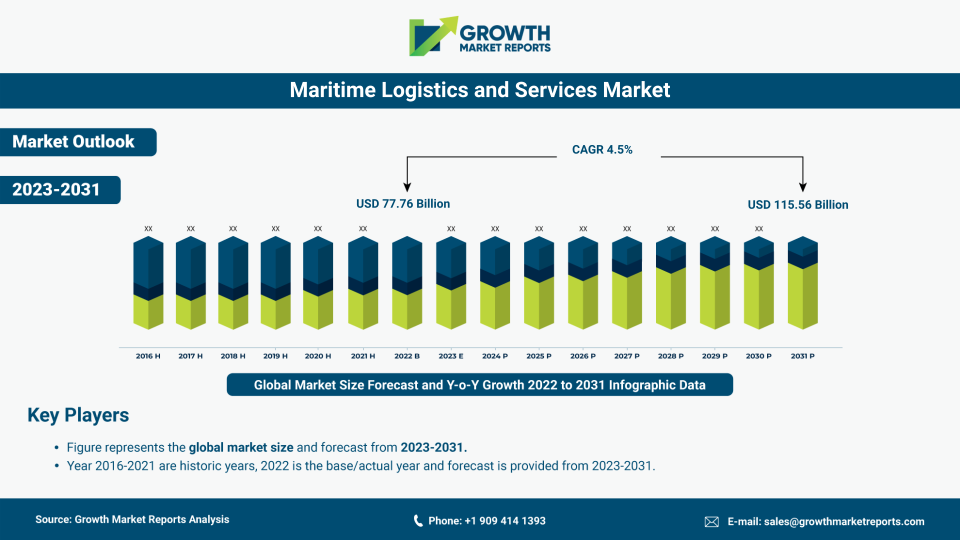
According to our latest research, the global Maritime Logistics and Services market size reached USD 262.0 billion in 2025, establishing this as the base year for the present analysis. The market is expected to grow at a robust CAGR of 5.8% from 2026 to 2034, reaching approximately USD 435.0 billion by the end of 2034. The market's sustained expansion is being propelled by the accelerating globalization of trade, deepening digitalization across shipping and port operations, and the growing demand for efficient, resilient supply chain solutions across multiple industries worldwide.

Global Maritime Logistics and Services Market Size Forecast 2025-2034, USD Billion

One of the primary growth factors driving the Maritime Logistics and Services market is the rapid expansion of global trade volumes. As international commerce continues to surge, there is a corresponding increase in the movement of goods across borders via maritime routes. Modern economies rely heavily on maritime logistics for the transportation of raw materials, finished products, and energy resources, making this sector a critical enabler of global commerce. The integration of advanced technologies such as the Internet of Things (IoT), blockchain, and artificial intelligence is streamlining operations, enhancing transparency, and reducing costs, which further boosts the market's attractiveness for both service providers and end-users. Purpose-built maritime logistics software platforms are at the center of this transformation, automating documentation workflows, enabling predictive vessel scheduling, and providing end-to-end cargo visibility.

Another significant driver is the growing emphasis on sustainability and environmental regulations within the maritime industry. The adoption of green logistics practices, such as the use of cleaner and alternative fuels, optimization of shipping routes, and implementation of energy-efficient port operations, is transforming the industry landscape. Regulatory bodies across the globe, led by the International Maritime Organization, are imposing stricter emission standards and encouraging the adoption of eco-friendly solutions, which in turn is fostering innovation and investment in sustainable maritime logistics and services. This transition towards greener operations not only helps companies comply with regulations but also enhances their brand value and competitive positioning in the market.

Additionally, the increasing complexity of global supply chains is necessitating the adoption of integrated logistics solutions. Companies are seeking end-to-end visibility, real-time tracking, and seamless coordination among various stakeholders to ensure the timely and secure movement of goods. The rise of e-commerce and omni-channel distribution models has further elevated the importance of efficient maritime logistics and services. As businesses strive to meet customer expectations for faster deliveries and greater flexibility, they are increasingly turning to specialized service providers capable of offering customized solutions that address their unique logistical challenges. The parallel growth of offshore logistics is also creating incremental demand, particularly in support of deepwater energy exploration and production activities.

From a regional perspective, Asia Pacific continues to dominate the Maritime Logistics and Services market, accounting for approximately 40.5% of the total market share in 2025, with a market value of around USD 106.1 billion. The region's prominence is attributed to its extensive manufacturing base, rapidly growing economies, and significant investments in port infrastructure. North America and Europe also represent substantial markets, supported by advanced logistics networks and strong regulatory frameworks. Meanwhile, emerging markets in Latin America and the Middle East & Africa are witnessing accelerated growth, underpinned by strategic initiatives to enhance trade connectivity and modernize maritime infrastructure. The interplay of these regional dynamics is shaping the global competitive landscape and offering new growth avenues for market participants throughout the 2026-2034 forecast period.

Service Type Analysis

The Maritime Logistics and Services market is segmented by service type into Freight Forwarding, Warehousing, Ship Management, Port Services, Supply Chain Management, and Others. Freight forwarding remains the backbone of the maritime logistics ecosystem, commanding approximately 32.5% of the market in 2025. It facilitates the movement of goods across international borders by coordinating with carriers, customs authorities, and other stakeholders. The increasing complexity of trade regulations and the need for efficient customs clearance processes have made freight forwarding services indispensable for exporters and importers alike. Digital freight forwarding platforms are gaining strong traction in 2025, enabling real-time tracking, automated documentation, and enhanced transparency, thus improving overall customer experience and operational efficiency.

Maritime Logistics and Services Market Share by Service Type 2025

Warehousing plays a pivotal role in the storage and distribution of goods within the maritime logistics chain, accounting for around 18.0% of market revenue in 2025. Demand for advanced warehousing solutions has surged, driven by the need for inventory optimization, value-added services, and rapid order fulfillment. Modern warehouses are increasingly equipped with automation technologies such as robotics, automated guided vehicles (AGVs), and warehouse management systems (WMS) to streamline operations and reduce turnaround times. The integration of temperature-controlled storage facilities has also become essential, particularly for the food, beverages, and pharmaceuticals sectors, which require stringent quality control throughout the logistics process.

Ship management encompasses a wide range of services, including vessel maintenance, crew management, safety compliance, and insurance. This segment holds approximately 14.5% of the market in 2025. With the growing size and complexity of global shipping fleets, ship management companies are investing heavily in digital solutions to monitor vessel performance, optimize fuel consumption, and ensure regulatory compliance. The adoption of predictive maintenance and remote monitoring technologies is reducing operational risks and minimizing downtime, thereby enhancing the reliability and profitability of maritime transport services. The increasing focus on crew welfare and training is also contributing to safer and more efficient vessel operations across all major shipping lanes.

Port services represent the second-largest segment at around 20.0% of the market in 2025, encompassing activities such as cargo handling, berth management, pilotage, and towage. The modernization of port infrastructure, coupled with the implementation of smart port technologies, is driving significant improvements in operational efficiency and throughput capacity. Ports are leveraging data analytics, IoT sensors, and automation to optimize resource allocation, minimize congestion, and enhance safety. The development of deep-water ports and multi-modal logistics hubs is further strengthening the connectivity between maritime and inland transport networks, supporting the seamless movement of goods across regions.

Supply chain management services, holding roughly 10.5% of the market in 2025, are gaining prominence as companies seek end-to-end visibility and control over their logistics operations. Integrated supply chain solutions enable real-time monitoring of shipments, proactive risk management, and data-driven decision-making. The adoption of cloud-based platforms and blockchain technology is enhancing transparency, reducing fraud, and improving collaboration among supply chain partners. As the demand for customized and flexible logistics solutions grows, service providers are expanding their portfolios to include value-added services such as reverse logistics, order fulfillment, and last-mile delivery. The broader freight and logistics industry is increasingly converging around these integrated models as a standard competitive requirement.

Report Scope

Attributes Details
Report Title Maritime Logistics and Services Market Research Report 2034
By Service Type Freight Forwarding, Warehousing, Ship Management, Port Services, Supply Chain Management, Others
By Mode Of Transport Sea, Inland Waterways, Coastal
By End-User Oil & Gas, Manufacturing, Automotive, Food & Beverages, Chemicals, Retail, Others
By Application Import, Export, Domestic
Regions Covered North America, Europe, APAC, Latin America, MEA
Base Year 2025
Historic Data 2019-2024
Forecast Period 2026-2034
Number of Pages 270
Number of Tables & Figures 257
Customization Available Yes, the report can be customized as per your need.

Mode of Transport Analysis

The Maritime Logistics and Services market is segmented by mode of transport into Sea, Inland Waterways, and Coastal transportation. Sea transport remains the dominant mode, accounting for the majority of global trade volumes in 2025. The ability to carry large quantities of goods over long distances at relatively low unit costs makes sea transport the preferred choice for bulk commodities, containerized cargo, and energy resources. The ongoing expansion of the global container fleet, coupled with investments in larger and more fuel-efficient ultra-large container vessels, is enhancing the capacity and sustainability of sea transport. The adoption of digital shipping platforms is streamlining booking, documentation, and cargo tracking processes, further improving the efficiency of sea-based logistics throughout the 2026-2034 forecast period.

Inland waterways offer a cost-effective and environmentally friendly alternative for the transportation of goods within countries and regions. This mode is particularly significant in areas with extensive river networks, such as Europe, North America, and parts of Asia. Inland waterway transport is well-suited for bulk cargo, including agricultural products, minerals, and construction materials. Governments are investing in the modernization of inland ports, dredging of rivers, and development of multi-modal logistics corridors to enhance the competitiveness of this transport mode. The integration of inland waterways with sea and rail networks is facilitating the seamless movement of goods across different transport modes, reducing overall logistics costs and environmental impact.

Coastal shipping serves as a vital link between major ports and regional trade centers, supporting the efficient distribution of goods along coastlines. This mode is gaining popularity due to its ability to alleviate congestion on road and rail networks, reduce carbon emissions, and provide flexible shipping options for short-haul routes. Coastal shipping is particularly relevant for countries with long coastlines and dense population centers, such as India, China, and the United States. Dedicated coastal shipping policies, infrastructure subsidies, and port investment programs are encouraging greater adoption of this mode, contributing to the overall growth of the maritime logistics market.

The interplay between these transport modes is shaping the future of maritime logistics, as companies seek to optimize their supply chains through multi-modal solutions. The integration of sea, inland waterways, and coastal shipping enables the efficient movement of goods from point of origin to final destination, leveraging the strengths of each mode. Advanced logistics management systems and real-time data analytics are facilitating the coordination of multi-modal operations, ensuring timely deliveries and reducing operational bottlenecks. Companies offering combined sea-air logistics solutions are also gaining traction for time-critical, high-value cargo that requires flexibility across transport modes.

Furthermore, the adoption of digital technologies is transforming the operational landscape across all modes of transport. The use of electronic documentation, automated scheduling, and predictive analytics is enhancing the visibility and reliability of maritime logistics operations. Companies that invest in digital transformation and embrace innovative transport solutions are well-positioned to capitalize on emerging opportunities and gain a competitive edge in the dynamic maritime logistics market through 2034.

End-User Analysis

The Maritime Logistics and Services market caters to a diverse range of end-users, including Oil & Gas, Manufacturing, Automotive, Food & Beverages, Chemicals, Retail, and Others. The oil & gas sector remains one of the largest consumers of maritime logistics services in 2025, relying on specialized vessels for the transportation of crude oil, liquefied natural gas (LNG), and refined products. The complexity of global energy supply chains, coupled with the need for stringent safety and environmental compliance, drives the demand for advanced logistics solutions tailored to the unique requirements of this industry. The ongoing expansion of offshore exploration and production activities continues to boost demand, including for dedicated offshore support logistics spanning supply vessels, crew transfer operations, and subsea equipment handling.

Manufacturing and automotive industries are also significant contributors to market growth, leveraging maritime logistics for the import and export of raw materials, components, and finished goods. The globalization of manufacturing operations and the continued prevalence of just-in-time production models have heightened the importance of reliable and efficient logistics services. Automotive manufacturers depend on maritime transport to move vehicles and parts across global supply chains, ensuring timely deliveries to assembly plants and dealerships. The increasing adoption of automation and digitalization in manufacturing is driving demand for integrated logistics solutions that offer real-time visibility and supply chain control throughout the forecast period.

The food & beverages and chemicals sectors require specialized logistics solutions to ensure the safe and timely transport of perishable and hazardous goods. Temperature-controlled shipping, secure packaging, and compliance with international safety standards are critical considerations for these industries. Maritime logistics providers are investing in advanced technologies, such as refrigerated containers and real-time environmental monitoring systems, to meet the stringent requirements of food and chemical shipments. The growing demand for imported food products and the expansion of global chemical trade are contributing to the sustained growth of the maritime logistics market in these segments across the 2026-2034 forecast horizon.

Retail is one of the fastest-growing end-user segments in 2025, driven by the continued proliferation of e-commerce and omni-channel distribution models. Retailers are increasingly relying on maritime logistics services to source products from international suppliers and distribute them to customers across multiple geographies. The need for fast, flexible, and cost-effective logistics solutions is prompting retailers to partner with specialized service providers that offer end-to-end supply chain management, including order fulfillment, last-mile delivery, and returns management. Digital platforms and data analytics are enabling retailers to optimize inventory levels, reduce lead times, and improve customer satisfaction.

Other end-users, such as pharmaceuticals, electronics, and construction, are also driving demand for maritime logistics and services. These industries require tailored solutions to address unique challenges including regulatory compliance, product security, and time-sensitive deliveries. As the complexity of global supply chains continues to increase, the role of maritime logistics providers in supporting the diverse needs of end-users will become even more critical, driving innovation and growth in the market through 2034.

Application Analysis

The Maritime Logistics and Services market is segmented by application into Import, Export, and Domestic logistics. Import logistics accounts for a significant share of the market in 2025, as companies source raw materials, components, and finished products from international suppliers to meet domestic demand. Efficient import logistics solutions are essential for minimizing lead times, reducing costs, and ensuring compliance with customs and regulatory requirements. The adoption of digital customs clearance platforms and automated documentation processes is streamlining import operations, enabling faster and more transparent movement of goods across borders.

Export logistics is equally critical, supporting the movement of goods from domestic producers to international markets. The growth of bilateral and multilateral trade agreements and the expansion of export-oriented manufacturing industries are driving demand for specialized export logistics services. Maritime logistics providers are offering tailored solutions including cargo consolidation, value-added services, and end-to-end supply chain management to help exporters navigate complex trade regulations and access new markets. Real-time tracking and data analytics are enhancing the visibility and reliability of export shipments, reducing the risk of delays and disruptions across major trade corridors.

Domestic logistics refers to the movement of goods within a country's borders, leveraging maritime transport for the distribution of bulk commodities, consumer goods, and industrial products. Coastal shipping and inland waterway transport play a vital role in supporting domestic logistics, particularly in regions with extensive coastlines and river networks. The integration of maritime and land-based transport modes is facilitating the efficient movement of goods from ports to inland destinations, reducing congestion and environmental impact. Governments are investing in multi-modal logistics corridors and smart port infrastructure to enhance the competitiveness of domestic logistics operations throughout the forecast period.

The interplay between import, export, and domestic logistics is shaping the overall efficiency and resilience of global supply chains. Companies are increasingly seeking integrated logistics solutions that offer seamless coordination across all application segments, enabling them to respond quickly to changing market conditions and customer demands. The adoption of advanced logistics management systems, real-time data analytics, and digital platforms is enhancing the agility and flexibility of maritime logistics operations, positioning service providers to capture new growth opportunities in the evolving market landscape through 2034.

Furthermore, the ongoing digital transformation of the maritime logistics sector is enabling greater collaboration and information sharing among stakeholders, improving the overall efficiency and reliability of import, export, and domestic logistics operations. As the complexity of global trade continues to increase, the demand for integrated and technology-driven logistics solutions will remain a key driver of market growth across all application segments.

Opportunities & Threats

The Maritime Logistics and Services market presents a wealth of opportunities for growth and innovation through the 2026-2034 forecast period. One of the most promising areas is the adoption of digital technologies, such as blockchain, IoT, and artificial intelligence, to enhance operational efficiency, transparency, and security. Digitalization enables real-time tracking of shipments, automated documentation, and predictive analytics, reducing operational costs and improving customer satisfaction. The development of smart ports, automated terminals, and digital freight platforms is transforming the way goods are handled, stored, and transported, creating new business models and revenue streams for service providers. Companies that invest in digital transformation and embrace innovative technologies are well-positioned to capitalize on emerging opportunities and gain a competitive edge in the market.

Another significant opportunity lies in the growing emphasis on sustainability and environmental responsibility. The maritime industry is under increasing pressure to reduce its carbon footprint and comply with stringent emission regulations set by the International Maritime Organization and regional bodies. The adoption of green logistics practices, such as the use of alternative fuels including green methanol and ammonia, energy-efficient vessels, and optimized shipping routes, offers substantial benefits in terms of cost savings, regulatory compliance, and brand reputation. The development of eco-friendly port infrastructure and the integration of renewable energy sources are further enhancing the sustainability credentials of maritime logistics operators. As customers and regulators increasingly prioritize environmental performance, companies that lead in sustainability will differentiate themselves and capture new market share.

Despite these opportunities, the Maritime Logistics and Services market faces several challenges and restraining factors. One of the most significant threats is the volatility of global trade patterns, driven by geopolitical tensions, trade disputes, and economic uncertainties. Fluctuations in trade volumes can disrupt supply chains, reduce demand for logistics services, and create operational inefficiencies. The sector is also exposed to risks such as piracy, sophisticated cyberattacks targeting vessel management and port systems, and extreme weather events linked to climate change. Regulatory compliance, particularly with respect to environmental and safety standards, poses ongoing challenges for service providers, requiring sustained investment in technology, training, and infrastructure modernization. Port congestion, crew shortages, and the capital intensity of fleet renewal add further pressure on margins across the forecast horizon.

Regional Outlook

Asia Pacific remains the dominant region in the global Maritime Logistics and Services market, accounting for approximately 40.5% of the total market share in 2025, with a market value of around USD 106.1 billion. The region's leadership is driven by its extensive manufacturing base, rapidly growing economies, and significant investments in port infrastructure and logistics networks. China, Japan, South Korea, and Singapore are key hubs for maritime trade, leveraging their strategic geographic locations and advanced logistics capabilities to facilitate the movement of goods across the globe. The ongoing expansion of e-commerce, Belt and Road Initiative investments, and intra-Asian trade corridors are further boosting demand for maritime logistics services in the region, which is expected to maintain a strong CAGR of approximately 6.3% through 2034.

Maritime Logistics and Services Market Regional Share 2025

North America and Europe also represent substantial markets in 2025, with North America accounting for approximately USD 55.0 billion and Europe contributing around USD 62.9 billion to the global market. These regions benefit from advanced logistics infrastructure, strong regulatory frameworks, and robust trade relationships with major global economies. The United States and Canada are leading markets in North America, supported by large consumer bases, sophisticated supply chains, and ongoing investments in port modernization and near-shoring initiatives. In Europe, countries such as Germany, the Netherlands, and the United Kingdom serve as gateways for international trade, leveraging central locations and efficient multi-modal transport networks to maintain their competitive positions through 2034.

Latin America and the Middle East & Africa are emerging as high-growth regions in the Maritime Logistics and Services market, with combined revenues of approximately USD 38.0 billion in 2025. These regions are witnessing accelerated growth, driven by strategic initiatives to enhance trade connectivity, modernize port infrastructure, and diversify their economies. Brazil, Mexico, and the UAE are leading markets, capitalizing on geographic advantages and growing intra-regional and intercontinental trade volumes. The development of free trade zones, multi-modal logistics corridors, and public-private port investment partnerships is supporting the expansion of maritime logistics services in these regions, offering compelling opportunities for market participants targeting high-growth geographies through the 2026-2034 forecast period.

Competitor Outlook

The competitive landscape of the Maritime Logistics and Services market in 2025 is characterized by a diverse array of global, regional, and local players. Leading companies are focusing on expanding their service portfolios, investing in digital transformation, and advancing their sustainability initiatives to differentiate themselves in an increasingly competitive market. Strategic partnerships, mergers and acquisitions, and geographic expansion are common strategies employed by market leaders to strengthen their positions and capture new growth opportunities. The integration of advanced technologies such as IoT, blockchain, and artificial intelligence is enabling companies to offer innovative solutions that address the evolving needs of customers and improve operational efficiency across all service segments.

Global logistics giants, such as AP Moller-Maersk, MSC, and CMA CGM, dominate the market with their extensive networks, advanced fleets, and comprehensive service offerings. These companies are leveraging their scale and expertise to provide end-to-end logistics solutions encompassing freight forwarding, warehousing, ship management, and supply chain management. The adoption of digital platforms and automation technologies is enabling these market leaders to streamline operations, reduce costs, and enhance customer satisfaction. Regional players, by contrast, are focusing on niche markets and specialized services, leveraging local knowledge and relationships to deliver tailored solutions to specific customer segments across their home geographies.

Innovation and sustainability are emerging as the key differentiators in the competitive landscape through 2034. Companies that invest in green logistics practices, such as the deployment of alternative-fuel vessels, shore power adoption at ports, and carbon-neutral shipping corridors, are gaining a competitive edge by meeting growing demand for sustainable logistics solutions. The development of smart port platforms and digital freight management systems is further enhancing competitiveness, enabling faster, more reliable, and cost-effective services. As the market continues to evolve, the ability to adapt to changing customer needs, tightening regulatory requirements, and rapid technological advancements will be critical for sustained long-term success.

Some of the major companies operating in the Maritime Logistics and Services market include AP Moller-Maersk Group, Mediterranean Shipping Company (MSC), CMA CGM Group, Hapag-Lloyd AG, Evergreen Marine Corporation, COSCO Shipping Lines, Kuehne + Nagel International AG, DSV A/S, DB Schenker, and DHL Global Forwarding. Maersk, the world's largest integrated logistics company, is at the forefront of digital transformation and sustainability, investing in green-methanol vessels, carbon-neutral logistics products, and fully integrated supply chain platforms. MSC and CMA CGM are also expanding their logistics service portfolios aggressively, investing in terminals, air freight, and e-commerce fulfillment to reduce reliance on pure container shipping revenues. Kuehne + Nagel and DSV continue to grow their freight management and contract logistics capabilities through targeted acquisitions and digital platform investments.

These companies are continuously investing in research and development, strategic partnerships, and capacity expansion to maintain their competitive edge in the dynamic Maritime Logistics and Services market. The ongoing consolidation of the industry, driven by mergers and acquisitions, is creating larger and more efficient players capable of serving the complex needs of global customers. As the market grows toward USD 435.0 billion by 2034, the ability to innovate, adapt, and deliver measurable value-added services will remain the defining factor for both established players and new entrants competing in the Maritime Logistics and Services market.

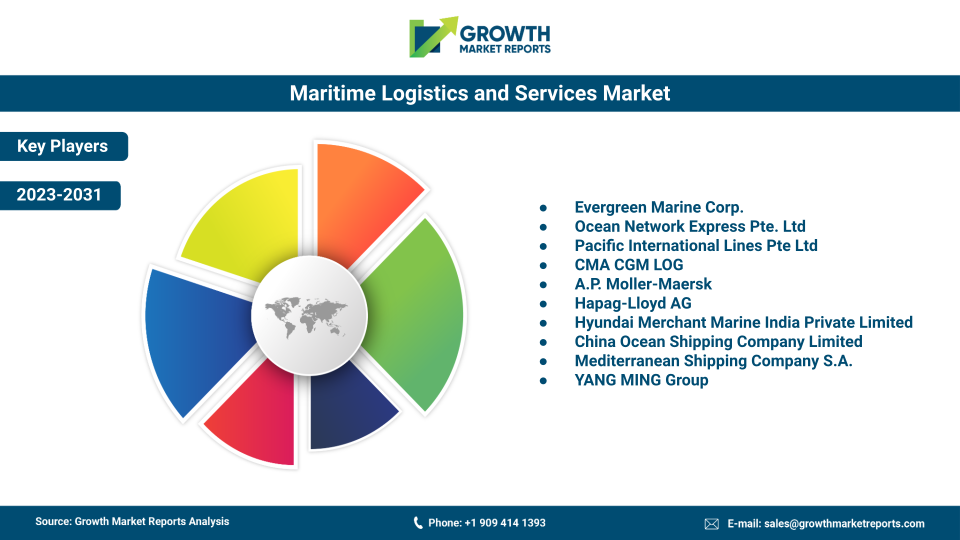
Key Players

  • AP Moller-Maersk Group
  • Mediterranean Shipping Company (MSC)
  • CMA CGM Group
  • Hapag-Lloyd AG
  • Evergreen Marine Corporation
  • COSCO Shipping Lines
  • ONE (Ocean Network Express)
  • Yang Ming Marine Transport Corporation
  • HMM Co., Ltd. (Hyundai Merchant Marine)
  • Kuehne + Nagel International AG
  • Nippon Yusen Kabushiki Kaisha (NYK Line)
  • Mitsui O.S.K. Lines (MOL)
  • ZIM Integrated Shipping Services
  • Pacific International Lines (PIL)
  • Crowley Maritime Corporation
  • Wallenius Wilhelmsen Ocean
  • Sinotrans Limited
  • DSV A/S
  • DB Schenker
  • DHL Global Forwarding

Segments

The Maritime Logistics and Services market has been segmented on the basis of

Service Type

  • Freight Forwarding
  • Warehousing
  • Ship Management
  • Port Services
  • Supply Chain Management
  • Others

Mode Of Transport

  • Sea
  • Inland Waterways
  • Coastal

End-User

  • Oil & Gas
  • Manufacturing
  • Automotive
  • Food & Beverages
  • Chemicals
  • Retail
  • Others

Application

  • Import
  • Export
  • Domestic

Frequently Asked Questions

The market faces a range of structural and cyclical risks through the 2026-2034 forecast period. Geopolitical tensions, including trade disputes, sanctions, and regional conflicts, can abruptly disrupt established shipping lanes and reduce demand. Port congestion and infrastructure bottlenecks remain persistent operational challenges, particularly in high-growth emerging markets. The sector is increasingly exposed to sophisticated cyberattacks targeting vessel management and port systems. Environmental compliance costs are rising sharply as emission regulations tighten. Volatile fuel prices, crew shortages, and the capital intensity of fleet renewal add further pressure on margins. Developments in sea-air logistics and modal competition may also shift freight away from pure maritime routes for certain high-value cargo categories.

The market is led by global shipping and logistics conglomerates including AP Moller-Maersk Group, Mediterranean Shipping Company, CMA CGM Group, and Hapag-Lloyd AG. These carriers are complemented by integrated forwarders and supply chain specialists such as Kuehne + Nagel, DSV, DB Schenker, and DHL Global Forwarding. Japanese lines including NYK Line and Mitsui O.S.K. Lines hold strong positions in specialized cargo and car carrier segments. ZIM Integrated Shipping Services and Evergreen Marine Corporation are active in containerized trade, while COSCO Shipping Lines and Sinotrans dominate Chinese and intra-Asian corridors. Crowley Maritime and Wallenius Wilhelmsen Ocean serve niche segments in the Americas and automotive logistics respectively.

The three core modes are Sea, Inland Waterways, and Coastal shipping. Sea transport is dominant, handling the vast majority of international trade volumes by weight and value, and continues to benefit from fleet expansion and larger ultra-large container vessel deployments. Inland waterways provide a low-cost, low-emission alternative for bulk freight in regions such as Europe, North America, and China, and are increasingly integrated with multi-modal logistics corridors. Coastal shipping is gaining momentum as countries seek to ease road congestion and cut emissions, with dedicated policy support in India, China, and the United States supporting modal shift initiatives through the forecast period.

The Oil & Gas sector remains the single largest end-user, relying on specialized tankers and offshore support vessels for the movement of crude oil, LNG, and refined products. Manufacturing and Automotive industries are the next largest segments, leveraging maritime routes for just-in-time component sourcing and finished vehicle exports. Food & Beverages and Chemicals require specialized reefer and hazardous-cargo solutions respectively. Retail is one of the fastest-growing end-user segments due to e-commerce growth, while Pharmaceuticals, Electronics, and Construction are also increasing their reliance on dedicated maritime logistics capabilities.

Sustainability is a defining theme for the 2025-2034 period. The International Maritime Organization's targets to reduce greenhouse gas emissions are prompting rapid adoption of alternative fuels including ammonia, methanol, and liquefied natural gas. Major carriers such as Maersk and CMA CGM have committed to carbon-neutral shipping corridors and are investing in green-methanol-powered vessels. Port operators are integrating shore power systems and renewable energy sources to reduce idle emissions. The broader freight and logistics ecosystem is aligning around ESG reporting frameworks, and sustainable logistics credentials are increasingly influencing shipper procurement decisions.

Digitalization is fundamentally transforming maritime logistics across all service types and transport modes. The deployment of maritime logistics software platforms is enabling real-time shipment tracking, automated customs documentation, and AI-driven route optimization. Blockchain-based solutions are improving transparency and reducing fraud in supply chain transactions. Smart port technologies, including IoT sensors, automated cranes, and predictive analytics, are cutting vessel turnaround times and improving berth utilization. By 2034, digitalization is expected to be a primary competitive differentiator, with industry leaders investing heavily in cloud platforms, digital twin technology, and automated freight management systems.

The market is segmented into Freight Forwarding, Port Services, Warehousing, Ship Management, Supply Chain Management, and Others. Freight Forwarding is the largest segment, commanding approximately 32.5% of the market in 2025, owing to its central role in coordinating international shipments, customs compliance, and documentation. Port Services holds the second-largest share at around 20%, reflecting ongoing investments in smart port technologies and terminal automation. Warehousing, Ship Management, and Supply Chain Management collectively represent significant and fast-growing portions of the overall market.

Asia Pacific leads the global market with approximately 40.5% share in 2025, valued at around USD 106.1 billion, driven by the region's dominant manufacturing base, dense port networks, and continued infrastructure investment. Europe holds the second-largest share at roughly 24%, followed by North America at 21%. Latin America and the Middle East & Africa together account for about 14.5% of the market, with both regions growing rapidly thanks to port modernization programs, free trade zone development, and rising intra-regional trade volumes.

Key growth drivers include the accelerating globalization of trade, rapid adoption of digital technologies such as IoT, blockchain, and AI, and the increasing complexity of global supply chains. The surge in e-commerce has amplified demand for reliable import and export logistics. Stricter environmental regulations are also spurring investment in greener fleets and port operations, while government-backed infrastructure programs in Asia, the Middle East, and Latin America are expanding capacity and boosting service demand through the 2026-2034 forecast period.

The global Maritime Logistics and Services market reached USD 262.0 billion in 2025, the base year for this report. Growing at a CAGR of 5.8% from 2026 to 2034, the market is projected to reach approximately USD 435.0 billion by the end of 2034. This growth is underpinned by expanding global trade volumes, deepening digital integration across shipping operations, and rising demand for end-to-end supply chain solutions across multiple industries worldwide.

Table Of Content

Chapter 1 Executive Summary
Chapter 2 Assumptions and Acronyms Used
Chapter 3 Research Methodology
Chapter 4 Maritime Logistics and Services Market Overview
   4.1 Introduction
      4.1.1 Market Taxonomy
      4.1.2 Market Definition
      4.1.3 Macro-Economic Factors Impacting the Market Growth
   4.2 Maritime Logistics and Services Market Dynamics
      4.2.1 Market Drivers
      4.2.2 Market Restraints
      4.2.3 Market Opportunity
   4.3 Maritime Logistics and Services Market - Supply Chain Analysis
      4.3.1 List of Key Suppliers
      4.3.2 List of Key Distributors
      4.3.3 List of Key Consumers
   4.4 Key Forces Shaping the Maritime Logistics and Services Market
      4.4.1 Bargaining Power of Suppliers
      4.4.2 Bargaining Power of Buyers
      4.4.3 Threat of Substitution
      4.4.4 Threat of New Entrants
      4.4.5 Competitive Rivalry
   4.5 Global Maritime Logistics and Services Market Size & Forecast, 2023-2032
      4.5.1 Maritime Logistics and Services Market Size and Y-o-Y Growth
      4.5.2 Maritime Logistics and Services Market Absolute $ Opportunity

Chapter 5 Global Maritime Logistics and Services Market Analysis and Forecast By Service Type
   5.1 Introduction
      5.1.1 Key Market Trends & Growth Opportunities By Service Type
      5.1.2 Basis Point Share (BPS) Analysis By Service Type
      5.1.3 Absolute $ Opportunity Assessment By Service Type
   5.2 Maritime Logistics and Services Market Size Forecast By Service Type
      5.2.1 Freight Forwarding
      5.2.2 Warehousing
      5.2.3 Ship Management
      5.2.4 Port Services
      5.2.5 Supply Chain Management
      5.2.6 Others
   5.3 Market Attractiveness Analysis By Service Type

Chapter 6 Global Maritime Logistics and Services Market Analysis and Forecast By Mode Of Transport
   6.1 Introduction
      6.1.1 Key Market Trends & Growth Opportunities By Mode Of Transport
      6.1.2 Basis Point Share (BPS) Analysis By Mode Of Transport
      6.1.3 Absolute $ Opportunity Assessment By Mode Of Transport
   6.2 Maritime Logistics and Services Market Size Forecast By Mode Of Transport
      6.2.1 Sea
      6.2.2 Inland Waterways
      6.2.3 Coastal
   6.3 Market Attractiveness Analysis By Mode Of Transport

Chapter 7 Global Maritime Logistics and Services Market Analysis and Forecast By End-User
   7.1 Introduction
      7.1.1 Key Market Trends & Growth Opportunities By End-User
      7.1.2 Basis Point Share (BPS) Analysis By End-User
      7.1.3 Absolute $ Opportunity Assessment By End-User
   7.2 Maritime Logistics and Services Market Size Forecast By End-User
      7.2.1 Oil & Gas
      7.2.2 Manufacturing
      7.2.3 Automotive
      7.2.4 Food & Beverages
      7.2.5 Chemicals
      7.2.6 Retail
      7.2.7 Others
   7.3 Market Attractiveness Analysis By End-User

Chapter 8 Global Maritime Logistics and Services Market Analysis and Forecast By Application
   8.1 Introduction
      8.1.1 Key Market Trends & Growth Opportunities By Application
      8.1.2 Basis Point Share (BPS) Analysis By Application
      8.1.3 Absolute $ Opportunity Assessment By Application
   8.2 Maritime Logistics and Services Market Size Forecast By Application
      8.2.1 Import
      8.2.2 Export
      8.2.3 Domestic
   8.3 Market Attractiveness Analysis By Application

Chapter 9 Global Maritime Logistics and Services Market Analysis and Forecast by Region
   9.1 Introduction
      9.1.1 Key Market Trends & Growth Opportunities By Region
      9.1.2 Basis Point Share (BPS) Analysis By Region
      9.1.3 Absolute $ Opportunity Assessment By Region
   9.2 Maritime Logistics and Services Market Size Forecast By Region
      9.2.1 North America
      9.2.2 Europe
      9.2.3 Asia Pacific
      9.2.4 Latin America
      9.2.5 Middle East & Africa (MEA)
   9.3 Market Attractiveness Analysis By Region

Chapter 10 Coronavirus Disease (COVID-19) Impact 
   10.1 Introduction 
   10.2 Current & Future Impact Analysis 
   10.3 Economic Impact Analysis 
   10.4 Government Policies 
   10.5 Investment Scenario

Chapter 11 North America Maritime Logistics and Services Analysis and Forecast
   11.1 Introduction
   11.2 North America Maritime Logistics and Services Market Size Forecast by Country
      11.2.1 U.S.
      11.2.2 Canada
   11.3 Basis Point Share (BPS) Analysis by Country
   11.4 Absolute $ Opportunity Assessment by Country
   11.5 Market Attractiveness Analysis by Country
   11.6 North America Maritime Logistics and Services Market Size Forecast By Service Type
      11.6.1 Freight Forwarding
      11.6.2 Warehousing
      11.6.3 Ship Management
      11.6.4 Port Services
      11.6.5 Supply Chain Management
      11.6.6 Others
   11.7 Basis Point Share (BPS) Analysis By Service Type 
   11.8 Absolute $ Opportunity Assessment By Service Type 
   11.9 Market Attractiveness Analysis By Service Type
   11.10 North America Maritime Logistics and Services Market Size Forecast By Mode Of Transport
      11.10.1 Sea
      11.10.2 Inland Waterways
      11.10.3 Coastal
   11.11 Basis Point Share (BPS) Analysis By Mode Of Transport 
   11.12 Absolute $ Opportunity Assessment By Mode Of Transport 
   11.13 Market Attractiveness Analysis By Mode Of Transport
   11.14 North America Maritime Logistics and Services Market Size Forecast By End-User
      11.14.1 Oil & Gas
      11.14.2 Manufacturing
      11.14.3 Automotive
      11.14.4 Food & Beverages
      11.14.5 Chemicals
      11.14.6 Retail
      11.14.7 Others
   11.15 Basis Point Share (BPS) Analysis By End-User 
   11.16 Absolute $ Opportunity Assessment By End-User 
   11.17 Market Attractiveness Analysis By End-User
   11.18 North America Maritime Logistics and Services Market Size Forecast By Application
      11.18.1 Import
      11.18.2 Export
      11.18.3 Domestic
   11.19 Basis Point Share (BPS) Analysis By Application 
   11.20 Absolute $ Opportunity Assessment By Application 
   11.21 Market Attractiveness Analysis By Application

Chapter 12 Europe Maritime Logistics and Services Analysis and Forecast
   12.1 Introduction
   12.2 Europe Maritime Logistics and Services Market Size Forecast by Country
      12.2.1 Germany
      12.2.2 France
      12.2.3 Italy
      12.2.4 U.K.
      12.2.5 Spain
      12.2.6 Russia
      12.2.7 Rest of Europe
   12.3 Basis Point Share (BPS) Analysis by Country
   12.4 Absolute $ Opportunity Assessment by Country
   12.5 Market Attractiveness Analysis by Country
   12.6 Europe Maritime Logistics and Services Market Size Forecast By Service Type
      12.6.1 Freight Forwarding
      12.6.2 Warehousing
      12.6.3 Ship Management
      12.6.4 Port Services
      12.6.5 Supply Chain Management
      12.6.6 Others
   12.7 Basis Point Share (BPS) Analysis By Service Type 
   12.8 Absolute $ Opportunity Assessment By Service Type 
   12.9 Market Attractiveness Analysis By Service Type
   12.10 Europe Maritime Logistics and Services Market Size Forecast By Mode Of Transport
      12.10.1 Sea
      12.10.2 Inland Waterways
      12.10.3 Coastal
   12.11 Basis Point Share (BPS) Analysis By Mode Of Transport 
   12.12 Absolute $ Opportunity Assessment By Mode Of Transport 
   12.13 Market Attractiveness Analysis By Mode Of Transport
   12.14 Europe Maritime Logistics and Services Market Size Forecast By End-User
      12.14.1 Oil & Gas
      12.14.2 Manufacturing
      12.14.3 Automotive
      12.14.4 Food & Beverages
      12.14.5 Chemicals
      12.14.6 Retail
      12.14.7 Others
   12.15 Basis Point Share (BPS) Analysis By End-User 
   12.16 Absolute $ Opportunity Assessment By End-User 
   12.17 Market Attractiveness Analysis By End-User
   12.18 Europe Maritime Logistics and Services Market Size Forecast By Application
      12.18.1 Import
      12.18.2 Export
      12.18.3 Domestic
   12.19 Basis Point Share (BPS) Analysis By Application 
   12.20 Absolute $ Opportunity Assessment By Application 
   12.21 Market Attractiveness Analysis By Application

Chapter 13 Asia Pacific Maritime Logistics and Services Analysis and Forecast
   13.1 Introduction
   13.2 Asia Pacific Maritime Logistics and Services Market Size Forecast by Country
      13.2.1 China
      13.2.2 Japan
      13.2.3 South Korea
      13.2.4 India
      13.2.5 Australia
      13.2.6 South East Asia (SEA)
      13.2.7 Rest of Asia Pacific (APAC)
   13.3 Basis Point Share (BPS) Analysis by Country
   13.4 Absolute $ Opportunity Assessment by Country
   13.5 Market Attractiveness Analysis by Country
   13.6 Asia Pacific Maritime Logistics and Services Market Size Forecast By Service Type
      13.6.1 Freight Forwarding
      13.6.2 Warehousing
      13.6.3 Ship Management
      13.6.4 Port Services
      13.6.5 Supply Chain Management
      13.6.6 Others
   13.7 Basis Point Share (BPS) Analysis By Service Type 
   13.8 Absolute $ Opportunity Assessment By Service Type 
   13.9 Market Attractiveness Analysis By Service Type
   13.10 Asia Pacific Maritime Logistics and Services Market Size Forecast By Mode Of Transport
      13.10.1 Sea
      13.10.2 Inland Waterways
      13.10.3 Coastal
   13.11 Basis Point Share (BPS) Analysis By Mode Of Transport 
   13.12 Absolute $ Opportunity Assessment By Mode Of Transport 
   13.13 Market Attractiveness Analysis By Mode Of Transport
   13.14 Asia Pacific Maritime Logistics and Services Market Size Forecast By End-User
      13.14.1 Oil & Gas
      13.14.2 Manufacturing
      13.14.3 Automotive
      13.14.4 Food & Beverages
      13.14.5 Chemicals
      13.14.6 Retail
      13.14.7 Others
   13.15 Basis Point Share (BPS) Analysis By End-User 
   13.16 Absolute $ Opportunity Assessment By End-User 
   13.17 Market Attractiveness Analysis By End-User
   13.18 Asia Pacific Maritime Logistics and Services Market Size Forecast By Application
      13.18.1 Import
      13.18.2 Export
      13.18.3 Domestic
   13.19 Basis Point Share (BPS) Analysis By Application 
   13.20 Absolute $ Opportunity Assessment By Application 
   13.21 Market Attractiveness Analysis By Application

Chapter 14 Latin America Maritime Logistics and Services Analysis and Forecast
   14.1 Introduction
   14.2 Latin America Maritime Logistics and Services Market Size Forecast by Country
      14.2.1 Brazil
      14.2.2 Mexico
      14.2.3 Rest of Latin America (LATAM)
   14.3 Basis Point Share (BPS) Analysis by Country
   14.4 Absolute $ Opportunity Assessment by Country
   14.5 Market Attractiveness Analysis by Country
   14.6 Latin America Maritime Logistics and Services Market Size Forecast By Service Type
      14.6.1 Freight Forwarding
      14.6.2 Warehousing
      14.6.3 Ship Management
      14.6.4 Port Services
      14.6.5 Supply Chain Management
      14.6.6 Others
   14.7 Basis Point Share (BPS) Analysis By Service Type 
   14.8 Absolute $ Opportunity Assessment By Service Type 
   14.9 Market Attractiveness Analysis By Service Type
   14.10 Latin America Maritime Logistics and Services Market Size Forecast By Mode Of Transport
      14.10.1 Sea
      14.10.2 Inland Waterways
      14.10.3 Coastal
   14.11 Basis Point Share (BPS) Analysis By Mode Of Transport 
   14.12 Absolute $ Opportunity Assessment By Mode Of Transport 
   14.13 Market Attractiveness Analysis By Mode Of Transport
   14.14 Latin America Maritime Logistics and Services Market Size Forecast By End-User
      14.14.1 Oil & Gas
      14.14.2 Manufacturing
      14.14.3 Automotive
      14.14.4 Food & Beverages
      14.14.5 Chemicals
      14.14.6 Retail
      14.14.7 Others
   14.15 Basis Point Share (BPS) Analysis By End-User 
   14.16 Absolute $ Opportunity Assessment By End-User 
   14.17 Market Attractiveness Analysis By End-User
   14.18 Latin America Maritime Logistics and Services Market Size Forecast By Application
      14.18.1 Import
      14.18.2 Export
      14.18.3 Domestic
   14.19 Basis Point Share (BPS) Analysis By Application 
   14.20 Absolute $ Opportunity Assessment By Application 
   14.21 Market Attractiveness Analysis By Application

Chapter 15 Middle East & Africa (MEA) Maritime Logistics and Services Analysis and Forecast
   15.1 Introduction
   15.2 Middle East & Africa (MEA) Maritime Logistics and Services Market Size Forecast by Country
      15.2.1 Saudi Arabia
      15.2.2 South Africa
      15.2.3 UAE
      15.2.4 Rest of Middle East & Africa (MEA)
   15.3 Basis Point Share (BPS) Analysis by Country
   15.4 Absolute $ Opportunity Assessment by Country
   15.5 Market Attractiveness Analysis by Country
   15.6 Middle East & Africa (MEA) Maritime Logistics and Services Market Size Forecast By Service Type
      15.6.1 Freight Forwarding
      15.6.2 Warehousing
      15.6.3 Ship Management
      15.6.4 Port Services
      15.6.5 Supply Chain Management
      15.6.6 Others
   15.7 Basis Point Share (BPS) Analysis By Service Type 
   15.8 Absolute $ Opportunity Assessment By Service Type 
   15.9 Market Attractiveness Analysis By Service Type
   15.10 Middle East & Africa (MEA) Maritime Logistics and Services Market Size Forecast By Mode Of Transport
      15.10.1 Sea
      15.10.2 Inland Waterways
      15.10.3 Coastal
   15.11 Basis Point Share (BPS) Analysis By Mode Of Transport 
   15.12 Absolute $ Opportunity Assessment By Mode Of Transport 
   15.13 Market Attractiveness Analysis By Mode Of Transport
   15.14 Middle East & Africa (MEA) Maritime Logistics and Services Market Size Forecast By End-User
      15.14.1 Oil & Gas
      15.14.2 Manufacturing
      15.14.3 Automotive
      15.14.4 Food & Beverages
      15.14.5 Chemicals
      15.14.6 Retail
      15.14.7 Others
   15.15 Basis Point Share (BPS) Analysis By End-User 
   15.16 Absolute $ Opportunity Assessment By End-User 
   15.17 Market Attractiveness Analysis By End-User
   15.18 Middle East & Africa (MEA) Maritime Logistics and Services Market Size Forecast By Application
      15.18.1 Import
      15.18.2 Export
      15.18.3 Domestic
   15.19 Basis Point Share (BPS) Analysis By Application 
   15.20 Absolute $ Opportunity Assessment By Application 
   15.21 Market Attractiveness Analysis By Application

Chapter 16 Competition Landscape 
   16.1 Maritime Logistics and Services Market: Competitive Dashboard
   16.2 Global Maritime Logistics and Services Market: Market Share Analysis, 2023
   16.3 Company Profiles (Details – Overview, Financials, Developments, Strategy) 
      16.3.1 AP Moller-Maersk Group
      16.3.2 Mediterranean Shipping Company (MSC)
      16.3.3 CMA CGM Group
      16.3.4 Hapag-Lloyd AG
      16.3.5 Evergreen Marine Corporation
      16.3.6 COSCO Shipping Lines
      16.3.7 ONE (Ocean Network Express)
      16.3.8 Yang Ming Marine Transport Corporation
      16.3.9 HMM Co., Ltd. (Hyundai Merchant Marine)
      16.3.10 Kuehne + Nagel International AG
      16.3.11 Nippon Yusen Kabushiki Kaisha (NYK Line)
      16.3.12 Mitsui O.S.K. Lines (MOL)
      16.3.13 ZIM Integrated Shipping Services
      16.3.14 Pacific International Lines (PIL)
      16.3.15 Crowley Maritime Corporation
      16.3.16 Wallenius Wilhelmsen Ocean
      16.3.17 Sinotrans Limited
      16.3.18 DSV A/S
      16.3.19 DB Schenker
      16.3.20 DHL Global Forwarding

Methodology

Our Clients

FedEx Logistics
sinopec
Nestle SA
Honda Motor Co. Ltd.
The John Holland Group
Dassault Aviation
Pfizer
Deloitte