Segments - by Component (Hardware, Software, Services), by Deployment Mode (On-Premises, Cloud-Based, Hybrid), by Organization Size (Small and Medium Enterprises, Large Enterprises), by Channel (Printer/Copier Manufacturers, Independent Software Vendors, System Integrators), by End-User (BFSI, Healthcare, Education, Government, Retail, IT and Telecom, Others)
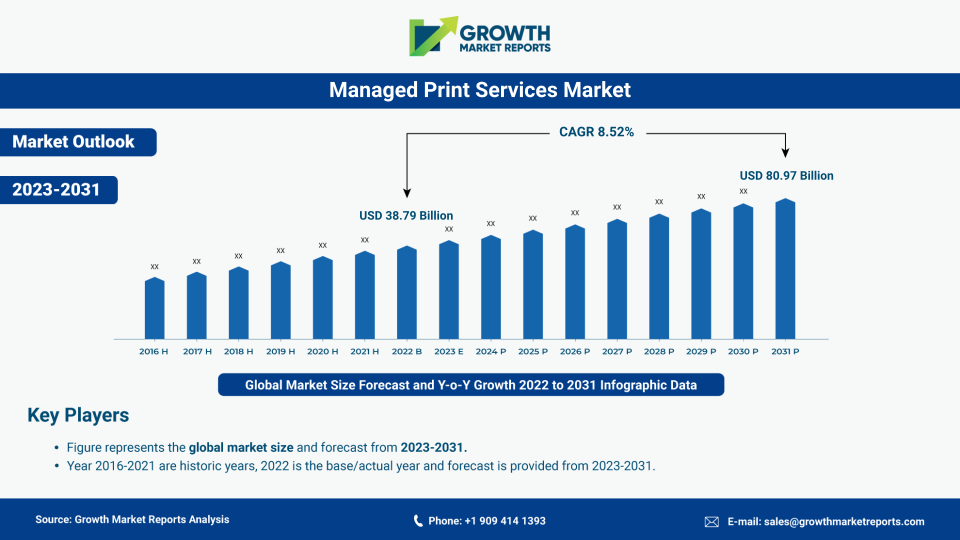
According to our latest research, the global managed print services (MPS) market size reached USD 42.1 billion in 2024, demonstrating robust expansion supported by increasing digital transformation initiatives and cost optimization strategies across enterprises. The market is expected to grow at a CAGR of 8.1% over the forecast period, with the market size projected to reach USD 77.2 billion by 2033. This growth is primarily driven by the rising need for secure document management, the proliferation of cloud-based solutions, and the growing focus on sustainability and workflow efficiency.
One of the primary growth factors for the managed print services market is the increasing demand for cost containment and operational efficiency among enterprises. Organizations are under constant pressure to optimize their print infrastructure, reduce waste, and improve document security. MPS providers offer holistic solutions that include print fleet assessment, device consolidation, and proactive maintenance, resulting in significant cost savings and productivity gains. Furthermore, the integration of analytics and automation tools enables businesses to gain deeper insights into their print environments, further driving the adoption of managed print services as a strategic approach to document management.
Another significant driver of the managed print services market is the rapid adoption of cloud-based and hybrid deployment models. As organizations shift toward remote and hybrid work environments, the need for scalable and flexible print management solutions has intensified. Cloud-based MPS platforms offer centralized control, real-time monitoring, and seamless integration with existing IT infrastructure, making them an attractive option for businesses seeking agility and scalability. Additionally, advancements in data security and compliance protocols have alleviated concerns related to cloud adoption, further accelerating market growth.
Sustainability and environmental considerations are also playing a pivotal role in shaping the managed print services market. Enterprises are increasingly prioritizing eco-friendly practices, such as reducing paper consumption, optimizing energy usage, and implementing recycling programs. MPS providers are responding by offering solutions that promote responsible printing, automate duplex printing, and track environmental impact. These initiatives not only help organizations meet regulatory requirements but also enhance their corporate social responsibility profiles, making managed print services an integral component of sustainability strategies.
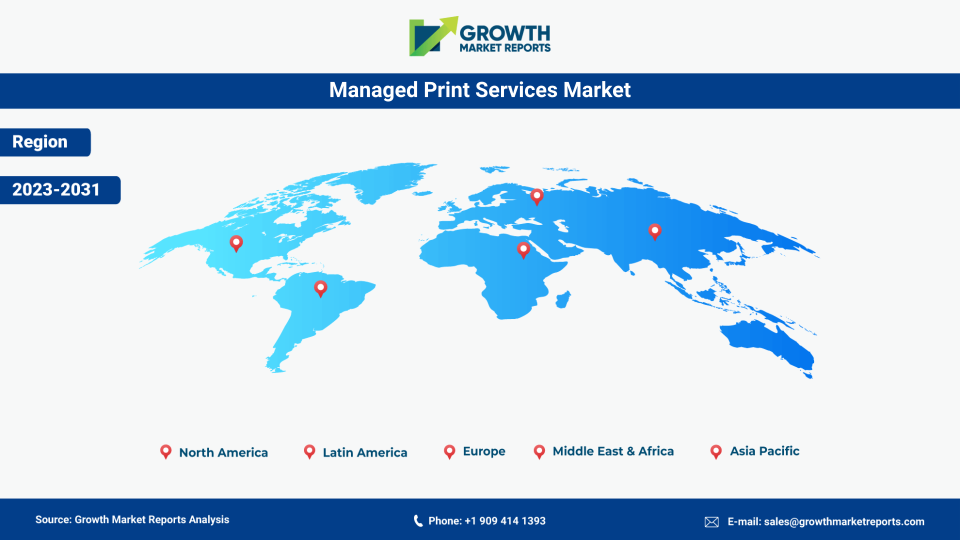
From a regional perspective, North America continues to dominate the managed print services market, accounting for the largest share in 2024 due to the presence of major technology vendors, high adoption of advanced IT solutions, and stringent regulatory standards. However, the Asia Pacific region is witnessing the fastest growth, fueled by rapid digitization, expanding SME sector, and government initiatives aimed at modernizing public infrastructure. Europe is also a significant market, characterized by strong demand from healthcare, BFSI, and education sectors. The Middle East & Africa and Latin America are emerging markets, with increasing investments in IT infrastructure and growing awareness of the benefits of managed print services.
The component segment of the managed print services market is broadly classified into hardware, software, and services. Hardware remains a foundational element, encompassing printers, copiers, multifunction devices, and related peripherals. Despite the growing emphasis on digital workflows, the demand for efficient and reliable hardware persists, particularly in sectors with high document processing needs such as healthcare, government, and education. MPS providers are increasingly focusing on integrating energy-efficient and secure hardware solutions, which not only reduce operational costs but also enhance data protection and device longevity.
Software plays a critical role in the managed print services ecosystem by enabling centralized management, real-time monitoring, and advanced analytics. Print management software solutions facilitate user authentication, print job tracking, and policy enforcement, empowering organizations to maintain control over their print environments. The integration of artificial intelligence and machine learning algorithms is further enhancing the capabilities of MPS software, enabling predictive maintenance, automated supplies replenishment, and intelligent workflow optimization. As organizations continue to prioritize digital transformation, the demand for robust and scalable software solutions is expected to rise significantly.
Services represent the most dynamic component of the managed print services market, encompassing consulting, implementation, maintenance, and support. MPS providers offer comprehensive service packages tailored to the unique needs of each organization, including print fleet assessment, device consolidation, workflow optimization, and ongoing technical support. The emphasis on proactive service delivery, remote monitoring, and rapid issue resolution is driving customer satisfaction and long-term partnerships. As businesses seek to maximize the value of their print investments, the service segment is poised for sustained growth, underpinned by the increasing complexity of IT environments and the need for expert guidance.
The synergy between hardware, software, and services is a defining characteristic of the managed print services market. Leading vendors are adopting a holistic approach, offering integrated solutions that address the full spectrum of print management challenges. This convergence is enabling organizations to achieve greater efficiency, security, and sustainability, while also providing MPS providers with opportunities to differentiate themselves through innovation and value-added services. As the market evolves, the ability to deliver seamless, end-to-end solutions will be a key determinant of success in the component segment.
| Attributes | Details |
| Report Title | managed print services Market Research Report 2033 |
| By Component | Hardware, Software, Services |
| By Deployment Mode | On-Premises, Cloud-Based, Hybrid |
| By Organization Size | Small and Medium Enterprises, Large Enterprises |
| By Channel | Printer/Copier Manufacturers, Independent Software Vendors, System Integrators |
| By End-User | BFSI, Healthcare, Education, Government, Retail, IT and Telecom, Others |
| Regions Covered | North America, Europe, APAC, Latin America, MEA |
| Base Year | 2024 |
| Historic Data | 2018-2023 |
| Forecast Period | 2025-2033 |
| Number of Pages | 276 |
| Number of Tables & Figures | 309 |
| Customization Available | Yes, the report can be customized as per your need. |
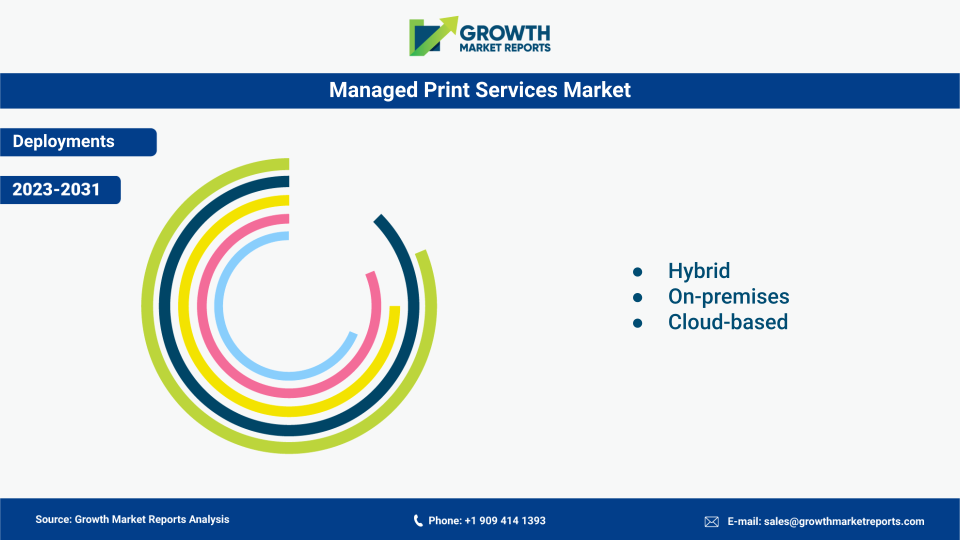
Deployment mode is a crucial consideration for organizations evaluating managed print services. The market is segmented into on-premises, cloud-based, and hybrid deployment models, each offering distinct advantages and challenges. On-premises deployment remains popular among large enterprises and regulated industries that require complete control over their print infrastructure and sensitive data. These organizations typically invest in dedicated IT resources and infrastructure to ensure compliance with stringent security and privacy requirements. However, the high upfront costs and ongoing maintenance associated with on-premises solutions are prompting many businesses to explore alternative deployment models.
Cloud-based deployment is gaining significant traction in the managed print services market, driven by the increasing adoption of remote and hybrid work models. Cloud-based MPS platforms offer unparalleled scalability, flexibility, and ease of management, enabling organizations to centralize print operations and support distributed workforces. The ability to access print services from any location, coupled with real-time monitoring and analytics, is transforming the way businesses manage their print environments. Moreover, advancements in cloud security and compliance frameworks have addressed many of the concerns that previously hindered adoption, making cloud-based deployment an increasingly attractive option for organizations of all sizes.
Hybrid deployment models are emerging as a preferred choice for organizations seeking to balance the benefits of on-premises control with the scalability and convenience of cloud-based solutions. Hybrid MPS platforms allow businesses to maintain sensitive data and critical print operations on-premises, while leveraging the cloud for non-sensitive workflows, remote management, and analytics. This approach offers the best of both worlds, enabling organizations to optimize costs, enhance security, and support evolving business needs. The growing complexity of IT environments and the need for flexible, future-proof solutions are driving the adoption of hybrid deployment models in the managed print services market.
The choice of deployment mode is influenced by a range of factors, including organizational size, industry regulations, IT maturity, and budget constraints. MPS providers are responding by offering customizable deployment options and seamless migration paths, ensuring that organizations can transition to the most suitable model without disruption. As the managed print services market continues to evolve, the ability to offer flexible, secure, and scalable deployment options will be a key differentiator for vendors seeking to capture market share.
The organization size segment of the managed print services market is bifurcated into small and medium enterprises (SMEs) and large enterprises. Large enterprises have traditionally been the primary adopters of managed print services, driven by the need to manage extensive print fleets, ensure compliance, and optimize operational costs. These organizations typically require comprehensive MPS solutions that encompass hardware, software, and services, as well as advanced analytics and security features. The scale and complexity of their operations necessitate customized solutions and dedicated support, making large enterprises a lucrative market segment for MPS providers.
Small and medium enterprises are increasingly recognizing the benefits of managed print services as they seek to improve efficiency, reduce costs, and enhance document security. While SMEs may have smaller print environments, they often lack the in-house expertise and resources to effectively manage their print infrastructure. MPS providers are addressing this gap by offering affordable, scalable, and easy-to-deploy solutions tailored to the unique needs of SMEs. The growing availability of cloud-based and subscription-based MPS offerings is further lowering the barriers to adoption, enabling SMEs to access enterprise-grade print management capabilities without significant upfront investment.
The needs and priorities of SMEs and large enterprises differ significantly, influencing the design and delivery of managed print services. Large enterprises prioritize scalability, integration with existing IT systems, and compliance with industry-specific regulations, while SMEs value simplicity, affordability, and rapid deployment. MPS vendors are increasingly segmenting their offerings to cater to these diverse requirements, providing modular solutions and flexible pricing models that align with the needs of different organization sizes. This targeted approach is driving higher adoption rates and customer satisfaction across the market.
As digital transformation accelerates across industries, the demand for managed print services is expected to grow across both SMEs and large enterprises. The ability to deliver tailored solutions that address the unique challenges and opportunities of each segment will be critical for MPS providers seeking to expand their market presence and drive sustained growth.
The channel segment of the managed print services market is composed of printer/copier manufacturers, independent software vendors (ISVs), and system integrators. Printer/copier manufacturers have traditionally dominated the market, leveraging their extensive product portfolios, established customer relationships, and global distribution networks. These companies offer end-to-end MPS solutions that integrate hardware, software, and services, providing customers with a seamless and consistent experience. The ability to bundle MPS offerings with hardware sales has been a key driver of market share for printer/copier manufacturers.
Independent software vendors play a critical role in the managed print services ecosystem by developing specialized print management software and analytics tools. ISVs often collaborate with hardware manufacturers and system integrators to deliver comprehensive MPS solutions that address specific customer needs, such as secure printing, mobile printing, and workflow automation. The focus on innovation and differentiation enables ISVs to capture niche market segments and drive the adoption of advanced print management capabilities.
System integrators are increasingly important channel partners in the managed print services market, particularly for large and complex deployments. System integrators possess deep expertise in IT infrastructure, process optimization, and change management, enabling them to design and implement customized MPS solutions that align with organizational goals and requirements. Their ability to integrate MPS with broader digital transformation initiatives, such as enterprise content management and document workflow automation, is a key value proposition for customers seeking holistic solutions.
The channel landscape is evolving as MPS providers seek to expand their reach, differentiate their offerings, and deliver greater value to customers. Strategic partnerships, co-innovation initiatives, and ecosystem development are becoming increasingly important as vendors collaborate to address emerging customer needs and capitalize on new market opportunities. The ability to deliver integrated, end-to-end solutions through a diverse and capable channel network will be a key determinant of success in the managed print services market.
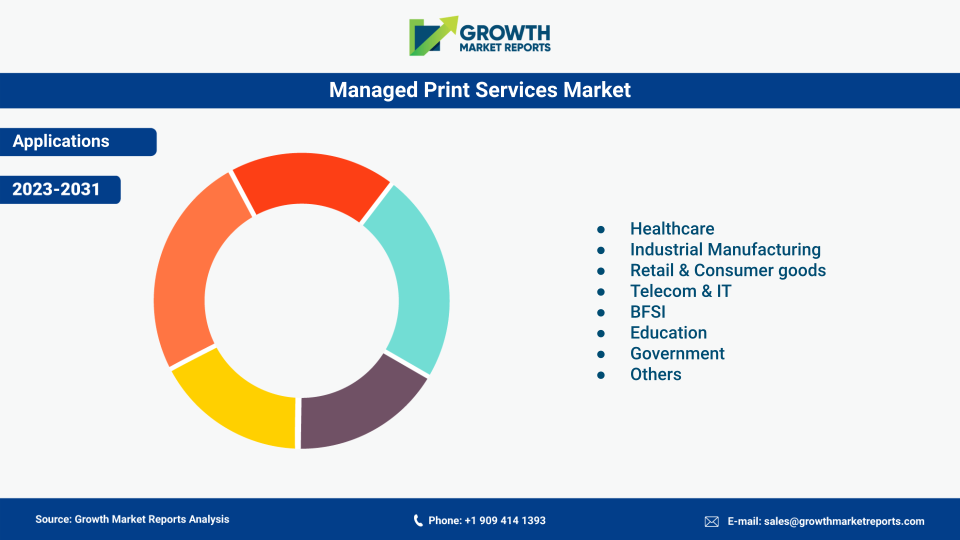
The end-user segment of the managed print services market encompasses a wide range of industries, including BFSI, healthcare, education, government, retail, IT and telecom, and others. The BFSI sector is a major adopter of managed print services, driven by the need for secure document management, regulatory compliance, and operational efficiency. Financial institutions handle large volumes of sensitive documents and require robust print management solutions to protect confidential information, streamline workflows, and reduce costs. MPS providers offer tailored solutions for BFSI, including secure printing, user authentication, and audit trails, enabling organizations to meet stringent security and compliance requirements.
Healthcare is another key end-user segment, characterized by the need for secure and efficient management of patient records, prescriptions, and administrative documents. The adoption of managed print services in healthcare is driven by the increasing digitization of medical records, regulatory mandates, and the need to improve patient care. MPS providers offer solutions that enhance document security, support compliance with healthcare regulations, and streamline printing workflows, enabling healthcare organizations to focus on core patient care activities.
The education sector is experiencing growing demand for managed print services as institutions seek to optimize print resources, reduce costs, and support digital learning initiatives. MPS solutions enable schools, colleges, and universities to centralize print management, enforce print policies, and monitor usage, resulting in significant cost savings and improved sustainability. The ability to integrate MPS with learning management systems and digital content platforms is further enhancing the value proposition for educational institutions.
Government, retail, IT and telecom, and other sectors also represent significant end-user segments for managed print services. Government agencies require secure and efficient document management solutions to support public administration, compliance, and transparency. Retailers leverage MPS to streamline store operations, improve customer service, and reduce operational costs. The IT and telecom sector values MPS for its ability to support complex, distributed environments and enable digital transformation. As organizations across industries continue to prioritize efficiency, security, and sustainability, the demand for managed print services is expected to grow across all end-user segments.
The managed print services market presents significant opportunities for growth and innovation. One of the most promising opportunities lies in the integration of advanced technologies such as artificial intelligence, machine learning, and the Internet of Things (IoT) into MPS solutions. These technologies enable predictive maintenance, automated supplies management, and real-time analytics, transforming the way organizations manage their print environments. The ability to offer intelligent, data-driven solutions that enhance efficiency, reduce costs, and improve user experience is a key differentiator for MPS providers. Additionally, the growing emphasis on sustainability and environmental responsibility is creating opportunities for MPS vendors to offer eco-friendly solutions that help organizations reduce their carbon footprint and meet regulatory requirements.
Another major opportunity in the managed print services market is the expansion into emerging markets, particularly in the Asia Pacific, Latin America, and Middle East & Africa regions. Rapid economic development, increasing digitization, and government initiatives to modernize public infrastructure are driving demand for managed print services in these regions. MPS providers that can adapt their offerings to meet the unique needs of local markets, such as language support, compliance with regional regulations, and integration with local IT ecosystems, are well-positioned to capture new growth opportunities. The rise of remote and hybrid work models is also creating opportunities for MPS vendors to offer flexible, cloud-based solutions that support distributed workforces and enable seamless print management across multiple locations.
Despite these opportunities, the managed print services market faces several challenges and restrainers. One of the primary restrainers is the increasing adoption of digital and paperless workflows, which is reducing the overall volume of printed documents. Organizations are increasingly investing in digital transformation initiatives that prioritize electronic document management, collaboration, and storage, leading to a decline in traditional printing activities. MPS providers must adapt to this shift by offering value-added services that support digital workflows, enhance document security, and integrate with broader digital transformation strategies. Failure to innovate and evolve in response to changing market dynamics could limit the growth potential of MPS vendors.
North America continues to lead the global managed print services market, accounting for approximately 37% of the total market size in 2024, or around USD 15.6 billion. The region's dominance is attributed to the high penetration of advanced IT infrastructure, strong presence of leading MPS vendors, and widespread adoption of digital transformation initiatives across industries. The United States, in particular, is a major contributor to market growth, driven by the demand for secure document management, regulatory compliance, and operational efficiency in sectors such as BFSI, healthcare, and government. The maturity of the North American market is reflected in the adoption of advanced MPS solutions that integrate AI, analytics, and cloud-based platforms.
Europe is the second-largest market for managed print services, with a market size of approximately USD 11.8 billion in 2024 and a projected CAGR of 7.5% through 2033. The region is characterized by strong demand from healthcare, education, and public sector organizations, driven by regulatory mandates, sustainability initiatives, and the need to optimize costs. Countries such as the United Kingdom, Germany, and France are at the forefront of MPS adoption, supported by robust IT ecosystems and government support for digital transformation. The focus on sustainability and environmental responsibility is particularly pronounced in Europe, with organizations increasingly seeking MPS solutions that promote responsible printing and resource conservation.
The Asia Pacific region is experiencing the fastest growth in the managed print services market, with a market size of USD 8.9 billion in 2024 and a projected CAGR of 10.2% through 2033. Rapid economic development, expanding SME sector, and government initiatives to modernize public infrastructure are driving demand for MPS solutions across the region. Countries such as China, India, Japan, and South Korea are leading the adoption of managed print services, supported by increasing investments in IT infrastructure and growing awareness of the benefits of print management. The Middle East & Africa and Latin America are also emerging markets, with a combined market size of USD 5.8 billion in 2024, driven by increasing digitization, urbanization, and the need for efficient document management solutions.
The competitive landscape of the managed print services market is characterized by intense rivalry among global technology giants, specialized MPS providers, and emerging players. Leading vendors are focused on expanding their product portfolios, enhancing service offerings, and leveraging advanced technologies to differentiate themselves in a crowded market. Strategic partnerships, mergers and acquisitions, and ecosystem development are common strategies employed by market participants to strengthen their market position and capture new growth opportunities. The ability to deliver integrated, end-to-end solutions that address the full spectrum of print management challenges is a key differentiator in the highly competitive MPS market.
Innovation is a critical driver of competitive advantage in the managed print services market. Vendors are investing heavily in research and development to incorporate artificial intelligence, machine learning, and IoT capabilities into their MPS solutions. These technologies enable predictive maintenance, automated supplies management, and real-time analytics, enhancing the efficiency, security, and sustainability of print environments. The focus on innovation extends to the development of cloud-based and hybrid deployment models, which offer greater flexibility, scalability, and ease of management for customers with diverse requirements.
Customer-centricity is another key focus area for leading MPS vendors. Providers are increasingly offering customized solutions, flexible pricing models, and dedicated support to meet the unique needs of different customer segments. The emphasis on proactive service delivery, rapid issue resolution, and continuous improvement is driving higher levels of customer satisfaction and loyalty. As organizations seek to maximize the value of their print investments, the ability to deliver tailored, value-added services will be a critical success factor for MPS providers.
Some of the major companies operating in the managed print services market include Xerox Corporation, HP Inc., Ricoh Company, Ltd., Canon Inc., Konica Minolta, Inc., Lexmark International, Inc., Kyocera Document Solutions Inc., Toshiba Corporation, Sharp Corporation, and Brother Industries, Ltd. These companies are recognized for their extensive product portfolios, global reach, and strong focus on innovation. Xerox Corporation and HP Inc. are pioneers in the MPS space, offering comprehensive solutions that integrate hardware, software, and services. Ricoh, Canon, and Konica Minolta are also leading players, known for their advanced print management technologies and customer-centric service models.
Lexmark International and Kyocera Document Solutions are notable for their focus on sustainability and eco-friendly printing solutions, while Toshiba Corporation and Sharp Corporation are recognized for their expertise in multifunction devices and document workflow automation. Brother Industries has established a strong presence in the SME segment, offering affordable and easy-to-deploy MPS solutions. These companies are continuously investing in research and development, strategic partnerships, and ecosystem development to maintain their competitive edge and capitalize on emerging market opportunities.
In summary, the managed print services market is characterized by dynamic competition, rapid innovation, and evolving customer needs. Leading vendors are well-positioned to capture growth opportunities by delivering integrated, intelligent, and sustainable MPS solutions that address the diverse requirements of organizations across industries and regions. As the market continues to evolve, the ability to adapt to changing customer expectations and technological advancements will be critical for sustained success in the managed print services market.
The managed print services market has been segmented on the basis of
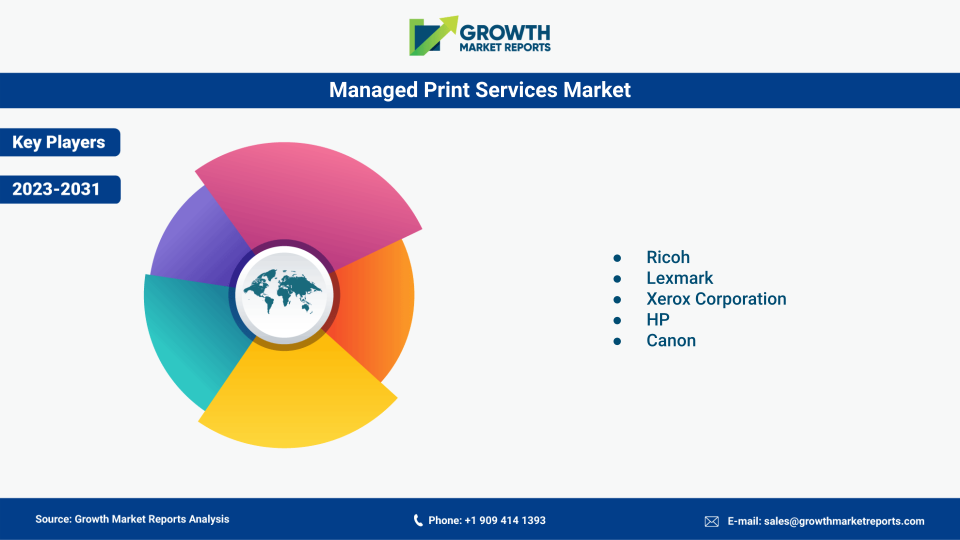
Key players competing in the managed print services market are Ricoh; Lexmark; Xerox Corporation; HP; and Canon. The global market for managed print services is fiercely competitive as it is absolutely required for the existing market players to upgrade their product portfolios. System integrators and independent software providers have a lot of room to grow in the MPS industry.
Large scale adoption of cloud-based deployment methods associated with managed print services has given prospective opportunities for companies such as Xerox Corporation and HP to obtain a significant portion of the MPS market.
AI and IoT are enabling predictive maintenance, automated supplies management, and real-time analytics, making print environments more efficient, secure, and sustainable.
Key players include Xerox Corporation, HP Inc., Ricoh Company, Canon Inc., Konica Minolta, Lexmark International, Kyocera Document Solutions, Toshiba Corporation, Sharp Corporation, and Brother Industries.
Challenges include the shift toward digital and paperless workflows, which reduce print volumes, and the need for MPS providers to innovate and integrate with digital transformation strategies.
Major end-users include BFSI, healthcare, education, government, retail, IT and telecom sectors, each with unique requirements for document management and security.
The MPS market is segmented into hardware (printers, copiers, multifunction devices), software (print management, analytics), and services (consulting, implementation, maintenance, and support).
North America leads the market, while the Asia Pacific region is experiencing the fastest growth due to rapid digitization and expanding SME sectors.
MPS providers offer solutions that reduce paper consumption, optimize energy usage, automate duplex printing, and track environmental impact, helping organizations meet regulatory requirements and improve their sustainability profiles.
Managed print services can be deployed via on-premises, cloud-based, or hybrid models, each offering different benefits in terms of control, scalability, and flexibility.
Key growth drivers include increasing digital transformation, cost optimization, demand for secure document management, adoption of cloud-based solutions, and a focus on sustainability and workflow efficiency.
The global managed print services market reached USD 42.1 billion in 2024 and is expected to grow to USD 77.2 billion by 2033.