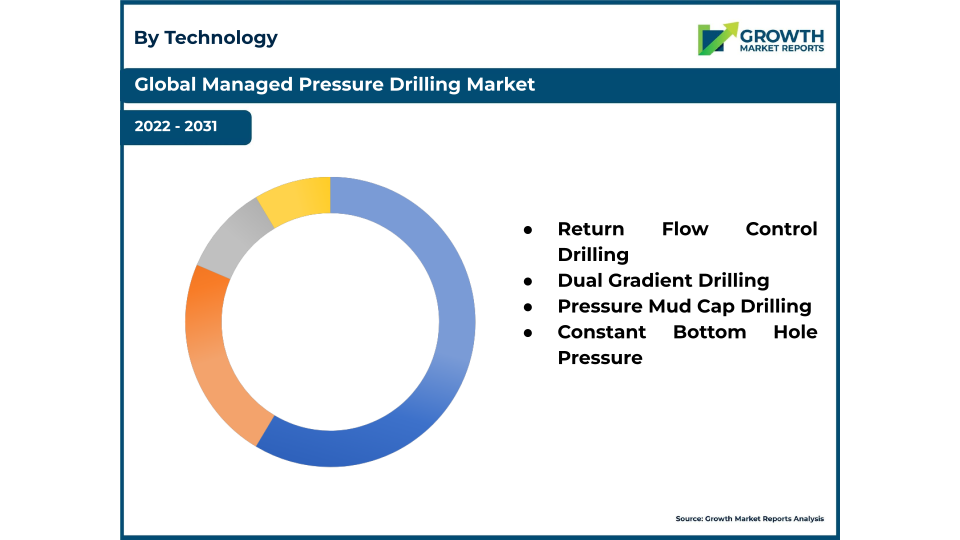
Segments - by Technology (Constant Bottom Hole Pressure, Mud Cap Drilling, Dual Gradient Drilling, Return Flow Control Drilling), by Application (Onshore, Offshore), by Tool Type (Rotating Control Devices, Non-Return Valves, Chokes, Control Systems, Others), by Well Type (Horizontal Wells, Vertical Wells)
According to our latest research, the global managed pressure drilling (MPD) market size reached USD 4.72 billion in 2024 and is expected to grow at a robust CAGR of 6.8% from 2025 to 2033. The market is forecasted to attain a value of USD 8.68 billion by 2033, reflecting the increasing adoption of advanced drilling technologies to enhance safety, efficiency, and cost-effectiveness in complex drilling environments. The primary growth driver for the managed pressure drilling market is the rising demand for efficient drilling operations in challenging reservoirs, particularly in deepwater and ultra-deepwater fields.
One of the most significant growth factors for the managed pressure drilling market is the ongoing shift towards exploration and production (E&P) in technically challenging environments, such as deepwater and ultra-deepwater reserves. These environments present high-pressure, high-temperature (HPHT) conditions, and traditional drilling methods often fall short in managing wellbore pressures, leading to non-productive time and increased operational risks. MPD technologies, particularly constant bottom hole pressure and dual gradient drilling, have emerged as essential solutions for maintaining wellbore stability and preventing kicks or blowouts. The rising global energy demand, coupled with the depletion of easily accessible reserves, is pushing oil and gas operators to invest in advanced drilling techniques that ensure operational safety and efficiency, further fueling the growth of the managed pressure drilling market.
Another critical factor propelling the managed pressure drilling market is the continuous advancement in drilling automation and digitalization. The integration of real-time data analytics, advanced sensors, and automated control systems in MPD operations has significantly enhanced the precision and responsiveness of pressure management. These technological innovations not only reduce the likelihood of drilling hazards but also optimize drilling parameters, leading to lower operational costs and improved well productivity. The adoption of rotating control devices, non-return valves, and sophisticated chokes has enabled operators to achieve tighter control over drilling parameters, reducing the risk of formation damage and minimizing the environmental footprint of drilling activities. As oil and gas companies increasingly prioritize operational excellence and sustainability, the demand for state-of-the-art managed pressure drilling solutions continues to accelerate.
The managed pressure drilling market is also benefiting from favorable regulatory frameworks and industry standards that emphasize safety and environmental protection. Regulatory bodies across key oil-producing regions are mandating the use of advanced drilling technologies to mitigate the risks associated with HPHT wells and to ensure compliance with stringent safety protocols. This regulatory push is particularly pronounced in offshore drilling, where the consequences of uncontrolled wellbore pressure can be catastrophic. As a result, oilfield service providers are expanding their MPD service offerings and investing in research and development to stay ahead of regulatory requirements and industry best practices. The convergence of regulatory compliance, technological innovation, and market demand is creating a fertile environment for the sustained growth of the managed pressure drilling market.
In the realm of drilling operations, the significance of Drilling Rig Well Control Equipment cannot be overstated. These equipment are crucial in maintaining the integrity of the wellbore by ensuring that pressure levels are meticulously managed to prevent blowouts and other hazardous incidents. As the industry navigates increasingly complex drilling environments, the demand for robust well control solutions is growing. This is particularly true in high-pressure, high-temperature (HPHT) scenarios where traditional methods may not suffice. The integration of advanced well control equipment with managed pressure drilling (MPD) technologies is proving to be a game-changer, enhancing safety and operational efficiency across the board.
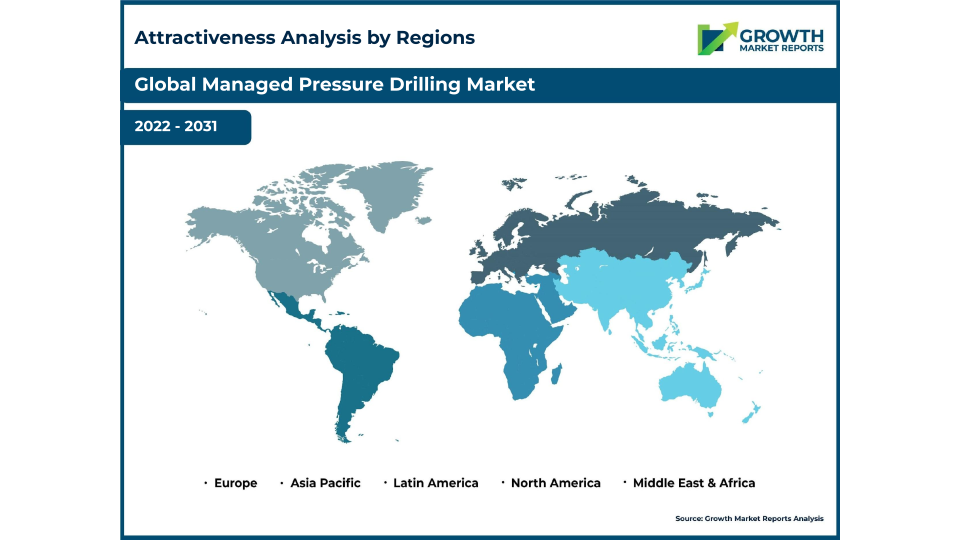
From a regional perspective, North America continues to dominate the managed pressure drilling market, accounting for the largest share in 2024, driven by robust shale gas exploration and deepwater drilling activities in the Gulf of Mexico. However, the Asia Pacific region is witnessing the fastest growth, supported by increasing investments in offshore exploration in countries such as China, India, and Australia. The Middle East & Africa region is also emerging as a significant market, fueled by large-scale oil and gas projects in the Arabian Gulf and North Africa. Europe and Latin America, while smaller in market size, are experiencing steady growth due to the adoption of MPD technologies in the North Sea and offshore Brazil, respectively. This regional diversification is expected to continue, with emerging markets playing an increasingly important role in the global managed pressure drilling landscape.
The managed pressure drilling market is segmented by technology into constant bottom hole pressure (CBHP), mud cap drilling, dual gradient drilling, and return flow control drilling. Among these, constant bottom hole pressure technology holds the largest market share, owing to its widespread adoption in both onshore and offshore drilling operations. CBHP enables operators to maintain a consistent pressure profile throughout the drilling process, thereby minimizing the risk of kicks and well control incidents. The technology's versatility and proven track record make it the preferred choice for drilling in complex reservoirs, especially where formation pressures are unpredictable. The continued evolution of CBHP systems, with enhanced automation and real-time monitoring capabilities, is further cementing its dominance in the managed pressure drilling market.
Mud cap drilling is gaining traction, particularly in environments with severe lost circulation zones or fractured formations. This technology involves the use of a closed annular system and a mud cap to maintain wellbore pressure, allowing drilling to continue even in the presence of significant formation losses. Mud cap drilling is especially valuable in mature fields and brownfield projects, where conventional drilling methods often result in excessive non-productive time and increased operational costs. As operators seek to maximize recovery from aging assets, the adoption of mud cap drilling is expected to grow, supported by ongoing innovations in drilling fluids and pressure control equipment.
Dual gradient drilling represents one of the most advanced segments of the managed pressure drilling market, offering unparalleled control over wellbore pressures in deepwater and ultra-deepwater environments. By utilizing two separate fluid gradients—one in the riser and another in the wellbore—this technology effectively manages the narrow pressure windows encountered in deepwater drilling. Dual gradient drilling reduces the risk of formation influxes and well control events, enabling safer and more efficient drilling in some of the world's most challenging reservoirs. The high capital and operational costs associated with dual gradient systems have limited their widespread adoption; however, ongoing cost optimization efforts and the increasing complexity of offshore projects are expected to drive future growth in this segment.
Return flow control drilling, although a smaller segment, is gaining recognition for its ability to enhance wellbore stability and improve drilling efficiency in specific applications. This technology focuses on managing the return flow of drilling fluids to optimize pressure control and reduce the risk of formation damage. Return flow control drilling is particularly useful in unconventional reservoirs and extended reach wells, where traditional pressure management techniques may be insufficient. As the industry continues to explore new frontiers and unconventional resources, the demand for specialized MPD technologies such as return flow control drilling is expected to rise, contributing to the overall diversification and growth of the managed pressure drilling market.
| Attributes | Details |
| Report Title | Managed Pressure Drilling Market Research Report 2033 |
| By Technology | Constant Bottom Hole Pressure, Mud Cap Drilling, Dual Gradient Drilling, Return Flow Control Drilling |
| By Application | Onshore, Offshore |
| By Tool Type | Rotating Control Devices, Non-Return Valves, Chokes, Control Systems, Others |
| By Well Type | Horizontal Wells, Vertical Wells |
| Regions Covered | North America, Europe, APAC, Latin America, MEA |
| Base Year | 2024 |
| Historic Data | 2018-2023 |
| Forecast Period | 2025-2033 |
| Number of Pages | 274 |
| Number of Tables & Figures | 302 |
| Customization Available | Yes, the report can be customized as per your need. |
The managed pressure drilling market is bifurcated by application into onshore and offshore segments, each presenting unique challenges and opportunities for MPD technology adoption. The onshore segment currently accounts for a significant share of the market, driven by the vast number of land-based drilling operations, particularly in North America, the Middle East, and parts of Asia. Onshore drilling projects often encounter complex geological formations, including tight gas, shale, and unconventional reservoirs, where precise pressure management is critical to maintaining well integrity and maximizing hydrocarbon recovery. The cost-effectiveness and operational flexibility of MPD solutions make them increasingly attractive for onshore operators seeking to optimize drilling performance and reduce non-productive time.
The offshore segment, however, is witnessing the fastest growth, fueled by the increasing number of deepwater and ultra-deepwater exploration projects worldwide. Offshore drilling environments are characterized by high pressures, narrow drilling windows, and elevated operational risks, making advanced pressure management technologies indispensable. MPD systems, particularly those utilizing constant bottom hole pressure and dual gradient drilling, are becoming standard practice in offshore projects to ensure well control and mitigate the risk of blowouts. The growing investment in offshore oil and gas exploration, coupled with the need to comply with stringent safety regulations, is driving the rapid adoption of managed pressure drilling solutions in this segment.
A key trend in the application segment is the integration of MPD technologies in both greenfield and brownfield projects. In greenfield developments, MPD is employed from the outset to address anticipated drilling challenges and optimize well design. In contrast, brownfield projects leverage MPD to revitalize mature fields, mitigate drilling hazards, and extend the productive life of existing assets. This dual application underscores the versatility of managed pressure drilling solutions and their ability to address a wide range of operational scenarios across the oil and gas value chain.
The increasing complexity of drilling environments, driven by the pursuit of unconventional resources and the expansion of offshore exploration, is expected to sustain the demand for managed pressure drilling across both onshore and offshore applications. As operators continue to prioritize safety, efficiency, and environmental stewardship, the role of MPD as a critical enabler of successful drilling operations will only become more pronounced, reinforcing its position as a cornerstone technology in the global oil and gas industry.
The managed pressure drilling market is segmented by tool type into rotating control devices (RCDs), non-return valves, chokes, control systems, and others. Rotating control devices are a cornerstone of modern MPD systems, providing a reliable seal around the drill string and enabling precise control of annular pressures during drilling. RCDs are essential for maintaining wellbore stability and preventing the influx of formation fluids, particularly in high-pressure environments. The ongoing development of advanced RCDs with enhanced sealing capabilities, higher pressure ratings, and improved durability is driving their widespread adoption in both onshore and offshore drilling operations.
Non-return valves play a critical role in ensuring well control by preventing backflow of fluids into the drill string. These valves are particularly important in MPD operations where pressure fluctuations can lead to the unintended migration of formation fluids. The integration of high-performance non-return valves in MPD systems not only enhances operational safety but also reduces the risk of wellbore instability and formation damage. As drilling operations become more complex and the need for robust pressure management solutions increases, the demand for advanced non-return valves is expected to grow steadily.
Chokes are another vital component of MPD systems, enabling operators to regulate the flow of drilling fluids and maintain optimal pressure conditions in the wellbore. The use of automated and remotely controlled chokes has become increasingly common, allowing for real-time adjustments to drilling parameters and rapid response to changing downhole conditions. The development of intelligent choke systems, equipped with sensors and data analytics capabilities, is revolutionizing pressure management in drilling operations and contributing to the overall efficiency and safety of MPD projects.
Control systems represent the technological backbone of modern MPD operations, integrating data from various sensors and equipment to provide operators with real-time visibility and control over drilling parameters. Advanced control systems leverage automation, machine learning, and predictive analytics to optimize pressure management, minimize operational risks, and enhance decision-making. The continuous evolution of control systems, driven by advancements in digitalization and connectivity, is expected to play a pivotal role in the future growth of the managed pressure drilling market, enabling safer, more efficient, and more sustainable drilling operations.
The managed pressure drilling market is also segmented by well type into horizontal wells and vertical wells, each presenting distinct operational challenges and requirements for pressure management. Horizontal wells have gained prominence in recent years, particularly in unconventional resource plays such as shale gas and tight oil formations. The extended lateral sections of horizontal wells increase the complexity of pressure management, making MPD technologies indispensable for maintaining wellbore stability and preventing formation damage. The ability of MPD systems to precisely control annular pressures and adapt to changing downhole conditions is a key enabler of successful horizontal drilling operations, driving their widespread adoption in this segment.
Vertical wells, while more traditional, continue to represent a significant portion of global drilling activity, particularly in mature fields and conventional reservoirs. MPD technologies are increasingly being deployed in vertical wells to address challenges such as narrow pressure margins, lost circulation, and well control incidents. The application of MPD in vertical wells not only enhances operational safety but also improves drilling efficiency and reduces non-productive time. As operators seek to maximize recovery from existing assets and extend the productive life of mature fields, the use of managed pressure drilling solutions in vertical wells is expected to remain robust.
A notable trend in the well type segment is the growing use of MPD in complex well architectures, including multilateral and extended reach wells. These well designs present unique pressure management challenges, requiring advanced MPD systems capable of precise and responsive control. The ability of MPD technologies to adapt to a wide range of well types and drilling scenarios underscores their versatility and value proposition in the modern oil and gas industry.
The increasing adoption of managed pressure drilling solutions across both horizontal and vertical wells reflects the broader industry trend towards operational excellence and risk mitigation. As drilling environments become more challenging and the demand for hydrocarbon resources continues to grow, the role of MPD as a critical enabler of safe, efficient, and sustainable drilling operations will only become more pronounced, driving continued innovation and investment in this dynamic market segment.
The managed pressure drilling market presents significant opportunities for growth, driven by the ongoing expansion of deepwater and ultra-deepwater exploration projects worldwide. As oil and gas companies seek to tap into increasingly challenging reservoirs, the demand for advanced pressure management solutions is expected to surge. The integration of digital technologies, such as real-time data analytics, machine learning, and automation, offers substantial potential for enhancing the efficiency and safety of MPD operations. Companies that invest in developing next-generation MPD systems with enhanced automation, connectivity, and predictive capabilities are well-positioned to capitalize on the growing market demand. Furthermore, the increasing focus on operational excellence, cost optimization, and environmental sustainability is creating new avenues for innovation and differentiation in the managed pressure drilling market.
Another key opportunity lies in the expansion of MPD applications beyond traditional oil and gas drilling. The technology's ability to manage complex pressure regimes and enhance wellbore stability makes it attractive for use in geothermal drilling, carbon capture and storage (CCS), and other subsurface engineering applications. As the global energy transition accelerates and the demand for alternative energy sources grows, the versatility of managed pressure drilling solutions is expected to open up new markets and revenue streams for technology providers and service companies. Strategic partnerships, research collaborations, and investments in R&D will be critical for capturing these emerging opportunities and staying ahead of the competition in a rapidly evolving industry landscape.
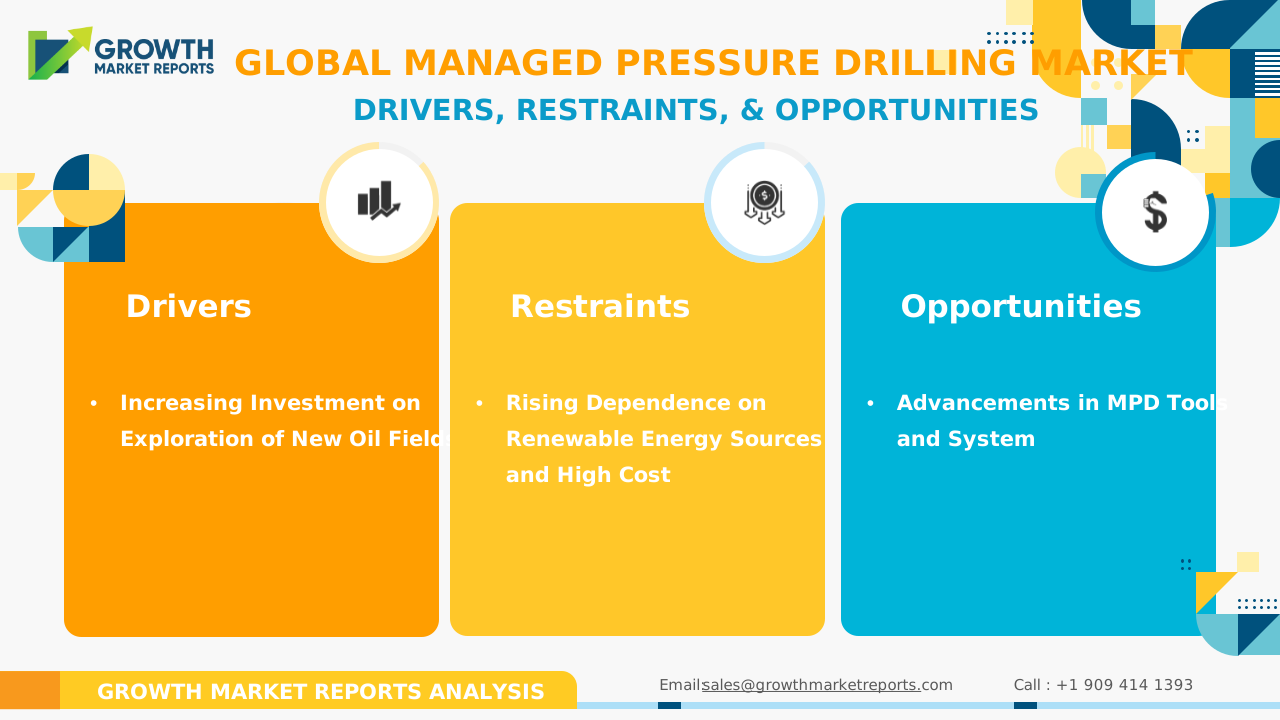
Despite the promising outlook, the managed pressure drilling market faces several restraining factors, including the high capital and operational costs associated with advanced MPD systems. The complexity of integrating MPD technologies into existing drilling infrastructure, particularly in mature fields and offshore environments, can pose significant technical and financial challenges for operators. Additionally, the shortage of skilled personnel with expertise in MPD operations and the need for comprehensive training and knowledge transfer can limit the pace of technology adoption. Regulatory uncertainties and the cyclical nature of the oil and gas industry further contribute to market volatility, making it essential for companies to adopt flexible and adaptive business strategies to navigate these challenges effectively.
Regionally, North America remains the largest market for managed pressure drilling, with a market size of USD 1.72 billion in 2024. The region's dominance is underpinned by extensive shale gas exploration and production activities in the United States and Canada, as well as significant deepwater drilling operations in the Gulf of Mexico. The adoption of advanced MPD technologies is particularly high in North America, driven by the need to address complex geological formations, enhance operational efficiency, and comply with stringent safety regulations. The presence of leading oilfield service providers and technology innovators further strengthens the region's position as a global hub for managed pressure drilling solutions.
The Asia Pacific region is emerging as the fastest-growing market for managed pressure drilling, with a projected CAGR of 8.1% from 2025 to 2033. The region's market size reached USD 980 million in 2024, fueled by increasing investments in offshore exploration and production in countries such as China, India, Malaysia, and Australia. The growing demand for energy, coupled with the need to develop technically challenging offshore reserves, is driving the rapid adoption of MPD technologies in the Asia Pacific region. Government initiatives to boost domestic oil and gas production and the entry of international oilfield service companies are further accelerating market growth and technology transfer in this dynamic region.
In the Middle East & Africa, the managed pressure drilling market is gaining momentum, with a market size of USD 740 million in 2024. The region's growth is supported by large-scale oil and gas projects in the Arabian Gulf, North Africa, and offshore West Africa. The adoption of MPD technologies is being driven by the need to manage complex reservoirs, optimize drilling performance, and comply with evolving regulatory requirements. Europe and Latin America, with market sizes of USD 670 million and USD 610 million respectively in 2024, are also witnessing steady growth, supported by ongoing offshore exploration activities in the North Sea and offshore Brazil. As regional markets continue to evolve, the managed pressure drilling landscape is expected to become increasingly diverse and competitive, with emerging markets playing a pivotal role in driving global industry growth.
The managed pressure drilling market is characterized by intense competition, with a mix of established oilfield service giants, specialized technology providers, and innovative startups vying for market share. The competitive landscape is shaped by ongoing investments in research and development, strategic partnerships, and mergers and acquisitions aimed at expanding product portfolios, enhancing technological capabilities, and strengthening global reach. Leading players are focusing on the development of next-generation MPD systems with advanced automation, digitalization, and real-time data analytics to differentiate their offerings and capture emerging opportunities in deepwater, ultra-deepwater, and unconventional resource plays. The ability to deliver integrated, end-to-end MPD solutions that address the unique needs of diverse drilling environments is a key success factor in this dynamic market.
Innovation and technology leadership are critical drivers of competitive advantage in the managed pressure drilling market. Companies that invest in the development of high-performance rotating control devices, intelligent control systems, and advanced pressure management tools are well-positioned to capture a larger share of the market. The integration of digital technologies, such as cloud-based data platforms, predictive analytics, and remote monitoring, is enabling service providers to deliver more efficient, reliable, and cost-effective MPD solutions. Collaboration with oil and gas operators, research institutions, and regulatory bodies is also playing an important role in driving technology adoption, knowledge transfer, and industry standardization.
The market is witnessing a trend towards consolidation, with larger players acquiring specialized MPD technology providers to enhance their capabilities and expand their global footprint. This consolidation is driven by the need to offer comprehensive, integrated solutions that address the full spectrum of drilling challenges faced by operators in both mature and emerging markets. At the same time, smaller companies and startups are carving out niche positions by focusing on innovative technologies, customized solutions, and agile service delivery models. The competitive dynamics of the managed pressure drilling market are expected to remain fluid, with new entrants and disruptive technologies continuously reshaping the industry landscape.
Some of the major companies operating in the managed pressure drilling market include Schlumberger Limited, Halliburton Company, Weatherford International, Baker Hughes Company, National Oilwell Varco, Inc., Nabors Industries Ltd., and Blade Energy Partners. Schlumberger is recognized for its comprehensive suite of MPD technologies, including advanced control systems and rotating control devices, and has a strong presence in both onshore and offshore markets. Halliburton is known for its integrated MPD solutions and expertise in deepwater and unconventional resource plays. Weatherford International offers a broad portfolio of pressure management tools and has pioneered several innovations in MPD equipment and services. Baker Hughes is a leader in digitalization and automation, providing intelligent MPD systems that leverage real-time data analytics to optimize drilling performance. National Oilwell Varco and Nabors Industries are also prominent players, with a focus on equipment manufacturing, technology development, and global service delivery. Blade Energy Partners, while smaller in scale, is recognized for its specialized expertise in well engineering and pressure management solutions, serving a diverse client base across multiple regions.
These leading companies are continuously investing in R&D, expanding their global service networks, and forming strategic alliances to stay ahead in a highly competitive market. Their commitment to innovation, operational excellence, and customer-centric service delivery is driving the ongoing evolution of the managed pressure drilling market, ensuring its continued growth and relevance in the global oil and gas industry.
The Managed Pressure Drilling market has been segmented on the basis of
The competitive landscape of the global managed pressure drilling market covers key insights into growth strategies adopted by major market players.
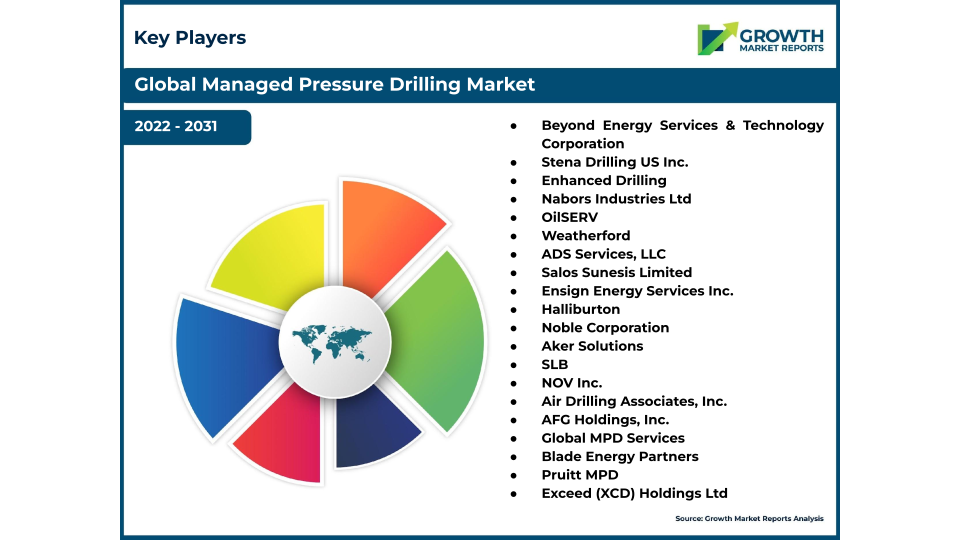
Key players competing in the market are Beyond Energy Services & Technology Corporation; Stena Drilling US Inc.; Enhanced Drilling; Nabors Industries Ltd; OilSERV; Weatherford; ADS Services, LLC; Salos Sunesis Limited; Ensign Energy Services Inc.; Halliburton; Noble Corporation; Aker Solutions; SLB; NOV Inc.; Air Drilling Associates, Inc.; AFG Holdings, Inc.; Global MPD Services; Blade Energy Partners; Pruitt MPD; and Exceed (XCD) Holdings Ltd.
These companies adopted development strategies including mergers, acquisitions, partnerships, collaboration, product launches, and production expansion to expand their consumer base worldwide. The competitive landscape covers key insights into growth strategies adopted by major market players.
The key players in managed pressure drilling market are Beyond Energy Services & Technology Corporation; Stena Drilling US Inc.; Enhanced Drilling; Nabors Industries Ltd; OilSERV; Weatherford; ADS Services, LLC; Salos Sunesis Limited; Ensign Energy Services Inc.; and Halliburton.
For regional analysis, North America is likely to dominate the global market during the forecast period 2023 to 2031.
The market growth is attributed to the increasing investment in exploring new offshore oil & gas reserves and the rise in exploration activities.
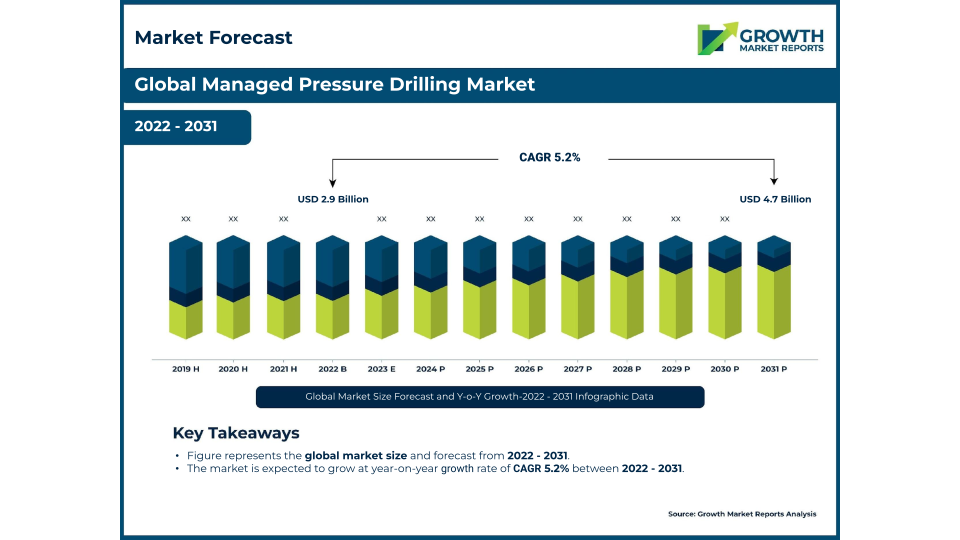
The managed pressure drilling (MPD) market is likely to expand at a compound annual growth rate of 5.2% during 2023–2031.
The global managed pressure drilling market size was USD 2.9 Bn in 2022 and is likely to reach USD 4.7 Bn by 2031.