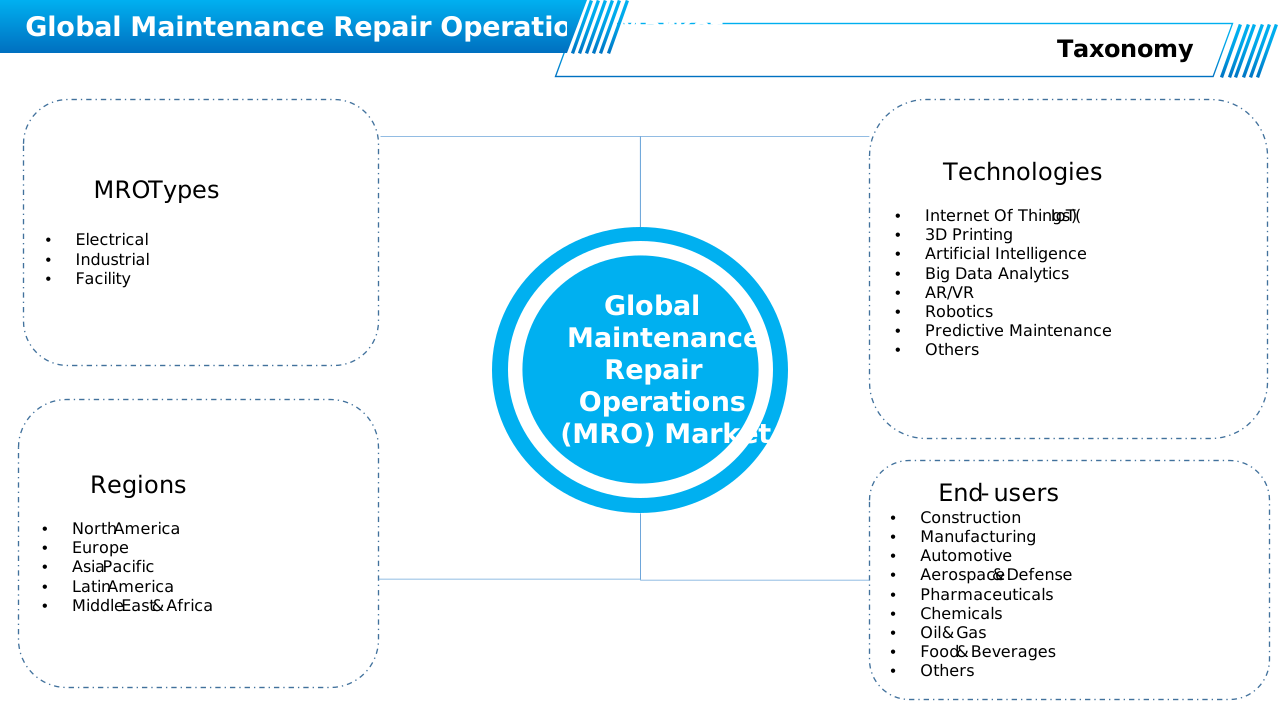
Segments - by Solution (MRO Software, MRO Services, MRO Spare Parts), by Application (Aerospace & Defense, Automotive, Manufacturing, Energy & Utilities, Healthcare, Construction, Transportation, Others), by Sourcing/Procurement Type (Internal, External), by End-User (OEMs, Aftermarket)
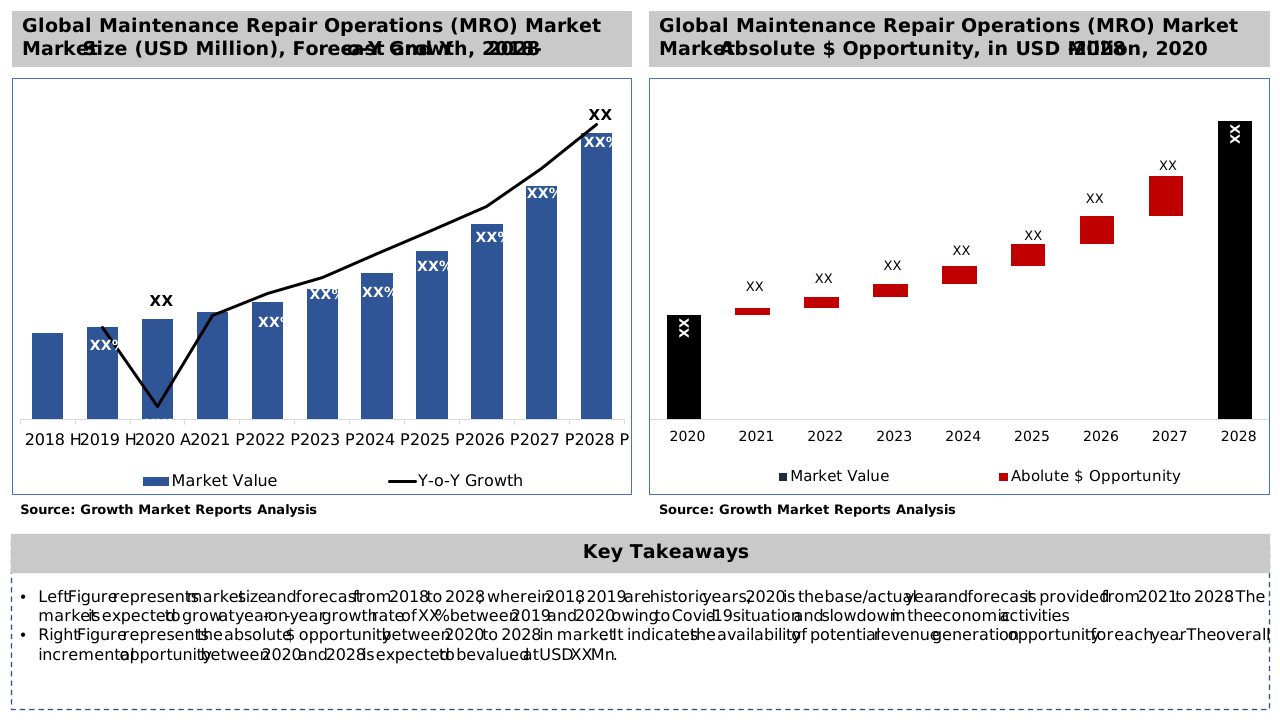
According to our latest research, the global Maintenance Repair Operations (MRO) market size reached USD 734.6 billion in 2024, reflecting a robust and dynamic sector. The market is projected to grow at a CAGR of 4.7% during the forecast period, reaching a value of approximately USD 1,108.6 billion by 2033. This expansion is driven by the increasing complexity of industrial equipment, heightened focus on operational efficiency, and the rapid adoption of digital MRO solutions. As industries across the globe continue to prioritize uptime, asset reliability, and cost optimization, the MRO market is witnessing significant investments in both software and services, underpinning its steady growth trajectory.
A primary growth factor for the global Maintenance Repair Operations (MRO) market is the ongoing industrialization and expansion of manufacturing capacities worldwide. As manufacturers strive to maximize productivity and reduce operational downtime, the demand for advanced MRO solutions has surged. The integration of predictive maintenance technologies, IoT-enabled monitoring systems, and data analytics into maintenance processes has allowed organizations to move from reactive to proactive maintenance strategies. This shift not only minimizes unplanned equipment failures but also extends asset lifespans, resulting in significant cost savings. Furthermore, the increasing complexity of machinery and stringent regulatory standards around safety and compliance have made MRO solutions indispensable for industries ranging from aerospace to energy, fueling sustained market growth.
Another significant driver for the Maintenance Repair Operations (MRO) market is the rapid digital transformation within asset-intensive industries. The adoption of cloud-based MRO software, mobile applications for field service management, and AI-driven analytics platforms has revolutionized the way maintenance activities are planned, executed, and monitored. Digital MRO solutions offer real-time visibility into asset conditions, streamline spare parts inventory management, and facilitate seamless collaboration between maintenance teams. This digitalization not only enhances operational efficiency but also supports data-driven decision-making, enabling organizations to optimize maintenance schedules and reduce total cost of ownership. As companies increasingly recognize the value of digital MRO, investment in these solutions is expected to accelerate, further propelling market expansion.
The globalization of supply chains and the increasing reliance on third-party service providers have also contributed to the growth of the MRO market. Many organizations are outsourcing non-core maintenance activities to specialized MRO service providers to focus on their core competencies and achieve greater flexibility. This trend is particularly pronounced in sectors such as aerospace, automotive, and energy, where the complexity of assets and the need for specialized expertise are high. The emergence of collaborative partnerships between OEMs, aftermarket service providers, and end-users has fostered innovation in service delivery models, including predictive maintenance contracts and outcome-based agreements. As a result, the MRO market is evolving into a highly dynamic ecosystem characterized by strategic alliances, value-added services, and continuous innovation.
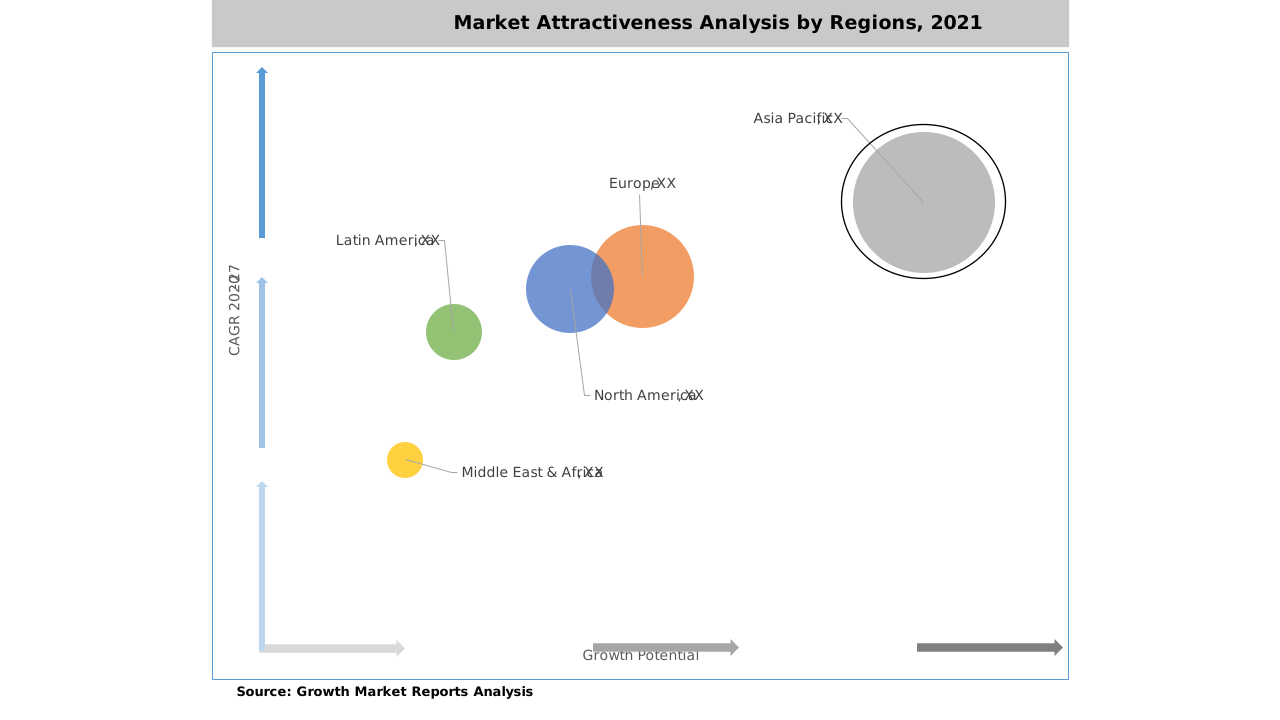
From a regional perspective, the Asia Pacific region is emerging as a key growth engine for the Maintenance Repair Operations (MRO) market. Rapid industrialization, expanding manufacturing bases, and significant investments in infrastructure development are driving demand for MRO solutions across countries such as China, India, and Southeast Asia. North America and Europe continue to hold substantial market shares, buoyed by the presence of advanced industries, stringent regulatory environments, and early adoption of digital MRO technologies. Meanwhile, the Middle East & Africa and Latin America are experiencing steady growth, supported by investments in energy, transportation, and construction sectors. The regional dynamics of the MRO market reflect a diverse landscape, with each geography presenting unique opportunities and challenges for market players.
The Maintenance Repair Operations (MRO) market is segmented by solution into MRO Software, MRO Services, and MRO Spare Parts, each playing a pivotal role in the overall value chain. MRO Software has gained significant traction in recent years, as organizations increasingly seek digital platforms to manage complex maintenance schedules, monitor asset performance, and streamline procurement processes. The adoption of cloud-based and AI-driven software solutions is enabling real-time data access, predictive analytics, and seamless integration with enterprise resource planning (ERP) systems. These advancements are transforming traditional maintenance practices, reducing manual intervention, and enhancing decision-making capabilities for maintenance managers. As industries continue to digitize their operations, the demand for sophisticated MRO software is expected to rise, driving innovation in features such as mobile accessibility, IoT integration, and advanced reporting tools.
MRO Services constitute a substantial share of the global MRO market, encompassing a wide range of activities such as maintenance planning, field services, technical support, and equipment refurbishment. The increasing complexity of machinery and the need for specialized expertise have prompted many organizations to outsource MRO services to third-party providers. This trend is particularly evident in industries such as aerospace, automotive, and energy, where the cost of downtime can be substantial. Service providers are leveraging advanced diagnostic tools, remote monitoring technologies, and predictive maintenance strategies to deliver value-added services that minimize equipment failures and optimize asset utilization. The growing emphasis on outcome-based service contracts and long-term maintenance partnerships is further driving the evolution of the MRO services segment.
MRO Spare Parts represent a critical component of the MRO ecosystem, ensuring the availability of essential components required for timely repairs and maintenance. Effective spare parts management is crucial for minimizing equipment downtime and maintaining operational continuity. Organizations are increasingly adopting inventory optimization solutions, automated procurement systems, and vendor-managed inventory (VMI) programs to streamline spare parts logistics and reduce carrying costs. The rise of e-commerce platforms and digital marketplaces for industrial parts has also transformed the procurement landscape, offering greater transparency, faster delivery times, and competitive pricing. As supply chain disruptions and lead time uncertainties persist, the focus on resilient and agile spare parts management is expected to intensify, driving growth in this segment.
The interplay between MRO Software, Services, and Spare Parts is shaping a holistic approach to maintenance management, where digital tools, specialized expertise, and efficient logistics converge to deliver superior outcomes. Market players are increasingly offering integrated solutions that combine software platforms with service delivery and spare parts provisioning, creating end-to-end value propositions for customers. This convergence is fostering greater collaboration across the MRO value chain, enabling organizations to achieve higher levels of efficiency, reliability, and cost-effectiveness in their maintenance operations.
| Attributes | Details |
| Report Title | Maintenance Repair Operations (MRO) Market Research Report 2033 |
| By Solution | MRO Software, MRO Services, MRO Spare Parts |
| By Application | Aerospace & Defense, Automotive, Manufacturing, Energy & Utilities, Healthcare, Construction, Transportation, Others |
| By Sourcing/Procurement Type | Internal, External |
| By End-User | OEMs, Aftermarket |
| Regions Covered | North America, Europe, APAC, Latin America, MEA |
| Base Year | 2024 |
| Historic Data | 2018-2023 |
| Forecast Period | 2025-2033 |
| Number of Pages | 256 |
| Number of Tables & Figures | 304 |
| Customization Available | Yes, the report can be customized as per your need. |
The application landscape of the Maintenance Repair Operations (MRO) market is highly diverse, spanning industries such as Aerospace & Defense, Automotive, Manufacturing, Energy & Utilities, Healthcare, Construction, Transportation, and others. In the Aerospace & Defense sector, MRO plays a critical role in ensuring the safety, reliability, and airworthiness of aircraft and defense equipment. The sector is characterized by stringent regulatory requirements, complex asset structures, and high-value maintenance contracts, driving demand for advanced MRO solutions. Digital MRO platforms, predictive maintenance tools, and specialized service providers are increasingly being adopted to enhance operational efficiency, reduce turnaround times, and comply with regulatory standards.
The Automotive industry is another major application area for MRO solutions, driven by the need to maintain large fleets, optimize production lines, and ensure vehicle reliability. As automotive manufacturers embrace automation, robotics, and electrification, the complexity of maintenance operations has increased, necessitating advanced MRO software and services. Predictive analytics, condition monitoring, and just-in-time spare parts delivery are becoming standard practices, enabling manufacturers to minimize downtime and improve overall equipment effectiveness (OEE). The growing adoption of electric vehicles (EVs) and connected car technologies is also creating new opportunities for specialized MRO solutions tailored to emerging automotive needs.
In the Manufacturing sector, MRO is essential for maintaining the performance and reliability of production equipment, minimizing unplanned outages, and optimizing asset utilization. Manufacturers are increasingly investing in digital maintenance platforms, IoT-enabled sensors, and data analytics to monitor equipment health, predict failures, and schedule preventive maintenance activities. The integration of MRO with broader enterprise asset management (EAM) systems is enabling a holistic approach to asset lifecycle management, supporting continuous improvement initiatives and driving operational excellence. As manufacturers face mounting pressure to enhance productivity and reduce costs, the adoption of advanced MRO solutions is expected to accelerate.
Other key application areas include Energy & Utilities, Healthcare, Construction, and Transportation, each with unique maintenance challenges and requirements. In the energy sector, MRO is critical for ensuring the reliability and safety of power generation, transmission, and distribution assets. Healthcare organizations rely on effective MRO practices to maintain medical equipment, comply with regulatory standards, and ensure patient safety. The construction and transportation sectors also depend on robust MRO solutions to manage equipment fleets, minimize downtime, and optimize resource utilization. As organizations across these industries continue to prioritize asset reliability and operational efficiency, the demand for tailored MRO solutions is expected to grow.
The Maintenance Repair Operations (MRO) market is segmented by sourcing or procurement type into Internal and External procurement, reflecting different strategies organizations employ to manage their maintenance activities. Internal procurement refers to organizations handling MRO activities using their in-house resources, maintenance teams, and procurement departments. This approach is favored by organizations with significant scale, technical expertise, and a desire to maintain direct control over maintenance processes. Internal procurement allows for greater customization of maintenance programs, faster response times, and enhanced alignment with organizational objectives. However, it also requires substantial investments in skilled personnel, training, and technology infrastructure, which can be challenging for smaller organizations or those with limited resources.
External procurement, on the other hand, involves outsourcing MRO activities to third-party service providers, specialized contractors, or vendors. This strategy is gaining popularity as organizations seek to focus on their core competencies, reduce operational overhead, and access specialized expertise. External procurement offers several benefits, including access to advanced technologies, scalable service delivery models, and performance-based contracts that align incentives with desired outcomes. Service providers often bring best practices, industry certifications, and economies of scale, enabling organizations to achieve higher levels of efficiency and cost-effectiveness. The increasing complexity of equipment and regulatory requirements is also driving the adoption of external procurement, particularly in sectors such as aerospace, energy, and healthcare.
The choice between internal and external procurement is influenced by several factors, including the size and complexity of the organization, the criticality of assets, regulatory considerations, and cost structures. Many organizations are adopting hybrid procurement models that combine internal capabilities with external partnerships to achieve the optimal balance of control, flexibility, and efficiency. For example, routine maintenance tasks may be managed internally, while specialized or high-risk activities are outsourced to expert providers. This trend is fostering greater collaboration and integration across the MRO value chain, enabling organizations to leverage the strengths of both internal and external resources.
The evolution of procurement strategies in the MRO market is also being shaped by digital technologies, such as e-procurement platforms, supplier relationship management (SRM) tools, and automated workflow systems. These technologies are streamlining procurement processes, enhancing transparency, and enabling real-time collaboration between buyers and suppliers. As organizations continue to seek cost savings, operational agility, and risk mitigation, the adoption of advanced procurement solutions is expected to drive further innovation and growth in the MRO market.
The Maintenance Repair Operations (MRO) market by end-user is broadly segmented into OEMs (Original Equipment Manufacturers) and Aftermarket participants, each with distinct roles and requirements. OEMs are increasingly integrating MRO services into their product offerings, providing end-to-end maintenance solutions, spare parts, and technical support to their customers. This approach allows OEMs to strengthen customer relationships, differentiate their products, and create new revenue streams through long-term service contracts. OEM-driven MRO solutions are characterized by deep technical expertise, access to proprietary technologies, and a strong focus on quality and compliance. As equipment becomes more complex and technologically advanced, the role of OEMs in the MRO market is expected to grow, particularly in sectors such as aerospace, automotive, and industrial machinery.
The Aftermarket segment encompasses a wide range of independent service providers, distributors, and third-party maintenance organizations that deliver MRO solutions to end-users. Aftermarket participants are often more agile and cost-competitive than OEMs, offering tailored solutions, flexible service models, and rapid response times. The rise of digital marketplaces, e-commerce platforms, and advanced logistics networks has enabled aftermarket providers to expand their reach, improve customer service, and streamline spare parts delivery. As organizations seek to optimize maintenance costs and reduce dependence on OEMs, the aftermarket segment is experiencing robust growth, particularly in mature industries with established equipment bases.
The interplay between OEMs and aftermarket providers is driving innovation and competition in the MRO market. OEMs are leveraging their technical expertise and brand reputation to offer premium service packages, while aftermarket providers are focusing on value-added services, cost savings, and customer-centric solutions. The increasing adoption of digital technologies, such as remote diagnostics, predictive maintenance, and IoT-enabled asset monitoring, is enabling both OEMs and aftermarket participants to enhance service delivery, improve asset reliability, and support data-driven decision-making.
As end-users continue to prioritize operational efficiency, asset uptime, and cost optimization, the demand for comprehensive MRO solutions from both OEMs and aftermarket providers is expected to rise. Market players are increasingly forming strategic partnerships, joint ventures, and collaborative ecosystems to deliver integrated maintenance solutions that address the evolving needs of industrial customers.
The Maintenance Repair Operations (MRO) market presents significant opportunities for growth and innovation, driven by the rapid digital transformation of industrial maintenance processes. The adoption of advanced technologies such as artificial intelligence, machine learning, IoT, and predictive analytics is enabling organizations to move towards condition-based and predictive maintenance strategies. These technologies offer the potential to reduce unplanned downtime, optimize spare parts inventory, and extend asset lifespans, delivering substantial cost savings and operational efficiencies. Market players that invest in digital MRO platforms, data-driven decision-making tools, and integrated service delivery models are well-positioned to capture emerging opportunities and drive long-term value for their customers.
Another key opportunity in the MRO market lies in the expansion of service offerings and the development of innovative business models. As organizations increasingly outsource non-core maintenance activities, there is growing demand for outcome-based service contracts, performance guarantees, and integrated maintenance solutions. Service providers that can deliver value-added services, such as remote monitoring, technical training, and supply chain optimization, are likely to gain a competitive edge. The rise of e-commerce platforms and digital marketplaces for industrial parts also presents new opportunities for market expansion, enabling providers to reach a broader customer base and offer faster, more efficient service delivery.
Despite these opportunities, the MRO market faces several restraining factors, including supply chain disruptions, skilled labor shortages, and the complexity of integrating new technologies with legacy systems. The ongoing volatility in global supply chains, exacerbated by geopolitical tensions and economic uncertainties, has led to challenges in spare parts availability, longer lead times, and increased costs. Additionally, the shortage of skilled maintenance technicians and the need for continuous training and upskilling pose significant challenges for organizations seeking to implement advanced MRO solutions. The integration of digital technologies with existing maintenance processes can also be complex and resource-intensive, requiring significant investments in change management, IT infrastructure, and cybersecurity.
The regional analysis of the Maintenance Repair Operations (MRO) market reveals a dynamic and evolving landscape, with Asia Pacific emerging as the fastest-growing region. In 2024, Asia Pacific accounted for approximately USD 220 billion of the global MRO market, driven by rapid industrialization, infrastructure development, and the expansion of manufacturing bases in countries such as China, India, and Southeast Asia. The region is expected to register the highest CAGR of 6.2% during the forecast period, supported by government initiatives to modernize industrial sectors, increasing foreign direct investment, and the adoption of advanced maintenance technologies. The growing presence of multinational corporations and the rising demand for reliable, efficient maintenance solutions are further fueling market growth in Asia Pacific.
North America remains a key market for MRO solutions, with a market size of approximately USD 195 billion in 2024. The region is characterized by the presence of advanced industries, stringent regulatory standards, and early adoption of digital MRO technologies. The United States, in particular, is a major contributor to market growth, driven by investments in aerospace, automotive, energy, and healthcare sectors. The focus on predictive maintenance, asset reliability, and operational efficiency is prompting organizations to invest in cutting-edge MRO software, services, and spare parts management solutions. Canada and Mexico are also witnessing steady growth, supported by expanding manufacturing activities and cross-border trade.
Europe holds a significant share of the global MRO market, with a market size of around USD 170 billion in 2024. The region benefits from a strong industrial base, advanced manufacturing capabilities, and a high level of regulatory compliance. Countries such as Germany, France, and the United Kingdom are leading adopters of digital MRO solutions, driven by the need to maintain competitiveness, enhance productivity, and comply with stringent safety and environmental regulations. The Middle East & Africa and Latin America, while smaller in market size, are experiencing steady growth, supported by investments in energy, transportation, and infrastructure development. The regional dynamics of the MRO market reflect a diverse set of opportunities and challenges, with each geography presenting unique market drivers and customer needs.
The competitive landscape of the global Maintenance Repair Operations (MRO) market is characterized by the presence of a diverse array of players, ranging from multinational conglomerates to specialized service providers and innovative technology vendors. The market is highly fragmented, with competition intensifying across solution, application, and regional segments. Leading companies are investing heavily in research and development, digital transformation, and strategic partnerships to enhance their product offerings, expand their geographic reach, and strengthen their market positions. The shift towards integrated MRO solutions, outcome-based service models, and digital platforms is driving consolidation and collaboration across the industry, as players seek to deliver comprehensive value propositions to their customers.
Innovation is a key differentiator in the MRO market, with companies leveraging advanced technologies such as AI, IoT, and predictive analytics to develop next-generation maintenance solutions. The ability to provide real-time asset monitoring, data-driven insights, and seamless integration with enterprise systems is becoming increasingly important for gaining a competitive edge. Companies are also focusing on enhancing customer experience, improving service delivery, and optimizing supply chain operations to meet the evolving needs of industrial customers. The rise of e-commerce platforms and digital marketplaces for industrial parts is creating new avenues for competition, enabling smaller players to compete with established giants on a global scale.
Strategic partnerships, mergers and acquisitions, and joint ventures are common strategies employed by market leaders to expand their capabilities, enter new markets, and access complementary technologies. The trend towards outsourcing and external procurement is prompting service providers to invest in talent development, technical training, and global service networks to deliver high-quality, reliable maintenance solutions. As the market continues to evolve, companies that can balance innovation, operational excellence, and customer-centricity are likely to emerge as winners in the competitive landscape.
Some of the major companies operating in the global MRO market include Honeywell International Inc., Siemens AG, General Electric Company, WESCO International Inc., Sonepar Group, W.W. Grainger, Inc., Boeing Global Services, Airbus S.A.S., SKF Group, and ABB Ltd. These companies offer a wide range of MRO solutions, including software platforms, maintenance services, and spare parts provisioning, catering to diverse industries and customer segments. Honeywell International, for example, is a leader in digital MRO solutions, offering advanced analytics, IoT-enabled asset monitoring, and integrated service delivery models. Siemens AG and General Electric are renowned for their expertise in industrial automation, predictive maintenance, and asset management solutions, serving customers in energy, manufacturing, and transportation sectors.
WESCO International and Sonepar Group are prominent distributors of MRO spare parts, leveraging extensive supply chain networks, digital marketplaces, and value-added services to support industrial customers worldwide. W.W. Grainger is a leading provider of maintenance, repair, and operating supplies, offering a comprehensive range of products and services through its digital platforms and global distribution centers. In the aerospace sector, Boeing Global Services and Airbus S.A.S. are major players, providing end-to-end MRO solutions, technical support, and spare parts management for commercial and defense customers. SKF Group and ABB Ltd. are known for their expertise in industrial equipment maintenance, condition monitoring, and reliability engineering, supporting customers across manufacturing, energy, and infrastructure sectors.
These leading companies are continuously investing in innovation, digital transformation, and customer engagement to maintain their competitive edge in the dynamic MRO market. By leveraging advanced technologies, expanding service offerings, and building strategic partnerships, they are well-positioned to capitalize on emerging opportunities and drive sustainable growth in the years ahead.
The Maintenance Repair Operations (MRO) market has been segmented on the basis of
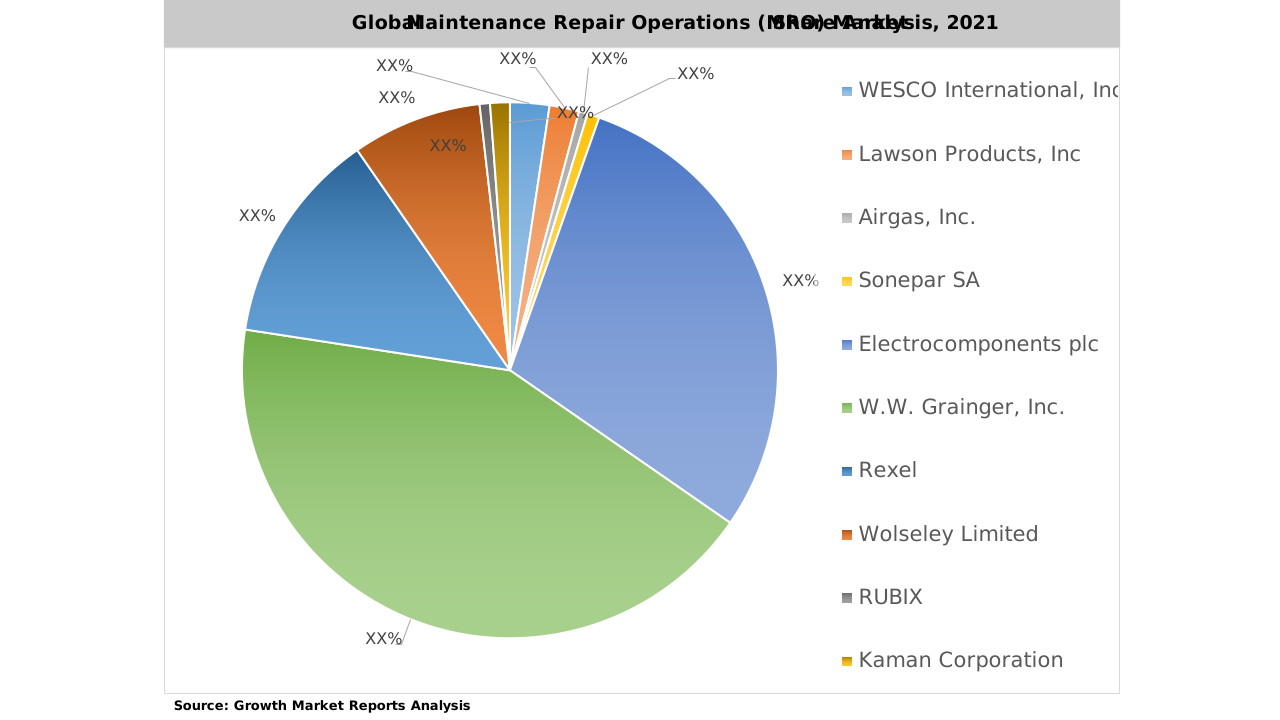
Key players in the maintenance repair operations (MRO) market include WESCO International, Inc.; Lawson Products, Inc; Airgas, Inc.; Sonepar SA; Electrocomponents plc; W.W. Grainger, Inc.; Rexel; Wolseley Limited; RUBIX; and Kaman Corporation. These players engage in mergers & acquisitions, collaborations, agreements, and partnerships to strengthen their geographical presence.
The aftermarket segment is growing rapidly, with independent service providers offering agile, cost-competitive, and customer-centric MRO solutions, supported by digital marketplaces and advanced logistics networks.
Opportunities include digital transformation, predictive analytics, and outcome-based service contracts. Challenges involve supply chain disruptions, skilled labor shortages, and integrating new technologies with legacy systems.
Major companies include Honeywell International Inc., Siemens AG, General Electric Company, WESCO International Inc., Sonepar Group, W.W. Grainger, Inc., Boeing Global Services, Airbus S.A.S., SKF Group, and ABB Ltd.
Internal procurement involves in-house management of MRO activities, offering control and customization. External procurement outsources MRO to third-party providers, offering access to specialized expertise, scalability, and cost-effectiveness.
Key industries include Aerospace & Defense, Automotive, Manufacturing, Energy & Utilities, Healthcare, Construction, and Transportation, each with unique maintenance requirements and challenges.
Digital transformation is revolutionizing MRO with cloud-based software, mobile apps, AI-driven analytics, and IoT integration, enabling real-time asset monitoring, predictive maintenance, and improved decision-making.
The MRO market is segmented into MRO Software, MRO Services, and MRO Spare Parts. Each plays a vital role in maintenance management and operational efficiency.
Asia Pacific is the fastest-growing region, driven by rapid industrialization and infrastructure development. North America and Europe also hold significant market shares due to advanced industries and early adoption of digital MRO technologies.
Key growth drivers include increasing industrialization, expansion of manufacturing capacities, adoption of digital MRO solutions, focus on operational efficiency, and the integration of predictive maintenance and IoT technologies.
The global Maintenance Repair Operations (MRO) market reached USD 734.6 billion in 2024 and is projected to grow at a CAGR of 4.7%, reaching approximately USD 1,108.6 billion by 2033.