Machine Mounted Hydraulic Breaker Market 2025-2034

Machine Mounted Hydraulic Breaker Market 2025-2034

Segments - by Product Type (Silenced Hydraulic Breakers, Standard Hydraulic Breakers, Heavy Duty Hydraulic Breakers), by Mounting Type (Excavators, Backhoe Loaders, Skid Steer Loaders, Others), by Application (Construction, Mining, Demolition, Quarry, Others), by End-User (Construction Industry, Mining Industry, Municipal Engineering, Others)

https://growthmarketreports.com/Raksha
Author : Raksha Sharma
https://growthmarketreports.com/Vaibhav
Fact-checked by : V. Chandola
https://growthmarketreports.com/Rucha
Editor : Rucha Phatak

Last Updated : Jun, 2026 | Report ID :CM-2467 | 4.2 Rating | 60 Reviews | 289 Pages | Format : Docx PDF

Report Description

This report is updated with the latest market data and insights as of June 2026. Base year: 2025  |  Forecast period: 2026-2034


Machine Mounted Hydraulic Breaker Market Outlook

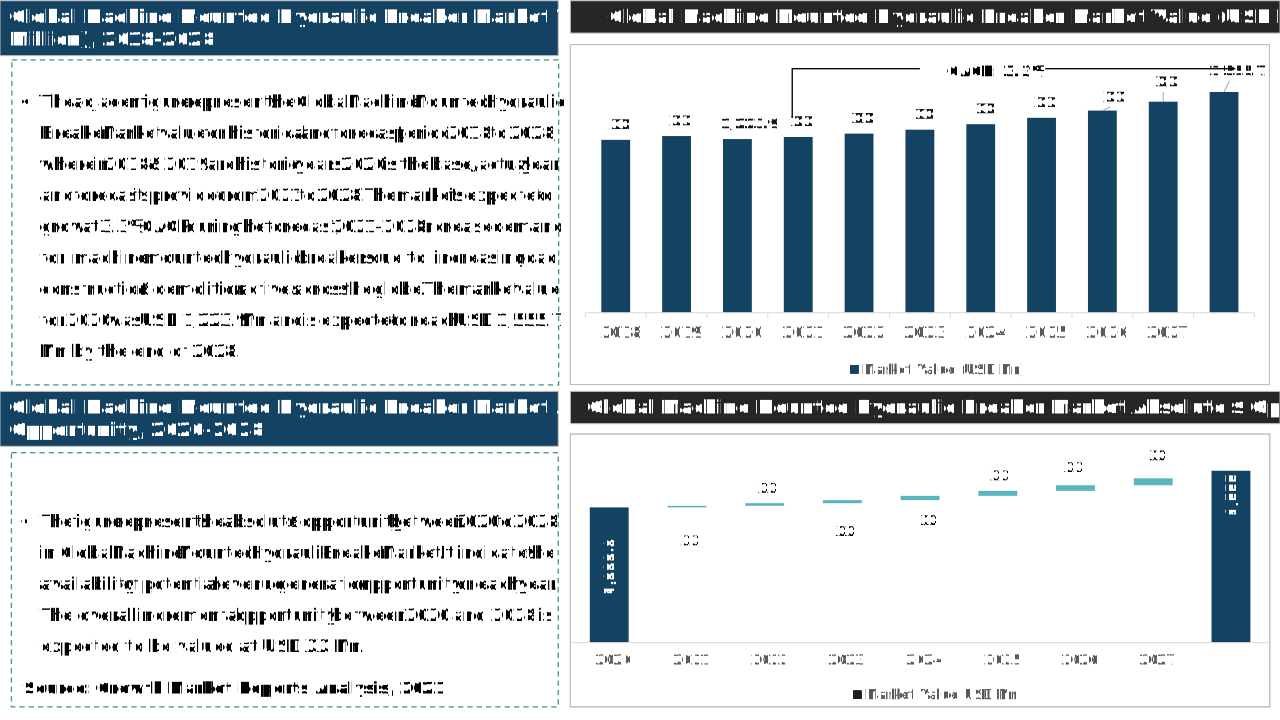
According to our latest research, the global machine mounted hydraulic breaker market size reached USD 3.01 billion in 2025, reflecting robust demand across multiple end-use industries. The market is poised for substantial growth, projected to expand at a CAGR of 5.7% from 2026 to 2034. By the end of the forecast period, the market is anticipated to attain a value of approximately USD 4.97 billion. This growth trajectory is primarily driven by heightened construction and mining activities worldwide, coupled with ongoing urbanization and infrastructure development initiatives. As per our latest research, the market is witnessing significant technological advancements in hydraulic breaker equipment, further propelling adoption across diverse applications and geographies.

Global Machine Mounted Hydraulic Breaker Market Size Forecast 2025-2034, USD Billion

A prominent growth factor bolstering the machine mounted hydraulic breaker market is the surge in global infrastructure development. Governments and private entities are investing heavily in the construction of roads, bridges, railways, and commercial buildings to meet the demands of growing urban populations. This trend is particularly pronounced in emerging economies, where rapid urbanization and industrialization are accelerating the need for efficient and powerful equipment. The versatility and effectiveness of machine mounted hydraulic breakers in breaking hard surfaces, rocks, and concrete make them indispensable in large-scale construction projects. Additionally, the integration of advanced features such as noise reduction, enhanced durability, and improved energy efficiency is increasing their adoption, thereby contributing to overall market growth through 2034.

Another critical driver for the market is the ongoing expansion of the global mining sector. The extraction of minerals, metals, and aggregates requires robust and reliable equipment capable of withstanding harsh working environments. Machine mounted hydraulic breakers are extensively used for secondary breaking, trenching, and removing oversized rocks in mining operations. The growing demand for critical minerals in the energy transition, manufacturing, and construction industries is fueling mining activities globally. Furthermore, advancements in hydraulic breaker technology, such as automated controls and improved hydraulic systems, are enhancing operational efficiency and reducing downtime. For perspective on adjacent drilling equipment trends, the industrial hydraulic rock drill market provides complementary insight into the broader rock fragmentation equipment landscape.

The demolition and quarrying industries also play a significant role in driving the market for machine mounted hydraulic breakers. As urban centers expand and aging infrastructure is replaced or upgraded, the need for efficient demolition solutions becomes critical. Hydraulic breakers offer superior performance in breaking down concrete structures, foundations, and rocks, facilitating faster and safer demolition processes. In quarrying operations, these breakers are essential for fragmenting large stones, enabling easier handling and processing. The increasing focus on sustainable demolition practices and the adoption of environmentally friendly equipment are encouraging manufacturers to develop hydraulic breakers with reduced emissions and noise levels, creating new opportunities for market players through the forecast period.
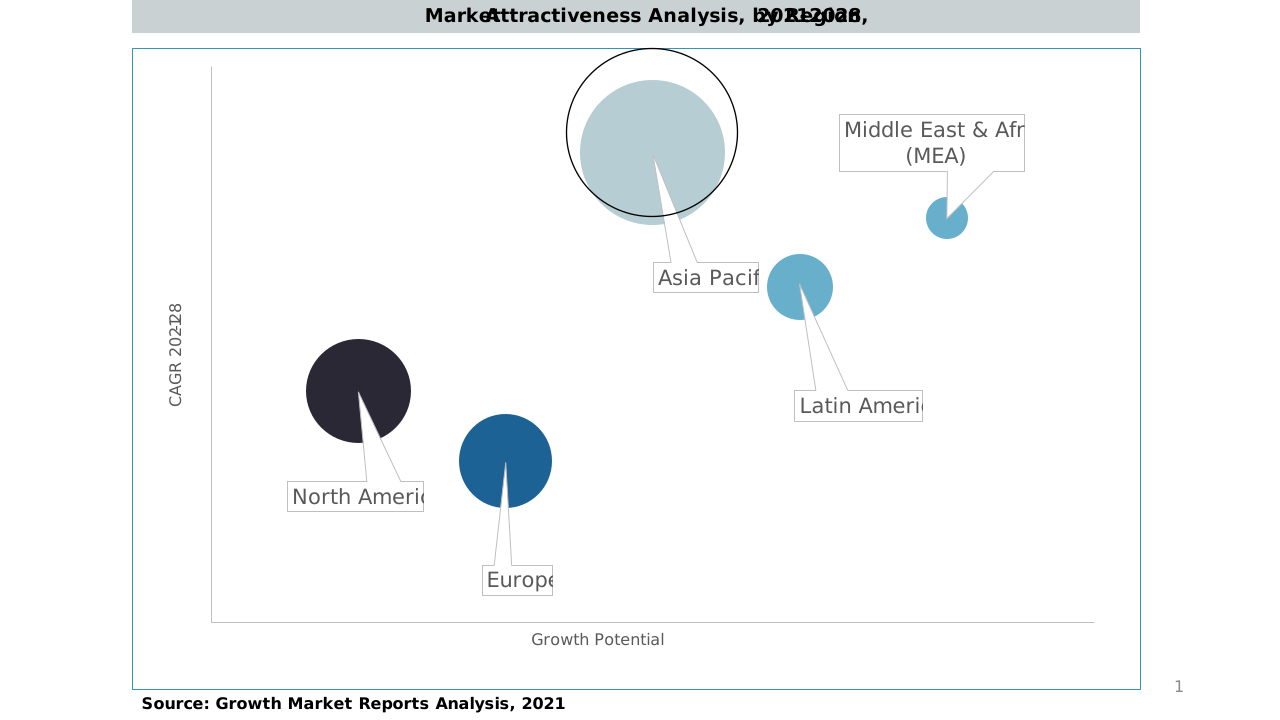
From a regional perspective, Asia Pacific dominates the machine mounted hydraulic breaker market, accounting for the largest share in 2025. The region's leadership is attributed to massive infrastructure projects in countries such as China, India, and Southeast Asian nations. North America and Europe also represent significant markets, driven by ongoing urban renewal projects and the modernization of mining and construction equipment. Meanwhile, the Middle East & Africa and Latin America are witnessing steady growth, supported by investments in mining, oil & gas, and construction sectors. The regional outlook remains positive, with Asia Pacific expected to maintain its dominance throughout the 2026-2034 forecast period, while other regions continue to present lucrative growth opportunities.

Product Type Analysis

The machine mounted hydraulic breaker market is segmented by product type into silenced hydraulic breakers, standard hydraulic breakers, and heavy-duty hydraulic breakers. Silenced hydraulic breakers are gaining substantial traction due to their ability to minimize noise pollution, which is increasingly important in urban construction and demolition projects. These breakers are equipped with advanced noise reduction technologies that make them suitable for use in residential areas and city centers where noise regulations are stringent. The demand for silenced breakers is further fueled by growing environmental awareness and the implementation of stricter government regulations regarding occupational health and safety. As a result, manufacturers are investing in research and development to enhance the performance and durability of silenced hydraulic breakers, making them a preferred choice for contractors and construction companies operating in noise-sensitive environments in 2025 and beyond.

Machine Mounted Hydraulic Breaker Market Share by Product Type 2025

Standard hydraulic breakers continue to hold the largest share of the market, approximately 41.0% in 2025, owing to their versatility and cost-effectiveness. These breakers are widely used across construction, mining, and quarrying applications due to their robust performance and ease of maintenance. Standard breakers are often the go-to option for small to medium-sized projects where heavy-duty performance is not required. Their relatively lower cost compared to heavy-duty and silenced models makes them attractive for budget-conscious buyers and small contractors. However, the market for standard breakers faces competition from technologically advanced alternatives, prompting manufacturers to introduce incremental innovations to retain market share. Buyers seeking related equipment can also explore the broader construction equipment hydraulic attachment market for complementary product categories.

Heavy-duty hydraulic breakers are designed for the most demanding applications, such as large-scale mining, quarrying, and demolition projects. These breakers offer superior impact energy and durability, making them suitable for breaking extremely hard materials and handling high-intensity workloads. The adoption of heavy-duty breakers is particularly high in regions with extensive mining and quarrying activities, such as Asia Pacific, Latin America, and Africa. The increasing scale of mining operations and the need for efficient equipment to enhance productivity are driving demand for heavy-duty hydraulic breakers, which accounted for approximately 30.5% of the market in 2025. Manufacturers are focusing on improving reliability and operational efficiency by incorporating advanced hydraulic systems and wear-resistant materials into their heavy-duty product lines.

The product type segment is characterized by intense competition among manufacturers, with continuous innovation aimed at improving performance, reducing maintenance costs, and enhancing operator safety. The introduction of smart hydraulic breakers with automated features, remote monitoring, and predictive maintenance capabilities is reshaping the competitive landscape. These advancements are not only improving operational efficiency but also reducing total cost of ownership for end-users. As the market evolves through 2034, product differentiation based on technological innovation, energy efficiency, and environmental compliance will remain key strategies for manufacturers to gain a competitive edge. The rock breaker market offers additional context on fragmentation equipment trends that influence hydraulic breaker product development priorities.

Report Scope

Attributes Details
Report Title Machine Mounted Hydraulic Breaker Market Research Report 2034
By Product Type Silenced Hydraulic Breakers, Standard Hydraulic Breakers, Heavy Duty Hydraulic Breakers
By Mounting Type Excavators, Backhoe Loaders, Skid Steer Loaders, Others
By Application Construction, Mining, Demolition, Quarry, Others
By End-User Construction Industry, Mining Industry, Municipal Engineering, Others
Regions Covered North America, Europe, APAC, Latin America, MEA
Base Year 2025
Historic Data 2019-2024
Forecast Period 2026-2034
Number of Pages 289
Number of Tables & Figures 321
Customization Available Yes, the report can be customized as per your need.

Mounting Type Analysis

The mounting type segment of the machine mounted hydraulic breaker market includes excavators, backhoe loaders, skid steer loaders, and others. Excavators represent the largest segment, as they are the most commonly used machines for mounting hydraulic breakers across various applications. The compatibility of hydraulic breakers with a wide range of excavator models, from mini to large, enhances their versatility and adoption. Excavator-mounted breakers are preferred for their superior reach, maneuverability, and ability to handle heavy-duty tasks, making them indispensable in construction, mining, and demolition projects. The rising demand for efficient and multi-functional equipment is driving the growth of excavator-mounted hydraulic breakers as the dominant mounting configuration in 2025.

Backhoe loaders are another popular mounting option, particularly in urban construction and municipal engineering projects. The compact size and versatility of backhoe loaders make them ideal for use in confined spaces and small to medium-sized projects. Hydraulic breakers mounted on backhoe loaders are commonly used for road maintenance, utility work, and landscaping applications. The growing trend of urbanization and the need for efficient equipment for municipal projects are contributing to increasing adoption of backhoe loader-mounted hydraulic breakers. Manufacturers are focusing on developing lightweight and easy-to-install breakers to cater to the specific requirements of backhoe loader users, an area where products comparable to those in the paving breaker segment also compete for share in road maintenance applications.

Skid steer loaders, known for their agility and compact design, are increasingly being equipped with hydraulic breakers for tasks that require high maneuverability in tight spaces. These loaders are widely used in landscaping, small-scale demolition, and residential construction projects. The ability to quickly switch attachments makes skid steer loaders a flexible choice for contractors who require a multi-purpose machine. The demand for hydraulic breakers compatible with skid steer loaders is expected to grow through 2034, driven by increasing adoption of compact construction equipment in urban areas and the rising popularity of rental equipment among small contractors.

The "others" category includes mounting options such as wheel loaders, compact track loaders, and other specialized machinery. While these mounting types represent a smaller share of the market, they are essential for specific applications that require unique capabilities. Wheel loaders equipped with hydraulic breakers are used in mining and quarrying operations for material handling and secondary breaking. The demand for specialized mounting solutions is expected to increase as industries seek more tailored equipment to meet their unique operational requirements. Overall, the mounting type segment is characterized by a growing emphasis on compatibility, ease of installation, and operational flexibility.

Application Analysis

The application segment of the machine mounted hydraulic breaker market encompasses construction, mining, demolition, quarry, and others. Construction remains the dominant application, accounting for the largest share of the market in 2025. The widespread use of hydraulic breakers for breaking concrete, rock, and asphalt in infrastructure development projects drives their demand in the construction sector. The increasing number of residential, commercial, and industrial construction projects, particularly in emerging economies, is fueling adoption. The trend toward smart cities and sustainable construction practices is encouraging the use of advanced hydraulic breakers with improved energy efficiency and reduced environmental impact.

Mining is another key application area, where hydraulic breakers are used for secondary breaking, trenching, and removal of oversized rocks. The growing demand for critical minerals and metals in energy transition, manufacturing, and construction industries is driving mining activities worldwide, thereby increasing the need for efficient and reliable equipment. Hydraulic breakers are preferred in mining operations due to their ability to deliver high impact energy and withstand harsh working conditions. The adoption of advanced hydraulic breaker technologies, including automated controls and remote monitoring, is further enhancing performance and operational efficiency in mining applications across all major producing regions.

Demolition is a significant application segment, with hydraulic breakers being widely used for breaking down old structures, foundations, and pavements. The increasing focus on urban renewal and redevelopment projects is driving demand for efficient demolition solutions worldwide. Hydraulic breakers offer superior performance in breaking concrete and masonry, enabling faster and safer demolition processes. The adoption of silenced hydraulic breakers in urban demolition projects is particularly noteworthy, as they help minimize noise pollution and comply with stringent environmental regulations that have become more prevalent across European and North American markets since 2022.

The quarry segment contributes meaningfully to the growth of the machine mounted hydraulic breaker market. Hydraulic breakers are essential for fragmenting large stones and rocks in quarrying operations, facilitating easier handling and processing. The demand for aggregates in construction and infrastructure projects is driving quarrying activities, thereby increasing the need for efficient hydraulic breakers. The adoption of heavy-duty breakers in large-scale quarrying operations is particularly high, as they offer the required impact energy and durability to handle tough materials across extended operational cycles.

The "others" application segment includes utility work, landscaping, and road maintenance. While these applications represent a smaller share of the market, they are essential for specific projects that require precision and efficiency. The versatility of hydraulic breakers and their compatibility with various mounting types make them suitable for a wide range of applications beyond construction, mining, demolition, and quarrying. As industries continue to seek more efficient and versatile equipment, the application segment is expected to witness further diversification and growth throughout the 2026-2034 forecast period.

End-User Analysis

The end-user segment of the machine mounted hydraulic breaker market includes the construction industry, mining industry, municipal engineering, and others. The construction industry is the largest end-user, driven by the increasing number of infrastructure development projects worldwide. Hydraulic breakers are widely used in construction for breaking concrete, rock, and asphalt, making them essential for road construction, building foundations, and urban development projects. The growing trend of urbanization and the need for efficient construction equipment are fueling adoption of hydraulic breakers in the construction industry. Manufacturers are focusing on developing advanced breakers with improved energy efficiency and reduced environmental impact to cater to the evolving needs of the construction sector as sustainability requirements intensify through 2034.

The mining industry is another major end-user, with hydraulic breakers being extensively used for secondary breaking, trenching, and removal of oversized rocks. The demand for minerals and metals in various industries, including the rapidly growing battery and renewable energy sectors, is driving mining activities globally. Hydraulic breakers are preferred in mining operations due to their ability to deliver high impact energy and withstand harsh working conditions. The adoption of advanced hydraulic breaker technologies, such as automated controls and remote monitoring, is further enhancing performance and operational efficiency in mining applications, contributing to sustained procurement activity across key mining regions.

Municipal engineering is an important end-user segment, particularly in urban areas where the need for efficient equipment for road maintenance, utility work, and landscaping is increasing. Hydraulic breakers are used for breaking concrete and asphalt in road repair and maintenance projects, as well as for utility installations and landscaping work. The growing focus on urban renewal and infrastructure maintenance is driving demand for hydraulic breakers in municipal engineering. Manufacturers are developing lightweight and easy-to-install breakers to cater to the specific requirements of municipal projects, which typically prioritize low noise, compact footprint, and ease of operation by municipal crews.

The "others" end-user segment includes industries such as oil & gas, agriculture, and forestry. While these industries represent a smaller share of the market, they are essential for specific applications that require precision and efficiency. The versatility of hydraulic breakers and their compatibility with various mounting types make them suitable for a wide range of end-users beyond construction, mining, and municipal engineering. As industries continue to seek more efficient and versatile equipment through the forecast period, the end-user segment is expected to witness further diversification and growth, presenting incremental revenue opportunities for manufacturers with broad product portfolios.

Opportunities & Threats

The machine mounted hydraulic breaker market presents a range of compelling opportunities for growth and innovation. One of the most significant opportunities lies in the integration of smart technologies and automation within hydraulic breakers. The adoption of Internet of Things (IoT) solutions, remote monitoring, and predictive maintenance capabilities can significantly enhance operational efficiency and reduce downtime for end-users. These technological advancements not only improve equipment reliability but also enable operators to optimize performance and manage maintenance schedules proactively. Manufacturers investing in digital transformation and the development of intelligent hydraulic breakers are well-positioned to capitalize on the growing demand for connected and automated construction and mining equipment. Additionally, the increasing emphasis on sustainability and environmental compliance is creating opportunities for the development of eco-friendly hydraulic breakers with reduced emissions and noise levels, a trend that closely mirrors developments covered in the hydraulic crawler drill market.

Another promising opportunity for market players is the expansion into emerging markets, particularly in Asia Pacific, Latin America, and Africa. Rapid urbanization, industrialization, and infrastructure development in these regions are driving demand for construction and mining equipment, including hydraulic breakers. Companies that establish a strong presence in these high-growth markets can benefit from increased sales and market share. Furthermore, the rising trend of equipment rental services presents an opportunity for manufacturers to cater to small and medium-sized contractors who prefer renting equipment over purchasing. By offering flexible rental solutions and value-added services, companies can tap into a growing customer base and generate recurring revenue streams through the 2026-2034 forecast period.

Despite the positive outlook, the machine mounted hydraulic breaker market faces certain restraining factors that could hinder growth. One of the primary challenges is the high initial cost of hydraulic breakers and associated equipment. The significant investment required for purchasing and maintaining hydraulic breakers can be a barrier for small contractors and businesses with limited budgets. Additionally, the market is subject to fluctuations in raw material prices, particularly steel and other metals, which can impact manufacturing costs and profit margins. Economic uncertainties and cyclical downturns in the construction and mining industries can also affect demand for hydraulic breakers. To mitigate these challenges, manufacturers are focusing on cost optimization, offering financing options, and developing more affordable and durable equipment to cater to a broader customer base.

Regional Outlook

The regional analysis of the machine mounted hydraulic breaker market reveals significant variations in market size, growth rates, and adoption patterns across different regions. Asia Pacific remains the largest and fastest-growing market, accounting for approximately USD 1.25 billion in 2025, driven by massive infrastructure projects and rapid urbanization in countries such as China, India, and Southeast Asian nations. The region is expected to maintain a strong growth trajectory, with a projected CAGR of 6.4% from 2026 to 2034. Government initiatives to improve transportation networks, expand urban infrastructure, and develop smart cities are fueling demand for advanced construction and mining equipment, including hydraulic breakers. The presence of major manufacturers and the availability of cost-effective equipment further contribute to the region's dominance throughout the forecast period.

Machine Mounted Hydraulic Breaker Market Regional Share 2025

In North America, the market size reached approximately USD 677 million in 2025, supported by ongoing investments in infrastructure renewal and modernization. The United States and Canada are leading markets, with a strong focus on upgrading transportation networks, utilities, and energy infrastructure under multi-year federal spending programs. The adoption of advanced hydraulic breaker technologies, such as automated controls and remote monitoring, is higher in North America compared to most other regions. The region also benefits from a well-established rental equipment market, which enables small and medium-sized contractors to access high-quality hydraulic breakers without significant upfront investment. The market in North America is expected to grow steadily over the 2026-2034 forecast period, driven by continued infrastructure spending and technological advancements.

Europe represents another significant market, with a market size of around USD 572 million in 2025. The region is characterized by stringent environmental regulations and a strong emphasis on sustainability, which is driving the adoption of silenced and eco-friendly hydraulic breakers. Key markets in Europe include Germany, the United Kingdom, France, and Italy, where ongoing urban renewal projects and the modernization of construction and mining equipment are fueling demand. The market in Europe is expected to witness moderate but steady growth, supported by investments in infrastructure, energy, and transportation sectors. Meanwhile, Latin America and Middle East & Africa are emerging markets with significant growth potential, driven by investments in mining, oil & gas, and construction sectors. The combined market size for these regions is estimated at approximately USD 512 million in 2025, with steady growth expected over the forecast period as infrastructure development and industrialization continue to advance across both regions.

Competitor Outlook

The competitive landscape of the machine mounted hydraulic breaker market is characterized by the presence of several global and regional players, each striving to enhance their market position through innovation, strategic partnerships, and expansion into new markets. Leading companies are focusing on developing technologically advanced hydraulic breakers that offer superior performance, durability, and energy efficiency. The integration of smart technologies, such as IoT-enabled monitoring systems and automated controls, is becoming a key differentiator among top manufacturers. Additionally, companies are investing in research and development to introduce eco-friendly and silenced hydraulic breakers that comply with stringent environmental regulations and meet the evolving needs of urban construction and demolition projects globally.

Strategic collaborations and partnerships with construction and mining companies, equipment rental firms, and distributors are common strategies employed by market players to expand their customer base and enhance market penetration. Manufacturers are also focusing on expanding their product portfolios to cater to a wide range of applications and mounting types. Customization and value-added services, such as on-site support, training, and maintenance programs, are increasingly being offered to strengthen customer relationships and ensure long-term loyalty. The competitive landscape is further shaped by mergers and acquisitions, as companies seek to consolidate their market position and gain access to new technologies and markets as the 2026-2034 forecast period unfolds.

The market is witnessing increased competition from regional players, particularly in emerging markets, where cost-effective solutions and localized support are critical success factors. These regional players often have a deep understanding of local market dynamics and customer preferences, enabling them to offer tailored solutions that meet specific requirements. However, global players continue to dominate the market, leveraging their extensive distribution networks, strong brand reputation, and technological expertise to maintain a competitive edge. The ability to innovate and adapt to changing market trends will remain crucial for companies seeking to sustain growth and profitability in the highly competitive machine mounted hydraulic breaker market through 2034.

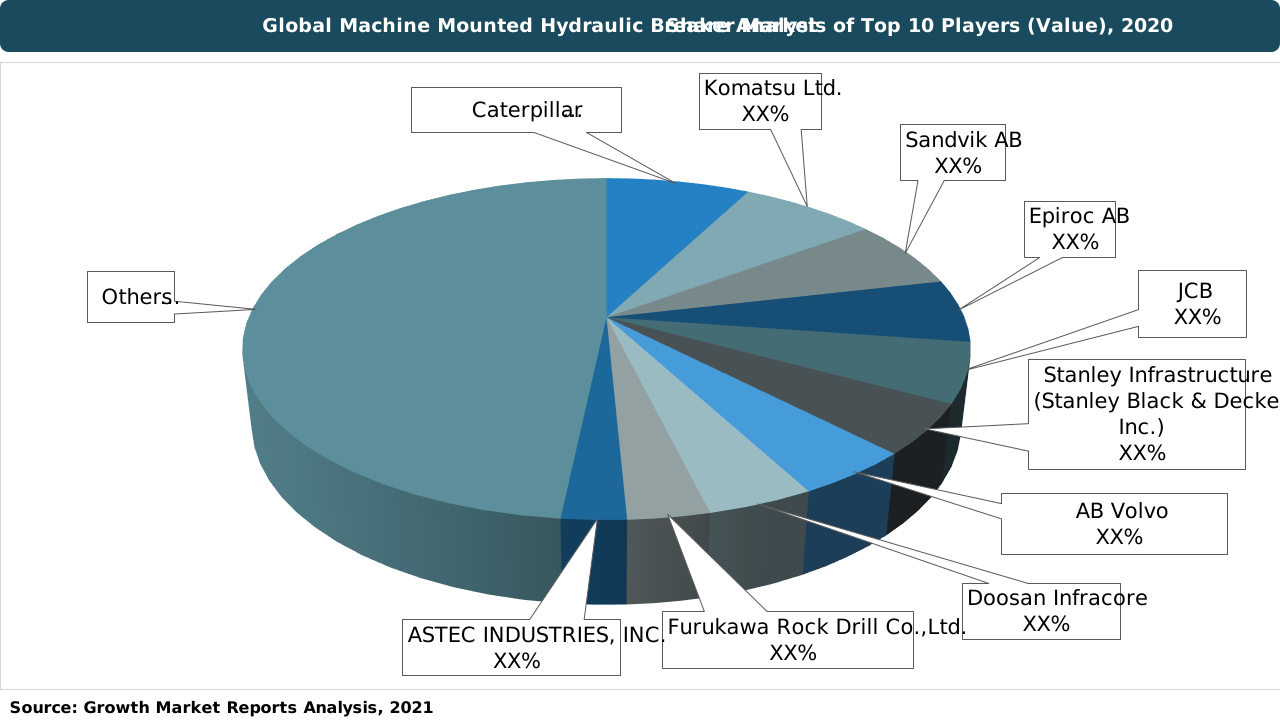
Major companies operating in the machine mounted hydraulic breaker market include Atlas Copco, Epiroc, Komatsu, Caterpillar, Sandvik, Furukawa Rock Drill, Montabert, Indeco, Stanley Infrastructure, and Soosan Heavy Industries. Atlas Copco and Epiroc are renowned for their extensive product portfolios and focus on technological innovation, offering a wide range of hydraulic breakers for various applications and mounting types. Komatsu and Caterpillar are global leaders in construction and mining equipment, with a strong presence in the hydraulic breaker market through their comprehensive product offerings and robust distribution networks. Sandvik and Furukawa Rock Drill are known for their high-performance and durable hydraulic breakers, catering to the needs of demanding applications in mining, quarrying, and construction across key global markets.

Montabert and Indeco are recognized for their expertise in developing advanced hydraulic breaker technologies, including silenced and eco-friendly models that comply with evolving regulatory standards. Stanley Infrastructure and Soosan Heavy Industries are prominent players with a strong focus on customer support, offering customized solutions and value-added services to meet diverse end-user requirements. These companies are continuously investing in research and development to enhance the performance, reliability, and sustainability of their hydraulic breakers. The competitive landscape is expected to remain dynamic, with ongoing innovation, strategic partnerships, and market expansion driving growth and shaping the future of the machine mounted hydraulic breaker market through the forecast period ending in 2034.

Key Players

  • Atlas Copco AB
  • Caterpillar Inc.
  • Komatsu Ltd.
  • Sandvik AB
  • Epiroc AB
  • Indeco Ind. SpA
  • Furukawa Rock Drill Co., Ltd.
  • Stanley Infrastructure (Stanley Black & Decker)
  • Soosan Heavy Industries Co., Ltd.
  • NPK Construction Equipment, Inc.
  • JCB
  • Okada Aiyon Corporation
  • Rammer (Sandvik)
  • Everdigm Corp.
  • Montabert SAS
  • DAEMO Engineering Co., Ltd.
  • Toku America Inc.
  • Beilite Machinery Co., Ltd.

Segments

The Machine Mounted Hydraulic Breaker market has been segmented on the basis of

Product Type

  • Silenced Hydraulic Breakers
  • Standard Hydraulic Breakers
  • Heavy Duty Hydraulic Breakers

Mounting Type

  • Excavators
  • Backhoe Loaders
  • Skid Steer Loaders
  • Others

Application

  • Construction
  • Mining
  • Demolition
  • Quarry
  • Others

End-User

  • Construction Industry
  • Mining Industry
  • Municipal Engineering
  • Others

Frequently Asked Questions

Yes. The report offers full customization of company profiles. If you require profiles of companies not included in the standard report, our research team can incorporate additional players based on your specific regional focus, product segment interest, or competitive intelligence requirements. Custom profiles can include financial performance data, product portfolio analysis, recent strategic developments, and market positioning assessments. Please contact our sales team with your customization requirements and we will provide a tailored solution to meet your business intelligence needs.

Based on the 2025 base market size of USD 3.01 billion and a forecast CAGR of 5.7%, the global machine mounted hydraulic breaker market is projected to reach approximately USD 3.55 billion by 2028. Asia Pacific will remain the dominant regional market, accounting for the largest share of this value, while North America and Europe will contribute significant revenue pools. Growth will be supported by continued infrastructure spending, mining sector expansion, and increasing adoption of technologically advanced and environmentally compliant hydraulic breakers across all major end-use industries.

Beyond the core market sizing and forecasting, this report provides detailed segment-level revenue analysis by product type, mounting type, application, end-user, and region for the period 2019-2034. Additional analysis includes competitive benchmarking, company market share estimates, value chain and supply chain analysis, pricing trends, raw material cost analysis, trade flow data, regulatory landscape assessment, technology trend analysis covering smart and eco-friendly breaker developments, and an investment attractiveness index by segment and region. Customized data cuts and additional country-level breakdowns are available upon request.

The primary factors driving growth in the machine mounted hydraulic breaker market include accelerating global infrastructure development, rapid urbanization in emerging economies, expansion of mining activities driven by demand for critical minerals and metals, increasing urban demolition and redevelopment projects, and ongoing adoption of technologically advanced equipment. Additional drivers include stricter occupational health and safety regulations encouraging adoption of silenced breakers, integration of IoT-based monitoring and predictive maintenance features, and the growth of equipment rental markets that broaden access to hydraulic breakers among small and medium-sized contractors.

Companies profiled in this report are selected based on a multi-factor assessment that includes annual revenue from hydraulic breaker and related attachment product lines, global or significant regional market presence, product portfolio breadth and technological innovation, manufacturing capability and supply chain reach, and recent strategic activities such as mergers, acquisitions, partnerships, and new product launches. Only companies that genuinely manufacture or distribute machine mounted hydraulic breakers are included. Trade associations, government bodies, and research institutions are excluded from company profiling.

The COVID-19 pandemic in 2019-2020 had a notable negative impact on the machine mounted hydraulic breaker market. Construction site shutdowns, supply chain disruptions, and delays in mining and infrastructure projects led to a sharp decline in equipment procurement and new orders during 2020. Global market revenues contracted as project timelines were extended and capital expenditure was deferred across the construction, mining, and municipal engineering sectors. However, the market demonstrated resilience from mid-2021 onward, supported by government stimulus packages, pent-up infrastructure demand, and accelerated urbanization, allowing the market to recover to and surpass pre-pandemic levels by 2022-2023.

The base year for this report is 2025. The historical analysis covers the period from 2019 to 2024, capturing market trends across the COVID-19 disruption and the subsequent recovery cycle. The forecast period extends from 2026 to 2034, providing a comprehensive nine-year outlook on market size, growth rates, and segment-level dynamics across all key product types, mounting types, applications, end-users, and regions.

The key end-users driving growth in the machine mounted hydraulic breaker market are the construction industry, the mining industry, and municipal engineering departments. The construction industry leads demand, fueled by large-scale infrastructure development, urban renewal projects, and residential and commercial building activity worldwide. The mining industry is the second-largest end-user, relying on hydraulic breakers for secondary breaking and trenching operations. Municipal engineering departments are growing end-users as cities invest in road maintenance, utility upgrades, and public infrastructure improvement, particularly across Asia Pacific, North America, and Europe.

The major players operating in the global machine mounted hydraulic breaker market include Atlas Copco AB, Caterpillar Inc., Komatsu Ltd., Sandvik AB, Epiroc AB, Indeco Ind. SpA, Furukawa Rock Drill Co. Ltd., Stanley Infrastructure (Stanley Black & Decker), Soosan Heavy Industries Co. Ltd., NPK Construction Equipment Inc., JCB, Okada Aiyon Corporation, Rammer (Sandvik), Everdigm Corp., Montabert SAS, DAEMO Engineering Co. Ltd., Toku America Inc., and Beilite Machinery Co. Ltd. These companies compete on the basis of product performance, technological innovation, geographic reach, and after-sales service quality.

Table Of Content

Chapter 1 Executive Summary
Chapter 2 Assumptions and Acronyms Used
Chapter 3 Research Methodology
Chapter 4 Machine Mounted Hydraulic Breaker Market Overview
   4.1 Introduction
      4.1.1 Market Taxonomy
      4.1.2 Market Definition
      4.1.3 Macro-Economic Factors Impacting the Market Growth
   4.2 Machine Mounted Hydraulic Breaker Market Dynamics
      4.2.1 Market Drivers
      4.2.2 Market Restraints
      4.2.3 Market Opportunity
   4.3 Machine Mounted Hydraulic Breaker Market - Supply Chain Analysis
      4.3.1 List of Key Suppliers
      4.3.2 List of Key Distributors
      4.3.3 List of Key Consumers
   4.4 Key Forces Shaping the Machine Mounted Hydraulic Breaker Market
      4.4.1 Bargaining Power of Suppliers
      4.4.2 Bargaining Power of Buyers
      4.4.3 Threat of Substitution
      4.4.4 Threat of New Entrants
      4.4.5 Competitive Rivalry
   4.5 Global Machine Mounted Hydraulic Breaker Market Size & Forecast, 2023-2032
      4.5.1 Machine Mounted Hydraulic Breaker Market Size and Y-o-Y Growth
      4.5.2 Machine Mounted Hydraulic Breaker Market Absolute $ Opportunity

Chapter 5 Global Machine Mounted Hydraulic Breaker Market Analysis and Forecast By Product Type
   5.1 Introduction
      5.1.1 Key Market Trends & Growth Opportunities By Product Type
      5.1.2 Basis Point Share (BPS) Analysis By Product Type
      5.1.3 Absolute $ Opportunity Assessment By Product Type
   5.2 Machine Mounted Hydraulic Breaker Market Size Forecast By Product Type
      5.2.1 Silenced Hydraulic Breakers
      5.2.2 Standard Hydraulic Breakers
      5.2.3 Heavy Duty Hydraulic Breakers
   5.3 Market Attractiveness Analysis By Product Type

Chapter 6 Global Machine Mounted Hydraulic Breaker Market Analysis and Forecast By Mounting Type
   6.1 Introduction
      6.1.1 Key Market Trends & Growth Opportunities By Mounting Type
      6.1.2 Basis Point Share (BPS) Analysis By Mounting Type
      6.1.3 Absolute $ Opportunity Assessment By Mounting Type
   6.2 Machine Mounted Hydraulic Breaker Market Size Forecast By Mounting Type
      6.2.1 Excavators
      6.2.2 Backhoe Loaders
      6.2.3 Skid Steer Loaders
      6.2.4 Others
   6.3 Market Attractiveness Analysis By Mounting Type

Chapter 7 Global Machine Mounted Hydraulic Breaker Market Analysis and Forecast By Application
   7.1 Introduction
      7.1.1 Key Market Trends & Growth Opportunities By Application
      7.1.2 Basis Point Share (BPS) Analysis By Application
      7.1.3 Absolute $ Opportunity Assessment By Application
   7.2 Machine Mounted Hydraulic Breaker Market Size Forecast By Application
      7.2.1 Construction
      7.2.2 Mining
      7.2.3 Demolition
      7.2.4 Quarry
      7.2.5 Others
   7.3 Market Attractiveness Analysis By Application

Chapter 8 Global Machine Mounted Hydraulic Breaker Market Analysis and Forecast By End-User
   8.1 Introduction
      8.1.1 Key Market Trends & Growth Opportunities By End-User
      8.1.2 Basis Point Share (BPS) Analysis By End-User
      8.1.3 Absolute $ Opportunity Assessment By End-User
   8.2 Machine Mounted Hydraulic Breaker Market Size Forecast By End-User
      8.2.1 Construction Industry
      8.2.2 Mining Industry
      8.2.3 Municipal Engineering
      8.2.4 Others
   8.3 Market Attractiveness Analysis By End-User

Chapter 9 Global Machine Mounted Hydraulic Breaker Market Analysis and Forecast by Region
   9.1 Introduction
      9.1.1 Key Market Trends & Growth Opportunities By Region
      9.1.2 Basis Point Share (BPS) Analysis By Region
      9.1.3 Absolute $ Opportunity Assessment By Region
   9.2 Machine Mounted Hydraulic Breaker Market Size Forecast By Region
      9.2.1 North America
      9.2.2 Europe
      9.2.3 Asia Pacific
      9.2.4 Latin America
      9.2.5 Middle East & Africa (MEA)
   9.3 Market Attractiveness Analysis By Region

Chapter 10 Coronavirus Disease (COVID-19) Impact 
   10.1 Introduction 
   10.2 Current & Future Impact Analysis 
   10.3 Economic Impact Analysis 
   10.4 Government Policies 
   10.5 Investment Scenario

Chapter 11 North America Machine Mounted Hydraulic Breaker Analysis and Forecast
   11.1 Introduction
   11.2 North America Machine Mounted Hydraulic Breaker Market Size Forecast by Country
      11.2.1 U.S.
      11.2.2 Canada
   11.3 Basis Point Share (BPS) Analysis by Country
   11.4 Absolute $ Opportunity Assessment by Country
   11.5 Market Attractiveness Analysis by Country
   11.6 North America Machine Mounted Hydraulic Breaker Market Size Forecast By Product Type
      11.6.1 Silenced Hydraulic Breakers
      11.6.2 Standard Hydraulic Breakers
      11.6.3 Heavy Duty Hydraulic Breakers
   11.7 Basis Point Share (BPS) Analysis By Product Type 
   11.8 Absolute $ Opportunity Assessment By Product Type 
   11.9 Market Attractiveness Analysis By Product Type
   11.10 North America Machine Mounted Hydraulic Breaker Market Size Forecast By Mounting Type
      11.10.1 Excavators
      11.10.2 Backhoe Loaders
      11.10.3 Skid Steer Loaders
      11.10.4 Others
   11.11 Basis Point Share (BPS) Analysis By Mounting Type 
   11.12 Absolute $ Opportunity Assessment By Mounting Type 
   11.13 Market Attractiveness Analysis By Mounting Type
   11.14 North America Machine Mounted Hydraulic Breaker Market Size Forecast By Application
      11.14.1 Construction
      11.14.2 Mining
      11.14.3 Demolition
      11.14.4 Quarry
      11.14.5 Others
   11.15 Basis Point Share (BPS) Analysis By Application 
   11.16 Absolute $ Opportunity Assessment By Application 
   11.17 Market Attractiveness Analysis By Application
   11.18 North America Machine Mounted Hydraulic Breaker Market Size Forecast By End-User
      11.18.1 Construction Industry
      11.18.2 Mining Industry
      11.18.3 Municipal Engineering
      11.18.4 Others
   11.19 Basis Point Share (BPS) Analysis By End-User 
   11.20 Absolute $ Opportunity Assessment By End-User 
   11.21 Market Attractiveness Analysis By End-User

Chapter 12 Europe Machine Mounted Hydraulic Breaker Analysis and Forecast
   12.1 Introduction
   12.2 Europe Machine Mounted Hydraulic Breaker Market Size Forecast by Country
      12.2.1 Germany
      12.2.2 France
      12.2.3 Italy
      12.2.4 U.K.
      12.2.5 Spain
      12.2.6 Russia
      12.2.7 Rest of Europe
   12.3 Basis Point Share (BPS) Analysis by Country
   12.4 Absolute $ Opportunity Assessment by Country
   12.5 Market Attractiveness Analysis by Country
   12.6 Europe Machine Mounted Hydraulic Breaker Market Size Forecast By Product Type
      12.6.1 Silenced Hydraulic Breakers
      12.6.2 Standard Hydraulic Breakers
      12.6.3 Heavy Duty Hydraulic Breakers
   12.7 Basis Point Share (BPS) Analysis By Product Type 
   12.8 Absolute $ Opportunity Assessment By Product Type 
   12.9 Market Attractiveness Analysis By Product Type
   12.10 Europe Machine Mounted Hydraulic Breaker Market Size Forecast By Mounting Type
      12.10.1 Excavators
      12.10.2 Backhoe Loaders
      12.10.3 Skid Steer Loaders
      12.10.4 Others
   12.11 Basis Point Share (BPS) Analysis By Mounting Type 
   12.12 Absolute $ Opportunity Assessment By Mounting Type 
   12.13 Market Attractiveness Analysis By Mounting Type
   12.14 Europe Machine Mounted Hydraulic Breaker Market Size Forecast By Application
      12.14.1 Construction
      12.14.2 Mining
      12.14.3 Demolition
      12.14.4 Quarry
      12.14.5 Others
   12.15 Basis Point Share (BPS) Analysis By Application 
   12.16 Absolute $ Opportunity Assessment By Application 
   12.17 Market Attractiveness Analysis By Application
   12.18 Europe Machine Mounted Hydraulic Breaker Market Size Forecast By End-User
      12.18.1 Construction Industry
      12.18.2 Mining Industry
      12.18.3 Municipal Engineering
      12.18.4 Others
   12.19 Basis Point Share (BPS) Analysis By End-User 
   12.20 Absolute $ Opportunity Assessment By End-User 
   12.21 Market Attractiveness Analysis By End-User

Chapter 13 Asia Pacific Machine Mounted Hydraulic Breaker Analysis and Forecast
   13.1 Introduction
   13.2 Asia Pacific Machine Mounted Hydraulic Breaker Market Size Forecast by Country
      13.2.1 China
      13.2.2 Japan
      13.2.3 South Korea
      13.2.4 India
      13.2.5 Australia
      13.2.6 South East Asia (SEA)
      13.2.7 Rest of Asia Pacific (APAC)
   13.3 Basis Point Share (BPS) Analysis by Country
   13.4 Absolute $ Opportunity Assessment by Country
   13.5 Market Attractiveness Analysis by Country
   13.6 Asia Pacific Machine Mounted Hydraulic Breaker Market Size Forecast By Product Type
      13.6.1 Silenced Hydraulic Breakers
      13.6.2 Standard Hydraulic Breakers
      13.6.3 Heavy Duty Hydraulic Breakers
   13.7 Basis Point Share (BPS) Analysis By Product Type 
   13.8 Absolute $ Opportunity Assessment By Product Type 
   13.9 Market Attractiveness Analysis By Product Type
   13.10 Asia Pacific Machine Mounted Hydraulic Breaker Market Size Forecast By Mounting Type
      13.10.1 Excavators
      13.10.2 Backhoe Loaders
      13.10.3 Skid Steer Loaders
      13.10.4 Others
   13.11 Basis Point Share (BPS) Analysis By Mounting Type 
   13.12 Absolute $ Opportunity Assessment By Mounting Type 
   13.13 Market Attractiveness Analysis By Mounting Type
   13.14 Asia Pacific Machine Mounted Hydraulic Breaker Market Size Forecast By Application
      13.14.1 Construction
      13.14.2 Mining
      13.14.3 Demolition
      13.14.4 Quarry
      13.14.5 Others
   13.15 Basis Point Share (BPS) Analysis By Application 
   13.16 Absolute $ Opportunity Assessment By Application 
   13.17 Market Attractiveness Analysis By Application
   13.18 Asia Pacific Machine Mounted Hydraulic Breaker Market Size Forecast By End-User
      13.18.1 Construction Industry
      13.18.2 Mining Industry
      13.18.3 Municipal Engineering
      13.18.4 Others
   13.19 Basis Point Share (BPS) Analysis By End-User 
   13.20 Absolute $ Opportunity Assessment By End-User 
   13.21 Market Attractiveness Analysis By End-User

Chapter 14 Latin America Machine Mounted Hydraulic Breaker Analysis and Forecast
   14.1 Introduction
   14.2 Latin America Machine Mounted Hydraulic Breaker Market Size Forecast by Country
      14.2.1 Brazil
      14.2.2 Mexico
      14.2.3 Rest of Latin America (LATAM)
   14.3 Basis Point Share (BPS) Analysis by Country
   14.4 Absolute $ Opportunity Assessment by Country
   14.5 Market Attractiveness Analysis by Country
   14.6 Latin America Machine Mounted Hydraulic Breaker Market Size Forecast By Product Type
      14.6.1 Silenced Hydraulic Breakers
      14.6.2 Standard Hydraulic Breakers
      14.6.3 Heavy Duty Hydraulic Breakers
   14.7 Basis Point Share (BPS) Analysis By Product Type 
   14.8 Absolute $ Opportunity Assessment By Product Type 
   14.9 Market Attractiveness Analysis By Product Type
   14.10 Latin America Machine Mounted Hydraulic Breaker Market Size Forecast By Mounting Type
      14.10.1 Excavators
      14.10.2 Backhoe Loaders
      14.10.3 Skid Steer Loaders
      14.10.4 Others
   14.11 Basis Point Share (BPS) Analysis By Mounting Type 
   14.12 Absolute $ Opportunity Assessment By Mounting Type 
   14.13 Market Attractiveness Analysis By Mounting Type
   14.14 Latin America Machine Mounted Hydraulic Breaker Market Size Forecast By Application
      14.14.1 Construction
      14.14.2 Mining
      14.14.3 Demolition
      14.14.4 Quarry
      14.14.5 Others
   14.15 Basis Point Share (BPS) Analysis By Application 
   14.16 Absolute $ Opportunity Assessment By Application 
   14.17 Market Attractiveness Analysis By Application
   14.18 Latin America Machine Mounted Hydraulic Breaker Market Size Forecast By End-User
      14.18.1 Construction Industry
      14.18.2 Mining Industry
      14.18.3 Municipal Engineering
      14.18.4 Others
   14.19 Basis Point Share (BPS) Analysis By End-User 
   14.20 Absolute $ Opportunity Assessment By End-User 
   14.21 Market Attractiveness Analysis By End-User

Chapter 15 Middle East & Africa (MEA) Machine Mounted Hydraulic Breaker Analysis and Forecast
   15.1 Introduction
   15.2 Middle East & Africa (MEA) Machine Mounted Hydraulic Breaker Market Size Forecast by Country
      15.2.1 Saudi Arabia
      15.2.2 South Africa
      15.2.3 UAE
      15.2.4 Rest of Middle East & Africa (MEA)
   15.3 Basis Point Share (BPS) Analysis by Country
   15.4 Absolute $ Opportunity Assessment by Country
   15.5 Market Attractiveness Analysis by Country
   15.6 Middle East & Africa (MEA) Machine Mounted Hydraulic Breaker Market Size Forecast By Product Type
      15.6.1 Silenced Hydraulic Breakers
      15.6.2 Standard Hydraulic Breakers
      15.6.3 Heavy Duty Hydraulic Breakers
   15.7 Basis Point Share (BPS) Analysis By Product Type 
   15.8 Absolute $ Opportunity Assessment By Product Type 
   15.9 Market Attractiveness Analysis By Product Type
   15.10 Middle East & Africa (MEA) Machine Mounted Hydraulic Breaker Market Size Forecast By Mounting Type
      15.10.1 Excavators
      15.10.2 Backhoe Loaders
      15.10.3 Skid Steer Loaders
      15.10.4 Others
   15.11 Basis Point Share (BPS) Analysis By Mounting Type 
   15.12 Absolute $ Opportunity Assessment By Mounting Type 
   15.13 Market Attractiveness Analysis By Mounting Type
   15.14 Middle East & Africa (MEA) Machine Mounted Hydraulic Breaker Market Size Forecast By Application
      15.14.1 Construction
      15.14.2 Mining
      15.14.3 Demolition
      15.14.4 Quarry
      15.14.5 Others
   15.15 Basis Point Share (BPS) Analysis By Application 
   15.16 Absolute $ Opportunity Assessment By Application 
   15.17 Market Attractiveness Analysis By Application
   15.18 Middle East & Africa (MEA) Machine Mounted Hydraulic Breaker Market Size Forecast By End-User
      15.18.1 Construction Industry
      15.18.2 Mining Industry
      15.18.3 Municipal Engineering
      15.18.4 Others
   15.19 Basis Point Share (BPS) Analysis By End-User 
   15.20 Absolute $ Opportunity Assessment By End-User 
   15.21 Market Attractiveness Analysis By End-User

Chapter 16 Competition Landscape 
   16.1 Machine Mounted Hydraulic Breaker Market: Competitive Dashboard
   16.2 Global Machine Mounted Hydraulic Breaker Market: Market Share Analysis, 2023
   16.3 Company Profiles (Details – Overview, Financials, Developments, Strategy) 
      16.3.1 Atlas Copco AB
      16.3.2 Caterpillar Inc.
      16.3.3 Komatsu Ltd.
      16.3.4 Sandvik AB
      16.3.5 Epiroc AB
      16.3.6 Indeco Ind. SpA
      16.3.7 Furukawa Rock Drill Co., Ltd.
      16.3.8 Stanley Infrastructure (Stanley Black & Decker)
      16.3.9 Soosan Heavy Industries Co., Ltd.
      16.3.10 NPK Construction Equipment, Inc.
      16.3.11 JCB
      16.3.12 Okada Aiyon Corporation
      16.3.13 Rammer (Sandvik)
      16.3.14 Everdigm Corp.
      16.3.15 Montabert SAS
      16.3.16 DAEMO Engineering Co., Ltd.
      16.3.17 Toku America Inc.
      16.3.18 Beilite Machinery Co., Ltd.

Methodology

Our Clients

Nestle SA
Honda Motor Co. Ltd.
FedEx Logistics
Dassault Aviation
The John Holland Group
Microsoft
General Electric
Pfizer